DETERMINATION OF ANTIMICROBIAL ACTIVITY OF HERBAL
PLANT EXTRACTS AGAINST ORAL AND PATHOGENIC DENTAL
ISOLATES AND THEIR PHYTOCHEMICAL ANALYSIS USING
GC-MS
Malay Shah* and Sayali D. Shelar
Vivekanand Education Society’s College of Arts, Science & Commerce, Sindhi Society,
Chembur (E), Mumbai, Maharashtra, India – 400071.
ABSTRACT
Toothpastes and mouth rinse products containing natural herbal plants
extracts have always been preferred over synthetic and semi-synthetic
counterparts due to their reduced side-effects like irritation, staining
etc. Thus, developing oral cleansing products devoid of harmful
chemical constituents is a need of the hour. Many herbal plants have
beneficial medicinal properties such as antimicrobial, antioxidant,
anti-cancerous, anti-proliferative, anti-hemolytic activity, etc. In the present
study, plant materials such as. bark of Acacia catechu (Khadir, Kattha),
Stem of Glycyrrhiza glabra L. (Yashtimadhu) and Leaves of Piper
betel (Paan) were chosen based on their antimicrobial properties. Bioactive compounds were extracted in distilled water and 70%
ethanol using Soxhlet extraction system and antimicrobial activity was
studied against the oral isolates. The oral isolates were isolated from oral cavity of healthy
individuals, decayed tooth and from patients suffering from severe dental caries. The
biochemical identification of the oral microflora and dental pathogens was successfully done
to the species level using VITEK 2 automated biochemical identification system. The
antimicrobial activity was tested using agar well diffusion method. The antimicrobial activity
of betel leaf 70% ethanolic extract was found to be better as compared to aqueous extract of
betel leaf, 70% ethanolic and aqueous extracts of yashtimadhu and khadir. The antimicrobial
activity of betel leaf 70% ethanolic extract against Streptococcus salivarius, Raoultella ornithinolytica, Stenotrophomonas maltophilia, Pseudomonas aeruginosa and Escherichia coli was almost equivalent to that of standard antibiotic ampicillin and whereas, streptomycin
*Corresponding Author
Malay Shah
Vivekanand Education
Society’s College of Arts,
Science & Commerce,
Sindhi Society, Chembur
(E), Mumbai, Maharashtra,
India – 400071.
Article Received on 01 Jan. 2018,
Revised on 22 Jan. 2018, Accepted on 14 Feb. 2018
DOI: 10.20959/wjpr20184-10783
8533
did not show significant antimicrobial activity at the concentration of 100 µg/ml. Further,
commercially available oral cleansing products such as Colgate Plax and Listerine were
tested against the oral isolates. Colgate plax showed very less antimicrobial activity whereas
Listerine showed no antimicrobial activity against any of the oral isolates. Herbal plants
constitute various bioactive components that possess antimicrobial properties. Phytochemical
profile of betel leaf ethanolic extract was determined by qualitative analysis as well as using
GC-MS. The betel leaf 70% ethanolic extract showed the presence of many bioactive
components such as Benzoic acid, 2,3- dimethyl- (35.59%), 4- allyl-1,2- diacetoxybenzene
(24.18%), Benzoic acid, 2,5- dimethyl (18.09%), Methyl hydrogen disulfide (10.20%),
Phenol, 2- methoxy- 4- (2- propenyl), acetate (7.91%), Phenol, 2- methoxy-3- (2- propenyl)-
(1.33%), Phytol (0.26%), n- Hexadecanoic acid (0.11%), etc. and most of them were
identified to have antimicrobial property. The outcome of this study has helped in
understanding medicinal properties of above herbal extracts against oral isolates. Such
preparations can be used for the formulation of herbal tooth paste and herbal mouth rinses.
KEYWORDS: Herbal plants, soxhlet extraction, antimicrobial activity, phytochemical
analysis, GC-MS.
INTRODUCTION
The oral cavity consists of various surfaces, each coated with enormous numbers of bacteria.
Oral bacteria include Streptococci, Pseudomonas, Staphylococci, Lactobacilli and
Corynebacteria with a great number of anaerobes,[1] Candida albicans, Porphyromonas gingivalis, Actinobacillus, Prevotella and Fusobacterium etc.[2] The nutrient environment of mouth makes it a favorable habitat for a variety of micro flora. The colonization of this micro
flora results in severe dental problems, formation of dental plaque and tooth decay. Various
practices are being used for oral cleansing such as brushing, rinsing, gargling, washing, etc.
in order to prevent the colonization. The important global oral health problems are dental
caries, periodontal diseases, oral and pharyngeal cancers and oral tissue lesions.[2] The
mainstay is to control the plaque and thus the prevention of plaque induced gingivitis.[3]
Caries and periodontal disease can be prevented by maintaining good oral hygiene with the
use of oral care products such as toothpaste, toothbrush, mouthwash, and oral paste that
contain antimicrobial and anti cariogenic properties. However, in the recent years,
mouthwashes are being tremendously used as they are relatively easy to use for maintaining
respect to their antimicrobial effect in oral cavity. Chemical plaque control agents are used as
an adjuvant as they possess the capability to prohibit the colonization of bacteria and also
inhibit its growth and metabolism; however, these chemical agents are associated with many
side effects.[3] The benchmark control in the removal of plaque is chlorohexidine, but it
cannot be used for a long duration due to side-effects like altered taste sensation, staining of
tongue,[3] vomiting and diarrhea.[2] To overcome the above disadvantages naturally occurring
antimicrobial herbs can be used individually or in combination.
Even today in the age of technology people still rely on natural ways to cure quite a number
of diseases like dental problems. Thus, patients are going away from modern day medicines,
and they prefer using herbal preparations which are effective without causing any side
effects. Natural herbs like triphala, tulsipatra, jyestiamadh, neem, clove oil, pudina, ajwain
and many more are used as whole single herb or in combination to prevent oral health
problems like bleeding gums, halitosis, mouth ulcers and preventing tooth decay and have
also been scientifically proven to be safe and effective medicine. The natural active
ingredients present in herbal medicines are in combination with other components and hence
they are normally considered safer than the non-herbal medicines because. Use of herbs for
dental care is very common and herbs like Terminalia chebula, Aloe vera, Azadirachta indica, Piper betle, Ocimum sanctum posses antibacterial, ulcer healing, antiplaque and anti
halitosis properties.[3] The biologically active compounds are found abundantly in the natural
products derived from medicinal plants.[2] Soxhlet extraction method has proven excellent for
extraction of such biologically active components.[6] The identification and evaluation of
these biologically active components can be done best by using Gas Chromatography-Mass
Spectroscopy.[7,8]
The objective of this study includes isolation and identification of oral and dental pathogens,
extraction of bioactive components from selected herbal plants using various solvents,
identifying bioactive compounds in herbal extracts by performing Qualitative Phytochemical
analysis and GC-MS analysis and studying the antimicrobial effects of herbal extracts on the
MATERIALS AND METHODS
1. Sample collection
Mouth rinse sample: Two subjects having healthy oral environment were asked to rinse
their mouth with 20 ml sterile saline for 60 seconds before brushing in the early morning. The
saline was then collected in sterile wide mouth screw capped bottle.
Root canal rinse sample: The root canal rinse sample was collected from Safalya Dental
Clinic located at Chembur, under the guidance of Dr. Rasik Warbhuvan. The root canal rinse
was transferred to sterile liquid dental transport medium (Ref). Two root canal rinse samples
of two patients were collected.
Decayed tooth sample: The decayed tooth sample was collected from Safalya Dental Clinic.
The decayed tooth was transferred in sterile liquid dental transport medium.
All the collected samples were stored at 4ºC until further processing.
2. Isolation of oral microflora and dental pathogens: The above samples were vortexed
thoroughly for 10 minutes. A 1:100 dilution of each sample was streaked on sterile Brain
Heart Infusion (BHI) agar. The plates were then incubated at 37ºC for 24 hours. The
biochemical identification of the isolates was performed using VITEK 2 automated
biochemical identification system.
3. Selection of herbal plants: Healthy and normal parts of plants like Bark of Acacia catechu (Khadir, Kattha),[9] Stem of Glycyrrhiza glabra L. (Yashtimadhu),[10] Leaves of
Piper betel (Paan),[11] were selected under the guidance of Dr. Shyam Nabar, Associate Prof. at Sion Ayurveda College. Selected plant materials were washed thoroughly with distilled
water. Further they were incubated at 40ºC for drying. The dried plant samples were finely
powdered in an electric blender. The powdered samples were filled in clean bottles and kept
in desiccators until further use.[11]
4. Preparation of plant extracts: Soxhlet extraction system was employed for preparation of
plant extract. For this, 15 grams of powdered sample was added into the thimble and
extracted in 150 ml of solvent. Two solvents were used viz. 70% ethanol and distilled water.
Temperature of 78ºC was maintained continuously during extraction. The extraction process
was continued till a clear solvent solution was observed in the thimble holder. The crude
in rotary vacuum evaporator at 50ºC. The dried extract was weighed, recorded and stored at
4ºC and used for the antimicrobial testing.[11] The dried extracts were dissolved in respective
solvents and an equivalent concentration of 5% was maintained throughout for all the
samples.
5. Antimicrobial testing: Agar well diffusion method was used for antimicrobial testing. For
this, 1ml of culture suspension of each isolate (O.D. adjusted to 0.1 at 530 nm) was added to
sterile Muller Hinton (MH) agar butts and transferred to sterile petri-plates. The plates were
allowed to solidify.[12] Wells of 8 mm were aseptically punched on the agar using a sterile
cork borer. 50 μl of the individual plant extract were introduced into the wells using
micropipettes. The plates were then incubated at 37ºC for 24 hours.[13] The results for zone of
inhibition were observed and noted. Escherichia coli and Staphylococcus aureus were used as standard laboratory cultures. Standard antibiotics viz. ampicillin and streptomycin (100
μg/ml each) were used as positive controls. Similarly, commercially available mouthwashes
such as Colgate Plax and Listerine were also used as positive controls. The solvents used for
extraction i.e. 70% ethanol and distilled water were used as negative controls.
6. Identification of bioactive components: Phytochemical analysis of 70% ethanolic extract
of betel leaf was carried out to determine the presence of secondary metabolites like
phlobatannins, reducing sugar, terpenoids, phenols, flavonoids, cardial glycosides, diterpenes,
phytosterol, alkaloids, glycosides, tannins and saponins. The tests were performed as per the
standard protocols.[14] The identification of bioactive components was done by using
GC-MS[8] with minor modification in which initial oven temperature was set at 300ºC for 5 mins.
Helium gas (99.999%) was used as carrier gas at constant flow rate 3.0 ml/min. Total GC
running time was 30 minutes.
RESULTS
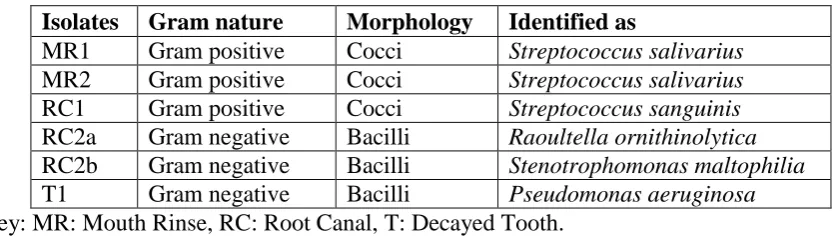
In all 5 different isolates were obtained from oral samples as mentioned in table 1.
Streptococcus salivarius is a commensal bacterium of the oral cavity in humans and is responsible for oral health and diseases. Similarly, Streptococcus sanguinis is a normal inhabitant of the human oral cavity. It is also one of the most common agents responsible for
serious endovascular infection.[15]Raoultella ornithinolytica is gram-negative, aerobic,
encapsulated bacillus belonging to the Enterobacteriaceae family. It has been isolated from
dentin of infected root canals. However, human infections caused by bacteria of the
pathogen and is primarily responsible for nosocomial infections. Pseudomonas aeruginosa is commonly isolated from various oral samples. The organism is involved in various types of
oral infections.
Table. 1: Microscopic and biochemical identification of the isolates.
Isolates Gram nature Morphology Identified as
MR1 Gram positive Cocci Streptococcus salivarius
MR2 Gram positive Cocci Streptococcus salivarius
RC1 Gram positive Cocci Streptococcus sanguinis
RC2a Gram negative Bacilli Raoultella ornithinolytica
RC2b Gram negative Bacilli Stenotrophomonas maltophilia
T1 Gram negative Bacilli Pseudomonas aeruginosa
Key: MR: Mouth Rinse, RC: Root Canal, T: Decayed Tooth.
Antimicrobial effect of herbal extracts on oral micro flora and dental pathogens
1. Antimicrobial activity of 70% ethanolic extracts
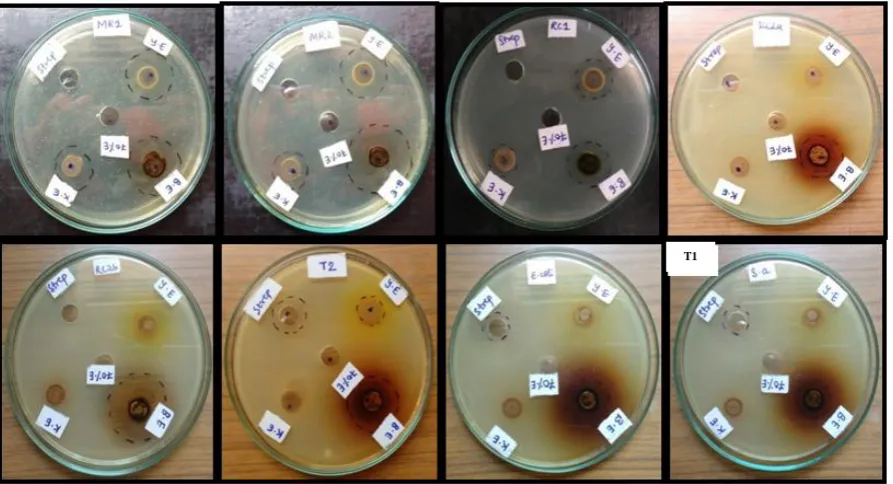
Figure 2 represents the antimicrobial activity of 70% ethanolic extracts on isolates. It was
observed that Betel leaf extract in 70% ethanol showed maximum zone of inhibition against
Streptococcus salivarius (MR1), S. salivarius (MR2), S. sanguinis (RC1), R. ornithinolytica
(RC2a), S. maltophilia (RC2b) and P. aeruginosa (T1) i.e. 24.33 mm, 30 mm, 19 mm, 20.33
mm, 27 mm and 22 mm respectively as well as against E. coli and S.aureus i.e. 19.67 mm
and 16.33 mm respectively; Yashtimadhu extract in 70% ethanol showed zone of inhibition
against S. salivarius (MR1), S. salivarius (MR2), S. sanguinis (RC1) and P. aeruginosa (T1) i.e. 22 mm, 21 mm, 16.67 mm and 11.67 mm respectively; whereas, Khadir extract in 70%
[image:6.595.82.501.166.287.2]ethanol showed zone of inhibition against S. salivarius (MR1), S. salivarius (MR2) and S. sanguinis (RC1) i.e. 17.67 mm, 15.33 mm and 11.33 mm respectively. The negative control 70% ethanol showed no antimicrobial activity against any of the isolates.
[image:6.595.142.451.584.746.2]Figure. 2: Antimicrobial activity of 70% ethanolic extracts on isolates.
(Line 1 L-R: MR1, MR2, RC1; Line 2 L-R: RC2a, RC2b, T1, Line 3 L-R: E. coli, S. aureus).
2. Antimicrobial activity of aqueous extracts
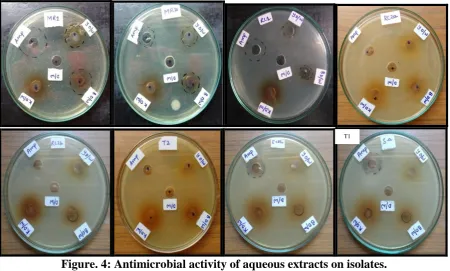
Figure 3 represents the antimicrobial activity of aqueous extracts on isolates. It was observed
that Betel leaf and Yashtimadhu aqueous extract showed zone of inhibition against only three
isolates S. salivarius (MR1), S. salivarius (MR2), S. sanguinis (RC1). The average zone of
inhibition for betel leaf extract was observed to be 19 mm, 16.33 mm and 11 mm against S.
salivarius (MR1), S. salivarius (MR2), S. sanguinis (RC1) respectively and for Yashtimadhu extract the average zone of inhibition was observed to be 17.67 mm, 14.67 mm and 11.33
mm against S. salivarius (MR1), S. salivarius (MR2), S. sanguinis (RC1) respectively.
Khadir aqueous extract showed no activity on any of the isolates. E. coli and S. aureus were
not inhibited by any of the aqueous extracts. The negative control sterile distilled water
[image:7.595.144.455.619.745.2]showed no antimicrobial activity against any of the isolates.
Figure. 3: Antimicrobial activity of aqueous extracts on isolates.
Figure. 4: Antimicrobial activity of aqueous extracts on isolates.
(Line 1 L-R: MR1, MR2, RC1; Line 2 L-R: RC2a, RC2b, T1, Line 3 L-R: E. coli, S. aureus)
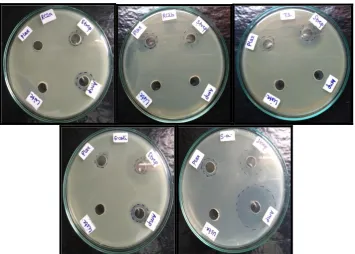
3.Antimicrobial activity of positive controls: Figure 5 represents the antimicrobial activity
of positive controls on isolates. It can be observed that standard antibiotics ampicillin showed
equivalent inhibition as 70% ethanolic extract of betel leaf against S. salivarius, R. ornithinolytica, S. maltophilia, P. aeruginosa and E. coli whereas greater inhibiton was seen against S. sanguinis and S. aureus whereas streptomycin at the concentration of 100 µg/ml also did not show significant inhibition against these isolates as observed in 70% ethanolic
betel leaf extract. Ampicillin proved to be better antibiotic than streptomycin. Further,
commercially available oral cleansing products such as Colgate Plax and Listerine were
tested against the oral isolates. Colgate plax showed very less antimicrobial activity. No
significant antimicrobial activity of Listerine was seen against any oral isolates.
Figure. 6: Antimicrobial activity of positive controls on isolates.
(Line 1 L-R: MR1, MR2, RC1; Line 2 L-R: RC2a, RC2b, T1, Line 3 L-R: E. coli, S. aureus)
Figure. 5: Antimicrobial activity of 70% ethanol and its comparison to positive controls.
Identification of the bioactive components present in 70% ethanolic extract of betel leaf
1. Qualitative phytochemical analysis
Standard phytochemical analysis was carried out for the 70% ethanolic extract of betel leaf as
per the standard protocols given in the reference.[14] The qualitative phytochemical analysis
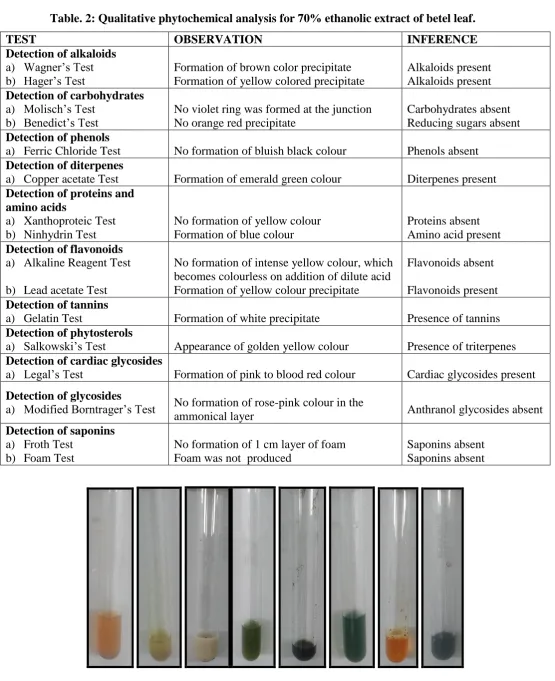
of 70% ethanolic betel leaf extract showed presence of diterpenes, flavonoids, triterpenes,
[image:9.595.145.451.384.580.2]Table. 2: Qualitative phytochemical analysis for 70% ethanolic extract of betel leaf.
TEST OBSERVATION INFERENCE
Detection of alkaloids
a) Wagner’s Test
b) Hager’s Test
Formation of brown color precipitate Formation of yellow colored precipitate
Alkaloids present Alkaloids present Detection of carbohydrates
a) Molisch’s Test
b) Benedict’s Test
No violet ring was formed at the junction No orange red precipitate
Carbohydrates absent Reducing sugars absent Detection of phenols
a) Ferric Chloride Test No formation of bluish black colour Phenols absent
Detection of diterpenes
a) Copper acetate Test Formation of emerald green colour Diterpenes present
Detection of proteins and amino acids
a) Xanthoproteic Test
b) Ninhydrin Test
No formation of yellow colour Formation of blue colour
Proteins absent Amino acid present Detection of flavonoids
a) Alkaline Reagent Test
b) Lead acetate Test
No formation of intense yellow colour, which becomes colourless on addition of dilute acid Formation of yellow colour precipitate
Flavonoids absent
Flavonoids present Detection of tannins
a) Gelatin Test Formation of white precipitate Presence of tannins
Detection of phytosterols
a) Salkowski’s Test Appearance of golden yellow colour Presence of triterpenes
Detection of cardiac glycosides
a) Legal’s Test Formation of pink to blood red colour Cardiac glycosides present
Detection of glycosides
a) Modified Borntrager’s Test No formation of rose-pink colour in the
ammonical layer Anthranol glycosides absent
Detection of saponins a) Froth Test
b) Foam Test
No formation of 1 cm layer of foam Foam was not produced
Figure. 7: Qualitative phytochemical analysis of 70% ethanolic betel leaf extract.
(Line 1 L-R: Wagner’s test, Hager’s test, Molishch’s test, Benedict’s test, Ferric chloride test, Copper acetate test, Xanthoproteic test, Ninhydrin test; Line 2 L-R: Alkaline reagent test, Lead acetate test, Gelatin test, Salkowski’s test, Legal’s test, Modified Borntrager’s test, Froth test, Foam test).
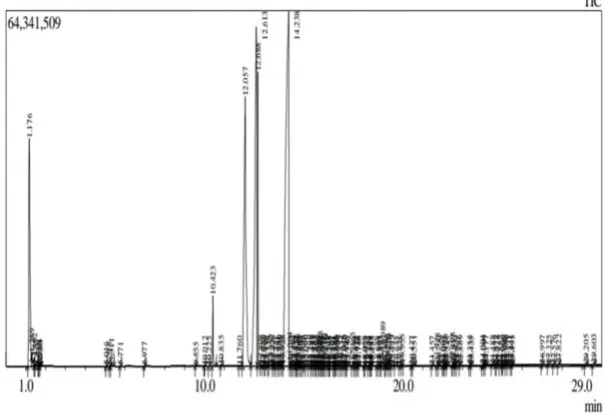
2. Gas-chromatography and Mass spectroscopy (GC-MS) analysis
The bioactive components from 70% ethanolic extract of betel leaf were successfully
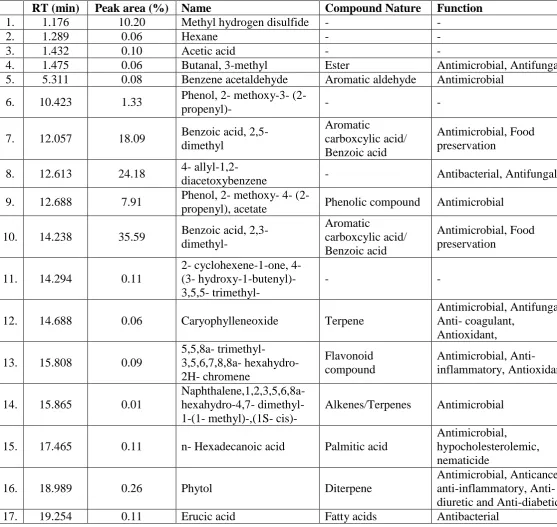
analysed using GC-MS (figure 8). 129 components were detected using GC-MS as shown
below in Table 10. The components showing higher retention time (RT) i.e. higher peaks in
chromatogram were selected and their functions were studied.
[image:11.595.145.452.500.707.2]Table. 10: GC-MS data of important bioactive compounds with their function in 70%
ethanolic extraction of betel leaf.
RT (min) Peak area (%) Name Compound Nature Function
1. 1.176 10.20 Methyl hydrogen disulfide - -
2. 1.289 0.06 Hexane - -
3. 1.432 0.10 Acetic acid - -
4. 1.475 0.06 Butanal, 3-methyl Ester Antimicrobial, Antifungal
5. 5.311 0.08 Benzene acetaldehyde Aromatic aldehyde Antimicrobial
6. 10.423 1.33 Phenol, 2- methoxy-3- (2-
propenyl)- - -
7. 12.057 18.09 Benzoic acid, 2,5-
dimethyl Aromatic carboxcylic acid/ Benzoic acid Antimicrobial, Food preservation
8. 12.613 24.18 4- allyl-1,2-
diacetoxybenzene - Antibacterial, Antifungal
9. 12.688 7.91 Phenol, 2- methoxy- 4- (2-
propenyl), acetate Phenolic compound Antimicrobial
10. 14.238 35.59 Benzoic acid, 2,3-
dimethyl- Aromatic carboxcylic acid/ Benzoic acid Antimicrobial, Food preservation
11. 14.294 0.11
2- cyclohexene-1-one, 4- (3- hydroxy-1-butenyl)- 3,5,5- trimethyl-
- -
12. 14.688 0.06 Caryophylleneoxide Terpene
Antimicrobial, Antifungal, Anti- coagulant,
Antioxidant,
13. 15.808 0.09
5,5,8a- trimethyl- 3,5,6,7,8,8a- hexahydro-2H- chromene Flavonoid compound Antimicrobial, Anti-inflammatory, Antioxidant
14. 15.865 0.01
Naphthalene,1,2,3,5,6,8a- hexahydro-4,7- dimethyl-1-(1- methyl)-,(1S- cis)-
Alkenes/Terpenes Antimicrobial
15. 17.465 0.11 n- Hexadecanoic acid Palmitic acid
Antimicrobial, hypocholesterolemic, nematicide
16. 18.989 0.26 Phytol Diterpene
Antimicrobial, Anticancer, anti-inflammatory, Anti- diuretic and Anti-diabetic
17. 19.254 0.11 Erucic acid Fatty acids Antibacterial
DISCUSSION
Even today in the modern world people have changed their focus from chemical drugs to the
use of natural products to cure quite a number of diseases, dental problems being one of
them. The major advantage of using natural products is that they are devoid of artificial
chemical constituents and hence they do not possess any side effects. Herbal plants show
[image:12.595.13.571.113.640.2]Previous studies have demonstrated the antimicrobial activity of certain herbal plants extracts
such as peppermint,[17] miswak,[18] amla,[19] etc. In the present study, three herbal plants were
used viz. betel leaf, yashtimadhu and khadir to study their antimicrobial activity against 6
oral/dental isolates identified as S salivarius, S sanguinis, R. ornithinolytica, S. maltophilia, P. aeruginosa isolated from mouth rinse, root canal rinse and decayed tooth sample. The
antimicrobial activity of betel leaf, yashtimadhu and khadir was also studied earlier. Ghazvini
K. et. al., 2012,studied the antibacterial activity of Glycyrrhiza glabra against oral pathogens
however, these were laboratory cultures, Chakraborty D. et al., 2011,studied the
antimicrobial, antioxidative and antihemolytic activity of Piper betel leaf extracts, Geetha R.V. et.al., 2013,assessed the anti bacterial activity of ethanolic extract of Heart wood of Acacia catechu willd, Aesculus hippocastanum, Glycyrrhiza glabra, Lakshmi T. et. al., 2011,
studied anti bacterial activity of ethanolic bark extract of Acacia catechu willd against enteric pathogens.
In the present study Soxhlet extraction method successfully extracted the bioactive
components from the herbal plants using 70% ethanol and distilled water as solvents. This
method of extraction was also used by Datta A. et. al., 2011.
70% ethanolic extracts of all three herbal plants showed higher antimicrobial activity as
compared to their aqueous extracts. Also, betel leaf extract proved to have higher
antimicrobial activity followed by yashtimadhu and the least was observed with khadir. This
indicates that Piper betel contains broad-spectrum antibacterial compounds which make it a
potentially good source of antimicrobial substance. Standard antibiotic ampicillin showed
equivalent inhibition as 70% ethanolic extract of betel leaf against S. salivarius, R. ornithinolytica, S. maltophilia, P. aeruginosa and E. coli whereas greater inhibiton was seen against S. sanguinis and S. aureus whereas streptomycin at the concentration of 100 µg/ml also did not show significant inhibition against these isolates as observed in 70% ethanolic
betel leaf extract. Ampicillin proved to be better antibiotic than streptomycin. Commercially
available mouthwashes Colgate Plax and Listerine were also tested for their antimicrobial
activity against oral and dental isolates. As compared to betel leaf extract, colgate plax
showed very less antimicrobial activity and no antimicrobial activity was observed with
Listerine. Thus, we can say that herbal plants extracts are more effective in vivo against the
The qualitative phytochemical analysis of 70% ethanolic betel leaf extract showed presence
of diterpenes, flavonoids, triterpenes, alkaloids, amino acids, tannins and cardial glycosides.
In a study carried out by Patil R.S. et al., 2015 the phytochemical screening reveals that, the aqueous, 70% ethanolic and butanolic extracts contains valuable phytochemicals like
steroids, diterpenes, tannin, flavonoids etc. and found rich in phytochemicals. in 70%
ethanolic betel leaf extract.
The present study also successfully identified the bioactive components present in 70%
ethanolic betel leaf extract using GC-MS of which Benzoic acid, 2,3- dimethyl- (35.59%), 4-
allyl-1,2- diacetoxybenzene (24.18%), Benzoic acid, 2,5- dimethyl (18.09%), Methyl
hydrogen disulfide (10.20%), Phenol, 2- methoxy- 4- (2- propenyl), acetate (7.91%), Phenol,
2- methoxy-3- (2- propenyl)- (1.33%), Phytol (0.26%), n- Hexadecanoic acid (0.11%), 2-
cyclohexene-1-one, 4- (3- hydroxy-1-butenyl)- 3,5,5- trimethyl- (0.11%), 5,5,8a- trimethyl-
3,5,6,7,8,8a- hexahydro-2H- chromene (0.09%), Benzene acetaldehyde (0.08%),
Caryophyllene oxide (0.06%), Butanal, 3-methyl (0.06%) and Naphthalene,1,2,3,5,6,8a-
hexahydro-4,7- dimethyl-1-(1- methyl)-,(1S- cis)- (0.01%) were present majorly and were
identified by the National Institute of Standard and Technology (NIST). Many of these
compounds are known to have antimicrobial, anti-cancerous, anti-inflammatory properties.
Similar GC-MS analysis profile has also been reported by Foo L W. et al., 2015. Most of the
identified compounds obtained in the present study were similar to the compounds obtained
by Foo L W. et al., 2015.
CONCLUSION
Betel leaf, Yashtimadhu and Khadir were used to study their antimicrobial activity against
oral and dental isolates. The bioactive components were extracted in 70% ethanol and
distilled water. Based on the current findings it was observed that 70% ethanolic betel leaf
extract exhibited good antimicrobial potential than the aqueous betel leaf extract and 70%
ethanolic and aqueous extracts of yashtimadhu and khadir. 70% ethanolic betel leaf extract
was effective against both gram positive as well as gram negative oral microflora and dental
isolates; also 70% ethanolic betel leaf extract showed significant inhibition almost equal to
the standard antibiotic ampicillin and much greater than streptomycin at the concentration of
100 µg/ml and the commercially available oral cleansing products viz. Colgate Plax and
Listerine. Thus, Piper betel leaf should be considered having beneficial potential in dentistry
revealed the presence of many bioactive components using qualitative phytochemical
analysis and GC-MS. Some of them were found to possess antimicrobial activity. Further
studies are needed to be carried out to purify the active compounds present in Piper betel and
also its antimicrobial activity will be studied to develop herbal mouthwash. If such
mouthwashes can be formulated which can be easily prepared and used safely by people at
home using natural products, it may lead to improvement in the general dental health of the
population.
REFERENCES
1. Daniyan S.Y., Abalaka M.E., Elemba O.M., Aransiola S.A. In vitro Antimicrobial
activity and phytochemical screening of Jathropa curcas seed extract. International
Research Journal of Pharmacy, 2011; 2(7): 60-64.
2. Palombo EA. Traditional medicinal plant extracts and natural products with activity
against oral bacteria: Potential application in the prevention and treatment of oral
diseases. Evidence-based Complement Altern Med. 2011. doi:10.1093/ecam/nep067.
3. Rajendra Kumar G, Rk G, Devanand G, et al. Antiplaque Efficacy of Aloe Vera…
Preliminary antiplaque efficacy of aloe vera mouthwash on 4 day plaque re-growth
model: randomized control trial. doi:10.4314/ejhs.v24i2.6.
4. Shafiei Z, Najwa Shuhairi N, Md Fazly Shah Yap N, Harry Sibungkil C-A, Latip J.
Antibacterial Activity of Myristica fragrans against Oral Pathogens. Evidence-Based
Complement Altern Med. 2012;7. doi:10.1155/2012/825362.
5. M. D. Luque de Castro, L. E. Garcia Ayuso. III /Environmental Applications/ Soxhlet
Extraction. 2701-2709, Spain; 2000. Academic Press.
6. Syed Zameer Hussain and Khushnuma Maqbool. GC-MS: Principle, Technique and its
application in Food Science. Int. J. Curr. Sci. 2014, 13: E 116-126.
7. Foo LW, Salleh E, Nur S, Mamat H. Extraction and Qualitative Analysis of Piper Betle
Leaves for Antimicrobial Activities. SitiNur Hana Mamat Int J Eng Technol Sci Res
IJETSR www.ijetsr.com ISSN, 2015; 2: 2394-3386.
8. Jayshree D. Patel, Devang K. Patel, Anshu Shrivastava and Vipin Kumar. Screening of
plant extracts used in traditional antidiarrhoeal medicines against pathogenic Escherichia
coli. Scientific World, July 2008; 6(6).
9. Anagha K, Manasi D, Priya L, Meera M. Antimicrobial activity of Yashtimadhu
(Glycyrrhiza glabra L.) -A Review. Int J Curr Microbiol App Sci., 2014; 3(1): 329-336.
Clinical Isolates of Bacteria. Int J Pharma Sci Res (IJPSR), 2011; 2(3): 104-109.
11. Sham Shihabudeen MH, Priscilla HD, Thirumurugan K. Antimicrobial activity and
phytochemical analysis of selected Indian folk medicinal plants. Int J Pharma Sci Res.,
2010; 1(10): 430-434.
12. Omoregie Gloria Omorowa, Macdonald Idu, Ovuakporie-Uvo Oghale. GC-MS analysis
of the aqueous extracts of Buchholzia coriacea engl (capparidaceae), seeds. International
Journal of Life science and Pharma Research, 2015; 5(3): ISSN: 2250-0480.
13. Tiwari P. Phytochemical screening and Extraction: A Review. Internationale
Pharmaceutica Sciencia | Jan-March 2011; 1(1): 98-106.
14. Sujana P, Sridhar TM, Josthna P, Naidu CV. Antibacterial Activity and Phytochemical
Analysis of Mentha piperita L. (Peppermint)—An Important Multipurpose Medicinal
Plant. Am J Plant Sci. 2013;4:77-83. doi:10.4236/ajps.2013.41012.
15. Sehmi Paik, Lauren Senty, Sankar Das, Jody C. Noe, Cindy L. Munro, and Todd Kitten,
Identification of Virulence Determinants for Endocarditis in Streptococcus sanguinis by
Signature-Tagged Mutagenesis, Infection And Immunity, Sept. 2005; 73(9): 6064–6074.
16. Victoria Pulian Morais, Matilde Trigo Daporta, Alberto Fernandez Bao and Marta Garcia
Campello, Enteric Fever-Like Syndrome Caused by Raoultella ornithinolytica, Letters to
the Editor, Journal of Clinical Microbiology, Mar. 2009; 47(3): 868–869
17. Darout IA, Christy AA, Skaug N, Egeberg PK. Antimicrobial anionic components in
miswak extract identification and quantification of some potentially antimicrobial anionic
components in miswak extract. Indian J Pharmacol, 2000; 32: 11-14.
18. Saeed S, Tariq P. Antimicrobial activities of Emblica officinalis and Coriandrum sativum
against gram positive bacteria and Candida albicans. Pak. J. Bot., 2007, 39(3): 913-917.
19. Agarwal T, Singh R, Shukla AD, Waris I, Gujrati A. Comparative analysis of
antibacterial activity of four Piper betel varieties. Advances in Applied Science Research,
2012; 3(2): 698-705.
20. Caburian AB, Osi MO. Characterization and Evaluation of Antimicrobial Activity of the
Essential Oil from the Leaves of Piper betle L. E-International Sci Res J. 2010; ISSN(1):
2094-1749.
21. Chakraborty D, Shah B. Antimicrobial, anti-oxidative and anti-hemolytic activity of piper
betel leaf extracts. International Journal of Pharmacy and Pharmaceutical Sciences, Vol 3,
Suppl 3, 2011, pp. 192-199.
22. Fereshteh Sedighinia, Akbar Safipour Afshar, Saman soleimanpour, Reza zarif,
pathogens: an in vitro study. Avicenna Journal of Phytomedicine, Summer 2012; 2(3).
23. H. Shyla Jebashree, S. Jayasurya Kingsley, Emmanuel S. Sathish, and D. Devapriya.
Antimicrobial Activity of Few Medicinal Plants against Clinically Isolated Human
Cariogenic Pathogens—An In Vitro Study. International Scholarly Research Network
ISRN Dentistry Volume 2011, Article ID 541421, 6 pages doi:10.5402/2011/541421.
24. Lakshmi. T, Geetha R.V, Anitha Roy. In Vitro Anti Bacterial Activity of Ethanolic Bark
Extract of Acacia catechu Willd against Enteric Pathogens. International Journal of Drug
Development & Research July-September 2011; 3(3): ISSN 0975-9344.
25. Meghashri, Shubha Gopal. In Vitro Antifungal and Antibacterial Activities of Root
Extract of Glycyrrhiza Glabra. Journal of Applied Sciences Research., October 2009
pp.1436-1439.
26. Sita kumari and Nirmala Babu Rao. Phyto chemical analysis of piper betel leaf extract.
World journal of pharmacy and pharmaceutical sciences, 4(1): 699-703.
27. Patil RS, Harale PM, Shivangekar KV, Kumbhar PP, Desai RR. Phytochemical potential
and in vitro antimicrobial activity of Piper betle Linn. leaf extracts. J Chem Pharm Res.