Exercise fidelity and progression in a supervised exercise
programme for adults with venous leg ulcers
KLONIZAKIS, Markos <http://orcid.org/0000-0002-8864-4403>, GUMBER, Anil <http://orcid.org/0000-0002-8621-6966>, MCINTOSH, Emma, KING, Brenda, MIDDLETON, Geoff, MICHAELS, Jonathan A and TEW, Garry Available from Sheffield Hallam University Research Archive (SHURA) at: http://shura.shu.ac.uk/20908/
This document is the author deposited version. You are advised to consult the publisher's version if you wish to cite from it.
Published version
KLONIZAKIS, Markos, GUMBER, Anil, MCINTOSH, Emma, KING, Brenda, MIDDLETON, Geoff, MICHAELS, Jonathan A and TEW, Garry (2018). Exercise fidelity and progression in a supervised exercise programme for adults with venous leg ulcers. International Wound Journal, 15 (5), 822-828.
Copyright and re-use policy
See http://shura.shu.ac.uk/information.html
1
Introduction
1
Venous leg ulceration is a chronic and devastating condition that affects approximately 1% of the 2
adult population in the Western world (1). It costs up to 198 million sterling pounds in national 3
healthcare expenditure in the U.K. alone (2), affecting significantly, in a negative manner patients’ 4
quality of life (3). Moreover, venous leg ulcers tend to recur quite frequently, with recurrence 5
rates reaching 70% within a year of healing (4). 6
With such costs involved and the considerable devastation in patients’ lives, it is no surprise that 7
adjunct and alternative therapies to compression therapy (which is considered as the golden 8
standard) (5) have been pursued (e.g. ultrasound (6), larval therapy (7), biomaterials (8)), with 9
exercise and physical activity promotion being considered as well (e.g., walking (9), increased 10
physical activity (10), resistance exercise (11)). 11
The concept of using exercise as an adjunct therapy to compression isn’t new and indeed exercise 12
is included as a recommendation in the NICE Clinical Knowledge Summary for venous leg ulcers’ 13
management (e.g., “regular walking”, “exercising to improve calf muscle pump function”)(12). 14
Nevertheless, there is a fear shared by both clinicians and the patients that exercise may be either 15
inappropriate or harmful and actually delay rather than promote healing(13,14). This notion 16
together with the mixed results of previous studies (13,15-16), has limited the exploration of 17
regimes that could potentially benefit patients and improve clinical outcomes. Overall, there is 18
little published data on the ability of this patient group to undertake different types of exercise 19
training and on rates of exercise progression. The data has the potential to inform practitioners 20
and researchers involved in prescribing and supervising exercise with venous ulcer patients. . 21
FISCU (17) is a recently-completed, two-center study exploring the feasibility of using exercise as 22
2
attempt to implement a supervised exercise programme with this patient population, in a manner 24
similar to what has been promoted successfully in other clinical populations in the UK (e.g. 25
peripheral arterial disease (18), chronic obstructive pulmonary disease (19), cardiac diseases (20)). 26
Central to the internal validity of all intervention trials is intervention fidelity, which refers to the 27
extent an experimental manipulation has been implemented in a comparable manner to all 28
participants, as intended (21). Furthermore, it is important to present all in-session exercise safety 29
data to better inform clinicians, policy makers and patients with venous ulcers. As such, having 30
published the main study findings, which supported the feasibility of conducting a future full-scale 31
trial (17), our aim here was to present a detailed appraisal of exercise data collected during the 32
FISCU trial, focussing on treatment fidelity and exercise progression. 33
34
Methods
35
FISCU was a two-arm, parallel-group, randomised feasibility trial that received ethical clearance 36
from the NHS National Research Ethics Committee for Yorkshire and the Humber (14/YH/0091), 37
and was prospectively registered (ISRCTN09433624). Thirty-eight adults who were receiving 38
lower-limb compression for a new venous leg ulcer of greater than 1 cm diameter were recruited 39
from tissue viability clinics and newspaper advertisement in Sheffield, United Kingdom. Following 40
provision of consent and baseline assessment, participants were randomly assigned to receive 41
usual care (n=20) or usual care plus a 12-week supervised exercise programme (n=18). A full 42
description of the protocol is available elsewhere (22); however, for the purpose of this article the 43
exercise training protocol is described below. 44
3
Exercise protocol
46
Following study enrolment and randomisation, exercise group participants were referred for a 12-47
week exercise intervention, undertaken 3 times per week (typically being delivered on Mondays, 48
Wednesdays and Fridays to allow sufficient recovery between sessions). A maximum of an 49
additional 2 weeks was allowed for the participants to complete the 36 sessions in case sessions 50
were missed because of illness, family/work commitments or holiday. The sessions were 51
supervised by an exercise physiologist and were typically undertaken in a group form (no more 52
than 4 patients per session, to ensure proper supervision and adequate progression monitoring). 53
Each exercise session lasted approximately 60 minutes and comprised a combination of aerobic, 54
resistance and flexibility exercises. Each session began and ended with 5 minutes of low-intensity 55
treadmill walking or cycling for a warm-up and cool-down, respectively. The aerobic component 56
was aimed to last approximately 30 minutes, with the exercise mode being treadmill walking, 57
cycling, or a combination of both, with the mode being determined by the physical function and 58
preference of participants. 59
Resistance and flexibility exercises were performed for approximately 20 minutes in order to 60
improve calf muscle pump function, leg (predominantly calf) muscle strength, and joint 61
(predominantly ankle) mobility. Resistance exercises mainly involved dynamic body-weight 62
exercises with or without the use of dumbbells and stability balls (e.g., calf raises and partial 63
squats). Exercise was aimed to be performed for two or three sets of 10 to 15 repetitions to the 64
point of moderate muscle fatigue (23). For flexibility, static stretches were performed for all of the 65
major muscle groups of the legs, for a total of 60 seconds per muscle group (comprising 3 × 20-66
second stretches), held at the point of mild discomfort (23). 67
4
Exercise intensity: prescription and measurement
69
The intensity of aerobic and resistance exercises was guided using Borg’s 6-20 ratings of 70
perceived exertion (RPE) scale (24), aiming for an exertion level of 12 to 14 (“moderate” to 71
“somewhat hard”) on the 6-20 scale, which equates to the ventilatory threshold (24). Each patient 72
was familiarized with the scale and the recommended researcher instructions for scale 73
administration were used (25).Perceived exertion, heart rate (via telemetry; Polar RS400, 74
Kempele, Finland), and aerobic and resistance exercise indices (e.g., treadmill speed and gradient) 75
were recorded at regular intervals during the whole session to allow accurate quantification of the 76
exercise stimulus and to facilitate progression of the programme over time. 77
78
Exercise safety
79
Compression garments (stockings/bandages) were monitored throughout each exercise session. 80
The exercise supervisor was instructed to terminate the session if these were affected by exercise, 81
with participants being referred to the tissue-viability nursing team for re-application, and 82
additional visits were to be noted for the health-economics analyses. Our safety monitoring 83
procedure indicated that all serious adverse events, as well as all non-serious adverse events that 84
are deemed to be related to participation in the research (e.g., exercise strains or injuries, 85
excessive wound discharge, in-session exercise bandage slipping) were to be recorded during the 86
period between provision of informed consent through to 12 months after randomisation. 87
Participants were asked to contact the study team to inform them about adverse events if and 88
when they occur. Study investigators also questioned participants about the occurrence of 89
5
Statistical analysis
91
Descriptive statistics were used to calculate the session attendance data, completion rates as per 92
protocol for aerobic (duration, intensity, combination of duration and intensity), resistance 93
(intensity, number of exercises, sets, repetitions) and flexibility exercises (number of exercises, 94
duration, intensity), and present baseline demographics. The Shapiro-Wilk test was used to assess 95
data normality and Mauchly's Test of Sphericity was used to indicate data sphericity (the assumption 96
of sphericity was not violated in any case). Exercise progression was assessed by comparing Session 97
1 (baseline), with Sessions 18 (midpoint) and 36 (intervention completion) using Analysis of 98
Variance (ANOVA) for Repeated Measures (SPSS v.23, Armonk, NY: IBM Corp). Post-hoc analysis 99
was undertaken using Bonferroni corrected t-tests. To calculate the effect sizes we used eta-100
square for ANOVA assessments and Cohen's d for post-hoc analysis, using the magnitudes 101
determined by Cohen (26): For η2 0.01 is considered a small effect, 0.06 is considered a medium 102
effect and 0.14 is considered a large effect. Similarly for Cohen's d: 0.2 is considered a small effect, 103
0.5 is considered a medium effect and 0.8 is considered a large effect. Data are described as 104
means (SD), unless otherwise stated. Significance set at p<0.05 and for post hoc analysis at 105
p<0.0167. 106
107
Results
108
6
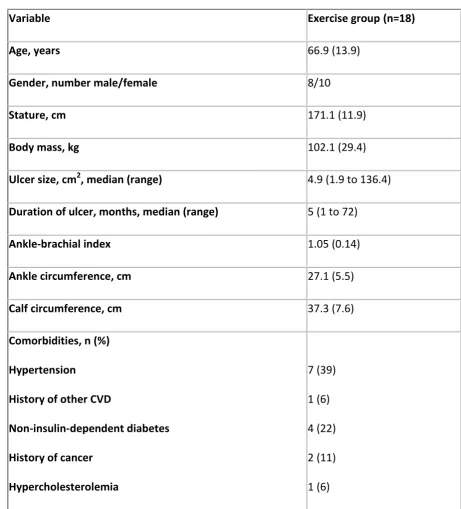
Characteristics of the 18 exercise-group participants are shown in Table 1. Ten of these 110
participants were female and the mean ± SD age, stature and body mass were 66.9 ± 13.9 years, 111
171.1 ± 11.9 cm and 102.1 ± 29.4 kg, respectively. Median ulcer size was 4.9 cm2. 112
113
Attendance 114
The overall exercise attendance rate was 79% (512/648), with 13 of the 18 participants (72%) 115
attending all exercise sessions. Amongst those who completed the study, 411/468 sessions were 116
completed within the 12-week period, with the rest (57/468) being completed within the 117
additional 2-week period. Of the five participants who did not complete all sessions, one withdrew 118
fully from the trial before the 3-month follow-up assessment due to non-ulcer-related health 119
problems, and four withdrew from treatment (i.e. stopped attending before the end of the 12-120
week intervention period) but remained in the study (one due to ulcer-related problems, three 121
due to non-ulcer-related health problems). These five participants had completed 2, 4, 6, 15 and 122
17 exercise sessions, respectively, before withdrawing. Reasons for not attendance included lack 123
of transportation (n=34), non-ulcer related health reasons (n=74) and ulcer-related health reasons 124
(n=32), with more than one reasons given on some occasions. 125
126
Exercise Safety 127
No serious, in-session adverse events were experienced and the bandaging was also not disrupted 128
during any exercise session. Two incidents of excessive fluid discharge were detected the day after 129
exercise sessions, possibly or probably related to exercise. Following consultations with healthcare 130
7
(incident 1) and temporarily removing the resistance element from the training programme 132
(incident 2). 133
134
Exercise choices 135
The majority of the participants (72%) chose treadmill as their main aerobic mode of training at 136
baseline, with the rest preferring cycling due to frailty and lack of confidence with exercising on 137
the treadmill. One participant changed briefly from treadmill to exercise cycle, before reverting to 138
treadmill again. Only one of the participants was training via exercise cycle at the end of the 12-139
week intervention, with the rest of the participants that completed the intervention using the 140
treadmill instead. 141
142
In regards to the resistance element of the intervention, four participants started the programme 143
stating that they were unable to do squats, step-ups or calf raises. This number was reduced to 144
two at the end of their participation (they were however, able to complete the rest of the regime). 145
Finally, one of the participants could not do squats on Session 18, due to a pre-existing pain 146
unrelated to exercise, completing however, the rest of the session without issues. The participant 147
completed his programme as well. 148
Exercise Intensity 149
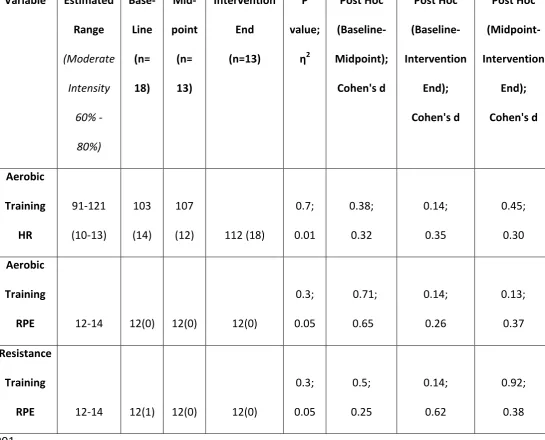
All of the aerobic and 91% of the resistance training components, across all participants, were 150
performed at the desired moderate intensity, as determined using RPE responses in the 12-14 151
range (Tables 2 and 4). 152
8
Exercise Progression 154
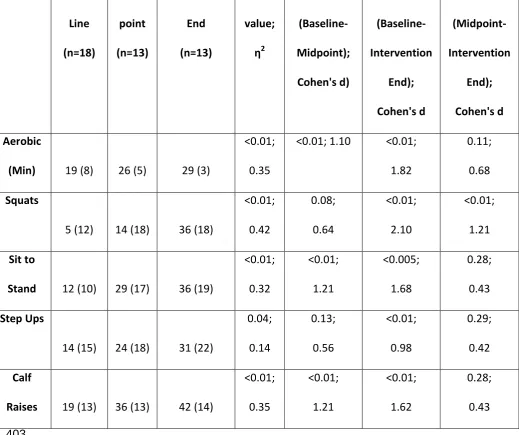
Table 3 presents data on changes in the duration of the aerobic component and the number of 155
repetitions completed for four lower-limb resistance exercises. The number of minutes spent on 156
aerobic exercise increased through the 12-week period (Baseline: 19 min (8), Mid-point: 26 min 157
(5), End-point: 29 min (3)). 158
Performance of the participants in the resistance exercise indices was also improved (Table 3): For 159
example, calf raises increased from 19 (13) at baseline, to 36 (13) at mid-point, reaching 42 (14) at 160
the end of the intervention. 161
162
Exercise Fidelity 163
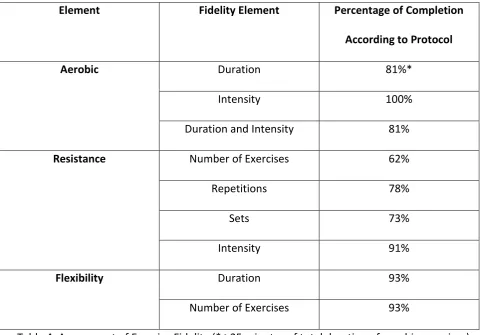
For the aerobic exercise element all completed sessions were completed according to the 164
prescribed intensity. For resistance this was the case in 466/512 (91%) completed sessions. 165
Duration of the exercise elements was close to the prescribed duration as well (413/512 = 81% for 166
aerobic, 474/512 = 93% for resistance). The majority of those not completing the prescribed 167
duration were at the beginning of their programme, and was due to lack of physical fitness (n=4), 168
discomfort (n=2) and unfamiliarity with the training equipment/exercises (n=4) – with more than 169
one reason being given by some participants. 170
Similarly, the main reason for resistance components not being completed according to protocol 171
was lack of physical fitness. This, however, became less of an issue as the programme progressed, 172
9
Finally, flexibility exercises were completed as per protocol in regards to duration and number of 174
exercises. 175
Discussion
176
Using a supervised exercise regime as an adjunct therapy to reduce venous leg ulcer healing time, 177
represents a plausible, yet largely unassessed therapeutic strategy (16). The lack of appropriately 178
designed studies, which would substantiate its use and the fear of healthcare professionals and 179
the patients themselves about the safety and applicability of exercise are two main reasons, why 180
the advice of a more "active lifestyle" is not being taken up more widely within this patient 181
population(13,14). 182
We have recently presented data supporting the feasibility of a full-scale trial of adjunctive 183
exercise therapy for venous leg ulceration (17). The aim of the current paper was to undertake a 184
detailed evaluation of the exercise session data. When adhering to pre-determined safety criteria, 185
our results show primarily a very high fidelity of our proposed programme. It is evident from our 186
data that not only is it possible to exercise this primarily-older and largely-frail, patient population 187
at moderate intensities, but it is also possible to see a positive exercise progression over the 188
duration of a medium-term training programme. This is the first study to report in-session data on 189
this patient group and this acts as a comparator for researchers and practitioners embarking on 190
similar trials with exercise as a therapy with this patient group. 191
Attendance, compliance, and safety
192
Our overall session attendance (79%) for the 18 participants across the 12-week exercise 193
intervention compares well with an attendance range of 58–77% for other exercising, clinical 194
10
achieved in other exercise studies, considering the fact that ours was a time-demanding (e.g. 3 196
times per week), 3-month intervention, focusing on a group which is older, sedentary and without 197
an exercising culture; the large majority of our participants have not previously followed an 198
exercise programme. Consequently, it can be postulated that our participants were keen to 199
embrace such an intervention and participated whole-heartedly. Our results also show that most 200
missed sessions can be accounted to reasons unrelated to the exercise programme (e.g. illnesses 201
and family commitments) rather than the exercise programme itself. This knowledge, combined 202
with the very good safety record (e.g., no participants had their compression garments affected 203
during the exercise sessions), is a sign of trust of moving the intervention into the next stage, that 204
of the definitive trial. Nevertheless, much more data is required to evaluate the safety of the 205
intervention properly in this patient group. 206
When evaluating the fidelity of exercise training interventions researchers should ideally consider 207
both session attendance and meeting the prescribed exercise intensity, as this interaction 208
constitutes the dose of the intervention and influences the physiological response to exercise 209
training (21). Although in our case this might have been considered as a relatively easy task (as our 210
aim was to have participants exercising at "moderate" intensity, e.g. 12-14 in the 6-20 RPE Borg 211
scale), which is considerably lower to that sought by high intensity training (e.g., 85–95% of peak 212
heart rate) (29) exercise regimes, results should not be overlooked: our participants' unfamiliarity 213
with exercise interventions and in some cases frailty, meant that even the intended moderate 214
intensity could potentially be difficult to achieve in practice. For the aerobic exercise element of 215
our intervention this was achieved and maintained throughout the duration of the intervention, 216
matching the performance of other regimes, conducted in clinical settings, in older clinical 217
11
certain participants found difficulty to complete all resistance exercises to the required level 219
(Table 3) or intensity (Table 4). This was mainly due to frailty and lack of physical fitness (number 220
of sets/repetitions for resistance) or patients finding the exercises easier than expected (intensity 221
for flexibility). This can only be considered as part of our learning process to introduce more 222
challenging exercises (for flexibility) and a varying introductory pace (for resistance), in the future 223
study stages. 224
225
Exercise progression 226
The main aim of this article was to present our findings on attendance, compliance and safety. 227
Nevertheless, our detailed collection and analysis of exercise training data permits the objective 228
appraisal of our regime in regards to exercise progression as well: To facilitate a positive 229
adaptation to training, the prescription of exercise needs to advance over time (27). Many 230
programmes have failed to achieve this, presenting a need to re-define targets, following an in-231
programme assessment (31) (which can be costly and resource-intensive). In the study presented 232
in this article, we used relative measures of exercise intensity to assess adherence to the 233
prescribed intensity. The fact that our aim was achieved was reflected in all of our exercise 234
indices, which show a statistically-significant increase in most measures, as well as a moderate-to-235
large effect sizes: this demonstrates a clear exercise progression. Although it is difficult to 236
compare our findings with that of other trials in clinical or older populations (as in-session data is 237
not usually reported), our data is equally- or more favourably- comparable to similar interventions 238
in other clinical populations where physical functioning indices appear to be reduced (e.g. chronic 239
12
sclerosis (34)) when compared with normative values. It remains to see whether this exercise 241
progression will be achievable in the definitive trial as well, nevertheless, the indicators are 242
encouraging, suggesting that participants with venous ulcers can benefit in multiple ways (e.g. 243
improved cardiorespiratory endurance (35) and better physical function (27), which are related to 244
high exercise session attendance) by taking part in such an intervention combining medium-245
intensity aerobic, flexibility and resistance exercise, as previous studies in clinical populations have 246
shown (36,37). 247
Limitations 248
With this study exploring the feasibility of the intervention, the number of participants was 249
relatively small to what the definitive trial is expected to include. With that in mind findings should 250
be treated as indicative. Additionally, an in-depth assessment of fidelity in a definitive, multi-251
centre exercise intervention will examine the consistency of the exercise dose across the different 252
sites, something that was not possible on this occasion. Finally, we cannot rule out the possibility 253
of underreported RPE scores due to the influence of observer sex as it has been suggested that 254
male participants report lower RPE values when a female observer, as opposed to male, is in the 255
room (38). Nevertheless, our sessions were delivered by both male and female physiologists and 256
our findings appear to be consisting throughout the intervention, hence the likelihood of that is 257
small. 258
Conclusions 259
This is the first study to provide a detailed quantification of the exercise sessions performed across 260
an exercise intervention combining aerobic, resistance and flexibility exercises for patients with 261
13
advocating exercise to this patient group in their practice. Our findings showed that our 263
participants trained at the intended exercise intensity, improving their performance amongst all 264
exercise domains in which they trained (e.g., number of minutes in aerobic exercise, number of 265
squats and calf raises etc), without having their safety compromised. We conclude that it is 266
possible to exercise this patient population at moderate exercise intensities. This is purposeful for 267
further studies which consider deploying similar supervised exercise regimes as an adjunct 268
therapy to compression, in an attempt to reduce healing times in patients with venous ulcers. 269
Conflicts of Interest
270
None to declare. 271
References
272
1. Donnelly R, London NJ. The Ulcerated lower limb. In: Donnelly R, London N. NJ eds., ABC of 273
Arterial and Venous Disease. 2nd ed. Chichester, United Kingdom; Wiley-Blackwell; 2009:77-83. 274
2. Posnett J, Franks PJ. The burden of chronic wounds in the UK. Nurs Times. 2008;104:44-45. 275
3. Carradice D, Mazari FA, Samuel N, Allgar V, Hatfield J, Chetter IC. Modelling the effect of 276
venous disease on quality of life. Br J Surg. 2011;98:1089-1098. 277
4. Barwell JR, Davies CE, Deacon J, Harvey K, Minor J, Sassano A, Taylor M, Usher J, Wakely C, 278
Earnshaw JJ, Heather BP. Comparison of surgery and compression with compression alone in 279
chronic venous ulceration (ESCHAR study): randomised controlled trial. Lancet. 2004;363 :1854-280
1859. 281
5. O’Meara S, Cullum N, Nelson EA, Dumville JC. Compression for venous leg ulcers. Cochrane 282
14
6. Watson JM, Kang'ombe AR, Soares MO, et al. Use of weekly, low dose, high frequency 284
ultrasound for hard to heal venous leg ulcers: the VenUS III randomised controlled trial. BMJ. 285
2011;342:d1092-1101. 286
7. Dumville JC, Worthy G, Bland JM, Cullum N, Dowson C, Iglesias C, Mitchell JL, Nelson EA, Soares 287
MO, Torgerson DJ. Larval therapy for leg ulcers (VenUS II): randomised controlled trial. BMJ. 288
2009;338:b773-780. 289
8. Mostow EN, Haraway GD, Dalsing M, Hodde JP, King D, OASIS Venus Ulcer Study Group. 290
Effectiveness of an extracellular matrix graft (OASIS Wound Matrix) in the treatment of chronic leg 291
ulcers: a randomized clinical trial. Journal of vascular surgery. J Vasc Surg. 2005;41:837-843. 292
9. Meagher H, Ryan D, Clarke-Moloney M, O'Laighin G, Grace PA. An experimental study of 293
prescribed walking in the management of venous leg ulcers. J Wound Care. 2012;21:421-430. 294
10. Heinen MM, Evers AW, Van Uden CJ, Van der Vleuten CJ, van de Kerkhof PC, Van Achterberg 295
T. Sedentary patients with venous or mixed leg ulcers: determinants of physical activity. J Adv 296
Nurs. 2007;60:50-57. 297
11. O'Brien J, Finlayson K, Kerr G, Edwards H. Evaluating the effectiveness of a self-management 298
exercise intervention on wound healing, functional ability and health-related quality of life 299
outcomes in adults with venous leg ulcers: a randomised controlled trial. Int Wound J. 300
2017;14:130-137. 301
12. Clinical Knowledge Summaries: Leg ulcer – venous, National Institute for Health and Clinical 302
Excellence https://cks.nice.org.uk/leg-ulcer-venous#!topicsummary. Accessed Jan 25, 2018. 303
13. O'Brien J, Finlayson K, Kerr G, Edwards H. The perspectives of adults with venous leg ulcers on 304
exercise: an exploratory study. J Wound Care. 2014;23:496-509. 305
14. McCulloch J, Mahoney E, McCallon S. Enhancing the role of physical therapy in venous leg 306
15
15. Jull A, Parag V, Walker N, Maddison R, Kerse N, Johns T. The prepare pilot RCT of home-based 308
progressive resistance exercises for venous leg ulcers. J Wound Care. 2009;18:497-503. 309
16. Yim E, Kirsner RS, Gailey RS, Mandel DW, Chen SC, Tomic-Canic M. Effect of physical therapy 310
on wound healing and quality of life in patients with venous leg ulcers: a systematic review. JAMA 311
Dermatol. 2015;151:320-327. 312
17. Klonizakis M, Tew GA, Gumber A, Crank H, King B, Middleton G, Michaels JA. Supervised 313
exercise training as an adjunct therapy for venous leg ulcers: a randomised controlled feasibility 314
trial. Br J Dermatol. 2017;27: In Press. doi: 10.1111/bjd.16089 315
18. Layden J, Michaels J, Bermingham S, Higgins B, Guideline Development Group. Diagnosis and 316
management of lower limb peripheral arterial disease: summary of NICE guidance. BMJ. 317
2012;345:e4947.doi: 10.1136/bmj.e4947 318
19. Liddell F, Webber J. Pulmonary rehabilitation for chronic obstructive pulmonary disease: a 319
pilot study evaluating a once-weekly versus twice-weekly supervised programme. Physiotherapy. 320
2010;96:68-74. 321
20. Sandercock GR, Cardoso F, Almodhy M, Pepera G. Cardiorespiratory fitness changes in patients 322
receiving comprehensive outpatient cardiac rehabilitation in the UK: a multicentre study. Heart. 323
2013;99:785-90. 324
21. Taylor KL, Weston M, Batterham A. Evaluating intervention fidelity: an example from a high-325
intensity interval training study. PLoS One. 2015;10:e0125166. doi: 10.1371/journal.pone.0125166 326
22. Tew GA, Michaels J, Crank H, Middleton G, Gumber A, Klonizakis M. Supervised exercise 327
training as an adjunctive therapy for venous leg ulcers: study protocol for a randomised controlled 328
trial. Trials. 2015;6:443-453. 329
23. Garber CE, Blissmer B, Deschenes MR, Franklin BA, Lamonte MJ, Lee IM, Nieman DC, Swain 330
16
developing and maintaining cardiorespiratory, musculoskeletal, and neuromotor fitness in 332
apparently healthy adults: guidance for prescribing exercise. Med Sci Sports Exerc. 2011;43 :1334-333
1359. 334
24. Borg GA. Psychophysical bases of perceived exertion. Med Sci Sports Exerc. 1982;14:377-381. 335
25. Purvis JW, Cureton KJ. Ratings of perceived exertion at the anaerobic threshold. Ergonomics. 336
1981;24:295-300. 337
26. Cohen J. Statistical power analysis for the behavioral sciences. 2nd ed. Hillsdale, NJ: Lawrence 338
Earlbaum Associates; 1988. 339
27. Picorelli AM, Pereira LS, Pereira DS, Felício D, Sherrington C. Adherence to exercise programs 340
for older people is influenced by program characteristics and personal factors: a systematic 341
review. J Physiother. 2014;60:151-6. 342
28. Weston M, Batterham AM, Tew GA, Kothmann E, Kerr K, Nawaz S, Yates D, Danjoux G. 343
Patients Awaiting Surgical Repair for Large Abdominal Aortic Aneurysms Can Exercise at Moderate 344
to Hard Intensities with a Low Risk of Adverse Events. Front Physiol. 2017; 9:684. 345
29. Weston KS, Wisløff U, Coombes JS. High-intensity interval training in patients with lifestyle-346
induced cardiometabolic disease: a systematic review and meta-analysis. Br J Sports Med. 347
2014;48:1227-1234. 348
30. Watson E, Yu F. Monitoring exercise delivery to increase participation adherence in older 349
adults with Alzheimer's disease. J Gerontol Nurs. 2013;39:11-4. 350
31. West MA, Loughney L, Lythgoe D, Barben CP, Sripadam R, Kemp GJ, Grocott MP, Jack S. Effect 351
of rehabilitation on objectively measured physical fitness after neoadjuvant treatment in 352
preoperative rectal cancer patients: a blinded interventional pilot study. Br J Anaesth. 353
17
32. Padilla J, Krasnoff J, Da Silva M, Hsu CY, Frassetto L, Johansen KL, Painter P. Physical 355
functioning in patients with chronic kidney disease. J Nephrol. 2008;21:550-559. 356
33. Baker MK, Kennedy DJ, Bohle PL, Campbell DS, Knapman L, Grady J, Wiltshire J, McNamara M, 357
Evans WJ, Atlantis E, Fiatarone Singh MA. Efficacy and feasibility of a novel tri-modal robust 358
exercise prescription in a retirement community: a randomized, controlled trial. J Am Geriatr Soc. 359
2007;55:1-10. 360
34. Carter AM, Daley AJ, Kesterton SW, Woodroofe NM, Saxton JM, Sharrack B. Pragmatic 361
exercise intervention in people with mild to moderate multiple sclerosis: a randomised controlled 362
feasibility study. Contemp Clin Trials. 2013;35:40-47. 363
35. Rhodes RE, Martin AD, Taunton JE, Rhodes EC, Donnelly M, Elliot J. Factors associated with 364
exercise adherence among older adults. An individual perspective. Sports Med. 1999; 28:397-411. 365
36. Pothirat C, Chaiwong W, Phetsuk N. Efficacy of a simple and inexpensive exercise training 366
program for advanced chronic obstructive pulmonary disease patients in community hospitals. J 367
Thorac Dis. 2015;7:637-643. 368
37. Taaffe DR, Newton RU, Spry N, Joseph D, Chambers SK, Gardiner RA, Wall BA, Cormie P, 369
Bolam KA, Galvão DA. Effects of Different Exercise Modalities on Fatigue in Prostate Cancer 370
Patients Undergoing Androgen Deprivation Therapy: A Year-long Randomised Controlled Trial. Eur 371
Urol. 2017;72:293-299. 372
38. Winchester R, Turner LA, Thomas K, Ansley L, Thompson KG, Micklewright D, Gibson AS. 373
Observer effects on the rating of perceived exertion and affect during exercise in recreationally 374
active males. Percept Mot Skills. 2012;115:213-227. 375
376
377
18
Tables
[image:19.595.63.525.90.600.2]379
Variable Exercise group(n=18)
Age, years 66.9 (13.9)
Gender, number male/female 8/10
Stature, cm 171.1 (11.9)
Body mass, kg 102.1 (29.4)
Ulcer size, cm2, median (range) 4.9 (1.9 to 136.4)
Duration of ulcer, months, median (range) 5 (1 to 72)
Ankle-brachial index 1.05 (0.14)
Ankle circumference, cm 27.1 (5.5)
Calf circumference, cm 37.3 (7.6)
Comorbidities, n (%)
Hypertension
History of other CVD
Non-insulin-dependent diabetes
History of cancer
Hypercholesterolemia
7 (39)
1 (6)
4 (22)
2 (11)
1 (6)
Table 1: Exercise group participant characteristics(Values are mean (SD) unless otherwise stated; 380
CVD, cardiovascular disease). 381
19 391 392
Table 2: Changes in Exercise Intensity Indices between Exercise Sessions (p<0.05 for Repeated 393
Measures ANOVA and p<0.0167 for post-hoc analysis). 394 395 396 397 398 399 400 401 402
Variable Estimated
Range (Moderate Intensity 60% - 80%) Base- Line (n= 18) Mid-point (n= 13) Intervention End (n=13) P value; η2 Post Hoc (Baseline-Midpoint); Cohen's d Post Hoc (Baseline-Intervention End); Cohen's d Post Hoc (Midpoint-Intervention End); Cohen's d Aerobic Training HR 91-121 (10-13) 103 (14) 107
(12) 112 (18)
0.7; 0.01 0.38; 0.32 0.14; 0.35 0.45; 0.30 Aerobic Training
RPE 12-14 12(0) 12(0) 12(0)
0.3; 0.05 0.71; 0.65 0.14; 0.26 0.13; 0.37 Resistance Training
RPE 12-14 12(1) 12(0) 12(0)
20 Base- Line (n=18) Mid-point (n=13) Intervention End (n=13) P value; η2 Post Hoc (Baseline-Midpoint); Cohen's d) Post Hoc (Baseline-Intervention End); Cohen's d Post Hoc (Midpoint-Intervention End); Cohen's d Aerobic
(Min) 19 (8) 26 (5) 29 (3)
<0.01;
0.35
<0.01; 1.10 <0.01;
1.82
0.11;
0.68
Squats
5 (12) 14 (18) 36 (18)
<0.01; 0.42 0.08; 0.64 <0.01; 2.10 <0.01; 1.21 Sit to
Stand 12 (10) 29 (17) 36 (19)
<0.01; 0.32 <0.01; 1.21 <0.005; 1.68 0.28; 0.43 Step Ups
14 (15) 24 (18) 31 (22)
0.04; 0.14 0.13; 0.56 <0.01; 0.98 0.29; 0.42 Calf
Raises 19 (13) 36 (13) 42 (14)
[image:21.595.28.548.86.521.2]<0.01; 0.35 <0.01; 1.21 <0.01; 1.62 0.28; 0.43 403
Table 3: Changes in Aerobic and Resistance Exercise Indices between Exercise Sessions (p<0.05 for 404
21
Element Fidelity Element Percentage of Completion
According to Protocol
Aerobic Duration 81%*
Intensity 100%
Duration and Intensity 81%
Resistance Number of Exercises 62%
Repetitions 78%
Sets 73%
Intensity 91%
Flexibility Duration 93%
[image:22.595.67.548.70.405.2]Number of Exercises 93%
Table 4: Assessment of Exercise Fidelity (* ≥25 minutes of total duration of aerobic exercises). 420