Does the brain calculate value?
Ivo Vlaev1, Nick Chater2, Neil Stewart3 and Gordon D. A. Brown3
1Centre for Health Policy, Imperial College London, London, W2 1NY, UK.
2Behavioural Science Group, Warwick Business School, University of Warwick, Coventry, CV4
7AL, UK.
3Department of Psychology, University of Warwick, Coventry, CV4 7AL, UK.
Acknowledgements: NS was supported by the Economic and Social Research Council (UK) grant RES-062-23-0952. GDAB was supported by the Economic and Social Research Council (UK) grant RES-062-23-2462.
Abstract
Value-based vs. comparison-based theories of choice
How does our brain help us to decide between going to a movie or the theatre; renting or buying a house; or undergoing risky, but potentially life-transforming surgery? One type of theory holds that the brain computes the value of each available option [1-5]. Most theories of this type represent values by real numbers [6-9]; and such numbers might be represented in, for example, the activity of a population of neurons [10]. The values are then fed into a decision process where options with higher values are generally preferred. We call these ‗value-based‘ theories of decision making. Although value-based theories may be (and frequently are [11]) augmented to account for the ubiquitous effects of context on decision and choice, they retain the assumption that objects or their attributes are associated with values on something like an internal scale.
A second very different, type of theory is founded, instead, on the primitive notion of ‗comparison‘, rather than value. According to some comparison-based viewpoints [12], the brain computes how much it values each option but only in terms of how much the option is better or worse than other options. According to other comparative views [13,14], the brain never
computes how much it values any option in isolation at all; it chooses only by directly comparing options.
are features, items, or states). We also review empirical evidence that discriminates between theories, arguing that many of these data are consistent with purely comparison-based or scale-free approaches.
TYPE I: Value-first decision making
Theories of how brains ‗do‘ make decisions frequently derive from economic theories of how decisions ‗should‘ be made. In the classical version of this theory, ‗expected utility theory‘ (EUT) [1], each option can be associated with a numerical value indicating its ‗utility‘. The optimal decision maker then chooses the option with the maximum utility; or, if the outcome is probabilistic, the option with the maximum ‗expected‘ utility; or, if the outcome is delayed, the outcome with the maximum ‗discounted‘ utility. It is natural, therefore, to suggest that the brain may approximate such optimal decision making by assigning, and making calculations over, numerical utility values for available options. (Economists frequently note that they assume only that people reason ‗as if‘ they possessed such utilities [11]. But theories of the neural and
cognitive basis of decision making cannot be agnostic in this way, because their primary concern is to specify the representations and mechanisms underlying choice.)
Stable scale-based theories of decision-making are embodied in utilitarian ethics and early economic theory. Utility, or happiness, was taken to be an internal psychological quantity, which can be numerically measured and, potentially, optimized. Much of modern economics, after the ‗ordinalist revolution‘ [2,3] has been more circumspect, claiming only that people make choices ‗as if‘ consulting a stable internal utility scale. But recent theories in behavioural
What such approaches have in common is their assumption that the utility of an option is ‗stable‘ in that is its utility is independent of other available options. This implies, for example, that if a banana is preferred to a sandwich, this preference will be stable whatever additional options (e.g., apples, cakes, or crisps) are added. This stability follows because the utility of a banana or a sandwich are computed independently of other options and a banana is preferred to a sandwich if it has the higher utility. The ‗independence from irrelevant alternatives‘ has
significant intuitive appeal and has been used as a foundational axiom in models of choice. In reality, it may be difficult to calculate the value of a complex choice. But if such values can be determined, the process of choice itself is easy: choose the highest. Notice that stable utility models are able to capture the fact that people‘s choices may change systematically when their state changes. For example, I may prefer a cheese sandwich to a chocolate cake. But just having eaten a cheese sandwich, I may then prefer to follow up with the cake. This is because the ‗marginal utility‘ of a second sandwich may be substantially less than the first. But stability does imply that if I prefer the sandwich to the cake, this will still be true if a third option (e.g., an apple) is available.
Large parts of economic theory depend only on the assumption that options can be ordered from least preferred to most preferred (possibly with ties) [2]. For example, if I must choose between three sandwiches, and houmous < cheese < ham (where ‗<‘ represents a
preference relation), then I will presumably choose ham. This is ‗ordinal‘ utility. A great deal of work in judgment and decision making and economics, however, focuses on choices between gambles, such as a 50% chance of £80 (such gambles, which are not limited to monetary outcomes, are known as prospects). Crucially, ordinal utility is insufficient to explain choice over gambles. Suppose we have three outcomes, bad, medium and good (knowing only that bad < medium < good). We cannot say whether we prefer medium for sure, or, say, a 50/50 chance of bad or good unless we know how much better good is than medium; and how much worse bad is
from medium: and this requires a cardinal (interval) scale, in which is possible to say, for
example, that the difference between bad and medium is twice as large as the difference between medium and large.
The application of utility theory to risky decision making is made possible by the realization that an interval scale can be constructed from binary choices between lotteries [1]. Interval scales can be represented by real numbers, but where there is no fixed zero point, and no fixed units of measurement: Fahrenheit and Celsius are, for example, cardinal measures of temperature. According to EUT, a person‘s stock of, say, money, m, will have a utility U(m). If a gambler is uncertain whether her wealth is m1 or m2, the utility of this state is p.U(m1) +
(1-p)U(m2), where p is the probability of m1. EUT, like other theories of choice we shall discuss
extension of EUT theory, ‗multi-attribute utility theory‘ [9], postulates that the overall evaluation v(x) of an object x is defined as a weighted addition of its evaluation with respect to its relevant
value attributes (the common currency of all these attributes being the utility for the evaluator). What is important to this theory is that each person can assign different weights to different attributes. However, for a particular individual, the utility of each option is independent of the other options.
Observed choices both in the lab and the real world depart from the predictions of EUT in a number of ways, leading to variants of the account aimed at capturing observed patterns of choice behavior. ‗Prospect theory‘ [15] differs from EUT in assuming that values are assigned to changes (gaining or losing an object, experience, or sum of money). Changes are determined relative to a reference point, which is often the status quo. The value function is concave for gains and convex for losses. Prospect theory also assumes that agents overweight changes in probability moving from certainty to uncertainty more than intermediate changes. These properties allow an account with key departures from EUT. But prospect theory retains the property that the value of each prospect is independent of other prospects.
‗Cumulative prospect theory‘ [16] and the closely related ‗rank-dependent utility theory‘ [17] share the assumption that whole prospects are valued independently of one another, but allow the values of sub-components of a prospect (e.g., probabilities; amount to be won) to be interdependent. Because such models are defined over ‗cumulative‘ probabilities (i.e.,
probabilities of doing at least as well as x―note, the probabilities of individual outcomes are not directly represented), and because it is cumulative probabilities that are transformed, the
at the level of whole individual prospects, the value assigned to a prospect is independent of other prospects because the calculation of cumulative probabilities and their weighting is independent of other prospects.
‗Disappointment theory‘ [18,19] and the ‗transfer of attention and exchange‘ (TAX) model [20] are two other significant modifications of expected utility in which independence from irrelevant alternatives holds at the level of whole prospects. In fact, within psychology, many models also preserve the assumption that values of whole options are computed, though they allow for effects of reference points.
So far we have considered cases in which choices are based on stable values, and in which choices are not influenced by the context of other options available at the time of choice. Note that there is a difference between the value of an option being affected by a kink in a utility function and the value of an option being affected by other options in the choice set. The former is an intra-option effect, and relates to Type I models, while the latter is an inter-option effect, and is characteristic of comparison-based models – described as Types II and III below.
Apparently consistent with Type I models, some recent work in neuroscience, especially in neuroeconomics, has been interpreted as promising a direct neural measure of value, in terms of levels of activity in key brain regions [21–25]. Such assumptions underpin much current economic practice, such as the use of contingent valuation methods to compare otherwise incommensurable goods (lower pollution; more car ownership) by relating them into a common ‗currency‘ (i.e., money). However a huge range of challenges such models is given by
idea that preferences are constructed afresh, rather than revealed, in the light of the salient options in each new situation [30]. Box 2 presents recent evidence in neuroscience, which suggests that comparative (relative or contextual) valuation is fundamental at a neural level too.
We now therefore turn to a second class of model, in which choice may be influenced – in systematic and predictable ways – by the context of other options available but in which the assumption that value is computed is nonetheless retained.
Type II: Comparison-based decision making with value computation
Decision theories here classified as Type II still assume scales for utility – i.e. attributes have scale-based values that can be compared on an interval scale (i.e., the comparisons are better than ordinal). Those models are based on comparisons to allow for context effects, again at the level of whole prospects, but also now at the level of attributes. Thus such models have
accommodated effects of context in a variety of ways. In economics, models of utility gained from income have for example increasingly acknowledged a role for social comparison, such that the value associated with a given income or reward is not independent of the context of other rewards or incomes. Thus, Fehr and Schmidt‘s model of ‗inequity aversion‘ [31] assumes that value associated with a given reward is reduced to the extent that rewards are distributed
unequally; while models of income satisfaction assume that value comes not just from an income but from how that income either relates to a mean, reference-level income [32] or relates to relative ranked position within a whole distribution of incomes [33,34]. Note that such accounts simply assume additional terms in the equation that calculates utility.
some models, values are assigned to each option but the computation of this utility from the attributes may be influenced by attributes of other objects in the choice set. ‗Regret theory‘ [35] assumes that people first represent the utility of an outcome of a prospect, and that this utility is then modified by anticipated feelings of regret they may have on experiencing the outcome (with respect to foregone outcomes of, crucially, other prospects). Similarly, according to Tversky and Simonson‘s well-known ‗componential-context model‘ [36] of context dependent preference, each attribute of an object has a value that depends only on its magnitude. The value of an option is a weighted sum of its attribute values and the weighting of each attribute is modified according to the trade-off between attributes in the previous choice sets. Each option is also evaluated in terms of its advantages and disadvantages relative to other options and the asymmetric value function (from prospect theory) is applied to these differences so that the disadvantages loom larger than the advantages. Thus, to account for context effects, objects need not have stable values even though their attributes do.
stochastic random walk choice model of decision making under uncertainty; and its multi-alternative neural network implementation [39]. In decision field theory, differences in attribute values are integrated in a random walk in which attention fluctuates across attributes. The ‗leaky competing accumulator model‘ [40] takes the same approach—value is represented by activation in neural units and value differences are accumulated, though loss aversion is key to predicting context effects in the leaky competing accumulator model, whereas lateral inhibition is central to decision field theory.
The most recent examples of this approach are the ‗perceived relative argument model‘ of decision making under risk [41], which introduces relative between-lottery comparisons of probabilities and/or payoffs; and the ‗tradeoff model‘ of intertemporal choice which replaces alternative-based discounting with attribute-based tradeoffs between relative interval differences and payoff differences [42].
Finally, Parducci‘s seminal ‗range-frequency theory‘ [43] of contextual judgment assumes that a subjective value given to an attribute is a function of its position within the overall range of attributes (measured on an interval scale), and its rank within the immediate context. This model preserves the assumption that values of attributes are computed, though it allows for effects of context in those two specific ways.
The approach outlined here – comparison with value scales – is also followed in
information available. Accordingly, relative comparisons are used to infer distributions of values. Note that other neuroscientists still maintain the view that evidence suggests a two-stage model in which values are first assigned to goods and actions and then a choice is made from a set (i.e., the first stage is pre-comparative) [45].
Type III: Comparison-based decision making without value computation
The ‗comparison with scales‘ models reviewed above retained the assumption that value – of either attributes or objects – is calculated, and that the results inform choice. A third more extreme possibility is that the notion of stable internal scale values can be dispensed with and that comparison is the only operation involved. Thus, Type III theories are here defined to include models without scales that involve ordinal comparison only. [That is, the perceptual system might be like a pan balance, which responds by tipping to the left, or right, depending on which of two items is heavier, but provides no read-out of the absolute weight of either item.] This comparative approach does not assume that observable binary choices result from
consulting stable (context-independent) internal values. However, to the extent people compare to the same context (e.g., recurrent environments in the real world) stability will result: Apparent stability is not evidence against Type III accounts.
We have already noted a variety of context effects. Value-based theories can explain such phenomena only by assuming that utilities are relative to all the other options in the choices set (i.e., each alternative is evaluated with reference to all other alternatives).
without consulting a utility scale based on the absolute magnitudes of stimuli (even for key ‗economic‘ variables such as time and probability) [13]. According to these models, ‗direct‘ comparison, rather than value, is fundamental to judgment and choice, which implies that absolute differences between attribute levels often do not matter and different processing rules may apply to compare objective values (e.g., numbers) directly. Note also that in explaining some of the evidence in Box 1 (e.g., the work on relative pain valuation) and Box 2, Type III models can be considered as the ‗most natural‘ and the ones that should be assumed in the interests of parsimony unless there is positive evidence for value as well as comparison.
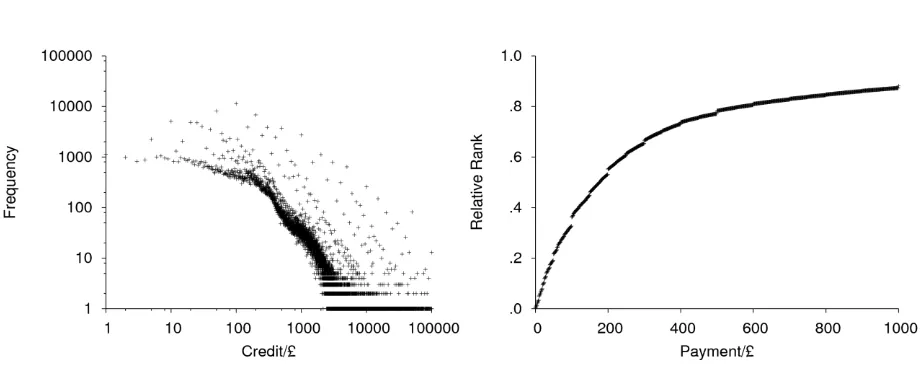
This viewpoint is embodied in the ‗decision by sampling‘ theory [13,47,48] (Figure 1). In decision by sampling, attribute values are compared in a series of binary, ordinal comparisons. The number of favorable comparisons is tracked in a set of counters, one for each option. The option whose counter first gets to threshold is chosen. Value is never calculated—the counters only track ordinal comparisons. Despite this, because attributes are compared against a sample of attribute values from memory, which reflects distribution of these attributes in the environment, decision by sampling is able to account for classic patterns of economic behavior (e.g.,
diminishing marginal utility of wealth, losses looming larger than gains, hyperbolic temporal discounting, and overestimation of small probabilities and underestimation of large probabilities) as properties of the distribution of attribute values.
models known as ‗fast-and-frugal heuristics‘ [53], which involve sequential (in order of
importance) application of reasons to eliminate/select choice alternatives. The approach can be traced back to earlier heuristic models such as the ‗elimination by aspects theory‘ [54] in which choice alternatives are compared sequentially one attribute at a time to eliminate unsatisfactory choice alternatives until only one remains. Note that although there is a representation of value for attributes and thresholds, the problem can be viewed as a set of binary comparisons (e.g., ―if value < threshold then eliminate‖). There is no direct value computation. Future research should study how people select the dimension for comparison (see Box 3), which is a key issues for this class of theories.
Comparative theories such as decision-by-sampling and the priority heuristic are similar in spirit to what we denote here as ‗reason-based‘ models, which provide memory-based
values, knowledge, experiences) underpins the subjective interpretation and representation of choice information. In summary, reason-based models do not assume any value function, and instead rely only on counting-up bits of evidence for and against and on explicit thought processes such as ‗arguments‘.
Concluding remarks
References
1 von Neumann, J., and Morgenstern, O. (1944) Theory of games and economic behavior. Princeton University Press, Princeton, NJ
2 Samuelson, P. (1937) A note on the measurement of utility. Rev. Econ. Stud. 4, 155–161 3 Robbins, L. (1938) Interpersonal comparisons of utility: A comment. Econ. J. 48, 635–641 4 Koszegi, B., and Rabin, M. (2006) A model of reference-dependent preferences. Q. J. Econ.
1221, 1133–1165
5 Rabin, M., and Weizsäcker, G. (2009) Narrow bracketing and dominated choices. Am. Econ. Rev. 99, 1508–1543
6 Loomes, G. (2005) Modelling the stochastic component of behaviour in experiments: some issues for the interpretation of data. Exp. Econ. 8, 301-323
7 Blavatskyy, P. (2007) Stochastic expected utility theory. J. Risk Uncertain. 34, 259–286 8 Larrick, R. P. (2004) Debiasing. In D. J. Koehler & N. Harvey (Eds.), Blackwell handbook of
judgment and decision making. Oxford, England: Blackwell Publishers
9 Keeney, R.L., and Raiffa, H. (1976) Decisions with multiple objectives: Performances and value trade-offs. Wiley, New York
10 Glimcher, P., Camerer, C., Fehr, E., and Poldrack, R. (Eds.) (2009) Neuroeconomics: Decision making and the brain. New York: Elsevier
11 Starmer, C. (2000) Developments in non-expected utility theory: The hunt for a descriptive theory of choice under risk. J. Econ. Lit. 38, 332–382
13 Stewart, N., Chater, N., and Brown, G. D. A. (2006) Decision by sampling. Cogn. Psychol. 53, 1–26
14 Brandstätter, E., Gigerenzer, G., and Hertwig, R. (2006) The priority heuristic: Making choices without trade-offs. Psychol. Rev. 113, 409–432
15 Kahneman, D., and Tversky, A. (1979) Prospect theory: An analysis of decision under risk. Econometrica 47, 263–291
16 Tversky, A., and Kahneman, D. (1992) Advances in prospect theory: Cumulative representation of uncertainty. J Risk Uncertain. 5, 204–217
17 Quiggin, J. (1993) Generalized expected utility theory: The rank-dependent expected utility model. Kluwer-Nijhoff, Amsterdam
18 Bell, D. E. (1985) Disappointment in decision making under uncertainty. Oper. Res. 33, 1–27 19 Loomes, G., and Sugden, R. (1986) Disappointment and dynamic consistency in choice under
uncertainty. Rev. Econ. Stud. LIII, 271–282
20 Birnbaum, M. (2008) New paradoxes of risky decision making. Psychol. Rev. 115, 463–501 21 Padoa-Schioppa, C., and Assad, J. A. (2008) The representation of economic value in the
orbitofrontal cortex is invariant for changes of menu. Nat. Neurosci. 11, 95–102
22 Plassmann, H., O‘Doherty, J., and Rangel A. (2007) Orbitofrontal cortex encodes willingness to pay in everyday economic transactions. J. Neurosci. 27, 9984–9988
23 Camerer, C., Loewenstein, G., and Prelec, D. (2005) Neuroeconomics: How neuroscience can inform economics. J. Econ. Lit. XLIII, 9–64
25 Trepel, C., Fox, C.R., and Poldrack, R.A. (2005) Prospect theory on the brain? Toward a cognitive neuroscience of decision under risk. Cogn. Brain Res. 23, 34–50
26 Hsee, C. K. (1996) The evaluability hypothesis: An explanation for preference reversals between joint and separate evaluations of alternatives. Organ. Behav. Hum. Decis. Process. 67, 247–257
27 Tversky, A. Slovic, P., and Kahneman, D. (1990) The causes of preference reversal. Am. Econ. Rev. 80, 204–217
28 Stewart, N., Chater, N., Stott, H. P., and Reimers, S. (2003) Prospect relativity: How choice options influence decision under risk. J. Exp. Psychol. Gen. 132, 23–46
29 Ungemach, C., Stewart, N., and Reimers, S. (2011) How incidental values from our environment affect decisions about money, risk, and delay. Psychol. Sci. 22, 253–260 30 Lichtenstein, S., and Slovic, P. (Eds.) (2006) The construction of preference. New York:
Cambridge University Press
31 Fehr, E., and Schmidt K. (1999) A theory of fairness, competition and cooperation. Q. J. Econ. 114, 817–868
32 Clark, A.E., and Oswald, A.J. (1996) Satisfaction and comparison income. J. Public Econ. 61, 359–381
33 Boyce, C.J., Brown, G.D.A., and Moore, S.C. (2010) Money and happiness: Rank of income, not income, affects life satisfaction. Psychol. Sci. 21, 471–475
34 Brown, G.D.A., Gardner, J., Oswald, A.J., and Qian, J. (2008) Does wage rank affect employees‘ well-being? Ind. Relat. 47, 355–389
36 Tversky, A., and Simonson, I. (1993) Context-dependent preferences. Manag. Sci. 39, 1179– 1189
37 Gonzalez-Vallejo, C. (2002) Making trade-offs: A probabilistic and context-sensitive model of choice behavior. Psychol. Rev. 109, 137–154
38 Busemeyer, J. R., and Townsend, J. T. (1993) Decision field theory: A dynamic cognition approach to decision making. Psychol. Rev. 100, 432–459
39 Roe, R. M., Busemeyer, J. R., and Townsend, J. T. (2001) Multialternative decision field theory: A dynamic connectionist model of decision making. Psychol. Rev. 108, 370–392 40 Usher, M., and McClelland, J. L. (2001) On the time course of perceptual choice: The leaky
competing accumulator model. Psychol. Rev. 108, 550–592
41 Loomes, G. (2010) Modeling choice and valuation in decision experiments. Psychol. Rev. 117, 902–924
42 Scholten, M., and Read, D. (2010) The psychology of intertemporal tradeoffs. Psychol. Rev. 117, 925–944
43 Parducci, A. (1995) Happiness, pleasure, and judgment: The contextual theory and its applications. Mahwah, NJ: Erlbaum
44 Seymour, B., and McClure, S. (2008) Anchors, scales and the relative coding of value in the brain. Curr. Opin. Neurobiol. 18, 173–178
45 Glimcher, P. (2009) Choice: Towards a standard back-pocket model. In P. Glimcher, C. Camerer, E. Fehr, and R. Poldrack (Eds.), Neuroeconomics: Decision making and the brain. New York: Elsevier
47 Stewart, N., & Simpson, K. (2008) A decision-by-sampling account of decision under risk. In N. Chater & M. Oaksford (Eds.), The probabilistic mind: Prospects for Bayesian cognitive science (pp. 261-276). Oxford, England: Oxford University Press
48 Stewart, N. (2009) Decision by sampling: The role of the decision environment in risky choice. Q. J. Exp. Psychol. 62, 1041–1062
49 Tversky, A. (1969) Intransitivity of preferences. Psychol. Rev. 76 , 31–48
50 Brandstätter, E., Gigerenzer, G., & Hertwig, R. (2008). Risky choice with heuristics: Reply to Birnbaum (2008), Johnson, Schulte-Mecklenbeck & Willemsen (2008) and Rieger and Wang (2008). Psychol. Rev. 115, 281–290
51 Birnbaum, M. H., and LaCroix, A. R. (2008) Dimension integration: Testing models without trade-offs. Organ. Behav. Hum. Decis. Process. 105, 122–133
52 Birnbaum, M. H. (2010) Testing lexicographic semiorders as models of decision making: Priority dominance, integration, interaction, and transitivity. J. Math. Psychol. 54, 363–386 53 Gigerenzer, G. (2004) Fast and frugal heuristics: The tools of bounded rationality: In D.
Koehler and N. Harvey (Eds.), Handbook of judgment and decision making (pp. 62–88) Oxford, England: Blackwell
54 Tversky, A. (1972) Elimination by aspects: A theory of choice. Psychol. Rev. 79, 281–299 55 Johnson, E.J., Haubl, G., and Keinan, A. (2007) Aspects of endowment: A query theory
account of loss aversion for simple objects. J. Exp. Psychol. Learn. Mem. Cogn. 33, 461–474 56 Weber, E.U., Johnson, E.J., Milch, K.F., Chang, H., Brodscholl, J.C., and Goldstein, D.G.
(2007) Asymmetric discounting in intertemporal choice: A query-theory account. Psychol. Sci. 18, 516–523
58 Reyna, V. F. (2008) A theory of medical decision making and health: Fuzzy-trace theory. Med. Decis. Making 28, 850–865
59 Stewart, N., Reimers, S., and Harris, A. J. (2011) Abandon revealed utility, subjective probability, and temporal discounting functions. Manuscript submitted for publication
60 Kornienko, T. (2010) A cognitive basis for context-dependent utility: An adaptive magnitude evaluation approach. Working paper
61 Wallach, H. (1948) Brightness constancy and the nature of achromatic colors. J. Exp. Psychol. 38, 310–324
62 Riskey, D. R., Parducci, A., and Beauchamp, G. K. (1979) Effects of context in judgments of sweetness and pleasantness. Percept. Psychophys. 26, 171–176
63 Parducci, A., and Perrett, L. F. (1971) Category rating scales: Effects of relative spacing and frequency of stimulus values. J. Exp. Psychol. 89, 427–452
64 Barlow, H. B. (1991) Possible principles underlying the transformation of sensory messages. In W. A. Rosenblith (Ed.), Sensory communication (pp. 217–234) Cambridge, MA: MIT Press
65 Birnbaum, M. H. (1992) Violations of monotonicity and contextual effects in choice-based certainty equivalents. Psychol. Sci. 3, 310–314
66 Vlaev, I., Chater, N., and Stewart, N. (2007) Financial prospect relativity: Context effects in financial decision-making under risk. J. Behav. Decis. Making 20, 273–304
67 Vlaev, I., and Chater, N. (2006) Game relativity: How context influences strategic decision making. J. Exp. Psychol. Learn. Mem. Cogn. 32, 131–149
69 Ariely, D., Loewenstein, G., and Prelec, D. (2003) Coherent arbitrariness: Stable demand curves without stable preferences. Q. J. Econ. 118, 73–105
70 Dayan, P., and Seymour, B. (2008) Value and actions in aversion. In: P. W. Glimcher, C. F. Camerer, E. Fehr and R. A. Poldrack (Eds.), Neuroeconomics: Decision making and the brain. London, UK: Elsevier
71 Nieuwenhuis, S., Heslenfeld, D. J., von Geusau, N. J., Mars, R. B., Holroyd, C. B., and Yeung, N. (2005) Activity in human reward-sensitive brain areas is strongly context dependent. Neuroimage 25, 1302–1309
72 Tobler, P. N., Fiorillo, C. D., and Schultz, W. (2005) Adaptive coding of reward value by dopamine neurons. Science 307, 1642–1645
73 Tremblay, L., and Schultz, W. (1999) Relative reward preference in primate orbitofrontal cortex. Nature 398, 704–708
74 Elliott, R., Agnew, Z., and Deakin, J. F. (2008) Medial orbitofrontal cortex codes relative rather than absolute value of financial rewards in humans. Eur. J. Neurosci. 27, 2213–2218 75 Hosokawa, T., Kato, K., Inoue, M., and Mikami, A. (2007) Neurons in the macaque
orbitofrontal cortex code relative preference of both rewarding and aversive outcomes. Neurosci. Res. 57, 434–445
76 Platt, M., and Padoa-Schioppa, C. (2009) Neuronal representations of value. In P. Glimcher, C. Camerer, E. Fehr, and R. Poldrack (Eds.), Neuroeconomics: Decision making and the brain. New York: Elsevier
78 Fechner, G. T. (1966) Elements of psychophysics (H. E. Adler, Trans.) New York: Holt, Rinehart, and Winston. (Original work published 1860)
79 Thurstone, L. L. (1959) The measurement of values. Chicago: University of Chicago Press 80 Loewenstein, G., and Ubel, P. A. (2008) Hedonic adaptation and the role of decision and
Box 1. Psychological evidence in support of comparison-based approaches
Even subjective sensory experiences, which can be measured in physical units (frequency, sound pressure, luminance, force), are a function of the comparison of each stimulus, rather than
involving a separate evaluation of each element of the sensory input. For example, the subjective judgment of the grayness of a patch is determined by the ratio of its luminance to the luminance of the brightest patch in the scene (known as ‗Wallach‘s ratio rule‘), not by any function of its absolute degree of luminance. This observation implies that if the visual field is made up entirely of dull grey patches (as when viewed in the context of natural scenes), then the brightest patch will be perceived as a pure white, as is empirically observed [61]. In another modality, the judged sweetness of a given sucrose concentration is highly context-dependent, being higher when the concentration appears in a positively-skewed distribution than when the same absolute concentration appears in a negatively-skewed distribution (moreover, the absolute sucrose concentration judged to be most pleasant is lower in a positively-skewed distribution) [62]. More generally, subjective magnitude judgments for a wide variety of sensory stimuli are context dependent in predictable ways [43,63]. The neurophysiology of the sensory pathway confirms this picture—from the earliest stages of sensory processing, the system ‗normalizes‘ absolute sensory values, possibly to increase information coding efficiency [64].
Similar context effects were observed when skewing the distribution of options offered as monetary equivalents for gambles, whilst holding the maximum and minimum constant—when most values were small, gambles are under-valued compared to when most values were large [65].
Prospect relativity is also observed in risky financial decisions when choices of saving rates and investment risk are affected by the position of each option in the rank of presented options [66]. Relativity effects are also seen in judgments of income. For example, wage satisfaction is predicted not by an individual‘s absolute earnings but instead by the ranked position of their wage within their workplace [34], and general life satisfaction is predicted not by absolute income but by ranked position of income within a social reference group [33]. Similar context effects are also found in interactive decision-making when people play many one-shot Prisoner's Dilemma games against anonymous opponents [67]. Players‘ cooperation and their predicted cooperation of the co-player in each game depend on the ―cooperativeness‖ of the preceding games.
Box 2. Neurobiological evidence in support of comparison-based approaches Although the neurophysiological basis of valuation is complex [70], recent evidence in neuroscience suggests that comparative valuation is fundamental at a neural level.
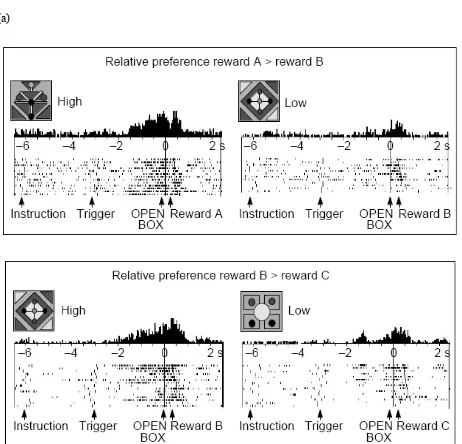
Neurophysiological recordings in monkeys and humans have shown evidence that comparative reward coding in neural substrates (e.g., via dopamine projections to the striatum and the orbitofrontal cortex) is strongly implicated in simple choice behaviour [71–73] (see Figure II). For example, comparative coding is observed in the orbitofrontal neurons of monkeys when offered varying juice rewards presented in pairs within each block of trials [73]. The recorded neuronal activity depended only on whether a particular juice was preferred in each block of trials, not on its absolute value. An fMRI study with humans found similar results in the medial orbitofrontal cortex—a brain region involved in value coding [74]. Such neural patterns— outcomes activating orbitofrontal neurons only when they are comparatively better—are also exhibited with unpleasant stimuli [75].
Box 3. Outstanding questions for comparative theories of choice
What empirical evidence can strictly distinguish between comparison-based decision making with and without value computation?
If people lack ‗common currency‘ of utility and hence cannot make stable comparisons between options that vary on several dimensions, then conducting "contingent valuation" of non-market goods, e.g., concerning health or the environment, is not possible. What method should replace it for policy analysis?
If consumers and voters choose in a purely comparative way, what economic and political systems might be expected to arise to both exploit comparative effects and to alleviate them?
To what extent to different theoretical accounts map on to Marr's different levels of analysis of cognition: (1) functional/normative, (2) algorithmic/computational, and (3)
Box 4. Implications of comparative theories across other fields
Philosophy: Bentham‘s [77] utilitarianism—the notion that utility is calibrated on a stable
psychological scale, may need a revision in view of the evidence that people possess only relative utilities.
Politics: If a ‗neural signal‘ for value were stable within and across individuals, then it would be
possible to imagine directly measuring the neural correlates of human well-being, or perhaps their valuation of particular types of experience, event, or outcome. A natural aim of public policy would thenbe to maximize the expected level of such well-being. The utilitarian approach to politics could finally be put on a scientific basis. Comparative models imply that this can be accomplished only if the decision context is relatively stable and consistent.
Economics: Comparative theories may appear to have disturbing implications for normative
decision theories, whether in the valuation of non-market goods (such as environment and
health), or, in the foundations of micro-economics. Stable utility functions, for example, may just be an illusion [29]. However, even elementary binary or comparative judgments might be used to ‗construct‘ a utility scale, which is more stable and precise than any direct judgments. Using binary choices, people can reliably discriminate about 100 loudness levels for a single type of stimulus (e.g., tones). Thus, following Fechner [78] and Thurstone [79] we can construct a loudness scale from a selection of binary options. This ‗Fechnerian‘ scale will reliably predict which of pairs of tones will be judged to be louder, which means that the scale and the
predictions are not context dependent.
Marketing: When products are complex, people probably choose using simple heuristics or
comparative mind, but which include hidden attributes that are highly profitable (e.g., high-profit printer ink, or hidden fees in credit cards and banking).
Healthcare: Explicit judgments concerning health-state experiences (e.g., pain) are typically
expressed in complex social and economic contexts. This is the case when patients are forced to make abstract comparisons between experienced or imagined health states and other non-health-related goods, such as money. Lack of stable value scales would require increasing experience in order to mitigate this trade-off problem, but experience cannot easily do so for never-experienced symptoms. Therefore, new methods of health state valuations are required (e.g., a combination of choice-based and happiness-based measures [80], or ‗building‘ a scale by using the binary
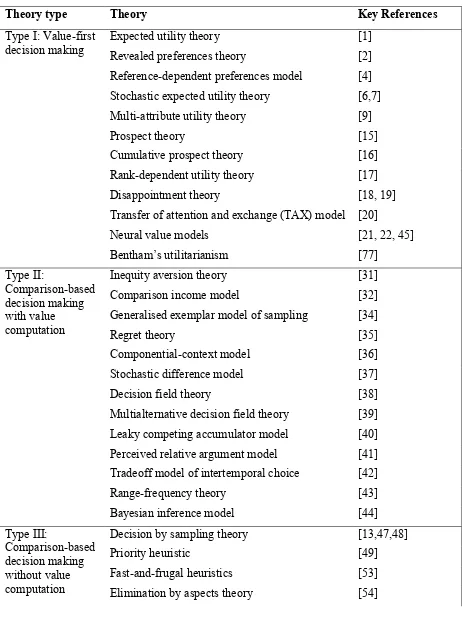
Table 1. Choice theories discussed in the article according to their type with key references for each theory (presented in the order of appearance in the text)
Theory type Theory Key References
Type I: Value-first decision making
Expected utility theory [1]
Revealed preferences theory [2]
Reference-dependent preferences model [4] Stochastic expected utility theory [6,7] Multi-attribute utility theory [9]
Prospect theory [15]
Cumulative prospect theory [16]
Rank-dependent utility theory [17]
Disappointment theory [18, 19]
Transfer of attention and exchange (TAX) model [20]
Neural value models [21, 22, 45]
Bentham‘s utilitarianism [77]
Type II:
Comparison-based decision making with value computation
Inequity aversion theory [31]
Comparison income model [32]
Generalised exemplar model of sampling [34]
Regret theory [35]
Componential-context model [36]
Stochastic difference model [37]
Decision field theory [38]
Multialternative decision field theory [39] Leaky competing accumulator model [40] Perceived relative argument model [41] Tradeoff model of intertemporal choice [42]
Range-frequency theory [43]
Bayesian inference model [44]
Type III:
Comparison-based decision making without value computation
Decision by sampling theory [13,47,48]
Priority heuristic [49]
Fast-and-frugal heuristics [53]
Query theory [55,56]
Reason-based choice [57]
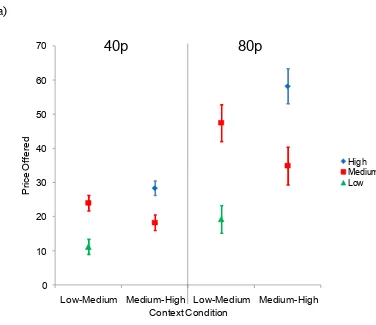
Figure I. Comparative representations of utility for immediate subjective experiences such as pains [68]. (a) Mean price offers to avoid pain from electric shocks depending on endowment (40p vs. 80p per trial) and context pairing. The medium pain level (red squares) provokes markedly different mean price offers according to whether it occurs in a block with low, or high level pain. Furthermore, the price people are willing to pay for relief from the same pain is strongly determined by money-in-the-pocket (80p endowment brings about twice bigger offers than 40p endowment). (b) Demand curves for medium pain relief (depending on context and endowment)—these reflect the quantity of pain relief that can be expected to be sold at different prices. The curves exhibit the relativistic patterns observed for the price offers.
(a) 0 10 20 30 40 50 60 70
Low-Medium Medium-High Low-Medium Medium-High
(b) 0 20 40 60 80 100 120 140 160 180 200
5 10 15 20 25 30 35 40 45 50 55 60 65 70 75 80
Q u a n tit y Price (pence)
vs. Low (80p) vs. High (80p) vs. Low (40p) vs. High (40p)
Figure II. Comparative evaluation in the brain. (a) The macaque orbitofrontal cortex responds to a reward only when it is the preferred outcome in a pair [73]. (b) fMRI BOLD signals from the human ventral striatum exhibit similar response patterns, i.e., the activity is based only on the ordinal ranking of a monetary outcome in the present context (highest activity when the best option and lowest activity for the worst option), irrespectively of whether outcomes are losses or gains [71].