Abstract—Recently, many recurrent neural network based LM, a type of deep neural network to process sequential data, have been proposed and have yielded remarkable results. Most deep learning structures work, helping the GPU build fast models; In particular, the execution of these models in several GPUs. In this work, an automatic learning algorithm will be developed and proposed to approach a deep neural network with a convolutional layer and a connection layer. The proposed algorithm is an extension of the Ensemble approach and uses a multilayer perceptron for the data points and a multilayer perceptron to combine the experts and predict the final result. To solve this problem, we propose in this document a language model based on CNN that processes textual data related to multidimensional data related to the network input. To bring this dimensional input to long-term memory (LSTM), we use a network of convolutional neurons (CNN) to reduce the dimensionality of the input data to avoid the problem of the disappearance gradient by decreasing the time between the words of entry. The data set for the training and testing of this model comes from the database of low-speed META data sets compared to the MNIST data set that is the focus of our future work. Our implementations can be used for a fast and comprehensive search in the recurrent neural network, which can find textual data about multidimensional data using Python 3.6. to get better performance.
Index Terms— Language Modeling, Neural Language Modeling, Deep Learning, Neural Network, GPU.
I. INTRODUCTION
he recent years, deep learning has played a vital role in artificial intelligence and has also been successfully applied in many fields. For example, AlphaGo [1], developed by Google DeepMind, has achieved significant success in the game Go to beat the best human game Go players. In general, machine learning models are classified into two groups: supervised learning and unsupervised learning. A supervised learning model involves learning a function derived from the labeled learning data. The labeled learning data consists of a set of learning examples, and each example has an input value and an output value, also called a label. Developed by
Symphorien Karl Yoki Donzia Department School of IT Engineering Daegu Catholic University, South Korea e-mail: [email protected].
Haeng-kon Kim Corresponding Author Department School of IT Engineering Daegu Catholic University, South Korea.
e-mail: [email protected]
Google DeepMind, has achieved significant success in the game Go to beat the best human game Go players. In general, machine learning models are classified into two groups: supervised learning and unsupervised learning. A supervised learning model involves learning a function derived from the labeled learning data. The labeled learning data consists of a set of learning examples, and each example has an input value and an output value, also called a label. The learned function is used to correctly determine class labels for unknown data. In contrast to supervised learning approaches, unsupervised machine learning approaches are used to uncover unlabeled learning data patterns[2]. Deep learning involves comprise manifold platform of performance which helps to comprehend data like images, audio, and text. The idea of deep learning comes from the study of the artificial neural network, Multilayer Perceptron which includes more hidden layers which is a deep learning structure. [3]. Currently, graphics processing units (GPUs) have evolved from fixed function representation devices to programmable and parallel processors. Market demand for real-time high-definition 3D graphics is pushing GPUs to become multicore, highly parallel, multithreaded processors with huge computing power and high bandwidth memory. As a result, the GPU architecture is designed so that more transistors are dedicated to data processing than to caching data.[2] GPU-accelerated LSMs may be more computationally efficient than CPU-based LSMs. In addition, it is a major problem to make the LSM algorithms in the GPU optimized for the best efficiency. One of the main problems of metaheuristics is to rethink the existing parallel models and the programming paradigms to enable their implementation in GPU accelerators.[2] Deep Neural Network (or Deep Learning) is one of the machine learning algorithms that uses a cascade of multi-layers composed of a number of neurons and non-linear functionality units for prediction, classification, feature extraction, and pattern recognition [4]. Recently, deep neural network has achieved remarkable results in computer vision, natural language processing, speech recognition, and language modeling. Especially, Long-Short Term Memory (LSTM) [5], a type of recurrent neural network, is designed to process sequential data by memorizing previous input of the network, and LSTM is more robust to the vanishing and exploding gradient problem [6] than transitional recurrent neural network.
With convolutional neural networks, RNNs have been used as part of a model to generate descriptions of untagged images. It's pretty amazing how it seems to work. The
Recurrent Neural Network with Sequence to
Sequence Model to Translate Language Based
on TensorFlow
Symphorien Karl Yoki Donzia and Haeng Kon Kim
combined model aligns even the words generated with the characteristics found in the images. We developed the TensorFlow system to experiment with new models, train them in large datasets and put them into production. We have
Fig. 1. Generating Image Descriptions.
Established TensorFlow on many time of undergo with our first generation system, DistBelief [7], which generalizes to permit researchers to examine a large assortment of concept with relative comfort. TensorFlow favor great-scale training and implication: it efficiently uses hundreds of potent servers (GPUs) for rapid training and implement production implication models on distinctive platform ,varies from large clusters issued through multiple programming. A data center that runs locally on mobile devices. In the same time, it is supple to mainstay experimentation and the review for new machine learning models and system amelioration.
II. BACKGROUND A. Motivations
Please We Machine translation is similar to linguistic modeling since our input is a sequence of words in our source language (English). We want to generate a sequence of words in our target language (Korean). In this study, we explore, evaluate and analyze the influence of RNN architectures, the characteristics of data sets. The formation of an RNN is similar to the formation of a traditional neural network. We also use the backpropagation algorithm, but with a small twist. As the parameters are mutual by all the time level of the connection, the gradient in each outflow cpmfode not even on the calculations of the current time level, but on the precedent time level. For example, to calculate the gradient at t = 4, we would need to go back three steps and summarize the gradients. This is called Backpropagation Through Time (BPTT). If that does not make sense yet, do not worry, we'll have a full article on the bloody details. There are certain mechanisms to deal with these problems, and some types of RNNs (such as LSTM) have been specifically designed to avoid them. The learning algorithm can read a batch of input data and current parameter values and rewrite the gradients in the parameter server. This model works for the formation of simple feed-forward neural networks, but fails for more advanced models, such as recurrent neural networks, which contain loops [8]; Adverse networks, in which two related networks are formed alternately [9]; and reinforcement learning models, where the loss function is calculated by an agent in a separate system, such as a video game emulator
[10]. In addition, there are many other machine learning algorithms, such as maximizing expectations, learning decision forests and latent Dirichlet allocation, which do not fit the same mold as neural network training.
B. Review of the Related Literature
When The network was made by Specht in 1991 [11], which showed that neural networks allow smooth transitions from one observed value to another, and therefore, may provide better results than conventional regression. Pal et al [8] further investigated the use of Perceptions Multi-Layer (MLP) for fuzzy classification. The additional literature implements multilayer perceptions for the purpose of predicting. In Neural Automatic Translation (NMT) has shown remarkable progress in recent years with production systems now being rolled out to end users. The major disadvantage of current architectures is that they are expensive to train and generally require several days or even weeks of processor time to converge. This makes the exhaustive search for hyperparameters, as is often the case with other architectures of neural networks, prohibitive. Unexpectedly, I worked in the translation of the voice translating the audio in one language into text in another: the networks of a system ASR were used as inputs for the translation models giving access to the translation model to the uncertainty of voice recognition. Alternative approaches have explicitly incorporated acoustic and translation models using a stochastic finite state transducer capable of directly decoding translated text using Viterbi search.
C. Neural Network base Language Model
We target the following goals; Availability that the platform should have negligible down time. And the Capacity which should support sensors with widely varying requirement; pH sensor reporting few bytes of data to drones sending gigabytes of video. And also a Cloud Connectivity that several farming application, such as crop cycle prediction, seeding suggestions, farming practice advisory, etc.[4] And the last one is Data Freshness what which a state sensor data from the farm can make application suggest incorrect courses of action to the farmer.
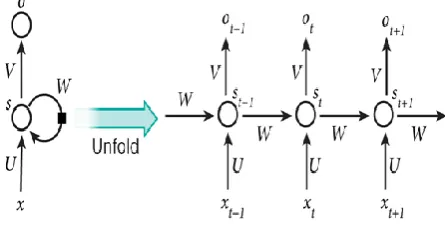
[image:2.595.315.538.562.676.2]following: x_t is the entry to step t. For example, x_1 could be a one-to-one vector corresponding to the second word of a sentence. s_t is the hidden state in time step t. This is the "memory" of the network. s_t is calculated based on the previous hidden state and the input to the current step: s_t = f (Ux_t + Ws_ {t-1}). The function f is generally a non-linearity such as tanh or ReLU. s -1, which is required to calculate the first hidden state, is generally initialized to all zeros. o_t is the output in step t. For example, if we wanted to predict the next word in a sentence, it would be a vector of probabilities in our vocabulary. o_t = \ mathrm {softmax} (Vs_t).[14l.
D. Programming Languages
Language : Currently it is the most popular statistical programming language. The strength of the R language lies in obtaining sufficiently perceptible visualized data with simple coding. This helps shorten the development process. Python : It is the second most used language in the world after the R language, and helps to code the machine learning algorithms using the numpy library. Although it takes more time to code than the R language, it is used in several fields due to its portability, which is a typical language advantage. It can be used to calculate internal variables by adding a Scipy library or using Python to accelerate the algorithm. It is also easy to accelerate. Matlab [15]: Since mathematical accuracy is guaranteed to a certain extent, it is used mainly in the laboratory.
E. Divergence between Machine Learning and Deep Learning
Depth operation is a subtype of machine learning. When we use Machine Learning, manually extract the functions from the image. On the other hand, [15]it automatically provides the original image directly to the deep neural network that learns the functions. Deep Run often requires hundreds of thousands or millions of images to get better results. Deep execution requires a large amount of calculations and requires a high-performance graphics processor Language.
Table 1 :Machine Learning VS Deep Learning
F. Tensor Flow Execution Model
TensorFlow uses a single data flow chart to represent all calculations and states in an automatic learning algorithm, which includes individual mathematical operations, parameters and their update rules, and preprocess inputs. The data flow chart explicitly expresses the communication between the subprocesses, which facilitates the execution of independent calculations in parallel and the division of the calculations between several devices. TensorFlow vary from unit data outflow systems in two [jase: a) The model backing multiple simultaneous performance in advanced imposed subgraphs of the global diagram. b) Individual vertices can have a mutable state that can be shared between different executions of the graph.The crucial study in the parameter server architecture is that the inconstant tange is crucial when traning very big models because it is possible perform elicit s to the site with very large parameters and propagate these updates to parallel learning stages as quickly as possible.[16].
III. IMPLEMENTATION A. GRU LSTM Network
According to the empirical evaluations during the demonstration in [16] of the empirical evaluation of synchronized recurrent neural networks in the modeling of sequences and the empirical exploration of recurrent network architectures, there is no clear winner. In many tasks, both architectures offer comparable performance, and adjustment hyperparameters such as the size of the layer are probably more important than choosing the ideal architecture. GRUs have fewer parameters and, therefore, can train a little faster or need less data to generalize. On the other hand, if you have enough data, the higher expression power LSTM can lead to better results. .
B. Proposed Method (Sequence to Sequence Model ) The architecture of our proposed approach is applied to the LSTM network with an example sentence. In the model described above, each input must be encoded in a fixed-size status vector, since this is the only thing that is transmitted to the decoder. To allow the decoder to have more direct access to the input, a care mechanism has been introduced..
Allows the decoder to take a look at the input in each decoding step. A multilayer network from sequence to sequence with LSTM cells and a mechanism of attention in the decoder resembles Fig.3. Fig.4. Proposal Architecture Sequence to Sequence Model LSTM transform one word at a moment and calculates the probabilities of feasible values for the next word in the decision. Finally, the softmax layer is applied to the hidden representation of the LSTM to assign the probability distribution to the next word.
Machine Learning Deep Learning
+ Small data sets can provide good results
- Large data set required
+ Model could be
learned quickly
- Computationally
intensive
- Multiple features and classifiers may
try for the best results
+ Learn features and classifiers
automatically
- Accuracy remains
stable
Fig. 3. Design of Sequence to Sequence Model
Fig. 4. Proposal Architecture Sequence to Sequence Model .
C. Sequence to Sequence Model Coding
Purpose ; The main is to translate English word to Korean word. the parameters are distribute by all time phase in the network, the gradient at each output depends not only on the calculations of the current time step, but also the previous time steps our input is a sequence of words in our source language (English). We want to output a sequence of words in our target language (Korean). A essential difference is that our outflow just starts afteraward we have seen the finalyze input, because the former word of our translated phrase may require information receive from the complete input sequence.
WordDic;a)SEPabcdefghijklmnopqrstuvwxyz단어나무
놀이소녀키스사랑 b)S : a symbol of input of decoding c)E : a symbol of output of decoding d)P : a empty sequence of word.
Traning data ; As word Dic proposal , the traning data also resume like a) ['word', '단어'], ['wood', '나무'], b) ['game', '놀이'], ['girl', '소녀'], c) ['kiss', '키스'], ['love', '사랑'], d) ['good', '좋아'], ['dead', '죽음'].
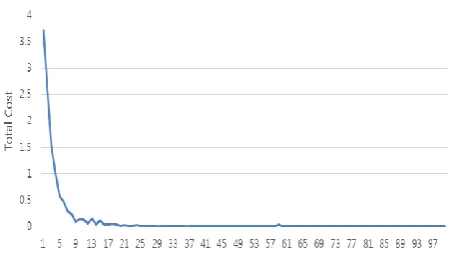
Learning rate is 0.01 and Epoch time is 100. We focus on testing the RNN with simple model, handling the tensiorFlow..
IV. EXPERIMENTAL RESULT
To The graph shows that our model achieves relatively better performance with data and is more robust for overfitting than the base .
We training RNN with META data that result shows recall almost perfect But because of the META data set, it shows
the low precise result (example of loev -> 사랑) But in the case when we train with public big data (such as, MINST), it will show the better result
V. EVALUATION
In this section, we evaluate the performance of TensorFlow Unless otherwise stated, we run all experiments on a shared production cluster, and all figures plot median values with limit bars. In this paper we focus on system performance Sequence to Sequence Model Coding, rather than learning objectives like time to accuracy. TensorFlow is a system that allows machine learning practitioners and researchers to experiment with new techniques, and this evaluation demonstrates that the system (i) has little overhead, and (ii) can employ amounts of computation to accelerate real-world applications
Fig. 5. Grap of the Total Cost
Fig. 6. Training Result .
VI. CONCLUSION
[image:4.595.322.548.305.434.2] [image:4.595.312.551.401.623.2]labor. As we noted in the experimental result after the data traning, we tested the RNN with the META model and administered the flow of the tensor. The result shows the low and accurate result due to the META data set. And that will be the object of our future work. In future work, we will train with large public data such as MINST, which will show the best result. As well known MNIST database is a wide database of handwritten digits popularly regular for the training of diverse image treatment systems. And the database is also widely used for training and testing in the field of machine learning. Then a new data set will include 28x28 grayscale images of more high-quality fashion products. And the learning set has many images and the test set will have huge images.The MNIST mode is intended to directly replace the original MNIST data set with machine learning analysis algorithms because it shares the same image size, the same data format, training ,testing on divisional structure.
REFERENCES
[1] AlphaGo, https://deepmind.com/research/alphago.
[2] Che-Lun Hung #1, Yi-Yang Lin *2, Performance of Convolution Neural Network based on Multiple GPUs with Different
DataCommunicationModels,H301AR2A10.978-1-5386-5889-5/18/$31.00©2018 IEEE SNPD 2018,.
[3] Tianyi Liu, Shuangsang Fang,Implementation of Training Convolutional Neural Networks,University of Chinese Academy of Sciences, Beijing, China
[4] LeCun, Y., Bengio, Y., & Hinton, G. 2015. Deep learning. Nature, 521(7553), 436-444
[5] Hochreiter, Sepp, and Jürgen Schmidhuber. "Long short-term memory." Neural computation 9.8 (1997): 1735-1780. [6] J. Wang, “Fundamentals of erbium-doped fiber amplifiers
arrays (Periodical style—Submitted for publication),” IAENG International Journal of Applied Mathematics, submitted for publication.
[7] J. Wang, “Fundamentals of erbium-doped fiber amplifiers arrays (Periodical style—Submitted for publication),” IAENG International Journal of Applied Mathematics, submitted for publication.
[8] M. I. Jordan. Serial order: A parallel distributed processing approach. ICS report8608, Institute for Cognitive Science,
UCSD, La
Jolla,1986.cseweb.ucsd.edu/˜gary/PAPERSUGGESTIONS/Jo rdan-TR-8604.pdf
[9] I J. Goodfellow, J. Pouget-Abadie, M. Mirza, B. Xu, D. Warde-Farley, S. Ozair, A. C. Courville, and Y. Bengio. Generative adversarial nets. In Proceedings of NIPS, pages
2672– 2680, 2014.
papers.nips.cc/paper/5423-generativeadversarial-nets.pdf. (pp. 354-
[10]V. Mnih, K. Kavukcuoglu, D. Silver, A. A. Rusu, J. Veness, M. G. Bellemare, A. Graves, M. Riedmiller, A. K. Fidjeland, G. Ostrovski, S. Petersen, C. Beattie, A. Sadik, I. Antonoglou, H. King, D. Kumaran, D. Wierstra, S. Legg, and D. Hassabis.Human-level control through deep reinforcement learning. Nature, 518(7540):529–533, 02 2015. dx.doi.org/10.1038/nature14236.
[11]J. Dean, G. S. Corrado, R. Monga, K. Chen, M. Devin, Q. V. Le, M. Z. Mao, M. Ranzato, A. Senior, P. Tucker, K. Yang, and A. Y. Ng. Large scale distributed deep networks. In Proceedings of NIPS, pages 1232–1240, 2012. research.google.com/archive/large deep networks nips2012.pdf.
[12]T.Brants and A. Franz. Web 1T 5-gram version 1, 2006. catalog.ldc.upenn.edu/LDC2006T13.
[13]http://www.wildml.com/2015/09/recurrent-neural-networks-tu torial-part-1-introduction-to-rnns/ ,
[14] http://www.wildml.com/2015/10/recurrent-neural-network-tu torial-part-4-implementing-a-grulstm-rnn-with-python-and-th eano/ .
[15]MathWorks MATLAB utilize of Deep Learning.Page10 KR_Deep_Learning 09