THE SCIENCE BUDGET
2010–2011
STATE EXPENDITURE ON
SCIENCE & TECHNOLOGY AND
Table of Contents
Executive Summary 4
Introduction 9
Chapter 1: Science and Technology Budget 11
1.1 Total Science Budget 11
1.2 Trends in State science and technology expenditure 11
1.3 Trends in categories of State science and technology expenditure 13
1.4 Science and technology intensity (spending relative to economic activity) 14
Chapter 2: State funding of research and development 15
2.1 Types of Research and Development indicators 15 2.2 Government budget spending on research and development 16 2.3 Detailed government department spending on research and development 17 2.4 Programmes classified by area of research 20 2.5 GBAORD as a percentage of GNP and international comparisons 21
Chapter 3: Performance of R&D in the public sector 24
3.1 Total expenditure on R&D performed in the government sector 24
3.2 Types of Research 27
3.3 Fields of science 28
Chapter 4: Human resources dedicated to publicly performed R&D 29
4.1 Research and development personnel 29
4.2 Gender and qualifications of State sector research staff 30 4.3 Research and development staff by fields of science (FTE) 31
Appendix
Appendix 1: Methodology 33 Appendix 2: Definitions of R&D and S&T activities 34 Appendix 3: Government Departments/Agencies included in Science Budget 35
Appendix 4: Acronyms 36
Appendix 5: Government Departments and Agencies' Programmes 37
Department of Agriculture, Food and the Marine 39
Bord Iascaigh Mhara 39
Marine Institute 40
Teagasc 42
Department of Arts, Heritage & the Gaeltacht 45
Údarás na Gaeltachta 45
Inland Fisheries Ireland 48 Sustainable Energy Authority of Ireland (SEAI) 49
Department of Education and Skills 54
Dublin Institute for Advanced Studies 54
FÁS 56
Higher Education Authority 56
Irish Research Council for the Humanities and Social Sciences 60 Irish Research Council for Science, Engineering and Technology 61
Department of Jobs, Enterprise and Innovation 62 Office of Science, Technology and Innovation (OSTI) 62
Enterprise Ireland 64
Forfás 66
IDA Ireland 67
InterTradeIreland 68
Science Foundation Ireland 69
Shannon Development 73
Dept Environment, Heritage & Local Government 76
Environmental Protection Agency 76
Met Éireann 78
Radiological Protection Institute of Ireland (RPII) 79
Department of Finance 80 Economic and Social Research Institute (ESRI) 80
Department of Health 82
Health Research Board 82
Department of Social Protection 84
Department of the Taoiseach 85 The National Economic and Social Council 85
Department of Transport 86
National Roads Authority 86
Offices 87 Central Bank and Financial Services Authority of Ireland 87
Central Statistics Office 88
Office of Public Works 89
The State Laboratory 90
Appendix 6: Sample Questionnaire 92
Appendix 7: Forfás Board Members 94
Appendix 8: Recent Forfás Publications 95
[image:3.595.93.519.81.793.2]List of Figures
Figure 1: Total Science Budget 2011 11
Figure 3: Annual % change in S&T spending by the State sector (2001-2011) 12
Figure 4: Total S&T spending by activity, (2002-2011) €m. 13
Figure 5: Share of S&T spending by category as a percentage of total, 2011 13
Figure 6: Annual growth rates of S&T spending and nominal GNP 2010-2011 14
Figure 7: Total S&T expenditure as a percentage of GNP, 2002-2011 14
Figure 8: R&D funding and performance system 15
Figure 9: GBAORD trend in current prices, €m. (2002-2011) 16
Figure 10: GBAORD trend (€m) and GBAORD as a % of GNP (2002-2011) 21
Figure 11: International comparison GBAORD as a % of GDP/GNP 23
Figure 12: Annual growth rate of GBAORD for selected countries, (2005–2010) 23
Figure 13: GOVERD as a percentage of GNP and GOVERD trend, (2002-2011) 24
Figure 14: Major State R&D performers, % of total (2011) 25
Figure 15: Total R&D personnel by occupation - headcount terms (2009-2011) 29
Figure 16: Total R&D personnel by occupation (FTEs), (2011) 30
Figure 17: FTE Researchers by gender and qualification, (2011) 30
Figure 18: Researchers classified by gender/field of science (FTE), (2011) 32
List of Tables
Table 1: Government Departments funding R&D activities (2011 estimates) 17
Table 2: GBAORD classifications for Ireland 2011 20
Table 3: Civil GBAORD as a percentage of economic activity (GDP/GNP) 22
Table 4: GOVERD as a % of GDP, selected countries (2005 and 2010) 25
Table 5: GOVERD by type of research (2011) 27
Table 6: Field of science classified by type of research, (2011) €m. 28
Table 7: Total male/female and as % of total by field of science, (2011) 31
Science Budget Categories
Science Budget (S&T and R&D) includes all expenditure on S&T Education & Training, Technology Transfer, S&T Services, Other S&T activities and Research and Development GBAORD (R&D) this is a sub-set of the Science Budget and is the total expenditure by
Government on Research and Development
GOVERD (R&D) this is a sub-set of GBAORD and is the Research and Development carried-out in Government Departments or Agencies.
Executive Summary
Overall science and technology and research and development spending is estimated to have reduced in 2011 following a period of rapid growth. Many individual programme areas have seen cuts in expenditure.
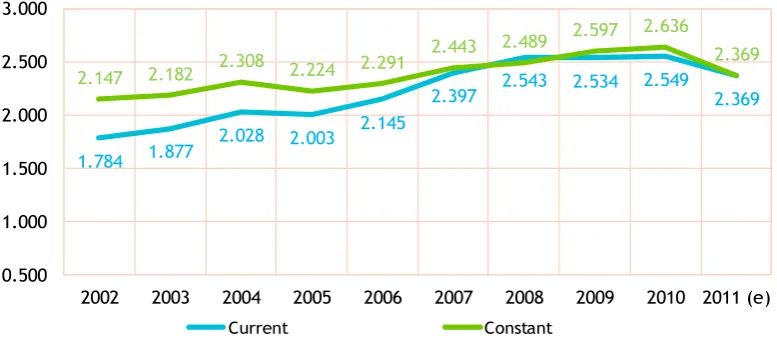
Total science and technology spending by the State sector 2002-2011 (current and constant prices €bn.)
The total public S&T expenditure for 2011 is estimated at €2.369bn.
In current terms, this represents a decrease of 7.0 percent on the outturn figure of 2010 of €2.549bn.
Allowing for inflation, the percentage decrease is 10.1 percent.
Total expenditure on State S&T measured as a percentage of the Gross National Product (GNP) is shown below. There has been a decline in Nominal GNP since 2008 which has contributed to the percentage increase in S&T spending intensity for the 2008-2010 period. Total science and technology expenditure as a percentage of GNP, 2002-2011
The allocated expenditure for 2011 calculated against the estimated GNP figure for 2011 shows a decline of 0.12 percent to an S&T spending intensity of 1.87 percent of GNP. 1.784 1.877
2.028 2.003 2.145
2.397 2.543 2.534 2.549 2.369 2.147 2.182 2.308 2.224 2.291
2.443 2.489 2.597 2.636 2.369
0.500 1.000 1.500 2.000 2.500 3.000
2002 2003 2004 2005 2006 2007 2008 2009 2010 2011 (e)
Current Constant
1.66%
1.57% 1.59%
1.44% 1.38%
1.47% 1.64%
1.92% 1.99%
1.87%
1.3% 1.6% 1.9% 2.2%
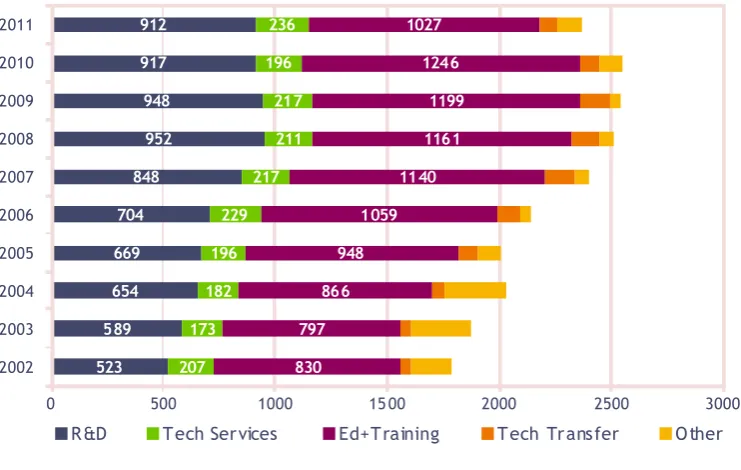
Looking at the different components of State S&T spending, the largest decline in estimated expenditure in 2011 is in the area of S&T Education and Training. Between 2010 and 2011 State-funded S&T spending in this area is expected to decline from €1.25bn to €1.03bn. Spending in the key area of Research and Technology is being more or less maintained with funding going from €917m to €912m, a marginal decrease of 0.5 percent.
Total science and technology spending by activity, 2002-2011 (current prices €m.)
Focussing on the Research and Development element of Government funding, also known as Government Budget Appropriations and Outlays on R&D (GBAORD), with the exception of 2003, the period 2002 to 2007 saw the GBAORD intensity ratio hover around 0.5 percent of GNP. This was a strong period of funding increases arising out of strong economic growth. GBAORD trend (€m.) and GBAORD as a percentage of GNP, 2002-2011
In 2009, the GBAORD intensity rate rose as a result of strong R&D spending outpacing nominal economic growth.
In 2011, GBAORD intensity has remained consistent at 0.65 percent of GNP despite a reduction in the amount of funding. This is due to a marked reduction in GNP in recent years. 523 589 654 669 704 848 952 948 917 912 207 173 182 196 229 217 211 217 196 236 830 797 866 948 1059 1140 1161 1199 1246 1027
0 500 1000 1500 2000 2500 3000
2002 2003 2004 2005 2006 2007 2008 2009 2010 2011
R&D Tech Services Ed+Training Tech Transfer Other
0.47% 0.43% 0.50% 0.54% 0.51% 0.57%
0.61% 0.71% 0.65% 0.65% 504 518
635
756 790
934 946 941
827 823 0.00% 0.50% 1.00% 1.50% 2.00% -100 100 300 500 700 900 1100
2002 2003 2004 2005 2006 2007 2008 2009 2010 2011 (e)
A comparison of the growth in Ireland’s average spend on civil Research and Development since 2005 compared to a selection of other countries where data is available shows Ireland with a low rate of 1.5 percent over the period.
Average annual growth rate of GBAORD for selected countries, 2005–2010
Ireland’s growth rate at 1.5 percent is lower than the EU (27 countries) average of 4.6 percent over the same period.
GOVERD trend and GOVERD as a percentage of GNP, 2002-2011
The 10-year trend shows that levels of Government Expenditure on R&D (GOVERD) are now at their lowest level and expenditure on R&D performed in the State sector has fallen from a high in 2007 of €141m to the current allocation of €85m.
GOVERD as a percentage of GNP over the ten-year period from 2002 to 2011 is also illustrated in this graph. This shows that, as a percentage of GNP, the level of GOVERD has dropped from 0.12 percent in 2002 to 0.07 percent in 2011.
0.12% 0.11%
0.11%
0.09%
0.08% 0.09% 0.09% 0.08%
0.07% 0.07% 125 127 138 127 120 141 140 103 86 85 0.0 20.0 40.0 60.0 80.0 100.0 120.0 140.0 160.0 0.00% 0.10% 0.20% 0.30%
2002 2003 2004 2005 2006 2007 2008 2009 2010 2011
GOVERD as % of GNP (left) GOVERD Trend (right) €m. 1.1% 1.5% 2.6% 2.7% 4.5% 4.6% 4.7% 4.7% 5.0% 5.9% 6.9% 7.6% 8.7% 9.3% 9.9%
0.0% 2.0% 4.0% 6.0% 8.0% 10.0% 12.0%
Total research and development personnel by occupation (headcount terms, 2009-2011)
The survey shows that overall the number of personnel engaged in R&D in institutions within the government sector increased slightly in 2011 over the numbers recorded for 2010. Between 2010 and 2011 the number of PhD researchers has increased by 5.1 percent, while researchers without a PhD have decreased by 4.8 percent over the same period.
The number of technicians are expected to increase by 11.9 percent in 2011 over 2010. There has also been an increase in the number of research support staff of 5.5 percent in 2011.
351
181
268
407 350
168
243
343 368
160
272
362
0 100 200 300 400 500
Researchers with
PhDs Researchers without PhDs Technicians Other Support Staff
Introduction
The Science Budget monitors public funding and performance of State-funded Science & Technology (S&T) and Research & Development (R&D) and aims to capture key performance metrics within the State sector. A total of 37 Government departments and agencies who are engaged in some form of S&T or R&D activity in 2010-2011 were surveyed. This report presents findings from the 2011 Science Budget, with the final outturn data for 2010 together with estimates for 2011.
This survey data is required for, and/or included in, the following reports:
Commission Regulation (EC) No 753/2004. This Regulation covers the production and development of Community statistics on science and technology. Data is required by Eurostat on government expenditure and on the numbers employed in research and development in the public sector.
Science and Technology Act, 1987 - Section 9 (1) amended by the Industrial Development Act, 1999, Section 9 (1). In addition to ‘research and development’ data, this Act also requires the collection of data on ‘technical services’, training, education & information in S&T’, ‘technology transfer’ and ‘other S&T’.
OECD ‘International data collection on resources devoted to research and development’. Strategy for Science, Technology & Innovation. Indicators collected are included in the
SSTI Indicators report to identify issues arising and resulting policy requirements.
The metrics analysed in the report include:
Chapter 1: Science and Technology Budget
Funding of S&T education and training; S&T technical services; Technology transfer, Other S&T activities and Research & Development. Data on total S&T and R&D expenditure as a percentage of GNP.
Chapter 2: Focus on State Funding on Research and Development
Government Budget Appropriations and Outlays on Research and Development (GBAORD). Data on Government Departments / Agencies funding by area of research and as a
percentage of GNP & international comparisons.
Chapter 3: Performance of Research and Development in the Public Sector
Government Expenditure on Research and Development (GOVERD). R&D performed in Government Departments and their Agencies.
Chapter 4: Human Resources Dedicated to R&D in the Public Sector
The survey is carried out using the definitions, rules and guidelines set out in the OECD Frascati Manual1. This allows for a common dataset to be collected across all OECD and EU countries which facilitates better international comparisons and benchmarking. Data on GBAORD, GOVERD and human resources is also prepared under European statistical
legislation. All international comparison figures relate to the most recent data available for each country.
The findings from this survey complement the findings from the other R&D performance surveys conducted by Forfás and the Central Statistic Office. These include the Business Expenditure R&D survey (BERD) and the Higher Education R&D performed survey (HERD). The total performance of R&D in the State is then added to create the Gross Expenditure on R&D (GERD) metric.
Forfás would like to thank the many respondents to this survey, who have taken the time to gather information and complete the data requests for this key area of government policy.
Forfás Survey Unit – December 2011
Chapter 1: Science and Technology Budget
This chapter examines the total expenditure allocated across the State sector for Science & Technology activities in 2011. The science budget survey divides spending into five main categories:
Research & development Technical services Education and training Technology transfer Other S&T activities
Appendix 2 provides more detail on the definitions used in the questionnaires which are sent to respondents. Spending data was collected from government offices, agencies and
departments engaged in S&T activities, in respect of the final expenditure they incurred in 2010 and their expected spend for 2011.
1.1 Total Science Budget
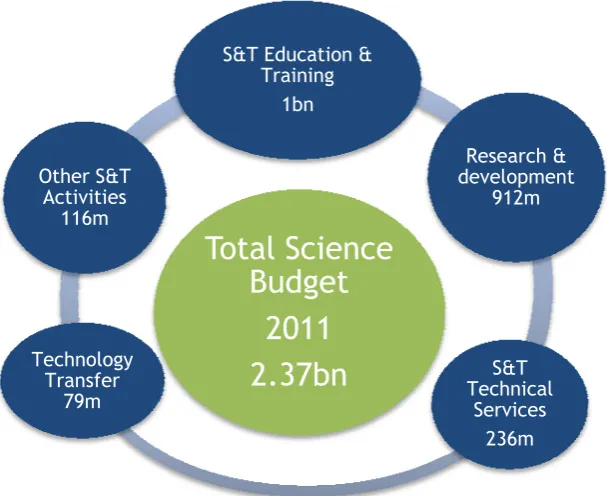
The total S&T estimated expenditure for 2011 is expected to reach €2.369bn. This represents a nominal decrease of 7.0 percent on the outturn figure of 2010 of €2.549bn.
[image:11.595.143.447.507.755.2]In 2011 the largest category of estimated spending across S&T areas continues to be S&T Education and Training at €1.027bn. The next largest category is Research and Development (€912m), followed by Technical Services (€236m), Other S&T activities (€116m) and finally Technology Transfer (€79m).
Figure 1: Total Science Budget 2011
Total Science
Budget
2011
2.37bn
S&T Education &Training 1bn
Research & development
912m
S&T Technical
Services 236m Technology
Transfer 79m Other S&T
1.2 Trends in State science and technology expenditure
[image:12.595.86.475.229.399.2]Figure 2 below shows a recent history of spending on S&T activities by the State. Data is displayed in both current prices and constant 2011 prices which deflates current S&T spending by the consumer price index (CPI2).
Figure 2: Total science and technology spending by the State sector, (2002-2011 current and constant prices €bn.)
The total S&T estimated expenditure for 2011 is expected to reach €2.369bn. In current terms, this represents a decrease of 7.0 percent on the outturn figure of
[image:12.595.90.412.533.730.2]2011 of €2.549bn.
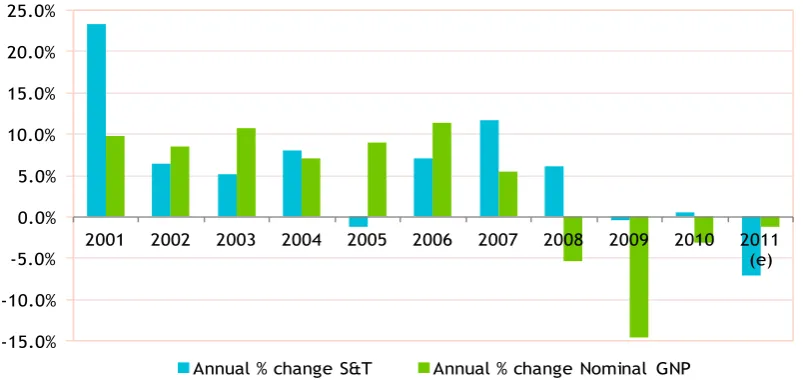
Figure 3: Annual % change in total S&T spending by the State sector (2001-2011 current and constant prices)
In current prices the decline between the expenditure in 2010 and the allocated funding for 2011 amounts to 7.0 percent.
Allowing for inflation, the percentage decrease is 10.1 percent.
2 Consumer Price Index - 2.8% for 2011 based on CSO data as at October 2011 1.784 1.877
2.028 2.003 2.145
2.397 2.543 2.534 2.549 2.369 2.147 2.182 2.308 2.224 2.291
2.443 2.489 2.597 2.636 2.369
0.500 1.000 1.500 2.000 2.500 3.000
2002 2003 2004 2005 2006 2007 2008 2009 2010 2011 (e)
Current Constant
-10% -5% 0% 5% 10% 15%
2002 2003 2004 2005 2006 2007 2008 2009 2010 2011 (e)
1.3 Trends in categories of State science and technology expenditure
[image:13.595.109.480.248.483.2]Looking at the different components of State S&T spending, shows that the largest decline in estimated expenditure in 2011 will be in the area of S&T Education and Training. Between 2010 and 2011 State funded S&T spending in Education and Training is expected to decline from €1.25bn to €1.03bn. Spending in the key area of Research and Technology is being maintained with funding going from €917m to €912m, a decrease of only 0.5 percent. Figure 4: Total science and technology spending by activity, (2002-2011) €m. current prices
Figure 5: Share of science and technology spending by category as a % of total, 2011
The largest category of State expenditure stands at 43 percent on S&T
Education and Training, with R&D funding
amounting to 37 percent. Detailed data on State spending by category in each institution and by programme for 2010 and 2011 is presented in Appendix 5. 523 589 654 669 704 848 952 948 917 912 207 173 182 196 229 217 211 217 196 236 830 797 866 948 1059 1140 1161 1199 1246 1027
0 500 1000 15 00 2000 2500 3000
2002 2003 2004 2005 2006 2007 2008 2009 2010 2011
R&D Tech Services Ed+Training Tech Transfer Other
[image:13.595.143.327.553.710.2]1.4 Science and technology intensity (spending relative to economic activity) As can be seen in Figure 6 below, since 2009 there has been a deceleration in State S&T annual spending growth with a -0.4 percent annual decrease in 2009 and -7.0 percent in 2011. This decrease in S&T expenditure is occurring in tandem with the slowdown in economic growth in the same period. The expected decline in economic activity as measured by nominal Gross National Product (GNP)3 between 2010 and 20114 is estimated at -1.2 percent. Figure 6: Annual growth rates of science and technology spending and nominal GNP 2010-2011
Figure 7: Total science and technology expenditure as a percentage of GNP, 2002-2011
Total expenditure on State-funded S&T measured as a percentage of GNP is shown in Figure 7. There has been a decline in Nominal GNP since 2008 which has contributed to the percentage increase in S&T spending intensity for the 2008-2010 period.
The allocated expenditure for 2011 calculated against the estimated GNP figure for 2011 shows a decline of 0.12 percent to an S&T spending intensity of 1.87 percent.
3 GNP – The GNP figure is being used for Ireland throughout this Report. GNP is a more relevant measure for calculating economic activity in Ireland as it excludes the income flows of multi-national firms and other net foreign income flows that are included in the Gross Domestic Product (GDP) metric.
4 GNP 2011 – based on forecast figure of €126.7 billion estimated in the ESRI Quarterly Commentary – Summer 2011, P.4. http://www.esri.ie/news_events/latest_press_releases/qec_summer_2011/index.xml
-15.0% -10.0% -5.0% 0.0% 5.0% 10.0% 15.0% 20.0% 25.0%
2001 2002 2003 2004 2005 2006 2007 2008 2009 2010 2011
(e)
Annual % change S&T Annual % change Nominal GNP
1.66%
1.57% 1.59%
1.44% 1.38%
1.47% 1.64%
1.92% 1.99%
1.87%
1.3% 1.6% 1.9% 2.2%
Chapter 2: State funding of research and
development
In this chapter Government spending on R&D is charted and benchmarked against international competitors.
2.1 Types of Research and Development indicators
R&D, as defined by the OECD, “comprises creative work undertaken on a systematic basis in order to increase the stock of knowledge, including knowledge of man, culture and society, and the use of this stock of knowledge to devise new applications”.5 This chapter focuses on R&D and yields the following international data measures:
GBAORD – Government Budget Appropriations or Outlays on R&D – Spending (this chapter) GOVERD – Measure of R&D performed in the Government sector (Chapter 3)
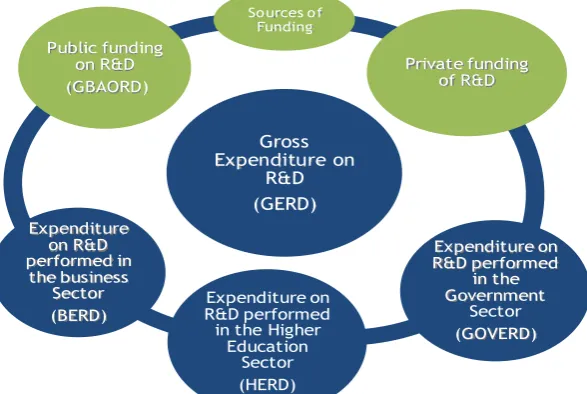
[image:15.595.159.453.433.630.2]Figure 8 below shows where this funding sits within the overall picture of Gross Expenditure on R&D (GERD) in Ireland.
Figure 8: R&D funding and performance system
5 OECD (2002), Frascati Manual: Proposed Standard Practice for Surveys on Research and Experimental Development, OECD, Paris, www.oecd.org/sti/frascatimanual
Gross Expenditure on
R&D (GERD) Sources of
Funding
Private funding of R&D
Expenditure on R&D performed
in the Government
Sector (GOVERD) Expenditure on
R&D performed in the Higher
Education Sector (HERD) Expenditure
on R&D performed in
the business Sector (BERD) Public funding
2.2 Government budget spending on research and development State spending supports for R&D activities come from:
direct exchequer funding; the EU; and
other non-public funding sources e.g. Irish and foreign business, non-profitable organisations, philanthropists and other donations from individuals.
The internationally recognised indicator for benchmarking State-funding performance of R&D is the Government Budget Appropriations and Outlays on R&D metric (GBAORD), which includes:
funding for R&D programmes in the higher education sector, administered by the Department of Education and Skills, the Higher Education Authority (HEA), Science Foundation Ireland (SFI) and others;
funding for business sector R&D, administered via State agencies including IDA Ireland, Enterprise Ireland and others; and
[image:16.595.91.495.438.625.2] funding for government sector-performed R&D e.g. Teagasc, The Marine Institute, and others.
Figure 9: GBAORD trend in current prices, €m. (2002-2011)
As can be seen, rapid gains were made in State R&D spending over the last decade. While there is a decline in allocated expenditure in the last three years, the level of R&D funding from the State remains significant, with an allocation of €823m in 2011.
Although there has been a drop in State funding sources from the EU over the last five years, this has been overshadowed by a more rapid slowdown in direct exchequer sourced funding for R&D activities.
504 518
635
756 790
934 946 941
827 823
0 150 300 450 600 750 900 1050
2002 2003 2004 2005 2006 2007 2008 2009 2010 2011 (e)
2.3 Detailed government department spending on research and development
Table 1 provides a breakdown of estimated public R&D spending by the main administrating government departments and agencies. These figures include funding received by the State from all sources.
The largest agency funding R&D projects in 2011 is expected to be the Higher Education Authority, which has allocated an estimated €309.2m to R&D activities (or 34 percent of the total State spending on R&D). This spending includes expenditure on R&D programmes, including direct funding via the Programme for Research in Third-Level Institutions (PRTLI) and also indirect funding via the HEA block grant to supported institutions.
[image:17.595.92.520.324.705.2]The next largest funder of R&D activities was Science Foundation Ireland, allocating an estimated €160.8m to R&D in 2011 via research grants and other research supporting programmes.
Table 1: Government Departments and Agencies funding R&D activities (2011 estimates)
Funding Department/Agency 2011
€m % of Total
Higher Education Authority 309.2 33.9%
Science Foundation Ireland 160.8 17.6%
Enterprise Ireland 95.9 10.5%
IDA Ireland 83.1 9.1%
Teagasc 50.0 5.5%
Health Research Board 40.7 4.5%
Dept. of Agriculture, Food and the Marine 32.3 3.5%
Irish Research Council for Science Engineering and Technology 22.7 2.5%
Sustainable Energy Authority of Ireland 18.3 2.0%
Dept. of Jobs, Enterprise and Innovation 15.5 1.7%
Environmental Protection Agency 13.0 1.4%
Irish Research Council for Humanities and Social Science 10.4 1.1%
Others 60.2 6.6%
The State currently invests in a wide range of R&D programmes which are outlined in more detail in Appendix 5. A summary of these programmes includes:
€309 million - The Higher Education Authority’s research programme is designed to enhance the research capabilities, capacity and infrastructure of Ireland’s higher education
institutions. These investments have been divided into a portfolio of programmes across disciplines spanning humanities and social sciences, the biosciences and technology and innovation sectors. During 2010 the HEA’s PRTLI budget was transferred to the Department of Jobs, Enterprise and Innovation.
€161 million - Science Foundation Ireland (SFI) was established in 2000 to support globally competitive scientific research. SFI funds a variety of academic researchers and research teams which aim to promote research excellence in biotechnology, information
communication technology (ICT), sustainable energy and energy efficient technologies. The allocation of finance is decided by SFI on the basis of scientific merit.
€96 million – Enterprise Ireland (EI) is the national organisation responsible for bringing together innovation, business development and internationalisation for Irish industry. They aim to facilitate collaborative links between enterprise and the research community that will lead to the practical application of research in business. As such, EI offers a variety of supports and funding to companies that wish to engage in R&D.
€83 million - IDA Ireland has national responsibility for securing new investment from
overseas in manufacturing and international services, and for encouraging the existing foreign enterprises to expand their business. Research, Technological, Development and Innovation (RTDI) grant assistance is directed at established companies who are planning to undertake their first R&D project and those companies that intend to expand existing ones.
€50 million - Teagasc is the Irish institute responsible for research in agricultural production, the environment and the rural economy. The annual research portfolio comprises 300
research projects, carried out by 500 scientific and technical staff in research centres throughout Ireland. Current research projects range from animal bioscience research to research aimed at enhancing the quality of life in rural Ireland.
€41 million - The Health Research Board’s(HRB) research funding role provides support for projects, programmes and fellowships in health research through an open competition process, along with an element of peer review. Funding covers all areas of health research from biomedical, translational, clinical and practised-based research through to population health and research concerning the health services.
€32 million – The Department of Agriculture, Food and the Marine provides a wide range of services directly and also through specialist state agencies operating under its aegis. The Department operates a number of testing centres and laboratories in the areas of veterinary diagnostics and research, meat control, seed testing, plant variety testing, cattle
€23 million - The Irish Research Council for Science, Engineering and Technology, (IRCSET) funds R&D in science, engineering and technology in third-level institutes. It seeks to position Ireland as an international centre of excellence and achievement in research. It does this through a series of programmes of assistance, postgraduate research awards and the PhD fellowship scheme.
€18 million – The Sustainable Energy Authority of Ireland is Ireland’s national energy authority and is responsible for administering the Renewable Energy Research, Development & Demonstration (RERDD) Programme. The Authority also promotes and assists
environmentally and economically sustainable production, supply and use of energy by operating grant aid programmes, providing policy support, and delivering information support aimed at increasing public awareness.
€15 million – The Department of Jobs, Enterprise & Innovation has a wide economic development and job creation remit. Within the Department, the Office of Science,
Technology and Innovation (OSTI) is focussed on delivering this goal through the development, promotion and co-ordination of national science, technology and innovation policy, and by progressing the Strategy for Science, Technology and Innovation. In support of these aims, the Department manages Ireland’s membership of the European Space Agency (a principal
objective of this membership is to promote opportunity for high-technology industry in Ireland) and the European Molecular Biology Laboratory (an Inter-Governmental Research Organisation whose mission is the development of molecular biology throughout Europe). Membership of EMBL complements Ireland's significant investment in the biotechnology area by presenting opportunities for research training, networking and enhanced international collaboration.
€13 million – The Environmental Protection Agency supports R&D activities in a range of environmental areas. This work is carried out by researchers in third-level institutions, state agencies, government departments, local and regional authorities, the private sector and individuals. The EPA research programme for the period 2007-2013 is entitled Science, Technology, Research and Innovation for the Environment (STRIVE). The purpose of the programme is to protect and improve the natural environment by addressing key
environmental management issues through the provision of world-class scientific knowledge generated through a vibrant, competitive programme of research developed supported and co-ordinated by EPA.
2.4 Programmes classified by area of research
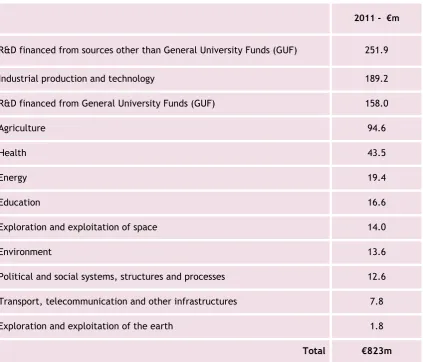
[image:20.595.81.505.174.536.2]The total expected GBAORD for 2011 can be classified into a number of funded economic areas.
Table 2: GBAORD classifications6 for Ireland 2011
2011 - €m
R&D financed from sources other than General University Funds (GUF) 251.9
Industrial production and technology 189.2
R&D financed from General University Funds (GUF) 158.0
Agriculture 94.6
Health 43.5
Energy 19.4
Education 16.6
Exploration and exploitation of space 14.0
Environment 13.6
Political and social systems, structures and processes 12.6
Transport, telecommunication and other infrastructures 7.8
Exploration and exploitation of the earth 1.8
Total €823m
Over half of total GBAORD funding for 2011 has been allocated for R&D performed in higher education. This €426m includes funding for various agencies, such as Science Foundation Ireland, the Higher Education Authority’s PRTLI (Programme for Research on Third-Level Institutes) and other research funding bodies operating in the higher education sector. Industrial production and technology, which accounts for 23 percent of total GBOARD (and is expected to reach €189.2m) in 2011 is an important category of R&D funding.
Agriculture at €94.6m will account for 11.5 percent of total government spending on R&D programmes. Health accounts for 5.3 percent of total spend, while Energy at €19.4m represents approximately 2.4 percent of budget. The remaining GBAORD is divided between exploration and exploitation of space and the earth, political and social systems, structures and processes, and transport, telecommunications and other infrastructures.
2.5 GBAORD as a percentage of GNP and international comparisons
In order to compare state funding of R&D across international competitors, the OECD
[image:21.595.97.515.287.496.2]recommends using the GBAORD indicator with data derived using the guidelines stated in the Frascati Manual7. GBAORD includes funding for R&D from direct exchequer sources and also via EU funding. It also includes funding for R&D in the humanities and social sciences. In Figure 10 the GBAORD trend line shows that between 2002 and 2008 there was a rapid increase in state R&D spending from €504m to €946m by 2008. There has been a downward trend in the last three years with the allocated 2011 GBAORD figure of €823m down by €123m compared to the 2008 figure of €946m.
Figure 10: GBAORD trend (€m) and GBAORD as a percentage of GNP (2002-2011)
The GBAORD intensity ratio [State R&D funding for R&D activities as a percent of economic activity divided by Gross National Product (GNP)] has risen steadily over the last decade. With the exception of 2003, the period 2002 to 2007 saw the GBAORD intensity ratio hover around 50 percent - this was during a period of strong funding arising out of strong economic growth.
In 2009 the GBAORD intensity rate rose as a result of strong R&D spending outpacing nominal economic growth.
In 2011, GBAORD intensity has remained consistent at 0.65 percent of GNP despite a
reduction in the amount of funding. This is due to an equal reduction in the final GNP figure forecast for 2011.8
7 Frascati Manual 2002, OECD,
http://www.oecd.org/document/6/0,3746,en_2649_34451_33828550_1_1_1_1,00.html
8 GNP 2011 – forecast €126,700bn
0.47% 0.43% 0.50% 0.54% 0.51% 0.57%
0.61% 0.71% 0.65% 0.65%
504 518
635
756 790
934 946 941
827 823
0.00% 0.50% 1.00% 1.50% 2.00%
-100 100 300 500 700 900 1100
2002 2003 2004 2005 2006 2007 2008 2009 2010 2011 (e)
Table 3: GBAORD as a percentage of economic activity (GDP/GNP)9
Alongside this overall funding, we can also examine the civil GBAORD figures. Civil GBAORD is a better metric for international comparisons as it does not include the defence portion of the R&D budget, for which Ireland does not allocate any sum of money. When data is
adjusted for these R&D programmes to only include civil GBAORD programmes, the following data for 2001 and 2010 can be observed.
Country 2001 2010*
Finland 0.96% 1.07%
Portugal 0.57% 1.02%
Denmark 0.74% 0.97%
Germany 0.73% 0.87%
Korea 0.58% 0.86%
Austria 0.66% 0.85%
Norway 0.64% 0.80%
Netherlands 0.74% 0.74%
Japan 0.67% 0.71%
Ireland 0.36% 0.65%
Italy 0.65% 0.62%
EU – 27 countries 0.61% 0.62%
United States 0.44% 0.58%
UK 0.46% 0.57%
Australia 0.52% 0.49%
*Latest data for most countries is 2010 with the exception of UK and United States (2009) and the EU-27 (2008)
Over the last ten years most OECD countries have seen an improvement in GBAORD performance relative to economic activity. Two countries in the table above stand out as having made rapid progress in their State R&D funding programmes – Portugal and Luxembourg. The ratio of GBAORD to economic activity in Portugal increased from 0.57 percent of GDP in 2001 to 1.02 percent of GDP in 2010.
In Ireland the GBAORD intensity ratio has also climbed relatively well, from 0.36 percent of GNP in 2001 to stand at 0.65 percent of GNP in 2010.
Figure 11: International comparison of GBAORD as a percentage of GDP/GNP (2010*)10
[image:23.595.99.501.466.672.2]* or latest available data Finland, with GBAORD spending of 1.07 percent of GDP, is one of the strongest performing OECD countries followed by Portugal at 1.02 percent of GDP. The latest available EU (27 countries) average GBAORD intensity is estimated to be around 0.6 percent of GDP, slightly less than Ireland’s rate.
Figure 12: Average annual growth rate of GBAORD for selected countries, (2005–2010)10
Figure 12 shows the annual average growth rate of GBAORD since 2005 and indicates that Ireland’s growth rate at 1.5 percent is lower than the EU (27 countries) average of 4.6 percent over the same period.
10OECD – Main Science & Technology Indicators, 2010, Vol. 2. All GBAORD data used in these graphs is ‘civil’ GBAORD i.e. excludes defence expenditure.
0.49% 0.57% 0.58% 0.60% 0.62% 0.65% 0.71% 0.74% 0.80% 0.85% 0.86% 0.87% 0.97% 1.02% 1.07%
0.00% 0.20% 0.40% 0.60% 0.80% 1.00% 1.20%
Australia UK USA EU - 27 Italy Ireland (GNP) Japan Netherlands Norway Austria Korea Germany Denmark Portugal Finland 1.1% 1.5% 2.6% 2.7% 4.5% 4.6% 4.7% 4.7% 5.0% 5.9% 6.9% 7.6% 8.7% 9.3% 9.9%
0.0% 2.0% 4.0% 6.0% 8.0% 10.0% 12.0%
Chapter 3: Performance of Research and
Development in the public sector
Research and development performed by relevant Government departments and their agencies is measured using the GOVERD metric.
The funding for Government Expenditure on R&D (GOVERD) comes from public, private and other sources but does not include R&D performed in the higher education sector which is gathered in a separate survey conducted by Forfás titled, the Higher Education Research and Development (HERD) survey. While this chapter covers GOVERD the largest element of Government funding of R&D is carried out in third level institutions. When GOVERD is combined with the HERD and BERD (Business Expenditure on R&D) data, the cumulative R&D performance of the country as a whole can be calculated. As can be seen later in this chapter, the main performer of GOVERD continues to be Teagasc.
3.1 Total expenditure on research and development performed in the government sector The expectation for expenditure on research and development performed in the government sector for 2011 is that it will drop from the 2010 performance of €86m to €85m which represents a marginal decrease of 1.2 percent.
The 10-year trend in Figure 13 below shows that GOVERD levels are now at their lowest level and expenditure on R&D performed in the State sector has fallen from a high in 2007 on €141m to the current allocation.
GOVERD as a percentage of GNP over the ten-year period from 2002 to 2011 is also illustrated in Figure 13.
[image:24.595.85.500.538.743.2]This graph shows that, as a percentage of GNP, the level of GOVERD has dropped from 0.12 percent in 2002 to 0.07 percent in 2011.
Figure 13: GOVERD as a percentage of GNP and GOVERD €m trend, (2002-2011)
0.12% 0.11%
0.11%
0.09%
0.08% 0.09% 0.09% 0.08%
0.07% 0.07%
125 127
138
127
120
141 140
103
86
85
0.0 20.0 40.0 60.0 80.0 100.0 120.0 140.0 160.0
0.00% 0.10% 0.20% 0.30%
2002 2003 2004 2005 2006 2007 2008 2009 2010 2011
Figure 14: Major State research and development performers, percent of total (2011)
Figure 14 illustrates the major contributors to in-house R&D in the State sector in 2011. As can be seen, Teagasc, the Irish agriculture and food development authority, continued to be the largest performer of government R&D in 2011, with expenditure of €50m (59 percent of total GOVERD). Teagasc supports science-based innovation in the agri-food and broader bio-economy sectors.
Other major contributors include the Department of Agriculture, Food and the Marine at €6.6m (7.7 percent) and the Economic and Social Research Institute at €6m (7.1 percent). The contribution to GOVERD from the Marine Institute is €4.6m (5.4 percent).
[image:25.595.87.523.544.749.2]More detailed information on research spending in the government sector by institution and by individual programme is available in Appendix 5.
Table 4: GOVERD as a percentage of GDP, selected countries (2005 and 2010 or latest available data)11
Country 2005 2010*
Germany 0.35 0.41
Slovenia 0.35 0.39
Finland 0.33 0.36
France 0.37 0.36
Czech Republic 0.28 0.33
Japan 0.28 0.31
Luxembourg 0.19 0.29
11 OECD, Main Science and Technology Indicators Database, February 2011
Teagasc, 58.6%
Dept of Agriculture, Food and Marine,
7.7% E.S.R.I.,
7.1% Marine Institute,
5.4% Dept of Social
Protection, 3.9%
Inland Fisheries Ireland, 3.4% Dublin Inst. for
Advanced Studies, 3.1%
Health Research Board,
Norway 0.24 0.29
Spain 0.19 0.28
EU-27 0.25 0.26
Hungary 0.26 0.23
Netherlands 0.24 0.23
Poland 0.21 0.23
Canada 0.20 0.19
Belgium 0.15 0.17
Israel 0.21 0.17
Italy 0.19 0.17
United Kingdom 0.18 0.17
Estonia 0.10 0.16
Slovak Republic 0.15 0.16
Austria 0.13 0.15
Portugal 0.11 0.12
Turkey 0.07 0.11
Denmark 0.16 0.09
Ireland/GNP 0.09 0.08
In Table 4, GOVERD as a percentage of GNP12 in Ireland is compared with GOVERD as a percentage of GDP in a selection of countries for 2005 and 2010 or the latest date for which data is available*.
Ireland had the lowest intensity rate with 0.08 percent in 2010. There is a concentration in Ireland on increasing the R&D performance in the higher education part of the overall research system. Note that the figures for Higher Education Research & Development (HERD) are not included in this survey. Another reason for Ireland’s low ratio is the size of the Irish public sector compared to other countries.
A number of countries show a decrease in the ratio for 2010 when compared to 2005. These include: France, Hungary, Netherlands, Canada, Israel, Italy, UK, and Denmark.
3.2 Types of Research
The type of research being performed in the various government departments and agencies is also measured in this survey. The OECD Frascati Manual defines the three categories of research as follows:
Basic Research – experimental or theoretical work undertaken primarily to acquire new knowledge, without any particular application or use in view;
Applied Research – original investigation undertaken in order to acquire new knowledge, primarily directed towards a specific practical aim or objective; and Experimental Development - systematic work, drawing on existing knowledge gained
[image:27.595.86.531.356.497.2]from research and practical experience that is directed at producing new materials, products and devices, to installing new processes, systems and services, or to improving substantially those already produced or installed.
Table 5: GOVERD by type of research (2011)
Type of Research 2011
€m. % of total
Applied Research 78.0 91.2%
Experimental Development 4.5 5.3%
Basic Research 3.0 3.5%
Total €85.5m 100%
Of all allocated funds for research to be undertaken by Irish government departments and agencies in 2011, 91.2 percent is in applied research, with expenditure amounting to €78m. Experimental development accounts for 5.3 percent of all expenditure at €4.5m.
3.3 Fields of science
[image:28.595.75.509.212.506.2]The fields of science classifications13 are defined by the OECD Frascati Manual in agreement with European nations.
Table 6: Field of science classified by type of research, (2011) €m.
Field of Science Basic Applied Experimental Total
Agriculture, forestry and fisheries 0.3 54.3 0.7 55.3
Economics and business 0.0 9.1 0.0 9.1
Earth & related environmental sciences 0.0 4.9 0.6 5.5
Veterinary science 0.0 2.2 3.2 5.4
Other social services 0.0 3.3 0.0 3.3
Physical sciences 2.7 0.0 0.0 2.7
Health sciences 0.0 2.5 0.0 2.5
Educational sciences 0.0 0.8 0.0 0.8
Environmental engineering 0.0 0.5 0.0 0.5
Civil engineering 0.0 0.4 0.0 0.4
Totals 3.0 78.0 4.5 85.5
The majority of funds spent on research performed in the public sector is spent on applied research, this amounted to an allocation of €78m out of a total spend of €85.5m in 2011. Applied research in agricultural sciences continues to be the field of science in which most expenditure takes place. In 2011, €54.3m was spent on applied science in this area with another €0.7m spent on experimental development.
The major performer of R&D in the government sector is Teagasc which along with the Department of Agriculture, Food and the Marine are engaged in the field of agricultural sciences.
Other agencies working in this field are Bord Iascaigh Mhara, the Inland Fisheries Board and the Marine Institute.
Chapter 4: Human resources dedicated to publicly
performed research and development
Personnel engaged in R&D activities performed in institutions within the government sector are examined in this chapter. The data was collected from survey returns from 37
Government departments and agencies and relates only to personnel working in research and development in the government sector. It does not include R&D personnel in the higher education or business sectors.
The survey seeks to ascertain the amount of time spent by staff on R&D activities or in Full-Time Equivalent (FTE) terms, in addition to gathering information on the overall totals, gender, qualifications and occupations of R&D staff. The research personnel are divided into PhD and non-PhD researchers, technicians and other support staff. A researcher spending 70 percent of their time on research activities equals one researcher in headcount terms, and 0.7 researchers in FTE terms. Gathering information on the time spent by government sector researchers and research support staff, specifically on R&D work, allows for more robust benchmarking with comparable data from other countries.
4.1 Research and development personnel
[image:29.595.102.485.482.668.2]The estimated number of research personnel employed in the government sector was 1,162 in 2012. While this represents an increase of 5.3 percent in 2011 over the 2010 outcome of 1,104 (Figure 15) the overall trend shows a decrease from 2009 figures of 1,207 or 3.7 percent.
Figure 15: Total R&D personnel by occupation - headcount terms (2009-2010-2011)
The number of PhD researchers has increased by 5.1 percent, while researchers without a PhD have decreased by 4.8 percent.
The number of technicians are expected to increase by 11.9 percent in 2011 over 2010. There has also been an increase in the number of research support staff of 5.5 percent in 2011.
351
181
268
407 350
168
243
343 368
160
272
362
0 100 200 300 400 500
Researchers with
PhDs Researchers without PhDs Technicians Other Support Staff
Figure 16: Total R&D personnel by occupation – Full Time Equivalents (FTEs), (2011)
In ‘full-time equivalent’ terms, there were 478 FTE researchers in the Government Sector in 2011, supported by 570 FTE technicians and other support staff.
As illustrated below 33 percent of FTE researchers hold a PhD qualification, while 13 percent of FTE researchers hold degrees below PhD level.
23 percent of government research personnel were employed at technician level, with the remaining 31 percent of the FTE total working in other support roles for government researchers.
4.2 Gender and qualifications of State sector research staff
[image:30.595.99.277.560.714.2]Figure 17 shows a breakdown of government researcher grades (excludes technicians and support staff), as a percentage of the total, by gender and type of qualification, for 2011, in full-time equivalent terms.
Figure 17: FTE Researchers by gender and qualification, (2011)
Male PhD researchers continue to dominate the numbers employed at research level in the government sector representing 49 percent of the total. While male
researchers below PhD level account for 16 percent of the total.
Female PhDs represent 23 percent of government researchers with female researchers below PhD level accounting for another 12 percent.
33%
13% 23%
31%
FTE Researchers with PHDs
FTE Researchers without PHDs
FTE Technicians
FTE Other Staff
Male (PhDs)
49% Female
(PhDs) 23% Male (Non PhDs) 16%
4.3 Research and development staff by fields of science (FTE)
[image:31.595.89.522.223.490.2]Of the total 478 PhD and non-PhD (FTE) researchers employed in the Government Sector in 2011, 301 were male and 177 were female, and the following table sets out their fields of science.
Table 7: Total male/female and as percentage of total by field of science, (2011)
Fields of Science Male
Researchers Male researchers as % of all male researchers
Female Researchers
Female researchers as % of all female researchers
Agriculture, forestry and fisheries 181 60.0% 86 48.6%
Earth & related environmental sciences 17 5.5% 7 4.1%
Economics and Business 35 11.6% 35 19.7%
Environmental Engineering 3 0.9% 1 0.5%
Health sciences 3 1.0% 31 17.5%
Other social sciences 2 0.7% 2 1.1%
Physical sciences 44 14.6% 15 8.5%
Veterinary science 17 5.6% 0 0.0%
Total 301 100% 177 100%
When analysed by the OECD standard fields of science14, the following statistics emerge for 2011. The majority of the government researchers work in the ‘agricultural, forestry and fisheries’ field. Some 60 percent of male researchers and 48.6 percent of female researchers are engaged in research and development work in this area.
The next largest category for men is the ‘physical sciences’ with 14.6 percent of male R&D staff working in this area. For women the next two areas are ‘economic & business’ with 19.7 percent and the ‘health sciences’ with 17.5 percent.
(Note that these figures are based on small population samples, e.g. there were just two male researchers in ‘other social sciences’ and one female researcher in ‘environmental engineering’).
In terms of the numbers of researchers, there are more or as many male researchers in every Field of Science with the exception of ‘health sciences’ where the majority of researchers are female – 31 women compared with 3 men.
14 ‘Revised Field of Science and Technology (FOS) Classifications in the Frascati Manual’, Feb 2007,
Figure 18: Researchers classified by gender and field of science (FTE), (2011)
Figure 18 below illustrates the gender breakdown within the different fields of science for male and female researchers in full-time equivalents (FTE).
Male (FTE) Researchers
Female (FTE) Researchers Agricultural
Sciences 198
Medical and Health
Sciences 3
Natural Sciences
63.5
Social Sciences 37
Agricultural Sciences
86.3
Medical and Health
Sciences 23.2
Natural Sciences
31
Appendix 1
Methodology
The information given in this document relates to information supplied by 37 institutions in receipt of monies from the exchequer for the performance or support of scientific,
technological and related activities. In general, institutions and information relating to them are listed separately. In a few cases an institution is listed with its parent department or organisation but identified separately. Where practicable the programmes of the various institutions have been separated and categorised in accordance with international practice into relevant scientific activities i.e.:
Research and development (R&D);
Science and technology (S&T) technical services; S&T training, education and information;
S&T technology transfer; and Other S&T activities.
In 2010, only data on Research and Development funding was collected (2009-2010). Data for S&T spending was last collected two years ago (2008-2009). This survey (2010-2011) collected data on both R&D and S&T funding and time-series data for S&T in 2009 is based on allocation figures.
Expenditure data for specific programmes refer to the 2010 outturn costs of programmes and to the expected costs in 2011. The outturn costs are mainly funded by matching grant-in-aid or voted monies. Where programmes are funded in other ways these monies are noted separately. In these instances, the expenditure (cost) data shown includes both exchequer and other income contributions.
Expenditures are based on unaudited figures, except in a few cases where they are identical with a vote by the Oireachtas. For convenience, general overheads, where shown, are distributed in proportion to programme expenditures. Programmes are attributed to the institution most directly involved - that is to those actually operating them, but not
necessarily funding them. An example of the latter is the Department of Jobs, Innovation and Employment which funds, but does not operate or manage programmes. Only their own administrative costs are attributed to the funding institutions in such cases.
Appendix 2
Definitions of R&D and S&T activities
For the purpose of this survey activities are grouped under the five categories below:
1. Research and Development:
Research: Original, experimental or theoretical investigations undertaken to acquire new knowledge, with or without a particular application or use in view.
Development: Systematic work drawing on existing knowledge gained from research and/or practical experience that are directed to producing new products, processes, systems, services, varieties and breeds and to improving substantially already existing ones. Data collection conducted solely or primarily as part of the research and development (R&D) process included under “research” or “development” as appropriate.
2. Technical services:
Specialised support services of a scientific or technical nature generally provided by centralised laboratories or facilities and can be of a routine or non-routine nature. Essentially they comprise the technical back-up, analytical, diagnostic and data collection/processing services.
3. Training, education and information:
Training and education: Education and training of third level or equivalent students in science and technology disciplines.
Information: Provision of information via formalised scientific and technical information and documentation (STID) services includes all expenditure (manpower and materials) involved in acquiring, controlling or transmitting information to users with the involvement of staff whose primary function is in formalised STID services e.g. provision of S&T information, advice, liaison, specialist advice, information analysis, libraries, publications and documentation services, translations, technical seminars and conferences. Provision of information via non-formalised STID services includes expenditure on providing know how and expertise by members of staff who, while not specifically engaged in formalised STID services, provide specialist advice, liaison, consultancy or other general information services.
4. Technology transfer:
Activities which are directed solely or primarily towards the transfer and adoption of new technology, generally in enterprises. The horizontal transfer of technology, primarily from abroad, but also from colleges to enterprises is included here. 5. Other S&T activities:
Appendix 3
[image:35.595.88.519.186.734.2]Government Departments and Agencies included in the 2010-2011
Science Budget
Table 1: Government Depts./Agencies and Offices funding R&D and S&T activities, 2011
Government Departments Associated Agencies
Department of Agriculture, Food and the Marine
Bord Iascaigh Mhara Marine Institute Teagasc Department of Arts, Heritage and the
Gaeltacht Údarás na Gaeltachta
Department of Communications,
Energy and Natural Resources Inland Fisheries Ireland Sustainable Energy Authority of Ireland
Department of Education and Skills
Dublin Institute for Advanced Studies FÁS
Higher Education Authority
Irish Research Council for Humanities and Social Sciences
Irish Research Council for Science, Engineering and Technology
Department of Jobs, Enterprise & Innovation
Enterprise Ireland Forfás
IDA Ireland InterTradeIreland
Science Foundation Ireland Shannon Development
Department of the Environment, Heritage and Local Government
Environmental Protection Agency Met Éireann
Radiological Protection Institute of Ireland Department of Finance Economic and Social Research Institute
Department of Health Health Research Board
Department of Social Protection
Department of the Taoiseach National Economic and Social Council
Department of Transport National Roads Authority
Offices
Central Bank
Central Statistics Office Office of Public Works
Appendix 4
Acronyms
AAGR Average Annual Growth Rate
BERD Business Expenditure on R&D
CSF Community Support Framework
CSO Central Statistics Office
DIAS Dublin Institute for Advanced Studies
EPA Environmental Protection Agency
ESRI Economic and Social Research Institute
FÁS Foras Áiseanna Saothair – National Training and Employment Authority
FSAI Food Safety Authority Ireland
FTE Full Time Equivalent
GBAORD Government Budget Appropriations and Outlays on R&D
GERD Gross Expenditure on R&D
GOVERD Government Expenditure on R&D
HEA Higher Education Authority
HERD Higher Education Expenditure on R&D
HC Head Count
HRB Health Research Board
IRCHSS Irish Research Council for the Humanities and Social Sciences
IRCSET Irish Research Council for Science, Engineering and Technology
NESC National Economic and Social Council
NRA National Roads Authority
OPW Office of Public Works
OSI Ordnance Survey Ireland
OST Office of Science and Technology - Department of Jobs, Enterprise and Innovation
PGM&DB Postgraduate Medical and Dental Board
RPII Radiological Protection Institute of Ireland
SEAI Sustainable Energy Authority of Ireland
Appendix 5:
Government Departments and Agencies' Programmes
Department of Agriculture, Food and the Marine
The Department of Agriculture, Food and Marine is a multi–functional organisation which provides a wide range of services directly and through specialist state agencies operating under its aegis. Its mission is to lead the sustainable development of a competitive,
innovative, consumer focused agriculture, food, fishery and forestry sector and contribute to a vibrant rural and coastal economy and society.
The Department operates a number of testing centres and laboratories, in the areas of, veterinary diagnostics and research; meat control; seed testing; plant variety testing; cattle performance testing; pesticide control and dairy products control.
State-sponsored bodies which come under the statutory responsibility of the Minister for Agriculture, Food and the Marine include Teagasc (The Agriculture and Food Development Authority), the Marine Institute and An Bord Bia. However, the figures below refer only to expenditure by the Department itself on R&D and technical services.
The Department engages in a broad range of activities and these are outlined below. €’000
2010
€’000 2011 Research and Development Programmes
Improvement of Crops
Improving the quality of crops and crop products through the use of the highest quality varieties and seeds. The main activities leading to achievement of this objective include the operation of two stations/farms at Fermoy in Co. Cork and Backweston in Co. Dublin, where plant varieties are evaluated, the operation of a potato laboratory at Raphoe in Co. Donegal and the carrying out of trials in farmers’ fields throughout the country.
1,002 1,200
R&D-Related Veterinary Laboratory Activities
Operation of a central veterinary research laboratory at Backweston, Celbridge, Co. Kildare, regional veterinary research laboratories at Cork, Limerick, Sligo, Athlone and a testing laboratory in Waterford.
4,592 5,400
Institutional Food Research – Competitive Funding Programme
In its implementation of the Food Institutional Research Measure of the RTDI component of the Productive Sector OP under the National Development Plan 2007 - 2013, the Department is involved in the management of competitive tendering by food research institutions for grant aid to support food research in priority areas. It monitors the progress of successful projects, payment of grant aid and evaluation of the
programme.
Agricultural Production Research - Competitive Funding Programme
This is the “Research Stimulus Fund” measure of the Productive Sector OP of the NDP 2000-2006 and NDP 2007-2013 which encourages co-operative research in agricultural production. This involves management of competitive tendering by research
institutions for grant aid to support agricultural research projects in priority areas, monitoring of progress of successful projects, payments of grant aid and evaluation of the programme.
7,375 6,665
Improvement of Livestock
Improving the quality of livestock and livestock products through adoption of better breeding and selection practices carried out in Irish Cattle Breeding Federation (ICBF). The main activities leading to achievement of these objectives are operation of on-farm and central testing stations; recording schemes; collaboration with and support for research in animal breeding at research institutions and at the Irish Equine Centre, Co. Kildare which undertakes R&D activities relating to equines.
1,033 960
Genetic Resources in Plants and Animals
The Department of Agriculture, Food and the Marine’s grant aid scheme for the conservation of genetic resources for food and agriculture has been in place since 1996. The Scheme has an annual call for projects aimed at supporting the conservation and sustainable use of genetic resources for food and agriculture. Projects are
evaluated by an advisory committee, representing broad national stakeholder interests.
308 350
COFORD - Competitive Funding Programme.
COFORD was subsumed into the Department of Agriculture, Food and the Marine on 1st August 2009. The figures mentioned here relate to grant payments to research
institutions under the COFORD research programme of the Productive Sector OP of the NDP 2000-2006 and NDP 2007-2013 which supports the economic, environmental and social goals of forest policy through funded research aimed at developing national forest research capacity and competence.
3,159 3,230
International Equine Institute
Based in University of Limerick the Institute receives a grant payment 293 270
Training, Education and Information 360 391
Department of Agriculture, Food and the Marine
Bord Iascaigh Mhara
BIM is the Irish State agency with responsibility for developing the Irish Sea Fishing and Aquaculture industries. BIM was established under the Sea Fisheries Act 1952. BIM’s mission is “to promote the sustainable development of the Irish seafood industry at sea and ashore and support its diversification in the coastal regions so as to enhance its contribution to
employment, income and welfare both regionally and nationally”.
There are three complementary, integrated programmes, which form the core of BIM’s support to the sea fisheries sector. The measures underlying these programmes are mainly provided for in the National Development Plan 2007-2013.
€’000 2010
€’000 2011 Research and Development Programmes
Marine Technical
The objectives of the Marine Technical Section are to progress development of
responsible fishing practices addressing environmental and sustainability issues through technical innovation and technology transfer. The section carries out sustainability-orientated projects, aimed at promoting the use of more selective gear types and protection of key fisheries together with identifying ways to reduce operating costs through diversification into alternative, fuel-efficient fishing methods.
234 140
Resource Development
The primary focus of the Resource Development Section work programme will see the further development of mechanisms by which the industry can compete in the
marketplace through increased quality. At the core of this strategy is the development of quality schemes for the catching sector that are suitable for integration into the QSP programme. This will enable Irish fishermen to compete at the highest levels of quality and traceability now demanded by the consumer.
2 73
Inshore Fisheries
The primary function of the inshore fisheries section is the implementation of the framework for the management of the major inshore stocks announced by the Minister in 2004. The work involves establishing species advisory groups and drawing up management plans for important inshore fisheries. Monitoring of stocks in support of management and the further development of applied research programmes are funded through the NDP in support of the framework. Additional development projects will be undertaken with the catching and
wholesale/distribution sector of industry and will particularly focus on enhancing value and the return to coastal communities.
62 70
MEPS - Marine Environment Protection
The Marine Environment Protection Measure has been developed in accordance with Article No. 37 and 38 of Council Regulation (EC) No 1198/2006 of 27 July. The Measure facilitates projects to address issues of environmental concern,
particularly those intended to protect and develop the marine environment.