http://www.scirp.org/journal/jmp ISSN Online: 2153-120X ISSN Print: 2153-1196
DOI: 10.4236/jmp.2017.89095 Aug. 28, 2017 1584 Journal of Modern Physics
The Dissipative Flow in Topological
Superconductors and Solid
4
He
D. Schmeltzer
Physics Department, City College of the City University of New York, New York, USA
Abstract
Using two piezoelectric transducers, one measures the stress tensor response from the strain field generated by the second transducer. The ratio between the stress response and strain velocity determines the dissipative response. In the first part, we show that the dissipative stress response can be used for studying excitations in a topological superconductor. We investigate a topo-logical superconductor for the case when an Abrikosov vortex lattice is formed. In this case, the Majorana fermions are dispersive, a fact that is used to compute the dissipative stress response. In the second part, we analyse the dissipative superfluid flow through solid 4He discoused recently. We identify low energy, an excitation which plays the role of the Majorana mode which is free to move in a direction perpendicular to the two dimensional plane spaces of the dislocations.
Keywords
Topological Superconductor, Stress, Strain, Ultrasound, Solid 4He
1. Introduction
The proximity of a superconductor [1] [2] to the surface of a topological insulator (TI) gives rise to a topological superconductor (TS) characterized by the Majorana zero modes. Recently, vortices and Majorana fermions in a magnetic field have been reported [3] in heterostructures of Bi2Te3/NbSe2. Additionally, Majorana fermions have been studied in Abrikosov lattices [4][5]. The Majorana zero modes are neutral excitations which, in an Abrikosov vortex lattice, become a gapless dispersive band [4][5][6]. In a variety of materials, a scanning tunneling microscope (STM) is used to detect charge tunneling.
A number of methods based on sound waves have been used to investigate superconductors [7][8][9] [10]. Ultrasound attenuation studies [11] [12], and
How to cite this paper: Schmeltzer, D. (2017) The Dissipative Flow in Topological Superconductors and Solid 4He. Journal of Modern Physics, 8, 1584-1606.
https://doi.org/10.4236/jmp.2017.89095
Received: July 13, 2017 Accepted: August 25, 2017 Published: August 28, 2017
Copyright © 2017 by author and Scientific Research Publishing Inc. This work is licensed under the Creative Commons Attribution International License (CC BY 4.0).
http://creativecommons.org/licenses/by/4.0/
DOI: 10.4236/jmp.2017.89095 1585 Journal of Modern Physics investigations of the p-wave superconductor Sr2RuO2 have been carried out in ref. [13]. In the late fifties ultrasound attenuation techniques were used to measure the temperature dependence of the superconducting gap [14] [15] [16] [17] [18] and recently the techniques have been applied to liquid 3He [19] and to 4He by [20] where in the presence of a dislocation we have a direction where low energy excirtations are free to move in analogy with the Majoranas modes in topological superconductors.
The purpose of this paper is to demonstrate that piezoelectric transducers can be used to detect Majorana fermions in an Abrikosov vortex lattice and the dissipative flow trough 4He can be explained.The tunneling amplitude of the Majorana fermions gives rise to a dispersive band [6] which is detectable. We compute the stress viscosity as a response to an applied strain velocity field [21] [22]. The explicit dependence of the strain field on the system is obtained from a coordinate transformation [23]. The linear stress response theory [24] used for a TS provides information about the Majorana fermions. In order to demonstrate the detection of Majorana fermions we consider a TS [1][3][4][5] [25] [26] and consider the dissipative flow trough 4He.
In this paper, we have derived the following specific results: (a) We have obtained the vortex lattice solution for a p-wave superconductor. (b) We have derived the stress-strain Hamiltonian and have computed the stress viscosity using the linear response theory. (c) We have identified the sound analog of the Andreev crossed reflection and have obtained the viscosity equivalent to the crossed reflection conductance. (d)We consider the analogues of the Majorana mode in solid 4He.
The structure of the paper is as follows: In Section 2, we show that for an attractive interaction on the surface of a TI a TS is obtained. In the presence of an Abrikosov vortex lattice dispersive Majorana fermions are formed. In Section 3, we present the formation of the Abrikosov vortex lattice. We find dispersive Majorana fermions and quasi-particles in the vortex lattice. A new solution for the p-wave Abrikosov vortex lattice is obtained and discussed in detail. Section 4 is devoted to the derivation of the viscosity tensor for a TS. In Section 5, we compare our results to the one obtained by the ultrasound attenuation technique. In Section 6, we compute the transverse impedance for the TS in a magnetic field. The transverse impedance provides distinct information about the Abrikosov vortex lattice and the Majorana fermions. Our numerical estimates indicate that the signal should be experimentally detectable. Section 7 is devoted to studies of sound wave of the Andreev crossed reflection induced in one dimension by a piezoelectric transducer. In Section 8 we consider the disipative flow of a superfluid of 4He through a solid 4He [20]. Section 9 contains our main con- clusions.
2. Formation of Majorana Fermions on the Surface of a TI
with Attractive Interactions
DOI: 10.4236/jmp.2017.89095 1586 Journal of Modern Physics surface of a TI with attractive interactions. For two space dimensions, the quantum Hall system and the p-wave superconductor [1] [25] [26] are cha- racterized by the first Chern integer number 1
C (which means that the integral
of the Berry curvature over a closed manifold is quantized in units of 2π) [27]. In the presence of an attractive interaction (due to the electron-phonon interaction or proximity to another superconductor), on the surface of a TI a two-dimensional TS emerges. The proximity of a superconductor [1] to the three dimensional TI gives rise to Majorana zero modes on the surface of the TI. Recently it was reported that the application of a magnetic field on the hete- rostructure Bi2Te3/NbSe2 induces an Abrikosov vortex lattice [3].
We propose that a realization of the model introduced in [1] emerges from the TI surface Hamiltonian h
( )
k = −σ2 1k +σ1 2k in the presence of an attractive interaction. Here σ1, σ2 denote Pauli matrices and k1, k2 are wave vector components. We express the pairing interaction in terms of the field( )
( )( )
e
ik
u
ψ
=
∑
k x⋅ +x
k
whereu
( )+( )
k
are the TI surface spinors for the conduction band, ( )( )
T T
1 2 1 2
0
1 1
1, 1,
2 2
k ik k ik
u i i
k
+ = − ≈ −
k
k (T stands for
transpose), and k0 is a momentum scale. This representation generates the linear derivatives of the pairing field. For a positive chemical potential µ >0 in
the presence of a magnetic field, it gives rise to a superconductor with vortices. The attractive interaction expressed in terms of the TI spinors gives rise to the p-wave Hamiltonian [1] which in our case also includes vortices.
( )
( )
( )
( ) ( )(
) ( )
( ) ( )(
) ( )
( )
2
2 2
. . .
*
1 2 0
2 1 2
0
d ,
2
,
, ,
2
, 1
, , , .
2
T I SC x F
F
v e
H x C i t k C
k
t
C t i C t
k
t
C t i C t t
k g
+
= − − −
∆
+ ∂ − ∂
∆
− ∂ + ∂ + ∆
∫
x A x xx
x x
x
x x x
∂
†
† †
(1)
Here A x
( )
,t is the vector potential and g is a coupling constant. Thepairing field ∆
( )
x depends on the phase θ( )
x which includes a multivaluedpart. We perform the gauge transformation:
( )
e2 ( )ˆ( )
iC θ C
−
= x
x x , C†
( )
x =( )
2 ( )ˆ e
i
C† x θ x and the Hamiltonian H is replaced by Hˆ . The pairing field
( )
∆ x has points x≈Rk, k=1, 2,, where ∆
( )
x vanishes,( )
( ) eiθ
∆ ≈ ∆ x
x ,
( )
( )†
e−iθ
∆ = ∆ x
x , where θ
( )
x ≡θ(
x R; 0 =0,R1,,Rk,)
is the multivalued phase.As a result of the gauge transformation the fermion operators C x
( )
, C†( )
xare replaced by Cˆ†
( )
x , C xˆ( )
(and the Hamiltonian H is replaced by Hˆ ). The Hamiltonian Hˆ without the condensation energy 1( )
2,t
g ∆ x is expressed
in terms of the particle-hole Pauli matrices τ1, τ2 and τ3. We introduce the two-component spinor Ψˆ
( )
= Cˆ( )
,Cˆ( )
T
DOI: 10.4236/jmp.2017.89095 1587 Journal of Modern Physics
( )
( )
( )
( )
( )
(
)
2
3 3ˆ 2 2ˆ 1 1ˆ
ˆ d ˆ ˆ ,
1 1
, arg ,
2 x 2 l x l l l
H x τ h τ h τh
θ ϕ ϕ
= Ψ + + Ψ
≡ ≡ −
∫
∑
x x
x x x x R
∂ ∂
†
( )
( )
( )
( )
2 2 3
2 1 1 2
0 0
1
ˆ ,
2 2
ˆ , ˆ .
2 2
x x F
F
v e
h i k
k
h i h i
k k
θ
= − − + −
∆ ∆
= ∂ = − ∂
A x x
x x
∂ ∂
(2)
The spinor Ψˆ
( )
= Cˆ( )
,Cˆ( )
T x x † x [28] contains two parts, the non-zero
mode Ψˆ≠0
( )
x and the zero mode (Majorana fermions) Ψˆ0( )
x ,( )
0( )
0( )
ˆ ˆ ˆ
≠
Ψ x ≡ Ψ x + Ψ x .
3. TS Abrikosov Vortex Lattice
Next we discuss in detail the non-zero and zero modes of the Abrikosov lattice in a TS.
a) Non-zero modes
In this section we consider the non-zero modes for an Abrikosov vortex lattice in the presence of a magnetic field. The experimental work on the TS Bi2Te3/ NbSe2[3] shows that an Abrikosov vortex lattice is formed. A vortex lattice is stabilized for superconductors when the penetration depth of the magnetic field is larger than the coherence length [15] [29]. We find for a single vortex a string-like solution for the effective magnetic field. For xˆ > ≈d λL the mag- netic field vanishes (d is the vortex lattice constant and λL is the magnetic penetration depth). Since we are interested in the long distance behavior we can approximate the magnetic field for x <λL by a constant field, which is the spatial average around the vortex core with a radius of d.
Following refs. [15] [29] we solve the p-wave Hamiltonian in a periodic mag- netic field b. The periodicity being d≈λL. The periodic spinor solution is given by:
( )
2( ) (
)
2
2e , 2
iqn y n n
W x =
∑
f x W x n , where( )
2 2 2
2
e
b q
x n
b n
f x
− −
= and
(
)
(
) (
)
T2 2 2
, , , ,
W x n = U x n V x n is a two component spinor which is given by
the eigenfunction of the p-wave Hamiltonian. We consider a square lattice and the solution is periodic in the y direction with the periodicity d dy 2π
q
= = . The
periodicity in the x direction x q
d d
b
= = is achieved by demanding the in- variance of the Hamiltonian under the transformation, n2→n2+1. The system has a finite extention L in the x direction. Therefore the value of the momentum in the y direction must be restricted to 2 max
2
bL L
n n
q d
< = = (to ensure that the
states lie in the box L L× ).
DOI: 10.4236/jmp.2017.89095 1588 Journal of Modern Physics problem in momentum space and at the end to impose the periodicity of the wave function. We represent the periodic solution as:
( )
( )
( )
2 2 d e 2π i kW =
∫
k x⋅Wx k .
We use the momentum representation, x= ∂i k1 and find that for the p-wave Hamiltonian h
(
k,i∂k1)
in the magnetic field b:(
1)
(
1)
2
2 2
3 1 2 1 2 2 1
0 0
, ,
2 2 2
k k F
F
v
h i k k ib k k k
k k k
τ τ ∆ τ ∆ ∂ = + + ∂ − + −
k
(
, k1)
( )
( ) ( )
,h k i∂ W k =E k W k
(3) where bi∂k1 is the y component of the vector potential in the Landau gauge for the periodic magnetic field. The eigenvectors and eigenvalues are computed next. The ground state is given in terms of the ground state energy of the Harmonic oscillator solution, 0
(
,)
22 2
F F
vk b
b k ≡
:
( )
( )
2 1 2 1 2
ˆˆ
e e ,
k k k
i
b b
W k = − W k
( )
( )(
)
( )
(
( )
)
T
0 , 0 ,
1
ˆˆ e 1 , 1 ,
2
i b kF b kF
W E E χ − = + − k k k k
( )
(
)
(
)
22 2 2
1 2
0
, ,
2 F
E b k k k
k ∆
= + +
k
(
)
2 20 2
1
, 1 .
2 2 2π
F
F F
F F
vk
v q
b k k
k k − = −
(4)
We note that ∆ 2k0 is dimensionless. At this stage we impose the periodic boundary conditions. This results in replacing k1=qn1, k2=qn2 with the condition 2 max
2
bL L
n n
q d
< = = , q 2π d
= . As a result the eigenspinors and eigenvectors are given in terms of the integers n n1, 2:
(
)
(
)
2 2 2 1 2 1 2
1 2 1 2
max
1 ˆˆ
, e e , ,
2 1
q n n q n i
b b
W n n W n n
n − = +
(
)
( )(
)
(
)
(
(
)
)
(
) (
)
1 2 T ,1 2 1 2 1 2
1 2 1 2
, ,
1
ˆˆ , e 1 , 1 , , , ,
, ,
2
i n n b kF b kF
W n n U n n V n n
E n n E n n
χ − = + − ≡
(
)
(
)
(
)
(
)
2 22 2 2
1 2 1 2 2
0
, , , , 1 .
2 2 8π
F
F F
F vk
q q
E n n b k n n b k
k k
∆
= + + ≡ −
(5)
The spinor W n n
(
1, 2)
determines the non-zero mode fermion fields. We introduce the annihilation and creation operators η(
n n1, 2)
, η(
n n1, 2)
DOI: 10.4236/jmp.2017.89095 1589 Journal of Modern Physics
( )
1 1 2 2(
) (
)
(
)
(
)
1 2
* 2
0 1 2 1 2 1 2 1 1 2
ˆ e , , , , ,
q iqn x i n x
n n
n n W n n n n IW n n
η η τ
+
≠
Ψ x =
∑∑
+ † − − ⊗ − − ( )
1 1 2 2(
) (
) (
) (
)
1 2
* 2
0 1 2 1 2 1 2 1 2 1
ˆ e , , , , .
q iqn x i n x
n n
n n W n n n n W n n I
η η τ
− −
≠
Ψ† x =
∑∑
† + − − ⊗ (6)We have replaced the discrete sites by the coordinate x in order to consider even and odd rows that we need to introduce in the matrix I and double the
dimension of the spinor. (This needs to be done in order to have the same dimension for the zero and nonzero modes). Taking in consideration also the particle-hole symmetry we use the representation τ ⊗1 I , which is four- dimensional; τ1 acts on the particle-hole space and I=1, 2 acts on the even and odd row in real space.
b) Zero modes
In this section we consider the zero modes for an Abrikosov vortex lattice. In the absence of the vortex lattice the zero-mode solutions for the Hamiltonian in Equation (2) are given by:
( )
( )
( ) ( )
( )
T T
2 2
0 0 0 0
1 1
, , , , e , e
i i
F r
W W r U r V r
i i r
ϕ ϕ
ϕ ϕ ϕ −
≡ = ≡ −
x . The
function F r
( )
r obeys the normalization condition
( )
2 2d r F r r
< ∞
∫
. Due tothe charge conjugation property of the Hamiltonian, the zero modes are Majorana modes. The solution obtained here is similar to the solution given in refs. [27] [30] for the p-wave superconductors. The explicit form of the kinetic operator determines the exact form of the amplitude F r
( )
r for the zero modes
[31]. We consider the case where the gauge transformed Hamiltonian Hˆ has 2N Majorana zero modes. The Majorana operators obey γl=γl†,
2 1
2
l
γ = for
1, , 2
l= N,
( )
( ) ( )(
)
T 2
2 2
0
1
1 1
ˆ e l , e l .
i i
N
l l
l
l F
i i
ϕ ϕ
γ −
=
−
Ψ =
− −
∑
x x x Rx
x R
(7)
In the second stage we want to discuss the effect of the vortex lattice on the localized Majorana fermions. The effect of the vortex lattice is to delocalize the Majorana fermions and form dispersive Majorana bands. This is a result due to ref. [4] which showed that Majorana fermions enclose a flux which depends on the number of vortices on a closed polygon. The flux on a polygon of n vortices is π
(
2)
2 n− (n is the number of vortices in the polygon) [4]. For a square vortex
lattice with four vortices (n=4) per plaquette the flux will be π
(
4 2)
π 2 − = . ForDOI: 10.4236/jmp.2017.89095 1590 Journal of Modern Physics given by matrix element t0 [4][6].
( )
(
) ( )
†
0 0 0 0
,
ˆ , ˆ ,
i i j j
i j
H =it
∑
Ψ x S x x Ψ x(8) where S x x
(
i, j)
introduces the phase on the bond i j, and determines theflux of π per plaquette and t0 is the overlap between the Majorana fermions which is determined from Eqution (7). (The minimum energy for the Abrikosov vortices is obtained for a triangular lattice [29]. For a square lattice the energy is less favorable, but it is simpler to analyze.)
We choose a gauge for which the hopping constant along columns has positive sign and alternating signs between adjacent rows. This means that
(
) (
)
,, , eii j
i j i j
S x x = S x x θ , the phase θi j, is zero along columns, has positive
sign (θi j, =0) and alternating signs between adjacent rows (θi j, =π) [4]. As a result we obtain two flat bands and a third band that is dispersive and gapless [4] [5][6] comprising Majorana fermions with the eigenvalues:
( )
( )
( )
( )
( )
0 2 2 0
1 0 1 2 2
π
sin sin , , 0.
2
t k k
α α
λ = k ≡λ k = + k ≤ λ = k =
(9) For the zero modes we find that the representation of the zero modes is given in terms of the zero mode Majorana operators in the continuum representation
( )
( )
Γ x = Γ† x (xi is replaced with the continuum coordinate x, even and odd
rows are introduced with the help of the matrix I ) and spinor eigenfunctions
are given in momentum space L k
( )
:( )
( ) ( )
( )
*( )
0 1
ˆ ei ,
k
L
τ
IL⋅
Ψ =
∑
k xΓ + Γ − ⊗ − x k k † k k
( )
( ) ( ) ( ) ( )
*0 1
ˆ e i .
k
L L
τ
I− ⋅
Ψ =
∑
k xΓ + Γ − − ⊗ x k k k k
† †
(10) The four components of the spinor
L k
( )
in Equation (10) are given by:( )
[ ]
(
[ ] ( )
)
2 21 1
1 2 sin 4 sin L
k k λ
=
+ +
k
k
[ ]
[ ]
(
[ ]
[ ]
( )
)
(
2)
(
[ ]
[ ]
( )
)
(
2)
T
1 2 1 2
2 2
2 2
sin sin
sin , sin , 1 e , 1 e .
sin sin
ik ik
i k i k
k k
k k
λ λ
− + − +
− −
k k
(11)
We replace the discrete sites xi by the coordinate x, therefore we introduce the matrix I to double the dimension of the spinor. Taking in consideration
also the particle-hole symmetry we use the representation τ ⊗1 I which is four-dimensional; τ1 acts on the particle-hole space and I=1, 2 acts on the even and odd row. We note that a triangular lattice for the Majorana modes has been considered in refs. [4][6].
DOI: 10.4236/jmp.2017.89095 1591 Journal of Modern Physics strain field kl and the velocity strain field vkl = ∂t
( )
kl [32]. We now use this description for quantum fluids in a solid. The combination of the stress tensor resulting from a strain field and the dissipative part of the stress determines the equation:, , .
ij λij kl kl ζij klvkl
Σ = +
(12) The strain field k l, is given in terms of the lattice deformation
u x
( )
,
t
,(
)
,
1 2
l k
k l= ∂ku + ∂lu
, 0,
i i= ∂tu
. The viscosity tensor is given by , ij ij kl
kl v
ζ ≡Σ , and ζij kl, is separated into two parts, , , ,
S A
ij kl ij kl ij kl
ζ =ζ +ζ , S, S, ij kl kl ij
ζ =ζ is the
symmetric part and , ,
A A
ij kl kl ij
ζ = −ζ is the antisymmetric part [33]. From the Onsager relations [34] we know that when the time reversal symmetry is violated, like in the quantum Hall system and the p-wave superconductor case [26] [33] [35] [36], we have , 0
A ij kl
ζ ≠ . For ζii kk, with i≠k we have a situation where
the strain field generates stress in the perpendicular direction. The stress tensor for quantum fluids is obtained from the invariance of the Lagrangian under an arbitrary local coordinate transformation [23] [37] [38] [39]. The explicit dependence of the strain field on the lattice deformation determines the coordinate transformation [23] from which we obtain the stress tensor. In the presence of an elastic deformation u the coordinates transform in the fol-
lowing way:
x
→
ξ
( )
x
= +
x u
( )
ξ
[23] (see the Appendix).This coordinate transformation allows the identification of the stress tensor. Using the invariance of the spinless fields under the coordinate deformation gives,
( )
(
)
( )
(
( )
)
( )
ˆ
ξ
x =Cˆ x , ˆ†ξ
x =Cˆ† x .C C
(13) For the p-wave Hamiltonian given in Equation (2) we find the momentum density
π
i( )
x
,
t
and stress tensorΣ
ij( )
x
,
t
induced by the strain fields( )
0i
x
,
t
,
ij( )
x
,
t
. To linear order in the deformation strain field we obtain theresponse stress field. Using the invariance, Equation (13), with respect to the coordinate transformation determines the strain-stress Hamiltonian Hext
( )
t :( )
( ) ( )
( ) ( )
( ) ( )
( ) ( )
( ) ( )
( ) ( )
2
01 1 02 2 11 11
22 22 12 12 12 12
d , , , , , ,
, , , , , , .
ext
H t x t t t t t t
t t t t t R t
π π
= + + Σ
+ Σ + Σ + Ω
∫
x x x x x x
x x x x x x
(14)
In the absence of disclinations
Ω
12( )
x
,
t
=
0
in Equation (14).Using the explicit dependence of the spinor in Equation (2) allows us to represent the stress fields:
( )
†( )(
) ( )
( )
( )(
) ( )
1 ,t ˆ ,t Ii 1 ˆ ,t ; 2 ,t ˆ ,t Ii 2 ˆ ,t ,
π x = Ψ x ∂ Ψ x π x = Ψ† x ∂ Ψ x
( )
†( ) ( ) ( )
(
)
11 2 1
0
ˆ ˆ
, , , ;
2
t t t
k τ
∆
Σ x ≈ − Ψ x −∂ Ψ x
( )
†( ) (
(
)
)
( )
22 1 2
0
ˆ ˆ
, , , ,
2
t t i t
k τ
∆
Σ x ≈ − Ψ x − ∂ Ψ x
( )
†( ) (
(
)
(
)
)
( )
12 2 2 1 1
0
ˆ ˆ
, , , ;
2
t t i i t
k τ τ
∆
DOI: 10.4236/jmp.2017.89095 1592 Journal of Modern Physics
( )
†( ) (
(
)
(
)
)
( )
( )
( )
( )
12 2 2 1 1 0 0
0
ˆ ˆ ˆ ˆ ˆ
, , , ; .
2
R t t i i t
k τ τ ≠
∆
≈ Ψ − ∂ − − ∂ Ψ Ψ ≡ Ψ + Ψ
x x x x x x (15)
We compute the viscosity stress tensor and the dissipative viscosity tensor
(
)
(
(
)
)
,
, ,
,
ij ij kl
kl
v
ζ Ω = Σ Ω − −Ω
q q
q in quantum fluids. We vary the p-wave Hamiltonian by a linear strain field δui
( )
x,t , ui( )
x,t →ui( )
x,t +δui( )
x,t and find from Equation (6) that the variation with respect to δui( )
x,t satisfies the continuity equation:( )
,( )
, 0.t j i ij
i
t t
π
∂ x +
∑
∂ Σ x =(16) Using the linear response theory [24] with respect to the strain-stress Ha- miltonian ext
( )
H t given in Equation (14) we obtain:
( )
,( )
, 0td H( )
, , ext( )
,ij ext ij ij H
i
G Σ x t G = G Σ x t G +− t G′ Σ x t H t′ G
∫
(17)where H
( )
, ij x tΣ is the stress in the Heisenberg representation computed with respect the ground state
G
of the Hamiltonian in Equation (2). Following ref.[24] we obtain the relation
Σ
ij(
q
,
Ω =
)
ζ
ij kl,(
q
,
Ω
) (
v
kl− −Ω
q
,
)
:( )
(
( ) (
)
)
, , , , 0 ,
ij kl ij kl
i
R t =− G Σ t Σ − G
q q q
T
(
)
( )
, , , , e d ,
i t
ij kl ij kl
R qΩ =
∫
−∞∞R qt − Ω t(
)
,(
)
,
,
, ij kl .
ij kl
R
i
ζ Ω = − Ω Ω
q q
(18) The dissipative
ζ
ij kl,(
q
,
Ω
)
part of the viscosity tensor is obtained after the analytic continuation iΩ → Ω +i0+. Equation (18) is computed using Wick’stheorem [24] for the stress
Σ
ij( )
q
,
t
which is expressed in terms of the spinor( )
0( )
0( )
ˆ ˆ ˆ
≠
Ψ x = Ψ x + Ψ x in Equation (15).
5. Application of the Viscosity Tensor to Ultrasound
Attenuation
In this section we compare our calculation to the existing ultrasound attenuation method given in the literature [14] [15] [16]. For the topological superconductors we need to work with the spinor Ψˆ
( )
x = Ψˆ≠0( )
x + Ψˆ0( )
x . Due to the dispersive nature of the zero modes, we will have new contributions to the absorption from the mixed pairs Ψˆ≠0( )
x and Ψˆ0( )
x .In a superconductor the electron-phonon interaction couples to longitudinal as well as transverse phonons. The coupling of the electrons to the transverse phonons in the superconducting phase is less understood. We show that by applying a transverse strain we can obtain non-diagonal response for stress; in this way we study the transverse effect of phonons.
DOI: 10.4236/jmp.2017.89095 1593 Journal of Modern Physics
( )
normal
2
e 1
sc T T
α α = ∆
+
(αsc is the absorption for the superconductor and αnormal is
the absorption in the normal phase). In our case we have contributions from the electrons and the Majorana modes. Due to the magnetic vortex lattice the absorption is given by discrete summations instead of the integration of quasi- particle density of states. The absorption of transverse phonons is obtained from the response of non-diagonal strain tensor
ij( )
x
,
t
. Theoretically we express the strain tensor
ij( )
x
,
t
in terms of the normal modes of the harmonic crystal[32] [
ij( )
x
,
t
depends only on the crystal phonons] without requiring knowledge of the explicit electron-phonon interaction. The strain tensor( )
,
ijx
t
is represented in terms of the normal phonon operatorsb Q
s( )
and( )
† s
b Q (s=1, 2 are the two phonon polarizations for a phonon in the i direction
given by the vector e in the orthogonal direction to the vector Q):
(
)
( )
( )( )
(
†( )
( )
)
1 1
, .
2π 2
i
ij s j s s
s s
t ie Q b b
ε
ρ ω
−Q =
∑
Q Q + −Q Q
(19)
In order to compute the dissipation for the vortex lattice Hamiltonian with the eigenvalues and wave function given in Equation ((5), (6)) stress-strain Hamiltonian (the representation of the Hamiltonian in Equation (14)). We need to do it for the non-zero mode part and zero mode. For the non zero mode we have from Equation (5) the representation, 0 2
( ) ( )
( )
0 0
ˆ ˆ
d
H≠ =
∫
xΨ†≠ x E x Ψ≠ xWhere
E x
( )
is the real space representation ofE k
( )
given in Equation(4). Next we use the invariance of the spinors under the coordinates transformation following Equation (13) and the metric transformation given by the Jacobian transformation given in Appendix we obtain the the stress-strain coupling for the non-zero modes. We perform a similar derivation for the zero mode part.
As a result we find to lowest order the strain stress Hamiltonian:
( )
(
( )
( )
)
( ) ( )
( )
( )
(
( ) ( )
( )
( )
)
( )
(
( ) ( )
( )
( )
)
( )
( )
( )
( )
( )
( )
2
11 22 0 0 11 0 0 0
0 1 0 22 0 0 0 0 2 0
12 0 0 1 0 21 0 0 2 0
ˆ ˆ ˆ ˆ
d 0
ˆ ˆ ˆ ˆ ˆ ˆ
ˆ ˆ ˆ ˆ
ext
H t x E t
t
t t
≠ ≠
= + Ψ Ψ + Ψ Ψ
+ Ψ ∂ Ψ + Ψ Ψ + Ψ ∂ Ψ + Ψ ∂ Ψ + Ψ ∂ Ψ
∫
x x x x x x xx x x x x x x
x x x x x x
† †
† † †
† †
The contribution to the stress-strain Hamiltonian for the no-zero modes is given by the change of the metric given by the Jacobian of the coordinate transformation e (see the Appendix). For the zero mode we have two con- tribution one from the metric change e and the first order derivative originates from the Fourier tranform of the eigenvalue 0
( )
1
λ k . This will be our new
stress-strain Hamitonian which replaces Equation (15).
Using first order perturbation theory we compute the ultrasound attenuation in agreement with refs. [14] [15] [16].
DOI: 10.4236/jmp.2017.89095 1594 Journal of Modern Physics
(
)
12,12
,
ζ
q
Ω
andζ
11,11(
q
,
Ω
)
defined in Equation (18). In two dimensions we have for the transverse absorption,( )
( )
2
3 ,
2
t
s
v
α
ζ
ρ
⊥⊥
Ω
Ω = Ω where
( )
(
12,12( )
21,21( )
)
1 2
ζ⊥ Ω = ζ Ω +ζ Ω . The longitudinal absorption is given by
( )
( )
23,
2
l
s
v
α
ζ
ρ
Ω Ω = Ω
where
( )
(
11,11( )
22,22( )
)
1 2
ζ Ω = ζ Ω +ζ Ω . The information
about the crystal enters through the sound velocity vs,⊥ (transverse), vs, (longitudinal), crystal density ρ and quantum fluid viscosity
ζ
ij kl,(
q
,
Ω
)
. For example the viscosity termsζ
11,11(
q
,
Ω
)
are computed according to Equation (18) using the mode expansion of the spinor Ψˆ( )
x = Ψˆ≠0( )
x + Ψˆ0( )
x which allows us to compute the longitudinal absorption: 0, 0( )
||,|| ,
R≠ ≠ Qt represents the non-zero mode part [the index ≠ ≠0, 0 means that the two fields which
contribute to absorption are only non-zero modes, the symbol ||,|| means that
we have contributions only from
ζ
11,11( )
Ω
andζ
22,22( )
Ω
]. Similarly,( )
0,0 ,
R≠ Qt represents the mixed contribution, a zero mode and a non-zero mode (one field contains the zero mode and the second contains the non-zero mode) whereas R0,0
( )
Q,t represents the contribution when both fields are zero modes.Using the imaginary time order operator Tt in the imaginary time re- presentation [24] we find: for i=2 the tensor
R
22,22( )
Q
,
t
is given as( )
( ) (
)
22,22
,
=
t 22,
22,
R
Q
t
−
T G
Σ
Q
t
Σ −
Q
t G
, and( )
0, 0( )
0,0( )
0,0( )
22,22 , 22,22 , 22,22 , 22,22 ,
R Q t =R≠ ≠ Qt +R≠ Qt +R Qt .
The particle-hole contribution is given by 0, 0
(
)
22,22 , ;R≠ ≠ Q t qp (the particle- particle contributions are neglected and the symbol qp means particle-hole).
The mixed terms particle-Majorana and hole-Majorana are given by
(
)
0,0 , ;
R≠ Qt qp . Using Wick's theorem with the spinor representation given in Equation ((5), (10)) we compute
R
22,22( )
Q
,
t
andζ
22,22(
Q
,
Ω
)
.a) Non-zero modes absorption
We consider first the absorption for the particle-hole in the absence of Majorana modes. We find for the dissipative viscosity 0, 0
(
)
22,22 , ;qp
ζ≠ ≠ Ω
Q :
(
)
( )(
)
(
)
1 2 2
1 2 1 2
2
0, 0 2 2
22,22 2 ,
,
0 2π
2 2
1 2 1 2 1 2 1 2
1 1 1
, ;
2
e 1
e 1
1 1
,
ˆ , , ˆ , ,
2π 2π
F E n n Q d
E n n
n n
T
T
qp k Q
k
i
Q d Q d
i E n n E n n i E n n E n n
ζ≠ ≠
−
∆ Ω = + −
+
+
−
× −
Ω
Γ + Ω + − − Γ + Ω − + −
∑∑
Q
(20)
where
E n n
(
1,
2)
is the quasi-particle dispersion given in Equation (11). Here ˆDOI: 10.4236/jmp.2017.89095 1595 Journal of Modern Physics For an s-wave superconductor the absorption agrees with the results given in the literature, ( )
normal 2 e 1 sc T T α
α = ∆
+
. For the present case with the dispersion
(
1,
2)
E n n
, the absorption is controlled by the magnetic field with the groundstate energy
(
b k
,
F)
[see Equation (11)]. b) Absorption due to Majorana modesThe Majorana modes give rise to the particle-hole (Majorana) absorption
(
)
0,0
22,22 , ;qp
ζ≠ Q Ω and the particle-particle (Majorana) absorption 0,0
(
)
22,22 , ;qpζ≠ QΩ . This notation means that the absorption is controlled by a zero and a non-zero mode, “0, 0≠ ” and the non-zero mode is either a particle-hole “qp” or a
particle-particle “pp” channel. Both absorptions are controlled by the tunneling
amplitude t0 of the dispersive Majorana mode. From the particle-hole (Majorana) absorption 0,0
(
)
22,22 , ;qp
ζ≠ QΩ we have the combination where the nonzero mode is a particle and the Majorana operator in the fermionic re- presentation Γ [see Equation (5)] is a hole or vice versa. We introduce the scattering life time (Γˆ) and find for 0,0
(
)
22,22 , ;qp
ζ≠ Q Ω the representation:
(
)
( )(
)
(
)
1 2 2
1 2 1 2
2
0,0 2 2
22,22 2 ,
,
0 2π
2 2
1 2 1 2 1 2 1 2
1 1 1
, ; 2 e 1 e 1 1 1 ,
ˆ , , ˆ , ,
2π 2π
F n n Q d
E n n
n n
T
T
qp k Q
k
i
Q d Q d
i n n E n n i n n E n n
λ ζ λ λ ≠ − ∆ Ω = + −
+ + − × −
Ω
Γ + Ω + − − Γ + Ω − + −
∑∑
Q (21)where
λ
(
n n
1,
2)
is the dispersion of the Majorana fermions given in Equation (4).The particle-particle (Majorana) absorption (this is the case that a non-zero mode particle and a zero mode Majorana are created) 0,0
(
)
22,22 , ;pp
ζ≠ Ω
Q is given
by:
(
)
( )(
)
1 2 2
1 2 1 2
2
0,0 2 2
22,22 2 ,
,
0 2π
2 2 2
1 2 1 2
1 1 1
, ; 1
2 e 1 e 1 1 , ˆ , , 2π
F n n Q d
E n n n n
T
T
pp k Q
k
Q d
n n E n n
λ ζ λ ≠ − ∆
Ω = + − −
+ + Γ
× Ω
Ω − − − + Γ
∑∑
Q (22)DOI: 10.4236/jmp.2017.89095 1596 Journal of Modern Physics
6. Transverse Impedance for Topological Superconductors
The transverse impedance
ζ
22,01(
Q
, ;
Ω
)
is given by:( )
(
)
( )
2222,01 1
, ,
t
t
u t
ζ
=Σ Ω∂
Q
Q .
It describes the response of the stress field in the i=2 direction to an applied
strain field in the i=1 direction similar to the Hall effect. In the frequency
space we have:
(
)
22,01(
) ( )
( )
1( )
22 , 22,01 , v1 , v1 i u ,
i
λ ζ
Σ Ω = + Ω Ω Ω = − Ω Ω
Ω
Q Q
(
)
(
)
(
)
22,01 , 22,01 , 22,01 , ,
R i I
ζ Q Ω ≡ζ Q Ω + ζ QΩ
(23) where 22,01
(
,)
R
ζ Q Ω is the real dissipative part and 22,01
(
,)
Iiζ QΩ is the ima-
ginary part. We now compute the transverse impedance for the TS Abrikosov vortex lattice.
Similar studies have been performed for the superfluid Helium 3He phase. The authors in ref. [19] have measured the superfluid acoustic impedance of 3He-B coated with a wall of several layers of 4He. The measurement has been performed using the resonance frequency of an ac-cut transducer which oscillates in a shear or longitudinal mode. The coating was used to enhance the specularity of quasi-particle scattering by the wall. In our case we do not have a rough wall and do not approximate the scattering by quasi-classical theory with a random S-matrix. Instead, we use an oscillating wall and compute the dissipative vis- cosity using the linear response theory given by Equations (14)-(18). We make use of the full spectrum of the zero and non-zero modes given in Equations (5)-(11).
a) Impedance for non-zero modes
The dissipative quasi-particle contribution 22,01( )
(
, ;
)
Rqp
ζ
Q
Ω
in the absence of Majorana modes is:( )
(
)
( )
(
)
(
)
1 2 2
1 2 1 2
22,01 1 2 ,
,
0 2π
2 2
1 2 1 2 1 2 1 2
1 1
, ; 2
e 1
e 1
1 1
.
ˆ , , ˆ , ,
2π 2π
R
E n n Q d
E n n
n n
T
T
qp Q Q
k
i
Q d Q d
i E n n E n n i E n n E n n
ζ
−
∆
Ω ≡ −
+
+
−
× −
Ω
Γ + Ω + − − Γ + Ω − + −
∑∑
Q
(24)
In this subsection the superscript (≠0, 0) is implicit in the expression for ( )
22,01 R
ζ
. Here ∆ is the TS pairing field, q 2π d= is the momentum of the vortex
lattice with the vortex separation distance d , Ω is the frequency of the applied strain field and Γˆ is the scattering life-time. We find
( )
(
)
5( )
322,01 1 2
0
, ; 10 Newton sec m
2
R
qp
qp Q Q I t
k
ζ QΩ ≈ ∆ ⋅ ⋅ .
The gap parameter 0
2k
∆
DOI: 10.4236/jmp.2017.89095 1597 Journal of Modern Physics with the gap parameter max
0
0.1 meV 2k qn
∆
≈ , momentum 8 1
10 m
q
=
− , andvortex lattice d=10−7m we have 31 0
10 Joule m
2k
−
∆
≈ ⋅ and find:
( )
(
)
1 2 2 31 5 3 1 2 1022,01 , ; 10 10 Newton sec m 10
R
qp qp
Q Q Q Q
qp q I I
q q q q
ζ Ω ≈ × − × ⋅ = −
Q
3
Newton sec m
⋅
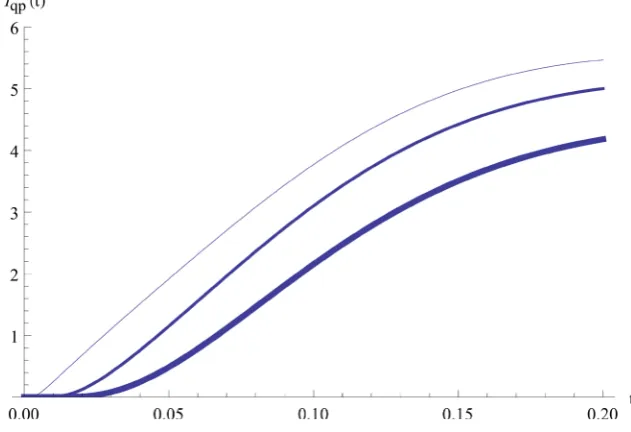
[image:14.595.207.537.76.180.2] [image:14.595.214.530.467.683.2] , with
I
qp( )
t
varying from 1 to 6.Figure 1 shows that the sound dissipative impedance is controlled by the absorption edge condition
(
b k
,
F)
>
t
[here t is the temperature and(
b k
,
F)
is the ground state energy determined by the magnetic field b]. Usingthe explicit formula
(
)
(
)
2 20 2
1
, , 1
2 2 2π
F
F F F
F F
vk
v q
b k b k k
k k
= − ≡ −
,
(
)
20 ,
2 2 F F
vk b
b k =
given in Equation (11) we can determine from the impe- dance 22,01( )
(
, ;)
R
qp
ζ
QΩ the magnetic field b and the vortex lattice constant d.The absorption is given in units of Newton sec m⋅ 3. We plot
( )
(
)
22,01 10 , ; 10 R
qp
ζ
−
Ω
Q
for the case ∆ =0.1 meV and Ω =2π 10 radians sec× 6 as a function of temperature t (t=0.1 meV corresponds to 1 Kelvin) and the vortex separation is 7
10 m
d
=
− . The functionI
qp( )
t
is shown for threedifferent cases: The thin line gives the absorption for the ground state energy
(
,)
22 1 0.001 meV2 8π
F F
F
vk q
b k
k
≡ − =
, the thickest line represents the absorption for the ground state energy
(
b k, F)
=0.1 meV. The line in between describesFigure 1. The dissipative part for the particle-hole contribution, ( )
(
)
( )
22,01 1 2 3
10
, ;
Newton sec m 10
R
qp
qp Q Q
I t
q q
ζ −
Ω ≈ ⋅
Q
DOI: 10.4236/jmp.2017.89095 1598 Journal of Modern Physics the situation for
(
b k, F)
=0.0075 meV. We observe that the absorption edge temperature scales with the energy (
b k, F)
as a function of the magnetic field and Fermi energy.b) Impedance for Majorana modes
The Majorana contribution given by the particle-hole [see Equation (21)] depends on the tunneling amplitude t0. We consider the ground state energies
(
b k
,
F)
=
0.005 meV
(thin line),
(
b k
,
F)
=
0.1 meV
(thick line) and(
b k, F)
=0.05 meV (intermediate ground state energy).
The Majorana contribution for the particle-particle part [see Equation (22)] for the same values of
(
b k
,
F)
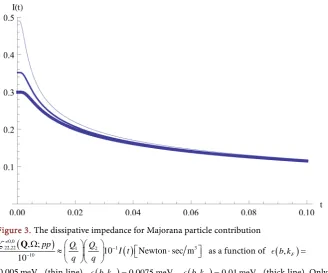
and tunneling amplitude t0 as in Figure 2shows an absorption for low temperatures. Comparing Figure 1 with Figure 2, Figure 3 we observe that the Majorana fermion gives rise to absorption at low temperatures, in a region where the particle-hole absorption (Figure 1) is absent.
Since impurities are always present, it is important to know how to dif- ferentiate between the impurity absorption and the Majorana fermions. Impu- rities will give rise to absorption for frequencies
Ω >
(
b k
,
F)
−
impurity and for temperatures T> Ω; on the other hand, the Majorana absorption persists at0
T→ (see Figure 3). The total impedance is given by the sum of contributions
in the three Figures 1-3. We therefore conclude that the information about the Majorana modes, the magnetic field and tunneling amplitude t0 can be ob- tained from the viscosity stress measurement.
[image:15.595.212.532.440.710.2]7. The Sound Wave Analog of Andreev Crossed Reflection
Next we comment on the sound wave analog of the Andreev reflection. TwoFigure 2. The dissipative impedance for Majorana particle-hole contribution
(
)
( )
0,0
22,01 1 2 2 3
10
, ;
10 Newton sec m 10
qp Q Q
I t
q q
ζ≠
− −
Ω ≈ ⋅
Q
DOI: 10.4236/jmp.2017.89095 1599 Journal of Modern Physics
Figure 3. The dissipative impedance for Majorana particle contribution
(
)
( )
0,0
22,22 1 2 1 3
10
, ;
10 Newton sec m 10
pp Q Q
I t
q q
ζ≠
− −
Ω ≈ ⋅
Q
as a function of
(
b k, F)
= 0.005 meV (thin line), (
b k, F)
=0.0075 meV, (
b k, F)
=0.01 meV (thick line). Only( )
I t is shown here. The range of temperature is 0.005< <t 0.1 (temperature t=1 corresponds to 0.1 meV and the structure for t<0.005 is an artifact of the numerics).
Majorana modes located at the two ends of a p-wave superconductor wire are detectable by piezoelectric transducers representing the sound equivalent of the two-leads experiments which measure the Andreev crossed reflection [40] [41]. We demonstrate that the same equations which were obtained for the Andreev crossed reflection [40] [41] induced by a voltage between the two tips are obtained for a sound wave which creates a time-dependent lattice deformation
( )
, ,2 2
L L
D t =u t+u− t
. Here 2, L u± t
is the sound deformation in the vicinity of each tip. The lattice deformation acts as a bias field. The voltage field
e e i Vt ±
in the two-tip experiment is replaced by a bias field e±ik D tF ( ) for the
sound wave case.
We follow the derivation given in refs. [40] [41]. For a p-wave (or equivalently a one-dimensional wire with spin-orbit interaction in the proximity of an s-wave superconductor and a magnetic field) with length L we have two Majorana
modes localized at
2 L x= − and
2 L
x= . The fermions for the two tips are
represented by 2 2
1 e 1 e 1
2 2 2
F F
L L
ik ik
L L L
C x R x L x
− − −
= − = = − + = −
and
2 2
2 e 2 e 2
2 2 2
F F
L L
ik ik
L L L
C x R x L x
−
= = = + =