Master thesis
Recommendations for IT procurement of
non-commodity outsourcing
A conceptual framework
IT procurement Kimberly Lemmens
iii
Master thesis
Recommendations for IT procurement of non-commodity outsourcing
A conceptual framework
Author: J.M.C. (Kimberly) Lemmens BSc
Place: Amsterdam
Date: February 16th, 2009
University: University of Twente, The Netherlands
Faculty: School of Management and Governance
Program: Industrial Engineering and Management
Track: Information Technology and Management
Company: KPMG, Amstelveen
Committee: 1st university supervisor
Dr. Hilda Folkerts
School of Management and Governance
Chair of Information Systems and Change Management
2nd university supervisor
Prof. dr. Jan Telgen
School of Management and Governance
Chair of Management Science and Purchasing Management
Company supervisor
Drs. ing. Paul Olieman RE IT Advisory
General Practice Amstelveen
IT procurement Kimberly Lemmens
v
Management summary
Control over IT is an issue and non-commodity IT sourcing attempts often fail to realize anticipated objectives and cost savings. Accordingly, there is a great interest for successful and cost-effective IT procurement. Therefore, the objective of this research is to develop a conceptual framework for cost-effective IT procurement for non-commodity outsourcing. To develop an easy and comprehensive framework, main focus areas are identified, which cover only the most important key factors and issues. This framework provides recommendations to manage the main focus areas for sourcing of non-commodity IT services.
These focus areas are identified from a profound literature review and multiple-case study research. Findings from the literature review indicated that the IT procurement process consists of the business function, the IT demand function, the IT supply function and the service provider function. For each function, influencing factors for successful IT procurement are identified. These key factors are assessed on their influence on cost-effectiveness.
Case study research introduced additional influencing factors for further refinement of the framework. The identification of these factors is conducted on basis of analytic analysis of the results from the case study research and the literature review. Cluster analysis is used to identify the main focus areas that cover the key factors and issues.
Four best practice models are considered for the construction of the conceptual framework. These models include eSCM, CMMI-ACQ, IPCM and ISPL. These models are assessed and compared on their strengths and weaknesses, considering amongst others support for the IT procurement process and cost-effectiveness. The eSCM model is found most useful as it supports cost-effectiveness, sourcing governance and organizational sourcing strategy. This study resulted in five main focus areas for IT procurement to successfully and cost-effectively procure IT services. When an organization decides to source an IT service to a service provider five focus areas should be considered:
Strategic sourcing includes the definition of the organizational sourcing objectives and strategy. Strategic sourcing is supported by assessment of sourcing options and organizational competencies. To assure that this focus area is continued on the tactical level a sourcing policy needs to be defined.
Clear and validated definition of objectives for a sourcing needs to be promoted. First, the definition of objectives needs to be conducted in realistic and comprehensive way using an accurate business case. Second, accurate SLAs and measures need to be defined.
The demand-supply function needs to be supported by proper definition of roles and responsibilities. It needs to be assured the market is properly addressed, a knowledge system is used and the cost savings and defined and changing objectives are achieved. In order to add value the IT procurement function needs to be supported by proper definition of the sourcing processes. Early involvement of IT procurement will increase cost-effectiveness. This function needs to have expertise for both procurement and IT. Focusing on a healthy client-provider relationship is necessary as neglecting the relation between the client organization and the service provider may diminish the above focus areas. This focus area is supported by relationship management.
Table of contents
Management summary v
Acknowledgements ix
1 Introduction 1
1.1 Background 1
1.2 IT procurement 2
1.3 Issues 6
1.4 Problem statement 7
1.5 Research environment 8
1.6 Structure of the thesis 9
2 Research design 11
2.1 Research model 11
2.2 Literature study 12
2.3 Field study 13
2.4 Research questions 15
2.5 Result 15
3 Literature review 17
3.1 Initial conceptual framework 17
3.2 Key factors 18
3.3 Cost-effectiveness 23
3.4 Evaluation criteria 24
3.5 Chapter summary 26
4 Case studies 27
4.1 Methodology 27
4.2 Conceptual framework 29
4.3 Cost-effectiveness 30
4.4 Key factors 33
4.5 Identified issues 36
4.6 Chapter summary 42
5 Analysis of models 45
5.1 Assessment criteria 45
5.2 eSCM-CL 45
5.3 CMMI-ACQ 48
5.4 IPCM 50
5.5 ISPL 51
5.6 Comparison 53
IT procurement Kimberly Lemmens
vii
6 Development of the framework 57
6.1 Development approach 57
6.2 Cluster analysis 57
6.3 Framework construction 65
6.4 Chapter summary 71
7 Conclusions and recommendations 73
7.1 Conclusion 73
7.2 Discussion 75
7.3 Implications for theory and practice 76 7.4 Recommendations for further research 76
Bibliography 79
Appendix A: Questionnaires 83
Client organization 83
Service provider 86
Appendix B: Interview results (confidential) 89
Appendix C: Practices for the conceptual framework 91
Strategic sourcing 91
Objectives for sourcing 92
Demand-supply function 92
IT procurement 93
IT procurement Kimberly Lemmens
ix
Acknowledgements
To complete the master Industrial Engineering and Management (Information Technology and
that was performed on the topic of cost-effective IT procurement. The thesis is the last part of
I conducted my thesis at KPMG IT advisory in Amstelveen under supervision of Paul Olieman. They offered me the opportunity to study the field of IT procurement. They provided me with leads to improve my research and the organizations I studied to accomplish this research. Hilda Folkerts affiliated with the Information Systems and Change Management chair and Jan Telgen professor of the Management Science and Purchasing Management chair supervised me on behalf of the University of Twente. I would like to thank all three supervisors for their feedback and guidance at times I lost sight of my objectives.
Conducting research involves processing and organizing a vast amount of information. This overwhelming amount of information is not only present during the literature study, just as much it is present in the case study research. All through this research I improved at structuring these large sets of information. In addition, I learned better to separate the essentials from the side issues. During the writing of my thesis I improved in producing a clear and comprehensive report.
My thanks go to my colleagues at KPMG for providing me with help in times of confusion. In person I like to thank my fellow interns, Anno Perk, Sebastiaan Koperberg and Maurice Lacroix for bringing joy in every day of work and especially for their advice in times of uncertainty. Furthermore, I owe many thanks to Joost Deetman and Jarno Roos for their infinite feedback. Last but not least, I would like to use this opportunity to thank my mother and sister for their support and my father and Marc for their feedback on the content and for my English.
IT procurement Kimberly Lemmens
1
1
Introduction
Nowadays, organizations are able to procure all their needs for IT in the market. Outsourcing is an often used means for procuring IT when organizations want to focus on their core business processes. Outsourcing advocates argue that it enables cost savings (e.g. by economies of scale) and increases performance of the IT function (e.g. by innovation). In contrast, these objectives are not always achieved as will be illustrated in this chapter.
This chapter presents the subject and problem context of the research for this thesis. From the problem context, the objective of this research and the research question are derived. Furthermore, both the theoretical significance and practical significance are explained. Next, the environment in which the research is conducted is clarified. In addition, an audience profile is provided which clarifies to who this research is of interest. Finally, the outline of this thesis is provided.
1.1
Background
In 2008, several leading Dutch IT service providers observed approximately 20% growth in demand for outsourcing projects (Zaal, 2008). Many client organizations still assess outsourcing on the tactical level. The client organizations often are relatively immature and they conduct outsourcing as a simple procurement transaction that is managed by the general procurement function (Ramakrishnan, 2008). Even though the maturity of IT procurement has improved recently, the total number of failures has not been reduced (Snijders & Tazelaar, 2005). A 2008 study on outsourcing showed 44% of the respondents did not realize cost savings (Handley & Benton, 2008). Client organizations report their dissatisfaction about costs and significant loss of control over their IT and service providers find it difficult to deliver innovation and added value (Willcocks, Feeny, & Olson, 2006).
IT procurement comprises more than managing contracts with IT service providers and much more than managing risks in acquiring IT services. IT procurement is a key factor in accomplishing the IT architecture and the IT strategy (Sitruk, 2008). As more IT services are supplied from outside the company, the procurement function becomes more important. Effective sourcing and managing IT procurement in an integrated way (holistically) has numerous advantages. These advantages include amongst others, cost savings caused by economies of scale, flexibility and the ability to focus on the core activities (Jennings, 1997). These advantages contribute to the frequent application of outsourcing as a means for acquiring IT services.
1.2
IT procurement
The topic of this research is IT procurement for non-commodity outsourcing. In order to introduce the main subject a definition is provided, the organization for IT procurement is introduced and additional concepts are explained.
Definition
The definition of IT procurement is derived from the definition of general procurement. General procurement is a day-to-day activity and is found in practically every organization. Several similar definitions are found in literature for the concept of procurement. Procurement is often referred to as purchasing or sourcing. Two definitions are worth mentioning. Thiadens (2005) defines procurement as all activities aimed at managing and controlling the incoming flow of goods and services. Another short definition comes from Telgen (2004) and is defined as: procurement includes everything involving an external invoice.
Procurement, sourcing and acquisition are used interchangeably in the information systems research field. Outsourcing can be considered as a complex type of procurement (Saunders, Gebelt, & Hu, 1997). Therefore, outsourcing is also included in the definition as is provided below. As none of these definitions concentrates on sourcing of IT, these definitions are not suited for the definition of IT procurement. The following definition is derived from the aforementioned definitions:
IT procurement is the process of sourcing of an IT service from (a) service provider(s) by a client organization.
Two concepts in this definition need further clarification. The first concept is the service provider. Generally, IT procurement can occur both internal and external to the organization. The former encompasses in-house service development and the latter entails acquisition of IT from an external service provider. In this research, service providers are defined as both internal and external to the client organization.
definition. Since products are mostly delivered as part of a service and in literature both are referred to as services. For example, when acquiring office automation, besides the physical products (e.g. laptops) the provider delivers a service (e.g. maintenance and delivery of spare parts). Therefore, in this research both products and delivered services are referred to as services.
The difference between commodities and non-commodities procurement is rather important as a distinction is drawn between the operational and the tactical, and strategic level of procurement. The value of one IT service to one organization may be of unequal value to another organization. Often the distinction is drawn between standardized and customized services. Software licenses are a good example of commodities. Non-commodities are for instance very specific and tailored development projects, but also office automation can be considered as a non-commodity.
IT procurement Kimberly Lemmens
3 are non-critical in nature. Furthermore, it is more difficult to determine the total cost, since the risks make the costs more unpredictable for non-commodities. For this reason, the IT services considered in this research are non-commodities.
[image:13.595.108.509.254.312.2]Process
Figure 1 provides an overview of the procurement process as described by Van Weele (1997). This model distinguishes between a tactical procurement process and an operational procurement process. The tactical process consists of specifying and selecting for a service and results in a contract between the client and the provider. The operational process includes ordering, monitoring and the after care sub process.
Figure 1: Procurement process by Van Weele (1997)
The strategic procurement process is missing in the procurement process as displayed in Figure 1. This process is preceding the procurement process. The strategy for IT procurement is one
(Cohen & Young, 2006). The IT sourcing life cycle as illustrated in Figure 2, has a strategic process included and illustrates the IT procurement perspective. The arrows indicate the phases in the sourcing life cycle:
Strategy indicates assessing or developing a sourcing approach and review the approach chosen.
Preparation includes the design of the process to be supported by the sourced service. Selection includes provider selection, negotiation and request for proposal.
Transition assesses project management and asset management.
Figure 2: Sourcing Life Cycle by KPMG (2008)
[image:14.595.85.488.389.439.2]Besides the perspective of the general procurement process and the sourcing life cycle, a more straightforward classification of the IT procurement process is defined as pre-contract phase, contract phase and post-contract phase (Alborz, Seddon, & Scheepers, 2003). These phases are illustrated in Figure 3. This perspective will be used in this research, as it provides a comprehensive though concise view on IT procurement.
Figure 3: IT procurement process
Organization
The IT procurement can be organized in several ways. Several processes are residing in an organization that is procuring IT. One specific framework perspective for analyzing the IT organization is the nine-square model, which originates from the information management field. This framework is provided in Figure 4 (as described in Folkerts (2008a) and adapted from from Maes (2003)).
[image:14.595.168.407.559.698.2]IT procurement Kimberly Lemmens
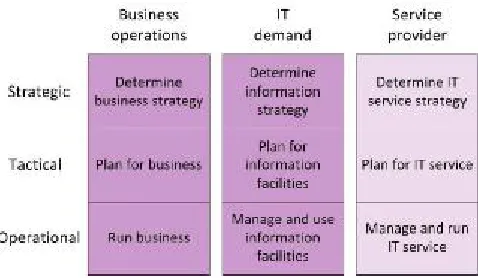
5 From the perspective of information management, the nine-square model illustrates the IT service indirectly supports the business, via the information that the IT service produces. Looking at this model horizontally, it relates the processes for information that originates from the IT service to the business (Maes, 2003). This framework is implicitly implemented in every organization to some extent, since every organization uses information provided by IT services. From the perspective of the business and the perspective applied in this research, the nine-square model describes the relations between three functions:
Business operations: This function involves regular business operations including (human) resources and processes.
IT demand: This function translates the business needs for information facilities into IT demand.
Service provider: This function entails either an external or internal service providers of IT services. The service providers supply the organization with the IT service.
The classification at the vertical dimension of the model in Figure 4 is commonly used in business practice and theory. It consists of strategic, tactical and operational:
The strategic level comprises organizational mandate for the vision and objectives of the organization.
The tactical level entails policies, plans and organization in conformity with the vision and objectives of the organization.
The operational level encompasses procedures for managing and running the organization according to the vision and policies.
Maes (2003) states that this model should not be extended, as this will not benefit the managerial applicability of the model. However, it is observed that a function is missing, which monitors and directs the service provider after the IT service is delivered. Often several providers are involved in one or more IT procurement projects. Therefore, a multisourcing environment is assumed in this research, in which multiple providers are supplying their IT service. Activities that aim to monitor and direct the service providers in the procurement process are of interest, since this is the means for really achieving the objectives and cost savings for IT procurement.
Centralized vs. decentralized
IT procurement Kimberly Lemmens
7 Buchanan, 2008). However, the focus on cost-effectiveness is not naturally present in the IT procurement process. Therefore, this issue is the main focus for this research about IT procurement.
effectiveness is defined as the benefits in relation to the costs involved. Cost-effectiveness entails both cost savings as well as creating value. Often, only the short term costs are taken into consideration when determining the costs of an IT service. However, ignoring long term costs can cause costs to exceed expectations (Anderson Jr & Parker, 2002). Accordingly, long term costs need to be considered in the process. These recurring or long term costs include, but are not limited to, maintenance costs and costs resulting from resistance of employees. The sum of short term and long term costs is generally referred to as total cost of ownership (TCO).
Furthermore, benefits originating from an IT procurement may be perceived as beneficial for one part of the business (business value). However, the IT procurement may not be aligned with overall business objectives. Rather than only focusing on cost-based procurement, value creation is also an important aspect and Telgen and Sitar (2001) define this as value-based procurement.
An important remark is that IT alone does not create value. Value is created when IT is implemented in an integrated manner, in order to enable the organization to exploit the IT (Ward & Daniel, 2006). The real value of a typical IT service lies in the cross-functional use of business processes (Lacity e.a., 1996). Therefore, the added value of an IT service can often not be measured directly. Difficulties in measuring the value lead to difficulties evaluating the procurement effort and create maximum business value.
In summary, to assess the cost-effectiveness of IT procurement two aspects are considered: cost-based procurement and value-based procurement. Cost-based IT procurement involves cost savings and total cost of ownership (TCO) and value-based procurement involves creating maximum business value.
1.4
Problem statement
As is illustrated above the need for control over IT and cost-effectiveness are important issues. However, a lack of knowledge and expertise results in dependence on service providers. Both internal and external sourcing is preferred and a multisourcing environment is assumed (Cohen & Young, 2006). Therefore, directing and monitoring of the delivery of the sourced services is relatively complex. However, this is significantly important in order to meet the
and increase business value.
(Heckman, 2003; Love, Skitmore, & Earl, 1998). A recent international study (Schors, 2008) among 600 large organizations concludes that organizations underestimate the importance of the procurement function altogether. This study concludes this is the reason why procurement However, it is proposed that the IT procurement function may be one of the few means to influence cost-effectiveness. Therefore, cost-effective IT procurement has substantial practical and theoretical relevance.
Despite contracts
outsourced IT. Several best practices are described in literature and multiple capability models are in use that prescribe best practices for IT procurement. However, these practices are generally too extensive, inconveniently arranged and are often not entirely applicable for the (1999) found that organizations lack formalized processes for IT procurement. To ensure that these processes are formalized, an integrated framework of recommendations is developed in this research.
The research objective is to improve IT procurement cost-effectiveness by developing a framework of recommendations for IT procurement of non-commodities outsourcing. Combining theory from literature with best practices in IT procurement results in recommendations that describe how IT procurement is most cost-effectively organized. Organizations will be able to positively influence the process of procurement by acting upon these recommendations.
As a result from the problem context above a main research question is formulated:
How is the IT procurement for non-commodity outsourcing organized most cost-effectively?
Client organizations in a multisourcing environment are expected to have a defined IT procurement process and are more likely to implement a best practices framework for IT procurement. This entails that large organizations are considered in this research which are required to interact with several service providers. The focus on large organizations entails the focus on large IT procurement projects, rather than small ones, as large projects involve a lot of time and money.
1.5
Research environment
The master project is performed at KPMG in Amstelveen, at the IT Advisory (ITA) department. KPMG is a company with about 123,000 employees in 148 countries. KPMG in The Netherlands offers audit, tax and advisory services to a broad group of clients: major domestic and international companies, medium-sized enterprises, non-profit organizations and government institutions.
ITA offers audit and advisory services to both private and governmental clients. The services ITA provides include among others, risk analysis, IT assessments, assessments of continuity plans and IT strategy and performance.
IT procurement Kimberly Lemmens
9 The thesis is also of value for the organizations involved in the case studies. The conclusions of this study offer them an approach to conduct more cost-effective IT procurement. Additionally, this thesis is written for readers with knowledge of the contemporary role of IT in organizations. Therefore, basic knowledge in the field is assumed.
Finally, this thesis demonstrates the academic process of this study. Therefore, as proposed by Yin (2003) this thesis strives to demonstrate that the methodology and theoretical issues are mastered. Furthermore, it attempts to provide an indication of the care with which the research is conducted.
1.6
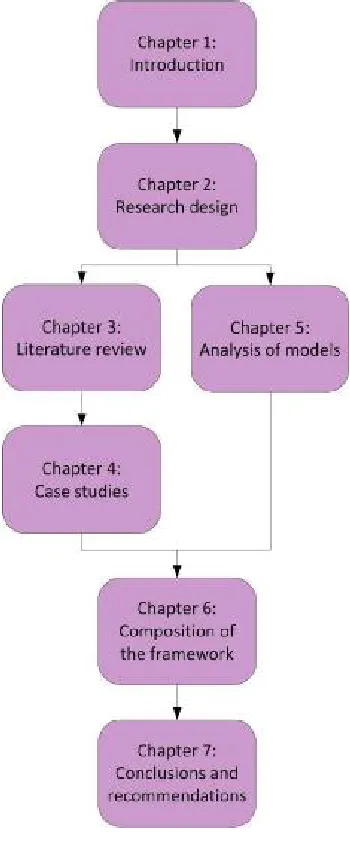
Structure of the thesis
IT procurement Kimberly Lemmens
11
2
Research design
Every organization is interested to improve their cost-effectiveness considering IT procurement. In order to provide these organizations with recommendations to achieve this objective this research is conducted. To design this research it is perfectly possible to apply various research methods. However, the most suitable and convenient research method is identified and arguments are provided in order to show a founded approach is taken.
This chapter provides the approach for solving the research problem as was discussed in the previous chapter. The research approach and research strategy are discussed to illustrate the approach in answering the main research question. A research model is provided in Section 2.1. This model illustrates the objective of this research that is achieved in a number of steps. The approach of the literature review and the case studies is explained in Section 2.2 and Section 2.3.
2.1
Research model
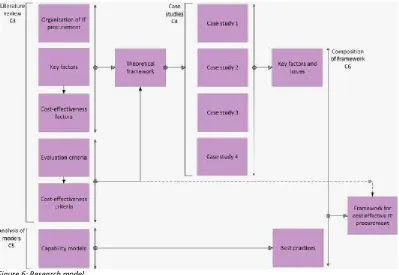
[image:21.595.111.510.374.649.2]The research model in Figure 6 provides an overview of the research approach. It is constructed using the method of Verschuren and Doorewaard (2000) for designing a research model. The research approach consists of a literature review (Chapter 3) and case study research (Chapter 4).
Figure 6: Research model
The theoretical framework is the input for the field study (Chapter 4), which is performed in the form of multiple-case studies. By interviewing experts involved with the case study organizations, issues and practices are found from practice. Once the issues are identified, supporting practices are determined and a conceptual framework is constructed (Chapter 6). In order to validate the identified practices these need to satisfy the evaluation criteria, which are identified in the literature review.
2.2
Literature study
The purpose of the literature study is twofold. First, it provides input for theory development. In this particular instance, the developed theoretical framework facilitates the design of the case studies, as it forms the basis for constructing the questionnaires. The questionnaires are used as a starting point for the interviews for the field study. Second, the theoretical framework is the level at which the generalization of the case study results will occur (Yin, 2003).
This literature review analyzes literature on IT procurement and its processes to extract information for the purpose of this research. The organization for IT procurement will be further researched in order to gain more understanding of the processes for IT procurement. Next, the key factors that influence IT procurement are identified, since these provide theory on how IT procurement success is achieved. These key factors are analyzed for their influence on cost-effectiveness. This review results in a theoretical framework and key factors that are critical for cost-effective procurement of IT.
In order to increase the theoretical foundation and the practical applicability of the framework, the recommendations are founded on best practices. These best practices are based on profound research and are frequently used in practice. An additional advantage is that these best practices provide leads and are used as a starting point for constructing the framework.
There are several best practice models available for IT procurement. Four best practice models can be taken into consideration. These are chosen since these models are specifically used for IT procurement. It is possible to reflect on the e-Sourcing Capability Model (eSCM), the Capability Maturity Model Integration for acquisition (CMMI-ACQ - a model adapted from the CMM for software development), the Information Services Procurement Library (ISPL) and the Information Procurement Capability Model (IPCM).
Summarizing the following two literature collections are used for this research:
1 General literature on IT procurement processes, issues and IT procurement organization, including roles and responsibilities.
2 Capability models on either IT sourcing, IT acquisition or IT procurement:
2.1 eSCM-CL:The model provides a best practice framework that IT service clients can use to develop and improve their ability to acquire high quality IT services, while minimizing costs and risks. The model has five levels; these encompass the level of maturity (quality) of the client (Hefley & Loesche, 2004).
IT procurement Kimberly Lemmens
13 2.3IPCM: The IPCM model is developed by Det Norske Veritas (DNV) together with governments and private international enterprises. The model provides best practices for IT procurement. IPCM can be used separate or in addition to the CMMI-ACQ model(DNV, 2005).
2.4ISPL: The ISPL library is a European best practice method for tendering and delivering IT projects and services. It is used by both client and provider organizations, in both the public and private sectors. ISPL helps to establish a professional relationship between the client and provider organizations (Verhoef, Kemmerling, Meulen, & Schutte, 2004).
2.3
Field study
The purpose of the field study is to obtain an expert point of view on IT procurement through thorough understanding of practice, while remaining objective. This field study is conducted using the case study research method. One characteristic of the case study research is that it provides an in-depth investigation of phenomena in their real life setting (Yin, 2003). These phenomena are organizational processes for IT procurement.
Method selection
IT procurement involves complex processes, as is illustrated in Section 1.2. Therefore, it is very difficult to realistically simulate these processes in a laboratory setting. Which makes it only feasible, to do the research in the natural environment. In addition, there are too many variables (e.g. environmental conditions, variation in IT services) to effectively apply quantitative research methods within the timeframe of this study. The two abovementioned reasons suggest that the qualitative research method is most suitable for this research. The n, therefore typically the case study research method is used (Moody, 2008; Yin, 2003).
The case study research method is commonly considered challenging because of its lack of objectivity. The lack of objectivity results in less confident conclusions due to the subjectivity of the analysis (low internal validity) and the chance of alternative interpretations of the results (low construct validity). Additionally, the impossibility to replicate the research for other case studies (low reliability) and the inability to generalize from single situations makes it less desirable to use (low external validity). Because of the exploratory nature of this research it is a good starting point for building evidence for answering the main research question (Yin, 2003).
Data selection
Several sources of evidence can be considered for the case studies. Six main sources of evidence are documents, archival records, interviews, direct observation, participant observation and physical artifacts (Yin, 2003). These sources of evidence are complementary: subjective vs. more objective (e.g. interviews vs. observation) and qualitative vs. quantitative (e.g. interviews vs. archival records). Generally, it is desirable to use as many different sources as possible to corroborate the information.
deals. Unfortunately these contracts are primary confidential, resulting in difficulties obtaining these contracts for research purposes. Therefore, the approach of gathering evidence from documents (contracts) is discarded. For this research is chosen to only use interviews and synthesize and confirm these results with evidence found in literature.
Quality criteria
Issues considering validity and reliability of the case study research method are mitigated to a large extent by three means. Since, a limited number of case studies can be conducted (due to time constraints) and because of the exploratory nature of the research, the first issue is external validity. Multiple similar organizations are considered for the case studies, such that a first attempt can be made and the generality of the type of sourcing organization can be assured. Furthermore, a priori theory is used to analytically generalize from the findings. Second, internal validity is increased by asking interviewees to consider one specific instance of IT procurement in the past. Third, reliability is handled by using a case study protocol, such that the case study can be replicated for another case.
Yin (2003) discusses several issues arising when using the interview approach. First, bias due to poor questionnaire design is an issue. This bias is lowered by constructing the questionnaire based on theory and consultation of subject matter experts. Second, response bias origins from respondents that are not representing the intended population. The response bias is partly counteracted by asking the interviewees to answer on behalf of the organization. The third issue is called reflexivity. Reflexivity arises from interviewees who answer what they assume the interviewer wants to hear. The questionnaire should be carefully designed in order to counteract this bias. By continuing asking questions the interviewer anticipates reflexivity may happen. Finally, the interview is recorded in order to prevent difficulties concerning recalling the information provided.
Case selection
It is important to define what type of organization is considered in this research. As said before, the exploratory nature of this research and the limited case studies contribute to the importance of raising the generality of the findings. Therefore, this study reflects on several similar cases, in order to be able attempt to generalize on the specific homogenous organizations. Possibilities to homogenize are amongst others: type of sourcing, large vs. medium-small organizations and different industries.
This research concentrates on large (> 5000 employees) with significant annual IT spending (> 8% of annual turnover), choosing to source non-commodity IT services in a multisourcing environment. Both the client side and the provider side are considered as it provides insight in two different perspectives. From the provider organization this entails interviews with account executives. From the client organization, the IT procurement manager and if applicable the IT responsible involved in IT procurement process are interviewed.
IT procurement Kimberly Lemmens
15 of interviewing representatives of the organizations involved in an IT procurement process, both from client and provider organizations.
2.4
Research questions
The purpose of a literature review is to develop sharp and insightful research questions (Yin, 2003). In order to answer the main research question the research model is decomposed and sub questions are assigned to each component of the research model. Looking at the research model the main research question is divided into the following sub questions:
1 How is IT procurement organized in an organization? (Chapter 1, Chapter 3) How is procurement of IT defined in literature?
2 Which functions, factors and processes for cost-effective IT procurement can be distinguished in literature? (Chapter 3)
Which functions for the organization of IT procurement can be distinguished? What is the most logical distribution of the factors and processes in categories? How can a framework be constructed from these functions, factors and processes? 3 Which factors and issues for IT procurement can be derived from the case studies?
(Chapter 4)
What practices come across in daily IT procurement? What practices do the case study organizations propose?
Which roles and responsibilities are used in daily IT procurement?
4 Which best practices for IT procurement can be identified from capability models and libraries for IT procurement? (Chapter 5)
Which best practices are proposed by eSCM? Which best practices are proposed by CMMI-ACQ? Which best practices are proposed by IPCM? Which best practices are proposed by ISPL?
5 How can the factors and issues derived from the case studies be aligned with the conceptual framework and the best practices from the capability models? (Chapter 6) 6 What are the consequences of the conceptual framework for the cost-effectiveness of IT
procurement? (Chapter 6)
Can the improvement of cost-effectiveness be quantitatively proved? (further research)
2.5
Result
does not get caught up the complexity of the real-world situation and thus lose its explanatory . This citation leads directly to the added value of the framework. It should be able to implement this framework without much effort. Furthermore, the implementation should result in a maximum improvement of cost-effectiveness.
IT procurement Kimberly Lemmens
17
3
Literature review
The organization and processes for IT procurement of non-commodity outsourcing is of interest to this research. Furthermore, factors that influence IT procurement success and cost-effectiveness in particular, need to be identified in order to answer the main research question.
The conceptual framework is positioned in Section 3.1 by means of the nine-square model as has been introduced in Section 1.2. Section 3.2 provides the key factors for IT procurement, which are applied to identify the recommendations for the purpose of this research. Section 3.3 specifically analyzes the factors influencing cost-effectiveness. Section 3.4 proposes evaluation criteria in order to be able to assess the contribution to success and cost-effectiveness of the key factors and recommendations.
3.1
Initial conceptual framework
Often organizations are dissatisfied with their outsourcing projects and blame their service providers. Douwstra and De Vries (2007) identify that the dissatisfaction can be diminished by professionalizing the directing of the outsourcing relationships. In the Section 1.2 has been observed that organization-wide coordination of the service provider is missing in the nine-square model. This function seems to have significant influence on the cost-effectiveness of IT procurement, since when this coordination function is not organized in a correct way, additional and unanticipated costs arise (Douwstra & De Vries, 2007) and maximum value is not created because objectives are not satisfactory achieved.
A coordination entity that facilitates cost-effectiveness should be introduced. The function of this entity is to direct the provisioning of IT, such that a cost-effective IT procurement is secured. As a result of the multisourcing environment in which organizations operate, the client organization needs to direct the service provision from several service providers (both internal and external) to satisfy the need of the business. Instead of following a predefined chorography in which IT demand does not attempt synergy efforts, an orchestration entity directs and coordinates the service providers.
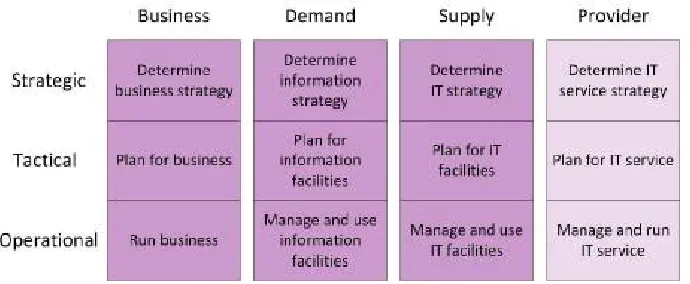
(Douwstra & De Vries, 2007; Redwood, 2007). In English literature this is often referred to as the retained organization. In this research a similar function is proposed as the IT supply function.
Figure 7: Conceptual framework
It needs to be emphasized that the IT supply function involves not necessarily a new or separate division. Douwstra and De Vries (2007) identify three possibilities for the organization of the IT supply function. First, in the hidden IT supply function the processes are organized in the existing organization. Second, the IT supply function is organized as a separate division. Third, a hybrid IT supply function is a mixed form of an existing and a new organization.
Influence on cost-effectiveness
The role of the IT supply function is mainly found in the post-contract phase of the IT procurement process and holds to monitor and direct all providers involved. For the purpose of this research the post-contract phase of the procurement process is of particular interest, since cost-effectiveness is diminished when the intended objectives and cost savings are not achieved. effectiveness increases when the IT supply function is professionalized. Cost-effectiveness is dealt with by orchestrating the service provider, such that the provider adds value by innovation and flexible operational management (Douwstra & De Vries, 2007). The IT demand function is mainly found in the pre-contract phase of the IT procurement process. This function provides for the specifying and selecting for the demand of the business. The IT demand function is influencing cost-effectiveness, since organization-wide IT demand leads to cost savings during the pre-contract phase. These savings are illustrated by two examples. First, an environment is created which makes synergy possible in dialog with the IT demand function and the service providers in the market. Synergy is created by procuring IT on a larger scale for several business departments and by choosing one product or provider in preference to separate procurement efforts. Obviously, this leads to higher buying power and lower coordination costs during the post-contract phase. Second, buying IT that fits the organization IT architecture and IT strategy adds to cost-effectiveness.
The initial conceptual framework in Figure 7 is used for the positioning of the recommendations that are identified in this research. This framework will provide a comprehensive and straightforward view on the processes of IT procurement adding to successful procurement and cost-effectiveness in particular.
3.2
Key factors
Sourcing strategy
Four out of seven papers recognize the importance of a strategy specifically for sourcing. Inconsiderate procurement decisions result in additional costs and in case of outsourcing loss of capabilities and knowledge (Cohen & Young, 2006). Furthermore, IT procurement is a rather complex process and the agile needs of the business result in the call for a comprehensive organizational sourcing strategy. The sourcing strategy needs to be based on the business strategy (Cohen & Young, 2006). In addition, according to Alborz et al. (2003), if the
an in-efficacious procurement process.
Since the decision to outsource has a long-term impact on the organization, executive management should apply the strategy with ongoing objectives in mind. As part of the sourcing strategy, it is important for client organizations to determine what and why they are outsourcing and what the objectives for the organization are (Cohen & Young, 2006).
Delen (2004) emphasizes that in case of outsourcing, core business processes should not be outsourced. The reasoning is that their core processes provide organizations competitive advantage. Outsourcing core processes will contribute to high risks (e.g. knowledge loss) and moreover high impact of these risks for the business. Jennings (1997) indicates that it is often difficult to differentiate between non-commodity and commodity activities. Therefore, it is difficult to determine what should be sourced to a service provider. Saunders et al. (1997) state, success is determined by considering an IT service as a core function, as organizations may be more thorough in negotiating the contracts. Therefore, more care needs to be taken when outsourcing non-commodities, since the high impact of the risks on the business. The sourcing strategy should anticipate how this is handled.
Understanding the market
Six out of seven papers identify the need for understanding the market in which the IT procurement attempt takes place. Feeny and Willcocks (1998) identify informed buying as a core information system (IS) capability, as they indicate that analysis of the external market for IT services is an important factor. Understanding the market helps in selecting a service provider that is most capable for the sourcing (Krouse, 1999). According to Delen (2004), a successful outsourcing needs to be a win-win situation. Therefore, he indicates it is important that the market has capabilities to provide the service more efficient than the client itself. This key factor also refers to provider evaluation, which organizations need to take into consideration before signing the contract. The provider evaluation is an approach to determine whether a potential provider is able to deliver an IT service based on the defined requirements. According to Alborz et al. (2003), well founded provider selection influences the effectiveness and efficiency of a sourcing project.
Understanding the need
IT procurement Kimberly Lemmens
21 vital to understanding the n Ensuring that IT technologies capabilities are envisioned in
(Feeny & Willcocks, 1998).
Enterprise architecture alignment
From the papers assessed, three identify the need for an enterprise architecture and the alignment of the IT service with this architecture. Feeny and Willcocks (1998) define enterprise
developments in order to be able to align the IT service with an effective and efficient architecture.
(Krouse, 1999). Considering an outsourcing project, Delen (2004) emphasizes that an enterprise architecture is a prerequisite for separating an outsourced process from the organization, in order to be able to successfully transfer the outsourced service to the service provider.
Contract development
Contracting can be defined as the development and realization of a contractual commitment between a client organization and a provider. Saunders et al. (1997) identify a highly specified contract is an important factor that determines success. A sound developed contract influences the cost-effectiveness of a procurement attempt and a robust development process for creating contracts is one of the critical success factors in IT outsourcing (Alborz e.a., 2003). It is rather difficult to quantify IT services. Service level agreements (SLAs) are specified in the contracts in order to describe the objectives for the contract. According to Alborz et al. (2003), many organizations define their SLAs poorly. Not enough effort and time is spent to understand the processes to be sourced or to identify both business and technical requirements. Accordingly, the IT service does n pacts the success of the sourcing. Saunders et al. (1997) add that adjustments to the contract in order to anticipate to new technologies, changed business strategy and needs and changing market has to be possible.
Define roles
The procurement project team should represent all departments that are affected by the IT procurement (Krouse, 1999). Besides all roles and responsibilities that need to be defined in the contract, three roles are explicitly stated by Cohen and Young (2006) to facilitate some of the factors identified in the post-contract phase. These roles are relationship manager, performance manager and contract manager.
Total cost of ownership
components that make up the costs need to be conducted (Jennings, 1997). The TCO includes both short term and long term costs.
Sourcing governance
Four out of seven papers reviewed argue that governance of a sourcing project is essential to its success. The central objective of sourcing governance is to develop and act upon organizational structures, processes, and responsibilities to successfully manage the interdependencies and ensure that the value for money is delivered. In addition, Delen (2004) states that in order to be able to have successful sourcing governance it is necessary that at least their internal organizational governance is organized in an excellent way.
Alborz et al. (2003) provide arguments for the necessity of sourcing governance. They claim that governance includes factors that influence success of sourcing. These factors are senior management support, management structure and the organization of appropriate processes and procedures. Senior management plays a role in communicating the reasons for sourcing throughout the organization and in putting in place appropriate management structures and resources. Senior management provides the strategic direction and supports the governance structure. A well-planned management structure allows client and provider organizations to manage their operational activities, monitor the IT service, and measure the performance of the IT service.
Relationship management
The significance of strong relationships are recognized in four out of seven papers. The relationship factor is defined by Alborz et al. (2003) a combination of interactions and . Relationship management facilitates dialogue, establishes understanding, trust, and cooperation among the client and the provider (Feeny & Willcocks, 1998). In addition, relationship development can provide the opportunity for improving the performance and competitive advantage (Jennings, 1997).
Performance management
Performance management or monitoring is recognized as a success factor in five out of eight papers, since it is significant to hold the provider to the SLAs. Monitoring depends mainly on the contract and in particular on the SLAs defined in the contract. If performance management is poorly conducted it can be destructive for a sourcing project (Alborz e.a., 2003), as objective may not be achieved.
Monitoring the performance and quality of the IT services provides both the client and the service provider with information which is used to verify success. This information includes among other things, achievement of objectives, appeared discrepancies and controls that need to be in place. For the provider monitoring provides a means to assess client satisfaction and to identify what needs to be improved (Alborz e.a., 2003).
Feeny and Willcocks (2006) exclusively define service provider development as a core IS
IT procurement Kimberly Lemmens
23 win-win situations in which the provider increases its profits by providing services that increase business value.
Contract management
Feeny and Willcocks (1998) sting contracts for IT services . Furthermore, they identify that the objective is to ensure that problems and conflicts are resolved fairly within the (mostly) long-term relationships.
The influence of contract management on success is recognized by Alborz (2003). Sources of dissatisfaction with the contract include among other things, the underestimation of time and the skills needed for effectively managing the contracts. In addition, Delen (2004) identifies communication about the contract as an important factor in order to overcome difficulties due to unaligned expectations about the contract.
Knowledge management
Retaining knowledge in the organization is commonly accepted as an important success factor in sourcing projects (Cohen & Young, 2006). However, most literature identified does not define this factor as a critical success factor. Furthermore, outsourcing is known for difficulties with knowledge management, since knowledge is transferred simultaneously with the IT service to the service provider. Knowledge management is required to manage the outgoing knowledge in case the IT service is in sourced or sourced to another service provider. If not, the knowledge may be disappeared from the client organization forever, which is will impact cost-effectiveness.
Knowledge sharing demonstrates trust and trust implies commitment. In addition, lack of knowledge sharing has a negative influence on the relation between the client and the provider (Alborz e.a., 2003). Therefore, it can be stated that knowledge sharing is an important factor in relation management. Knowledge management requires investment both from the client and the provider.
Review sourcing decisions
Sourcing decisions are mostly long term in their implication and during the contract the context may change. Therefore, reviewing of the decision need to be conducted and consequently developed or revised (Jennings, 1997). Changes in the environment, technology development and organizational learning cause the context change. The need to review the sourcing decision is triggered by among other things, performance management, contract management, relationship management and demand from business trigger.
3.3
Cost-effectiveness
Understanding the market: Know what is available for what price in the marketplace. In addition know what the service provider is capable of and to what costs.
Total cost of ownership: TCO includes fully investigation of the total costs and these include also costs for operations, maintenance, transition, human and organizational. Furthermore, understanding the risks is important such that these can be mitigated or anticipated and no additional costs arise after the deal is closed (Willcocks, 1994).
Contract development: All objectives need to be enclosed in the contract and SLAs need to be embedded, to make sure that no surprise appears after the contract is signed. In order to be cost-effective, the contract needs to be developed in a flexible way. A flexible contract entails that it can adapt to context changes.
The above cost-based factors contribute to overcome that planned costs do not exceed expectations in the post-contract phase. Value-based factors include:
Sourcing strategy, understanding the need and enterprise architecture alignment:
Maximum value is created when the IT service fully fits to the business strategy and the information needs of the business. Therefore, it is important to know and understand the need of the business and align this with the business strategy and enterprise architecture in order to create maximum value.
Performance management: Willcocks (1994) states that there is a significant correlation between control and measurement of the IT service and effectiveness using the IT service. Only by evaluating and controlling of an IT service, the added value can be raised to a higher level. However, the evaluation and control of the added value is complicated by the time-scale of the benefits, the difference in value due to dissimilar objectives and uses for the IS and the difficulty to manage the intangible benefits. Therefore, measures need to be formulated; this is explored in Section 3.4. Performance management also includes service provider development. Performance management entails to control the provider in such a way that it promotes and develops the provider to add value to the business. The selection of the service provider is vital in order to be sure the provider is able to add maximum value.
Sourcing governance: Organizational structures, processes and responsibilities need to be in place in order to ensure that the value is actually obtained.
Review sourcing decision: Context change may lead to a situation that it is impossible to realize maximum value in a procurement project. In similar situations, with the aim of gaining maximum value the sourcing decision should be reviewed and adapted accordingly. Concluding, several factors need to be taken into consideration to guarantee cost-effective IT procurement. These factors are for cost-based: understanding the market, TCO and contract development. For the value-based: sourcing strategy, understanding the need and enterprise architecture alignment, performance management, sourcing governance and review sourcing decision. These factors are highly influencing cost-effectiveness.
3.4
Evaluation criteria
IT procurement Kimberly Lemmens
27
4
Case studies
Foremost, the case study research is conducted to confirm and complement theory identified in Chapter 3 with the findings from practice. The findings from this field study are employed to identify the main focus areas for IT procurement, which are used to develop the conceptual framework for the purpose of this research.
This chapter provides the results of the case studies. The approach of research is multiple-case study research. The case studies are conducted according to the research approach identified in Section 2.3. First, the case studies are briefly introduced in Section 4.1. Next, the results are provided and analyzed in Section 4.2 till 4.5.
4.1
Methodology
The key factors and the initial framework identified in the literature review are operationalized as the basis for the case study research. The operationalization is conducted by formulating questions for each part of the literature reviewed. A case study protocol is developed, that includes a small introduction on the research, the objective of the interviews and the questionnaire including an explanation of the concepts. Two questionnaires are designed for the case study protocol, both for client organizations and service providers. Appendix A provides these questionnaires.
The case study protocol is followed as the general process of the case study research. The organizations are visited at their location and the questionnaire is applied as guidance for conducting the interview. The interviews are conducted on a voluntary basis and the interviews last one or one and a half hour. For this purpose the interviewees are provided with the definition of the scope of this research and important concepts are explained according to the protocol, though the interpretation of the interviewees may vary form case to case. Mostly, the main questions are asked and only when needed sub questions are raised in order to let the interviewee speak autonomously in order to prevent bias.
During the interviews notes and recordings are made and the outcome of the interview is reported afterwards using the notes and recorded material. Subsequently, in order to validate the minutes, the interviewees are provided with the minutes of the interview by email. This results in feedback, which is input for the final minutes. The minutes are only available in the confidential version of this thesis in Appendix B, for the reason that the interviewees are not willing to share the confidential information.
In advance it needs to be emphasized that all numbers displayed in the tables and figures in this chapter have uncertain statistical implication, as the outcomes and the numbers are statistically insignificant. Therefore, it is not possible to generalize from these situations. However, as this study is exploratory of nature, the objective is to analytically generalize from the results, not statistical generalization (Yin, 2003).
Case study organizations
In general, the scope of the interviews is IT procurement, more specific cost-effective procurement concerning outsourcing of non-commodities. The cases are selected according to the criteria that have been set in Section 2.3. Analysis of the size of the organizations is only provided confidential version of this thesis in Appendix B. The following four client organizations and two service providers are interviewed:
Client organization A is a Dutch regional governmental organization. Two employees are interviewed. Interviewee 1 is the IT manager. Interviewee 2 is contract manager for IT outsourcing contracts within the procurement department. The IT service is outsourced by a European tender to provider A.
Client organization B is a Dutch local governmental organization. Two employees are interviewed. Interviewee 1 is responsible for IT procurement. Interviewee 2 is the responsible IT manager for IT outsourcing contracts.
Client organization C is a large Dutch insurance and banking organization. The interviewee is the chief procurement officer of the procurement department.
Client organization D is a large Dutch food manufacturing organization. The interviewee is the procurement manager of group IT and responsible for IT outsourcing contracts. Service provider A is a large international IT service provider. The interviewee is account executive. The organization is service provider for amongst others client organization A. Service provider B is a large international IT service provider. The interviewee is the client director. The organization is service provider for amongst others semi-governmental organizations.
Governmental versus private organizations
Two cases considered governmental organizations and two considered private organizations. Three important differences between these two organization types are observed during the interviews. First, as was also identified during the literature review, governmental organizations are legally liable to pursue the European public procurement regulations for procurement attempts. The European public procurement regulations restrain the organization in their employment of the IT procurement process.
The second observation entails that central government enforces direction and governmental organizations are bound to follow the direction. For example client A indicates that they were bound to reduce personnel by means of outsourcing their IT. This enforcement restrains them in selecting alternatives for outsourcing.
IT procurement Kimberly Lemmens
29 governmental organizations are unacquainted to these best practices. Whereas, the private organizations indicate to at least have knowledge about best practices and client C indicates they use their own best practices framework. These differences do not seem to influence what this research tries to accomplish. However, these differences will be taken into account during this research.
4.2
Conceptual framework
To find support for the conceptual framework identified in Chapter 3, the IT demand function and the IT supply function are assessed during the case study research. The organizations interviewed indicate how their IT procurement is organized according to the conceptual framework and issues they observe are explained.
IT demand
All organizations appear to have dissimilar demand organizations and only have to a limited degree assigned roles and responsibilities to this function. In the organization of client B, the demand for IT is historically organized in the business itself as a decentralized organization. They indicate that a transition to a more central organization of the IT demand is started. In order to be able to achieve this transition they have set up one central demand function. Client A organizes their demand on operational and tactical level. On operational level, the demand manager is responsible for the technical interests. Next, the tactical level is covered by a steering committee. The steering committee is a temporary organization and consists of the IT manager, the demand manager, the operations manager and the account manager from the service provider. They indicate that the strategic level is not addressed. Client A is aware the operational and tactical level need to be properly organized before the strategic level can be addressed effectively. Therefore, it is observed that the tactical and strategic levels are not addressed for client A, at least not for the standing demand organization. As a temporary organization is arranged to care for the tactical level and the strategic level is ignored.
Client C uses a demand-supply model for one large outsourcing contract. They indicate this central approach makes it easier to take organization wide decisions. However, client C acknowledges they do not have one uniform demand organization for all contracts. Different contracts have different arrangement of their demand organization. Lack of uniform demand organization causes difficulties for central sourcing. Furthermore, they denote that their procurement function has a large role in the demand organization. They indicate that early involvement of the procurement function is vital since this increases added value is further explained in Section 4.3.
Client D acknowledges they have not exhaustively organized their IT demand function throughout their organization. Their IT director and their business process director currently manage the demand from the business. These roles reflect on what the business needs are and search for available solutions.
Furthermore, it is observed that the IT demand function is not consistently employed throughout the organization.
IT supply
All organizations seem to have poorly formulated structures and responsibilities for their IT supply function. Client A and B indicate they have a supply organization for their main IT outsourcing contract. However, both acknowledge they have no uniform supply organization for all contracts. Client D indicates practices concerning supply, like management and monitoring of the provider are organized by their contract management function in a hardly structured manner. They acknowledge not having organized an IT supply function.
In contrast to the large role the procurement function of client C has in the IT demand organization, client C admits this function has a minor role in the IT supply function. Client C has an IT supply function specifically for the main outsourcing contract. For the other contracts no formal IT supply function exists and is this managed by the procurement function. They explain that a large contract, like the main outsourcing contract requires an IT supply function. In contrast to small contracts that often need less control.
Client C admits their IT supply organization is rather immature and therefore it is not meaningful to source on a higher maturity level. Therefore, their solution is to shift from outsourcing to hiring. Hiring brings the advantage that the IT supply function is simplified fundamentally. Given that the SLAs are less complicated, hiring needs less control and monitoring.
Summarizing, the IT supply function is not or poorly organized for the interviewed organizations. The procurement function is involved to a less extent or none existing in the IT supply function.
4.3
Cost-effectiveness
The literature review in Chapter 3 shows that cost savings is generally the main intend for outsourcing and therefore costs are the main focus during the IT procurement process. It appeared that the second aspect of cost-effectiveness, value creation, is only to limited extent incorporated in the process. The results from the case study research are described for both aspects of cost-effectiveness to illustrate cost-effective IT procurement in practice.
Costs
Although cost savings is often the immediate cause for outsourcing projects, all organizations interviewed indicate these savings are frequently not satisfactory achieved. Reasons provided by the interviewees for not achieving cost objectives are an inaccurate business case, the nature of non-commodities, the phase of the contract, application of cost control and whether the cost objective is pursued in the contract or not.
IT procurement Kimberly Lemmens
31 Client D states difficulties in achieving cost savings appear from the non-commodity nature of outsourcing projects. Since costs for non-commodities are more difficult to anticipate and therefore more unpredictable than the costs for commodities. In contrast, they state that procurement of commodities generally does deliver the expected cost savings.
Client D explains that the achievement of the cost savings is influenced by the phase the contract is in. The phase of the contract influences to what extent the cost savings are obtained. This indication results from the tendency that cost savings often do not appear immediately. Client D explains the cost savings are mostly observed to the end of a long-term contract. Provider B makes clear that this tendency appears because in the last phase of the contract the pressure is