20
Realization of a Hybrid Face Detecting and Verifying
System
Mahmut Dirik
Computer Engineering Department, Inonu University,
Malatya, Turkey
Davut Hanbay
Computer Engineering Department, Inonu University,
Malatya, Turkey
A. Fatih Kocamaz
Computer Engineering Department, Inonu University,
Malatya, Turkey
ABSTRACT
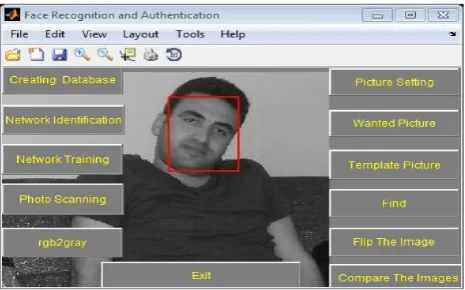
Face recognition is a popular subject in computer vision and objects recognition area because of each person has unique facial features. In this paper, the realization of a hybrid system for face detecting and verifying was presented. Gabor wavelet transform was used to extract facial features of individuals from images. An Artificial neural network was used to classify faces by using obtained features. Phase correlation method was used for face verifying. A MATLAB Graphical user interface was designed by combining these systems for realizing proposed hybrid system, after filtering and scanning methods, the obtained face areas demonstrate within an outline. Phase correlation methods were used to accelerate the searching process. The performance of the proposed system was tested on different image database. It was understood that the proposed method works with high accuracy but is slow when considered as the whole process.
General Terms
Face Recognition, Gabor wavelets, Phase Correlation, Artificial Neural Networks
Keywords
Face Recognition, Gabor wavelets, Phase Correlation, Artificial Neural Networks
1.
INTRODUCTION
In image or video processing, finding or identifying objects in an image or video sequence is called object recognition [1]. Biometry can be defined as to identify a person based on the physiological or behavioral characteristics [2]. Different types of biometric technologies are developed by the scientist for identifying or verifying an individual. Face recognition is a popular subject in biometry. One of the methods used in this area is the Fourier transformation. Fourier transform is the most popular tool for analyzing frequency properties of a signal. But the worst side of Fourier is the time information lost, after transformation. So, it is not accurately known where the position of frequency. To solve this problem there is a lot of time-frequency analysis techniques like representing a 1-D signal in time and frequency simultaneously. One of time-frequency analysis technique is wavelet transforms. Time and frequency information can be brought out by the wavelet transform from a signal [3]. Among kinds of wavelet transforms, the Gabor wavelet transform has got magnificent mathematical characteristics and is used frequently in image processing [3]. Gabor wavelets, that uses the properties of spatial frequency and directional selectivity, is an effective object analysis process [4]. Gabor functions are frequently used for feature extraction, especially in texture based image analysis and more practically in face recognition. They are very similar to Morlet wavelets. It is useful to apply several Gabor filters with different orientations and frequencies in
21 showing experimental results that the proposed algorithm is
encouraging.
This paper is organized as follows: In section II, it is presented the preliminaries of Gabor wavelets, Phase Correlation and Artificial Neural Networks. in Section III, the proposed algorithm for Realization of a hybrid Face Detecting and Verifying System is presented. Section VI contains the conclusion and recommendations.
2.
THE PROPOSED METHODS
2.1
Gabor Wavelet Transform
Gabor wavelet technique used in facial recognition, face tracking, and position estimation, has wonderful features. Gabor wavelets (also called filters) have been used as a robust filter in the literature by using spatial frequency (scaling), localization and directional selection properties. Among various wavelet types, Gabor functions give optimum resolution in the time and frequency domains [17]. Gabor wavelets use the properties of spatial frequency and directional selectivity, an object to be effective for analysis filter. It is a sinusoidal plane wave which is modulated by the kernel function. The spatial domain, a Gabor filter, is a complex structure modulated by a Gaussian function. Gabor wavelet filter can be defined as in Eq. (1) [4] [18].
𝛹𝑔 𝑥, 𝑦 = 𝑓2
𝜂𝛾𝜋exp 𝛽
2𝑦′ 2− 𝛼2𝑥′ 2 exp 2𝜋𝑓𝑥′ (1)
𝑥′= 𝑥𝑐𝑜𝑠⍬ + 𝑦𝑠𝑖𝑛⍬, 𝑦′= 𝑦𝑐𝑜𝑠⍬ − 𝑥𝑠𝑖𝑛⍬ (2)
where; f = the center frequency of the sinusoidal plane wave, θ = the Gaussian clockwise inverse wave, α = the axis parallel to the peak value of the Gaussian wave, β = the vertical wave amplitude value of Gauss, γ = f / α and η = f / β the ratio between the frequency and the accuracy of the values. As a common feature of the Gabor wavelet transforms used in existing face recognition systems, 40 Gabor wavelets corresponding to 5 scales and 8 orientations were accepted. The real parts of Gabor wavelets are shown in Fig 1.
Fig.1. Gabor Wavelets, a) The real part of eight oriented Gabor filters, b) Five Size of different scale Gabor filters
2.2
Artificial Neural Networks
In the recent decade, different architectures and Artificial Neural Networks (ANN) models have been used for face recognition. ANN has been used frequently in this field as well as in model recognition and classification. They consist of a large number of interconnected processing units called neurons. These neurons work together to solve the specific problem. The connections between neurons in the network (synaptic weights) are used to store the learned knowledge from the knowledge of learning process, keeping in mind that each neuron used for classification and prediction processes has a threshold or activation function. This is the electronic implementation of the nervous system that processes the working logic of the human brain system. The task of the ANN is to provide an extension system that implements an instance of learning about the event and produces solutions that are generalized to similar events, by setting an exit that can correspond to a given set of data [10] [19]. The determination of face images using Gabor wavelets has been combined with the ANN feature classifier of face motion and face recognition. The correct construction of mathematical models, activation function, input / output signals are important for the functioning of a neuron. The structure of this mathematical equation is given in (3).
𝑦 = 𝑓 𝑚𝑖=1𝑤𝑖𝑥𝑖= 𝑤1𝑥1+ 𝑤2𝑥2+ ⋯ 𝑤𝑚𝑥𝑚 + ⍬ (3)
Fig.2. Three-layer ANN architecture.
As shown in Figure (2), a typical ANN has come to an end with an input layer, an output layer, and a hidden layer. There are usually two hidden layers, with the freedom of the number of hidden layers being available. The input-output layers are connected to each other by the intermediate layer. When designing a neural network, it is necessary to pay attention to some issues such as network size, a number of hidden layers, size of input layers and learning parameters according to the probing to be solved.
2.3
Phase Correlation
22 Fig.3. n1xn2 dimensional images a) f (n1, n2), b) g(n1, n2)
𝑛1and 𝑛2 expressions, respectively, 𝑛1=−M1,…..,M1(M1>0) and 𝑛2=−M2,…..,M2(M2>0) given that the range value, in this instance, N1=2M1+1 and N2=2M2+1 takes these values. This condition is calculated the same way for 𝑔(𝑛1, 𝑛2) . Two images for the calculation of the two-dimensional Discrete Fourier Transform (DFT) is formulated as f(𝑘1, 𝑘2) and
𝑔(𝑘1, 𝑘2).
𝐹(𝑘1, 𝑘2) = 𝑓(𝑛1, 𝑛2)𝑊𝑁1
−𝑘1𝑛1 𝑊𝑁−𝑘2 2𝑛2
𝑀2
𝑛2=−𝑀 2 𝑀1
𝑛1=−𝑀 1 (4)
= 𝐴𝐹(𝑘1, 𝑘2)𝑒𝑗𝛳𝐹
(𝑘1,𝑘2
(5)
The expression of this seriatim; 𝑘1= −𝑀1, … 𝑀1, 𝑘2=
−𝑀2, … 𝑀2, 𝑊𝑁1= 𝑒
−𝑗 2𝜋 𝑁1
and 𝑊𝑁2= 𝑒
−𝑗 2𝜋 𝑁2
is expressed in
the form. 𝐴𝐹(𝑘1, 𝑘2) shows amplitude. 𝛳𝐹(𝑘1, 𝑘2) is show the phase.
𝐺(𝑘1, 𝑘2) = 𝑔(𝑛1, 𝑛2)𝑊𝑁1
−𝑘1𝑛1𝑊
𝑁2
−𝑘2𝑛2
𝑀2
𝑛2=−𝑀 2 𝑀1
𝑛1=−𝑀 1 (6)
= 𝐴𝐺(𝑘1, 𝑘2)𝑒𝑗𝛳𝐺
(𝑘1,𝑘2)
(7)
where, 𝑘1= −𝑀1, … 𝑀1, 𝑘2= −𝑀2, … 𝑀2, 𝑊𝑁1= 𝑒
−𝑗 2𝜋 𝑁1 , 𝑊𝑁2= 𝑒
−𝑗 2𝜋
𝑁2 and 𝐴𝐹(𝑘1, 𝑘2), 𝛳𝐹(𝑘1, 𝑘2) respectively
indicators of amplitude and phase. Cross-Phase Corelation is formulated such that below.
𝑅𝐹𝐺(𝑘1, 𝑘2)= 𝐹(𝑘1, 𝑘2) 𝐺(𝑘 1, 𝑘2)
= 𝐴𝐹(𝑘1, 𝑘2), 𝐴𝐹(𝑘1, 𝑘2) 𝑒𝑗𝛳
(𝑘1,𝑘2)
(8)
where; 𝐺(𝑘 1, 𝑘2) shows the complex conjugate. θ(𝑘1, 𝑘2) indicates that the phase difference. 𝑅𝐹𝐺 (𝑘1, 𝑘2) of inverse discrete Fourier transform on the cross-correlation equation is shown as follows.
𝑟𝑓𝑔(𝑛1, 𝑛2) = 1
𝑁1𝑁2 𝑅𝐹𝐺 (𝑘1, 𝑘2)𝑊𝑁1
−𝑘1𝑛1 𝑊𝑁−𝑘2 2𝑛2
𝑀2
𝑘2=−𝑀 2 𝑀1
𝑘1=−𝑀 1 (9)
when f(𝑛1, 𝑛2) and g(𝑛1, 𝑛2) two similar images, cross-correlation of these images creates a significant amplitude, if not, the resulting amplitude value is reduced significantly.
a)
[image:3.595.63.271.72.139.2]b)
Fig. 5. Cross-correlation, a) Cross-Correlation obtained from the two same images, b) Different and absolute non-amplitude of the cross-correlation obtained
from two different images.
3.
EXPERIMENTAL RESULTS
23 Fig. 6. Graphical User Interface for face detection and verification
3.1
Image Pre-Screening
A pre-screening process usually consists of scanning the input image sub-blocks of the picture window. Scan time is calculated by depending on the size of the image and the filter window. The window is shifted over all the pixels in the image. The values standard deviation and variance are calculated according to the bottom of the window. If the threshold is greater than the specified threshold, the middle pixel is selected. If less than the threshold, the center pixel is ignored. The equation developed for this is given in equation (10).
µ ≥ UTH µ)&(µ ≤ LTH µ)&(δ ≥ UTH δ)&(δ ≤ LTH δ) (10)
In Eq. (10), UTH µand LTH µare the average value indicates the upper and lower threshold values. µ and δ are indicators of the filter at the bottom of mean and standard deviation. The pre-scan process is being used to detect the searched area for reducing the time of application. This is the advantage of the Pre-scan step. The time required can be reduced by removing the regions near the edges of the image from the center. Because an edge area is unlikely for a face.
3.2
Face Detection
The upper and lower threshold values (eq.10) are used as the two-dimensional average value when the face image is obtained. this has been addressed in the image scanning heading. The face area is displayed in a rectangular frame. The determination of the face area in the image, which is a lot of face images, the background color can be influential. there is an effect on the result according to the resemblance of the skin color of the background color. In addition to the detection rate, the speed of detection and the importance of the cross-correlation method are emphasized in this study.
[image:4.595.182.415.73.218.2]
a) b) Fig. 7. Face detection test results
a) b)
Fig. 8, Sample images from the MIT + CMU database for face detection test results
3.3
Template Matching
Phase correlation is a signal correlation method that uses the fundamental properties of the discrete Fourier transform to find the similarity between two discrete signals. The correlation between the two images gives an important idea about the similarity ratio. Cross-correlation methods used to match similarities generate amplitude values according to similarities in images. The peak value of the correlation surfaces of the same surfaces is higher than the peak value of the correlation surfaces of the different surfaces (see fig. 10 and fig 11). The perception of face changes by taking advantage of these properties is performed taking into consideration the greatest value of the correlation frames of consecutive frames. The results of the applications are shown below.
[image:4.595.316.535.263.366.2]
a) b) Fig. 9. Template matching applications
3.4
Image Crosscheck
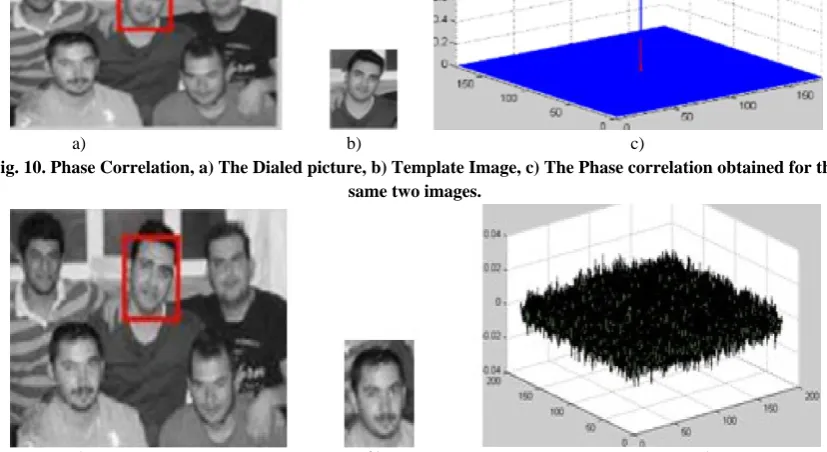
[image:4.595.316.540.573.708.2]24 the similarity of the image. The result of the phase correlation
is the value of the largest magnitude value [0,1] coming out, and the result is that the two magnitudes comparing the value
closer to 1 are more similar to each other. Detailed information about this topic listed under the heading 2.3 section, "Phase correlation".
[image:5.595.90.504.153.379.2]a) b) c)
Fig. 10. Phase Correlation, a) The Dialed picture, b) Template Image, c) The Phase correlation obtained for the same two images.
a) b) c)
Fig. 11. Phase Correlation, a) The Dialed picture, b) Template Image, c) The Phase correlation obtained for the different two images
4.
CONCLUSION
In this work, a hybrid system has been developed for face recognition and verification. Gabor wavelets with great features (scaling, localization and directional selection) were used for face detection. After the detection of facial images using Gabor wavelets, artificial neural network model was used to classify facial images. For the convenience of the proposed system, a MATLAB user interface is designed for all these operations. Many results have achieved based on practical experiments. It was understood from the studies made that this system has successfully recognized and detected the human faces in studies performed in different variations. The face images used in the studies performed and the test results of the system were obtained by using various databases. Our proposed method is a combined study that yields alternative and more reliable results than traditional face recognition and finding methods. Automatic face recognition and verification of the person's mental status, emotional depressive characteristics, such as variable characteristics, it is thought that more work on person recognition. it may be necessary to integrate this system with other biometric recognition systems such as voice.
5.
REFERENCES
[1] W. Ou, X. You, D. Tao, P. Zhang, Y. Tang, and Z. Zhu, “Robust face recognition via occlusion dictionary learning,” Pattern Recognit., vol. 47, no. 4, pp. 1559– 1572, Apr. 2014.
[2] K. Ito and T. Aoki, “Phase-based image matching and its application to biometric recognition,” in Signal and Information Processing Association Annual Summit and Conference (APSIPA),2013 Asia-Pacific, 2013, pp.1 -7.
[3] Wei-lun Chao, “Gabor wavelet transform and its application.” 2011.
[4] V. K. Prasad, “Gabor based face recognition with dynamic time warping,” in 2013 Sixth International Conference on Contemporary Computing (IC3), 2013, pp. 349–353.
[5] Á. Serrano, I. Martín de Diego, C. Conde, and E. Cabello, “Analysis of variance of Gabor filter banks parameters for optimal face recognition,” Pattern Recognit. Lett., vol. 32, no. 15, pp. 1998–2008, Nov. 2011.
[6] Z. Chai, R. He, Z. Sun, T. Tan, and H. Mendez-Vazquez, “Histograms of Gabor Ordinal Measures for face representation and recognition,” in 2012 5th IAPR International Conference on Biometrics(ICB),2012, pp.52 58.
[7] J. Yi and F. Su, “Histogram of Log-Gabor Magnitude Patterns for face recognition,” in 2014 IEEE I.
25 [9] K. Yesu, K. Chetia, H. J. Chakravorty, P. Bhuyan, and K.
Bhattacharyya, “Innovative feature extraction method for artificial neural network based face recognition,” in 2012 3rd National Conference on Emerging
Trends and Applications in Computer Science (NCETACS), 2012, pp. 137–142.
[10]H. Kobayashi and Q. Zhao, “Face Detection Based on LDA and NN,” in Japan-China Joint Workshop on Frontier of Computer Science and Technology, 2007. FCST 2007, 2007, pp. 146–154.
[11]M. Sawides, B. V. K. V. Kumar, and P. K. Khosla, “„Corefaces‟ - robust shift invariant PCA based correlation filter for illumination tolerant face recognition,” in Proceedings ofthe 2004 IEEE Computer SocietyConference on Computer Vision and Pattern Recognition, 2004. CVPR 2004, 2004, vol. 2, pp. II– 834–II–841
Vol.2.
[12]B. V. K. V. Kumar, M. Savvides, and C. Xie, “Correlation Pattern Recognition for Face Recognition,” Proc. IEEE, vol. 94, no. 11, pp. 1963–1976, Nov. 2006.
[13]K. lto, T. Aoki, H. Nakajima, K. Kobayashi, and T. Higuchi, “A Palmprint Recognition Algorithm using Phase-Based Image Matching,” in 2006 IEEE International Conference on Image Processing, 2006, pp. 2669–2672.
[14]F.-X. Song, D. Zhang, C.-K. Chen, and J.-Y. Yang, “Facial Feature Extraction Method Based on
Coefficients of Variances,” J. Comput. Sci. Technol. , vol. 22, no. 4, pp. 626–632, Jul. 2007.
[15]X. Geng and Z.-H. Zhou, “Image Region Selection and Ensemble for Face Recognition,” J. Comput. Sci. Technol., vol. 21, no. 1, pp. 116–125, Jan. 2006.
[16]J.-Z. Huang, T.-N. Tan, L. Ma, and Y.-H. Wang, “Phase Correlation Based Iris Image Registration Model,” J. Comput. Sci. Technol., vol. 20, no. 3, pp. 419–425, May 2005.
[17][17] L. Shen and L. Bai, “A review on Gabor wavelets for face recognition,” Pattern Anal. Appl., vol. 9, no. 2– 3,pp. 273–292, Oct. 2006.
[18]C. Liu and H. Wechsler, “A Gabor feature classifier for face recognition,” in Eighth IEEE International Conference on Computer Vision, 2001. ICCV 2001. Proceedings, 2001, vol. 2, pp. 270–275 vol.2. nternational Conference on Acoustics, Speech and Signal Processing (ICASSP), 2014, pp. 519–523.
[19]H. A. Rowley, S. Baluja, and T. Kanade, “Rotation invariant neural network-based face detection,” in 1998 IEEE Computer Society Conference on Computer Vision and Pattern Recognition, 1998. Proceedings, 1998, pp. 38–44.
[20]B. Topcu and H. Erdogan, “Correlation-based patch localization for face recognition,” in 2011 IEEE 19th Conference on Signal Processing and Communications Applications (SIU), 2011, pp. 646–649.