Biochemical Traits and Physico-Chemical Attributes of
Aromatic-Fine Rice in Relation to Yield Potential
M. Abdul Baset Mia1, Mira Rani Das1, Muhammad Kamruzzaman2, Nur Muhammad Talukder2 1
Department of Crop Botany, Bangabandhu Sheikh Mujibur Rahman Agricultural University, Gazipur, Bangladesh; 2Department of Agricultural Chemistry, Faculty of Agriculture, Bangladesh Agricultural University, Mymensingh, Bangladesh.
Email: [email protected]
ReceivedSeptember 24th,2012; revised November 11th, 2012; accepted November 19th, 2012
ABSTRACT
Aromatic rice has great potential to attract rice consumer for its taste and deliciousness, and high price to boost up the economic condition of the rice grower in the developing countries. A field experiment was conducted to evaluate the morpho-physiological and biochemical attributes in relation to yield potentials of fine aromatic rice varieties in Bang- ladesh. Two aromatic fine rice cultivars, Ukunmadhu and Kataribough (local land races), one hybridized variety BRRIdhan32 and one mutant variety Binasail were used in the experiment. The results revealed that rice varieties BRRIdhan32 and Binasail showed the greater number of branches of panicle, grain size, grain yield and harvest index as compared to aromatic varieties. On the other hand, aromatic rice showed taller plant stature, more tiller, plant bio- mass and larger panicle but lower number of primary and secondary branches, grain size, yield and harvest index. The biochemical attributes namely chlorophyll and soluble protein content were higher at vegetative stage as compared to panicle initiation and flowering stages. The aromatic rice Kataribhough and Ukonmondhu contained higher amount of total free amino acid as compared to that of Binasail and BRRIdhan32. Other biochemical parameters namely nitrate reductase activity (NRA), total sugar and free amino acid contents were higher at flowering stage compared to those contained at tillering and panicle initiation stages. Physico-chemical properties of grain viz. length, breadth, L/B ratio, nitrogen (%) and protein (%) were significantly higher in fine rice as compared to aromatic rice. From the results it may be concluded that the high yielding varieties were more efficient in transfer of photosynthate to the grain i.e. economic yield and that is why BRRIdhan32 recorded the highest yield. Poor yield in Ukonmodhu and Kataribhough was due to low harvest index indicating minimum translocation of assimilates to the grains.
Keywords: Biochemical Properties; Aromatic Rice; Yield; Grain Quality
1. Introduction
The demand of aromatic rice is increasing gradually throughout the world for its taste and pleasant flavor. It constitutes a small but special group which is considered best in quality. It is regarded as best in quality and fetch much higher price than normal non-aromatic rice and can add just the right amount of flavor and depth to any sim- ple rice dish [1]. In Bangladesh, it is a high value calorie producing carbohydrate which contributes significantly in the agricultural trade market for having small grain, amusing aroma, with soft texture upon cooking [2]. However, the yield of aromatic rice is comparatively lower than that of coarse and medium [3] and most of high quality aromatic rice are low yielding [4]. They are mainly traditional and local land races which have taller plant stature and inefficient fertilizer responses. However, due to favorite flavor and other better grain qualities it is
important resources for breeding and improving the aro- matic rice cultivars for diverse demand of consumers in the world [1].
The reasons for low yield are mainly associated with lack of high yielding varieties (HYV) which plays vital role in greater production.
Physiological characters of the plant are inherent char- acters determining the crop yield which plays an impor- tant role in variety selection [5]. Development of rice cultivars with a high yielding ability is one of the most fundamental approaches for dealing with the expected increases in the world demand. Keeping the quality of aroma and other grain quality in aromatic fine rice is a big challenge as yield is inversely related to protein and aroma content [6].
higher thereby luxuriant growth happened consequently the plant become lodge, and yield reductions are caused due to lodging behavior. In such varieties, certain archi- tectural and physiological defects cause significant prob- lems with assimilate translocation. Moreover, the bio- chemical attributes of those varieties has not yet been determined comprehensively. Rice plants depend solely upon soil and applied sources of nitrogen for maximum yield. In the developing countries, urea is mainly used as a source of nitrogen fertilizer for rice plants, where urea after application converts to ammonia by hydrolysis in the soil. All the ammonium from this source is not util- ized by the plants, and only about 40% of this applied nitrogen is utilized by the rice plant. Rice plants can also utilize nitrate as an alternative source of nitrogen. What- ever the form of nitrogen is applied in the soil, it is syn- thesized into amino acids and amides for incorporation into the carbon skeletons of different organic molecules. This conversion of nitrogen to amide and amino acids is regulated by the nitrogen assimilating enzymes [7]. For upland crops, nitrate reductase (NR) is the main nitrogen assimilating enzymes which is substrate inducible.
At the present situation it is necessary to increase per hectare yield of aromatic fine rice, and breeders are try- ing to develop for achieving higher yield and improve grain quality. However, the grain quality and its relation to yield and physiological attributes have not been de- termined. Therefore, the experiment was conducted with the objectives of investigating the physicochemical pro- perties of three categories i.e. fine aromatic, medium fine non aromatic and coarse grain rice varieties for estab- lishing relationship with yield and suggest for further improvement.
2. Materials and Methods
The experiment was conducted at the experimental farm of the Bangladesh Institute of Nuclear Agriculture (BINA), Mymensingh, Bangladesh. Two traditional va- rieties of aromatic rice namely, Ukunmodhu and Kata- ribhough, one mutant rice variety (developed from Niz- ersail through γ-ray irradiation) having medium grain size Binasail and a hybridized rice variety (obtained from a cross between BR4 × BR2264 by Bangladesh Rice Research Institute, Bangladesh) were used as a test crop for this experiment [8]. The physico-chemical properties of the soil was: pH—6.10, organic matter—0.96%, total N—0.07%, P—12 ppm, K—0.10me%, S—10 ppm, Zn —1.03 ppm and B—0.79 ppm.
The experiment was laid out in a randomized complete block design (RCBD) with five replications. The whole amount of muriate of potash (MOP) (20 kg·ha–1), triple super phosphate (TSP) (18 kg·ha–1), gypsum (S 12 kg·ha–1) was applied at the final land preparation. Nitro- gen at the rate of 70 kg·ha–1 was applied in the form of
urea in three equal splits at 15 days after transplanting, active tillering and panicle initiation stages. Thirty-day old single seedling was transplanted in a hill with plant to plant distance 15 cm and row to row distance 20 cm. Weeding and irrigation were done as and when necessary. Harvesting was done when 80% to 90% of the grain be- came golden in color. Ten hills (excluding border hills) were randomly selected outside a one m2 area kept for yield data from each unit plot. Grain yield was deter- mined by harvesting the one m2 area which was prefixed at the center of each plot. The harvested crops were threshed and cleaned, and the grain weight (14% mois- ture) was recorded after drying in the sun. Biochemical parameters namely nitrate reductase activity (NRA), soluble protein, total free amino acids, chlorophyll con- tent were computed followed by standard methods [9-11] at different growth stages. Harvest index, the ratio be- tween economic yield and biological yield [12] was cal- culated by using the following formula:
Harvest Index (%) = Economic yield 100 Biological yield
2.1. Physico-Chemical Properties of Grain
Length and breadth of kernels were estimated with the help of slide calipers and length:breadth ratio was calcu- lated accordingly. Determination of total nitrogen of grain was done by micro-Kjeldahl method [13].
2.2. Protein Content
The grain protein content was determined through di- gesting the grains by micro-Kjeldahl method. The di- gested samples were analysed for N estimation which was determined by Autoanalyzer (Technicon II, Techni- con Ltd.). The protein content of the grain was deter- mined by multiplying the N content of grain by 5.95 and the result was expressed in percentage.
2.3. Statistical Analysis
Collected data on different parameters were analyzed statistically. Analyses of variance were done following RCBD with the help of computer MSTAT-C package programme developed by Russel [14]. The means were adjudged by Duncan’s Multiple Range Test [15].
3. Results
3.1. Biochemical Characteristics 3.1.1. Chlorophyll a
0 0.5 1 1.5 2 2.5 3 3.5 4 4.5 5
Tillering Panicle initiation Flowering
Growth stages
Chlor
ophy
ll a
(
m
g/g f
w
)
Binasail BRRIdhan32 Ukonmodhu Kataribhough
b b
a a
[image:3.595.57.290.86.229.2]b b a b
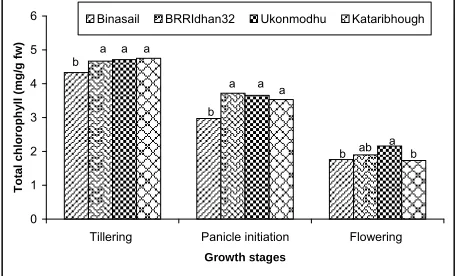
Figure 1. Chlorophyll-a of leaf at different growth stages of four aromatic and fine rice varieties.
variation in chlorophyll a content at tillering stage (Fig- ure 1). All the varieties showed similar amount of chlo- rophyll a. But at panicle initiation and flowering stages, chlorophyll content differed significantly among the va- rieties. It was apparent in panicle initiation stage that the Ukonmodhu and Kataribhough showed similar amount of chlorophyll-a. At flowering stage, the highest amount of chlorophyll-a was recorded in Ukonmodhu.
3.1.2. Chlorophyll b
There were significant differences in chlorophyll b con- tent at all the growth stages (Figure 2) which decreased gradually from tillering to flowering stages. The chloro- phyll-b content of BRRIdhan32 was higher both at tiller- ing and panicle initiation stages however, Binasail showed higher values at flowering stage. At tillering stage, the highest amount of chlorophyll-b was recorded in BRRId- han32. Binasail showed the lowest amount of chloro-phyll-b at panicle initiation stage, the highest amount of chlorophyll-b was found in BRRIdhan32 and the lowest quantity was found in Binasail. At flowering stage, Bi-nasail recorded the highest and Kataribhough showed the lowest amount of chlorophyll-b.
3.1.3. Total Chlorophyll
Total chlorophyll content decreased gradually from till- ering to flowering stages (Figure 3). BRRIdhan32 and Ukonmodhu recorded the higher amount while Binasail showed the lowest amount of total chlorophyll at all the three stages. At tillering stage, among three varieties Kataribhough, Ukonmodhu and BRRIdhan32 showed similar amount of total chlorophyll. Only Binasail showed the lowest amount of total chlorophyll at tillering stage. At panicle initiation stage, BRRIdhan32, Ukonmodhu and Kataribhough showed similar amount of total chlo-rophyll but Binasail showed the lowest amount of total chlorophyll. At flowering stage, Ukonmodhu showed the highest amount of total chlorophyll.
0 0.2 0.4 0.6 0.8 1 1.2
Tillering Panicle initiation Flowering
Growth stages
Chl
o
ro
phy
ll b (m
g/g fw
)
Binasail BRRIdhan32 Ukonmodhu Kataribhough
b
a a a
c a
b b
a b c
[image:3.595.308.538.87.230.2]d
Figure 2. Chlorophyll-b of leaf at different growth stages of four aromatic and fine rice varieties.
0 1 2 3 4 5 6
Tillering Panicle initiation Flowering
Growth stages
T
o
ta
l c
h
lo
roph
y
ll (mg/
g
fw)
Binasail BRRIdhan32 Ukonmodhu Kataribhough
b a a a
b
a a a
b ab a b
Figure 3. Total chlorophyll of leaf at different growth stages of four aromatic and fine rice varieties.
3.1.4. Chlorophyll a/b Ratio
Ukonmodhu and Kataribhough recorded similar amount of chlorophyll a/b ratio at all three stages (Figure 4). At tillering stage, there was no significant difference in chlorophyll a/b ratio among the varieties. All the varie- ties showed similar amount of chlorophyll a/b ratio and they were statistically identical. But there was significant difference at both panicle initiation and flowering stages. At panicle initiation stage, Binasail, Ukonmodhu and Kataribhough showed similar amount, and they were statistically identical, but BRRIdhan32 showed the low- est amount of chlorophyll a/b ratio. At flowering stage, Kataribhough and Ukonmodhu showed similar amount of chlorophyll a/b and both were identical. Binasail re- corded the lowest amount of chlorophyll a/b ratio and BRRIdhan32 and Binasail were not identical as Ukon- modhu and Kataribhough.
[image:3.595.309.538.275.413.2]0 1 2 3 4 5 6 7 8 9
Tillering Panicle initiation Flowering
Growth stages
Chl
o
rophy
ll
a
/b r
a
ti
o
Binasail BRRIdhan32 Ukonmodhu Kataribhough
a a a
b c
[image:4.595.59.289.86.226.2]b a a
Figure 4. Chlorophyll-a/b of leaf at different growth stages of four aromatic and fine rice varieties.
ratio all of these were higher at tillering stage as com- pared to that of panicle initiation and flowering stages. It means that the light harvest efficiency decreased at pani- cle initiation and flowering stages as compared to tiller- ing stage.
3.1.5. Nitrate Reductase Activity
The maximum NRA was attained at flowering stage as compared to panicle initiation and tillering stages and NRA is gradually increase at tillering to flowering stages (Figure 5). At tillering stage, BRRIdhan32 showed the highest amount of NRA and Binasail recorded the lowest amount of NRA. At panicle initiation stage, BRRIdhan32 showed the highest amount of NRA. Binasail and Uk- onmodhu were statistically identical and Kataribhough showed the lowest amount of NRA. At flowering stage, Kataribhough showed the highest amount of NRA and BRRIdhan32 showed the lowest amount of NRA.
Nitrate reductase catalyzes the reduction of nitrate to nitrite, which is considered rate-limiting in nitrate as- similation in plants and nitrate assimilating organisms. NRA in plants is regulated by nitrate, light, growth hor- mones, reduced nitrogen metabolites, and phosphoryla- tion [17]. The results showed that NRA is gradually in- creased at tillering to flowering stages. The highest NRA was recorded at flowering stage. This pattern may be attributed to nitrate availability in the soil which would influence the NRA. This is expected because NR is a substrate-inducible enzyme.
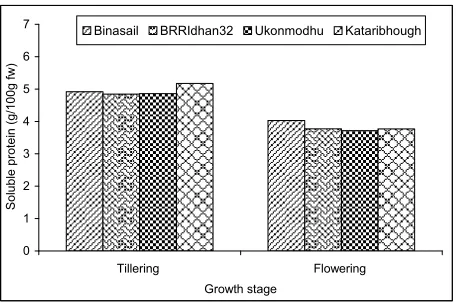
3.1.6. Soluble Protein
The results indicated that soluble protein decreased at flowering stage as compared to that of maximum tillering stage. There was no significant difference in soluble pro- tein content among varieties at both tillering and flower- ing stages (Figure 6).
The quantity of soluble protein is one of the important factors for synthesis of other plant material. The synthe- sis of soluble protein by plants depends upon their capac-
0 0.2 0.4 0.6 0.8 1 1.2 1.4 1.6 1.8 2
Tillering Panicle initiation Flowering
Growth stages
Nitrate
r
edu
cta
se activity (
mo
l N
O2
- g-1
fwh
-1)
Binasail BRRIdhan32 Ukonmodhu Kataribhough
c a
b a
b a b c
b b
c a
N
itrate re
duc
tas
e ac
tiv
ity
(
μ
mol
NO
2
g
–1·f
w
h
[image:4.595.308.538.87.227.2]–1)
Figure 5. Nitrate reductase activity of leaf at different growth stages of four aromatic and fine rice varieties.
0 1 2 3 4 5 6 7
Tillering Flowering Growth stage
Sol
ubl
e pro
tei
n (g/1
00g
fw)
Binasail BRRIdhan32 Ukonmodhu Kataribhough
Figure 6. Soluble protein of leaf at different growth stages of four aromatic and fine rice varieties.
ity to utilize N and production of reduced-N needed for protein synthesis. In the present study, soluble protein was not changed, which might be due to the uniform availability of N-fertilizer.
3.1.7. Total Sugar
Total sugar content increased at flowering stage as com-pared to tillering stage, including active synthesis of carbohydrates at flowering stage of rice. The result also showed that the total sugar content was higher in fine rice as compared to aromatic rice. There was significant difference in total sugar content among the varieties both at tillering and flowering stages (Figure 7). BRRIdhan32 recorded the higher values of sugar content and Ukon-modhu showed the lower value. At flowering stage, Bi-nasail recorded higher value and Ukonmodhu obtained the lower amount of total sugar content.
3.1.8. Total Free Amino Acid
[image:4.595.310.538.265.416.2]0 10 20 30 40 50 60 70
Tillering Flowering
Growth stages
Tot
a
l
s
u
ga
r c
ont
e
nt
(
m
g/
g
fw
)
Binasail BRRIdhan32 Ukonmodhu Kataribhough
b a c
b
a b
c b
Figure 7. Total sugar content of leaf at different growth stages of four aromatic and fine rice varieties.
(Figure 8). At tillering stage, Kataribhough showed the higher value and BRRIdhan32 resulted in the lower amount of total free amino acid content. At flowering stage, Kataribhough also recorded higher value which was identical to Ukonmodhu.
The increase of amino acid at later stage indicated more synthesis of free amino acid at flowering stage which has significance in grain filling with assimilates containing soluble protein and carbohydrate. The result also showed that the aromatic rice Kataribhough and Ukonmondhu contained much amount of total free amino acid as compared to that of Binasail and BRRIdhan32. This result is supported by the report of Adak and Gupta [18]. They found the highest amino acid content in Lati-sail. Ali et al. [19] also found the highest free amino acid content (12.136%) in aman variety.
3.2. Yield and Yield Components 3.2.1.Plant Height
Ukonmodhu recorded the highest plant height whereas the shortest plant height was recorded in BRRIdhan32 (Table 1). The result also showed that there was signifi- cant difference in plant height of Ukonmodhu, Katarib- houg and BRRIdhan32 but there was no significant dif- ference between. Ukonmodhu, Binasail and Katarib- hough.
3.2.2. Number of Tillers
There was significant difference in number of tillers hill–1 among the cultivars (Table 1). It was apparent that the tiller producing capacity of Kataribhough, Ukonmodhu and Binasail were not similar but the maximum number of total tillers hill–1 was recorded in Kataribhough and the minimum number of total tillers hill–1 was in Binasail.
3.2.3. Panicle Length
Binasail recorded the longest and BRRIdhan32 showed the shortest panicle length (Table 1). The result also showed that there was no significant difference in panicle
0 0.1 0.2 0.3 0.4 0.5 0.6 0.7 0.8 0.9 1
Tillering Flowering
Growth stages
T
ot
a
l
fr
ee
a
m
in
o a
c
id
co
nt
e
nt
(
g
/1
00
g
fw
) Binasail BRRIdhan32 Ukonmodhu Kataribhough
c d b
a
b b
a a
Figure 8. Total free amino acid content of leaf at different growth stages of four aromatic and fine rice varieties.
length of Binasail, Ukonmodhu and Kataribhough but varied in BRRIdhan32.
3.2.4. Number of Primary Branche
Ukonmodhu showed the greatest number whereas Bina-sail recorded the lowest number of primary branches. The remaining varieties showed the intermediate status (Table 1).
3.2.5. Number of Secondary Branche
Binasail produced the highest and Kataribhough recorded the lowest number of secondary branches (Table 1) Ra- chis branching system i.e. primary and secondary branch- ing is one of the important factors for determining yield. Panicles having relatively large number of primary ra- chis-branches than secondary branches would be high yielding. Yamagishi et al. [20] ported that rachis-branch- ing system in a panicle is an important factor determining the yield. They found high yielding variety to have a rela-tively large number of primary rachis-branches as com-pared with the secondary rachis-branches.
3.2.6. 1000-Grain Weight
There were spectacular and significant differences of 1000-grain weight among the cultivars (Table 1). The highest 1000-grain weight was recorded in BRRIdhan32. The other two cultivars Binasail and Kataribhough showed similar 1000-grain weight, respectively. The Ukonmodhu showed the lowest 1000-grain weight.
3.3. Grain Yield
The results showed that BRRIdhan32 produced the maximum grain yield (Table 1). On the other hand, va- rieties Ukonmodhu and Kataribhough produced similar grain yield. The highest grain yield in BRRIdhan32 might be due to highest total dry matter production.
3.4. Harvest Index
Table 1. Plant height, yield and yield components of four different varieties of aromatic and fine rice.
Variety Plant height
(cm)
Number of total
tillers hill–1
Panicle length (cm)
Number of primary branches
Number of secondary branches
1000-grain weight (g)
Grain yield
(t·ha–1)
Harvest Index
Binasail 158 ab 7.00 c 26.94 a 26.48 b 99.16 a 17.14 b 3.89 b 40.99 b
BRRIdhan32 127 c 7.50 bc 24.90 b 28.60 ab 84.79 c 21.54 a 5.21 a 43.48 a
Ukonmodhu 168 a 7.90 b 26.42 a 31.17 a 95.00 b 11.52 c 2.77 c 33.41 d
Kataribhough 150 b 9.46 a 26.25 a 27.92 ab 51.03 d 16.88 b 2.90 c 35.67 c
In a column figures having common letter(s) do not differ significantly as per DMRT.
and the lowest in Ukonmodhu (Table 1). The results indicated that the harvest index differed among the varie- ties which were in agreement with the findings of Fu et
al. [21]. Cui-Jing et al. [22] also observed higher grain yield and 1000-grain weight with the increased harvest index (HI).
3.5. Grain Quality 3.5.1. Kernel Length
The length of kernel of different varieties was signifi- cantly different (Table 2) where the highest kernel length was recorded in Kataribhough and the lowest length was recorded in Ukonmodhu. Fujita et al. [23] reported that the length of rice grain was positively correlated between grain weight and grain length.
3.5.2. Kernel Breadth
The breadth of kernel of different varieties was signifi- cantly different (Table 2). However, there was no sig- nificant variation among the kernel breadth of the three varieties Binasail, Ukonmodhu and Kataribhough. The highest breadth was observed in BRRIdhan32.
The present findings supported the reports of Fujita et
al. [23] who obtained significantly positive correlation between grain weight and breadth.
3.5.3. Length-Breath Ratio
L/B ratio indicates the shape and size of rice kernel which are important quality characters of rice, the highest L/B ratio was recorded in Kataribhough and the lowest in Ukonmodhu (Table 2).
3.5.4. Nitrogen Content
The highest nitrogen content was observed in Binasail (1.77%). Other varieties Ukonmodhu (1.54%); BRRId- han32 (1.53%) and Kataribhough (1.53%) were statisti- cally identical in respect to nitrogen content (Table 2). Kadu et al. [24] reported that total N content and its up- take both in the rice grain and straw increased signifi- cantly with increasing rate of N-application.
3.5.5. Protein Content
The highest protein content was recorded in Binasail
(10.53%) (Table 2). Other cultivars showed similar pro- tein content and they were statistically identical.
4. Discussion
Results showed that varieties had significant difference on plant height, total tillers hill–1 and panicle length, number of primary and secondary branches, 1000 grain weight, grain yield, harvest index, leaf area index, total dry matter, chlorophyll, total sugar, NRA, and amino acid content. Only soluble protein did not show any dif- ference among the varieties. They also showed signifi- cant difference on physioco-chemical characters of grain viz; length, breadth, L/B ratio, nitrogen and protein con- tents.
Mutant rice variety Binasail produced the tallest plant stature and largest panicle length; the higher number of secondary branches, leaf area index, total dry matter, nitrogen content and protein content. The lower number of total tillers hill-1, chlorophyll content, NR activity, total free amino acid content and L/B ratio of these varie- ties were studied. The higher N contents are the cones- quent of greater nitrogen assimilation capacity as indi- cated by higher NR activity. A large amount of N is al- located to the leaf for example 60% - 70% N is come from the leaf and 20% - 30% from the leaf sheath [25]. Large part of N is invested in photosynthetic apparatuses namely chloroplast and chlorophyll. In mature leaves about 80% of N is allocated to chloroplast [26]. The amount of Rubisco increased with opening of leaf and become maximum when leaf expansion is completed. Rubisco synthesis is more active during leaf expanded [27]. Recently, more emphasis has given to genetic and biochemical aspect of biosynthesis of chlorophyll content namely chlorophyll a, chlorophyll b and chlorophyll a/b ratio and light harvesting chl a/b protein. There is posi- tive correlation between total nitrogen content and pro- tein nitrogen content in rice plant at heading and maturity stage [28].
Table 2. Physico-chemical attributes of different aromatic and fine rice varieties.
Variety Kernel length (mm) Kernel breadth (mm) Length-breadth ratio Nitrogen content (%) Protein content (%)
Binasail 7.31 b 2.17 b 3.35 c 1.77 a 10.53 a
BRRIdhan32 8.20 a 2.26 a 3.63 b 1.53 b 9.13 b
Ukonmodhu 6.18 c 2.15 b 2.88 d 1.54 b 9.14 b
Kataribhough 8.25 a 2.10 b 3.93 a 1.53 b 9.10 b
In a column figures having common letter (s) do not differ significantly as per DMRT.
panicle length, number of secondary branches, chloro- phyll-a, a/b ratio, total free amino acid and protein con- tent. Rice materials with good adaption of N were due to higher nitrate reductase activity (NRA) at low nitrogen conditions, more chlorophyll content and, the soluble protein in high nitrogen conditions and the Rubisco mo- bilized in N-free conditions as well [29].
On the other hand, aromatic rice Ukonmodhu showed the highest plant height and larger panicle length. It also showed the highest number of primary branches, total dry matter, chlorophyll a, total chlorophyll, chlorophyll a/b ratio and total free amino acid content. The other pa- rameters like 1000 grain weight, grain yield, harvest in- dex, leaf are index, NRA, total sugar, and about all the grain quality characters recorded lowered by this variety.
Another aromatic variety Kataribhough showed maxi- mum number of total tillers/hill and larger panicle length. It also showed higher value of TDM, NRA, Chlorophyll a, total chlorophyll, a/b ratio, total free amino acid con- tent, kernel length and L/B ratio. The number of second- dary branches, grain yield, harvest index, kernel breadth, nitrogen and protein content were also recorded lowered by this variety.
The overall results of the field experiment demon- strated that BRRIdhan32 had the best agronomic per- formance for grain yield and harvest index. Binasail showed the highest protein contents amongst varieties. Another two aromatic varieties showed the lowest per- formance in grain yield and protein content also. On the other hand, it may be concluded from the present study that the high yielding varieties were more efficient in transfer of photosynthate to the sink reflecting the higher harvest index. The highest grain yield of BRRIdhan32 was due to the highest harvest index. Poor yield in Uk- onmodhu and Kataribhough was due to low harvest in- dex.
REFERENCES
[1] N. L Hien, W. S Ahmad, Y. Oikawa and Y. Hirata, “Ge-netic Diversity of Morphological Responses and the Re-lationships among Asia Aromatic Rice (Oryza sativa L.) Cultivar,” Tropics, Vol. 16, No. 4, 2007, pp. 343-355. doi:10.3759/tropics.16.343
[2] R. K. Dutta, B. P. Lahiri and M. A. B Mia,
“Characteris-tics of Some Aromatic Fine Rice Cultivars in Relation to Their Physico-Chemical Quality of Grains,” Indian Jour-
nal of Plant Physiology, Vol. 3, No. 1, 1998, pp. 61-64. doi:10.1626/jcs.65.672
[3] S. Chandra and P. Jitendra, “Effect of Nitrogen Level of the Growth and Yield of Different Rice Cultivars,” Indian
Journal of Agronomy, Vol. 41, No. 3, 1996, pp. 96-115. [4] A. Shakeel, A. Hussain, H. Ali and A. Ahmad,
“Trans-planted Fine Rice (Oryza sativa L.) Productivity as Af-fected by Plant Density and Irrigation Regimes,”
Interna-tional Journal of Agriculture and Biology, Vol. 7, No. 3, 2005, pp. 445-447.
[5] M. N. H. Miah, Yoshida, Y. Yamamoto and Y. Nitta, “Characteristics of Dry Matter Production and Partition-ing of Dry Matter to Panicles in High YieldPartition-ing Semi Dwarf Indica and Japonica Indica Hybrid Rice Varieties,”
Japanese Journal of Crop Science, Vol. 65, No. 4, 1996, pp. 672-685.
[6] G. L. Terman, R. E. Ramig, A. F. Dreier and R. A. Olson, “Yield-Protein Relationships in Wheat Grain, as Affected by Nitrogen and Water,” Agronomy Journal, Vol. 61, No. 5, 1969, pp. 755-759.
doi:10.2134/agronj1969.00021962006100050031x
[7] E. Wickert, J. Marcondes, M. V. Lemos and E. G. M. Lemos, “Nitrogen Assimilation in Citrus Based on CitEST Data Mining,” Genetics and Molecular Biology, Vol. 30, No. 3, 2007, pp. 810-818.
doi:10.1590/S1415-47572007000500009
[8] T. Das, “Rices in Bangladesh,” Sadin Graphics, My-mensingh, 2005, p. 51.
[9] G. R. Steward and T. O. Orebamjo, “Some Unusal Char-acteristics of Nitrate Reduction in Erythrana senegalensis, DC,” New Phytologists, Vol. 83, No. 2, 1979, pp. 311- 319. doi:10.1111/j.1469-8137.1979.tb07456.x
[10] O. H. Lowery, N. J. Roserrough, A. L. Farr and R. J. Ran-dall, “Protein Measurement with the Folienphenol Re-agent,” Journal of Biological Chemistry, Vol. 183, No. 1, 1951, pp. 267-275.
[11] M. Dubois, A. K. Gilles, J. K. Hamilton, P. A. Robers, F. Smith, “Colorometric Method for Determination of Sugar and Related Substances,” Analytical Chemistry, Vol. 28, No. 3, 1956, pp. 350-356. doi:10.1021/ac60111a017 [12] F. P. Gardner, R. B. Pearce and R. I. Mistechell,
“Physi-ology of Crop Plants,” Iowa State University Press, Powa, 1985, p. 66.
[13] AOAC (Association of Official Analytical Chemistry), “Official Methods of Analysis,” 13th Edition, Official
129.
[14] D. F. Russel, “MSTAT-C Package Programme,” Crop and Soil Science Department, Michigan State University, East Lansing, 1986.
[15] K. A. Gomez and A. A. Gomez, “Statistical Procedures for Agriculture Research,” 2nd Edition, John Wiley and Sons, New York, 1984, p. 640.
[16] E. H. Murchie, J. C. Yang, S. Hubbart, P. Horton and S. B. Peng, “Are There Associations between Grain Filling Rate and Photosynthesis in the Flag Leaves of Field Grown Rice?” Journal of Experimental Botany, Vol. 53, No. 378, 2002, pp. 2217-2224. doi:10.1093/jxb/erf064 [17] N. M. Crawford, “Nitrate Nutrient and Signal for Plant
Growth,” Plant Cell, Vol. 7, No. 7, 1995, pp. 859-868. [18] M. K. Adak and D. K. D. Gupta, “Metabolic Activities in
Some Rice Varieties under Submergence Stress,” Indian
Journal of Plant Physiology, Vol. 6, No. 3, 2001, pp. 1312-1316.
[19] M. M. Ali, A. Nurul, M. G. Hussain, F. K. N. Chowdhury, M. A. Ahsan and M. A. Jalil, “Nutritional Aspects of Rice Bran. Part 1. Amino Acid Content of Rice Bran,”
Bang-ladesh Journal of Scientific and Industrial Research, Vol. 35, No. 1, 2000, pp. 1-4.
[20] J. Yamagishi, K. Nemoto and C. S. Mu, “Diversity of the Rachis Branching System in a Panicle in Japonica Rice,”
Plant Production Sciences, Vol. 6, No. 1, 2003, pp. 59- 64. doi:10.1626/pps.6.59
[21] G. Fu, L. Cf., L. Ml. L. and Z. Js, “Studies on Physio-logical Basis of High Yield of Indica Japonica Hybrid Rice Yayou 2,” Jiangsu Journal of Agricultural Sciences, Vol. 7, No. 1, 1991, pp. 15-19.
[22] A. Kusutani, M Toyata, K. Asanuma and J. Cui, “Studies on the Varietal Differences of Harvest Index and
Mor-phological Characteristics of Rice,” Japanese Journal of
Crop Sciences, Vol. 69, No. 3, 2000, pp. 359-364. doi:10.1626/jcs.69.359
[23] K Fujita, V. P. Coronel and S. Yoshida, “Grain Filling Characteristics of Rice Varieties (Oryza sativa L.) Dif-fering in Grain Size under Controlled Environmental Conditions,” Soil Science and Plant Nutrition, Vol. 30, No. 3, 1984, pp. 445-454.
doi:10.1080/00380768.1984.10434709
[24] P. B. Kadu, V. S. Bhoyar and S. K. Thankare, “Effect of NPK+FYM Blended Manurial Mixture on Performance of Rice,” Journal of Soils and Crops, Vol. 1, No. 2. 1991, pp. 172-174.
[25] T. Mae and K Ohira, “The Remobilization of Nitrogen Related to Leaf Growth and Senescence in Rice Plants (Oryza sativa L.),” Plant Cell Physiology, Vol. 22, 1981, pp. 1067-1074.
[26] K. Morita, “Release of Nitrogen from Chloroplast during Leaf Senescence in Rice (Oryza sativa L.),” Annals of
Botany, Vol. 46, No. 3, 1980, pp. 297-302.
[27] T. Mae, A. Makino and K Ohira, “Ribulose-1, 5 Bisphos-phate Carboxylase Synthesized and Degrade during Life Span of Rice Leaf (Oryza sativa L.),” Plant Cell
Physi-ology, Vol. 24, No. 6, 1983, pp. 1079-1086.
[28] R.-X. Mo, L.-G. Jiang, L. Guo, J.-M. Hu, K.-Q. Liu, J.-M. Zhou, T.-F. Liang, K. Zeng and C.-Q. Ding, “Effects of Nitrogen Fertilizer Management on Nitrogen Contents in Different Forms in Rice Plants,” Chinese Journal of Rice Sciences, Vol. 24, No. 1, 2010, pp. 49-54.
[29] X. Li, Z. W. Sun, L. Jin, L. Han, C. G. Ren, M. Wang and C. G. Li, “High/Low Nitrogen Adapted Hybrid of Rice Cultivars and Their Physiological Responses,” African