Proceedings of the 55th Annual Meeting of the Association for Computational Linguistics (Short Papers), pages 311–316 Vancouver, Canada, July 30 - August 4, 2017. c2017 Association for Computational Linguistics
Proceedings of the 55th Annual Meeting of the Association for Computational Linguistics (Short Papers), pages 311–316 Vancouver, Canada, July 30 - August 4, 2017. c2017 Association for Computational Linguistics
Answering Complex Questions Using Open Information Extraction
Tushar Khot and Ashish Sabharwal and Peter Clark
Allen Institute for Artificial Intelligence, Seattle, WA, U.S.A. {tushark,ashishs,peterc}@allenai.org
Abstract
While there has been substantial progress in factoid question-answering (QA), an-swering complex questions remains chal-lenging, typically requiring both a large body of knowledge and inference tech-niques. Open Information Extraction (Open IE) provides a way to generate semi-structured knowledge for QA, but to date such knowledge has only been used to answer simple questions with retrieval-based methods. We overcome this limita-tion by presenting a method for reasoning with Open IE knowledge, allowing more complex questions to be handled. Using a recently proposed support graph optimiza-tion framework for QA, we develop a new inference model for Open IE, in particu-lar one that can work effectively with mul-tiple short facts, noise, and the relational structure of tuples. Our model signifi-cantly outperforms a state-of-the-art struc-tured solver on complex questions of vary-ing difficulty, while also removvary-ing the re-liance on manually curated knowledge.
1 Introduction
Effective question answering (QA) systems have been a long-standing quest of AI research. Struc-tured curated KBs have been used successfully for this task (Berant et al., 2013;Berant and Liang,
2014). However, these KBs are expensive to build and typically domain-specific. Automatically con-structed open vocabulary(subject; predicate; ob-ject)style tuples have broader coverage, but have only been used for simple questions where a single tuple suffices (Fader et al.,2014;Yin et al.,2015). Our goal in this work is to develop a QA system that can perform reasoning with Open IE (Banko
et al., 2007) tuples for complex multiple-choice questions that require tuples from multiple sen-tences. Such a system can answer complex ques-tions in resource-poor domains where curated knowledge is unavailable. Elementary-level sci-ence exams is one such domain, requiring com-plex reasoning (Clark, 2015). Due to the lack of a large-scale structured KB, state-of-the-art sys-tems for this task either rely on shallow reasoning with large text corpora (Clark et al.,2016;Cheng et al., 2016) or deeper, structured reasoning with a small amount of automatically acquired (Khot et al.,2015) or manually curated (Khashabi et al.,
2016) knowledge.
Consider the following question from an Alaska state 4th grade science test:
Which object in our solar system reflects light and is a satellite that orbits around one planet? (A) Earth (B) Mercury (C) the Sun (D) the Moon
This question is challenging for QA systems be-cause of its complex structure and the need for multi-fact reasoning. A natural way to answer it is by combining facts such as (Moon; is; in the solar system), (Moon; reflects; light), (Moon; is; satellite), and(Moon; orbits; around one planet).
A candidate system for such reasoning, and which we draw inspiration from, is the TABLEILP system of Khashabi et al. (2016). TABLEILP treats QA as a search for an optimal subgraph that connects terms in the question and answer via rows in a set of curated tables, and solves the optimization problem using Integer Linear Programming (ILP). We similarly want to search for an optimal subgraph. However, a large, automatically extracted tuple KB makes the reasoning context different on three fronts: (a) unlike reasoning with tables, chaining tuples is less important and reliable as join rules aren’t
available; (b) conjunctive evidence becomes paramount, as, unlike a long table row, a single tuple is less likely to cover the entire question; and (c) again, unlike table rows, tuples are noisy, making combining redundant evidence essen-tial. Consequently, a table-knowledge centered inference model isn’t the best fit for noisy tuples.
To address this challenge, we present a new ILP-based model of inference with tuples, im-plemented in a reasoner called TUPLEINF. We demonstrate that TUPLEINF significantly outper-forms TABLEILP by 11.8% on a broad set of over 1,300 science questions, without requiring manu-ally curated tables, using a substantimanu-ally simpler ILP formulation, and generalizing well to higher grade levels. The gains persist even when both solvers are provided identical knowledge. This demonstrates for the first time how Open IE based QA can be extended from simple lookup questions to an effective system for complex questions.
2 Related Work
We discuss two classes of related work: retrieval-based web question-answering (simple reason-ing with large scale KB) and science question-answering (complex reasoning with small KB).
Web QA: There exist several systems for retrieval-based Web QA problems (Ferrucci et al.,
2010; Brill et al., 2002). While structured KBs such as Freebase have been used in many (Berant et al.,2013;Berant and Liang,2014;Kwiatkowski et al.,2013), such approaches are limited by the coverage of the data. QA systems using semi-structured Open IE tuples (Fader et al., 2013,
2014;Yin et al.,2015) or automatically extracted web tables (Sun et al., 2016;Pasupat and Liang,
2015) have broader coverage but are limited to simple questions with a single query.
Science QA: Elementary-level science QA tasks require reasoning to handle complex questions. Markov Logic Networks (Richardson and Domin-gos,2006) have been used to perform probabilistic reasoning over a small set of logical rules (Khot et al., 2015). Simple IR techniques have also been proposed for science tests (Clark et al.,2016) and Gaokao tests (equivalent to the SAT exam in China) (Cheng et al.,2016).
The work most related to TUPLEINF is the aforementioned TABLEILP solver. This approach focuses on building inference chains using
man-ually defined join rules for a small set of curated tables. While it can also use open vocabulary tu-ples (as we assess in our experiments), its efficacy is limited by the difficulty of defining reliable join rules for such tuples. Further, each row in some complex curated tables covers all relevant contex-tual information (e.g., each row of theadaptation table contains (animal, adaptation, challenge, ex-planation)), whereas recovering such information requires combining multiple Open IE tuples.
3 Tuple Inference Solver
We first describe the tuples used by our solver. We define a tuple as(subject; predicate; objects)with zero or more objects. We refer to the subject, pred-icate, and objects as the fields of the tuple.
3.1 Tuple KB
We use the text corpora (S) from Clark
et al. (2016) to build our tuple KB. S contains
5⇥1010 tokens (280 GB of plain text) extracted from Web pages as well as around 80,000 sen-tences from various domain-targeted sources. For each test set, we use the corresponding train-ing questionsQtrto retrieve domain-relevant
sen-tences from S. Specifically, for each multiple-choice question (q, A) 2 Qtr and each choice
a 2 A, we use all non-stopword stemmed tokens
inqandaas an ElasticSearch1query against S. We
take the top 200 hits, run Open IE v4,2and
aggre-gate the resulting tuples over alla 2 A and over
all questions inQtr to create the tuple KB (T).3
3.2 Tuple Selection
Given a multiple-choice questionqawith question
text q and answer choices A={ai}, we select the most relevant tuples fromT andSas follows.
Selecting from Tuple KB:We use an inverted index to find the 1,000 tuples that have the most overlapping tokens with question tokenstok(qa).4
We also filter out any tuples that overlap only with
tok(q) as they do not support any answer. We compute the normalized TF-IDF score by treating the question,q, as a query and each tuple,t, as a
1https://www.elastic.co/products/elasticsearch 2http://knowitall.github.io/openie
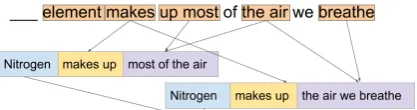
Figure 1: An example support graph linking a question (top), two tuples from the KB (colored) and an answer option (nitrogen).
document:
tf(x, q) = 1ifx2q, 0otherwise idf(x) = log (1 +N/nx) tf-idf(t, q) = X
x2t\q
idf(x)
whereN is the total number of tuples in the KB
andnxis the number of tuples containing x. We normalize thetf-idf score by the number of tokens intandq, and take the 50 top-scoring tuplesTqa.
On-the-fly tuples from text: To handle ques-tions from new domains not covered by the train-ing set, we extract additional tupleson the flyfrom S (similar to Sharma et al. (2015)). We perform the same ElasticSearch query described earlier for building T. We ignore sentences that cover none or all answer choices as they are not discriminative. We also ignore long sentences (>300 characters) and sentences with negation5 as they tend to lead
to noisy inference. We then run Open IE on these sentences and re-score the resulting tuples using the Jaccard score6due to the lossy nature of Open
IE, and finally take the 50 top-scoring tuplesTqa0 .
3.3 Support Graph Search
Similar to TABLEILP, we view the QA task as searching for a graph that best connects the terms in the question (qterms) with an answer choice via the knowledge; see Figure 1 for a simple il-lustrative example. Unlike standard alignment models used for tasks such as Recognizing Tex-tual Entailment (RTE) (Dagan et al.,2010), how-ever, we must score alignments between a set
Tqa [Tqa0 of structured tuples and a (potentially
multi-sentence) multiple-choice questionqa.
The qterms, answer choices, and tuples fields form the set of possible vertices,V, of the support graph. Edges connecting qterms to tuple fields and tuple fields to answer choices form the set of pos-sible edges,E. The support graph, G(V, E), is a
5containing not, ’nt, or except 6
|tok(t)\tok(qa)|/|tok(t)[tok(qa)|
subgraph ofG(V,E)whereV andE denote “ac-tive” nodes and edges, resp. We define an ILP optimization model to search for the best support graph (i.e., the active nodes and edges) as follows.
Variables
The ILP has a binary variable for each qterm (xq),
tuple (xt), tuple field (xf), and answer choice (xa), indicating whether the corresponding graph node is active. There is a binary activity variable (xe)
for each edgee2 E. For efficiency, we only create a qterm!field edge and a field!choice edge if
the corresponding coefficient is no smaller than a certain threshold (0.1 and 0.2, resp.).
Objective Function
The objective function coefficientceof each edge
e(t, h) is determined by a word-overlap score.7 While TABLEILP used WordNet (Miller, 1995) paths to compute the edge weight, this measure re-sults in unreliable scores when faced with longer phrases found in Open IE tuples.
Compared to a curated KB, it is easy to find Open IE tuples that match irrelevant parts of the questions. To mitigate this issue, we scale the co-efficientscqof qterms in our ILP objective to focus on important terms. Since the later terms in a ques-tion tend to provide the most critical informaques-tion, we scale qterm coefficients based on their position in the question. Also, qterms that appear in almost all of the selected tuples tend not to be discrim-inative as any tuple would support such a qterm. Hence we scale qterm coefficients inversely by the frequency with which they occur in the selected tuples. Appendix Adescribes the coefficient for qterm as well as other variables in detail.
Constraints
Since Open IE tuples do not come with schema and join rules, we can define a substantially sim-pler model compared to TABLEILP. This reduces the reasoning capability but also eliminates the re-liance on hand-authored join rules and regular ex-pressions used in TABLEILP. We discovered (see empirical evaluation) that this simple model can achieve the same score as TABLEILP on the Re-gents test (target test set used by TABLEILP) and generalizes better to different grade levels.
We start with a few constraints defining what is an active node or edge, shown as the first groups of constraints in Table1. To avoid positive edge coefficients in the objective function resulting in
7w(t, h) =
Active variable must have an active edge Active edge must have an active source node Active edge must have an active target node Exactly one answer choice must be active Active field implies tuple must be active Active field must have< w1connected edges
Active choice must have< w2edges
Active qterm must have< w3edges
Support graph must have< w4active tuples
Active tuple must have w5active fields
Active tuple must have an edge to some qterm Active tuple must have an edge to some choice Active tuple must have active subject
If a tuple predicate aligns toq, the subject (object) must align to a term preceding (following, resp.)q
Table 1: High-level ILP constraints; we report re-sults forw~ = (2,4,4,4,2); the model can be
im-proved with more careful parameter selection
spurious edges in the support graph, we limit the number of active edges from an active tuple, ques-tion choice, tuple fields, and qterms (second group of constraints in Table1). Our model is also ca-pable of using multiple tuples to support different parts of the question as illustrated in Figure1. To avoid spurious tuples that only connect with the question (or choice) or ignore the relation being expressed in the tuple, we add constraints that re-quire each tuple to connect a qterm with an answer choice (third group of constraints in Table1).
We also define new constraints based on the Open IE tuple structure. Since an Open IE tu-ple expresses a fact about the tutu-ple’s subject, we require that the subject must be active. To avoid issues such as(Planet; orbit; Sun)matching the sample question in the introduction (“Which object. . .orbits around a planet”), we also add an
ordering constraint (fourth group in Table1). We note that TUPLEINFonly combines parallel evidence, i.e., each tuple must individually con-nect words in the question to the answer choice. For reliable multi-hop reasoning using OpenIE tu-ples, one can add inter-tuple connections to the support graph search, controlled by a small num-ber of rules over Open IE predicates. Learning such rules for the Science domain is an open prob-lem and potential avenue for future work.
4 Experiments
Comparing our method with two state-of-the-art systems for 4th and 8th grade science exams, we demonstrate that (a) TUPLEINFwith only au-tomatically extracted tuples significantly outper-forms TABLEILP with its original curated
knowl-Solvers 4th Grade 8th Grade
TABLEILP(C) 39.9 34.1
TUPLEINF(T+T’) 51.7 51.6
TABLEILP(C+T) 42.1 37.9 TUPLEINF(C+T) 47.5 48.0
Table 2: TUPLEINFis significantly better at struc-tured reasoning than TABLEILP.9
edge as well as with additional tuples, and (b) TU -PLEINF’s complementary approach to IR leads to an improved ensemble. Numbers in bold indicate statistical significance based on the Binomial ex-act test (Howell,2012) atp= 0.05.
We consider two question sets. (1) 4th Grade set(1220 train, 1304 test) is a 10x larger superset of the NY Regents questions (Clark et al.,2016), and includes professionally written licensed ques-tions. (2)8th Grade set(293 train, 282 test) con-tains 8th grade questions from various states.8
We consider two knowledge sources:
(1) The Sentence corpus (S) consists of domain-targeted 80K sentences and 280 GB of plain text extracted from web pages used byClark et al.(2016). This corpus is used as a collection of sentences by the IR solver. It is also used to create the tuple KB T (Sec.3.1) and on-the-fly question-specific tuplesTqa0 (Sec.3.2) for TUPLEINF.
(2) TABLEILP uses ⇠70 Curated tables (C) containing about 7,600 rows, designed for 4th grade NY Regents exams.
We compare TUPLEINFwith two state-of-the-art baselines. IR is a simple yet powerful information-retrieval baseline (Clark et al.,2016) that selects the answer option with the best match-ing sentence in a corpus. TABLEILPis the
state-of-the-art structured inference baseline (Khashabi et al.,2016) developed for science questions.
4.1 Results
Table 2 shows that TUPLEINF, with no curated knowledge, outperforms TABLEILP on both ques-tion sets by more than 11%. The lower half of the table shows that even when both solvers are given
8See the Middle School Without Diagrams set
from AI2 Science Questions v1 (Feb 2016) at http://allenai.org/data/science-exam-questions.html for the 8th Grade set. For future comparisons, we also report our score on their smaller 4th Grade set:Elementary School Without Diagrams(432 train, 339 test).
9TUPLEINF(T+T’) achieves a score of 56.1% on the
Solvers 4th Grade 8th Grade
IR(S) 52.0 52.8
IR(S) + TABLEILP(C) 53.3 54.5
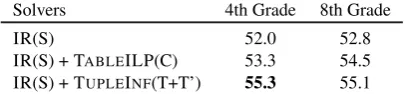
[image:5.595.80.285.62.109.2]IR(S) + TUPLEINF(T+T’) 55.3 55.1
Table 3: TUPLEINFis complementarity to IR, re-sulting in a strong ensemble
the same knowledge (C+T),10the improved
selec-tion and simplified model of TUPLEINF11 results in a statistically significant improvement. Our simple model, TUPLEINF(C + T), also achieves scores comparable to TABLEILP on the latter’s target Regents questions (61.4% vs TABLEILP’s reported 61.5%) without any specialized rules.
Table 3 shows that while TUPLEINF achieves similar scores as the IR solver, the approaches are complementary (structured lossy knowledge reasoning vs. lossless sentence retrieval). The two solvers, in fact, differ on 47.3% of the train-ing questions. To exploit this complementarity, we train an ensemble system (Clark et al.,2016) which, as shown in the table, provides a substan-tial boost over the individual solvers. Further, IR + TUPLEINF is consistently better than IR + TABLEILP.
Finally, in combination with IR and the statis-tical association based PMI solver (which scores 54.1% by itself) ofClark et al.(2016), TUPLEINF achieves a score of 58.2% on the 4th grade set. This compares favorably to TABLEILP’s ensem-ble score of 56.7%, again attesting to TUPLEINF’s strength.12
5 Error Analysis
We describe four classes of failure of TUPLEINF, and the future work they suggest.
Missing Important Words: Which material will spread out to completely fill a larger con-tainer? (A) air (B) ice (C) sand (D) water
In this question, we have tuples that support that water will spread out and fill a larger container, but miss the critical word “completely”. A method for detecting salient question words would help here.
10See AppendixBfor how tables (and tuples) are used by
TUPLEINF(and TABLEILP).
11On average, TABLEILP (TUPLEINF) has 3,403 (1,628,
resp.) constraints and 982 (588, resp.) variables. TUPLE -INF’s ILP can be solved in half the time taken by TABLEILP, reducing the overall question answering time by 68.6%.
12We observed no difference in scores on the 8th grade set.
Lossy IE: Which action is the best method to separate a mixture of salt and water?. . .
The IR solver correctly answers this question by using the sentence: Separate the salt and wa-ter mixture by evaporating the wawa-ter. However, TUPLEINF is not able to answer this question as Open IE is unable to extract tuples from this im-perative sentence. While the additional structure from Open IE is generally helpful for more ro-bust matching, the conversion to tuples sometimes loses important bits of information.
Bad Alignment: Which of the following gases is necessary for humans to breathe in order to live? (A) Oxygen (B) Carbon dioxide (C) Helium (D) Water vapor
TUPLEINFreturns “Carbon dioxide” as the answer because of the tuple(humans; breathe out; carbon dioxide). The chunk “to breathe” in the question has a high alignment score to the “breathe out” re-lation in the tuple, even though they have com-pletely different meaning. An improved phrase alignment module can mitigate this issue.
Out of Scope: Deer live in forest for shelter. If the forest was cut down, which situation would most likely happen?. . .
Such questions require modeling a state presented in the question and reasoning over this state, which is out of scope of our solver.
6 Conclusion
We presented a new QA system, TUPLEINF, that can reason over a large, potentially noisy knowl-edge base of (subject, predicate, object) style tu-ples, in order to answer complex questions. Our results establish TUPLEINFas a new state-of-the-art structured reasoning solver for elementary-level science that does not rely on curated knowl-edge and generalizes to higher grade levels. Our error analysis points to lossy IE and textual mis-alignments as two main causes of failure, suggest-ing future work around incorporatsuggest-ing tuple context and distributional similarity measures.
Acknowledgments
References
Tobias Achterberg. 2009. SCIP: solving constraint in-teger programs. Math. Prog. Computation1(1):1– 41.
Michele Banko, Michael J. Cafarella, Stephen Soder-land, Matthew Broadhead, and Oren Etzioni. 2007. Open information extraction from the web. In IJ-CAI.
Jonathan Berant, Andrew Chou, Roy Frostig, and Percy Liang. 2013. Semantic parsing on Freebase from question-answer pairs. In Empirical Methods in Natural Language Processing (EMNLP).
Jonathan Berant and Percy Liang. 2014. Semantic parsing via paraphrasing. InACL.
Eric Brill, Susan Dumais, and Michele Banko. 2002. An analysis of the AskMSR question-answering sys-tem. InProceedings of EMNLP. pages 257–264. Gong Cheng, Weixi Zhu, Ziwei Wang, Jianghui Chen,
and Yuzhong Qu. 2016. Taking up the Gaokao Chal-lenge: An information retrieval approach. InIJCAI. Peter Clark. 2015. Elementary school science and math tests as a driver for AI: take the Aristo challenge! In
29th AAAI/IAAI. Austin, TX, pages 4019–4021. Peter Clark, Oren Etzioni, Tushar Khot, Ashish
Sab-harwal, Oyvind Tafjord, Peter Turney, and Daniel Khashabi. 2016. Combining retrieval, statistics, and inference to answer elementary science questions. In30th AAAI.
Ido Dagan, Bill Dolan, Bernardo Magnini, and Dan Roth. 2010. Recognizing textual entailment: Ra-tional, evaluation and approaches–erratum. Natural Language Engineering16(01):105–105.
Anthony Fader, Luke S. Zettlemoyer, and Oren Etzioni. 2013. Paraphrase-driven learning for open question answering. InACL.
Anthony Fader, Luke S. Zettlemoyer, and Oren Etzioni. 2014. Open question answering over curated and extracted knowledge bases. InKDD.
David Ferrucci, Eric Brown, Jennifer Chu-Carroll, James Fan, David Gondek, Aditya A Kalyanpur, Adam Lally, J William Murdock, Eric Nyberg, John Prager, et al. 2010. Building Watson: An overview of the DeepQA project. AI Magazine31(3):59–79. David Howell. 2012. Statistical methods for
psychol-ogy. Cengage Learning.
Daniel Khashabi, Tushar Khot, Ashish Sabharwal, Pe-ter Clark, Oren Etzioni, and Dan Roth. 2016. Ques-tion answering via integer programming over semi-structured knowledge. InIJCAI.
Tushar Khot, Niranjan Balasubramanian, Eric Gribkoff, Ashish Sabharwal, Peter Clark, and Oren Etzioni. 2015. Exploring Markov logic networks for question answering. InEMNLP.
Tom Kwiatkowski, Eunsol Choi, Yoav Artzi, and Luke S. Zettlemoyer. 2013. Scaling semantic parsers with on-the-fly ontology matching. In
EMNLP.
George Miller. 1995. WordNet: a lexical database for english. Communications of the ACM 38(11):39– 41.
Panupong Pasupat and Percy Liang. 2015. Composi-tional semantic parsing on semi-structured tables. In
ACL.
Matthew Richardson and Pedro Domingos. 2006. Markov logic networks. Machine learning 62(1– 2):107–136.
Arpit Sharma, Nguyen Ha Vo, Somak Aditya, and Chitta Baral. 2015. Towards addressing the wino-grad schema challenge - building and using a seman-tic parser and a knowledge hunting module. In IJ-CAI.
Huan Sun, Hao Ma, Xiaodong He, Wen tau Yih, Yu Su, and Xifeng Yan. 2016. Table cell search for question answering. InWWW.