Uchechukwu Awada
School of Computer ScienceUniversity of St Andrews St Andrews, Scotland, UK [email protected]
Adam Barker
School of Computer ScienceUniversity of St Andrews St Andrews, Scotland, UK [email protected]
ABSTRACT
Cloud computing providers have recently begun offering container instances, which provide an efficient route to application deploy-ment within a lightweight, isolated and well-defined execution environment. Cloud providers currently offer Container Service Platforms (CSPs), which support the flexible orchestration of con-tainerised applications.
Existing CSP frameworks do not offer any form of intelligent re-source scheduling: applications are usually scheduled individually, rather than taking a holistic view of all registered applications and available resources in the cloud. This can result in increased execu-tion times for applicaexecu-tions, resource wastage through underutilized container-instances, and a reduction in the number of applications that can be deployed, given the available resources.
This paper presents a cloud-based Container Management Ser-vice (CMS) framework, which offers increased deployment density, scalability and resource efficiency for containerised applications. CMS extends the state-of-the-art by providing additional function-alities for orchestrating containerised applications by joint optimi-sation of sets of containerised applications and resource pool on the cloud. We evaluate CMS on a cloud-based CSP i.e., Amazon EC2 Container Management Service (ECS) and conducted extensive experiments using sets of CPU and Memory intensive container-ised applications against the direct deployment strategy of Amazon ECS. The results show that CMS achieves up to 25% higher cluster utilisation and up to 2.5 times faster execution times.
CCS CONCEPTS
•Computer systems organization→Distributed architectures; Cloud computing;
KEYWORDS
Application container, Cloud computing, Resource efficiency, Exe-cution time
ACM Reference format:
Uchechukwu Awada and Adam Barker. 2017. Resource Efficiency in Container-instance Clusters. InProceedings of Second International Conference on In-ternet of Things and Cloud Computing, Cambridge, United Kingdom, March 2017 (ICC’17),5 pages.
DOI: http://dx.doi.org/10.1145/3018896.3056798
Permission to make digital or hard copies of part or all of this work for personal or classroom use is granted without fee provided that copies are not made or distributed for profit or commercial advantage and that copies bear this notice and the full citation on the first page. Copyrights for third-party components of this work must be honored. For all other uses, contact the owner/author(s).
ICC’17, Cambridge, United Kingdom
© 2017 Copyright held by the owner/author(s). 978-1-4503-4774-7/17/03...$15.00 DOI: http://dx.doi.org/10.1145/3018896.3056798
1
INTRODUCTION
In order to fully exploit cloud computing [2] technologies, organi-sations need a simple way to deploy, host and manage complex dis-tributed applications across multiple resources. An increasing and diverse set of applications are now packaged in isolated user-space instances, on which they are executed. Such instances are called application or software containers. Application containers like Docker [1], wrap up a piece of software in a complete file-system that contain everything it needs to run: code, runtime, system tools, system libraries etc. A recent analysis on Docker adoption in about 10,000 organisations1found that a typical Docker use case involves running five containers per host, but that many organisations run 10 or more.
Efficiently deploying and orchestrating containerised applica-tions on the cloud is important to both developers and cloud providers. Cloud providers (i.e., AWS2, Google Compute Engine3, etc.) cur-rently offer Container Service Platforms (CSPs)4,5, which support the flexible orchestration of containerised applications. However, current systems do not offer any form of intelligent resource sched-uling: applications are usually scheduled individually, rather than taking a holistic view of all registered applications and available resources on the cloud. This can result in increased execution times for applications, and resource wastage through under utilised container-instances; but also a reduction in the number of applica-tions that can be deployed, given the available resources.
This research aims to extend existing platforms by adding a cloud-based Container Management Service (CMS), which offers intelligent scheduling through the joint optimisation of sets of containerised applications. Our aim is to maximize the overall Quality of Service (QoS) for containerised applications; in this paper we focus primarily on resource utilisation and execution time.
This paper makes the following research contributions: • Capturing high-level resource requirements:a
repre-sentation which captures the high-level resource require-ments of containerised applications, such as CPU, memory and network ports etc.
• Efficient container-merging: techniques to merge
con-tainers into a multi-container (multi-task) units. Such complex merging serves as a unit of deployment on a container-instance, and the aggregate resource require-ment of a multi-container unit cannot exceed the resources available on a container-instance.
1https://datadoghq.com/docker-adoption/ 2https://aws.amazon.com/
3https://cloud.google.com/compute/ 4https://aws.amazon.com/ecs/
• Optimal deployment: a scheduling algorithm which,
solves the optimal deployment of sets of multi-container units on best fit container-instances across distributed clouds, in order to maximize all available resources, speed up completion time and maximise throughput.
2
SYSTEM MODEL
This paper considers resource and performance efficiency of con-tainerised applications on a cloud provider. Resources are any cloud infrastructure components, such as CPU cores, Memory units, net-work communication ports etc or combination of these components in a container-instance. A container-instance cluster has one or more node instances (container-instance).
2.1
Problem Formulation
To connect with the joint optimisation problem with prior theoreti-cal work, we cast into general formulations.
Notations:Given a set,Cof containerised applications, each con-tainer serves as a task. A taskc∈Ccan be divided into a collection of subtasks{(c,j)}. Thejth subtask of thecth task has resource requirements along three resources: CPU, memory and network ports, as the total amount of resources needed for its execution, denoted asdhc,m,pi
c,j .
For each subtasksjin a taskc, lettsandtcdenote its start and completion times respectively. The execution time of thejth subtask is thuste=tc−ts. Finally, the aggregate execution time of a task is given asPk
i=1tie/k.
Given a cluster of container-instancesRin a cloud region. Let
rhc,m,pidenote the resource capacity or available, in terms of CPU,
memory and network ports respectively, of each container-instance
r∈R.
Next, we capture the resource demandsdhc,m,pi
c,j ofn container-ised application to be orchestrated , and get the update state of the cluster to obtain the resources available,rhc,m,pi. These information
is important in order to make informed decision on orchestration. Next, we merge the tasks i.e.,P|rhc,m,pi|P
jd
hc,m,pi
c,j with capacity constraints to form new multi-tasks or multi-container units and deploy them to fully utilise available resources. A multi-container unit, is therefore a multi-task denoted asP|rhc,m,pi|P
jd
hc,m,pi
c,j =
dhc,m,pi0
c,j . The aggregate execution time of a multi-container unit is given asP
nPki=1tie/k=te0
The resource utilisation of container-instances and the cluster is thusρC I=d
hc,m,pi0
c,j /rhc,m,pi, andρC =Pid
hc,m,pi0
c,j /
P
ir
hc,m,pi
i respectively.
Constraints: First, the cumulative resource requirements of a
multi-container unit at any given timetcannot exceed the resource capacity or available of container-instances in the cluster:
dhc,m,pi0
c,j ≤r
hc,m,pi,∀
c,m,p. (1)
Second, unused container-instance in the cluster would be shut down:
∀c,m,prc,m,p=0 ift<[ts,tc,te]. (2)
Register Container
s
Pending
CMS (Joint Optimisation)
execution time
allocate
container-instance cluster
obtain the update state, deploy multi-container units, capture containers
requirements and merge containers to
form new multi-container units
Start Task Containerised
Apps
…
App1
App2
AppN Developers
Applications
. . .
[image:2.612.319.557.84.214.2]Running Finished
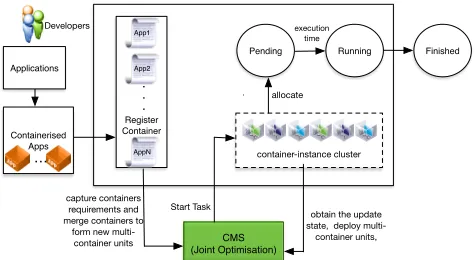
Figure 1: Orchestration overview of CMS: read from left to right.
Third, the utilisation of a cluster depends on application orches-tration:
ρC =max * . . . . .
,
P|rhc,m,pi|P
jd
hc,m,pi
c,j =d
hc,m,pi0
c,j ∃,
rhc,m,pi=0 ift
<[ts,tc,te], ∃,
dhc,m,pi0
c,j ≤rhc,m,pi,∀c,m,p, ∀c,m,p
+ / / / / /
-(3)
Forth, the overall execution times can be minimised depending on orchestration:
te0=min* . . .
,
P|rhc,m,pi|P
jd
hc,m,pi
c,j =d
hc,m,pi0
c,j ∃,
dhc,m,pi0
c,j →rhc,m,pi ∀c,m,p
+ / / /
-(4)
In each term,dhc,m,pi0
c,j is the total resource demand (e.g., CPU, memory, network ports) of a multi-task.
Objective:Our objective is to maximise the cluster resource
utili-sation and minimise the overall execution time of tasks. We denote the execution time of a multi-container unit aste0.
3
CMS SYSTEM
One of the current state-of-the-art Container Service Platforms (CSPs) is Amazon’s EC2 Container Service (ECS). Amazon ECS, en-ables users to provision resources composed of container-instance clusters and deploy their containerised applications. First, users need to register these containers on the platform by providing a JavaScript Object Notation (JSON) definition, which are passed to the Docker daemon on a container-instance. The parameters in a container definition include: name, image, CPU and Memory de-mand, port-mappings, links etc. It uses theRun Taskcommand to
place each registered container randomly onto available container-instance in the cluster that meets the parameters specified in its JSON definition.
Table 1: Cluster-wide Configuration
Clusters Number ofCIs Prhc,m,piunits
Experiment 1
CMS 4 h4096,3980i
Direct 4 h4096,3980i
Experiment 2
CMS 6 h6144,5970i
Direct 6 h6144,5970i
Experiment 3
CMS 8 h8192,7960i
Direct 8 h8192,7960i
Experiment 4
CMS 10 h10240,9950i
Direct 10 h10240,9950i
• Preparation of application images
– Developers use Docker to automate their applications
into a container from a Dockerfile. These images are stored on-line in a container repository such as Docker Hub6.
– They are registered on the platform by providing a
JavaScript Object Notation (JSON) definition. • Execution of the applications
– CMS captures the resource requirements of all
con-tainerised applications ready to be deployed at a pe-riodt.
– CMS examines the cluster state to quantify the
re-source availability, such that we obtain detailed infor-mation of the available resources i.e., tasks (contain-ers) running on the instances, resource availability or occupied (i.e., CPU, memory, network ports etc).
– CMS deploys these containerised applications tightly
onto the available resources by merging them into a multi-containers units with capacity constraints, such that resources are fully utilised.
CMS uses theStart Taskcommand to place these new
multi-container unit from a specified task definition, in a specified cluster and onto specified container-instances. This way, resources can be highly managed and utilised i.e., resources can be added or removed based on current demand
4
EXPERIMENTAL EVALUATION
We evaluate CMS using sets of different applications in multi-container units with heterogeneous resource requirements across cloud clusters.
4.1
Setup
Clusters:On the large, we used 56 container-instances oft2.micro
Intel Xeon Processors with Turbo up to 3.3GHz container-instances withReдisteredResources= (1 vCPU, 1 vMem(GiB) and 5 Ports). A container instance has 1,024 cpu units for every vCPU core and 995 units for every GiB of Memory. The clusters configurations are shown on Table 1.
6https://hub.docker.com/
CMS Direct
50
100 90
69 67
51
Container Orchestration Strategies
Resour
ce
Utilisation,
ρC
%
[image:3.612.87.261.102.261.2]CPU Mem
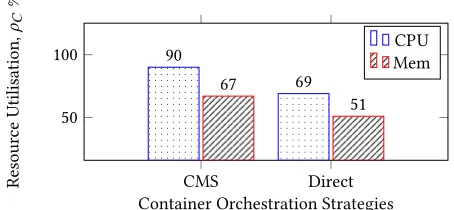
Figure 2: Resource utilisation for Exp 1 clusters
Connection to Clusters:We have implemented our system on
Amazon ECS clusters with boto37, the Amazon AWS SDK for Python. Boto3 is a data-driven and modern object-oriented API with consistent interface that supports JSON (JavaScript Object No-tation) service definition. We import the boto3 module and create a connection to our Amazon ECS clusters.
Applications:To evaluate our framework, we illustrated use cases
of real life CPU and memory intensive applications. The first appli-cation, denoted asapp1, is memory intensive 3-tiered microservice8 application. This application consisted of a simple frontend, an API and a redis backend. It is a simple statistics counter that increases every time a page is viewed9, it runs three containers: frontend, the API and a redis container. The API communicates to a redis container to store data.
The second application, denoted asapp2, is a CPU/memory in-tensive word processor application and consists of 2 rake tasks. It takes in a message and post a JSON message to a SQS queue, and polls the queue for messages and output them to standard output (stdout).
The third application, denoted asapp3, is wordpress10 applica-tion. This a web software and a content management system based on PHP and MySQL. It communicates to a database name specified on MySQL container.
The last application, denoted asapp4, is nginx11application. This is an open source reverse proxy server for HTTP, HTTPS, SMTP, POP3, and IMAP protocols, as well as a load balancer, HTTP cache, and a web server.
4.2
Deployment Results
Each experiment runs a combination of our applications (app1,
app2,app3, andapp4) merged into units. We see that CMS im-proves cluster resource efficiency, up to 25% and to 2.5 times faster execution time compared to direct deployment.
In Experiment 1, we deployed a set of applications, consisting ofapp1,app2,app3, andapp4. First, CMS captures the high-level resource demands of eachappispecified in the JSON representa-tion, gets update state and quantifies the resource availability at the regions (clusters), matches the resource demands and obtains
7https://boto3.readthedocs.org/en/latest/ 8https://en.wikipedia.org/wiki/Microservices
9http://blog.wercker.com/deploying-to-amazon-ec2-container-service-with-wercker 10https://hub.docker.com/wordpress/
CMS Direct 40
60 80
100 91
76 72
62
Container Orchestration Strategies
Resour
ce
Utilisation,
ρC
%
[image:4.612.327.552.82.252.2]CPU Mem
Figure 3: Resource utilisation for Exp 2 clusters
CMS Direct
50
100 93
69 74
55
Container Orchestration Strategies
Resour
ce
Utilisation,
ρC
%
CPU Mem
Figure 4: Resource utilisation for Exp 3 clusters
CMS Direct
50
100 93
65 76
53
Container Orchestration Strategies
Resour
ce
Utilisation,
ρC
%
[image:4.612.65.288.89.192.2]CPU Mem
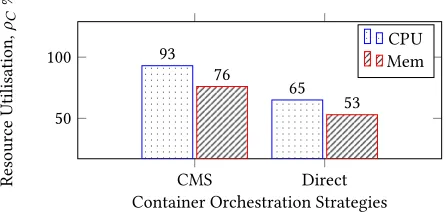
Figure 5: Resource utilisation for Exp 4 clusters
a container-instance having the requisite capacity to accommo-date the merged unit. CMS merges the containerised applications, such thatdhc,m,pi0
c,j ≤rhc,m,pito form new 3 multi-container units of resource requirements (CPU, Mem)h1000,900i,h956,812iand h900,900i. CMS deploys this unit onto best fit container-instance (i.e.,dhc,m,pi0
c,j →r
hc,m,pi).
Figure 2 shows the details for the first experiment. First, CMS keeps a consistently higher number of running applications in the cluster; direct deployment, at all times, has scheduled fewer applications. CMS has higher throughput and usage of resources in the cluster. CMS achieves higher utilisation (an average of 78.5%) when compared to the direct deployment (an average of 60%). The overall resource utilisation of CMS cluster is about 19% higher than the direct deployment. CMS reduces overall execution times of containers deployed on cloud clusters. The execution time of
Exp-1 Exp-2 Exp-3 Exp-4
100 200 300 400
96
157 188
201
210
344
425
402
Exe
cution
Time
,
t
e
0(s)
Container-instance Clusters
[image:4.612.66.288.238.345.2]CMS Direct
Figure 6: Execution times across the clusters
applications is 2.5 times faster than applications deployed directly as shown in Figure 6.
In Experiment 2, we deployed a set of applications, consisting ofapp1,app2,app3, andapp4. CMS merged these into 5 multi-container units with diverse resource requirements (CPU, Mem) h950,892i,h950,800i,h1000,900i,h956,812iandh900,900i. We ob-serve that due to efficient packing, not only are the resources fully utilised at all times, but also the number of resources are reduced. CMS deployed these units onto 5 container-instancesCIs, and shut down free contain-instances in the cluster. This results in approxi-mately 12.5% higher resource utilisation (an average of 81.5%) when compared to direct deployment (an average of 69%). This is shown in Figure 4. The execution time of CMS deployment is about 2.5 times faster than direct deployment, as illustrates in Figure 6.
In Experiment 3, we deployed 6 sets of multi-container units, consisting ofapp1,app2,app3, andapp4, with resource require-ments (CPU, Mem)h1000,850i,h950,892i,h950,800i,h1000,900i, h956,812iandh900,900i. Resources are fully utilised in the CMS cluster and unused instances are shut down. CMS achieves higher cluster utilisation compared with direct deployment. It achieves an average of 83% utilisation with direct deployment of an average of 62% utilisation. Overall, CMS achieves about 21% higher utilisation, as shown in Figure 4 and about 2.5 times faster execution time as shown in Figure 6.
[image:4.612.65.288.390.496.2]5
RELATED WORK
Cloud computing has attracted considerable attention as a technol-ogy for simplifying large scale computing. It has enhanced various organisation’s computing by providing elastic virtual computing resources and platforms.
To further simplify these technologies, a new application packag-ing system that would guarantee fast deployment and execution was introduced. This new packaging system is refereed to as application container. Docker is a framework that automates the deployment of application inside containers, by providing an additional layer of abstraction and automation.
Recently launched cloud-based CSPs such as Amazon ECS, Google Container Engine, Apcera12etc, are orchestration systems for run-ning containerised applications that are automated by Docker. These platforms enable users to set up clusters of container-instances and schedule their containerised applications into the clusters au-tomatically based on requirements (such as CPU and Memory). Amazon ECS is customized for Docker containers and it provides API and scheduler to deploy containers on a managed cluster of container-instances. It allows to integrate a third-party schedulers to meet application specific requirements. Google Container Engine is built on the open source Kubernetes13system which allow the deployment and management of application containers in a cloud cluster. It allows finer control over containers, such as labelling and merging.
These existing CSP frameworks do not offer any form of in-telligent resource scheduling: applications are usually scheduled individually, rather than taking a holistic view of all registered applications and available resources in the cloud. Throughout this paper we have demonstrated how this leads to lower utilisation, higher execution time, which in turn allow less applications to be deployed on a fixed set of resources. CMS has taken an early step towards meeting these challenges, by providing a framework for dynamic container orchestration.
Resource management is an essential aspect of distributed sys-tems. Reliable state management and flexible scheduling are essen-tial in running modern distributed applications on clusters [9], [6], [7], [3], [4], [10], [11]. Academic and industrial researchers have de-veloped several other cluster management frameworks for resource efficiency, such as Mesos [5], Omega [8], Borg [11] etc. Mesos [5] is a tool that abstracts and manages resources and scheduling in a cloud computing cluster. It is based on two-level scheduling mechanism that shares resources e.g. CPU and memory in a fine-grained manner, which decides how many resources to offer each task, while tasks decide which resources to accept and which com-putations to run on them. Omega [8] uses parallelism, shared state, and optimistic concurrency control, which is more advanced to [5]. Borg [11], is Google cluster manager that runs thousands of different applications across a number of clusters. It achieves high resource utilisation by packing different tasks together and assign-ing them to a machine if there are sufficient available resources that meet their constraints. It achieves this by:feasibility checking,
to find machines on which the tasks could run, andscoring, which
picks one of the feasible machines.
12https://www.apcera.com/ 13http://kubernetes.io/
6
CONCLUSION AND FUTURE RESEARCH
This paper presented CMS, an approach for optimising container-ised applications in cloud container-instance clusters. We have im-plemented CMS on Amazon EC2 Container Service (Amazon ECS) clusters and evaluated it against Amazon ECS direct deployment strategy. CMS has shown higher QoS (up to 25% high resource util-isation and 2.5 times faster execution times) compared to the ECS direct deployment strategy. We achieved this by first, capturing the resource requirements of each containerised application, second, we merge these containerised applications into multi-container units with capacity constraints and finally deploying them on best fit container-instances.
Modern academic experiments need high performance comput-ing technologies to achieve optimal results. In addition, many academic experiments (i.e., medicine, physics, biology etc) generate big data which are geographical distributed. They require simplified technologies to help address such issue, many of whom have al-ready adopted cloud computing technologies for easy and efficient processing of such big data. Our future research will explore more opportunities in academic experiments.
ACKNOWLEDGMENTS
This research is supported by the Amazon Web Services (AWS) Education Research Grant.
REFERENCES
[1] C. Anderson. 2015. Docker [Software engineering].IEEE Software32, 3 (May 2015), 102–c3.
[2] Adam Barker, Blesson Varghese, Jonathan Stuart Ward, and Ian Sommerville. 2014. Academic Cloud Computing Research: Five Pitfalls and Five Opportunities. In6th USENIX Workshop on Hot Topics in Cloud Computing (HotCloud 14). USENIX Association.
[3] Christina Delimitrou and Christos Kozyrakis. 2014. Quasar: Resource-efficient and QoS-aware Cluster Management. InProceedings of the 19th International Conference on Architectural Support for Programming Languages and Operating Systems (ASPLOS ’14). ACM, New York, NY, USA, 127–144.
[4] Robert Grandl, Ganesh Ananthanarayanan, Srikanth Kandula, Sriram Rao, and Aditya Akella. 2014. Multi-resource Packing for Cluster Schedulers.SIGCOMM Comput. Commun. Rev.44, 4 (Aug. 2014), 455–466.
[5] Benjamin Hindman, Andy Konwinski, Matei Zaharia, Ali Ghodsi, Anthony D Joseph, Randy H Katz, Scott Shenker, and Ion Stoica. 2011. Mesos: A Platform for Fine-Grained Resource Sharing in the Data Center.. InNSDI, Vol. 11. 22–22. [6] Jacob Leverich and Christos Kozyrakis. 2014. Reconciling High Server Utilization
and Sub-millisecond Quality-of-service. InProceedings of the Ninth European Conference on Computer Systems (EuroSys ’14). ACM, New York, NY, USA, Article 4, 14 pages.
[7] Jeff Rasley, Konstantinos Karanasos, Srikanth Kandula, Rodrigo Fonseca, Milan Vojnovic, and Sriram Rao. 2016. Efficient queue management for cluster sched-uling. InProceedings of the Eleventh European Conference on Computer Systems. ACM, 36.
[8] Malte Schwarzkopf, Andy Konwinski, Michael Abd-El-Malek, and John Wilkes. 2013. Omega: Flexible, Scalable Schedulers for Large Compute Clusters. In Proceedings of the 8th ACM European Conference on Computer Systems (EuroSys ’13). ACM, New York, NY, USA, 351–364.
[9] Alexey Tumanov, Timothy Zhu, Jun Woo Park, Michael A Kozuch, Mor Harchol-Balter, and Gregory R Ganger. 2016. TetriSched: global rescheduling with adap-tive plan-ahead in dynamic heterogeneous clusters. InProceedings of the Eleventh European Conference on Computer Systems. ACM, 35.
[10] A. Uchechukwu, K. Li, and K. Li. 2014. Scalable Analytic Models for Performance Efficiency in the Cloud. InUtility and Cloud Computing (UCC), 2014 IEEE/ACM 7th International Conference on. 998–1003.