Semi-automated annotation of page-based documents
within the
Genre and Multimodality
framework
Tuomo Hiippala
Centre for Applied Language Studies University of Jyv¨askyl¨a P.O. Box 35, 40014 Finland
Abstract
This paper describes ongoing work on a tool developed for annotating document images for their multimodal features and compiling this information into a cor-pus. The tool leverages open source com-puter vision and natural language process-ing libraries to describe the content and structure of multimodal documents and to generate multiple layers of XML annota-tion. The paper introduces the annotation schema, describes the document process-ing pipeline and concludes with a brief de-scription of future work.
1 Introduction
Multimodality – or how multiple modes of com-munication interact and co-operate – has become a concern within many fields that fall under the umbrella of digital humanities (Svensson, 2010; O’Halloran et al., 2014). Whereas gestures, gaze and postures accompany spoken language in face-face conversation, written language works to-gether with photographs, diagrams, typography and other communicative resources in documents. Given the inherent complexity of multimodal phe-nomena, combined with the variation arising from contextual factors, corpus-based approaches have been suggested as necessary for bringing multi-modality under increased analytical control (All-wood, 2008; Bateman, 2014b).
This paper contributes to the empirical study of multimodality in page-based documents by pre-senting a prototype tool for creating multimodal corpora from document images that were not born digital. The tool generates stand-off XML an-notation following the Genre and Multimodal-ity (GeM) model, which provides an annotation schema with multiple layers of description that
at-tend to the content, layout, appearance and dis-course relations in page-based documents (Bate-man, 2008).
The GeM annotation schema, which is intended to “function as a tool for isolating significant pat-terns against the mass of detail that multimodal documents naturally present” (Bateman, 2014a, 33), has proven useful for comparing the multi-modality of documents across cultures (Thomas, 2009; Kong, 2013) and describing their change over time (Hiippala, 2015b). Yet the GeM model has not been adopted widely, because applying the multi-layered annotation schema requires ample time and resources. This requirement arises from the aforementioned mass of detail that occurs in multimodal documents.
The tool presented in this paper attacks the bot-tleneck issues of time and resources by leverag-ing several open source computer vision and op-tical character recognition libraries for the semi-automatic annotation of multimodal documents. To support this task, the paper proposes a variant of the GeM annotation schema namedauto-GeM. This variant of the annotation schema is geared towards generating machine-readable annotation, which may be studied using tools developed for the purpose (Hiippala, 2015a), while also provid-ing ground truths for specific document genres, whose availability is considered a prerequisite for automating other parts of the annotation process.
The paper begins with a brief introduction to the GeM model and its annotation schema, reling the work on the prototype tool to previous at-tempts at automating parts of the annotation pro-cess. The document processing pipeline and the proposed auto-GeM annotation schema are then described in greater detail. Finally, the conclu-sion outlines current challenges and sketches fu-ture work on the tool.
2 The Genre and Multimodality model The GeM model provides a multi-layered XML schema for stand-off annotation of multimodal documents (Henschel, 2003; Bateman, 2008).
The model has four layers of annotation: any document described using the GeM model is first segmented intobaseunits. These units constitute the base layer. Recognized base units include, among others, sentences, headers, photographs, captions and illustrations (Bateman, 2008, 111). The base units are then picked up for description in the layout layer, which features three compo-nents that describe their grouping and logical or-ganization (layout structure), determine their typo-graphic and typo-graphic features (realization informa-tion), and establish their position in the document layout (area model).
The rhetoricallayer, in turn, describes the dis-course relations holding between the content, ex-tending Rhetorical Structure Theory to cover both verbal and visual base units (Mann and Thomp-son, 1988; Taboada and Mann, 2006). Finally, the navigationlayer describes how documents support their use with pointers such as “see page 5” and their corresponding entries, such as page and sec-tion numbers.
Each document is thus described from four dif-ferent perspectives, and the annotation for each layer is cross-referenced using unique identifiers. These identifiers help to track how content ele-ments relate to each other across the layout, rhetor-ical and navigation layers. Unlike other frame-works developed for describing documents, such as the Text Encoding Initiative (TEI), which is slowly beginning to pay attention to layout, ty-pography and materiality, but continues to be pri-marily concerned with the representation of docu-ments built around linear written language (Mu˜noz and Viglianti, 2015), the GeM model is inher-ently geared towards describing all kinds of mul-timodal documents, whether they organize their content linearly or make extensive use of the two-dimensional layout space.
Moreover, the GeM model was designed for corpus-driven research from the outset, and sev-eral tools have been developed to support the analysis of corpora annotated using its schema. Thomas (2007) describes a concordancer for querying GeM annotation, while Hiippala (2015a) uses Python to parse GeM corpora, transform-ing the annotation into GraphViz DOT graphs
(Gansner and North, 2000) to visualize descrip-tions of document structure stored in the layout, rhetorical and navigation layers.
Certain attempts have also been made to ad-dress the bottleneck issues of time and resources required for producing GeM-annotated corpora. Thomas (2009) explores the use of commercial optical character recognition (OCR) software for automatically producing GeM annotation by us-ing XSLT and Perl to transform and enrich the OCR output. Using XML output from ABBYY FineReader 8.0 SDKfor generating annotation for the base and layout layers, Thomas observes that OCR output proves useful for the time-consuming task of describing typographic features, but never-theless requires extensive manual post-processing. Thomas (2009, 245) concludes that produc-ing GeM annotation for the layout areas missed by the OCR engine constitutes the most time-consuming post-processing task. Thomas et al. (2010) attempt to reduce the time spent on post-processing by using XSLT to transform the OCR output into the OpenDocument format, in which the output could be manually tweaked and im-proved. Despite integrating well into the docu-ment processing pipeline, the OpenDocudocu-ment for-mat loses most of the inforfor-mation pertaining to the document layout, which multimodal documents frequently exploit to provide cues about their use and organization (Waller, 2012).
Building on the previous work, this paper pro-poses several improvements to annotating multi-modal documents semi-automatically within the framework proposed by the GeM model. Firstly, preferring open source libraries over commercial software enables a top-down approach, that is, at-tending to the key features of the layout first. Sec-ondly, controlling the design of the entire docu-ment processing pipeline removes the need for in-terim formats, generating the annotation only af-ter major corrections have been applied, propagat-ing these modifications across all annotation lay-ers. These improvements have been implemented in the prototype annotator, which is introduced in the following section.
3 The prototype annotator
3.1 System design
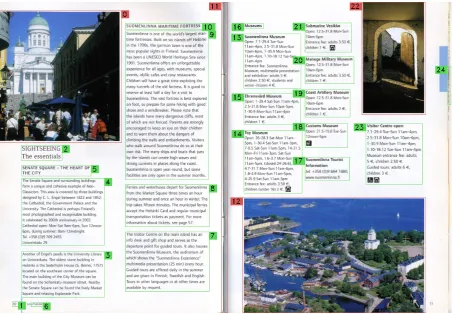
Figure 1: Detected and classified bounding boxes on a document image, labelled with identifiers.
2007). The notebook calls its functions from an external module, generator, which contains the main functions for processing and annotating document images. The annotator is available at www.github.com/thiippal/gem-tools.
To process the documents and to generate a de-scription using theauto-GeM annotation schema, the annotator relies on several open source li-braries: OpenCV1for computer vision, Tesseract2
for OCR and NLTK3for natural language
process-ing. The integration of these libraries into the doc-ument processing pipeline is described in the fol-lowing section.
3.2 Document processing pipeline
The high-resolution document image, preferably of 300 DPI resolution, is first resized into a canon-ical width of 1200 pixels, while naturally main-taining the original aspect ratio of the document. A smaller size allows more efficient processing in OpenCV, which is first used to convert the docu-ment image from colour to grayscale. Next,
bi-1www.opencv.org
2www.github.com/tesseract-ocr 3www.nltk.org
lateral filtering is applied to the grayscale image to reduce noise while preserving the edges of doc-ument elements. The filtered image is converted into a binary image, calculating the threshold us-ing Otsu’s method.
At this stage, the user is required to define a ker-nel size for performing a series of morphological operations on the thresholded image. The kernel height should correspond roughly to the x-height of the font used for body text in the document image, which is a prerequisite for detecting text paragraphs correctly. The following morpholog-ical operations involve applying a morphologmorpholog-ical gradient to establish the outlines of document ements, followed by an erosion to separate the el-ements clearly from each other. The user can set the number of iterations performed for the erosion in the notebook.
To help the user to fine-tune the annotator pa-rameters, such as kernel size and erosion iter-ations, each step involving image processing is documented in an HTML-file using the visual-logging4 module. This log is provided with the
output.
Next, connected-components labelling is per-formed to filter out remaining noise, before de-tecting contours using OpenCV. Contour detec-tion is performed twice: during the first pass, each detected contour is filled with solid colour. The second pass retrieves the contours of filled ele-ments: this procedure suppresses unwanted con-tours nested within photographs and other graph-ical elements. In initial testing, this procedure provided better results for grid-based layouts than applying a Non-Maximum Suppression algorithm. This, however, is likely to be largely dependent on the kind of document genre described.
The annotator then sorts the detected contours and feeds them to a Random Forest classifier, which classifies the regions of interest defined by the contours into two categories: text or graphics. The model, trained using Haralick textures and colour statistics extracted from 400 photographs and 400 text blocks, achieves on a high precision (1.00) and recall (0.99) on the testing data.
Finally, the classified contours are drawn on the resized image and displayed to the user in the note-book, as shown in Figure 1. The user is then asked to enter the identifiers of any false positives among the detected regions of interest. In Figure 1, these include regions labelled 11 and 24. The regions marked by the user are removed from the list of contours. At this stage, the user can also manually draw any regions of interest that evaded detection, such as the page number on the lower right-hand corner of Figure 1. For this purpose, the annotator uses the OpenCV HighGUI module.
When the user is finished, the contours are pro-jected on the original high-resolution image to ex-tract regions of interest, which are assumed to cor-respond roughly to layout units defined within the GeM model, that is, to text paragraphs, images, headers, captions and the like. Regions classi-fied as text are then thresholded, resized to double their original size and fed to Tesseract for OCR. NLTK’s Punkt tokenizer (Kiss and Strunk, 2006) is subsequently used for segmenting the layout units into sentences.
Three kinds of description are then created for each layout unit: basic layout segmentation, po-sition in the document layout, and visual appear-ance. The base layer annotation is generated si-multaneously using the segmentation produced by the Punkt tokenizer. Each region of interest is also extracted from the original high-resolution image
and stored into the corpus, anticipating their use as training data for machine learning algorithms and for visualizing parts of the original document image in concordancer output (Thomas, 2007).
3.3 The auto-GeM annotation schema
The annotator generatesauto-GeM annotation for the base and layout layers as described below. The base layer is first extracted from the layout layer, generating annotation for the minimal units of analysis defined within the GeM model. Within the base layer, each base unit is stored within a unitelement and provided with a unique identi-fier in theidattribute to handle cross-references across annotation layers.
<unit id="u-1.4">Another of En-gel’s pearls is the University Library on Unioninkatu.</unit>
The base units are picked up for description in the layout layer, in which they are combined into larger layout units, such as text paragraphs. In the layout layer annotation, the layout units are stored under the parent elementsegmentation. The following example shows the annotation for one child element,layout-unit, which represents a text paragraph consisting of multiple base units: <layout-unit id="lay-1.4" src= "lay-1.4.png" location="sa-1.4" xref="u-1.4 u-1.5 u-1.6 u-1.7"/> The src attribute refers to the image that con-tains the region of interest described by the layout unit, whereas thelocationattribute designates the position of the layout unit by referring to the sub-area element. The xref attribute refers to the base units that constitute the layout unit in question.
The sub-areaelement, positioned under the parent elementarea-model, contains a bound-ing box with relational coordinates, which can be projected on images of different sizes or used to render an abstract representation of the physical layout.
<sub-area id="sa-1.4" bbox= "0.0490168139071 0.800747198007 0.231689940154 0.946865919469"/>
For graphic elements, the corresponding element graphicsfeatures additional attributes,width andheight, which store relational values indi-cating the size of the graphic element in relation to the entire layout.
In comparison to the original GeM schema pro-posed in Bateman (2008), the coverage of the doc-ument structure in the auto-GeM schema is cur-rently limited. Whereas the original GeM anno-tation schema can provide a rich description of the document layout and its appearance, but re-quires investing a considerable amount of time and resources in the annotation process, the tool described in this paper can be used to generate the base layer and parts of the layout layer much more efficiently. Given this trade-off and the cur-rent state of development, the prototype tool is likely to be most effective for generating a baseline for manual annotation. Future work will seek to bridge the gap between the original GeM schema and its proposedauto-GeMvariant.
4 Conclusions and future work
This paper described the ongoing development of an annotation tool for describing the multimodal content and structure of page-based documents that were not born digital. The tool is intended to speed up the process of creating multimodal cor-pora for empirical research and generating rich de-scriptions to be used as ground truths for machine learning tasks.
Future work on the tool will involve covering the entire scope of the original GeM model in theauto-GeMvariant, while taking the automation process further. This includes:
• enriching the realization information with a description of typographic properties, such as font size and family, while also describing the types of graphic elements more accurately,
• determining and suggesting optimal kernel size and iteration parameters to the user,
• enhancing the classification of graphical doc-ument elements using emerging multimodal resources such as Elliott and Kleppe (2016),
• captioning photographs using the method proposed in Karpathy and Fei-Fei (2015),
• representing the logical organization of the content by constructing a hierarchical XY-tree from the detected bounding boxes,
• creating an interface for annotating the rhetorical structure, which will undoubtedly require the most manual input from the user,
• detecting and annotating pointers and entries in the document image to provide a represen-tation of the navigation structure.
Additional user-configured parameters will also be included in future versions, in order to ensure that the tool can meet the demands of different docu-ment genres. To tackle the problem of variation, test corpora representing various different docu-ment genres are also being planned at the modocu-ment.
References
Jens Allwood. 2008. Multimodal corpora. In Anke L¨udeling and Merja Kyt¨o, editors,Corpus Linguis-tics: An International Handbook, pages 207–225. Mouton de Gruyter, Berlin.
John A. Bateman. 2008. Multimodality and Genre:
A Foundation for the Systematic Analysis of Multi-modal Documents. Palgrave Macmillan, London. John A. Bateman. 2014a. Developing a GeM (Genre
and Multimodality) model. In Sigrid Norris and
Carmen D. Maier, editors,Interactions, Images and
Texts: A Reader in Multimodality, pages 25–36. De Gruyter Mouton, Berlin and New York.
John A. Bateman. 2014b. Using multimodal corpora for empirical research. In Carey Jewitt, editor,The Routledge Handbook of Multimodal Analysis, pages 238–252. Routledge, London and New York, second edition.
Desmond Elliott and Martijn Kleppe. 2016. 1 million
captioned Dutch newspaper images. InProceedings
of the 10th International Conference on Language Resources and Evaluation (LREC 2016). May 23– 28, Portoroˇz, Slovenia.
Emden R. Gansner and Stephen C. North. 2000. An open graph visualization system and its applications to software engineering. Software - Practice and Ex-perience, 30(11):1203–1233.
Renate Henschel, 2003. GeM Annotation Manual.
University of Bremen, University of Stirling, second edition.
Tuomo Hiippala. 2015a. gem-tools: Tools for
working with multimodal corpora annotated us-ing the Genre and Multimodality model. DOI: 10.5281/zenodo.33775
Tuomo Hiippala. 2015b. The Structure of Multimodal
Andrej Karpathy and Li Fei-Fei. 2015. Deep visual-semantic alignments for generating image
descrip-tions. In Proceedings of the IEEE Conference on
Computer Vision and Pattern Recognition (CVPR 2015). June 7–12, Boston, MA.
Tibor Kiss and Jan Strunk. 2006. Unsupervised
mul-tilingual sentence boundary detection.
Computa-tional Linguistics, 32(4):485–525.
Kenneth C. C. Kong. 2013. A corpus-based study in comparing the multimodality of Chinese- and
English-language newspapers. Visual
Communica-tion, 12(2):173–196.
William C. Mann and Sandra A. Thompson. 1988. Rhetorical Structure Theory: Toward a functional theory of text organization. Text, 8(3):243–281. Trevor Mu˜noz and Raffaele Viglianti. 2015. Texts
and documents: New challenges for TEI interchange
and lessons from the Shelley-Godwin archive.
Jour-nal of the Text Encoding Initiative, 8. DOI: 10.4000/jtei.1270
Kay L. O’Halloran, Alvin Chua, and Alexey Podlasov. 2014. The role of images in social media analytics: A multimodal digital humanities approach. In David
Machin, editor,Visual Communication, pages 565–
588. De Gruyter Mouton, Berlin.
Fernando P´erez and Brian E. Granger. 2007. IPython: A system for interactive scientific computing. Com-puting in Science and Engineering, 9(3):21–29. Patrick Svensson. 2010. The landscape of digital
hu-manities. Digital Humanities Quarterly, 4(1). Maite Taboada and William C. Mann. 2006.
Rhetor-ical structure theory: looking back and moving ahead.Discourse Studies, 8(3):423–459.
Martin Thomas, Judy Delin, and Robert H. W. Waller. 2010. A framework for corpus-based analysis of the
graphic signalling of discourse structure. In
Pro-ceedings of Multidisciplinary Approaches to Dis-course (MAD 2010), Moissac, France, March 17-20. Martin Thomas. 2007. Querying multimodal
annota-tion: A concordancer for GeM. In Proceedings of
the Linguistic Annotation Workshop, pages 57–60, Prague, Czech Republic, June 28–29. Association for Computational Linguistics.
Martin Thomas. 2009. Localizing pack messages: