
Original Article
In-hospital outcome of acute ST-segment
elevation myocardial infarction in patients with
IABP support according to different TIMI risk scores
Jianing Cao1, Jiajia Zhu1, Zhechun Zeng2, Han Zhao1, Wenxian Liu1
1Department of Cardiology, Beijing Anzhen Hospital, Capital Medical University, Beijing Institute of Heart, Lung
and Blood Vessel Disease, Beijing, P. R. China; 2Department of Clinical & Community CVD Prevention, Beijing
Institute of Heart, Lung and Blood Vessel Disease, Beijing, P. R. China
Received November 14, 2015; Accepted April 1, 2016; Epub June 15, 2016; Published June 30, 2016
Abstract: Objective: To investigate the in-hospital mortality rate of STEMI patients treated with IABP according to different TIMI risk scores (TRS). Methods: The clinical data of 897 consecutive ST-segment elevation myocardial infarction (STEMI) patients, without mechanical complications, from July 2005 to July 2013, were retrospectively analysed. The in-hospital outcomes were compared for the 293 patients with intra-aortic balloon pumps (IABPs)
versus those without, using the thrombolysis in myocardial infarction risk score (TRS) for risk stratification. Results: According to the ROC curve results for TRS, patients were divided into three risk stratifications. Patients with IABP
support had a lower in-hospital mortality (4.3% versus 12.2%, P = 0.011) for TRSs of 4-8. However, there was no
significant difference between the two groups in other risk stratifications. Univariate logistic regression analysis indicated a significant association between IABP and in-hospital mortality in patients with TRSs of 4-8 (OR: 0.326,
95% CI: 0.136-0.786, P = 0.013). After propensity stratification analysis, there was still a significant difference in
the odds for mortality (OR: 0.357, 95% CI: 0.143-0.889, P = 0.027). Conclusions: IABP support may be more effec-tive in reducing in-hospital mortality for STEMI patients whose hemodynamics is compromised with a TRS of 4-8.
Keyword: Intra-aortic balloon pump, ST-segment elevation myocardial infarction, TIMI risk score, in-hospital
mor-tality, propensity stratification analysis
Introduction
With the widespread use of invasive treatment modalities such as early revascularisation and intensive health care, there has been a pro-found reduction in mortality due to ST-seg- ment elevation myocardial infarction (STEMI) in recent decades [1, 2]. Nonetheless, sus-tained hypotension, cardiogenic shock (CS) or heart failure at the time of STEMI is associated with considerably increased mortalities, rang-ing from 45% to 80% [3, 4]. Patients sufferrang-ing from STEMI have characteristics that vary across a range of severities. Studies have indi-cated that the intra-aortic balloon pump (IABP) can improve diastolic coronary perfusion and end-organ perfusion and reduce myocardial afterload and myocardial oxygen consumption [5, 6]. These physiological effects are known to lead to improving myocardial and organ recov-ery after acute myocardial infarction (AMI). The
optimal timing of IABP insertion in management of STEMI remains controversial.
However, there remains an ongoing debate about the use of IABPs in high-risk AMI patients who develop hemodynamic instability. The iden-tification of appropriate patients for IABP sup-port and the timing of insertion are pivotal to optimising the use of this intensive therapy and improving outcomes after STEMI. The throm-bolysis in myocardial infarction (TIMI) risk score (TRS) for STEMI is a simple arithmetic score that can predict short-term mortality based on clinical data at admission [7, 8]. Accordingly, we investigate the in-hospital outcomes of patients with STEMI treated with IABP counterpulsation according to different TIMI risk scores.
Materials and methods
were retrospectively reviewed. For further anal-ysis, this retrospective study included 897 STEMI patients without mechanical compli- cations from July 2005 to July 2013. The dura-tion between symptom onset and admission to hospital for all patients selected was within 72 hours and all patients survived the first 24 hours after admission. Patients with mechanical complications of STEMI (e.g., ven-tricular septal defects or papillary muscle rup-ture), significant aortic regurgitation, severe cerebral damage, resuscitation 130 min be- fore admission or severe peripheral vascular disease were excluded. Patients with mech- anical complications were excluded because IABP support should be indicated in these patients [9]. The definition of acute STEMI [10] includes symptoms of ischaemia in combina-tion with dynamic ischaemic electrocardio-graphic changes consistent with STEMI (ST elevation in contiguous leads of the electrocar-diogram or associated with new left bundle branch block morphology) and elevation of serum cardiac biomarker values, including cre-atine kinase-MB and troponin I.
Baseline characteristics including demograph-ics, echocardiography, coronary angiography and hemodynamic parameters during IABP support and complications were acquired from patient medical records. Written informed con-sent was received from participants prior to inclusion in the study, which was undertaken in accordance with ethical regulations imposed by the Chinese legislation.
The evolution of in-hospital outcomes was com-pared in the 293 patients with IABP versus those without IABP. TRS was used for risk strati-fication and calculated according to the score criterion [11]. The necessary data at admission used to calculate the TRS were available for all patients. In addition, to reflect the hemodynam-ic status before IABP insertion, systolhemodynam-ic blood pressure (SBP), heart rate and heart function (Killip classification) before IABP treatment started were used to calculate the TRS of patients with IABP support. The prognostic accuracy of TRS was assessed using receiver operating characteristic (ROC) curves. The Youden index was used to determine the criti-cal cut-off point on the ROC curves.
IABP insertion was performed by experienced cardiologists, with the timing of the insertion at the discretion of the physician. The indications for IABP support were STEMI with CS, hemody-namic support in catheterization laboratory, re-infarction, and intractable ventricular arrhyth-mia. An 8-French IABP catheter (30 or 40 ml, Arrow Corp, USA) was placed percutaneously, via the femoral artery, using the Seldinger tech-nique. The tip of the balloon was placed 2-3 cm distal to the junction with the left subclavian artery. The position of the balloon tip was veri-fied by a chest radiograph or a fluoroscopy in the catheter laboratory after insertion. The duration of the IABP support was determined by the physician, depending on the patient’s hemodynamic status or intolerable complica-tions to continued IABP support.
Definitions
CS [12] was defined according to clinical and hemodynamic criteria, including a SBP of <90 mmHg for ≥30 min or supportive measures such as inotropic agents or IABP required to maintain a SBP of ≥90 mmHg, evidence of end-organ hypoperfusion (e.g., persistent oliguria with a urine output of <30 mL/hour, cool and diaphoretic extremities, changes in mental status).
Thrombocytopenia was defined as at least two platelet counts of less than 40,000,000/mL during IABP support.
Access-site complications [13] were defined as a vascular complication at the access site resulting in hematoma, false aneurysm, or fem-oral artery occlusion requiring surgical or
[image:2.612.94.287.76.273.2]cutaneous intervention at the IABP inserted site.
Systemic embolisation included thrombotic embolisation to any vascular territory, with the exception of the pulmonary arteries and their tributaries.
Critical limb ischaemia was defined as a loss of pulse, intractable rest pain, abnormal limb tem-perature or pallor requiring surgical interven-tion on the balloon inserted limb.
An IABP failure was defined as poor augmenta-tion, an inability to deploy or any IABP leak
sug-tempting to minimise the influence of confound-ing and bias, from propensity stratification analyses. The propensity score stratification analyses were performed using age, gender, SBP and heart rate at admission and multi-ves-sel disease. The discriminative ability of the derived propensity scores was assessed using the area under the curve (AUC) of the ROC (>0.7 good discriminative ability). For the propensity score stratification analyses, strata were creat-ed bascreat-ed on quarters of the score where the two groups could be compared. All statistical tests were two-tailed, and P values were statis-tically significant at <0.05. All statistical analy-ses were carried out using the SPSS statistical software V.20.0 (SPSS Inc., Chicago, Illinois, USA).
Results
[image:3.612.93.375.77.242.2]The analysis included 897 patients with STEMI either supported or not by an IABP. The in-hos-pital mortalities of patients with IABP support versus those without IABP support were 11.3% versus 4.6% (P<0.01). An ROC curve was used
Figure 2. In-hospital mortality with TIMI risk score for STEMI.
gested by blood inside the catheter tubing or gas loss.
Statistical analysis
[image:3.612.90.375.312.379.2]Continuous variables were presented as means with standard deviations and com-pared by the Student’s t-test if the data were of normal distribution, otherwise they were presented as a median (inter-quartile range) and the Mann-Whitney U test was used. Categorical variables were presented as percent-ages and compared using chi-square analysis or Fisher’s exact test, where appropriate. The diagnostic accuracy of TRS was assessed using ROC curves. The Youden index was used to determine the criti- cal cut-off point on the ROC curves. Odds ratios of in-hos-pital mortality for the IABP versus the no IABP group were derived from univariate logistic analyses, and in at- Table 1. In-hospital mortality (IABP versus no IABP) for different
TIMI risk scores
TIMI risk score In-hospital mortality P 1-β OR 95% CI 4-8 4.3 vs 12.2% 0.013 0.651 0.326 0.136-0.786 4-9 7.9 vs 13.1% 0.097 0.645 0.571 0.295-1.107 9-14 23.9 vs 31.6 0.475 0.732 0.679 0.234-1.965 10-14 25 vs 37.5% 0.452 0.742 0.556 0.120-2.573 TIMI: Thrombolysis in Myocardial Infarction; OR: Oodds ratio; 1-β (power) is the
probability of rejecting the null hypothesis when it is false.
Table 2. Patients in cardiogenic shock for dif-ferent TIMI risk scores [n/N (%)]
TIMI scores IABP No IABP P
0-3 0/23 (0) 0/405 (0)
-4-8 33/161 (20.5) 5/180 (2.8) <0.001 9-14 40/109 (36.7) 3/19 (15.8) 0.113
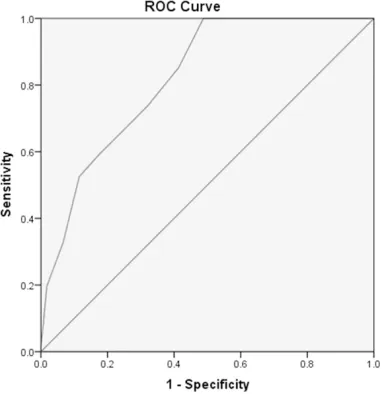
[image:3.612.91.286.446.503.2]to assess the sensitivity and specificity of TRSs for predicting in-hospital mortality (Figure 1). The AUC was 0.820 (P = 0.022). The best TRS cut-off point for predicting in-hospital morta- lity was 3.5 based on the ROC curve and the sensitivity and specificity were 100.0% and 51.2%, respectively. The in-hospital mortalities for STEMI with different TRSs are shown in Figure 2. With the threshold predicted by the ROC curve, 428 patients with TRS ≤3 sur-vived in hospital. Furthermore, the data for patients with TRS ≥3 and ≥4 were analysed using the ROC curve. The best TRS cut-off point for these two groups was 8.5 with AUCs of 0.706 (P = 0.035) and 0.632 (P = 0.044), re- spectively. According to the ROC curve results for TRS, patients were divided into three risk
stratifications (i.e., 0-3 scores, 4-8 scores and 9-14 scores) (Table 1).
[image:4.612.93.523.84.482.2]Univariate logistic regression analysis showed that IABP was significantly associated with lower in-hospital mortality in patients with TRSs between 4 and 8 (OR: 0.326, 95% CI: 0.136-0.786, P = 0.013). However, there was no sig-nificant association between IABP and in-hospi-tal morin-hospi-tality in patients with TRSs of 4-9, 9-14 and 10-14 (P>0.05). In addition to univariate logistic regression analysis, chi-square analysis showed that patients with IABP support had a lower in-hospital mortality (4.3% versus 12.2%, P = 0.011) for TRSs of 4-8. However, there was no significant difference between the two groups with TRSs above 9 (23.9% versus 31.6%, P = 0.566).
Table 3. Baseline characteristics in patients with TIMI risk score 4-8 [n (%), M (QR), X±s]
IABP (n = 161) No IABP (n = 180) P
Male 134 (83.2) 113 (62.8) <0.01
Age (years) 57.6±11.2 63.0±12.6 <0.01
Age >65 years 41 (25.5) 90 (50) <0.01
Cardiovascular disease Risk factors
Hypertension 74 (46.2) 107 (59.4) 0.015
Diabetes 42 (26.2) 57 (32.0) 0.136
Angina 59 (36.9) 13 (7.2) <0.01
Family-CAD history 10 (6.2) 0 (0) <0.01
Smoking 111 (68.9) 98 (54.4) <0.01
Past history
Pre-stroke 7 (4.3) 20 (11.1) 0.026
Peripheral vascular disease 3 (1.9) 1 (0.6) 0.347
Pre-PCI 20 (12.4) 19 (10.6) 0589
Pre-CABG 1 (0.6) 3 (1.7) 0.625
Pre-MI 23 (14.3) 18 (10.0) 0.224
Presentation history
SBP/mmHg 108.8±24.2 115.1±24.9 0.018
SBP<100 mmHg 73 (45.3) 71 (39.4) 0.271
DBP/mmHg 68.1±15.8 71.6±17.1 0.049
HR/bpm 85.2±19.8 76.7±17.5 <0.01
HR>100 bpm 38 (23.6) 20 (11.1) <0.01
Body weight <67 kg 11 (6.8) 21 (11.7) 0.126
Hemoglobin <110 g/L 9 (5.6) 19 (10.6) 0.095
Platelet/109/L 199 (164, 243) 202 (160, 240) 0.510
Serum creatinine/μmol/L 87.2 (74.1, 103.6) 82 (99.0, 67.3) 0.058
EF<35% 25 (15.5) 15 (8.3) 0.044
Killip class II-IV 103 (64.0) 90 (50.0) <0.01
Time from symptom onset to reperfusion >4 hours 94 (58.4) 57 (31.7) <0.01
Length of stay (day) 10 (6, 13) 9 (7, 13) 0.384
Table 2 indicated that more patients were in cardiogenic shock with IABP support (20.5% versus 2.8%, P<0.001) for TRSs of 4-8. On the other hand, there was no significant difference
SBP, heart rate at admission and multivessel disease. The discriminatory capacity of the pro-pensity score was determined by the AUC of the ROC curve. The estimated propensity stratifica-tion analysis for IABP versus no IABP had an AUC of 0.714 (95% CI: 0.657-0.771), indicating adequate discrimination. The odd ratio of mor-tality after stratification by quarters of the pro-pensity score is detailed in Table 5. The posi-tive validity for odds ratio of mortality for IABP therapy versus no IABP therapy was still signifi-cant with adjustment by the propensity stratifi-cation (OR: 0.357, 95% CI: 0.143-0.889, P = 0.027).
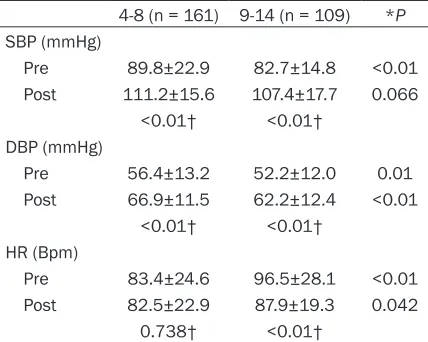
[image:5.612.92.360.96.215.2]Notably, significant differences in hemodynam-ic parameters between groups with TRSs of 4-8 and 9-14 were observed. The patients in the group with a TRS of 9-14 had a lower SBP (P<0.01) and DBP (P = 0.01) and a higher heart rate (P<0.01) before their IABP insertion. Both groups tended toward higher SBP and DBP after their IABP insertion (P<0.01). However, significant differences in the hemodynamic response to IABP therapy between the 2 groups Table 4. Characteristics of angiography and revascularization
treatments in TIMI risk score 4-8
Variable IABP (n = 294) No IABP (n = 604) P Infarction region
Anterior 94 (58.4) 113 (62.8) 0.407
Inferior/Right ventricular 77 (47.8) 70 (38.9) 0.096 Multivessel disease 93 (57.8) 72 (40.0) <0.01 Reperfusion
Thrombolysis 16 (10.0) 13 (7.2) 0.360
Primary PCI 131 (81.4) 115 (63.9) <0.01
ECABG 0 0
[image:5.612.90.360.285.381.2]-TIMI: Thrombolysis in Myocardial Infarction; IABP: Intra-aortic balloon pump; ECABG: Emergency coronary artery bypass grafting.
Table 5. Propensity score stratification analysis IABP vs. no IABP in TIMI risk score 4-8
Strata stratificationsPropensity IABP n/N No IABP n/N P OR 95% CI 1 1.92-2.29 0/21 1/47 0.998 <0.01 -2 2.29-2.50 0/37 1/37 0.998 <0.01 -3 2.50-2.73 1/34 8/39 0.049 0.117 0.014-0.994 4 2.73-3.39 6/58 7/18 0.020 0.212 0.057-0.780 Overall 1.92-3.39 7/150 17/141 0.027 0.357 0.143-0.889
TIMI: Thrombolysis in Myocardial Infarction; n: Number of patients who died; N: Total number of patients in group; OR: Odds ratio.
between the two groups with TRSs above 9 (36.7% versus 15.8%, P = 0.113).
[image:5.612.90.304.450.621.2]Table 3 showed the baseline characteristics of the patients with TRSs of 4-8. Table 4 showed the characteristics of angiogra-phy and revascularisation treat-ments for TRSs of 4-8. Although these patients were classified into the same risk stratification by TRS, their characteristics signifi-cantly differed in a number of baseline, angiography and revas-cularisation treatments. Those in the IABP group were younger and more likely to be male. They more often presented with lower blood pressure, a higher heart rate and a longer time from symptom onset to reperfusion. They were more likely to have multivessel disease. To minimise the influ-ence of bias and confounding, the final propensity score model to predict the likelihood of the use of IABP therapy for patients with TRSs of 4-8 included five inde-pendent predictors, age, gender, Table 6. Pre-IABP and post-IABP hemodynamics
in different TIMI scores
4-8 (n = 161) 9-14 (n = 109) *P SBP (mmHg)
Pre 89.8±22.9 82.7±14.8 <0.01 Post 111.2±15.6 107.4±17.7 0.066
<0.01† <0.01† DBP (mmHg)
Pre 56.4±13.2 52.2±12.0 0.01 Post 66.9±11.5 62.2±12.4 <0.01
<0.01† <0.01† HR (Bpm)
Pre 83.4±24.6 96.5±28.1 <0.01 Post 82.5±22.9 87.9±19.3 0.042
0.738† <0.01†
Table 7. In-hospital balloon-related complications in different TIMI risk scores [n (%)]
The complications 0-3 4-8 9~ P
Aortic dissection 0 0 0
-Systemic embolization 0 1 (0.6) 0 0.664
Critical limb ischemia 0 0 0
-Thrombocytopenia 0 0 7 (6.4) <0.01
Gastrointestinal hemorrhage 0 7 (4.4) 10 (9.2) 0.073 Access-site complication 0 5 (3.1) 7 (6.4) 0.161
IABP failure 0 0 1 (0.9) 0.380
Withdraw IABP due to the complications 0 2 (1.2) 6 (5.5) 0.067
TIMI: Thrombolysis in Myocardial Infarction.
could be observed. S/DBP after IABP insertion was significantly higher in the group with TRSs of 4-8 (P<0.01). However, a higher heart rate after IABP insertion was found in the group with TRSs of 9-14 (P = 0.042) (Table 6).
The most frequently observed complications were thrombocytopenia, access-site complica-tions and gastrointestinal haemorrhaging. There was a trend towards a higher incidence of complications in patients with a TRS above 9 (P<0.05). No episodes of aortic dissection or critical limb ischaemia attributed to IABP coun-terpulsation were noted among the groups (Table 7).
Discussion
IABP support is used as the first-line treatment in AMI, with the goal of providing temporary mechanical support and allowing time for myo-cardial recovery. However, this therapy is often incapable of overcoming hemodynamic com-promise in severe refractory CS and data on the usefulness of IABPs in STEMI are conflicting [14, 15].
The published data of IABP-SHOCK II trial [16] failed to show an in-hospital mortality benefit. The study resulted in a downgrading of the use of IABP in post-infarction CS patients by certain professional organisations, such as the European Society of Cardiology (ESC) and the American Heart Association [17, 18]. The Counterpulsation to Reduce Infarct Size Pre-PCI-Acute Myocardial Infarction (CRISP AMI) trial [19] did not demonstrate any significant reduction of the infarct size in patients treated with IABP. In line with the ESC guidelines, the routine application of IABP for STEMI patients
IABP therapy in TRS is unbalanced. Among the 428 patients whose TRSs were ≤3, only 23 (5.4%) patients used IABP while 405 (94.6%) patients did not. No patient died in this risk stratification. Although most of the patients were not supported by IABP, the prognosis of these patients was expected to be good. However, among the 128 patients whose TRSs were ≥9, 109 patients (85.2%) received IABP therapy. The mortality of patients with IABP support versus those without was 23.9% ver-sus 31.6% in this risk stratification (P>0.05). In general, patients who received IABP therapy had more frequent high-risk features and a higher TRS (Figure 2). This is representative of the real world situation, with cardiologists pref-erentially giving IABP support to patients with a poorer hemodynamic status. It is difficult to deny patients aggressive treatment with IABP, even if their prognosis is extremely bleak. However, IABP is not significantly associated with in-hospital mortality in patients with TRSs of 9-14 (OR: 0.679, 95% CI: 0.234-1.965, P = 0.475). Most of these patients may have had more progressive end-organ dysfunction and impaired heart function. Consequently, these critically ill patients may still have a poor prog-nosis despite the use of intensive and multifac-eted therapy, including IABP support [21]. TRSs may be useful in selecting patients for IABP support. Based on our findings, the se- lection of patients for IABP insertion before cir-culatory collapse can improve the in-hospital survival rate. The mortality of patients with and without IABP support was 4.3% versus 12.2% for TRSs of 4-8 (P = 0.011). Univariate logistic regression showed that IABP therapy was associated with lower in-hospital mortality in patients with TRSs of 4-8 (OR: 0.326, 95% CI: without CS is not recommended [17]. There remains an ongoing debate about the use of IABP in high-risk STEMI patients who develop hemodynamic instabili-ty, suggesting that the timing of initiation of IABP therapy could be of great importance [20]. Our study aimed to investigate the efficiency of IABP for STEMI patients, according to different severities classified by TRS.
0.136-0.786, P = 0.013). The association be- tween IABP and in-hospital mortality was still significant, with adjustment by the propensity stratification model for patients with TRSs of 4-8 (Table 5).
The results showed a much higher revasculari-sation rate in patients with IABP support than in the no IABP group. Consistent with the results of previous studies [22, 23], this work shows that the widespread use of primary PCI as reperfusion therapy may reduce mortality fol-lowing STEMI. Previous studies have shown that the short-term outcome for STEMI patients supported with IABP is influenced by the reper-fusion method. In recent years, many clinical trials have shown that reperfusion therapy [24-27], especially primary PCI, is superior to con-servative treatment for improving left ventricu-lar function, reducing the in-hospital mortality of patients with STEMI. This suggests that IABP may be a more effective therapy modality when it is associated with effective revascularisation. Without an effective reperfusion therapy to reduce the amount of myocardium at risk of irreversible damage, short-term salvage strate-gies such as IABP may not affect mortality. Therefore, it is of extreme importance for patients with STEMI to receive timely and effec-tive reperfusion therapy, which includes either thrombolysis or PCI.
It is noteworthy that there were significant differences in vital signs, including blood pre- ssure and heart rate response, between IABP patients with TRSs of 4-8 and those with TRSs of ≥9. In the group with TRSs ≥9, there was less of an increase in diastolic blood pressure after IABP insertion. Considering the role of dia-stolic blood pressure influencing the perfusion of the coronary artery, this mild augmentation diastolic blood pressure may be correlated with poor in-hospital prognosis [28]. Although heart rates decreased to some extent in the group with TRSs ≥9, during IABP support the magni-tude of the heart rate in this group was still compromised compared to patients with TRSs of 4-8. Although temporal improvements in hemodynamic parameters such as blood pres-sure and heart rate were observed, IABP can-not improve the circulatory collapse status for patients whose cardiac function is already se- verely damaged. Meanwhile, previous studies have shown that patients whose hemodynamic
parameters responded significantly to IABP may receive benefits from IABP therapy, improv-ing their short-term survival [29].
Our study has several limitations. First, this was a retrospective study, with the shortcomings common to this approach. Second, data regard-ing angiographic results of primary PCI were not available for all patients. Third, the results might be attributable to some imbalances between the groups. According to the data pre-sented in Table 3, a treatment selection bias is likely to be present in in patients with TRSs of 4-8, younger patients with multivessel diseas-es and deprdiseas-essed EF receiving more frequently IABP and PCI. Despite the refined results of the risk stratification according to TRS and propen-sity stratification analysis, it remains important to note that the study could still have been sub-ject to residual confounding and bias. We did not have adequate patients to bring more clini-cal characteristics into the propensity score model as predictors of the likelihood of the use of IABP therapy. In addition, there remained an imbalance in the distribution of patient support by IABP in TRS, especially among those patients with TRS scores of ≤3 and ≥9. If more patients in these two risk stratifications were involved in our study, a more convincing result may have been achieved.
IABP may reduce in-hospital mortality among STEMI patients with TRSs of 4-8. Patients with TRSs ≥9 may still have a poor prognosis, despite the use of intensive and multifaceted therapy, including IABP. Patients with TRSs of 4-8 may have more significant responses to IABP than patients with TRSs ≥9.
Acknowledgements
We specially thank Ms. Weihong He and Mr. Li Sheng for their contribution to the study.
Disclosure of conflict of interest
None.
Address correspondence to: Dr. Wenxian Liu, De- partment of Cardiology, Beijing Anzhen Hospital,
Capital Medical University, Beijing Institute of Heart,
References
[1] Lozano R, Naghavi M, Foreman K, Lim S, Shibuya K, Aboyans V, Abraham J, Adair T, Aggarwal R, Ahn SY, Alvarado M, Anderson HR, Anderson LM, Andrews KG, Atkinson C, Baddour LM, Barker-Collo S, Bartels DH, Bell ML, Benjamin EJ, Bennett D, Bhalla K, Bikbov B, Bin Abdulhak A, Birbeck G, Blyth F, Bolliger I, Boufous S, Bucello C, Burch M, Burney P, Carapetis J, Chen H, Chou D, Chugh SS, Coffeng LE, Colan SD, Colquhoun S, Colson KE, Condon J, Connor MD, Cooper LT, Corriere M, Cortinovis M, de Vaccaro KC, Couser W, Cowie BC, Criqui MH, Cross M, Dabhadkar KC, Dahodwala N, De Leo D, Degenhardt L, Delossantos A, Denenberg J, Des Jarlais DC, Dharmaratne SD, Dorsey ER, Driscoll T, Duber H, Ebel B, Erwin PJ, Espindola P, Ezzati M, Feigin V, Flaxman AD, Forouzanfar MH, Fowkes FG, Franklin R, Fransen M, Freeman MK, Gabriel SE, Gakidou E, Gaspari F, Gillum RF, Gonzalez-Medina D, Halasa YA, Haring D, Harrison JE, Havmoeller R, Hay RJ, Hoen B, Hotez PJ, Hoy D, Jacobsen KH, James SL, Jasrasaria R, Jayaraman S, Johns N, Karthikeyan G, Kassebaum N, Keren A, Khoo JP, Knowlton LM, Kobusingye O, Koranteng A, Krishnamurthi R, Lipnick M, Lipshultz SE, Ohno SL, Mabweijano J, MacIntyre MF, Mallinger L, March L, Marks GB, Marks R, Matsumori A, Matzopoulos R, Mayosi BM, McAnulty JH, McDermott MM, McGrath J, Mensah GA, Merriman TR, Michaud C, Miller M, Miller TR, Mock C, Mocumbi AO, Mokdad AA, Moran A, Mulholland K, Nair MN, Naldi L, Narayan KM, Nasseri K, Norman P, O’Donnell M, Omer SB, Ortblad K, Osborne R, Ozgediz D, Pahari B, Pandian JD, Rivero AP, Padilla RP, Perez-Ruiz F, Perico N, Phillips D, Pierce K, Pope CA 3rd, Porrini E, Pourmalek F, Raju M, Ranganathan D, Rehm JT, Rein DB, Remuzzi G, Rivara FP, Roberts T, De León FR, Rosenfeld LC, Rushton L, Sacco RL, Salomon JA, Sampson
U, Sanman E, Schwebel DC, Segui-Gomez
M, Shepard DS, Singh D, Singleton J, Sliwa K, Smith E, Steer A, Taylor JA, Thomas B,
Tleyjeh IM, Towbin JA, Truelsen T, Undurraga
EA, Venketasubramanian N, Vijayakumar L, Vos T, Wagner GR, Wang M, Wang W, Watt K, Weinstock MA, Weintraub R, Wilkinson JD, Woolf AD, Wulf S, Yeh PH, Yip P, Zabetian A, Zheng ZJ, Lopez AD, Murray CJ, AlMazroa MA, Memish ZA. Global and regional mor- tality from 235 causes of death for 20 age groups in 1990 and 2010: a systematic analy-sis for the Global Burden of Disease Study 2010. Lancet 2012; 380: 2095-128.
[2] Terkelsen CJ. Time to treatment-door-to-bal-loon time is not everything. Herz 2014; 39: 672-6.
[3] Kolte D, Khera S, Aronow WS, Mujib M, Palaniswamy C, Sule S, Jain D, Gotsis W, Ahmed A, Frishman WH, Fonarow GC. Trends in incidence, management, and outcomes of car-diogenic shock complicating ST-elevation
myo-cardial infarction in the United States. J Am
Heart Assoc 2014; 3: e000590.
[4] Goldberg RJ, Spencer FA, Gore JM, Lessard D, Yarzebski J. Thirty-year trends (1975 to 2005) in the magnitude of, management of, and hospital death rates associated with cardio-genic shock in patients with acute myocar- dial infarction: a population-based perspec-tive. Circulation 2009; 119: 1211-9.
[5] Papaioannou TG, Stefanadis C. Basic princi-ples of the intraaortic balloon pump and mech-anisms affecting its performance. ASAIO J 2005; 51: 296-300.
[6] De Silva K, Lumley M, Kailey B, Alastruey J, Guilcher A, Asrress KN, Plein S, Marber M, Redwood S, Perera D. Coronary and micro- vascular physiology during intra-aortic bal- loon counterpulsation. JACC Cardiovasc Interv 2014; 7: 631-40.
[7] Morrow DA, Antman EM, Parsons L, de Lemos JA, Cannon CP, Giugliano RP, McCabe CH, Barron HV, Braunwald E. Application of the TIMI risk score for ST-elevation MI in the National Registry of Myocardial Infarction 3. JAMA 2001; 286: 1356-9.
[8] Allahwala UK, Tang J, Murphy JC, Nelson GI,
Bhindi R. Thrombolysis in myocardial infarction (TIMI) risk score remains relevant in the era
of field triage of patients with ST elevation myo -cardial infarction treated with primary per- cutaneous coronary intervention. Int J Cardiol 2013; 166: 255-7.
[9] Windecker S, Kolh P, Alfonso F, Collet JP, Cremer J, Falk V, Filippatos G, Hamm C, Head SJ, Jüni P, Kappetein AP, Kastrati A, Knuuti
J, Landmesser U, Laufer G, Neumann FJ, Richter DJ, Schauerte P, Sousa Uva M, Stefanini
GG, Taggart DP, Torracca L, Valgimigli M, Wijns W, Witkowski A. 2014 ESC/EACTS Guide- lines on myocardial revascularization: The Task Force on Myocardial Revascularization of the European Society of Cardiology (ESC) and the European Association for Cardio-Thoracic Surgery (EACTS) Developed with the special contribution of the European Asso- ciation of Percutaneous Cardiovascular Inter- ventions (EAPCI). Eur Heart J 2014; 35: 2541-619.
[10] Thygesen K, Alpert JS, Jaffe AS, Simoons ML, Chaitman BR, White HD; Writing Group on the Joint ESC/ACCF/AHA/WHF Task Force for the
Universal Definitionof Myocardial Infarction,
Chaitman BA, Clemmensen PM, Johanson P,
Hod H, Underwood R, Bax JJ, Bonow RO, Pinto
F, Gibbons RJ, Fox KA, Atar D, Newby LK,
Galvani M, Hamm CW, Uretsky BF, Steg PG,
Wijns W, Bassand JP, Menasché P, Ravkilde J, Ohman EM, Antman EM, Wallentin LC, Armstrong PW, Simoons ML, Januzzi JL, Nieminen MS, Gheorghiade M, Filippatos G, Luepker RV, Fortmann SP, Rosamond WD, Levy D, Wood D, Smith SC, Hu D, Lopez-Sendon JL, Robertson RM, Weaver D, Tendera M, Bove AA, Parkhomenko AN, Vasilieva EJ, Mendis S; ESC Committee for Practice Guidelines (CPG). Third
universal definition of myocardial infarction.
Eur Heart J 2012; 33: 2551-67.
[11] Morrow DA, Antman EM, Parsons L, de Lemos JA, Cannon CP, Giugliano RP, McCabe CH, Barron HV, Braunwald E. Application of the TIMI risk score for ST-elevation MI in the National Registry of Myocardial Infarction 3. JAMA 2001; 286: 1356-9.
[12] Thiele H, Allam B, Chatellier G, Schuler G, Lafont A. Shock in acute myocardial infarction: the Cape Horn for trials. Eur Heart J 2010; 31: 1828-35.
[13] Perera D, Stables R, Thomas M, Booth J, Pitt M, Blackman D, de Belder A, Redwood S; BCIS-1 Investigators. Elective intra-aortic balloon counterpulsation during high-risk percutane-ous coronary intervention: a randomized con-trolled trial. JAMA 2010; 304: 867-74.
[14] Thiele H, Schuler G. Cardiogenic shock: to pump or not to pump. Eur Heart J 2009; 30: 389-90.
[15] Sjauw KD, Engstrom AE, Vis MM, Boom W, Baan J Jr, de Winter RJ, Tijssen JG, Piek JJ,
Henriques JP. Efficacy and timing of intra-aor -tic counterpulsation in patients with ST-elevation myocardial infarction complicated by cardiogenic shock. Neth Heart J 2012; 20: 402-9.
[16] Thiele H, Zeymer U, Neumann FJ, Ferenc M,
Olbrich HG, Hausleiter J, Richardt G, Hennersdorf M, Empen K, Fuernau G, Desch S, Eitel I, Hambrecht R, Fuhrmann J, Böhm M, Ebelt H, Schneider S, Schuler G, Werdan K; IABP-SHOCK II Trial Investigators. Intraaortic balloon support for myocardial infarction with cardiogenic shock. N Engl J Med 2012; 367: 1287-96.
[17] Task Force on the management of ST-segment elevation acute myocardial infarction of the European Society of Cardiology (ESC), Steg PG, James SK, Atar D, Badano LP, Blömstrom-Lundqvist C, Borger MA, Di Mario C, Dickstein K, Ducrocq G, Fernandez-Aviles F, Gershlick AH, Giannuzzi P, Halvorsen S, Huber K, Juni P, Kastrati A, Knuuti J, Lenzen MJ, Mahaffey KW, Valgimigli M, van ‘t Hof A, Widimsky P, Zahger
D. ESC Guidelines for the management of acute myocardial infarction in patients pre-senting with ST-segment elevation. Eur Heart J 2012; 33: 2569-619.
[18] American College of Emergency Physicians; Society for Cardiovascular Angiography and Interventions, O’Gara PT, Kushner FG, Ascheim DD, Casey DE Jr, Chung MK, de Lemos JA, Ettinger SM, Fang JC, Fesmire FM, Franklin BA, Granger CB, Krumholz HM, Linderbaum JA, Morrow DA, Newby LK, Ornato JP, Ou N, Radford MJ, Tamis-Holland JE, Tommaso CL, Tracy CM, Woo YJ, Zhao DX, Anderson JL, Jacobs AK, Halperin JL, Albert NM, Brindis RG, Creager MA, DeMets D, Guyton RA, Hochman JS, Kovacs RJ, Kushner FG, Ohman EM, Stevenson WG, Yancy CW. 2013 ACCF/AHA guideline for the management of ST-elevation myocar- dial infarction: a report of the American Coll- ege of Cardiology Foundation/American Heart Association Task Force on Practice Guidelines. J Am Coll Cardiol 2013; 61: e78-140.
[19] Patel MR, Smalling RW, Thiele H, Barnhart HX, Zhou Y, Chandra P, Chew D, Cohen M, French J, Perera D, Ohman EM. Intra-aortic balloon counterpulsation and infarct size in patients with acute anterior myocardial infarction with-out shock: the CRISP AMI randomized trial. JAMA 2011; 306: 1329-37.
[20] Bergh N, Angeras O, Albertsson P, Dworeck C, Matejka G, Haraldsson I, Ioanes D, Libungan B, Odenstedt J, Petursson P, Ridderstråle W, Råmunddal T, Omerovic E. Does the timing of treatment with intra-aortic balloon counterpul-sation in cardiogenic shock due to ST-elevation myocardial infarction affect survival. Acute Card Care 2014; 16: 57-62.
[21] Aggarwal B, Ellis SG, Lincoff AM, Kapadia SR, Cacchione J, Raymond RE, Cho L, Bajzer C, Nair R, Franco I, Simpfendorfer C, Tuzcu EM, Whitlow PL, Shishehbor MH. Cause of death within 30 days of percutaneous coronary inter-vention in an era of mandatory outcome re-porting. J Am Coll Cardiol 2013; 62: 409-15. [22] Boersma E. Does time matter? A pooled
analy-sis of randomized clinical trials comparing pri-mary percutaneous coronary intervention and
in-hospital fibrinolysis in acute myocardial in -farction patients. Eur Heart J 2006; 27: 779-88.
[23] Stenestrand U, Lindback J, Wallentin L.
Long-term outcome of primary percutaneous coro-nary intervention vs prehospital and in-hospi-tal thrombolysis for patients with ST-elevation myocardial infarction. JAMA 2006; 296: 1749-56.
[24] Hennekens CH. Thrombolytic therapy: pre- and
post-GISSI-2, ISIS-3, and GUSTO-1. Clin Cardiol
[25] Romeo F, Acconcia MC, Sergi D, Romeo A, Muscoli S, Valente S, Gensini GF, Chiarotti F, Caretta Q. The outcome of intra-aortic balloon pump support in acute myocardial infarction complicated by cardiogenic shock according to the type of revascularization: a comprehensive meta-analysis. Am Heart J 2013; 165: 679-92. [26] Sjauw KD, Engstrom AE, Vis MM, van der
Schaaf RJ, Baan J Jr, Koch KT, de Winter RJ, Piek JJ, Tijssen JG, Henriques JP. A systematic review and meta-analysis of intra-aortic bal-loon pump therapy in ST-elevation myocardial infarction: should we change the guidelines. Eur Heart J 2009; 30: 459-68.
[27] Gershlick AH, Banning AP, Myat A, Verheugt FW, Gersh BJ. Reperfusion therapy for STEMI: is there still a role for thrombolysis in the era of primary percutaneous coronary intervention. Lancet 2013; 382: 624-32.
[28] Shiraishi J, Kohno Y, Sawada T, Hashimoto S, Ito D, Kimura M, Matsui A, Yokoi H, Arihara M, Irie H, Hyogo M, Shima T, Nakamura T, Matoba S, Yamada H, Matsumuro A, Shiraya- ma T, Kitamura M, Furukawa K, Matsubara H. Prognostic impact of pulse pressure at admis-sion on in-hospital outcome after primary percutaneous coronary intervention for acute myocardial infarction. Heart Vessels 2013; 28: 434-41.
[29] Prondzinsky R, Unverzagt S, Russ M, Lemm H, Swyter M, Wegener N, Buerke U, Raaz U,

![Table 3. Baseline characteristics in patients with TIMI risk score 4-8 [n (%), M (QR), X±s]](https://thumb-us.123doks.com/thumbv2/123dok_us/1448009.682218/4.612.93.523.84.482/table-baseline-characteristics-patients-timi-risk-score-qr.webp)
![Table 7. In-hospital balloon-related complications in different TIMI risk scores [n (%)]](https://thumb-us.123doks.com/thumbv2/123dok_us/1448009.682218/6.612.94.364.97.218/table-hospital-balloon-related-complications-different-timi-scores.webp)