Rowan University Rowan University
Rowan Digital Works
Rowan Digital Works
Theses and Dissertations6-1-2017
Fire safety training using video modeling in young children with
Fire safety training using video modeling in young children with
Autism Spectrum Disorder
Autism Spectrum Disorder
Amy MorganRowan University
Follow this and additional works at: https://rdw.rowan.edu/etd
Part of the Early Childhood Education Commons, and the Special Education and Teaching Commons
Let us know how access to this document benefits you -
share your thoughts on our feedback form.
Recommended Citation Recommended Citation
Morgan, Amy, "Fire safety training using video modeling in young children with Autism Spectrum Disorder" (2017). Theses and Dissertations. 2424.
https://rdw.rowan.edu/etd/2424
This Thesis is brought to you for free and open access by Rowan Digital Works. It has been accepted for inclusion in Theses and Dissertations by an authorized administrator of Rowan Digital Works. For more information, please contact [email protected].
FIRE SAFETY TRAINING USING VIDEO MODELING IN YOUNG CHILDREN WITH AUTISM SPECTRUM DISORDER
by Amy L. Morgan
A Thesis
Submitted to the
Department of Educational Services and Leadership College of Education
In partial fulfillment of the requirement For the degree of
Master of Arts in School Psychology at
Rowan University April 7th, 2017
Dedications
I would like to dedicate this manuscript to my mother and grandmother, Lynn Maurer and Ruth MacDonald.
iv
Acknowledgements
First and foremost I would like to thank my advisors Dr. Carmelo Callueng and Dr. Roberta Dihoff. I would also like to thank my family and friends for their continuous supports during my academic career.
v
Abstract
Amy L. Morgan
FIRESAFETYTRAININGUSINGVIDEOMODELINGINYOUNGCHILDREN
WITHAUTISMSPECTRUMDISORDER
2016-2017
Dr. Carmelo Callueng, Ph.D. Master of Arts in School Psychology
Studies on children with autism spectrum disorder (ASD) show limited research on topics involving safety, especially those that relate to fire evacuation procedures. Current research provides minimal information for understanding and practicing fire safety procedures. This topic requires more research to ensure that these children are able to understand and follow safety procedures during a fire to prevent and reduce injury and death. The research questions advanced in the study were: 1) Is video modeling an effective approach for teaching fire safety skills to children with ASD? 2) Does the teaching approach result in generalization of fire safety skills in novel settings? 3) Does the teaching approach result in maintenance of fire safety skills at least two weeks after termination of training? The participants were three young children aged three to five years diagnosed with ASD from a private preschool and kindergarten in New Jersey. Each child completed a training series that comprised of a video model displaying an evacuation procedure to teach fire safety at the sound of an alarm. Skill maintenance was assessed two weeks after teaching. Generalization occurred during a school wide
mandated fire drill. Findings indicated that video modeling is a highly effective approach for teaching children with ASD fire safety skills. The current study also found that
children with ASD were able to generalize skills learned in novel settings and retain skills two weeks after training discontinued.
vi
Table of Contents
Abstract ...v
List of Figures ...viii
List of Tables ...ix
Chapter 1: The Problem ...1
Purpose of the Study ...3
Research Questions ...3
Hypotheses ...3
Significance of the Study ...4
Limitations ...4
Assumptions ...5
Definitions of Terms ...5
Overview of the Study ...6
Chapter 2: Review of Literature ...7
Criteria for Autism Spectrum Disorder...7
Fire Safety Concerns for Children ...11
Teaching Strategies for Children with ASD ...14
Social Learning Theory...17
Video Modeling for Children with ASD and Other Disabilities ...18
Video Modeling Generalized in Novel Settings ...21
Video Modeling Skill Maintenance ...22
Synthesis ...22
vii
Table of Contents (Continued)
Setting and Participants...25
Dependent Variable and Outcome Measure ...26
Intervention: Independent Variable ...27
Design and Procedure ...27
Consent to Participate ...28 Data Analysis ...28 Chapter 4: Results ...30 Child A ...30 Child B ...31 Child C ...33 Aggregated Results ...35
Chapter 5: Discussion, Conclusion, Recommendations ...37
Discussion ...37
Conclusion ...39
Recommendations ...40
viii
List of Figures
Figure Page
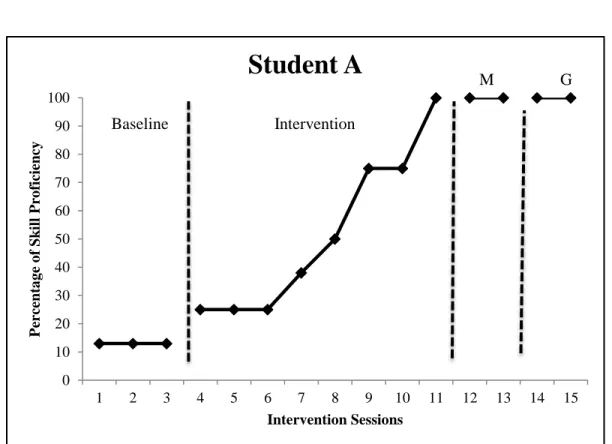
Figure 1. Student A percentage of skill proficiency across intervention sessions ...31
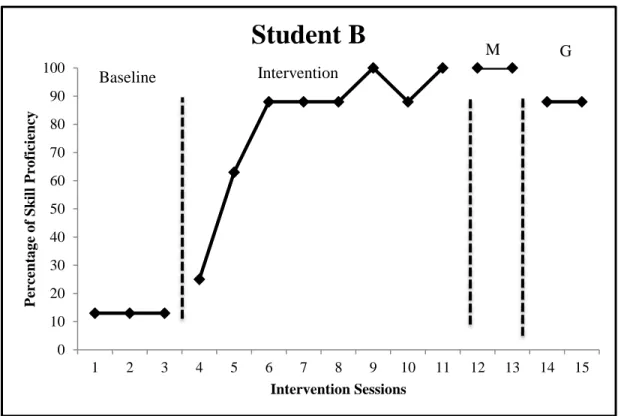
Figure 2. Student B percentage of skill proficiency across intervention sessions ...33
ix
List of Tables
Table Page
Table 1. Participant Characteristics ...26 Table 2. Mean of Percent Skill Accuracy of Participants Across Intervention Phases ...36
1
Chapter 1 The Problem
Autism Spectrum Disorder (ASD) is a bio-neurological developmental disability with a prevalence rate of two to five cases per 10,000 individuals (American Psychiatric Association, 2013). According to the Diagnostic and Statistical Manual of Mental Disorders (2013), ASD encompasses a group of disorders that can significantly impact behavior, communication, and social functioning. Individuals diagnosed with ASD exhibit abnormal or impaired development in social interaction, language,
communication, and show a limited amount of activity and interests. ASD symptoms can become apparent around the age of three; however, symptoms across individuals can vary greatly. People with ASD show significant learning deficits such as difficulties to
discriminate, generalize, and understand certain situations (American Psychiatric Association, 2013).
Symptoms of ASD can be managed and treated using a variety of resources and techniques. According to the National Autism Association (2016), behavioral
modification techniques are the most preferred ways to treat the signs and symptoms of ASD. Applied behavior analysis (ABA) is currently known to be the preferred method of treatment for ASD (Ross, 2007). ABA is a systematic, analytic, and technological
method. This field of study is a scientifically validated method to understanding behavior and its relation to the environment. ABA uses discrete trial training (DTT), a teaching method for those diagnosed with ASD. DTT is structured, repetitive, and encompasses learning opportunities that involve an antecedent, the learner’s response, and a
consequence (Lang, Hancock, & Singh, 2016). This method focuses on how learning takes place by using various techniques to evaluate and change behavior (Matson, 2009).
2
According to Mouridsen, Bronnum-Hansen, Rich, & Isager (2008) rates of
mortality of those with ASD are twice as high compared to the general population. Safety is a major concern for all typically developing children; more so, for children with ASD due to their deficits in understanding and acting appropriately during difficult and life threatening situations. For example, in a recent incident, a six-year-old child with ASD who was found hiding in a closet eventually died after suffering from severe burns from a fire that occurred in the child’s home (Gatlin, 2016). This child, and other children in similar life threatening situations, could have been helped if equipped with fire safety skills. Fire safety skills can be defined as recognizing a fire alarm sound, telling an adult that there is a fire or alarm going off, exiting a building when an alarm sounds, and staying away from a building that has a fire alarm going off. Children may not know the potential dangers that fire can cause. It is important that they are aware and understand the necessary precautions and steps to take in the event of a fire. McConnell, Leeming, and Dwyer (1996) found significantly greater knowledge gains in young typically developing children after teaching a safety-training program evaluating a pretest to posttest questionnaire.
There are many strategies utilized in teaching children with autism. Many of these methods focus on using concrete and visual cues to help increase acquisition of skills. Some of these strategies include DTT, modeling, and role-playing. Modeling is an important teaching method for people with ASD. Modeling allows the learner to observe the desired behavior before teaching occurs in order to enhance the chances of
acquisition. According to Matson (2009) video modeling is one method of instruction where a target behavior is observed and learned through demonstration through a video
3
clip. Video modeling can be used to teach social, self-help, academic, incidental, and basic skills. Matson (2009) states, “many learners with autism may attend better to a model presented in a video clip than they would to a live model demonstrating the skill” (pg. 132). The goal of this type of teaching is to have the learner observe a model of the desired behavior that is as realistic as possible. Children with autism have a greater chance at learning a desired skill or target response when they are taught realistic scenarios that are similar to the natural environment (Spivey and Mechling, 2016).
Purpose of the Study
The purpose of the study was to examine the effectiveness of video modeling in teaching fire safety skills to young children with autism spectrum disorder (ASD).
Research Questions
This study aimed to answer the following questions:
1. Is video modeling an effective approach for teaching fire safety skills to children with ASD?
2. Does the teaching approach result in maintenance of fire safety skills at least two weeks after termination of training?
3. Does the teaching approach result in generalization of fire safety skills in novel settings?
Hypotheses
Based on the purpose and research questions previously stated, the following hypotheses were formulated:
1. Video modeling is an effective approach for teaching fire safety skills to children with ASD.
4
2. Fire safety skills of children with ASD can be maintained at least two weeks after termination of video modeling training.
3. Fire safety skills of children with ASD learned through video modeling can be generalized in novel settings.
Significance of the Study
The current study is an important addition to empirical knowledge on fire safety for young children with ASD. Specifically, this study provides practical and simple procedures in developing a specific fire safety plan using video modeling to teach children with ASD in a school environment and other settings (e.g., home) where children can generalize and maintain their fire safety skills.
The findings of this study may be valuable to families and other agencies that provide services for young children with ASD. Parents and professionals can effectively collaborate in using video modeling technique in teaching fire safety skills to children with ASD and those with similar developmental disabilities. It is also possible to use a video modeling technique to teach adults with intellectual disabilities in various residential settings.
Limitations
A limitation of this study was that all three subjects were males and thus, results may not be applicable to young female children with ASD. Another limitation was that the three subjects were recruited from one school environment. Hence, findings of this study may not be applicable to children with ASD from diverse backgrounds as well as from other settings.
5
Assumptions
This study has the following assumptions:
1. Exiting procedure of a building can be considered as a good and realistic situation to teach fire safety skills to children with ASD using video modeling.
2. The children that participated in the study were mentally and physically capable of completing the fire safety program introduced in this study. 3. The subjects will be taught through video modeling with the assumption
that they have had no prior information or instruction on fire safety. 4. The behavioral indicators fire safety skills used in this study were
assumed to be specific, accurate, and measurable.
Definitions of Terms
1. Autism. A disorder where individuals cannot process the importance and purpose of a fire alarm sound without instructional teaching.
2. Discrete trial training (DTT). DTT is a teaching method for children with autism. DTT is a process where the learners are receiving massed trial
instruction, reinforcement for correct behaviors, and established contingencies and repetition to teach new skills (Lang, et al., 2016). In this study, the
researcher used video modeling in a DTT setting to teach children with ASD fire safety skills.
3. Fire safety skills. The fire safety skills are the dependent variable of this study. These skills can be defined as actions where the subjects can exit the building in the case of a fire or fire drill.
6
4. Video modeling. A form of observational learning where desired behaviors are learned by watching a video demonstration (Spivey and Mechling, 2016). The child is instructed to imitate what he or she observed in the model. In this study, video modeling is operationally defined in terms of children with ASD watching a video demonstration of learning fire safety skills.
5. Fixed ratio reinforcement schedule. A form of reinforcement schedule that allows the participants to be reinforced at the same number of times the target behavior occurs (Kearney, 2015). In this study, the participants were offered a preferred activity or item after the successful completion of all fire safety steps.
Overview of the Study
Chapter 2 provides a review of literature relevant to the criteria for Autism Spectrum Disorder (ASD), fire safety concerns for children, teaching strategies for children with ASD, and a description of Social Learning Theory. Chapter 2 also includes research regarding video modeling as a teaching strategy for children with ASD and other disabilities, video modeling generalized in novel settings, video modeling skill
maintenance, and a synthesis of prior studies.
Chapter 3 describes the methodology and procedures used in this study in terms of setting and participants, the dependent variable outcome measure, a description of the independent variable, the design and procedure, the subjects’ consent to participate, and the process for analyzing data. Chapter 4 reports the findings of the study presented in tables and figures including their interpretations. Finally, Chapter 5 provides a discussion of the salient findings, implications, and recommendations for future research.
7
Chapter 2 Review of Literature Criteria for Autism Spectrum Disorder
The diagnostic features of autism spectrum disorder (ASD) include abnormal or impaired development in social situations, communication, and having limited collections of interests and/or activities. ASD is characterized as a spectrum disorder because the symptoms exist on a continuum from mild to severe. For example, some children may have adequate communication skills, but are severely impaired in developing social relationships. A mild impairment in one category does not reflect the impairment or ability in other areas. By definition, symptoms of ASD can appear before the age of three and become more prevalent over time (American Psychological Association, 2013). During infancy, manifestations of this disorder are more difficult to detect than those seen after the age of two. Symptoms include deficits in social, emotional, language, and/or motor development.
Impairments of social interaction can include verbal and nonverbal gestures. Specifically, the child may have the inability to understand or recognize the verbal and nonverbal gestures of others. Individuals with this disorder may also have nonverbal impairments in the areas of eye contact, facial expressions, and body postures.
Establishing peer relations is another area in which children with ASD may have deficits. Appropriate peer relationships can be difficult to establish, and social
conventions may be misunderstood at later ages. Individuals with ASD may also lack social or emotional reciprocity abilities, he or she may not engage or seek engagement of others in activities. ASD also constitutes an impaired awareness of the needs and desires
8
of others (American Psychiatric Association, 2013). Symptoms of ASD can vary greatly, and each manifestation of this disorder will depend on the chronological age and
developmental level of the child.
In addition, Communication impairments are a common indicator of ASD. These limitations can include both verbal and nonverbal skills. For example, a child with ASD canhave a delay or a complete lack of development in spoken language. Those who have some language difficulties initiating and/or sustaining conversation at appropriate age levels, or use repetitive or idiosyncratic language. Further, communication difficulties could cause disturbances in social and imitative play among peers. Children with ASD do not always interact or play appropriately compared to their peers within the same age range. A child maynot be able to engage in play areas that involve pretending, and imitating others. Children with this disorder have difficulties interacting in socially acceptable ways. Other communication issues include failure or limited ability in forming, comprehending, and repeating language (American Psychiatric Association, 2013). Communication impairments can be observed in various forms such as language use, facial expressions, and eye contact ability. However, these behaviors can initially be difficult to identity in young children, since communication and language skills are still developing. Typically developing children have age ranges at which they acquire skills and mature in different stages. For example, a child that is between the ages of six months and a year old should be able to distinguish objects by touch, begin babbling that resembles speech, and enjoy simple social games (Keenan, Evans, & Crowley, 2016).
In addition, individuals with ASD possess restricted, repetitive, and stereotypical behaviors in interests and activities. Stereotypical behaviors include body movements
9
such as clapping, whole body rocking, flicking, flapping of arms, and other repetitive movements. These behaviors are displayed in a recurring nature, and can be observed at any time. These types of stereotypical behaviors are not always socially appropriate to others. Individuals mayhave abnormalities of posture such as walking on tiptoe and or odd hand movements. They can also have a fixation on specific movements such as spinning wheels, or opening and closing doors. Some individuals insist on routine schedules and show a preoccupation on a limited number of preferred activities (American Psychiatric Association, 2013). Stereotypical and repetitive behaviors can range from subtle to very apparent. Depending on the behavior and its severity,
redirection methods or a behavior management procedure is used. However, a number of people with ASD discontinue the behavior on their own within a certain amount of time. Certain behaviors may last longer or be more frequent than others, although each case varies. Moreover, is also common for those with ASD to have more than one
stereotypical or repetitive behavior.
Taken together, social emotional, language, and or motor development
impairments are the main components for an ASD diagnosis. For a formal diagnosis, the DSM-V requires impairments in the following areas: communication, social interaction, and repetitive or stereotyped behavior (American Psychiatric Association, 2013). The first requirement involves two manifestations in at least one of the following areas: impairments of multiple nonverbal behaviors (eye contact, facial expression, body postures, and gestures to regulate social interaction), inability to develop peer
relationships at an developmentally age appropriate level, lack of joint attention to share enjoyment, interest, or achievements with others, or an absence of social or emotional
10
reciprocity. Joint attention is the act of seeking another’s focus towards an object or activity. This type of attention is achieved with the use of eye gazing or other gestural prompts such as pointing.
The second requirement addresses deficits in communication that must be evident in at least one of the following areas: a delay or absence of development in spoken language (not accompanied by an effort to compensate through alternative modes of communication), impairment in the ability to initiate or continue conversation with others (in persons with sufficient speech), stereotypical or repetitive use of language or
idiosyncratic language, or an inability to provide varied, spontaneous, pretend or social imitative play that is developmentally appropriate (American Psychological Association, 2013).
The third requirement relates to restricted, repetitive, and stereotypical patterns of behaviors, interests, and activities. Specifically, at least one of the following patterns of behavior must be identified: fixations with one or more stereotypical and restricted pattern of interest that is unusual in either intensity or focus, having a strong adherence to specific, nonfunctional routines or rituals, stereotypical and repetitive motor mannerisms (flapping, twisting, or whole body movements), or continuous preoccupations with parts of objects (American Psychiatric Association, 2013). It is evident that individuals with ASD show symptoms of various ailments that impact development. Children with ASD can exhibit various deficits in communication, socialization, and behavior that can impact their ability to learn and understand information. Communication, social conduct, and individual behaviors are all major attributes to development. Impairments in one or more of these areas may cause difficulties in later years if not addressed at a young age. As
11
these children age, they may not be able to pick up on natural cues such as safe and dangerous situations compared to typically developing children.
Fire Safety Concerns for Children
Safety is a major concern for all young children. Young children are continuously learning simple cause and effect relationships in their environment. During infancy, a child may cry because he or she is hungry, and as a result, be fed. During adolescence, a child may touch a hot pan on a stove and get burned. Cause and effect relationships occur naturally in the environment every day, especially those that are dangerous and
hazardous. Children are unintentionally exposed to potential dangerous situations.
Touching electrical wires, crossing the street, talking to strangers, exposure to chemicals, and fire hazards are all scenarios children may face at a young age. Current research shows that young children have a greater risk of injury than older children (Mouridsen, Bronnum-Hansen, Rich, & Isager, 2008).
Fires are the third leading cause of unintentional injury in those under the age of fourteen (Morrongiello, Schwebel, Bell, Stewart, & Davis, 2012). According to the United States Fire Administration (2013), “A child age four or younger is usually too young to independently escape from a fire. Children this age generally lack the mental faculties to understand the need and the means of quickly escaping from a burning structure. Even in their own homes, very young children lack an understanding of how to escape” (p. 5). Young children may not have the cognitive or developmental ability to recognize danger. The United States Fire Administration (2013) also stated that research questions the efficacy of smoke alarms to alert children that there is danger. In 2014, fifty-two percent of child fire deaths occurred in those who were ages four and younger.
12
It is important to expose all children to functional and meaningful safety precautions to increase their awareness of prevention and protection even at a young age. With
education and prevention awareness, young children may be more capable of surviving a fire when they can identify the signs and sounds of an emergency.
Morrongiello, et al. (2012) evaluated a fire safety intervention program designed for young children in order to assess their knowledge and behaviors for fire safety. The fire intervention program consisted of a computer game designed for young children where they were given the task to get a character out of fire hazard situation. The results concluded that this computer game was an effective way to improve knowledge of fire safety and behaviors in children between the ages of three and six. This study illustrated an interactive way that children can practice and increase their knowledge about fire safety. A computer game can be very reinforcing for children and can incidentally teach them about safety and precautions. However, one limitation of this study was that did not translate the children’s knowledge in situations that would test generalizability.
Moreover, this research study did not address the needs of children with mental and or physical disabilities that may not be able to access this program. The current study will be using a video modeling technique, aiming to address these limitations of generalizability and expand a teaching method to children with disabilities.
Parents, schools, and staff have concerns regarding the way that children with ASD and other disabilities learn safety skills. Safety concerns have been reported in the home and at school for children with disabilities. Typically developing children learn in natural environments such as a classroom, at home, in a peer group, or simply by
13
due to deficits in communication, socialization, and behavior management. Children with ASD may have difficulties with self-direction, remaining on task, understanding
meaningful events, and generalizing skills across settings. These symptoms can impede their ability to learn and understand information (Harris, 1998). Children who lack communication skills may not be able to understand or interpret the language of others. These children may also lack the abilities to stay on task due to fixations and repetitions of self-stimulatory behavior such as clapping, whole body rocking, and spinning. ASD can also hinder an individual’s ability to transfer skills across situations. Some may be able to repeat a learned task in one environment, but not be able to carry over the skill in another.
Many concerns revolve around the idea that children need individual plans in order to effectively relay information and procedures. School administrations are apprehensive about having individualized plans for these children. Many districts have crisis plans to support student safety, however, crisis management plans must address the specific needs of students in order to effectively prepare them (Clarke, Embury, Jones, & Yssel, 2014). Without a national model addressing school-based crisis, school districts do not have adequate emergency programs for students with disabilities. Some districts are concerned with the risks that students with disabilities have compared to the general population. These concerns involve how to address the individualized needs of each student. Physiological, developmental, intellectual, social, and emotional needs should be addressed when considering individualized crisis prevention and management.
In addition to school districts, parents also have extreme concerns for their children on the importance of safety from physical harm. Parents of children with
14
disabilities may feel more concerned with their child’s safety than those with typically developing children because of cognitive and developmental deficits. Research shows that parents have many doubts regarding the safety of their children with ASD (Ivey, 2004). These feelings also correspond to thoughts on keeping their children away from certain activities in order to protect them. Without proper preparation and consideration for these children, parents may feel that they must limit their child’s exposure to
situations and experiences. According to Clarke et al. (2014) there should be partnerships among teachers, parents, social workers, counselors, administrators, first responders, and psychologists to help support students with disabilities during crises. It is paramount for children with disabilities to have an organized plan to ensure suitable safety precautions. It is not ethical or always possible to prevent children from every dangerous situation, however, it is possible and necessary to educate children on how to address hazardous situations with proper teaching techniques.
Teaching Strategies for Children with ASD
Current studies suggest that early interventions increase functional potential of children with ASD by using intense and structured programs (Erba, 2000; Lang, et al., 2016). In order to teach children with ASD, the environment and structure of the lessons should address students’ needs. There are various teaching styles and theories that attempt to manage different symptoms and deficits of ASD. Erba (2000) discusses four programs that attempt to improve the overall functional abilities of children with ASD. The four programs are: discrete trial training (DTT), Learning Experiences An
Alternative Program for Preschoolers and Parents LEAP, floor time, and Treatment and Education of Autistic and Related Communication Handicapped Children (TEACCH).
15
DTT is a technique based on operant conditioning used in applied behavioral analysis. Operant conditioning concentrates on changing behavior through consequences in terms of reinforcement or punishment schedules. This behavioral technique follows three core assumptions. The first assumption is that behavior is produced under a three-term contingency known as antecedent (A), behavior (B), and consequence (C). In this contingency, an antecedent precedes a behavior and a consequence follows immediately after. The second assumption is that antecedent stimuli and previous consequences impact behavior reactions. The final assumption is that proper teaching encompasses control of antecedents and consequences (Erba, 2000). DTT programs use concentrated and structured teaching methods to increase the opportunities of target behaviors. During these sessions, teachers or instructors manipulate antecedents and consequences in order to change behavior. Research suggests that intensive DTT has provided children and parents with positive and unexpected outcomes (Lang, et al., 2016; Erba, 2000; Matson, 2009). DTT is intensive and repetitive which provides children with ASD more
opportunities to increase acquisition of a desired skill. By manipulating the sequences of events that correspond to a behavior, the teacher has a greater probability at retrieving successful trials of learning for the student. Adapting the environment to meet the needs of the student will help ensure the surroundings remain stable and consistent (Harris, 1998).
The LEAP intervention utilizes developmentally appropriate practices and applied behavior analysis (ABA) methods. Six principles compose this intervention: all children benefit from integrated environments, children with ASD benefit when intervention is consistent across environments, these children improve skills when parents and teachers
16
work together, an intervention should be planned, systematic, and individualized, and lastly, children with and without disabilities benefit from activities that reflect
developmentally appropriate practice. The LEAP model utilizes reinforcement and stimulus-control teaching methods in order to increase social development. This model has been reported to reduce ASD symptoms after two years of treatment in an inclusive setting (Erba, 2000).
The floor time intervention is based off of the developmental interactive theory, where it was theorized that cognitive skills are developed in the first four or five years of life through emotions and relationships. This theory suggests that interactions and relationships with others produce the proper components for growth and development. The outcome of this approach revealed positive results for children with ASD, however the study was not considered empirical so it requires more scientific inquiries (Erba, 2000). Lastly, the TEACCH program is an approach that, in contrast to the previously mentioned studies, provides continued services for individuals, families, and service providers. These services include assessment, diagnostics, treatment, consultations, community collaboration, supported employment and living, and specified family needs. This type of method focuses on the cognitive-developmental learning approach. Findings for this approach have supported specific components, however there is little research on the efficacy on comprehensive preschool programs.
Overall, these four types of approaches have differences in their theoretical and practical methods. The current study will be looking at using techniques similarly found in a DTT and LEAP program. DTT and LEAP programs are designed from behavioral learning theories through the use of applied behavioral analysis (ABA). The current study
17
is repetitive, concentrated, and uses observation as a key process in the acquisition of a skill designed from Social Learning Theory.
Social Learning Theory
Albert Bandura, a social psychologist that created several theories and
experiments in order to study human behavior, developed the social learning theory in 1977. Human behavior consists of constant repeated interactions between cognitive, behavioral, and environmental factors (Jarvis, Halford, & Griffin, 2003) Social learning theory states that human behavior is primarily learned through observation and modeling of others. These factors provide an opportunity of learning to which an individual can generalize to other situations. Observational learning is the combination of cognitive and behavioral changes that occur after an individual watches similar situations and actions from another person. Observational learning occurs when a person observes another individual interacting in a specific situation and he or she uses that observation to interact in a similar manner. Modeling is another component in Social Learning Theory.
Modeling is defined as a process in which a person demonstrates or models a behavior that can be imitated by others. Modeling can be performed in various scenarios such as in vivo (live), recorded (videotaped), or imagined (Corbett & Abdullah, 2005). The most common forms of modeling are in vivo and recorded (video). In vivo modeling is a live performance of a target behavior, while a recorded model can be edited to ensure quality and be observed periodically. Video modeling requires access to a recording device, however, over the last twenty years technology has significantly improved and become more accessible to the general public. Video modeling can be used on a variety of devices such as phones, tablets, computers, televisions, laptops, and even watches. With this
18
increase in availability and affordability, video-based behavior modeling is practical method for teaching children with ASD in a classroom (Wilson, 2013).
Video Modeling for Children with ASD and Other Disabilities
According to Delano (2007) and Charlop-Christy, Le, and Freedman (2000), video modeling is a new technological development that has allowed researchers to utilize recordings of situations in order to study applications of Social Learning Theory. Video modeling is a recommended tool to populations that have difficulties learning in the natural environment. In particular, children with ASD have a more difficult time learning in natural settings than typically developing children. Video modeling can be used in numerous ways that are categorized as other as model, self as model, and in comparison studies (Delano, 2007). During the other as model form of video modeling, adults or peers perform target behaviors in which the child is supposed to imitate. A child watches this type of video and is encouraged to engage in the target behavior that was seen in the recording. This type of modeling is beneficial in that the individual
performing the target skill can independently complete the task. Another benefit is that there will be less editing needed than a self as model procedure because of the level of independency. The self as model procedure is a recording of the child who is learning a target behavior. This type of video self-modeling usually requires multiple trials and edits to a tape recording in order to only show examples of the appropriate target behavior. This type of modeling is beneficial because the child will watch him or herself
performing the desired task (Delano, 2007). When video modeling is used in comparison studies the subjects are taught a target behavior with two different types of teaching. According to Delano (2007), when comparing video modeling to in vivo teaching,
19
children’s acquisition of tasks was quicker in the video modeling condition than in the in vivo teaching condition. The current study used the video modeling teaching approach, where a typically developing student will perform the target behaviors while being recorded.
Research has found that when video modeling is compared to in vivo modeling in children with ASD, video modeling teaching led to faster rates of acquisition of the target skill than in vivo modeling (Charlop-Christy et al., 2000; Delano, 2007). According to this study, that video modeling was effective in promoting generalization. In vivo modeling is a form of teaching that involves live models performing desired activities. This study was comprehensive in that it used low and high functioning students with ASD. This method also used a variety of tasks to ensure that modeling was effective across an array of areas. However, each student was designated a different task based on the needs of the individual. The present study is looking to observe the effects of video modeling between three subjects at different levels of functioning within the same task of fire safety skills. Previous research also suggests causal relationships in which video modeling is an effective teaching tool that increases attention and decreases
overselectivity of specific cues by providing a form of relevant stimuli to direct
concentration (Charlop-Christy et al., 2000; Corbett & Abdullah, 2005). Communication is an area in which children with ASD have difficulties because of the natural demands of attention and reciprocation. Wilson (2013) concluded that video modeling increased the use of social communication target behaviors. Shipley-Benamou, Lutzker, and Taubman (2002) found that instructional video modeling is an effective method of teaching daily living skills. The instructional modeling featured a Sony Hi-8 camera on compatible tape
20
stock. A limitation of this study is that the researchers had issues with accessing video equipment. The present study will be using an Apple iPad to record the fire safety presentation that will be accessible when needed. This type of technology will be a clear and vivid representation of the target behavior. The Apple iPad will be used for only this study so there will not be an issue of accessing the equipment.
Individuals with intellectual disabilities were studied as they learned various safety skills by watching recordings of scenarios on a laptop. The results indicated that these individuals were able to learn and generalize the ability to verbally respond to perpetrators’ request for money and personal information (Spivey & Mechling, 2016). Self, Scudder, Weheba, and Crumrine (2007) experienced similar results when
addressing safety management in children with ASD. Parents reported that safety management is a high priority for their children with ASD. In order to explore the best ways to solve this concern, a virtual reality-teaching phase was implemented to address safety skills in fire and tornado emergencies. Further, the children were able to
successfully transfer their learned skills into real-world situations. Virtual reality is a systematic way that children with ASD can have a similar real-world experience in order to gain the skills they need to be successful in a crisis (Self et al., 2007). The current study will be using a recording from a real life scenario. The Apple iPad will be showing the same environment and procedure that the child will be learning and performing. Video modeling has also shown positive results in areas other than safety training. Popple et al. (2016) used video modeling as an intervention method to increase oral hygiene in children with ASD. The tooth brushing intervention videos showed overall oral hygiene
21
improvements. As technology advances throughout the years, video modeling can look and sound as close to a real world scenario.
Toilet training is another area where children with autism may have difficulties. McLay, Carnett, van der Meer, and Lang (2015) implemented a video modeling
intervention for two children with autism to assist them with toilet training. The
researchers assessed baseline conditions, implemented the intervention, and conducted a follow-up procedure. The children were shown the video inside their homes, and
generalization was assessed at their schools. The results suggested that the intervention was successful in teaching toileting skills. The skills were maintained three to four months after the intervention, and generalization occurred between both participants at their schools (McLay et al., 2015). The current study anticipates expanding the literature in assessing fire safety skills.
Video Modeling Generalized in Novel Settings
Previousresearch also suggests that video modeling as a teaching method can result in generalized scenarios. Reagon, Higbee, and Endicott (2006) found that play skills were generalized from a controlled setting into a home setting. Video modeling of play skills was implicated at a university preschool program. However, generalization of skills occurred in the participant’s home. During the home session, the participant was successful in playing with the sibling without the video or adult prompts. This study utilized various environments in order to test generalization. In addition to play skills, research also shows that video modeling can assist in the generalization of conversational skills (Corbett & Abdullah, 2005). Researchers found that using videotaped scripted conversations increased children’s abilities to discuss various toys. The present study will
22
be using a controlled environment where the co-investigator will be able to control the sound of the fire alarm. To determine generalization of learned skills, the current study considered the school’s fire drills as natural settings to assess transfer of skills to a natural situation. The researcher used scripted statement within the video model to notify the participants of the fire alarm signal.
Video Modeling Skill Maintenance
Video modeling is considered to be an effective teaching method across many studies. However, it is also important to look at this form of teaching in follow-up situations. During the follow-up, assessment of whether the target skill is maintained when the video modeling is no longer being taught can take place. Shipley-Benamou et al., (2002) conducted a one-month follow-up for daily living skills that were taught to three children with ASD. At the one-month follow up, the researchers assessed the maintenance of the target behaviors without the presence of the video. Overall, the percentage range of skill maintenance without the video was 75%-100%. In addition, Miltenberger and Charlop (2015) experienced similar results. The results showed that the children continued to display the target behaviors four to fifteen weeks following the intervention. The current study assessed maintenance fire safety skills two weeks after the training intervention was implemented.
Synthesis
ASD is a disorder that ranges from mild to severe with several different
symptoms that impact cognition, language, social / emotional development, and motor skills. The DSM-V has specific criteria for receiving an ASD diagnosis. The most common symptoms of ASD include communication difficulties, repetitive behaviors,
23
problems establishing appropriate peer relationships, and gross and fine motor deficits (American Psychiatric Association, 2013). These symptoms can hinder children from learning in the natural environment, as well as in structured settings. Due to the nature of ASD, children with this disorder are at risk in every day situations. Family members, teachers, and other academic staff have expressed their concerns for young children with ASD. This population has a greater risk of injury than older children with ASD. Overall crisis management, physical harm, and fire safety are all major concerns for children with ASD (Clarke, et al., 2014; Morrongiello et al., 2012).
One effective method of teaching children with ASD is providing a highly
structured environment that reinforces positive behaviors and utilizes modeling as a form of instruction (Erba, 2000). This teaching method corresponds to Social Learning Theory, which states that human behavior is primarily learned through the observation of others (Corbett & Abdullah, 2005). Social Learning Theory is a teaching method where a child can learn a target skill by observing the correct process by another individual. Current research suggests that video modeling in particular is a highly effective instructional method compared to other types of modeling (Wilson, 2013). Video modeling has been effective across multiple skill types including: communication, safety, daily living, and social skills (Charlop-Christy et al., 2000; Corbett & Abdullah, 2005; Wilson, 2013; Self et al., 2007).
Video modeling has presented many positive outcomes for teaching children with ASD and other disabilities. This type of teaching is a source for learning and research suggests that skills and tasks can be generalized in natural and novel settings (Reagon et al., 2006; Corbett & Abdullah, 2005). This method is also useful for skill maintenance
24
over an extended period of time (Shipley-Benamou et al., 2002). It is important for the learner to maintain the skills that were taught, as well as be able to use them in a context that is natural and preferred. Social, daily living, and safety skills are all areas in which tasks can be taught and then transferred to a natural environment.
25
Chapter 3 Method
Setting and Participants
The participants of the study included three children between the ages of three and five who were enrolled at an inclusive preschool in the state of New Jersey. These children have been diagnosed with ASD. The participants were at the pre-kindergarten or kindergarten grade level. Children who were not between the ages of three and five and were not diagnosed with ASD were excluded from the study. Table 1 describes each participant’s characteristics by age, gender and the Verbal Behavior Milestones
Assessment and Placement Program (VBMAPP) Score. The VBMAPP is an assessment tool, curriculum guide, and skill development system that is intended for children with autism and others with language delays (Sundberg, 2011). Child C had the highest score out of the three participants. This student has the highest scores in linguistics, social play and behavior, and intraverbals. Child A has the lowest score among the three participants. This student has the lowest scores in linguistics, listener responding, and social play and behavior. Child B has the median score of the three participants. This student has low scores in social play and behavior, intraverbals, and listener responding. However, all three students show moderate to high scores in motor imitation and classroom routines and group skills.
26 Table 1
Participant Characteristics
Participant Age Gender VBMAPP Score
Student A 4 Male 105
Student B 5 Male 120
Student C 5 Male 170
Dependent Variable and Outcome Measure
The dependent variable was the acquisition of fire safety skills that included the
following eight target behaviors:
1. Child remains calm when alarm sounds 2. Child stands up
3. Child walks to exiting door 4. Child exits through door
5. Child walks at least 20 steps towards playground area 6. Child locates nearest adult
7. Child says “fire alarm” to adult 8. Child remains with adult
To assess the fire safety skills of children, the researcher developed an
observation checklist that includes the eight target behaviors. Each child was assessed on
every target behavior following the sound of the fire alarm with either a ‘+’ or ‘–‘ on the
27
without prompting from the teacher and a ‘-‘ indicates that a child required a prompting
from the instructor to complete the target behavior. Each target behavior was scored as an
opportunity for a child to make an independent response. An overall percentage was
calculated after each trial as index of a child’s fire safety skills.
Intervention: Independent Variable
Video modeling was the instructional technique used by the researcher in teaching
fire safety skills to children with ASD. The video presented an initial fire alarm sound
and then proceeded to show a child going through the sequential steps or target behaviors
associated with fire safety skills. The video was presented on an iPad for approximately
two minutes.
Design and Procedure
The study employed a single-case design (SCD), specifically, A-B design with programming for maintenance and generalization after the intervention. In the design, the “A” corresponded to the baseline phase. At baseline, the participant was not exposed to video modeling of fire safety skills but was assessed three times within a week prior to
intervention. It was assumed that participants had very low level of fire safety skills in the
event of hearing a fire alarm sound prior to intervention.
The “B” in the design corresponds to the intervention phase in which, a child was
taught of fire safety skills using video modeling presented using an iPad. Child watched
the fire safety video at the learning zones of a private school. The researcher conducted
video modeling instruction twice a day for five school days in a week over a period of
four weeks. Fire safety skills of each child was assessed twice per week for a total of
28
Programming for maintenance and generalization of fire safety skills was
conducted in the next two weeks immediately following the intervention phase. The
child’s maintenance of skills was assessed by providing the alarm sound without the
video model. Generalization of skills was assessed by exposing and observing a child to a
real fire drill in a school setting.
Consent to Participate
An IRB approval for this study was granted by the Rowan University Office of Research and Compliance. Researcher requested formal consent from parents or guardians of ten children with ASD as potential subjects for the study. The consent contained information about the purpose of the study and activities that will be required for each child. In addition, the consent clearly indicated rights of a child to withdraw from participation and confidentiality of information collected from a child. Of the ten parents or guardian who were contacted for the study, three provided formal consent for their children to participate in the video modeling training as well as assessed their fire safety skills multiple times during the duration of the intervention.
Data Analysis
Observational data collected during baseline, intervention, maintenance, and generalization phases of the study were presented through graphical method. Because only three children were involved in the intervention, the researcher employed an intra-individual analysis using percentage of non-overlapping data (PND).
PND was obtained in the following procedure: 1) identify the highest baseline point; 2) count the number of intervention points that exceed the highest baseline point (non-overlapping); 3) calculate the number of non-overlapping to the total number of
29
intervention points. PND will be interpreted using the scale: below 50% as not effective, 50-70% as minimally effective, 71-90% as moderately effective, and above 91% as highly effective.
In addition to intra-individual analysis, aggregated (or group) analysis of fire safety skill scores at baseline, intervention, maintenance, and generalization phases was conducted by calculating the average percentage of skill proficiency by subject and overall.
30 Chapter 4
Results
Findings of the study are organized in the following manner: 1) fire safety skills
proficiency of each child throughout the intervention is presented in figures with
corresponding interpretation, and 2) aggregated results of the fire safety skills accuracy
ratings of three children are presented in table form with corresponding interpretation.
Child A
As shown in Figure 1, Child A completed 15 intervention sessions that were
divided into four phases. At baseline, Child A was assessed at having very low fire skills
proficiency (13%) consistently across the three data points. Of the eight target behaviors
on fire safety, Child A was only able to demonstrate one target behavior of “remaining
calm at the sound of the alarm.” This target behavior was the first step in the series of fire
safety skills. As can be gleaned during the intervention phase, Child A improved steadily
in fire safety skill acquisition from 25% proficiency at the beginning to 100% by the end
of the intervention phase. During the training phase, Child A was progressively
increasing skill proficiency up until weeks 9-10. At that time, the child was unable to
complete “exiting through door” (step 4) independently. In the last session of the
intervention phase, the child was able to complete all steps. During the maintenance
phase of the intervention, Child A was able to complete all fire safety steps with 100%
proficiency. Furthermore, in the generalization phase, Child A was also able to transfer
fire safety skills during two real fire drill activities in a school setting with 100%
31
Based on the results, the PNDs at intervention, maintenance, and generalization
phases suggest that video modeling was effective in improving fire safety skills of Child
A.
Note. M and G represent maintenance and generalization phases.
Figure 1. Student A percentage of skill proficiency across intervention sessions.
Child B
Figure 2 shows Child B completing 15 intervention sessions at baseline,
intervention, maintenance and generalization. During the baseline assessment, Child B
had a very low fire safety skill proficiency (13%). Overall, he only showed competency
for the first fire safety step, “to remain calm at the sound of the alarm.” Throughout the
intervention stage, Child B substantially increased proficiency from session four (25%) to
0 10 20 30 40 50 60 70 80 90 100 1 2 3 4 5 6 7 8 9 10 11 12 13 14 15 P er ce nta g e o f Sk ill P ro ficiency Intervention Sessions
Student A
Baseline Intervention M G32
session six (90%). At the start of the video modeling training, Child B was unable to
successfully complete the final steps “saying fire alarm to an adult” and “remaining with
adult.” From steps six through eight Child B was maintaining 88% proficiency, but was
unable to independently complete the steps “exit through door” and “remain with adult.”
At session nine, Child B was able to achieve 100% proficiency in demonstrating the fire
safety skills. However, at session ten, Child B regressed back to 88% proficiency. By
session eleven, Child B completed all fire safety steps showing a very high skill
proficiency (100%). As shown in Figure 2, Child B retained 100% proficiency in his fire
safety skill at maintenance phase. However, during sessions fourteen and fifteen, Child
B’s transfer of safety skill behaviors to real fir drill activities decreased to 88%
proficiency. At these stages, Child B was not able to complete the step “saying fire alarm
to an adult.”
Based on the results, the PNDs at intervention, maintenance, and generalization
phases suggest that video modeling was effective in improving fire safety skills of Child
33
Note. M and G represent maintenance and generalization
Figure 2. Student B percentage of skill proficiency across intervention sessions.
Child C
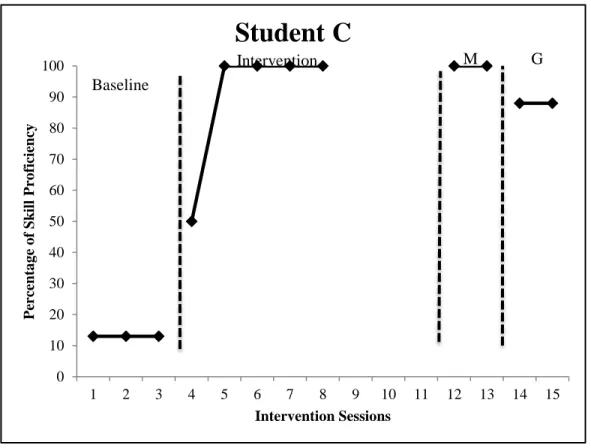
As shown in Figure 3, Child C had a very low fire safety skill proficiency (13%)
at baseline. During the baseline sessions, Child C was only able to “remain calm at the
sound of the alarm.” At the start of the intervention, Child C significantly increased his
fire safety skill proficiency from 13% to 50%. By the fifth session, Child C increased his
fire safety skill proficiency to 100%. Child C was able to independently initiate the first
four safety skill steps in the first video model intervention session. The first four steps
were: “remain calm at the sound of the alarm, child stands up, child walks to exiting
door, and child exits through door.” From the fifth to eighth session, Child C was able to
maintain 100% proficiency in fire safety skills. However, Child C was unable to continue
0 10 20 30 40 50 60 70 80 90 100 1 2 3 4 5 6 7 8 9 10 11 12 13 14 15 P er ce nta g e o f Sk ill P ro ficiency Intervention Sessions
Student B
Baseline Intervention M G34
the intervention sessions 9 throug11 due to absences. Despite not completing the
intervention phase, Child C demonstrated 100% proficiency in fire safety skills during
the maintenance phase. All steps were retained during this two-week follow up without
the use of the video model. During the generalization phase, child C decreased in
proficiency at 88%. Generalization assessment showed that Child C was unsuccessful in
reciting “fire” or “fire alarm,” during real fire drill activities
Based on the results, the PNDs at intervention, maintenance, and generalization
phases suggest that video modeling was effective in improving fire safety skills of Child
35
Note. M and G represent maintenance and generalization
Figure 3. Student C percentage of skill proficiency across intervention sessions.
Aggregated Results
During the baseline phase, all three children had very low proficiency (13%) in
fire safety skill demonstration. At the intervention phase, the children demonstrated an
average of 74% proficiency in fire safety skills. At maintenance phase, the children
consistently demonstrated 100% proficiency in fire safety skills. However, at
generalization phase, children’s average proficiency slightly decreased at 92% during
exposure to real fire drill activities in a school setting.
0 10 20 30 40 50 60 70 80 90 100 1 2 3 4 5 6 7 8 9 10 11 12 13 14 15 P er ce nta g e o f Sk ill P ro ficiency Intervention Sessions
Student C
Baseline Intervention M G36 Table 2
Mean of Percent Skill Proficiency of Participants Across Intervention Phases
Participant
Intervention Phase
Baseline Intervention Maintenance Generalization
A 13 52 100 100
B 13 80 100 88
C 13 90 100 88
37 Chapter 5
Discussion, Conclusion, and Recommendations Discussion
The findings of this study indicated that all three children significantly increased their repertoire of responses to the alarm sound during the intervention. At baseline, all
participants scored 13% for fire safety skill demonstration. The baseline phases were
assessed to determine if there was any prior fire safety skill knowledge before the
intervention was implemented. All three children correctly executed the first fire safety
skill wherein, the child “remains calm at the sound of the alarm.” During this initial
assessment, all the children did not show any signs of recognizing or acknowledging the
alarm sound. In addition, the children maintained these behaviors two weeks after the
discontinuation of the video modeling. Two of the children during the generalization phase failed to state “fire” or “fire alarm” to an adult. However, all the children were successful in all other behaviors with the presentation of an alternative alarm and setting. During generalization phase, two children remained with their peer groups while a schoolwide fire drill was in conducted. The other child did not remain with the peer group, but continued to exit the building and locate an adult as identified in the safety steps. In summary, all the hypotheses of this study were supported, in that, video modeling is an effective strategy to teach fire safety skills in children with ASD. Fire safety skills were also retained after two weeks. Generalization was not as successful as the maintenance phase; however, all the three children demonstrated at least 90% proficiency during this phase.
38
It is important to mention individual differences between all three participants. As shown in Figure 1, Child A had a gradual increase in proficiency rate across the
intervention phase compared to Child B and Child C. Child B increased proficiency more quickly than Child A (Figure 2). Child C increased proficiency at the highest rate
compared to both Child A and Child B (Figure 3). Child A required more sessions before completing all fire safety skill steps independently. Child A is four years of age with a VBMAPP score of 105. On the other hand, Child B and Child C are both six years old, with VBMAPP scores of 120 and 170. Age and skill level may have an impact on the length of time required to complete all fire safety skills.
The results of this study is consistent with previous research, suggesting that video modeling is an effective approach to teaching students with ASD (Delano, 2007; Charlop-Christy et al., 2000). Other studies that have evaluated fire safety skills found positive results using video modeling in its methodology, generalizability, and
maintenance abilities (Shipley-Benamou et al., 2002; Miltenberger and Charlop, 2015; Corbett & Abdullah, 2005).
As previously stated, fires are the third leading cause of unintentional injury in children below 14 years old (Morrongiello, et al., 2012). Young children are particularly vulnerable and may not have the cognitive or developmental capabilities to register dangers in the environment (United States Fire Administration, 2013). In addition,
Children with ASD are at risk for injury as rates of mortality of those with ASD are twice as high compared to the general population (Mouridsen, et al., 2008). It is important for children with ASD to receive fire safety education that promotes changes in behavior.
39
Fire safety skill training should be taught at a level that the child could understand, while employing techniques that enhance the learning process.
The current study adds to the literature on fire safety skills of children with ASD by developing video modeling as an efficient teaching method that can be implemented in short amount of time. Video modeling yielded highly effective results in the
generalization of the fire safety skills in novel settings, as well as resulting in
maintenance after two weeks when the training video was completed. Reinforcement was provided throughout the training process in order to strengthen proficiency. Through this study, young children with ASD educated and assisted by providing a teaching tool that was effective, easy, and accessible. Video modeling as a teaching tool for children with ASD suggests that it is a socially effective treatment method.
Conclusion
This study showed how young children with ASD can learn fire safety skills with video modeling. The video modeling is a highly effective teaching method for teaching fire safety skills. It contributes to the literature by using research-based techniques such as DTT and LEAP methodologies in conjunction with video modeling to educate children with ASD about fire safety skills.
The results have several implications for safety skills instruction related to children with ASD. First, while studies have shown that video modeling is an effective approach to teaching students with ASD (Delano, 2007; Charlop-Christy et al., 2000), this study tested the usefulness of video modeling in a DTT setting as well as in a routine fire drill at school. This type of teaching method can be utilized inside a classroom or one-to-one setting. During the generalization phase, Child B and Child C were in their
40
classroom settings instead of their one-to-one DTT sessions. As shown in Figure 2 and Figure 3, both Child B and Child C yielded very high proficiency in safety skills even though they were instructionally taught in their DTT sessions. The students were able to generalize the skills that they learned in a one-to-one setting inside their classroom.
Secondly, this type of methodology provides an easy and systematic way for people to teach fire safety skills. Instructors, teachers, parents, and other professionals can utilize this method to track each individual behavior and its proficiency rate. This study used an iPad to record a live video of a student exiting the building using the designated fire safety behaviors. This form of technology is a simple way to record a live video. It is also very accessible because it is a portable device and can be used indoors or outdoors.
Recommendations
Future research should consider replicating this study using a larger sample size. With more participants, the study will strengthen the validity of the current results. Replication with a larger sample size would also strengthen the training procedures as a teaching intervention for children with ASD. Future research can also include a broader age range of children with ASD. Children with ASD at varying ages can strengthen intervention procedure. Generalization can be evaluated with several different alarms and settings, which can provide novel auditory stimuli that could still provoke the fire safety behaviors.
Furthermore, research can consider varying reinforcement during the training phases. The present study used direct and tangible reinforcement during and following the training phases. Children were given non-verbal reinforcement as the training phase
41
occurred. When the students were learning the fire safety skills they were given praise in the form of pats on the back. Verbal reinforcement was not utilized in order to refrain from interrupting the training video.
As stated before, fires are the third leading cause of unintentional injury in those under the age of fourteen (Morrongiello, et al., 2012). Young children are particularly vulnerable and may not have the cognitive or developmental capabilities to register dangers in the environment (United States Fire Administration, 2013). In addition,
Children with ASD are at risk for injury as rates of mortality of those with ASD are twice as high compared to the general population (Mouridsen, et al., 2008). It is important for children with ASD to receive fire safety education that promotes changes in behavior. Fire safety skill training should be taught at a level that the child could understand, while employing techniques that enhance the learning process.
The current study adds to the fire safety skills literature with children with ASD by developing an efficient teaching method that can be implemented in short amount of time. This method yielded highly effective results in generalization of the fire safety skills in novel settings, as well as resulting in maintenance after two weeks when the training video was discontinued. Reinforcement was provided throughout the training process in order to strengthen proficiency. This study hopes to educate and assist children with ASD by providing a teaching tool that is effective, easy, and accessible. In
conclusion, video modeling as a teaching tool for children with ASD suggests that it is a socially effective treatment method.