ENSURING THE QUALITY OF DOCTORAL STUDENT SUPPORT SERVICES IN OPEN DISTANCE LEARNING
by
TSIGE GEBREMESKEL ABERRA
submitted in accordance with the requirements for the degree of
DOCTOR OF EDUCATION
in the subject
EDUCATION MANAGEMENT
at the
UNIVERSITY OF SOUTH AFRICA
SUPERVISOR: PROF. J J BOOYSE
i DECLARATION
I declare that ENSURING THE QUALITY OF DOCTORAL STUDENT SUPPORT SERVICES IN OPEN DISTANCE LEARNING is my own work and that all the sources that I have used or quoted have been indicated and acknowledged by means of complete references.
________________________ November, 2016
Tsige GebreMeskel Aberra Date (48692255)
ii DEDICATION
THIS WORK IS DEDICATED TO MY RELIGIOUS FATHER
MEMHIR TESFAYE SHEWAYE
iii ACKNOWLEDGEMENTS
I am indebted to my supervisor, Prof. Johan Booyse, for his extraordinarily unreserved support throughout the thesis. He has really invested in me with his rigorous comments starting from the proposal to the completion of this research; encouraging me, sending me relevant articles, alerting me to all the rights and the wrongs, and inspiring me by saying ‘you are almost there!’.
My beloved family, my best half (Dr. Tsegabrhan) and my kids (Hiyab, Bereket, Hiruy and Aster), all made a special contribution to the study. They were tolerant of my absence and relieved me from many household responsibilities. Tsega was even involved in the study through a discussion of the statistical parts, which Hiyabu described as ‘your French’. Hiyabu also assisted in writing the statistical formula.
I am grateful to UNISA (the University at which I am employed) for allowing me to do this research, involving its students, and for financially supporting me by means of a bursary. Colleagues who contributed to my study at both a College and Senate level, especially Prof. M. Havenga and Prof. M. Nieman, raised my flag in the process, and deserve a lot of appreciation.
I would also like to acknowledge and thank my colleagues, both at the main campus of UNISA in Pretoria and the Ethiopia Centre (Mari, Marietha, Nico, Kitty, Dion, Meseret, Yifru, Gelilawit, Simret, Addis, Kibrom, and Rahel) and friends who participated in the development of a standardised instrument (Emebet, Daniel, Mohammed (Muhe), Teddy, Belay, Eshetu, Mulugeta, Yishak and Mohammed), for their contributions.
I always have a special place in my heart for my students, especially those who willingly participated in this study. Last but not least, my appreciation goes to all who supported and encouraged me throughout the process; especially my mother Desta, my older sister Etaba, all my siblings and my friends, particularly Almina, Melanie, Veli and Selome.
iv ABSTRACT
This study focuses on student support service quality with particular reference to an Open Distance Learning (ODL) environment. Taking student support services as anchors in mainstreaming ODL, the aims of the study are to develop an instrument that can accurately measure student support service quality in an Ethiopian ODL environment. Simultaneously, it is to investigate an alleged gap between students’ expectations and experiences of service quality in the Ethiopia-UNISA context. In doing so, an attempt is made to determine the students’ level of satisfaction with the student support services provided. The study relies on quantitative methods and a design-based research strategy, which involves iterative and step-by-step processes of investigation. The theoretical framework employed in this study is Gaps Model by Parasuraman, Ziethaml and Berry (1985). Using an instrument of which the possible level of external and internal validity has been ensured, data are collected and quantitatively analysed using a standard Statistical Package for the Social Sciences (SPSS). The data suggest that there are five dimensions that play a cardinal role in the measurement of student support service quality in an ODL context, namely supervision support, infrastructure, administrative support, academic facilitation and corporate image. In the Ethiopian context, there appears to be a discrepancy between students’ expectations and their experiences of the quality of student support services. More than often their expectations exceed their actual experiences of quality service provision. Students’ satisfaction levels are negatively affected by the quality of four of the support services provided by UNISA as measured through expectations and experiences. In contrast, the students’ responses show that they are highly satisfied with the corporate image UNISA holds both in Ethiopia and internationally. From among the five dimensions, however, corporate image and supervision support stand out to be the most important dimensions in contributing to the students’ satisfaction and dissatisfaction, respectively. As a recommendation, this study highlights that these two dimensions must be focal areas by UNISA as more effort must be exerted to build the image of UNISA in Ethiopia and to improve the supervision support provided to students.
v
Keywords: Open Distance Learning (ODL), student support, quality, services, expectations, experiences, satisfaction, dimensions of service quality, distance education, design research, Ethiopia, UNISA
vi ABBREVIATIONS/ACRONYMS
AAU Addis Ababa University
CAES College of Agriculture and Environmental Sciences CDEO Continuing and Distance Education Office
CEDU College of Education
CEMS College of Economic and Management Sciences CFA Confirmatory Factor Analysis
CGS College of Graduate Studies CHE Council of Higher Education CHS College of Human Sciences CLAW College of Law
COL Commonwealth of Learning
CSET College of Science, Engineering and Technology CVI Content Validity Index
DCCAD Directorate for Counselling, Career and Academic Development DHDC Departmental Higher Degrees Committee
EFA Exploratory Factor Analysis FVI Factor Validity Index
HERQA Higher Education Relevance and Quality Assurance Agency ICC Intraclass Correlation
ICT Information and Communication Technology I-CVI Item Content Validity Index
IRA Inter-rater Agreement IRR Inter-rater Reliability KMO Kaiser-Meyer-Olkin M&D Master’s and Doctoral MOE Ministry of Education
ODeL Open Distance electronic Learning ODL Open Distance Learning
OUM Open University of Malaysia PCA Principal Component Analysis RLC Regional Learning Centre RPL Recognition of Prior Learning
S-CVI Scale (instrument) Content Validity Index
SE Standard Error
SPSS Statistical Package for the Social Sciences
T Tau
vii LIST OF TABLES
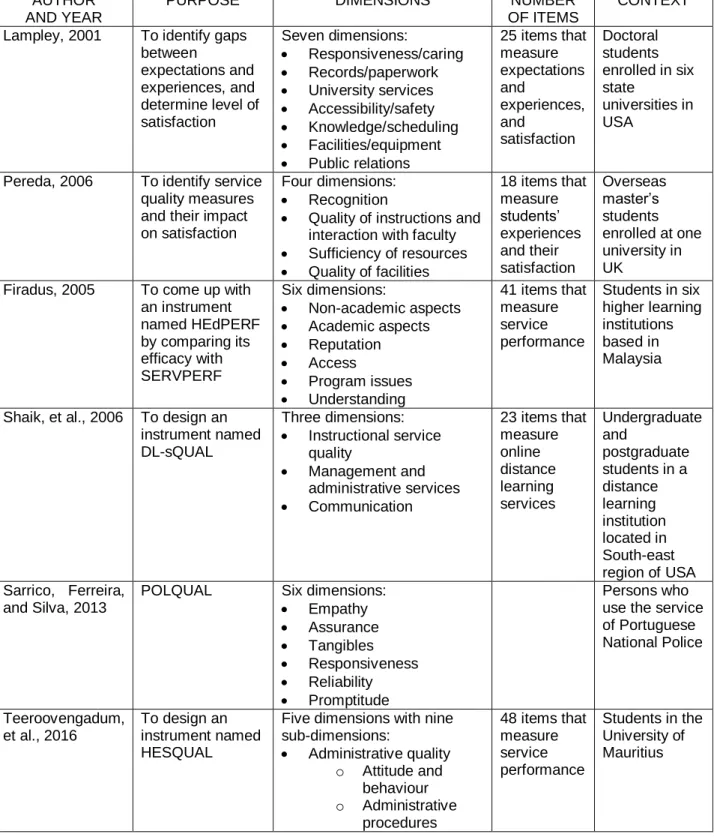
Table 2.1: Examples of service quality dimensions in the higher education context ...49
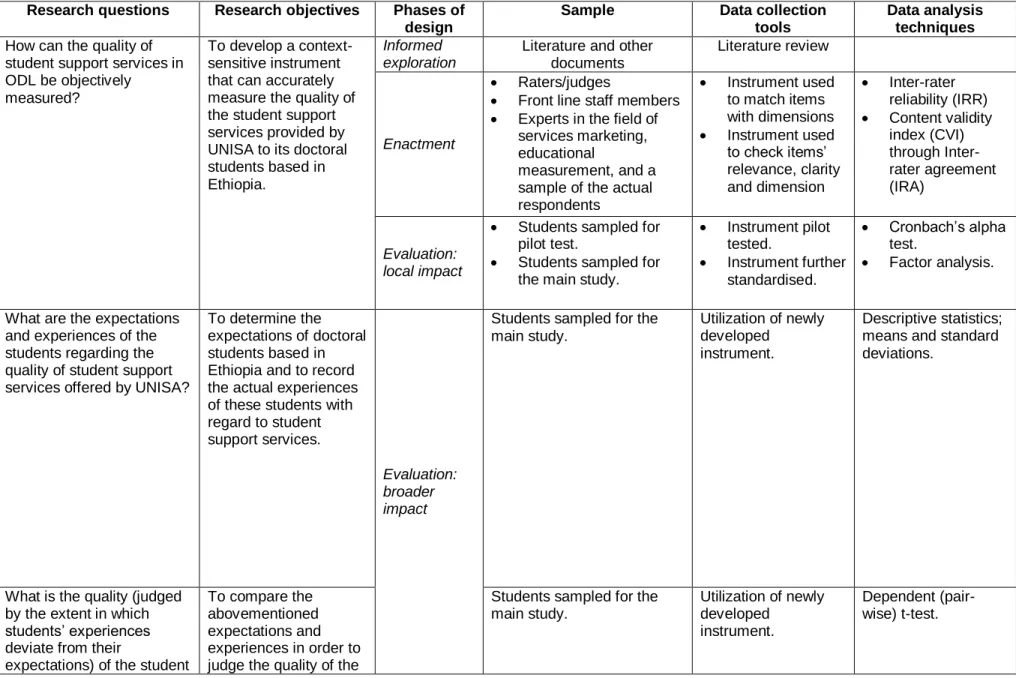
Table 3.1: Research Plan ...64
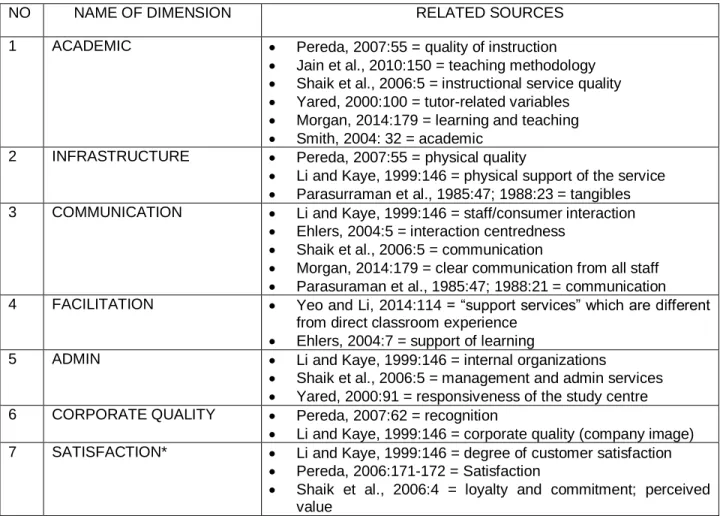
Table 4.1: Dimensions included in the in the instrument and related sources ...97
Table 4.2: Kappa values of individual dimensions as rated by four judges ... 101
Table 4.3: Results of IRR on individual dimensions by two raters after re-rating ... 102
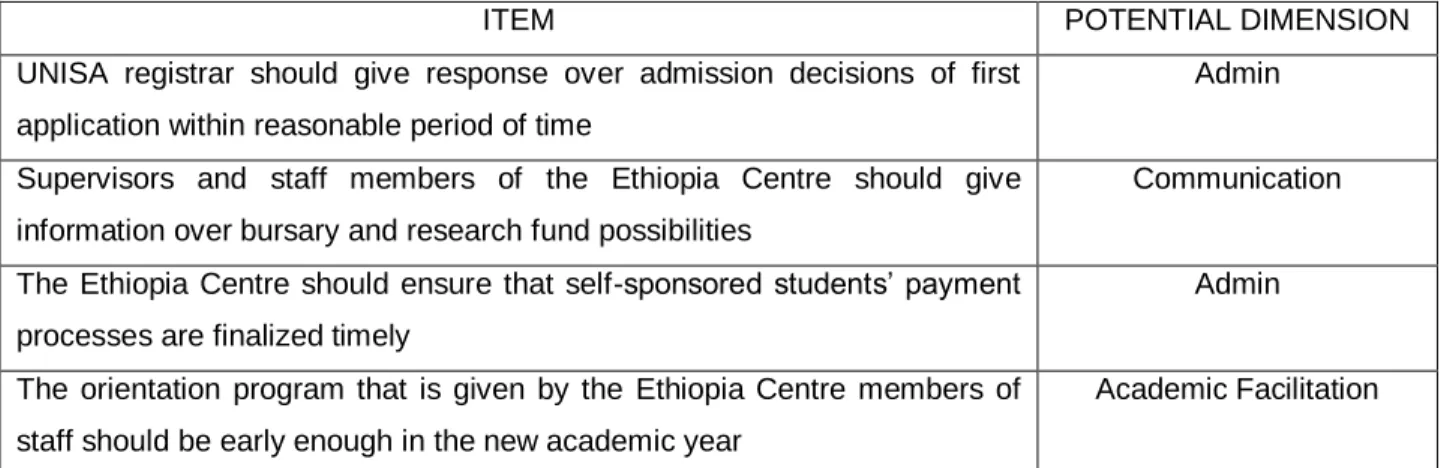
Table 4.4: Four items added in the process of content validity by front-line staff ... 103
Table 4.5: Content Validity Index by front-line staff members (n=5) ... 105
Table 4.6: Rating scale as used by content experts ... 109
Table 4.7: Results of the Item-Content Validity Index (I-CVI) by experts (n=10) ... 110
Table 4.8: Number of items per dimension after content validity procedure ... 115
Table 4.9: Items removed in the pilot test procedure ... 120
Table 4.10: Most missed out items (n=251)... 124
Table 4.11: Respondents/Cases that missed out more than 10% ... 124
Table 4.12: Results of Cronbach’s alpha test ... 125
Table 4.13: Total variance explained ... 127
Table 4.14: First round of factor analysis... 128
Table 4.15: Second round of factor analysis ... 131
Table 4.16: Total variance explained ... 133
Table 4.17: KMO and Bartlett's Test... 133
Table 4.18: Factor loadings and Cronbach’s alpha test results ... 135
Table 5.1: Socio-demographic characteristics of respondents ... 140
Table 5.2: Students’ expectations of student support service quality ... 141
Table 5.3: Students’ actual experiences of student support service quality ... 144
Table 5.4: Gaps between students’ expectations and experiences over individual dimensions ... 147
Table 5.5: Gap between students’ overall expectations and experiences ... 149
Table 5.6: Coefficientsa of multicollinearity ... 152
Table 5.7: Supervision support and satisfaction ... 153
Table 5.8: Infrastructure and satisfaction... 157
Table 5.9: Administrative support and satisfaction ... 159
Table 5.10: Academic facilitation and satisfaction ... 161
Table 5.11: Corporate image and satisfaction ... 164
Table 5.12: Result of step-wise regression ... 165
viii LIST OF FIGURES
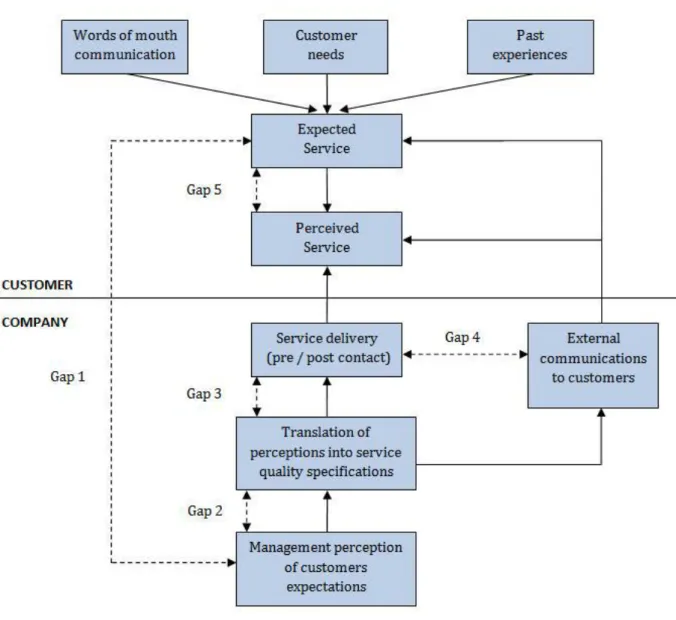
Figure 2.1: The Gaps Model of service quality ...56
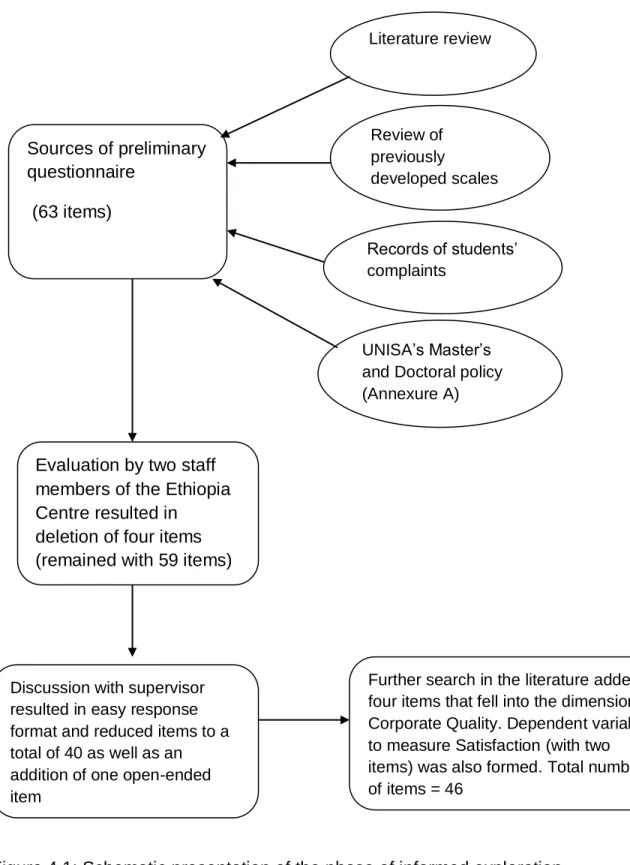
Figure 4.1: Schematic presentation of the phase of informed exploration...95
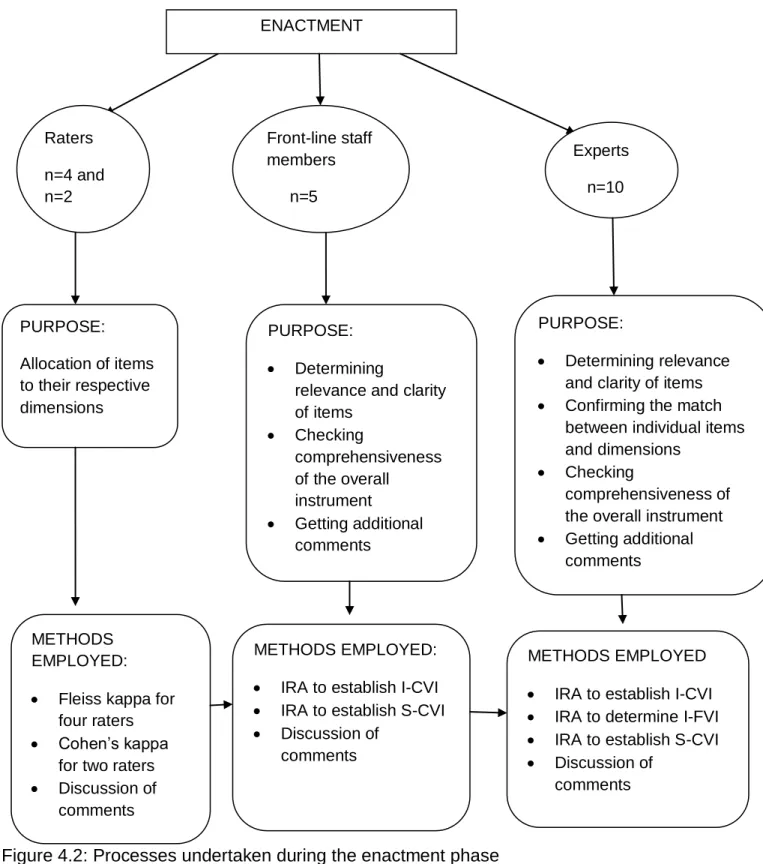
Figure 4.2: Processes undertaken during the enactment phase ...99
Figure 4.3: Schematic presentation of the evaluation phase: local impact ... 118
Figure 4.4: Scree plot that shows inflexion point for EFA ... 126
Figure 4.5: Dimensions of student support service quality in ODL ... 137
Figure 5.1: Histogram on the distribution of the dependent variable ... 150
ix TABLE OF CONTENTS DECLARATION ... I DEDICATION...II ACKNOWLEDGEMENTS ...III ABSTRACT ... IV ABBREVIATIONS/ACRONYMS ... VI LIST OF TABLES ... VII LIST OF FIGURES ... VIII
CHAPTER 1:INTRODUCTION ...1
1.1 INTRODUCTION ...1
1.2 BACKGROUND OF THE STUDY ...2
1.3 PROBLEM STATEMENT ...6
1.3.1 Main Research Question...6
1.3.2. Sub-questions ...7
1.4 AIM AND OBJECTIVES OF THE STUDY ...7
1.5 SIGNIFICANCE OF THE STUDY ...8
1.6 PRELIMINARY EXPLANATION OF CONCEPTS ...9
1.6.1 Distance Education ...9
1.6.2 Open Learning ...9
1.6.3 Open Distance Learning ...9
1.6.4 Quality ...10
1.6.5 Student Support Services ...10
1.7 RESEARCH DESIGN AND METHODS ...11
1.8 ETHICAL CONSIDERATIONS ...13
1.9 CHAPTER BREAKDOWN ...14
1.10 CHAPTER SUMMARY ...14
CHAPTER 2:QUALITY AND DIMENSIONS OF STUDENT SUPPORT SERVICES ...15
2.1 INTRODUCTION ...15
2.2 CONTEXTUAL BACKGROUND ...15
2.3 MEANING AND HISTORY OF DISTANCE EDUCATION ...17
2.3.1 Meaning of Distance Education...17
2.3.2 Brief History of Distance Education in Ethiopia and the World ...21
2.4 STUDENT SUPPORT SERVICES IN DISTANCE EDUCATION...24
2.4.1 Examples of Student Support Services in Distance Education ...26
2.4.2 Students Support Services at UNISA ...30
2.5 QUALITY AND ITS MEANING IN THE CONTEXT OF HIGHER EDUCATION ...32
2.6 SERVICE QUALITY...37
2.6.1 Nature and Characteristics of Service Quality ...38
2.6.2 Service Quality in Higher Education ...39
2.6.3 Students in the Higher Education System ...40
2.7 MEASUREMENT AND DIMENSIONS OF SERVICE QUALITY ...42
2.7.1 Measuring Service Quality ...43
2.7.2 Dimensions of Service Quality ...46
2.8 THEORETICAL FRAMEWORK: THE GAPS MODEL ...50
2.8.1 Description of the Five Gaps ...52
2.8.2 Expectations of Service Quality...57
2.8.3 Experiences/Perception of Service Quality ...58
x
2.9 CHAPTER SUMMARY ...61
CHAPTER 3:RESEARCH DESIGN AND METHODS ...62
3.1 INTRODUCTION ...62
3.2 VALIDITY AND RELIABILITY ...62
3.3 RESEARCH DESIGN ...63
3.4 RESEARCH PARADIGMS ...66
3.5 GENERAL RESEARCH STRATEGY ...68
3.6 SPECIFIC RESEARCH STRATEGIES ...69
3.6.1 Population ...71
3.6.2 Sampling ...72
3.6.3 Data Collection Procedures ...73
3.6.4 Data Analysis Procedures ...74
3.6.4.1 Inter-rater Reliability (IRR) ...74
3.6.4.2 Content validity ...77
3.6.4.3 Cronbach’s Alpha ...82
3.6.4.4 Factor Analysis ...85
3.6.4.5 Means and standard deviations ...89
3.6.4.6 Dependent t-test ...89
3.6.4.7 Regression analysis ...90
3.6.4.8 Qualitative data analysis...92
3.7 CHAPTER SUMMARY ...92
CHAPTER 4: DEVELOPMENT OF AN INSTRUMENT ...94
4.1. INTRODUCTION ...94
4.2. THE PHASE OF INFORMED EXPLORATION ...94
4.3. THE PHASE OF ENACTMENT ...97
4.3.1. Matching items with dimensions ... 100
4.3.2 Items’ relevance, clarity and dimension ... 102
4.3.2.1 Evaluation of the instrument by front-line-staff members... 103
4.3.2.2 Evaluation of the instrument by experts ... 107
4.3.3 Comprehensiveness of the Instrument ... 115
4.4 THE EVALUATION PHASE: LOCAL IMPACT ... 116
4.4.1 Pilot test ... 116
4.4.2 Standardising the instrument ... 122
4.4.2.1 Data cleaning procedure ... 123
4.4.2.2 Application of Cronbach’s alpha test ... 125
4.4.2.3 Employment of factor analysis ... 126
4.4.2.4 Iterations with Cronbach’s alpha and factor analysis ... 130
4.5 CHAPTER SUMMARY ... 137
CHAPTER 5:EVALUATION: BROADER IMPACT ... 139
5.1 INTRODUCTION ... 139
5.2 PROFILES OF RESPONDENTS OF THE STUDY ... 139
5.3 EXTENT OF STUDENTS’ EXPECTATIONS OF STUDENT SUPPORT SERVICE QUALITY ... 140
5.4 EXTENT OF STUDENTS’ EXPERIENCES OF STUDENT SUPPORT SERVICE QUALITY ... 143
5.5 GAPS IN STUDENT SUPPORT SERVICE QUALITY ... 146
5.5.1 Supervision Support ... 146
xi
5.5.3 Administrative Support ... 147
5.5.4 Academic Facilitation ... 148
5.5.5 Overall difference between expectations and experiences ... 148
5.6 RELATIONSHIP BETWEEN STUDENT SUPPORT SERVICES AND STUDENTS’ SATISFACTION ... 149
5.6.1 Some assumptions of regression model as applied in this study ... 149
5.6.2 Satisfaction as explained by each of the five dimensions ... 152
5.6.2.1 Supervision support and satisfaction ... 152
5.6.2.2 Infrastructure and satisfaction ... 156
5.6.2.3 Administrative support and satisfaction ... 158
5.6.2.4 Academic facilitation and satisfaction... 160
5.6.2.5 Corporate image and satisfaction ... 163
5.7 RELATIVE WEIGHT (CONTRIBUTION) OF THE FIVE DIMENSIONS ... 164
5.8 PEER COLLABORATION ... 166
5.9 CHAPTER SUMMARY ... 166
CHAPTER 6:SUMMARY, DISCUSSION, CONCLUSIONS AND RECOMMENDATIONS ... 168
6.1 INTRODUCTION ... 168
6.2 SUMMARY AND DISCUSSION OF FINDINGS ... 168
6.2.1 Development of a Context-Sensitive Instrument ... 168
6.2.2 Expectations and Actual Experiences of Doctoral Students... 170
6.2.3 Gaps in Student Support Service Quality ... 172
6.2.4 Service Quality Dimensions and Satisfaction... 173
6.3 CONCLUSIONS ... 175 6.4 RECOMMENDATIONS ... 177 6.4.1 Students’ Recommendations ... 177 6.4.1.1 Supervision support ... 178 6.4.1.2 Infrastructure ... 178 6.4.1.3 Administrative support ... 179 6.4.1.4 Academic facilitation ... 179 6.4.1.5 Corporate image ... 180
6.4.2 Recommendations Emanating Directly from the Study ... 181
6.4.2.1 Corporate image ... 181
6.4.2.3 Administrative support ... 182
6.5 CONTRIBUTIONS OF THE STUDY ... 183
6.6 THE RESEARCH PROCESS IN RETROSPECT ... 183
6.7 IDEAS FOR FURTHER RESEARCH ... 185
6.8 FINAL WORD ... 186 REFERENCES ... 188 APPENDIX I ... 213 APPENDIX II... 219 APPENDIX III... 222 APPENDIX IV ... 227 APPENDIX V ... 229 APPENDIX VI ... 234 APPENDIX VII ... 235 APPENDIX VIII ... 238 APPENDIX IX ... 239
1 CHAPTER 1
INTRODUCTION 1.1 INTRODUCTION
Education is an important instrument that has the capacity to cultivate society. It should be managed properly so that it brings about the desired results. The need for managing education applies to all levels (from kindergarten to university) and all modes of education (formal, informal, non-formal). Education managers are responsible for managing not only the academic aspect of teaching and learning but also all other necessary aspects that make students’ learning an enjoyable and fruitful experience. This is the contribution of education in developing a whole person experience and in producing graduates that meet the current market needs of any country (Clewes, 2003:74; Ogunleye, 2013:49).
One of the most important aspects which education managers should consider in educational institutions is quality; for example, the quality of teaching and learning, the quality of educational materials and the quality of the student support services that are provided. In the open distance mode of education, quality is arguably even more important for education providers. The main aim of focusing on quality is to improve the educational offerings. The continued improvement, in turn, assists in taking the distance out of the distance mode of teaching and learning and giving students individualised attention. This enhances students’ learning experience, to produce qualified graduates, and ultimately to secure societal development.
Quality is contextually bound. Whatever can be regarded as quality in one context may not be applicable in another (Evans, Brian & Oladeji, 2011:164; Maila & Pitsoe, 2012:8). Therefore, a valid, reliable and context-sensitive instrument is required to accurately measure, for example, student support service quality, and for managers to identify areas of the educational practice for which they are responsible and that require attention.
2
This chapter of the study deals with the background of the study, its main research question and sub-questions, and the aims and objectives of the investigation. It includes an indication of the significance of the study, the conceptualisation of some of the terms used in this study, a broad overview of the sampling technique applied, methods of data collection and analysis as employed in the study. The chapter also includes a reference to ethical considerations that were taken into account, a chapter breakdown and a summary of the chapter.
1.2 BACKGROUND OF THE STUDY
Since the onset of the new millennium, Ethiopia has entered an era of rapid social and economic development, in which human capacity building has become one of the priorities of the Ethiopian government. In its effort to become a lower middle-income economy by 2025, the government, among other things, has set its sights on the creation of opportunities for its citizens to develop the type of skills they were expected to require in meeting the continuously changing and upcoming demands of the country (Federal Ministry of Education, 2015:105). This also applied to the higher education sector that is considered to generate and contribute to transfer of knowledge, and to develop skilled human power that, in turn, has a stake in reducing poverty and in bringing about socioeconomic development (Donlagić & Fazlić, 2015:40; Van Deuren, TsegazeAb, Seid & Wondimu, 2016:158). Since it was argued that conventional education cannot satisfy the ever-increasing needs of the country, the need for skills development at a higher education level had to be supplemented by other modes of learning such as Open Distance Learning (ODL) (Moore, Tait, Resta, Rumble & Zaparovanny, 2002:3; Stella & Gnanam, 2004:143). ODL was preferred because it employs technological aids (Nakpodia, 2010:50) to bring knowledge closer to the people without them being displaced from their home and/or work areas (Zenebe, 2005:68; Rumble, 2000:218). In this regard, Latchen and Hanna (2001) cited in Phillips, Hawkins, Lunsford & Sinclair-Pearson (2004:192) state that “one of the reasons for the success of ODL as a learning mode has been the ability to combine high quality flexible educational opportunities with mass production and delivery methods”. ODL gives educational opportunities to disadvantaged groups of people who previously may not
3
have had access, especially in the field of higher education. Examples of these groups of people were mothers who were raising small children, persons with tight work schedules who did not have time to visit conventional (residential) universities and people who resided in places where there was no easy access to higher education (Ludwig-Hardman & Dunlap, 2003:1). It is argued that ODL is the best modality in cases where there is an increasing demand for higher education, because it has the potential to provide more students with access to higher education (Sharma, 2002:1; Mackintosh, 2015:2). This actually is the case in Ethiopia where the demand for post-graduate studies is high whereas the supply had been minimal before the employment of ODL. For example, in the 2016 academic year, there were more than 400 doctoral candidates studying through the University of South Africa (UNISA) (in only one institution operating in the country), a case which has never been seen before.
Another very important reason why ODL was regarded as the best modality was the fact that it is continually directed at quality assurance (Stella & Gnanam, 2004:153; Tait, 1997:5), an aspect which, until very recently, appeared to be under-emphasised in Ethiopia. It was only in 2003 that the Higher Education Relevance and Quality Assurance Agency (HERQA) was established with the aim of conducting accreditation and institutional quality audits of regular and distance education programmes exclusively in local Higher Learning Institutions (HERQA, 2011b:4). Since 2011, however, it has formulated guidelines for the accreditation of Cross-Border Higher Education to be applied in institutions offering cross-border education in Ethiopia; be the education offered through the mode of branch campus, franchised, twinning or the distance learning model (HERQA, 2011b: 5-6).
With the onset of the General Education and Training Policy that was put in place in 1994, many private and public higher learning institutions were opened in Ethiopia. A considerable number of these institutions introduced a dual mode of education (both distance and conventional system) in a variety of fields of study. Towards the end of 2006, in a renewed effort to increase and develop the capacity of the Ethiopian population, the Ethiopian government invited the UNISA to operate in the country. This
4
was the result of a general agreement of cooperation between the Ethiopian and the South African governments that was signed in 2004. To this effect, the opening of the UNISA-Ethiopia Regional Learning Centre (RLC) took place in January 2007. The RLC is the first of its kind outside the borders of South Africa, which shows the commitment UNISA has to the relationship. The RLC is located on the outskirts of the city of Addis Ababa, in the Akaki-Kalty sub-city, on a rent-free premise that was provided by the Ethiopian government (which in turn shows the commitment from the Ethiopian side). Currently, it houses 16 staff members: one South African who works as the Regional Director and fifteen Ethiopians. The establishment of the RLC can be regarded as symbolic of UNISA’s intentions as expressed by Prof Pityana, the then Principal and Vice-Chancellor of UNISA. In a speech Pityana (2007:2-3) made during the inaugural ceremony, the vision and mission of UNISA were outlined with special reference to the student support services UNISA intended providing:
As a distance education institution, we are proud to assert that by means of distance education we make it possible for many to realise their dreams; to extend opportunities for higher education to many who might not have benefited from such opportunities as may have been available. We trust that
through learner support [emphasis added], we shall enhance effective and successful learning, and increase participation in higher education, especially at the level of higher degrees in Ethiopia.
Despite such a promise from UNISA’s side to supply quality teaching and learning as well as effective student support services, Ethiopian doctoral students have been repeatedly heard complaining about the student support services that are provided by UNISA (cf. Appendices VI and VII). These complaints are related, among other things, to problems experienced by students with supervision (delayed communication from supervisors), the lack of user-friendliness of the myLife e-mail account, the myUnisa learning management system and the online library services, the inaccessible location of the RLC in Addis Ababa, as well as delayed admission processes and unsatisfactory feedback on the approval of research proposals or submitted chapters. All these may be indications that the experiences of students in Ethiopia of the support services they receive from UNISA do not correspond with what they have expected to receive, which might account for the dissatisfaction on the part of a number of students. The
5
researcher further went on to investigate the possible gaps between the students’ expectations and experiences.
Problems such as the ones mentioned above tend to be more severe when cross-border education is offered, as UNISA is doing in Ethiopia. The kind of problems that result from offering cross-border education have also been the experiences of British and American open universities that faced major problems regarding quality assurance in distance education (Ferreira & Walker, 2009:6; Stella & Gnanam, 2004:156). In addition, the limited exposure of students to ODL systems might also have contributed to students experiencing problems in getting acquainted with the systems and procedures of the ODL mode of education.
The flourishing of privatised regular and distance mode of education in Ethiopia seems to have gone hand-in-glove with a lack of appropriate quality assurance mechanisms. Subsequently, in August 2010, the Ethiopian government temporarily prohibited all local public and private institutions from offering distance education. In December 2011, after passing through quality audit processes, the institutions that were found to have implemented the appropriate systems for quality assurance, were reinstated (HERQA, 2011a:5); some were given a grace period to improve themselves; and accreditation was permanently withdrawn from those that were found not to be meeting the criteria. Five institutions were allowed to offer cross-border education at the Master’s degree level. UNISA was not part of this process as it operates on the basis of an agreement between the governments of the two countries (Ethiopia and South Africa).
Quality audit processes require standardised instruments to measure various aspects of service quality. An example of such an instrument is SERVQUAL, a well-known instrument developed in 1988 for the purpose of measuring the gap between customer expectations and customer experiences as major issues in the provision of service quality (Mwongoso, Kazungu & Kiwia, 2015: 299; Ong & Nankervis, 2012:283). Another example is an instrument named SERVPERF which was developed by Cronin and Taylor in 1992 (Bahroom, Latif & San, 2009:2; Firadus, 2005:306). These authors
6
argued that measuring only the quality of actual performance is sufficient and that there is no need to include customer expectations in quality measurements. In 2004, yet another instrument named HEdPERF was developed (Firadus, 2005:306). It was directed at measuring service quality performance specifically in a higher education context. Later, Shaik, Lowe and Pinegar (2006:3) introduced DL-sQUAL, which was intended to measure service quality in distance learning in the United States of America, and Bahroom, et al. (2009) launched ODLPERF which was developed with the purpose of measuring service quality among the students of the Open University of Malaysia (OUM).
However, as the nature of all the instruments mentioned above suggests, service quality is a context-specific construct. None of these measuring instruments can, for example, be utilised to measure service quality among students of UNISA based in Ethiopia or any other ODL institution without further ado. If the quality of the service that UNISA provides in Ethiopia has to be measured, an instrument relevant to the Ethiopian context should be found or developed.
1.3 PROBLEM STATEMENT
From a research point of view, there are several aspects of the situation outlined above that have not been investigated before and which merit scientific investigation. Among other things, two issues stand out: the Ethiopian students’ perceived dissatisfaction with the student support services offered by UNISA, and the question on how service quality within an Ethiopian context can be measured. The realisation that this seems to be an unexplored field of research, pregnant with numerous research possibilities, gave rise to the research questions posed in the following section.
1.3.1 Main Research Question
What is the quality of the support services provided by UNISA to Ethiopian doctoral students?
7 1.3.2. Sub-questions
1. How can the quality of the support service provided to doctoral students of UNISA in Ethiopia be measured effectively?
2. What are the specific expectations of doctoral students of UNISA in Ethiopia regarding the student support services that should be provided by UNISA?
3. What are the experiences of doctoral students of UNISA in Ethiopia in practice, regarding the quality of the student support services provided by UNISA?
4. To what extent do the expectations of the above-mentioned students correspond with their practical experiences of student support services?
5. What are the causes of the apparent student dissatisfaction in Ethiopia regarding the provision of student support services?
6. Assuming that adequate answers to the above questions can be found, what implications do the findings of this study have for managers at UNISA?
1.4 AIM AND OBJECTIVES OF THE STUDY
The aim of this study was to determine the quality of support services provided by UNISA to doctoral ODL students based in Ethiopia. In order to achieve this aim, a valid and reliable, context-sensitive measuring instrument had to be developed to measure the students’ expectations and experiences of student support service quality.
Therefore, the specific objectives of the study were to:
develop a context-sensitive instrument that could accurately measure the quality of the student support services provided by UNISA to its doctoral students in Ethiopia;
determine the expectations and actual experiences of doctoral students concerning student support services offered by UNISA (utilising the newly developed instrument);
8
compare the abovementioned expectations and experiences of doctoral students in order to fathom the quality of the student support services provided in Ethiopia by UNISA;
relate the dimensions of service quality to the students’ level of satisfaction with the services provided by UNISA; and
identify the shortcomings in UNISA’s provision of student support services to Ethiopian students, bring it to the attention of managers at UNISA and offer suggestions for improvement in this regard
It was argued that, if all these objectives were achieved, the broad aim of the study, namely determining the quality of student support services provided by UNISA to doctoral students in Ethiopia, would also have been achieved. At this stage, the question arises as to why it was necessary to conduct this research. This is the question that is considered in the following section.
1.5 SIGNIFICANCE OF THE STUDY
This study is expected to make policy makers and managers in the field of education aware of the important role which quality of student support services plays in the process of providing ODL, or at least reiterate the importance thereof. The results of this study are also expected to enable the relevant line managers at UNISA to become acquainted with the expectations and experiences of doctoral students in Ethiopia. This may possibly lead to an improvement of student support services provided by UNISA and eventually to an increase in the degree of student satisfaction. From a broader perspective, this might sensitise staff members of UNISA to the varied needs of its students located in all the foreign countries in which UNISA operates.
This study might be of significance to ODL higher education institutions other than UNISA. In addition to drawing special attention to the importance of focusing on the quality of student support services, the measuring instrument to be developed may constitute a basis for the development of other, similar context-specific instruments. ODL institutions that operate in Ethiopia on a cross-border basis, may possibly be able
9
to utilise this instrument. Finally, as a result of this study, the general public may also acquire a better understanding of ODL because working on improving quality is believed to curb the stigma attached on ODL offerings.
1.6 PRELIMINARY EXPLANATION OF CONCEPTS
This section briefly describes the key terms that are found in this study. In chapter 2, the terms are discussed in more detail.
1.6.1 Distance Education
Distance education is a form of education that is different from conventional education. It is mainly characterised by physical (geographical) separation between students and teachers, and among students themselves. It is also marked by the employment of the available technology of the time and by a gradual change from the use of a postal system for the conveyance of content to almost exclusive online education. Its flexible mode of delivery fits the different needs of students who come from different walks of life and who are not present at a specific place at a specified time (Moore et al., 2002:22; Yener, 2013:51).
1.6.2 Open Learning
As the name, open learning, indicates, this concept refers to learning that is open in the sense that it provides learners with a variety of choices; for example, choices in regard to medium of instruction, place of study, pace of study, support mechanisms, and qualification entry and exit points (Weimin & Dhanarajan, 1999:1-6). The concept, open learning, therefore has a stronger bearing on policy than on a specific mode of education in which students are given access to education, and in which they also make use of the available technological learning media (Bates, 2008:1).
1.6.3 Open Distance Learning
In open distance learning, students come from different socio-economic backgrounds. They are given open access to schooling whereas support services are provided by
10
using different media, especially ICT. Teaching and learning activity is conducted at places and times where and when both the students and the teachers may not meet. Students get the provision of flexibility on choices of courses, learning materials and the pace at which they undertake their study (Moore et al., 2002:23; Ferreira & Walker, 2010:10).
1.6.4 Quality
There are five ways of defining quality: quality as exceptional (excellence), as perfection, as fit-for-purpose, as value for money and as transformational (Ferreira & Walker, 2010:14; Harvey & Green, 1993). When these qualifiers of quality are applied in an educational setting, students are assisted to develop skills and knowledge that prepare them for future challenges. With specific reference to the distance education system, students are transformed from being dependent learners into increasingly becoming independent learners. For this reason, this study mainly utilises the definition of quality as transformational (Scriven, 1993a, cited in Smith, 2004:30; Houston, 2008, cited in Mwenje & Saruchera, 2013:132).
1.6.5 Student Support Services
Student support services represent the offerings made to students in their educational journey at institutions of higher education, from entry to exit points. These services are meant to assist the students to cope with the possible challenges students face. With particular reference to the ODL system, educational providers work hard in an effort to remove the distance from distance learning systems by means of student support services. These services, being the most essential elements that qualify the ODL system, involve the process of giving pre-registration information, conducting registrations, providing counselling, Information and Communication Technology (ICT) and library services, providing of all forms of support that can strengthen the bond between students and institutions and by enhancing the academic lives of registered students. The nature of student support services is known to be context-specific so as
11
to meet the specific needs of individual students (Dzakiria, 2005:99; Ferreira & Walker, 2010:32; Owens, Hardcastle & Richardson, 2009:57; Tait, 2000:289).
1.7 RESEARCH DESIGN AND METHODS
This study is concerned with the student support service quality as expected and experienced by doctoral students of UNISA found in Ethiopia. The researcher was motivated to take up this study because of the repeated complaints the students were reporting that centred upon the unavailability of sufficient support systems. This is as opposed to the need to offer strong student support services for ODL students by the educational provider (Owens, Hardcastle & Richardson, 2009:57). This study therefore made a point of investigating the quality of student support services as offered by UNISA.
As indicated in Chapter 3, this study is located in a positivist paradigm. This paradigm assumes that knowledge is empirical and objective, with the research undertaken from the point of view that the researcher is distant from the researched (Okeke & van Wyk, 2015:60). Quantitative methods and statistical procedures mark the positivist paradigm. In this study, statistics like Cohen’s kappa, Cronbach’s alpha, a t-test and regression analysis were employed after collecting data by means of a questionnaire. Using deductive reasoning, the study used the Gaps Model to explain the findings of the gaps between students’ expectations and their experiences of student support service quality.
The specific research strategy that was followed in the study was design-based research. Design-based research is understood to develop an intervention (however small it may be) through cyclic and iterative processes. Not only is design-based research iterative, but it also gives consideration to the context in which the research is done (Plomp, 2007:17). Using the four phases of design-based research (informed exploration, enactment, evaluation of local impact and evaluation of broader impact) (Urlich & Eppinger, 2000, cited in Bannan-Ritland, 2003:21), this study aimed at developing an instrument that would help to identify the expectations and experiences of students regarding student support services. It further observed the gaps between
12
the students’ expectations and experiences of service quality and the causes of satisfaction/dissatisfaction of student support services.
The population of interest in this study was all doctoral students of UNISA in Ethiopia. A total of 465 doctoral students were registered during the 2014 academic year. From this population, a sample of 260 students was reached through the method of convenience sampling. Although non-probability sampling (such as convenience sampling) is criticised for its alleged lack of generalisability, a comparison can be made between the sample data and the population to check if the findings from the sample considered are generalisable to the target population of interest (Sousa, Zauszniewski & Musil, 2004:130).
In this study, data were collected by means of an instrument that was specifically designed to measure student support service quality in an ODL setting. The questionnaire comprised a five-point Likert scale with two types of response required: a response concerning student expectations in one column and a response concerning student experiences in another. The data that were collected by means of this questionnaire were used to both describe and compare the students’ expectations and experiences. Attempts were made to determine whether there were gaps between the expectations and the experiences of students, and also how each of the five dimensions of student support service quality that were highlighted in the questionnaire, influenced students’ general levels of satisfaction. The data were analysed by means of the different statistical tools that were mentioned earlier. Detailed information in this regard is supplied in Chapters 3 and 4.
This study aimed at achieving and maintaining the highest possible levels of validity and reliability, both in the development and utilisation of the measuring instrument and in the interpretation of the findings that resulted from the use of the instrument. The validity of the study was guaranteed through the employment of rigorous content validity procedures and exploratory factor analysis. Among other things, inter-rater reliability
13
and the Cronbach’s alpha test were used to attain reliability (Tavakol & Dennick, 2011:53).
1.8 ETHICAL CONSIDERATIONS
Ethics in research takes note of “what is proper and improper in the conduct of scientific inquiry” (Babbie, 2013:32). Research ethics has a bearing on the protection of respondents (participants) from physical or psychological harm. They must not be emotionally affected; should not feel stressed, embarrassed or harmed as a result of their participation in the study (Gay, Mills & Airasian, 2011:19). Ethics also includes ensuring that the respondents participate in the research voluntarily (knowing that they can withdraw any time if they want), that their anonymity is preserved, their privacy is protected, and the confidentiality of the responses they have given is guaranteed (Saunders, Lewis & Thornhill, 2009:185). The collected data need to be treated with total confidentiality.
Ethical considerations were paramount during all phases of the research: during the design of the research, gaining access to the research site and respondents, during data collection, data processing and storage, and during analysis and reporting (McMillan, 2012:18-19). In this study, ethical requirements were satisfied by first obtaining an ethical clearance certificate from the Ethics Committee of the College of Education at UNISA (cf. Appendix VIII). Permission was also obtained from Senate to involve students of UNISA for research purposes (cf. Appendix IX). In addition, at the stage of data collection, respondents were requested not to write their names or numbers on the questionnaire. Since data were collected via e-mail, the students’ personal e-mail addresses (as opposed to official UNISA, myLife addresses) were used to send and receive the students’ responses. Special attempts were made to keep their responses confidential during all stages of the study, including but not limited to the presentation of findings, interpretations and discussions. Each questionnaire was, for example, coded before data capturing took place.
14 1.9 CHAPTER BREAKDOWN
In this study, chapter 1 focused on the background, problem statement, aims and objectives, and research methodology pertaining to the study. Chapter 2 concentrates on both theoretical and empirical evidence related to the areas this study focuses on, whereas chapter 3 deals with the research approach that was adhered to and the data collection and analysis procedures employed. Chapter 4 deals with the development of a valid and reliable instrument whereas chapter 5 concentrates on data analysis. The last chapter, chapter 6, comprises a discussion of the findings of the study in accordance with the related, existing body of knowledge. It also contains the conclusions of the investigation and a number of relevant recommendations.
1.10 CHAPTER SUMMARY
This chapter commenced with a brief discussion of the circumstances that led to this study. Ideas related to the need for mainstreaming ODL, the quest for quality in distance higher education, student support services and their importance in ODL, and the possibility of measuring service quality, were discussed. The chapter also included an indication of the problem statement of the study, the main research question, sub-questions, aims and objectives of the study. After a consideration of the significance of the study, a brief explanation of the key concepts was provided, followed by a very broad overview of the research methods used. Attention was also paid to a number of ethical considerations.
In the next chapter, relevant literature in the field of ODL, student support services, service quality, measurement and dimensions of student support service quality as well as the theoretical framework which guided this research, are discussed.
15 CHAPTER 2
QUALITY AND DIMENSIONS OF STUDENT SUPPORT SERVICES 2.1 INTRODUCTION
This chapter presents a literature review that mainly deals with the meaning and history of distance education, student support services in distance education, the essence of quality and its application in a higher education context. It includes a discussion of the concept “service quality”, its measurement and dimensions. In the final section of the chapter, the Gaps Model is discussed as the framework to be used in explaining the findings of the study.
2.2 CONTEXTUAL BACKGROUND
Ethiopia is a country located in eastern Africa. It is generally regarded as the cradle of humankind and has a history of more than 3000 years. Recent estimates put the size of the Ethiopian population at close to 100 million people which makes the country the second most populated in Africa (after Nigeria). About 80 languages are spoken in Ethiopia with its many ethnic groups. Only 19% of the population lives in cities; which implies that Ethiopia’s economy is largely agricultural (Central Statistical Agency, 2014:16; Van Deuren, et al., 2016:158). The total size of the country is 1.127 million km² (offTheLeftEye, 2016). The country is known for its biodiversity as it enjoys different geographical landscapes that range from tall mountains to low depressions, with the Rift Valley splitting the country into two from north east to south as it passes from Syria to Mozambique.
Currently, Ethiopia houses 36 public universities (33 of which receive students directly from high school) that are located in different regions of the country. With its effort to provide access to larger numbers of students, the government aims to establish 11 more universities in the near future (Federal Ministry of Education, 2015:102). The government regards education as one of the major concerns in its efforts to eradicate poverty. For this reason, there is a strong movement towards the massification of higher education with an emphasis on the teaching of natural science and engineering. These
16
fields of study are intended to be studied by 70% of all students who enter tertiary education. Ideally the government wants no more than 30% of all students to enrol for the social sciences and arts. This measure is geared towards achieving the objective of becoming a lower middle-income economy by 2025 (Federal Ministry of Education, 2015:105). The aim is “to promote the development of a vibrant industrial sector and accelerate overall economic growth” (Federal Ministry of Education, 2010:9-10; Van Deuren et al., 2016:158-59).
During the past two decades, privately owned higher education institutions participated in the human capacity development programmes of the country enrolling 15% of the total student population (Federal Ministry of Education, 2015:24). Many of the public and private higher education institutions are known to offer distance education. A few do it in partnership with international distance education institutions whereas others offer a replica of the regular programmes in distance mode. Distance education is taken as a means of enhancing increase in access to higher education and had an enrolment share of 12.6% in the academic year 2008/09 (Abeya, 2014:146-47; Federal Ministry of Education, 2010:60).
HERQA is responsible to control the external quality standards of both public and private higher education institutions. Moreover, every higher education institution is expected to have an internal quality control and enhancement mechanism (Federal Ministry of Education, 2010:63; Van Deuren et al., 2016:161-62). Quality audit procedures should be in place for all aspects of academic institutions as stipulated in the Higher Education Act:
The internal system of quality enhancement of every institution shall provide for clear and comprehensive measures of quality covering professional development of academic staff, course contents, teaching-learning processes, student evaluation, assessment and grading systems, which shall also include student evaluation of course contents together with the methods and systems of delivery, assessment, examinations and grading (Federal Negarit Gazette, No. 650, 2009:4988)
17
There is a strong need to increase the number of qualified academics in universities so as to cater for the increasing number of universities as well as students that are enrolled in higher education institutions. The target is to have a proportion of “0:70:30 (Bachelor: Master’s: Doctorate degree holders, respectively)” teaching staff in higher education institutions though this had not materialised by 2015 (Federal Ministry of Education, 2015:24-25). To reach this target requires the utilisation of a range of mechanisms (like sending faculty abroad to improve their qualifications and strengthening the capacity of local universities to offer relevant programmes). UNISA’s operation in Ethiopia is part of this effort to produce qualified academics at the master’s and doctoral level (Federal Ministry of Education, 2010:64). The section below deals with distance education – its meaning and history.
2.3 MEANING AND HISTORY OF DISTANCE EDUCATION
In this section of the study, the meaning of distance education and open distance learning is discussed. In addition, the history of distance education in Ethiopia, in Africa and internationally is briefly presented.
2.3.1 Meaning of Distance Education
Researchers in the field of distance education are relatively unanimous in the way they define the concept, distance education. For example, Moore and Kearsley (2005:2) define distance education as “… teaching and planned learning in which teaching normally occurs in a different place from learning, requiring communication through technologies as well as special institutional organizations” whereas Keegan (1986), cited in Melese (2014:17-18) defines distance education as a “method of imparting knowledge, skills and attitudes to learners, using high quality materials for those learners who are geographically departed from their teachers”. Embedded in these two definitions is the fact that distance education is characterised by the geographical separation between students and teachers. In addition, distance education keeps itself abreast of the current technological platforms so as to undertake successful education.
18
By employing technological media, communication between students and teachers or students and students can take place in real time (synchronous) or at different times (asynchronous). Distance education is also different from conventional education because decisions of what to learn and how to learn are not taken in the classroom setting. The manner in which technology is employed in education is often different between distance and conventional education: the former depends on technology whereas the latter is complemented by technology (Cunningham, 2006:12; Moore & Kearsley, 2005:3). In this study, the definition of distance education by Keegan is preferred because the doctoral students, who are the respondents in this study, develop research skills and knowledge of their fields of study by using the high-quality journal articles found in the UNISA Library in addition to the support that they get from their supervisors.
Distance education is often a preferred mode of learning because it gives opportunities to people to study and develop themselves even though they are physically far apart from the educational institutions at which they are registered. Persons that generally prefer distance education are women with young children, health workers who work in remote areas, the military, and persons with tight work schedules. Though the offerings of distance education usually focus on higher education, it has widespread coverage starting from primary education to advanced degrees. The focus is usually on adults who are viewed as independent learners (Moore & Kearsley, 2005:8; Stella, 2001:135).
Distance education can be used for both formal and non-formal education, primary and secondary education, and technical and vocational education. However, its applicability is more pronounced in the higher education sector to address students who, for different reasons, are unable to join face-to-face universities. The greater population of distance students consists of middle-aged adults but recently the age range is encompassing students who are in their early twenties, too. This is also related to the technological advancement of the internet whereby the number of single-mode, distance education universities is increasing. Moreover, the internet has encouraged many well-known
19
conventional universities in the world to employ a system of dual mode education (Khvilon & Patru, 2002:35-36; Mhalanga, 2010a:10).
From its inception, distance education has been reaching people who could not get access to conventional schooling and hence it opens opportunities to a wide range of students. In addition, it gives people the liberty of using their time effectively and efficiently, and studying as and when it suits them. It is indicated that “each student is a class of his own, can study when and how long it suits him, interrupt the work when he feels like it” (Hermods, 1908, cited in Holmberg, 2008:19).
In the course of time, the concept distance education has changed to “open distance education”. The reference to openness stresses the fact that distance education provides opportunities to students in terms of their geographical location, when to study, how to study, which media to use, and with whom to communicate for support. Open distance learning is a reconceptualisation of the term distance education, which from its inception, had the intention of giving educational opportunities to those, who for various reasons, could not go to conventional face-to-face classrooms and also providing flexible support systems that meet the needs of adult learners. Terms like “flexible learning” and “distributive learning” are interchangeably used to indicate the openness of distance education (Kelly & Mills, 2007:156; Mhalanga, 2010a:10). In open distance education mode, the teacher employs various forms of technology in efficiently delivering the content to the students, whereas students are independent learners who control their own learning. In this mode, the students, the teachers and the resources for learning can be located in different spaces. In addition, Mills (2011) cited in Proctor, Steyn and Goodwin-Davey, (2012:88) asserts that the essence of open distance education is that students are assisted relatively more intensively in the earlier years and then made more and more independent learners as the years go by (Khvilon & Patru, 2002:38-39).
The evolution of education calls for more distance than conventional, face-to-face education because, as peoples’ lives become more complex and as technologies
20
advance, the distance education modality is becoming increasingly prominent. Its principles of openness, flexibility, life-long learning, individualised attention and student-centeredness in student support makes distance education unique. Currently, many universities in the world are changing the delivery of education from mere conventional to dual mode as a result of which the number of students in the distance system is increasing significantly (Khvilon & Patru, 2002: 35-36; Zenebe, 2005:68). In this regard, for example, the Ethiopian Education and Training Policy indicates that conventional education cannot cater for the ever-increasing demands of education and it must therefore be supported by the distance education mode of delivery. Following this policy, there were remarkable changes in the higher education institutions of the country whereby conventional universities and private higher education institutions launched distance education and introduced courses that were offered in their regular programmes in distance mode as well. There was, however, hardly any well-prepared distance-specific material, nor were teachers trained to support the same cause (Khvilon & Patru, 2002:25; Tadesse, 2008:13).
The major problems of education provision at any level are equity, accessibility, quality and relevance (Education and Training Policy, 1994:2). Among other things, distance education can address the problem of accessibility as students, who could not access or participate in face-to-face conventional education, can make use of the distance education mode (Ntuli, 2008:3).
Studying through distance education benefits not only individuals but also the institutions where they work because the individuals can continue working and being productive in their institutions and, in the meantime, develop their knowledge and skills through education. In addition, by using distance education, institutions can have a larger number of their employees trained, even if they are stationed at different locations, which is not possible in conventional education (Sumner, 2000:268). Distance education students, however, experience feelings of isolation because of the potential lack of human touch in the system. This can be a demotivating factor for some students who do not have the readiness for or prior experience of a distance mode of education
21
to appreciate and make use of the system. For example, Borstorff and Lowe (2007), cited in Yener (2013:51), describe it as follows: “with the lack of human contact and personal instruction, students feel themselves isolated and DL [distance learning] can seem cold and impersonal”.
It appears as though there is a stigma attached to the distance education mode among the general public (Zenebe, 2005:84). A study by Habtamu (2015:18) that was done at two Ethiopian Universities (Haramaya and Bahir Dar) which provide a dual mode of education, found that the perception of distance education among the general public and especially among students enrolled in the system, is negative. Habtamu’s findings suggest that students prefer to study in the conventional system if they have the opportunity, and think of distance education systems as providing education of a lower quality than conventional education systems. A similar finding was made by Yener (2013:62) in a study undertaken among students in the Beykoz Vocational School of Logistics in Turkey.
2.3.2 Brief History of Distance Education in Ethiopia and the World
Distance education has a relatively long history in Ethiopia. According to local literature, the Haile Selassie I University-College trained teachers through the distance mode as early as the 1940s. Yallew (2004) cited in Tadesse (2008:11) states that “… it [distance education] began in early 1940s to upgrade the level of primary school teachers without taking them out of their work places”. However, distance education in Ethiopia faced both successes and disappointments. For example, the Ethiopian Ministry of Education (MOE) wanted to upgrade the capacity of secondary school teachers. Consequently, in collaboration with the Addis Ababa University (AAU), it established a Distance Education Unit and located it within the University’s Continuing and Distance Education Office (CDEO). Although this Distance Education Unit was primarily intended for the further training of teachers, its programmes were also accessible to employees of various public ministries, factories and the military force. The Distance Education Unit achieved considerable success in its time as a relatively large number of teachers graduated from the system. However, the Unit needed to transfer from one space to
22
another as it became part of the Department of Adult and Continuing Education in the MOE and was later transferred to the Educational Media Agency (Tadesse, 2008:11-13). This instability resulted in distance education not being well regarded in Ethiopia.
In the African context and in many developing countries of the world, distance education is utilised to provide advanced training to teachers. In this way, the knowledge and skills of practising teachers are upgraded without taking them out of their classrooms for lengthy periods of time. This strategy also assists in reaching a larger population and has been in use in many countries like South Africa, Nigeria and Burkina Faso (Khvilon & Patru, 2002:29).
Internationally, four successive generations of distance education can be distinguished. It started from what was known as “correspondence education”, where printed materials were delivered to students by postal system. Students’ assignments and exams were exchanged between teachers and students through letters and print media under the postal system. In the UK, for example, Isaac Pitman taught the subject, short-hand, via correspondence education as early as 1840 (Holmberg, 2008:13). The University of South Africa (UNISA), which was the first of its kind in the history of distance education, was also reaching students in this mode of education since its establishment as an examination centre by the name of the University of Good Hope in 1873. Having a history of 143 years, UNISA is now heading towards becoming a fully digital university (Makhanya, 2015:5; UNISA, 2012:3).
The history of distance education is intimately tied to attempts to satisfy a world-wide, growing thirst for education. Hence, correspondence education in its time assisted in reaching many, especially at remote places, where conventional education was either inaccessible or the lifestyle of learners did not allow for attending conventional institutions of education. In effect, “correspondence education paved the way for modern distance education as applied in the last decades of the twentieth century” (Holmberg, 2008:20). With the growth of technology and the call for globalisation,
23
resources are becoming more shared than before and the open distance learning system is, therefore, getting more recognition (Tait, 2003a:1).
The correspondence education system was followed by a second generation of distance education named “television and radio systems” which supplemented print materials (Anderson & Dron, 2011:81). In the second half of the 20th century, proponents of distance education started to point out the importance of focusing on the needs of the adult learner; what, when and where does the learner want to learn? This led to the foregrounding of distance education as a system of education (Holmberg, 2008:23). The number of students, the course offerings and the institutions that employed distance education also grew along with the technology.
The third generation of distance education brought the employment of more interactive multi-media where radio, television, audio cassettes, VHS, CD-ROMs and the computer were added to the print materials. The fourth generation comprised computer-mediated and internet-based systems whereby the continuously developing technologies (especially the World-Wide Web) are employed. Such learning systems are known to facilitate independent learning. These technologies use e-libraries, e-tutors, video-/audio-conferences and address students individually or in groups, live (real time) or otherwise (Council on Higher Education (CHE), 2014:6).
Currently, distance education is mostly delivered online. This is the fourth (some refer to it as the fifth) generation of distance education. This generation is characterised by the use of various types of media accompanied by a high level of technological advancement. Technology in distance education is said to bridge the gap between students and teachers. These latest technologies better facilitate the interaction between teachers and students, and students and students in synchronous or asynchronous forms (Kilfoil, s.a., 4). With the advancement in technological media, the interaction between students and teachers developed from one-way to two-way (multiple) interaction, which encourages communication not only between students and teachers but also among the students themselves. The nature of modern media has
24
assisted the development of students’ skills to be interactive and critical in the learning process. It allows time to reflect and constructively argue about ideas, and to critically comment on concepts, which, in turn, result in more effective and better quality learning. Among research students, this situation enables students to become critical friends with their supervisors. Hence, students’ development of cognitive skills is achieved (enhanced) and the distance is taken out of the distance education mode. All stakeholders (students, teachers, and the institution) that form a community through the interactive media, are kept abreast of current issues.
At present, distance education make use of advanced technology, more so than older forms of media, like print or CD that made learning one-directional and contributed less to students’ cognitive development. Employing technology has provided more and better access to students and hence distance education changed into open distance learning (ODL). At UNISA, openness in open distance learning, as its business model, refers to giving better access to students with meaningful student support services. It includes the recognition of prior learning (RPL), flexible learning, and life-long learning. Currently, ODL is changing into ODeL (Open Distance electronic Learning) because of the intensity of employment of electronic media in teaching and learning, and student support services. It is referred to as “intelligent flexible learning” (Kelly & Mills, 2007:155; Van den Berg, 2012:73; Yener, 2013:53). The section below discusses student support services with particular reference to distance education.
2.4 STUDENT SUPPORT SERVICES IN DISTANCE EDUCATION
In defining student support services in distance education, Tait (2000:289) refers to these services as “the range of services both for individuals and for students in groups which complement the course materials or learning resources that are uniform for all learners, and which are often perceived as the major offering of institutions using ODL.” On the other hand, Brindley (1995) Cited in Phillips (2003:170), defines student support as: