MANAGING THE
BUILT ENVIRONMENT
Facilities management is one of those relatively new service areas which is determinedly growing into a sizeable and influential industry sector in Australia. This report Managing the Built Environment: Facilities Management Action Agenda is, therefore, particularly timely.
The Facilities Management industry plays a key role in managing the life cycle of our built environment. It’s also an important contributor to Australia’s economy and the wider community, employing more than 170,000 people and generating about $12 billion of Australia’s gross domestic product.
The Action Agenda takes a new and strategic approach to the many opportunities and difficulties the industry faces. It’s the result of a close partnership between the facilities management industry and the Australian Government.
The Action Agenda identifies a total of 20 industry actions over five themes: Facilities Management in the Australian Economy; Maximising Innovation; Improving Education and Training; Addressing Regulatory Impediments; and Towards a Sustainable Future.
This has been a close collaborative effort and the industry has made the most of the opportunity. Thank you particularly to John McCarthy and the members of the Strategic Industry Leaders
Group, Working Groups, and the Facility Management Association of Australia and its constituent State Associations.
My colleague and Parliamentary Secretary, The Hon Warren Entsch MP, has also taken a keen interest in the development of this Action Agenda and I’m sure will continue to be closely involved.
Given the obvious enthusiasm and drive behind this industry program I have no doubt there will soon be news of its success as you work towards the recommendations over the next three years. I look forward to hearing about those achievements and milestones.
The Hon Ian Macfarlane MP
Minister for Industry, Tourism and Resources MESSAGE FROM THE MINISTER
gross domestic product. The study also shows that the industry accounts for 172,000 jobs (direct and indirect) or 2.1 per cent of national employment.
The Action Agenda consists of 20 discrete actions related to raising public recognition of the industry within the built environment sector, governments and the wider community; improving innovation within the industry; raising the level of education and training within the industry; addressing regulatory impediments; and promoting the industry’s role in improving the sustainability of Australia’s built environment.
We recommend that you appoint an Implementation Group comprising leading people drawn from within the industry. The Group’s job will be to implement the Action Agenda over a period which we estimate will take up to three years.
The Hon Ian Macfarlane MP
Minister for Industry, Tourism and Resources Parliament House
CANBERRA ACT 2600
Dear Minister
I am delighted to forward to you the report on the Facilities Management Action Agenda.
The report was prepared by the Strategic Industry Leaders Group (SILG) which I was most pleased to chair and which contained an excellent mix of high quality, committed industry people. We entitled the report ‘Managing the Built Environment’ because we believe the expression so aptly captures the idea of what this industry is all about. It is a relatively young and growing industry that has set itself a vision of being ‘the foremost contributor to a productive and sustainable built environment through excellent and innovative management of facility services’.
Facilities management is an industry of significance for Australia. A study we commissioned to Access Economics estimates that the industry accounts for $12.4 billion gross domestic product (direct and indirect). This is equivalent to 1.65 per cent of Australia’s LETTER OF TRANSMISSION
I would especially like to thank Parliamentary Secretary, the Hon Warren Entsch MP, for his invaluable guidance at the outset and generous sponsorship throughout the development of this Action Agenda.
I would also like to thank and congratulate all SILG colleagues, the many industry contributors on our working groups, and the Secretariat in your Department who helped us write this report. I commend this report to you.
Yours sincerely
John V. McCarthy Chair SILG 1 December 2004
C
O
N
T
E
N
T
S
MINISTER’S STATEMENTCHAIR’S LETTER OF TRANSMISSION
EXECUTIVE SUMMARY I
LIST OF ACTIONS V
DEVELOPMENT OF THE ACTION AGENDA IX
CHAPTER 1: FACILITIES MANAGEMENT IN THE
AUSTRALIAN ECONOMY 1
Vision 1
Industry strengths and weaknesses 1
What is the facilities management industry? 4 Facilities management as a profession 4
Industry size and structure 5
CHAPTER 2: MAXIMISING INNOVATION 9 Innovation is a major driver for growth 9
Sources of innovation 9
Creating a culture of innovation 11
Managing information flows 11
Encouraging innovation 14
Performance measures 15
CHAPTER 3: IMPROVING EDUCATION AND TRAINING 17
Workforce characteristics 17
Education and training is essential 18
Developing appropriate career pathways 18
Competencies and industry needs 20
A career of choice 23
CHAPTER 4: ADDRESSING REGULATORY IMPEDIMENTS 25
The regulatory framework is complex 25
Regulation and the Action Agenda 25
Developing understanding and awareness 26
Regulatory reform must continue 29
A well respected voice 31
CHAPTER 5: TOWARDS A SUSTAINABLE FUTURE 33 Opportunities through sustainability 33
Taking up sustainability 34
The way forward 34
Promoting sustainability 35
Building relationships 35
Disseminating information 35
Promoting the business case 36
CHAPTER 6: IMPLEMENTATION 39
Implementing the Action Agenda 39
Communicating the facilities management message 40
APPENDIX A: THE ACTION AGENDA PROCESS 43
Developing the Action Agenda 43
Strategic Industry Leaders Group (SILG) 43
Working Groups 45
Secretariat 48
APPENDIX B: VOCATIONAL EDUCATION AND TRAINING 49
APPENDIX C: ABBREVIATIONS, ACRONYMS
AND ENDNOTES 51
Abbreviations and Acronyms 51
The Facilities Management Action Agenda aims to develop a strategic framework for the growth of a sustainable and internationally competitive Australian facilities management sector. The Minister for Industry, Tourism and Resources, the Hon Ian Macfarlane MP, announced the Action Agenda in January 2004. The Parliamentary Secretary to the Minister, the Hon Warren Entsch MP, assumed responsibility for overseeing the development of the Action Agenda.
A Strategic Industry Leaders Group (SILG) was appointed by the Minister to develop the Action Agenda. The SILG was chaired by a well respected industry representative, Mr John McCarthy, and comprised 15 people with a wide range of industry expertise. VISION
The SILG adopted the following vision for the Australian facilities management industry:
‘The facilities management industry will be the foremost contributor to a productive and sustainable built environment through excellent and innovative management of facility services.’ The SILG examined five main strategic areas which constitute the main areas of focus for the Action Agenda. The areas identified were: facilities management in the Australian economy; innovation; education and training; regulation; and sustainability.
The SILG also examined issues associated with implementing the Action Agenda and raising awareness about the facilities management industry more generally.
FACILITIES MANAGEMENT IN THE AUSTRALIAN ECONOMY
The facilities management industry evolved during the 1980s as a consequence of more widespread outsourcing by business of non-core activities, such as the management and maintenance of buildings.
The facilities management industry plays a significant role in the delivery of facility services to the built environment.
Its primary function is the provision of strategic management advice on the efficient operation of buildings and the minimisation of operational life cycle costs. The industry is also responsible for ensuring that services are delivered in a way that contributes to the productivity and profitability of building occupants, as well as improved returns for owners and investors.
The range of services provided include traditional building services such as repairs and maintenance, security and cleaning, as well as more highly technical services requiring skilled personnel.
E
X
E
C
U
T
IV
E
S
U
M
M
A
R
Y
A SWOT analysis undertaken by the SILG highlighted significant strengths and opportunities for the facilities management industry over the medium to long-term.
The adaptability and experience of the workforce is a key industry strength. The many technical and professional backgrounds within the industry have created a workforce with a good understanding of the specific services being delivered. A major perceived weakness of the industry is its relatively low level of recognition among potential clients and the community in general.
In total, gross domestic product (GDP)—direct and indirect— contributed by facilities management to the Australian economy in 2002–03 was around $12.4 billion. This is equivalent to around 1.65 per cent of Australia’s GDP.
This includes a direct GDP contribution of $8.6 billion or around 1.15 per cent of Australia’s GDP, and an indirect contribution of a further $3.8 billion or around 0.5 per cent of Australia’s GDP. Total employment—direct and indirect— by the facilities management industry was around 172,000 persons in 2002–03. This is equivalent to about 2.1 per cent of Australia’s workforce. The SILG proposes regular updates to industry data on size and structure, and continuing work with the Australian Bureau of Statistics to obtain improved data on the industry more generally.
INNOVATION
Achieving growth in the facilities management industry will depend on promoting a culture of innovation and bringing innovations rapidly into the market place.
To date, much of the innovation within the industry has been ad-hoc and iterative, building upon and adapting systems and services from other industry sectors. Some has occurred as a result of technology transfers through overseas linkages. The SILG proposes that a Facilities Management Innovation Forum be established to facilitate the exchange of information and ideas, and that a web portal be set up to disseminate information. The SILG also proposes actions to promote the benefits of innovation through greater industry collaboration and research and development, and to highlight the contribution that facilities management makes to workplace productivity.
EDUCATION AND TRAINING
Education and training is essential to creating a facilities management workforce that is recognised by clients as professional and capable of delivering a valuable service. The SILG proposes that industry work with the vocational educational and training (VET) sector and universities to increase the availability of facilities management courses at the undergraduate level.
An innovative project to encourage greater collaboration between the VET and higher education sectors is also proposed, along with an awareness campaign to increase recognition of facilities management as a career of choice by school leavers.
REGULATORY IMPEDIMENTS
Facility managers’ understanding of the regulatory system and its impact on the built environment gives the industry a substantial competitive advantage.
The SILG proposes a campaign to raise awareness about three important regulatory areas (asbestos, emergency evacuation plans and cooling towers) and recommends that the industry undertake initiatives to further the cause of regulatory reform in these and five other areas.
The SILG also proposes that the industry seek to participate in the various regulatory consultative mechanisms so that it can promote conformity of requirements and contribute to key areas of regulatory reform.
SUSTAINABILITY
Decisions by businesses and governments increasingly reflect community expectations about sustainability. The facilities management industry is in a strong position to influence these decisions to produce lower environmental impacts through practices that can benefit business.
The SILG proposes that the industry promote the role it can play in helping businesses respond to demands for sustainability. It also proposes that industry promote the role it can play in key industry and government forums on sustainability.
To enhance industry awareness of sustainability issues, the SILG proposes that the industry use the planned innovation web portal to disseminate information.
The SILG also proposes developing a business case model that highlights the costs and benefits of sustainable practices. IMPLEMENTATION
An Implementation Group, comprising leading people drawn from within the facilities management industry, is proposed to implement a total of 20 actions incorporated in the Action Agenda. The Group will need to work closely with industry stakeholders and meet regularly for a period of up to three years after the launch of the Action Agenda.
The SILG proposes an awareness campaign designed to communicate clear messages about the contribution the industry makes to Australia’s built environment.
It also proposes that industry work with relevant government departments and agencies to identify opportunities to raise awareness of the facilities management industry.
L
IS
T
O
F
A
C
T
IO
N
S
ACTION 1Annually update data on the facilities management industry’s contribution to the Australian economy.
ACTION 2
Consult with the Australian Bureau of Statistics with a view to obtaining improved data for the facilities management industry.
ACTION 3
Establish a Facilities Management Innovation Forum for the facilities management industry.
ACTION 4
Establish a web portal for the facilities management industry to disseminate information and provide feedback on innovation, education and training, regulatory issues, and sustainability.
ACTION 5
Promote the benefits of innovation and encourage greater industry collaboration and investment in research and development.
ACTION 6
Highlight the contribution that facilities management makes to productivity by establishing performance measures and ‘best practice’ benchmarks, incorporating client input, with a specific focus on improving workplace productivity.
FACILITIES MANAGEMENT
ACTION 7
Work with the Construction and Property Services Industry Skills Council to support the provision of vocational education and training for the facilities management industry.
ACTION 8
Work with Australian universities to increase the availability of facilities management courses at the undergraduate level.
ACTION 9
Develop an innovative project that will encourage greater collaboration between the VET and higher education sectors in the provision of facilities management education.
ACTION 10
Undertake an awareness campaign directed at those who influence career choice—including school counsellors, career advisers, educators, parents and students—to increase understanding of facilities management as a career.
ACTION 11
Promote awareness within the facilities management industry of the regulatory requirements applying in three selected areas (asbestos; emergency evacuation plans; and cooling towers).
ACTION 12
Identify the regulatory requirements for a further five identified areas (dangerous goods; fall prevention; confined spaces; plant safety; electrical inspection and testing and residual current devices).
ACTION 13
Promote conformity of regulatory requirements and contribute to key areas of regulatory reform.
ACTION 14
Promote the role of facilities management in responding to increased demand for corporate accountability associated with sustainability performance.
ACTION 15
Promote the role of the facilities management industry in key industry and government forums addressing sustainability.
ACTION 16
Use the data web portal proposed in Action 4 to disseminate sustainability information.
ACTION 17
Develop a ‘business case’ model that highlights the costs and benefits of embracing sustainable practices in the use and management of materials; energy; water; waste; and indoor environmental quality, with a particular focus on workplace productivity.
ACTION 18
Establish an Implementation Group comprising leaders of the facilities management industry to manage the implementation of the Action Agenda.
ACTION 19
Develop a communications strategy to increase recognition of the contribution of facilities management as an industry.
ACTION 20
Work with relevant government departments and agencies to identify opportunities to raise awareness of the facilities management industry and to consult on relevant government policies and programs.
The Facilities Management Action Agenda was announced by the Hon Ian Macfarlane MP, Minister for Industry, Tourism and Resources, on 19 January 2004.
In announcing the Action Agenda, Mr Macfarlane noted that its development had drawn strong industry support from many of Australia’s facility management firms and that the sector was positively positioning itself to deliver improved productivity on many fronts.
An Action Agenda is a whole-of-government initiative to provide a collaborative framework within which industry and governments can jointly develop initiatives. The aim is to allow industries to identify and overcome barriers to development and fulfil their potential.
The Facilities Management Action Agenda had its origins in requests to the Australian Government from the Facility Management Association of Australia (FMA) on behalf of the industry (an outline of the Action Agenda development process is at Appendix A).
The FMA identified a number of key concerns for the industry. These included gaining recognition for the industry, establishing a distinct facility management career path, improving industry-wide innovation, recognising sustainability as a driver of business in the future, and the addressing the impact of regulation in the industry.
The objective of the Facilities Management Action Agenda is to develop a strategic framework for the growth of a sustainable and internationally competitive Australian facilities management sector. The driving force behind developing of the Action Agenda was the Strategic Industry Leaders Group (SILG), consisting of a range of industry leaders and Australian Government representatives. Membership of the SILG was established by ministerial appointment.
The SILG was chaired by Mr John V. McCarthy, Director of property developer AEH Group and Chair of the Cooperative Research Centre for Construction Innovation. Mr McCarthy is also a member of the International Council for Research and Innovation in Building and Construction (CIB).
The remainder of the SILG was primarily made up of a variety of company representatives with a significant involvement in the facilities management industry.
In developing the Action Agenda, the SILG was assisted by the FMA, a range of other industry representatives, client groups, government agencies, and research and educational organisations.
Secretariat services for the SILG were provided by the Department of Industry, Tourism and Resources.
D
E
V
E
L
O
P
M
E
N
T
O
F
T
H
E
A
C
T
IO
N
A
G
E
N
D
A
Between March 2004 and December 2004, the SILG met on five occasions, focussing on key strategic areas identified as important to the development of the facilities management industry. The identified areas were:
– facilities management in the Australian economy – innovation
– education and training – regulation
– sustainability – implementation.
Working groups were established for each of the identified areas. The working groups critically analysed the issues and reported their findings back to the SILG which was responsible for preparing this Action Agenda report.
The membership of the SILG was as follows:
Members of the Strategic Industry Leaders Group
Mr John V. McCarthy (Chair) AEH Group Mr Stephen Ballesty Rider Hunt Mr Steve Gladwin Tungsten Group Mr Ian Fox Stockland Corporation Ms Jane Hamilton ANZ Banking Group Mr George Harley CSIRO
Mr Chris Hunt Resolve FM
Mr Ross Johnston Spotless Group Mr Andrew Junor Investa Property Group Mr Warren Kerr Hames Sharley
Mr Jon McCormick Multiplex Facilities Management Mr Ross Murchie Connell Mott MacDonald Mr John Phillis Telstra Corporation Ms Sue Pridmore Coles Myer
Mr David McCarthy Department of Industry, Tourism and Resources
The Australian facilities management industry has the potential to make a major contribution towards a productive and sustainable built environment.1
The industry evolved during the 1980s as a consequence of a more widespread trend by business towards the outsourcing of non-core activities, such as the management and maintenance of buildings.
As an industry, facilities management plays a significant role in the delivery of facility services to the built environment.
Facilities management is a rapidly developing industry with strong prospects for future growth. Its challenge is to be recognised for its strategic contribution to the built environment.
Future opportunities for the industry lie in client demand for high quality and integrated management services that deliver measurable benefits to organisational objectives.
This Action Agenda aims to make changes that enhance the industry’s capacity to capture future opportunities. Specific actions will be directed towards strategic management elements of the industry.
The success of the Action Agenda will depend on the industry’s commitment to the task and on the leadership provided by individuals, firms and industry organisations.
INDUSTRY STRENGTHS AND WEAKNESSES
A SWOT (strengths, weaknesses, opportunities, threats) analysis undertaken by the SILG highlighted significant strengths and opportunities for the facilities management industry over the medium to long-term.
The adaptability and experience of the workforce is a key industry strength. The varied technical and professional backgrounds of those in the industry have created a workforce with a good understanding of the specific services being delivered. The facilities management industry comprises firms ranging from highly specialised niche consultancies to large, diversified companies with strong international linkages. This gives the industry the flexibility to respond to a range of client demands.
C
H
A
P
T
E
R
1
F
A
C
IL
IT
IE
S
M
A
N
A
G
E
M
E
N
T
I
N
T
H
E
A
U
S
T
R
A
L
IA
N
E
C
O
N
O
M
Y
OBJECTIVETo gain an understanding of the facilities management industry and its contribution to the Australian economy.
VISION
The facilities management industry will be the foremost contributor to a productive and sustainable built environment through excellent and innovative management of facility services.
FACILITIES MANAGEMENT IS…
‘The industry that manages the various
forms of the built environment to support
organisations’ objectives’
2FIGURE 1: SUMMARY OF INDUSTRY SWOT ANALYSIS
STRENGTHS
An adaptable and highly experienced workforce drawn from a wide variety of backgrounds
Diversity of company structures from large, multi-functional companies with international links to small, specialised firms in niche markets
Position as an intermediary between significant sectors of the economy
Role in regulatory compliance
WEAKNESSES
Little recognition of the industry and the profession within the market place and the community
No clear identity or shared understanding within the industry
Low value placed on innovation
Facilities management seen by clients as an overhead cost
Fragmentation of industry representation and leadership
THREATS
Existence in related industries and professions of skills and knowledge to provide similar services
Failure to attract high quality talent to the profession
Failure of potential clients to recognise the industry’s contribution to profitability, productivity and regulatory compliance
OPPORTUNITIES
Facilitating communication between the various groups participating over the life span of the built environment Growing community interest in a sustainable built environment creating demand for commercially acceptable solutions
Export opportunities in the Asia–Pacific region
Public–private partnerships— potential to act as intermediary between the various players and to manage risk sharing
The industry positions itself between facility owners and occupiers, and suppliers of services to facilities. With improved strategic management, these relationships can be built upon to help clients raise productivity and improve organisational performance.
A major perceived weakness of the industry is its relatively low level of recognition among potential clients and the community in general.
In particular, a lack of awareness among school leavers and others about the industry and the profession has made it difficult for the industry to attract high quality recruits.
A perceived threat to the development of the industry derives from a failure of potential clients to recognise the industry’s contribution to profitability, productivity and regulatory compliance. Figure 1 gives an overview of the SWOT analysis.
The SWOT analysis reveals that changing attitudes could create major opportunities for the industry. There is a growing understanding among building owners and occupiers that life cycle costs of a facility can be managed to the longer term benefit of their businesses.
Growing community interest in a sustainable built environment is also translating into new market opportunities for the industry.
Recent years have seen an increasing take-up of Public-Private Partnerships (PPPs) within the built environment. The industry is well placed to provide strategic input which can lessen the risks for clients and distribute the impact of risk more equitably among stakeholders.
PPPs also provide an opportunity for clients to bundle a number of facility services within a single contract.
With few exceptions, most firms focus on servicing the domestic market. While a number of larger firms are engaging with the commercial property market in Asia, export activities represent less than one per cent of industry output.3
The rapid growth of economies in the Asia–Pacific region has led to an expansion of the non-residential built environment in these countries. This should present the Australian industry with export market opportunities.
Many of the measures outlined in this Action Agenda will serve to strengthen the domestic market. A strong domestic market can provide a platform for the growth of exports.
WHAT IS THE FACILITIES MANAGEMENT INDUSTRY?
The facilities management industry plays a significant role in the delivery of facility services to the built environment.
The industry’s primary role is to provide strategic management advice to maximise the efficient operation of buildings and to manage life cycle and operational costs. It also delivers services in a way that contributes to the profitability and productivity of the occupants’ businesses.
The services managed and delivered by facilities management firms relate mainly to the operation of a building. This includes traditional building services such as repairs, maintenance, security and cleaning, as well as more highly technical services requiring skilled personnel.
The industry does not normally provide services that relate to the operation of individual businesses occupying buildings, such as electricity, and information technology and telecommunications services.
Factors continuing to drive the growth of the facilities manage-ment industry include the ongoing trend among businesses towards outsourcing non-core business activities and a greater tendency for businesses to lease rather than own premises.
These trends have increased market demand beyond the delivery of individual services towards a more integrated and strategic approach to providing facilities services.
The future shape of the industry will be influenced, in large measure, by its ability to supply commercially driven and tactical advice that will help businesses manage change and risk related to the life cycle operation of buildings.
FACILITIES MANAGEMENT AS A PROFESSION
Facility managers are employed in many contexts, perform many different activities and require a range of personal qualities, capabilities, knowledge and expertise to do the job.
To date, most facility managers have been recruited from related trades and professions. These ‘transitioners’ have acquired the necessary skills through on-the-job training, VET certificate and diploma courses or short–term professional development courses.
Facility manager professionals include people with professional, technical and trade backgrounds such as plumbers, electricians, quantity surveyors, architects and engineers.
In response to increased demand from clients for a more integrated and strategic service, the industry has moved to recruiting people with tertiary qualifications in facilities management. These people bring with them a range of business management, communication and other commercially focused skills.
Facility managers exercise differing levels of responsibility. At one level, the manager may supervise a single site, with a focus on the operational aspects of service provision and supervision of tasks. At higher levels, facility managers develop strategies for large, national or global organisations with many sites and types of facilities.
The facility manager, at the highest level, is responsible for developing and implementing corporate facility policies and procedures, and reporting to executive management. INDUSTRY SIZE AND STRUCTURE
To date, there has been little reliable information on the size and contribution of the facilities management industry in the Australian economy. The Australian Bureau of Statistics (ABS) does not collect separate statistics for the industry.
A study commissioned by the Facility Management Association of Australia (FMA), and undertaken by Arthur Andersen in 1999, suggested that the industry was potentially an important component of the property sector and capable of a sizeable contribution to Australia’s gross domestic product (GDP).4
The SILG commissioned the consultancy firm Access Economics to undertake a statistical study of the industry.5
The Access Economics study measured the total of all facilities management activities throughout Australia whether delivered in-house or outsourced. These activities relate to the building’s operation, including the management and supply of services to the building.6
The figures reported below are sourced from the Access Economics study.
Contributing more than $12 billion to the Australian economy
In total, GDP (direct and indirect) contributed by facilities management to the Australian economy in 2002–03 was around $12.4 billion. This is equivalent to around 1.65 per cent of Australia’s GDP.
THE FACILITY MANAGER – THE ROLE IN PROFILE
A typical facility manager can be found working in any office building around the world. While the social infrastructure may vary and languages may change, the work of the facility manager is the same.
Office buildings provide workplaces for large numbers of people. The facility manager may have responsibility for both building occupant safety and the management of life safety systems. The facility manager may also be responsible for ensuring that the building complies with relevant laws, and that it provides a productive working environment through adequate lighting, ventilation and technology.
Buildings are long-lived assets expected to generate returns for investors. They are also expected to function efficiently for more than 30 years without harming the environment. Office buildings also periodically undergo major refurbish-ments. Buildings can today be worth more than $300 million, collecting in excess of $20 million each year in rent.
Every day in factories, schools, hospitals, shopping centres, banks, office buildings and theme parks, facility managers help provide a great place to work, a safe place to visit and, for owners, a sound investment for the future.
This includes a direct GDP contribution of $8.6 billion or around 1.15 per cent of Australia’s GDP, and an indirect contribution of a further $3.8 billion or around 0.5 per cent of Australia’s GDP. The indirect GDP figure measures the additional demand that the industry generates for goods and services provided by upstream industries such as suppliers of cleaning materials, electricity and replacement parts.
Employing 170,000 persons
Total employment (direct and indirect) by the facilities management industry was around 172,000 persons (full time equivalents) in 2002–03. This is equivalent to about 2.1 per cent of Australia’s workforce.
This includes a direct employment contribution of around 135,000 persons or around 1.6 per cent of Australia’s workforce, and an indirect employment contribution of a further 37,000 persons or around 0.5 per cent of Australia’s workforce.
Of those directly employed, it is estimated that 16,000 were engaged in providing management services for facilities. Within this group, around 2,000 persons were office and support staff. The remaining 119,000 persons provided facility services, such as cleaning, security and maintenance.
Facilities management contribution GDP ($m) Employment (‘000) Direct management component 1,982 16
Direct service supplier
component 6,662 119
Total direct 8,644 135
Total indirect 3,753 37
Combined direct and
indirect 12,397 172
Combined share of
Australian economy 1.65% 2.1%
Source: Access Economics
FIGURE 2: FACILITIES MANAGEMENT CONTRIBUTION TO THE AUSTRALIAN ECONOMY (2002–03)
A changing industry structure
Facilities management remains a relatively young industry. Since the 1980s and early 1990s, many large organisations have developed separate service, management and delivery units. These units sit alongside other internal service providers and contribute advice to senior management.
Independent facilities management businesses and consultancies run by facility management professionals are now commonplace and provide specialist services to supplement the work of large organisations and their internal operations.
A number of large, internationally active firms have established or acquired divisions dedicated to the provision of facilities management services. Many of these larger firms have grown out of related industry sectors.
Providers of outsourced operational services such as catering and cleaning have added facilities management to their range of services. These firms generally deliver and manage a range of services through a single contract.
Large accounting, property management, architecture and consulting engineering firms also offer facilities management services. These firms can act as head contractor, letting individual contracts on behalf of the client.
A number of large construction companies are also actively engaged in the industry in order to capture revenues over the life of the facilities they have created.
Need for improved industry statistics
Quality statistics are essential to any industry, and especially to an emerging industry such as facilities management which is at a critical stage in its development.
Statistics can provide information on production and employment trends, inter-industry relationships, market opportunities, potential threats and a range of other matters that point to the industry’s future and influence decision-making.
The Access Economics study has provided a starting point for collecting statistics on the industry. In the short-term, the industry can build on this work to update current industry statistics. Over the longer term, the industry can work with the ABS to generate improved industry statistics.
ACTION 1
Annually update data on the facilities management industry’s contribution to the Australian economy.
ACTION 2
Consult with the Australian Bureau of Statistics with a view to obtaining improved data for the facilities management industry.
INNOVATION IS A MAJOR DRIVER FOR GROWTH
Although facilities management is a relatively young industry in Australia, it has reached a major turning point in its development. Knowledge, skills and an innovative culture will drive growth in the industry and determine the capacity of firms to compete in a rapidly changing market place.
Unlike innovation in production-based industries, facilities management innovation is not based solely on the proliferation of new products or production processes. Innovation in facilities management also applies to service delivery processes and business models.
Facilities management integrates a range of disciplines and systems throughout the life cycle of facilities. This contribution of ‘soft skills’—problem solving, effective communication, teamwork, self-management and creative thinking—differentiates innovation in this industry from innovation in other industries.
Historically, facilities management has been seen as an ‘overhead cost’ of operating a building or facility. More recently, the commercial imperative for innovation is the client’s desire for increasingly efficient and cost-effective solutions to specific problems. Many solutions will deliver a significant ‘multiplier’ for business productivity, resource allocation and quality-of-life considerations.
Strategic planning combined with tactical implementation is essential in developing innovative processes and services that will enable facilities management professionals to be more competitive and productive.
SOURCES OF INNOVATION
To date, much of the innovation in the facilities management industry has been ad-hoc and iterative, building on and adapting systems and services from other industry sectors. Some innovation has occurred as a result of technology transfers from overseas linkages.
Research to improve the industry knowledge base and to de-velop new products and processes is already underway in uni-versities and other research agencies, such as the Cooperative Research Centre for Construction Innovation (CRC CI) and the CSIRO Sustainable Built Environment research group. OBJECTIVE
Foster innovation in the facility management industry to increase corporate productivity and sustainability of economic, social and environmental capital.
C
H
A
P
T
E
R
2
M
A
X
IM
IS
IN
G
I
N
N
O
V
A
T
IO
N
Industry associations and professional institutes also facilitate the transfer of knowledge which contributes towards increased innovation. They provide mechanisms and networks for disseminating information and for investigating collaborative research opportunities.
These organisations include the Facility Management Association of Australia (FMA), the Property Council of Australia, the Tertiary Education Facility Management Association, the Royal Australian Institute of Architects, the Australian Institute of Quantity Surveyors, the Australian Institute of Building, the Australian Association of Consulting Engineers, and the Australian Property Institute.
The benefits of innovation to the facilities management industry and its clients are highlighted in the following areas:
Whole-of-life
Whole-of-life concepts factor in the range of costs incurred over the life of a built asset. These concepts can demonstrate the value to be gained from engaging with a facility manager early in the planning and procurement phases as well as over the long-term.
The innovative use of whole-of-life concepts will lead to better investment decision-making, more efficient regulatory compliance, a more sustainable built environment, and increased productivity.
Occupation of the workplace
Evidence exists to suggest that worker satisfaction within the workplace leads to increases in productivity, among other benefits.
Innovation that looks at health and wellbeing, flexibility and change, organisational suitability, and risk management strategies can contribute to the welfare of individuals, businesses and the wider community.
Measurement and management
The development of key performance indicators can show how the facilities management industry measures up internationally and against other Australian industries. Such indicators can highlight the levels of innovation needed to stay competitive and to achieve world’s best practice.
Future planning for innovation
Future planning is about ‘staying ahead of the game’ and maintaining relevance. Strategies to achieve this could include identifying sources of high quality data, disseminating information on key trends, and providing forums such as discussion groups and newsletters to encourage information exchange.
INNOVATION IS…
‘Understood as the process by which ideas are
transformed, through economic activity, into
sustainable value-creating outcomes’.
7ALLIANCES SPEED TECHNOLOGY AND INFORMATION TAKE-UP
The Facilities Management Association has formed global alliances, such as ‘Partners in FM Excellence’ with the British Institute of Facilities Management and the International Facility Management Association.
Such agreements provide scope for international co-operation and development in best practice, technology diffusion, information dissemination and educational/qualification standards. Recently the three organisations formally agreed to provide re-ciprocal member access to each other’s websites and knowledge initiatives. This enables 30,000 facility managers to share and benchmark their activities.
CREATING A CULTURE OF INNOVATION The industry’s development potential can be enhanced by promoting a culture of innovation and by bringing innovations more rapidly to the market place.
Innovation within the industry is hampered by a lack of recognition and understanding of the role of facilities management in the built environment.
Characteristics of the industry such as attitudes to competition, industry fragmentation, and the ‘sandwich’ nature of the industry — arising from competing interests between clients, occupants and service providers — also acts as a barrier to innovation. Issues relating to technology such as ownership of intellectual property, access to information, and the lack of meaningful benchmarks also work to inhibit innovation.
Specific features of facilities management firms, such as their focus on ‘getting the job done’ and reluctance to allocate resources to innovation which can have a longer and riskier payback period, are further inhibitors of innovation.
The facilities management industry is well positioned to drive change for its practitioners, advisors and, ultimately, user groups as stakeholders in the delivery of innovative facilities management.
The industry could play a leadership role in promoting ‘best practice’ in technology and information management, and in facilitating cross-discipline and cross-industry collaboration. By setting challenging benchmarks of high performance, and by streamlining the flow of information, the industry can ensure that it remains relevant to clients and that performance information is readily accessible and useful.
To exploit this opportunity, the industry will need to build stronger relationships with key organisations such as the CRC CI and other research bodies.
Better use of government assistance programs supporting private sector investment in research and innovation can also help realise the industry’s innovative potential.
MANAGING INFORMATION FLOWS
The facilities management industry constitutes a strategic hub for a network of service providers, supporting the ongoing operations, maintenance and amenity of the built environment and, increasingly, its design and procurement.
A rapidly changing marketplace and growing expectations have contributed to the increased complexity of data available to individuals and firms. This has substantially impeded the speed with which information essential for the diffusion of technologies and process improvements can be disseminated.
A key objective is to speed up the process by which innovative ideas, technologies and processes are delivered to the industry. Information will need to be relevant, accessible and usable for a range of stakeholders, including facility users, owners and investors.
Stakeholder input into the innovation process will reinforce innovation as a driver for growth by moving the industry away from supply driven solutions that focus on efficiency improvements. Market driven or ‘demand-pull’ innovation
will enable the industry to respond more effectively to client requirements and to anticipate market change.
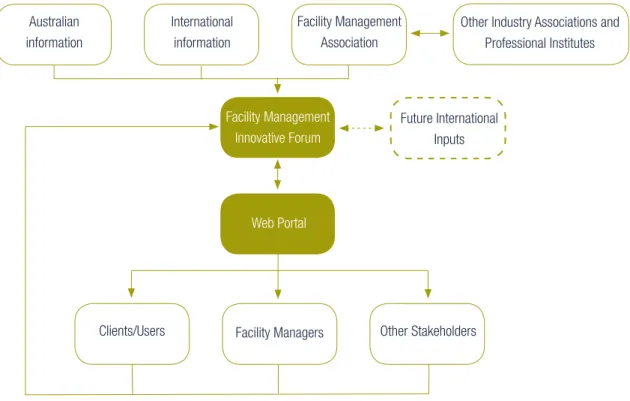
Better management of information flows requires a strategic understanding of the innovation process and establishing effective means to gather and distribute information to a broad audience. Figure 3 shows how the facilities management industry might better manage information flows to encourage greater innovation.
USING EXISTING TECHNOLOGIES IN INNOVATIVE WAYS
Corrections Victoria, a business unit of the Department of Justice, is responsible for the operations and facilities management of 11 public prison facilities in Victoria, comprising approximately 200,000 m2 of
physical assets.
A coordinated facility management approach applying the innovative use of existing technology was piloted involving Victoria’s two women’s correctional facilities.
Facilities Asset Condition Audits on these facilities included the use of hand-held computers which integrated computer-aided drafting floor plans and digital imagery with a database that provided a web-based browser reporting interface. Life Cycle Analysis data and Life Cycle Costing data were also integrated within the database for long-term planning and audit outcomes.
Significant savings were achieved to the project both in time and cost. The objective to achieve a minimum 95% coverage of all possible asset conditions in predefined formats was met. This enabled Corrections Victoria to efficiently roll-out repairs and maintenance to their assets, using third-party contractors and so on, in a programmed and unambiguous manner.
The strategic facilities management outcomes arising from this helped establish a framework for future direction in design, con-struction and operation of correctional facilities in Victoria.
Australian information International information Facility Management Association
Other Industry Associations and Professional Institutes
Facility Management Innovative Forum
Web Portal
Clients/Users Facility Managers Other Stakeholders Future International
Inputs FIGURE 3: STRATEGIC MANAGEMENT OF INFORMATION FLOWS FOR INNOVATION
An innovation forum
A first step in promoting timely and relevant flows of information could be to establish an Innovation Forum. This would enable industry participants to come together, possibly on an annual basis, to exchange information and ideas.
The primary aim of the forum would be to gather, filter and disseminate information and data on best practice in innovation for the facilities management industry at the local and international levels.
The proposed Innovation Forum could also provide for international facilities management input, potentially via the Facility Management Association’s ‘Partners in FM Excellence’ agreements with British Institute of Facilities Management, International Facility Management Association and others.
A web portal
A second, and enduring, means of promoting the timely and relevant flow of information relating to innovation would be the development of an information web portal.
ACTION 3
Establish a Facilities Management Innovation Forum for the facilities management industry.
ACTION 4
Establish a web portal for the facilities management industry to disseminate information and provide feedback on innovation, education and training, regulatory issues, and sustainability. The portal could be sponsored by an existing and related organisation such as the FMA, Australian Sustainable Built Environment Council or Cooperative Research Centre for Construction Innovation and could disseminate information to the broader industry.
Initial areas of focus for the portal could be the four areas identified as priority areas for innovation:
– whole-of-life
– occupation of the workplace – measurement and management – future planning for innovation.
The portal could cover developments in technology, shifts in the market place, lessons learned by others, and changes in the regulatory environment. The portal could also provide a mechanism for facilitating dialogue within the industry and with other participants on emerging issues affecting facilities management.
ENCOURAGING INNOVATION
As an emerging industry, the facilities management industry needs to promote the message that investment in innovation is a means of generating value and sustainable growth in the industry. There is a perception that the facilities management industry does not perform well in the area of innovation. This perception needs to be addressed. All facility managers, whether at the strategic, managerial or operational level, need to see innovation as intrinsic to their work.
Developing strategies to manage intellectual property (IP) is particularly challenging. Generally, IP is easily replicable and has a short life. Most IP in the facilities management industry are held as trade secrets and relate to technology or processes transferred or adapted from overseas or from other sectors.
The growing demands of facility users for higher levels of service delivery and building amenity are driving up client expectations of the facilities management industry. This will require the industry to provide innovative solutions to meet clients’ specific needs. Improved research and development (R&D) performance, increased cooperation within the industry, and greater collaboration between the industry and the research community are all necessary to speed up the innovation process.
Firms may be concerned about accepting the full commercial risks of research projects. By taking advantage of
government-sponsored R&D programs and by collaborating with other private and public researchers, firms can minimise their risk exposure and maximise the potential benefits of innovative R&D activity. Promotion of innovation within the facilities management industry can be achieved in a variety of ways, including: – undertaking a needs analysis of R&D capability within the
facilities management industry
– developing a ‘toolkit’ that explains relevant government assistance programs in the facilities management industry context
– developing case studies reflecting the benefits of innovation – undertaking a demonstration project with industry-wide
applicability and relevance and with measurable outcomes demonstrating the benefits of innovation.
ACTION 5
Promote the benefits of innovation and encourage greater industry collaboration and investment in research and development.
PERFORMANCE MEASURES
The growth of facilities management as a distinct industry has been driven by demands from clients for solutions that enhance their performance and profitability.
An important means of engaging and adding value to client needs could be for the facilities management industry to take a leadership role in the development of ‘whole-of-life’ performance measures and benchmarks, in close consultation with client groups.
Benchmarks could be developed based on agreed measures of performance using industry best practice. This would demonstrate the industry’s role as a steward of the built environment, not only in its management but also in influencing design outcomes.
There is a growing body of evidence identifying increased workplace productivity brought about by innovative working environments. As a steward of the built environment, the facilities management industry is well placed to champion innovation in this area.
ACTION 6
Highlight the contribution that facilities management makes to productivity by establishing performance measures and ‘best practice’ benchmarks, incorporating client input, with a specific focus on improving workplace productivity.
WORKFORCE CHARACTERISTICS
The Access Economics study estimated that, in 2002–03, facilities management directly employed around 135,000 persons or about 1.6 per cent of Australia’s workforce. It also contributed to the employment of an additional 37,000 persons in upstream industries or a further 0.5 per cent of Australia’s workforce. Of those directly employed in the industry, it is estimated that 16,000 were engaged in providing management services for facilities.
The remaining 119,000 persons were involved in the delivery of facility services, including trade-based services such as plumbing, gas and electricity, carpentry, air conditioning, and lift maintenance. This group also includes lower skilled workers such as cleaners and security operators.
The Education and Training Working Group surveyed 17 facilities management firms employing a total of 1,978 people. The survey was undertaken to gain information on attitudes to training, how skills needs were changing, and what firms were doing to meet these changing needs. The firms are a representative sample
including those that provide services to owners, investors and occupiers and those that deliver the services in-house. Survey respondents indicated that the majority of their existing facility management workforce held trade-based Technical and Further Education (TAFE) qualifications or specialised professional qualifications such as architecture or engineering. Most had been recruited from within their organisation.
Firms reported that they have recently shifted their skills mix away from specialised technical and professional capabilities towards broader managerial skills.
Increasingly, firms have recruited new staff from outside their organisation, favouring people with project, contract or property management backgrounds. This has reflected the industry’s evolution away from the delivery of specific facility services towards the provision of strategic facility management services. Respondents expect the trend towards recruiting university educated people to increase. They see the industry’s future in the provision of more complex advice to a wide range of clients in the property sector.
The survey participants noted that the future facilities management workforce will need to possess different skills sets than previously. Firms will need employees with high level communication and customer service skills, the capacity to negotiate with senior management, and the ability to present business cases.
C
H
A
P
T
E
R
3
IM
P
R
O
V
IN
G
E
D
U
C
A
T
IO
N
A
N
D
T
R
A
IN
IN
G
OBJECTIVETo ensure on-going access to a highly skilled facilities management workforce.
They will also need people with tertiary qualifications in various management specialities including assets, property, real estate and risk management.
EDUCATION AND TRAINING IS ESSENTIAL Education and training is essential to creating a facilities management workforce that is recognised by clients as professional and capable of delivering a valuable and cost effective service.
A well trained professional workforce can create new market opportunities and improve firms’ productivity and profitability. It can also help the industry exercise leadership in creating a more productive and sustainable built environment.
Barriers to increasing the skill levels of the facilities management workforce include:
– a lack of awareness among school leavers and others that facilities management is a worthwhile career option – a reliance of the industry on ‘transitioners’ as a source
of new recruits, and the difficulties these recruits have in moving from vocational education and training (VET) to higher education and in undertaking additional study – the newness of the VET training package and a lack of
support materials to encourage and assist registered training organisations (RTOs) deliver the new courses
– the potential for people to be diverted into parallel
professions because of the scarcity of facilities management training at the undergraduate level.
DEVELOPING APPROPRIATE CAREER PATHWAYS
The facilities management industry needs competent, flexible employees able to communicate with senior management and to meet the varying demands of the job. The education and training sector has a responsibility to develop career pathways that: – are based on a strong understanding of industry’s needs – take into account the wide range of contexts in which a
facility manager will be working
– can deliver educational programs that respond to the requirements of students from differing backgrounds – produce qualified people with skills that are transportable
across the industry and can form the basis for career progression.
More than 70 VET providers around Australia deliver the Property Operations and Development Sector (PODS) Training Package which includes provision for facilities management training. This package was recently reviewed and a wide-ranging competency assessment has been conducted leading to the development of a new package (the Property Development
EDUCATION AND TRAINING…
‘Nationally recognised facility management
education and training programs, tailored to the
needs of the industry and delivered by
mainstream providers, are essential for the
development of the facilities management sector
in Australia’.
8and Management Training Package) with increased facilities management content.
In the higher education sector, facility management courses are delivered at the Bachelor and post graduate level. Some universities participate in the Australian Greenhouse Office’s Green Steps Program. This gives advanced level students the opportunity to participate in hands-on change management projects, including many in facilities management.
University undergraduate courses offering Facilities Management units are currently available in all States and Territories. They are typically four year full-time Bachelor award courses in Construction, Construction Management or Building Construction Management and are delivered by Faculties of Engineering, Construction and Built Environment.
Property Development, which includes units on property valuation, property financing and property investment analysis, is covered in courses such as the Bachelor of Property Economics, a four year course at the University of Technology Sydney; or the Bachelor of Applied Science (Property Economics), a three year course at the Queensland University of Technology.
Facilities Management units, such as building surveying, sustainable building technology, and contract administration, are available through various Bachelor of Building and Construction
Management four year full-time courses delivered at Universities with Engineering and Building faculties.
The Facility Management Association of Australia has an accreditation scheme which gives recognition to the experience and skills people have gained on-the-job as well as more formal qualifications.
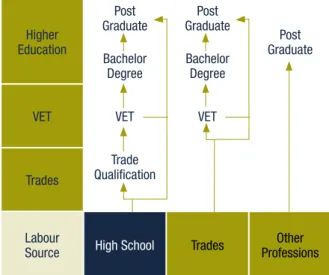
Figure 4 illustrates career development pathways into the facilities management industry. Higher Education Post Graduate Bachelor Degree Post Graduate Bachelor Degree Post Graduate
VET VET VET
Trades
Trade Qualification
Labour
Source High School Trades ProfessionsOther FIGURE 4: FACILITIES MANAGEMENT CAREER DEVELOPMENT
Figure 4 shows pathways into the facilities management industry from schools through the VET system and university and higher education institutions.
COMPETENCIES AND INDUSTRY NEEDS
Greater recognition of facilities management as a profession will depend on increased recruitment through the higher education sector.
Facilities management can thereby compete for the best talent to ensure a continuing stream of highly educated practitioners prepared to test traditional thinking and methodologies. Facilities management firms are increasingly valuing education and training. Most see it as a way to retain staff, improve productivity and achieve greater recognition by clients of the firm’s capability and professionalism.
In recent years, firms have moved away from informal, on-the-job learning to more formal training and increased recruitment of people with recognised university qualifications.
However, the VET sector continues to be important in the training of facility managers. This reflects the industry’s reliance on people transitioning from trade areas to the more strategic area of facility management.
The main barriers limiting the education and training sector’s capacity to meet industry needs include:
– a lack of awareness in the community of facilities management as a career
– a lack of clearly defined career pathways
– a perceived failure of available courses to provide the knowledge and skills required by industry.
Vocational education and training sector
Vocational education and training is delivered by states and territories, which accredit RTOs (including TAFEs and private providers) to provide training.
On a national level the Australian Government works through a number of mechanisms to encourage national consistency and high quality. One way is through industry-developed training packages (see Appendix B).
Industry input and advice is the responsibility of the Australian National Training Authority (ANTA) endorsed Industry Skills Councils—for this industry, the Construction and Property Services Industry Skills Council.
The PODS package has recently been replaced by a new Property Development and Management Training Package. This comprises competency standards, assessment guidelines and a qualification framework for training in facilities management and other property related areas.
The competency standards were based on an extensive survey of industry needs. Interested TAFEs and RTOs can now register to deliver this package.
A key challenge for the industry will be to encourage the VET sector to deliver the full range of training options offered under the Property Development and Management Training Package. This could be achieved by industry taking action to:
– encourage individual TAFEs and RTOs to deliver the training package
– assist in the development of appropriate support materials – investigate options such as the development of skills centres – work with the Construction and Property Services Industry
Skills Council to support the implementation of the Package.
Universities
Raising the standard of facilities management education, and the possibility of a separate facilities management award, will require the industry to work more closely with individual universities. Universities encourage industry input through advisory committees that review course content and linkages with professional bodies and associations to monitor quality.
Proposals to encourage universities to increase the delivery of facilities management courses will need to demonstrate: – a well documented profile of the kind of person the industry
is seeking including a skills audit that identifies the type of skills required and their current availability within the community
– a guaranteed and sufficient supply of students over the long-term
– that industry is committed to the course, will support the administrators in developing appropriate teaching materials, and will readily accept and employ the graduates.
It might also be possible for the industry to encourage universities to increase the delivery of facility management undergraduate courses based on existing arrangements.
A possible model (see figure 5) could be a three-year, 24 unit, credit-based program, consisting of a minimum of six core units ACTION 7
Work with the Construction and Property Services Industry Skills Council to support the provision of vocational education and training for the facilities management industry.
PROPERTY DEVELOPMENT AND MANAGEMENT TRAINING PACKAGE The new Construction and Property Services Industry Skills Council has established the Property Development and Management Training Package to help boost training investment in the industry and to keep the training system relevant to skills covering every aspect of Australia’s buildings, from design through to cleaning. Key competencies identified cover generic business skills including strategic planning and leadership. Specific facilities management competencies include life cycle strategies, risk management, portfolio and asset management, procurement and coordination of business relationships.
(two per year) plus 14 selective and four elective units spread over the duration of the course.
– provide an effective interface between the VET and higher education sectors and a clear pathway from undergraduate to post graduate qualifications
– be credit-based to enable recognition of prior learning within the VET sector or at other institutions or of prior learning through workplace experience.
Delivery of the degree, including teaching methods and assessment practices, would be designed to accommodate student needs. Course planners would need to recognise that many students would be part-time and would bring varying levels of work experience and prior learning to their studies.
Current demographics within the industry suggest that initial demand for university places would be from the eastern states, where two universities could offer a Bachelor of Business (Facility Management) degree.
One means of identifying potential course providers would be for industry to call for expressions of interest from universities. A dedicated facility management course could initially leverage off current management disciplines provided by established universities and business schools.
Year of Study Core Units Management and Economics
Technical or Specialist
Year 3 2 units 3 units 3 units
Year 2 2 units 3 units 3 units
Year 1 2 units 3 units 3 units
TOTAL (24) 6 units 9 units 9 units
Minimum Requirement
(24) 6 units Selective (9)
Selective (5) Elective (4) FIGURE 5: POSSIBLE FACILITY MANAGEMENT UNDERGRADUATE
DEGREE
Source: Education and Training Working Group Such a course would:
– be based on strong and continuing industry involvement in assessing, accrediting and reviewing course proposals, content and relevance, and in monitoring the quality of delivery
As a way forward, the SILG considers that the industry should: – work with universities already delivering relevant courses at
the undergraduate level
– seek continuing industry representation through university advisory bodies or other similar mechanisms
– develop industry wide policy positions and support the work of the industry representatives on these bodies.
Articulation from the VET to the higher education sector
Employers in the facilities management sector perceive that students have problems in moving from the VET sector into higher education.
Additionally, gaining recognition for prior learning, to the extent that ‘transitioners’ who have trade qualifications and substantial work experience and are returning to study after many years in the workforce, is an issue requiring attention.
There would be benefit in developing an innovative project that would encourage greater collaboration between the VET and
higher education sectors in the provision of facilities management education.
This could be achieved by seeking competitive funding from the Department of Education, Science and Training’s Collaboration and Structural Reform Fund.
A possible project could aim to develop a better understanding of the problem and to work with relevant agencies and authorities to create innovative solutions that benefit both the industry and individual employees.
ACTION 8
Work with Australian universities to increase the availability of
facilities management courses at the undergraduate level. ACTION 9
Develop an innovative project that will encourage greater collaboration between the VET and higher education sectors in the provision of facilities management education.
A CAREER OF CHOICE
The facilities management industry’s reputation for
professionalism and its credibility among potential clients will rely on its capacity to attract the best talent to the profession. Possible ways to promote the facilities management profession as a satisfying and rewarding career include:
– maintaining up-to-date information in relevant career advice publications such as the Job Guide and career information web sites such as http://www.myfuture.gov.au