Women & Health
ISSN: 0363-0242 (Print) 1541-0331 (Online) Journal homepage: http://www.tandfonline.com/loi/wwah20
The Effects of a Reformer Pilates Program on Body
Composition and Morphological Characteristics in
Active Women after a Detraining Period
Raquel Vaquero-Cristóbal, Fernando Alacid PhD, MSc, Francisco Esparza-Ros PhD, MD, Daniel López-Plaza PhD student, MSc, José M. Muyor PhD, MSc & Pedro A. López-Miñarro PhD, MSc
To cite this article: Raquel Vaquero-Cristóbal, Fernando Alacid PhD, MSc, Francisco Esparza-Ros PhD, MD, Daniel Plaza PhD student, MSc, José M. Muyor PhD, MSc & Pedro A. López-Miñarro PhD, MSc (2015): The Effects of a Reformer Pilates Program on Body Composition and Morphological Characteristics in Active Women after a Detraining Period, Women & Health, DOI: 10.1080/03630242.2015.1118723
To link to this article: http://dx.doi.org/10.1080/03630242.2015.1118723
Accepted author version posted online: 19 Nov 2015.
Submit your article to this journal Article views: 25
View related articles
Accepted
Manuscript
The effects of a reformer Pilates program on body
composition and morphological characteristics in
active women after a detraining period
Raquel Vaquero-Cristóbal,1 Fernando Alacid, PhD, MSc,2 Francisco Esparza-Ros. PhD, MD,1 Daniel López-Plaza. PhD student, MSc,3 José M. Muyor. PhD, MSc,4 and Pedro A. López-Miñarro. PhD, MSc5
1
Department of Sport Traumatology, Catholic University San Antonio of Murcia (UCAM), Murcia (Spain).
2
Department of Sport Science, Catholic University San Antonio of Murcia (UCAM), Murcia (Spain).
3Department of Sport, Coaching and Exercise Science. University of Lincoln, Lincoln (England).
4
Laboratory of Kinesiology, Biomechanics and Ergonomics (KIBIOMER), University of Almería, Almería (Spain).
5
Department of Physical Education, University of Murcia, Murcia, Spain.
Abstract: The aim of this quasi-experimental pilot study was to explore the effects of a reformer Pilates program on the anthropometry, body composition and somatotype of active adult women after a short non-exercise period. Twenty-eight women (mean age: 40.21 ± standard deviation of 8.12 years old) with one to three years of reformer Pilates experience participated in the study. The women participated in a reformer Pilates program for 16 weeks (one hour, twice per week) after 4 weeks of detraining (summer holidays) in 2012. The International Society for the Advancement of Kinanthropometry full profile was assessed before and after the intervention program. Significant decreases (p≤0.05) from pre- to post-program were observed for triceps, iliac crest, supraspinale, abdominal, front thigh and medial calf skinfold thicknesses, six and eight skinfold thickness sums, forearm and ankle girths, waist/hip ratio, endomorphy, and fat
Accepted
Manuscript
mass. Significant increases (p≤0.05) were observed for corrected arm, corrected calf girths, and muscle mass. Generally, women showed a mesomorphic endomorph (endomorphy predominant) and mesomorph-endomorph (endomorphy and mesomorphy predominant) in the pre- and post-tests, respectively. In conclusion, the practice of reformer Pilates was associated with healthy changes in anthropometric parameters, body composition and somatotype in Pilates-experienced women after 4 weeks of no physical exercise.
KEYWORDS: Body mass index, women, physical activity, Pilates method, quality of life, weight
Received 20 Dec 2014; revised 06 Jun 2015; accepted 20 Jul 2015.
Correspondence:
Raquel Vaquero-Cristóbal
Email: [email protected]
Department of Sport Traumatology, Catholic University San Antonio of Murcia, University Campus of the Jerónimos, s/n. CP, 30107 Guadalupe, Murcia, Spain.
INTRODUCTION
In developed countries, many people seek physical activity programs to improve their health (García-Ferrando & Llopis-Goig, 2011). Several studies have shown a relationship between physical exercise and physical, psychological and social health (Cruz-Ferreira, Fernandes,
Accepted
Manuscript
Laranjo, et al., 2011; Cruz-Ferreira, Fernandes, Gomes, et al., 2011; García-Ferrando & Llopis-Goig, 2011; Herrero & Cabañas, 2009). Further, recent findings have suggested a relationship between health and both body composition and anthropometry parameters, including body mass, skinfold thickness sum, body mass index (BMI) or waist/hip ratio (Herrero & Cabañas, 2009; Martin et al., 1985; Rosety-Rodriguez et al., 2013). Another method, the somatotype, gives the quantification of the present shape and composition of the human body as a whole (Maestre, Méndez & Ordaz, 2009). This method has been proposed for use in studying ontogenic changes and differences among populations (Maestre, Méndez & Ordaz, 2009).
The effects of each exercise discipline on the anthropometry variables and body composition depends on the sample characteristics. Previous studies have reported that sedentary adult women have higher body mass and fat mass than physically active women (Blanco et al., 2011). According to Huang et al. (2013) higher weight and fat mass are related to greater energy expenditure and net metabolic cost.
Recent trends in the practice of physical exercise have led to a proliferation of women participating in organized physical exercise programs to improve their health and social relationships (García-Ferrando & Llopis-Goig, 2011). However, during the summer holidays these programs are not available. A detraining period of 4 weeks after a physical exercise training program increases individual skinfold thicknesses (Delshad et al., 2013), body fat mass (Ormsbee & Arciero, 2012), waist circumference (Ormsbee & Arciero, 2012) body weight (Cascales-Ruiz, Del Pozo-Cruz & Alfonso, 2015; Ormsbee & Arciero, 2012) and BMI (Cascales-Ruiz, Del Pozo-Cruz & Alfonso, 2015). Other studies also find some changes in
Accepted
Manuscript
anthropometric variables and body composition with physical exercise after a detraining period (Carbuhn et al., 2010; Young et al., 2014).
Pilates has become one of the most popular organized physical activities, and many women participate in it to improve their physical, psychological and social state (Isacowitz, 2006). Pilates has been associated with psychological well-being (Cruz-Ferreira, Fernandes, Gomes, et al., 2011), improved spinal posture Ferreira et al., 2013), hamstring extensibility (Cruz-Ferreira, Fernandes, Laranjo, et al., 2011; Kloubec, 2010), trunk stability, flexibility, and dynamic balance (Cruz-Ferreira, Fernandes, Laranjo, et al., 2011).
Pilates is a method of body conditioning developed over ninety years ago by Joseph H. Pilates (Isacowitz, 2006). It offers a “core” musculature and stability workout in which fitness components, such as muscular strength and endurance, flexibility, balance and cardiorespiratory endurance, are trained, with the aim of connecting and conditioning the entire body and mind (Latey, 2011). This method of mind-body exercise is based on six key principles: centering, concentration, control, precision, flow and breath (Latey, 2011). Some Pilates schools of thought show little difference in comparison to Joseph Pilates original method (Latey, 2011). Furthermore, Pilates includes different modalities, such as: Pilates on mat, performed using no special apparatus other than a mat on the floor; and reformer Pilates, which involves the use of a machine (the reformer) to perform the exercises using a controlled technique (Isacowitz, 2006). The reformer is the most recognizable and popular piece of equipment in the Pilates menagerie (Isacowitz, 2006). The reformer is perhaps the most user-friendly apparatus on which to perform
Accepted
Manuscript
the foot work. It places the body in a comfortable, non weight-bearing supine position and recruits the muscles in a balanced fashion (Isacowitz, 2006).
Some research has analyzed the effects of Pilates exercising on anthropometric variables and body composition (Baltaci et al., 2005; Cakmakçi, 2011; Cakmakçi, 2012; Cruz-Ferreira, Pereira & Fernandes, 2009; Fourie et al., 2013; Garcia & Aznar, 2011; Jago et al., 2006; Kloubec, 2010; Rogers & Gibson, 2009; Segal, Hein & Basford, 2004; Sekendiz et al., 2007). The majority of studies have examined mat modality Pilates (Baltaci et al., 2005; Cakmakçi, 2011; Cakmakçi, 2012; Cruz-Ferreira, Pereira & Fernandes, 2009; Fourie et al., 2013; Garcia & Aznar, 2011; Jago et al., 2006; Kloubec, 2010; Rogers & Gibson, 2009; Segal, Hein & Basford, 2004; Sekendiz et al., 2007), and most of them have concluded that Pilates on mat induced positive changes in anthropometric variables and body composition (Baltaci et al., 2005; Cakmakçi, 2011; Cakmakçi, 2012; Cruz-Ferreira, Pereira & Fernandes, 2009; Fourie et al., 2013; Garcia & Aznar, 2011; Rogers & Gibson, 2009).
Pilates is a physical exercise that needs great postural control and correction; so it requires a long familiarization process (Isacowitz, 2006), in which the load of training and the intensity of the exercise may remain low. However, a recent systematic review has concluded that the studies that have analyzed the effects of Pilates practice on anthropometry variables and body composition have included only novice participants (Vaquero-Cristóbal, Alacid, Esparza-Ros, Muyor & López-Miñarro, 2014).
We are aware of no longitudinal studies have investigated the effects of Pilates practice after a short period of detraining. Thus, the aim of this pilot study was to explore the effects of a
Accepted
Manuscript
week reformer Pilates program on the anthropometry, body composition and somatotype of women with previous reformer Pilates experience after the summer holidays (4 weeks). The hypothesis of this research was that a reformer Pilates intervention would induce beneficial changes in anthropometric variables, body composition and somatotype over 16 weeks of an intervention program after 4 weeks of detraining, even though the participants were active and had previous experience in Pilates.
METHODS
Participants
An Institutional Ethical Committee approved the study protocol. Data collection took place in September 2012. Recruitment was via a letter to all clients of the “Movement Pilates y Salud” center in Murcia (Spain). Inclusion criteria were: 1) healthy women aged 25-55 years old, to provide a wide age range of adult women; and 2) women with one to three years (one hour, two days a week) of reformer Pilates experience. Women were excluded if they: currently were pregnant, had a non-communicable disease (autoimmune disease, heart or cardiovascular disease, fibromyalgia, stroke, cancer, asthma, diabetes, chronic kidney disease, osteoporosis or Alzheimer's disease), engaged in regular physical exercise practice during the previous summer, participated in another exercise modality, or had been on a diet during the previous three months. A researcher screened the participants for eligibility. All participants signed an informed consent form before participation and completed a demographic and physical exercise habit questionnaire. Sixty-four women received the information letter. Ten did not want to participate
Accepted
Manuscript
in the study, and nineteen did not meet the eligibility criteria (Figure 1). Women were excluded from the study after enrollment if: 1) they had been pregnant during the Pilates intervention period; 2) they started to practice another exercise modality plus the Pilates method during the intervention program; 3) they had changed her dietary habits during the intervention program; 4) they had been on a diet during the program; or 5) they had not completed at least 80% of the sessions. After the intervention program, the final sample for analysis consisted of 28 participants. Seven women were excluded because: one became pregnant during the intervention period; two others because they started a diet during the intervention period; another one because she started to practice other physical exercise (indoor cycling) simultaneously with the Pilates program; and another three because they did not complete at least 80% of the sessions (75%, 68% and 54% of the sessions, respectively).
Data Collection
Women answered four questions developed for this study about changes in their: 1) physical exercise habits “Have you done other physical exercise -like running, going to the gym, swimming, walking at a pace that does not allow you to talk easily, etc.- simultaneous to the Pilates method in the last four months? Which one? How long ago? How many days and hours per week?)”; 2) pregnancies “Have you been pregnant in the last four months or are you pregnant now?)”; and 3) their dietary habits “Have you been on diet in the last four months or are you on diet now?” and “Have you significantly changed your dietary habits in the last four months (for example, do you eat more/less fruit and vegetables, nuts, meat, fish, cereals, pasta, fast food, etc.? How? When? Why?)” in the post-test.
Accepted
Manuscript
Intervention
Classes comprised 7 practitioners who took part in a reformer Pilates program according to Joseph Pilates original method over 16 weeks (one hour, twice per week on non-consecutive days) after four weeks of detraining (summer holidays). The frequency (twice per week) and duration (16 weeks) of the reformer Pilates program came from the results of a recent systematic review of the effects of the Pilates method (Vaquero-Cristóbal, Alacid, Esparza-Ros, Muyor and López-Miñarro, 2014), which found that two to four sessions per week for eight or more weeks were necessary to change anthropometry variables and body composition.
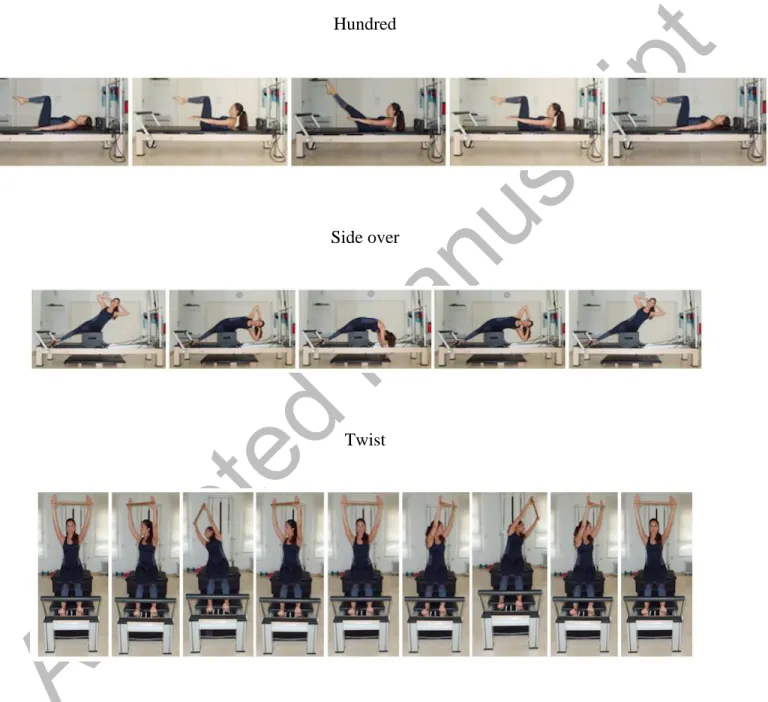
The intervention program focused on postural control of the pelvic, spine and lower extremities; trunk muscle training (transversus abdominis, rectus abdominis, internal and external obliques, gluteus and lumbar paraspinal muscles); trunk mobility in the sagittal and transverse planes; scapular stability; and hamstring, calf, gluteus, pyriformis, erector spinae, pectoralis major and minor and iliopsoas flexibility training. The Pilates program was similar for all the clients of the Pilates center, and the instructors were not informed about which women made up the study sample. The instructors had qualifications in both reformer Pilates method and physiotherapy and had almost one year of experience as instructors. The instructors remained the same for each class of participants, and the head instructor supervised them. The instructors taught all the sessions and only directed the progression of exercises throughout the intervention. Exercises progressed in difficulty during the program from intermediate to advanced exercises (see examples of some exercises in Figure 1). Some of the exercises were: hundred; side over; twist; shoulder bridge prep; long stretch; bottom lift with extension; elephant; stork; roll-up; teaser;
Accepted
Manuscript
scissors; climb-a-tree; swan; frog; short spine; side split; hamstring stretch kneeling lunge; hamstring stretch full lunge; supine triceps; seated biceps; hundred prep; supine arm circles; rowing.
The resistance of the reformer for each exercise was adjusted individually to adapt the Pilates program to each participant. At the end of each session of the intervention program, participants were asked their perceived level of exertion on a Borg scale of 0-10 (Borg, 1982) to control the level of resistance of the reformer of each participant and to gradually increase exercise intensity throughout the intervention (from moderate to very hard). Recent evidence suggests that the session rating of perceived exertion, measured by a Borg scale of 0-10, is an effective method of changing resistance training programming variables in sub-maximal training sessions (Hiscock, Dawson & Peeling, 2014).
Outcome Measurements
The head researcher, a Level 2 anthropometrist certified by the International Society for the Advancement of Kinanthropometry (ISAK), took pre-test anthropometric measures of participants in the first week of September 2012 and post-test measures in the first week of January 2013. The researcher had no knowledge of the pre-program measurements when making the post-program measurements.
The intervention program lasted from the second week of September to the last week of December. The main researcher instructed participants not to eat a heavy meal or participate in any vigorous physical activity 24 hours before the pre- and post-tests. The temperature of the
Accepted
Manuscript
laboratory was 24°C. The Pilates center was closed during August for the summer holidays; so women had not performed Pilates during this month.
Anthropometric characteristics
The head researcher assessed the International Society for the Advancement of Kinanthropometry’s (ISAK) full profile variables: body mass (kg); stretch stature (cm); sitting height (cm); arm span (cm); eight skinfolds thicknesses (triceps, subscapular, biceps, iliac crest, supraspinale, abdominal, front thigh and medial calf) (mm); thirteen girths (head, neck, arm relaxed, arm flexed and tensed, forearm, wrist (distal styloid), chest (mesosternale), waist, gluteal, thigh (1 cm distance gluteal line), thigh (middle trochanter-tibiale laterale), calf and ankle) (cm); eight segment lengths (acromiale – radiale, radiale – stylion, midstylion – dactylion, iliospinale height, trochanterion height, trochanterion – tibiale laterate, tibiale laterate height and tibiale mediale – sphyrion tibiale) (cm) and eight bone breadths (biacromial, biiliocristal, foot length (akropodion-pternion), transverse chest, antero-posterior chest depth, humerus (biepicondylar), femur (biepicondylar) and wrist (bistuloid)) (cm). The researcher assessed all the outcome measurements before and after the intervention program in accordance with the ISAK guidelines standard techniques (Stewart et al., 2011). The researcher was blind to measurements from previous time points. Measurements of variables took place two or three times if the difference between the first two measurements was greater than 5% for skinfold thicknesses and 1% for the rest of the outcomes, with the mean (or median in the last case) values used for data analysis. The average intra-rater technical error of variables was 2.97% for the skinfold thicknesses and 0.63% for the other outcome measurements.
Accepted
Manuscript
A SECA 862 scale (SECA, Germany) measured body mass; a GPM anthropometer (Siber-Hegner, Switzerland) and a segmometer Cescorf (Cescorf, Brazil) stretch stature, sitting height, arm span, direct lengths and breadths; a metallic non-extensible tape Lufkin W606PM (Lufkin, USA) measured girths and used a Harpenden skinfold caliper (British Indicators, UK) to measure skinfold thicknesses. To avoid measurement errors, the instruments were calibrated in advance.
Other variables were calculated based on full profile outcome. The following formula corrected skinfold girths: corrected girth (cm) = girth (cm) – (π · skinfold thickness (cm)). Additional outcome measurements calculated were: BMI (kg/m2) (body mass (kg) / stretch stature (m)2); six (triceps, subscapular, supraspinale, abdominal, front thigh and medial calf skinfold thicknesses (mm)) and eight (triceps, subscapular, biceps, iliac crest, supraspinale, abdominal, front thigh and medial calf skinfold thicknesses (mm)) skinfold thickness sums (mm); and waist / hip ratio (cm) (waist girth (cm) / gluteal girth (cm)).
Body composition
The penta-compartmental component strategy by Ross and Kerr (1991) determined body composition (fat, muscle, bone, skin and residual masses) in kg.
Somatotype
The equations of Carter and Heath (1990) calculated anthropometric somatotype. Somatotype includes three components: endomorphy, which is the relative fatness; mesomorphy, which is the relative musculoskeletal robustness; and ectomorphy, which is the relative linearity (Carter and Heath, 1990). Range of scores for endomorphy, mesomorphy and ectomorphy were from 1
Accepted
Manuscript
(minimum) to 7 (maximum). Attitudinal mean somatotype was a measure of average dispersion with respect to the mean somatotype. We also calculated differences between the somatotype attitudinal mean in the pre- and the post-tests.
Statistical Analysis
Shapiro-Wilk’s and Levene’s tests, respectively, were used to assess normality and homogeneity of the variances. Statistical tests revealed no violations of the assumptions of normality and homogeneity. We calculated descriptive statistics, including means and standard deviation. We performed parametric analyses. A paired t-test was used to assess the differences in anthropometric measures between the pre- and the post-tests. The level of significance was set at p≤0.05. The effect size was calculated using Cohen’s d coefficient. A value lower than 0.2 was considered low effect size; a value between 0.2 and 0.4 was considered a low-moderate effect; a value between 0.4 and 0.6 was considered a moderate effect; a value between 0.6 and 0.8 was considered moderate-high effect; and a value higher than 0.8 was considered a high effect (Cohen, 1988). Data analyses were performed with the Statistical Package for Social Sciences (SPSS Inc, version 21.0, Chicago, ILL, USA).
RESULTS
Sociodemographic characteristics of the participants
Participants had a mean (+ standard deviation (sd)) age of 40.21 ± 8.12 years and mean (+sd) years of previous reformer Pilates practice experience of 1.46 ± 0.39 years.
Accepted
Manuscript
The majority of participants had completed secondary (48.57%, n = 17) or post-secondary education (45.71%, n = 16) (Table 1). Most of the women lived with a partner with or without children (65.71%, n = 23), and 25.71% (n = 9) lived without a partner, either alone or with children. Furthermore, 74.29% (n = 16) had family responsibilities (children or other family). Most participants (68.57%, n = 24) were employed; 25.71% (n = 9) were unemployed.
Changes in anthropometric characteristics and other variables
The paired t-tests revealed significant differences between the pre- and the post-test means, including: a moderate effect size for triceps (-9.00%; p = .050), iliac crest (-8.95%; p = .008) and supraspinale skinfold thicknesses (-13.32%; p < .001); a high effect size for abdominal skinfold thickness (-22.65%; p < .001); a low effect size for front thigh skinfold thickness (-6.68%; p = .027); and moderate-high effects for medial calf skinfold thickness (-16.68%; p < .001) and six and eight skinfold thickness sums (-12.53 and -11.80%, respectively; p < .001) (Table 2, Figure 3). Some girths also showed significant differences between measurements, with an effect size from low to low-moderate for corrected arm (3.08%; p = .022), forearm (-2.14%; p < .001), corrected calf (3.04%; p = .013) and ankle girths (-1.35%; p = .01) and for waist/hip ratio (-2.70%; p = .015). The values in the pre-test were significantly higher in all of these variables than in the post-test, except for the corrected girths, in which higher values were observed in the post-test. Body mass, arm span, breadths, heights and BMI did not show significant differences between the pre- and the post-test. See Table 2 and Figure 2.
Accepted
Manuscript
Changes in body composition and somatotype
We observed significant differences between the pre- and the post-test means with an effect size from low to low-moderate in the endomorphy (p = .003) and muscle mass (+4.54%; p = .032), and with a moderate-high effect size in the fat mass (-9.23%; p < .001) (Table 3). The values in the pre-test were higher in endomorphy and fat mass than in the post-test. Conversely, muscle mass showed higher values in the post-test than in the pre-test. Mesomorphy, ectomorphy and skin, bone and residual masses did not change significantly.
The penta-compartmental components strategy by Ross and Kerr (1991) does not take into account total weight when calculating individual masses. The error in respect to the sum of the individual masses was 2.52 ± 2.84 and 2.56 ± 2.57 kg in the pre- and post-tests, respectively. See Table 3.
In general, the women showed a mesomorphic endomorph (4.96 ± 1.17, 4.11 ± 1.10, 1.82 ± 1.12) and mesomorph-endomorph (4.54 ± 0.99, 4.18 ± 1.19, 1.82 ± 1.09) somatotype classification in the pre- and post-tests, respectively, using Carter and Heath’s (1990) method (Figure 2). Somatotype attitudinal mean was 1.03 and 1.24 for the pre- and the post-tests, respectively; and the difference between the somatotype attitudinal mean in the pre- and the post-tests was 0.70. Twelve women (42.86%) changed their somatotype classification between the pre- and the post-tests (Figure 4).
DISCUSSION
Accepted
Manuscript
The most interesting finding from the present pilot study was that body composition and morphological characteristics improved after the 16 weeks of reformer Pilates exercise. Previous studies had found that anthropometric variables and body composition improved quickly with an exercise program after a detraining period in collegiate or collegiate-level athletes with previous practice experience (Carbuhn et al., 2010; Young et al., 2014). Other research reported that similar detraining periods (4 weeks) after 12-weeks of strength training in women over 50 years of age or after a competitive season in swimmers or women collegiate athletes influenced anthropometric parameters, such as increases in individual skinfolds thicknesses, body fat mass, body weight and waist circumference (Carbuhn et al., 2010; Delshad et al., 2013; Ormsbee & Arciero, 2012). Recently, an experimental study showed that 12 weeks of detraining process after nine months of Pilates practice in novice women increased the body mass and the BMI (Cascales-Ruiz, Del Pozo-Cruz & Alfonso, 2015). In accordance with previous studies, women in the present study may have suffered a rapid detraining effect in 4 weeks after doing Pilates for one to three years, and a quick improvement with the return of Pilates practice.
Fat mass has been associated with cardiovascular and metabolic diseases, in particular after middle age (Herrero & Cabañas, 2009; Rosety-Rodríguez et al., 2013). The main finding of this study was that reformer Pilates intervention significantly reduced triceps, iliac crest, supraspinale, abdominal, front thigh and medial calf skinfold thicknesses, six and eight skinfold thickness sums and fat mass. These changes may reduce the risk of suffering cardiovascular and metabolic disease, especially past middle age (Prado, Del Valle & Marrodán, 2009; Rosety-Rodríguez et al., 2013). Our findings are in agreement with previous studies on Pilates on mat, such as those of Baltaci et al. (2005), Fourie et al. (2013), García and Aznar (2011) and Rogers
Accepted
Manuscript
and Gibson (2009), who determined that 4-weeks of Pilates practice, 5 sessions a week, for unhealthy women, or 8-week, two or three days per week, for active or sedentary healthy people reduced body fat and/or skinfold thickness sums. Cruz-Ferreira, Pereira and Fernandes (2009) also showed significant decreases in fat mass (-75.5 g; p = .045)as well as, percentage of fat mass (-2.0%; p = .008) for the upper and lower right limbs after a 12-week in women. However, they found no differences in the left limbs. In the current study we took measurements only on the right side of the body, according to the ISAK guidelines standard techniques (Stewart et al., 2011); so it is not possible to analyze if the Pilates program induced significant differences on the analyzed variables in the left extremities. Further research should be done to investigate the effects of Pilates training based on body side and laterality.
Results of the present study on skinfold thicknesses and fat mass were also partially in accordance with the findings of previous research. Cakmakçi (2011) analyzed the effects of eight weeks of Pilates on mat program in obese women. Their study found a significant decrease of the iliac and subscapular skinfold thicknesses, but not in the triceps skinfold thickness. Differences between both studies may be due to the fact that Cakmakçi (2011) proposed a short intervention program (eight weeks). In another longer study (10 weeks) with a similar sample, researchers found significant decreases in biceps, triceps, subscapular and iliac skinfold thicknesses, as well as a significant effect of training on fat percentage (Cakmakçi, 2012). However, the findings of the current study do not support all these changes in skinfold thickness. This may be because each study differed in the duration of its intervention program and involved a different Pilates modality and different sample characteristics. In addition, other research showed no change on skinfold thicknesses or fat mass (Segal, Hein & Basford, 2004; Sekendiz et al., 2007). It seems
Accepted
Manuscript
possible that Sekendiz et al. (2007) undertook too short an intervention program (only five weeks), and Segal, Hein and Basford (2004) did not schedule enough training volume (24 weeks of Stott Pilates program, one class of one hour per week).
Nevertheless, comparison of the fat mass values must be interpreted with caution, as previous studies have reported different methods and formulae of estimating fat mass (Prado, Del Valle & Marrodán, 2009). Martin et al. (1985) showed that adipose tissue patterning showed great variability, indicating the importance of using skinfold caliper readings from a variety of different sites. In line with previous studies, the present study calculated the fat mass using the Ross and Kerr’ method (1991), which includes six samples of skinfold thicknesses from the upper limbs, the front and back of the trunk and lower extremities.
Anthropometric indices, such as waist girths and waist/hip ratio, are the most frequently used tools for assessing obesity because of their simplicity, low cost, and strong correlation with the percentage body fat (Herrero & Cabañas, 2009). An important finding of the current study was that reformer Pilates intervention reduced forearm and ankle girths and waist/hip ratio but with a low or low-moderate effect size. Furthermore, other girths did not show a significant reduction. Changes in girths after the intervention program, especially in waist/hip ratio, would imply that women have lower weight or obesity, and are therefore in a better state of health after the intervention program. Other studies on Pilates have measured girths and waist/hip ratio obtaining contradictory results (Cakmakçi, 2011; Cakmakçi, 2012; Jago et al., 2006; Ramezankhany, Nazar & Hanachi, 2010; Rogers & Gibson, 2009). In accordance with our findings, Jago et al. (2006) did not identify significant differences in waist girth after an intervention program,
Accepted
Manuscript
whereas Ramezankhany, Nazar and Hanachi (2010) reported a significant decrease in waist/hip ratio after a Pilates program. Moreover, the results of the present study are partially in agreement with previous research. Rogers and Gibson (2009) studied waist, hips, chest, thigh and arm girths in novice practitioners before and after a Pilates on mat program. These findings agree with those reported here because gluteal (hips) and thigh girths showed no significant reduction. However, Rogers and Gibson (2009) found significant reductions in waist, chest and arm girths. In this line, previous studies have observed a significant training effect on waist/hip ratio after 8 and 10 weeks of Pilates mat intervention in obese and overweight women (Cakmakçi, 2011; Cakmakçi, 2012). However, Cakmakçi (2011) and Cakmakçi (2012) also showed significant decreases of waist girth. Contradictory results between Rogers and Gibson (2009), Cakmakçi (2011), Cakmakçi (2012) and the findings of the current study were apparent. This may be because each study involved a different Pilates modality and different sample characteristics.
As mentioned in literature review, muscle mass and corrected girths have been associated with state of health, especially in post middle age (Herrero & Cabañas, 2009). Furthermore, corrected girths may be an indicator of muscle mass (Prado, Del Valle & Marrodán, 2009). In the current study, the values of corrected arm and calf and muscle mass were significantly higher in the post-test, with a low or low-moderate effect size. The results suggest that adult women, many of whom were postmenopausal, improved their muscle mass and therefore may reduce the risk of metabolic diseases. These findings support the idea of previous studies, which have observed that Pilates on mat, at least twice a week, increases lean body mass in upper and lower right (75.4g; p = .002) and bilateral (63.8g; p = .001) limbs (Cruz-Ferreira, Pereira & Fernandes, 2009) and in global lean body mass (Cakmakçi, 2011; Cakmakçi, 2012; Fourie et al., 2013).
Accepted
Manuscript
Segal, Hein and Basford (2004) determined that one session per week is insufficient to change lean mass. Pilates had no significant effects on the lean mass, perhaps because the training loads did not provide sufficient stimuli as a consequence of the limited training hours scheduled (1 session of one hour per week).
Although body mass and BMI are frequently used tools for assessing body composition, it is not possible to distinguish between changes in fat and muscle masses using just these parameters (Herrero & Cabañas, 2009). According to our findings, the reformer Pilates program was not statistically related to changes in body mass and BMI, with a BMI used as the standard for healthy weight for height in the pre- and post-tests. However, as these parameters do not distinguish between fat and muscle, the lack of change in body mass and BMI does not mean that the Pilates program had no positive effect on health (Herrero & Cabañas, 2009). Published scientific evidence about the effects of Pilates exercises on body mass and BMI have been contradictory. Cruz-Ferreira, Pereira and Fernandes (2009), Fourie et al. (2013), Garcia and Aznar (2011), Kloubec (2010), Jago et al. (2006), Rogers and Gibson (2009), Segal, Hein and Basford (2004) and Sekendiz et al. (2007) did not observe changes in the body mass and or BMI when using similar training programs, whereas Baltaci et al. (2005) and Cakmakçi (2011, 2012) found that a Pilates on mat program decreased body mass and BMI values in unhealthy women. Some differences in sample characteristics may influence these results, so further studies on the current topic are recommended.
Although somatotype is a suggested a method of estimating body composition and body shape (Maestre, Méndez & Ordaz, 2009), and is therefore related to health status, studies on Pilates
Accepted
Manuscript
have not focused their analyses on this parameter. This study reported that women presented an average mesomorphic endomorph somatotype before the intervention (endomorphy predominant), and an average mesomorph-endomorph somatotype after the program (endomorphy and mesomorphy predominant). Women showed a moderate score in mesomorphy and endomorphy, which significantly decreased after the program, and a low value in ectomorphy. These findings tie in with a reduction in fat mass after the program. In fact, thirteen women had a change in their pre- and post-test somatotype classifications, with most showing a decrease in the endomorphy component and/or an increase in the mesomorphy component, associated with muscle mass changes.
The main limitation in the current pilot study was the lack of inclusion of a control group, so that it was not possible to determine if the changes observed were due to the intervention specifically or to the attention the participants received. Randomized controlled trials comparing reformer Pilates to other physical/exercise interventions should be undertaken to address this limitation. A second limitation was the lack of information about the anthropometric variables, body composition and somatotype values before the holiday period. A further limitation in this pilot study was the heterogeneity in age and body composition of the sample, and, due to the lack of inclusion of a control group, the confounding effects of these variables could not be assessed. Future research that includes a control group could limit or adjust for the age and the morphological characteristics of the participants. An additional limitation was the lack of use of standardized questions in data collection, which could have resulted in misclassification and/or lack of comparability of results to those from studies that have used standard instruments.
Accepted
Manuscript
Finally, the small sample size could have resulted in inadequate statistical power to detect meaningful differences as statistically significant.
CONCLUSIONS
This quasi-experimental pilot study demonstrated that the practice of reformer Pilates, 60 minutes twice a week, was enough to change some anthropometric parameters, especially skinfold thicknesses and corrected girths; body composition (fat and muscle mass) and somatotype in active women with previous Pilates experience after 4 weeks of a detraining process. Adult women suffer physiological changes in their body composition, especially age past midlife (Prado, Del Valle & Marrodán, 2009; Rosety-Rodríguez et al., 2013), which induces increases in trunk fat mass and trunk fat/lower limb fat ratio, highly related to non-communicable diseases (Herrero & Cabañas, 2009; Rosety-Rodríguez et al., 2013), without a significant increase in total fat mass (Prado, Del Valle & Marrodán, 2009). Furthermore, lean mass decreases significantly with age (Prado, Del Valle & Marrodán, 2009). Therefore, it is necessary for adult women to practice physical exercise so as to reverse the negative effects of ageing on body composition, which in turn improves their health (Prado, Del Valle & Marrodán, 2009; Herrero & Cabañas, 2009). The Pilates method may be a good method to achieve this.
ACKNOWLEDGMENTS
The authors thank the women who participated in this study. The authors are also grateful to José J. Gallardo, physiotherapist at the “Clínica de Fisioterapia el Carmen” and the head instructor of the Pilates program, and all the instructors and administrators of the “Movement Pilates y salud”
Accepted
Manuscript
center for their help during this intervention program, and to Alfredo Sancho Caravaca for providing comments on this article.
REFERENCES
Baltaci, G., V. Bayrakci, E. Yakut, and N. Vardar. 2005. A comparison of two different exercises on the weight loss in the treatment of knee osteoarthritis: Pilates exercises versus clinical-based physical therapy. Osteoarthritis Cartilage 13(Suppl A):S141.
Blanco, A., F. Pomara, M. Jemni, A. Paoli, M. Petrucci, M. Bellafiore, and A. Palma. 2011. Influence of family history of NIDDM on basal metabolic rate in sedentary and active women. Panminerva Med 53(4):253-9.
Borg, G. A. V. 1982. Psychophysical bases of perceived exertion. Med Sci Sports Exerc 14(5):377-81
Cakmakçi, O. 2011. The effect of 8 week Pilates exercise on body composition in obese women. Coll Antropol 35(4):1045-50.
Cakmakçi, E. 2012. The effect of 10 week Pilates mat exercise on weight loss and body composition for overweight Turkish women. World Appl Sci J 19(3):431-8.
Carbuhn, A. F., T. E. Fernandez, A. F. Bragg, J. S. Green, and S. F. Crouse. 2010. Sport and training influence bone and body composition in women collegiate athletes. J Strength Cond Res 24(7):1710-7.
Carter, J. E. L., and B. H. Heath. 1990. Somatotyping: development and application. Cambridge: Cambridge University Press.
Accepted
Manuscript
Cascales-Ruiz, E., J. Del Pozo-Cruz, and R. M. Alfonso. 2015. Efectos de 12 semanas de desentrenamiento en la retención de condición física y calidad de vida en mujeres mayores de 30 años tras un programa de nueve meses de Pilates y comparación con mujeres sedentarias. Rev Esp Educ Fis Deportes 408(6):23-37.
Cohen, J. 1988. Statistical power analysis for the behavioral science. 2nd ed. Hillsdale, NJ: Lawrence Erlbaum Associates.
Cruz-Ferreira, A., C. Pereira, and J. Fernandes. 2009. Effects of three months of Pilates based exercise in women on body composition. Med Sci Sports Exerc 41(Supl):S16-7.
Cruz-Ferreira, A., J. Fernandes, D. Gomes, L. M. Bernardo, B. D. Kirkcaldy, T. M. Barbosa, and A. Silva. 2011. Effects of Pilates-based exercise on life satisfaction, physical self-concept and health status in adult women. Women Health 51(3):240-55.
Cruz-Ferreira, A., J. Fernandes, L. Laranjo, L. M. Bernardo, and A. Silva. 2011. A systematic review of the effects of Pilates method of exercise in healthy people. Arch Phys Med Rehabil 92(12):2071-81.
Cruz-Ferreira A., J. Fernandes, Y. L. Kuo, L. M. Bernardo, O. Fernandes, L. Laranjo, and A. Silva. 2013. Does Pilates-Based exercise improve postural alignment in adult women?. Women Health 53(6):597-611.
Delshad, M., A. Ghanbarian, Y. Mehrabi, F. Sarvghadi, and K. Ebrahim. 2013. Effect of strength training and short-term detraining on muscle mass in women aged over 50 years old. Int J Prev Med 4(12):1386-94.
Accepted
Manuscript
Fourie, M., G. M. Gildenhuys, I. Shaw, B. S. Shaw, A. L. Toriola, and D. T. Goon. 2013. Effects of a mat Pilates programme on body composition in elderly women. West Indian Med J 62(6):524-8.
García, T., and S. Aznar. 2011. Práctica del método Pilates: cambios en composición corporal y flexibilidad en adultos sanos. Apunts. Medicina l’Esport 46(169):17-22.
García-Ferrando, M., and R. Llopis-Goig. 2011. Encuesta sobre los hábitos deportivos en España 2010. Ideal democrático y bienestar personal. Madrid: Catálogo de Publicaciones de la Administración General del Estado.
Herrero, A., and M. D. Cabañas. 2009. La Cinenatropometría como índice de salud y de patología. In: Compendio de Cineantropometría, eds. M. D. Cabañas and F. Esparza, 349-68. Madrid (Spain): CTO Editorial.
Hiscock, D. J., B. Dawson, and P. Peeling. 2014. Perceived exertion responses to changing resistance training programming variables. J Strength Cond Res, in press.
Huang, L., P. Chen, J. Zhuang, and S. Walt. 2013. Metabolic cost, mechanical work, and efficiency during normal walking in obese and normal-weight children. Res Q Exerc Sport, 84(Suppl 2):S72-9.
Isacowitz, R. 2006. Pilates. Champaign (United States of America): Human Kinetics.
Jago, R., M. L. Jonker, M. Missaghian, and T. Baranowski. 2006. Effect of 4 weeks of Pilates on the body composition of young girls. Prev Med 42(3):177-80.
Accepted
Manuscript
Kloubec, J. A. 2010. Pilates for improvement of muscle endurance, flexibility, balance, and posture. J Strength Cond Res 24(3):661-7.
Latey, P. 2001. The Pilates method: history and philosophy. J Bodyw Mov Ther 5(4):275-82.
Maestre, M. I., B. Méndez, and E. Ordaz. 2009. Estudio de la forma corporal. Somatotipo. In: Compendio de Cineantropometría, eds. M. D. Cabañas and F. Esparza, 119-58. Madrid (Spain): CTO Editorial.
Martin, A. D., W. D. Ross, D. T. Drinkwater, and J. P. Clarys. 1985. Prediction of body fat by skinfold caliper: assumptions and cadaver evidence. Int J Obes 9(Suppl 1):S31-9.
Ormsbee, M. J., and P. J. Arciero. 2012. Detraining increases body fat and weight and decreases VO2peak and metabolic rate. J Strength Cond Res 26(8):2087-95.
Ramezankhany, A., P. Nazar, and P. Hanachi. 2010. To comparison of aerobic, Pilates exercises and low calorie diet on leptin levels, lipid profiles in sedentary women. World Appl Sci J 9(12):1336-42.
Rogers, K., and A. L. Gibson. 2009. Eight-week traditional mat Pilates training-program effects on adult fitness characteristics. Res Q Exerc Sport 80(3):569-74.
Rosety-Rodríguez, M., G. Fornieles, I. Rosety, A. J. Diaz, M. A. Rosety, A. Camacho-Molina, A. Rodriguez-Pareja, A. Tejerina, J. R. Alvero-Cruz, and F. J. Ordonez. 2013. Central obesity measurements predict metabolic syndrome in a retrospective cohort study of postmenopausal women. Nutr Hosp 28(6):1912-7.
Accepted
Manuscript
Prado, C., A. Del Valle, and M. D. Marrodán. 2009. La valoración de la composición corporal en la mujer. In: Compendio de Cineantropometría, eds. M. D. Cabañas and F. Esparza, 257-62. Madrid (Spain): CTO Editorial.
Ross, W. D., and D. A. Kerr. 1991. Fraccionamiento de la masa corporal: un nuevo método para utilizar en nutrición clínica y medicina deportiva. Apunts. Medicina de l’Esport 28(109):175-87.
Segal, N. A., J. Hein, and J. R. Basford. 2004. The effects of Pilates training on flexibility and body composition: an observational study. Arch Phys Med Rehabil 85(12):1977-81.
Sekendiz, B., O. Altun, F. Korkusuz, and S. Akin. 2007. Effects of Pilates exercise on trunk strength, endurance and flexibility in sedentary adult females. J Bodyw Mov Ther 11(4):318-26.
Stewart, A., M. Marfell-Jones, T. Olds, and H. de Ridder. 2011. International standards for anthropometric assessment. New Zealand: ISAK. Lower Hutt.
Vaquero-Cristóbal, R., F. Alacid, F. Esparza-Ros, J. M. Muyor, and P. A. López-Miñarro, PA. 2014. Pilates: efecto sobre la composición corporal y las variables antropométricas. Apunts. Medicina de l’Esport, 49(183):85-91.
Young, K. C., K. L. Kendall, K. M. Patterson, P. D. Pandya, C. M. Fairman, and S. W. Smith. 2014. Rowing performance, body composition, and bone mineral density outcomes in college-level rowers after a season of concurrent training. Int J Sports Physiol Perform 9(6):966-72.
Accepted
Manuscript
Table 1. Description and comparison of anthropometric characteristics: ISAK full profile absolute size variables and variables calculated based on full profile outcome: BMI, skinfold thickness sums, correcteda girths and waist/hip ratio outcomes in the pre- and post-tests, n = 28.
Main variable Variables Pre-test Mean + SD Post-test Mean + SD t, p and d Cohen’s coefficients B asic me asure s Body mass (kg) 63.11 ± 7.68 62.96 ± 7.82 t = 0.268; p = .791; d = 0.01 Stretch stature (cm) 163.75 ± 4.74 164.04 ± 4.57 t = -1.686; p = .103; d = 0.07 Sitting height (cm) 84.11± 2.53 84.46± 2.96 t = -1.674; p = .106; d = 0.13 Arm span (cm) 165.43 ± 5.34 165.93 ± 5.83 t = -1.888; p = .070; d = 0.09 S kinfolds (mm ) Triceps 17.54 ± 4.27 15.61± 4.92 t = 2.055; p = .050; d = 0.42
Accepted
Manuscript
Subscapular 14.93 ± 3.91 14.21± 3.84 t = 1.390; p = .176; d = 0.19 Biceps 9.00 ± 3.99 8.32 ± 2.69 t = 1.353; p = .187; d = 0.20 Iliac Crest 17.32 ± 4.17 15.50± 4.06 t = 2.881; p = .008; d = 0.44 Supraspinale 15.50 ± 4.80 13.11 ± 3.67 t = 5.587; p < .001; d = 0.56 Abdominal 22.07 ± 5.43 16.75± 3.47 t = 7.105; p < .001; d = 1.17 Front thigh 24.21± 6.40 22.29± 6.50 t = 2.335; p = .027; d = 0.30 Medial calf 18.57 ± 5.81 15.18 ± 4.15 t = 5.115; p < .001; d = 0.67 Girths (c m) Head 54.43 54.50 ± 1.64 t = -0.420; p =Accepted
Manuscript
± 1.17 .678; d = 0.05 Neck 31.96± 4.38 32.04± 4.37 t = -0.701; p = .490; d = 0.02 Arm relaxed 27.18 ± 2.14 27.14± 2.42 t = 0.166; p = .869; d = 0.02Arm flexed and tensed
28.29 ± 2.35 28.11 ± 2.22 t = 0.680; p = .502; d = 0.08 Forearm 24.14 ± 2.69 23.54± 2.62 t = 4.357; p < .001; d = 0.23
Wrist (distal styloid)
14.79 ± 0.92 14.79 ± 0.99 t = 0.000; p = 1.000; d = 0.00 Chest (mesosternale) 91.62 ± 5.48 89.03 ± 5.01 t = 2.180; p = .338; d = 0.49 Waist 72.89 ± 6.68 71.75 ± 6.56 t = 1.764; p = .089; d = 0.17
Accepted
Manuscript
Gluteal 97.82 ± 6.22 97.18 ± 4.83 t = 1.016; p = .318; d = 0.11Thigh (1 cm distance gluteal line)
54.11 ± 4.23
53.64 ± 4.89
t = 0.693; p = .494; d = 0.10
Thigh (middle trochanter-tibiale laterale)
48.82 ± 3.49 48.07 ± 3.41 t = 1.786; p = .085; d = 0.22 Calf (max.) 35.07 ± 2.52 34.89 ± 2.89 t = 0.961; p = .345; d = 0.07 Ankle 21.11 ± 1.03 20.75 ± 1.18 t = 2.785; p = .010; d = 0.33 B one bre adths ( cm) Biacromial 34.29 ± 2.43 34.54± 2.06 t = -1.378; p = .183; d = 0.11 Biiliocristal 25.43 ± 2.94 25.50 ± 2.56 t = -0.570; p = .573; d = 0.03
Foot length (akropodion-pternion)
22.18 22.14 ± 2.41 t = 0.182; p =
Accepted
Manuscript
± 2.29 .857; d = 0.02 Transverse chest 23.54 ± 2.35 23.25 ± 2.29 t = 1.137; p = .265; d = 0.12Antero-posterior chest depth
18.93 ± 1.44 18.93± 1.56 t = 0.000; p = 1.000; d = 0.00 Humerus (biepicondylar) 6.07 ± 0.26 6.04 ± 0.19 t = 0.570; p = .573; d = 0.13 Femur (biepicondylar) 9.18 ± 0.55 9.04 ± 0.64 t = 1.686; p = .103; d = 0.23 Wrist (bistuloid) 4.93 ± 0.26 4.93 ± 0.46 t = 0.000; p = 1.000; d = 0.00 S egment lengths (c m) Acromiale - radiale 31.00 ± 1.66 30.96 ± 1.64 t = 0.328; p = .745; d = 0.02
Accepted
Manuscript
Radiale - stylion 24.07 ± 1.15 24.14 ± 1.08 t = -0.701; p = .490; d = 0.06 Midstylion - dactylion 19.21 ± 0.74 19.11 ± 1.07 t = 0.769; p = .449; d = 0.11 Iliospinale height 92.18 ± 3.93 92.04 ± 3.81 t = 1.686; p = .103; d = 0.04 Trochanterion height 84.11 ± 4.50 84.29 ± 4.43 t = -1.544; p = .134; d = 0.04Trochanterion – tibiale laterate
40.03 ± 2.86
40.24 ± 3.16
t = -1.441; p = .161; d = 0.07
Tibiale laterate height
43.82 ± 1.98
43.89 ± 1.89
t = -0.812; p = .424; d = 0.04
Tibiale mediale – sphyrion tibiale
33.89 ± 1.68 33.96 ± 1.66 t = -0.701; p = .490; d = 0.04 Va ria bles ca lcula ted ba se d on full pr of il e outcome BMI (kg/m2) 23.57 ± 23.50± 2.90 t = 0.304; p = .764; d
Accepted
Manuscript
2.75 = 0.02 6 skinfold sum (mm) 112.75 ± 24.75 97.21 ± 17.66 t = 5.507; p < .001; d = 0.72 8 skinfold sum (mm) 139.04 ± 31.20 121.04± 23.19 t = 5.254; p < .001; d = 0.65Corrected arm girth (cm)
21.54 ± 1.69
22.25 ± 2.35
t = -2.423; p = .022; d = 0.35
Corrected thigh girth (cm)
41.29 ± 2.97
41.00 ± 2.46
t = 0.977; p = .404; d = 0.11
Corrected calf girth (cm)
29.32 ± 2.37
30.11 ± 2.68
t = -2.645; p = .013; d = 0.31
Waist / hip ratio (cm)
0.75 ± 0.05
0.73 ± 0.05
t = 2.608; p = .015; d = 0.40
BMI = body mass (kg) / Stretch stature (m) 2
a
Corrected girths = girth (cm) – (π · skinfold thickness (cm)); Waist / hip ratio = Waist girth (cm) / gluteal girth (cm);
Accepted
Manuscript
Table 2. Description and comparison of the somatotype and body composition in the pre- and post-tests, n=28. Main variable Variables Pre-test Mean + SD Post-test Mean + SD
t, p and d Cohen’s coefficients
Somatotype Endomorphy 4.96 ± 1.17 4.54 ± 0.99 t = 3.286; p = .003; d = 0.39 Mesomorphy 4.11 ± 1.10 4.18 ± 1.19 t = -0.701; p = .490; d = 0.06 Ectomorphy 1.82 ± 1.12 1.82 ± 1.09 t = 0.000; p = 1.000; d = 0.00 Body composition (kg) Skin mass 3.61 ± 0.50 3.68 ± 0.48 t = -1.000; p = .326; d = 0.14 Bone mass 5.82 ± 1.28 6.00 ± 1.27 t = -1.223; p = .232; d = 0.14 Fat mass 22.93± 3.98 20.61 ± 2.80 t = 5.431; p < .001; d = 0.67 Muscle mass 22.50 ± 3.62 23.29± 3.65 t = -2.268; p = .032; d = 0.22 Residual mass 5.96 ± 1.26 5.93 ± 1.41 t = 0.273; p = 0.787; d = 0.02
Range of scores for endomorphy, mesomorphy and ectomorphy: 1 (minimum) to 7 (maximum).
Accepted
Manuscript
Table 3. Description and comparison of the somatotype and body composition in the pre- and post-tests, n=28. Main variable Variables Pre-test Mean + SD Post-test Mean + SD
t, p and d Cohen’s coefficients
Somatotype Endomorphy 4.96 ± 1.17 4.54 ± 0.99 t = 3.286; p = .003; d = 0.39 Mesomorphy 4.11 ± 1.10 4.18 ± 1.19 t = -0.701; p = .490; d = 0.06 Ectomorphy 1.82 ± 1.12 1.82 ± 1.09 t = 0.000; p = 1.000; d = 0.00 Body composition (kg) Skin mass 3.61 ± 0.50 3.68 ± 0.48 t = -1.000; p = .326; d = 0.14 Bone mass 5.82 ± 1.28 6.00 ± 1.27 t = -1.223; p = .232; d = 0.14 Fat mass 22.93± 3.98 20.61 ± 2.80 t = 5.431; p < .001; d = 0.67 Muscle mass 22.50 ± 3.62 23.29± 3.65 t = -2.268; p = .032; d = 0.22 Residual mass 5.96 ± 1.26 5.93 ± 1.41 t = 0.273; p = .787; d = 0.02
Range of scores for endomorphy, mesomorphy and ectomorphy: 1 (minimum) to 7 (maximum).
Accepted
Manuscript
Table 1. Exercises. Reformer Pilates program.
Exercises
Hundred
Side over
Twist
Shoulder bridge prep
Accepted
Manuscript
Long stretch
Bottom lift with extension
Elephant
Stork
Accepted
Manuscript
Roll-up Teaser Scissors Climb-a-treeAccepted
Manuscript
Swan Frog Short spine Side splitAccepted
Manuscript
Hamstring stretch kneeling lunge
Hamstring stretch full lunge
Supine triceps
Seated biceps
Accepted
Manuscript
Hundred prep
Supine arm circles
Rowing
Accepted
Manuscript
Figure2_White
Accepted
Manuscript
Figure3
Accepted
Manuscript
Figure4