THE INFLUENCE OF CAUSE-RELATED MARKETING
CAMPAIGN STRUCTURAL ELEMENTS ON
CONSUMER INTENTION, ATTITUDE AND PERCEPTION
Debbie Human
Dissertation presented for the degree of Doctor of Commerce in the Faculty of Economic and Management Sciences at Stellenbosch University.
Prof NS Terblanche Prof C Boshoff December 2016
ii
DECLARATION
By submitting this dissertation electronically, I declare that the entirety of the work contained therein is my own, original work, that I am the sole author thereof (save to the extent explicitly otherwise stated), that reproduction and publication thereof by Stellenbosch University will not infringe any third party rights and that I have not previously in its entirety or in part submitted it for obtaining any qualification.
Date: ...
Copyright © 2016 Stellenbosch University All rights reserved
iii
ACKNOWLEDGEMENTS
To Prof Nic Terblanche, my supervisor, whom I admire for his innovative mind, exceptional conceptual abilities and research acumen. Thank you for being the voice of reason and the one to ensure this dissertation’s completion – I shall be forever grateful for your guidance and support.
To Prof Christo Boshoff, my co-supervisor, for whom I have the utmost respect as a researcher, a colleague and a supervisor. Thank you for always being available and willing to share your knowledge. Your passion for research, your devotion to discovering new insights and your commitment to shifting research boundaries are inspirational.
To my friends who have grown accustomed to my absence, but remained interested in my progress, have always asked about the status quo of “The Big P” and have expressed continuous support. Thank you for being my friends beyond time constraints and country borders. I look forward to plenty of catching up! And to Hanli Mulholland – thank you for being a friendie!
To my parents, who have always given their all to enable my dreams. Your love, support, care, interest and belief in my ability have always carried me. Thank you for being my prime example of what it means to make a difference. I love you with all my heart!
To Gerhard van Eck, the love of my life, who has never known me without the shadow of a dissertation looming somewhere in the background. Thank you for your relentless support, your unconditional belief in my abilities, your patience with each responsibility I neglected, food for the soul and for physical sustenance, and your dedication to ensuring my comfort throughout this dissertation’s final moments. Words are simply not enough to express my gratitude – sacrifices are so much more bearable when you are not alone in the process. All, ALL my love!
To the Creator of all knowledge and creativity – my gratitude and praise for never letting me go. Lord, make me an instrument in Your hand, a humble servant in Your name.
iv
ABSTRACTCause-related marketing is a transaction-based approach characterised by an offer from a firm to make a contribution to a donation recipient when consumers purchase a particular cause-linked product. It is a technique that offers benefits to firms, non-profit organisations and consumers in an era where firms are held responsible for their societal actions, non-profit organisations are confronted with increasing social demands and decreasing funding, and consumers value the social identity and warm glow provided by charitable involvement.
Cause-related marketing campaigns are constructed from various campaign structural elements. Such elements include the product featured in the campaign, the donation promised and the donation recipient. Research has indicated that consumers are generally positive toward cause-related marketing and that campaign structural elements influence consumer responses, both independently and interactively. Given the number of potential campaign structural elements, the multiplicity of their possible permutations, the simplicity of some previous studies and the contextual nature of cause-related marketing, further inquiry into the influence of these elements on consumer responses have been recommended. The current study responded to this call for research. The purpose of the research was to explore South African middle- to high income consumers’ knowledge and opinions about cause-related marketing, and to investigate the independent and interactive influence of selected campaign structural elements on consumer responses. The research was conducted by means of qualitative focus groups and a quantitative 2 X 2 X 2 X 2 factorial experiment.
The study adopted a communications approach and therefore focused on the campaign structural elements that are typically communicated to consumers as part of a cause-related marketing offer. The campaign structural elements that were investigated as independent variables in this study were product involvement (high; low), donation recipient specificity (specified; vague), donation magnitude (high; low) and donation expression format (actual amount; percentage-of-price).
Product involvement and donation recipient specificity have received limited attention within the cause-related marketing research arena, whilst previous donation magnitude and donation expression format findings have been elusive and indicative that their influence often occur in interaction with other elements.
v
As previous studies focused extensively on cause-related marketing outcomes derived from the campaign, the purpose of this research was to investigate those consumer responses pertaining to the communicated campaign itself. The consumer responses that exert the most determinant influence on cause-related marketing effectiveness are attitudes and behavioural intentions. Given this knowledge, purchase intention, participation intention, attitude toward the cause-related marketing advertisement, cognitive and affective attitude toward the communicated cause-related marketing offer and attitude toward the alliance featured in the offer were investigated as dependent variables along with perceived firm motives for participating in cause-related marketing.
The qualitative research revealed that South African consumers are positive toward cause-related marketing and that they prefer positive prosocial campaign messaging. The experiment confirmed that campaign structural elements exert significant independent and interactive influences on consumer intentions, attitudes and perception. A low involvement product, a specified donation recipient and a high magnitude actual amount donation were found to have the most positive impact on consumer responses.
vi
OPSOMMINGSaakverwante reklame is ’n transaksiegebaseerde benadering wat gekenmerk word deur ’n aanbod van ’n firma om ’n bydrae te maak aan ’n donasiebegunstigde wanneer verbruikers ’n spesifieke saakgekoppelde produk koop. Dit is ’n tegniek wat voordele bied aan firmas, nie-winsorganisasies en verbruikers in ’n era waar firmas aanspreeklik gehou word vir hul sosiale aksies, nie-winsorganisasies gekonfronteer word met toenemende sosiale behoeftes en afnames in befondsing, en verbruikers waarde heg aan die sosiale identiteit en warm gevoel wat verkry word uit liefdadigheidsbetrokkenheid.
Saakverwante reklame word gekonstrueer deur verskeie veldtogstruktuurelemente. Sulke elemente sluit in die produk wat in die veldtog verskyn, die donasie wat belowe word en die donasiebegunstigde. Navorsing dui daarop dat verbruikers oor die algemeen positief is teenoor saakverwante reklame en dat veldtogstruktuurelemente verbruikersreaksies beïnvloed, sowel onafhanklik as interaktief. Gegewe die aantal potensiële veldtogstruktuurelemente, die meervoudigheid van hul moontlike permutasies, die eenvoud van sommige vorige studies en die kontekstuele aard van saakverwante reklame, word verdere ondersoek oor die invloed van hierdie elemente op verbruikersreaksies aanbeveel. Hierdie studie is ’n reaksie op daardie oproep.
Die doel van die navorsing was om Suid-Afrikaanse middel- tot hoëinkomsteverbruikers se kennis en opinies oor saakverwante reklame te verken, en om die onafhanklike en interaktiewe invloed van bepaalde veldtogstruktuurelemente op verbruikersreaksies te ondersoek. Die navorsing is uitgevoer aan die hand van kwalitatiewe fokusgroepe en ’n kwantitatiewe 2 X 2 X 2 X 2 faktoriale eksperiment.
Die studie het ’n kommunikasiebenadering gevolg en daarom gefokus op die veldtogstruktuurelemente wat tipies aan verbruikers gekommunikeer word as deel van ’n saakverwante reklame-aanbod. Die veldtogstruktuurelemente wat in hierdie studie as onafhanklike veranderlikes ondersoek is, is produkbetrokkenheid (hoog; laag), donasiebegunstigde-spesifisiteit (spesifiek; vaag), donasiegrootte (hoog; laag) en donasie-uitdrukkingsformaat (werklike bedrag; persentasie-van-prys).
Produkbetrokkenheid en donasiebegunstigde-spesifisiteit het sover beperkte aandag ontvang in navorsing oor saakverwante reklame, terwyl vorige bevindinge oor donasiegrootte en donasie-uitdrukkingsformaat ontwykend was en daarop gedui het dat hierdie elemente se invloed dikwels in interaksie met ander elemente voorkom.
vii
Aangesien vorige studies breedvoerig gefokus het op saakverwante reklame se uitkomste wat uit die veldtog afgelei word, was die doel van hierdie navorsing om die verbruikerreaksies te ondersoek wat verband hou met die gekommunikeerde veldtog self. Die verbruikerreaksies wat die mees bepalende invloed op saakverwante reklame se effektiwiteit uitoefen, is houdings en gedragsvoornemens. Gegewe hierdie kennis is aankoopvoornemens, deelnamevoornemens, houding teenoor die saakverwante reklame-advertensie, kognitiewe en affektiewe houdings teenoor die gekommunkeerde saakverwante reklame-aanbod, en houding teenoor die alliansie wat in die aanbod verskyn, as afhanklike veranderlikes ondersoek tesame met die firma se waargenome motiewe vir deelname aan saakverwante reklame.
Die kwalitatiewe navorsing het getoon dat Suid-Afrikaanse verbruikers positief is teenoor saakverwante reklame en dat hulle positiewe pro-sosiale veldtogboodskappe verkies. Die eksperiment het bevestig dat veldtogstruktuurelemente ’n beduidende onafhanklike en interaktiewe invloed uitoefen op voornemens, houdings en persepsie. Daar is bevind dat ’n laebetrokkenheid-produk, ’n gespesifiseerde donasiebegunstigde en ’n hoë werklike donasiebedrag die mees positiewe impak op verbruikerreaksies het.
viii
TABLE OF CONTENT
Declaration viii Acknowledgements viii Abstract viii Opsomming viiiList of tables viii
List of figures viii
List of abbreviations viii
CHAPTER 1: INTRODUCTION
1
1.1 INTRODUCTION 1
1.2 BUSINESS, MARKETING AND SOCIETY 2
1.3 CAUSE-RELATED MARKETING AND CAMPAIGN STRUCTURAL ELEMENTS
5
1.4 CAUSE-RELATED MARKETING AND THE CONSUMER 7
1.5 PROBLEM STATEMENT 8
1.6 RESEARCH PURPOSE AND METHODOLOGY 11
1.7 QUALITATIVE RESEARCH 11
1.7.1 Purpose of the qualitative research 12
1.7.2 Focus group composition and procedure 12
1.7.3 Focus group analysis 13
1.7.4 Important consequences of the secondary and qualitative research 13
1.8 QUANTITATIVE RESEARCH 14
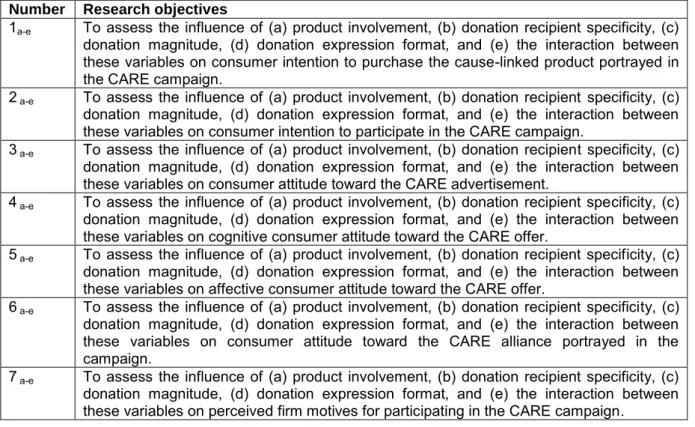
1.8.1 Research objectives 14
1.8.2 Research design 17
1.8.3 Stimulus development 17
1.8.4 Questionnaire development and data collection 18
1.8.5 The sampling process 19
1.8.6 Data collection 20
1.8.7 Internal validity and manipulation checks 20
1.8.8 External validity 21
1.8.9 Data analysis and interpretation 22
1.9 ORIENTATION OF THE STUDY 22
CHAPTER 2: BUSINESS, MARKETING AND SOCIETY
25
ix
2.2 THE RELATIONSHIP BETWEEN BUSINESS AND SOCIETY 26
2.2.1 The early years – ancient Middle East, Greece and Rome 26
2.2.2 Adam Smith and the Invisible Hand 27
2.2.3 The Industrial Revolution and other major transformations 28
2.2.4 The Milton Friedman school of thought 29
2.2.5 The relationship between business and society – extant considerations 30
2.2.5.1 Business and society in emerging markets 32
2.3 CORPORATE SOCIAL RESPONSIBILITY (CSR) 33
2.3.1 The meaning of corporate social responsibility (CSR) 33 2.3.2 Criticism towards corporate social responsibility (CSR) 35
2.4 NON-PROFIT ORGANISATIONS (NPOs) 37
2.4.1 Non-profit organisation defined 37
2.4.2 The role of non-profit organisations in society 38
2.4.3 The challenging state of non-profit affairs 38
2.4.4 The South African scenario 39
2.5 ALLIANCES BETWEEN FIRMS AND NON-PROFIT ORGANISATIONS (NPOs)
40
2.6 THE MARKETING DOMAIN OF BUSINESS 42
2.6.1 Marketing defined 42
2.6.2 Marketing in the current era of business 43
2.6.3 Marketing and corporate social responsibility 44
2.6.4 Marketing and non-profit organisations 46
2.7 SUMMARY AND CONCLUSION 48
CHAPTER 3: AN OVERVIEW OF CAUSE-RELATED MARKETING
49
3.1 INTRODUCTION 49
3.2 ORIGINS, HISTORY AND EVOLUTION OF CAUSE-RELATED MARKETING
50
3.3 CAUSE-RELATED MARKETING DEFINED 56
3.4 CAUSE-RELATED MARKETING AND RELATED CONCEPTS 60
3.5 TYPES OF CAUSE-RELATED MARKETING 61
3.5.1 Transaction-based cause-related marketing 62
3.6 BENEFITS, RISKS AND CHALLENGES OF CAUSE-RELATED MARKETING
63
3.6.1 Benefits of cause-related marketing 63
3.6.2 Risks and challenges of cause-related marketing 66
3.7 CAUSE-RELATED MARKETING IN THE SOUTH AFRICAN CONTEXT 68
x
CHAPTER 4: THE CAMPAIGN STRUCTURAL ELEMENTS (CSEs) OF
CAUSE-RELATED MARKETING
70
4.1 INTRODUCTION 70
4.2 BACKGROUND TO CAUSE-RELATED MARKETING (CARE)
CAMPAIGN STRUCTURAL ELEMENTS (CSEs)
71
4.3 CAUSE-RELATED MARKETING (CARE) COMMUNICATION 73
4.3.1 The role and use of framing 74
4.3.2 Framing and cause-related marketing 76
4.4. THE PRODUCT CAMPAIGN STRUCTURAL ELEMENT 78
4.4.1 Product classification systems 79
4.4.1.1 Hedonic versus utilitarian products 80
4.4.1.2 High and low involvement products 82
4.4.2 Involvement in this study and the Elaboration Likelihood Model (ELM) 87 4.5 THE PRODUCT BRAND IN CAUSE-RELATED MARKETING (CARE) 89
4.5.1 Branding and brand equity introduced 90
4.5.2 Enhancing brand equity through brand leveraging 91
4.5.3 Brand leveraging through alliances 92
4.5.4 Co-branding introduced 92
4.5.4.1 Co-branding defined 94
4.5.4.2 Types of co-branding 94
4.5.4.3 The duration factor in co-branding 94
4.5.4.4 The shared value creation factor in co-branding 96
4.5.5 Co-branding and cause-related marketing 97
4.5.5.1 The importance of brand fit 97
4.5.5.2 Co-branding in the current study 100
4.6 PARTNERING DECISIONS 101
4.6.1 Selecting a donation recipient 102
4.6.2 Broad forms of cause-related marketing associations 102
4.6.3 Relationship rules and criteria 104
4.6.4 The influence of cause importance and cause type 106
4.6.5 Donation recipient specificity 109
4.7 THE DONATION CAMPAIGN STRUCTURAL ELEMENT 112
4.7.1 Types of donations 112
4.7.1.1 Monetary versus non-monetary donations 113
4.7.1.2 Conditional versus unconditional giving 113
4.7.1.3 Transaction- versus non-transaction-based support 114
xi
4.7.2 Donation magnitude 115
4.7.3 Donation expression format 117
4.7.3.1 Actual amount expressions 118
4.7.3.2 Percentage-of-price and percentage-of-profit expressions 119
4.7.3.2.1 Estimation confusion 121
4.7.3.2.2 Profit – the gross and net confusion 122
4.7.3.3 Vague quantifiers 123
4.7.4 Price-donation relations and the role of product type 124
4.7.4.1 Product price and the donation 124
4.7.4.1.1 Price premiums 126
4.7.4.2 Product price, product type and the donation 128
4.8 STRATEGIC VERSUS TACTICAL CAUSE-RELATED MARKETING (CARE)
130
4.9 CAMPAIGN DURATION DECISIONS 133
4.10 THE GEOGRAPHIC SCOPE OF CAUSE-RELATED MARKETING (CARE)
136
4.11 SUMMARY AND CONCLUSION 138
CHAPTER 5: CAUSE-RELATED MARKETING AND THE CONSUMER
140
5.1 INTRODUCTION 140
5.2 CONSUMER BEHAVIOUR 141
5.2.1 Prosocial consumer behaviour 142
5.3 CONSUMER DECISION-MAKING 143
5.3.1 Consumer decision-making then and now 143
5.3.2 The consumer decision-making process 145
5.4 BEHAVIOURAL INTENTIONS 147
5.4.1 The Theory of Reasoned Action (TORA) 149
5.4.2 The Theory of Planned Behaviour (TOPB) 151
5.4.3 Predicting Behaviour: Intentions and Perceived Behavioural Control 153
5.4.4 Purchase intention 152
5.4.5 Participation intention 158
5.5 INTERNAL MODERATORS OF CONSUMER DECISION-MAKING 160
5.5.1 Perception 161
5.5.2 Learning 162
5.5.3 Attitudes, cognition and emotion 164
5.5.3.1 Attitude introduced 165
5.5.3.2 The Tri-Component Model 165
xii
5.5.3.4 Attitude toward the advertisement 170
5.5.3.5 Attitude toward the offer 172
5.5.3.6 Attitude toward the alliance 175
5.5.4 Motivation 176
5.5.4.1 The motivational process 177
5.5.4.2 Motivation and persuasion 178
5.5.4.3 Motives and cause-related marketing 180
5.5.4.4 Perceived firm motives 181
5.5.5 Personal traits 184
5.5.5.1 Personality-related traits that influence cause-related marketing 184
5.5.5.2 Demographic influences 186
5.5.5.2.1 Age 186
5.5.5.2.2 Gender 187
5.6 EXTERNAL MODERATORS OF CONSUMER DECISION-MAKING 188
5.6.1 Culture 189
5.6.1.1 Cultural contexts and cause-related marketing 190
5.6.1.2 Collectivism versus individualism in cause-related marketing 191
5.6.2 Subculture 193
5.6.3 Family and households 194
5.7 SUMMARY AND CONCLUSION 196
CHAPTER 6: METHODOLOGY
197
6.1 INTRODUCTION 197
6.2 PROBLEM STATEMENT 198
6.3 OVERVIEW OF THE RESEARCH PURPOSE, STRUCTURE AND APPROACH
199
6.3.1 Secondary research 200
6.3.2 Primary research – a mixed-method approach 201
6.4 QUALITATIVE RESEARCH 204
6.4.1 Qualitative research method 204
6.4.2 Purpose of the consumer focus groups 204
6.4.3 Focus group research approach 205
6.4.4 Focus group collaboration with marketing research agency 205
6.4.5 Focus group composition 205
6.4.6 Pilot group composition and purpose 208
6.4.7 Focus group discussion guide 208
xiii
6.4.9 Focus group analysis 210
6.5 QUANTITATIVE RESEARCH 210
6.5.1 Quantitative research purpose, objectives and hypotheses 211
6.6 EXPERIMENTAL RESEARCH 213
6.6.1 Experimental design for this study – factorial experiment 214 6.7 INDEPENDENT VARIABLES AND EXPERIMENTAL MAIN EFFECTS 215
6.7.1 Product involvement 216
6.7.2 Donation expression format 217
6.7.3 Donation magnitude 218
6.7.4 Donation recipient brand specificity 220
6.7.5 Independent variable summary 223
6.8 STIMULI DEVELOPMENT 223
6.9 EMPIRICAL DATA COLLECTION 227
6.9.1 Questionnaire development 227
6.9.1.1 Nature of the scales and phrasing of questions 227
6.9.1.2 Questionnaire layout and the sequence of questions 229
6.9.1.3 Pre-tests and revisions 231
6.9.1.4 Reliability of dependent measures in the pre-test 232
6.9.2 Online data collection 233
6.10 DEPENDENT VARIABLES – MEASURES 235
6.10.1 Demographic measures 235 6.10.2 Pre-exposure measures 236 6.10.2.1 Awareness 237 6.10.2.2 Brand attitude 237 6.10.3 Post-exposure measures 239 6.10.3.1 Purchase intention 239 6.10.3.2 Participation intention 241
6.10.3.3 Attitude toward the advertisement 241
6.10.3.4 Cognitive attitude toward the offer 243
6.10.3.5 Affective attitude toward the offer 243
6.10.3.6 Attitude toward the alliance 244
6.10.3.7 Perceived firm motives 245
6.11 THE SAMPLING PROCESS 246
6.11.1 Population 246
6.11.2 Online panels and Columinate 248
6.11.3 Sampling 250
xiv
6.11.3.2 Multi-stage sampling process 251
6.12 DATA COLLECTION 252
6.12.1 Internal validity 252
6.12.2 The role of extraneous variables 253
6.12.3 Manipulation checks 254
6.12.3.1 Product involvement manipulation check 254
6.12.3.2 Donation magnitude manipulation check 255
6.12.3.3 Donation expression format manipulation check 255
6.12.4 External validity 256
6.13 DATA ANALYSIS AND INTERPRETATION 256
6.13.1 Statistical techniques 256
6.13.2 The meaning of the results 257
6.14 SUMMARY AND CONCLUSION 257
CHAPTER 7: QUALITATIVE RESEARCH FINDINGS
258
7.1 INTRODUCTION 258
7.2 OVERVIEW OF THE QUALITATIVE RESEARCH PROCESS 259
7.3 KNOWLEDGE AND AWARENESS OF CAUSE-RELATED
MARKETING
261 7.4 PERCEIVED BENEFITS AND POTENTIAL NEGATIVE
CONSEQUENCES
263
7.5 PRODUCT- AND BRAND-RELATED OPINIONS 264
7.5.1 Fit between for- and non-profit campaign participants 268
7.6 THE DONATION RECIPIENT 270
7.6.1 Donation recipient self-selection 272
7.6.2 Specified versus vague donation recipients 274
7.7 CAMPAIGN GEOGRAPHY 275
7.8 THE DONATION IN CAUSE-RELATED MARKETING CAMPAIGNS 277
7.8.1 Donation magnitude 278
7.8.2 Donation communication (expression formats) 280
7.8.3 Product involvement, donation magnitude and expression format 282
7.9 CAMPAIGN DURATION 288
7.10 THE ROLE OF COMMUNICATION IN CAUSE-RELATED MARKETING 289
7.11 PERCEIVED FIRM MOTIVES 291
7.12 TRUST IN CAUSE-RELATED MARKETING 293
7.13 GUILT AND CHARITABLE GIVING 296
7.14 CAUSE-RELATED MARKETING AND CHARITABLE GIVING 297
xv
EXPERIMENT7.16 SUMMARY AND CONCLUSION 300
CHAPTER 8: QUANTITATIVE RESEARCH FINDINGS (PART 1):
DESCRIPTIVE ANALYSES
303
8.1 INTRODUCTION 303
8.2 DATA ANALYSIS PURPOSE AND APPROACH 304
8.3 DATA PREPARATION 305
8.3.1 Missing variables 305
8.3.2 Pre-measure findings and data modification 306
8.3.3 Uni-dimensionality of the data 308
8.3.4 Analysis of variance assumptions 309
8.4 RELIABILITY ANALYSIS FOR DEPENDENT VARIABLES 310
8.5 OVERVIEW OF RESPONDENT NUMBERS AND DEMOGRAPHIC PROFILE
311
8.5.1 Total number of respondents 311
8.5.2 Gender profile of respondents 312
8.5.3 Ethnic profile of respondents – language and race 312
8.5.4 Age profile of respondents 313
8.5.5 Education level profile of respondents 314
8.5.6 Household profile of respondents 314
8.6 MANIPULATION CHECKS 315
8.6.1 Product involvement 315
8.6.2 Donation recipient 316
8.6.3 Donation magnitude 316
8.6.4 Donation expression format 316
8.7 THE COLLECTIVE IMPACT OF EXPERIMENTAL MAIN EFFECTS ON
INTENTION, ATTTIUDE AND PERCEPTION 317
8.7.1 The collective impact of experimental main effects on intention 321
8.7.1.1 Purchase intention 322
8.7.1.2 Participation intention 325
8.7.2 The collective impact of experimental factors on attitude 328
8.7.2.1 Attitude toward the advertisement 329
8.7.2.2 Cognitive and affective attitude towards the cause-related marketing offer
331
8.7.2.3 Attitude toward the alliance 335
8.7.3 The collective impact of experimental main effects on perceived firm motives
337 8.8 SUMMARY OF THE COLLECTIVE INFLUENCE OF EXPERIMENTAL 341
xvi
MAIN EFFECTS ON INTENTION, ATTITUDE AND PERCEPTION
8.9 SUMMARY AND CONCLUSION 342
CHAPTER 9: QUANTITATIVE RESEARCH FINDINGS (PART 2):
INFERENTIAL ANALYSES
344
9.1 INTRODUCTION 344
9.2 THE INDEPENDENT AND INTERACTIVE IMPACT OF
EXPERIMENTAL MAIN EFFECTS ON INTENTIONS, ATTITUDES AND PERCEPTION
345
9.2.1 Univariate analysis of variance (ANOVA) 345
9.2.2 Data analyses approach 345
9.3 EXPERIMENTAL MAIN EFFECTS AND PURCHASE INTENTION 346
9.3.1 Two-way interaction between product involvement and donation recipient brand specificity
348 9.3.2 Two-way interaction between donation expression format and donation
magnitude
350 9.3.3 Influence of individual main effects on purchase intention 351 9.4 EXPERIMENTAL MAIN EFFECTS AND PARTICIPATION INTENTION 351 9.4.1 Two-way interaction between product involvement and donation
recipient brand specificity
353 9.4.2 Influence of individual main effects on participation intention 355 9.5 THE RELATIONSHIP BETWEEN PURCHASE AND PARTICIPATION
INTENTION
355 9.6 EXPERIMENTAL MAIN EFFECTS AND ATTITUDE TOWARD THE
ADVERTISEMENT
360 9.6.1 Three-way interaction between donation recipient brand specificity,
donation magnitude and donation expression format
362 9.6.2 Two-way interaction between product involvement and donation
recipient brand specificity
364 9.6.3 Influence of individual main effects on attitude toward the advertisement 366
9.7 EXPERIMENTAL MAIN EFFECT AND ATTITUDE TOWARD
CAUSE-RELATED MARKETING THE OFFER 366
9.7.1 Cognitive attitude toward the cause-related marketing offer 367 9.7.1.1 Two-way interaction between product involvement and donation
recipient brand specificity
368 9.7.1.2 Influence of individual main effects on cognitive attitude toward the
cause-related marketing offer
371 9.7.2 Affective attitude toward the cause-related marketing offer 371 9.8 RELATIONSHIP BETWEEN COGNITIVE AND AFFECTIVE ATTITUDE
TOWARD THE OFFER
xvii
9.9 EXPERIMENTAL MAIN EFFECTS AND ATTITUDE TOWARD THE ALLIANCE
378 9.9.1 Three-way interaction between donation recipient specificity, donation
magnitude and donation expression format
380 9.9.2 Two-way interaction between product involvement and donation
magnitude
383 9.9.3 Influence of individual main effects on attitude toward the alliance 385 9.10 EXPERIMENTAL MAIN EFFECTS AND PERCEIVED FIRM MOTIVES 385 9.10.1 Four-way interaction between experimental main effects 387 9.10.2 Influence of three-way interaction on perceived firm motives 390 9.10.2.1 Three-way interaction between product involvement, donation recipient
brand specificity and donation magnitude
390 9.10.2.2 Three-way interaction between donation recipient brand specificity,
donation magnitude and donation expression format
394 9.10.3 Influence of two-way interactions on perceived firm motives 397 9.10.4 Influence of main effects on perceived firm motives 401
9.11 VARIANCE EXPLAINED BY INDEPENDENT VARIABLES 402
9.12 SUMMARY AND CONCLUSION 403
CHAPTER 10: DISCUSSION, RECOMMENDATIONS AND CONCLUSION
405
10.1 INTRODUCTION 405
10.2 RESEARCH OVERVIEW 406
10.3 QUALITATIVE RESEARCH INSIGHTS 407
10.4 THE ROLE OF INDEPENDENT VARIABLES IN THE STUDY 409
10.4.1 The role of product involvement 409
10.4.2 The role of donation recipient specificity 414
10.4.3 The role of donation magnitude 418
10.4.4 The role of donation expression format 421
10.5 THE INFLUENCE OF INDEPENDENT VARIABLES ON THE DEPENDENT VARIABLES
424 10.5.1 The influence of independent variables on purchase intention 424 10.5.1.1 The influence of product involvement and donation recipient specificity
on purchase intention
425 10.5.1.2 The influence of donation magnitude and donation expression format on
purchase intention
427 10.5.2 The influence of independent variables on participation intention 428
10.5.3 Comparing purchase and participation intentions 431
10.5.4 The influence of independent variables on attitude toward the advertisement
432 10.5.5 The influence of independent variables on cognitive attitude toward the 434
xviii
offer10.5.6 The influence of independent variables on affective attitude toward the offer
437 10.5.7 Comparing cognitive and affective attitudes toward the cause-related
marketing offer
438 10.5.8. The influence of independent variables on attitude toward the alliance 439 10.5.8.1 Three-way interaction between donation recipient specificity, magnitude
and expression format
440 10.5.9 The influence of independent variables on perceived firm motives 441
10.6 MANAGERIAL IMPLICATIONS 444
10.6.1 Cause-related marketing – embracing a different mind-set 445 10.6.2 Acknowledging cause-related marketing as a business strategy 446
10.6.3 Adopting a long-term approach 446
10.6.4 Clarifying campaign objectives 449
10.6.5 Understanding the target audience 449
10.6.6 Selecting a cause-linked product 450
10.6.7 Selecting a campaign partner 451
10.6.8 Acknowledging the social partner as an expert 452
10.6.9 Considering the donation magnitude 452
10.6.10 Communicating the donation 454
10.6.11 Avoiding uncertainty 455
10.6.12 Carefully considering choice-based cause-related marketing 456 10.7 RECOMMENDATIONS TO NON-PROFIT ORGANISATIONS (NPOs) 457
10.7.1 Adopting marketing principles 457
10.7.2 Considering novel fundraising approaches 459
10.7.3 Building the non-profit brand 461
10.7.4 Assuming the role as social agent 462
10.7.5 Embracing collaboration 464
10.7.6 Clarifying cause-related marketing objectives 465
10.7.7 Seeking long-term partnerships 465
10.7.8 Accepting shared responsibility 466
10.7.9 Negotiating the NPO campaign presence and exposure 466
10.7.10 Adopting positive message framing 468
10.8 LIMITATIONS OF THE STUDY 468
10.9 RECOMMENDATIONS FOR FUTURE RESEARCH 473
10.10 CONTRIBUTION OF THE STUDY 478
xix
REFERENCES 483
ADDENDA 516
Addendum 6.1 Focus group discussion guide 517
Addendum 6.2 Focus group self-completion questionnaire 521 Addendum 6.3 Independent and dependent variable summary 534
Addendum 6.4 Experimental stimuli advertisements 537
xx
LIST OF TABLESTable 1.1 Quantitative research objectives 15
Table 1.2 Research hypotheses 16
Table 2.1 Potential consumer responses to firms’ influence in society 30 Table 2.2 Strategies deriving from the interaction between marketing and
corporate social responsibility (CSR)
45
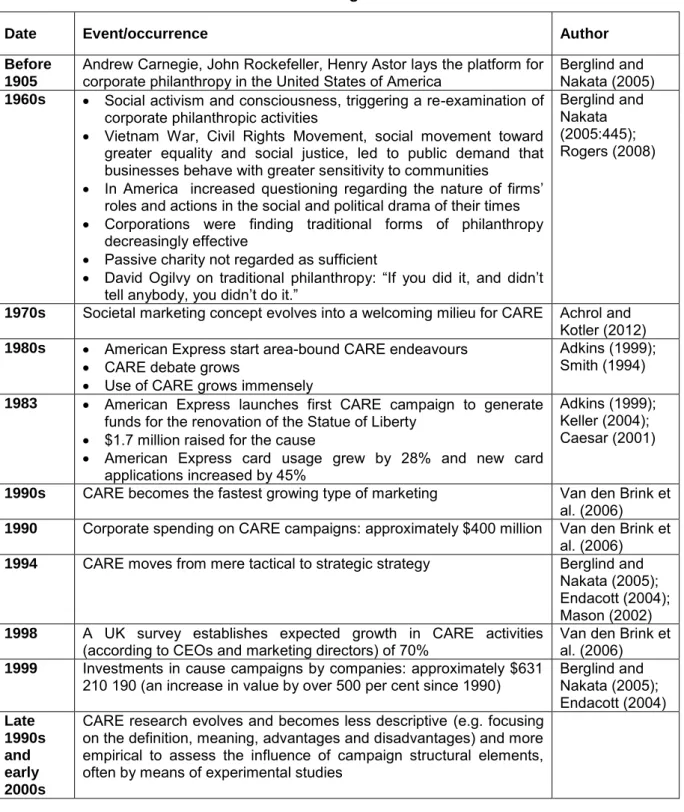
Table 3.1 Cause-related marketing evolution timeline 54
Table 3.2 Cause-related marketing definition analysis 56
Table 3.3 Cause-related marketing benefits 65
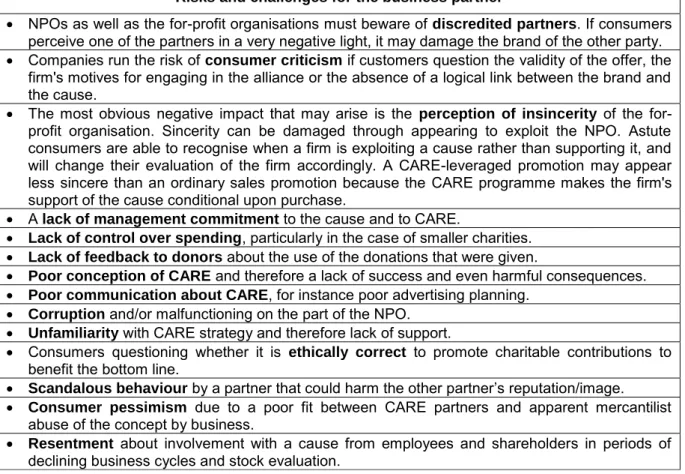
Table 3.4 Cause-related marketing risks and challenges 67
Table 4.1 Aspects associated with purchasing high and low involvement products 88
Table 4.2 Co-branding advantages and disadvantages 93
Table 4.3 Campaign magnitude examples 125
Table 5.1 Types of prosocial behaviour 142
Table 5.2 Categories of consumer responses to cause-related marketing 155
Table 5.3 Differences between emotions and feelings 166
Table 5.4 Previous attitude reseach 168
Table 5.5 Classification of consumer motives 180
Table 6.1 The research process for this study 201
Table 6.2 Focus group participation criteria and group profiles 207
Table 6.3 Quantitative research objectives table 211
Table 6.4 Research hypotheses 212
Table 6.5 Independent variable summary 216
Table 6.6 Nature of data generated in the qualitative research 219
Table 6.7 Donation magnitudes for final experiment 220
Table 6.8 Familiarity with branded non-profit organisations 221 Table 6.9 Atttitudes toward branded non-profit organisations 221 Table 6.10 Best fit between product, brand and non-profit organisation 222
Table 6.11 Reach for a Dream information 222
Table 6.12A and 6.12B
Experimental group design and stimuli 224
Table 6.13 Structure of the questionnaire 229
Table 6.14 Pre-test: Total number of respondents (gender and ethnic group specified)
232
Table 6.15 Dependent measures pre-test reliability 233
Table 6.16 Demographic measures 235
xxi
Table 6.18 Brand attitude 239
Table 6.19 Purchase intention 240
Table 6.20 Participation intention 241
Table 6.21 Attitude towards the advertisement 242
Table 6.22 Cognitive attitude toward the offer 243
Table 6.23 Affective attitude toward the offer 244
Table 6.24 Attitude toward the alliance 245
Table 6.25 Perceived firm motives 246
Table 7.1 Cause-related marketing knowledge and awareness examples 261 Table 7.2 Perceived benefits and potential negative consequences 263
Table 7.3 Product- and brand-related opinions 265
Table 7.4 Product- and brand-related opinions (continued) 268 Table 7.5 Examples of fit between for-profit and non-profit campaign participants 268
Table 7.6 The donation recipient 271
Table 7.7 Cause choice 272
Table 7.8 Specified versus vague donation recipients 274
Table 7.9 Cause-related marketing campaign geography 276
Table 7.10 Donation magnitude 278
Table 7.11 Donation communication (expression formats) 280
Table 7.12 Product involvement, donation magnitude and expression format interactions
283
Table 7.13 Campaign duration 288
Table 7.14 Communication in cause-related marketing 289
Table 7.15 Perceived firm motives 292
Table 7.16 Trust in cause-related marketing 294
Table 7.17 Guilt and charitable giving 296
Table 7.18 Cause-related marketing and charitable giving 298 Table 8.1 Data collected and corresponding methods of analyses 305 Table 8.2 Group 1 to 8: familiarity and pre-exposure brand attitude scores: low
involvement
307 Table 8.3 Groups 9 to 16: familiarity and pre-exposure brand attitude scores: high
involvement
307 Table 8.4 Familiarity and pre-exposure attitude differences between groups 308
Table 8.5 Reliability analysis of the overall data set 310
xxii
Table 8.7 Population group distribution of respondents per experimental group 313 Table 8.8 Post-exposure recall of donation magnitude and expression format
(percentage of group)
317 Table 8.9 Collective influence of independent variables on dependent variables 318
Table 8.10 Dependent variables’ mean scores per group 319
Table 8.11 Content of stimuli presented to groups 2, 3 and 4 320 Table 8.12 Content of stimuli presented to groups 9 and 15 321 Table 8.13 Stimuli content and mean scores – groups 3, 10 and 15 324 Table 8.14 Stimuli content and mean scores – groups 3, 4, 13 and 14 324 Table 8.15 Stimuli content and mean scores – groups 7, 8, 9 and 15 327 Table 8.16 Stimuli content – groups 3, 4, 10 to 14 and 16 328 Table 8.17 Stimuli content that prompted the most and least positive mean scores
for cognitive and affective attitude toward the offer
332
Table 8.18 Stimuli content – groups 1, 2 and 14 333
Table 8.19 Stimuli content – groups 3, 4 and 16 334
Table 8.20 Summary of perceived firm motives between-group differences 339 Table 8.21 Lowest mean scores reported per dependent variable 341 Table 9.1 Significant influences of main effects and interactions on purchase
intention
347
Table 9.2 Hypotheses tested for purchase intention 347
Table 9.3 Significant influences of main effects and interactions on participation intention
352 Table 9.4 Hypotheses tested for participation intention 352 Table 9.5 Correlation and difference between purchase and participation intention 356 Table 9.6 Participation intention scale items and mean scores 358 Table 9.7 Significant influences of main effects and interactions on attitude
toward the advertisement
361 Table 9.8 Hypotheses tested for attitude toward the advertisement 361 Table 9.9 Attitude toward the advertisement: Three-way interaction between
donation recipient brand specificity, donation expression format and donation magnitude
362
Table 9.10 Donation recipient specificity-based comparison for three-way
interaction between donation recipient specificity, donation magnitude and donation expression format
364
Table 9.11 Significant influences of main effects and interactions on cognitive attitude toward the CARE offer
367 Table 9.12 Hypotheses tested or cognitive attitude toward the cause-related
marketing offer
368 Table 9.13 Cognitive attitude toward the cause-related marketing offer estimated
marginal means: Two-way interaction between product involvement and donation recipient
xxiii
Table 9.14 Significant influences of main effects on affective attitude toward the cause-related marketing offer
372 Table 9.15 Hypotheses tested for affective attitude toward the cause-related
marketing offer
373 Table 9.16 Correlation and difference between cognitive and affective attitude
toward the cause-related marketing offer
374 Table 9.17 Significant influences of main effects and interactions on attitude
toward the alliance
379 Table 9.18 Hypotheses tested for attitude toward the alliance 379 Table 9.19 Ranked estimated marginal means derived from the influence of the
three-way interaction on attitude toward the alliance 376 Table 9.20 Donation expression format: Comparison of the three-way interaction
between donation recipient, donation magnitude and donation expression format
382
Table 9.21 Significant influences of main effects and interactions on perceived firm motives
386 Table 9.22 Hypotheses tested for perceived firm motives 387 Table 9.23 Four-way interactive influence on perceived firm motives: Estimated
marginal means
388 Table 9.24 Summary of two-way interaction effects on perceived firm motives 398
Table 9.25 Variance in dependent variables explained 402
Table 10.1 Donation magnitude inferences 408
Table 10.2 The role of product involvement (PI) in the significant inferential results 410 Table 10.3 The role of donation recipient specificity (DRS) in the significant
inferential results
415 Table 10.4 The role of donation magnitude (DM) in the significant inferential results 419 Table 10.5 The role of donation expression format (DEF) in the significant
inferential results
422 Table 10.6 Participation intention scale items and mean scores 432
xxiv
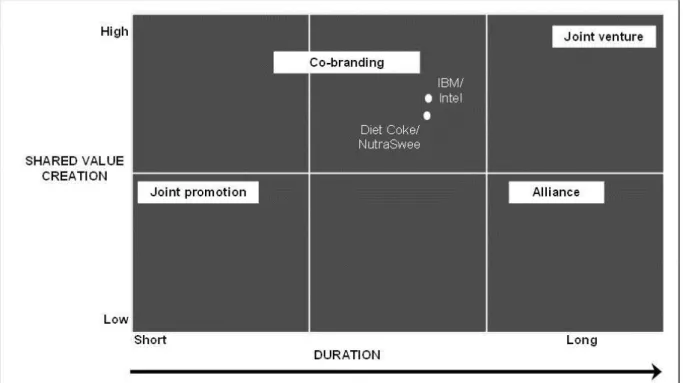
LIST OF FIGURESFigure 4.1 Duration/Shared value creation interaction 95
Figure 4.2 Alternative perspectives of cause-related marketing 132 Figure 4.3 Strategic versus tactical cause-related marketing 133
Figure 5.1 The theory of reasoned action 150
Figure 5.2 The theory of planned behaviour 152
Figure 5.3 Emotions, feelings, consciousness continuum 167
Figure 5.4 Relationship between attitude toward communication-based
cause-related marketing campaign structural elements 170
Figure 5.5 The motivational process 177
Figure 5.6 Cause-related marketing campaigns as persuasion episodes 179 Figure 5.7 Individualism versus collectivism in culture 191
Figure 6.1 Mixed-method design 203
Figure 7.1A and 7.1B
The relationship between a lowinvolvement product, donation expression format and donation magnitude
284 Figure 7.1C
and 7.1D
The relationship between a low involvement product, donation expression format and donation magnitude
285 Figure 7.2A
and 7.2B
The relationship between a high involvement product, donation expression format and donation magnitude
286 Figure 7.2C
and 7.2D
The relationship between a high involvement product, donation expression format and donation magnitude
286
Figure 8.1 Structure of the chapter 304
Figure 8.2 Age profile of respondents 313
Figure 8.3 Purchase intention per experimental group 322
Figure 8.4 Participation intention per experimental group 325 Figure 8.5 Attitude toward the advertisement per experimental group 329 Figure 8.6 Cognitive and affective attitude toward the cause-related marketing
offer per experimental group
332 Figure 8.7 Attitude toward the alliance per experimental group 336 Figure 8.8 Perceived firm motives per experimental group 338 Figure 9.1 Purchase intention: Interaction between product involvement and
donation recipient specificity
349 Figure 9.2 Influence of interaction between donation expression format and
donation magnitude on purchase intention
350 Figure 9.3 Participation intention: Two-way interaction between donation recipient
and product involvement
354 Figure 9.4 Participation and purchase intention mean score comparison 357 Figure 9.5 Purchase and participation intention comparison
(main effect: product involvement)
xxv
Figure 9.6 Purchase and participation intention comparison (main effects: donation recipient, donation magnitude and donation expression format)
360
Figure 9.7A and 9.7B
Attitude toward the advertisement: Three-way interaction between donation magnitude, donation expression format and donation recipient
363 Figure 9.8A
and 9.8B Attitude toward the advertisement: Two-way interaction between product involvement and donation recipient specificity 365 Figure 9.9 Cognitive attitude toward the cause-related marketing offer: Two-way
interaction between donation recipient specificity and product involvement
369
Figure 9.10 Alternative view of cognitive attitude toward the cause-related
marketing offer: Two-way interaction between product involvement and donation recipient specificity
370
Figure 9.11 Cognitive and affective attitude toward the cause-related marketing offer mean score comparison
375 Figure 9.12 Cognitive and affective attitude toward the cause-related marketing
offer comparison (main effect: product involvement)
376 Figure 9.13 Cognitive and affective attitude toward the cause-related marketing
offer comparison (main effect: donation recipient)
377 Figures
9.14A and 9.14B
Cognitive and affective attitude toward the offer comparison (main effects: donation magnitude and donation expression format)
378
Figures 9.15A and 9.15B
Attitude toward the alliance: Three-way interaction between donation recipient, donation magnitude and donation expression format
381
Figures 9.16A and 9.16B
Attitude toward the alliance: An alternative view of the three-way interaction between donation recipient, donation magnitude and donation expression format
383
Figures 9.17A and 9.17B
Two-way interaction between product involvement and donation magnitude
384
Figures 9.18A and 9.18B
Perceived firm motives: Three-way interaction between product involvement, donation recipient and donation magnitude
391
Figures 9.19A and 9.19B
Perceived firm motives: Alternative view of three-way interaction between product involvement, donation recipient brand specificity and donation magnitude
393
Figures 9.20A and 9.20B
Perceive firm motives: Three-way interaction between donation recipient, donation magnitude and donation expression format
395
Figures 9.21A and 21B
Perceived firm motives: Alternative view of the three-way interaction between donation recipient specificity, donation magnitude and donation expression format
396
xxvi
LIST OF ABBREVIATIONSCARE cause-related marketing NPO non-profit organisation\ NPOs non-profit organisations CSE campaign structural element CSEs campaign structural elements CSR corporate social responsibility PIC purchase intention
PARI participation intention
AAD attitude toward the advertisement
ATOT cognitive attitude toward the cause-related marketing offer ATOF affective attitude toward the cause-related marketing offer AAL attitude toward the alliance
FM perceived firm motives PI product involvement
DRS donation recipient specificity DEF donation expression format
xxvii
To give away money is an easy matter
and in any man's power.
But to decide to whom to give it
and how large and when,
and for what purpose and how,
is neither in every man's power nor an easy matter.
1
CHAPTER 1
INTRODUCTION
Were there none who were discontented with what they have, the world would never reach anything better.
Florence Nightingale, war nurse and founder of modern nursing
1.1 INTRODUCTION
Business and society have existed in close juxtaposition for centuries with firms often assuming a superior role in this relationship (Burchell & Cook, 2013). However, the scandals which have characterised the corporate world in recent years have brought many profit-oriented powerhouses in disrepute and have raised consumer scepticism about their ability to make ethical and sound decisions. As recent as 2015 Volkswagen revealed that it had deliberately misled stakeholders into thinking that their vehicles are more environmentally friendly than they actually were, electronics conglomerate Toshiba admitted to overstating its earnings for almost a decade, and FIFA officials were accused of fraud, impelling several large sponsors such as Coca Cola and McDonald’s to call for a FIFA leadership change and dramatic reforms (Matthews & Gandel, 2015). Alongside these corporate scandals, consumers are becoming more sophisticated, connected, and empowered by technology, while they also increasingly demand good corporate citizenship (O’Guinn, Allen, Semenik & Scheinbaum, 2015). No longer can firms that want to satisfy the needs of their consumers, continue with business as usual without considering the needs of society as well and contributing to making a difference.
Cause-related marketing is a strategy that provides firms with the opportunity to engage with society in a creative manner that holds benefits not only for firms, but also for non-profit organisations (as social partners) and consumers (Barnes, 2015). In an era where collaboration and measurable returns are business imperatives, the importance of social involvement and investment is growing (Deng, Kang & Low, 2013). Cause-related marketing (CARE) represents a collaborative approach that allows for mutually beneficial interactions and measurable returns (Varadarajan & Menon, 1988).
In this study, the relationship between firms and society will be addressed from both a broad business and a marketing-specific perspective. CARE will be introduced as a strategy that
2
allows for positive returns and a societal impact, depending on the campaign structural elements that are selected for the campaign. Several different structural elements can be selected for CARE campaigns. Different permutations and combinations of these elements will affect consumer responses differently and ultimately determine the effectiveness of the CARE campaign.
In this chapter, a brief background to the study will be provided, followed by the problem statement. In response to the problem statement the purpose of the research and the methods adopted to address this purpose will be delineated. The research endeavours to explore the knowledge and opinions of South African consumers pertaining to CARE, and to assess the influence of particularly relevant campaign structural elements (CSEs) on consumer responses. Both qualitative and quantitative research methods were used and will be introduced in this chapter, along with the sample, data collection and data analysis process. The chapter will conclude with an orientation of the study in which the content and purpose of each of the ten chapters of the research will be delineated.
1.2 BUSINESS, MARKETING AND SOCIETY
Business and society have existed in close collocation for centuries (Burchell & Cook, 2013). However, this co-dependency has often been negated and the potential benefits from it neglected. The introduction of Adam Smith’s Invisible Hand concept laid the groundwork for greater acknowledgement of the positive outcomes that could arise from improved business and society interaction (Bevan & Werhane, 2015; Nickels, McHugh & McHugh, 2008; Parkin & King, 1995; Rosten, 1990). Other transformations, such as the Industrial Revolution, the World Trade Centre tragedy and the global financial crisis have confirmed the importance of a positive relationship between firms and society (Matthews & Gandel, 2015; Steiner & Steiner, 1994).
In the 1970s Milton Friedman criticised the social responsibility of businesses by stating that “the business of business is business” (Friedman, 1970:5). However, at that time, transformation in the functional areas of business had already commenced – firms were realising that their behaviours and those of society had a reciprocal effect on one another. The idea of a firm’s responsibility toward society slowly emerged and was later referred to as corporate social responsibility. This terminology became an umbrella term for a host of corporate involvements with society and many firms continue to use it.
3
Corporate social responsibility (CSR) is an evolutionary concept that is relevant across industries and contexts (Bhaduri & Selarka, 2016; O’Brien, 2001). In recent years it has become a strategic business imperative rather than a philanthropic initiative with the purpose of contributing to sustained business value and success (Barnett, 2016; Pirsch, Gupta & Grau, 2007; Harvey & Schaefer, 2001; Argandoña, 1998; Freeman, 1984).
Although the CSR practices of many firms are criticised for contributing less to society than their public image suggests and for misusing the influence that stems from their societal contributions, the necessity of firms’ involvement with society has become an accepted veracity (Burchell & Cook, 2013).
As mentioned earlier, in the 21st century the importance of firms’ interrelation with and
responsibility toward society was highlighted by events such as the global financial crisis, the World Trade Centre tragedy and recent cases of unethical and corrupt behaviour by firms such as Enron, BP, Volkswagen, Toshiba and FIFA (Matthews & Gandel, 2015). These occurrences have increased consumer sensitivity toward corporate conduct and have placed renewed emphasis on the dire needs experienced by many communities around the globe and the failure of governments to address these needs. Governments’ social neglect has contributed to increased pressure on non-profit organisations (NPOs) that act as societal custodians and providers of much-needed social services (Stuart, 2013; Mitchell & Taylor, 1997). The task of NPOs is becoming increasingly challenging due to a decrease in and greater competition for funding that coincide with growing societal needs. Therefore, many NPOs are in search of creative ways for generating funding and are reaching out to firms for potential collaborations. NPOs are also becoming more willing to adopt branding and marketing strategies to pursue and fulfil their goals (Cotten & Lasprogata, 2012).
Nowadays, many firms are using and continuously seeking for creative approaches to reach target audiences and grow their profits, whilst acting as a responsible societal role player (O’Guinn et al., 2015). The global business domain is dynamic and noteworthy shifts are continuously occurring (Prajogo, Prajogo, Oke & Oke, 2016). One such an evolution, for instance, is the growing economic power of emerging markets. The exciting business opportunities in emerging markets have forced many firms in developed markets to take note of the unique requirements in emerging markets – the cultural codes that exist, the unique needs of consumers, rules of conduct and societal challenges are but a few examples (Lenssen & Van Wassenhove, 2012). A growing body of research is emphasising that the rules and approaches that are effective in a developed market context are often less successful in emerging markets (Hochstetler, 2013; Lenssen & Van Wassenhove, 2012;
4
Achrol & Kotler, 2012; Sheth, 2011). The lucrative opportunities, however, warrant the effort of learning more about emerging markets and how to elicit positive consumer responses (e.g. product purchases, favourable attitudes) in such markets.
These contentions are applicable to societal involvement as well. The needs of society and effective CSR approaches may differ in emerging markets when compared to developed markets. Therefore, further research that assesses whether the approaches that are used in developed markets are suitable for emerging market contexts is called for (Hochstetler, 2013; Lenssen & Van Wassenhove, 2012; Achrol & Kotler, 2012; Sheth, 2011). In addition, inquiry into creative options for contributing to society in emerging markets is encouraged by both researchers and practitioners (Galan-Ladero, Galera-Casquet & Wymer, 2013).
Given many firms’ need for creative CSR initiatives and the need of NPOs for increased funding, collaboration between these entities to realise their respective objectives, is increasing. Nowadays, alliances between firms and NPOs are becoming more prevalent. Alliances with firms provide NPOs with a new funding stream and increased publicity, whilst firms have the opportunity to reach new markets, improve their reputations and leverage their competitive positions (Lamb, Hair, McDaniel, Boshoff, Terblanche, Elliott & Klopper, 2010; Hawkins, Mothersbaugh & Best, 2007; Dickinson & Barker, 2006; Hawkins, Best & Coney, 2001; Samu & Wymer, 2001).
The growing consideration of societal involvement by business in general, is also reflected in the domain of marketing (Lamb et al., 2010). Over time, marketing has evolved from a product-focused function to one where relationships are important, consumer need satisfaction is a primary focus and the preservation of society is critical (Lamb et al., 2010). In the early 1950s, the marketing concept originated and emphasised the importance of identifying, understanding and satisfying the needs and wants of consumers (Lazer, 1969). The societal marketing orientation followed in the early 1970s and stated that the responsibility of a firm extends beyond profit generation and includes serving the goals of society and protecting society’s long-term interest (Schiffman & Kanuk, 2015). The emergence of a service-dominant logic suggests that the focus on consumer needs and societal interests are not only relevant in a product context, but also in a services context (Lusch & Vargo, 2014). Nowadays, firms are encouraged to adopt:
1. an experience-dominant logic where the stimulation of consumer senses is important; 2. a new consumption philosophy referred to as customer care, and;
5
3. a network orientation in which marketing, branding and co-creation is viewed as core functions of the firm and acting as the consumer’s agent is viewed as its primary role (Liu, 2013; Achrol & Kotler, 2012).
Cause-related marketing represents a co-creation process in which the firm acts as the consumer’s agent to enable a donation to a beneficiary/donation recipient when a consumer purchases the firm’s product.
1.3 CAUSE-RELATED MARKETING AND CAMPAIGN STRUCTURAL ELEMENTS
Cause-related marketing (CARE) is viewed as a strategy where firms act as a giving agent on behalf of the consumer (Barnes, 2015). Embedded in the societal marketing orientation, CARE as a strategy requires a network orientation and subscribes to the principles of responsible marketing (Achrol & Kotler, 2012). It holds benefits for firms, consumers and NPOs or causes as societal agents, if effectively implemented. CARE is defined as a “process of formulating and implementing marketing activities that are characterized by an offer from the firm to contribute a specific amount to a designated cause when customers engage in revenue-providing exchanges that satisfy organizational and individual objectives” (Berglind & Nakata, 2005: 444; Nowak & Clarke, 2003: 138; Wymer & Samu, 2003: 12; Larson, 2001: 34; Bennett, 2002: 42; Webb & Mohr, 1998: 226; Varadarajan & Menon, 1988: 60).
The appropriate combination of campaign structural elements (CSEs) is critical for the development of effective CARE campaigns. CSEs refer to the various components that form the CARE campaign (Grau & Folse, 2007). Some elements (e.g. campaign geography, and strategic versus tactical orientation) are determined by the campaign developers, but are not necessarily communicated to consumers. Other CSEs are visibly communicated to consumers during campaigns to ensure that they are aware of the campaign and what it entails. CSEs such as the cause-linked product to be included in the campaign, the donation recipient with whom to partner and the donation promised in the campaign are all typically communicated to consumers during a campaign and are therefore particularly important. Despite not always being visibly communicated to consumers, other CSEs such as the strategic orientation of the campaign, campaign duration and campaign geography also have to be contemplated by the firm.
6
Research has indicated that consumers are generally favourably inclined toward CARE, but that campaign structural elements influence consumer responses, both independently and interactively (Folse, Niedrich & Grau, 2010). Therefore, multiple combinations of CARE can exert an influence on consumer responses. However, researchers thus far have often opted for the inclusion of a maximum of three CSEs to avoid experimental complexity, resulting in a lack of clarity about the interactive influences of these elements (La Ferle, Kuber & Edwards, 2013; Chang, 2008).
Researchers have further suggested that different combinations of CSEs result in different outcomes in different contexts (La Ferle et al, 2013; Subrahmanyan, 2004; Strahilevitz, 1999). Despite the fact that the South African market can benefit from CARE campaigns, relatively few empirical studies have addressed CARE or cause-brand alliances (Tustin & Pienaar, 2005; Engelbrecht & Du Plessis, 2004). South African studies have largely focused on the effects of internal and external communication aspects related to CARE (Tustin & Pienaar, 2005). No monetary and/or contribution-related studies have been conducted and no studies have investigated CARE endeavours as concurrently being co-branded efforts. It is thus evident that there is ample scope for expanding knowledge regarding CARE planning and implementation.
Given the number of potential campaign structural elements (Grau & Folse, 2007), the multiplicity of their possible permutations, the simplicity of some previous studies, the contextual nature of cause-related marketing (La Ferle et al., 2013; Subrahmanyan, 2004) and the limited research that has been conducted in the South African context, further inquiry into the influence of these elements on consumer responses have been called for. The current study responded to this call for more extensive research and deeper insight.
The campaign structural elements that are of particular relevance for investigation in this study are product involvement (high; low), donation recipient specificity (specified; vague), donation magnitude (high; low) and donation expression format (actual amount; percentage-of-price). As noted earlier, these are CSEs that are typically communicated to consumers as part of a CARE offer. Product involvement and donation recipient specificity have received limited attention in the CARE domain, as many researchers focus more on the for-profit than the non-profit brand during their research and most often assess the role of the hedonic-utilitarian product framework (Chang, 2008). The ability of this framework to provide a comprehensive view of the role of the product in CARE has been questioned (Chang, 2008) as results pertaining to this framework have differed across contexts (Galan-Ladero, Galera-Casquet, Valero-Amaro & Barroso-Mendez, 2013). Also, the framework does not take into
7
consideration the co-branding nature of CARE and the product classifications, such as product involvement, that are prominent in this field of research.
Previous findings concerning donation magnitude and donation expression format are limited and inconclusive (Chang, 2011; Strahilevitz, 1999). However, previous research has suggested that the influence exerted by these elements often occur in interaction with other elements rather than in isolation (Chang & Cheng, 2015; Chang, 2008; Strahilevitz, 1999). CARE research thus far has also failed to provide an indication of the most suitable donation magnitude to include in CARE campaigns (Folse et al., 2010). Against this background, the assessment of the role of these independent variables in CARE was deemed suitable as the broad purpose of this study.
1.4 CAUSE-RELATED MARKETING AND THE CONSUMER
CARE offers several benefits to the consumer, amongst others, the pleasant so-called warm glow of giving, and an enhanced self-concept and social identity (Hessekiel, 2014). Further, the firm acts as a donation agent to the consumer and eliminates complex donation-related decision-making.
As mentioned earlier, consumer responses to CARE have shown to be contextual and dependent on the influence of CSEs. The consumer responses that exert the strongest influence on CARE effectiveness are attitudes and behavioural intentions. Research has confirmed the relationship between attitudes, intentions and behaviour. Attitudes and intentions can then be viewed as suitable measurements for a more comprehensive appreciation of consumer conation (Schiffman & Kanuk, 2015).
Previous CARE studies have focused extensively on assessing the psychological consequences of a campaign (e.g. attitude) that are derived from components of the campaign that would exist even if the campaign did not (e.g. the product, the brand or the donation recipient) (Lafferty & Edmondson, 2014; Youn & Kim, 2008). Examples of such consequences include attitude toward the product brand and attitude toward the cause (Lafferty & Edmondson, 2014; Youn & Kim, 2008). The purpose of this study was to investigate consumer responses (i.e. consequences of the campaign) resulting from exposure to CARE elements that formed part of the campaign itself and would not exist independently of the campaign. For instance, intentions to purchase the cause-linked product and attitude toward the CARE offer relate to campaign-specific aspects. Purchase intention,
8
participation intention, attitude toward the CARE advertisement, cognitive and affective attitude toward the communicated CARE offer, and attitude toward the alliance featured in the offer were all investigated as dependent variables along with perceived firm motives for participating in CARE. These variables are defined and discussed in Chapter 5 and Chapter 6 along with the relevant theories that underly each variable.
In recent years, the influence of emotion in decision-making has become more prominent and has contended the view that consumers are primarily rational decision-makers (Anderson & McLaren, 2012). The growing acknowledgement of the influence that emotion can exert on consumer decisions has also influenced the manner in which marketers construct their persuasion attempts (Merikangas, 2011). Prosocial strategies, such as CARE, have become more prominent due to their ability to evoke consumer emotions and thus influence consumer behavioural intentions as a result of those emotions (Xu, Bègue & Bushman, 2012). However, emotion has received little research attention in the CARE domain. Therefore, in this study consumer attitude toward the CARE offer was assessed both cognitively and affectively.
1.5 PROBLEM STATEMENT
The business domain has changed to such an extent over the past decades that firms are compelled to increase their societal involvement by means of approaches that provide measurable returns (Misra, 2014). CARE represents such a strategy and offers several benefits for firms, NPOs and consumers (Kim & Johnson, 2013; Pharr & Lough, 2012; Sheikh & Beise-Zee, 2011; Krishna, 2011; Tustin & Pienaar, 2005; Varadarajan & Menon, 1988). However, the effectiveness of CARE seems to depend on the CSEs that are selected for the campaign (Grau & Folse, 2007). These elements transmit cues to consumers and have an impact on their responses to CARE (Grau & Folse, 2007). Research has suggested that CSEs are contextual, thus resulting in different consumer responses across cultural contexts (La Ferle et al., 2013; Subrahmanyan, 2004; Strahilevitz, 1999). Further, CARE studies have indicated that the influence exerted by CSEs often occur in an interactive manner rather than in isolation (Chang & Cheng, 2015; Chang, 2008). To avoid complexity, many CARE studies have assessed only two or three independent variables simultaneously and insights about the combined effect of several CSEs are lacking (Chang & Cheng, 2015). Given the number of potential CSEs, the multiplicity of their possible permutations, the simplicity of several previous studies and the contextual nature of CARE (La Ferle et al.,
9
2013; Subraymanyan, 2004; Strahilevitz, 1999), further inquiry into the combined influence of these elements on consumer responses is the broad purpose of this study.
A limited number of previous studies have assessed the influence of CSEs such as campaign duration, geography and strategic orientation (Ellen et al., 2000; Skitka, 1999). Although providing meaningful insights, these elements are often not revealed to consumers in CARE campaigns. Therefore, more research about the CSEs that are visibly communicated to consumers during CARE campaigns is required to enable the development of more effective campaigns. These CSEs include the cause-linked product, the donation recipient, donation magnitude and the donation expression format.
Most CARE studies that have investigated the role of the cause-linked product have focused on the hedonic-utilitarian framework (Strahilevitz, 1999). The approach has yielded inconsistent findings in different contexts (Subrahmanyan, 2004; Strahilevitz, 1999). Researchers have also mentioned the limitations of assessing only the hedonic-utilitarian framework and have called for inquiry into the influence of alternative product classification systems (Christofi, Leonidou, Vrontis, Kitchen & Papasolomou, 2015; Christofi, Vrontis & Leonidou, 2014). CARE also represents a co-branding relationship – a field in which product research often utilises the product involvement framework (Li & He, 2013; Simonin & Ruth, 1998). Given the above-mentioned co-branding guidelines, the call for research and the differential product-related findings deriving from different contexts, this study focused on the involvement framework as guideline for assessing the influence of the cause-linked product in CARE.
The majority of CARE studies have focused on investigating the for-profit partner (Lafferty & Edmondson, 2014; Chang, 2011; Chang & Liu, 2012; Lavack & Kropp, 2003; Strahilevitz & Myers, 1998; Strahilevitz, 1999). Despite indications that the donation recipient fulfils a key role in driving CARE effectiveness, research pertaining to this CSE has been scant (Lafferty & Edmondson, 2014; Engelbrecht & Du Plessis, 2004) Further, many firms promise a donation to a vague recipient (e.g. cause or charity in general) in their CARE campaigns (Kim, 2005; Pracejus, Olsen & Brown, 2003). Such an approach hampers the positive affect transfer that could happen from a branded donation recipient to the firm or the cause-linked brand and also contributes to consumer scepticism (Chang & Cheng, 2015; Galan-Ladero et al., 2013; Kim, 2005). However, whether a specified (branded) donation recipient would have a more positive impact than a vague donation recipient in CARE has not yet been assessed and was therefore addressed in this study.