DIALOGIC ORIENTED BOOK READING FOR CHILDREN WITH
MIGRATION BACKGROUNDS
A Doctoral Dissertation Submitted to
Faculty of Educational Sciences and Sociology (Fakultät 12 Erziehungswissenschaft und Soziologie)
Technische Universität Dortmund In partial fulfilment of the requirements
for the degree of Doctor of Philosophy (Dr.phil)
By:
Maria Teodora Ping
Research School “Education and Capabilities” October 2011
Supervised by: Prof. Dr. Lilian Fried Prof. Dr. Uta Quasthoff
ii STATEMENT OF ORIGINALITY
I hereby certify that I am the sole author of this thesis and that no part of this thesis has been published or submitted for publication.
I certify that my thesis does not infringe upon anyone’s copyright nor violate any proprietary rights and that any ideas, techniques, quotations, or any other material from the work of other people included in my thesis, published or otherwise, are fully acknowledged in accordance with the standard referencing practices.
I declare that this is a true copy of my thesis and that this thesis has not been submitted to any other University or Institution.
Dortmund, 12th of October, 2011
iii ACKNOWLEDGEMENT
It’s good to have an end to a journey toward; but it is the journey that matters, in the end- Ernest Hemingway
My up and down journey, which shall soon be completed by the defence of this dissertation I wrote, would not possibly reach its end without the abundant blessings of the Good Lord, whom I put my faith on, and the contributions of great people around me. Therefore, these special two pages will be dedicated as an expression of my deepest gratitude.
In the first place, I would like to extend my appreciation to my supervisors, Prof. Dr. Lilian Fried and Prof. Dr. Uta Quasthoff for their intensive guidance and support. I am so grateful that as a doctoral student, my “Doktormütter” were always the ones I could turn to whenever I lost my way.
I would like to express my gratitude to the Research School “Education and Capabilities” for granting me with the scholarship and providing sufficient facilities so that I could conduct my Ph.D research project. My thanks also go to the Faculty of Educational Sciences, TU Dortmund, to which I submit my dissertation.
I could not be more thankful for the willingness and cooperation of all the participants in my research: the kindergartens (TEK DS, TEK M, TEK RS and TEK SH), the Erzieherinnen and the children. I also thank the student assistants: Marie Wolffram, Michael Wienke and Philipp Haumann for their help with translating and transcribing work.
My life here in Germany would not be as colourful and lively without the warmth of friendships I have shared with my colleagues and friends, the “Dortmunders” and the “Bielefelders”. Life as an international student far away from home would not be easy without their presence. I would like to thank Petra Strähle for her tremendous help starting from my first days in Dortmund. I will always cherish the moments I have spent with my office roommates, Claudia Müller and Marjan Bijani. I have been enjoying so much the talk-over-coffee or lunch with Verena Feldhaus, Sabrina Müller and Vivien Heller. I could not forget either those friends who were with me in the first years: Pham Hong Giang, my ex- housemate: an amazing beef Phõ noodle cook; Zahra Eshmail, the passionate language learner and Ines Möhlig, the sweet companion. I would also like to say thank you to Rolf Strietholt, who with his capacity as the student representative of the Dortmund scholarship holders as well as my colleague, has helped me a lot during my last period of the “battle”.
I will never take for granted the encouragement given by Grace Chng, who gracefully brought me in her prayers each time I was down. I will surely miss the jokes
iv shared by Sittipan Yotyodying, as much as I will miss the dangerously delicious Thai food he cooks. I thank as well Ksenia Kuzmina and Anneta Potsi, for always warmly welcoming me in Bielefeld. I would also like to thank Franziska Eisenhuth who helped me find one of my participating kindergartens.
They said that “best friends are like stars: you might not always see them, but they are always there”. Therefore, I would like to thank my best friends who scatter all around the globe yet have been able to keep encouraging me beyond time and distance boundary. First, I would like to thank my “big sister” and “travelling partner in crime”: Dian Ekawati in Bayreuth, for her enormous support both personally and academically. Then I would like to thank my folks in Groningen: Ridwan Maulana, Jardi Huzen, Tita Alissa Listyowardojo, Shinta Tan and Klara Kwantoro, for always being my second “home” whenever homesickness kicked me. I thank Kristano Reinhart in Shanghai, for trying to spare his time every time I need his ears and for his messages of encouragement. I would also like to thank my Martini House sisters, Safiye Bayazit in Hamburg and Jutatip Jamsawang in Vienna, for always “having a check on me” even though they are all busy bees. I thanked Laurentius Ivan who was always ready to help me in my last three months in Dortmund. Furthermore, I will never forget to thank Oda Yuvita Astri Lane, my former high school classmate, who was always ready to accommodate me and cook yummy Indonesian food whenever I dropped by to England.
I am so glad that the modern technology has been helpful so far to keep in touch with my big supporter in Indonesia: Theresia Margareth, who always reminds me to keep fighting for my dreams. Also I would like to thank Michael Ronny Hariman, the IT brain, for the long distant personal support and the technical related support mostly in my times of need after all these years.
I will be forever grateful for the support given by my loving family: my brilliant father, who in spite of coming from a minority and disadvantaged ethnic group has always been such an inspiration to pursue higher education; my great mother for her never-ending belief in me; my brother whom I can always rely on and my older sister, the super mom. I also thank my lovely grandma, Oma Ien in Rijswijk, the Netherlands, for her supportive words each time I called her and for being a role model of a life survivor.
Last but not least, I am so much indebted to the little boy who has inspired me a lot to complete my Ph.D project and dissertation: the little donkey (Kleine Ezel a.k.a. der kleine Esel) himself. Hartelijk bedankt, jongen!
In my end is my beginning- T.S. Eliot
v ABSTRACT
This study aimed at getting an insight to the practices of dialogic oriented shared book reading, as one potential language promotion activity for children with migration backgrounds in German kindergartens. Shared book reading in Germany itself has been one common daily activity in kindergartens, yet it has unfortunately not been so much of a specific research focus to be explored. One of the notable studies to refer to when discussing shared book reading in the German context is the study conducted by Wieler (1997). On the other hand, there are a number of internationally recognized studies in the field of early childhood education which already indicated that book reading influenced the outcome measures in preschool children’s language growth, emergent literacy and reading achievement (cf. Bus et al, 1995; Hargrave and Sénéchal, 2000; De Temple & Snow, 2003). Therefore, the theoretical framework under which this study was conducted was built under the claims resulted in these previous studies.
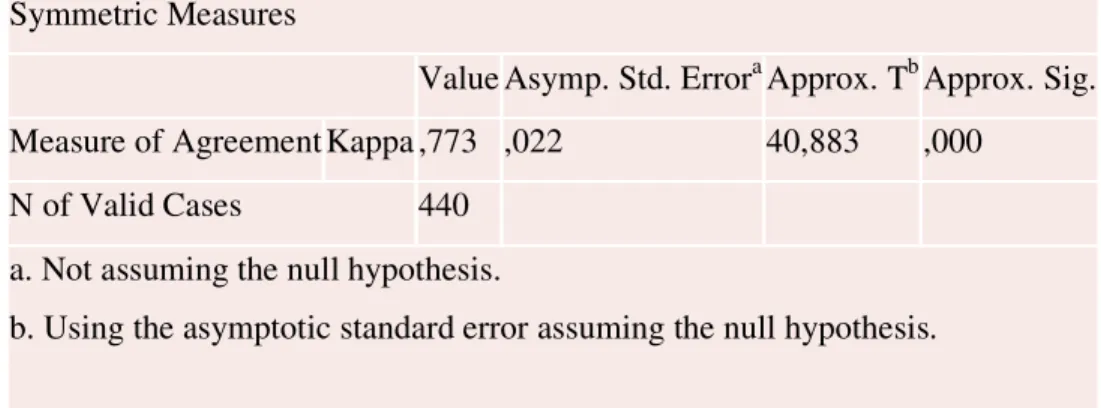
The participants of this case study were five native German speaking early childhood educators (Erzieherinnen) and five groups of kindergarten children ages 3- 6 years old who were acquiring German as a second language. The educators were given a specific picture book and generally instructed to perform “dialogic oriented book reading”. The reading sessions were videotaped with the consent of the kindergartens and the parents of the participating children. The obtained videotaped data were transcribed by native German speakers and then further analysed by using a qualitative content analysis method. The analysis process in this study was conducted to find: 1) An overview of the observed shared book reading practices; 2) Forms of interactions during the observed shared book reading, and 3) Educator’s strategies and children’s behaviours during the interactions. The instruments for the data analysis were two sets of coding schemes (for categorising and analysing educator’s strategies and children’s behaviours) which were developed by adapting the coding scheme and evaluation framework previously developed by DeBruin- Parecki (1999), Reese et al (2003) and Dickinson et al (2003). The reliability of the developed coding schemes in this study was tested by using Cohen’s Kappa for measuring intercoder reliability. For educators’ strategies categories, the computed Cohen Kappa’s value was 0.773, which could be
vi interpreted as reaching a “substantial agreement”. While, for children’s behaviours coding categories, the Cohen Kappa’s value was 0.793 that indicated as well a substantial agreement.
The results of the analysis indicated that the participating educators utilized considerably different reading styles even though receiving the same instructions. Their attempts of practicing the so-called “dialogic book reading” as prescribed by researchers such as Whitehurst (1992) revealed examples of different other reading styles. Some of the features and strategies of dialogic book reading, such as the PEER (Prompt- Expand- Evaluate- Recall) and CROWD (Completion Prompts- Recall Prompts- Open Ended Prompts- Wh Prompts- Distancing Prompts) appeared during the videotaped sessions. However, one most important point particular to dialogic book reading, i.e. the active role of the children to become the story teller, was missing in all observed cases. Furthermore, some educators performed more closely to what was defined as an “interactive book reading”, a reading situation in which an adult reads a book to a child or a small group of children and uses a variety of techniques to engage the children in the text (cf. Trivette & Dunst, 2007).
There were three forms of interactions observed during the shared book reading sessions, namely: 1) educator- child (one-to-one) interaction, 2) peer interaction (between and among children) and 3) group (educator- children) interaction. The observed educator’s strategies were categorized as “instructional strategies” and “personal- management strategies”. The instructional strategies mostly employed by the participating educators were “naming and labelling” and giving feedback in forms of “confirmation”. While, the educator’s personal- management strategies were related to handling personal interaction with children, managing floor selection as well as maintaining children’s interests.
The findings concerning children’s behaviours indicated that children mainly gave “responses” to educators’ strategies and their peers behaviours. They also showed several “self-initiated behaviours”. Furthermore, the most frequently coded children’s responses were: “naming and labelling”, “confirmation” and “contradiction/
vii correction”. While, the most frequently coded children’s self-initiations were: “naming and labelling”, “asking questions” and “picture description”.
In addition to the abovementioned findings, it was also found from the study that most of the participating educators applied strategies which could be considered as “low cognitive level”, in other words the strategies which did not require further thinking skills such as inferring or reasoning (cf. Moschovaki & Meadows, 2005). Consequently, the children also responded in the similar cognitive level. Regarding the educators’ language use, to some extent they made use of “decontextualized language- in which the educators tried to connect the story to the children’s lives and experiences, to demonstrate and ask about world/ general knowledge, to explain word definitions and concepts, as well as to infer and make predictions (cf. Morgan & Goldstein, 2004).
Moreover, from the observed sequences of interactions, some evidences of potential learning situations were detected. The educators provided input in forms of vocabulary instruction (for instance introducing new words and concepts). They also corrected children’s language use. Interestingly, in this case study, the participating children were also observed to exhibit simple forms of co-construction in terms of discussing words and concepts with their peers.
Eventually, this study provided empirically based evidences on how practices of dialogic book reading might look like in kindergartens. The findings of the study revealed what strategies the early childhood educators might have been able to employ and how they employed the strategies. Moreover, the findings also showed how children who were still acquiring a second language could participate given the dialogic or interactive reading situation. Thus, these findings are expected to give theoretical and methodological contributions to the existing studies concerning adult- child shared book reading as well as to practically support the improvement of language promotion programs in Germany. Nevertheless, due to the limitation of the study, some recommendations for further study are also made, especially related to such issues as research design and generalizability of the results.
viii LIST OF FIGURES
Page
1. Figure 1. Deductive Content Analysis Procedures 54
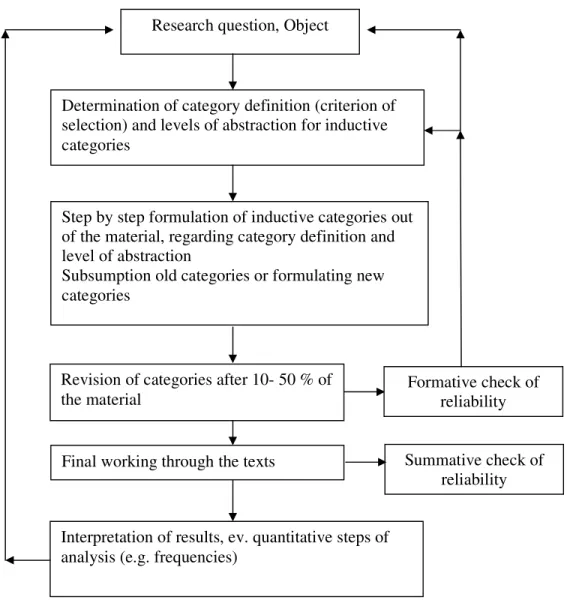
2. Figure 2. Inductive Content Analysis Procedures 55
3. Figure 3. Content Analysis Process in the Current Study 58
4. Figure 4. Crosstabulation of Selected Coded Educators’ Strategies 90
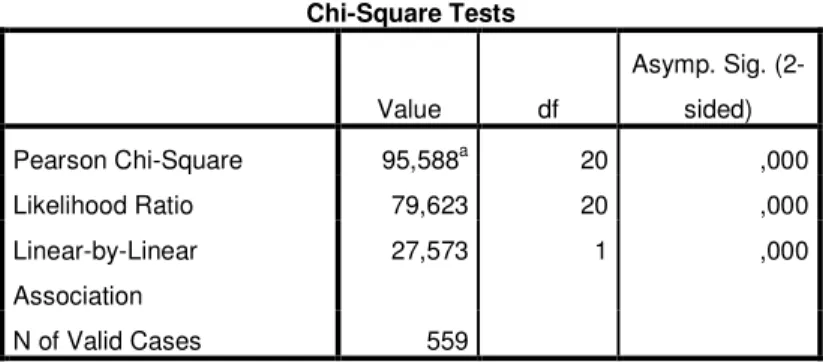
5. Figure 5. The Chi Square Test Results of Coded Educators’ Strategies 90
6. Figure 6. Crosstabulation of Selected Children’s Responses 104
7. Figure 7. The Chi Square Test Results of Selected Children’s Responses 104
8. Figure 8. Crosstabulation of Selected Children’s Self- Initiations 105
9. Figure 9. The Chi Square Test Results of Selected Children’s 106
Self- Initiations
10.Figure 10. Correlation Measurement in Case 1 118
11.Figure 11. Correlation Measurement in Case 2 120
12.Figure 12. Correlation Measurement in Case 3 121
13.Figure 13. Correlation Measurement in Case 4 123
14.Figure 14. The Chi Square Test for Variance for Overall 125
Educators’ Cognitive Input and Demand Levels
15.Figure 15. The Chi Square Test for Overall Coded Cognitive Level 132
of Children’s Responses
16.Figure 16. Correlation Measurement between Educator’s and Children’s 139
ix 17.Figure 17. Correlation Measurement between Educator’s and Children’s 140
Cognitive Levels in Case 2
18.Figure 18. Correlation Measurement between Educator’s and Children’s 142
Cognitive Levels in Case 3
19.Figure 19. Correlation Measurement between Educator’s and Children’s 143
Cognitive Levels in Case 4
20.Figure 20. Correlation Measurement between Educator’s and Children’s 145
x LIST OF TABLES
Page
1. Table 1. Demographic Information of the Participating Kindergartens 65
2. Table 2. Demographic Information of the Participating Educators 66
3. Table 3. Demographic Information of the Participating Children 67
4. Table 4. The Cohen Kappa’s Measurement for the Intercoder Reliability 74
of Educators’ Strategies Categories
5. Table 5. The Cohen Kappa’s Measurement for Intercoder Reliability 75
of Children Behaviours Categories
6. Table 6. Frequencies and Percentages of Overall Educator’s Strategies 92
in Case 1
7. Table 7. Frequencies and Percentages of Overall Educator’s Strategies 94
in Case 2
8. Table 8. Frequencies and Percentages of Overall Educator’s Strategies 97
in Case 3
9. Table 9. Frequencies and Percentages of Overall Educator’s Strategies 99
in Case 4
10.Table 10. Frequencies and Percentages of Overall Educator’s Strategies 101
in Case 5
11.Table 11. Overall Coded Children’s Behaviours in Case 1 108
12.Table 12. Overall Coded Children’s Behaviours in Case 2 110
xi 14.Table 14. Overall Coded Children’s Behaviours in Case 4 114
15.Table 15. Overall Coded Children’s Behaviours in Case 5 116
16.Table 16. Educator’s cognitive input and demand level in Case 1 126
17.Table 17. Educator’s cognitive input and demand level in Case 2 127
18.Table 18. Educator’s cognitive input and demand level in Case 3 128
19.Table 19. Educator’s cognitive input and demand level in Case 4 129
20.Table 20. Educator’s cognitive input and demand level in Case 5 130
21.Table 21. Overall Coded Cognitive Level of Children’s Responses 131
22.Table 22. Cognitive Levels of Children’s Responses in Case 1 134
23.Table 23. Cognitive Levels of Children’s Responses in Case 2 135
24.Table 24. Cognitive Levels of Children’s Responses in Case 3 136
25.Table 25. Cognitive Levels of Children’s Responses in Case 4 137
xii LIST OF CHARTS
Page
1. Chart 1. The Overall Educators’ Strategies 91
2. Chart 2. Overall Educator’s Strategies in Case 1 93
3. Chart 3. Overall Educator’s Strategies in Case 2 95
4. Chart 4. Overall Educator’s Strategies in Case 3 97
5. Chart 5. Overall Educator’s Strategies in Case 4 99
6. Chart 6. Overall Educator’s Strategies in Case 5 101
7. Chart 7. Overall Coded Children’s Behaviours 103
8. Chart 8. Overall Coded Children’s Responses 105
9. Chart 9. Overall Coded Children’s Self- Initiations 106
10.Chart 10. Children’s Communicating Behaviours 107
11.Chart 11. Children’s Behaviours in Case 1 109
12.Chart 12. Children’s Behaviours in Case 2 111
13.Chart 13. Children’s Behaviours in Case 3 113
14.Chart 14. Children’s Behaviours in Case 4 114
15.Chart 15. Children’s Behaviours in Case 5 117
16.Chart 16. The correlated educator’s strategies and children’s responses 119
in Case 1 (Bar chart)
17.Chart 17. The correlated educator’s strategies and children’s responses 119
xiii 18.Chart 18. The correlated educator’s strategies and children’s responses 120
in Case 2 (Bar Chart)
19.Chart 19. The correlated educator’s strategies and children’s responses 120
in Case 2
20.Chart 20. The correlated educator’s strategies and children’s responses 122
in Case 3 (Bar Chart)
21.Chart 21. The correlated educator’s strategies and children’s responses 122
in Case 3
22.Chart 22. The correlated educator’s strategies and children’s responses 124
in Case 5 (Bar Chart)
23.Chart 23. The correlated educator’s strategies and children’s responses 124
in Case 5
24.Chart 24. Overall Educators’ Cognitive Input and Demand Levels 126
25.Chart 25. Educator’s cognitive input and demand level in Case 1 127
26.Chart 26. Educator’s cognitive input and demand level in Case 2 128
27.Chart 27. Educator’s cognitive input and demand level in Case 3 129
28.Chart 28. Educator’s cognitive input and demand level in Case 4 130
29.Chart 29. Educator’s cognitive input and demand level in Case 5 131
30. Chart 30. Overall Coded Cognitive Level of Children’s Responses 132
31.Chart 31. Overall Coded Cognitive Level of Children’s Responses 133
xiv 32.Chart 32. Overall Coded Cognitive Level of Children’s Responses 133
33.Chart 33. Cognitive Levels of Children’s Responses in Case 1 134
34.Chart 34. Cognitive Levels of Children’s Responses in Case 2 135
35.Chart 35. Cognitive Levels of Children’s Responses in Case 3 136
36.Chart 36. Cognitive Levels of Children’s Responses in Case 4 137
37.Chart 37. Cognitive Levels of Children’s Responses in Case 5 138
38.Chart 38. Educator’s and Children’s Cognitive Levels in Case 1 139
(Bar Chart)
39.Chart 39. Educator’s and Children’s Cognitive Levels in Case 1 140
40.Chart 40. Educator’s and Children’s Cognitive Levels in Case 2 141
(Bar Chart)
41.Chart 41. Educator’s and Children’s Cognitive Levels in Case 2 141
42.Chart 42. Educator’s and Children’s Cognitive Levels in Case 3 142
(Bar Chart)
43.Chart 43. Educator’s and Children’s Cognitive Levels in Case 3 142
44.Chart 44. Educator’s and Children’s Cognitive Levels in Case 4 144
45.Chart 45. Educator’s and Children’s Cognitive Levels in Case 4 144
46.Chart 46. Educator’s and Children’s Cognitive Levels in Case 5 145
(Bar Chart)
xv LIST OF PICTURES
1. Picture 1. The Cover of the Picture Book 70
“Der kleine Esel und sein Geschenk für Jaki”
2. Picture 2. The Book Content 70
xvi TABLE OF CONTENTS Page Statement of Originality ii Acknowledgement iii Abstract v
List of Figures viii
List of Tables x
List of Charts xii
List of Pictures xv
Chapters:
Introductory Chapter
I. Background of the Study 1
II. Research Problems Formulation 8
III.Significance of the Study 9
IV.Scopes of the Study 10
Literature Review Chapter
I. Language Promotion Programs in Kindergarten 11
II. Adult- Child Book Reading Practices 26
II.1. Impacts and Benefits of Adult- Child Book Reading Practices 26 II.2. The Types of Adult- Child Book Reading Practices 27 II.3. Adult- Child Book Reading Practice Assessment 30
II.3.1. Nature of Book Reading Event 30
xvii
II.3.3. Adult’s Strategies 34
II.3.4. Children’s Participation 39
II.4. Other Aspects of Adult- Child Book Reading Practices 41
II.5. Gaps from Existing Studies 44
III.Theoretical Framework of the Current Study 46
Empirical Chapter
I. Aims 49
II. Research Methodology 50
III.Instruments 59
IV.Research Participants and Data Collection Procedures 64 V. Coding Development Procedures and Coding System 72
VI.Findings Presentation 76
1. Overall Profiles of the Observed Shared Book Reading Sessions 77
1.1. Case 1 77
1.2. Case 2 78
1.3. Case 3 78
1.4. Case 4 79
1.5. Case 5 79
2. Interaction Forms Observed during the Book Reading Sessions 80 2.1. One-to-one Educator- Child Interaction 80
2.2. Peer Interaction 83
2.3. Group Interaction 85
3. Overall Observed and Coded Educators’ Strategies 88
3.1. Case 1 91
3.2. Case 2 94
3.3. Case 3 96
xviii
3.5. Case 5 100
4. Overall Observed and Coded Children’s Behaviours 102
4.1. Case 1 107
4.2. Case 2 109
4.3. Case 3 111
4.4. Case 4 113
4.5. Case 5 115
5. Correlations between Educators’ Strategies and Children’s 117 Responses
5.1. Correlation Measurement in Case 1 118 5.2. Correlation Measurement in Case 2 119 5.3. Correlation Measurement in Case 3 121 5.4. Correlation Measurement in Case 4 123 5.5. Correlation Measurement in Case 5 123 6. Cognitive Levels of Educators’ Strategies 124 6.1. Educator’s Cognitive Input and Demand Level in Case 1 126 6.2. Educator’s Cognitive Input and Demand Level in Case 2 127 6.3. Educator’s Cognitive Input and Demand Level in Case 3 128 6.4. Educator’s Cognitive Input and Demand Level in Case 4 129 6.5. Educator’s Cognitive Input and Demand Level in Case 5 130 7. Cognitive Levels of Children’s Responses 131 7.1. Cognitive Levels of Children’s Responses in Case 1 133 7.2. Cognitive Levels of Children’s Responses in Case 2 134 7.3. Cognitive Levels of Children’s Responses in Case 3 135 7.4. Cognitive Levels of Children’s Responses in Case 4 136 7.5. Cognitive Levels of Children’s Responses in Case 5 137 8. Correlation between Educator’s and Children’s Cognitive Levels 138 8.1. Correlation of Cognitive Levels in Case 1 139
xix 8.2. Correlation of Cognitive Levels in Case 2 140 8.3. Correlation of Cognitive Levels in Case 3 141 8.4. Correlation of Cognitive Levels in Case 4 143 8.5. Correlation of Cognitive Levels in Case 5 144 VII. Interpretations and Discussions
1. Overall Profiles of the Book Reading Sessions 147
2. Educators’ Strategies 149
2.1. Educator’s Strategies in Case 1 152
2.1.1. Instructional Strategies 152
2.1.2. Personal and Management Strategies 160
2.2. Educator’s Strategies in Case 2 164
2.2.1. Instructional Strategies 164
2.2.2. Personal and Management Strategies 172
2.3. Educator’s Strategies in Case 3 175
2.3.1. Instructional Strategies 175
2.3.2. Personal and Management Strategies 183
2.4. Educator’s Strategies in Case 4 187
2.4.1. Instructional Strategies 187
2.4.2. Personal and Management Strategies 190
2.5. Educator’s Strategies in Case 5 192
2.5.1. Instructional Strategies 192
2.5.2. Personal and Management Strategies 200
3. Children’s Behaviours 205
3.1. Children’s Behaviours in Case 1 207
3.1.1. Children’s Responses 207
3.1.2. Children’s Self- Initiations 211
3.2. Children’s Behaviours in Case 2 215
xx
3.2.2. Children’s Self- Initiations 219
3.3. Children’s Behaviours in Case 3 222
3.3.1. Children’s Responses 222
3.3.2. Children’s Self- Initiations 226
3.4. Children’s Behaviours in Case 4 228
3.5. Children’s Behaviours in Case 5 230
3.5.1. Children’s Responses 231
3.5.2. Children’s Self- Initiations 235
4. Correlation and Congruence between Strategies and Responses 238
4.1. Naming and Labelling 239
4.2. Picture Description 244
4.3. Text- Reader Connect 248
4.4. Text Prediction 252
4.5. General Knowledge 255
Concluding Chapter
I. Conclusions of the Study 261
II. Discussion Referring to the Previous Studies 267 III.Discussion Referring to the Early Childhood Education and Care 271
in Germany
IV.Limitations of the Study 274
V. Recommendations for Further Study 275
Appendices
Appendix 1. Consent from the Participating Children’s Parents
Appendix 2. Consent from the Participating Kindergartens and Educators
Appendix 3. Demographic Questionnaire for Children and Families Appendix 4. Demographic Questionnaire for Kindergartens and Educators
xxi Appendix 5. Coding of Maternal Utterances (Reese et al, 2003)
Appendix 6. Nature of Book Reading Event (Dickinson et al, 2003)
Appendix 7. Adult- Child Interactive Reading Inventory (DeBruin- Parecki, 1999)
Appendix 8. Codebook for Educators’ Strategies Appendix 9. Codebook for Children’s Behaviours
Appendix 10. Sample of Coding Educators’ Strategies Appendix 11. Sample of Coding Children’s Behaviours
Appendix 12. Overall Coded Educators’ Strategies
Appendix 13. Frequencies and Percentages of Strategies Categories in Case 1
Appendix 14. Frequencies and Percentages of Instructional Strategies Functions in Case 1
Appendix 15. Frequencies and Percentages of Naming and Labelling Strategies in Case 1
Appendix 16. Frequencies and Percentages of Confirmation Strategies in Case 1 Appendix 17. Frequencies and Percentages of Questioning Strategies in Case 1
Appendix 18. Frequencies and Percentages of Correction Strategies in Case 1
Appendix 19. Frequencies and Percentages of Personal and Management Strategies in Case 1
Appendix 20. Frequencies and Percentages of Management Style Types in Case 1 Appendix 21. Frequencies and Percentages of Strategies Categories in Case 2
Appendix 22. Frequencies and Percentages of Instructional Strategies Functions in Case 2
Appendix 23. Frequencies and Percentages of Naming and Labelling Strategies in Case 2
Appendix 24. Frequencies and Percentages of Confirmation Strategies in Case 2 Appendix 25. Frequencies and Percentages of Questioning Strategies in Case 2
xxii Appendix 26. Frequencies and Percentages of Correction Strategies in Case 2
Appendix 27. Frequencies and Percentages of Personal and Management Strategies in Case 2
Appendix 28. Frequencies and Percentages of Management Style Types in Case 2 Appendix 29. Frequencies and Percentages of Strategies Categories in Case 3
Appendix 30. Frequencies and Percentages of Instructional Strategies Functions in Case 3
Appendix 31. Frequencies and Percentages of Naming and Labelling Strategies in Case 3
Appendix 32. Frequencies and Percentages of Confirmation Strategies in Case 3 Appendix 33. Frequencies and Percentages of Questioning Strategies in Case 3
Appendix 34. Frequencies and Percentages of Correction Strategies in Case 3
Appendix 35. Frequencies and Percentages of Personal and Management Strategies in Case 3
Appendix 36. Frequencies and Percentages of Management Style Types in Case 3 Appendix 37. Frequencies and Percentages of Strategies Categories in Case 4
Appendix 38. Frequencies and Percentages of Instructional Strategies Functions in Case 4
Appendix 39. Frequencies and Percentages of Confirmation Strategies in Case 4 Appendix 40. Frequencies and Percentages of Questioning Strategies in Case 4
Appendix 41. Frequencies and Percentages of Personal and Management Strategies in Case 4
Appendix 42. Frequencies and Percentages of Management Style Types in Case 4 Appendix 43. Frequencies and Percentages of Strategies Categories in Case 5
Appendix 44. Frequencies and Percentages of Instructional Strategies Functions in Case 5
xxiii Appendix 45. Frequencies and Percentages of Naming and Labelling Strategies
in Case 5
Appendix 46. Frequencies and Percentages of Confirmation Strategies in Case 5 Appendix 47. Frequencies and Percentages of Questioning Strategies in Case 5
Appendix 48. Frequencies and Percentages of Correction Strategies in Case 5 Appendix 49. Frequencies and Percentages of Personal and Management Strategies
in Case 5
Appendix 50. Frequencies and Percentages of Management Style Types in Case 5
1 INTRODUCTORY CHAPTER
This chapter presents several issues, namely: 1). the background of the study, which includes discussions on the current situations underlying the initiations of the study; 2). problems formulation, and 3). significance of the study.
I. BACKGROUND OF THE STUDY
Early childhood education and care has been conceived as crucial for children’s development as indicated by the results of a number of various studies in the field (McCartney, 1984; Phillips et al, 1987; McCartney & Jordan, 1990; Barnett, 1995). These studies revealed important findings which addressed relevant issues such as quality of care and amount and timing of care (Lazar et al, 1982; McCartney & Jordan, 1990; Schweinhart et al, 1993; Barnett, 1995; Reynolds, 2000; Lamb & Ahnert, 2006; Mashburn & Pianta, 2007; Burger, 2010). Higher quality child care was found to give both short-term and long-term impacts to children’s cognitive and social development (cf. Phillips et al, 1987; McCartney & Jordan, 1990; Barnett, 1995; Cleveland et al, 2007). The short- term effects were defined as the ones obtained within a year or two after children exit an early childhood education and care program whereas the long-term effects were the ones obtained in latter stages of education that the children went through, for instance high school (cf. Barnett, 1995). The short-term effect of early childhood education and care on children’s cognitive development could take a form of the immediate “boosts” of IQ points. While, the long-term effect would relate to school achievement, grade retention, placement in special education as well as social adjustment (Barnett, 1995).
Furthermore, these short and long-term effects were especially significant for children with disadvantaged background, i.e. from impoverished homes, at-risk or with migration background (cf. Barnett, 1995; Stegelin, 2004; Fried & Voss, 2010). On the other hand, children from highest income families got negative effects. Moreover,
2 children from highly supportive home environments did not seem to profit much. They even had lower cognitive and social development progress when being cared outside their homes compared with children whose home environments were poor. This might indicate that the quality of care in children’s early year, instead of merely the income of the parents, would be the key to the difference (Barnett, 1995). In addition to that, “teacher- child interaction” was also considered as one of the indicators of this high quality process in the early childhood education and care practices (cf. Hamre & Pianta, 2001; Sylva et al, 2004; La Paro et al, 2004; Pianta, 2005 and Pianta, 2007).
In some countries, such as Germany, children with disadvantaged background such as the ones with migration backgrounds have become an emphasis in the education reform because their participations and achievements at schools are regarded as lower than their native German speaking peers (Autorengruppe Bildungsberichterstattung, 2010). After the publication of PISA 2000 results that have brought presumed problems of inequality in German education to surface, a reform in the education system was initiated starting from early childhood education level. Laubeová (2006) mentioned that the problem of inequality was obviously not concerning “the quantitative participation at education, but the quality of their promotion”. In other words, the statistical distribution of children or students with migration backgrounds in the German schools might not the main problem. Furthermore, Bos et al (Bildungsberichterstattung Ruhr, not yet published, 2011) implied that somehow the statistical numbers of children with migration backgrounds enrolled in kindergartens could not really indicate whether they were according to the proportions in the population.
Therefore, if the core problem was not the matter of statistical number of participation in the early childhood education and care services, the actual problem would be on the kinds of educational programs that children obtain. For many, it is not a surprising fact that a big number of children or students with migration backgrounds go to the lowest tracks of secondary education, which later on will affect their possibilities of future academic and professional career. This over-representing number has been claimed to be caused by the children’s lack of language mastery, i.e. German. Leubová (2006) argued again that this frequent claim stating that the lack of language mastery was caused by the non-attendance of children with migration backgrounds in the early
3 childhood education and care institutions is not fully proven to be true. She further continued by saying that the attendance rate of children with migration backgrounds in kindergartens was only slightly lower than the native German speaking children. This implicitly suggested that there could be a problem in the quality of the programs provided in the educational institutions, in this case kindergartens, themselves.
Consequently, one of the implications of the reform in the level of early childhood education is in forms of a variety of language promotion programs targeting children with migration backgrounds, which are offered in institutions such as in kindergartens (Jampert et al, 2007). The language promotion programs to promote language competencies of children are in the first place regarded as important based on the underlying idea that language is “a key competence” for equal opportunity of children’s educational career as well as future life (Jampert et al, 2007). In addition, it is also widely believed that there is a “strong interrelation between reading and language abilities” (Bowey, 2005, Gasteiger- Klicpera et al., 2009). Language development, including vocabulary and grammatical development have been found to be able to predict later reading achievement of the so-called “normally developing” children (Bowey, 2005).
Furthermore, in a more general and broader sense, language itself is one of the important central capabilities marking one’s life (Nussbaum, 2003). Accordingly, it is claimed by Vygotsky (1978) as ‘a critical bridge between the socio-cultural world and individual mental functioning’. Moreover, the acquisition and development of language is also considered as the most significant milestone in children’s cognitive development (Berk & Winsler, 1995). A child language delay is therefore believed to lead to isolation and withdrawal as well as to learning difficulties and poor academic performance. In other words, if children have difficulties related to their language development, most probably they will have difficulties in learning in general. Moreover, in the case of children who have to master more than one language, for instance the children with migration backgrounds in Germany, it often happens that they face great difficulties and confusion in developing the mastery of the languages. Sometimes the difficulties and confusion result in a risk of losing the ability in one of the languages they have learned (Wong- Filmore, 1991). This will certainly have an impact on their future academic and
4 social life unless there is a help from their caregivers, who are parents and educators, since children acquire language – both first and second language- through interactions (Birner, 2008).
Children’s language acquisition, especially second language acquisition, has been so far an interest of many researchers (McLaughlin, 1984; Levy, 1985). However, there have been as well different points of views with regards to basic underlying hypotheses, such as whether or not there are differences in first and second language acquisition processes or whether the differences related to “substantive changes in human mind” (Sopata, 2010). Moreover, there are also at least two distinctive types of childhood bilingualism commonly recognized, namely “simultaneous” and successive (consecutive) bilingual acquisition (McLaughlin, 1978). Simultaneous bilingual acquisition happens when a child learns two different languages from his or her very early ages, i.e. up to three years old according to McLaughlin (1978). Meanwhile, successive (consecutive) acquisition occurs when a child learns the second language at a later stage in his or her childhood.
In the context of children acquiring German as a second language, the different stances also existed. Thoma & Tracy (2006) noted from their empirical research results that children’s second language acquisition could be a similar type to the first language. The results of their study showed that children at the age of three to four who learned German as their second language at the first time might already develop the most important morphosyntactic properties (e.g. syntactic construction, subject-verb agreement) within half a year, just like their native German speaking peer. They claimed that the results were in line with the results of some other studies conducted by researchers such as Rothweiler (2006) and Kroffke & Rothweiler (2006, as cited in Thoma & Tracy, 2006).
They further argued that such aspects as the cases and gender paradigms, the articles, classes of words, prepositions and irregular verbs were important to promote. Moreover, the vocabulary of the children acquiring German as a Second Language, as indicated in their study was still behind the lexical repertoire that the native German speaking children could already actively develop at the same age. Nevertheless, overall
5 Thoma & Tracy (2006) concluded that the children aged three to four acquiring German as a Second Language showed to some extent similar characteristics as their native German speaking counterparts and they could do it relatively quickly and easily given the right support.
On the other hand, Sopata (2010) in her study argued otherwise. She studied the acquisition of verb placement in German as a Second Language of children aged three to four years. Her study results revealed that the children acquired their second language in a different type from the first language acquisition, which was contrary to the results found by Thoma & Tracy (2006) as described above. In addition, the results of her study specifically showed that children’s acquisition of second language inflectional morphology differed from the first language acquisition. Concerning the syntax domain, the children’s acquisition seemed to be “a variant of second language acquisition” (Sopata, 2010). None of these results seemed to support the results of Thoma & Tracy’s (2006) mentioned earlier.
Regardless of these various stances, there are still some other relevant considerations that should be kept in mind concerning bilingual children acquiring a second language, such as those from Hakuta & Diaz (1985) who stated that there would be a possibility that bilingual children develop an early capacity to focus on and analyze the structural properties of language. Furthermore, bilingual experience could also be helpful in developing an early awareness of language (Levy, 1985; Clyne, 1987). Thus, going back to the core matter discussed previously, the initiative of the German government to promote language mastery starting should be considered as a necessary step. Moreover, Gasteiger- Klicpera et al (2009) suggested that language promotion programs should begin as early as possible and be tailored to the needs appropriate to the participating children’s initial abilities. They also hinted from one of their empirical study results that children speaking more than one language were found better at applying phonological working memory. In addition to that, Tracy (2008) underlined several common phenomena regarding children’s acquisition of German as a Second Language. In her previous study, Tracy (2008) noticed that children got acquainted with problems related to the use of several aspects in sentence production, namely: 1). verbs (e.g. V2, V2 finite, focus particle phrase and irregular verbs); 2). case and genus; 3).
6 articles; 4). prepositions of place, and 5). plural forms. Taking these facts into account, the focus of the language promotion programs in German kindergartens should be given addressing these conditions and needs.
However, another problem has emerged concerning the readiness of the whole components of the early childhood education system in Germany itself in dealing with the change. In Germany, the early childhood education and care has had its long tradition of being focusing on social pedagogy which advocates that education and child upbringing are intertwined. In the so-called “Early Childhood Education and Care” (ECEC) system in Germany, the concept of education has been aimed at developing abilities which will enable children to learn, to develop their achievement potential to act, solve problems as well as to form relationships (cf. Bundesjugendkuratorium et al., 2002 in Leu & Schelle, 2009). Thus, education in an ECEC institution has not been really defined as a school- oriented approach (cf. Leu & Schelle, 2009). The educators serving at these institutions have been therefore regarded not as teachers, just like their counterparts in primary education or secondary education. Moreover, they have been called “educators” (German: Erziehern/ Erzieherinnen) or social pedagogues (German:
Sozialpädagogen/ Sozialpädagoginnen).
In order to be able to work in a kindergarten in Germany, one must firstly go through a specific vocational training course upon the completion of secondary education. The duration of the training course is two or three years depending on the state in which the training takes place. There is also a possibility of a one-year work placement or internship after the training. After completing this initial qualification, one can be considered as a child carer or social assistant. To be a qualified early childhood educator, another post- secondary training is required. The training lasts for three years. Therefore, it might take up to five years in total for one to be considered a professional “Erzieher” or “Erzieherin” (Leu & Schelle, 2009). Nevertheless, as already noted out earlier, the profession of an early childhood educator in Germany are unfortunately still incomparable to teachers.
Referring back to the problems and the educational reform mentioned previously, according to a study conducted by Gastegeiger- Klicpera et al. in 2009,
7 there have been a number of developed language promotion programs in almost every state in Germany during the recent years. Thus, it could be assumed that the early childhood educators have been facing more challenges in their everyday tasks in kindergartens. Not only do they have to take care about the children, but also they have to start educating them through some instructional activities, to enhance their literacy competences so that they will be ready for schools. Some other studies concerning early childhood educators and their professional competence aspects, which included interaction, have been also conducted by several other researchers such as Fried (1985, 2009), Honig et al, (2004), Becker- Stoll & Textor (2007), Beller & Preissing (2007), Hemmerling (2007), Teschner (2004), Tietze et al (2005), and Kuger & Kluczniok (2009). The results of these studies showed that the quality of the educator- child interaction processes had a significant impact on children´s development. The study conducted by Fried (1985) pointed out results which specifically addressed the effects of the interaction with on children’s phonetic development gain. While her other recent study in 2009 also indicated that efforts in improving the early childhood educators’ professional developments should be done in the first place to enhance their capabilities to support children’s language learning. Moreover, there are several aspects such as their knowledge base, skills repertoire, levels of expertise and experiences that have to be taken into consideration as they are important for an effective language learning interventions (Fried, 2009; König & van der Aalsvoort, 2009, Gasteiger- Klicpera et al, 2009).
It has been pointed out earlier that reading ability has been assumed as strongly correlated to language abilities in general. Thus, reading activities have also been encouraged in kindergarten setting as well as home setting. Unfortunately, to date there seems to be a lack of empirical research done concerning this activity, in comparison to the abundant studies with international settings. One of the most notable studies in German context was conducted by Wieler (1997), who researched the practices of shared book reading in home setting. Apart from this study, however, little has been known regarding how the early childhood educators have practiced this activity in kindergartens.
8 The previous studies in the field have indicated that adult- child book reading activity, including the one conducted in the institutional setting, gives beneficial effects to children’s cognitive and language development (Whitehurst, 1992; Bus, van Ijzendoorn and Pellegrini, 1995; Hargrave and Senechal, 2000, and Blewitt et.al, 2009). Moreover, the adult- child interaction which is embedded during the book reading session has also been proved to be potential for learning (Cochran- Smith, 1986; DeBruin- Parecki, 1999). A particular shared book reading type called “Dialogic Book Reading” has gained supports from researchers such as Whitehurst (1992), Zevenbergen & Whitehurst (2003), Cutspec (2006) and Trivette & Dunst (2007). This type of reading has been claimed as one of the most effective activities to facilitate children’s language learning, even for younger children and children with specific needs, such as the ones from lower socioeconomic background (cf. Cutspec, 2006).
Furthermore, in the context of Germany, the notion of dialogic book reading as a supportive activity to promote literacy has also come to attention. It has been discussed quite publicly in the online resource such as Kindergarten Pädagogik Online Handbuch. An on-going large scale quantitative experimental research has also been conducted by a team of researchers from the Faculty of Psychology of the Justus- Liebig University of Giessen. Even so, there is still rather insufficient information around. Therefore, an empirical study researching how the early childhood educators perform shared book reading activity, particularly dialogic book reading, in the context of German kindergartens which offer language promotion programs to children with migration backgrounds would be interesting and of necessity.
II. RESEARCH PROBLEMS FORMULATION
Based on the explanation above, the research problems for this study are formulated as follows:
- How is the dialogic oriented shared book reading practiced in the participating kindergartens?
- What interaction forms can be observed during the shared book reading sessions?
9 - What are the strategies applied by early childhood educators during the shared
book reading sessions?
- What are the behaviours of children observed during the shared book reading sessions?
- How are the interactions between the educators’ strategies and children’s responses?
- Are there examples of potential second language learning situations observed during the practices of shared book reading sessions performed by the participating educators?
Therefore, the research focuses and aims of this study would be concentrated on finding answers to the abovementioned questions. Furthermore, it should be necessary as well to accentuate the significance and scopes of this study, which distinguishes it from other studies in the field.
III.SIGNIFICANCE OF THE STUDY
Since similar type of studies (a linguistically based qualitative study on book reading practices in kindergartens) has not been done much so far in Germany, it is expected that the results of this study will contribute significantly in the following two manners:
1. As a theoretical and empirical contribution to the research field concerning early childhood education and care in general and adult- child shared book reading in particular.
Body of literature show that adult- child book reading has been a big interest of studies conducted under the framework of early childhood education (cf. DeBruin- Parecki, 1999). Findings of this study are therefore expected to enrich the existing knowledge in the field. The fact that the study is conducted in Germany, in which the early education and care system is particularly different from the other countries especially the USA where most of the internationally recognized studies took place, is also hoped to bring new insights on practices in different settings and language contexts.
10
2. As an empirical base for the improvement of the early childhood educators’ professional development as well as the language promotion programs for children with migration backgrounds in Germany.
Even though this study is not designed as an evaluation study, the findings can still provide an exemplary daily routine case studies overview on how the real practices of education (i.e. book reading instruction) in kindergartens can look like. Thus, educational implications drawn from the findings of this study are expected to be taken into consideration for further improvement concerning language promotion programs in kindergartens.
IV.SCOPES OF THE STUDY
This study focuses specifically on describing and exploring practices of a particular educational activity namely “dialogic oriented shared book reading” tailored for children with migration backgrounds in the context of German kindergartens. The study is designed as an interdisciplinary approach, which combines relevant aspects of early childhood education and care and second language acquisition, in this context “German as a Second Language”. However, it should be clearly stated that the different stances concerning second language acquisition (cf. pages 4-6) will not be the spotlight of discussion in this study.
11 LITERATURE REVIEW CHAPTER
This chapter discusses several points, namely: 1). Language promotion program in kindergartens, which comprises of the concepts and experiences; 2). Adult- child book reading practices, which include impacts and benefits of book reading, types of book reading and adult- child book reading assessment, and 3). Theoretical framework of the study.
I. LANGUAGE PROMOTION PROGRAMS IN KINDERGARTENS
As mentioned earlier in the introductory chapter (cf. page 4), in a typical German kindergarten, children used to learn mostly social skills to enable them to deal with social situations they might encounter at different places such as kindergartens, home and neighbourhood. This focus on social pedagogical skills was called “Situationsansatz” (Zimmer et al, 1997; Zimmer, 2007). Therefore, in early childhood education and care centres in Germany, care and upbringing have been combined together with education as a “comprehensive process of developing the abilities to learn, to develop the achievement potential, to act, to solve problem and to form relationships” (Leu & Schelle, 2009). In addition, the existence of formal curricular guidelines seemed to be rare (Oberhuemer, 2005). This also related to the management of Early Childhood Education and Care system which has been mostly taken care by each municipality in cooperation with various service providers (in German: Träger) such as welfare organizations, parent initiatives and religious communities i.e. churches (Leu & Schelle, 2009).
However, this focus and existing system have been criticized a lot during recent years, especially after the results of PISA 2000 in which the German students ranked lower than expected (cf. Bos et al, 2010). It has been mostly argued that one of the causes of this low performance is related to the issue of inequality in German education systems. More specifically, the insufficient German language mastery of students with migration backgrounds when they enter primary education has been pointed out as the
12 reason (cf. Stanat et al, 2003). Consequently, the focus of learning in kindergartens has been shifted to the introduction of language as one of the important skills to be mastered, especially for children with migration backgrounds through such activities as play, songs and shared book reading. However, another issue has also emerged at the same time, concerning the readiness and the capabilities of the Early Childhood Education and Care system and its components including the educators to carry out such programs (cf. introductory chapter, page 4; cf. Tracy et al, 2010).
Tietze et al (1996) conducted a study which compared the process quality in Early Child Care and Education Programs in five countries including Germany by using the Early Childhood Environment Rating Scale (ECERS) and the Caregiver Interaction Scale (CIS). In the first place the study aimed at examining whether the psychometric characteristics of the instruments (ECERS and CIS) used to assess process quality in the five participating countries (i.e. Austria, Germany, Portugal, Spain and the USA) were sufficiently similar for cross-country comparisons. Then, it attempted to provide descriptions of some major features of process quality in the five countries, namely similarities and differences in overall process quality alongside with differences in the components contributing to the quality (Tietze et al, 1996).
The Early Care Environment Rating Scale (ECERS) was developed by Harms and Clifford (1980). It comprised 37 items which could be used to evaluate seven particular aspects of centre-based care for children ages two and a half to five years (Harms & Clifford, 1980). The seven aspects were: 1) personal care routines; 2) furnishings; 3) language reasoning experiences; 4) motor activities; 5) creative activities; 6) social development, and 7) staff needs. The rating for each item was in forms of odd numbers: 1, which indicated “inadequate”; 3, which indicated “minimal”; 5, which indicated “good”, and 7, which indicated “excellent”. Meanwhile, the other instrument, “Caregiver Interaction Scale” (CIS), was developed by Arnett (1989). CIS consisted of 26 items to rate teachers’ sensitivity during their interactions with children. Specifically, this instrument scored three domains namely: 1) sensitivity; including warm, attentive, engaged; 2) harshness; including critical, punitive; and 3) detachment; including low levels of interaction, interest, or supervision.
13 Furthermore, the sampling procedures done in the study followed step-by-step processes as follows: 1). the selection of larger regions and sites within the regions; 2). the selection of centres, and 3). the selection of classrooms within the centres (Tietze et al, 1996). In the case of Germany, the participants were taken from five states, namely: 1). Brandenburg; 2). East and West Berlin; 3). North- Rhine Westphalia; 4). Rhineland- Palatinate, and 5). Baden- Württemberg.
The findings of the study revealed that Germany had similar quality profiles to Austria, and both countries scored highest on the mean ECERS scores since they were assumed as having stronger “infrastructures” which were able to support high quality of ECE services (Tietze et al, 1996). The findings also showed that Germany scored the second highest concerning the dimension of “Personalized Care”, which included such aspects as “diapering/ toileting”, “personal grooming”, “furnishing for relaxation and comfort” and “greeting/ departing”. Furthermore, Germany got the highest score, together with the USA, in the dimension of “availability and use of space and play materials”. Concerning the caregivers, just like the participants from the other four countries, in general the caregivers in German Early Childhood Education and Care institutions were found to display “high levels of sensitivity, acceptance, and involvement in their interactions with children” (Tietze et al, 1996). However, there was also an indication of significant high variability regarding the process quality within the country itself, which could be understood as a result of the long existing different traditions of the former East and West Germany.
Following up this study, there were also recent studies by Tietze (1998) and Tietze et al (2005) which discussed the quality of early childhood education and care specifically in the context of Germany. Tietze (1998) did an empirical research investigating the process quality concept, measuring how good the kindergarten quality, as well as finding out the impact of educational quality on the children’s development. The instruments used in both studies were “KES” (Kindergarten Skala) and “KES-R” (the revised version), which were the German translated version of ECERS and ECERS-S. The findings of the study implied that the policy instruments to control and ensure quality education in kindergartens were in the need of improvement (Tietze, 1998; Tietze et al, 2005).
14 Leu & Schelle (2009) pinpointed the issue of two previous different regions of Germany as well in their critical reflections on the German early childhood policies. They argued that the reason of the difference between East and West Germany concerning the attendance of children in a day care facility (including as well kindergartens) might refer back to the past condition. The people in the eastern parts used to work full time so the government provided places to take care of their children. Meanwhile, the people in the western parts held on to the ideas that children’s early upbringing was the responsibility of the family, in particular mothers (Leu & Schelle, 2009). Thus, the availability of early childhood education and care institutions was limited. Up to 2004, this huge difference regarding the numbers of provisions in the two different regions was still observed. Nevertheless, in 2007, a change for betterment has already taken place in the western regions in forms of the increase of the numbers of places for children, especially for the ones under three years old. In addition, along with the growing expectations concerning the educational activities in the early childhood education and care institutions, the development of educational curricula has been promoted (Leu & Schelle, 2009). As mentioned earlier in this chapter, the focus of the activities in ECEC institutions in Germany is no longer mainly on the social skills but also more heavily on the domain specific development of children, especially focusing on the language development. Therefore, language promotion or support programs as well as obligatory language competence assessment with various procedures have been administered in many states in Germany (Leu & Schelle, 2009).
Gasteiger- Klicpera et al (2009) conducted an evaluative study which looked specifically at the impacts of language learning interventions for kindergarten children with German as a First and Second language. The particular program that they assessed was considered as one of the largest programmes at a state level called “Sag’ mal was- Language Skills Training for Pre-school Children” funded by the Landesstiftung State Baden- Württemberg, Germany. This particular language training program was tailored to help children, especially those with migration backgrounds, to learn German intensively by being provided with different methods. The training itself was conducted in small groups consisting of 6- 12 children during a period of one kindergarten year (Gasteiger- Klicpera et al, 2009). The training was given by the kindergarten educators
15 themselves; most of them had experiences in taking parts in language education programs. The researchers in this longitudinal study employed several methods and instruments such as tests, questionnaires, video recordings and interviews to evaluate the training (Gasteiger- Klicpera et al, 2009).
They found from their study that after being supported with this program, the participating children’s competencies in such areas as phonological working memory, syntax and semantics increased. The results of their study also accentuated several aspects significantly influencing children’s learning experiences that should be taken into consideration namely teaching experience of educators, age of the children and the extent of language intervention (Gasteiger- Klicpera, 2009).
As indicated by the results of the study of Gasteiger- Klicpera et al (2009) above, the early childhood educators’ professional development aspects were indeed an important factor determining the success of language promotion programs in ECEC institutions. A study conducted by Fried (2009) investigated whether and to what extent early childhood educators in Germany are adequately qualified in terms of their language support competence (LSC), which covers three dimensions namely:
knowledge base, skills repertoire and level of expertise. Knowledge base constituted the knowledge-architecture of successful practitioners which consists of four crucial modes of knowledge: private or professional attitudes, expert knowledge, experience-based schemes or scripts and problem-solving heuristics. Skills repertoire referred to such factors as child relatedness, didactic management, adaptive support, and cognitive stimulation. While, level of expertise of early childhood educators was related to the image of the social work practitioner, with an emphasis on incidental learning within a holistic approach, and the image of the pre-school/kindergarten teacher (Fried, 2009). The study employed a questionnaire implemented in four German federal states (Baden-Württemberg, Bavaria, Hessen and North Rhine-Westphalia), with a total of 974 participants. This study then revealed the following types of early childhood educators in Germany:
16 - Type 1: “Resilient Experts”.
The educators falling in this type are equipped with well-grounded expert attitudes and a great capacity for work, have been working longer than average in their profession (experience), and as well demonstrate high self-efficacy, as well as a high degree of reflexivity.
- Type 2: “Self-Confident Beginners”.
The educators belong to this group are beginners with a high degree of self-efficacy and reflexivity. They are found to be not so interested in professional development measures even though their knowledge base is average.
- Type 3: “Open-Minded Generalists”
The educators who belong to this group have been working for a long time in their profession. They possess general schematic knowledge yet lack specific knowledge- They are described as being less reflective and having a low degree of self-efficacy. They also need above average professional knowledge.
- Type 4: “Insecure Traditionalists”
The educators who comprise this group are found to have a weak knowledge base. However, it seems like they are fine with the situation. Their interest in professional development is also below average.
(Fried, 2009)
These findings indicated that early childhood educators in Germany are different in terms of their language support competence. Thus, further trainings should be tailored taking into consideration these differences in order to gain optimum results of improving early childhood educators’ professional development.
In addition to the focus on early educator professional development, one other aspect being highlighted concerning language promotion program in German kindergartens recently is “interaction”. This is based on the results of international studies which have reported that interaction is supportive to children’s language and
17 cognitive development (Hamre and Pianta 2001; Sylva et al, 2004; La Paro, Pianta and Stuhlman, 2004; Pianta, 2005, Gillanders, 2007; Cirino et al, 2007; Chang et al, 2007; Birner, 2008).
Furthermore, such findings of a prominent study by Sylva et al (2004) under the framework of the large scale EPPE (Effective Provision of Pre-School Education) Project, as the first major European study of a national level, have been primarily referred to when it comes to the discussion of the effective settings of early childhood education and care programs. The EPPE itself was a longitudinal study aiming at finding out the effects of preschool education and care on children’s development for children aged 3-7 years old. Information concerning the participating children’s developmental profiles, background characteristics of their parents, home learning environment and pre-school settings children attended were collected. Various settings (i.e. types of ECEC institutions) as well as different participants (children with different experiences of ECEC) were involved in this study. Moreover, the characteristics of effective practice and the supporting pedagogy were also inspected by conducting twelve intensive case studies of “settings where children had positive outcomes” (Sylva et al, 2004).
The findings of EPPE study regarding the pre-school period highlighted four main issues, namely: 1) “Impact of attending a pre-school”; 2) Type of pre-school which matters; 3) Effects of quality and specific ‘practices’ in pre-school, and 4) The importance of home learning. Related to pre-school attendance, Sylva et al (2004) argued that pre-school experience enhances development in children. The duration of attendance was considered important and an earlier start (i.e. under the age of three years) was recommended since it was found to be related to better intellectual development. Furthermore, there was no significant difference in terms of effectiveness of full time pre-school attendance and part-time one on children’s gain. In addition, children with disadvantaged backgrounds seemed to profit from good quality pre-school experience, particularly when the setting comprised of a mixture of children with various social backgrounds (Sylva et al, 2004).