EFFECTIVENESS OF ORAL SUCROSE SOLUTION ON
PAIN PERCEPTION AMONG INFANTS RECEIVING
IMMUNIZATION INJECTION IN ASHWIN
A DISSERTAT
Dr. M.G.R.
PARTIAL
FOR THE DEGREE
EFFECTIVENESS OF ORAL SUCROSE SOLUTION ON
PAIN PERCEPTION AMONG INFANTS RECEIVING
IMMUNIZATION INJECTION IN ASHWIN
HOSPITAL AT COIMBATORE.
By
Reg. No:
301616102
DISSERTATION SUBMITTED TO THE TAMILNADU
Dr. M.G.R. MEDICAL UNIVERSITY, CHENNAI IN
PARTIAL FULFILLMENT OF REQUIREMENT
FOR THE DEGREE OF MASTER OF
SCIENCE IN NURSING
OCTOBER 2018
EFFECTIVENESS OF ORAL SUCROSE SOLUTION ON
PAIN PERCEPTION AMONG INFANTS RECEIVING
IMMUNIZATION INJECTION IN ASHWIN
TO THE TAMILNADU
CHENNAI IN
MENT OF REQUIREMENT
EFFECTIVENESS OF ORAL SUCROSE SOLUTION ON
PAIN PERCEPTION AMONG INFANTS
IMMUNIZATION INJECTION IN ASHWIN
___________
EXTERNAL
A DISSERTAT
Dr. M.G.R.
PARTIAL
FOR THE DEGREE OF MASTER
EFFECTIVENESS OF ORAL SUCROSE SOLUTION ON
PAIN PERCEPTION AMONG INFANTS RECEIVING
IMMUNIZATION INJECTION IN ASHWIN
HOSPITAL AT COIMBATORE.
By
Reg. No: 301616102
Approved by
A DISSERTATION SUBMITTED TO THE TAMILNADU
Dr. M.G.R. MEDICAL UNIVERSITY, CHENNAI IN
PARTIAL FULFILLMENT OF REQUIREMENT
FOR THE DEGREE OF MASTER OF
SCIENCE IN NURSING
OCTOBER 2018
EFFECTIVENESS OF ORAL SUCROSE SOLUTION ON
RECEIVING
IMMUNIZATION INJECTION IN ASHWIN
__________
INTERNAL
TO THE TAMILNADU
CHENNAI IN
MENT OF REQUIREMENT
EFFECTIVENESS OF ORAL SUCROSE SOLUTION ON
PAIN PERCEPTION AMONG INFANTS RECEIVING
IMMUNIZATION INJECTION IN ASHWIN
HOSPITAL AT COIMBATORE.
CERTIFIED THAT THIS IS THE BONAFIED WORK OF
Reg. No: 301616102
P.P.G COLLEGE OF NURSING,
COIMBATORE
SIGNATURE:
COLLEGE SEAL
Dr.P.MUTHULAKSHMI.M.SC (N)., M.Phil., Ph.D.,
Principal,
P.P.G College of nursing,
Coimbatore
.
A DISSERTATION SUBMITTED TO THE TAMILNADU
Dr. M.G.R. MEDICAL UNIVERSITY, CHENNAI IN
PARTIAL FULFILLMENT OF REQUIREMENT
FOR THE DEGREE OF MASTER OF
SCIENCE IN NURSING
EFFECTIVENESS OF ORAL SUCROSE SOLUTION ON
PAIN PERCEPTION AMONG INFANTS RECEIVING
IMMUNIZATION INJECTION IN ASHWIN
HOSPITAL AT COIMBATORE.
APPROVED BY THE DISSERTATION COMMITTEE ON OCT
2017
RESEARCH GUIDE:
____________________________
Dr.P.MUTHULAKSHMI.M.SC (N).,M.Phil., Ph.D., Principal, P.P.G College of nursing, Coimbatore -35. SUBJECT GUIDE : ________________________________ Dr. K. JEYABARATHI, M.Sc(N)., Ph.D.,HOD, Child Health Nursing. PPG College of Nursing, Coimbatore - 35. MEDICAL GUIDE : __________________________________ Dr. ASHOK KUMAR, M.D., Consultant Pediatrician, Ashwin Hospital, Coimbatore - 12
A DISSERTATION SUBMITTED TO THE TAMILNADU
Dr. M.G.R. MEDICAL UNIVERSITY, CHENNAI IN
PARTIAL FULFILLMENT OF REQUIREMENT
FOR THE DEGREE OF MASTER OF
SCIENCE IN NURSING
ACKNOWLEDGEMENT
Whole heartedly convey the gratitude to Lord Almighty for his abiding grace, love, compassionate and immense showers and blessings on me, which gave me the strength and courage to overcome all the difficulties and whose salutary benison enabled me to achieve this target.
I am highly obliged to my beloved father Mr. K.P. Mohanan, my mother
Mrs. Kunjumol mohanan and dear friends for their constant support, love, prayer,
motivation and evergreen memorable help and care throughout my life.
I express my deep sense of gratitude to Dr. L. P. Thangavelu, MS., F.R.C.S., Chairman and Mrs. Shanthi Thangavelu, M.A., Correspondant, PPG group of institutions and our trustees for encouragement and providing the sources of the success of the study.
It is my long felt desire to express my profound gratitude and exclusive thanks to Dr. P. Muthulakshmi, MSc(N)., MPhil., Ph.D., Principal and our research guide with professional competence. It is obvious that without her esteemed suggestion, highly scholarly touch and perching insight at every stage of the study, this work could not have been presented in the manner it has been made. I also express my gratitude for her valuable guidance and help in the statistical analysis of data which is the core of the study.
The present study has been completed under the expert guidance and support of
Dr. K. Jeyabarathi, MSc(N)., Ph.D., HOD, Child Health Nursing. If not the present
study would have missed much of its presence and substance. Her keen support, guidance, encouragement, sustained patience, valuable suggestions and constrictive evaluation have enabled me to shape up this research as a worthy contribution to the field.
My sincere thanks to Prof. L. Kalaivani., MSc(N)., MPhil., Prof. Andria.
MSc(N)., Prof. Uma Maheswari. MSc(N)., and other faculty members of other
departments in PPG college of nursing for their valuable suggestion in research.
My work will not have attained perfection without the constant persuasion and guidance rendered by Mrs. Blessy Pramila, Msc (N)., Mrs. Jenifer, Msc (N)., Lectures, Department of Child Health Nursing in my every minute move.
I express my sincere thanks to Dr. T. Ashwin., M.S, Laproscopic Surgeon, Ashwin hospital, Coimbatore for granting permission to conduct the study in their hospital and staffs for their cooperation and help for completing my work successfully.
I profusely thank Dr. Ashok Kumar., M.D , Consultant Pediatrician, Ashwin Hospital, Coimbatore for his support and valuable suggestions in completing this study.
I am indebted to Prof. Venugopal for his scientific advice and help in research and bio statistics without which the course of work would have been meaningless.
I take this opportunity to thank the Experts who have done the content validity and valuable suggestions in modification of tool.
I express my thanks to the Dissertation Committee Members for their healthy criticism, supportive suggestions which moulded the research.
I express my special thanks to my dearest sister Ms. Binu Thomas and my dearest friends Mr. Mansoor, Mr. Akhil, Ms. Princy Eldo, Ms. Roshni Marium
Mathew , Ms. Josmy, and Ms. Joo for the constant encouragement and support.
I extend thanks to Librarian and Assistant Librarian PPG institute of health science for leading their help for my literature review.
I express my heartiest thanks to the Mothers of the samples who have supported and co-operated with me throughout the study.
Last but not the least, my sincere thanks to my Colleagues for their kind cooperation and effort in making my study great success.
No research dissertation can be completed without the unrelenting support of all those good hearted people who have help me tirelessly to make the thesis work a possible one.
Above all I owe my success to GOD.
LIST OF CONTENTS
CHAPTER
CONTENT
PAGE NO
I INTRODUCTION Need for study
Statement of the problem Objectives of the study Hypothesis Operational definitions Assumption 1 4 9 9 9 10 10 II REVIEW OF LITERATURE Conceptual framework 11 21 III METHODOLOGY Research approach Research design Setting of study Variables Population Sample size Sampling techniques
Criteria for selection of samples Description of the tools
Testing of the Tool Pilot Study
Data collection of Procedure Plan for data analysis
24 24 24 25 25 26 26 26 26 27 27 28 28 29 IV DATA ANALYSIS AND INTERPRETATION 31 V RESULTS AND DISCUSSION 58 VI SUMMARY,CONCLUSION, LIMITATIONS AND
RECOMMENDATION
61
REFERENCES ABSTRACT APPENDICES
LIST OF TABLES
S.NO
CONTENT
PAGE NO
1. Distribution of Demographic variables in experimental and control Group.
32
2. Data on assessment of level of pain perception of infants during Injection among experimental and control group.
46
3. Data on the effectiveness of sucrose solution among experimental and control group.
48
4.
5.
Data on the association between the level of post test pain perception with selected demographic variables among experimental group.
Data on the association between the level of post test pain perception with selected demographic variables among control group.
.
50
LIST OF FIGURES
S.NO
CONTENTS
PAGE.NO
1. Conceptual Frame Work Based on Modified Weidenbach’s Theory (1969).
23
2. The Schematic Representation of the Research Design. 25 3. The Schematic Representation of Variables. 25 4. The Overall View of Research Methodology 30 5. Distribution of Demographic variables according to
Age of infants.
38
6. Distribution of Demographic variables according to Gender Of infants.
39
7. Distribution of Demographic variables according to weight of infants.
40
8. Distribution of Demographic variables according to the birth order of the infants.
41
9. Distribution of Demographic variables according to the number Of children. 42 10. 11. 12. 13. 14.
Distribution of infants according to the Types of Vaccines.
Distribution of infants according to the route of immunization.
Distribution of infants according to the Religion. Distribution of statistical value of post test score for experimental and control group regarding level of pain during vaccination among infants.
Comparison of pain level in experimental and control group according to modified NIPS
43
44
45
47
LIST OF APPENDICES
APPENDIX
TITLE
1. Abstract
2. Letter seeking permission for conducting the study
3. Letter seeking permission from experts for content validity of the tool
4. Format for the content validity 5. List of experts for content validity
6. Questionnaire English
1
CHAPTER – I
INTRODUCTION
“ To live is to suffer , to survive is to find some meaning in the suffering.”
- Friedrich Nietzsche ,1875.
Infancy is a period of rapid growth and development. At no other time in life are physical changes and developmental achievements so dramatic as during infancy. In the early months baby’s sense sharpens and, with the process of attachment to primary care givers, they form their first social relationships. Because of these rapid changes first year of life becomes a very crucial one. (Marilyn J et al. 2009).
An infant is a word derived from a Latin word ‘in fans’ which means unable to speak or speechless very young offspring of a human.
Children are our future leaders of India. They are the treasure to the nation. The health of the children is of vital importance to any nation and it is impossible to achieve human development without addressing the basic issues of their health. Children, especially infants are the high risk population for deadly diseases that they highly infectious. But the development and administration of immunization is the greatest achievement of the 20th century and immunization agents have an enormous positive impact on disease prevention and reduction of human suffering. To provide this protection, there are about 14 injections recommended by the current centre for disease control and prevention, before the age of 2yrs. (Marilyn J, 2009).
The government of India has introduced a new vaccine in the national immunization programme. Pentavalent vaccine provides protection to a child from
5-2
life threatening diseases like Diphtheria, Pertussis, Tetanus, Hepatitis B, and HIB
(Haemophilus influenza type b).DPT (Diphtheria+ Pertussis + Tetanus) and Hep B are
already part of routine immunization in India.
Immunization is one of the most important preventive measures in children’s lives, as it provides protection against the most dangerous childhood diseases. First priority of giving immunization vaccines to boys and girls, because if they have not been vaccinated they are at major risk of contracting diseases such as measles, whooping cough and others, which may be fatal in some cases and may lead to long-term debilitating effects on survivors. (David Wilson, 2009).
Immunizations are the important part of health promotion and disease prevention strategy for all children. Despite of recent advances in the assessment and management of acute pediatric pain, outlined in the clinical practice guidelines in agency for Health Care Policy and Research (AHCPR), children continue to be subjected to pain and distress during immunization. Reports from children, parents and nurses consistently indicate that many children do fear the “shot”. This finding is also supported by research indicating that a minority of the adult population also suffer from fear involving needles. ( Jatana.S, 2003).
Preterm and critically ill newborns admitted to a NICU undergo repeated skin-breaking procedures that are necessary for their survival. Pain medicine is usually given for major painful events (such as surgery) but may not be given for more minor events (such as taking blood or needles). (Anand.KJS , 2011).
3
Pain is a bitter experience to all individual. Every individual experiencing pain needs care and warmth. Infants are more sensitive to pain than older children and adults because of their still in the process of development both physically and mentally. This is the reason that most of the children seek medical care (David Wilson, 2009).
Acute pain is one of the most common side effects experienced by infants occurring as a result of injury or illness and they need necessary medical procedures. The pediatric pain experience involves the interaction of physiologic, psychologic, behavioral and situational factors (Anamarai, 2002).
An infant’s anxiety and fear for the procedure and actual pain experience during the procedure are often manifested by the infant’s distress behavior such as crying, flailing and refusal to cooperate. The infant’s distress is upsetting not only for the infant but also for the adult involved, both parents and professionals, and it often makes difficult to complete the needed procedure. In addition to undue pain distress, lack of pain control for injection is barrier to immunization. ( Larisa, 2010)
Nurse’s work is always associated with people who suffer from the pain. They spend a lot of time with infant’s who are dealing with pain in a daily task for nurse. They are not only agents, who carry out doctor’s order, but also who implement the
orders and who work closely with patients to facilitate healing processes
(Achar, 2005).
Pain is common among children. Pain is the most important single cause leading to temper tantrums and behavioral changes in children. Recent progress in the
4
management of children’s pain in the result of the development and validation of effective measurement tools. Pain is a subjective experience and self report often is considered the good standard in the pain measurement. (David Wilson, 2009).
Park K (2014) coded that one of the most dramatic advances in pediatrics has
been the decline of infectious diseases during the twentieth century because of the wide spread use of immunization for preventable diseases. Immunization is the right of every child. Immunizations are the safest and most effective way to prevent serious illness and death. In fact, immunization prevents approximately 2.5 million deaths every year.
Mc. Caffery .M and Pasora C (2000) stated that nowadays more concern is
given to the painful medical procedures that infants must undergo the potential risk of alleviating infant pain with conventional pharmacologic agents. Studies have shown that sucrose with or without non-nutritive sucking (NNS) have analgesic effect on procedural pain in infants.
Treatment of infants will improve the pain management education. It improves and the issue of pediatric pain is brought into greater public awareness. Education of parents and others in the community who deal with children in pain is an important pediatric issue (Luca A Rameghi, 2002).
The concept of pain is a challenge to understand the diverse effect of pain perception and to provide relief for all types of pain. The external and internal factors that cause pain and the physiological mechanism that convey pain message must be understood for the normal circumstances in which healthy infants perceive pain.
5
Accurate knowledge about pain perception in infants and interventions that modify pain provides a framework for designing methods to relieve pain (Patricia A
,Mc.Garth,1990).
Sucrose solution has demonstrated efficacy in pain relief during puncture procedures on samples of preterm and full term neonates. The recommendation is to administer oral sucrose, to the front of the tongue, 2 minutes before the painful procedure. Other non-pharmacological interventions, such as human breast milk via Naso-gastric tube, non-nutritional suckling and being held at the breast, also demonstrated some analgesic effects when administered in association with sucrose. The majority of studies demonstrated a positive pain relief effect with a single 2 ml dose of 25% sucrose ( McKechnie, 2008).
Despite these advances, the challenge remains to achieve universal vaccination coverage for at least 95% of children. The PAI has a technical advice committee made up of high level Dominican professionals and an inter-agency committee comprising JICA, USAID, PAHO/WHO, UNICEF, Project Hope, Plan International, the World Bank and other international development agencies.
Sucrose is one of the simplest, safe, and effective techniques for pain reduction. Clinicians often attribute greater importance to non-pharmacological interventions than medical interventions.
NEED FOR THE STUDY
6
nurses are need to minimize the emotional and physical effects of painful procedures. The main responsibility of pediatric nurse is to ease pain and to provide comfort to children. Nurses are in a unique position to improve the management of pain because children and parents often express their feelings to nurses than to physicians.
Pain due to painful procedures places an enormous burden on children. Inadequate pain management could lead to an increase in child’s discomfort, stress and decreased coping abilities.
Parents and health care professionals have a joint responsibility for immunizing the children. The pain associated with immunization is a source of anxiety and distress for the children receiving the immunization, their parents, and the providers who must administer them.
In India, 77.2% of rural and 80% of urban children receive vaccines annually. However the infants vaccinated will experience severe to moderate pain. Pain is a global health problem which exists from the birth to the last stage of the life. It is a very unpleasant sensation that cannot be shared with others. Pain is defined as “an unpleasant sensory and emotional experience arising from actual or potential tissue damage or described in terms of such damage.”
Taylor R.C, and Lillis .C (2010) stated some bills of rights for people with pain
that is (1) The Right to have my reports of pain accepted and acted by health care professionals. (2) The Right to be treated with respect at all the times.
7
Potana .N et al. (2015) stated that inadequately managed pain have multiple
adverse effects. Pharmacological agents, due to their side effects are usually reserved for severe pain. These factors possibly prevent health care providers from addressing procedural pain.
A study conducted for the epidemiology of procedural pain in Neonates in the Paris region of France assessed all painful and stressful procedures and the corresponding analgesic therapy from the first 14 days of admission within a 6 week period from 430 neonates admitted to tertiary care wards. Results showed that neonates experienced 60,969 first attempt procedures, 42,413 (69.6%) painful and 18,556 (30.4%) stressful procedures. Of the 42,413 painful procedures, 2.1% were performed with pharmacological only therapy; 18.2% with non-pharmacological or both 79.2% without specific analgesia.
The majority of the health care professionals recognize that there is a lack of intervention to decrease the unpleasantness of procedural pain. Unnecessary pain can also erode the therapeutic relationship with the child. The knowledge of alternative techniques in pain management can improve infant care and satisfaction.
Vetriselvi (2007) said psychological safety is one of the person needs. Pain due
to painful procedures places an enormous burden on children. Evidences clearly indicates that untreated procedural pain produces emotional and behavioral consequences, including altered pain sensitivity and permanent neuro-anatomic anomalies.
8
Deodari.A (2013) coded that children are known to have adverse short and long
term effects of prolonged or repeated unmanaged pain which increases the response elicited by future painful stimuli and even by usually non painful stimuli. The consequences also include altered pain sensitivity and permanent neuro-anatomical, behavioral, emotional and learning disabilities.
According to research study funded by the Canadian Institute of Health Research “more than three quarters of the children in the study which is 78.2% had at least one painful procedure day, with an average of 6.3 procedures per child per day.
It is important to analyze the painful experience while the child is hospitalized or receiving medical treatment. Hence the painful experience may cause physical and physiological changes in infants. Most acute pain experience in medical setting can be prevented or substantially relieved. Prevention of pain whenever possible is the best thing on pain management in infants. (American Academy of Pediatrics and
American Pain Society-1979).
Harrison .D et al. (2010) conducted a study to assess the use of oral sucrose
which has been the most extensively studied pain intervention in infants care to date. The aim of his article is to review what is known about the mechanisms of sucrose caused analgesia, highlight existing evidence and knowledge gaps, current controversies and provide directions for future research and practice. More than 150 published studies relating to sweet taste induced calming and analgesia in human infants have been identified. Sucrose has been widely recommended for routine use during painful procedures in newborn and young infants.
9
The investigator during her clinical experience has found the distress and discomfort shown by the babies during immunization. While the researcher was searching for the best method for pain reduction during immunization the investigator found that oral sucrose administration was one of the method that reduce pain perception in infants during immunization. This motivated the investigator to take up this study. The purpose of the study was to assess the effectiveness of oral sucrose solution on level of pain during immunization among infants.
STATEMENT OF THE PROBLEM
Effectiveness of oral sucrose solution on pain perception among infants receiving immunization injection in Ashwin hospital at Coimbatore.
OBJECTIVES
To assess the level of pain perception among infants receiving immunization after
administering the oral sucrose solution.
To assess the effectiveness of oral sucrose solution on pain perception among
experimental group and control group infants.
To find out the association between post test level of pain perception with selected demographic variables among experimental group infants.
To find out the association between post test level of pain perception with selected demographic variables among control group infants.
HYPOTHESIS
H: There will be a significant difference in pain perception after oral sucrose
10 OPERATIONAL DEFINITIONS
Effectiveness
It refers to the extent to which 24% sucrose become successful in reducing pain during and after procedure.
Sucrose
Commonly known as table sugar. White, odorless, crystalline powder with a sweet taste.
24% sucrose
Commercially prepared sterile solution by dissolving 24 gm of sucrose in 100 ml of water.
Pain perception
It is an unpleasant sensory and emotional experience associated with actual or potential tissue damage which is measured with NIPS scale.
Infant
Refers life period from 28 days to one year of age.
Immunization
It is administering the vaccine through injection into the tissue.
ASSUMPTIONS
Infants perceiving pain while administering injection.
11
CHAPTER II
REVIEW OF LITERATURE
Review of literature is a broad, comprehensive, systematic, and critical view of scholarly publications, unpublished scholarly print materials, audio visual materials and personnel communications. The process of reviewing research literature includes identification, selection and critical assessment and written description of existing information on topic (POLIT, 2003).
Literature review begins with collecting as many relevant materials as possible and ends with writing a summary of available knowledge (JUDITH,1980).
A literature review is an evaluative report of information found in the literature related to selected area of study. An extensive review of literature was done to gain insight into the selected problem to have a logical sequence and easy understanding.
The Related Review of Literature has been organized Under the Following Headings;
Literature related to sucrose
Literature related to Non-Pharmacological intervention for pain relief in infants
Literature related to sucrose solution to reduce pain in infants
Literature related to sucrose
Karlharrison (1996) explained that Sucrose, ordinary table sugar, is probably
the single most pure organic chemical in the world. A white, odorless, crystalline powder with a sweet taste. Sucrose is a disaccharide that yields one equivalent of glucose and one equivalent of fructose on acidic hydrolysis.
12
Blass (1999) stated that the greatest analgesic effect occurs when sucrose is
administered approximately 2 minutes before the painful stimulus. These intervals thought to coincide with release of endogenous opioids reported increased analgesia when sucrose solution was repeatedly administered in small aliquots that is 0.05 ml of 24% sucrose at 2 minutes intervals.
Budavari.S (2004) pointed that sucrose is a non-reducing disaccharide
composed of glucose and fructose linked via their anomeric carbons. It is obtained commercially from sugarcane, sugar beet, and other plants and used extensively as a food and a sweetener. Sucrose is also receive from sorghum.
Elena timofeeva and Arojit mitra (2014) conducted a study on The effect of
sucrose on Neuronal activity and stated that Once consumed, sucrose sends signals to the brain via specialized taste receptors and gluco-sensing mechanisms. Sucrose intake boosts brain the primary gustatory pathway and the brain reward system, which recognizes sweet taste of sucrose as rewarding. The gluco-sensing mechanisms stimulate or inhibit food intake according to energy needs. The stress-induced neuronal expression of stress neuro-peptides as well as the release of plasma stress hormones is blunted by sucrose consumption.
Shreshtha banga et al., ( 2015) mentioned that the use of sucrose for single
painful event is safe. There was no significant difference in the rate of adverse effects either immediate or long term across the study. The use of repeated doses of sucrose for procedural pain reduction in preterm neonates is devoid of any significant immediate or long term adverse effects.
13
Stevens B et al., (2016) conducted a study on sucrose for analgesia in newborn infants undergoing painful procedures and concluded that Sucrose is effective for reducing procedural pain from single events such as heel lance, venipuncture and intramuscular injection in both preterm and term infants. No big side effects or harms have been documented with this intervention.
Literature related to Non-pharmacological intervention for pain relief in infants. Fieder (2010) conducted a comparative study was conducted in two Swedish
hospitals among 201 infants with gestational age of 36 weeks or more and a postnatal age less than 30 days to assess pain reducing effect of orally administered glucose with that of Eutectic mixture of local anesthetic (EMLA) cream during venipuncture by using controlled randomized, and double blind trial. Ninety nine infants of control group were given EMLA on the skin and orally administered placebo, and 102 infants of experimental group received 30% glucose orally and placebo on the skin. Symptoms associated with pain at venipuncture were measured with the premature infant pain profile scale. The result revealed that the premature infant pain profile scores were significantly lower in the glucose group than in the EMLA group.
Lee TY (2010) conducted a study to compare efficiencies of Non-nutritive
sucking and glucose solution as pain relief intervention for infants undergoing a venipuncture procedure. A total of 105 babies were selected. When a infant underwent a venipuncture his or her pain manifestation was videotaped and subsequently measured using the infant pain scale. Both the non-nutritive sucking and glucose solutions had significantly lower pain scores than the control group during venipuncture.
14
Yang M H (2011) conducted a prospective study to compare the effectiveness of
three non-pharmacological pain relief strategies on newborn pain, physiological parameters and cry duration before, during and after hepatitis B (IM) injection. The three treatment groups are non-nutritive sucking (NNS), 20% oral sucrose or routine care. NNS and oral sucrose can provide analgesic effects and need to be given before painful procedures as brief as one-minute IM injection. Sucrose orally administered 2 minute before injection more effectively reduced infants pain during injection than NNS. Both non-pharmacological methods more effectively relieved newborns pain.
Nicholas Rouben (2013) conducted a quasi experimental study on effects of
sucrose in pain relief during venipuncture in infants .30 infants aging from 6-12 months were taken who were undergoing venipuncture . 2 ml of 50% w/v sucrose solution was given just 2 minutes before venipuncture .pain level was assessed using NIPS. A highly significant reduction of pain during venipuncture in experimental group was seen .
Rebecca R et al., (2015) conducted a study on Non-pharmacological
management of infant and young children procedural pain. Sixty-three studies, with 4905 participants, were analyzed. The most commonly studied acute procedures were heel sticks (32 studies) and needles (17 studies). The largest SMD for treatment improvement over control conditions on pain reactivity were; non-nutritive sucking – related interventions ( neonates: SMD -1.20) and swaddling / facilitated tucking (preterm: SMD-0.089) for immediate pain regulation, the largest SMD’s were: non-nutritive sucking –related interventions (preterm:SMD-0.43; neonate: SMD-0.90; older infants : SMD-1.34) swaddling/ facilitated tucking (preterm : SMD-0.71) rocking/ holding (neonate:SMD-0.75)fifty two out of our 63 trials did not report adverse events.
15
There is evidence that different non-pharmacological interventions can be used with preterms, neonates, and older infants to significantly manage pain behaviors associated with acutely painful procedures. The most established evidence was for non-nutritive sucking, swaddling /facilitated tucking, and rocking/holding.
Saul R (2017) conducted a study on Non-pharmacological treatment of pain in
neonates and infants. And pointed some non-pharmacological approaches like sucrose, breastfeeding, non-nutritive sucking, facilitated sucking, swaddling and skin to skin care. Sucrose is unlikely to influence the modulation of pain through Opioid mechanisms. Breastfeeding should be started 2 minutes before, continued during the painful procedures. Non-nutritional sucking thought to stimulate Oro-tactile and mechanoreceptors in the neonates mouth, causing the modulation of pain transmission by endogenous non-opioid mechanisms. Facilitated sucking thought to have a calming effect, reducing the energy expenditure and oxygen consumption associated with painful procedures. Swaddling reducing physiological responses to pain such as increase heart rate and reduced oxygen saturation. SSC is thought to provide an analgesic effect by enhancing endogenous opioid activity.
Literature related to sucrose solution to reduce pain in infants
Joung K H, Cho S C (2010) conducted a study to determine the effect of
sucrose on infants during a painful procedure. 103 newborn infants were enrolled in the study. The control group (n=63) and the experimental group (n=40) receive 2 ml of 24% sucrose solution. The pain was assessed by measurements of physiological changes [e.g.: pulse rate, oxygen saturation,] and behavioral changes [e.g.: crying time, and neonatal infant pain scale (NIPS). There was significant group difference in behavioral
16
changes to pain.
Bueno (2010) conducted a true experimental study to assess the effectiveness of
sucrose solution prior to immunization in reduction of pain among infants in Toronto, Canada. Infants aged 1-12 months were selected randomly and score was given for the experimental group infants 2 minutes prior to immunization. The study findings revealed that 70% of the infants in experimental group had mild pain perception after administering sucrose and infants in control group had moderate to severe pain.
Kosha (2011) double blind randomized control trial was done in France to
evaluate the effectiveness of sucrose use in the prevention of pain during venipuncture in neonates. A total of 111 neonates were taken. Five minutes before venipuncture, the neonates in the study group received 1cc of oral sucrose 12% sucrose while those in the control group received distilled water. During the procedure the pain level was evaluated with neonatal infant pain scale. Results showed that neonates who received the oral solution of sucrose before venipuncture had an average pain score lower than the placebo controlled group.
Fowler C (2012) a randomized control trial was done to determine the
effectiveness of oral sucrose solution for pain relief in 2 month old infants undergoing immunization. Data were collected from 120 infants attending clinic in Jordan. 2ml of sucrose was given orally before the procedure (prior to 2 minute of injection). Pain was measured with modified behavioral pain scale. Children provided with sucrose solution had a lower degree of pain than who were not provided with this intervention. (p<0.001).
17
Sheehy (2012) conducted a randomized controlled trial to determine the
effectiveness of 25% oral glucose for pain relief in 2 months old infants in Jordan. A total of 120 healthy infants were randomized to receive 2 ml of 25% oral glucose solution immediately prior to their immunization. Pain was measured using modified behavioral pain scale (MBPS). Crying was registered. Infants in the intervention group experienced statistically and clinically significant reduction in behavioral pain
responses (p<0.001), and spent less time crying up to 2 minute after the procedure ( mean difference 38 Vs. 77.9s). Glucose was shown to be significant in pain reduction.
Nicholas Rouben, Rupinder Kaur, K . L.N Rao (2013) conducted a study on
effect of sucrose in pain relief during venipuncture in infants. The study was carried out in pediatric surgery ward and NICU of advanced pediatric centre, PGIMER , Chandigarh over a period of 2 months in this Quasi experimental study, 30 infants ageing from 6-12 months were taken who were undergoing venipuncture. The infants were chosen by purposive sampling and assessed for pain levels with routine care during venipuncture and then same infants were given sucrose when they were undergoing venipuncture second time. 2 ml of 50% w/v sucrose solution was given just 2 min before venipuncture. Pain level was assessed by using NIPS. A highly significant reduction of pain during venipuncture in experimental group was seen (p<0.001).
Mc Call, J M Decristofaro C, and Elliott L (2013) conducted a data based
study to provide information regarding the effective use of oral sucrose as an analgesic for immunization and venipuncture procedures in the older infants. Data’s were collected from evidenced based literature including original clinical trials, reviews and clinical practice guidelines. These study concluded that oral sucrose solution in a 24%
18
concentration at dose of 2 ml approximately 2 minute prior to the painful procedure has been shown effective in reducing pain during immunizations and venipuncture in the outpatient setting in infants aged 1-12 months old.
Stevens B et al., (2013) conducted a study on effect of sucrose for analgesia in
newborn infants undergoing painful procedures. The conclusion was that sucrose is safe and effective for reducing procedural pain from single events. Further investigations on repeated administration of sucrose in neonates and use of sucrose in combination with other non pharmacological intervention is needed.
Suhrabi Z et al., (2014) conducted a comparative study on the efficacy of
glucose and sucrose on the vaccination pain on 90 neonates who were vaccinated against hepatitis B. Who were assigned to glucose, sucrose and control groups. Patients who received sucrose or glucose had lower pain intensity in comparison with others.
Rashmita Sethi, Geetarani Nayak (2015) conducted a study on effect of 24%
oral sucrose in pain reduction during venipuncture in neonates infants. Neonate infants frequently undergo various painful procedures without analgesia are routinely experienced pain in the neonatal intensive care units. The issue of pain management among newborn has been largely neglected and commonly overlooked in most of the clinical setting can led to long term adverse consequences and deleterious effects. Administrating sucrose before painful procedure like venipuncture can relief pain in newborn. The present study was carried out in NICU of IMS and SUM hospital, Bhubaneswar with the purpose to determine the effect of 24% oral sucrose administrating on pain reduction during venipuncture. 30 neonates undergoing
19
venipuncture were selected through purposive sampling. The pain level was assessed by using NIPS with routine care during venipuncture and then same neonates were administered 24% sucrose solution orally just 2 minute before undergoing venipuncture second time. A highly significant reduction of pain during venipuncture in experimental group was observed at (p<0.001, t= 9.38).
Gray .L et al., (2015) conducted a study to examine the analgesic effect of
sucrose combined with radiant warmth compared with the taste of sucrose alone during a painful procedure in healthy full term newborn infants. A randomized, controlled trial includes 29 healthy, full term newborn infants. Both groups of infants were given 1.0 ml of 25% sucrose solution 2 minutes before the vaccination, and I group additionally was given radiant warmth from an infant warmer before the vaccination. The pain level was known in comparing differences in cry, grimace, heart rate variability, and it was concluded that the combination of sucrose and radiant warmth is an effective analgesic in newborn infants and reduces pain better than sucrose alone.
Stevens B et al., (2016) conducted a study on sucrose for analgesia (pain relief)
in newborn infants undergoing painful procedures. Sucrose is effective for reducing procedural pain from single events such as heel lance, venipuncture and intramuscular injections in both preterm and term infants. No serious side effects or harms has been documented with this intervention.
Yilmaz G, et al. (2014) conducted a randomized control trial on oral sucrose
administration to reduce pain response during immunization in 16-19 months infants. The purpose of the study to determine the effects of sucrose solution given orally on
20
infant crying times and measure the distress in a 16-19 month age group. A total of 537 healthy, 16-19 month old infants attending for their immunizations with IM diphtheria, Tetanus, and cellular Pertussis (DTaP) / Haemophilus influenza type b / IPV (along with OPV), Intramuscular Pneumococcus and Intramuscular Hepatitis A were randomized to receive 2 ml of 75% sucrose solution, a 25% sucrose solution or sterile water 2 minute before injection. Infants receiving 75% sucrose solution had significantly reduced total crying times & children’s hospital Eastern Ontario Pain Scale (CHEOPS) compared with infants in the control & 25% sucrose solution groups (p<0.001). Sucrose solution reduces infant distress & is safe and clinically useful even for 16-19 month old infants.
Evelyn Cohen Reis et al. (2003) conducted a study on effective pain reduction
for multiple immunization injections young infants. Infants receiving their 2 nd month immunization consisting of 4 injections, 116 infants participated. The median first cry duration was 19.0 second for the intervention group compared with 57.5 seconds for the control group (p=.002) parents of intervention group reported a stronger preference for future use of the injection procedure. For intervention Vs control, the median parent preference visual analog scale was 97.0 Vs 44. Combining sucrose, oral tactile stimulation and parental holding was associated with significantly reduced crying in infants receiving multiple immunization injections.
21 CONCEPTUAL FRAMEWORK
A Conceptual framework is a theoretical approach to study the problems that emphasize the selection, arrangement and classification of its contents.
Conceptual framework is made up of abstract, general ideas and propositions that specify their relationship. Conceptual framework, conceptual model or conceptual scheme deals with abstractions that are assembled by the virtue of their relevance to the common theme. The purpose of conceptual framework is to organize a concept that represents essential knowledge that might be used by many disciplines (Basavanthappa, 2007).
Nursing theory is very important to the profession of nursing therefore the theorists give a great importance to nursing. Nursing art is comprised of not only rational or reactionary actions but also deliberative action- Widenbach’s (1969). Ernestine Widen Bach was a nursing leader, known for her Theory development and maternal infant nursing.
The present study is aimed to assess the effectiveness of oral sucrose solution among infants receiving immunization injection. As this study is based on the concept of health, the investigator has modified the Widen Bach’s Helping Art Clinical Theory. According to widen Bach’s nursing theory it consist of central purpose, Reality and Prescription which comprises of:
22
THE THREE COMPONENTS are;
• Identifying patients need for help
• Ministering the needed help
• Validating the needed help was met
Step I : Identifying patients need for help
According to wiedenbach, identification involves individualization of patient, observation of presenting symptoms, behaviors, discomfort, and also assessment of the child such as facial expression, cry, breathing patterns, arms, legs, state of arousal. In this the investigator identifies the need of infants through assessment of pain perception using NIPS during immunization. The central purpose is to manage the pain effectively during injection.
Step II : Ministering the needed help
Provide the needed help by reducing immunization pain by administering 24% of oral solution to the infants to relieve pain perception during immunization injection.
Step III : Validation
According to wiedenbach, there is a goal for validation, as a result of the help that has provided. It refers to a collection of evidence that shows patient’s need had been met, which is the assessment of pain response in infants receiving immunization.
GOAL Reduction of pain in infants receiving immunization RECEIPIENT Experimental & control group infants receiving immunization GENERAL INFORMATION
Infants experiencing pain during immunization
Control purpose Reduction of pain in infants receiving immunization (experimental group) Realities Factors involving nursing Prescription Plan of care administration of sucrose ID E N T IF IC A T IO N AGENT NURSE Administering oral sucrose solution to experimental group MEANS Administration of oral sucrose to the experimental group FRAMEWORK
(Hospital set up) ASHWIN HOSPITAL M IN IS T R A T IO N
Assessment of pain response in both experimental & control group - NIPS
Comparison of two groups for reduction of pain (experimental & control group)
V A L ID A T IO N
Figurie. 1: MODIFIED WEIDENBACH’S THEORY (1969) 23
24
CHAPTER III
METHODOLOGY
Research methodology is a way to systematically solve the research problem. It is necessary for the researcher to know not only the research methods and technologies but also methodology. Methodology of the study indicates the general pattern of the research approach and research design that includes the steps of procedures, strategies, and analyzing the data in the investigation.
In this section, the researcher discusses the research approach, research design,
setting of the study, population, sample size, sampling technique, criteria for selection of sample, description of tool, content validity, reliability, pilot study, data collection procedure and plan for data analysis.
RESEARCH APPROACH
The research approach indicates the basic procedure for conducting research. In
the view of the nature of the problem, to accomplish the objectives and to test hypothesis of the study, a quantitative evaluative research approach is adopted. Quasi experimental involves manipulation and control. This approach was used to evaluate the effectiveness of oral sucrose solution for infants undergoing immunization.
RESEARCH DESIGN
The research design provides an overall plan for conducting the study. Quasi experimental post test only design was used for the study.
25
Figure. 2 The schematic representation of the Research Design SETTING OF THE STUDY
The study was conducted at Ashwin hospital.
VARIABLES
Independent variable was 24 % sucrose oral solution and the dependent variable is the pain of infants undergoing immunization. The influencing variables are demographic variables such as age of the baby, sex, weight, birth order, route of administration.
Figure. 3 The Schematic Representation of Variables
Random
assignment
Experimental group Control group 24% sucroseAssessing the pain level after immunization Assessing the pain
level after immunization Influencing variables Dependent variables Independent variables Demographic variable Age, sex, weight, birth order, route of administration 24% sucrose solution administered 2 minutes prior to immunization Pain of infants undergoing immunization
26 POPULATION
The population of the study includes children in the age group of 45 days to 12 months who are undergoing immunization
SAMPLE SIZE
The sample size for the study includes 60 infants (30 samples for experimental group and 30 samples for control group).
SAMPLING TECHNIQUE
Non probability convenient sampling technique was used to select the samples from the population of the study.
CRITERIA FOR SELECTION OF SAMPLE Inclusive criteria
Infants who are undergoing immunization
Infants between 45 days -12 months
Mothers of infants who were willing to participate in the study.
Exclusive criteria
Low birth weight or MR
Infants who were sick
Infants who cry more
27 DESCRIPTION OF THE TOOL
The researcher has used neonatal or infant pain scale and physiologic parameter to assess the effectiveness of 24% oral sucrose in pain reduction among infants undergoing immunization.
Description of the tool
Section I Description of demographic variables
Demographic variables including age, sex, birth order, weight, birth illness or complications, prolonged exposure to pain.
Section II Pain score
Neonatal or infant pain scale (NIPS) was used for infants to assess pain. The parameters included facial expression, cry, breathing pattern, arms, legs, state of arousal, heart rate, and O2 saturation.
Scoring: 0-3 – No pain 4-6 – mild pain
7-9 – moderate pain 10-12 – severe pain
TESTING OF THE TOOL CONTENT VALIDITY
The tool was given to five experts in the field of pediatric nursing and medicine for content validity. All comments and suggestions given by the experts were duly considered and corrections were made after discussion with research guide.
28 RELIABILITY
The reliability of the tool was determined by spearman split half technique showing for physiologic parameters +0.89. The reliability of the tool was satisfactory.
PILOT STUDY
Pilot study is a trial run for major study to test the reliability, practicability, appropriateness, and flexibility of the study and the tool. Pilot study was conducted in 6 infants (both experimental and control group) in Ashwin hospital.
24% sucrose solution was administered 2 minutes prior to the immunization for the infants of the experimental group and no intervention was done for control group. The level of pain was assessed 2 minute following immunization using NIPS. The data was analyzed using descriptive and inferential statistics. It revealed there was a significant difference exist between the experimental and control group. The post test score for pain were low in experimental group suggesting 24% oral sucrose solution was effective in reducing pain.
DATA COLLECTION PROCEDURE
The study was conducted in Ashwin hospital at Coimbatore. The data were collected for a period of 4 weeks. Individuals oral informed consent was obtained from the infants parents. The study samples were selected by Nonprobability convenient sampling technique based on the sample criteria. 30 samples were selected for experimental group and 30 samples were selected for control group. The samples assigned first for experimental and second infant assigned for control group, like ways following days infants were assigned. Demographic variables of infant and mother were
29
collected from mother. Researcher administered oral sucrose solution 2 minutes prior to immunization to 30 samples in the experimental group and assessed level of pain 2 minutes after receiving immunization injection by using NIPS.
In control group the demographic variables of mother and infants collected from mothers. Normal routine comfort measures provided during immunization and pain assessed by using NIPS. Thus the investigator was able to complete the data collection within the given period.
PLAN FOR DATA ANALYSIS
The investigator adopted descriptive and inferential statistics to analyze the data. The demographic variables were analyzed by using frequency and percentage. The effectiveness of 24% oral sucrose solution and association between the demographic variables were analyzed by using ‘t’ test ߯2 test resepectively.
30
Figure.4 The overall view of Research Methodology Research Approach
Quantitative Approach
Research Design
Post test only control group design
Population
Infants who receives vaccination in Ashwin Hospital, Coimbatore.
Sampling Technique
Non probability convenient sampling technique
Sample Size
N=60
Experimental group (n=30) Control group (n=30)
24% oral sucrose solution given
No intervention
Pain Assessment - NIPS Data Analysis
Descriptrive and inferential statistics
31
CHAPTER IV
DATA ANALYSIS AND INTERPRETATION
According to Denic polit (2005) analysis is the method of organizing, sorting and scrutinizing data in such a way that the research question can be answered.
This chapter deals with analysis and interpretation of the collected data. In this study, evaluative approach was adopted to assess the effectiveness of sucrose solution to the mouth, prior to immunization injection on pain perception among infants in Ashwin hospital at Coimbatore. The data were computed using descriptive inferential statistics based on the objectives of the study.
The findings based on the descriptive and inferential statistical analysis tabulated as follows:
Section I: Distribution of demographic variables in experimental and control group.
Section II: Data on assessment of level of pain perception of infants during injection
among experimental & control group.
Section III: Data on the effectiveness of sucrose solution among experimental and
control group.
Section IV: Data on the association between the level of post test pain perception with
selected demographic variables among experimental group.
Section V: Data on the association between the level of post test pain perception with
32
SECTION – I
Table. 1 Distribution of demographic variables for infants in experimental and control
group. (N=60) S.No Demographic variables Experimental group (n=30) Control group (n=30) Frequency (f) Percentage (%) Frequency (f) Percentage (%)
1. Age of the infant
a) 45 days – 3 months b) 4-6 months c) 7-9 months d) 10-12 months 6 12 9 3 20% 40% 30% 10% 3 9 9 9 10% 30% 30% 30% 2. Gender a) Male b) Female 15 15 50% 50% 18 12 60% 40% 3. Education of father a) Graduate b) Higher secondary c) High school d) Primary e) Illiterate 18 6 6 0 0 60% 20% 20% 0% 0% 15 12 3 0 0 50% 40% 10% 0% 0% 4. Education of mother a) Graduate b) Higher secondary c) High school d) Primary e) Illiterate 15 12 3 0 0 50% 40% 10% 0% 0% 9 15 6 0 0 30% 50% 20% 0% 0% (Table 1 continues)
33 S.No Demographic variables Experimental group (n=30) Control group (n=30) Frequency (f) Percentage (%) Frequency (f) Percentage (%) 5. Occupation of father a) Professional b) Clerical c) Skilled d) Semiskilled e) Unemployed 18 6 6 0 0 60% 20% 20% 0% 0% 12 12 6 0 0 40% 40% 20% 0% 0% 6. Occupation of mother a) Professional b) Clerical c) Skilled d) Semiskilled e) Unemployed 12 9 3 6 0 40% 30% 10% 20% 0% 15 3 3 0 9 50% 10% 10% 0% 30% 7. Monthly income a) Below Rs. 5000/- b) Rs. 5001-10,000/- c) Rs.10001-20,000/- d) Rs.20,001 & above 0 3 12 15 0% 10% 40% 50% 0 0 15 15 0% 0% 50% 50% 8. No. of children a) 1 b) 2 c) 3 d) 4 & above 18 9 3 0 60% 30% 10% 0% 15 12 3 0 50% 40% 10% 0% (Table 1 continued) (Table 1 continues)
34 S.No Demographic variables Experimental group (n=30) Control group (n=30) Frequency (f) Percentage (%) Frequency (f) Percentage (%) 9. Birth order a) I b) II c) III d) IV & above 18 9 3 0 60% 30% 10% 0% 15 12 3 0 50% 40% 10% 0% 10. Religion a) Hindu b) Christian c) Muslim 15 6 9 50% 20% 30% 15 12 3 50% 40% 10% 11. Types of family a) Nuclear b) Joint 21 9 70% 30% 27 3 90% 10% 12. Place of residence a) urban b) rural 24 6 80% 20% 21 9 70% 30% 13. Types of vaccine a) Penta b) IPV c) MMR d) Optional 15 6 9 0 50% 20% 30% 0% 18 3 9 0 60% 10% 30% 0% 14. Route of vaccine a) IM b) SC c) ID 21 9 0 70% 30% 0% 21 9 0 70% 30% 0% 15. Weight of the baby
a) 4-6 kg b) 7-9 kg c) 10-12 kg 3 12 15 10% 40% 50% 12 15 3 40% 50% 10% (Table 1 continued)
35
Table .1 Reveals distribution of demographic variables for infants in experimental and control group.
Regarding the age there were 6 (20%) infants belongs to 45days- 3 months,
were more 12 (40%) infants belongs to 4-6 months , were 9 (30%) infants belongs to 7-9 months and were less 3 (10%) infants belongs to 10-12 months in experimental group.
There were less 3(10%) infants belongs to 45days-3months, were 9 (30%)
infants belongs to 4-6month, 7-9 month, and 10-12 months in control group.
Regarding sex there were 15 (50%) males and 15 (50%) females in experimental
group. There were 18 (60%) males and 12 (40%) females in control group.
Regarding education of father there were 18 (60%) graduates, 6(20%) were
higher secondary , 6 (20%) were high school and were no primary and illiterates in experimental group. There were 15 (50%) graduates, 12 (40%) higher secondary, 3 (10%) high school and were no primary and illiterates in control group.
Regarding education of mother there were 15 (50%) graduates, 12 (40%) higher secondary, 3(10%) high school, and were no primary and illiterates in experimental group. There were 9(30%) graduates, 15 (50%) higher secondary, 6 (20%) high school and were no primary and illiterates in control group.
Regarding occupation of father there were 18 (60%) professionals, 6(20%)
clerical, 6(20%) skilled, and were no semi skilled and unemployed fathers in experimental group. There were 12(40%) professionals, 12 (40%) clerical, 6 (20%)
36
skilled and were no i semiskilled and unemployed fathers in control group.
Regarding occupation of mother there were 12 (40%) professionals, 9(30%) clerical, 3(10%) skilled, 6(20%) semi skilled and no unemployed mothers in experimental group. There were 15(50%) professionals, 3 (10%) clerical, 3 (10%) skilled, 9 (30%) unemployed and no semiskilled mothers in control group.
Regarding monthly income there were no infants below Rs.5000/-, 3 (10%)
between Rs. 5001-10000/-, 12 (40%) between Rs.10001-2000/- and 15 (50%) Rs.20001 & above in experimental group. There were no infants below Rs.5000/- and between Rs.5001-10000/-, were 15 (50%) between Rs.10001-20000/- and 15 (50%) Rs.20000 & above in experimental group.
Regarding number of children there were 18(60%) 1child, 9 (30%) 2 children,
3(10%) 3 children and 4 and above no children’s in experimental group. There were 15 (50%) 1 child, 12 (40%) 2 children,3 (10%) 3children, 4 and above no children’s in control group.
Regarding birth order there were 18 (60%) were first born, 9 (30%) were second
born, 3 (10%) were third born and no one born after 3 in experimental group. There were 15 (50%) were first born, 12 (40%) were second born, 3 (10%) were third born and no one born thereafter I control group.
Regarding religion there were 18(60%) belongs to Hindu, 6 (20%) belongs to
37
belongs to Hindu, 12 (40%) belongs to Christian, and 3 (10%) belongs to Muslim in control group.
Regarding types of family there were 21 (70%) from nuclear and 9 (30%)
from joint family in experimental group. There were 27 (90%) from nuclear and 3 (10%) from joint family in control group.
Regarding place of residence there were 24 (80%) from urban and 6 (20%) from rural in experimental group. There were 21 (70%) from urban and 9 (30%) from rural in control group.
In relation to types of vaccine 15 (50%) get Pentavalent, 6 (20%) get IPV, 9 (30%) get MMR, and no one get any optional vaccines in experimental group. There were 18 (60%) get pentavalent immunizations, 3 (10%) get IPV, 9(30%) get MMR, and no one immunized with optional vaccines in control group.
While considering route of vaccines 21 (70%) undergone IM injections and
9(30%) were undergone subcutaneous both in experimental and in control group.
In relation to weight of the baby 3 (10%) were between 4-6kg, 12 (40%) were between 7-9 kg, 15 (50%) between 10-12kg in experimental group. 12 (40%) were between 4-6kg , 15 (50%) between 7-9kg, and 3 (10%) between 10-12kg in control group.
46
SECTION – II
Data on The Assessment of Level of Pain Perception of Infants During Injection among Experimental and Control Group
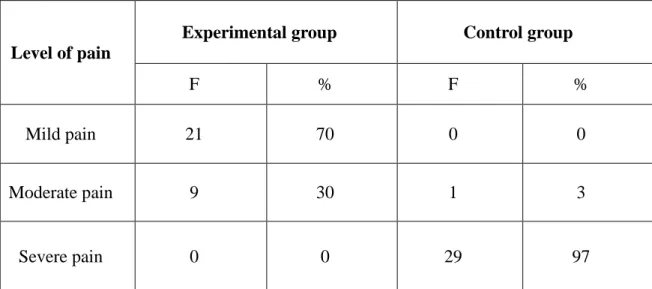
Table .2 Frequency and percentage distribution of level of pain perception among
experimental and control group in post test.
(N=60) Level of pain
Experimental group Control group
F % F %
Mild pain 21 70 0 0
Moderate pain 9 30 1 3
Severe pain 0 0 29 97
Infants in experimental group were administered sucrose solution 2 min prior to injection. Pain perception was assessed after the intervention while giving injection. Among experimental group the majority 21 infants (70%) perceived mild pain and the least 9 infants (30%) perceived moderate pain. No infant perceived severe pain after administering sucrose solution.
Among control group the majority 29 infants (97%) perceived severe pain and the least 1 (3%) perceived moderate pain. This shows that sucrose solution was effective in reducing pain.