Social Interaction on Smart Mobile Device
like Social TV based on Cloud
Kamal Narayan Kamlesh*1, K Prashant Kumar*2
M.Tech Scholar, Dept of SE, JJ Institute of Information Technology, RR (dist.), Telangana, India. Asst.Professor, Dept of CSE, JJ Institute of Information Technology, RR (dist.), Telangana, India
ABSTRACT:
Now a days, we can see that technology can be used in any way depends upon our usage. i.e., as we want we can implement our own technology. So in today’s world, we are using mobile social tv where we can share a video in a different techniques that each person in that group can see video like watching live telecast of that video. At the same time, we can put different comments about that video. In these techniques, we are using smart mobile device as port. But the biggest disadvantages with this are limited battery lifetime of mobile devices and unstable wireless connectivity, making the highest possible quality of service experienced by mobile users not feasible. Out of this problems, we are using two old technique called as PaaS(platform as a service) and IaaS (infrastructure as a service). Uses of these two techniques give us living room experience while sharing & watching the video.
Keywords: Social V, Cloud Service, Phablets, Media Cloud.
I.INTRODUCTION
In the Era of latest Smart Phones, where we implement the best to best innovative idea to get our customer satisfied as well as group of people connected online by any platform, they will need to get living room experience to the user of this techniques. To use a device on the network like a host, we need some mobile devices. These mobile device means any communication device with latest technology within and can be portable like laptop, tablets, Phablets, etc. unfortunately, these entire smart mobile device is consuming more battery power as well as unstable network connection over here in smart mobile. Accidentally smart Mobile is an existing Mobile that is unable to accommodate and integrate the new technologies.
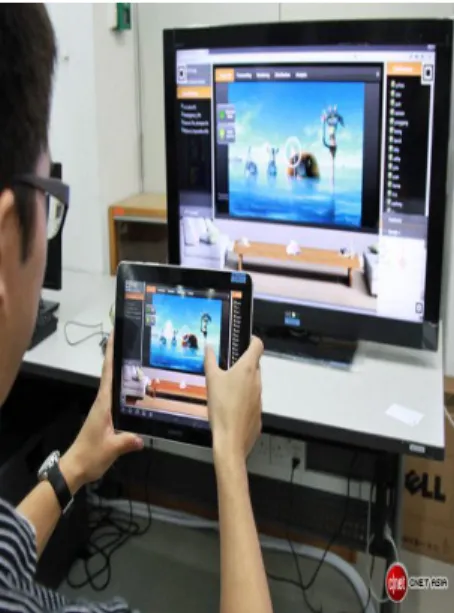
Fig: Example figure for operations performed on social tv based upon its feature services.
So, wiith using mobile device of modern era, we were using cloud based mobile social tv.
EXISTING SYSTEM
A number of mobile TV systems have sprung up in recent years, driven by both hardware and software advances in mobile devices. Some early systems bring the living room experience to small screens on the move. But they focus more on barrier clearance in order to realize the convergence of the television network and the mobile network, than exploring the demand of “social” interactions among mobile users.
I.e., we have discussed earlier, existing system have some difficult technical issue like reduced battery life of device, network unstable, and once if a video is fully downloaded then we will not be able to play
that video as that video format is not supported by our mobile device.
PROPOSED SYSTEM
We propose the design of a Cloud-based, Mobile social TV system to interconnect socially on a network. The system effectively utilizes both PaaS (Platform-as-a-Service) and IaaS (Infrastructure-asa- Service) cloud services to offer the living-room experience of video watching to a group of disparate mobile users who can interact socially while sharing the video. To guarantee good streaming quality as experienced by the mobile users with time varying wireless connectivity, we employ a surrogate for each user in the IaaS cloud for video downloading and social exchanges on behalf of the user.
Instead of above technology, we have also challenge of the design to deal with these social issues in efficient manner. The main social aspects to be considered are privacy, labor saving and good parenting. Cassavoy in his article defines a smart phone as “a device that lets you make telephone calls, but also adds features that you might find on a personal digital assistant or a computer”.
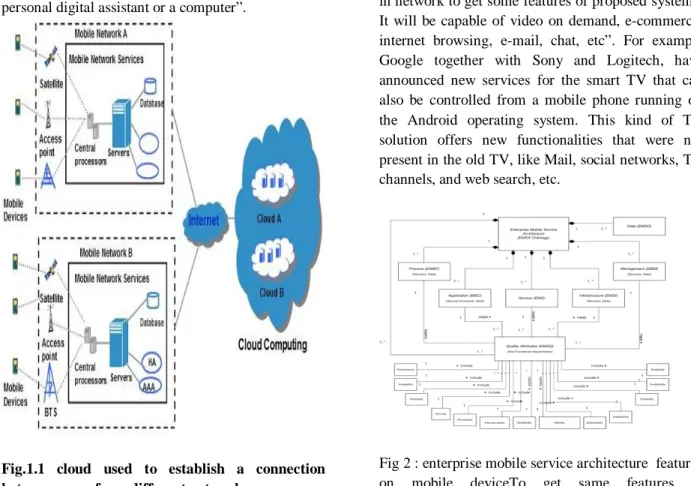
Fig.1.1 cloud used to establish a connection between users from different network
A smart phone can send and receive voice calls and text messages as traditional cellular phones, but in addition these phones include digital camera and large storage capacity, they are programmable and able to connect to the internet. Apart from this, there are many applications available to be used on these smart phones.
II.RELATED WORK
The ability to interconnect different components that were acquired at different times and are from different vendors without any advance planning or prediction that only such components will be able to interoperate. And in that problems associated with the existing system was occurring. The term of smart TV used in this thesis describes the integration of internet into a television set or a set-top-box, in order to gain interactivity and to add advanced features to the traditional television. According to the “interactive TV dictionary and business index” the definition of the smart TV is “A set-top box with advanced hardware and features. It will be responsible for taking care all the necessary actions in network to get some features of proposed systems. It will be capable of video on demand, e-commerce, internet browsing, e-mail, chat, etc”. For example Google together with Sony and Logitech, have announced new services for the smart TV that can also be controlled from a mobile phone running on the Android operating system. This kind of TV solution offers new functionalities that were not present in the old TV, like Mail, social networks, TV channels, and web search, etc.
Fig 2 : enterprise mobile service architecture features on mobile deviceTo get same features in mobiledevices.
Fig. 2.1 interoperability Cloud Structure in the Hybrid network Cloud
Cloud computing architecture offers many benefits that distinguish it from the standard enterprise computing. Barge in his work classify the three main benefits of cloud computing:
2. 1. Reduce runtime and response time
Cloud computing allows applications to access large number of servers so it reduces the runtime as compared with the application running on a single server. A good example is New York Times that reduced runtime with the help of cloud computing.
2. 2 Minimize infrastructure risk
Cloud computing minimizes the infrastructure risks in the context malfunction in e.g. equipment, systems, software or services; since in cloud computing a company or a user can access the cloud servers so it is not necessary to purchase the physical servers. This implies that when the work load in the context of processing capacity increases, a large number of servers needed, can be deployed quickly. Even if users are using a private cloud where they have their own servers installed, when their work load increases then this load can be shifted to the public cloud.
2. 3. Low cost of entry
Cloud computing reduces the installation and entry cost in new markets; no need for advanced IT
infrastructure. The main reason of the low cost is that the infrastructure installed in the cloud computing is rented, therefore no need to purchase servers, so the initial investment can be zero.
Module description: We have used five different module mechanism to get good features in services of high range like living room experience:
1.
Transcoder2.
Social Cloud3.
Messenger4.
Gateway5.
Subscribe TranscoderIt resides in each surrogate, and is responsible for dynamically deciding how to encode the video stream from the video source in the appropriate format, dimension, and bit rate. Before delivery to the user, the video stream is further encapsulated into a proper transport stream. Each video is exported as MPEG-2 transport streams, which is the de facto standard nowadays to deliver digital video and audio streams over lossy medium
Social Cloud
Social network is a dynamic virtual organization with inherent trust relationships between friends. This dynamic virtual organization can be created since these social networks reflect real world relationships. It allows users to interact, form connections and share information with one another. This trust can be used as a foundation for information, hardware and services sharing in a Social Cloud.
Messenger
It is the client side of the social cloud, residing in each surrogate in the IaaS cloud. The Messenger periodically queries the social cloud for the social data on behalf of the mobile user and pre-processes the data into a light-weighted format (plain text files), at a much lower frequency. The plain text files are asynchronously delivered from the surrogate to the user in a traffic-friendly manner, i.e., little traffic is incurred. In the reverse direction, the messenger disseminates this user’s messages (invitations and
chat messages) to other users via the data store of the social cloud.
Gateway
The gateway provides authentication services for users to log in to the CloudMoV system, and stores users’ credentials in a permanent table of a MySQL database it has installed. It also stores information of the pool of currently available VMs in the IaaS cloud in another in-memory table. After a user successfully logs in to the system, a VM surrogate will be assigned from the pool to the user. The in-memory table is used to guarantee small query latencies, since the VM pool is updated frequently as the gateway reserves and destroys VM instances according to the current workload. In addition, the gateway also stores each user’s friend list in a plain text file (in XML formats), which is immediately uploaded to the surrogate after it is assigned to the user.
Subscribe
In this module user can download the video. Subscribe module download video in high speed and clear video streaming. Authorized user every one download and watch the videos.
Transcoding mechanism
It resides in each surrogate, and is responsible for dynamically deciding how to encode the video stream from the video source in the appropriate format, dimension, and bit rate. Before delivery to the user, the video stream is further encapsulated into a proper transport stream. Each video is exported as MPEG-2 transport streams, which is the de facto standard nowadays to deliver digital video and audio streams over lossy medium.
III.PROPOSED METHODOLOGY
Instead of Iaas & PaaS cloud, we are also using here SaaS (Software as a Service) cloud. Due to this SaaS, we are getting a lots of profits at different stages of implementation of the system like Reliability is a big challenge to be considered in the smart Mobile environment. In smart Mobile environment different devices are integrated such as TV, microwave, washing machines, cameras, and telephones etc that integrate with each other and with
the environment. Developer must make sure that the devices never crash. To some degree the environment is aware of the user and its surroundings.
The challenge for the designer is to create a system that ensure the user understands the realistic presence of sensors, other devices, interpretation and machine actions in their Mobiles. The audio visual entertainment requires a smart TV in order to learn the family preferences, access control, record the desired program on given schedule from different channels. This entertainment category is to provide the music according to the user preferences in any location, time and space in the Mobile.
There are four implementation models and three service models for cloud computing that can be implemented depending on the user requirements. Implementation Model which makes cloud as the best of features is listed below:
1. Low agility and resource intensive management
2. Low utilization of assets
3. Aging technology requiring continual refresh and upgrades
4. Cost Effective and Technical Managed Modelcal
Low agility and resource intensive management
In the System of automated just-in-time fulfillment without human intervention by the service suppliers most expensive and on demand service. More flexible, responsive and innovative services which were inherently built to be both enduring and flexible to service changing business needs. As of the process of technical up gradation happens in the IT which we sometimes call it as Digital Revolution and if we consider the cloud implementation where we need to upgrade the best of techno local service work at home and revolution will come very soon.
Low utilization of assets
In this aspect we have put forward the approach of the as much as less utilization of asset which leads the optimum level of asset utilization. Greater sharing of resources, improved economies of scale and the
ability to closely match allocated resources to demand
Aging technology requiring continual refresh and upgrades
Technically aging and its upgrading is the most changeling terminology where we put to put best for every release. An evergreen model where lifecycle management is predominantly the responsibility of the service provider and quality improvements and cost reductions are driven by highly-competitive market forces
Cost Effective and Technical Managed Model cal
This is most efficient and typical feature where we like to put forward the feature like Cost effective, i.e. Cloud means cost effective and without this feature cloud has no meaning. Consumption of well-defined, standardized and highly-configurable shared services which continue to evolve and innovate based upon the needs of a large and diverse customer base and is paid for by many customers. Hence, we consider the above implementation features as of to put forward as the mechanism for our research based paper.
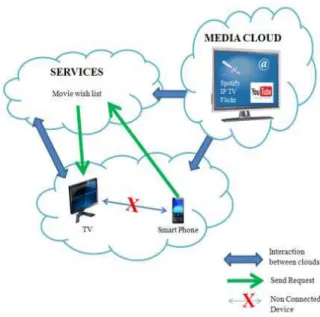
Fig. 3.1 Illustration of the Social TV Connecting the HD of Cloud
Today we have TV, Digital Box, smart phones, security alarms, digital locks, computers, game consoles, and smart Mobile appliances in our Mobiles. Usually, these devices are not connected to each other since these are often from different vendors and run on separate platforms.
Cloud Services:
Cloud computing provides services for all the needs ranging from hardware to end user applications. It allows for rental access to hardware resources such as servers, storages, routers, switches and also provides required application for end users on demand. It proposed three categories of services SaaS, IaaS, and PaaS. These categories are described as following. Software as a Service (SaaS): is on demand service that provides a complete software application. The software is installed on a single computer in the organization and multiple users access it over the cloud within the organization.
Infrastructure as a service (IaaS): provides the all solution required to build an information technology (IT) infrastructure that usually consists of equipment, systems, software, and services. It provides storage and computing features as service on network. For hardware concerns it provides servers, switches, storage solutions, and routers, etc, and for computing purpose it provides all kind of applications from simple to high performance applications.
Platform as a service (PaaS): provides platform as a service to create high level services. The platform is equipped with all the resources required such as operating systems, application software, security, middleware, storage, programming language and development environment.
Tackling these issues with our proposed platform is done with more dynamicity:
Devices are supposed to be content providers and will be able to serve as sensors too.
Users will be able to interact with each other through their registered services and devices, e.g. like today’s social media services.
Services as well will be able to interact, loan and share directly data between them bringing entertainment experience to a higher level. Exemplifying scenario: User A’s registered smart TV will be able to communicate directly with User B’s registered smart phone, of course if User A and user B allows that. Another example can be a smart TV in the kids’ room, who’s not supposed to be on at 22:00 can alert one of the parent’s smart phone with a
message leaving the possibility to switch off the TV or change the program to a more appropriate one.
IV.CONCLUSION AND FUTURE WORK
In The Era Technological Innovations, The goal is to look at context-aware access control and how it is linked to semantically structured data in a business context, as supplied through the framework. The use of context-aware authorization mechanisms answers the need for a granular access system, where the traditional false/true authorization mechanisms are no longer sufficient. As an easy-to-catch scenario, we chose a travel scenario providing the user with context-aware and personalized information. The scenario takes place in an airport where the users has time to spare before their flight leaves and wants to get suggested places to eat and known people to interact with. This is done by having the user’s mobile device connect automatically to a hotspot and sends the context information to a service that will request relevant information from the user profile stored in the cloud service. We focused on the authorization part of the scenario, to implement a context-aware authorization model in enterprise systems, using as much as possible enterprise oriented solutions.
V.REFERENCES
[1] Dr. Anwar M. Mousa, ―Prospective of Fifth Generation
Mobile Communications‖International Journal of Next-Generation Networks (IJNGN) Vol.4, No.3, September 2012
[2] Ahmed and Moore. Sparql / odatainterop.Technical report, W3C,2013.
[3] Z. Huang, C. Mei, L. E. Li, and T. Woo, “Cloudstream: Delivering high-quality streaming videos through a cloud-based svc proxy,” in INFOCOM’11, 2011, pp. 201–205.
[4] T. Coppens, L. Trappeniners, and M. Godon, “AmigoTV: towards a social TV experience,” in Proc. of EuroITV, 2004. [5] N. Ducheneaut, R. J. Moore, L. Oehlberg, J. D. Thornton, and E. Nickell, “Social TV: Designing for Distributed, Sociable Television Viewing,” International Journal of Human-Computer Interaction, vol. 24, no. 2, pp. 136–154, 2008.
[6] A. Carroll and G. Heiser, “An analysis of power consumption in as smartphone,” in Proc. of USENIXATC, 2010.
[7] J. Santos, D. Gomes, S. Sargento, R. L. Aguiar, N. Baker, M. Zafar, and A. Ikram, “Multicast/broadcast network convergence in next generation mobile networks,” Comput. Netw., vol. 52, pp. 228–247, January 2008.
[8] DVB-H, http://www.dvb-h.org/.
[19] K. Chorianopoulos and G. Lekakos, “Introduction to social tv: Enhancing the shared experience with interactive tv,” International Journal of Human- Computer Interaction, vol. 24, no. 2, pp. 113– 120, 2008.
[10] M. Chuah, “Reality instant messaging: injecting a dose of reality into online chat,” in CHI ’03 extended abstracts on Human factors in computing systems, ser. CHI EA ’03, 2003, pp. 926–927.
[11] R. Schatz, S. Wagner, S. Egger, and N. Jordan, “Mobile TV becomes Social - Integrating Content with Communications,” in Proc. of ITI, 2007.
[12] R. Schatz and S. Egger, “Social Interaction Features for Mobile TV Services,” in Proc. of 2008 IEEE International Symposium on Broadband Multimedia Systems and Broadcasting, 2008.
[13] J. Flinn and M. Satyanarayanan, “Energy-aware adaptation for mobile applications,” in Proceedings of the seventeenth ACM symposium on Operating systems principles, ser. SOSP ’99, 1999, pp. 48–63.
[14] W. Yuan and K. Nahrstedt, “Energy-efficient soft real-time cpu scheduling for mobile multimedia systems,” in Proceedings of the nineteenth ACM symposium on Operating systems principles, ser. SOSP ’03, 2003, pp. 149–163.
[15] G. Anastasi, M. Conti, E. Gregori, and A. Passarella, “Saving energy in wi-fi hotspots through 802.11 psm: an analytical model,” in Proceedings of the Workshop on Linguistic Theory and Grammar Implementation, ESSLLI-2000, 2004, pp. 24–26. [16] X. Zhang, A. Kunjithapatham, S. Jeong, and S. Gibbs, “Towards an Elastic Application Model for Augmenting the Computing Capabilities of Mobile Devices with Cloud Computing,” Mobile Networks and Applications, pp. 1–15, Apr. 2011.
AUTHORS PROFILE:
K N Kamlesh had received B Tech in Dept. of IT from JNT University, Hyderabad. At present he is pursuing M Tech in Department of Software Engineering from Jawaharlal Nehru technological university Hyderabad.
K Prashanth kumar has received B.Tech & M Tech degree respectively in department of CSE. He also worked like a software developer in different companies. At present he is working as an asst. Professor, department of CSE, JJ Institute of Information Technology.