DOI 10.1007/s13174-011-0052-9
S I : F O M E - T H E F U T U R E O F M I D D L E WA R E
Mission-oriented middleware for sensor-driven scientific systems
Alan Dearle·Simon Dobson
Received: 25 October 2011 / Accepted: 16 November 2011 / Published online: 2 December 2011 © The Brazilian Computer Society 2011
Abstract Coordinating the networks needed for modern scientific data collection and control presents a signifi-cant challenge: they are typically power- and resource-constrained, operating in noisy and hostile environments, and need to adapt their behaviour to match their operation to their sensed environment while maintaining the scien-tific integrity of their observations. In this paper, we explore several aspects of managing and coordinating sensor-driven systems. We draw some conclusions about how to design, structure, and implement programming and middleware ab-stractions for long-lived and adaptive sensor networks.
Keywords Sensor networks·Middleware·Programming models
1 Introduction
Wireless sensor network systems (WSNs) are—and will remain—severely limited in terms of the computational and communications capabilities. While platforms may become more capable, this almost invariably comes at the cost of in-creased power utilisation, and hence shorter lifetimes. Given that nodes are often deployed in conditions that preclude their recovery, and that each individual node is vulnerable to damage from the environment independently of power degradation, it seems inevitable that, within a fixed budget,
A. Dearle·S. Dobson (
)School of Computer Science, University of St Andrews, St Andrews, UK
e-mail:[email protected] A. Dearle
e-mail:[email protected]
designers will continue to prefer to use more, less-powerful nodes in preference to fewer, more powerful nodes.
It is time to re-imagine programming and middleware for resource-constrained, sensor-driven systems, whose re-quirements are specified en masse for the entire network and where many of the techniques commonly applied in other domains will prove unacceptable. We first examine the is-sues raised from the current state of WSN programming, and suggest an alternative model that may serve better as WSN systems become more complex and demanding of advanced software.
2 What makes sensor networks different?
Modern computers are surprisingly homogeneous in terms of the core concepts, programming, operating system, and middleware abstractions they present. On the one hand, this represents the successful evolution of concepts with univer-sal appeal and application; on the other hand, familiarity can blind one to important differences.
2.1 Network-centred functionality
Let us take this argument a step further. In programming, most distributed applications we can, to first order, focus on the programming of individual nodes whose functions will then be bound together using a communications model that, while it may be sophisticated in detail, adds little to the in-dividual nodes’ functions. In a WSN, the reverse is true: programming must perforce deal with the network, since no matter how sophisticated the individual nodes’ program-ming becomes its impact is insignificant compared to that of the network on the system’s overall behaviour and evolu-tion [9,12].
The vast majority of work in middleware over the past decades has focused on simplifying interactions between nodes: typically nothing more complex than pairwise inter-actions, sometimes augmented with multicast. Middleware has generally adopted aflat network abstractionthat hides the details, costs, and risks of failures of routing between nodes. Moreover, at least in the case of object, and service-oriented middleware, it has considered the network to be non-computational, responsible only for transferring unin-terpreted byte streams and simple records without in-flight processing or provenance capture. (While message-oriented middleware offers the promise of such processing, its im-plementations often do not deliver it and applications sel-dom make critical use of it.) Finally, it has adopted a sim-ple model of failurein which failures are considered excep-tional, transient, largely independent, and remedied out-of-band by some mechanism external to both the middleware and the process it is supporting.
2.2 Abstracting the network
The most basic requirement of a WSN is to deliver sensed data to external recipients, in particular to sink nodes. To do this in a traditional programming environment might look something like this:
INetSocketAddress sink
= new INetSocketAddress(...); if( sink != null ) {
Socket s = new Socket( sink );
if( s != null ) { int sent = write( sink, data );} }
We refer to this model as theflat network modelin which the network is treated as fully-connected over which routes may be abstracted. In many systems, the node-level code is structured as a tower of layers and abstractions. However, this model contains a number of implicit assumptions about the networked environment model: it assumes
1. That it is possible to abstract over a route to some other node (such as the sink);
2. That data is delivered reliably and the number of bytes delivered to the endpoint can be reported; and
3. That data is being delivered as an un-interpreted message to sink, with no in-network computation over it.
Abstracting over routes has served us well. However in a wireless environment, node neighbours may come and go due to failure, mobility and environmental conditions and may offer widely differing qualities of service between dif-ferent links and even over a single link over time. Further-more, thewriteoperation above reports the number of bytes delivered to the endpoint, implying bi-directional data trans-mission. This may not be possible over a single link, far less a multi-hop route in a WSN.
This model does not express anything about the budget of the operation or what to do in the case of failure. Tradition-ally network code is governed by time-outs that determine how long to try some operation for before giving up. In a multi-hop environment, it is not clear how to set the values of the time-outs. Clearly, to establish a 5-hop connection is going to take longer than a 2-hop one, but since the num-ber of hops has been abstracted over using the flat network model it is unclear where in the system has the necessary control information. Furthermore, since network operations are expensive, it may be desirable to set a resource budget on each operation: aglobalbudget since routing will accrue costs to other nodes. It is worth noting again that it may be commonplace for a node to be able to communicate with another node, but for that node not to be able to reply.
Even ignoring the global budget problem, we do not have mechanisms for determining the budget of individual (network) operations. Route formation and maintenance are complex tasks involving the maintenance of data structures and the transmission of many messages. It is difficult to as-sign these costs to different individual operations.
The example above also assumes that data is being de-livered as an un-interpreted message to sink, with no in-network computation. This assumption results in nodes that are close to sinks necessarily having to process more data than those that are further away—and, therefore, be more likely to expire early resulting in a network with severely diminished capacity. In-network computation can (but does not necessarily) reduce this issue. This approach has been demonstrated in Flask [8], which provides a “staged” func-tional model in which target code is structured using higher-order operations that are compiled-out of the final target bi-nary. It is therefore possible to write something like:
deliver( aggregate( produce() ) )
in which theproducecode runs on the performing sensing, theaggregatecode runs in network and thedelivercode runs at the sink.
2.3 The single and unchanging application
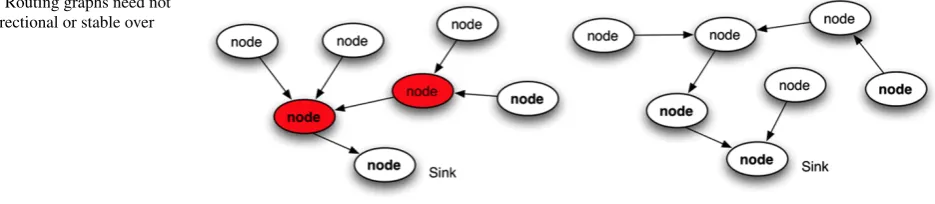
Fig. 1 Routing graphs need not be bidirectional or stable over time
program that never changes over the system’s lifetime. We call this model the single unchanging application ab-straction. This model is also followed by systems such as TinyDB [7], which describe the system as a single query. Both approaches are declarative, although this need not be the case—there is no reason why computation stages should not include computation over state, and both approaches generate rather less declarative nesC programs.
The single unchanging applicationabstraction has a num-ber of intrinsic features:
1. It is possible to describe the application objectives in a single specification.
2. The topology of the network is known a priori.
3. The application objectives are compiled away in the code on the nodes.
4. Mechanisms exist for deploying the components onto nodes.
5. Appropriate communications infrastructure is available to achieve the required data transmission, synchronisa-tion and choreography of the applicasynchronisa-tion.
6. No evolution of purpose takes place.
The necessity of describing the application objectives in a single specification is not always a bad thing: indeed, this has been the centre of traditional software engineering for many decades. However, it somewhat implies that each WSN has a single, fixed task. It seems likely that in the fu-ture we will have more than one application running concur-rently on collections of nodes, especially for systems where the deployment of nodes is complex and their retrieval in-feasible, as for many environmental sensing applications.
The ability to locate computation in appropriate geo-graphical locations requires a priori knowledge of the net-work topology. This is also a requirement of SNEEql [1], which performs static whereschedulingto decide where to place the computation required to implement query frag-ments. We contend that this is highly undesirable in a WSN environment.
Consider the network topologies shown in Fig.1 contain-ing the same number and geographical positioncontain-ing of nodes. It would not be uncommon in deployments for communica-tions to be bi-stable between the two topologies due to envi-ronmental conditions. However, in the left network compu-tation such as database joins or averaging could be usefully
performed at the red nodes where as in the right diagram it could not.
Single-unchanging-application systems compile-away the application objectives as part of the compilation pro-cess leaving dumb code to be executed on the nodes. This leaves no opportunity for autonomous adaptation. Knowl-edge about how nodes are expected to behave is compiled statically into the implementation of all the nodes in the system. This shared knowledge tightly defines the operating parameters of every node leaving little scope for adaptive behaviour.
WSN systems have had poor support for deploying code onto nodes, although some sophisticated techniques have been developed to side-step this [6]. Many systems are in-tended to have code deployed prior to the nodes being placed into the environment to be sensed. In many WSN systems the entire application stack including application code, op-erating system, and networking layers are compiled into a single image, which precludes individual components from being replaced. Some recent systems [4,11] have supported the run-time replacement of components. However, not all permit code to be shipped across the network. It is intrinsi-cally expensive to ship code since, as discussed above, WSN radios permit the transmission of relatively small packets with an associated high transmission cost. A second prob-lem is that of bi-directionality. For example, in the networks shown in Fig.1above, it may be possible for the nodes to transmit through the routing graphs to the sink but for the sink to be able to communicate back to the nodes. In such cases, dynamic deployment is not possible.
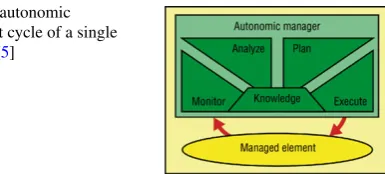
Fig. 2 The autonomic management cycle of a single node, from [5]
2.4 Locating autonomic behaviour
The autonomous management cycle of Kephart and Chess [5] (Fig.2) supports a number of aspects of “self-*” prop-erties including management, configuration, optimisation, healing, and protection [3].
A fundamental issue with respect to wireless sensor nets is where the autonomic cycle is executed and how the mon-itoring is performed. Many would advocate performing this at every level in the system: within the entire WSN system, within nodes, and within software components. We examine each of these in turn.
Autonomic management of the entire system is perhaps the most difficult to manage. In order to monitor, informa-tion about the status of all the managed elements must be collected. The first question is where this should be col-lected. The obvious place is at the sink(s) (if there are any) since they are often less resource constrained than the other nodes. It is also more likely that monitoring data will be deliverable to the sink node(s). However, the choreography of change may be difficult (or impossible) from the sink node due to the inability to address nodes (through lack of bi-directional links). Assuming that system change can choreograph from somewhere inside or outside the network, the synchronisation of change presents a further challenge. Mechanisms are required that permit the system to grace-fully move from one global state to another. This is difficult in the face of inexact information, unreliable communica-tions, and clock skew.
The analysis phase of autonomic management requires some model of the desired system state. This model must describe (at least) the desired state in terms of resources in-cluding software components and physical hosts, the desired state of the network, relationships between hosts and com-ponents, and constraints over these. Similarly the collected monitoring data must contain similar levels of detail so that the autonomic planning can be carried out. Such monitor-ing is a relatively energy-intensive sensmonitor-ing task in itself, and there may not be available computational or network re-sources to carry it out. Thus, deciding the frequency at which such monitoring occurs is itself a complex task worthy of its ownautonomic management.
By contrast with system-level autonomic management, node- and component-level management is relatively easy, resource constraints aside. The major problem with such
changes is that node level understanding is required of how local changes will affect the entire system. For exam-ple, changes to the MAC level protocols on a node cannot be made without complementary changes on the nodes in which the node is in communication. This is similarly true for synchronisation, buffering, and message formats.
There is a need for the individual nodes and components to have asystem modelof how they relate to the entire sys-tem. Without this, they cannot autonomously change their behaviour and remain compliant with the requirements of the rest of the system. Similarly, component level changes must have a model of node level behaviour if any consistent changes are to be made.
3 Toward an alternative model
We can step back and ask two questions: What functions do we want to be provided by the operating systems, middle-ware, and languages on WSNs, and what system and lan-guage structures best provide these functions? We believe that answering these questions allows us to re-imagine how we should provide system and development support for the next generation of WSNs.
3.1 No a priori abstractions
For most systems, programming abstractions are composed using static layering where each layer presents new, ex-tended, or simplified concepts in terms of those provided in the layers below. This can lead to redundancy and con-ceptual mis-match that, while acceptable on larger systems, become problematic when the abstractions are fundamen-tally inappropriate—for example by abstracting over ure, which prevents applications from dealing with such fail-ures intelligently. It is possible to adopt a more modern, component-oriented approach to systems in which individ-ual features are defined independently along with statements of the dependencies and provided services. This principle can be applied to applications and device drivers—but also to protocol handlers, and even programming languages and type systems.
Another approach to component reconfiguration is pro-vided by the Insense language [2], which models the world as active components that only communicate via typed chan-nels. This gives components complete independence of each other. In the Insense model, message send is the only form of IPC. A consequence of this is that threads always re-side within the component in which they were created. This has the advantage that components can be replaced independently of each other without concerns about inter-component thread state such as that stored on stacks. Each Insense component has a top-level behavioural loop, which controls the component’s behaviour. This model fits well with having the scheduling of components controlled by a resource-aware scheduler.
The replacement of arbitrary system components such as MAC level drivers makes it difficult to make guarantees about the behaviour of sub-systems or even their interface. One answer to this potential problem is through the mission specification. If a mission specification specifies that some piece of functionality is required, the evolutionary process on nodes can be constrained to prevent changes that violate that specification. Enforcement of this is in itself problem-atical since, in the limit, it is intractable to determine the behaviour of an individual component. One solution to this problem might be code that carries certificates that specify their behaviour and only permit components to be replaced with others that carry appropriate certificates.
3.2 Introspection
The next requirement of a middleware system is to provide the ability to introspect. Without the ability to introspect, in-system evolution is not possible, the only evolution possible is externally imposed heteronomy based on reported infor-mation or observations about the system’s behaviour. There are a number of system attributes that require introspection:
1. The node state, including the state of the devices, battery, the hardware, and software;
2. The mission or missions on which the node is employed; and
3. The local network environment, including the node’s neighbours.
Node level software needs to both introspect and react to the node’s network environment. It should be able to dis-cover the nodes neighbours and be alerted to changes in the neighbourhood set. However, such discovery is potentially expensive in terms of energy usage with a trade-off existing between highly accurate information with high-energy us-age and less timely information and lower energy usus-age; if the sampling rate is too slow it may be that events such as node arrival and departure are missed entirely. The parame-ters governing the introspection of the network environment therefore need to be controllable by software.
3.3 Capturing and understanding mission
Adaptation and evolution are crippled if they must occur only at the behest of (and using information known reli-ably to) a central autonomic controller. Breaking this restric-tion requires that the required system-wide behaviours must be defined using explicitmission specificationsmade avail-able to the network at run-time. Such a specifications per-mit top-level constraints, trade-offs, and adaptive strategies to be captured explicitly and used to inform software de-ployment and evolution in a well-founded manner. A mis-sion specification defines the envelope within which de-ployed software may autonomously evolve, and constrains heteronomous evolution to respect timing, distribution, and other constraints. The mission is expressed at a high level in terms of abstract “mission components” that represent com-mon design patterns for WSNs (such as signal processing or collection trees). Mission components can be composed resulting in composition of both their functionality and their behavioural envelopes.
The mission specification must be available throughout the system’s lifetime to all the processes that operate within it: for example, to processes performing both intra- and inter-node evolution; to processes making decisions about the locations of computational elements; and to those mak-ing routmak-ing decisions and configurmak-ing MAC-level hardware components.
3.4 Building belief
We have argued above that wireless sensor nets are inexact environments, in the sense both of their noisy control inputs and their limited knowledge of their own (and their environ-ment’s) state over time. This suggests that nodes must base many decisions on theirbeliefsabout these factors, rather than about their knowledge of them—and that they must function in or recover in situations where this belief turns out to be incorrect. The example given above serves to illustrate: the more frequently the network environment is scanned, the higher the confidence in the accuracy of the reported set of nodes in the network environment, but at the cost of addi-tional power and communications budget. Another example is in the transmission of data to a sink: at one extreme, the synchronous confirmation of packet delivered to a sink may result in high levels of belief about message delivery; peri-odic confirmation, perhaps via management reports, would result in lower degrees of certainty; and at the other limit would create a fully asynchronous best-effort-delivery event system.
Belief techniques can be applied at the semantic level too, by making use of models of expected observations. If two adjacent nodes report radically different ambient tem-peratures, for example, then one might reduce the level of belief one places in their accuracy; on the other hand, this may beexpected behaviour for nodes on opposite sides of a wall or subject to some other environmental factor. Con-versely, temperature measurements that do not vary add lit-tle information to that already collected and could perhaps be discarded. The use of models alongside missions can thus be used to improve the performance of a WSN both at the semantic and the operational levels.
The encoding of mission may be used to inform require-ments for communications. For example, a system com-prising nodes attached to animals that is required to detect encounters with other animals requires fast node detection and bi-directional communications between adjacent nodes, with no other dissemination mechanisms required. By con-trast a system monitoring an agricultural environment may require a relatively static uni-directional diffusion tree with no acknowledgements of message delivery. Each of these scenarios has quite different requirements on the per-node communications stack.
The initial configuration of communications stacks should therefore be based on the mission specification. The specification would set out the operational envelope of the communications stack such as initial MAC protocols, sam-pling frequencies and routing protocols. The initial imple-mentation could be changed if the operational environment were found to be different from that expected or if it vi-olates the constraints specified in the mission specifica-tion.
Some changes need to choreographed across the en-tire system. For example, changing the routing protocol from an AODV-based [10] approach to a clustered system would require much inter-node synchronisation. Thus, cer-tain changes may be precluded based on the system informa-tion available by introspecinforma-tion. For example, if a node had never received any messages from its (expected) neighbours, it may alter the network protocols it were using or alter pa-rameters that govern them; if, however, the node regularly receives messages from its neighbours some agreement pro-tocol may need to be followed in order to effect a change. Note that in either case information from the lower levels of software needs to be made available to the decision-making processes.
3.5 Building provenance
Closely related to the idea of belief models is that of prove-nance. When a sensor network reports that the average tem-perature in some area is 21°C, the provenance of this data needs to be understood. Of interest are the accuracy of
the sensing devices, the number, and spread of the devices that have contributed to the result, the node instances that have contributed to the result, the standard deviation, mean, modal values, and other derived signals, how recently the data was collected, the computation that has been applied to the raw readings before they are reported. To be able to re-port such information requires provenance considerations to be built in from the ground up in the same manner as belief systems.
Again, the encoding of missions and models helps with these tasks, since they help to inform decisions on data han-dling and to record the fact that these decisions have been made. A strong model of expected temperature variation may allow (or encourage) the middleware to discard outly-ing values on the grounds that they are likely to be noise (and so reduce communications overheads), but may also record that this optimisation has been made for future analysis. It is important to remember that the design of middleware is not neutral with respect to the scientific data collected, and may experiments are exquisitely sensitive to the processing that occurs on data streams. It may not be a problem that outliers are discarded, for example, but it may compromise later statistical analysis if thefactof this discarding is not available.
3.6 Taking and relinquishing control
Finally, we believe that the use of components can be ex-tended throughout the system. Components can be used to provide all aspects, including scheduling, type matching, language features, memory management, and other system functions normally regarded as fixed.
Why would one do this? Any fixed choice embodies a collection of beliefs and decisions about the costs and ben-efits of different design choices. In modern systems, such choices can be made once and fixed, since the systems are so powerful that discrepancies between what is provided and what is optimal will not have a critical impact. We simply do not believe this to be true for WSNs: a single-application system need not pay the penalty for a coercive scheduler that could be replaced by a co-operative scheduler, while con-versely a system with time-sensitive interrupts might require the opposite. An individual component is unlikely to be im-pacted by either choice, whilst the system’s overall perfor-mance, longevity, and stability might well be.
4 Conclusion
the future of WSNs will involve complex design and man-agement choices being made in the face of uncertain infor-mation, overlapping, and evolving missions. These cannot be addressed without significant improvement in the mid-dleware, programming languages, and software engineering techniques being deployed.
Our experiences to date suggest that component-based techniques can be a significant asset in defining flexible WSNs. These need to be augmented with new developments in autonomic systems architecture. Specifically, it would seem to be advantageous to move descriptions of the sys-tem’s architecture and mission down into the systems level to inform and control adaptations over time, and to ensure that the systems evolve within an acceptable mission enve-lope. Additionally, we need to make improvements in the ways we handle uncertainty and failure, and in the making of decisions in the face of compromised inputs.
These factors are by no means unique to WSNs, and it would be an interesting exercise to see to what extent all complex distributed systems would benefit from some of the techniques we have advocated. It is certainly the case that the next generations of many systems will feature un-certainty, evolution, distribution, and ubiquitous failures to be managed. It would be fitting if approaches envisioned for low-resource devices—copying in many ways the con-straints of far earlier generations of computing platforms— were to have implications for a wide range of future sys-tems.
References
1. Brenninkmeijer C, Galpin I, Fernandes A, Paton N (2008) A se-mantics for a query language over sensors, streams and relations. In: Proceedings of BNCOD, pp 87–99
2. Dearle A, Balasubramanian D, Lewis J, Morrison R (2008) A component-based model and language for wireless sensor net-work applications. In: Proc 32nd annual IEEE international com-puter software and applications conference (COMPSAC 2008), pp 1303–1308
3. Dobson S, Denazis S, Fernández A, Gaïti D, Gelenbe E, Mas-sacci F, Nixon P, Saffre F, Schmidt N, Zambonelli F (2006) A survey of autonomic communications. ACM Trans Auton Adapt Syst 1(2):223–259
4. Dunkels A, Finne N, Eriksson J, Voigt T (2006) Run-time dy-namic linking for reprogramming wireless sensor networks. In: Proc ACM SenSys, pp 15–28
5. Kephart J, Chess D (2003) The vision of autonomic computing. IEEE Computer 36(1):41–52
6. Levis P, Culler D (2002) Maté: a virtual machine for tiny net-worked sensors. In: Proc 8th ACM international conference on architectural support for programming languages and operating systems, October 2002
7. Madden S, Franklin MJ, Hellerstein JM, Hong W (2005) TinyDB: an acqusitional query processing system for sensor networks. ACM Trans Database Syst 30(1)
8. Mainland G, Morrisett G, Welsh M (2008) Flask: staged func-tional programming for sensor networks. In: Proceedings of ICFP 9. Mottola L, Picco GP (2011) Programming wireless sensor
net-works: Fundamental concepts and state of the art. ACM Comput Surv 43(3)
10. Perkins C, Belding-Royer E, Das S (2003) Ad-hoc on-demand dis-tance vector (AODV) routing, RFC3561, IETF, July 2003 11. Porter B, Coulson G (2009) Lorien: a pure dynamic
component-based operating system for wireless sensor networks. In: Proc MidSens, pp 7–12, December 2009