
NUTREASE POWDER- NATURE’S BLEND OF PROTIEN, FIBER & PHYTOCHEMICALS PROVIDES NUTRITIONAL THERAPY FOR FATTY LIVER DISEASE
17
0
0
Full text
(2) 76. Govind Shukla. et al., Int. J. Pharm. & H. Care Res., Vol.–05 (03) 2017 [75- 91]. Blood Purification – as the journey of liver start throughout the body, the blood from stomach and intestine is the liver and it prevent the contaminants and also removes the waste product from the body such as : Drugs Bacteria Fungi Viruses Parasites Food Additives Pesticides and herbicides Chemicals Fats Alcohol Dead cells Detoxification – Liver also perform the function of detoxification as it detoxifies alcohol, heavy metal, drugs, chemicals, toxic by product from the blood. Housing an ingenuous cleaning system, the liver detoxifies infectious organisms, alcohol, heavy metals, drugs, chemicals, toxic by products and other poisons from the blood.3 Digestion – The liver produces bile, a substance needed to digest and absorb fats. Bile used in digestion by helping the body which absorb fat and certain vitamins, including Vitamins A, D, E and K. Manufacturing –The liver manufactures a variable proteins, including enzymes, hormones, blood proteins,. clotting factors and immune factors. The liver also produces cholesterol, which carries energysupplying fats to the body. Processing – The liver perform the most of the functions via different organs like skin, mouth, lung, Considered to be the biochemical factory of the body, the liver metabolizes substances in the blood stream.4 Storage – The cells of the liver also act as a power house of body for many substances, such as iron, vitamins, minerals and glycogen until they are needed. When blood sugar levels drop and the body needs energy quickly, the liver converts the stored glycogen into glucose and releases it into the bloodstream. In this way, the liver supplies us with fast-acting energy. In past work in identification, documentation and recognition of traditional medicine has been done in India. Investigation of traditional medicine is very important for the welfare of rural and tribal communities for the treatment of conventional illness. The manifestation of liver diseases such as hepatitis-B including jaundice, characterized by Hippocrates was found to be infectious as early as the eighth century. Thus viral hepatitis was known to mankind as Kavil (Jaundice) for more than 1,200 years. Yellowing of eyes and vomiting yellowish fluid are the initial external symptoms of hepatitis 1, 2.5. Fig. No. 01: Stages of liver damages The liver is the second largest organ in the body. It works hard, performing hundreds of complex functions, including: fighting infections and illness Removing toxins (poisons), such as alcohol, from the body Controlling cholesterol levels Helping blood to clot (thicken) Releasing bile, a liquid that breaks down fats and aids digestion. Liver disease doesn't usually cause any obvious signs or symptoms until it's fairly advanced and the liver is damaged. At this stage, possible symptoms can include loss of appetite, weight loss and jaundice. Enhanced lipid peroxidation during metabolism of ethanol may result in development of hepatitis leading to cirrhosis.. www.ijphr.com.
(3) Govind Shukla. et al., Int. J. Pharm. & H. Care Res., Vol.–05 (03) 2017 [75- 91]. Hepato-toxicity and its mechanism Hepatotoxicity is the term used for the liver damage which is caused by the use of certain allopathic medication as those used for HIV, cancer. Some potential symptoms may include nausea, abdominal pain, or fatigue. Treatment often involves changing the medications which may be causing the hepato-toxicity.6 Prescription medications and natural chemicals can each lead to hepato-toxicity. In fact, this is the most common reason for a medication to be taken off the market.7 Acetaminophen is also another example of hepatotoxicity because of this body is not able to get rid of the drug before it begins to cause the damage. Signs and symptoms of drug induced hepatotoxicity It can be as mild as a change in liver function tests presenting no viable symptoms in the patient, to full blown hepato-toxicity and liver failure. The earlier the problem is diagnosed, the greater enhance of survival for the patient. There is usually an increase in the liver function tests when hepatotoxicity is present. The problem with this is that many drugs on the market increase the Aspartate aminotransferase AST and Alanine aminotransferase [ALT] levels in patients, knowing when the increase is substantial enough to have to discontinue the drug is essential. A drug should be discontinued if the ALT levels are elevated more than two times the normal limit while the AST levels remain within normal limits or slightly elevated. An increase in bilirubin levels will follow the increase in ALT levels as the condition worsens. Many drugs present the symptoms of rash, fever and an increase in eosinophils in the blood when ALT levels are increased (this happens in about 30% of cases). The symptoms usually occur within 4 weeks of starting a drug and can seize 8 weeks out.8 Although a difference of signs and symptoms can vary so much from one drug to the next, and one patient to the next some common signs associated with drug induced hepato-toxicity include: Non-specific symptoms-- ones that may not directly pinpoint the problem. Fatigue Weakness Vague abdominal pain Loss of appetite Signs and symptoms specific for hepato-toxicity- Jaundice. . 77. Itching Easily bruising. When the liver is severely damaged cirrhosis can occur. Symptoms of cirrhosis include Edema (often times in the legs) Mental confusion Kidney failure Gastrointestinal bleeding Vulnerability to bacteria infections Some drugs may cause hepatitis (inflammation of liver cells that can result in the death of the cells. Symptoms of hepatitis include Loss of appetite Nausea Vomiting Fever Weakness Fatigue Abdominal pain Hepatotoxicity caused by the intake of commonly used drugs can be difficult to diagnose due to the vast number of symptoms the patient may experience. Hence, it is important to get the medical history report while consuming any medication. The treatment for each different hepatotoxicity case can vary as well but the first and best solution is to discontinue the drug that is causing the liver damage. Often times this will eliminate the symptoms but there are times where the damage is too extensive or that an antidote to a particular drug may be administered. Treatment is then varied on an individual basis.10 Causes of Liver Disease The two most common reasons a liver might have difficulty fulfilling its long list of chores are when it: 1. Tries to filter out an excessive amount of poisons. 2. Is battling a chronic liver disease. Excessive Amount of Poisons Although the liver has a great capacity for regeneration, constant exposure to toxic substances can cause serious – and sometimes irreversible – harm. By overloading the liver’s ability to detoxify with an excessive onslaught of toxins, adequate blood purification cannot occur. This overload causes waste to build up in the blood stream and. www.ijphr.com.
(4) 78. Govind Shukla. et al., Int. J. Pharm. & H. Care Res., Vol.–05 (03) 2017 [75- 91]. will progressively worsen a person’s health. While each liver has its own definition of what is excessive, people imbibe, ingest, absorb and inhale poisons around the clock.12 Accumulated toxins in the body place a constant drag on the immune system, setting the stage for autoimmune diseases and cancer. If anyone organ is compromised, others will be affected, eventually. leading to a cumulative negative effect on health. Some of the most toxic legal substances people flood their liver with are alcohol and medications.9 Alcohol – acetaldehyde is highly toxic substances which obtain from metabolism of alcohol, is the molecule that causes impairment or drunkenness. Scientists have discovered that when acetaldehyde is bound to human liver plasma membranes, liver cells die.. Fig. No. 02: Alcoholic liver diseases. Medications There are so many drugs and chemicals that are used to cure the liver diseases and in treatment of injury to the liver. Probably the best known medication that can damage the liver is. acetaminophen However, medications used to treat insomnia, nail fungus, high cholesterol, hypertension, cancer, seizures, pain, infections and many other conditions put an excessive strain on the liver.5. www.ijphr.com.
(5) Govind Shukla. et al., Int. J. Pharm. & H. Care Res., Vol.–05 (03) 2017 [75- 91]. Hepatic Disease Hepatic disease (Liver disease) is a term generally use for conditions, diseases, and infections that affect the cells, tissues, structures, or functions of the liver and can be defined as an alanine aminotranferase (ALT)/ SGPT level of more than three times the upper limit of the normal range, an alkaline phosphatases (ALP) level of more than twice the upper limit of normal, or a total bilirubin level (TBL) of more than twice the upper limit of normal if associated with any elevation of the alanine aminotransferase or alkaline phosphatase level Liver has a wide range of functions, including detoxification, protein synthesis, production of biochemical necessary for digestion and synthesis as well as breakdown of small and complex molecules, many of which are necessary for normal vital function.2 A hepatic injury can disturb all these functions of liver. Liver disease and infections are caused by a various conditions including viral infections, bacterial invasion, malnutrition, alcoholism and chemical or physical changes within the body. There are many disease and condition which are responsible for hepatic disease or hepatic injury like Hepatotoxicity tendency of an agent, usually a drug or alcohol, to have a destructive effect on the liver; Hepatic necrosis- death of liver cells; Hepatic steatosis- too much fat in the liver; may be associated with a life threatening condition called lactic acidosis; Alcoholic cirrhosis- A condition of irreversible liver disease due to the chronic inflammatory and toxic effects of ethanol on the liver; hepatitis-. 79. Inflammation of the liver due to viral infection, larger intake of alcohol, drug adverse drug reaction and toxicity, toxic agent obtained from drugs, chemical agent and viruses; Jaundice- A morbid condition, characterized by yellowness of the eyes, skin, and urine, whiteness of the feces, constipation, queasiness, loss of appetite, and general languor and lassitude; Fatty LiverDisorders associated with fat metabolism. Alcoholic Liver Diseases (ALD) Alcoholic liver disease (ALD) is injury or damage to the liver caused by chronic alcohol consumption. One of the most common causes of liver disease in the United States, ALD can manifest itself as three separate conditions and any or all of these three conditions can occur at the same time, in the same patient. Alcoholic liver disease is the fourth most common cause of death among middle-aged peoples. Pathogenesis of ALD Pathogenesis of ALD is multifactorial Hepatocytes and parenchymal cells are the main targets of alcohol and its toxic metabolites, producing an excessive generation of molecules called free radicals, known as reactive oxygen species (ROS). ROS modify the signaling pathways regulating lipid or glucose metabolism, and can directly modulate proteins and DNA. Alcohol can also induce the permissiveness of the intestine cell wall, allowing larger amounts of endotoxins to pass into the blood. The body coordinated immune response. www.ijphr.com.
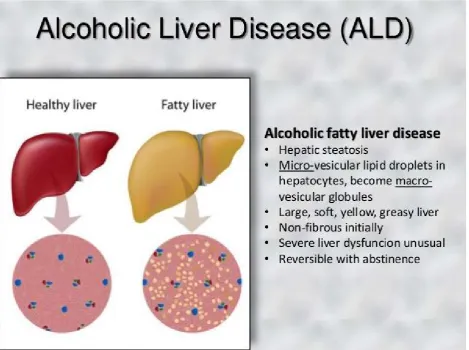
(6) 80. Govind Shukla. et al., Int. J. Pharm. & H. Care Res., Vol.–05 (03) 2017 [75- 91]. by activation of immune cells residing in the liver (Kupffer cells), which affect the liver tissue by two mechanisms: a) become inflammatory cytokines, and their excessive amount have dire consequences, pushing the immune system response into overdrive, promoting the progression of liver disease b) Kupffer cells are the major source of ROS in the liver, leading to oxidative stress.10 The spectrum of ALD ranges from fatty liver (steatosis), present in most, if not all heavy. drinkers, through steatohepatitis, fibrosis and ultimately cirrhosis. Alcoholic Fatty Liver Alcoholic fatty liver is predominantly an asymptomatic condition that develops in response to a short duration (a few days) of alcohol abuse. Patients with fatty liver are asymptomatic so that they rarely present with liver related problems.. Fig. No. 03: Mechanism of alcohol-induced hepatic damage: a unifying view Fatty liver is reversible with abstention but it is a risk factor for progression to fibrosis and cirrhosis in those patients who continue drinking.11 Alcoholic Hepatitis (AH) Between 20- 40% of persistent heavy drinkers will develop more serious liver disease. In some of these patients, they will get AH, while others will present with complications of portal hypertension, and other conditions. People with ALD can also be asymptomatic and may even have normal liver blood tests.11 The level of alcohol consumption necessary for the development of these advanced forms of ALD is probably 80 g of alcohol per day, the equivalent to six to eight drinks daily for several years.12 Alcoholic Cirrhosis (AC) Alcoholic cirrhosis may occur at any time before, during, after, or independent of a bout of AH. Liver fibrosis and cirrhosis (clinically distinct conditions but, unless specifically mentioned, they are used interchangeably in this report) represent a continuous disease spectrum characterized by an increase in total liver collagen and other matrix proteins which disrupt the architecture of the liver. and impair liver function.11 Fibrosis results from sustained wound healing in the liver in response to chronic or iterative injury. The wound healing response is an integral part of the overall process of inflammation and repair: it is dynamic and has the potential to resolve without scarring,12 however, hepatic fibrosis is a healing process gone awry in response to ongoing liver injury in ALD. As the liver becomes increasingly fibrotic, the number of functional hepatocytes decreases and the liver loses its capacity to remove toxic substances from the blood. At present, there are few interventions available to alter the underlying fibrotic process in many patients with liver disease, although data from clinical and laboratory based research show that cirrhosis may be reversible. Liver Cancer begins when abnormal cells grow out of control and invade other tissues in the body and continue to multiply. Many different cancers can affect the liver. Cancer of the liver can originate in the liver itself (primary liver cancer) or originate in other parts of the body, then spread to the liver through the bloodstream (metastatic cancer).. www.ijphr.com.
(7) Govind Shukla. et al., Int. J. Pharm. & H. Care Res., Vol.–05 (03) 2017 [75- 91]. Types of primary liver cancer Hepatocellular carcinoma (HCC) (also called hepatoma because it comes from hepatocytes, the main type of liver cells). HCC is the most common form of primary liver cancer in children and adults and one of the most frequently occurring cancers in the world. Some hepatocellular cancers begin as a single tumor that grows larger and spreads to other parts of the body late in the disease. Other hepatocellular cancers begin as many, small cancer nodules throughout the liver, rather than a single tumor and is seen predominantly in people with chronic liver damage (cirrhosis). Intrahepatic cholangio carcinoma: Also known as bile duct cancer, this cancer can appear in both the liver and the bile ducts outside the liver. Bile ducts are tubes that carry bile to the gallbladder. Seen mostly in older people (average age of 73), about 2,000 to 3,000 people in the United States develop bile duct cancer. Hepatoblastoma: This rare type of cancer essentially develops only in children usually before the age of four years. If diagnosed early, the survival rate is high for children with hepatoblastoma. However, for hepatoblastomas that are large or have spread beyond the liver, prognosis is poor. About Metastatic Cancer : Metastatic cancer (secondary liver cancer) is not actually known as liver cancer. Most cancer that occurs in the liver begins in another part of the body. Some of the most common cancers that metastasize to the liver are those originating in the colon, pancreas, lung and the breast. These cancers are named after the organ in which the cancer originated. So cancer that starts in the colon and spreads to the liver is known as metastatic colon cancer, not liver cancer. Lymphomas and leukemias, cancers that originate in the lymph nodes and bone marrow, respectively, can also invade the liver. In the United States and Europe, secondary (metastatic) liver tumors are more common than primary liver cancer. The opposite is true for many areas of Asia and Africa. Fibrosis of the liver It is excessive accumulation of scar tissue that results from ongoing inflammation and liver cell death that occurs in most types of chronic liver diseases. Nodules, abnormal spherical areas of cells, form as dying liver cells are replaced by regenerating cells. This regeneration of cells causes the liver to become hard. Fibrosis refers to the. 81. accumulation of tough, fibrous scar tissue in the liver. Hepatitis A virus (HAV) It is a member of the picornavirus family, which invades liver cells and causes inflammation. Considered the least serious of all hepatitis viruses, HAV does not cause chronic liver disease. This disease usually lasts no longer than six months. Cirrhosis and its complications, as well as liver cancer, do not occur from contracting HAV. Fortunately, Hepatitis A is the most common vaccine-preventable disease in the entire world, and those who get HAV develop immunity from ever contracting it again. Hepatitis B It is inflammation of the liver due to a virus called the Hepatitis B virus (HBV), belonging to the family hepadnaviridae. Originally known as serum hepatitis, HBV was the first hepatitis virus to be identified. It is preventable with safe and effective vaccines that have been available since 1982. According to the World Health Organization, of the approximately 2 billion people worldwide who have been infected with the Hepatitis B virus, more than 350 million have chronic (lifelong) infections. Approximately 1.25 million of those infected with the Hepatitis B virus live in the United States. These chronically infected persons are at high risk of cirrhosis and liver cancer, diseases that kill about 1 million people worldwide each year. Hepatitis C virus (HCV) is a spherical, enveloped, singlestranded RNA virus belonging to the family flaviviridae. Discovered in 1989, HCV explained 90 percent of non-A non-B (NANB) cases of hepatitis. Hepatitis C Virus is the most common cause of chronic liver disease in the United States and the prevalence of Hepatitis C virus infection is increasing worldwide. The World Health Organization estimates that more than 170 million individuals throughout the world are infected with HCV. Nutrease Powder,A powerhouse of potent natural ingredients formulated to help support the body’s natural ability to remove toxins and other chemical impurities from internal organs and tissue.. www.ijphr.com.
(8) 82. Govind Shukla. et al., Int. J. Pharm. & H. Care Res., Vol.–05 (03) 2017 [75- 91]. COMPOSITION OF NUTREASE POWDER. MECHANISM OF ACTION OF NUTREASE POWDER Nutrease contains standardized plant-based vitamins and minerals which include a diverse mixture of substances including dozens of closely related vitamers and phytonutrients to help potentiate insulin action and thus influence. carbohydrate, lipid and protein metabolism. Targeted botanicals and antioxidants like curcuminoids, sulforaphaneglucosinolate from Broccoli Extract and Ginger Extract to help regulate metabolism, stimulate digestion and to provide long-lasting cell protection from free radical damage. Probiotics and prebiotics like. www.ijphr.com.
(9) Govind Shukla. et al., Int. J. Pharm. & H. Care Res., Vol.–05 (03) 2017 [75- 91]. Lactobacillus gasseri and Inulin to help balance intestinal flora,and reduce adipocyte size through inhibition of leptinlevels. Good fats like omega 3,6& 9 from Flaxseed and Medium Chain Triglycerides (MCT), help to maintains healthy levels of blood sugar and triglycerides, enhance metabolism to burn more calories. Optimum fibers like alpha cyclodextrins, partially hydrolyzed guar. 83. gum, and oat fiber to help promote intestinal regularity, to increase the satiety and improve glycemic effect of meal. Plant enzymes like bromelain and papain for better digestion and absorption of proteins. Premium blend of Natural protein concentrate Soya and pea protein isolate to meet the daily protein requirements. PHARMACOLOGICAL ACTION OF EACH INGREDIENTS OF NUTREASE POWDER. www.ijphr.com.
(10) 84. Govind Shukla. et al., Int. J. Pharm. & H. Care Res., Vol.–05 (03) 2017 [75- 91]. www.ijphr.com.
(11) Govind Shukla. et al., Int. J. Pharm. & H. Care Res., Vol.–05 (03) 2017 [75- 91]. www.ijphr.com. 85.
(12) 86. Govind Shukla. et al., Int. J. Pharm. & H. Care Res., Vol.–05 (03) 2017 [75- 91]. www.ijphr.com.
(13) Govind Shukla. et al., Int. J. Pharm. & H. Care Res., Vol.–05 (03) 2017 [75- 91]. www.ijphr.com. 87.
(14) 88. Govind Shukla. et al., Int. J. Pharm. & H. Care Res., Vol.–05 (03) 2017 [75- 91]. www.ijphr.com.
(15) Govind Shukla. et al., Int. J. Pharm. & H. Care Res., Vol.–05 (03) 2017 [75- 91]. SUPPLEMENT FACTS Presentation: POWDER Usage: As a food supplement. It is a combination of Natural vitamins and minerals, Natural Antioxidant & Phyto-Nutrients. Nutrease Powder helps to protect the liver against free radical. 89. damage thus played effective role in Detoxification & Cleansing of Toxic chemicals in Human body. Contra-indications: Product is contra-indicated in persons with Known hypersensitivity to any. www.ijphr.com.
(16) 90. Govind Shukla. et al., Int. J. Pharm. & H. Care Res., Vol.–05 (03) 2017 [75- 91]. component of the product hypersensitivity to any component of the product. Recommended usage: Once or twice a day along with portion controlled nutritious meals and exercise. One Serving (30g- 1 Scoop) provides 104 Calories, 11.61g of proteins, 6.64g of Fiber and 1.82g of Sugar per day. “Do not exceed the recommended daily dose”. Directions for Use: Take one level scoop (30g) with skimmed milk or water to make a cup of 200ml. Gently shake well in shaker or stir well until the powder is evenly dispersed and drink immediately. Administration: Taken by oral route at any time with food. Precautions: Food Supplements must not be used as a substitute for a varied and balanced diet in weight management program and in healthy lifestyle. This Product is not intended to diagnose, treat, cure or prevent any diseases. Do notexceed the recommended daily dose. Warnings: If you are taking any prescribed medication or has any medical conditions always consults doctor or healthcarepractitioner before taking this supplement. Side Effects: Mild side effects like nausea, headache and vomiting in some individuals have been reported. Storage: Store in a cool, dry and dark place.. Conclusion Chronic hepatic diseases stand as one of the foremost health troubles worldwide, with liver cirrhosis and drug induced liver injury accounting ninth leading cause of death in india and developing countries. Therapies developed along the principles of western medicine are often limited in efficacy, carry the risk of adverse effects, and are often too costly, especially for the developing world. Therefore, treating liver diseases with plantderived product like Nutrease powder, Nature’s blend of Protien, Fiber & Phytochemicals seems highly attractive.. References 1.. Dienstag JL, Isselbacher KJ, Toxic and drug‐induced hepatitis, 15th edn. Chapter 296, In: Harrison's Principles of Internal Medicine. Braunwald E, et al, The McGraw‐Hill Companies, In, 2001; 2:737‐1742. 2. Chattopadhyay RR, Bhattacharyya SK, Terminalia chebula: Anupdate, Pharmacog 2007; 1(1):439–45. 3. Hikino H, Kiso Y. Natural products for liver diseases. Economic and Medicinal Plant Research. Vol. II, Academic Press, London 1988; 39‐67. 4. Mohammed Rageeb Mohammed Usman, Chhaya G, Surekha S, Lalit S, Rashmi S, Samadhan B “Pharmacognostical Evaluations of Some Herbal Plant” In IJARPB 2012; 1(3):302-310. 5. Raj DS, Vennila JJ, Aiyavu C, Panneerselvam K. The he-patoprotective effect of alcoholic extract of Annonasquamosaleaves on experimentally induced liver in-jury in Swiss albino mice. Int J Int Bio 2009; 5(3): 162-166. 6. Madani H, Talebolhosseini M, Asgary S, Nader GH. Hepato-protective activity of Silybummarianum and Ci-choriumintybus against thioacetamide in rat. Pak J Nutrition 2008; 7(1): 172-176. 7. Maheswari C, Maryammal R, Venkatanarayanan R. Hepato-protective activity of “Orthosiphonstami-neus” on liver damage caused by paracetamol in rats. Jordan J Biological Sciences 2008; 1(3): 105-108. 8. Marina N, Abdul MM, Joydev KK, Sitesh CB, Farida B, Bidyut KD. Protective effects of Flacourtiaindica aerial parts extracts against paracetamol‐induced hepato-toxiciy in rats. JTUSCI 2009; 2: 1-6 9. Kokate CK, Purohit AP, Gokhale SB. Pharmacognosy. 37th ed. Nirali Prakashan, 2006, 232, 233, 248, 249, 251. 10. Niranjan A. Biological activity of kalmegh Indian Journal of Natural Products and Resources 2010; 1(2): 125-135. 11. Sampath KP. Swertia chirata, A traditional herb and its medicinal uses, J Chem Pharm Res, 2010; 2(1): 262-266. 12. National Workshop “Identification of Herbal Drugs” held at S. K. B. College of Pharmacy, Kamptee, Nagpur, Associated by Indian Society of Pharmacognosy 17-18th February 2007.. www.ijphr.com.
(17) Govind Shukla. et al., Int. J. Pharm. & H. Care Res., Vol.–05 (03) 2017 [75- 91]. 91. Indexed by - Scientific index, Research bible, Jour–Informatics, Google Scholar, Inno-space.org, Cosmos: Germany Registered & Approved by: ISSN International Centre, Bibliographic Data Section, 45 rue de Turbigo, 75003 Paris, France.. www.ijphr.com.
(18)
Figure


Related documents