158
International Journal of Pharmaceutical Sciences and Drug Research
2018; 10(3): 158-164
Research Article
CODEN (USA): IJPSPP
ISSN: 0975-248X
Development and Evaluation of Sustained Release Floating Microspheres
Containing Ropinirole HCl
Koppula Subbarao
*, Gande Suresh
Mewar University, NH-79, Gangrar, Chhitorgarh-312901, Rajasthan, India
Copyright © 2018 Koppula Subbarao et al. This is an open access article distributed under the terms of the Creative Commons Attribution-NonCommercial-ShareAlike 4.0 International License which allows others to remix, tweak, and build upon the work non-commercially, as long as the author is credited and the new creations are licensed under the identical terms.
ABSTRACT
Current investigation was to develop gastro retentive floating microsphere for Ropinirole. These microspheres of Ropinirole were prepared by ionic gelation method with an aim of increasing the gastric residence time and for controlled release. Sodium alginate, HPMCK15, Gaur gum was used as polymers. Sodium bicarbonate was used as the gas-forming gent. Prepared microspheres were characterized for micromeretic properties, entrapment efficiency, buoyancy study, SEM analysis, FTIR, and in vitro dissolution studies. Among 14 formulations F12 was found to be optimized and based on the evaluation parameters. The % buoyancy, % yield, % entrapment efficiency and swelling index of F12 formulation was 94.50, 97.58, 98.10% and 96.14%, respectively. The Cumulative % drug release of F12 formulation was 98.16 ± 5.15 in 12 h when compared with marketed product 90.16 ± 5.00 in 12 h. SEM studies showed the particles were in spherical shape. Hence the formulated floating Ropinirole microspheres may establish to be potential candidate for safe and effective sustained drug delivery and improve the bioavailability in the effective management of Parkinson’s disease.
Keywords: Floating microspheres, Gaur Gum, HPMC K15M, Sodium bicarbonate, SEM, in vitro diffusion studies.
DOI: 10.25004/IJPSDR.2018.100309 Int. J. Pharm. Sci. Drug Res. 2018; 10(3): 158-164
*Corresponding author: Mr. Koppula Subbarao
Address: Mewar University, NH-79, Gangrar, Chhitorgarh-312901, Rajasthan, India Tel.: +91-9989044034
E-mail: [email protected]
Relevant conflicts of interest/financial disclosures: The authors declare that the research was conducted in the absence of any commercial or financial relationships that could be construed as a potential conflict of interest.
Received: 15 April, 2018; Revised: 10 May, 2018; Accepted: 11 March, 2018; Published: 25 May, 2018
INTRODUCTION
To avoid the unnecessarily frequent administration, higher cost of therapy and other undesired features of conventional dosage forms, controlled release preparations have been designed. [1] However, these systems have been of limited success in the case of drugs with a poor absorption window throughout the
Int. J. Pharm. Sci. Drug Res. May-June, 2018, Vol 10, Issue 3 (158-164) systems and high density systems. Floating dosage
forms are the more reliable and commonly used gastro retentive dosage forms. [2]
FDDS have a lower density than gastric fluids and thus remain buoyant in the stomach, without affecting the gastric emptying rate for a prolonged period. While the systems are floating, the drug is released slowly from the system at a desired rate. Floating microspheres are one of the gastro retentive dosage forms that float over gastric contents due to their buoyancy and remain in the stomach for prolonged period. Suitable drugs that can be used in gastro retentive system include:
1) Drugs with narrow absorption window in the stomach.
2) Drugs locally acting in the stomach
3) Drugs which are unstable in intestinal and colonic environment
The floating system is very useful for drugs that are poorly soluble and unstable in the stomach. Floating systems are hydro dynamically balanced low-density system. Gastric retention of floating drug delivery system increases the bioavailability and therapeutic benefit of the dosage form. [3]
The Ropinirole Hydrochloride is a non‐ergoline dopamine agonist with high relative specificity and full intrinsic activity at the D2 and D3 dopamine receptor subtypes. This action in humans correlates with treatment for Parkinson’s disease due to stimulation of postsynaptic dopamine D2‐type receptors. Ropinirole Hydrochloride after oral administration shows a lesser bioavailability up to 55% and biological half-life of 4 to 6 hours. [4] The Parkinsonism patients taking Ropinirole HCl conventional tablet cannot swallow the dosage form due to reduced muscular activity, unavailability of water, dryness of mouth and dysphagia. The frequency of administration of this dosage form is minimum thrice a day due to lower dose (up to 8 mg) and shorter half-life (5 hours), so the problem arises in the number of doses. To overcome both these problems the sustained release microspheres is developed to deliver the drug for the prolonged period. [5]
MATERIALS AND METHODS Materials
Ropinirole procured from Hetero Drugs Ltd,
Hyderabad. Sodium alginate from Pruthvi Chemicals, Mumbai. Calcium chloride from SD Fine ltd, Mumbai. Sodium bicarbonate was purchased from Karthikeya Chemicals, Hyderabad. Gaur Gum and HPMC are from Nutriroma, Hyderabad.
Formulation of Ropinirole Floating microspheres Floating microspheres of Ropinirole were prepared by ionic gelation technique using different proportion of polymers as shown in Table 1. A solution of sodium alginate solution is prepared weighed quantity of drug and HPMC K15 was triturated to form fine powder, and then added to above solution. Sodium bicarbonate, a gas forming agent was added to this mixture. Resultant solution was extruded drop wise with the
help of syringe and needle into 100 ml aqueous calcium chloride solution and stirred at 100 rpm. After stirring for 10 minutes the obtained microspheres were washed with water and dried at 60 degrees -2 hours in a hot air oven and stored in desiccator. [6]
Evaluation of Ropinirole Floating Microspheres Microsphere size determination
Determination of average particle size of floating microspheres was carried out by optical microscope in which objective micrometer and ocular micrometer was employed. From each batch 100 floating microspheres were spread on a clean slide and size was compared with the ocular micrometer readings. [7]
Micromeritic Properties
Micromeritic properties were evaluated according to the standard procedure reported. [8]
Swelling index
Swelling index was determined by measuring the extent of swelling of microspheres in the given medium. Exactly weighed number of microspheres was allowed to swell in given medium. The excess surface adhered liquid drops were removed by blotting and the swollen microspheres were weighed by using microbalance. The hydro gel microspheres then dried in an oven at 60° for 5 h until there was no change in the dried mass of sample. The swelling index of the microsphere was calculated by using the formula. [9] Swelling index = (Mass of swollen microspheres – Mass
of dry microspheres / Mass of dried microspheres) 100 Drug entrapment efficiency
To calculate the entrapment efficiency % (EE), 10 mg prepared microspheres were dissolved in 2 ml DCM and diluted up to 10 ml with distilled water. This solution was subjected to centrifugation at 1000 rpm. Supernatant was filtered through 0.45µm filter. The absorbances of these solutions was noted using ultraviolet (UV) spectrophotometric method at λ max 250 nm and the %EE was calculated using the following equation. [10]
Drug entrapment efficiency = Experimental drug content × 100 Theoretical drug contents
In vitro drug release studies
Int. J. Pharm. Sci. Drug Res. May-June, 2018, Vol 10, Issue 3 (158-164)
Table 1: Formulation trials of Ropinirole Floating microspheres Formulation code Ropinirole (mg) Sodium alginate HPMCK15 (mg)
Sodium bi carbonate (mg)
Calcium
chloride Gaur Gum (mg)
F1 1 1% 25 25 1% 0.25
F2 1 1. 2% 50 50 1% 0.5
F3 1 1.4 % 75 75 1% 0.75
F4 1 1.6% 100 100 1% 1
F5 1 1.8 % 150 125 1% 1.25
F6 1 2.% 175 150 1% 1.75
F7 1 2.2% 200 175 1% 2
F8 1 1% 150 25 1% 0.25
F9 1 1. 2% 200 50 1% 0.5
F10 1 1.4% 250 75 1% 0.75
F11 1 1.6% 300 100 1% 1
F12 1 1.8% 400 125 1% 1.25
F13 1 2% 325 150 1% 1.75
F14 1 2.2% 350 175 1% 2
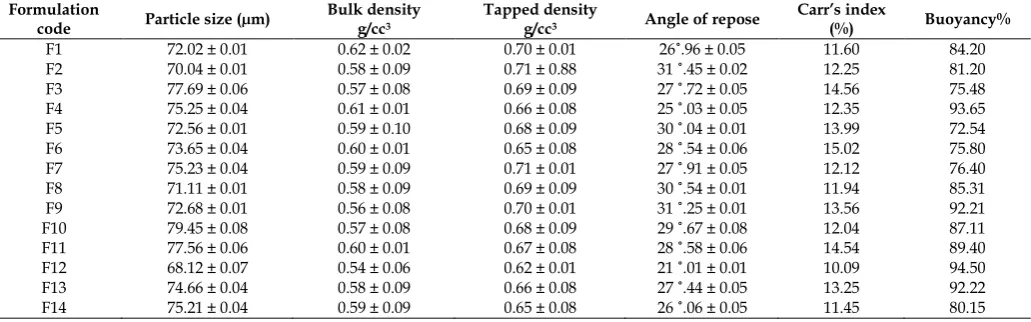
Table 2: Micromeretic properties of Ropinirole floating microspheres Formulation
code Particle size (µm) Bulk density g/cc3
Tapped density
g/cc3 Angle of repose
Carr’s index
(%) Buoyancy%
F1 72.02 ± 0.01 0.62 ± 0.02 0.70 ± 0.01 26˚.96 ± 0.05 11.60 84.20
F2 70.04 ± 0.01 0.58 ± 0.09 0.71 ± 0.88 31 ˚.45 ± 0.02 12.25 81.20
F3 77.69 ± 0.06 0.57 ± 0.08 0.69 ± 0.09 27 ˚.72 ± 0.05 14.56 75.48
F4 75.25 ± 0.04 0.61 ± 0.01 0.66 ± 0.08 25 ˚.03 ± 0.05 12.35 93.65
F5 72.56 ± 0.01 0.59 ± 0.10 0.68 ± 0.09 30 ˚.04 ± 0.01 13.99 72.54
F6 73.65 ± 0.04 0.60 ± 0.01 0.65 ± 0.08 28 ˚.54 ± 0.06 15.02 75.80
F7 75.23 ± 0.04 0.59 ± 0.09 0.71 ± 0.01 27 ˚.91 ± 0.05 12.12 76.40
F8 71.11 ± 0.01 0.58 ± 0.09 0.69 ± 0.09 30 ˚.54 ± 0.01 11.94 85.31
F9 72.68 ± 0.01 0.56 ± 0.08 0.70 ± 0.01 31 ˚.25 ± 0.01 13.56 92.21
F10 79.45 ± 0.08 0.57 ± 0.08 0.68 ± 0.09 29 ˚.67 ± 0.08 12.04 87.11
F11 77.56 ± 0.06 0.60 ± 0.01 0.67 ± 0.08 28 ˚.58 ± 0.06 14.54 89.40
F12 68.12 ± 0.07 0.54 ± 0.06 0.62 ± 0.01 21 ˚.01 ± 0.01 10.09 94.50
F13 74.66 ± 0.04 0.58 ± 0.09 0.66 ± 0.08 27 ˚.44 ± 0.05 13.25 92.22
F14 75.21 ± 0.04 0.59 ± 0.09 0.65 ± 0.08 26 ˚.06 ± 0.05 11.45 80.15
Table 3: Percentage yield, entrapment efficiency, in vitro cumulative % drug release of Ropinirole microspheres
Formulation
code Percentage Yield Efficiency (%) Entrapment Swelling index
F1 87.18 85.46 88.14
F2 89.46 86.32 84.29
F3 90.90 88.19 86.14
F4 78.03 90.23 87.29
F5 81.24 85.62 88.59
F6 82.36 89.18 83.27
F7 87.97 77.06 84.56
F8 80.26 81.27 81.29
F9 79.18 79.54 77.67
F10 80.12 78.19 76.32
F11 88.12 84.26 87.63
F12 97.58 98.10 96.14
F13 90.35 92.45 88.12
F14 92.14 93.67 78.25
Percentage buoyancy of Ropinirole Floating Microspheres
Buoyancy percentage: Microparticles were spread over the surface of a USP dissolution apparatus (type II) filled with 900 ml of simulated gastric fluid (0.1 N HCl) at 37°C. The medium was agitated with a paddle rotating at 100 rpm for 12 hours. The floating and the settled portion of microspheres were recovered separately. The microspheres were dried and weighed. Buoyancy percentage was calculated as the ratio of the mass of the microspheres that remained floating and the total mass of the microspheres. [11]
% Buoyancy = Microsphere remained floating × 100 Total mass of microspheres
Kinetic modeling of drug release
To understand the kinetics and mechanism of drug release, the result of the in vitro dissolution study of floating microspheres were fitted with various kinetic equations like Zero order as cumulative percentage released Vs. time, first order as log percentage of drug remaining to be released Vs. time, Higuchi’s model cumulative percentage drug released Vs. square root of time. r² and K values were calculated for the linear curves obtained by regression analysis of the above plots. To analyze the mechanism of drug release from the tablets the in vitro dissolution data was fitted to zero order, first order, Higuchi’s release model and Korsmeyer – Peppas model. [11]
Drug Excipients Compatibility Studies
Fourier Transform Infrared Spectroscopy (FTIR) FTIR spectra for pure drug, physical mixture and optimized formulations were recorded using a Fourier Transform Infrared Spectrometer. The analysis was carried out in Shimadzu-IR Affinity 1 Spectrophotometer. The IR spectrum of the samples was prepared using KBR (spectroscopic grade) disks by means of hydraulic pellet press at pressure of seven to ten tons. [12]
SEM studies
Int. J. Pharm. Sci. Drug Res. May-June, 2018, Vol 10, Issue 3 (158-164)
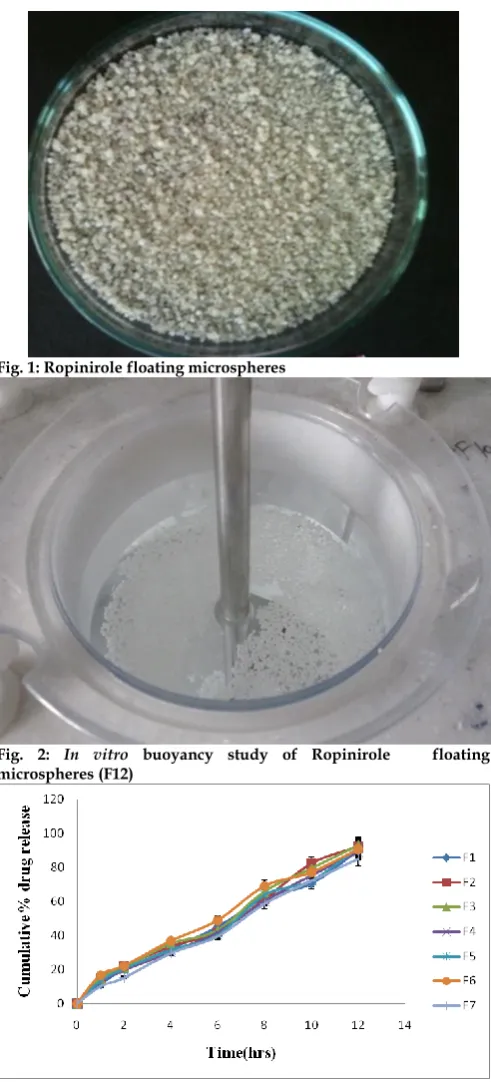
Fig. 1: Ropinirole floating microspheres
Fig. 2: In vitro buoyancy study of Ropinirole floating microspheres (F12)
Fig. 3: In vitro cumulative % drug release of Ropinirole floting microspheres
Fig. 4: In vitro cumulative % drug release of Ropinirole floating microspheres
Stability studies
The stability study of the optimized formulation was carried out under different conditions according to ICH guidelines. The optimized microspheres were stored in a stability chamber for stability studies (REMI make). Accelerated Stability studies were carried out at 40°C / 75% RH for the best formulations for 6 months. The microspheres were characterized for the percentage yield, entrapment efficiency and cumulative % drug released during the stability study period.
RESULTS AND DISCUSSION
Formulation of Ropinirole Floating microspheres Floating microspheres of Ropinirole were formulated by ionic gelation method, using different polymers like sodium alginate, HPMC K15M, sodium bicarbonate, Gaur gum, calcium chloride in different concentration and the formulation codes F1 - F14 were prepared and shown in Table 1 and Figure 1. All the formulations were evaluated for their various micromeritic properties, physical parameters are shown in Table 2. Particle size was measured by using optical microscopy. All the formulations F1 to F14 varied from 68.12 ± 0.07µm to 79.45 ± 0.08µm.
The bulk densities of all the formulations F1 to F14 were measured and they are ranged from 0.54 ± 0.06g/cc³ to 0.62 ± 0.02g/cc³.
The tapped densities of all the formulations F1 to F14 were measured and they are ranged from 0.62 ± 0.01g/cc³ to 0.71 ± 0.88g/cc³.
The compressibility index values were found to be in the range of 10.09 to 14.54%. These findings indicated that the all the batches of formulations exhibited good flow properties.
Angle of repose of all the formulations was found satisfactory result. And the formulation F12 was found to be 21 ˚.01.
In vitro buoyancy studies of floating microspheres
Buoyancy was determined by the weight ratio of the floating microspheres to the sum of floating and sinking microspheres after 12 hours in 0.1N HCl is shown in Figure 2.
All the 14 formulations of floating microspheres were exposed to buoyancy test. The formulation F12 shows the buoyancy of 94.50% and shown in Table 2.
The entrapment efficiency values of all the 14 formulations were ranged from 77 to 98.10%. The formulation F12 shown highest entrapment efficiency of 98.10 when compare with other formulations.
In vitro drug release studies
Int. J. Pharm. Sci. Drug Res. May-June, 2018, Vol 10, Issue 3 (158-164)
Table 4: In vitro cumulative % drug release of Ropinirole floting microspheres
Time F1 F2 F3 F4 F5 F6 F7
0 0 ± 0 0 ± 0 0 ± 0 0 ± 0 0 ± 0 0 ± 0 0 ± 0
1 11.26 ± 0.92 15.18 ± 0.94 14.96 ± 0.93 12.90 ± 0.93 13.22 ± 0.94 16.84 ± 0.96 10.16 ± 0.89 2 20.15 ± 1.29 22.15 ± 1.32 21.16 ± 1.31 19.56 ± 0.99 20.55 ± 1.29 22.18 ± 1.32 15.18 ± 0.94 4 32.15 ± 2.01 33.45 ± 2.02 35.28 ± 2.05 30.18 ± 2.08 31.40 ± 2.09 36.89 ± 2.06 29.60 ± 1.40 6 45.16 ± 2.48 42.18 ± 2.46 43.18 ± 2.47 41.96 ± 2.45 40.29 ± 2.44 48.99 ± 2.65 39.60 ± 2.47 8 62.18 ± 3.10 61.15 ± 3.09 65.90 ± 3.15 60.19 ± 2.97 63.90 ± 3.10 69.12 ± 3.21 58.67 ± 2.95 10 70.69 ± 3.82 82.15 ± 4.58 79.45 ± 3.95 75.22 ± 3.81 72.19 ± 3.82 77.25 ± 3.93 72.19 ± 3.82 12 90.15 ± 5.01 92.16 ± 5.02 93.16 ± 5.03 89.16 ± 4.99 91.60 ± 5.01 90.88 ± 5.00 85.14 ± 4.98
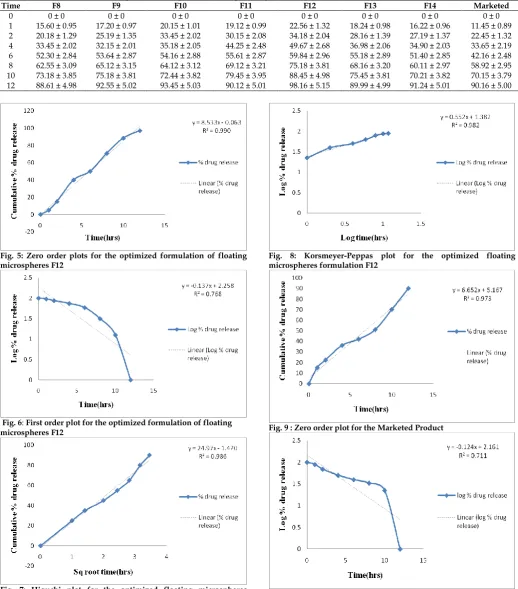
Table 5: In vitro cumulative % drug release of Ropinirole floating microspheres formulation
Time F8 F9 F10 F11 F12 F13 F14 Marketed
0 0 ± 0 0 ± 0 0 ± 0 0 ± 0 0 ± 0 0 ± 0 0 ± 0 0 ± 0
1 15.60 ± 0.95 17.20 ± 0.97 20.15 ± 1.01 19.12 ± 0.99 22.56 ± 1.32 18.24 ± 0.98 16.22 ± 0.96 11.45 ± 0.89 2 20.18 ± 1.29 25.19 ± 1.35 33.45 ± 2.02 30.15 ± 2.08 34.18 ± 2.04 28.16 ± 1.39 27.19 ± 1.37 22.45 ± 1.32 4 33.45 ± 2.02 32.15 ± 2.01 35.18 ± 2.05 44.25 ± 2.48 49.67 ± 2.68 36.98 ± 2.06 34.90 ± 2.03 33.65 ± 2.19 6 52.30 ± 2.84 53.64 ± 2.87 54.16 ± 2.88 55.61 ± 2.87 59.84 ± 2.96 55.18 ± 2.89 51.40 ± 2.85 42.16 ± 2.48 8 62.55 ± 3.09 65.12 ± 3.15 64.12 ± 3.12 69.12 ± 3.21 75.18 ± 3.81 68.16 ± 3.20 60.11 ± 2.97 58.92 ± 2.95 10 73.18 ± 3.85 75.18 ± 3.81 72.44 ± 3.82 79.45 ± 3.95 88.45 ± 4.98 75.45 ± 3.81 70.21 ± 3.82 70.15 ± 3.79 12 88.61 ± 4.98 92.55 ± 5.02 93.45 ± 5.03 90.12 ± 5.01 98.16 ± 5.15 89.99 ± 4.99 91.24 ± 5.01 90.16 ± 5.00
Fig. 5: Zero order plots for the optimized formulation of floating microspheres F12
Fig. 6: First order plot for the optimized formulation of floating microspheres F12
Fig. 7: Higuchi plot for the optimized floating microspheres formulation F12
Fig. 8: Korsmeyer-Peppas plot for the optimized floating microspheres formulation F12
Fig. 9 : Zero order plot for the Marketed Product
Int. J. Pharm. Sci. Drug Res. May-June, 2018, Vol 10, Issue 3 (158-164)
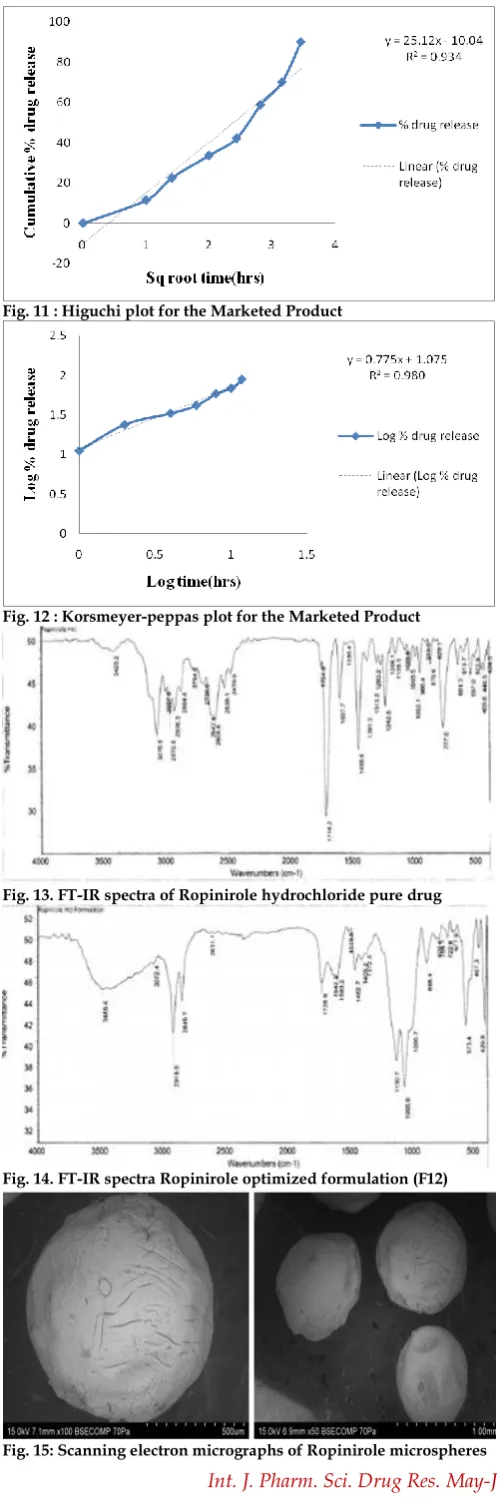
Fig. 11 : Higuchi plot for the Marketed Product
Fig. 12 : Korsmeyer-peppas plot for the Marketed Product
Fig. 13. FT-IR spectra of Ropinirole hydrochloride pure drug
Fig. 14. FT-IR spectra Ropinirole optimized formulation (F12)
Fig. 15: Scanning electron micrographs of Ropinirole microspheres
Kinetic modeling of drug release
From the above results it is apparent that the regression coefficient value of optimized formulation F12 was closer to unity in case of zero order plot i.e.0.9902 indicates that the drug release follows a zero-order mechanism. This data indicates a lesser amount of linearity when plotted by the first order equation. Hence it can be concluded that the major mechanism of drug release follows zero order kinetics.
The mass transfer with respect to square root of the time has been plotted, revealed a linear graph with regression value close to one i.e. 0.986 starting that the release from the matrix was through diffusion. Further the n value obtained from the Korsmeyer plots i.e. 0.552 suggest that the drug release from floating tablet was anomalous Non fickian diffusion and shown in Table 6 and Figures 5, 6, 7, 8.
Drug Excipient Compatibility Studies FT-IR
Overall there was no alteration in peaks of Ropinirole pure drug and optimized formulation, suggesting that there was no interaction between drug & excipients and shown in Figures13 and 14.
Scanning Electron Microscopy
The external and internal morphology of controlled release microspheres were studied by Scanning Electron Microscopy are shown inFigure 15.
Stability studies
Optimized formulation was selected for stability studies based on percentage yield, entrapment efficiency and cumulative % drug release. Stability studies were conducted for 6 months according to ICH guidelines. From these results it was concluded that, optimized formulation is stable and retained their original properties with minor differences which depicted in Table 7.
Table 6: Release order kinetics of optimized formulation of floating microspheres F12
Formul . Code
Zero Order First Order Higuchi Korsmeyer Peppas R2 K R2 K R2 K R2 N F12 0.9902 8.533 0.768 0.137 0.98 24.97 0.98 0.55 Market
ed 0.9731 6.6522 0.7116 0.124 0.9344 25.127 0.9803 0.7757
Table 7: Stability studies of optimized Floating Microspheres Retest Time for
Optimized formulation
Percentage
yield Entrapment efficiency
In-vitro
drug release profile (%)
0 days 96.10 96.30 98.16
30 days 95.40 95.4 95.20
60 days 94.22 94.53 94.33
120 days 93.13 93.55 93.68
180 days 92.34 92.22 92.45
Int. J. Pharm. Sci. Drug Res. May-June, 2018, Vol 10, Issue 3 (158-164) microsphere (97.58%), Entrapment efficiency (98.10%),
% buoyancy (94.50%), swelling index (96.14%) and highest in vitro drug release of 98.16 ± 5.15% in a sustained manner with constant fashion over extended period for 12 h compared with marketed product 90.16 ± 5.00 in 12 h. The drug and excipients were compatible studied by using FTIR. Drug release from Ropinirole microspheres followed Zero order and Higuchi model. It was suggested that mechanism of drug release from microspheres was diffusion controlled. The prepared microspheres were spherical in shape studied by SEM studies. The optimized formulation F12 was stable. Hence the formulated and prepared floating Ropinirole microspheres may establish to be potential candidate for safe and effective sustained drug delivery and improve the bioavailability.
REFERENCES
1. Santini J, Rechards A, Sheidt R, Cima M, Langer R. Microchips as controlled released drug delivery devices. ChemInt Ed.2000; 39: 2396-2407.
2. Bulgarelli E, Forni F, Bernabei MT. Effect of matrix composition and process conditions on casein-gelatin beads floating properties. Int J Pharm. 2000; 198:157-165.
3. Joseph J, Daisy P, George BJ, Praveen raj R, Thomas N, Carla B. Formulation and evaluation of floating microspheres of Pantoprazole Sodium. IJPPR. 2015; 4:136-147.
4. Jani JH, Prajapati AJ, Shah DK, Singh SK. Formulation and Evaluation of Buccal Tablet of Ropinirole Hydrochloride. Pharma tech. 2012; 4:527.
5. Moffat AC, Osselton MD, Widdop B. Clarke’s Analysis of Drugs and Poisons. Pharmaceutical Press London. 2004; 3:1543.
6. Najmuddin M, Hafiz RF, Nizamuddin M, Khalid MS. Development and evaluation of ketoprofen mini-matrices as sustained release formulation Int. J. Chem. Sci.2009; 7(3): 2122-2134.
7. Pande AV, Vaidya PD, Arora A, Dhoka MV. In-vitro and In-vivo evaluation of ethyl cellulose floating microspheres of cefpodoxime proxetil. International Journal of Pharmaceutical and Biomedical Research. 2010; 1(4):122-128. 8. Gadad A, Chirag N, Patel K, Dandagi P, Vinayak M.
Formulation and evaluation of floating microspheres of captopril for prolonged gastric residence time. Indian Journal of Novel Drug Delivery.2011; 3(1): 17-23.
9. Patel SS, Ray S, Thakur RS. Formulation and Evaluation of Floating Drug Delivery System containing Clarithromycin for Helicobacter pylori. Acta Poloniae Pharmaceutica - Drug Research. 2006; 63(1): 53-61.
10. Patil HS, Patil MP, Tekade BW, Thakare VM, Vijay R. Formulation and In-vitro Evaluation of Floating Microspheres of Acyclovir. Arch Pharm Sci & Res. 2009; 1(1): 194 -198. 11. Srivastava AK, Ridhurkar DN RD, Wadhwa S. Floating
microspheres of cimetidine: Formulation, characterization and in vitro evaluation. Acta Pharm. 2005; 55: 277–285. 12. Vueba ML, Carvalho LB, Veiga F, Sousa JJ, Pina ME.
Influence of cellulose ether polymers on ketoprofen release from hydrophilic matrix tablets. Eur J Pharm and Biopharm. 2004; 58: 51-59.
13. Ninan M, Lu X, Qifang W, Xiangrong Z,Wenji Z, Yang L, Lingyu J, Sanming L. Development and evaluation of new sustained-release floating microspheres. Int J Pharm.2008; 358: 82-90.
14. Garg S, Gupta GD. Progress in controlled gastro retentive delivery systems. Trop. J Pharm Res. 2008; 7(3): 1055-66.