S T U D Y P R O T O C O L
Open Access
Thrombolysis ImPlementation in Stroke (TIPS):
evaluating the effectiveness of a strategy to
increase the adoption of best evidence practice
–
protocol for a cluster randomised controlled trial
in acute stroke care
Christine L Paul
1,2*, Christopher R Levi
1,2,3, Catherine A D
’
Este
4, Mark W Parsons
3, Christopher F Bladin
5,
Richard I Lindley
6,7, John R Attia
1,2, Frans Henskens
1,2, Erin Lalor
8, Mark Longworth
9, Sandy Middleton
10, Annika Ryan
1,2,
Erin Kerr
3, Robert W Sanson-Fisher
1,2and the Thrombolysis ImPlementation in Stroke (TIPS) Study Group
Abstract
Background:Stroke is a leading cause of death and disability internationally. One of the three effective
interventions in the acute phase of stroke care is thrombolytic therapy with tissue plasminogen activator (tPA), if given within 4.5 hours of onset to appropriate cases of ischaemic stroke.
Objectives:To test the effectiveness of a multi-component multidisciplinary collaborative approach compared to usual care as a strategy for increasing thrombolysis rates for all stroke patients at intervention hospitals, while maintaining accepted benchmarks for low rates of intracranial haemorrhage and high rates of functional outcomes for both groups at three months.
Methods and design:A cluster randomised controlled trial of 20 hospitals across 3 Australian states with 2 groups: multi- component multidisciplinary collaborative intervention as the experimental group and usual care as the control group. The intervention is based on behavioural theory and analysis of the steps, roles and barriers relating to rapid assessment for thrombolysis eligibility; it involves a comprehensive range of strategies addressing
individual-level and system-level change at each site. The primary outcome is the difference in tPA rates between the two groups post-intervention. The secondary outcome is the proportion of tPA treated patients in both groups with good functional outcomes (modified Rankin Score (mRS <2) and the proportion with intracranial haemorrhage (mRS≥2), compared to international benchmarks.
Discussion:TIPS will trial a comprehensive, multi-component and multidisciplinary collaborative approach to improving thrombolysis rates at multiple sites. The trial has the potential to identify methods for optimal care which can be implemented for stroke patients during the acute phase. Study findings will include barriers and solutions to effective thrombolysis implementation and trial outcomes will be published whether significant or not.
Trial registration:Australian New Zealand Clinical Trials Registry: ACTRN12613000939796
Keywords:Collaborative intervention, Thrombolysis, Acute stroke, Evidence-based practice, Quality improvement, Cluster randomised controlled trial, Multidisciplinary approach
* Correspondence:[email protected] 1
The University of Newcastle, (UoN) University Drive, Callaghan, NSW 2308, Australia
2
Hunter Medical Research Institute (HMRI) 1/Kookaburra Circuit, New Lambton Heights, NSW 2305, Australia
Full list of author information is available at the end of the article
Background
Effective treatments for stroke can provide major reductions in health burden
Stroke is a major cause of death and disability inter-nationally, with over 5 million deaths from stroke world-wide [1]. Stroke accounted for approximately 1 in every 19 deaths in the United States in 2009 [2], with US pro-jections indicating that an additional 4 million people will have had a stroke by 2030 [3], a 22% increase in prevalence from 2013 [4]. The mean cost per person for stroke care in the United States in 2009 was estimated at $6,018 [5]. In 2009, The Australian Bureau of Statistics reports an estimated 381,400 Australians (1.8% of the total population) had suffered a stroke [6], with 35% reporting at least one impairment as a result of that stroke [6] and 62% of these reporting their stroke as their main disabling condition [6]. Stroke was the under-lying cause of death for 11,220 Australians in 2010 [6] and is the second leading cause of death and a leading cause of long-term disability [7]. In 2012, the total finan-cial cost of stroke was around $5 billion [8] with an esti-mated burden of disease cost of $49.3 billion [8]. In 2012, there were nearly 50,000 strokes in Australia, with approximately 12,000 people dying as a result of their stroke [8]. In 2009 to 2010, 35,345 hospitalisations were recorded in Australia with a principal diagnosis of stroke [9] and an average length of stay of 9 days [9]. The ma-jority of strokes (89%) are admitted to hospital [10], and approximately 50% of sufferers are left either deceased or dependent [11].
Improved outcomes for acute stroke can be achieved by: use of aspirin within 48 hours to provide a modest absolute risk reduction of 1% [12]; Stroke Care Units (SCU) [13]; and thrombolytic therapy using intravenous tissue plasminogen activator (tPA) administered to ap-propriate patients according to guidelines and within 4.5 hours of symptom onset [14,15]. A systematic review of randomised trials of intravenous tPA within 6 hours of acute ischaemic stroke onset found intravenous tPA sig-nificantly increased the odds of being alive and inde-pendent (modified Rankin Scale of 0 to 2) at 3-month follow-up for those treated within 3 hours of onset [16]. Sustained improvements in functional outcome and health-related quality of life have been identified at up to 18-month follow-up [17]. Treatment benefits for tPA are highest if administered within 3 hours of stroke onset [16,18,19] but can extend beyond the 3-hour window [20], with tPA considered safe for eligible patients up to
4.5 hours after stroke onset [21]. The‘number needed to
treat’ with tPA to prevent death and dependency is
be-tween 6 and 14, but may be higher depending on the favourable outcome definition and method of calculation [15,22,23]. Although there has been some debate about the strength of the evidence provided by thrombolysis
[24,25], the treatment is endorsed via national and inter-national guidelines [26-29].
Thrombolysis is a cost-effective stroke treatment when used appropriately
Cost-effectiveness analyses have indicated that high-cost treatments for acute stroke can provide major public health benefits even when minor reductions in disability are achieved [30]. A number of studies have identified thrombolysis as being a cost-effective treatment when used appropriately [31-34]. A UK study estimated that over a lifetime, tPA was associated with cost-savings of £96,565 per quality-adjusted life year [33]. The Model of Resource Utilization, Costs, and Outcomes for Stroke (MORUCOS) study found that tPA saved 155 disability-adjusted life years in a group of 256 eligible patients and concluded that tPA is more effective and cost-saving than treatment with aspirin [32].
Rates of thrombolysis remain low internationally
Despite evidence for the cost-effectiveness and safety of thrombolysis along with international recommendations being in place for a number of years [21,35,36], there has been little overall growth in thrombolysis rates. Thrombolysis rates have remained relatively low in a number of countries over the past decade: In the US, tPA administration rates increased from 0.87% in 2001 to 2.40% in 2006 [37]. In the UK in 2008, while an esti-mated 26% of acute stroke patients were eligible for thrombolysis, only 1.4% were administered the treatment [38]. Only 4.3% of ischemic stroke patients in the California Acute Stroke Pilot Registry received thrombolysis [3]. In Australia, despite making major progress in terms of wide establishment of stroke care units, tPA rates are approxi-mately 7% [30].
Achieving large-scale increases in rates of thrombolysis is challenging
pre-hospital stroke assessment tool for ambulance offi-cers and a pre-hospital notification system following as-sessment of system barriers [40]. The PAST study demonstrated an increase in tPA rates from 4.7% to 21.4% [40].
Achieving multi-site change in thrombolysis rates for acute stroke poses an even more complex challenge, with very few published trials. One study looked at the benefits and challenges of establishing stroke units [41], and two trials have explored thrombolysis in particular. The US
Get-With-The Guidelines stroke project–a national
qual-ity improvement program – demonstrated an increase in
adherence to guideline recommendations for stroke from a baseline rate for intravenous thrombolytics of 42.09% to 72.84% in the fifth year of the project [42]. The PRomoting ACute Thrombolysis in Ischemic StrokE (PRACTISE) clus-ter randomised trial in The Netherlands used the
Break-through approach – a quality improvement methodology
using Plan-Do-Study-Act (PDSA) cycles – to change
clinical practice [43]. The PRACTISE trial found that a significantly higher proportion of intervention group is-chemic stroke patients presenting within four hours of stroke onset were thrombolysed (44.5%) compared to is-chemic stroke patients in the control group (39.3%) [43]. However, patients in the intervention group expe-rienced higher post-care dependency [43]. The PRAC-TISE trial authors suggested a need for a more intense intervention with continuous process measures to achieve more substantial improvements in thrombolysis rates [43]. Studies of the Breakthrough approach in other settings have produced mixed results [44,45], which may suggest the need for additional strategies or a more intensive approach in order to achieve sustained change in com-plex systems. The INSTINCT cluster randomised con-trolled trial [46] of 24 acute-care community hospitals in the US used a multilevel, barrier assessment-interactive
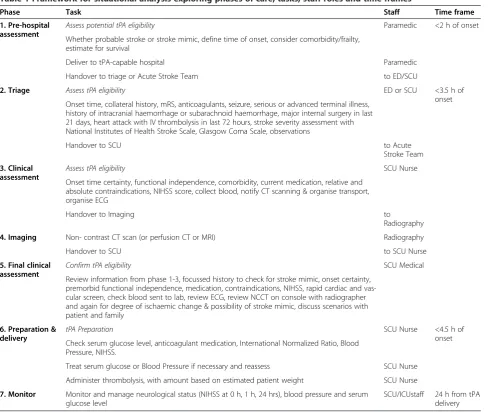
Table 1 Framework for situational analysis exploring phases of care, tasks, staff roles and time frames
Phase Task Staff Time frame
1. Pre-hospital assessment
Assess potential tPA eligibility Paramedic <2 h of onset
Whether probable stroke or stroke mimic, define time of onset, consider comorbidity/frailty, estimate for survival
Deliver to tPA-capable hospital Paramedic
Handover to triage or Acute Stroke Team to ED/SCU
2. Triage Assess tPA eligibility ED or SCU <3.5 h of
onset Onset time, collateral history, mRS, anticoagulants, seizure, serious or advanced terminal illness,
history of intracranial haemorrhage or subarachnoid haemorrhage, major internal surgery in last 21 days, heart attack with IV thrombolysis in last 72 hours, stroke severity assessment with National Institutes of Health Stroke Scale, Glasgow Coma Scale, observations
Handover to SCU to Acute
Stroke Team
3. Clinical assessment
Assess tPA eligibility SCU Nurse
Onset time certainty, functional independence, comorbidity, current medication, relative and absolute contraindications, NIHSS score, collect blood, notify CT scanning & organise transport, organise ECG
Handover to Imaging to
Radiography
4. Imaging Non- contrast CT scan (or perfusion CT or MRI) Radiography
Handover to SCU to SCU Nurse
5. Final clinical assessment
Confirm tPA eligibility SCU Medical
Review information from phase 1-3, focussed history to check for stroke mimic, onset certainty, premorbid functional independence, medication, contraindications, NIHSS, rapid cardiac and vas-cular screen, check blood sent to lab, review ECG, review NCCT on console with radiographer and again for degree of ischaemic change & possibility of stroke mimic, discuss scenarios with patient and family
6. Preparation & delivery
tPA Preparation SCU Nurse <4.5 h of
onset Check serum glucose level, anticoagulant medication, International Normalized Ratio, Blood
Pressure, NIHSS.
Treat serum glucose or Blood Pressure if necessary and reassess SCU Nurse
Administer thrombolysis, with amount based on estimated patient weight SCU Nurse
7. Monitor Monitor and manage neurological status (NIHSS at 0 h, 1 h, 24 hrs), blood pressure and serum glucose level
educational intervention. The intervention included edu-cational elements, assessment of barriers, audit and feedback. Trial results indicated a modest increase in the proportion of admitted stoke patients receiving thrombolysis between pre- and post-intervention periods (1.25% and 2.79% at intervention hospitals, compared to 1.25% and 2.10% at control hospitals using Intention to Treat analysis) but showed non-significant differences be-tween groups. The authors concluded that additional strategies are needed in order to increase acute stroke treatment.
Therefore, a need remains for a rigorous trial of usual approaches versus a comprehensive and intensive strat-egy for increasing thrombolysis rates in a manner suit-able for large scale implementation. The Thrombolysis ImPlementation in Stroke (TIPS) study aims to provide a robust test of a theory and evidence-driven multi-component and multidisciplinary collaborative approach designed to achieve sustained change in complex health systems over multiple sites.
Aims
The study aims to test, using a cluster randomised con-trolled trial, whether a multi-component multidisciplin-ary collaborative approach can:
1. Increase the proportion of all stroke patients receiving thrombolysis at intervention hospitals, compared with control hospitals at follow-up (Primary Outcome);
2. Maintain best-practice benchmarks of 30% of patients achieving 3-month post-stroke modified Rankin scores of 0 to 1 (little or no disability) at both intervention and control sites (Secondary Outcome);
3. Ensure that the adverse event rate for major intracranial haemorrhage (parenchymal haematoma) in thrombolysed patients does not rise above best-practice benchmarks of 6% [19] in either intervention or control hospitals (Secondary Outcome).
Methods and design
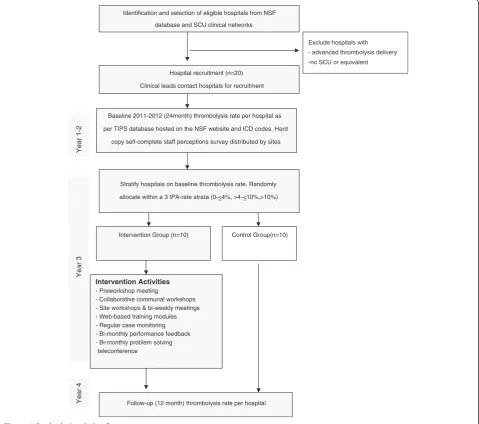
The cluster randomised controlled trial will involve 20 hospitals in the Eastern Australian states of New South Wales (NSW), Victoria (VIC) and Queensland (QLD). Hospitals are the unit of randomisation and the unit of analysis. SCUs manage the majority of stroke patients across the Eastern states of Australia. Hospitals in the intervention group will receive a multicomponent multidisciplinary collaborative intervention based on behavioural principles as described by the Behaviour Change Wheel framework for the design and implemen-tation of evidence-based practice [47]. The control
hospitals will receive no intervention and are free to make practice changes of their own accord. Thus the study is an implementation effectiveness trial rather than an efficacy trial. The follow-up period will be two years post-baseline (i.e., Year 1 to 2 = baseline, Year 3 = inter-vention, Year 4 = follow-up), with an additional three months for measurement of functional outcomes for those thrombolysed in the final month of follow-up. Figure 1 describes the study design.
Sample
Inclusion criteria
Eligible hospitals are those with a Stroke Care Unit or staffing equivalent of a stroke physician and stroke nurse; an Emergency Department and where the hospital is at early stages of thrombolysis implementation. All participating hospitals are required to record every con-secutive case of stroke and thrombolysis, including ad-verse events and patient functional outcomes at three months. Both public and private hospitals are eligible to be included in the sample, as are both teaching and non-teaching hospitals.
Stratified randomisation Hospitals will be stratified ac-cording to their stroke thrombolysis rates at baseline: very low (0% to≤4.00%), low (>4.00% to≤10.00%) or moderate (>10.00%). Baseline thrombolysis rate was considered important for the following reasons: A‘very low’ thromb-olysis rate suggests some impediments to thrombthromb-olysis, potentially limiting the ability of the site to respond quickly to the intervention. Sites categorised as having a
‘low’thrombolysis rate may have the greatest potential for achieving change during the study, due to having substan-tial room for improvement. Conversely, a site with a‘
mod-erate’ baseline rate of thrombolysis may have limited
opportunity to demonstrate further substantial improve-ment on the outcome measure.
Hospitals will be randomised at one time (effectively achieving allocation concealment) to either the interven-tion arm or the control arm with a 1:1 allocainterven-tion ratio, using a computer generated stratified randomisation scheme in StatsDirect. Intervention hospital staff will not be effectively blinded to their allocation, in that they will be aware of their own involvement in intervention activities. There will be minimal interaction with control hospitals during the intervention phase.
Procedure
Site recruitment
have been invited in person or by telephone to provide in-principle support to participate in the study following discussions with relevant decision makers at each site. A signed memorandum of understanding or equivalent consent agreement between each hospital and the re-search team has documented agreement by all relevant parties to collaborate for the whole period of the study. Ethical approval for the study has been obtained from relevant human research ethics committees in each state, from each participating hospital and from The Univer-sity of Newcastle Human Research Ethics Committee.
Data collection
Information on each patient thrombolysed during the study period will be entered into the secure TIPS data-base hosted on the National Stroke Foundation (NSF)
website. Stroke imaging will be entered via an additional INternational Stroke Perfusion Imaging REgistry (IN-SPIRE) website designed for imaging data that will be linked to the TIPS database. The TIPS database is only accessible via secure logins and will be maintained by the NSF. The patient data will be entered by the stroke care nurse at each participating hospital as de-identified patient unit record data. Data quality including range checks will be undertaken. The research team will not have access to identifying information about individual clinicians, hospital staff, or data identifying individual patients other than in the normal course of their existing clinical duties. Electronic data files will be securely pro-tected so that only the principal researchers will have ac-cess to these data. Staff members from participating departments at each hospital will be asked to complete
Identification and selection of eligible hospitals from NSF
database and SCU clinical networks
Exclude hospitals with - advanced thrombolysis delivery
-no SCU or equivalent
Hospital recruitment (n=20)
Clinical leads contact hospitals for recruitment
Baseline 2011-2012 (24month) thrombolysis rate per hospital as
per TIPS database hosted on the NSF website and ICD codes. Hard
copy self-complete staff perceptions survey distributed by sites
Stratify hospitals on baseline thrombolysis rate. Randomly
allocate within a 3 tPA-rate strata (0-<4%, >4-<10%, >10%)
Intervention Group (n=10) Control Group(n=10)
Intervention Activities - Preworkshop meeting
- Collaborative communal workshops - Site workshops & bi-weekly meetings - Web-based training modules - Regular case monitoring - Bi-monthly performance feedback - Bi-monthly problem solving
teleconference
Follow-up (12 month) thrombolysis rate per hospital
Year 1-2
Year 3
Year 4
an anonymous baseline voluntary survey regarding per-ceived barriers and facilitators to thrombolysis imple-mentation at their hospitals. This survey will be repeated at follow-up.
Measures
Primary outcome
Numerator: The numerator is the number of cases treated with thrombolytic therapy in each hospital. The following details will be recorded for each thrombolysed case: age, gender, date and time of stroke onset, date and time of arrival at treating hospital, date and time of brain imaging examination, time of tPA treatment, mRS grade before stroke (premorbid mRS), stroke severity (NIHSS Scale), hypertension, diabetes, hyperlipidaemia, smoking status (current or previous), previous diagnosis of stroke, atrial fibrillation (including paroxysmal), congestive heart fail-ure, aspirin at stroke onset, dipyridamole at stroke onset, clopidogrel at stroke onset, anticoagulants (oral) at stroke onset, glucose level before treatment, and mRS at three months post-treatment. Patient imaging data will be uploaded via the INSPIRE database and will include: non-contrast CT (NCCT), perfusion CT (CTP), CT angiog-raphy (CTA), and Magnetic Resonance Imaging (MRI).
Denominator: The denominator is the number of cases with a primary discharge diagnosis code of stroke (ICD-10-AM I60.9, I61, I63, I64) that will be extracted from hospital records. The accuracy of ICD coding for all types of stroke is good [48-51], with a NSW tertiary hos-pital reporting 96% accuracy in stroke discharge diagno-sis identified by a random selection of stroke medical records [50,51]. Another Australian study reported high levels of reliability and adherence to coding standard for ICD-10 codes [52], with a study of stroke attack rates and case fatality in the Hunter Region reporting 97.5% accuracy between stroke coding and audit [53]. Valid-ation of Australian data sets for stroke diagnosis found 93% coding accuracy levels [49], and a Canadian study reported 92% coding accuracy using ICD-10 codes for stroke [54].
The primary outcome is the stroke thrombolysis rate for each hospital, calculated as the number of stroke cases thrombolysed divided by the total number of indi-viduals with a stroke primary discharge diagnosis.
Secondary outcome
The secondary outcomes include intracranial haemor-rhage as defined by the SITS registry and functional out-comes at three months post stroke using the modified Rankin Scale (mRS) [55]. Intracranial haemorrhage events (parenchymal haematoma) will be identified from the TIPS database and will be monitored annually during the intervention and follow-up phases by the research team to ensure that it does not exceed international benchmarks
[56]. Sites will be provided with additional support if benchmarks are exceeded. Monitoring of secondary out-comes will not interfere with established governance pro-cesses for reporting and monitoring of adverse events in the health system. Functional outcomes will be scored as good (mRS = 0 to 1) or poor (mRS = 2 to 6) by the treating clinician or stroke nurse. The mRS has demonstrated reli-ability and validity for use by clinicians and stroke nurses [57]. The percentage of tPA-treated stroke cases having a good outcome (mRS <2) at three months post stroke will also be monitored annually by clinical experts in the re-search team through the post-intervention NSF data collection.
Process measures
Pen and paper staff surveys will be conducted at all participating hospitals regarding perceived barriers and facilitators to tPA implementation. Survey items in-clude: perceptions of tPA efficacy, local policies about tPA, knowledge of tPA, skills relating to assessment for and administration of tPA, challenges in tPA implemen-tation, training relating to tPA, expertise and confidence in relation to tPA, contingencies relating to tPA, partici-pant’s gender, age, experience, staff role, and estimated rates of tPA administration. For intervention hospitals, engagement with each intervention activity will be assessed, including number and type of staff from each site attending each workshop or meeting. Assessment of baseline overall readiness for change will also be assessed by a member of the research team using a readiness for
change checklist based on the work of Warrick et al.
(2009), Kasurinenet al.(2002), and the National Institute for Health and Clinical Excellence (2007). The full version of the process measure tools can be obtained from the corresponding author.
Interventioncomponents and activities
The TIPS intervention components described below are grounded in behavioural theory and accord with the Be-haviour Change Wheel (BCW) method [47]. The BCW emphasises the importance of ensuring that proponents have the capability, opportunity and motivation to per-form the desired behaviour through interventions such as education, persuasion, incentivisation, coercion, train-ing, restriction, environmental restructurtrain-ing, modelling
and enablement. A situational analysis based on the‘
pa-tient journey’ is a foundational intervention component
Component 1. Situational analysis–clarifying the patient journey
Careful delineation of the phases of care was carried out by the research team on the basis of earlier work at a single site [40], beginning at the point of seeking emergency medical care (hospital or paramedic). The situational analysis follows the journey of a stroke pa-tient including pre-hospital assessment, triage, clinical assessment, imaging, final clinical assessment, prepar-ation and delivery of thrombolysis. The tasks and staff roles involved along the patient journey are described in Table 1. Examination of how well each of the steps and roles described in the situational analysis will be implemented at a particular site is embedded in a number of intervention activities, including a pre-workshop meeting between the primary change agent and the champions at each site, collaborative work-shops involving a team from each site, and site-based working group meetings. In the context of each of these intervention activities, the situational analysis fa-cilitates identification of barriers and facilitators to in-creasing the number of patients who are appropriately thrombolysed.
Component 2. Change agents - educating, persuading and modelling
Much of the work on organisational change emphasises the importance of champions or leaders in order to in-crease the rate of adoption of a desired change [58,59]. In the context of TIPS, change agents will interact with participants to educate, persuade and model desired be-haviours throughout the change process. TIPS change agents include primary change agents who liaise with each of the intervention sites and change agents or
‘champions’located at each site. Stroke nurses from the
research team will act as stroke nurse ‘champions’ to
monitor and encourage completion of the nurse profes-sional development training (see Component 5). Mem-bers of the research team (CL, MP, CB) have been identified as the primary change agents, selected on the basis of meeting criteria for leadership and ability to en-act education, persuasion and modelling at a national level [59]. The activities of the primary change agents in-volve identification of Site Champions and assisting the Site Champions with obtaining endorsement from senior hospital administrators or executives. During the interven-tion phase, the primary change agent will make regular
INTERVENTION ACTIVITY &
Included Components
MONTHS
1 2 3 4 5 6 7 8 9 10 11 12
Pre-workshop meetings
Meeting of primary change agent and Site Champions for situational
analysisand preliminary target setting.Meeting of primary change agent and hospital executives or administrators
Collaborative communal workshops
Meeting of representatives from site working groups with research team
for situational analysis, performance feedback, motivation from primary
change agent, information-based target setting, inter-site collaborative problem solving, professional development of champion skills
Site-based working group workshops & fortnightly meetings
Site team meets with researchers for a mini workshop re situational
analysis, motivation via change agents, information-based target setting, intra-site collaborative problem solving.Ongoing site meetings re action planning, performance monitoring,intra-site problem solving.
Web-based Training Modules
Web-based modules for all staff involved in stroke care for professional
development in clinical decision making re thrombolysis
Regular telephone case monitoring
Primary change agent contacts Site Champions tomonitor performance
regarding decision and outcomes for thrombolysed cases
Bi-monthly feedback of tPA rate
Comparative performance feedback to members of each site working
group
Bi-monthly inter-site teleconferences
Teleconference with primary change agent and site representatives for inter-site collaborative problem solving
contact (by email or telephone) to discuss any questions or concerns relating to recent cases of thrombolysis. The primary change agents will also lead education and training aspects of the communal workshops, and at-tend site workshops. The Site Champions will be the drivers of change at each site, engage with those in-volved in clinical work flow decisions, and will form a working group comprising key local staff from para-medicine, emergency, stroke care, and imaging. The Site Champions will lead the site working groups in setting goals, identifying actions, and reviewing performance designed to achieve change. The Site Champions are se-lected on the basis of clinical role (generally lead neur-ologist and lead stroke nurse).
Component 3. Information-based target setting–
persuasion and incentivisation
Target setting has been established as an important motivator and driver of change on an individual and system level [60]. Information-based target setting in-volves a process of setting overall targets for appropri-ate and achievable rappropri-ates of thrombolysis for each site. Importantly, a series of interim targets or successive approximations will be set during the course of the intervention period.
During the pre-workshop meeting, the Site Cham-pions at each intervention hospital will set a preliminary target for increased tPA administration at that hospital with the guidance of the primary change agent. This tar-get will be reviewed at the first communal workshop in collaboration with members of the site-based working group. Targets are framed based on baseline thromboly-sis rates and should be challenging but achievable to create a collective expectation of change and experience of achievement. Interim targets will also be set, based on perceived achievable changes in performance in suc-cessive three-month periods throughout the interven-tion phase.
Component 4. Collaborative problem solving -education, modelling and enablement
Collaborative problem solving is central to commonly-used quality improvement strategies [61-63] and aims to harness the knowledge, skills and support of a group. Collaborative problem solving will occur within site working groups during their bi-weekly meetings. Bi-monthly teleconferences between the primary change agent and representatives from each of the intervention site-based working groups will explore experiences of all groups in relation to identifying barriers and implement-ing solutions. An evidence-based process will be used whereby groups attempt to analyse the problem before attempting to search for a viable solution [63].
Component 5. Professional development–
education, training and restriction
Detailed education and training regarding clinical deci-sion making for thrombolysis will be provided via web-based educational modules with a strong emphasis on achieving accepted levels of competency in key skills such as decision making. Web-based approaches pro-vide highly accessible, flexible and effective approaches to learning, particularly when an interactive case-based approach is used [64]. The TIPS website is available to intervention sites via a unique log-in for each participant.
For clinicians, the website contains didactic training modules with a test at the end of each module and a series of case studies where clinicians test their clinical judgement against a consensus-based logic frame for a set of stroke cases. In each case, the clinician is provided with feedback regarding the appropriateness of the decision and links to further reading if required. Clinicians are asked to continue with the case studies until they have achieved an agreed level of competence in decision making. Lead clinicians are asked to ensure that all relevant staff including emergency physicians and registrars complete the training prior to caring for
potential stroke patients. The website provides
information and training for paramedics in the identification of potential stroke patients. Both the
clinician and paramedic training modules were
developed by members of the TIPS research team and colleagues.
NET SMART-Junior, a distance-accessible competency-based learning system covering evidence-competency-based manage-ment of acute stroke patients, will serve as the educational platform for standardised nursing education in the TIPS trial. The NET SMART system offers rolling entry/completion times supported by self-learning paced programming. NET SMART-Junior is accredited by the Arizona State University, College of Nursing and Health-care Innovation (Tempe, Arizona, USA) to deliver con-tinuing education credits internationally for completion of modular units consisting of pre-test/post-test and clin-ical skills measures. TIPS participants will be asked to complete a selected number of training modules and to discuss their results with their nurse‘champion’.
Component 6. Performance feedback - persuasion, modelling
Given the strategic importance of providing perform-ance feedback in order to achieve clinical practice change [65,66], local and comparative feedback will be provided. Sites will be provided with their three-monthly estimated proportion of ischaemic stroke cases who receive thrombolysis, graphed against site targets. Comparative data will be provided, showing each site how it compares to other intervention hospitals in a
de-identified format (i.e., other hospital names not
dis-closed), to create a positive level of competition among peers. This information will be made available to the participants via their unique logins on the TIPS website and also forwarded directly to Site Champions.
Intervention sustainability
Achieving sustainability: Throughout the intervention period, there will be a focus on identifying and enacting strategies to embed changes in practice and ensure on-going practice is monitored via mandatory recording and reporting of thrombolysis delivery. During every
col-laborative intervention activity (e.g., workshops,
site-based meetings, inter-site teleconferences), sustainability will be discussed in order that a strong focus on sustain-ability is maintained. Strategies for achieving sustainabil-ity will include: i) key steps in the process of care (e.g., time from arrival to handover to stroke team and cover-age of imaging services) as part of local standard record-ing and internal reportrecord-ing; ii) establishrecord-ing ongorecord-ing communities of practice/clinical networks or including thrombolysis as one of the priority initiatives of existing clinical networks; iii) establishing networks for ongoing mentoring, including formal mentoring relationships that link groups of staff across hospitals; iv) including numbers and proportions of thrombolysed patients in standard reporting to hospital executives and local health districts; v) incorporating the requirement for completion of the TIPS web-based training modules as part of orientation for medical staff in all relevant depart-ments; and vi) establishment of the web-based training as a locally-recognised professional credential required for those involved in the care of stroke patients in the local health district. Site-based working groups will also be en-couraged to identify and enact other locally-relevant strat-egies for achieving sustainability.
Measuring sustainability: Progress in achieving the above sustainability strategies will be monitored during both the intervention and follow-up phases via bi-monthly site teleconferences and post-test staff surveys as part of the study process measures. The degree to which each of the intervention activities (regular site working group meetings, completion of training modules by new staff, entry and monitoring of the number of
thrombolysis cases) continues to occur during the follow-up period (Year 4) will also be monitored as part of the study process measures.
Sample size
From baseline data, it is estimated that participating hos-pitals will have an average of approximately 150 stroke patients per year, that 5% of stroke patients in the con-trol group will be prescribed tPA, and that the average co-efficient of variation across strata will be approxi-mately 0.4. With 10 hospitals per group, the study will have 80% power with a 5% significance level to detect an absolute difference of 7% to 10% [67]. The subgroup analysis of hospitals with baseline tPA rate of <10% will also have similar power to detect this difference, as, al-though the number of hospitals per group will be smaller, the baseline tPA rate will also be lower.
Statistical methods
Primary outcome: Analysis will involve cluster-level sum-mary data. The difference in post-intervention thromboly-sis rates between intervention and control groups will be compared via a two-stage approach to adjust for baseline thrombolysis rates, using a stratifiedt-test.
Secondary outcomes: The proportion of thrombolysed cases with good outcomes (mRS scores of 0 to 1) and the proportion with intracranial haemorrhage at each hospital will be compared to benchmarks (using a one tailed hypothesis test) and analogous methods to stop-ping rules for randomised clinical trials. Thresholds be-yond which intervention is required will be calculated using one-sided hypothesis tests adjusted for annual checks. There will be intervention thresholds, beyond which quality assurance processes would be instituted, and stopping thresholds, beyond which tPA administra-tion would be suspended until processes are reviewed. Because we are conducting three analyses, we have used
the method of O’Brien-Fleming to determine
signifi-cance levels for each of the three analyses (this method provides more stringent stopping criteria for early ana-lysis). The appropriate significance levels are 0.0006, 0.0151 and 0.0471 for analysis 1, 2 and 3 respectively. Analysis will be intention to treat in that all individuals administered tPA should be included in the study data-base, and the denominator will be obtained directly from computerised hospital admissions data.
Trial status
The trial has been registered with the Australian New Zealand Clinical Trials Registry: ACTRN12613000939796 and has obtained a UTN number: U1111-1145-6762.
Discussion
TIPS is one of the few studies to rigorously trial a com-prehensive, multi-component and multidisciplinary col-laborative approach to improving thrombolysis rates at multiple sites, and builds substantially on the promising work of the PRACTICE trial [43] and the INSTINCT trial [46], which both emphasised the need for a more intensive approach, such as that proposed for TIPS. The study findings will occur in the context of a range of challenges and limitations as described below. TIPS has the potential to identify methods by which optimal care can be effectively implemented on a large scale for stroke patients during the acute phase. Trial outcomes will be published whether significant or not.
Key study limitations and challenges
Measurement of primary outcome–tPA rates
The measurements of both the numerator and denomin-ator for the primary outcome are challenging. The study numerator is entered by the participating site, rather than by an independent, blinded auditor, therefore
intro-ducing potential bias. The study denominator–medical
coding of all stroke cases – is independent and blinded
in that medical coders at each hospital are unaware of the project. The denominator is also an approximation in that it includes all stroke cases rather than only is-chaemic stroke cases.
Group allocation not able to be blinded
A hospital’s random allocation to intervention or control group cannot be concealed due to the nature of the inter-vention. Therefore, additional potential bias is introduced.
Engagement of paramedic/ambulance service The Ambulance Service has been approached to partici-pate in this project. They will provide the ‘in-field’ con-text for ischaemic stroke identification and management. It is unlikely but possible that ambulance officers partici-pating in the project will cover both control and inter-vention hospitals and that any changes in their protocols or procedures resulting from this project may have an impact on both control and intervention sites. This can-not be controlled for in the study design.
External factors
Other factors that may influence the results of the study, but cannot be controlled for, include policies, guidelines, or any health reforms being rolled out during the inter-vention period. There may also be new information
regarding the tPA drug or other treatments of ischaemic stroke becoming available during the lifespan of this project, thus potentially affecting the results of the study. However, any benefit from these initiatives reasonably can be expected to impact equally on control sites as on intervention sites. Any adverse events associated with this study may also impact the outcomes of the study, especially if they garner media attention. These external factors will be monitored and included in the discussion of study findings.
Notwithstanding these limitations, TIPS has significant rigour given the large cluster RCT design, stratification on baseline tPA rates, and objective outcome measurement.
Changes to this protocol
The TIPS Working Group will report any changes to this Protocol to the TIPS Steering Committee and relevant Hu-man Research Ethics Committees. Changes will also be re-ported in published papers emerging from this trial.
Conclusions
TIPS has the potential to make a major contribution to the implementation of translational literature, given the com-bination of a theoretically driven, comprehensive interven-tion strategy and rigorous outcome measurement.
Abbreviations
TIPS:Thrombolysis ImPlementation in Stroke; tPA: Tissue plasminogen activator (also referred to as PLAT); NSF: National Stroke Foundation (Australia); INSPIRE: INternational Stroke Perfusion Imaging REgistry; SITS: Safe Implementation of Thrombolysis in Stroke registry (Australia); SCU: Stroke care unit; NIHSS: National Institutes of Health Stroke Scale; NHMRC: National Health and Medical Research Council; mRS: Modified rankin score; MORUCOS: The Model Of Resource Utilization, Costs, and Outcomes for Stroke; PAST: Pre-hospital Acute Stroke Triage; CT: Computed Tomography; NCCT: Non-contrast Computed Tomography; CTP: Perfusion Computed Tomography; CTA: Computed Tomography Angiography; MRI: Magnetic resonance imaging; IV: intravenous; ED: Emergency Department; ECG: electrocardiogram.
Competing interests
The authors declare that they have no competing interests. Boehringer Ingelheim is a collaborative partner in this project and will have a clear interest in increasing the use of the tPA drug. They have, however, no rights to publish any results arising from this project.
Authors’contributions
BJ, MJ, MK, MK, MK, SK, PL, SL, KL, BM, EM, KM, KM, SM, EOB, KP, RP, FR, JR, MS, ST, ZT, NT, JW, AW, YW, TW, NW. All authors read and approved the final article. The following authors were part of the writing group for the article: CLP, CRL, CAD, MWP, CFB, RIL, JRA, FH, EL, ML, SM, AR, EK, RSF.
The Thrombolysis ImPlementation in Stroke (TIPS) Study Group:
Mr Craig Anderson4,6 Dr Ian Bruce7 Dr Heather Buchan8 Ms Camelia Burdusel9
Associate Professor Ernest Butler10 Mr Greg Cadigan11
Ms Zoe Campbell12 Mr Tim Coles13
Professor Alistair Corbett14 Ms Susan Day15 Ms Sonia Denisenko16 Ms Jenny Dennett13
Associate Professor Helen Dewey17,18 Professor Geoffrey Donnan17,19 Ms Michelle Doughty20 Mr Malcolm Evans3 Dr Frances Gearon21 Dr Richard Geraghty22 Professor Richard Gerraty12 Dr Sumitha Gounden21 Ms Alice Grady1,2 Dr Rohan Grimley23 Dr Jeremy Grimshaw24 Professor Graeme J Hankey25,26 Dr Kelvin Hill5
Ms Kim Hoffman27 Ms Sue Huckson28 Dr James Hughes29 Ms Amanda Jayakody1,2 Dr Bronwyn Jenkins30 Dr Martin Jude31 Mr Malcolm Kanard30 Dr Matthew Kinchington32 Associate Professor Martin Krause15 Ms Sarah Kuhle22
Dr Paul Laird33 Dr Andrew Lee34,35 Dr Stanley Levy36 Ms Karen Longworth7 Ms Beverley Macdonald36 Ms Elizabeth Mackey37 Dr Krishna Mandaleson13 Ms Katherine Mohr31 Dr Stephen Moore27 Ms Kristy Morris3 Ms Elizabeth O'Brien15 Mr Bruce Paddock38 Ms Kim Parrey32 Ms Rachel Peake29
Associate Professor Michael Pollack1,3 Mr Christopher Price19
Ms Shiho Rose1,2 Dr Jayantha Rupasinghe10 Ms Fiona Ryan21 Dr Andrew Searles1
Ms Rochelle Smits1,2 Ms Margaret Stevenson10 Dr Sanjeev Taneja20 Dr Zoe Terpening39 Ms Natalie Teasdale37 Professor John Watson39 Ms Alison Wilson14 Dr Yolande Weiner40
Associate Professor Tissa Wijeratne17,37 Dr Nigel Wolfe9
Affiliations 1
The University of Newcastle (UoN), University Drive, Callaghan NSW 2308 2Hunter Medical Research Institute (HMRI) 1/Kookaburra Circuit, New Lambton Heights NSW 2305
3Hunter New England Health, Lookout Road, New Lambton NSW 2305 4
The University of Sydney, City Road Darlington NSW 2008
5National Stroke Foundation, Level 7, 461 Bourke Street, Melbourne VIC 3000 6
The George Institute for Global Health, level 13, 321 Kent Street, Sydney NSW 2000
7
Coffs Harbour Health Campus, 345 Pacific Highway, Coffs Harbour, NSW 2450
8
Australian Commission on Safety and Quality in Health Care (ACSQHC), level 5, 255 Elizabeth Street, Sydney NSW 2000
9
Blacktown Mount Druitt Hospital, 18 Blacktown Road, Blacktown NSW 2148 10Frankston Hospital, 2 Hastings Rd, Frankston VIC 3199
11
Queensland Health Statewide Stroke Clinical Network (SSCN), C/-Clinical Access & Redesign Unit, GPO Box 48, Brisbane QLD 4001
12
Epworth HealthCare, 89 Bridge Road, Richmond VIC 3121
13Central Gippsland Health Service, 155 Guthridge Parade, Sale VIC 3850 14
Concord Repatriation General Hospital, Hospital Road, Concord NSW 2139 15Royal North Shore Hospital, Northern Clinical School, University of Sydney, Kolling Building Level 7, Royal North Shore Hospital, Reserve Road, St Leonards, NSW 2065
16
Victorian Stroke Clinical Network, 50 Lonsdale Street, Melbourne VIC 3000 Australia
17
The University of Melbourne, 1-100 Grattan Street, Parkville VIC 3010 18Austin Health, 145 Studley Rd, Heidelberg VIC 3084
19
The Florey Institute of Neuroscience and Mental health, 30 Royal Parade, Parkville VIC 3052
20
Wollongong Hospital, 1 Crown Street, Wollongong NSW 2500 21Orange Base Hospital, Dalton Street, Orange NSW 2800 22
Redcliffe Hospital, Anzac Avenue, Redcliffe QLD 2040 23The University of Queensland, Brisbane, St Lucia QLD 4072 24
Institute of Population Health, University of Ottawa, 550 Cumberland St, Ottawa, ON K1N 6N5, Canada
25
School of Medicine and Pharmacology, The University of Western Australia, Nedlands, WA 6009
26
Department of Neurology, Sir Charles Gairdner Hospital, Hospital Avenue, Perth, WA 6009
27
Lismore Base Hospital, 60 Uralba Street, Lismore NSW 2480
28National Health and Medical Research Council (NHMRC), level 1, 16 Marcus Clarke Street, Canberra, ACT 2601
29Tamworth Hospital, 31 Dean Street, Tamworth NSW 2340 30
Hornsby-Ku-ring-gai Hospital, Palmerston Rd, Hornsby NSW 2077 31Wagga Wagga Base Hospital, Docker Street, Wagga Wagga NSW 2650 32
Port Macquarie Base Hospital, Wrights Road, Port Macquarie NSW 2444 33Rockhampton Hospital, Canning Street, Rockhampton QLD 4700 34
Flinders Medical Centre, Flinders Dr, Bedford Park, SA 5042 35Flinders University, Sturt Road, Bedford Park, SA 5042 36
Campbelltown Hospital, Therry Road, Campbelltown NSW 2560 37Western Hospital, Gordon Street, Footscray, VIC 3011 38
Ambulance Service of NSW, Balmain Road, Rozelle NSW 2039 39Sydney Adventist Hospital, 185 Fox Valley Road, Wahroonga NSW 2076 40
Logan Hospital, Corner of Loganlea Road & Armstrong Road, Meadowbrook QLD 4131
Acknowledgements
change expert to support quality improvement strategies at each site. The NHMRC partnership grant is covering the cost of the remaining project activities. Although the Industry Partner is a manufacturer of the tPA drug and therefore has a vested interest in increasing tPA rates, their involvement is subject to strict guidelines, including non-involvement in the study design, data collection, analysis and publications. The assistance of Kate Day and Kate Ross in progressing toward launching the study is gratefully acknowledged.
Roles and responsibilities
The TIPS Steering Committee is comprised of Chief Investigators and external advisors. They are responsible for overseeing the design and milestones of the project. The TIPS Working Group is a smaller group of Chief Investigators and people driving the project, including Research Assistants. They are responsible for data monitoring and report to the TIPS Steering Committee. Boehringer Ingelheim has no representation on either of these committees to ensure that study findings are independent of the sponsor and their competing interest.
Author details
1
The University of Newcastle, (UoN) University Drive, Callaghan, NSW 2308, Australia.2Hunter Medical Research Institute (HMRI) 1/Kookaburra Circuit, New Lambton Heights, NSW 2305, Australia.3Hunter New England Health, Lookout Road, New Lambton Heights, NSW 2305, Australia.4National Centre for Epidemiology and Population Health, The Australian National University, Barry Drive, Acton, ACT 0200, Australia.5Box Hill Hospital, 16 Arnold Street, Box Hill, VIC 3128, Australia.6Westmead Hospital, Hawkesbury Road, Westmead, NSW 2145, Australia.7The University of Sydney, City Road, Darlington, NSW 2008, Australia.8National Stroke Foundation, Level 7, 461 Bourke Street, Melbourne, VIC 3000, Australia.9Stroke Services NSW/ACI Stroke Care Network, Level 4, Sage Building, 67 Albert Avenue, Chatswood, NSW 2067, Australia.10Australian Catholic University, 40 Edward Street, North Sydney, NSW 2060, Australia.
Received: 3 December 2013 Accepted: 24 February 2014 Published: 25 March 2014
References
1. Mackay J, Mensah G:The Atlas of Heart Disease and Stroke.Geneva: WHO; 2004.
2. Compressed Mortality File 1999-2009:CDC WONDER Online Database, compiled for Compressed Mortality File 1999–2009 Series 20, No. 20, Underlying cause-of-death 1999–2009. 2012. Accessed August 20, 2012 [http://wonder.cdc.gov/mortSQl.html]
3. Go AS, Mozaffarian D, Roger VL, Benjamin EJ, Berry JD, Borden WB, Bravata DM, Dai S, Ford ES, Fox CS:Heart disease and stroke statistics—2013 update a report from the American heart association.Circulation2013,
127(1):e6–e245.
4. Heidenreich PA, Trogdon JG, Khavjou OA, Butler J, Dracup K, Ezekowitz MD, Finkelstein EA, Hong Y, Johnston SC, Khera A:Forecasting the future of cardiovascular disease in the United States a policy statement from the American heart association.Circulation2011,123(8):933–944.
5. Household component summary data table.2012. http://meps.ahrq.gov/ mepsweb/.
6. Australian Bureau of Statistics:Cardiovascular Disease in Australia: a snapshot, 2004-05.Canberra: ABS; 2006.
7. Australian Institute of Health and Welfare:Australia's health 2006.InThe Economic Impact of Stroke in Australia.Canberra: AIHW; 2006. Melbourne: NSF; 2013. 8. Deloitte Access Economics:The economic impact of stroke in Australia.
Melbourne: NSF; 2013.
9. Australian Institute of Health and Welfare:Stroke and its management in Australia: an update.InCardiovascular Disease Series.Canberra: AIHW; 2013. 10. National Stroke Foudation:National Stroke Audit–Acute Services Clinical
Audit Report 2011.Melbourne: NSF; 2011.
11. Hankey GJ, Jamrozik K, Broadhurst RJ, Forbes S, Anderson CS:Long-term disability after first-ever stroke and related prognostic factors in the Perth community stroke study, 1989–1990.Stroke2002,33(4):1034–1040. 12. International Stroke Trial Collaborative Group:The International Stroke Trial
(IST): a randomised trial of aspirin, subcutaneous heparin, both, or neither among 19,435 patients with acute ischaemic stroke.Lancet1997,
349(9065):1569–1581.
13. Gilligan A, Thrift A, Sturm J, Dewey H, Macdonell R, Donnan G:Stroke units, tissue plasminogen activator, aspirin and neuroprotection: which stroke intervention could provide the greatest community benefit?Cerebrovasc Dis2005,20(4):239–244.
14. Saver J, Fonarow G, Smith E, Reeves M, Grau-Sepulveda M, Pan W, Olson D, Hernandez A, Peterson E, Schwamm L:Time to treatment with intravenous tissue plasminogen activator and outcome from acute ischemic stroke.
JAMA2013,309(23):2480–2488.
15. Hacke W, Kaste M, Bluhmki E, Brozman M, Dávalos A, Guidetti D, Larrue V, Lees KR, Medeghri Z, Machnig T:Thrombolysis with alteplase 3 to 4.5 hours after acute ischemic stroke.N Engl J Med2008,359(13):1317– 1329.
16. Wardlaw JM, Murray V, Berge E, del Zoppo G, Sandercock P, Lindley RL, Cohen G:Recombinant tissue plasminogen activator for acute ischaemic stroke: an updated systematic review and meta-analysis.Lancet2012,
379(9834):2364–2372.
17. IST-3 Collaborative Group:Effect of thrombolysis with alteplase within 6 h of acute ischaemic stroke on long-term outcomes (the third
International Stroke Trial [IST-3]): 18- month follow-up of a randomised controlled trial.Lancet Neurol2013,12(8):768–776.
18. Hacke W, Donnan G, Fieschi C, Kaste M, Von Kummer R, Broderick J, Brott T, Frankel M, Grotta J, Haley E Jr:Association of outcome with early stroke treatment: pooled analysis of ATLANTIS, ECASS, and NINDS rt-PA stroke trials.Lancet2004,363(9411):768–774.
19. Wahlgren N, Ahmed N, Dávalos A, Hacke W, Millán M, Muir K, Roine R, Toni D, Lees K, Investigators S:Thrombolysis with alteplase 3-4.5 h after acute ischaemic stroke (SITS-ISTR): an observational study.Lancet2008,
372(9646):1303–1309.
20. Saver J, Gornbein J, Grotta J, Liebeskind D, Lutsep H, Schwamm L, Scott P, Starkman S:Number needed to treat to benefit and to harm for intravenous tissue plasminogen activator therapy in the 3- to 4.5-hour window: joint outcome table analysis of the ECASS 3 trial.Stroke2009,
40(7):2433–2437.
21. del Zoppo G, Saver J, Jauch E, Adams H, American Heart Association Stroke Council:Expansion of the time window for treatment of acute ischemic stroke with intravenous tissue plasminogen activator: a science advisory from the American heart Association/American Stroke Association.Stroke 2009,40(8):2945–2948.
22. Buchan A, Barber P, Newcommon N, Karbalai H, Demchuk A, Hoyte K, Klein G, Feasby T:Effectiveness of t-PA in acute ischemic stroke: outcome relates to appropriateness.Neurology2000,54(3):679–684.
23. Saver J:Number needed to treat estimates incorporating effects over the entire range of clinical outcomes: novel derivation method and application to thrombolytic therapy for acute stroke.Arch Neurol2004,61(7):1066–1070. 24. Wardlaw J, Warlow C, Counsell C:Systematic review of evidence on
thrombolytic therapy for acute ischaemic stroke.Lancet1997,
350(9078):607–614.
25. Hoffman JR, Cooper RJ:How is more negative evidence being used to support claims of benefit: the curious case of the third international stroke trial (IST-3).Emerg Med Australas2012,24(5):473–476.
26. Canadian Stroke Best Practices and Standards Working Group Canadian Best Practice Recommendations for Stroke Care: Canadian best practice recommendations for stroke care.Fourthth edition. Edited by Lindsay M, Gubitz G, Bayley M, Phillips S. Ottawa: Canadian Stroke Network; 2013. 27. Party ISW:National Clinical Guideline for Stroke.4th edition. London: Royal
College of Physicians; 2012.
28. National Stroke Foundation:Clinical guidelines for stroke management. Melbourne: NSF; 2010.
29. Jauch EC, Saver JL, Adams HP, Bruno A, Demaerschalk BM, Khatri P, McMullan PW, Qureshi AI, Rosenfield K, Scott PA:Guidelines for the early management of patients with acute ischemic stroke a guideline for healthcare professionals from the American heart association/American stroke association.Stroke2013,44(3):870–947.
30. Samsa G, Reutter R, Parmigiani G, Ancukiewicz M, Abrahamse P, Lipscomb J, Matchar D:Performing cost-effectiveness analysis by integrating randomized trial data with a comprehensive decision model: application to treatment of acute ischemic stroke.J Clin Epidemiol1999,52(3):259–271.
32. Moodie M:Trial application of a Model of Resource Utilization, Costs, and Outcomes for Stroke (MORUCOS) to assist priority setting in stroke.
Stroke2004,35(5):1041–1046.
33. Sandercock P, Berge E, Dennis M, Forbes J, Hand P, Kwan J, Lewis S, Lindley R, Neilson A, Wardlaw J:Cost-effectiveness of thrombolysis with recombinant tissue plasminogen activator for acute ischemic stroke assessed by a model based on UK NHS costs.Stroke2004,35(6):1490–1497.
34. Nguyen-Huynh MN, Johnston SC:Is hospitalization after TIA cost-effective on the basis of treatment with tPA?Neurology2005,65(11):1799–1801. 35. National Health Priority Action Council (NHPAC):National service
improvement framework for heart, stroke and vascular disease.Canberra: Australian Govenement Department of Health and Ageing; 2006. 36. Adams HP, Brott TG, Furlan AJ, Gomez CR, Grotta J, Helgason CM,
Kwiatkowski T, Lyden PD, Marler JR, Torner J:Guidelines for thrombolytic therapy for acute stroke: a supplement to the guidelines for the management of patients with acute ischemic stroke a statement for healthcare professionals from a special writing group of the stroke council, American heart association.Circulation1996,94(5):1167–1174. 37. Fang M, Cutler D, Rosen A:Trends in thrombolytic use for ischemic stroke
in the United States.J Hosp Med2010,5(7):406–409.
38. Rudd A, Hoffman A, Grant R, Campbell J, Lowe D, Intercollegiate Working Party for Stroke:Stroke thrombolysis in England, Wales and Northern Ireland: how much do we do and how much do we need?J Neurol Neurosurg Psychiatry2011,82(1):14–19.
39. Improving patient care: the implementation of change in clinical practice. Edited by Grol R, Wensing M, Eccles M, Davis D. London: Elsevier: Butterworth-Heinemann; 2005.
40. Quain DA, Parsons MW, Loudfoot AR, Spratt NJ, Evans MK, Russell ML, Royan AT, Moore AG, Miteff F, Hullick C:Improving access to acute stroke therapies: a controlled trial of organised pre-hospital and emergency care.Med J Aust2008,189(8):429–433.
41. Cadilhac D, Ibrahim J, Pearce D, Ogden K, McNeill J, Davis S, Donnan G, SCOPES Study Group:Multicenter comparison of processes of care between stroke units and conventional care wards in Australia.Stroke 2004,35(5):1035–1040.
42. Schwamm L, Fonarow G, Reeves M, Pan W, Frankel M, Smith E, Ellrodt G, Cannon C, Liang L, Peterson E, LaBresh K:Get with the guidelines–stroke is associated with sustained improvement in care for patients hospitalized with acute stroke or transient ischemic attack circulation.
Circulation2009,119:107–115.
43. Dirks M, Niessen L, van Wijngaarden J, Koudstaal P, Franke C, van Oostenbrugge R, Huijsman R, Lingsma H, Minkman M, Dippel D, PRomoting ACute Thrombolysis in Ischemic StrokE (PRACTISE) Investigators:Promoting thrombolysis in acute ischemic stroke.Stroke2011,42(5):1325–1330. 44. Schouten LM, Hulscher ME, Everdingen JJ, Huijsman R, Grol RP:Evidence
for the impact of quality improvement collaboratives: systematic review.
BMJ2008,336(7659):1491–1494.
45. Jones K, Piterman L:The effectiveness of the breakthrough series methodology.Aust J Prim Health2008,14(1):59–65.
46. Scott PA, Meurer WJ, Frederiksen SM, Kalbfleisch JD, Xu Z, Haan MN, Silbergleit R, Morgenstern LB:A multilevel intervention to increase community hospital use of alteplase for acute stroke (INSTINCT): a cluster-randomised controlled trial.Lancet Neurol2013,12(2):139–148. 47. Michie S, van Stralen MM, West R:The behaviour change wheel: a new
method for characterising and designing behaviour change interventions.Implement Sci2011,6(1):42.
48. Ghia D, Thomas P, Cordato D, Worthington J, Cappelen-Smith C, Griffith N, Hanna I, Hodgkinson S, McDougall A, Beran R:Validation of emergency and final diagnosis coding in transient ischemic attack: South Western Sydney transient ischemic attack study.Neuroepidemiology2010,25(1):53–58. 49. Gattellari M, Worthington J, Jalaludin B, Mohsin M:Stroke unit care in a
real-life setting Can results from randomized controlled trials be translated into every-day clinical practice? An observational study of hospital data in a large Australian population.Stroke2009,40(1):10–17. 50. Wang Y, Levi C, Attia J, D'Este C, Spratt N, Fisher J:Seasonal variation in stroke in the Hunter region, Australia: a 5-year hospital-based study, 1995-2000.Stroke2003,34(5):1144–1150.
51. Wang Y, Levi C, D’Este C, Attia J, Fisher J:Variation of stroke attack rates in rural, urban, and coalfields areas of the Hunter region, Australia, 1995-2000.J Stroke Cerebrovasc Dis2003,12(2):103–110.
52. Henderson T, Shepheard J, Sundararajan V:Quality of diagnosis and procedure coding in ICD-10 administrative data.Med Care2006,
44(11):1011–1019.
53. Marsden D, Spratt N, Walker R, Barker D, Attia J, Pollack M, Parsons M, Levi C:Trends in stroke attack rates and case fatality in the Hunter region Australia 1996–2008.Cerebrovasc Dis2010,30(5):500–507.
54. Kokotailo R, Hill M:Coding of stroke and stroke risk factors using international classification of diseases, revisions 9 and 10.Stroke2005,36(8):1776–1781. 55. Rankin L:Cerebral vascular accidents in patients over the age of 60. II.
Prognosis.Scott Med J1957,2(5):200–215.
56. Wahlgren N, Ahmed N, Dávalos A, Ford G, Grond M, Hacke W, Hennerici M, Kaste M, Kuelkens S, Larrue V, Lees K, Roine R, Soinne L, Toni D, Vanhooren G, SITS-MOST Investigators:Thrombolysis with alteplase for acute ischaemic stroke in the Safe Implementation of Thrombolysis in Stroke-Monitoring Study (SITS-MOST): an observational study.Lancet2007,369(9558):275–282. 57. Banks J, Marotta C:Outcomes validity and reliability of the modified
Rankin scale implications for stroke clinical trials: a literature review and synthesis.Stroke2007,38(3):1091–1096.
58. Valente T, Davis R:Accelerating the diffusion of innovations using opinion leaders.ANNALS Am Acad Polit Soc Sci1999,566:55–67. 59. Katz E:The two-step flow of communication: an up-to-date report on a
hypothesis.Publ Opin Q1957,21:61–78.
60. Strecher V, Seijts G, Kok G, Latham G, Glasgow R, DeVellis B, Meertens R, Bulger D:Goal setting as a strategy for behaviour change.Health Educ Behav1995,22(3):190.
61. Kilo C:A framework for collaborative improvement: lessons from the institute for healthcare improvement's breakthrough series.Qual Manag Health Care1998,6(4):1–13.
62. Plsek P:Collaborating across organizational boundaries to improve the quality of care.Am J Infect Control1997,25(2):85–95.
63. Hirokawa R:Group communication and problem-solving effectiveness: an investigation of group phases.Hum Commun Res1983,9(4):291–305. 64. Casebeer L, Engler S, Bennett N, Irvine M, Sulkes D, DesLauriers M, Zhang S:
A controlled trial of the effectiveness of internet continuing medical education.BMC Med2008,6:37.
65. Grimshaw J, Thomas R, MacLennan G, Fraser C, Ramsay C, Vale L, Whitty P, Eccles M, Matowe L, Shirran L:Effectiveness and efficiency of guideline dissemination and implementation strategies; 2004.
66. Kawamoto K, Houlihan C, Balas E, Lobach D:Improving clinical practice using clinical decision support systems: a systematic review of trials to identify features critical to success.BMJ2005,330(7494):765.
67. Hayes R, Moulton L:Cluster Randomised Trials.London: Chapman and Hall; 2009.
doi:10.1186/1748-5908-9-38
Cite this article as:Paulet al.:Thrombolysis ImPlementation in Stroke (TIPS): evaluating the effectiveness of a strategy to increase the adoption of best evidence practice–protocol for a cluster randomised controlled trial in acute stroke care.Implementation Science20149:38.
Submit your next manuscript to BioMed Central and take full advantage of:
• Convenient online submission
• Thorough peer review
• No space constraints or color figure charges
• Immediate publication on acceptance
• Inclusion in PubMed, CAS, Scopus and Google Scholar
• Research which is freely available for redistribution