R E V I E W
Open Access
Effect of cochlear implant surgery on
vestibular function: meta-analysis study
Iman Ibrahim
1, Sabrina Daniela da Silva
2, Bernard Segal
2and Anthony Zeitouni
1*Abstract
Importance:Vestibular disorders have been reported following cochlear implant (CI) surgery, but the literature shows a wide discrepancy in the reported clinical impact. The aim of this meta-analysis is to quantify the effect of CI before and after surgery on the outcomes of vestibular tests, postural stability, and subjective perception of dizziness. Objective:To evaluate the effects of CI surgery on vestibular function in adult patients (≥18 years) with sensorineural hearing loss who underwent unilateral or bilateral implantation.
Data sources:MEDLINE, PubMed, Web of Science and Cochrane Library from January 1, 1995, through July 12, 2016. Study selection:Published studies of adult patients who received unilateral or bilateral CIs and whose vestibular function or postural stability was assessed before and after surgery.
Data extraction:From each study, test results before and after surgery were compared, for the following five tests: clinical head impulse test (HIT); bi-thermal caloric irrigation of the horizontal semicircular canal; vestibular evoked myogenic potential (VEMP); dizziness handicap inventory (DHI); and computerized dynamic posturography (CDP). Results:Twenty-seven studies met all inclusion criteria. Most studies performed either bi-thermal caloric irrigation and/or VEMP, with fewer studies investigating changes in HIT, posturography or DHI. CI surgery significantly affected the results of caloric and VEMP testing. However, HIT results, posturography, and DHI, scores were not significantly affected after CI surgery. Conclusions and relevance:CI surgery has a significant negative effect on the results of caloric as well as VEMP tests. No significant effect of CI surgery was detected in HIT, posturography, or DHI scores. Overall, the clinical effect of CI surgery on the vestibular function was found to be insignificant. Nonetheless, the potential effects of surgery on the vestibular system should be discussed with CI candidates before surgery.
Keywords:Cochlear Implant, Vestibular function, Postural stability, Vestibular disorders
Background
Hearing loss is the most common sensory deficit of all. More than 5% of the world’s population suffer from dis-abling hearing loss, affecting about one-third of people above 65 years of age [1]. In cases where hearing aids are no longer useful or sufficient, cochlear implant (CI) surgery is the standard procedure for the treatment of hearing loss. CI attempts to replace the function of hair cells that are no longer able to stimulate primary audi-tory neurons in response to sound. While the effects of CI surgery on residual cochlear function is well studied, less attention has been given to its effects on vestibular
function. Such effects occur because CI surgery fre-quently affects the vestibular apparatus, which is in close anatomical proximity to the auditory system.
Different mechanisms that could lead to vestibular dysfunction during or after CI surgery have been postu-lated: 1) direct trauma caused by electrode insertion, 2) acute serous labyrinthitis due to cochleostomy, 3) foreign body reaction with labyrinthitis, 4) endolymphatic hydrops, and 5) electrical stimulation from the implant itself [2].
The occurrence of vestibular dysfunction following CI sur-gery has a very wide range as assessed by bi-thermal caloric testing and vestibular evoked myogenic potential (VEMP) testing [2–6]. However, not all CI recipients suffer from post-operative dizziness [2–5], and CI recipients reported different forms of dizziness after surgery. Postoperative dizziness had different characteristics, onset, and duration [6].
* Correspondence:[email protected]
1Department of Otolaryngology-Head and Neck Surgery, Royal Victoria Hospital, McGill University, Montréal, Canada
Full list of author information is available at the end of the article
© The Author(s). 2017Open AccessThis article is distributed under the terms of the Creative Commons Attribution 4.0
would be important to be able to quantify the effects of CI surgery on the vestibular system. This information would be of great benefit both to the CI team and pa-tients. The aim of the current study was to evaluate the effects of CI surgery on vestibular function and postural stability in adult patients having sensorineural hearing loss (SNHL) who underwent unilateral or bilateral im-plantation. The purpose of the current meta-analysis study was to demonstrate a quantifiable effect of CI sur-gery on several tests for balance and vestibular function.
Methods
PRISMA (Preferred Reporting Items for Systematic Reviews and Meta-analysis) statement was used as our methodology for this systematic review [7].
Study eligibility criteria
The criteria used in the selection were: (1) studies in-cluding adult patients (≥18 years old), (2) studies report-ing both pre- and postoperative test results, and (3) studies that reported numbers of normal and abnormal patients for the following tests: clinical head impulse test (HIT), caloric, and vestibular evoked myogenic potential (VEMP) testing were included. Studies that reported raw or average data and standard deviations for posturogra-phy (Sensory Organization Test (SOT) conditions 5 and 6) or for dizziness handicap inventory (DHI) pre- and postoperatively were also included. Studies involving young patients (<18 years) were excluded.
All studies had CI surgery performed by the same sur-gical unit, so it was assumed that the techniques be-tween patients were standardized.
Data sources
A thorough search of MEDLINE, PubMed, EMBASE, Web of Science and Cochrane Review was conducted, using the keywords“cochlear implant and vestibular” or “cochlear implant and caloric” or“cochlear implant and VEMP” or “cochlear implant and balance” or “cochlear
implant and posturography” or “cochlear implant and
dizziness” or “cochlear implant and Dizziness Handicap Inventory”. This meta-analysis included the date range from January 1st, 1995 to July 12th, 2016.
Data extraction
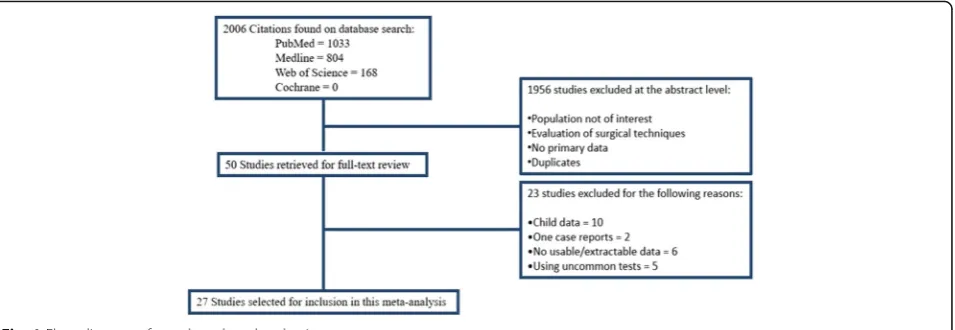
A total of 2006 potential journal articles was identified using the keywords mentioned above. Only articles in English and French were included. Individual studies’ ab-stracts were screened to select the studies that met the criteria for this meta-analysis. Full texts of selected arti-cles were retrieved and then rescreened for possible in-clusion in the current meta-analysis by two different observers independently.
Different tests exist to evaluate different aspects of the state of the vestibular apparatus. The HIT is one test that assesses vestibulo-ocular function. Other tests ob-jectively evaluate parameters associated with different parts of the vestibular apparatus; however, they do not measure the function of the vestibular system. Such tests include the caloric and VEMP tests.
Posturography is a set of tests that assess the integrative vestibular performance associated with maintenance of posture, where the vestibular function integrates with other sensory inputs (such as vision & proprioception, in order to maintain posture). When applying the SOT test, posturography assesses the state of compensation, because all the movements are sway-referenced, with no induced movements. The DHI is a subjective test for assessment of the perceived function of the vestibular balance condition.
Data synthesis
Four separate meta-analyses were conducted - one for each test. For HIT, caloric, and VEMP testing, the outcome measure was obtained from the ratio of subjects with nor-mal test results before and after surgery; the effect size was measured using the log relative risk (RR) because outcomes are reported in a dichotomous manner (i.e. either normal or hypo/areflexia). For Posturography and DHI, the out-come measure was the mean difference in scores; the effect size was measured using the mean difference (MD) in scores before and after surgery. The random effects model was used, because of the expected variability in the tests’ conditions and results interpretation in the different test centers, and also because all the heterogeneity analyses were significant. Due to the low number of studies avail-able, a meta-analysis was not performed for the posturogra-phy data. To calculate the mean difference in scores, the means and standard deviations for scores were extracted, as well as the number of subjects before and after surgery. All data analyses were performed using R-version-3.1.2. Statis-tical significance was defined asP< 0.05.
Results
HIT results
The number of subjects with normal and abnormal test-ing results before and after CI surgery who were in-cluded in the meta-analysis of the HIT test is shown in Table 2 in Appendix. The statistical analysis revealed a non-significant effect of CI surgery on the HIT test re-sults (RR = 0.0951, 95% CI =−0.0220, 0.2122, P= 0.11). There was substantial variability in the results observed in these studies (I2 = 57.98%, QDF = 5) = 11.2612, P= 0.046). The forest plot indicating the relative strength of each study included in the meta-analysis is illustrated by Fig. 2. Two studies (Batuecas et al., [8] and Vankatova et al. [9]) had a relatively larger number of abnormal postoperative HIT results. However, patients in Batuecas et al. [8] were re-tested after a relatively short postopera-tive period (2 days). For Vankatova et al. [9], communica-tion with the authors revealed that they had false positive results. Consequently, it was decided to exclude this study from the meta-analysis.
Five out of the six studies that performed HIT, con-ducted a quantitative HIT, whether a video HIT [8, 9], a search coil HIT [5, 10], or a motorized HIT (mHIT) [11]. Only Basta et al., [12] used a bedside HIT.
Caloric test results
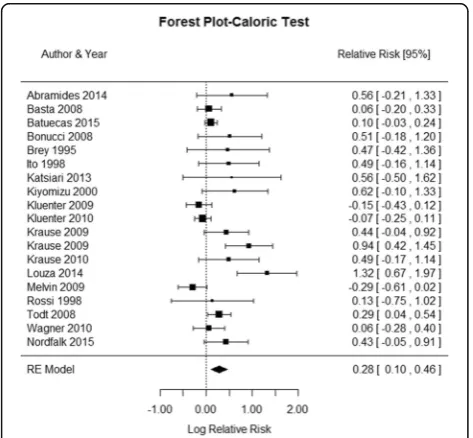
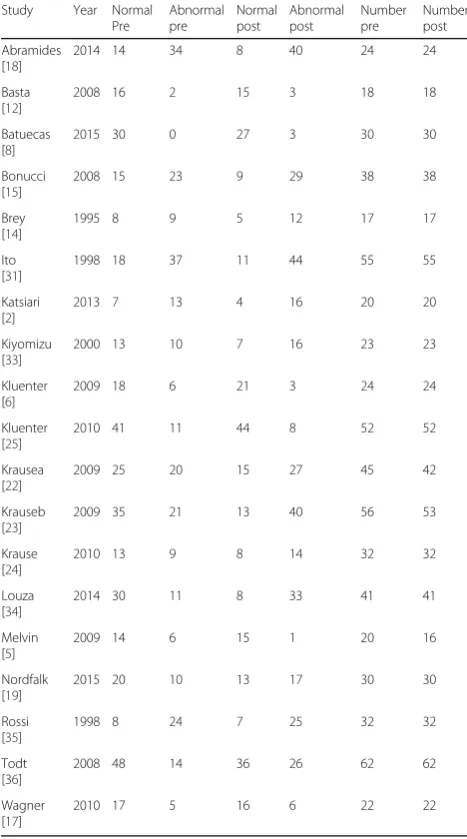
The number of subjects with normal and abnormal testing results before and after CI surgery included in the meta-analysis of the caloric test is shown in Table 3 in Appen-dix. The statistical analysis revealed a significant effect of CI surgery on the caloric test results (RR = 0.2826, 95% CI = 0.1032, 0.4621,P= 0.0039). There was a considerable het-erogeneity observed in the studies (I2 =74.90%, Q (DF = 18) = 50.8956, P< 0.0001). The forest plot indicating the relative strength of each study included in the meta-analysis is illustrated by Fig. 3. Despite the variability among the reports, the results revealed a tendency for loss of per-ipheral vestibular function following CI surgery in the ma-jority of the 19 studies involved in this analysis. Several
factors could account for the variability among the studies, such as the age range, the test settings and timing of the postoperative retest.
VEMP test results
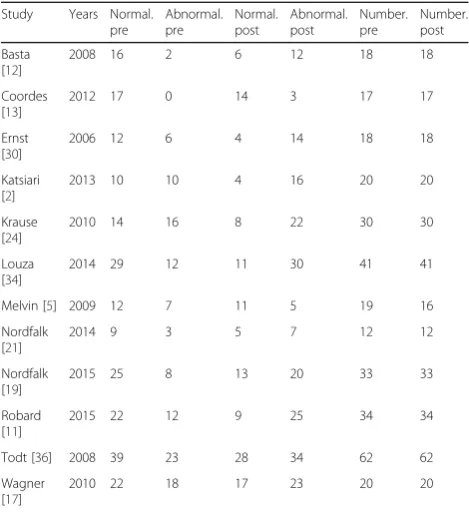
The studies included in the meta-analysis of VEMP test are shown in Table 4 in Appendix. All included studies used cVEMP. The statistical analysis revealed a signifi-cant detrimental effect of CI surgery on VEMP test re-sults (RR = 0.5099, 95% CI = 0.2941, 0.7256, P< 0.0001). There was a substantial heterogeneity in the studies (I2 =
51.68%, Q (DF = 11) = 20.7693, P= 0.0293). The forest
plot indicating the relative strength of each study in-cluded in the meta-analysis is illustrated by Fig. 4. Two studies (Coordes et al. [13], and Melvin et al. [5]) had a relatively higher number of patients who retained nor-mal VEMP test results postoperatively. This could be due to the use of bone-conduction VEMP, which is more sensitive compared to air-conduction VEMP [13].
Posturography results
The results from the studies that investigated posturo-graphy, particularly the conditions 5 and 6 are shown in Table 5 in Appendix. Meta-analysis could not be con-ducted because only two studies were retrieved [3, 14]. Brey et al. [14]. found a non-significant difference be-tween pre- and post- implantation, where the difference in conditions 5 and 6 scores was very subtle: These re-sults did not differ much from the rere-sults reported by Buchman et al. [3]. Overall, postural stability perform-ance did not seem to be affected by the CI surgery.
DHI results
Results from the studies that were included in the meta-analysis of the DHI test are shown in Table 6 in Appendix. The statistical analysis revealed a non-significant effect of CI surgery on the DHI scores (MD =−14.9718, 95% CI =
−44.1804, 14.23, P= 0.3151). There was a considerable
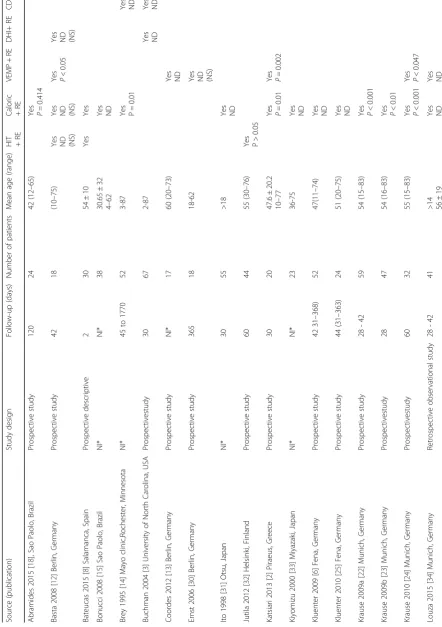
Table 1 Summary of results of all studies included in the meta-analyses Source (pub lication) Study design Follow-u p (day s) Nu mber of patients Mean age (ran ge) HIT +R E Calor ic +R E VEMP + RE D HI+ RE CDP Abra mides 2015 [ 18 ], Sao Paolo, Brazil Prospe ctive study 120 24 42 (12 – 65)
Yes P=
0.414 Basta 20 08 [ 12 ] Berli n, Germ any Prospe ctive study 42 18 (10 – 75)
Yes ND (NS) Yes ND (NS) Yes P<
0.05 Ye s ND (NS ) Bate ucas 2015 [ 8 ] Sal amanca, Sp ain Prospe ctive descrip tive 2 30 54 ± 10 Yes Yes Bonucc i 2008 [ 15 ] Sao Paol o, Brazi l NI* NI* 38 30.65 ± 32 4 – 62 Yes ND Brey 1995 [ 14 ] Mayo clinic, Roches ter, Min nesota NI* 45 to 1770 52 3-87
Yes P=
0.01 Yes ND Buchm an 2004 [ 3 ] Universi ty of North Carol ina, USA Prospe ctivestudy 30 67 2-87 Ye s ND Yes ND Coorde s 2012 [ 13 ] Berlin , Germ any Prospe ctive study NI* 17 60 (20 – 73) Yes ND Ernst 2006 [ 30 ] Be rlin, Ge rmany Prospe ctive study 365 18 18-6 2
Yes ND (NS)
Ito 1998 [ 31 ] Otsu, Jap an NI* 30 55 >18 Yes ND Jutila 2012 [ 32 ] Helsin ki, Finland Prospe ctive study 60 44 55 (30 – 76)
Yes P>
0.05 Katsiari 2013 [ 2 ] Pir aeus, Gree ce Prospe ctive study 30 20 47.6 ± 20.2 10 – 77
Yes P=
0.01
Yes P=
0.002 Kiyomi zu 2000 [ 33 ] Mi yazaki, Japan NI* NI* 23 36-7 5 Yes ND Kluent er 2009 [ 6 ] Fen a, Germ any Prospe ctive study 42 31 – 36 8) 52 47(11 – 74 ) Yes ND Kluent er 2010 [ 25 ] Fena, Ge rmany Prospe ctive study 44 (31 – 363) 24 51 (20 – 75) Yes ND Krause 2009a [ 22 ] Mu nich, German y Prospe ctive study 28 -42 59 54 (15 – 83)
Yes P<
0.001 Krause 2009b [ 23 ] Mu nich, Ge rmany Prospe ctivestudy 28 47 54 (16 – 83)
Yes P<
0.01 Krause 2010 [ 24 ] Mu nich, German y Prospe ctivestudy 60 32 55 (15 – 83)
Yes P<
0.001
Yes P<
Table 1 Summary of results of all studies included in the meta-analyses (Continued) Melvin 20 09 [ 5 ] Joh ns Ho pkins, Marylan d, USA Prospe ctive cohort 28 -42 16 46 (23 – 69) Yes ND Yes ND Yes ND Migliaccio 2005 [ 10 ] Johns H opkins, Maryl and, USA Prospe ctive study 28 -42 16 46 (27 – 64)
Yes P>
0.05 Nord falk 2014 [ 21 ] O slo, Norw ay Prospe ctive pilot 28 -42 12 32-6 1 Yes ND Nord falk 2015 [ 19 ] Oslo, Norw ay Prospe ctive 42-5 6 39 57.5 ± 17.2 (18 – 83) Yes ND Yes ND Roba rd 2015 [ 11 ] Caen , France Prospe ctive study 150 34 49 ± 25 (1 – 86)
Yes P=
heterogeneity in the studies (I2 = 98.65%, Q (df = 3) = 280.0102, P.0001). The forest plot showing the relative strength of each study included in the meta-analysis is illus-trated by Fig. 5. Basta et al., [12] reported an unusually high postoperative mean score. However, these authors analyzed only five patients with a significant increase in their DHI scores after the surgery. All of them were significantly older (68.8 ± 6.5 years), as compared to the other studies (mean 46.7 ± 18.2 years). Results from DHI scores agree with pos-turography results, where in most studies, even those reporting increased DHI scores did not result in a change that required further investigation and/or intervention.
Discussion
Vestibular disorders have been reported following CI surgery. This systematic review and meta-analysis showed great variability in the tests’ results. This vari-ability might be due to the different testing measures employed. Both HIT and caloric tests are strongly af-fected by the lateral semicircular canal function. VEMP testing is strongly influenced by the saccular function. Posturography testing is closely related to the compensa-tory mechanisms of postural performance. DHI
assess-ments characterize a patient’s subjective impression
about their balance perception. Thus it appears that CI may affect some aspects of vestibular function [5]. The variability may also be partly explained by the differences
Fig. 4Forest plot (showing relative effect sizes) for the VEMP test
Fig. 5Forest plot (showing relative effect sizes) for the DHI test
Fig. 2Forest plot (showing relative effect sizes) for the HIT test
in the criteria and/or test techniques such as the cut-off to determine the normal versus abnormal test results [2]. However, not all studies reported their criteria.
Two studies [8, 9] had a relatively larger number of abnormal postoperative HIT results. Maybe this can be explained by the short postoperative re-test period (2 days) [8]. Unfortunally, was not possible to pool and analyze studies based on follow-up periods because sev-eral papers were not specific, either they did not specify the period [15], or provided a very wide range for it [14]. For VEMP results, two studies [5, 13] showed better post-operative results. This could be due to the use of bone-conduction VEMP, which is more sensitive compared to air-conduction VEMP [13], and hence were not included in the meta-analysis. For DHI results, Basta et al., [12] reported an unusually high postoperative mean score. However, these au-thors analyzed only five patients with a significant increase in their DHI scores after the surgery. All of them were signifi-cantly older (68.8 ± 6.5 years), as compared to the other stud-ies (mean 46.7 ± 18.2 years). Results from DHI scores agree with posturography results, where in most studies, even those reporting increased DHI scores did not result in a change that required further investigation and/or intervention.
Another factor that contributes to variability of the re-sults is the fact that CI users are not a homogenous popula-tion. They come from different age groups involving newborns to older adults suffering from severe-to-profound SNHL. Thus, age and etiology of SNHL can affect the vestibular function either before, after, or both before and after CI surgery. For example, meningitis often results in disturbed vestibular function due to ossification of the labyrinth (Cushing et al., [16]). From the pooled results in the current meta-analysis, it was found that before surgery, 39.5% had abnormal caloric test results, 31.7% had abnor-mal VEMP test results, and 11.5% had abnorabnor-mal HIT re-sults [see Table 1 and Appendix]. Two studies [10, 17] showed a preoperative average DHI scores higher than ten indicating a previous vestibular problem. Few studies re-ported the number of patients with preoperative caloric or VEMP hyporeflexia who had a deterioration (areflexia) postoperatively [2, 15, 18]. For example, Bonucci et al. [15] found that 10% of the patients who had preoperative hypor-eflexia in the caloric test had postoperative arhypor-eflexia, how-ever, it was not clear whether it was the implanted ear or the contralateral ear. Abramides et al. [18] and Katsiari et al. [2] reported that a deterioration in the non-implanted ear might occur either because the insertion of the electrode in the scala tympani in one ear alters the ves-tibular input to the brain, and hence modifies the contra-lateral ear response, or because the reproducibility of the response in these individuals over time is not perfect.
Surgical technique can also affect the outcome. Factors such as electrode insertion site (whether through a cochleost-omy, anteroinferior to the round window, or directly through
the round window), the electrode length (short or long elec-trode), the electrode insertion speed, and the electrode inser-tion depth [19]. The current literature does not provide details about the surgical procedure and only mention the technique used (cochleostomy versus round window approach). The majority of the articles reported the cochleostomy (anteroinferior to the round window) as the standard approach.1 Unfortunally, it was not mentioned whether soft surgical techniques were used to minimize trauma to the labyrinth [20].
The data in the current meta-analysis showed no signifi-cant increase in DHI in the majority of patients (84.4%), suggesting that CI did not affect balance. Seventy-two per-cent of the patients retained a normal caloric function after surgery, 60% retained normal HIT results, and 56% retained normal VEMP test results, thus it can be concluded that the impact of CI surgery on the vestibular apparatus was not clinically significant. It is worth noting that some condi-tions such as the use of ototoxic drugs or Meniere’s disease might be present in CI users, and could limit the interpret-ation of abnormal balance tests in case testing was done only postoperatively. However, the studies did not report detailed patients’medical history to be conclusive.
It is important to note that some studies were per-formed by the same group (Nordfalk et al. [19, 21], Krause et al. [22–24], and Kluenter et al. [6, 25]). The authors were contacted to verify whether these studies have an overlap. Nordfalk et al. have different sets of pa-tient populations, so they do not overlap. Kluenter et al. had 12 patients who participated in both studies. No re-sponse was received from Krause et al.
We found that CI surgery can significantly affect the re-sults of both the caloric test and VEMP test. This finding is in accord with the systematic review of Kuang et al. [26], where they found that 37% of patients had reduced reflex, and 34% had caloric asymmetry after CI surgery. Other authors [27, 28] reported that one-third of CI recip-ients complain of dizziness after surgery. A recent review aimed at determining the best test to evaluate vestibular function before and after CI surgery was published by Abouzayd et al., [29]. They found that the caloric test was least sensitive, VEMP results were most often impaired, and HIT results were generally conserved. Our study pro-vides a quantified evidence that CI surgery can signifi-cantly affect some vestibular test results (although it might not be clinically significant, as evident from the pre- and postoperative DHI scores). It also provides esti-mates of vestibular dysfunction in CI candidates. The current study confirms that it is important to pursue a case-by-case approach with CI surgery candidates, based on each patient’s history and symptoms.
hearing loss, the surgical technique used, and the incidence of trauma to the inner ear. Because congenital, genetic, and post-meningitis hearing loss is more common in children, a separate analysis of pediatric vestibular function before and after CI surgery, and comparing the results to adults, would be a useful area of future research.
Conclusion
According to the results of the current meta-analysis, CI surgery can significantly affect the results of caloric as well as VEMP tests. No significant effect was detected in HIT results, posturography, or DHI scores. Drawing a definitive conclusion is rather difficult for a number of reasons, such as heterogeneity in study de-sign, variability among patient populations, pre-existing condition, and measurement and reporting differences. Whilst studies showed that some postoperative scores were worse after CI, the proportion of patients affected appears low. Age and etiology of hearing loss appear to affect the vestibular function after CI surgery. Nonethe-less, the possible effects of CI surgery on the vestibular system should be communicated to CI recipients before surgery.
Endnotes
1
Todt et al., 2008 [36] claimed that the use of round win-dow approach for electrode insertion would decrease the probability of loss of vestibular function postoperatively, compared to the standard cochleostomy approach.
Appendix
Table 2Number of subjects with normal and abnormal testing
results before and after surgery in studies included in the meta-analysis for the HIT test
Study Year Normal
pre
Abnormal pre
Normal post
Abnormal post
Number pre
Number post
Basta [12] 2008 18 0 18 0 18 18
Batuecas [8]
2015 30 0 20 10 30 30
Jutila [32] 2012 19 25 15 29 44 44
Melvin [5] 2009 14 0 10 0 14 10
Migliaccio [10]
2005 14 2 10 1 16 11
Vankatova [9]
2014 50 0 43 7 50 50
Normal pre = number of individuals with normal test results before surgery. Abnormal Pre = number of individuals with abnormal test results before surgery. Normal post = number of individuals with normal test results after surgery. Abnormal post = number of individuals with abnormal test results after surgery. Number pre = number of individuals tested before surgery. Number post = number of individuals tested after surgery
results before and after surgery in studies included in the meta-analysis for the caloric test
Study Year Normal
Pre
Abnormal pre
Normal post
Abnormal post
Number pre
Number post
Abramides [18]
2014 14 34 8 40 24 24
Basta [12]
2008 16 2 15 3 18 18
Batuecas [8]
2015 30 0 27 3 30 30
Bonucci [15]
2008 15 23 9 29 38 38
Brey [14]
1995 8 9 5 12 17 17
Ito [31]
1998 18 37 11 44 55 55
Katsiari [2]
2013 7 13 4 16 20 20
Kiyomizu [33]
2000 13 10 7 16 23 23
Kluenter [6]
2009 18 6 21 3 24 24
Kluenter [25]
2010 41 11 44 8 52 52
Krausea [22]
2009 25 20 15 27 45 42
Krauseb [23]
2009 35 21 13 40 56 53
Krause [24]
2010 13 9 8 14 32 32
Louza [34]
2014 30 11 8 33 41 41
Melvin [5]
2009 14 6 15 1 20 16
Nordfalk [19]
2015 20 10 13 17 30 30
Rossi [35]
1998 8 24 7 25 32 32
Todt [36]
2008 48 14 36 26 62 62
Wagner [17]
2010 17 5 16 6 22 22
Abbreviations
CI:Cochlear Implant; DHI: Dizziness Handicap Inventory; HIT: Head Impulse Test; MD: Mean Difference; RR: Relative Risk; SOT: Sensory Organization Test; VEMP: Vestibular Evoked Myogenic Potential
Acknowledgements
The authors would like to thank Dr. Xun Zhang, PhD - McGill University Health Center. For revising R codes and results—as well as the McGill Medical librarians at MUHC, for their valuable assistance in building the search strategy and retrieving the articles from the various databases.
Funding
Canada Graduate Scholarship Master’s (CGS-M) Award - Canadian Institutes of Health Research (CIHR).
Availability of data and materials
Data sharing not applicable to this article as no datasets were generated or analysed during the current study
Authors’contributions
II: data collection, data analysis, manuscript drafting. SDS: data analysis, manuscript editing and revision. BS: data analysis, manuscript editing and revision. AZ: Concept & design, data analysis, manuscript editing and revision. All authors read and approved the final manuscript.
Competing interests
The authors declare that they have no competing interests.
Consent for publication Not applicable.
Ethics approval and consent to participate Not applicable.
Publisher’s Note
Springer Nature remains neutral with regard to jurisdictional claims in published maps and institutional affiliations.
Author details 1
Department of Otolaryngology-Head and Neck Surgery, Royal Victoria Hospital, McGill University, Montréal, Canada.2Department of Otolaryngology-Head and Neck Surgery, Jewish General Hospital, McGill University, Montréal, Canada.
Received: 26 September 2016 Accepted: 26 May 2017
References
1. WHO. http://www.who.int/mediacentre/factsheets/fs300/en/. Accessed 23 June 2015.
Table 5Test results (Sensory Organization test scores) before
and after surgery in studies included in the meta-analysis for the posturography test
Study Year Mean1 SD1 Number1 Mean2 SD2 Number2
Brey [14]
1995 46.99 25.68 22 45 31.04 22
Brey [14]
1995 43.5 22.1 22 42.17 28.76 22
Buchman [3]
2004 39 26 82 40 27 67
Buchman [3] 2004 33 26 82 31 26 67
Mean1 = mean scores before surgery. SD1 = scores standard deviations before surgery. Number1 = number of patients tested before surgery. Mean2 = mean scores after surgery. SD2 = scores standard deviations after surgery. Number2 = number of patients tested after surgery
Table 4Number of subjects with normal and abnormal testing
results before and after surgery in studies included in the meta-analysis for the VEMP test
Study Years Normal.
pre
Abnormal. pre
Normal. post
Abnormal. post
Number. pre
Number. post
Basta [12]
2008 16 2 6 12 18 18
Coordes [13]
2012 17 0 14 3 17 17
Ernst [30]
2006 12 6 4 14 18 18
Katsiari [2]
2013 10 10 4 16 20 20
Krause [24]
2010 14 16 8 22 30 30
Louza [34]
2014 29 12 11 30 41 41
Melvin [5] 2009 12 7 11 5 19 16
Nordfalk [21]
2014 9 3 5 7 12 12
Nordfalk [19]
2015 25 8 13 20 33 33
Robard [11]
2015 22 12 9 25 34 34
Todt [36] 2008 39 23 28 34 62 62
Wagner [17]
2010 22 18 17 23 20 20
Normal pre = number of individuals with normal test results before surgery. Abnormal Pre = number of individuals with abnormal test results before surgery. Normal post = number of individuals with normal test results after surgery. Abnormal post = number of individuals with abnormal test results after surgery. Number pre = number of individuals tested before surgery. Number post = number of individuals tested after surgery
Table 6Test results (DHI scores) before and after surgery in
studies included in the meta-analysis for the DHI test
Study Year Mean1 SD1 Number1 Mean2 SD2 Number2
Basta [12]
2008 5 1.41 18 64 14.14 18
Buchman [3]
2004 5 8 78 4 8 66
Migliaccio [10]
2005 10.54 11.76 11 9.09 11.18 11
Wagner [17]
2010 14.9 24.4 20 17.6 22.2 20
2013;270(2):489–95. doi:10.1007/s00405-012-1950-6.
3. Buchman CA, Joy J, Hodges A, Telischi FF, Balkany TJ. Vestibular effects of cochlear implantation. Laryngoscope. 2004;114(10 Pt 2 Suppl 103):1–22. doi: 10.1097/00005537-200410001-00001.
4. Fina M, Skinner M, Goebel JA, Piccirillo JF, Neely JG, Black O. Vestibular dysfunction after cochlear implantation. Otol Neurotol. 2003;24(2):234–42. 5. Melvin T-AN, Della Santina CC, Carey JP, Migliaccio AA. The effects of
cochlear implantation on vestibular function. Otol Neurotol. 2009;30(1):87–94.
6. Kluenter H-D, Lang-Roth R, Guntinas-Lichius O. Static and dynamic postural control before and after cochlear implantation in adult patients. Eur Arch Otorhinolaryngol. 2009;266(10):1521–5. doi:10.1007/s00405-009-0936-5. 7. Moher D, Liberati A, Tetzlaff J, Altman DG. PRISMA Group. Preferred
reporting items for systematic reviews and meta-analyses: the PRISMA statement. Int J Surg. 2010;8(5):336–41. doi:10.1016/j.ijsu.2010.02.007. 8. Batuecas-Caletrio A, Klumpp M, Santacruz-Ruiz S, Gonzalez FB, Sánchez EG,
Arriaga M. Vestibular function in cochlear implantation: Correlating objectiveness and subjectiveness. Laryngoscope. 2015.
doi:10.1002/lary.25299.
9. Vankatova L, Cao Van H, Perez Fornos A, Guinarnd N. Cochlear implantation - better safe than sorry. Rev Med Suisse. 2014;10(444):1820. 1822–1823. 10. Migliaccio AA, Della Santina CC, Carey JP, Niparko JK, Minor LB. The
vestibulo-ocular reflex response to head impulses rarely decreases after cochlear implantation. Otol Neurotol. 2005;26(4):655–60.
11. Robard L, Hitier M, Lebas C, Moreau S. Vestibular function and cochlear implant. Eur Arch Otorhinolaryngol. 2015;272(3):523–30. doi:10.1007/s00405-014-3040-4.
12. Basta D, Todt I, Goepel F, Ernst A. Loss of saccular function after cochlear implantation: the diagnostic impact of intracochlear electrically elicited vestibular evoked myogenic potentials. Audiol Neurootol. 2008;13(3):187–92. doi:10.1159/000113509.
13. Coordes A, Basta D, Götze R, et al. Sound-induced vertigo after cochlear implantation. Otol Neurotol. 2012;33(3):335–42. doi:10.1097/MAO. 0b013e318245cee3.
14. Brey RH, Facer GW, Trine MB, Lynn SG, Peterson AM, Suman VJ. Vestibular effects associated with implantation of a multiple channel cochlear prosthesis. The American journal of otology. 1995;16(4):424–30.
15. Bonucci AS, Costa Filho OA, Mariotto LDF, Amantini RCB, Alvarenga K. de F. Vestibular function in cochlear implant users. Brazilian journal of otorhinolaryngology. 2008;74(2):273–8.
16. Cushing SL, Papsin BC, Rutka JA, James AL, Blaser SL, Gordon KA. Vestibular End-Organ and Balance Deficits After Meningitis and Cochlear Implantation in Children Correlate Poorly With Functional Outcome. Otology and Neurotology. 2009;30(4):488–95. doi:10.1097/MAO.0b013e31819bd7c8. 17. Wagner JH, Basta D, Wagner F, Seidl RO, Ernst A, Todt I. Vestibular and taste
disorders after bilateral cochlear implantation. Eur Arch Otorhinolaryngol. 2010;267(12):1849–54. doi:10.1007/s00405-010-1320-1.
18. Abramides PA, Bittar RSM, Tsuji RK, Bento RF. Caloric test as a predictor tool of postural control in CI users. Acta Otolaryngol. 2015;135(7):685–91. doi:10.3109/00016489.2015.1020395.
19. Nordfalk KF, Rasmussen K, Hopp E, Bunne M, Silvola JT, Jablonski GE. Insertion Depth in Cochlear Implantation and Outcome in Residual Hearing and Vestibular Function. Ear Hear. 2015. doi:10.1097/AUD.
0000000000000241.
20. Cohen NL. Cochlear implant soft surgery: fact or fantasy? Otolaryngol Head Neck Surg. 1997;117(3 Pt 1):214–6.
21. Nordfalk KF, Rasmussen K, Hopp E, Greisiger R, Jablonski GE. Scalar position in cochlear implant surgery and outcome in residual hearing and the vestibular system. Int J Audiol. 2014;53(2):121–7. doi:10.3109/14992027.2013. 854413.
22. Krause E, Louza JPR, Hempel J-M, Wechtenbruch J, Rader T, Gürkov R. Effect of cochlear implantation on horizontal semicircular canal function. Eur Arch Otorhinolaryngol. 2009;266(6):811–7. doi:10.1007/s00405-008-0815-5. 23. Krause E, Wechtenbruch J, Rader T, Berghaus A, Gürkov R. Impaired fixation
suppression is a risk factor for vertigo after cochlear implantation. J Laryngol Otol. 2009;123(8):845–50. doi:10.1017/S0022215109004812.
24. Krause E, Louza JPR, Wechtenbruch J, Gürkov R. Influence of cochlear implantation on peripheral vestibular receptor function. Otolaryngol Head Neck Surg. 2010;142(6):809–13. doi:10.1016/j.otohns.2010.01.017.
cochleostomy versus round window approach. Acta Otolaryngol. 2010; 130(6):696–701. doi:10.3109/00016480903373732.
26. Kuang H, Haversat HH, Michaelides EM. Impairment of caloric function after cochlear implantation. J Speech Lang Hear Res. 2015. doi:10.1044/2015_ JSLHR-H-15-0010.
27. Zawawi F, Faisal A, Tony L, Anthony GZ. Patients Reported Outcome Post-Cochlear Implantation: How Severe Is Their Dizziness? Journal of Otolaryngology - Head and Neck Surgery = Le Journal D’ oto-Rhino-Laryngologie Et De Chirurgie Cervico-Faciale 43, no. 1 (December 10, 2014): 49. doi:10.1186/s40463-014-0049-z.
28. Shoman N, Ngo R, Archibald J, Pijl S, Chan S, Westerberg BD. Prevalence of new-onset vestibular symptoms following cochlear implantation. J Otolaryngol. 2008;37:388–94.
29. Abouzayd M, Smith PF, Moreau S, Hitier M. What vestibular tests to choose in symptomatic patients after a cochlear implant? A systematic review and meta-analysis. Eur Arch Otorhinolaryngol. 2016. doi:10.1007/s00405-016-4007-4. 30. Ernst A, Todt I, Seidl RO, Eisenschenk A, Blödow A, Basta D. The application
of vestibular-evoked myogenic potentials in otoneurosurgery. Otolaryngol Head Neck Surg. 2006;135(2):286–90. doi:10.1016/j.otohns.2006.03.006. 31. Ito J. Influence of the multichannel cochlear implant on vestibular function.
Otolaryngology - Head and Neck Surgery. 1998;118(6):900–2. doi:10.1016/ S0194-5998(98)70295-5.
32. Jutila T, Aalto H, Hirvonen TP. Cochlear implantation rarely alters horizontal vestibulo-ocular reflex in motorized head impulse test. Otol Neurotol. 2013; 34(1):48–52. doi:10.1097/MAO.0b013e318277a430.
33. Kiyomizu K, Tono T, Komune S, Ushisako Y, Morimitsu T. Dizziness and vertigo after cochlear implantation. Adv Otorhinolaryngol. 2000;57:173–5. 34. Louza J, Mertes L, Braun T, Gürkov R, Krause E. Influence of insertion depth
in cochlear implantation on vertigo symptoms and vestibular function. Am J Otolaryngol. 2015;36(2):254–8. doi:10.1016/j.amjoto.2014.11.007. 35. Rossi G, Solero P, Rolando M, Spadola BM. Vestibular function and cochlear
implant. ORL. 1998;60(2):85–7.
36. Todt I, Basta D, Ernst A. Does the surgical approach in cochlear implantation influence the occurrence of postoperative vertigo? Otolaryngol Head Neck Surg. 2008;138(1):8–12. doi:10.1016/j.otohns.2007.09.003.
• We accept pre-submission inquiries
• Our selector tool helps you to find the most relevant journal
• We provide round the clock customer support
• Convenient online submission
• Thorough peer review
• Inclusion in PubMed and all major indexing services
• Maximum visibility for your research
Submit your manuscript at www.biomedcentral.com/submit