C O M M E N TA RY
Ten lessons learned from conducting
an adherence intervention trial
Jeannie K Lee1
Karen A Grace3
Allen J Taylor3
1College of Pharmacy, University
of Arizona, Tucson, AZ, USA;
2Department of Pharmacy, Walter
Reed Army Medical Center, Washington DC, USA; 3Cardiology
Division, Washington Hospital Center, Washington DC, USA
Correspondence: Jeannie Kim Lee Clinical Assistant Professor, Department of Pharmacy Practice and Science, University of Arizona, College of Pharmacy, 1295 N. Martin Ave. P.O. Box 210202, Tucson, AZ 85721-0202, USA Tel +1 520 626 9419
Fax +1 520 626 7355
Email [email protected]
Abstract: Clinical practice research provides a unique opportunity to care for a diverse patient population in various health care system settings. Federal study of Adherence to Medications in the Elderly (FAME) was the fi rst prospective observational and randomized controlled trial to implement effective strategies to enhance medication adherence and health outcomes in older patients using polypharmacy. Ten lessons learned from conducting this adherence intervention trial are described: (1) Link the trial to existing clinical work, (2) Begin with a thorough under-standing of medication adherence, (3) Ensure that trial highlights individualized intervention, (4) Tailor inclusion criteria and study duration to target population, (5) Employ a range of outcomes linked to meaningful clinical effects, (6) Win the support of the multidisciplinary team and the administration, (7) Promote team work, (8) Consider the potential limitations,
(9) Seize the grant opportunities, and (10) Share the fi ndings.
Keywords: adherence, pharmacist, intervention, medication
Clinical practice research provides a unique opportunity to care for a diverse patient population in various health care system settings. Such research can lead to strategic discoveries in improving medication delivery and patient safety. The Federal study of Adherence to Medications in the Elderly (FAME)1 was the fi rst clinical trial to
adopt effective interventions to enhance medication adherence and health outcomes in older patients, tested via a prospective observational phase followed by a randomized controlled trial. A comprehensive pharmacy care program was developed using three key components: (1) an individualized education provided by clinical pharmacists, (2) an adherence aid (custom blister-packaging of medications), and (3) a serial follow-up schedule. After a six-month exposure to the comprehensive pharmacy care program (study phase 1), the subjects’ medication adherence increased from 61.2% (baseline) to 96.9% (p ⬍ 0.001). The increased adherence rate was associated with signifi cant improvements in systolic blood pressure (BP) (133.2 to 129.9 mm Hg; p = 0.02) and low-density lipoprotein cholesterol (LDL-C) (91.7 to 86.8 mg/dL; p = 0.001). At the beginning of the study phase 2, all active patients were randomized to either the continued pharmacy care group or the usual care group. At the end of the six-month randomized trial, the pharmacy care group patients successfully achieved medication persistence (sustained adherence) at 95.5%; however, the usual care group patients’ adherence rate returned to near the baseline (69.1%; p ⬍ 0.001). The medication persistence was associated with further reductions in systolic BP in the continued pharmacy care group.1
Many lessons were learned from conducting the FAME trial, while designing the intervention program; recruiting, enrolling, and retaining study patients; coordinating the blister-packing process; working with multidisciplinary providers and departments; obtaining a foundation grant; and presenting the study fi ndings. Ten lessons learned are
Patient Preference and Adherence downloaded from https://www.dovepress.com/ by 118.70.13.36 on 26-Aug-2020
Lee et al
described (see Table 1) to promote ongoing practice-based research to enhance medication adherence.
Link the trial to existing clinical
work
Your patients’ specifi c needs, limitations in a health care system, or missing links to an optimal adherence pattern may be recognized in a daily clinical work and fuel research questions. In turn, innovative ways to fulfi ll the identifi ed needs, to overcome the limitations, or to connect the missing links can serve as your research interventions. For example, after reviewing pharmacy notes from a geriatric clinic, it was evidenced that poor medication adherence was the most frequently identifi ed problem among our elderly patients. Of 308 patient encounters, only 40% of the patients were documented to be adherent. Besides providing pillboxes, our health care system offered no specifi c solution to nonadher-ence. At the same time, a literature review revealed 65% of adults 65 years and older having two or more chronic health problems2 that often led to polypharmacy use, nonadherence,
and hospitalization.3 Despite this well known problem in
the elderly, there were no adherence interventions proven to be effective or widely in use. The need for adherence improvement in our patients and the lack of adherence strategies for older adults fueled the questions regarding possible interventions to enhance adherence and health care outcomes, which became the FAME research aims.
Begin with a thorough
understanding of medication
adherence
Before constructing an adherence intervention trial, investigators must first understand the definition of medication adherence and methods used for assessment.
Medication adherence is a term describing a patient’s medication-taking behavior, generally defi ned as the extent to which a patient adheres to an agreed regimen derived by a collaboration between the patient and their health care provider.4–6 The word “adherence” is often preferred over
“compliance” because medication compliance implies the patient passively complying to the provider’s medication orders with no attempts made at collaboration.4,6,7
There are numerous methods used to assess medication adherence in practice, including the subjective, direct, and indirect measures.4,8 An array of methods such as patient
self-report, pharmacy refi ll history, pill counts, serum drug level, etc. have been used. A single or a combination of these mea-sures can be used in a trial. Employing a consistent method throughout a trial period is of importance. During FAME, adherence for all chronic medications was assessed using pill counts calculated as the number of pills taken (the number of pills dispensed relative to the number of pills remaining at follow-up).1 Even though pill counts can become
labor-intensive with a polypharmacy regimen, using the blister-packs as an adherence aid eased this process in FAME.
Ensure that trial highlights
individualized intervention
When designing an adherence study, seek to implement a creative and individualized intervention strategy to meet the specifi c needs of the target population. In general, a comprehensive intervention using cognitive and behavioral characteristics is most effective.9 Patient education, regarded
as an essential initial step to ensuring adherence, has only a marginal and transient effect on medication adherence when used alone.10–12 Similarly, a meta-analysis of medication
packaging alone suggested a slight increase in adherence rate in only half of the studies (all short-term) included.13
In contrast to above studies, two studies that implemented complex intervention programs reported positive results for both the adherence and the clinical outcomes in hypertensive patients.14,15 Individualization of the adherence intervention to
the intended trial population is essential. For instance, to serve the community dwelling elderly patients using polypharmacy, we employed a comprehensive intervention strategy. How-ever, younger patients who are at lower risk for medication nonadherence, may not require such intensive program.
The FAME comprehensive pharmacy care program combined an individualized medication education with a provision of custom blister-packed medications and a serial follow-up with clinical pharmacists every two months.1 The
individualized education was performed using a standardized
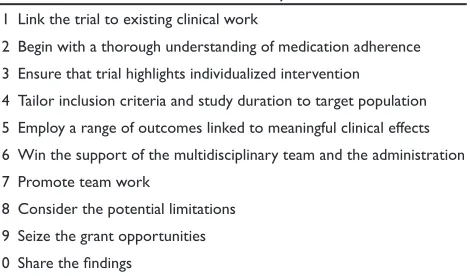
Table 1 Ten lessons learned from conducting the Federal study of Adherence to Medications in the Elderly trial
1 Link the trial to existing clinical work
2 Begin with a thorough understanding of medication adherence 3 Ensure that trial highlights individualized intervention 4 Tailor inclusion criteria and study duration to target population 5 Employ a range of outcomes linked to meaningful clinical effects 6 Win the support of the multidisciplinary team and the administration 7 Promote team work
8 Consider the potential limitations 9 Seize the grant opportunities 10 Share the fi ndings
Patient Preference and Adherence downloaded from https://www.dovepress.com/ by 118.70.13.36 on 26-Aug-2020
10 lessons learned from an adherence intervention trial
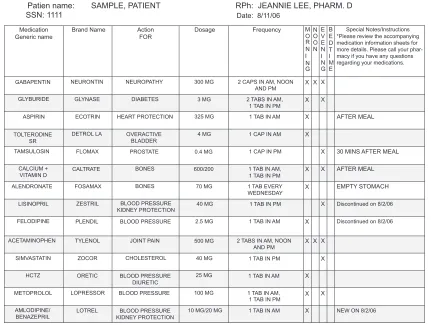
checklist of education component and tools used, in order to minimize the inter-rater variability among the pharmacists. The study pharmacists also tailored the patients’ medication regimen, taking into account their preferences and daily rou-tine, any drug–drug or drug–food interactions, and adverse drug reactions. A personalized medication chart, updated at each study session, was provided to reinforce the teaching and to be used as a reference during all health care visits (Figure 1). Accordingly, all chronic medications were custom packaged in morning, noon, evening, and/or bedtime blis-ter-packs for convenience, which allowed patients to easily access their medications and visually track adherence.1 The
follow-up appointments were scheduled every two months, during which education and blister-packs were provided.
Tailor inclusion criteria and study
duration to target population
Efforts were made to preserve generalizability of the study results, and to meet the power needed for valid outcomes when recruiting patients for FAME. A broad set of inclu-sion criteria, consisting of men and women aged ⱖ65 years
who used polypharmacy (four or more chronic medications), was chosen. A limited exclusion criteria of a presence of any condition that would make one-year survival unlikely was placed.1
Study duration is a balance among sample size, time required to demonstrate an effect of interventions, and risk of subject loss due to prolonged time to endpoint assessment. The randomized phase of the FAME trial provided insight into the required duration of an adherence intervention. Despite receiving six months of comprehensive interventions, the group randomized to resume usual care for six months reverted to near the original level of medication adherence. In contrast, the group randomized to receive continued pharmacy care sustained a high adherence rate, and was found to have further improvements in blood pressure.1 Thus, for a high-risk
elderly population, as in FAME, adherence interventions need to continue long-term and perhaps indefi nitely. On the other hand, if an education session or an adherence aid alone motivates a low-risk patient group to optimal adherence, then an initial intervention and a follow-up appointment to assess the impact may suffi ce.
SAMPLE, PATIENT Patien name:
SSN: 1111
RPh: JEANNIE LEE, PHARM. D
Date: 8/11/06
Medication Generic name
Brand Name Action FOR
Dosage Frequency E B
E X X X X X X X X X X X X X
X X X
X
X
X X
X NEW ON 8/2/06
E E T I I I D O O O R V G G N
N N N
N N M
M
Discontinued on 8/2/06 Discontinued on 8/2/06 EMPTY STOMACH AFTER MEAL AFTER MEAL
30 MINS AFTER MEAL Special Notes/Instructions *Please review the accompanying medication information sheets for more details. Please call your phar-macy if you have any questions regarding your medications.
2 CAPS IN AM, NOON AND PM
1 TAB IN AM
1 TAB IN AM,
1 TAB IN AM
1 TAB IN AM
1 TAB IN AM,
1 TAB IN AM 1 TAB IN PM
1 TAB IN PM
1 TAB IN PM
1 TAB IN PM 1 TAB EVERY WEDNESDAY 1 CAP IN PM 1 CAP IN AM 2 TABS IN AM,
1 TAB IN PM
2 TABS IN AM, NOON AND PM 3 MG 70 MG 600/200 4 MG 40 MG 2.5 MG 25 MG 500 MG
10 MG/20 MG 100 MG 40 MG 0.4 MG 325 MG 300 MG NEUROPATHY DIABETES HEART PROTECTION OVERACTIVE BLADDER PROSTATE BONES BONES BLOOD PRESSURE BLOOD PRESSURE BLOOD PRESSURE KIDNEY PROTECTION BLOOD PRESSURE KIDNEY PROTECTION BLOOD PRESSURE DIURETIC JOINT PAIN CHOLESTEROL LOTREL LOPRESSOR ORETIC ZOCOR TYLENOL PLENDIL ZESTRIL FOSAMAX CALTRATE FLOMAX DETROL LA ECOTRIN GLYNASE NEURONTIN GABAPENTIN GLYBURIDE ASPIRIN TOLTERODINE SR TAMSULOSIN CALCIUM + VITAMIN D ALENDRONATE LISINOPRIL FELODIPINE ACETAMINOPHEN SIMVASTATIN HCTZ METOPROLOL AMLODIPINE/ BENAZEPRIL
Figure 1 A sample personalized medication chart.
Patient Preference and Adherence downloaded from https://www.dovepress.com/ by 118.70.13.36 on 26-Aug-2020
Lee et al
Employ a range of outcomes linked
to meaningful clinical effects
Prior to implementing an adherence trial, the focused population’s disease states should be evaluated and measurable outcomes selected. Connecting adherence changes to improved health outcomes is crucial for acceptance of the study results and translation of the results to practice. In FAME, a hypothesis was generated that older patients achieving higher rates of adherence would have better control of their hypertension and hyperlipidemia, the two most prevalent disease states in our patients. Hypertension and hyperlipidemia are also the conditions in which the drug effects are objectively measured and linked to patient outcomes.16,17 The FAME results showed that marked
improvements in medication adherence not only equates to a 16-fold increase in proportion of the “adherent” patients (those who took at least 80% of all of their medications), but that these changes were associated with clinically-meaningful reductions in BP and LDL-C.1 Therefore, large gains in
adherence are achievable with focused interventions and in turn lead to improved health outcomes.
Win the support of the
multidisciplinary team
and the administration
When conducting an adherence intervention trial within a health care system, it is vital to gain the support of the multidisciplinary team and the administration. A targeted education to providers who are in position to recognize nonadherence can accelerate study enrollment. Prior to and during the FAME recruitment, several in-services were given to inform the various providers about the patient inclusion criteria and the referral process. The majority of the FAME subjects were referred by their primary care providers, but professionals including social workers, nurses, psychologists, and nutritionists who attended the FAME in-service also referred patients to the program.
Winning the support of the administration is critical and infl uences the successful conduction of an adherence intervention trial. For the highly labor-intensive blister-packing process and appointment booking for the study, the department of pharmacy provided us the space, durable equipments, and technician support as required. The facility’s laboratory performed the blood draws, analyzed the results, and reported LDL-C for the study subjects with an approval of the impact statement from the Department of Pathology and Laboratory Services. Do ensure that your objectives meet
the overall mission of the institution in order to secure the support needed for a successful trial.
Promote team work
Although study pharmacists served an essential role in the FAME trial, the need for a teamwork approach to conquering nonadherence was strongly underscored. A couple of key partnerships were critical in carrying out the study. The coor-dination of the FAME project prompted a paradigm shift in the outpatient pharmacy from a dispensing operation to a site of clinical pharmacy care. The blister-packing was conducted at the outpatient pharmacy, where the blister-packs were fi lled by the pharmacy technicians using a commercially available manual fi ll system and checked by the clinical pharmacists. Thus, the ongoing collaboration sustained this operation. Once the FAME program was initiated, the multidisciplinary clinicians gradually adopted and supported the program. Clear and open communications about the patients’ medica-tion regimen and reconciliamedica-tion facilitated this partnership.
Consider the potential limitations
There are several practical limitations to a wide-scale implementation of an adherence intervention trial that must be recognized and overcome, if possible, to ensure success.
• In FAME, the study pharmacists were tasked with highly time-intensive duties including patient recruitment and consent, patient and provider education, medication regimen tailoring, data collection (pill counts, BP measuring, LDL-C ordering), and blister-packing oversight. The blister-packing process was particularly time-consuming due to the manual process. Future programs should consider using a technological automation, now available, to ease this task.
• The FAME patients received all medications free of charge as part of their military health care benefi t.1 Ways
to alleviate fi nancial burden should be explored for patients with minimal to no health care coverage. Medi-cation provision through Medicare and patient assistance programs, and generic prescribing should be sought for such population.
• Because of the nature of the interventions, blinding of study subjects or research personnel for adherence trials is often diffi cult. However, concealed allocation during the randomization can be done via a central control of the ran-domization sequence. Also, subjects can be assigned using the block randomization method to ensure an even alloca-tion of the pivotal patient characteristics, such as the level of baseline adherence, which was done in FAME.1,18
Patient Preference and Adherence downloaded from https://www.dovepress.com/ by 118.70.13.36 on 26-Aug-2020
10 lessons learned from an adherence intervention trial
Seize the grant opportunities
The spark for FAME ideas was a competitive junior investigator grant awarded by the American Society of Health-System Pharmacists (ASHP) Research and Education Foundation. This grant program provided an opportunity for a junior phar-macy investigator to work with a highly experienced senior researcher. The steps involved in grant writing, protocol approval, use of funds, trial implementation, publishing the fi ndings, and most importantly caring for the study patients were learned through the process. Submission of a quarterly research report was required by the granting body, which gave us a frequent chance to evaluate the study progression. The accountability supplied by a grant source can strengthen a study through the review process and the progress report requirement, and prevent projects from becoming unfi nished.
There are several annual grant opportunities that can help stimulate adherence intervention trials. Following are examples of such opportunities geared towards new investigators and the related links:
• ASHP Foundation: Junior Investigator Research Grant; Federal Services Junior Investigator Research Grant; Pharmacy Resident Practice-Based Research Grant. See http://www.ashpfoundation.org/MainMenuCategories/ ResearchResourceCenter/FosteringYoungInvestigators/ NewInvestigatorGrantPrograms.aspx.
• American Pharmacists Association Foundation: Incentive Grants. See http://www.aphafoundation.org/programs/ Incentive_Grants/.
• American College of Clinical Pharmacy Research Institute: Frontiers Career Development Research Award; Investigator Development Research Awards. See http:// www.accp.com/frontiers/research.php.
Share the
fi
ndings
Compared to the vast and expanding literature on the effectiveness of novel drugs, only a few prospective trials enhancing adherence to them has published to date. There is a lack of evidence from randomized trials.9 Following the initial
presentation at the 2006 American Heart Association Scientifi c Sessions and the publication in the Journal of American Medical Association (JAMA),1 the impact of the FAME
fi ndings was immediate. The work received broad attention in the national media including USA Today, Wall Street Journal and Reuters, in addition to over 400 print and online articles. A media presentation (fi lmed by the JAMAVISION, the video version of JAMA) sent to news outlets around the country was believed to have reached approximately 4.5 million viewers and countless Internet views. FAME was
one of the Medscape’s Top Ten Pharmacy News that year, and we received inquiries about implementation of similar programs from practitioners in health care systems around the world. The lesson here is that the success stories of adherence intervention trials impact, not only the targeted patients in the program, but also the multidisciplinary professionals and their patients globally, if they are shared.
Conclusion
Medication nonadherence, a prevalent and penetrating problem in today’s growing older population, infl uences health care providers, health care systems, third party payers, governmental agencies, and policy makers who converge on the issue of medication provision.19 Using the ten lessons
described, pharmacists and other health care providers should develop and implement intervention trials to promote medica-tion adherence. These trials must advance current knowledge regarding adherence through practical innovations, while maintaining the ultimate focus on the optimal patient care. When JAMAVISION came to fi lm the FAME pharmacy care program, a 92-year-old patient who took part in FAME was interviewed. She exclaimed without any hesitation, “I loved the FAME program … it made my life easy!”
Disclosure
The opinions or assertions herein are the private views of the authors and are not to be construed as refl ecting the views of the University of Arizona, the Department of the Army, or the Department of Defense. The authors report no confl icts of interest in this work.
References
1. Lee JK, Grace KA, Taylor, AJ. Effect of a pharmacy care program on medication adherence and persistence, blood pressure, and low-density
lipoprotein cholesterol: a randomized controlled trial. JAMA.
2006;296:2563–2571.
2. Wolff JL, Starfi eld B, Anderson G. Prevalence, expenditures, and complications of multiple chronic conditions in the elderly. Arch Intern
Med. 2002;162:2269–2276.
3. Flaherty JH, Perry HM, III, Lynchard GS, Morley JE. Polypharmacy
and hospitalization among older home care patients. J Gerontol A Biol
Sci Med Sci. 2000;55:M554–M559.
4. Osterberg L, Blaschke T. Adherence to medication. N Engl J Med.
2005;353:487–497.
5. Sabate E. Adherence to long-term therapies: evidence for action.
Geneva: World Health Organization; 2003. p. 1–211.
6. Lutfey KE, Wishner WJ. Beyond “compliance” is “adherence”.
Diabetes Care. 1999;22:635–639.
7. Barber N. Should we consider noncompliance a medical error? Qual
Saf Health Care. 2002;11:81–84.
8. Chisholm-Burns MA, Spivey CA. Pharmacoadherence: A new term for
a signifi cant problem. Am J Health-Syst Pharm. 2008;65:661–667.
9. Roter DL, Hall JA, Merisca R, Nordstrom B, Cretin D, Svarstad B. Effec-tiveness of interventions to improve patient compliance: a meta-analysis.
Med Care. 1998;36:1138–1161.
Patient Preference and Adherence downloaded from https://www.dovepress.com/ by 118.70.13.36 on 26-Aug-2020
Lee et al
10. Peterson AM, Takiya L, Finley R. Meta-analysis of trials of
interventions to improve medication adherence. Am J Health Syst
Pharm. 2003;60:657–665.
11. Takiya LN, Peterson AM, Finley RS. Meta-analysis of interventions
for medication adherence to antihypertensives. Ann Pharmacother.
2004;38:1617–1624.
12. Haynes RB, Yao X, Degani A, Kripalani S, Garg A, McDonald HP.
Interventions to enhance medication adherence. Cochrane Database
Syst Rev. 2005;(4):CD000011.
13. Connor J, Rafter N, Rodgers A. Do fi xed-dose combination pills or
unit-of-use packaging improve adherence? A systematic review. Bull
World Health Organ. 2004;82:935–939.
14. Haynes RB, Sackett DL, Gibson ES, et al. Improvement of
medication compliance in uncontrolled hypertension. Lancet.
1976;1:1265–1268.
15. Logan AG, Milne BJ, Achber C, Campbell WP, Haynes RB. Work-site treatment of hypertension by specially trained nurses. A controlled trial.
Lancet. 1979;2:1175–1178.
16. McDonald HP, Garg AX, Haynes RB. Interventions to enhance patient
adherence to medication prescriptions: scientific review. JAMA.
2002;288:2868–2879.
17. Third Report of the National Cholesterol Education Program (NCEP) Expert Panel on Detection, Evaluation, and Treatment of High Blood Cholesterol in Adults (Adult Treatment Panel III) fi nal report.
Circulation. 2002;106:3143–3421.
18. Botelho RJ, Dudrak R. Home assessment of adherence to long-term
medication in the elderly. J Fam Pract. 1992;35:61–65.
19. Mojtabai R, Olfson M. Medication costs, adherence, and health
outcomes among Medicare beneficiaries. Health Aff (Millwood).
2003;22:220–229.
Patient Preference and Adherence downloaded from https://www.dovepress.com/ by 118.70.13.36 on 26-Aug-2020