Patron: Her Majesty The Queen Rothamsted Research Harpenden, Herts, AL5 2JQ
Telephone: +44 (0)1582 763133 Web: http://www.rothamsted.ac.uk/
Rothamsted Research is a Company Limited by Guarantee Registered Office: as above. Registered in England No. 2393175. Registered Charity No. 802038. VAT No. 197 4201 51. Founded in 1843 by John Bennet Lawes.
Rothamsted Repository Download
A - Papers appearing in refereed journals
Reynolds, A. M. 2019. On the origin of the tensile strength of insect
swarms. Physical Biology. 16 (4), p. 046002.
The publisher's version can be accessed at:
•
https://dx.doi.org/10.1088/1478-3975/ab12b9
•
https://iopscience.iop.org/article/10.1088/1478-3975/ab12b9
The output can be accessed at:
https://repository.rothamsted.ac.uk/item/8wq5q/on-the-origin-of-the-tensile-strength-of-insect-swarms
.
© 22 March 2019, CC-BY terms apply
Physical Biology
PAPER • OPEN ACCESS
On the origin of the tensile strength of insect
swarms
To cite this article: Andy M Reynolds 2019 Phys. Biol. 16 046002
View the article online for updates and enhancements.
Recent citations
On the emergence of gravitational-like forces in insect swarms
Andy M. Reynolds
© 2019 IOP Publishing Ltd
Introduction
Sparse swarms of flying insects show a high degree of spatial cohesion and are a form of collective animal behaviour; albeit one different from flocks and schools as they do not display ordered collective movements (Okubo 1986, Kelley and Ouellette 2013, Puckett et al 2014). Instead each individual insect moves erratically and seemingly at random within the swarm. The occurrence of these swarms makes it clear that group order and morphology are not sufficient to accurately describe animal aggregations. Indeed, it is now recognized that the properties of animal aggregates cannot be determined by passive observation alone; instead one must interact with them, by for example applying controlled perturbations (Ouellette 2017). This approach allows for the extraction of emergent group properties that are not directly linked to the characteristics of the individuals. Ni and Ouellette (2016) were the first to examine swarms of flying insects (the non-biting midge Chironomus riparius) in this way and did so by placing them under an effective load, i.e. by manipulating ground-based visual features, so-called ‘swarm markers’, over which swarms form. Ni and Ouellette (2016) showed that a swarm can be quasi-statically pulled apart into multiple daughter swarms which were centred over each marker once the marker separation was large enough. For intermediate separations the daughter swarms were pulled away from the centres of their respective markers and into a stable ‘neck’ region that linked them. This indicates that the swarms have mechanical properties similar to
solids, including a finite Young’s modulus and yield strength, and it shows that they lack a viscous flow regime.
Here I show how these emergent mechanical properties of insect swarms can be deduced from the simple, analytically-tractable model of Reynolds et al (2017) which is in close accord with a plethora of other (albeit passive) observations of midge swarms (Reyn-olds et al 2017, Reyn(Reyn-olds 2018a, 2018b, van der Vaart
et al 2019). I show that tensile strength can be attrib-uted to the presence of centre-of-mass movements (i.e. to heat), as documented by Reynolds and Ouel-lette (2016). This new result along with earlier results (Reynolds et al 2017, Reynolds 2018a, 2018b, van der Vaart et al 2019) shows how the suite of observed complex, emergent, macroscopic behaviours of insect swarms (Kelley and Ouellette 2013, Ni and Ouellette 2016, Sinhuber and Ouellette 2017, van der Vaart et al 2019, Sinhuber et al 2019) can be attributed to sim-ple processes and encapsulated within a simsim-ple model (Reynolds et al 2017, Reynolds 2018a, 2018b). This is significant because the development of accurate, gen-erally-applicable models is of central importance, as a check on our understanding of the processes at work within swarms.
The emergence of tensile strength
In the 1D form of the model of Reynolds et al (2017) the positions, x, and velocities, u, of insects within a swarm are determined by the stochastic differential equations
A M Reynolds
Printed in the UK
046002 PBHIAT
© 2019 IOP Publishing Ltd 16
Phys. Biol.
PB
1478-3975
10.1088/1478-3975/ab12b9
4
1
5
Physical Biology IOP
23
April
2019
On the origin of the tensile strength of insect swarms
Andy M Reynolds
Rothamsted Research, Harpenden, Hertfordshire, AL5 2JQ, United Kingdom
E-mail: [email protected]
Keywords: insect swarms, tensile strength, emergent mechanical properties
Abstract
Traditionally animal groups have been characterized by the macroscopic patterns that they form. It is now recognised that such patterns convey limited information about the nature of the aggregation as a whole. Aggregate properties cannot be determined by passive observations alone; instead one must interact with them. One of the first such dynamical tests revealed that swarms of flying insects have macroscopic mechanical properties similar to solids, including a finite Young’s modulus and yield strength. Here I show, somewhat counterintuitively, that the emergence of these solid-like properties can be attributed to centre-of-mass movements (heat). This suggests that perturbations can drive phase transitions.
PAPER
2019
Original content from this work may be used under the terms of the Creative Commons Attribution 3.0 licence. Any further distribution of this work must maintain attribution to the author(s) and the title of the work, journal citation and DOI.
RECEIVED 4 February 2019
REVISED 20 March 2019
ACCEPTED FOR PUBLICATION 22 March 2019
PUBLISHED
23 April 2019
OPEN ACCESS
A M Reynolds
du=−Tudt+σ2u
ρ ∂ρ ∂xdt+
√2B
0dW0(t)
dx=udt (1)
where T is the velocity autocorrelation timescale, σ2
u is the velocity variance, ρ(x) is the observed
swarm density profile, B0 is a constant, and dW0(t)
is an incremental Wiener process with correlation property dW0(t)dW0(t+τ) =δ(τ)dt. The first
term on the right-hand side of equation (1) is a memory term that causes velocity fluctuations to relax back to their (zero) mean value. Interactions between the individuals are not explicitly modeled; rather, their net effect is subsumed in a restoring force term, since observations have suggested that to leading order insects appear to be tightly bound to the swarm itself but weakly coupled to each other inside it (Kelley and Ouellette 2013). This restoring force is given by the second term on the right-hand side of equation (1) which ensures that the spatial distribution of the simulated insects matches observations. The third term, the noise term, represents fluctuations in the resultant internal force that arise partly because of the limited number of individuals in the grouping and partly because of the nonuniformity in their spatial distribution. The model, equation (1), is effectively a first-order autoregressive stochastic process in which position and velocity are assumed to be jointly Markovian. At second-order, position, velocity and acceleration would be modelled collectively as a Markovian process. The first order model, equation (1), is appropriate because the acceleration autocorrelation timescale is shorter than the velocity autocorrelation timescale (Reynolds and Ouellette 2016). By construction, simulated trajectories have homogeneous (position-independent) Gaussian velocity statistics. When the density profile is Gaussian, as it nearly is for laboratory swarms (Kelley and Ouellette 2013), equation (1) reduces to Okubo’s (1986) classic model for the simulation of insect trajectories. Similar models have also been used to model robotic swarms (Hamann and Wӧrn 2008).
In the presence of two swarm makers, swarms are bi-modal and could, for example, be characterised by
ρ(x) = exp Å
a 2x
2
−b4x4 ã
(2)
which has maxima at x=±a/b. For such swarms the mean restoring force term −σ2
u
ρ ∂ρ
∂x =−σu2(ax−bx3). The locations of the swarm centres do, however, fluctuate over time (Ouellette and Reynolds 2016). These fluctuations can be regarded as being ‘parametric’ noise which operationally equates to a→a+√2a1dW1(t). In this case the model becomes
du=−Tudt+σu2
ρ ∂ρ ∂xdt+
√
2B0dW0(t) +√2B1xdW1
dx=udt.
(3)
This new model corresponds to the Fokker–Planck equation
∂p
∂t +u
∂p
∂x =
∂ ∂u Å u T − σ2 u ρ ∂ρ ∂x ã
p+B0+B1x2
∂2p
∂u2
(4) where p(u, x, t) is the joint distribution of velocity and position. Here equation (4) is examined in the long-time limit as t/T→ ∞. Here this is done following the approach of Thomson (1987) who identified the conditions under which stochastic models of tracer-particle trajectories in turbulent flows reduce to diffusion-equation models as the Lagrangian velocity-autocorrelation timescale tends to zero. In this approach the unit of time is chosen so that T is small compared with unity and the unit of length is chosen so that the size of a swarm of individuals from a point source is of order unity at times of order unity. In this system of units, velocities must be large to make up for the small timescale. Moreover, because velocities are large and rapidly changing, B0 and B1 must also
be large. Simple scaling arguments indicate that the long-time limit of equation (4) can be examined by replacing T, u, B0 and B1 with ε2T,ε−1u,ε−4B0 and
ε−4B1 where ε→0 so that equation (4) becomes
∂p
∂t + u
ε ∂p
∂x =
∂ ∂u
Å
u
ε2T −
σ2u ερ
∂ρ ∂x
ã
p+ 1
ε2
B0+B1x2∂ 2p
∂u2. (5)
If a different rescaling is adopted, then it can be shown that the dispersal is not of order unity at times of order unity. Following Thomson (1987) I now look for solutions to equation (5) that take the form
p=p0+εp1+ε2p2+....
The leading order (ε−2) terms give u
Tp0+
B0+B1x2∂p0
∂u =0, i.e.
p0= c (x, t)
√
B0+B1x2
exp
Å
− u
2
2(B0+B1x2)T ã
(6) where c(x, t) is the swarm density profile predicted by the new model, equation (4).
At order ε−1
u∂p0
∂x −
σ2u
B0+B1x2
u Tρ
∂ρ ∂xp0=
∂ ∂u
Å
u Tp1+
B0+B1x2∂p1
∂u
ã
. (7)
At order ε0
∂p0
∂t +u
∂p1
∂x =
∂ ∂u Å u T− σ2 u ρ ∂ρ ∂x ã
p2+B0+B1x2
∂2p 2
∂u2
(8) which after integrating over all velocities becomes
∂c
∂t+
∂ ∂x
ˆ
up1du
Å ∂c
∂x−
1
B0+B1x2
Å
B1x2+
c ρ ∂ρ ∂x ãã =0 (9)
3
A M Reynolds
i.e. becomes the non-linear diffusion equation
∂c
∂t =K
∂ ∂x
Å
∂c
∂x− B0
B0+B1x2 Å
B1x2+ c
ρ ∂ρ ∂x
ãã
(10) where from equation (7), p1 is the solution to
u √
B0+B1x2
exp
Å
− u
2
2T(B0+B1x2) ã
= ∂
∂u
Å
u Tp1+
B0+B1x2∂p1
∂u
ã
(11)
Figure 1. Theoretical predictions for swarm density profiles match data from numerical simulations. The swarms are being pulled
away from their respective swarm markers (dashed-lines) and displaced towards the origin. The swarms therefore appear in tension with a tensile strength that increases as centre-of-mass movements increase. Predictions (solid line) obtained from equation (12) are shown for a = 0.8, b = 0.1 and B0 = 1 with B1 = 0.1 (left), 0.3 (middle) and 0.5 (right). Simulation data (●) were obtained from
equation (3) for σ2
u=1 and T = 1.
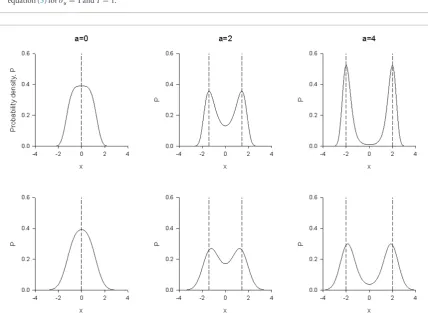
Figure 2. In the presence of parametric noise insect swarms are predicted to have an emergent analogue of a finite Young’s modulus and yield stress, and do not show a viscous flow regime. When parametric noise is absent (B1 = 0) the swarm is always localized over
the swarm makers (x=±a/b) (dashed lines) as it is pulled apart and so not in tension (upper panel). When parametric noise is present (B1 = 1.0) the swarm is put into tension as it is pulled apart as the swarms are being pulled away from their respective swarm
markers (dashed-lines) and displaced towards the origin (lower panel) This displacement decreases with increasing separation of the swarm markers. Predictions obtained from equation (12) are shown for a = 0 (left), 2 (middle) and 4 (right), and b = 0.25.
A M Reynolds
and where K=−´
up1du. Hence the non-linear
Langevin equation, equation (3), reduces to a diffusion equation in the limit t/T → ∞. The density profiles are determined by equation (9) those steady-state solution is
c(x) = √ N B0+B1x2
×exp
Å
B0(aB1+bB0)ln(B0+B1x2)−bB0B1x2
2B2 1
ã
(12) where N is normalization constant. This theoretical prediction is supported by the results of numerical simulations using the non-linear Langevin equation, equation (3) (figure 1). A directly analogous result was obtained by Okubo (1986), albeit in a different context and for diffusion models rather than for the non-linear Langevin equation, equation (3).
In the absence of parametric noise, equation (12) rightly reduces to the unperturbed density profile, ρ(x) (equation (2)). When the parametric noise, B1, is
small, equation (12) has maxima close to the maxima of ρ(x) but displaced towards the origin (figure 1). And when the relative strength of the parametric noise B1/B0>a there this a single maximum at the origin
that becomes more pronounced as B1/B0 increases
(figure 1). The swarm therefore appears to be in ten-sion with a tensile strength that increases with increas-ing B1/B0. Similarly as a pair of swarm markers are
pulled apart, two daughter swarms form that are effec-tively pulled away from their respective markers and into the neck that links them, mirroring the observa-tions of Ni and Ouellette (2016) (figure 2).This dem-onstrates that the simulated swarms, like real swarms, possess an emergent analogue of a finite Young’s mod-ulus and do not show a viscous flow regime; if they did then they would be expected to either flow back into a single swarm or to form two completely distinct swarms centred over their respective markers (Ni and Ouellette 2016). Moreover, when the marker separa-tion becomes large enough, the model predicts that the two daughter swarms become fully distinct and that individuals no longer pass between them (figure 2). The simulated swarms like the real swarms (Ni and Ouellette 2016) therefore possess yield strengths.
The results of numerical simulations (not shown) suggest that the emergence of tensile strength is a general consequence of parametric noise, arising for example when the 4th-order term rather than the 2nd-order term in the unperturbed density profile, equa-tion (2), is noisy.
Discussion
Male midges swarm to provide a mating target for females, making stationarity desirable. Ni and Ouellette (2016) were the first to show that this biological function is reflected in an emergent physical macroscopic property of the swarm; namely its tensile
strength. This emergent macroscopic mechanical property may be advantageous, in helping to stabilise insect swarms against environmental perturbations. Perturbations are inevitable in wild (natural) swarms that must contend with gusts of wind and with environmental disturbances. Here it was shown that the tensile strength of swarms can (somewhat counter-intuitively) to be attributed to centre-of-mass movements, as documented by Reynolds and Ouellette (2016) (figures 1 and 2). This may explain
how these swarms possess enhanced properties relative
to individual insects.
As the swarm size increases, centre-of-mass move-ments are determined by a balance between two com-peting effects: namely averaging over more but larger fluctuations because insects behave as if they are more weakly bound when in larger swarms (Kelley and Ouellette 2013). The results of preliminary numerical simulations (not shown) suggest that the latter out-weighs the former and that consequently centre-of-mass movements and so tensile strength increases with increasing swarm size. Insect swarms are therefore predicted to ‘solidify’ as they increase in size, mak-ing it harder to pull them apart. This new prediction could be tested in the laboratory by measuring ten-sile strength as a function of swarm size. If true, then it suggests that insect swarms effectively cool as they increase in size. Fire ants, on the other hand, which link their bodies to form dense aggregations, behave more like viscoelastic fluids, becoming stiffer and more purely elastic as the density of the ants increases (Tennenbaum et al 2016, Vernerey et al 2018). Active changes in group morphology in response to dynamic loads are also evident in dense tree-hanging clusters of honeybees (Peleg et al 2018).
The identification and understanding of the emer-gent macroscopic properties of insect swarms holds promise of a unified ‘thermodynamic’ theory of insect swarms, where one seeks to describe their mechanical-like properties in a way that does not directly refer-ence individual behaviours (Ouellette 2017). In such a theory different swarm morphologies and dynamics might be regarded as being different phases of insect swarming behaviour. This notion may help reconcile conflicting observations of insect swarms made in qui-escent laboratory conditions and in the wild (Kelley and Ouellette 2013, Attanasi et al 2014) because, as was shown here and as was prefigured in Reynolds (2018b), perturbations may drive phase transitions.
Acknowledgments
The work at Rothamsted forms part of the smart crop protection (SCP) strategic programme (BBS/OS/ CP/000001) funded through the Biotechnology and Biological Sciences Research Council’s Industrial Strategy Challenge Fund. I thank Nick Ouellette, Michael Sinhuber and Kasper van der Vaart for encouraging communications.
5
A M Reynolds
ORCID iDs
Andy M Reynolds https://orcid.org/0000-0002-7103-3841
References
Attanasi A et al 2014 Collective behaviour without collective order in wild swarms of midges PLoS Comput. Biol. 10e1003697
Hamann H and Wӧrn H 2008 A framework of space-time continuous models for algorithm design of swarm robotics
Swarm Intell. 2209–39
Kelley D H and Ouellette N T 2013 Emergent dynamics of laboratory insect swarms Sci. Rep. 31073
Ni R and Ouellette N T 2016 On the tensile strength of insect swarms Phys. Biol. 13045002
Okubo A 1986 Dynamical aspects of animal grouping: swarms, schools, flocks and herds Adv. Biophys. 221–94
Ouellette N T 2017 Toward a ‘thermodynamics’ of collective behavior SIAM News 50
Peleg O, Peters J M, Salcedo M K and Mahadevan L 2018 Collective mechanical adaptation of honeybee swarms Nat. Phys. 141193–8
Puckett J G, Kelley D H and Ouellette N T 2014 Searching for effective forces in laboratory insect swarms Sci. Rep. 44766
Reynolds A M 2018a Langevin dynamics encapsulate the microscopic and emergent macroscopic properties of midge swarms J. R. Soc. Interfaces 1520170806
Reynolds A M 2018b Fluctuating environments drive insect swarms into a new state that is robust to perturbations Europhys. Lett.
12438001
Reynolds A M and Ouellette N T 2016 Swarm dynamics may give rise to Lévy flights Sci. Rep. 630515
Reynolds A M, Sinhuber M and Ouellette N T 2017 Are midge swarms bound together by an effective velocity-dependent gravity? Eur. Phys. J. E 4046
Sinhuber M and Ouellette N T 2017 Phase coexistence in insect swarms Phys. Rev. Lett. 119178003
Sinhuber M, van der Vaart K and Ouellette N T 2019 Response of insect swarms to dynamic illumination perturbations J. R. Soc.
Interface 1620180739
Tennenbaum M, Liu Z, Hu D and Fernandez-Nieves A 2016 Mechanics of fire ant aggregations Nat. Mater. 1554–9
Thomson D J 1987 Criteria for the selection of stochastic models of particle trajectories in turbulent flows J. Fluid Mech.
180529–56
van der Vaart K, Sinhuber M, Reynolds A M and Ouellette N T 2019 Mechanical spectroscopy of insect swarms, submitted Vernerey F J, Shen T, Sridhar S L and Wagner R J 2018 How do
fire ants control the rheology of their aggregations J. R. Soc.