The International Journal of the First Year in Higher Education
ISSN: 1838-2959
Volume 4, Issue 2, pp. 75-86
August 2013
Three-tiered support: Individual, school and
institution-wide initiatives through a first year
advisor network
Helen Kemp, Ann Lefroy and Natalie Callan
Murdoch University, Perth, Australia
Abstract
The First Year Advisor Network (FYAN) at Murdoch University has a three-tiered approach offering (i) individual, (ii) school-based and (iii) institution-wide student access to support that addresses the diverse needs of the contemporary student population. The programs, campaigns and open-door policy of the FYAN, along with the unique structure of the network, have been developed to provide these varied points of access to student support. Importantly, First Year Advisors (FYAs) act as a generalised support for all students and as a hub to accessing specialised support at the University. This paper highlights the range of initiatives developed by the FYAN and emphasises that while outreach contact is a successful way to promote access to support, many students still self identify as at-risk and will access FYAs for direct and referral advice.
Please cite this article as:
Kemp, H., Lefroy, A., &. Callan, N. (2013). Three-tiered support: Individual, school and institution-wide initiatives through a first year advisor network. The International Journal of the First Year in Higher Education, 4(2). 75-86. doi: 10.5204/intjfyhe.v4i2.172
This article has been peer reviewed and accepted for publication in Int J FYHE. Please see the Editorial Policies under the ‘About’ section of the Journal website for further information.
Introduction
Widening participation and increasing the number of non-traditional and low socio economic status (low SES) students in higher education has been a focus for Australian universities, particularly since the Review of Australian Higher Education
(Bradley, Noonan, Nugent & Scales, 2008). The issues surrounding student transition, support and retention have been widely researched (Kift, 2009; Marrington, Nelson & Clarke, 2010; Tinto, 2001; Wilson, 2009). The literature recognises that many Australian universities are facing student disengagement and high attrition rates in many disciplines of study. Students are entering tertiary study through a variety of non-traditional and alternative pathways, and many of these students are withdrawing within their first year of study (Brinkworth, McCann, Matthews & Nordstrom, 2009). This can be attributed to a wide range of factors and the issues that students face within their first year of study at a higher education institution. Therefore “universities need to initiate, support and promote student personal, social and academic engagement in the early weeks of first year to retain students” (Nelson, Duncan, & Clarke, 2009, p. 2). The first year experience literature indicates that student populations at universities locally, nationally and internationally are becoming more diverse (Yorke & Thomas, 2010), with an increase in students entering higher education through non-traditional pathways. The student population at Murdoch University (Box, Callan, Geddes, Kemp & Wojcieszek, 2012) has the highest proportions of mature-age, low SES, regional/remote, part-time and external students among the Western Australian universities, and the diversity continues to grow as it widens the participation of students (Department of Education, Employment and Workplace
Relations, 2011). To reach the contemporary cohort of first year students, a three-tiered approach has been developed at Murdoch: (i) individualised, (ii) school-based and (iii) institution-wide approach.
The First Year Advisor Network (FYAN) was introduced at Murdoch in January 2011, after an internal review (Martin-Lynch, 2009) highlighted the increasing attrition rates and the necessity to develop a formal approach to the first year experience. The unique structure of the FYAN (Box et al., 2012) is fundamental to its ability to achieve these objectives. The network functions as a cohesive group to provide a consistent and coordinated approach to student support at all three tiers and works together to provide support and to promote access to the support available from other parts of the University. The network, as a cohesive group, provides a consistent and coordinated approach to student support at all three tiers and works together to promote access to the support available. The need for this holistic approach to support for students is outlined by Nelson et al. (2009), who state that providing personal, social and academic support are vital for successful first year experience programs. The range of support provided and promoted by the FYAN creates a “building blocks” approach to first year transition, recognising that each individual will access support differently.
Promoting awareness of the
First Year Advisors
University to staff and students began with the inception of the FYAN. Promotion of the FYAN is strategically timed throughout the first year student’s journey, from accepting their offer at Murdoch to completing their first year of study. In the lead up to semester, the admission letter from the University encourages students to contact their FYA if they have questions regarding any aspect of their enrolment process; First Year Advisors attend Early Enrolment Days in the two weeks leading up to Orientation Week (O Week); and students meet their FYA during orientation sessions, whereupon they are given material displaying the FYA logo, contact details and a description of the type of issues FYAs can assist with. Promotion of the FYAN continues throughout the first four weeks of the semester where students attend UniEdge (explained further in Promoting access at the institution and school level).
FYAs attend all first year lectures within the first four weeks of semester (known as “lecture bombing”), encouraging students to develop help-seeking behaviours and to contact their FYAs. At this time the first year Facebook page is also opened, presenting an informal, quick way for students to ask questions regarding any aspect of university life and to receive timely information regarding common transition questions. Each FYA also contacts all their first year students via email weekly with a newsletter containing important School and University information.
In a survey of students in their first year, conducted in Semester 1 (S1) 2012, 99.3 % (n=401) said they were aware of the FYA(s) in their school. One student commented:
I found having a designated person to go to with questions very helpful, especially being new to university
studies. My FYA was very keen to help and guided me in the right direction when needed.
As part of the ongoing promotion of the network, the FYAs created a logo image of a helping hand (Appendix A) which is recognisable to first year students as a safe place to find personalised support. The FYAN developed branded postcards which are given to students at the School Orientation Day. Postcards are also distributed throughout the University at all support service points. This encourages students to associate their School FYA with all areas of support at the University. It also enables students to find their School FYA’s contact details at a multitude of locations across campus. The FYA logo is displayed on office doors of all FYAs and throughout the school buildings branded signs direct students to their FYA.
After two years, the FYAN is now embedded in the University staff culture ensuring that relevant University staff are aware of the support provided by FYAs. This has been achieved formally and informally through information sessions hosted by the FYAN for academic staff, self promotion and informal discussions with School staff members. Staff throughout Murdoch direct students to contact their FYAs, who they know will answer many of their students’ questions or will direct them to appropriate support service. In 2012, FYAs have recorded 378 direct referrals from staff members across Murdoch. As one academic staff member stated in a staff survey in S1, 2012:
Table 1: Overview of support promoted via campaign contact in 2012
Support promoted Number of incidents (%)
FYA support 11,305 (87.0)
Academic support 1,004 (7.7)
Skills support 374 (2.9)
Administrative support 206 (1.6)
Life support 105 (0.8)
Total 12,994
also have informed advice on the issues of transition in our School.
Promoting access at the
individual level
At an individual level, the FYAs interact with students in two main ways. First, students initiate contact with their FYA as a result of the information described above—the open door policy of the FYAs
gives students the necessary confidence to approach their FYA directly. Second, the students may be contacted by their FYA in an outreach capacity as a result of being part of bespoke and timely phone campaigns which target students who may be at risk of disengaging from their studies (Box et al., 2012). While academic staff initially raised fears of driving students away by unwanted contact, as one student explained in a survey inS1 2012, outreach calls often open up a channel of communication and encourage students to seek further help:
(My FYA) was an amazing help, at first I didn't think I could go to her for help, then I received a phone call from (her) and we made an appointment and sat
down and talked about all of my issues and how I could resolve them. In the end, (she) helped me to resolve my problem and I am now very comfortable with the position that I am in.
In 2012, there were 12,994 incidents where FYAs contacted students for different campaigns. These are recorded through the RightNow software program. Of the total number of incidents, only 22 incidents were recorded as the FYA being
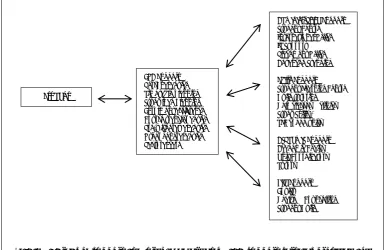
Figure 1: Areas of support at Murdoch highlighting FYA support services provided and their link between students and support services
FYAs contact students to offer them direct advice and promote the appropriate support when required. Throughout the promotion of the FYAN, students are also encouraged to initiate contact with their FYAs via email or phone or to drop in to their FYA’s office if they require assistance. The high profile, approachability and open door policy of the FYAN has resulted in a large number of student-initiated contact. In 2012, there were 5,353 incidents of student-initiated contact with FYAs. Table 2 indicates the initial mode of contact between student and FYA. These figures highlight a considerable number of contact initiated by students (28% of the total incidents dealt with in 2012), also emphasising students’ preference to initiating contact via email.
A wide range of administrative, skills, academic and life supports have traditionally been available to students at Murdoch. However, FYA promotion of these supports has increased students’ access to them. For example, attendance at the co-curricular Chemistry Clinic at Murdoch has shown an increase in S1 attendance since the implementation of the FYAN (S1 2011: 79 students, S2 2011: 85 students, S1 2012: 159 students, S2 2012: 76 students). The Academic Chair for Chemistry, Mineral Science and Extractive Metallurgy, Dr. Leonie Hughes, who coordinates the Chemistry Clinic, credits the increase in attendance at these clinics, which have a direct impact on student performance, to the advice offered by FYAs through the at-risk campaigns.
FYA Support
Personal advice Timetable planning Study load planning Enrolment assistance Course transfer advice Pre-withdrawal advice Other general advice Pastoral care
Administrative Support
Student Centre International Office IT Support Placement Office Advanced Standing
Skills Support
Student Learning Centre Guild tutoring Help classes & clinics Study Skills + TLC coded units
Academic Support
Academic Chairs Unit Coordinators Tutors
Life Support
Equity
Health & Counselling Student Guild
Table 2: Mode of contact chosen by students when initiating contact with FYAs
Mode of contact Number of incidents (%)
Call 1,007 (18.8)
Email 2,896 (54.1)
Walk-In 1,450 (27.1)
Total 5,353
Table 3: Incidents related to advice given by FYAs
Support Offered Number of incidents (%)
Administrative support 457 (8.0)
FYA support 3,459 (60.4)
Skills support 223 (3.9)
Academic support 1381 (24.1)
Life support 208 (3.6)
Total 5730
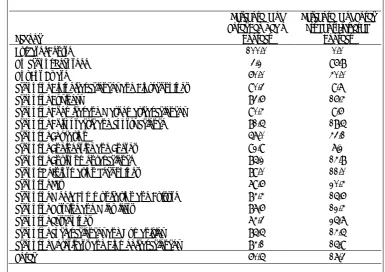
Table 3 provides an overview of outcomes of student-initiated contact with FYAs in 2012. This table shows that over 60% of the enquiries from students can be dealt with by the FYA directly and no referral to other services is required. It is also evident from the table, that students require a large range of support from other services within the institution. The FYAs are able to effectively direct students to these services. In 2012, 2,323 students contacted their FYAs for support, despite never being part of a contact campaign or showing signs of disengaging from their studies. FYAs encourage student-initiated contact and promote their open door policy through the various programs and promotions they offer. Table 4 highlights that the number of
outreach contacts from FYAs, and student-initiated contacts, varies between schools. This data strengthens the argument that
Table 4: Types of contact favoured in different schools
School
Percentage of Total Campaign
Contact
Percentage of Total Student-Initiated
Contact
Kulbardi Centre 100.0 0.0
No School Recorded 3.2 96.8
Not For Award 60.0 40.0
School of Biological Sciences and Biotechnology 90.3 9.7
School of Business 83.6 16.4
School of Chemical and Mathematical Sciences 90.4 9.6
School of Chiropractic and Sports Science 81.5 18.5
School of Education 57.0 43.1
School of Engineering and Energy 92.9 7.2
School of Environmental Science 85.2 14.8
School Of Information Technology 89.0 11.0
School of Law 79.6 20.4
School of Media Communication and Culture 84.4 15.6
School of Nursing and Midwifery 87.6 12.4
School of Psychology 74.3 25.7
School of Social Sciences and Humanities 85.5 14.5
School of Veterinary and Biomedical Sciences 84.1 15.9
Total 71.6 28.4
Promoting access at the
institution and school level
The FYAN has developed a wide range of coordinated programs and initiatives aimed at supporting all first year students. Whereas other institutions have implemented transition programs that are solely school-based or centrally located (Burnett & Larmar, 2011), FYAN-initiated programs aim to create supportive learning environments by connecting students to academic skills, administrative and life supports through programs coordinated at both the institution and school tier. Broadly, research into the first year experience indicates that students who feel supported by their university at
both a personal and academic level are more satisfied with their university experience and have higher levels of individual competence (Kuh, Kinzie, Buckley, Bridges & Hayaek, 2007; Reason, Terenzini, & Domingo, 2007). All levels are crucial for promoting access.
and (iv) a first year online student portal, entitled My First Year.
Orientation Week
The FYAN are responsible for the coordination and implementation of the Course Orientation sessions that are provided for all students in each school during the week before semester starts. FYAs work in collaboration with academic staff from their school and from the University’s support services to offer students an informative, engaging and meaningful introduction to their School and Murdoch. The FYAN pools knowledge and resources to develop a general framework for the Course Advice Sessions which is adapted for the needs of each School with the aim of ensuring students have access to supports and services that are essential during their first few weeks of semester.
School-based Orientation session provide study advice, outline course requirements, discuss expectations of university and appropriate work/study balance regimes – all of which have been shown to lead to improved student outcomes (Cope, 1978; Crockett, 1978; Tinto, 1975; Savage & Smith, 2007-2008). An FYA is usually the first staff member to greet new students at Orientation. From the beginning of their first year experience, students know they can go directly to their FYA to access a variety of supports.
Feedback on the structure of Orientation from S1 and S2 2012 was positive.
This was so beneficial and helped me to be aware of the various facilities and staff at the University. It allowed me to feel more like the member of the uni community rather than just a number.
Overall it was a very informative day. All the information was delivered in a
manner which was in no way over
whelming in regards with what to expect.
In the S1 2012 Orientation survey, 88.2% (268) of the 304 first year respondents agreed that attending O Week made them feel more prepared for their studies at Murdoch; while 88.3% of the 308 students who answered the questions agreed that attending O Week made them feel less anxious about their studies. In S2 2012, 93.7% (134) of the 143 respondents felt that the School Course Advice session was either “excellent” or “good” at letting them know about support services available on campus.
UniEdge transition program
Table 5: Number of student who were “Happy” or “Very Happy” in reaction to UniEdge
Number of students (%) S1 2012 S2 2012
Glad they attended 39 (97.5) 18 (94.7)
Felt more confident to approach support services 37 (92.5) 18 (94.7)
Recommend UniEdge to other new students 38 (95.0) 19 (100.0)
The UniEdge program was piloted in S1 of 2012 and consisted of a series of one-hour seminars offered during the first four weeks of semester. Sessions were designed to be fun and interactive and to help students navigate Murdoch. In S2 2012, the program was adapted based on an analysis of survey data gathered from student attendees, FYAs and others who provide support services, Unit Coordinators and tutors for Foundation Units. This resulted in a shortened version with a greater focus on skills.
Regardless of which iteration of UniEdge
they have undertaken, student feedback has been very positive (Table 5).
Student and staff comments on the program were also very positive:
I found it useful getting to know about FYAs and how there are different ones for individual areas. Most enjoyable and good to learn about the services available.
A good concept to get students engaged in University culture – to most students it helped raise awareness of the services.
A more flexible, “expo” style format for UniEdge is being devised for S1 2013. This format was developed with the intention of attracting more first year students, as there was some concern that the formality of the
seminar style was discouraging students from attending or favouring students with high levels of motivation (Astin, 1999).
School-based Murdoch Peer
Mentoring Program
The FYAN introduced and implemented an institution-wide, school-based Peer Mentoring Program in 2011. Since then, the program has expanded and achieved considerable success. It commences in Week 3 of semester and continues throughout the semester and builds on both the Orientation and UniEdge
“drift away from university life” (Nelson et al., 2009) that can occur in a student’s first semester.
In S1 2012, 128 mentors and 480 mentees participated in the program. These students were invited to complete an online survey. Student feedback on the mentoring program has been very positive.
It allows you to meet other members of the same School and in doing so help [sic] you create a network of people you can rely on for help and support. By having students that have been in your situation run the mentoring system you gain a thorough insight into what is expected from you as a student and a different perspective of looking at the work you must complete.
Provides a more personal platform for students to enquire about issues/problems with more senior students in the university.
I feel that the program builds a bit of culture within the School and that it provides way for students to meet people who have been where they have. I enjoyed it as I felt like I was helping out the students.
When mentees were surveyed, 95.7% (n=71) said they would recommend the Peer Mentoring Program to first year students. When asked what they found useful or enjoyed about the program, 53.6% said it helped them to fit in, 47.8% enjoyed accessing resources and advice on university services and 82.6% said they benefited from gaining knowledge and skills from experienced students. In addition, 68.3% of mentees found the mentoring session either “extremely useful” or “very useful” at aiding their transition to university.
Online student portal My First
Year
“My First Year” is an online portal developed in 2012 and made available to students from S1 2013. It is accessible through the Murdoch website and has been developed specifically for all first year students at Murdoch. It is designed to reflect the fact that today’s students tend to depend on fast and convenient access to information and support though mainstream technologies such as the Internet (Kennedy, Judd, Churchward, Gray & Krause, 2008). “My First Year” offers a flexible and user-friendly way for students to access support at Murdoch. It includes content aimed at easing a student’s transition to the University and provides one access point to all current information, contact details and procedures that will help first year students become active participants in the university community. “My First Year” is promoted in the lead-up to and during Orientation Week and is likely to be one of the first channels of communication a student opens with the University. It is available to all first year students and may prove especially valuable for external students unable to attend on-campus events. Although no survey has yet been conducted to determine this, anecdotal evidence suggests that first year students studying externally are finding it a valuable resource.
Conclusion
This paper has presented the Murdoch First Year Advisor Network’s three-tiered approach to supporting students and promoting access to academic skills, administrative and life supports and services. Through offering a variety of initiatives at the individual, school and institutional tier, the FYAN ensures that FYAs are catering to Murdoch’s diverse student cohort. As a cohesive network of individuals, with representation from all the schools at Murdoch, the FYAN is able to ensure a consistent and systematic approach to promoting access for all first year students that accounts for their specific needs in each school.
References
Astin, A. (1999). Student involvement: A developmental theory for higher education.
Journal of College Student Development 40(5), 518-529. Retrieved from: https://www.middlesex.mass.edu/tutoring services/downloads/astininv.pdf
Bradley, D., Noonan, P., Nugent, H., & Scales, B. (2008).
Review of Australian higher education: Final report. Canberra, Australia: Commonwealth of Australia. Retrieved from: http://www.voced.edu.au/content/ngv321 34
Boin, K., & Lever, R. (2008, July). ‘You are Here’: The continuum of student engagement as a tool for coordinating transition. A “Nuts and Bolts” presentation at the 11th Pacific Rim First Year in Higher Education Conference, “An Apple for the Learner: Celebrating the First Year Experience.” Hobart, Australia.
Retrieved from: http://www.fyhe.com.au/past_papers/pap
ers08/FYHE2008/content/pdfs/9B.pdf. Box, G., Callan, N., Geddes, T., Kemp, H., & Wojcieszek,
J. (2012). University first year advisors: A network approach for first year student transition and retention. A practice report.
The International Journal of the First Year in Higher Education, 3(1), 91-100. doi: 10.5204/intjfyhe.v3i1.107
Brinkworth, R., McCann, B., Matthews, C., & Nordstrom, K. (2009). First year expectations and experiences: Student and teacher perspectives. Higher Education,
58(2), 157-173. doi: 10.1007/s10734-008-9188-3.
Burnett, L., & Larmar, S. (2011). Improving the first year through an institution-wide approach: The role of first year advisors. The International Journal of the First Year in Higher Education, 2(1), 21-35. doi: 10.5204/intjfyhe.v2i1.40.
Cope, R. (1978). Why students stay, why they leave.
New Directions for Student Services, 3, 1-11. doi: 10.1002/ss.37119780303.
Crockett, D. (1978). Academic advising: A cornerstone of student retention. New Directions for Student Services, 3, 29-35. doi: 10.1002/ss.37119780306.
Department of Education, Employment and Workplace Relations. (2011). MyUniversity.
Retrieved from: http://myuniversity.gov.au/
Kantanis, T. (2000). ‘The role of social transition in students’: adjustment to the first-year of university. Journal of Institutional Research,
9 (1) 100-110. Retrieved from: http://www.aair.org.au/articles/volume-9- no-1/9-1-the-role-of-social-transition-in- students-adjustment-to-the-first-year-of-university
Kennedy, G., Judd, T., Churchward, A., Gray, K., & Krause, K.-L. (2008). First year students' experiences with technology: Are they really digital natives? Australasian Journal of Educational Technology, 24(1), 108-122.
Retrieved from:
http://www.ascilite.org.au/ajet/ajet24/ke nnedy.pdf
Kift, S. (2009). A transition pedagogy for first year curriculum design and renewal. ALTC First Year Experience Curriculum Design Symposium 2009, Brisbane, Australia: Queensland University of Technology.
Retrieved from: http://www.fyecd2009.qut.edu.au/resourc
es/PRE_SallyKift_5Feb09.pdf
Marrington, A., Nelson, K., & Clarke, J. (2010, June). An economic case for systematic student monitoring and intervention in the first year in higher education. A “Nuts and Bolts” presentation at the 13th Pacific Rim First Year in Higher Education Conference, “Aspiration – Access – Achievement.” Adelaide, Australia. Retrieved from: http://www.fyhe.com.au/past_papers/pap ers10/content/pdf/6D.pdf
Martin-Lynch, P. (2009). Student retention: Report and recommendations. Student, Life and Learning, Murdoch University. Perth, Australia.
Nelson, K., Duncan, M., & Clarke, J. (2009) Student success: The identification and support of first year university students at risk of attrition. Studies in Learning, Evaluation, Innovation and Development, 6(1), 1-15.
Retrieved from: http://sleid.cqu.edu.au/viewissue.php?id=
19
Reason, R., Terenzini, P., & Domingo, R. (2007). Developing social and personal competence in the first year of college. The Review of Higher Education, 30(3), 271-299. doi: 10.1353/rhe.2007.0012.
Savage, J., & Smith, A. (2007-2008). General and specific goal orientations as correlates of adult student degree completion: Lessons from the Community College of the Air Force. Journal of College Student Retention,
9(4), 461-485. doi: 10.2190/CS.9.4.d. Spady, W. (1971). Dropouts from higher education:
Toward an empirical model. Inter-change,
2(3) 38-62. doi: 10.1007/BF02282469 Tinto, V. (1975). Dropout from higher education: A
theoretical synthesis of recent research.
Review of Educational Research, 45(1), 89-125. doi: 10.3102/00346543045001089. Tinto, V. (1993). Leaving college: Rethinking the causes
and cures of student attrition. Chicago, IL: University of Chicago Press.
Tinto, V. (2001). Rethinking the first year of college: Higher Education Monograph Series. New York, NY: Syracuse University.
Wilson, K. (2009). The impact of institutional, programmatic and personal interventions on an effective and sustainable first-year student experience. Keynote address presented at the 12th Annual Pacific Rim First Year in Higher Education Conference, “Preparing for Tomorrow Today – The First Year Experience as Foundation.” Townsville, Australia. Retrieved from: http://www.fyhe.com.au/past_papers/pap ers09/ppts/Keithia_Wilson_paper.pdf Yorke, M., & Thomas, L. (2010). Improving the