elicitation. Journal of Applied Psychology and Social Science, 3 (2). pp. 13-38.
Downloaded from: http://insight.cumbria.ac.uk/id/eprint/3654/
Usage of any items from the University of Cumbria’s institutional repository ‘Insight’ must conform to the following fair usage guidelines.
Any item and its associated metadata held in the University of Cumbria’s institutional repository Insight (unless stated otherwise on the metadata record) may be copied, displayed or performed, and stored in line with the JISC fair dealing guidelines (available here) for educational and not-for-profit activities
provided that
• the authors, title and full bibliographic details of the item are cited clearly when any part of the work is referred to verbally or in the written form
• a hyperlink/URL to the original Insight record of that item is included in any citations of the work
• the content is not changed in any way
• all files required for usage of the item are kept together with the main item file.
You may not
• sell any part of an item
• refer to any part of an item without citation
• amend any item or contextualise it in a way that will impugn the creator’s reputation
• remove or alter the copyright statement on an item.
The full policy can be found here.
An Interpretive Phenomenological Analysis Exploring the Concepts of Happiness as an Emotion, in a Millennial Generation, Using Photo Elicitation.
Ciara Bottrell
University of Cumbria
Abstract
The millennial generation, a generation marked as self-entitled; having to grow up surrounded by social media and still seek happiness on a day to day basis (Park et al., 2014). Social media in many ways makes happiness much more difficult to achieve for the younger generations (Bertoncini & Schmalz 2013). This research aims to explore millennials’ lived experience of happiness from their own perspective. Using photo elicitation, this study aimed to delve into what the modern definitions of happiness are and what makes a millennial happy. Using disposable cameras and semi-structured interviews, an Interpretive Phenomenological Analysis (IPA) was conducted to explore the lived experiences of happiness in a millennial generation. Themes were explored; the main ones being escapism, nostalgia, accessibility and acceptance in negativity. These themes were supported by current literature and show that millennials’ happiness is complex and unique to each individual. Even though the participants gain happiness from feeling connected, social media and growing up alongside technology can be overwhelming and the findings from this study suggest that there is a need for escape in order to feel happiness in a fast paced and technologically driven society.
Key Words: Happiness, millennial, escapism, nostalgia, interpretative phenomenological
For many years theorists have tried to define the word “happiness”. This has been found to be very difficult because the emotion is completely subjective (Seligman, 2002). In 320 BC Aristotle stated that a persons’ view of happiness is supported by popular beliefs, meaning that we only view happiness as an emotion because we have been told it is one (Aristotle & Barnes, 1976). The way happiness is measured today is controversial, many believe that surveys asking people if they are happy or not are too impermeable and close-minded (Haybron, 2013). In society and Western culture today people are told on a regular basis that they must seek happiness in order to obtain certain goals and life satisfaction (Shapira, 2016), this to many psychologists is seen to be damaging because if a scientifically measured definition cannot be obtained, the use in looking for something so fleeting can cause much disappointment and even mental harm (Haybron, 2013).
around the world is different, sometimes it can be the same because of individual differences and the diversity of people (Shapira, 2016).
One emotion that is seemed to be closely linked to happiness is nostalgia. This emotion occurs when an individual recalls something from their past that used to make them happy, common occurrences are usually around music and other sensory activities (Barret, Grimm, Robins, Wildschut & Constantine, 2010). One study focused on nostalgia and music and measured the frequency of nostalgia through asking the participants what they felt whilst listening to a particular song. The results found that nostalgia proneness was found in all the participants showing that nostalgia is a powerful emotion linked to happiness and should be taken into consideration when researching happiness and the origins of it as an emotion (Barret et al., 2010). Some would also argue that nostalgia is an emotion that is linked more to sadness rather than happiness due to an undesirable present compared to the past (Greenberg, Koole & Psyszczynski, 2004). However, others have suggested that nostalgia has more positive connections than negative, and still needs to be fully explored in a psychological area concerning this connection in order for researchers to gain a better understanding of nostalgia and how it affects happiness (Constantine, Wildschut, Arndt & Routledge, 2008).
The millennial generation is becoming more prominent in the media, with articles
explaining how they are the ‘self-entitled generation’, generation Y, the needy and high
the results were compiled similarly to Park et al., (2014) study, students were given a survey to complete and the authors found that Millennials seem to focus on happiness and a life that requires meaning (Baumeister et al., 2012). This study also found suggested younger Millennials have a higher level of empathy and are more concerned about others wellbeing than their own, with little to no interest in material goods (Baumeister et al., 2012). Although these studies are conflicting, they show the two sides to a millennial generation. On one, a self-entitled, narcissistic, moody and sporadic teenager who is only concerned for their material possessions and not much else (Park et al., 2014). At the other end of the spectrum can be found a humble, empathetic happiness seeker who wants their life to be meaningful and make their mark upon the world (Baumeister et al., 2012).
Aims of the Current Study
The aim of the current study was to explore how millennials interpret happiness through their own experiences; it will give them a voice that in most studies, they do not have (Baumeister et al., 2012). As happiness is such a complex and subjective emotion (Shapira, 2016), it is hard to even gather a definition, so trying to universalise a concept of happiness to a worldwide population is problematic (Seligman, 2002). This study instead aimed to gain an understanding of the emotion of happiness from an individualistic and subjective level, applying it to personal belief systems and a study that was led by the participants themselves. This study aimed to explore existing theories of happiness and apply them to the overall experience of a millennial generation living in the 21st century, the age of technology and change.
Method
Design
Participants
The participants for this study were recruited using social media through a participation poster, which included information about the study and what they would be asked to do. The sample size for this study is small. As IPA is an idiographic approach, it requires small samples to create larger details (Smith et al., 2009). The homogenous sample of four used are aged between 18-24, as the latest and last group in the millennial generation and are therefore much more focused on in the media (Baumeister et al., 2012).
Ethics
There are many ethical considerations to take into account when allowing participants to explain their experiences of happiness. To make sure they were safe and comfortable with the study participants were given an information sheet before the study began to inform them about the aims of the study and what they would be asked to do. They were then given a consent form that allowed them to show the researcher that they understood the study fully and were happy to take part and that they understood that they could withdraw from the study at any time, these forms were constructed under the guidelines of Smith et al. (2009). Before the interviews were conducted the participants were allowed some time to ask the researcher any questions they needed the researcher then explained that the interviews were semi structured. If they wished to remove any photos from the study they could and they were then asked to number them in whatever order they pleased. The researcher made sure that the participant was comfortable and happy with the photos they had taken before beginning the interview process. They were also told that they can stop the interview at any point be it that they get upset or tired. After the interview participants were told that their names would be changed because of confidentiality. Because the study used photo elicitation as its main data gathering technique, the participants were briefed beforehand not to include photographs of nudity, drugs and violence such as weapons and inappropriate material. Whilst the data collection took place, guidelines were followed from a successful photo elicitation study in which participants were comfortable and happy to take part at all times (Shell, 2015).
Procedure
fourteen semi structured questions were written before the interview began but unstructured questions were added due to the conversation thread of the interview and when further exploration of a statement was required. Participants took from eight to thirteen photos and they were asked to analyse each for as long as they wanted to. The main interview questions and style were constructed using the guidelines from Smith et al. (2009) giving example
questions such as ‘Would you say that you identify with a millennial generation?’ and ‘What
is your concept of happiness?’. Reflexivity
Whilst creating this study I was very aware of my influence. With this in my mind I made sure that parts of the study, especially the interview process were not marked by my own experiences, but the participants at all times. When looking so deeply into such a complex emotion you tend to find yourself questioning your choices a lot, not only during this study but just in your life. My perspective of happiness was always very black and white before I started this study and I think that influenced it a bit, thinking I would get equally black and white results but I was pleasantly surprised by the deep and complex emotions I was faced with from my participants. Although this study was a very prominent experience for me, I tried as much as I could to step back and allow the results to explain my study without being biased by my own views.
Analysis and Findings
Themes
Theme 1: Accessibility
All four participants spoke about how accessibility to other people and certain activities is important towards their happiness.
Fig.1Accessibilty - Wireless Network Router
Participant one; Michael took a photograph of his wireless network router.
“I’m sure with most of the people in my generation revolves around internet and being able to access whatever information you want at any point of any time no
matter where you are”
This quote suggests that the participant believes that Internet access is an important part of his
generation’s happiness. Also the ease of access to the internet in any location is another
important factor.
“I’m sure many other people’s lives now in the modern world it is a necessity to have
rather than a luxury almost I’d probably go as far to say it’s not a luxury it is a
necessity”
The participant continues to stress the importance of the Internet and for him personally, even stating that he believes it is seen as a necessity for a millennial’s happiness rather than a luxury. This suggests that the reason the Internet is so important to this particular generation is first, the ease of access anywhere, anytime and secondly, the proficiency of the Internet and the benefits that come with it.
Here it is clear and suggests that this participant believes that if he did not have the Internet in his life day to day, he would not be as happy as he is now. Meaning that in this particular case the Internet is a fundamental part of one person’s happiness. It has such a huge influence on
somebody’s life that they feel they would be unhappy without it.
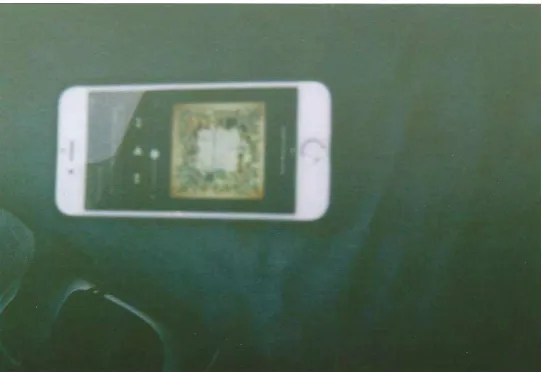
Fig. 2 Accessibility Phone
Participant two; James decided to take a picture of his phone.
“I think that’s the great thing about the phone is that it allows connection wherever you
are in the world”
This suggests that being socially connected makes James happy. Being able to contact people regardless of his location is particularly important to his happiness. This could be for his state of mind or it could be the need for him to stay connected and in-the-loop with his friends and family. Suggesting that feeling involved is another aspect to accessibility. James feels happier when he is able to be socially connected with others. This could come from the use of social media in a millennial generation.
“I think that it’s just like it’s that instant gratification like you just need to respond very
In this particular conversation, the participant was on the subject of social media and happiness. He exclaimed that social media is fast and the concept of writing a status and getting noticed for it gives you instant gratification which in short, makes him happy.
“I think they’re not real happiness to me because when you upload something I think
you almost have that fear you’re not gonnaget any likes and it’s when you do get loads
of likes it’s kind of relief more than happiness”
This implies that it is difficult to establish what it is about social media that provides happiness or whether it provides something else that is quicker to obtain but is completely ephemeral and fleeting.
“I don’t think you can do anything without being judged”
Relating to social media again, the participant acknowledges that in today’s society is hard to stay anonymous and not be judged for actions partaken on a daily basis.
“we compare ourselves against everyone else and it’s horrendous”
The participant acknowledges that in an age of social media it is hard not to compare each other, suggesting that this could cause distress and a distraction from what it is to feel truly happy.
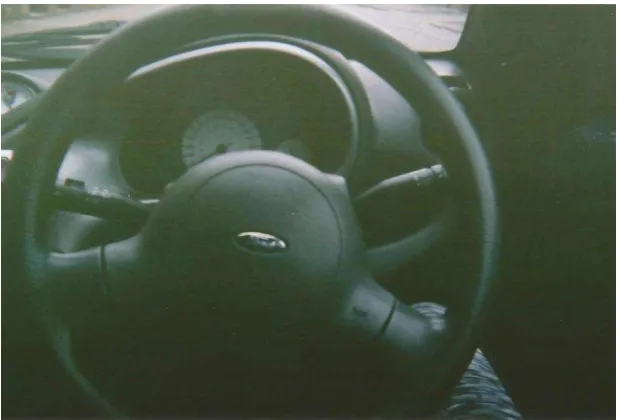
Fig. 3 Accessibility - Car
Participant four; Catrin decided to take a picture of her car.
“if you see something that you think aw I’d really like to do that you can actually go and
do it”
This suggests that Catrin’s car is important to her because it allows her to be more spontaneous and travel to places where she could not go without her car. This is another form of accessibility that is important to her happiness, being able to go anywhere at any time creates a sense of freedom and with freedom Catrin feels happier. Although this aspect of accessibility is different from the Internet and social media aspect it still allows the participant to feel like they can stay connected to things, be it socialisation or just the knowledge that they can travel at their own will and in their own time. Being accessible and connected is an important part of millennial happiness.
Theme 2: Nostalgia
All four participants spoke about nostalgia and how similar it is to happiness. Although James’ phone brings about the theme of accessibility, there is a part to it that is nostalgic to him.
“there is music on my phone now that I remember listening to as a kid which I really,
This suggests that James likes to listen to the music he listened too whilst growing up because of the nostalgic feelings it gives him. This also implies that James listens to this music and uses his feelings of nostalgia as a form of comfort, making him happy and reminiscent.
Fig. 4 Nostalgia Games Console
Michael took a picture of his games console.
“it’s quite a like nostalgia thing as well with having the game cube cause that was quite
an old err console erm which I had like when I was younger”
This shows that Michael can recognise his feelings of nostalgia and knows the reasons why his games console makes him happy.
“…showing how much I’ve grown up with like having these things around me there
was a point in my time where that was probably like my only interest”
Michael is reminiscing about the past and how gaming was one of the only hobbies that made him happy. Suggesting that he kept the games console because it still gives him the same feelings of happiness to this day.
“With the millennial generation that almost has again a nostalgic feeling about having
like these permanent solid objects of things and it’s coming back again”
although millennials are growing up in a technological society, they still have the need to obtain solid objects that remind them of their past such as a DVD or CDs.
“…there’s a certain group within the millennial society which is like having this like
nostalgia from when it was, when we were younger”
“I think there’s a certain like rule within the millennial society which is bringing this
idea back of having erm proper objects and I definitely say that and within that group
as well”
Michael believes that there is a certain unwritten rule in his generation about keeping hold of things that remind them of their past because they make them happy and bring about the feelings of nostalgia. This need for nostalgia could be because it is close and very similar to the feelings of happiness for some people. It could also suggest however; that this generation may not be happy with the ongoing events and feel a need to resort back to the past where it was much more of a simple time for them when they were children.
Fig. 6 Nostalgia Holiday
Catrin took a photograph of a group of photos from her last holiday.
“it just makes you remember all the memories that you had and things of a place that
you don’t get to see very often”
and feel a huge sense of nostalgia that takes her back to that time she was happy and carefree. This photograph reflects to this particular study because it shows how powerful of a feeling some photographs can bring one particular person.
Fig. 7 Nostalgia Country Walks
Michael decided to include a photograph symbolising the country walks he used to go on as a child with his family.
“I think yeah I think looking back on it is what really makes it happy”
Michael explains the country walks as being tedious at the time, but now looking back on them he feels nostalgic and happy that he had the opportunity to join his family on these walks. He describes that the act of reminiscing actually makes the memory happy, suggesting that nostalgia is possibly more powerful than the act or memory itself.
“it is definitely more the nostalgia and looking back and it”
Theme 3: Escapism
All four participants spoke about the need for escape to feel happiness.
Fig. 9 Escapism Books
Michael took a photograph of his collection of fiction books.
“…to be able to like keep a healthy mind you need to have some like hobbies and
aspects of your life where you can get away from all the stressful things of the real
world and be able to escape into a fictional world”
Michael refers to the real world being stressful and feeling the need to escape with; in this case, fiction and stories. He exclaims that everyone should have that one hobby or aspect in their lives to be able to do this and he thinks it is important for mental health.
“I feel like at times the world just gets a bit too much”
Fig. 10 Escapism Bed
Catrin and two other participants took pictures of their bed.
“I think it’s just a place associated with relaxing and going to sleep so when you decide
to go to bed, you don’t really think about all that stuff that you’re supposed to be doing”
Catrin is explaining that she uses her bed as a form of procrastination to forget about the things she is supposed to be doing. This suggests that Catrin sees relaxing as something that makes her happy and partaking in an activity that requires little to no energy is a way of her escaping her responsibilities that possibly make her un-happy.
“…whenever you went to bed as a kid you always felt safe like even the monsters under
the bed stories and they couldn’t get you if you were in bed, I feel like it all links back
to that”
overwhelming stimulus of social media. Or again, it could be because of a subjective negativity that Catrin feels she need to escape personally, implying a form of avoidance coping.
Michael also described his bedroom environment as a way of escaping.
“my room is just literally for me and it’s the place where I can like escape to when I don’t want to have to deal with other things and people”
This suggests that Michael feels that his bedroom and his bed is a way of escaping not just his problems but other people as well, suggesting that Michael is quite introverted and is happier when he is on his own. These findings show that escapism is a large part of a millennial’s happiness; the need to escape from problems and responsibilities is a very prominent part. This could suggest that again the overwhelming stimulus of social media could be the main factor of the need to escape; another reason could be the pressure that millennials feel from the society that they live in and possibly the presence of the mainstream media. It could however instead be because of a subjective reason that the participants personally feel the need to escape from.
Theme 4: Acceptance in Negativity
All four participants spoke about the presence of negativity and needing that negativity in order to feel happiness.
Fig. 12 Acceptance in negativity Flowers
“you can’t always be happy to be happy you have to be able to you know tap into that deep and dark feeling and that emotion so then you can appreciate that happiness
more”
This suggests that Fiona believes a person needs to be able to feel the negative emotions like sadness in order to feel happiness. She also exclaims that these negative emotions allow a person to appreciate happiness when it returns and feel it much more earnestly.
“even though I don’t like being sad I’m happy after I’ve shed a tear, after I’ve cried
like it makes me happy knowing that I’ve let out”
This suggests that Fiona feels happiness in the relief that she feels after she has cried.
“I appreciate the dark, sad times in life but I don’t let it define me because I am I fill myself with so much happiness that I’m able to you know come back from it and reflect you know bounce back off it like you know I don’t hold it back but I let it free”
This implies that Fiona does not ignore her negative emotions and feels happier for it and she appreciates the happiness when it returns to her more. This suggests that in order to feel such a positive emotion like happiness, a person must be able to recognise and feel the negative emotions like sadness when they need to.
“…you have to have the sad and the dark days and not be happy erm all the time so you
can be your best person your best potential”
Fiona believes that in order to be her best self, she must be able to feel down and negative at times to recognise what other people feel like. This shows that Fiona may have a high form of empathy for others because of her experiences with negative emotions. She knows how they are feeling because of her experiences and then she is able to find out what makes her and others happy.
“I guess death can be a symbol of happiness”
Fig. 13 Acceptance in negativity - food
Catrin and two other participants took a photo of food, specifically junk food.
“…it tastes good like I know it’s bad for me but I’ll just still eat causeI know it’s there, if it’s there I’ll eat it”
This suggests that Catrin knows the food is bad for her and this should be a sign of negativity but instead she still eats it because of the flavour and the ease of eating it. Even though she knows it is bad for her, she will still eat it because it gives her happiness, accepting the negativity that comes with un-healthy food.
“I like to eat and eating makes me happy”
“I’ll feel very guilty and very bad and I’ll keep telling myself to stop but I don’t”
Michael also recognises the negativity that junk food gives him but he still eats it because it makes him happy. In this case for Michael the positives outweigh the negatives and therefore he accepts that the food is bad for him but the happiness it gives him is more important. This could also bring up the question of whether Michael’s happiness is authentic. His use of language here suggests that possibly his behaviours are more self-sabotaging than giving him happiness.
“…it runs very deep in the back of your head that you have to eat because there are
so many supermarkets”
to find happiness in food so people buy it more and more, even though they know it is bad for them.
“…they attack your emotions to, to sell you food”
This suggests that James thinks that supermarkets and advertising companies use happiness to sell people food, telling them that they will feel a certain way once they eat this certain piece of food and when they do not they accept the fact that it did not make them truly happy.
Fig. 14 Acceptance in negativity Football
Catrin took a picture of the football team she support’s logo.
“…in football if you’re losing or if something happens at the game or whatever then you’re not guaranteed happiness”
This suggests that Catrin’s passion for football is not just based around the premise that it
makes her happy. She accepts the fact that there can be negativity in football games but the supporters still carry on cheering.
“…losing’s just part of the game”
“…the bad things make the better things better”
understand happiness a person must allow the negative emotions to be felt and recognised. Only then the happiness will feel much more worthy and thorough. This could be due to the society that millennials are growing up in or a subjective difference in each participant. It could also just be a form of human nature and a cultural aspect to happiness as a whole.
What can be clarified by these findings; is that the participants felt a huge sense of nostalgia from the photographs they had taken even if it was in a short space of time. They also disclosed the need to escape, for some on a daily basis from worries and responsibilities. They also appear to have a clear perspective on negativity and how it can, in turn affect a person positively. Although being accessible and feeling connected to peers and friends makes them happy, social media can get overwhelming, suggesting that this stimulus may be causing the need for them to escape in order to be happier.
Discussion
The aim of this study was to interpret an individual millennial’s experiences of happiness through the use of photo elicitation. With regards to the study as a whole it was clear from that this method of data collection had not been conducted in this format before, a method was utilised that is not often used in psychology (Harper, 2010). Although Shell’s (2015) study was found to reflect the methodology and analysis, a study concerning happiness in this format was non-existent. This format however, was useful to the current study because it allowed a more individual perspective of the participant’s experiences of happiness. To summarise the findings it was gathered that the participants felt a strong sense of nostalgia during the interview process along with a positive and negative affirmation of social media and accessibility.
are not as focused on social media as past literature found. Although one participant did acknowledge that their generation is “glued to social media” they are aware of this assumption and some other participants would not describe themselves as being that way. This shows that it is possible that some assumptions about the millennial generation could be incorrect and therefore damaging towards a whole generation of people (Fox et al., 2014). It also shows that the scientific findings that millennials are self-entitled and materialistic may not reflect the whole generation because, as this study shows, a millennial is an individual with differences in happiness tendencies.
During the interviews, it was apparent that the participants were keen to talk about Western culture, more specifically advertising and the media. Participants spoke about feeling forced to buy things because advertising campaigns attack certain emotions to sell. This relates to the cultural interpretation of happiness and how Western culture asks us to aim for happiness where as other cultures see it much more of a passive emotion that intersperses (HH Dalai Lama et al., 1998). These findings could explain why Western culture uses advertising to sell happiness and why there is more of a need for materialism in this generation (Park et al., 2014).
happiness and suggests why this could be seen as a poignant and alarming finding (Monacho & Martin, 2007).
One of the main and most prominent themes found during the interview process was the participant’s acceptance of their negative life experiences. In order to be happy, the participants strongly believed that they must feel sad first, to make the feeling of happiness more intrinsic, and in order for them to not take their feelings for granted. This links closely to Nettle’s (2005) theory of happiness not being the only and ultimate good, in order to feel happiness, one must allow it to be fleeting and deeply feel the negative emotions first before feeling the positive ones (Nettle, 2005). The participants spoke about this at length suggesting that it is an important aspect to consider when concerning happiness and its relationship with sadness and other negative emotions.
Limitations
During the study, the researcher was aware that there are many limitations to consider throughout. The first set of limitations came with the form of data collection and location setting, participants were given disposable cameras and were given a week to take the photographs, this meant that they only had the time to take photos in their current location meaning that some of the participants had to take photos to symbolise something else for example; a country walk being symbolised by a city park walk instead. Some participants did voice that it was problematic and the researcher is aware of this, if the study was to be carried out again the participants would have more time to collect the data and therefore venture further into different locations, meaning they would not have to use symbolism and could photograph more concrete examples. Also, the use of disposable cameras was seen to be problematic in the fact that some of the photos the participants had taken were not developed properly or were lost in the developing process. This means that some of the data that the participants intended to include was lost and therefore this could have impacted any findings or themes. Some of the images were blurry and required flash, however they were still useable and were still a huge part of the data collection.
Conclusion
the time to interview these individuals who have felt personally victimised by the media and press recently concerning their generation and the sweeping statements that claim they are narcissistic and un-happy. The analysis found many themes that have a connection to the already existing research but some themes were unique and surprising. These surprising themes were somewhat hidden until the use of photo elicitation found there to be a deeper meaning in the pictures that the participants had taken.
The participants spoke about social media and the aspect of always being in-the-loop and how this both makes them happy and sad. One of the most prominent themes found during analysis was nostalgia and how the emotion affected the participants mostly through music. They reminisced and reflected and that in turn made them happy, showing that nostalgia comes with a much more positive affect than a negative one (Constantine et al., 2008). Another key theme to be seen in the data was around the concept of escapism. The participants explained that they feel a need on a daily basis to escape from something, be it other people or the work they are set to do or something else entirely. They feel a need to escape to a safe place, usually
their bedroom and forget about the day’s events. It seems that some feel at their most happy
when escaping because they do not have to worry anymore, this suggests that the participants feel a lot of pressure in their day to day lives and feel the need to escape it at any given cost. It would be useful to explore coping strategies in this generation group in the future to ensure that younger people are encouraged to utilise healthier options rather than negative and harmful coping strategies.
References
Argyle, M. (2001). The psychology of happiness (2nd ed.). New York: Taylor & Francis. Aristotle, Thomson, J., A., K. & Barnes, J. (1976). The ethics of Aristotle: The
Nichomachean ethics, London: Penguin.
Barret, F. S., Grimm, K. J., Robins, R. W., Wildschut, T. S. & Constantine, J. P. (2010). Music evoked nostalgia: Affect, memory and Personality. Emotions, 10(3), 390-403, doi: 10.1037/a0019006.
Baumeister, F. R., Vohs, D. K, Aaker, L. J. & Garbinsky, N. E. (2012). Some key differences between a happy life and a meaningful life. The Journal of Positive Psychology, 8(6), 505-516.doi:10.1080/17439760.2013.830764.
Bertoncini, G. T., & Schmalz, M. T. (2013). What’s on your mind? Understanding the
Influence of Social Media on Authentic Leadership Dimensions and Education fr om the Millennials’ Perspective. Retrieved from
http://urn.kb.se/resolve?urn=urn:nbn:se:lnu:diva-27537.
Boniwell, I. (2012). Positive psychology in a nutshell the science of happiness. Maidenhead, England: McGraw Hill Education.
Constantine, S., Wildschut, T., Arndt, J. & Routledge, C. (2008). Nostalgia: Past present and future, Current Directions in Psychological Science, 17(5), 304-307, doi:
10.1111/j.1467-8721.2008.00595.x.
Chiesa, A & Serretti, A. (2009). Mindfulness-based stress reduction for stress management in healthy people: A review and meta-analysis. The Journal of Alternative and
Complementary Medicine, 15(5), 593-600. doi: 10.1089/acm.2008.0495
Csikszentmihalyi, M. (2002). Flow the classic work on how to achieve happiness. USA: The Random House Group.
Eloff, I. (2014). In pursuit of happiness: How some young South African children construct happiness. Journal of Psychology in Africa, 18(1), doi:
Fox, D., Prilleltensky, I. & Austin, S. (2013). Critical psychology: An introduction. London: Sage Publications ltd.
Geraci, J. C., & Nagy, J. (2004). Millennials: The new media generation. Young Consumers, (5)2, 17-24. doi:10.1108/17473610410814111.
Greenberg, J., Koole, L. S. & Psyszczynski, T. (2004). Handbook of experimental and
existential psychology. New York: Guildford Press.
Gruber, J., Mauss, B., I. & Tamir, M. (2011). A dark side of happiness? How, when and why happiness is not always good. Perspectives on Psychological Science, 6(3), 222-233. doi:10.1177/1745691611406927.
Harper, D. (2010). Talking about pictures: A case for photo elicitation. Journal of Visual
Studies, 17(1),13-26. doi: 10.1080/14725860220137345.
Haybron, M., D. (2013). Happiness a very short introduction. London: Oxford University Press.
Hirschman, C. E. (2010). Predictors of self –projection, fantasy fulfillment and escapism. The
Journal of Social Psychology, 120(1), 63-76, doi: 10.1080/00224545,1983,9712011.
Hojjat, M. & Cramer, D. (2013). Positive psychology of love. New York: Oxford University Press.
Mahon, N., E., Yarcheski, A. & Yarcheski, J., T. (2016). Happiness as related to gender and health and early adolescents. Clinical Nursing Research, 14(2),
175-190,doi:10.1177/1054773804271936.
Mathes, W., E. & Kahn, A. (2010). Physical attractiveness, happiness, neuroticism, and self esteem. The Journal of P sychology, 90(1), 27-30, doi:
10.1080/00223980.1975.9923921.
Matteucci & Lima (2014). Women and happiness, DiSES Marche Polytechnic University,
RePEc Archive, Munich.
Monacho, M., & Martin, M. (2007). The millennial student: A new generation of learners,
Athletic Training Education Journal, 2(2), pp. 42-46.
Nettle, D. (2005). Happiness the science behind your smile. New York: Oxford University Press.
Park, H., Twenge, J., M., & Greenfield , P., M. (2014). The great recession implication for adolescent values and behaviours. Social Psychological and Personality Science, 5(3), 310-318. doi: 10.1177/1948550613495419
Rosen, G. M. (1987). Self-help treatment books and the commercialisation of psychotherapy.
American Psychologist, 42(1), 46-51. doi: 10.1037/0003-066x42.1.46.
Russell, B. (1930). The conquest of happiness. New York: Liverlight.
Seligman, E., P., M. (1991). Learned optimism. New York. Oxford University Press. Seligman, E., P., M. (2002). Authentic happiness: Using the new positive psychology to
realize your potential for lasting fulfilment. New York: The Free Press.
Seligman E., P., M., Railton, R., Baumeister, F., R. & Sripada, C. (2013). Navigating into the future or driven by the past. Perspectives on Psychological Science, 8(2), 119-141, doi: 10.1177/1745691612474317.
Shapira, H. (2016). Happiness and other small things of absolute importance. London: Watsons Media Ltd.
Shell, L. (2015). The picture of happiness in Alzheimer’s disease: Living a life congruent with personal values. Geriatric Nursing, 36(2), 26-32, doi:
10.1016/j.gerinurse.2015.02.021.
Smith, E., E., & Aaker, J., L. (2013). Millennial searchers. New York Times, USA.
Smith, A, Flowers, P., & Larkin, M. (2009). Interpretative phenomenological analysis theory,
Method and Research. Sage Publishing, Glasgow: UK.