Zahid Hussain Shah1*, Bahget T. Hamooh1, Ihsanullah Daur1, Hafiz Mamoon Rehman2, Fahad Alghabari1
1Department of Arid Land Agriculture, King Abdul
Aziz University Jeddah, Saudi Arabia.
2Department of Electronics and Biomedical
Engineering, Chonnam National University, Yeosu Campus, 556-896, Korea.
*Corresponding author: shahzahid578@hotmail. com
DOI: http://dx.doi.org/10.21775/cimb.021.073
Abstract
Various transcriptome studies have remained useful in unraveling the complexity of molecular pathways regulating the oil biochemical contents and fruit characteristics of agronomic value in olive. Genes networks associated with plant architect and abiotic stress tolerance have been constructed due to robust genomic data generated by the tools of genomics. This, familiarity will accelerate the breeding programmes in making the selection of high yielding olive genotypes promptly and efficiently. Moreover, comparative transcriptome studies for endogeneous enzymes at different expression sites explicate the contribution of various pathways in phenol and lipid oxidation in olive. Recently, non-targeted metabolomics and metabolic profiling techniques have not only made the understanding of metabolic changes easy but also elucidate biomarkers in fruits related to agronomic parameters and abiotic stresses. However, the alteration in the architectural build up of phenotypes auth-enticates the conservation of their potential genetic links that will invoke interest for future olive breeding.
Introduction
Olea europea is the most important tree of Mediterranean basin which consists 95% of globally cultivated olive trees (Loumou and
Giourga, 2003). Oil extraction is major purpose of olive production which is the sixth abundant vegetable oil produced worldwide (Conde et al., 2008). Olive tree is a diploid specie (2n=46), whose seeds are produced by cross-pollination (Besnard et al., 2000; Doveri et al., 2006), with ability to remain viable for long interval. It is glycophytic specie exhibiting a high tolerance towards salinity and drought as compared to other salinity susceptible fruit trees.
The term olive oil is simply used for the oil exclusively extracted from fruit, whereas the oil exclusively extracted from fruit by using physical or mechanical means is termed as virgin olive oil (VOO). In order to obtain virgin olive oil no treatment with the exception of washing, decantation, centrifugation and filtration should be employed, however only such conditions are provided that favour alterations (IOOC, 2014). Olive oil has been used for consumption, medical, cosmetic, textile, illumination and other purposes for centuries (Mataix and Barbancho, 2006). Nowadays, it is indeed one of the greatest valuable and standard sources of fat in Mediterranean diet accompanying with several health benefits (Riachy et al., 2011a). Olive oil consists of two types of fractions i. e major fraction and minor fraction. Major fraction is recognized as saponifiable or glyceride fraction, constituting 98 to 99% of oil's weight. It is mainly composed of triacylglycerol (TAG) with addition of some free fatty acids, monoglycerols and diglycerols. The typical fatty-acid profile of virgin olive oil embraces oleic acid (68-81. 5%), which is the predominant and classifies it among MUFA (monounsaturated fatty acid) oils, as well as others such as linoleic, palmitic, stearic acid etc. (Ramírez-Tortosa et al., 2006). The ratio between n-6 and n-3 fatty acids is not of highest,
i.e. 16 (published ranges for vegetable oils:
0-738) and hence its main putative health benefits are typically linked with its minor fraction (Dubois et al., 2007). However, minor fraction
Curr. Issues Mol. Biol. (2017) 21: 73-98.
horizonpress.com/cimb
comprises more than 230 different components, constituting1-2% of oil's weight. Several groups can be included in these compounds such as non-glyceride esters (e.g. waxes), aliphatic and triterpenic alcohols, sterols (e.g. campesterol), hydrocarbons (e.g. squalene), polar pigments (e.g. chlorophylls), tocopherols, phenolic compounds (e.g. hydroxytyrosol) and volatiles (e.g. benzaldehyde) (Ramírez-Tortosa et al., 2006). Conversely, only few of them were acknowledged as bioactive along with their benefits reviewed by Covas et al. (2006).
For the extraction of oil from olive (Olea europaea L. ) fruit, only those mechanical or physical procedures are preferred which do not alter its glyceric structure in order to preserve its natural high-worth healthy compounds including vitamins. The virgin olive oil is well recognized due to its countless health benefits among which fewer like tendency to decrease low-density lipoprotein cholesterol, antioxidant and antimicrobial qualities and cancer prevention are remarkable (Owen et al., 2000; Elloumi et al., 2012). Different genetic tools could be applied in order to understand the complexity of molecular pathways determining the oil and fruit characteristics of agronomic value. Moreover, introduction of marker assisted selection and genomic tools in olive breeding programmes will be helpful in production of olive cultivars with desirable phenotypes in short time. Furthermore, the generation of sequence information of olive or closely related species will accelerate genomics research (Alagna et al., 2009; Donaire et al., 2011). Olive has genome size of about 1,800 Mb, with high intra-specific genetic variation (Loureiro et al., 2007). Advances in olive genome mapping are continuously increasing the genomic data (Dela-Rosa et al., 2003; Wu et al., 2004), whereas, whole plastome sequence of an Italian cultivar "Frantoio" has been done already (Marriotti et al., 2010). Moreover, a project entitled OLEA (http:// www.oleagenome.org/) has undertaken the sequencing of olive genome in Italy. This review authenticates the utility of transcriptomic, p r o t e o m i c s a n d m e t a b o l i c p r o f i l i n g i n understanding the various important biochemical and physiological dynamics of olive plant. Moreover, the pathways involved in lipid formation and oxidation has been proposed for olive by interrogating the roles of enzymes and respective genes in Arabidopsis.
Oil biosynthesis pathways in Olive and Transcriptomics
GP-acyltrans-Transcriptomics and Biochemical Profiling of Olive Shah et al.
Figu
re
1
:
P
ropose
d
model
ortholog
for
the
se
que
nt
ial
pa
thwa
ys
invol
ve
d
in
oil
s
ynthesis
in
oli
ve
, whe
re
re
spe
cti
ve
e
nz
ym
es of e
ac
h tra
ns
for
mation ar
e indi
ca
ted
alon
g
controll
ing gene
s.
Abbr
eviations:
F
or
Enz
yme
s
in
li
ght
gre
en
ova
l
circ
les
:
L
AS,
L
ong
c
ha
in
Ac
yl
-C
oA
S
yntht
ase
;
L
P
C
AT
,
Ly
sophosph
ati
dy
lcholine
ac
ylt
ra
nsfe
ra
e;
F
AD
,
F
att
y
ac
id
de
sa
tura
se
;
L
P
AA
T,
Ly
sophospha
ti
dic
ac
id
ac
ylt
ra
nsf
era
se
;
;
GPAT,
Gl
yc
erol
-3
-phosph
ate
ac
ylt
ra
nsfe
ra
se
;
PP,
P
hospha
ti
dic
ac
id
phospha
tase
;
DG
AT
, Digl
yc
eri
de
a
cy
lt
ra
nsf
era
se
.
F
or
S
ubst
ra
tes
in
pa
thwa
ys:
P
C
,
P
hospha
ti
dy
lcholin
e;
P
F
A,
P
ol
yunsa
tura
te
d
fa
tt
y
ac
id;
P
A,
P
hospha
ti
dic
ac
id;
L
P
C
,
Ly
sophospha
ti
dy
lcholine
;
L
P
A,
Ly
sophospha
tidi
c
ac
id
;
DA
G,
Di
ac
ylgl
yc
erol;
TA
G,
Tr
iac
ylgl
yc
erol
.
A cyl -Co A A cyl -PC LPC A ce tyl -Co AFA A
T2G 472 40 A T1G 12 64 0 0 PFA -PC A T3G 11 170 Cy cl ic A cyl - Edi ti ng O u te r Pl as ti d E n ve lo p e PC -Po o l L PA G 3P PFA -Co A A T1G 32 200 PA DA G TA G PC -Po o l Oi l Bo d y A BC T ran sp o rt er ? P LAS TI D A T4G 24 160 A T3G 50 920 A T2G 19 450
LAS LPC
ferase (GPAT) converts GP to lysophosphatidic acid (LPA) by acylation. Secondly, LPA-acyltransferase (LPAT) further acylates LPA to phosphatidic acid (PA) which on dephophor-ylation generates diacylglycerol (DAG). Thirdly, the enzyme diacylglycerol acyltransferase (DGAT) converts DAG into TAG through acylation (Figure 1).
Studies conducted at transcriptome level reveal that there is difference in transcriptome monitoring of TAG synthesis in non seed tissues of olive and palm oil is different than that of seed tissues. TAG synthesis in seed tissues is regulated in direct or indirect way by the genes LEC1, LEC2, ABI3 and FUS3 via WRI1 which is a downstream transcription factor. Likewise, in floral and non seed tissues the biosynthesis of fatty acids is also controlled by WRI1, WRI3 and WRI4 (To et al., 2012). Furthermore, trans-cription factors controlling enzymes participating in later phases of TAG deposition are highly mysterious. Therefore, it will be highly interesting to study which genes are intensively expressed in lipid synthesis and how their expression pattern in mesocarp tissues vary as compare to their expression pattern in seed tissues.
Olive Phenols profile, Transcriptiome and Metabolic Association
Olive matrices often exhibit exceptionally complex phenolic composition with a great diversity in structures. A wide range of secondary metabolites accumulate in olive fruit mesocarp. The main category of secondary metabolites belongs to Oleaceae and other few dicotyl-edonous families, represented by a group of monoterpenoids with a cleaved methylcyclo-pentane skeleton called secoiridoids. Phenol conjugated compounds that may have glycoside moiety are examples of secoiridoids present in excess in olive. Moreover, oleuropein, oleuroside, demethyloleuropein, ligstroside, nuhenzide and their aglycon forms are the most eminent secoirdoids present in VOO and olive fruit. Aglycon exists in dialdehydic form of decarboxymethyl elenolic acid bonded to either p-HPEA, an isomer of ligstroside aglycon and oleuropein aglycon, or 3,4-DHPEA (Obied et al., 2008). Oleocanthal, an important secoiridoid compound was never been detected in olive fruit, however it has been diagnosed in virgin olive oil owe to post-harvest enzymatic activity (Beauchamp et al., 2005). Although, other phenolics such as phenolic alcohols, lignans,,
phenolic acids, flvenoids and tyrosol also exist in all components of olive fruit (Oliveras et al., 2008) but in highest amount in pulp (Owen et al., 2003). High concentrations of verbacoside and other phenolic compounds like vanillic acid, phloretic acid, p-coumaric acid, caffiec acid, homovanillic alcohol (Boskou et al., 2006) and low concentration of comselogoside are also found in fruits of numerous olive cultivars at maturity (Servili et al., 2004; Jerman et al., 2010). The phenolic profile assessment of leave, stone, seed, mesocarp and exocarp of olive demonstrates that phenolics are tissues specific, as salidroside and nuzhenide are exclusive components of olive seed (Ryan et al., 2002), whereas flavonoids like quercetin, rutin and luteolin-7-glucoside are exclusive components of fruit peel (Servili et al., 1999). Tocopherols and tri-terpenic acids such as oleanolic and maslinic acids are some other compounds present in olive drupe (Dabbou et al., 2009; Goulas et al., 2012). Squalene is a compound of high significance for human health present only in vegetable oils and olive and serve as an intermediary of sterol pathway (Wateman et al., 2007). . Moreover, it is a precursor of uvaol, tri-terpenic-diols-erythrodiols and α and β-amyrins. When olive fruit attains its ultimate size and veraison starts, then progressive deposition of sterols such as 24-methylenecycloartanol and cycloartanol occurs (Stiti et al., 2007). Owe to health and organoleptic features, secoiridoids are the most vital micro constituents of VOOs. These are insoluble in oil, therefore can be recovered easily after mechanical extraction (Servili et al., 2002). Olive secoiridoids not only inhibit lipoprotein peroxidation but also play crucial role in prevention of atherosclerosis (Wateman et al., 2007). Omar et al. (2010) have demonstrated that these compounds have anticancer activities, while Puel et al. (2006) have confirmed their role in nutritional prevention of osteoporosis. Many health benefits have been shown on human by oleuropein, hydroxytyrosol (Omar et al., 2010) and oleocanthal (Beauchamp et al., 2005). The secoiridoids not only determine the quality of olive oil, but also affect oil taste by developing bitterness and pungency. However, they also serve as primary antioxidants and provide oxidative stability to the oil (Servili et al., 2004).
2006). Moreover, they provide protection to the cells by hindering the fungal entry into the cambial zone (Umehara et al., 2008) and also affect shoot branching (Beckman et al., 2000; Franceschi et al., 2005). Some facts are augmenting the idea that might be certain types of phenolics are responsible for resistance to specific pathogens (Ockels et al., 2007; Wallis et al., 2008). Phytoalexins released by Oleuropein (Kubo et al., 1985) is polyvalent alkylator that plays role as a perfect protein cross-linker, presenting the strongest activity explained for a plant metabolite, which reduces the nutritive value of dietary proteins so affects the herbivores adversely (Konno et al., 1999). Till note, secoiridoid metabolism has not been elucidated in comprehensive way, however a pathway has been projected for few Oleaceae species (Damtoft et al., 1995a; Damtoft et al., 1995b). Malik et al. (2008) concluded that Secoiridoid deposition is a controlled reaction whose manifestation and makeup fluctuate notably among cultivars, tissues, developmental phases and in response to various environ-mental determinants. Phenolic compounds are peculiar attributes of VOO and never found in other vegetable oils. In this review we have classified the phenolics ingredients of olive drupe into six classes as indicated in Table 1. These classes are further sub categorized on the basis of available information from literature. This classification reveals that phenolics exist in all components associated with olive fruit. The studies examining olive phenols tissue distribution are scarce, encompassing only few reports that separately monitored all the constituental parts of fruit i.e. peel, pulp and stone (Servili et al., 1999a; Servili et al., 1999b). Other studies have focused only on a single tissue, mainly pulp and/or pulp and peel together, while stone has been rarely investigated (Silva et al., 2010; Servili et al., 2007; Silva et al., 2006; Ryan et al., 2003; Ryan et al., 2002b). However, the peel and pulp together contain more than 90% of total fruit phenols, while the rest are confined in the seed (Servili et al., 2012).
Previously, due to the unavailability of genome sequence information for olive, no notable genes controlling the formation and breakdown of secondary metabolites in olive fruits had been characterized, except few genes meant for triterpene biosynthesis (Shibuya et al., 1999; Saimaru et al., 2007). However, first olive fruit
transcriptome data manifesting an eminent source for identifying the genes engaged in olive fruit metabolism has been released now (Alagna et al., 2009; Galla et al., 2009). Due to the unavailability of methodical protocols for transformation, in vitro regeneration and mutagenesis, functional genetic techniques are not pragmatic in perennial woody species. Therefore, it has become more appreciable tool to understand the natural dynamics of traits under consideration. Currently, in plant science, the metabolic data sets and gene expression are unanimously being implemented to elucidate metabolic pathways (Saito et al., 2008). Hence, in future there is a need to understand the evolution of phenols in olive fruit as well as to mine and categorize the genes determining them.
Transcriptome Based Expression profiling for Fruit Abcission Zones
et al., 2010). The quality of olive fruit and oil depend upon the last mix of primary and secondary metabolites which deposit during ripening and drupe possessions at the time of harvest. Many changes occur during the development and ripening of olive-fruit as e l a b o r a t e d b y r e c e n t m e t a b o l i c a n d transcriptomic studies (Galla et al., 2009; Bianco et al., 2013). Advances in monitoring the transcriptome of olive in terms of gene ontology and functional annotations have made it possible to demonstrate differential expression of genes between olive tissues (Alagna et al., 2009; Galla et al., 2009). Hitherto, there is no complete transriptome knowledge of olive fruit at full ripening stage. Intensive natural abscission take place in many fruit trees after ripening. The activation of abscission zones residing between pedicel and fruit stimulate the abscission of mature fruits in olive. Likewise, the patterns of abscission of mature fruit vary among cultivars (Gomez-Jimenez et al., 2010; Parra-Lobato et al., 2011). In olive cultivar "Picual" abscission takes place at 217 days after anthesis (Gomez-Jimenez et al., 2010; Parra-Lobato et al., 2011). Gil-Amado and Gomez-Jimenez (2013) have carried out a comparative abscission zone transcriptome study for Picual fruit at abscission and pre-abcission stages by using the RNA-Seq technique which has generated 148 Mb sequences and 4,728 differentially expressed genes were identified. Seventy transcription factor genes expressed during mature fruit abscission in olive are associated with three types of proteins e. g MYB proteins, bZIP proteins and homeobox protein domain (Gomez-Jimemnez, 2013; Parra et al., 2013). Transcript-ome comparisons between abscission zone and fruit facilitate us to inscribe the cluster of genes expectedly related to abscission, hence the dimension of study for this process can be more result oriented. Although, transcription factors and other signaling molecules directly or indirectly determine the crosstalk between two tissues, but there is limiting molecular genetic data on the relation between ripe fruit and abscission zone. Parra et al. (2013) have generated transcriptional catalog for fruit mesocrap of olive cultivar "Picual" by using 454-pyrosequencing technology. This technology has facilitated to establish the divergence and resemblances in transcriptional networks by comparing the transcriptomes produced from abscission zone and pericarp tissues. Moreover, it also categorized the biological activities and
transcriptional modulators abundant in differentially modulated gene clusters. As a whole, 4,391 differentially expressed genes have been categorized for their biological roles using KEGG and GO pathway analysis in abscission zone and ripe fruit.
Transcriptomics and Candidate Gene Mining for olive plant architect
However, canopy size and shape is adjusted according to high densities by pruning that aims to attain the maximum leaf to wood ratio (Rosati et al., 2013) under least shading (Haouane et al., 2011). These methods are used for the plantations of Spanish varieties like Arbequina and Arbosana in intensive hedgerow orchards owe to their good agronomic potential (Rosati et al., 2013). As these varieties posses low to medium vigor, therefore there will be considerable yield loss at early stage due to high competition for light and nutrients if sufficient pruning practices are not implemented (Connor et al., 2009; Petersen and Krost, 2013). Till note, two olive varieties with architecture adapted to high planting densities have been produced via breeding programmes, Chiquitita in Spain (Rallo et al., 2008) and Askal in Israel (Lavee et al., 2003). Moreover, less awareness is available on molecular dynamics that regulate plant architectures in olives (Segura et al., 2009; Hollender and Dardick, 2015). These cultivars have maximum light exposure and need less pruning. Apart from some specific motives in breeding for particular tree architecture in olive, little has been done on genetics, heritability patterns and QTL mapping (Hammami et al., 2012; Moriya et al., 2012). Nevertheless, no gene related to growth pattern has been mined in olive, which reflects how much space is available for the tools of genomics (Sadok et al., 2013). Genomics and its accessory techniques are providing new dimension to the researchers for exploring the genetic and molecular processes determining the growth habit in historically related trees (Hollender and Dardick, 2015). Undoubtedly, QTL analysis is really practical in breeding as they are cultivar specific, still the mining and categorization of genes related to particular aspect of tree architecture is crucial to explore tree genomes for crop improvement. It will boost both conventional and biotechnological approaches in accelerating plant improvement. Microarray analysis is the best choice for the identification of candidate genes particularly undermining the complex traits related to plant architect in non sequenced plant species (Utsumi et al., 2012) for example in grapevine (Díaz-Riquelme et al., 2012), Populus
trichocarpa (Di Baccio et al., 2011) and olive
(García-López et al., 2014). Moreover, these are also been used for exploring the genes triggering the columnar growth habit in apple (Petersen and Krost, 2013). OLEAGEN Consortium has developed an olive microarray that is useful in
mining the candidate genes determining the plant architecture of olive (Muñoz-Mérida et al., 2013; García-López et al., 2014). It reflects extensive scope of transcriptomic approaches in constructing gene networks that monitor the architect of plant in olive. The breeding programme of olive is currently carried out at University of Cordoba and IFAPA where comparative RNA analysis of varieties with different architectural phenotypes and common genetic background was done to investigate the genes endorsing the variations. Chiquitita is one of the selected varieties within this breeding programme was bred to incorporate the features like, shrubby growth and compact weeping canopy that make it highly desirable for high density cultivation and mechanical harvesting with straddle (Rallo et al., 2008). Likewise, the trees with non standard growth patterns can serve as an excellent choice for understanding the complicated developmental mechanisms regulating the architectural features of plants (Hollender and Dardick, 2015). Approximately, 2252 differentially expressed genes shaping plant architect were identified in olive by González-Plaza et al., 2016, by transcriptome analysis of generated microarray data. Further confirmation of microarrays findings was carried out by qRT-PCR to link phenotypic expression in selected varieties and their seedlings. Orthologs of selected candidate genes sought a functional proof by co-relating phenotypic architect of Arabidopsis mutants with explored genetic networks (González-Plaza et al., 2016). However, the alteration in the architectural build up of phenotypes authenticates the conservation of their potential genetic links that will invoke interest for future olive breeding.
Endogenous Enzymes and Biochemical Attributes of Oil and Fruit
are fundamentally associated with its volatile and phenolic contents that provide oil fruity essence and stability against autoxidation respectively (Angerosa, 2002; Fregapane and Salvador, 2013). Phenolic compounds in olive fruit are determined by intrinsic factors like enzymatic activities and glycosides amount (Romero-Segura et al., 2012) and technological factors involved during oil extraction (Fregapane and Salvador, 2013). The pioneer endogeneous enzymes in olive fruit are oxidoreductase and β -glucosidase that oxidize phenolic compounds and hydrolyze phenolic glycosides respectively. Furthermore, the oxidoreductase activity is highly dependent on the olive genotype, maturation stage, locality and altitude (Clodoveo et al., 2014a). The major phenolic glycosides isolated from various olive genotypes at different maturation stages are oleuropein, demethyl-oleuropein, elenolic acid glucoside, apignin-7-glucoside, luteolin-7-apignin-7-glucoside, verbacoside, quercetin-3-rutinoside and rutin (Gomez-Rico et al., 2008; Clodoveo et al., 2014a). Beta-glucosidase hydrolyzes phenolic glycosides into secoiridoid during extraction process which is an important constituent of VOO (Romero-Segura et al., 2009).
Moreover, during kneading and milling phases of oil extraction the oxidoreductases particularly, polyphenol oxidase (PPO) and peroxidase (POX) stimulate the oxidation of phenolic compounds (Servili et al., 2008). However, peroxidases use oxidizing agents like organic peroxides or hydrogen peroxide (H2O2) for the
oxidation of phenolic compounds to generate free radicals and reactive intermediates with ability of polymerization (Gajhede, 2001). Availability of H2O2 determines POX activity as
autoxidation of phenolic compounds in damaged tissue of olive generates H2O2 which is used by
POX for further oxidation of phenolics (Takahama and Oniki, 2000). The polyphenol peroxidase containing copper as a cofactor is widely present in nature which not only triggers many metabolic activities (Waliszewski et al., 2009) but also induce browning in vegetables and plants damaged by poor handling, bruising and compression (Zawitowski et al., 1991). PPO catalyes di phenolase and monophenolase activities which include the oxidation of o-diphenols to o-quinones and o-hydroxylation of monophenols to di-phenols respectively. The large amount of phenolic compounds in VOO at higher malaxation temperature indicates the
greater stability and functionality of peroxidase at 37oC as compare to lower stability of polyphenol
peroxidase at 40oC (Taticchi et al. 2013). The
virgin olive oil extracted from Spanish variety Arbequina is strongly preferred by consumers due to its organoleptic characteristics (Yousfi et al., 2012). These characteristics are dependent upon the fruit maturation stage. The decline in p h o t o s y n t h e t i c p i g m e n t s a n d p h e n o l i c compounds in overripe fruit is associated with decline in organoleptic attributes and oxidative stability of VOO (Morello et al., 2004). Therefore, it is suggested that for short storage period Arbequina fruit should be collected at early maturation stage (Romero et al., 2002). But, it raises constraint where we have to store the fruit due to insufficient milling capacity which hinders the processing of available fruit simultaneously. Different studies have been conducted to explore the relationship between fruit storage and oil quality. However, it has been found if Picual fruit is stored at 5oC the peroxide value, free acidity,
sensory quality and ultraviolet absorbance of obtained oil will remain within prescribed limits even at 45 day interval of fruit storage (Garcia et al., 1996a). The refrigeration of olive cultivars Blanqueta and Villalonga at 5oC on an industrial
scale hindered the spoilage of their chemical, physical and sensorial attributes related to oil quality even during 30 days interval of storage. Chemical oxidation happening during extensive storage of either the oil or the fruit is lethal as it causes sensory abnormalities (Kiritsakis et al., 1998). Olive oil extracted from Coratina has kept its preliminary chemical qualities during 30 days interval of olives storage at 5oC under humid
aeration with 3% oxygen and 5% carbon dioxide Clodoveo et al. (2007), though, at room temperature the oil quality deteriorates after after 15 days of storage. On the other hand Yousfi et al. (2012) found that VOO extracted from mechanically harvested fruit of Arbequina retains chemical composition and best quality at 3oC.
note, conducted studies are insufficient to investigate the activities of endogeneous enzymes during fruit maturation, harvesting, storage and their effect on the quality of VOO.
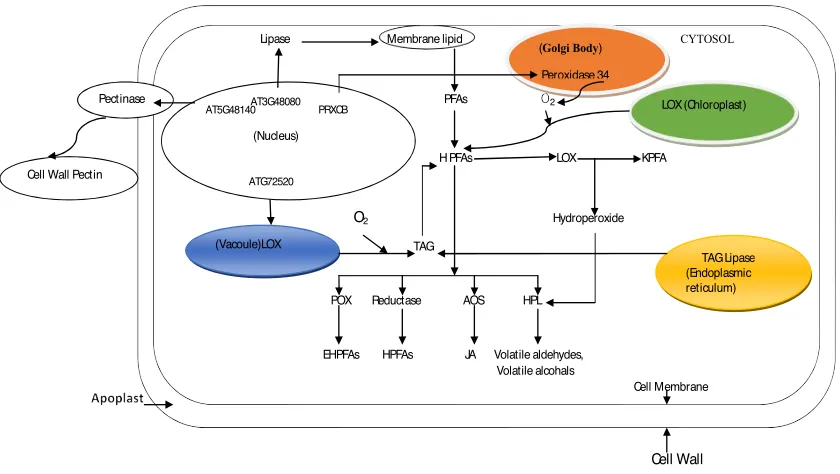
Lipid oxidation is one of the major causes of olive oil quality deterioration. During extraction the damage in cell wall activates endogenous enzymes. The molecular oxygen generated by peroxidases accelerates the oxidation of poly unsaturated fatty acids and stored TAGs by LOX enzyme. It results in the generation of hydroperoxides and other volatile compounds, which produce unpleasant odor in oil (Figure 2). For systematic explanation of lipid oxidation pathway in olive the concerned enzymes have been comprehensively (Table 2) interrogated through literature. The enzymes like polygalacto-uranses or pectinases are compartmentalized in the sites such as endomembrane system, extracellular region, cell wall and apolast (Li et al., 2013; Park et al., 2015; Mabuchi et al., 2016). Moreover, these enzymes are actively involved in carbohydrate metabolism (Kim et al., 2006), loosening of cell wall connection associated with fruit firmness (Park et al., 2015) and cell wall organization (Keunen et al., 2013) to some extent. The genetic determinants of these enzymes manifest themselves in different parts and cells of plants during different stages as indicated in table 2. Moreover, LOXs are located in chloroplast (Thieme et al., 2015) and cytoplasm (Mira et al., 2016) where they govern the processes like membrane disassembly (Marcos et al., 2015; Nalam et al., 2015), lipid oxidation and jasmoites biosynthesis. The genetic determinants of LOXs are expressed at different sites during different stages (Table 2). Furthermore, other enzymes like lipases, peroxidases, β-glucosidases and polyphenol oxidase are also indicated with their respective genes, roles, activities, expression sites and stages in Table 2. Comparative transcriptome studies for these enzymes at different expression sites can elucidate the different enzymatic pathways involved in lipid and phenol oxidation. However, in this review we proposed a schematic pathway of lipid oxidation in olive by exploring the functionality and genomics of olive endogenous enzymes in Arabidopsis (Figure 2). The oxidation of membrane lipid and TAG take place by endogeneous enzymes inside cells of olive fruit mesocarp. LOX compatmentlize in vacuole and chloroplast possibly do the oxidation of polyunsaturated fatty acids from
membrane and TAG from ER into hydroxypoly-unsaturated fatty acids when ROS are generated by peroxidases. These HPFAs are converted into products like EHPFs, jasmonic acids and other volatiles aldehydes and ketones, whereas pectinase enzyme compartmentalized at apoplast region is responsible for cell wall softening which make oil leakage easy (Figure 2).
Proteome Dynamics and Olive Fruit Development
m a k e u p a r e a l t e r e d t o a ff e c t t e x t u r e , appearance, flavor and aroma. Texture modifies due to change in cell wall structure and cell turgor and metabolism, whereas, colour modifies due to change in composition of carotenoids, chlorophylls and flavenoids, while, nutritional quality, flavor and aroma are affected due to modification of volatiles and sugars (Giovannoni, 2004). Comparative proteomics coupled with mass spectrometry investigate metabolic pathways to assess changes simultaneously at protein level. Currently proteomics is becoming more attractive to plant biologists owe to the availability of sequence information in databases which is opening new horizons in protein identifications. Even for non model plants more practical methods to analyze protein content has been developed due to accumulation of nucleic acids data in databases as a result of revolution in sequencing technologies (Carpentier et al., 2008). Hitherto, limited informations are available about the proteomic profile of olive fruit during developmental phases, although some ESTs have been generated from developing
olive fruits recently (Alagna et al., 2009; Galla et al., 2009; Esteve et al., 2012).
Transcriptome Changes in Response to Salinity
Plant productivity is facing serious threat due to increasing olive cultivation in fields irrigated with low quality and saline water. Salinity poses serious threats to fruit production (Cresti et al., 1994) by negatively affecting leaf morphology (Therios, 2009) and photosynthesis (Loreto et al., 2003; Tabatabaei, 2006) as well as shoot growth (Tattini et al., 1992; Klein et al., 1994). The tolerance of olive to NaCl is supposed to be intermediate (Rugini and Fedeli 1990), although, extensive genetic diversity is found in olive germplasm against abiotic stresses (Therios et al., 1988; Chartzoulakis, 2005). Certain physiological mechanisms attribute tolerance through retention of Na+ and Cl- by root and
stem, Na+ exclusion due to influx of K+ and by
compartmentalization of toxic Na+ and Cl- into
vacuole.
Figure 2
: A schematic overview showing how endogeneous enzymes are compartmentalized and
involved in olive fruit cell for lipids peroxidation and cell wall breakdown.
Abbreviations: For Enzymes: LOX, Lipoxygenase; POX, Peroxidase; AOS, Allene oxide
synthase; HPL, Hydroperoxide lyase. For Substrates in pathways: PFAs, Polyunsaturated fatty
acids; HPFAs, Hydroxy polyunsaturated fatty acids; KPFA, Keto polyunsaturated fatty acids;
EHPFAs, Epoxy-hydroxy polyunsaturated fatty acids; HPFAs, Hydroxy polyunsaturated fatty
cids; JA, Jasmonic acids.
Cell Wall
Lipase Membrane lipid CYTOSOL
PFAs 2
H PFAs LOX KPFA
O2 Hydroperoxide
TAG
POX Reductase AOS HPL EHPFAs HPFAs JA Volatile aldehydes,
Volatile alcohals
Cell Membrane AT5G48140 PRXCB
(Nucleus)
(Vacoule)LOX
TAG Lipase (Endoplasmic reticulum) LOX (Chloroplast) Pectinase
(Golgi Body)
Peroxidase 34
Cell Wall Pectin
AT3G48080
ATG72520
Tolerant cultivars are able to make exclusion of Na+ and Cl- from shoots (Gucci et al., 1997) by
restricting their accumulation in actively growing shoots and leaves (Melgar et al., 2009). Although, this tactic increases salt absorption but put a check on its translocation (Benlloch et al., 1991; Demiral, 2005). Comparative tran-scriptome and microarrays strategies are used for the mining and characterization of genes related to salt stress in relative species or varieties with differential tolerance to abiotic stress (Deyholos, 2010). Although various studies are available but still our information on olive response to salinity is limited at physiological level. Bazakos et al. (2012) have conducted a comparative transcriptome study on tolerant and susceptible olive genotypes to find transcription factors that elicit significant response against salinity by constructing microarrays. Most of the studies on response mechanisms of olive to salinity are limited to ecophysiological level or to the investigation of single metabolic pathway like mannitol metabolism under salinity stress (Conde et al., 2007). However, no comprehensive investigation has been made on molecular logics of salt tolerance in olive. Previously, the unavailability of reference transcriptome sequence has created difficulties in mining and characterization of gene regulatory networks in olive against stress (Salem et al., 2010). For gene expression s t u d i e s h i g h - t h r o u g h p u t t r a n s c r i p t o m e sequencing is a fast and efficient option to microarrays techniques (Marioni et al., 2008). Limitations imposed by microarrays can be overcome by sequence based approaches, as these are advantageous to trace the dynamicity of transcriptome across various tissues under stress conditions (Mortazavi et al., 2008). Various researchers have noticed that the implementation of 454 Life Sciences sequencing (Margulies et al., 2005) is proved as an efficient method to investigate mRNA expression levels (Weber et al., 2007; Torres et al., 2008; Wang et al., 2010). Comparative deep sequencing analysis of plant transcripomes found the variations in gene expressions in response to genotype, tissue and physiological changes in model and non model plants such as chestnut (Barakat et al., 2009), maize (Ohtsu et al., 2007), grapevine (Al Rwahnih et al., 2011), waterhemp (Riggins et al., 2010), eucalyptis (Novaes et al., 2008) and currently in olive (Muñoz-Mérida et al., 2013; Leyva-Perez et al., 2015). The 454-pyrosequencing technique is advantageous over
NGS (Next Generation Sequencing) particularly due to its ability to generate long-read length in non model plants, as these are essential to recognize transcript accurately for which molecular diagnostics are scarce, for example olive. More than thirty families of transcription factors related to abiotic stress including salinity (He et al., 2011) have been reported by comparison between salt tolerant and salt susceptible genotypes of model and non model plants such as Arabidopsis (Taji et al., 2004; Wong et al., 2006), tomato (Sun et al., 2010), potato (Mane et al., 2008), rice (Rabello et al., 2008), poplar (Cohen et al., 2010), and sugarcane (Rodrigues et al., 2009). Learning Module Networks (LeMoNe) algorithm is used to shape the transcriptional regulatory networks during stress response by using reverse-engineering of gene expression (Ihmels et al., 2004; Yu et al., 2006; Michoel et al., 2009).
are used to authenticate the data at proteomics and transcriptomics level (Fernie and Stitt, 2012). As metabolits have direct impact on the phenotype rather than proteins and transcripts, therefore, these are more convincing in indicating the final results of different regulation phases residing in cells and tissues. Recently, non-targeted metabolomics and metabolic profiling techniques have not only made the understanding of metabolic changes easy but also elucidate biomarkers in fruits related to agronomic parameters and abiotic stresses (Tosetti et al., 2012).
Conclusion
Current genomic studies aim to understand the molecular basis of stress tolerance in olive. Moreover, how genes modulate plant arch-itecture and qualitative aspects is needed to understand at molecular level. Although, addition of genomic data in databases has accelerated genomic studies but still there is a lot of scope available to researchers for mining the genes related to the breakdown of secondary metabolite in olive fruit. Therefore, integrated transcriptomic, proteomic and metablomic studies boost the understanding of molecular processes and associated genes which will accelerate olive breeding in future.
Acknowledgement
We highly acknowledge Aljouf Agricultural Development Company, Saudi Arabia, for supporting and financing our research project on olive.
References
Alagna, F., D'Agostino, N., Torchia, L. (2009). C o m p a r a t i v e 4 5 4 p y r o s e q u e n c i n g o f transcripts from two olive genotypes during fruit development, BMC Genomics 10, 399. Andersson, MX., Goksor, M., Sandelius, AS,
(2007). Optical manipulation reveals strong attracting forces at membrane contact sites b e t w e e n e n d o p l a s m i c r e t i c u l u m a n d chloroplasts. J. Biol. Chem. 282, 1170-1174. Angerosa, F. (2002). Influence of volatile
compounds on virgin olive oil quality evaluated by analytical approaches and sensor panels. Eur. J. Lipid Sci. Tech. 104(9-10), 639-660. Artajo, L. S., Romero, M. P., Tovar, M. J., Motilva
,M. J. (2006b). Effect of irrigation applied to olive trees (Olea europaea L. ) on phenolic compound transfer during olive oil extraction. Eur. J. Lipid Sci. Tech. 108, 19-27.
Ascencio-Ibanez, JT., Sozzani, R., Lee, TJ., Chu, TM., Wolfinger, RD., Cella, R., Hanley-Bowdoin, L,( 2008). Global analysis of Arabidopsis gene expression uncovers a complex array of changes impacting pathogen response and cell cycle during geminivirus infection. Plant Physiol. 148, 436-454.
Badenes, M., L., and Byrne, D., H. (2011). Fruit Breeding. New York, NY., Springer Science +Business Media.
Baldi, P., Wolters, P. J., Komjanc, M., Viola, R., Velasco, R., and Salvi, S. (2013). Genetic and physical characterisation of the locus controlling columnar habit in apple (Malus ×
domestica Borkh. ). Mol. Breed. 31, 429-440. Banilas, G., and Hatzopoulos, P. (2009).
Developmental perplexity of oil biosynthesis gene expression in olive. In: Berti, L. Maury, J. eds. Advances in olive resources. Kerala, India: Transworld Research Network, 1-22. Banilas, G., Karampelias, M., Makariti, I., Kourti,
A., Hatzopoulos, P. (2011). The olive DGAT2 gene is developmentally regulated and shares overlapping but distinct expression patterns with DGAT1. J. Exp. Bot. 62 (2), 521-32. Baptista, A., and Biswas, P. (2010). Quality
differentiation as a strategy for the viability of traditional olive farming in trás-os-montes region, in International EAAE-SYAL Seminar - Spatial Dynamics in Agri-food Systems (Parma).
Barakat, A., Di Loreto, D. S., Zhang, Y., Smith, C., Baier, K., Powell, W. A., et al. (2009) Comparison of the transcriptomes of American chestnut (Castanea dentata) and Chinese chestnut (Castanea mollissima) in response to the chestnut blight infection. Bmc. Plant Biol. 9.
Barthélémy, D., and Caraglio, Y. (2007). Plant architecture: a dynamic, multilevel and comprehensive approach to plant form, structure and ontogeny. Ann. Bot. 99, 375-407. Bazakos, C., Manioudaki, M. E., Therios, I., Voyiatzis, D., Kafetzopoulos, D., Awada, T., et al. (2012). Comparative transcriptome analysis of two olive cultivars in response to NaCl-stress. PloS one. 7,e42931.
Beauchamp, G. K., Keast, R. S., Morel, D., Lin, J., Pika, J., Han, Q., Lee, C. H., Smith, A. B., Breslin, P. A. (2005), Phytochemistry, ibuprofen-like activity in extra-virgin olive oil. Nature 437(7055), 45-46.
general defence responses in plants. Physiol. Mol. Plant Path. 57, 101-110.
Benlloch, M., Arboleda, F., Barranco, D. (1991) . Response of Young Olive Trees to Sodium and Boron Excess in Irrigation Water. Boron 26,867-870.
Besnard,G., Khadari,B., Villemur,P. et al. (2000) Cytoplasmic male sterility in the olive (Olea europaea L. ). Theor. Appl. Genet., 100, 1018-1024.
Bianco, L., Alagna, F., Baldoni, L., Finnie, C., Svensson, B., Perrotta, G. (2013). Proteome regulation during Olea europaea fruit development. PLoS one 10,1371.
Bonnet, E., Tatari, M., Joshi, A., Michoel, T., Marchal, K., et al. (2010) Module network inference from a cancer gene expression data set identifies microRNA regulated modules. PloS one 5, e10162.
Boskou, G., Salta, F. N., Chrysostomou, S., Mylona, A., Chiou, A., Andrikopoulos, N. K. (2006). Antioxidant capacity and phenolic profile of table olives from the Greek market. Food Chem. 94, 558-564.
Busov, V. B., Brunner, A. M., and Strauss, S. H. (2008). Genes for control of plant stature and form. New Phytol. 177, 589-607.
Bouaziz, M., Jemai, H., Khabou, W., Sayadi, S. (2010) Oil content, phenolic profiling and antioxidant potential of Tunisian olive drupes. J. Sci. Food Agric. 90, 1750-1758
Carpentier, S. C., Panis, B., Vertommen, A., Swennen, R., Sergean,t K., et al. (2008) Proteome analysis of non-model plants: a challenging but powerful approach. Mass Spectrom. Rev. 27, 354-377.
Carrasco-Pancorbo, A., Cerretani, L., Bendini, A., Segura-Carretero, A., Gallina-Toschi, T., Fernández-Gutiérrez A. (2005) Analytical determination of polyphenols in olive oils. J. Sep. Sci. 28, 837-858
Chapelle, A., Morreel, K., Vanholme, R., Le-Bris, P., Morin, H., Lapierre, C., Boerjan, W., Jouanin, L., Demont-Caulet, N. (2012). Impact of
the absence of stem-specific β-glucosidases on lignin and monolignols. Plant Physiol. 160:1204-1217.
Chartzoulakis, K. S. (2005). Salinity and olive: Growth, salt tolerance, photosynthesis and yield. Agr. Water Manage. 78,108-121.
Chauvin, A., Lenglet, A., Wolfender, J. L. and Farmer, E. E. (2016). Paired Hierarchical Organization of 13-Lipoxygenases in Arabidopsis. Plants 5 (16): 1-13.
Che, P., Love, T. M., Frame, B. R., Wang, K., Carriquiry, A. L., Howell, S. H. (2006). Gene expression patterns during somatic embryo development and germination in maize Hi II callus cultures. Plant Mol. Biol. 62 (1-2), 1-14. Chen, W., Provart, N. J., Glazebrook, J., Katagiri,
F., Chang, H. S., et al. (2002). Expression Profile Matrix of Arabidopsis Transcription Factor Genes Suggests Their Putative Functions in Response to Environmental Stresses. Society, 14, 559-574.
Cloonan, N., Forrest, A. R. R., Kolle, G., Gardiner, B. B. A., Faulkner, G. J., Brown, M. K., et al. (2008). Stem cell transcriptome profiling via massive-scale mRNA sequencing. Nat. Methods 5, 613-619.
Clodoveo, M. L., Camposeo, S., De Gennaro, B., Pascuzzi, S., and Roselli, L. (2014a). In the ancient world, virgin olive oil was called ''liquid gold'' by Homer and ''the great healer'' by Hippocrates. Why has this mythic image been forgotten? Food Research International 62, 1062-1068.
Clodoveo, M. L., Hachicha Hbaieb, R., Kotti, F., Mugnozza, G. S., and Gargouri, M. (2014b). Mechanical strategies to increase nutritional and sensory quality of virgin olive oil by modulating the endogenous enzyme activities. Comp. Rev. Food Sci. Food Safety 13, 135-154.
Cohen, D., Bogeat-Triboulot, M. B., Tisserant, E., Balzergue, S., Martin-Magniette, M. L., et al. (2010). Comparative transcriptomics of drought responses in Populus: a meta-analysis of genome-wide expression profiling in mature leaves and root apices across two genotypes. BMC Genomics 11, 630.
Conde, C., Silva, P., Agasse, A., Lemoine, R., Delro,t S., et al. (2007) Utilization and transport of mannitol in Olea europaea and implications for salt stress tolerance. Plant Cell Physiol. 48, 42-53.
Colomer, R., Mene´ndez, J. A. (2006). Mediterranean diet, olive oil and cancer. Clin. Transl. Oncol. 8, 15-21.
Conde, C., Delrot, S., Gero´s, H. (2008). Physiological, biochemical and molecular changes occurring during olive development and ripening. J. Plant Physiol. 165, 1545-1562. Connor, D. J., Fereres, E. (2005). The physiology of adaptation and yield expression in olive. Hort. Rev. 34, 155-229.
and fruiting profiles. Crop Pasture Sci. 60, 443-452.
Costanzo, E., Trehin, C., Vandenbussche, M. (2014). The role of WOX genes in flower development. Ann. Bot. 114, 1545-1553. Costes, E., Gion, J. -M. (2015). Chapter five -
Genetics and genomics of tree architecture in Advances in Botanical Research, eds P. Christophe and A. -B. Anne-Françoise (London: Academic Press), 157-200.
Covas, M. I., Ruiz-Gutiérrez, V., De la Torre, R., Kafatos, A., Lamuela-Raventós, R. M., Osada, J., Owen, R. W., Visioli, F. (2006). Minor components of olive oil: Evidence to date of health benefits in humans. Nutri. Rev. 64, 20-30.
Cresti, M., Ciampolini, F., Tattini, M., Cimato, A. (1994). Effect of salinity on productivity and oil quality of olive (Olea europaea L. ) plants. Adv. Hortic. Sci. 8, 211-214.
Cunnane, S. (2003). Problems with essential fatty acids: time for a new paradigm. Prog. Lipid Res. 42, 544-568.
Dabbou, S., Issaoui, M., Esposto, S., Sifi, S., Taticchi, A., Servili, M., Montedoro, G. F., Hammami, M. (2009). Cultivar and growing area effects on minor compounds of olive oil from autochthonous and European introduced cultivars in Tunisia. J. Sci. Food Agric. 89, 1314-1325.
Damtoft, S., Franzyk, H., Jensen, S. R. (1995) Biosynthesis of secoiridoids in Fontanesia. Phytochem. 38(3), 615-621.
Damtoft, S., Franzyk, H., Jensen, SR. (1995). Biosynthesis of iridoids in Syringa and Fraxinus: carbocyclic iridoid precursors. Phytochem. 40(3), 785-792.
De la Rosa, R., Angiolillo, A., Guerrero, M., Pellegrini, M., Rallo, L., Besnard, G., Bervillé, A., Martin, A., Baldoni, L. (2003). A first linkage map of olive (Olea europaea L. ) cultivars using RAPD, AFLP, RFLP and SSR markers. Theor. Appl. Genet. 106, 1273-1282.
De La Torre-Carbot, K., Jauregui, O., Gimeno, E., Castellote, A. I., Lamuela-Raventós, R. M., López-Sabater, M. C. (2005). Characterisation and quantification of phenolic compounds in olive oils by solid phase extraction, HPLC-DAD, and HPLC-MS/MS. J. Agric. Food Chem. 53, 4331-4340.
De Marcos, A., Triviño, M., Pérez-Bueno, M. L., et al. (2015). Transcriptional profiles of Arabidopsis stomataless mutants reveal developmental and physiological features of
life in the absence of stomata. Front. Plant Sci. 6, 456.
De Ollas, C., Arbona, V., Gómez-Cadenas, A. (2015). Jasmonoyl isoleucine accumulation is needed for abscisic acid build-up in roots of Arabidopsis under water stress conditions. Plant Cell Environ. 38, 2157-2170.
Deyholos, M. K. (2010). Making the most of drought and salinity transcriptomics. Plant Cell Environ. 33, 648-654.
Demiral, M. A. (2005). Comparative response of two olive (Olea europaea L. ) cultivars to salinity. Turk. J. Agric. For. 29, 267-274. Díaz-Riquelme, J., Grimplet, J.,
Martinez-Zapater, J. M., and Carmona, M. J. (2012). Transcriptome variation along bud develop-ment in grapevine (Vitis vinifera L. ). BMC Plant Biol. 12, 181.
Di Baccio, D., Galla, G., Bracci, T., Andreucci, A., Barcaccia, G., Tognetti, R., et al. (2011). Transcriptome analyses of Populus ×
euramericana clone I-214 leaves exposed to excess zinc. Tree Physiol. 31, 1293-1308. Dichio, B., Xiloyannis Angelopoulos, K., Nuzzo,
V., Bufo, S. A., Celano, G. (2003). Drought-induced variations of water relations parameters in Olea europaea. Plant Soil 257, 381-389.
Dierkes, G., Krieger, S., Dück, R., Bongartz, A., Schmitz, O. J., Hayen, H. (2012) High-performance liquid chromatography-mass spectrometry profiling of phenolic compounds for evaluation of olive oil bitterness and pungency. J. Agric. Food Chem. 60, 7597-7606.
Donaire, L., Pedrola, L., De la Rosa, R., Llave, C. (2011). High-throughput sequencing of RNA silencing-associated small RNAs in olive (Olea europaea L. ), PLoS ONE, 6, e27916.
Doveri, S., Donal,M., Lee, D. (2006). Non concordance between genetics profiles of olive oil and fruit: a cautionary note to the use of DNA markers for provenance testing. J. Agric. Food Chem. 54, 9221-9226.
Doveri, S., Baldoni, L. (2007). Genome mapping and molecular breeding in plants. Volume 4: Olive fruits and Nuts: 253-264. Springer - Verlag, Berlin Heidelberg.
Dubois, V., Breton, S., Linder, M., Fanni, M., Parmentier, M. (2007). Fatty acid profiles of 80 vegetable oils with regard to their nutritional potential. Eur. J. Lipid Sci. Tech. 109, 710-732 Elloumi,J., Ben-Ayed,R., Aifa,S. (2012). An
Esteve, C., D'Amato, A., Marina, M. L., Garcı´a, M. C., Citterio, A., et al. (2012). Identification of olive (Olea europaea) seed and pulp proteins by nLC-MS/MS via combinatorial peptide ligand libraries. J. Proteomics 75, 2396-2403. Fan, J., Guo, X. Y., Li, L., Huang, F., Sun, W. X.,
Li, Y., et al. (2015). Infection of Ustilaginoidea virens intercepts rice seed formation but activates grain-filling-related genes. J. Int. Plant Biol. 57, 577-590.
Fernie, A., Stitt, M. (2012). On the discordance of metabolomics with proteomicsand transcriptomics: coping with increasing complexity in logic, chemistry, andnetwork interactions. Plant Physiol. 158, 1139-1145. Franceschi, V. R., Krokene, P., Christiansen, E.,
Krekling, T. (2005)Anatomical and chemical defenses of conifer bark against bark beetles and other pests. New Phytol. 167(2), 353-375. Fregapane, G., Salvador, M., D. (2013).
Production of superior quality extra virgin olive oil modulating the content and profile of its minor components. Food Res. Int. 6, 35-40. Fu, S., Segura-Carretero, A., Arráez-Román, D.,
Menéndez, J. A., De la Torre, A., Fernández-Gutiérrez, A. (2009a). Tentative character-isation of novel phenolic compounds in extra virgin olive oils by rapid-resolution liquid c h r o m a t o g r a p h y c o u p l e d w i t h m a s s spectrometry. J. Agric. Food Chem. 57, 11140-11147
Galla, G., Barcaccia, G., Ramin,a A., Collani, S., Alagn,a F., Baldon,i L., Cultrera, N. G., Martinelli, F., Sebastiani, L., Tonutti, P. (2009) C o m p u t a t i o n a l a n n o t a t i o n o f g e n e s differentially expressed along olive fruit development. BMC Plant Biol. 9, 128.
Gajhede, M. (2001). Plant peroxidases: Substrate complexes with mechanistic implications. Biochem. Soc. Trans. 29(Pt. 2), 91-98.
Garcia, J. M., Gutierrez, F., Barrera, M. J., Albi, M. A. (1996a). Storage of mill olives on an industrial scale. J. Agric. Food Chem. 44, 590-593.
García-López, M. C., Vidoy, I., Jiménez-Ruiz, J., Muñoz-Mérida, A., Fernández-Ocaña, A., De La Rosa, R., et al. (2014). Genetic changes involved in the juvenile-to-adult transition in the shoot apex of Olea europaea L. occurs years before the first flowering. Tree Genet. Genomes 10, 585-603.
Garcia-Rodriguez, R., Romero-Segura, C., Sanz, C., Sanchez-Ortiz, A., Perez, A. (2011). Role of polyphenol oxidase and peroxidase in shaping
the phenolic profile of virgin olive oil. Food Res. Int. 44, 265-635.
Gil-Amado, J. A., Gomez-Jimenez, M. C. (2013). Transcriptome analysis of mature fruit abscission control in olive. Plant Cell Physiol. 54(2),244-269.
Giovannoni, J. (2004). Genetic regulation of fruit development and ripening. Plant Cell 16, 170-180.
Gomez-Rico, A., Moriana, Salvador, M. D., Perez, A., Olmedilla, D., Ribas, N., Fregapane,F. G., 2007. Influence of different i r r i g a t i o n s t r a t e g i e s i n a t r a d i t i o n a l Cornicabracv. olive orchard of virgin olive oil composition and quality. Food Chem. 100,568-578.
Gomez-Rico, A., Fregapane, G., and Salvador, M. D. (2008). Effect of cultivar and ripening on minor components in Spanish olive fruits and their corresponding virgin olive oils. Food Res. Int. 41, 433-440.
Gomez-Jimenez, M. C., Paredes, M. A., Gallardo, M., Fernandez-Garcia, N., Olmos, E., Sanchez-Calle, I. M. (2010). Tissue-specific expression of olive S-adenosyl methionine decarboxylase and spermidine synthase genes and polyamine metabolism during flower opening and early fruit development. Planta 232(3), 629-647.
Gomez-Jimenez, M. C., Paredes, M. A., Gallardo, M., Sanchez-Calle, I. M. (2010). Mature fruit abscission is associated with up-regulation of polyamine metabolism in the olive abscission zone. J. Plant Physiol. 167(17), 1432-1441.
Gómez-Rico, A., Inarejos-García,A. M., Desamparados Salvador,M., Fregapane, G. (2009) . Effect of malaxation conditions on phenol and volatile profiles in olive paste and the corresponding virgin olive oils (Olea
europaea L. Cv. Cornicabra). J. Agric. Food
Chem. 57, 3578-3595
Gong, Q., Li, P., Ma, S., Indu Rupassara, S., Bohnert, H. J. (2005). Salinity stress adaptation competence in the extremophile Thellungiella halophila in comparison with its relative Arabidopsis thaliana. Plant J. 44, 826-839.
responses in Arabidopsis thaliana. Plant J. 82, 122-137.
González-Plaza, JJ., Ortiz-Martín, I., Muñoz-Mérida, A., García-López, C., Sánchez-Sevilla, J. F., Luque, F., Trelles, O., Bejarano, E. R., De La Rosa, R., Valpuesta, V., Beuzón, C. R. (2016). Transcriptomic Analysis Using Olive Varieties and Breeding Progenies Identifies Candidate Genes Involved in Plant Arch-itecture. Front. Plant Sci. 7,240.
Goulas, V., Manganaris, G. A. (2012). Towards an Efficient Protocol for the Determination of Triterpenic Acids in Olive Fruit: A Comparative Study of Drying and Extraction Methods. Phytochem. Anal. 23(5), 444-449.
Gucci, R., Lombardini, L., Tattini, M. (1997). Analysis of leaf water relations in leaves of two olive (Olea europaea) cultivars differing in tolerance to salinity. Tree Physiol. 17,13-21. Hammami, S., B. M., De La Rosa, R.,
Sghaier-Hammami, B., Leon, L., and Rapoport, H. F. (2012). Reliable and relevant qualitative d e s c r i p t o r s f o r e v a l u a t i n g c o m p l e x architectural traits in olive progenies. Sci. Hortic. 143, 157-166.
Hanan, J., Birch, C. J., Vos, J. (2003). Modelling the architecture of plants: some concepts and potential applications, in Versatile Maize - Golden Opportunities: 5th Australian Maize Conference Proceedings (Toowoomba, QLD), 100-111.
Haouane, H., El Bakkali, A., Moukhli, A., Tollon, C., Santoni, S., Oukabli, A., et al. (2011). Genetic structure and core collection of the World Olive Germplasm Bank of Marrakech: towards the optimised management and use of Mediterranean olive genetic resources. Genetica 139, 1083-1094.
He, X., Hou, X., Shen, Y., Huang Z. (2011). TaSRG, a wheat transcription factor, significantly affects salt tolerance in transgenic rice and Arabidopsis. FEBS letters 585, 1231-1237.
Hollender, C. A., and Dardick, C. (2015). M o l e c u l a r b a s i s o f a n g i o s p e r m t r e e architecture. New Phytol. 206, 541-556. Ihmels, J., Levy, R., Barkai, N. (2004). Principles
of transcriptional control in the metabolic network of Saccharomyces cerevisiae. Nat. Biotechnol. 22, 86-92.
Jerman, T., Trebše, P., Mozeticˇ Vodopivec, B. (2010). Ultrasound-assisted solid liquid extraction (USLE) of olive fruit (Olea europaea) phenolic compounds. Food Chem. 123(123), 175-182.
Kanakis, P., Termentzi, A., Michel, T., Gikas, E., Halabalaki, M., Skaltsounis, A. -L. (2013). From olive drupes to olive oil. An HPLC-orbitrap-based qualitative and quantitative exploration of olive key metabolites. Planta Med. 79, 1576-1587
Keunen, E., Jozefczak, M., Remans, T., Vangronsveld, J., Cuypers, A. (2013). Alternative respiration as a primary defence during cadmium induced mitochondrial oxidative challenge in . Arabidopsis thaliana. Environ. Exp. Bot. 91, 63-73.
Kim, K. C., Fan, B., and Chen, Z. (2006). Pathogen-induced Arabidopsis WRKY7 is a transcriptional repressor and enhances plant susceptibility toPseudomonas syringae. Plant Physiol. 142 1180-1192.
Kim, S., Yamaoka, Y., Ono, H., Kim, H., Shim, D., Maeshima, M., Martinoia, E., Cahoon, E. B., Nishida, I., Lee, Y. (2013). AtABCA9 transporter supplies fatty acids for lipid synthesis to the endoplasmic reticulum. PNAS 110, 773-778.
Kim, S. H., Son, G. H., Bhattacharjee, S., Kim, H. J., Nam, J. C., Nguyen, P. D., Hong, J. C., Gassmann, W. (2014). The Arabidopsis immune adaptor SRFR1 interacts with TCP transcription factors that redundantly contribute to effector-triggered immunity Plant J. 78, pp. 978-989.
Kim, Y. S., Sakuraba, Y., Han, S-H, Yoo, S-C., Paek, N-C. (2013). Mutation of the Arabidopsis NAC016 transcription factor delays leaf s e n e s c e n c e . P l a n t C e l l P h y s i o l . 5 4 , 1660-1672.
Kiritsakis, A. K., Nanos, G. D., Polymen-oupoulos, Z., Thomai, T., and Sfakiotakis, E. Y. (1998). Effect of fruit storage conditions on olive oil quality. J. Am. Oil Chem. Soc. 75, 721-724.
Klein, I., Ben-Tal, Y., Lavee, S., De Malach, Y., David, I. (1994) Saline irrigation of cv. Manzanillo and Uovo di Piccione trees. Acta Hort (ISHS). 356, 176-180.
Konno, K., Hirayama, C., Yasui, H., Nakamura, M. (1999). Enzymatic activation of oleuropein: a protein crosslinker used as a chemical defense in the privet tree. Proc. Natl. Acad. Sci. 96(16), 9159-9164.
Kwon, C. S., Chen, C., and Wagner, D. (2005). W U S C H E L i s a p r i m a r y t a r g e t f o r transcriptional regulation by SPLAYED in dynamic control of stem cell fate in Arabidopsis. Genes Dev. 19, 992-1003. Lazzez, A., Vichi, S., Grati Kammoun, N., Arous,
M. N., Khlif, M., Romero, A., et al. (2011). A four year study to determine the optimal harvesting period for Tunisian Chemlali olives. Eur. J. Lipid Sci. Tech. 113,796-807.
Lavee, S., Avidan, B., andMeni, Y. (2003). 'Askal', a new high-performing oil variety for intensive and super-intensive olive orchards. Olivae 97, 7.
Leyva-Perez, M. D., Valverde-Corredo,r A., Valderrama, R., Jimenez-Ruiz, J., Munoz-Merida, A., Trelles, O., et al. (2015). Early and delayed long-term transcriptional changes and short-term transient responses during cold acclimation in olive leaves. DNA Res. 22, 1-11. Li, JF., Norville, J. E., Aach, J., McCormack, M., Zhang, D., Bush, J., Church, G. M., Sheen, J. (2013). Multiplex and homologous recombin-ation-mediated genome editing inArabidopsis
and Nicotiana benthamiana using guide RNA
and Cas9. Nat. Biotechnol. 31,688-691 Llorente-Cortes, V., Estruch, R., Mena, M. P.,
Ros, E., Gonzalez, M. A. M., Fito, M.,Lamuela-Raventos, R. M., Badimon, L. (2010). Effect of Mediterranean diet onthe expression of pro-atherogenic genes in a population at high cardiovascularrisk. Atherosclerosis 208, 442-450.
López, O. J. M., Innocenti, M., Ieri, F., Giaccherini, C., Romani, A., Mulinacci, N. (2008). HPLC/DAD/ESI/MS detection of lignans from Spanish and Italian Olea europaea L. fruits. J. Food Comp. Anal. 21, 62-70.
Loreto, F., Centritto, M., Chartzoulakis, K. (2003) Photosynthetic limitations in olive cultivars with different sensitivityto salt stress. Plant Cell Environ. 26, 595-601.
Loureiro, J., Rodriguez, E., Costa, A., Santos, C. (2007). Nuclear DNA content estimations in wild olive (Olea europaea L. ssp. europaea var. sylvestris Brot. ) and Portuguese cultivars of O. europaea using flow cytometry. Genet. Resour. Crop Evol. 54:21-25.
Loumou, A., Giourga, C. (2003). Olive groves: 'The life and identity of the Mediterranean', Agric. Hum. Values 20, 87-95.
Lozano-Sánchez, J., Giambanelli, E., Quirantes-Piné, R., Cerretani, L., Bendini, A., Segura-Carretero, A., Fernández-Gutiérrez, A. (2011) .
Wastes generated during the storage of extra virgin olive oil as a natural source of phenolic compounds. J. Agric. Food Chem. 59, 11491-11500
L u n g , S . C . , W e s e l a k e , R J . ( 2 0 0 6 ) . Diacylglycerol acyltransferase: a key mediator of plant
triacylglycerol synthesis. Lipids 41, 1073-1088. Mabuchi, A., Soga, K., Wakabayashi, K., Hoson,
T. (2016). Phenotypic screening of Arabidopsis T-DNA insertion lines for cell wall mechanical properties revealed ANTHOCYANINLESS2, a cell wall-related gene. J. Plant Physiol. 191, 29-35.
Malik, N. S. A., Bradford, J. M. (2008). Recovery and stability of oleuropein and other phenolic compounds during extraction and processing of olive (Olea europaea L. ) leaves. J. Food Agric. Env. 6, 8-13.
Mane, S., Robinet, C., Ulanov, A., Schafleitner, R., Tincopa, L., et al. (2008). Molecular and physiological adaptation to prolonged drought stress in the leaves of two Andean potato genotypes. Funct. Plant Biol. 35, 669-688. Margulies, M., Egholm, M., Altman, W. E., Attiya,
S., Bader, J. S., Bemben, L. A., et al. (2005). Genome sequencing in microfabricated high-density picolitre reactors. Nature 437, 376-380.
Mariotti, R., Cultrera, N. G. M., Munoz-Diez, C., Baldoni, L., Rubini, A. ( 2010). Identification of new polymorphic regions and differentiation of cultivated olives (Olea europaea L. ) through platome sequence comparison. BMC Plant Biol. 10.
Marioni, J. C., Mason, C. E., Mane, S. M., Stephens, M., Gilad, Y., RNA-seq, (2008). An assessment of technical reproducibility and comparison with gene expression arrays. Genome Res. 18, 1509-1517.
Martinelli, F., Basile, B., Morelli, G., d'Andria, R., Tonutti, P. (2012). Effects of irrigationon fruit ripening behavior and metabolic changes in olive. Sci. Hortic. 144, 201-207.
Martinelli, F., Tonutti, P., (2012). Flavonoid metabolism and gene expression in devel-oping olive (Olea europaea L. ) fruit. Plant Biosyst. 146 (S1), 164-170.
Marqez-Ruiz, G., Garces, R., Leon-Camacho, M., Mancha, M. (1990). Thermoxidativ stability of triacylglcerols from mutant sunflower seeds. J. Am. Oil Chem. Soc. 76, 1169-1174.
McSteen, P., and Leyser, O. (2005). Shoot branching. Annu. Rev. Plant Biol. 56, 353-374. Melgar, J. C., Mohamed, Y., Serrano, N., Garcı ´a-Galavı´s, P. A., Navarro, C., et al. (2009) Long term responses of olive trees to salinity. Agric. Water Manag. 9, 1105-1113.
Meyer, K. D., Saletore, Y., Zumbo, P., Elemento, O., Mason, C. E., Jaffrey, S. R. (2012). Comprehensive analysis of mRNA methylation reveals enrichment in 3′ UTRs and near stop codons. Cell 149, 1635-1646.
Michoel, T., De Smet R., Joshi, A., Van de Peer, Y., Marchal, K. (2009). Comparative analysis of module-based versus direct methods for reverse-engineering transcriptional regulatory networks. BMC Syst. Biol. 3, 49.
Michoel, T., De Smet, R., Joshi, A., Marchal, K., Van de Peer, Y. (2009). Reverse engineering transcriptional modules from gene expression data. Ann. NY Acad. Sci. 1158, 36-43.
Mira, M. M., Wally, S. D. O., Elhiti, M., El-Shanshory, A., Reddy, S. D., Hill, H. R. and Stasolla, C. (2016). Jasmonic acid is a downstream component in the modulation of somatic embryogenesis by Arabidopsis Class 2 phytoglobin. J. Exp. Bot. 1-16
Montillet, L., Leonhardt, N., Mondy, S., Tranchimand, S., Rumeau, D., Boudsocq, M.,
et al. (2013), An abscisic Acid-independent
oxylipin pathway controls stomatal closure and immune defense in Arabidopsis. PLoS Biol. 11, e1001513
Moriya, S., Okada, K., Haji, T., Yamamoto, T., and Abe, K. (2012). Fine mapping of Co, a gene controlling columnar growth habit located on apple (Malus × domestica Borkh. ) linkage group 10. Plant Breed. 131, 641-647.
Morello, J. R., Romero, M. P., and Motiva, M. J. (2004). Effect of maturation process of the olive fruit on the phenolic fraction of drupes and oils from Arbequina, Farga and Morrut cultivars. J. Agric. Food Chem. 52, 6002-6009. Mortazavi, A., Williams, B. A., Mccue, K.,
Schaeffer, L.,Wold, B. (2008). Mapping and quantifying mammalian transcriptomes by RNA-Seq. Nat. Methods 5, 621-628.
Mu, J., Tan, H., Zheng, Q., Fu, F., Liang, Y., Z h a n g , J . , e t a l . ( 2 0 0 8 ) . L E A F Y COTYLEDON1 is a key regulator of fatty acid biosynthesis in Arabidopsis. Plant Physiol. 148(2),1042-54.
Mumm, R., Hilker, M. (2006). Direct and indirect chemical defence of pine against folivorous insects. Trends Plant Sci. 11(7),351-358.
Muñoz-Mérid,a A., González-Plaza, J. J., Cañada, A., Blanco, A. M,, Del García-López, M. C., Rodríguez, J. M., Pedrola, L., Sicardo, M. D., Hernández, M. L., De la Rosa R,Belaj, A., Gil-Borja, M., Luque, F., Martínez-Rivas, J. M., Pisano, D. G., Trelles, O., Valpuesta, V., Beuzón, C. R. (2013). De novo assembly and functional annotation of the olive (olea europaea) transcriptome. DNA Res. 20(1), 93-108.
Nalam, V. J., Alam, S., Keereetaweep, J., Venables, B., Burdan, D., Lee, H., Trick, H. N., Sarowar, S., Makandar, R., Shah, J. (2015). Facilitation of Fusarium graminearum infection by 9-lipoxygenases in Arabidopsis and wheat. Mol. Plant-Microbe Interact. 28, 1142-1152. Nath, P., Sane, A. P., Trivedi, P. K., Sane, V. A.,
Asif, M. H. (2007). Role of transcription factors in regulating ripening, senescence and organ abscission in plants. Stewart Postharvest Rev. 3,1-14.
Novaes, E., Drost, D. R., Farmerie, W. G., Pappas, G. J., Grattapaglia, D., Sederoff, R. R,, et al. (2008). High-through put gene and SNP discovery in Eucalyptus grandis, an uncharacterized genome. BMC Genomics 9. Obied, H. K., Bedgood Jr, D. R., Prenzier, P. D.,
Robards, K., (2007a) . Chemical screening of olive biophenol extracts by hyphenated liqui