ISSN (e): 2250-3021, ISSN (p): 2278-8719
Vol. 09, Issue 7 (July. 2019), ||S (I) || PP 01-06
Comparative Study of Image Matching Techniques for Secure
Transactions in the Banking Sector
P.Dhivya
1,Dr.T.Meyyappan
2,Dr.SM.Thamari3M.PhilResearch Scholar1 ,
2Department of Computer Science, Alagappa University, Karaikudi, Tamilnadu, India 3Department of Computer Science,Alagappa Government Arts College, Karaikudi, Tamilnadu, India
Corresponding Author:P.Dhivya
Abstract:
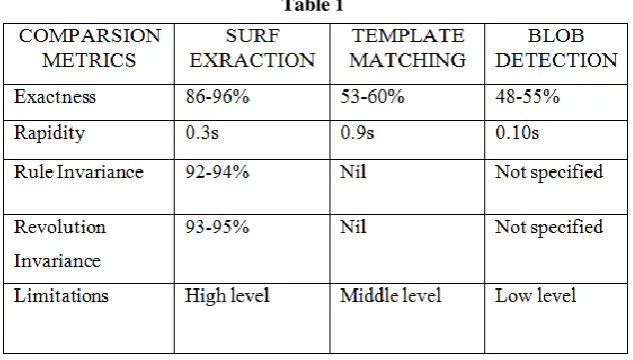
In the modern world all the banking process, become computerized for easy access to data. However, computerized data needs security for monetary transactions in banking. In banking, the security of account data is facing problems due to hacking or forgery of signatures. Saving accounts, partnership accounts are frequently accessed. In this paper, image matching techniques are analyzed and their performance is compared. This matching technique enables the account holders to perform transactions with each other’s knowledge. Joint account holders have to provide their images individually at the time of the transaction. Images stored in the database and the ones provided are matched to approve the transaction. In case of a disability of any of the partners, it permits the other partners to authenticate themselves using the image of the deceased partner. By matching the images of all the account holders with images in the bank database, the transactions are approved. The transactions are denied when any one of the images mismatch. The image matching techniques Blob detection, Template matching, and surf extraction are implemented and their performance was compared. The performance of the Surf extraction technique was found to be best comparedto the other two techniques.Keywords:
Blob detection, Template matching, surf.--- --- Date of Submission: 22-06-2019 Date of acceptance: 10-07-2019
---I.
INTRODUCTION
Image matching (IM) is ubiquitous in many real-world applications. For example, duplicate image detection is used to identify the relevant images for a given reference. In the context of image retrieval, similar images are brought together. All the similar images are retrieved efficiently once the query image is provided. In the banking sector, Image Matching approaches adopt image representation and a distance metric to reduce both the amount of data stored per image and the time cost of the database search. More precisely, feature vectors (descriptors) of each image in the database are extracted and stored. During the matching, the descriptors of the query image are compared against their signatures in the database to determine the most relevant image.
A) TECHNIQUES
This research work focuses on the security process for the withdrawal of money in joint accounts. The following image matching techniques are implemented to approve transactions.
1. Blob Detection
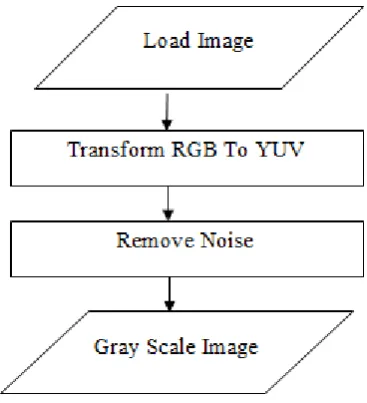
Figure 1:Blockdiagram showing the Computational steps for the blob detection technique.
2. Template Matching
Template Matching is a high-level machine vision strategy that recognizes the parts on animage that match a predefined design.
a. An image (might be in the degraded form) or objects is taken as input and converted into a grayscale image. b. It is passed through the Gaussian filter in order to smoothen the broken edges and noise.
c. It is passed through other pre-processing filters like dilation, noise pixel removal, thresholding, etc. d. All the different white regions are set apart as different objects, counted and trimmed to its base size. e. Finally, the object area is resized to the size of templates
3. Surf Feature extraction
S.U.R.F or Speeded Up Robust Features is used to detect objects. SURF determines the feature descriptors by extracting key points from different regions of a given image and thus is very useful in finding similarities between images.
a. Features / key points are likely to be found in different images of the same object. Those features should be scale and rotation invariant, if possible. Corners, blobs, etc are good and most often searched on multiple scales.
b. The right "orientation" of that point is found so that if the image is rotated according to that orientation, both images are aligned in regard to that single key point.
c. The descriptor is computed which provides information about how the neighborhood of the keypoint looks like (after orientation) on the right scale.
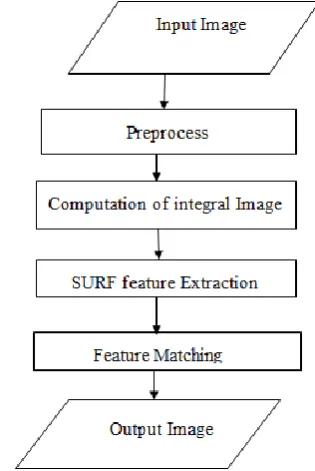
Figure 2:Block diagram showing the Computational steps for Surf Feature extraction.
II.
RELATED WORKS
A wide range of feature detectors and descriptors has been presented in the literature. A widely known and used detector is the Harris detector, which is based on the eigenvalues of the second-moment matrix, but Harris corners are not scaled invariant and hence, it is not applicable in our application.
Lowe proposed the well-known technique SIFT for extracting invariant features from images that implies both detector and descriptor. SIFT is invariant to scale, rotation, illumination, and viewpoint changes. Ke and Sukthankar introduced a local image descriptor by applying Principal Components Analysis (PCA) to the normalized gradient patch to get more distinctive, more robust to image deformation, and more compact than the standard SIFT representation. Bay et. al proposed the scale- and rotation-invariant interest point (SURF) detector and descriptor. The detector is based on the Hessian matrix and relies on the integral images to reduce the computation time and the descriptor describes a distribution of Haar-wavelet responses within the interest point neighborhood to introduce the descriptor of 64-D length. These feature matching techniques are vector-based which offer efficient individual computation but they suffer from a computational complexity as a number of features grow. On the other hand, the binary descriptors are an alternative to minimize the computation time and to keep the descriptors robustness and efficiency.
Calonderetal used to use binary strings as an efficient feature point descriptor and presented a BRIEF binary descriptor of 256 bits length. BRIEF suffers from high sensitivity to image rotation and scale changes. While Rosten.al proposed a feature detector (FAST) which is based on machine learning and depends on the segment test criterion. FAST has been improved by using machine learning to address the problem of ordering and distribution of corner appearance. The improved keypoint descriptor Fast Retina Keypoint (FREAK) is inspired by the retina of the human visual system by computing a cascade of binary strings through the comparison of image intensities over a retina sampling pattern.
III.
PROPOSED METHODOLOGY
Step 1: Input two images and extract the face portion using any face detection algorithm Step 2: Detect SURF feature points from the corresponding faces.
Step 3: Compute integral image
Step 4: Apply 2nd derivative (approximate) filters to image
Step 5: Apply Non-maximal suppression (Find local maxima in (x,y,s) space) Step 6: Apply Quadratic interpolation
Step 7: Extract SURF features.
Step 8: Compare the SURF features of two images, find the matching points and calculate the matching percentage.
Step 9: If the percentage is greater than a threshold value then the matching is successful otherwise image mismatch.
4.4 Analysis
Table 1
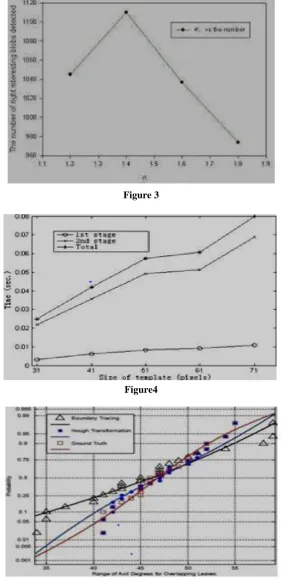
Figure 3
[7]. T.M. Cover and P. E. Hart, "nearest neighbor pattern classification", IEEE Transactions Information Theory, Vol. IT-13, 1997,pp 21-27. A. Henrich, "The LSD-tree: an access structure for feature vectors", in proceeding 14thInternational conference data engineering, 1998, pp 362-369.
[8]. Strang, Linear Algebra and its applications, 2nd edition, New York: Academic, 1980. [9]. N. Jayanthi and S. Indu,” Comparison of Image Matching Techniques”,
International Journal of Latest Trends in Engineering and Technology, Vol. (7)Issue(3), pp. 396‐401