Original Research Article
Unintentional Home Injury in Children up to Age 12 Years Reported by
Mother Attending Vaccination Clinic in Al-Rusifa PHC Center,
Makkah Al-Mokarramah, Saudi Arabia (2013)
Laila Saleem Aloufi
Al Kakiyyah Primary Health Care Center, Ministry of Health, Makkah, Saudi Arabia.
ABSTRACT
Background: Childhood injury at home is a major public health problem that requires urgent attention. It is among the most common preventable worldwide health problems.
Objectives: To estimate the overall prevalence of home injury in children up to 12 years old among mothers attending vaccination clinic, its most common types, associated factors and outcomes in Al-Rusifa primary health care in 2013. Methodology: A cross–sectional approach was carried out among a representative random sample of mothers attending vaccination clinic in Al-Rusifa PHC, Makkah throughout the study period and having one child or more of 12 years old or less. An interview questionnaire was used as a tool for data collection. It was developed by the researcher and consisted of 3 parts; socio-Demographic data of the families, presence of home injury in children and detailed questions about the child who is affected by injury.
Results: The study included 172 mothers having children less than 12 years. Their age ranged between 19 and 49 years with a mean (SD) age of 29.7 (5.7) years. The prevalence of home injury affecting children up to 12 years old in Al-Rusifa primary health care, Makkah was 20.9%. The most common reported home injury was falls down (62.2%) followed by sharp cut wounds(20%) while burns was reported by 8.9% of home injury cases. Exactly half of them were managed at home, but 30.6% of them were treated at hospital and resent home. Majority of
injured children (86.1%) were fit after the accident while only 8.3% were temporary disabled. Mothers in the age group 26-35 showed higher significant rate of child`s home injuries than others.
Conclusion: Almost a fifth of children of 12 years old or less reported unintentional home injuries among mothers attended Al-Rusifa primary health care, Makkah. The common reported type of injury was falls down. Child safety and injury prevention programs need to be tailored to the home environment at different setting.
Keywords: Children, Unintentional, Home Injury.
*Correspondence to:
Laila Saleem Aloufi
Al Kakiyyah Primary Health Care Center, Ministry of Health, Makkah, Saudi Arabia. Article History:
Received: 24-01-2017, Revised: 17-02-2017, Accepted: 05-03-2017
Access this article online
Website: www.ijmrp.com
Quick Response code
DOI:
10.21276/ijmrp.2017.3.2.028
INTRODUCTION
Childhood injury at home is a major public health problem that requires urgent attention.1 Children are exposed to many hazards
and risks as they grow and develop into adulthood.2
Unintentional injuries are one of the leading causes to death, hospitalization and disability across the world. However, the pattern and etiology of injuries and their outcomes vary substantially within populations across countries.1
Injury is defined as “the physical damage that results when a human body is suddenly subjected to energy in amounts that exceed the threshold of physiological tolerance”.3
Unintentional includes only those injuries that occur without intent of harm. Such injuries are frequently called accidents or accidental in common usage.4 However, increasingly the term
accident is regarded as a misnomer for unintentional injuries because it suggests unpredictability or a lack of control over the
circumstances surrounding an event. The National Center for Injury Prevention and Control at the Centers for Disease Control and Prevention does not use the term accident at all; because this term promotes the idea that injuries cannot be prevented when the likelihood of many childhood injuries can be reduced using relatively simple strategies.5
Approximately90% of children injuries result from unintentional or "accidental" incidents. About 830 000 children die of such injuries every year, nearly 2300 each day. More than 1000 of these children could be saved if proven injury prevention measures were applied worldwide.6
Worldwide, the leading reasons for death because of Unintentional injuries include road traffic injuries, poisonings, falls, burns and drowning.7,8 The vast majority of unintentional injuries
African, South-East Asian and Western Pacific regions children account for 80% of all children’s deaths of unintentional injuries.9
Approximately 20% of all death of unintentional injuries world-wide occurs in children under 15 years old and they are among the ten leading causes of death at this age group.10
Children are particularly more susceptible and vulnerable to injury due to several factors including behavioral as young children usually touch and put things in their mouths that can lead to burns, poisonings and other bad-health effects, physiological as being smaller and closer to the ground, they may be exposed to risks that go unnoticed by adults, for example, children's size makes them hard to see from a vehicle, increasing their risk of involvement in a road crash and developmental as children are always immature, they lacking the psychological development to recognize and manage dangerous situations, they may be more readily take actions that they do not comprehend to be risky. They are easily distracted, tend to focus on immediate tasks and have not yet gained the skills, strength and endurance to manipulate certain physically challenging situations for their own safety.11
This study aimed to estimate the prevalence of home injury in children up to 12 years old among mothers attending vaccination clinic in Al-Rusifa primary health care in 2013.
SUBJECTS AND METHODS
This study is a cross- sectional analytical one. A representative sample of mothers having children less than 12 year attending vaccination clinic Al-Rusifa PHC center in Makkah during the study period (September, 2013) was chosen. Makkah is the Holy City of Islam. It is located in the western region of Saudi Arabia, near the Red Sea. Al-Rusifa PHC center was established since more than 30 years. It belongs to Al-Zaher health sector. It serves nine regions. The number of targeted children served in well-baby clinic is estimated to be 480 annually
The sample size was calculated by using Raosoft Sample size calculator (margin of error= 5%; confidence level= 95%, and The
response distribution was considered to be 50% to obtain larger sample size). The researcher took the total number of mothers with children (<12 years) attending vaccination clinic in Al-Rusifa PHC center in the previous month as total population. The total population obtained was about (307) mothers. The calculated sample size was 172 mothers.
An interview questionnaire was used for data collection. It was developed by the researcher through reviewing previous studies,12-26 as well as using the WHO guidelines for conducting
community surveys on injuries and violence.27 The questionnaire
contains socio-demographic data of the families, presence of home injury in children, detailed questions about the child who is affected by injury and includes, demographic data, mechanism of home injury, types of home injuries, medical interference and outcomes of home injury on health state of the child. A systematic random sampling technique was adopted as every third mother attended the PHCC was invited to participate in the study. The recruited mothers were interviewed by the researcher herself inside the vaccination clinic while they waiting the sisters of vaccination clinic to record data information of children in their files and preparing the vaccine given to child. Approximately 7 minutes were needed for every questionnaire to be completed.
Validity of the questionnaire was ascertained by three consultants in the fields of Family Medicine and Community Medicine. Written permissions from Joint Program of Family Medicine, Al-Rusifa PHC center director and mothers were obtained.
All collected data was verified by hand and corrected whenever necessary, then coded before entered to a personal computer. Data entry and analysis was carried out using the Statistical Package of the Social Sciences (SPSS) statistical program version 20. Frequency and percentage were utilized for description of categorical variables. Chi-square statistical test was applied to test the association and/or difference between the history of child home injury and studied associated factors. P-value was considered statistically significant if it was <0.05.
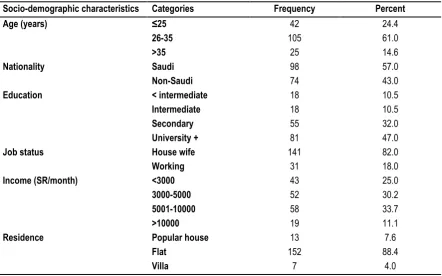
Table 1: Socio-demographic characteristics of the study participants (n=172).
Socio-demographic characteristics Categories Frequency Percent
Age (years) ≤25
26-35 >35
42 105
25
24.4 61.0 14.6
Nationality Saudi
Non-Saudi
98 74
57.0 43.0
Education < intermediate
Intermediate Secondary University +
18 18 55 81
10.5 10.5 32.0 47.0
Job status House wife
Working
141 31
82.0 18.0
Income (SR/month) <3000
3000-5000 5001-10000 >10000
43 52 58 19
25.0 30.2 33.7 11.1
Residence Popular house
Flat Villa
13 152
7
7.6 88.4
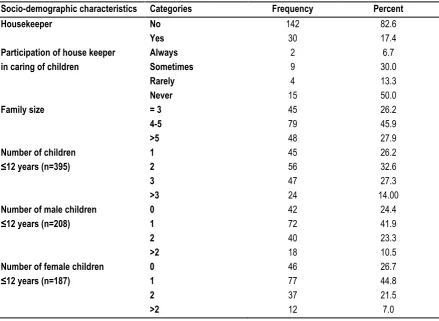
Table 2: Family characteristics of the study participants (n=172).
Socio-demographic characteristics Categories Frequency Percent
Housekeeper No
Yes
142 30
82.6 17.4 Participation of house keeper
in caring of children
Always Sometimes Rarely Never
2 9 4 15
6.7 30.0 13.3 50.0
Family size = 3
4-5 >5
45 79 48
26.2 45.9 27.9 Number of children
≤12 years (n=395)
1 2 3 >3
45 56 47 24
26.2 32.6 27.3 14.00 Number of male children
≤12 years (n=208)
0 1 2 >2
42 72 40 18
24.4 41.9 23.3 10.5 Number of female children
≤12 years (n=187)
0 1 2 >2
46 77 37 12
26.7 44.8 21.5 7.0
RESULTS
The study included 172 mothers having children less than 12 years. Their age ranged between 19 and 49 years with a mean (SD) age of 29.7 (5.7) years. Almost two-thirds of them (61%) were in the age group 26-35 years. Saudi mothers represent 57% of the participants. Slightly less than half of them (47%) were at least university graduated. Most of them (82%) were house wives. 25% participants had income less than 3000 SR/month whereas 11.1% had income more than 10000 SR/month. Most of them (88.4%) resided flats while 7.6% resided popular house. (Table 1)
Table 2 presents family characteristics of mothers who participated in the study. Only 30 women (17.4%) reported that they had house keepers. Of them, 50% reported that housekeepers never participated in caring of their children. Family size ranged between four and five among 45.9% of them while it was over 5 among 27.9% of them. Number of children up to 12 years was over 3 among 14% of them whereas numbers of males and females children up to 12 years were over 2 among 10.5% and 7% of the mothers, respectively.
Figure 1: Prevalence of home injury affecting children up to age 12 years in Al-Rusifa primary health care, Makkah. (Based on number of mothers)
136, 79.1%
36, 20.9%
No
Figure 2: Prevalence of home injury affecting children up to age 12 years in Al-Rusifa primary health care, Makkah. (Based on number of children)
Figure 3: Types of home injury reported among children up to 12 years in Al-Rusifa primary health care, Makkah.
As illustrated in Figure (1), the prevalence of home injury affecting children up to age 12 years in Al-Rusifa primary health care, Makkah was 20.9%. This represent 10.63% injured child of total number of children for all mothers as shown in figure (2). In most families (80.6%), only one accident was happened whereas three accidents were occurred in two families (5.6%). Only 3 children had more than one time accident. More than half of mothers (55.6%) had injured children with in the age group 1 to 5 years while 30.6% had injured children under the age of one year. Of total children with injury, male and female constituted 54.8% and 45.2% respectively.
As shown in figure 3, the most common reported home injury was falls (64.4%) (29 cases) followed by sharp cut wounds (20%) , 6 cases of them by knife and 3 by glass while burns was reported by (8.9%), all 4 cases were either by hot matter or hot food. Other injuries mainly simple electric shock was reported among another (6.7%). Almost a third of children with history of fall 37.9% fell from bed and or chair while 24.1% fell from sofa and the remaining 37.9% fell as a result of other methods as sliding, from their fathers, cupboard, washing machine, ladder and table. Approximately a third (31.1%) of home injuries resulted in contusions while 20% and 17.8% of them resulted in superficial
42; 10.6%
353; 89%
Yes
No
0 10 20 30 40 50 60 70
Fall Burn Sharp cut wound Others
64.4
8.9
20
wounds and concussion, respectively. Exactly half of mothers reported that injuries were managed at home and 30.6% of them were treated at hospital and re-sent to home. Only 2.8% were hospitalized whereas 16.6% never need any intervention. Majority of mothers said that their injured children (86.1%) were fit after the accident while only 8.3% of mother reported temporary disabled in their children and 5.6% showed skin deformity.
As demonstrated in table 3, home accidents of children under 12 years were more reported among women in the age group 26-35 years (26.7%) compared to 14.3% and 8.0% among those aged 25 years or less and those aged more than 35 years, respectively. This difference was statistically significant, p=0.043. Other studied factors were not significantly associated with home accidents among children under 12 years old.
Table 3: Factors associated with history of home accidents among children under 12 years old.
Home accident Chi-square
value
p-value No
[N=136] N (%)
Yes [N=36] N (%) Age (years)
≤25 (n=42) 26-35 (n=105) >35 (n=25)
36 (85.7) 77 (73.3) 23 (92.0)
6 (14.3) 28 (26.7)
2 (8.0) 5.73 0.043
Nationality Saudi (n=98) Non-Saudi (n=74)
75 (76.5) 61 (82.4)
23 (23.5)
13 (17.6) 0.89 0.346
Education
<Intermediate (n=18) Intermediate (n=18) Secondary (n=55)
University and above (n=81)
13 (72.2) 14 (77.8) 42 (76.4) 67 (82.7)
5 (27.8) 4 (22.2) 13 (23.6)
14 (17.3) 1.42 0.700
Job status
House wife (n=141) Working (n=31)
111 (78.7) 25 (80.6)
30 (21.3)
6 (19.4) 0.06 0.812
Family income <3000 (n=43) 3000-5000 (n=52) 5001-10000 (n=58) >10000 (n=19)
34 (79.1) 42 (80.8) 47 (81.0) 13 (68.4)
9 (20.9) 10 (19.2) 11 (19.0)
6 (31.6) 1.53 0.676
Residence
Popular house (n=13) Flat (n=30)
Villa (n=7)
11 (84.6) 119 (78.3)
6 (85.7)
2 (15.4) 33 (21.7)
1 (14.3) 0.48 0.785
Family size 3 (n=45) 4-5 (n=79) >5 (n=48)
36 (80) 58 (74.7) 41 (85.4)
9 (20) 20 (25.3)
7 (14.6) 2.110 0.348
Child`s gender Male (n=208) Female (n=187)
185 168
23
19 0.083 0.772
Participation of house maid in caring of children
Always/sometimes (n=11) Rarely/no (n=19)
10 (90.9) 11 (57.9)
1 (9.1)
8 (42.1) 0.065*
DISCUSSION
Unintentional injury constitutes a major public health problem that should be prevented whenever possible due to higher mortality and morbidity.28 This study pays attention toward unintentional
injury as a cause of morbidity among children under the age of 12 years old whose mothers attended Al-Rusifa PHC center in Makkah for vaccination.
The prevalence of unintentional home injuries among children up to 12 years in the present study was 20.9%. Compared with a local study conducted in Riyadh, Saudi Arabia, a cross sectional household survey determined the incidence of 22.2% of injuries in the previous 12 months among children and adolescents <18 years old.12 However, this comparison may not be fair as the age
categories used were not the same and not specific for home injury.
On the other hand, the rate reported in our study is less than those reported in the other studies. In Oman, the home injury occurred in 42% of all patients attended Al Moabelah Health Center from the period from 1st January 2010 to the 31st
December 2012 , however this result include both children and elderly. In other way injury rate reported among children under 12 years was of 41.7% which may happen in place other than home.13 In United Arab Emirates , non-traffic injury of 0-19 years
old during 36 months was 60% and of these injury 70%occured at home, however we cannot compare this because of age group not same as present study and longer duration.14 In Damascus,
community based study of unintentional injury in preschool children report the incidence rate of injury was 23% and 73.9% of them occurred inside home although this incidence although the this incidence not only in home, it just for preschool children.15 In
Egypt, the incidence of home injuries in the previous 4 weeks among rural children aged up to 12 years was 38.3% which is more than current study although less duration but large sample size.24 In Nigeria , the incidence of injury at home among children
who present to General Hospital Aliero was 31 (48.4%), however this include the age up to 15 years.18 In China , the home also
was the most common place of injuries (36.9%) among 924 cases of children hospitalized in Zhongshan Boai Hospital during two years with unintentional injury.25
The most common causes of injury visits were falls (62.2%) followed by cutting/piercing by a sharp instrument (20%). Globally, falls in all age groups are a major public health problem and fatal falls is the second leading cause of unintentional injury deaths after road traffic injuries and responsible for 17 million disability-adjusted life years (DALYs) lost.28 For the year 2010, according to
the National Estimates of the 10 Leading Causes of Nonfatal Injuries Treated in Hospital Emergency Departments in the United States, unintentional falls ranked first for all age groups; cutting/piercing was the third among 5-9 years age group after unintentional struck.29 Furthermore, a study conducted in
Tanzania reported that falls were also the most common cause of severe injuries in children less than 10 years of age.30 The study
findings of a preponderance of falls from stairs or beds and other furniture while children were at play in and around the home suggests the need for a mixed intervention consisting of safer play areas, safer construction, safer furniture for sleeping and playing, and improved supervision.31,32
There are several reasons attributed to the increased incidence and prevalence of unintentional falls compared to other types of
injuries among children. Childhood falls (with subsequent face and scalp traumas) occurred largely as a result of their evolving developmental stages, innate curiosity of their surroundings, increasing levels of independence and inadequate adult supervision.33
In the present study, there was no association between family's income and incidence of home injuries. Contrary to this finding the majority of injuries happened in low socioeconomic class as Mozambique and Karachi.19,24
Also in this study, the injury was more common in male as most of studies regardless to age group in different studies. However, this difference was not significant current study compare to study in Oman where was significant for male who had four time more injury regardless to the age.13
Regard to age group, the researcher concludes that the most frequent age group with injury was between 1-5 year old (55.6%). In comparison to other where the mostly occur in age 5-9 year and 5-11 year in Mozambique ad Karachi respectively.19,23
The main limitation of this study was the long recall period and simple or neglected injury that may miss by mothers. Thus we presume the occurrence of unintentional injuries may have been under-estimated. We do not, however, think that recall problems affected our main conclusion. The study focused only on unintentional injuries inside home with specific age in children less than 12 years of age. As a result, the burden of intentional injuries (violence) and of injuries in children older than 12 years has not been captured. Another shortcoming is that the field part of the study was conducted over a period of one month; therefore, seasonal variability may have influenced the results. Finally, since this study was conducted only at one health center, the findings are therefore limited to that one center and cannot be generalized to other settings.
In conclusion, almost a fifth of children of 12 years old or less reported unintentional home injuries among mothers attended Al-Rusifa primary health care, Makkah. The common reported type of injury was falls down. Child safety and injury prevention programs need to be tailored to the home environment at different setting.
REFERENCES
1. Peden M, Oyegbite K, Ozanne-Smith J, Hyder AA, Branche C, Rahman AKMF,et al., editors; World Health Organization, UNICEF. World Report on Child Injury Prevention. Geneva, Switzerland: World Health Organization, Chapter 1: child injuries in context, 2008.
2. Center for disease control and prevention. Protect the ones you love: child injuries are preventable. CDC. Accessed 2012 April 19. Available at: http://www.cdc.gov/safechild/NAP/background.html 3. Baker SP, O'Neill B, Ginsburg MJ, Li G. The injury fact book. Second edition. New York, Oxford University Press, 1992. 4. Guyer, B., and Ellers, B. Childhood injuries in the United States: Mortality, morbidity, and cost. American Journal of Diseases of Children 1990 June; 144:649-52.
5. Centers for Disease Control. Injury mortality atlas of the United States, 1979-1987. Morbidity and Mortality Weekly Report (December 13, 1991) 40, 49:846-48.
7. World Health Organization. Violence, Injuries, and Disability: Biennial 2006–2007 Report. Geneva, Switzerland: World Health Organization, 2008.
8. Krug EG, Sharma GK, Lozano R. The global burden of injuries. Am J Public Health2000; 90(4):523-526.
9. WHO. Healthy Environments for Children: Fact Sheet N 272, April, 2003 Available at: http://www.who.int/world-health-day/previous/2003/facts/en/
10. Centers for Disease Control and Prevention, National Center for Injury Prevention and Control. Web-based Injury Statistics Query and Reporting System (WISQARS) [online]. [Cited 2012 May 3]. Available from: URL: http://www.cdc.gov/injury/wisqars. 11. WHO. Issue Brief Series: Accidents and Injuries, Geneva, Switzerland: World Health Organization; 2001. Available at: http://www.who.int/heca/infomaterials/injuries.pdf
12. Gad A, AL-Eid R, Al-Ansary S, bin Saeed A, Kabbash A. Pattern of injuries among children and adolescents in Riyadh, Saudi Arabia: a household survey. Journal of tropical pediatrics. 2011 Jun;57(3):179-84.
13. Al-Balushi H, Al-Kalbani A, Al-Khwaldi T, Al-Suqri S, Al-Maniri A, Alazri M, et al. Injuries presented at a primary care setting in oman. Oman medical journal. 2012 Nov;27(6):486-90.
14. Grivna M, Barss P, Stanculescu C, Eid HO, Abu-Zidan FM. Home and Other Nontraffic Injuries Among Children and Youth in a High-Income Middle Eastern Country: A Trauma Registry Study. Asia-Pacific journal of public health/Asia-Pacific Academic Consortium for Public Health. 2011 Dec 23.
15. Bashour H, Kharouf M. Community-based study of unintentional injuries among preschool children in Damascus. Eastern Mediterranean health journal. 2008 Mar - Apr; 14 (2): 398-405.
16. El-Sayed H, Hyder A, Zekry O, Sugerman D, Abdel-Hamid S, Abbas H, et al. Childhood unintentional injuries surveillance in Ismailia governorate, Egypt. Injury Prevention. 2010 September 1, 2010;16(Suppl 1):A25.
17. Kanaizumi S, Shibata M, Miyazaki Y, Nakashita T, Sakou K, Hoshino Y,et al. Frequency and prevention of childhood domestic injury according to age. Nihon Koshu Eisei Zasshi. 2009 Apr;56(4):251-9.
18. Buowari DY. Pattern of childhood injury presenting at General Hospital Aliero, Nigeria. Niger J Med. 2010 Oct-Dec;19(4):447-50. 19. de Sousa Petersburgo D, Keyes CE, Wright DW, Click LA, Macleod JB, Sasser SM. The epidemiology of childhood injury in Maputo, Mozambique. International journal of emergency medicine. 2010;3(3):157-63.
20. Espitia-Hardeman V, Borse NN, Dellinger AM, Betancourt CE, Villareal AN, Caicedo LD, et al. The burden of childhood injuries and evidence based strategies developed using the injury surveillance system in Pasto, Colombia. Injury prevention : journal of the International Society for Child and Adolescent Injury Prevention. 2011 Feb;17 Suppl 1:i38-44.
21. Mutto M, Lawoko S, Nansamba C, Ovuga E, Svanstrom L.Unintentional childhood injury patterns, odds, and outcomes in Kampala City: an analysis of surveillance data from the National Pediatric Emergency Unit.J Inj Violence Res. 2011 Jan;3(1):13-8. 22. Eldosoky RS. Home-related injuries among children: knowledge, attitudes and practice about first aid among rural mothers. East 2012 Oct; 18(10):1021-7.
23. Zia N, Khan UR, Razzak JA, Puvanachandra P, Hyder AA. Understanding unintentional childhood home injuries: pilot surveillance data from Karachi, Pakistan. BMC research notes. 2012;5:37.
24. Siddiqui EU, Ejaz K, Siddiqui U. Unintentional, paediatric domestic injury in a semi rural area of Karachi.J Pak Med Assoc. 2012 Jul;62(7):638-43.
25. Mo QY, Huang DM, Xie GQ, Liang GM, Ma LZ, Fu SM.Unintentional injuries in children: an analysis of 924 cases. Zhongguo Dang Dai ErKeZaZhi. 2013 Jul;15(7):559-62
26. World Health Organization. Guidelines for conducting community surveys on injuries and violence. Edited by: Sethi D, Habibula S, McGee K, Peden M, Bennett S, Hyder AA, et al. WHO, Geneva, 2004.
27. Morrongiello A, Lisa Ondejko MA, Littlejohn A. Understanding toddlers In-Home Injuries. J Pediatr Psychol 2004; 29: 433-446 Doi: 10.1093/jpepsy/jsh047
28. World Health Organization (WHO). Media Center, Falls Fact Sheet No344, August 2010, WHO.
http://www.who.int/mediacentre/factsheets/fs344/en/index.html. (Accessed 21.9.2012).
29. Office of Statistics and Programming, National Center for Injury Prevention and Control. National Estimates of the 10 Leading Causes of Non fatal Injuries Treated in Hospital Emergency Departments, United States–2010. The Centers for Disease Control and Prevention (CDC), USA. http://www.cdc.gov/Injury/wisqars/pdf/National_Estim_10_Leading _Causes_Nonfatal_Injuries_Tx_Hospital-ED_US2010-a.pdf (Accessed 21.9.2012).
30. Kamala B, Wilson W, Hasselberg M. Pattern of childhood falls in a low-income setting: A cross-sectional study in Dar el Salaam. International Journal of Injury Control and Safety Promotion 2011; 1–7.
31. Butchart A, Kruger J, Lekoba R. Perceptions of injury causes and solutions in a Johannesburg township: Implications for prevention. Social Science & Medicine. 2000; 50, 331–344. 32. World Health Organization & UNICEF. Child and adolescent injury prevention: A global call to action. Geneva, 2005.
33. World Health Organization (WHO). Media Center, Falls Fact Sheet No 344, August 2010, WHO. Available at: http://www.who.int/mediacentre/factsheets/fs344/en/index.html. (Accessed 21.9.2012).
[
Source of Support: Nil. Conflict of Interest: None Declared.
Copyright: © the author(s) and publisher. IJMRP is an official publication of Ibn Sina Academy of Medieval Medicine & Sciences, registered in 2001 under Indian Trusts Act, 1882. This is an open access article distributed under the terms of the Creative Commons Attribution Non-commercial License, which permits unrestricted non-commercial use, distribution, and reproduction in any medium, provided the original work is properly cited.