Brushless DC Motor Controlled by using
Internet of Things
Ms. C. Hemalatha Mr. R. Nagarajan
Assistant Professor Professor
Department of Electrical & Electronics Engineering Department of Electrical & Electronics Engineering Gnanamani College of Technology Namakkal, Tamilnadu,
India
Gnanamani College of Technology Namakkal, Tamilnadu, India
P. Suresh G. Ganesh Shankar
UG Student UG Student
Department of Electrical & Electronics Engineering Department of Electrical & Electronics Engineering Gnanamani College of Technology Namakkal, Tamilnadu,
India
Gnanamani College of Technology Namakkal, Tamilnadu, India
A. Vijay UG Student
Department of Electrical & Electronics Engineering Gnanamani College of Technology Namakkal, Tamilnadu, India
Abstract
This paper presents the study and control of the Brushless DC (BLDC) motor by using IoT. The BLDC drive systems are often used in many industrial applications such as robotics, actuation and manipulators. The Internet of Things (IoT) refers to the ever growing network of physical objects that feature an Internet protocol (IP) address for internet connectivity and the communication that occurs between these objects and other internet enabled devices and systems. The BLDC Motor has been widely used in industries because of its properties such as high efficiency, reliability, high weight to torque ratio. By utilizing this IoT control, the rate can be tuned until it gets like the desired output.
Keywords: IoT, IP, BLDC Motor
________________________________________________________________________________________________________
I. INTRODUCTION
II. HOME AUTOMATION SYSTEM
Fig. 1: Existing system of home automation
An isolated WSN with one coordinator, which is integrated into the PLC transceiver, is established in each room. The coordinator is responsible for transferring environmental parameters obtained by WSNs to the management station via PLCs. The control messages for home appliances are directly transferred using PLCs rather than WSNs. The existing system of home automation is shown in Fig.1.
Fig. 2: Proposal prototype model
III. IOT BASED BLDC MOTOR CONTROL
Fig. 3: Block diagram of IoT based BLDC Motor control
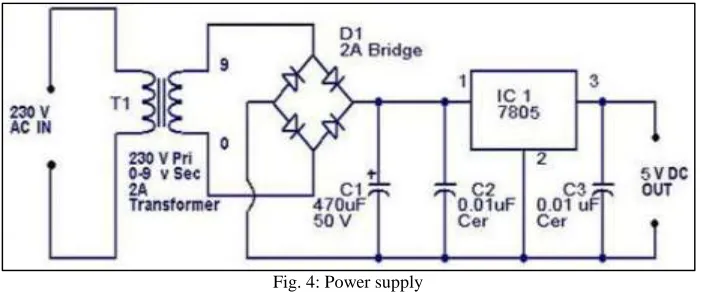
In arduino controller, programmed the function with the certain web domain IP address [9], [10]. The Ethernet shield used to receive signals from the web domain. The Arduino Ethernet Shield connects the Arduino to the internet in mere minutes. A relay is an electrically operated switch. Relay is used where it is necessary to control a circuit by a separate low-power signal, or where several circuits must be controlled by one signal. The TIP120 is an NPN Power Darlington Transistor. It can be used with an Arduino to drive motors, turn lights on, and drive other high power gadgets [11]-[14]. The TIP120 acts as a power broker or gatekeeper between the Arduino realm and the high power realm composed of the PC fan and its battery pack. The Arduino can tell the TIP120 how much power to pass from the external battery pack to the PC fan but the Arduino does not share any of its power or share pins with the PC fan or its batteries. The TIP120 has three pins. One is called Base, which we will connect to any of the Arduino PWM pins. Through the Base pin, the Arduino can tell the TIP120 how much power to supply to the motor from the external battery pack. The TIP120 does the heavy lifting while Arduino sits back and gives orders through one of its PWM pins to the TIP120 Base pin telling it how much power to pass to the motor. The poor TIP120 has to then pass the requested power from the external power to the motor based on Arduino's request [15]. In Fig. 3 shows the block diagram of IoT based BLDC Motor control. A typical 12 V, 40 Ah lead-acid car battery is used here. It provides 12.6 volts of direct current, nominally 12 V. The battery is actually six cells connected serially. Battery electric vehicles are powered by a high-voltage electric vehicle battery, but they usually have an automotive battery as well, so that it can be equipped with standard automotive accessories which are designed to run on 12 V. So, the Brushless DC motor is ON/OFF by using internet to control at distant places. By using the android to connecting the both IP address at one certain web domain to ON/OFF the BLDC motor. In Fig. 4 shows the power supply circuit diagram.
Fig. 4: Power supply
IV. ARDUINO UNO AND ETHERNET SHIELD
Fig. 5: Arduino UNO board Fig. 6: Arduino Ethernet Shield
The Arduino Ethernet Shield connects your Arduino to the internet in mere minutes as shown in Fig. 6. Just plug this module onto your Arduino Board, connect it to your network with an RJ45 cable (not included) and follow a few simple steps to start controlling your world through the internet. As always with Arduino, every element of the platform – hardware, software and documentation – is freely available and open-source. This means you can learn exactly how it's made and use its design as the starting point for your own circuits [17]. Hundreds of thousands of Arduino Boards are already fueling people’s creativity all over the world, every day. Join us now, Arduino is you! *Requires an Arduino Board (not included) Operating voltage 5V (supplied from the Arduino Board) Ethernet Controller: W5500 with internal 32K buffer. The Fig. 6 shows the Arduino Ethernet Shield.
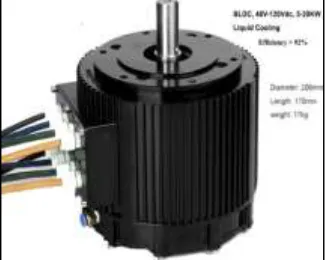
A relay is an electrically operated switch. Many relays use an electromagnet to mechanically operate a switch, but other operating principles are also used, such as solid-state relays. Relays are used where it is necessary to control a circuit by a separate low-power signal, or where several circuits must be controlled by one signal. The first relays were used in long distance telegraph circuits as amplifiers: they repeated the signal coming in from one circuit and re-transmitted it on another circuit. A type of relay that can handle the high power required to directly control an electric motor or other loads is called a contractor. Solid-state relays control power circuits with no moving parts, instead using a semiconductor device to perform switching. Relays with calibrated operating characteristics and sometimes multiple operating coils are used to protect electrical circuits from overload or faults. The TIP120 is an NPN Power Darlington Transistor. It can be used with an Arduino to drive motors, turn lights on, and drive other high power gadgets. The TIP120 acts as a power broker or gatekeeper between the Arduino realm and the high power realm composed of the PC fan and its battery pack. The Arduino can tell the TIP120 how much power to pass from the external battery pack to the PC fan but the Arduino does not share any of its power or share pins with the PC fan or its batteries. The TIP120 has three pins. One is called Base, which we will connect to any of the Arduino PWM pins. Through the Base pin, the Arduino can tell the TIP120 how much power to supply to the motor from the external battery pack. The TIP120 does the heavy lifting while Arduino sits back and gives orders through one of its PWM pins to the TIP120 Base pin telling it how much power to pass to the motor. The poor TIP120 has to then pass the requested power from the external power to the motor based on Arduino's request. In Fig. 7 shows the brushless DC motor. The Brushless DC electric motor also known as electronically commutated motors are synchronous motors that are powered by a DC electric source via an integrated inverter/switching power supply, which produces an AC electric signal to drive the motor. In this context, AC, alternating current, does not imply a sinusoidal waveform, but rather a bi-directional current with no restriction on waveform. Additional sensors and electronics control the inverter output amplitude and waveform (and therefore percent of DC bus usage/efficiency) and frequency (i.e. rotor speed) [18]. Brushless motors may be described as stepper motors; however, the term "stepper motor" tends to be used for motors that are designed specifically to be operated in a mode where they are frequently stopped with the rotor in a defined angular position. This page describes more general brushless motor principles, though there is overlap.
V. CONCLUSION
In this paper, proposed the new architecture for control the BLDC motor, which uses a flexible industrial based Android smart phone at a reasonable price and implemented by Ethernet shield and Arduino UNO as well as using web domain for system control configuration. The proposed architecture is used in a web services for communication between the remote user and the industrial device. All Android based smart phone, the Ethernet shield connection is the support built, and the industry access device to control can use the phone, 3G or 4G to access the Web page on hosting server using Android App or web domain.
REFERENCES
[1] H. Li, G. W. Rosenwald, J. Jung, and C. Liu, “Strategic power infra-structure defense,” Proc. IEEE, vol. 93, no. 5, pp. 918–933, May 2005.
[2] P. Zhang, F. Li, and N. Bhatt, “Next-generation monitoring, analysis, and control for the future smart control center,” IEEE Trans. Smart Grid, vol. 11, no. 2, pp. 186–192, Sep. 2010.
[3] V. C. Gungor and F. C. Lambert, “A survey on communication net-works for electric system automation,” Comput. Netw., vol. 50, no. 7, pp. 877–897, May 2006.
[4] P. Ramachandran, V. Vittal, and G. T. Heydt, “Mechanical state esti¬mation for overhead transmission lines with level spans,” IEEE Trans. Power Syst., vol. 23, no. 3, pp. 908–915, Aug. 2008.
[5] S. Malhara and V. Vittal, “Mechanical state estimation of overhead transmission lines using tilt sensors,” IEEE Trans. Power Syst., vol. 25, no. 3, pp. 1282– 1290, Aug. 2010.
[6] R.Nagarajan, R.Yuvaraj, V.Hemalatha, S.Logapriya, A.Mekala and S.Priyanga,"Implementation of PV - Based Boost Converter Using PI Controller with PSO Algorithm, "International Journal Of Engineering And Computer Science (IJECS), Volume 6, Issue 3, pp. 20479-20484, March 2017.
[7] J. Ausen, B. F. Fitzgerald, E. A. Gust, D. C. Lawry, J. P. Lazar, and R. L. Oye, “Dynamic thermal rating system relieves transmission con-straint,” in Proc. IEEE 11th Int. Conf. Transm. Distrib. Construction, Oper., Live-Line Maintenance (ESMO), Oct. 15–19, 2006.
[8] V. C. Gungor, L. Bin, and G. P. Hancke, “Opportunities and challenges of wireless sensor networks in smart grid,” IEEE Trans. Ind. Electron., vol. 57, no. 10, pp. 3557–3564, Oct. 2010.
[9] R.Nagarajan and M,Saravanan. “Performance Analysis of a Novel Reduced Switch Cascaded Multilevel Inverter,” Journal of Power Electronics, Vol.14, No.1, pp. 48-60. 2014.
[10] S. Ullo, A. Vaccaro, and G. Velotto, “The role of pervasive and coop¬erative sensor networks in smart grids communication,” in Proc. 15th IEEE Mediterranean Electrotech. Conf. (MELECON), pp. 443–447. Apr. 26–28, 2010.
[11] R.Nagarajan and M,Saravanan “Staircase Multicarrier SPWM Technique for Nine Level Cascaded Inverter,” Proceedings of the International Conference on Power, Energy and Control, IEEE Press, pp-668-675. 2013.
[12] S. Chandrasekar and Gian Carlo Montanari, “Analysis of Partial Discharge Characteristics of Natural Esters as Dielectric Fluid for Electric Power Apparatus Applications,” IEEE Transactions on Dielectrics and Electrical Insulation Vol. 21, No. 3, pp.1251-1259 June 2014.
[13] Krishnan R, “Permanent magnet synchronous and brushless DC motor drives”, Boca Raton: CRC Press, 2010
[14] S.Aydemir, S.Sezen, H.M., Ertunc, “Fuzzy logic speed control of a DC motor”, IEEE, 4th International Power Electronics and Motion Control Conference (IPEMC), Vol. 2, PP. 766 – 771, August 2004.
[15] G. Vidhya Krishnan, R.Nagarajan, T. Durka, M.Kalaiselvi, M.Pushpa and S. Shanmuga priya, "Vehicle Communication System Using Li-Fi Technology", International Journal Of Engineering And Computer Science (IJECS), Volume 6, Issue 3, pp. 20651-20657, March 2017
[16] Akatsu K. and Kawamura A., (1999), ―Sensor less very low and zero speed estimations with on-line secondary resistance estimation of induction motor without adding any signal‖, Proc. IEEE Ind. Applicant. Soc. Annual. Meeting, pp. 187–193.
[17] H. A. Thompson, “Wireless and Internet communications technologies for monitoring and control”, Control Engineering Practice, no. 12, pp. 781– 79, 2004 [18] Zorzi, A.Gluhak, S.Lange, A.Bassi “From today's INTRA net of things to a future Internet of things: a wireless and mobility-related view” M, IEEE Wireless