EUROCORES Scheme
European Collaborative ResearchNewsletter • N°3 • April 2008
Index
Features
Making More Hay-What Farmers Can Learn from Ecology 4 Web Search Leads to Award- winning Collaborative Work 5 EUROCORES Facilitates Making of New Synergies 6 Paving the Way for Future
Pan-European Clinical Trials 7
News
EUROCORES to Be Fully Funded by National Funding Organisations 8 The ESF Collaborative Research Tool Kit
High Acceptance Rate of
EUROCORES Procedures 8 Three New EUROCORES Calls for Proposal Published 9 Calls for EUROCORES Themes 9
Past Events and Conferences
A Place in Europe 10 “Inventing Europe” Straddles the Border Between Greece and Turkey 11 Launching “The Evolution
of Cooperation and Trading” 12 Studying Challenges of the
Global Commons 13 ESF’s First EUROCORES
Programme OMLL holds Final Conference 14 Kamchatka International
Ethnographic Field School 15 Polar Expeditions and the
Measurement of Circumpolar Indigenous Populations 16 The New Dynamics of European Migration 17 EuroDEEP, the Programme
about Ecosystem Functioning and Biodiversity in the Deep Sea 18 EUROMARGINS Workshop on “Cold Seeps and Carbonates
Mounds” 19
EUROCORES in Action: S3T harvest on collaborative grounds 20
Upcoming Events 23
Editorial
Dear reader,
I wish you a very warm welcome to the third edition of EUROCORES Insight. Again, many developments have taken place since the last issue of EUROCORES Insight.
The latest news is that from the last Call for EUROCORES themes, three new Calls for proposals have now been published. These are the Calls for EuroHESC, EuroBABEL, and EuroMEMBRANE. Just before, the new Call for EUROCORES themes (2008) was published.
This marks the transition of the EUROCORES Scheme from the Commission support in Framework Programme 6 into a funding instrument fully owned by the National Funding Organisations. The transition from the Commission funding to the new funding system is in full process.
In parallel, the implementation of the EUROCORES Scheme Review recommendations is continuing and we plan to implement the Open Funding System for one pilot of the new EUROCORES Programmes.
In addition, the first EUROCORES Manual for Project Selection for the EUROCORES Collaborative Research Projects has been published. This manual documents the project selection process in the EUROCORES Programmes in detail and if you are interested you can obtain a copy from the ESF office. On the basis of this, the ESF is currently running a project to develop a Quality Assurance Process for the EUROCORES Programmes and we will report about that in the next EUROCORES Insight.
Besides these political developments, this issue of EUROCORES Insight continues to focus on scientific developments in several areas of the EUROCORES Programmes. The Social Sciences and Humanities are reporting on a number of their conferences and workshops from 2007. We can also read about the programme European Clinical Trials, who through the Medical Sciences unit (EMRC) at ESF are launching two very important medical trials, EURAMOS and PROFIDYS. Other features in this issue include a very successful article from EuroDIVERSITY ‘Making more hay’ which demanded a lot of press attention when released in October 2007.
I hope you will enjoy this new issue of EUROCORES Insight.
Svenje Mehlert, Senior Science Officer, EUROCORES Scheme Coordination, and the EUROCORES Science Officers
EUROCORES Insight
Farmers all over Europe could get higher yields and fewer weeds in their intensive grasslands, if they planted more species. A new European study has shown that this basic ecological pattern holds true for planted pastures.
It is now well established in biodiversity science that when you lose species from an ecosystem, it becomes less productive. Simple communities, with only one or two species, cannot grow as much biomass as combinations of species. So why do farmers who grow grasses for animal food persist in planting only one or two species of grass, when they could get a higher yield by planting a few extra species? Perhaps ecological research does not seem relevant to farmers, who work with highly artificial plant communities, mostly monocultures. A research project involving more than 20 European countries, coordinated by the European Science Foundation (ESF), has bridged the gap, and demonstrated that the effect can work for farmers, too.
The research had a similar set up to other large-scale ecological experiments looking at how important the number of species is to the working of ecosystems. It was the largest ever experiment of its kind and was carried out by scientists from 26 different universities and research institutes under the umbrella of the European Science Foundation’s EuroDIVERSITY Programme. There were 28 sites, dotted all across Europe, from the far north to the hot, dry south. At each site, experimental plots were planted with different combinations of four species that farmers of the region are familiar with. In central Europe, they were red clover, white clover, rye grass and cock’s foot, another grass. Some plots had just one species, some had equal quantities of all four species, and some had a different balance, such as mostly one species and smaller amounts of the others.
The big difference, compared to the ecological experiments, is that the plots were treated as they are on farms. They were fertilised, they were harvested by machine and yields were calculated in tonnes per hectare, instead of the normal grams per square metre. “If you want to communicate to farmers, you have to speak their language,” says John Finn, an ecologist from the Teagasc Environment Research Centre in Ireland, who presented these results to a conference of European biodiversity scientists in early October. The results show that on average, if you plant four species instead of one, you get an additional 3.5 tonnes per hectare of food for your livestock. You also get fewer weeds in the field. At most sites, the yield from a mix of species exceeded the yield from a monoculture of the most productive plant, an effect known in ecology as ‘overyielding’. And the best mix uses equal quantities of each of the four plants.
“Large areas of Europe are covered with intensive grasslands,” says Finn. He argued that if these grasslands had four plant types, instead of one or two, there would be definite benefits for wildlife. “The research showed that more insects associate with the species-rich swards.” More insects means more food for wild birds and small mammals. There is still work to do to convince farmers. The scientists now have to find out how the quality of the forage changes if you add more species, and how the mixtures do when their environment is tough, as it often is in Mediterranean countries. “Our biggest challenge, though, is to communicate the results to agronomists and advisory agencies, so that their advice to farmers might incorporate these results,” says Finn.
For more information, contact: Inge Jonckheere [email protected] EURODIVERSITY Programme Coordinator
Making More Hay - What Farmers Can Learn
from Ecology
Feature
©
Dennis
Mur
York University’s John Goodby is Project Leader of the European Science Foundation (ESF) SONS 2 programme LC-NANOP, but it was perhaps only by chance that he and his colleagues entered into a unique Europe-wide collaboration on fundamental science.
Goodby’s colleague Isabel Saez discovered the ESF SONS 2 programme on the web and suggested that they apply for funding. «I wrote the research proposal LC-NANOP - which stands for liquid crystals nanoparticles - with the help of my colleagues, particularly Isabel and Martin Bates in York,» Goodby explains, «We had been developing a programme on liquid crystalline nanoparticles for a while, and the SONS 2 programme seemed an ideal way to fund our fundamental research in this area.»
This is perhaps the only network programme available in Europe for collaborations between academics working on fundamental science. The programme keeps teams of researchers together, it improves the training and skills of the researchers involved and gives them the opportunity to develop future programmes, possibly to the European Union with industrial support. «Most networks have industrial relevance,» explains Goodby, «however, fundamental studies are not well supported, and without ESF we would not be able to carry out our collaborative research, such research would be stifled.»
Goodby coordinates LC-NANOP through six-monthly scientific meetings. «We exchange materials and information informally,» he says, «our researchers can move between laboratories, and we can decide between us which are the best experiments to do.» He adds that overall all the collaborators own the work produced under LC-NANOP.
The researchers certainly feel that the nanoparticulate approach to liquid crystals is the way forward. «There is much to be gained from fundamental studies of nanoparticulate liquid crystals, particularly on surfaces, and between giant, or macro-molecular entities,» says Goodby, «Information is exchanged and amplified in such systems.» The collaboration has already started to uncover interesting interactions between chiral, or handed, nanoparticles and new effects are being observed and simulated using sophisticated computer systems all the time.
«So far, we have been able to investigate chiral nanoparticles where we have found some unusual spiralling structures,» Goodby says, «These have consequences for how information is transmitted and have some relevance to biological systems.»
In terms of the structure of these materials, Goodby points out that they adopt a secondary as well as a tertiary structure. In nature, such a hierarchical structure dominates protein function and form in biology, of course, and because of this some useful parallels may be drawn. The hierarchy may involve successive layers in the nanoparticle or the way in which chemical functional groups are included in the systems, which may be a catalytic point that is located within a self organised and self-assembling system, explains Goodby, such a hierarchy closely resembles the active site found within catalytic proteins such as enzymes.
Goodby points out that the LC-NANOP work is very much of the fundamental kind and specific applications are a long way off. However, he does hint that the researchers’ immediate interest is focused on increasing the «switching» speed of conventional liquid crystals by adding, or doping, them with nanoparticles. This might one day lead to a new type of liquid crystal display that responds to changing input much more quickly and smoothly, acting as a frame-sequential colour display, he says. Such technology would overcome the apparent «sluggishness» seen when an LCD attempts to refresh the rapidly changing images as are common in action movies or certain types of computer simulations.
Such is the stuff of awards. Goodby points out that the RSC (Royal Society of Chemistry) Award came from a nomination from peers within the physics and engineering field, members of the British Liquid Crystal Society. «It is important that liquid crystals are seen as a multidisciplinary subject, and that research in the field is of equal importance with respect to research that is in only one discipline,» says Goodby, «Often multidisciplinary work is not recognised, which is a pity.»
He adds, that such an award has much wider importance to the community than to him as an individual. «It is not about me or what it will do for me,» he says, «Rather I think it is important for the subject of liquid crystals, and for younger scientists working in the field who aspire to perform leading research that will be recognised by mainline scientists.»
For more information, contact: Antonella Di Trapani at [email protected] SONS2 Programme Coordinator
Web Search Leads to Award
-winning Collaborative Work
Feature
EUROCORES Facilitates Making of New Synergies
Through ongoing collaborations between the NSF and the EUROCORES Programme Smart Structural Systems Technology (S3T), three ESF representatives (Professor Fjóla Jónsdóttir, PESC member; Graham Taylor, Oxford University and Farzam Ranjbaran, ESF Office) were invited to take part in a NSF workshop at the University of Maryland on 27 and 28 November 2008, which was organised following a series of internal US National Science Foundation (NSF) meetings. At the workshop, leading American researchers from biology and engineering came together to discuss the grand challenges of developing the next generation of biologically inspired sensors and actuators. This initiative, originating in the Engineering directorate of the NSF is meant to create a large-scale cross-directorate and intrinsically multidisciplinary programme on bio-inspired sensors and actuators.
The attending 40 scientists and NSF programme managers drafted five major challenges for the development of the next generations of bio-inspired sensors and actuators. The five Grand Challenges identified at the workshop were further refined and streamlined into the following four challenges:
1. Hierarchical Organization of Biological Systems:
Determine subtleties underlying hierarchical bio-structures and bio-systems, and their use in sensing/ actuation; apply to new multi-scale and multi-functional engineered systems.
2. Sensor Informatics Guided by Life: Understand
and emulate data mining and prioritization, as well as decision-making processes, in living organisms to facilitate monitoring, assessment, and control of complex engineered systems in sensor rich environments.
3. Multi-Functional Materials and Devices for
Distributed Actuation and Sensing: Through
understanding of biological systems, their ability to exhibit fault-tolerant actuation with a wide dynamic range, develop new composite material systems that can retain some of nature’s behavioral characteristics.
4. Forward Engineering & Design of Biological
Components & Systems: Synthesize hybrid
mechanical / electronic / living systems through systems-level integration of biological and engineered components that sense, actuate, compute, regenerate and efficiently allocate resources to achieve desired responses and functions.
To encourage and support future possibilities for the creation of a trans-Atlantic collaborative programme on the topic, a proposal has been developed through the ESF Standing Committee PESC and LESC (through the Interdisciplinary New Initiatives Fund of the ESF). This proposal foresees the support for the participation of 20 European researchers at an upcoming joint workshop with the NSF in 15-17 June 2008 in Sicily, Italy. NSF will sponsor attendance of the same number of American scientists. The delegates will be from both engineering and biology with interest on sensors and actuators. This workshop is the next stepping stone towards the creation of a truly multidisciplinary and collaborative new research programme between the NSF and the ESF.
Biology offers further and firmer inspirations to engineering
Source: NSF Workshop on Bio-Sensors & Bio-Actuators, 27-28 Nov, 2007 at the University of Maryland, College Park (courtesy of Dr. Shi-Chi Liu)
For more information, contact:
Feature
Pan-European collaboration is important for many clinical trials and essential for trials that are investigating treatments for rare diseases. That was the message delivered by the European Medical Research Councils (EMRC), the membership organisation for medical research councils across Europe based at the European Science Foundation (ESF) in Strasbourg, which is coordinating two trials in rare diseases and about to launch a review of how best to implement clinical trials that are initiated by investigators. This ‘forward look’, will draw upon the experiences of the two trials that are underway.
For many rare conditions, there are insufficient numbers of patients in any single country to allow meaningful clinical trials to seek better treatments. To overcome this problem, the ESF programme called Pan-European Clinical Trials (ECT) has seen the successful launch of two trials into rare bone conditions, osteosarcoma and fibrous dysplasia. The two trials now underway are being coordinated through the ESF’s EUROCORES Scheme. While setting up these two trials, the coordinators had to overcome a number of challenges.
The EURAMOS clinical trial, which involves collaboration across 11 European countries, as well as the USA and Canada, is recruiting some 1,400 patients over the next few years to improve treatment for osteosarcoma, the most common bone cancer in children. The trial has already recruited more patients than any other osteosarcoma trial ever performed. Professor Stefan Bielack (Olgahospital, Stuttgart, Germany), the coordinator of the EURAMOS trial, said, “While sarcomas are rare, accounting for less than one per cent of all cancers, they are some of the most frequent that occur in childhood and adolescence. Treatment is complex and collaboration between many centres and different countries is crucial.”
The second trial being undertaken, PROFIDYS, is designed to assess the safety, tolerability and efficacy of a class of drug called bisphosphonates in the reduction of bone pain and osteolytic lesions in patients with fibrous dysplasia of the bone, a rare congenital bone disease characterized by replacement of normal bone by fibrous-like, disorganised and fragile tissue. Five countries across Europe are involved. The coordination center of the trial is the Institut National de la Santé et de la Recherche Médicale (Inserm) in France, which acts also as the national sponsor.
“Because this is a rare disease it does not get the interest of the big pharmaceutical companies,” said Professor Philippe Orcel (Hôpital Lariboisière, Paris, France), the trial’s coordinator. “This is one of the very important aspects of this kind of trial. Also because it is so rare, we need a multinational effort to recruit enough patients to be able to properly evaluate treatments. For our trial we wish to include 156 patients. While this might not sound very many, it would be almost impossible to achieve this recruitment in a single European country.”
Professor Orcel believes that the EMRC is well-placed to coordinate such trials across many countries. “Overall we need good coordination and more efficient evaluation and assessment of proposals. It would be better if this was done centrally rather than in each individual country.” Dr Carole Moquin-Pattey, head of the EMRC unit, said, “The EMRC now wishes to build on these experiences to develop with the various interested parties an in-depth analysis of the current situation in Europe in an international perspective and make recommendations to allow investigator driven clinical trials to be launched as efficiently as possible for the benefit of European patients.” Over the coming year, a high-level experts group under the chairmanship of Professor Jürgen Schölmerich, Regensburg, Vice-president of the Deutsche Forschungsgemeinschaft, will produce recommendations on which are the conditions best adapted to run the investigator driven clinical trials needed for Europe and also to enable closer cooperation with other non-European countries such as the USA.
For more information, contact: Carole Moquin-Pattey at [email protected] ECT Programme Coordinator Head of EMRC Unit
Paving the Way for Future Pan-European
Clinical Trials
©
C.
Moquin-Pattey
News
EUROCORES to Be Fully Funded by National Funding
Organisations
Having decided to publish three new Calls for proposals, the ESF Member Organisations are now taking the EUROCORES Scheme fully into their ownership. So far, the European Commission provided the funds for the scheme to be set up and refined, including a thorough review of the scheme in 2006/2007. In the future, the National Funding Organisations will take over the scheme, since they will not only fund the research conducted in
the projects, but also the additional networking and coordination costs so far covered by the Commission contract. This way they are fulfilling the statement of the EUROHORCS in making EUROCORES entirely their own scheme. The publication of the EUROCORES Call for themes 2008 manifests the continuous support of the EUROCORES Scheme by the National Funding Organisations.
High Acceptance Rate of EUROCORES Procedures
The ESF is committed to continuously improvingits communication procedures in the EUROCORES Programmes. Currently, the ESF communicates the intermediate steps of the selection process to applicants within EUROCORES Programmes and informs them whether they have been recommended for funding or not. Thus, the applicants receive an update on their proposal’s status before final funding decisions are actually made and approved.
In order to attain feedback on this measure, a short survey with 266 applicants in the EUROCORES
Programmes EuroSTRESS, EuroQUASAR,
FANAS, TOPO-Europe, LogICCC and HumVIB was conducted, asking whether the applicants actually appreciated getting informed on the mid-way status of their proposals.
Of the 136 respondents, 128 considered this information beneficial and important, 6 would have preferred not to be informed before the final decision, while two respondents had no preference.
This high acceptance rate shows that the vast majority of the applicants appreciate the transparency of and the communication within the EUROCORES Programmes selection process.
The ESF Collaborative Research Tool Kit
Based on the extensive science management experience, the European Science Foundation (ESF) has developed the ‘Collaborative Research Tool Kit’, a unique support tool for national and international research programmes. Our experience includes the management of more than 30 European Collaborative Research (EUROCORES) Programmes, the European Young Investigator Award (EURYI) Scheme, ESF Research Networking Programmes and COST Actions. ESF has vast experience dealing with various procedures, cultures, languages and regulations at the European level.
The ‘Collaborative Research Tool Kit’ offers support to national research funding and research performing organisations engaging in collaborative research programmes. It is flexible and can be tailored to meet the different needs of its users.
News
Three New EUROCORES Calls for Proposal Published
Three new EUROCORES Programmes
have been selected from the 33
proposals received in reply to the Calls
for EUROCORES themes 2007, and the
following three Calls for proposals were
published in mid March 2008:
• Higher Education and Social Change
(EuroHESC)
• Membrane Architecture and Dynamics
(EuroMEMBRANE)
• Better Analyses Based on Endangered
Languages (EuroBABEL)
The EuroHESC Programme which was
developed from an ESF Forward Look
deals with challenges in the area of
higher education, while EuroBABEL will
be contributing to discussions about
endangered languages worldwide.
EuroMEMBRANE is a programme in the
area of molecular biology and the function
of cell membranes.
Past Events and Conferences
2007 saw a successful year for EUROCORES networking activities. Through workshops,
conferences and summer schools, researchers from different fields came together to discuss
how to further their research in the very best way, following the vein of EUROCORES. In this
issue, we have reports from many successful Social Sciences and Humanities networking
activities and also some from the field of Life Sciences and Physics.
A tri-EUROCORES meeting launches a strategic initiative on time-enabled geographical information systems (H-GIS)
From 30 November to 2 December 2007 researchers from the three Humanities-led EUROCORES Programmes Inventing Europe, TECT and BOREAS, met in Barcelona with networks funded by FP6 and other European as well as US-American, Canadian
and Russian initiatives to discuss a strategy for the development of historical GIS in the context of transnational research infrastructures. The meeting was convened by ESF and a Spanish-led ‘Inventing Europe’ Collaborative Research Project on transport history (Project Leader: Jordi Marti-Henneberg, University of Lleida).
Geographers, ecologists, demographers and many others whose data is (or can be) spatially referenced have come to rely on GIS as a powerful analytical and communication tool. Transport and populations historians have early on recognized that time-enabled applications allow for compelling
visualisations of highly structured, quantitative data. Environmental historians can use data thus mapped for example to analyse multiple factors contributing to changing fishing and food patterns throughout history (a Russian, BOREAS-related project presented by Julia Lajus from St Petersburg which focuses on the White Sea) or to the multifarious histories of river courses.
All presentations during the workshop concurred that possibilities to develop and use versatile H-GIS (or historical GIS) tools would enhance collaborative (and often comparative) research such as is envisaged in most European and other international frameworks. Jack Owens, one of the EUROCORES researchers present writes “GIS offers historians who specialize in the histories of different places and chronological periods an effective vehicle for collaborative research among themselves and for involving researchers from other disciplines” (ArcNews, XXIX/2). However, all participants agreed also that for GIS to be fully useful for historians, many new models will be required. It is against this background that this tri-EUROCORES meeting decided to launch a strategic initiative to argue the case for strengthening coordinated, transnational investment in and work on time-enabled geographical information systems. A working group constituted at Barcelona under the leadership of Andreas Kunz (Mainz) and David Bodenhamer (Purdue) will continue canvassing the communities: the researchers will reconvene during conferences and workshops in Lancaster and Lisbon in the course of 2008 to refine their project, in order to gather support for a document that can serve as a basis for a science policy briefing. Possibilities for closer collaboration with non-European funding agencies in the development of research projects involving time-enabled GIS are being explored.
For more information, contact: Rüdiger Klein at [email protected] Inventing Europe, TECT and BOREAS
Programme Coordinator
Tri-EUROCORES meeting in Barcelona
30 November - 2 December 2007
A Place in Europe
European population change, 1870-2000.
©
I.
Gr
egory
, J.
Marti-Henneberg
and
F.
Past Events and Conferences
Greek-Turkish Summer School on “Cold War Technologies”
• July - August 2007
Aristotle Tympas (Athens) and Sedef Akgungor and Yaprak Gülcan (Izmir) who are all involved in collaborative research projects of the EUROCORES Programme “Inventing Europe – technology and the making of Europe 1850 to the present” set up a summer school that appropriately straddled the border between two former foes – Greece and Turkey. Based in Chios (Greece) and Izmir (Turkey), this summer school on the issue of technology in the Cold War brought together young scholars and senior researchers from Western and Eastern Europe, America and Russia. Co-sponsorship of the Foundation for the History of Technology and of universities in Greece and Turkey made it possible to attract also many young scholars not related to the Inventing Europe programme. Teachers included Ilber Ortayli (Istanbul), Philip Scranton (Rutgers University) and Helmuth Trischler (Deutsches Museum, Munich).
Historians of the Cold War Europe no longer tell tales of diplomatic intrigues and calculations of missile throw-weights that feature Europe as the playing field for struggles between the superpowers. Rather, analyses of postwar Europe increasingly emphasize the complex internal divisions and multilateral interactions on the nominally polarized Continent. The summer school aimed at integrating the latest research on European science and technology into this new historiography of Cold War Europe: a broad set of innovative research strategies was presented that would allow to explain the processes that shaped, sustained, and sometimes undermined various transnational European identities in ways that have seldom been visible in more traditional bilateral political narratives.
While subject matters ranged from studies of large-scale collaborations for fundamental research within highly technological frameworks (particle physics, molecular biology), to those of vast military production enterprises, and consumer culture, themes were drawn primarily from the history of high-tech science – i.e. complex systems of knowledge that both integrated and fragmented European politics, society, and culture in the 20th century. For example, the Cold War created favorable conditions for large-scale technological projects that often had unexpected transnational effects, certainly within “Western Europe” and “Eastern Europe” respectively, but on occasion across that geopolitical divide as well. This held true for civilian entities like CERN, EURATOM, or JINR, and especially for ambitious new military enterprises
of unprecedented scale and complexity. In the process of constituting multi-site technologies, these enterprises could change the dynamics of the arduous political negotiations among their national participants. They served as an important nexus for regional networks without ever severing their reliance on national economies. Unpacking these technoscientific systems, it was argued, would uncover ways in which Europe has been constructed over time. The Summer School thus served as an introduction to an emerging set of research agendas for changing the way histories of Europe are written.
Given its unique political dimension – the summer school was accompanied by media appearances in both Greece and Turkey: the interested lay public was intrigued by the new forms of European historiography and collaborative research and debates evolved around the history of technology as a means to stimulate both transnational research and transnational problem solving (energy, water, environment, etc). The next summer school (2008) will be held at Deutsches Museum Munich and will address history of technology in a global context.
For more information, contact: Rudiger Klein at [email protected] 'Inventing Europe' Programme Coordinator
“Inventing Europe” Straddles the Border Between
Greece and Turkey
Past Events and Conferences
The EUROCORES Programme TECT (The Evolution of Cooperation and Trading), supported by three ESF Committees (Humanities; Life/Earth/Environmental Sciences; Social Sciences), held its launch conference in July 2007. Collegium Budapest, one of the select group of European Institutes for Advanced Study, provided a welcoming and stimulating environment for the wide-ranging, interdisciplinary interactions during the four day conference.
EUROCORES Programmes coordinated by the Humanities have established the highly successful practice of organising launch conferences in order to stimulate the emergence of networking activities between the often strongly interdisciplinary Collaborative Research Projects (CRPs). In this case, CRPs presented included “Cooperation in Mutualisms: contracts, markets, space, and dispersal”, “Cooperation in Corvids”, “The Social and Mental Dynamics of Cooperation”, “Dynamic Complexity of Cooperation-Based Self-Organizing Networks in the First Global Age” and “Sustaining Eco-Economic Norms for a Sustainable Environment”.
TECT is the third EUROCORES programme, after BOREAS and CNCC, to include among the participating funding agencies the National Science Foundation of the U.S.A. (NSF). Given that TECT researchers are based in all five continents (Europe, America, Asia, Africa, Australia) the need for an initial opportunity for all researchers from all teams to meet and interact was much appreciated – so much so, in fact, that the request was made for such general meetings to take place on a regular basis. The launch conference also laid the foundation for sustained collaboration of TECT with a number of large-scale initiatives funded under Framework 6 (notably: GEBACO and INCORE), which will lend added impact to the TECT research agenda.
For more information, contact: Rüdiger Klein at [email protected] TECT Programme Coordinator
Launching “The Evolution of Cooperation and
Trading” - a programme with researchers from
five continents
Collegium Budapest • 4-7 July 2007
TECT researchers and others debated ideas on the evolution of cooperation in relation to problems of managing the global commons. Two TECT Collaborative Research Projects (SENSE, led by Simon Levin and Daniel Rubinstein, Princeton, and SOCCOP, led by Herbert Gintis, Budapest) focus on unraveling rules that govern the evolution of human cooperative behavior. The work of the “DynCoopNet” team – composed of researchers from the Iberian Peninsula, the US, India, Mozambique and Australia – provided a stronger historical dimension, focusing on the development of norms, their enforcement, and what distinguishes situations in which trust and cooperation build from those in which cooperation breaks down or never develops. Other TECT related projects, such as REPSOCBIOL (“The role of reputations in human cooperation: bridging social and biological approaches)”, also gave presentations. The work-shop allowed members of the teams to interact with researchers based at the Beijer Institute who focus on global commons governance thereby enabling them to expose their proposed modeling and empirical studies to high-level critique. The aim was to identify strategies that would enhance
cooperation and help attenuate ‘Tragedies of the Commons’ at local, regional and global scales.
The SENSE project, led by Simon Levin, states: “We live in a Global Commons, in which actions we take affect the general welfare, for good or for bad, but in which the costs and benefits realized by individual agents do not reflect fully those broader elements. Individual agents, whether these be people or institutions or nations, act in their own self-interest, often at cost to societies, the biosphere, and hence to the global community and future generations. Evolutionary theory provides deep insights into how cooperation and collective action can emerge. Animal societies are typically held together by one of four “social glues”: altruism directed towards kin, reciprocal altruism and mutualism among non-relatives; and coercion. Alone or in concert these relationships lead to collective action that benefits all members of societies as long as they are small, the network of relationships is small and interactions among members are largely direct. How these forces scale up for larger collectives where relationships are weak, especially when connections become indirect, is less well understood. Even less explored is the extent to which “mutual coercion, mutually agreed upon” can arise through natural and cultural evolution.
A further EUROCORES workshop on the “Commons” issue will be held in October 2008 in Lisbon, arising from an interest in the EUROCORES Programme “Inventing Europe” which had included a recommended proposal “Inventing and Governing Transnational Commons in Europe”.
For more information, contact: Rüdiger Klein at [email protected] TECT Programme Coordinator
Studying Challenges of the Global Commons
TECT Workshop hosted by The Beijer International
Institute of Ecological Economics Stockholm, Sweden
•
5-7 September 2007
Past Events and Conferences
A Laikipia Maasai woman collectivy wood, central Kenya
©
Dan
With “The Origin of Man, Language and Languages (OMLL)” the European Science Foundation launched its first European Collaborative Research (EUROCORES) Programme. The launch in early 2001 marked the end of an intensive preparation phase and the beginning of a unique research programme crossing boundaries not only between very diverse disciplines, but also within Europe.
This new structure – with sixteen national funding organisations from 12 different European countries bringing together a programme budget of six million Euros - offered the optimal solution to the area of research envisioned: the study of the origins of human language and the current distribution of languages and language families across the globe. To this aim, six areas of research were initiated: language and archaeology, language and brain, language and genes, language acquisition and language universals, language and animal communication, language evolution and computer modelling.
The programme “The Origin of Man, Language and Languages” greatly contributed to creating pan-European synergy in this multidisciplinary research field. But more than that, the programme has also been very successful in paving the way for establishing the EUROCORES format as a major instrument for trans-national, collaborative research.
At the OMLL Final Conference from 11-14 Decem-ber 2007 in Rome, Italy, OMLL research teams shared their experiences. They highlighted their most original and important scientific contributions to the OMLL programme and emphasized the influence of their participation in the OMLL programme on their work.
But the OMLL Final Conference did not only look back but also forwards. As professor Jean-Marie Hombert, the author of the original research programme, wrote in the introduction of the accompanying OMLL Brochure: “Now that these networks have contributed concrete results advancing our knowledge of the emergence of human language, it is clear that these collaborations should be continued and strengthened in order to answer new challenging questions which have emerged from these recent studies.” At the OMLL Final Conference the clear need was identified to make the best use of the momentum gained by the OMLL programme and to build upon the thorough foundation laid by the programme. The OMLL office welcomes the ESF member organizations and the research community to jointly explore the possibilities for the continued development of collaborative research and research networking in this field.
For more information, contact Eva Hoogland at [email protected] OMLL Programme Coordinator
Performers in the Rossel Island songfest called tpile we.
Project “Pioneers of Island Melanesia”
ESF’s First EUROCORES Programme OMLL
Holds Final Conference
Rome, Italy • 11-14 December 2007
Past Events and Conferences
©
Stephen
C.
Under the leadership of David Koester (BOREAS Collaborative Research Project NEWREL; Fairbanks, AL) and Viktoria Petrasheva, Kamchatka State University (Russia), this BOREAS co-sponsored field school and conference took place in several locations in Kamchatka, Russia (including reindeer camps in the region) from 1-10 July 2007. The Vitus Bering State University of Kamchatka (KAMGU) hosted the conference and collaborated in the organization of the field school component of the programme.
BOREAS participants from three Collaborative Research Projects based in Finland, Norway, Russia and Alaska participated as lecturers and a number of junior scholars from related institutions also attended and presented their work.
The Kamchatka ethnographic field school 2007 thus brought together researchers, students and community members in Kamchatka to discuss and record remembrances of and knowledge about religious rituals, beliefs and practices and community history in rural Kamchatka.
The field school revolved around methodological and theoretical lectures by senior researchers and offered practical (guided) research experience for students. Community members participated as storytellers, lecturers and cultural consultants and students were able to work in the communities with elders. The school therefore demanded a high degree of fluency in Russian, given the focus on cross-cultural collaboration and interchange of ideas with community elders. Results of the school were presented in both English and Russian.
An aim of the activity was to contribute to the inclusion of local researchers into international research networks, which is why the school also visited cultural institutions and government offices where the goals and methods of the BOREAS programme were presented.
For more information, contact: Rüdiger Klein at [email protected] BOREAS Programme Coordinator
Kamchatka International Ethnographic Field School
- “Life and Ritual - Spirit of the North”
Ethnographic Field School (Series of ethnographic field
schools «Heritage: Keepers of the Native Hearth»)
Kamchatka, Russia
•
1–10 July
Participants at the Kamchatka International Ethnographic Field School “Life and Ritual – Spirit of the North”
Past Events and Conferences
©
David
This workshop in St Petersburg, Russia (4-6 October 2007) continued the good collaboration between the BOREAS programme and Russian research institutions in the Humanities and Social Sciences. With its focus on data-sharing and research infrastructure building, it also aimed at implementing results of an earlier BOREAS networking activity on “Cyber research infrastructures and data management for science and communities” convened by ESF at UNESCO Headquarters in Paris in February 2007.
The workshop was conceived as a follow-up to the May 2007 conference on ‘The Ethnohistory and Archaeology of Northern Eurasia’ in Irkutsk (Russia) in May 2007 – where BOREAS researchers presented their work in one of the largest gatherings of specialists on the ethnohistory, demography and ethnoarchaeology of Arctic indigenous peoples – which was co-sponsored by BOREAS, as well as American, British, Canadian and Russian funders. Organised by David G. Anderson (Tromsø University, Norway) and Konstantin Klokov of St. Petersburg
State University, Russia, this workshop identified important circumpolar datasets on historical demography. Researchers designed queries to be incorporated into research projects which are being run by four Collaborative Research Projects.
More specifically, two panel sessions at the Irkutsk conference had sparked interest in joint studies into the history of circumpolar polar expeditions and social survey work. Work during the meeting focused on the 1926/27 Soviet Polar Census, the Swedish parish records of Saami populations, and the digitised census holdings of the Norwegian Centre for Historical Research.
Selected papers and outcomes of the workshop will be gathered for a volume to be published by an Oxford academic publisher. Online working tools are also under joint development.
For more information, contact: Rudiger Klein at [email protected] BOREAS Programme Coordinator
Polar Expeditions and the Measurement
of Circumpolar Indigenous Populations
BOREAS Workshop
St Petersburg, Russia
•
4-6 October 2007
Sami Population Norther Norway according to census data (Gunnar Thorvaldsen; Norwegian Historical Data Centre; http://www.rhd.uit.no/)
Policy issues on migration in Europe could easily provoke heated debates and generate enormous interest. These issues have recently drawn a crowd of over 40 researchers and about 50 students, journalists, policymakers and others to Nice in December 2007 for an ESF conference on migration and its effects on the legal and illegal European workforce.
The delegates heard that migrant labour is taking on new forms in Europe. Freer markets and new technology are affecting labour all over the world, but the emergence and enlargement of the European Union mean that change is especially rapid in Europe. Different EU nations have opened their labour markets to people from the new EU states at different rates and on different conditions. This means that many migrant workers cannot join the mainstream economy and are trapped in seasonal or temporary work. At the same time, European politicians such as the president of France have discussed limiting the number of migrants from outside Europe and closing its borders.
Under these pressures, immigrants to and within Europe are marginalised. They are subject to many pressures about which our knowledge is imperfect. There are legal, social, economic and political constraints. Delegates at the Nice conference spoke eloquently about them and explained them with the use of valuable case studies.
New opportunities – for some
At the same time, the new situation for European migrants is not a simple story of disadvantage and exploitation. It has opened up opportunities for some. New social and political possibilities are appearing, albeit precariously, in which people can grasp opportunities far beyond the limited scope they might previously have had. One of the aims of the Nice conference was to look at the opportunities and constraints in an objective way.
However, much of the conference was inevitably concerned with the problems migrants face, especially exploitation and the denial of their human rights and the rights that other European workers take for granted. They often work in illegal industries such as prostitution, or in building trades, domestic service, agriculture, or other activities where their rights are unlikely to be respected.
These migrants are in difficult and unstable situations. While all workers have been affected by labour market deregulation, migrants are often in a far worse situation than national labour because they can easily end up
doing illegal and informal work that local people can avoid.
Conference organiser Swanie Potot from CNRS in France said: “We did not focus the conference on the neediest migrants because of some miserablist idea that only they are interesting. We did it because these people are the most extreme case of labour deregulation and are in the worst situation of anyone in the European workforce.”
On December 6-8, the European Science Foundation gathered experts on all aspects of European immigration to discuss the issues it raises at the conference New Migration Dynamics: Regular and Irregular Activities on the European Labour Market, which will be held at the University of Nice Sophia Antipolis.
The conference is generated from the EUROCORES Programme for European Collaborative Research Projects (ECRP). ECRP is a response to the continuing demand from the scientific community in the countries of the SCSS’s Member Organisations for funding to support responsive-mode, investigator-driven Collaborative Research Projects within all fields of social science in Europe.
For more information, contact: Frank Kuhn at [email protected] ECRP Programme Coordinator
The New Dynamics of European Migration
ECRP New Migration Dynamics Conference :
Regular and Irregular Activities on the Labour Market
Nice, France • 6-8 December 2007
Past Events and Conferences
©
On 26 - 29 November, EuroDEEP held its kick-off event where all Project Leaders, Investigators, and (associated) Members involved in the EuroDEEP Programme met and presented their respective aims, methods and approaches of the individual and collaborative research projects.
The meeting offered a unique discussion opportunity through oral presentations from EuroDEEP Programme members, complemented with presentations of invited internationally renowned researchers. The meeting provided a platform for leading scientists and young researchers in the
field of deep-sea biodiversity science to interact. The meeting had as main goal to foster the networking and collaboration links between the different countries and projects and to discuss Programme level efforts with other ongoing (inter) national initiatives in deep-sea biodiversity research. Over 50 participants from Europe and beyond attended the meeting. The meeting has proven to be very successful since new collaborations and a series of networking events have been decided in the framework of the EuroDEEP Programme. EuroDEEP is a programme for deep-sea biology and ecology that strongly depends and requires collaboration between taxonomists, microbiologists, ecologists, physical and chemical oceanographers and geologists.
For more information, contact: Inge Jonckheere at [email protected]
EuroDEEP Programme Coordinator
EuroDEEP, the Programme about Ecosystem
Functioning and Biodiversity in the Deep-Sea,
Holds Kick-Off Meeting
1
stAnnual Meeting “Ecosystems Functioning
and Biodiversity in the Deep-Sea”
Taormina, Sicily • 26-29 November 2007
Past Events and Conferences
Bryssopsis Iyrifera from NW Mediterranean
©
Dantart
Bathymodiolus from MAR
©
ATOS
/
VENTOX,
Hr
The SEECAM workshop succeeded in bringing together scientists studying modern and fossil fluid flow features from both marine and terrestrial environments. Over two days, discussions touched on themes like mechanisms and processes of seabed seepage, rooting structures (how deep is the source?), formation of extrusive edifices over time (periodicity), and 2D and 3D seismic imaging of cold seep and carbonate mound structures. Discussions were stimulated by presentations of research from both present-day marine and terrestrial environments and from the geological record. The overall achievement of the SEECAM workshop was to provide a platform for a diverse group of scientists studying cold seeps and carbonate mounds to consider the current state of the art and future research directions.
The SEECAM workshop was the last workshop organized within the EUROMARGINS Programme. The workshop has been proposed by John Woodside (VU, Amsterdam), Jean-Paul Foucher (IFREMER) and Silvia Ceramicola (OGS) to link the results of several EUROMARGINS projects focusing on present and future European research on fluid flow processes on continental margins. The workshop was convened by John Woodside (in absentia), Silvia Ceramicola (OGS). Two days (10th - 11th September) of presentations and discussions were followed by a one-day (12th September) field trip to the Italian Apennines near Modena, led by Roberto Barbieri (University of Bologna), to visit the Salse di Nirano, a nature reserve containing small active mud volcanoes, as well as the Sasso della Stregha, a fossil cold seep. The workshop was followed by presentations of research during two Geoitalia 2007 thematic sessions on 13th September.
EUROMARGINS Workshop on “Cold Seeps and
Carbonates Mounds”
Geoitalia 2007 • Rimini, Italy • 10-14 September 2007
SEECAM participants behind one of the calderas of the Salse di Nirano (Modena). The visit to an active cold seep site stimulated interesting discussions on cold seep processes, including gas emission to the atmosphere (photo by Fun Meeuws)
Past Events and Conferences
©
Fun
Meeuws
The Smart Structural Systems Technology (S3T) Programme, in collaboration with the US National Science Foundation co-organised a unique workshop in Couvent Royal, Saint-Maximin, France on 4-7 November. About 60 highly recognized researchers and practitioners from Academia, Industry and Government Agencies participated at the workshop. The delegates were mostly from the US and Europe with individual representing Canada, China and India.
During the 3-day event, participants not only discussed their current projects and future plans and ideas, but also heard from invited speakers addressing each of the main topics of the workshop while illustrating the state-of-the-art, latest advances, future research possibilities and directions. The three thematic research topics of the workshop were:
• Adaptive Materials for Aerospace Applications • Future Space Telescopes
• Morphing Aircraft
Prior to the meeting all the participants were asked to provide their assessments and comments on a series of questions dealing with the main objectives of the workshop. A report is being prepared to provide the results of the workshop. This will include
a synthesis of the all the pre-meeting assignments received, the extended Abstracts of the keynote presentations, reports from the breakout group discussions and the results of the workshop evaluation questionnaire.
The main driving force for the workshop were three CRPs in the programme with contiguous scopes relevant to aerospace applications. These were:
• MASFESMA: Material Algorithms Finite Elements Shape Memory Actuators
• SMORPH: Smart Aircraft Morphing Technologies • ScMeRe: Shape Control of Membrane Reflectors
Although the potential synergy and added value of attending such a common workshop by the three communities was initially received with some degree of reluctance, having gone through the 16 keynote lectures and several hours of breakout group and consolidating group discussions, a remarkable enthusiasm for the exercise was emerged. The results of the workshop evaluation survey illustrates the overall appreciation of the participants from the stated objectives of the workshop and its achievements.
EUROCORES in Action: S3T harvests
on collaborative grounds
US–Europe Workshop on Adaptive Aerospace Structures
and Materials: Current Capabilities, Future Requirements
and Development
Couvent Royal, Saint-Maximin, France • 4-7 November 2007
Past Events and Conferences
Focus On “Bio-inspired
Active Materials and
Structures”
The conferences hosted keynote speakers describing the current state-of-art research within these three themes through. One of these talks were given by Minoru Taya, Director of the Center for Intelligent Materials and Systems at the University of Washington. His talk ‘Bio-inspired Active Materials and Structures (BAMS)’ presented the listeners with much food for thought.
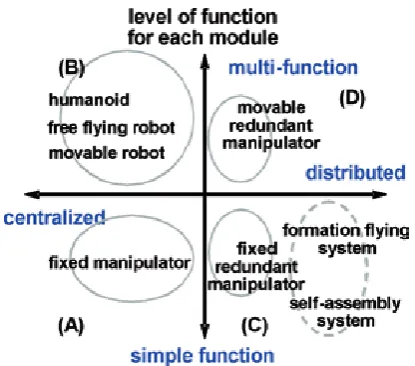
The actuation mechanisms of biological species can provide us with hints in designing a set of new man-made morphing structures which are composed of many modules similar to lower-level biological species, thus requiring minimum energy and its shape and functions flexible.
The sensing and actuation mechanisms inherent in a few biological species, reveals that there is a gap between our knowledge based on engineering and Bioinspired active materials and structures (BAMS). The smaller the gap will be, the better BAES we can design, achieving ultimate BAES. Learning from biological systems can help us achieve this goal.
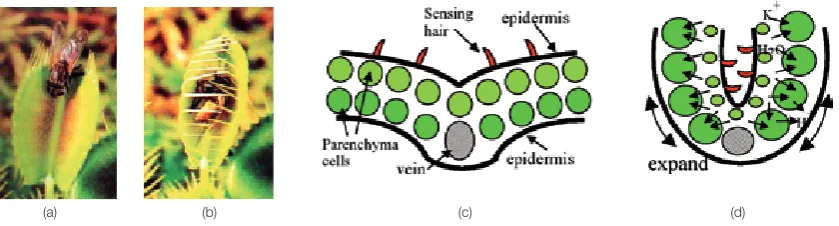
For example, the Venus Fly Trap leaf (Fig. 1) is designed to sense and trap flying insects by rapidly closing the leaf-like trap when triggered by sensing antennae located in the center of the leaf. The microscopic mechanism of the Venus Fly Trap leaf is based on controlled ion fluxes creating osmotic movement of water molecules toward the outer-most surface of the leaf, resulting in the expansion of the outer surface and bending. Leaves retain a flat shape as long as the resistance offered by upper and lower epidermis layers is equivalent, and pressure is evenly spread throughout the internal layer. But leaves fold when the outer epidermal cell layer suddenly expands while the inner does not. This ability to expand rests with the osmotic pressure created by an ATP-driven proton pump located on the plasma membrane, expels protons, creates both a very negative membrane potential (-120 to –250 mV) and acidic external pH (Hodick and Sievers 1989; Stahlberg and Van Volkenburgh, 1999).
Fig. 1 Venus Fly Trap action in catching a flying insect, (a) insect touches at least two antennas located in the middle of leaf, (b) rapid closure of the leaves trap the insect, (c) cross section view before the leaf motion (d) after the leaf motion (Taya, 2007).
(a) (b) (c) (d)
Past Events and Conferences
Past Events and Conferences
EUROCORES in Action: S3T harvests
on collaborative grounds
Fig. 2 (a) Cross sections with increasing magnification from the grass blade of Poa pretense. (b) The easy dehydration of unprotected, large, bulliform cell clusters contracts the upper surface, rolls and even sharply folds the leaf. (c)-(e) Dehydration by a water drop leads to a rapid horizontal expansion of the previously folded leaf.
(a) (b)
(c) (d) (e)
Fig. 3 Design of performance map of modules in terms of distributed (horizontal) axis and multi-functionality (vertical) axis (Natori 2006)
For more information, contact:
Farzam Ranjbaran at [email protected] S3T Programme Coordinator
Focus On “Bio-inspired
Active Materials and
Structures” (continued)
April
30 March-2 EuroMinScI Annual Conference, Giens, France.6-9 EuroQUAM Inauguration Conference, Barcelona, Spain.
8-11 EuroMinScI related ESF Exploratory Workshop “Modelling and
Interpreta-tion of Ice Microstructures”, Goettingen, Germany.
8-12 CNCC session at the conference “Toward a Science of Consciousness”,
Tuscon, Arizona, USA.
14-17 EuroDIVERSITY Workshop “Current Perspectives in Functional Ecology”,
Vrije Universiteit, Amsterdam, Netherlands.
13- 18 European Geosciences Union (EGU) General Assembly 2008,
Vienna, Austria.
EuroCLIMATE session: Climate variability and the Carbon Cycle (Past,
Present and Future): The EuroCLIMATE Programme on multi-proxy reconstruc-tions and coupled climate models at European and regional scales
TOPO-Europe session: Towards a View of the 4D Evolution of Europe
EuroDIVERSITY session: Challenges in Biodiversity Science in Europe
EuroMinScI session: Chemistry of Earth Mantle and Core: Experimental and
Theoretical Approaches
EuroDEEP session: Biochemical Interactions in Chemosynthetic Deep-Sea
Ecosystems: Methods, Tools, Strategies
EuroMARC session: EuroFORUM 2008: European Collaboration for
Implementation of Marine Research on Cores
24-26 TECT Workshop “The Social and Psychological Dynamics of Cooperation
and Punishment”, Barcelona, Spain.
27-29 S3T-NSF Workshop “Sensor Networks for Civil Infrastructure Systems”,
Cambridge, UK.
May
5-7 S3T Workshop “Modelling of SMAs and SMA Actuated Structures”,Prague, Czech Republic.
8-10 CNCC session “Metacognition of Ignorance” at the 3rd Biennial Meeting
of the Special Interest Group on Metacognition, Ioannina, Greece.
12-16 EuroDIVERSITY Workshop-Course “Metacommunity Dynamics and
Biodiversity”, Odalgården, Uppsala, Sweden.
19-22 EuroDEEP Workshop «Microbial Metagenomics», Taormina, Sicily.
21-24 ‘Inventing Europe’ Workshop “Transnational Infrastructures: Coping
with scarcity and vulnerability”, Stockholm, Sweden.
26-30 SONS Symposium Q “ Functional Supramolecular Architectures for
Organic Electronics and Nanotechnology” at the EMRS Spring Meeting
2008, Strasbourg, France.
28-31 EuroDYNA Final Conference, Hinxton, UK.
31-1 June CNCC Workshop “Religion and Cognition in Context”, Aarhus, Denmark.
Upcoming Events
The European Science Foundation (ESF) provides a platform for its Member Organisations to advance European research and explore new directions for research at the European level.
Established in 1974 as an independent non-governmental organisation, the ESF currently serves 77 Member Organisations across 30 countries.
1 quai Lezay-Marnésia I BP 90015 67080 Strasbourg cedex I France
June
6-9 BOREAS Workshop “Population Dynamics in the Circumpolar North”,Umeå, Sweden.
11-13 RNA Quality Control Conference 2008, Granada, Spain.
28 Final CNCC Essay Award for Junior Scholars, Edinburgh, UK.
30 CNCC Workshop “Sense of Agency: from sensorimotor processing to
meta-representation”, Edinburgh, UK.
16-21 CNCC Summer School “Sense of Body”, Bologna, Italy.
29-3 July 1st FoNE Conference, Taormina, Italy.
July
3-6 ‘Inventing Europe’ Workshop “A Transnational History of EuropeanInte-gration”, Florence, Italy.
7-13 CNCC Summer School «Social Cogntion and Social Narrative»,
San Marino, Italy.
18-22 EuroScience Open Forum 2008, Barcelona, Spain.
EuroMinScI session: Explaining the Dynamics of the Inner Earth by Studying
Matter at Extreme Pressure, Temperature Conditions
EuroQUAM session: Amazing Quantum World of Ultra-Cold Matter
CNCC session: Consciousness in Context