Original Research Article
Prevalence of depression, anxiety and stress among school going
adolescents in Delhi: a cross sectional study
Ashok Kumar
1, Geeta Yadav
2*, Nitesh Chauhan
1, Suman Bodat
3INTRODUCTION
Adolescence is a stressful period due to physical, psychological, sexual changes and the presence of psychiatric disorders such as depression, anxiety and stress at this stage of life is a matter of concern. Depression is a common mental disorder, characterized by persistent sadness and a loss of interest in activities that you normally enjoy, accompanied by an inability to carry out daily activities, for at least two weeks.1 Anxiety is an emotion characterized by feeling of tension, worried thoughts and physical change like increased blood
pressure. People with anxiety disorders usually have recurring intrusive thoughts or concerns.2
Psychiatric morbidity in children and adolescents, as defined by Rutter et al is abnormality in behavior, emotions, and relationships which is developmentally inappropriate and of sufficient duration and severity to cause persistent suffering or handicap to the child and/or distress to the family or community.3 Adolescents suffer from psychosocial problems at one time or the other during their development. Most of these problems are transient and often go unnoticed. It is worthy to note that adolescents may exhibit these problems in one setting and
ABSTRACT
Background: Adolescence is a stressful period due to physical, psychological, sexual changes and the presence of psychiatric disorders such as depression, anxiety and stress at this stage of life is a matter of concern. Depression is a common mental disorder, characterized by persistent sadness and a loss of interest in activities that you normally enjoy, accompanied by an inability to carry out daily activities, for at least two weeks. The objective of this study is to find the prevalence and associated factors of depression, anxiety and stress among school going adolescents.
Methods: This was a school based descriptive cross-sectional study conducted in the month of July 2018 in an urban school in New Delhi. A semi-structured, self-administered questionnaire to assess socio-demographic profile as well as depression anxiety stress scale (DASS)–21 was used to assess depression, stress and anxiety.
Results: Overall prevalence of depression, anxiety and stress were found to be 47.9%, 65.3%, and 51.8% respectively. Most of student suffered from moderate depression (46.8%), anxiety (33.3%) and mild stress (60.9%). It was noted that these were more common among female students, late adolescent age group, students alone/ away from family, students from separated/ single parents, consuming alcohol and family pressure to perform well in school.
Conclusions: The alarming risk of depression, anxiety and stress among students with low academic satisfaction as well as those who face family pressure to perform better calls for need of parents-student counselling sessions, as well as frequent extracurricular activities to help create a healthier school environment.
Keywords: Prevalence, Depression, Anxiety, Stress, Adolescent
Department ofCommunity Medicine, 1V.M.M.C. and Safdarjung Hospital, New Delhi, 2P.G.I.M.E.R. and Dr. R.M.L. Hospital, New Delhi, 3G.M.C. Pali, Rajasthan, India
Received: 15 October 2019
Accepted: 04 November 2019
*Correspondence:
Dr. Geeta Yadav,
E-mail: [email protected]
Copyright: © the author(s), publisher and licensee Medip Academy. This is an open-access article distributed under the terms of the Creative Commons Attribution Non-Commercial License, which permits unrestricted non-commercial use, distribution, and reproduction in any medium, provided the original work is properly cited.
not in other (e.g., home, group of friends, and school). Therefore, behaviors associated with mental disorders are often misunderstood. They may be considered intentional or deliberately willful. Social exclusion, punishments, and criticism may result in lowered self-esteem in adolescents. A mistaken and inappropriate understanding of mental disorders can also result in children and adolescents being deprived of the assistance they need.
Approximately, 20% of adolescents have a diagnosable mental health disorder. Furthermore, many mental health disorders are first present during adolescence.4 About 20%–30% of adolescents have one major depressive episode before they reach adulthood.5 For a quarter of individuals with mood disorders like depression; these first emerge during adolescence. about 50%–75% of adolescents with anxiety disorders and impulse control disorders (such as conduct disorder or attention-deficit/hyperactivity disorder) develop these during adolescence.5 Existing mental health problems become more complex and intense with children's transition into adolescence.6 Untreated mental health problems among adolescents may lead to poor school performance, school dropout, strained family relationships, substance abuse, and engaging in risky sexual behaviors.7
As, knowing burden of any disease is first step towards its prevention, this study was planned to find prevalence of depression, anxiety and stress among school going adolescents in Delhi and to find factors associated with it.
METHODS
A descriptive cross-sectional study was conducted in the month of July 2018 Kendriya Vidyalaya, Andrew Ganj, a school in New Delhi among students from class 9th to 12th.
For the sample size determination prevalence was taken as 38% based on a study by Chauhan et al, relative error of 15%, 5% level of significance and 10% non-response rate. The minimum sample size calculated came out to be 320.8 One section was randomly selected by lottery method out of four classes (9–12th). Complete enumeration was done from the randomly selected section from class 9th to 12th to meet the sample size. The students absent on the days of data collection were excluded from the study.
A pre-designed semi-structured, self-administered questionnaire was used to assess socio-demographic profile like age, gender, religion etc. and associated factors like pressure to perform, relations with parents etc. Depression anxiety stress scale (DASS)–21 was used to detect depression, anxiety and stress. The scale contains 21 items and was developed by Lovibond and Lovibond, which is a modified shorter version of DASS-42 questionnaire.9,10 Each of the three DASS-21 scales contains 7 items, divided into subscales with similar content. The depression scale assesses dysphoria,
hopelessness, devaluation of life, self-deprecation, lack of interest/involvement, anhedonia and inertia. The anxiety scale assesses autonomic arousal, skeletal muscle effects, situational anxiety, and subjective experience of anxious affect. The stress scale is sensitive to levels of chronic non-specific arousal. It assesses difficulty relaxing, nervous arousal, and being easily upset/ agitated, irritable/ over-reactive an impatient. Scores for depression, anxiety and stress are calculated by summing the scores for the relevant items. All the students were briefed about the study and questionnaire before administering it. Pretesting of the questionnaire was done among the similar age group students of different school. Principals, concerned teachers, and students were informed before the visit. Kuppuswamy scale was used to measure the socio-economic status of the participant.
Scoring and interpretation of DASS-21
Scores on the DASS-21 were multiplied by 2 to calculate the final score. Score of 0-9, 0-7and 0-11 was taken as normal for depression, anxiety and stress respectively. Recommended cut-off scores for conventional severity labels (normal, moderate, severe) are mentioned in Table 1.
Table 1: DASS-21 score.9
Depression Anxiety Stress
Normal 0-9 0-7 0-11
Mild 10-13 8-9 15-18
Moderate 14-20 10-14 19-25
Severe 21-27 15-19 26-33
Very severe 28+ 20+ 34+
Data was entered on microsoft excel software and statistical analysis was done using a licensed version of SPSS 21. Descriptive analysis was done by calculating proportions, means and standard deviation. Chi square/Fishers Exact test for qualitative and t test for quantitative variable were applied.
The ethical clearance was obtained from institutional ethics committee and permission was taken from the principal. Assent was taken from the students. Strict confidentiality was maintained. After completion of the study the students found to be suffering from any of the studied mental health problem were offered medical help.
RESULTS
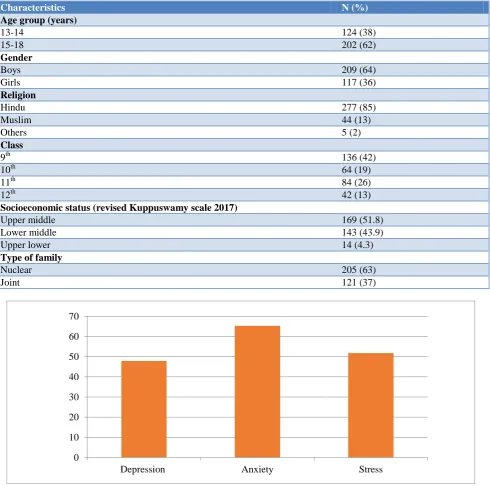
Table 2: Sociodemographic profile of the study participants (n=326).
Characteristics N (%)
Age group (years)
13-14 124 (38)
15-18 202 (62)
Gender
Boys 209 (64)
Girls 117 (36)
Religion
Hindu 277 (85)
Muslim 44 (13)
Others 5 (2)
Class
9th 136 (42)
10th 64 (19)
11th 84 (26)
12th 42 (13)
Socioeconomic status (revised Kuppuswamy scale 2017)
Upper middle 169 (51.8)
Lower middle 143 (43.9)
Upper lower 14 (4.3)
Type of family
Nuclear 205 (63)
Joint 121 (37)
Figure 1: Prevalence of depression, anxiety and depression among the study participants.
Overall prevalence of depression, anxiety and stress was 156 (47.9%), 213 (65.3%), 169 (51.8%) respectively (Figure 1). Most of students suffered from moderate type of depression and anxiety (46.8%, 33.3%) and mild stress (60.9%) (Table 3).
Depression was significantly associated with late adolescent (47.9%), smoking (87.5%), family pressure to perform well (55.6%), and students who were in class of 10th and 12th. Depression was common in those students who were away from home or staying away from their family (52.6%), had single parent or separated or divorced parents (71.4%), not involved in any sports
activity (50.9%) and consume alcohol (55.6) however, these were not statistically significant. Anxiety was found to be significantly higher among female students as compared to male students (74.4% vs. 60.3%; p=0.01). Students not satisfied with their academic performance in school were significantly affected with anxiety (73.9%; p=0.041), depression (62%; p=0.001) and stress (65.2%; p=0.02) as compared to those were satisfied. It was noted that DAS were more common in female students, late adolescent age group, students alone/away from family, students from separated/single parents, students who consumed alcohol and had family pressure to perform well in school (Table 4).
0 10 20 30 40 50 60 70
Table 3: Distribution of study participants according to levels of severity according to DASS scale.
Variable Depression Anxiety Stress
N (%) N (%) N (%)
Mild 47 (30.1) 53 (24.9) 103 (60.9)
Moderate 73 (46.8) 71 (33.3) 47 (27.8)
Severe 21 (13.5) 32 (15) 16 (9.5)
Very severe 15 (9.6) 57 (26.8) 3 (1.8)
Total 156 (100) 213 (100) 169 (100)
Table 4: Factors associated with depression, anxiety and stress among study participants (n=326).
Variable
Depression (n=156) Anxiety (n=213) Stress (n=169)
N (%) P value N (%) P value N (%) P value Age (years)
13-14 (n=124) 45 (36.3)
0.001* 79 (63.7) 0.63 64 (51.6) 0.95
15-18 (n=202) 111 (47.9) 134 (66.3) 105 (52)
Sex
Male (n=209) 102 (48.8)
0.64 126 (60.3) 0.01* 104 (49.8) 0.32
Female (n=117) 54 (46.2) 87 (74.4) 65 (55.6)
Current living status
With family (n=307) 146 (47.6)
0.66 201 (65.5) 0.84 159 (51.8) 0.94 Alone or away from family(n=19) 10 (52.6) 12 (63.2) 10 (52.6)
Parents status
Both are staying together (n=312) 146 (46.8)
0.07 203 (65.1) 0.62 160 (51.3) 0.34 Separated or single parent (n=14) 10 (71.4) 10 (71.4) 9 (64.3)
Sports activity
Yes (n=159) 75(47.2)
0.28 101 (63.5) 0.23 80 (50.3) 0.59
No (n=167) 81 (48.5) 112 (67.1) 89 (53.3)
Alcohol consumption
Yes (n=9) 5 (55.6)
0.64 6 (66.7) 0.93 5 (55.6) 0.82
No (n=317) 151 (47.6) 207 (65.3) 164 (51.7)
Smoking
Yes (n=8) 7 (87.5)
0.023⃰ 6 (75) 0.53 4 (50) 0.92
No (n=318) 149 (46.9) 207 (65.3) 165 (51.8)
Family pressure to perform well in school
Yes (n=126) 70 (55.6)
0.027⃰ 81 (64.3) 0.75 72 (57.1) 0.13
No (n=200) 86 (43) 132 (66) 97 (48.5)
Academic performance
Satisfied (n=234) 99 (42.3)
0.001⃰ 145 (62) 0.041⃰ 109 (46.6) 0.02⃰
Not satisfied (n=92) 57 (62) 68 (73.9) 60 (65.2)
Class
9th (n=136) 50 (36.8)
0.001⃰
83 (61)
0.43
50 (53.2)
0.95
10th (n=64) 45 (70.3) 41 (64.1) 105 (51.2)
11th (n=84) 39 (46.4) 59 (70.2) 14 (51.9)
12th (n=42) 22 (52.4) 30 (71.4) 169 (51.8)
⃰Significant p value.
DISCUSSION
The present study was a descriptive, cross-sectional, school-based study conducted amongst adolescent children. The study aimed to determine the prevalence of depression, anxiety and stress among School going adolescents of 14-18 years age group in Delhi and the factors associated with it.
findings which can be attributed to different instruments used for measurements and different time duration.14-16
Most of student suffered from moderate type of depression (46.8%), followed by mild and severe (30.1%, 23.4%). In the study conducted by Malik et al, the prevalence of moderate depression (41.2%) was dominating and similar to our observations.13 However, Jha et al, Malik et al, Naushad et al observed mild type of depression most prevalent.11,13,18 Current study revealed that early adolescent age group, smoking, family pressure to perform well in school, academic performance and class 10th and 12th were significantly associated with depression. Same factor was identified by Basin et aland reported a higher prevalence of depression in 10th and 12th division students due to the pressure of academic performance in the board examinations.19 Similar results have been reported by other studies, namely, Sandal, Kaur et al, Moreira et al, Liu et al and Gray-Stanley et al.18-22 A study done by Deb et al revealed that 63.5% of the higher secondary students in Kolkata experience academic stress, and the parental pressure for better academic performance was found to be mostly responsible for academic stress as reported by 66.0% of the students.23
In case of anxiety, overall prevalence was found 65.3% and it was found that female students were significantly more affected (74.4%) compared to male students (60.3%). Students not satisfied with their academic performance in school were significantly affected with anxiety (65.2%), compare to those were satisfied (46.6%). In contrary, study by Mishra et alreported prevalence was 15% and this difference may be due to different tool (Revised Children's Manifest Anxiety Scale) and settings.24 Academic stress is a type of stress that arises due to academic factors such as heavy school schedule, unrealistic expectation and demands of parents and teachers, low academic performance, poor study habits, and not having enough time to deal with school's multiple priorities. Stress was also associated significantly with academic performance. Similar results were reported by Sandal et al that level of stress was higher among the participants who were not self-satisfied with their academic performance and whose parents not satisfied.
CONCLUSION
Prevalence of depression, anxiety and stress in our study were found to be high. It is more common among female students, late adolescent age groups, students staying alone/ away from family, students from separated/ single parents, students not satisfied with their academic performance, lack of sports activity, consuming alcohol and those under family pressure to perform well in school.
Recommendation
The alarming risk of depression, anxiety and stress with in students with low academic satisfaction as well as
those who face family pressure to perform better so need for parents-student counselling sessions, as well as frequent extracurricular activities to help create a healthier school environment. Rising rates of depression, anxiety and stress among late adolescents compared to early adolescents along with a spike in the rates for those attending board exam classes (10th and 12th), shed light on the need to focus on those attending high school, creating a need for career counselling as well as making an effort as to not burden them to perform better at school or future competitive exams.
Funding: No funding sources Conflict of interest: None declared
Ethical approval: The study was approved by the Institutional Ethics Committee
REFERENCES
1. Depression: Let’s Talk WHO. Available at: http://www.who.int/mental_health/management/dep ression/en/. Accessed on 9th October 2019.
2. American Psychological Association (APA): Anxiety. Available at: http://www.apa.org/topics/ anxiety/index.aspx. Accessed on 9th October 2019. 3. Rutter M, Tizard J, Whitmore K. Education. A
Neuropsychiatric study in Childhood. Cambridge University Press. 2009;35/36:272-375.
4. Kessler RC, Berglund P, Demler O, Jin R, Merikangas KR, Walters EE, et al. Lifetime prevalence and age-of-onset distributions of DSM-IV disorders in the national comorbidity survey replication. Arch Gen Psychiatry. 2005;62:593–602. 5. Rushton JL, Forcier M, Schectman RM.
Epidemiology of depressive symptoms in the national longitudinal study of adolescent health. J Am Acad Child Adolesc Psychiatry. 2002;41:199– 205.
6. Patel V, Flisher AJ, Hetrick S, McGorry P. Mental health of young people: A global public-health challenge. Lancet. 2007;369(1):302–13.
7. Kapphahn CJ, Morreale MC, Rickert VI, Walker LR. Society for Adolescent Medicine. Financing mental health services for adolescents: A position paper of the society for adolescent medicine. J Adolesc Health. 2006;39:456–8.
8. Chauhan S, Lal P, Nayak H. Prevalence of Depression among School Children aged 15 years and above in a Public School in Noida, Uttar Pradesh. J Acad Indus Res. 2014;3:269-73.
9. Lovibond SH, Lovibond PF. Manual for the Depression Anxiety Stress Scales. Sydney Psychology Foundation Australia: 1995.
10. Antony MM, Bieling PJ, Cox BJ, Enns MW, Swinson RP. Psychometric properties of the 42-item and 21-item versions of the depression anxiety stress scales in clinical groups and a community sample. Psychol Assess. 1998;10:176–81.
Bihar, India. Indian J Psychol Med. 2017;39(3):287–92.
12. Nagendra K, Sanjay D, Gouli C, Kalappanavar NK, VinodKumar CS. Prevalence and association of depression and suicidal tendency among adolescent students. Int J Biomed Adv Res. 2012;3:714–9. 13. Malik M, Khanna P, Rohilla R, Mehta B, Goyal A.
Prevalence of depression among school going adolescents in an urban area of Haryana, India. Int J Community Med Public Health. 2015;2:624–6. 14. Bhatia SK, Bhatia SC. Childhood and adolescent
depression. Am Fam Physician. 2007;75:73–80. 15. Bostanci M, Ozdel O, Oguzhanoglu NK, Ozdel L,
Ergin A, Ergin N, et al. Depressive symptomatology among university students in Denizli, Turkey: Prevalence and sociodemographic correlates. Croat Med J. 2005;46:96–100.
16. Naushad S, Farooqui W, Sharma S, Rani M, Singh R, Verma S. Study of proportion and determinants of depression among college students in Mangalore city. Niger Med J. 2014;55:156–60.
17. Bhasin SK, Sharma R, Saini NK. Depression, anxiety and stress among adolescent students belonging to affluent families: A school-based study. Indian J Pediatr. 2010;77:161–5.
18. Sandal RK, Goel NK, Sharma MK, Bakshi RK, Singh N, Kumar D. Prevalence of Depression, Anxiety and Stress among school going adolescent in Chandigarh. J Family Med Prim Care. 2017;6(2):405–10.
19. Kaur S, Sharma V. Depression among adolescents in relation to their academic stress. Indian J Appl Res. 2014;4:183–5.
20. Moreira DP, Furegato AR. Stress and depression among students of the last semester in two nursing courses. Rev Lat Am Enfermagem. 2013;21:155–62. 21. Liu Y, Lu Z. Chinese high school students’ academic stress and depressive symptoms: Gender and school climate as moderators. Stress Health. 2012;28:340–6.
22. Gray-Stanley JA, Muramatsu N, Heller T, Hughes S, Johnson TP, Ramirez-Valles J. Work stress and depression among direct support professionals: The role of work support and locus of control. J Intellect Disabil Res. 2010;54:749–61.
23. Deb S, Strodl E, Sun J. Academic stress, parental pressure, anxiety and mental health among Indian high school students. Int J Psychol Behav Sci. 2015;5:26–34.
24. Mishra SK, Srivastava M, Tiwary NK, Kumar A. Prevalence of depression and anxiety among children in rural and suburban areas of Eastern Uttar Pradesh: A cross-sectional study. J Family Med Prim Care. 2018;7(1):21–6.