CLINICAL REPORT
Guidance for the Clinician in Rendering Pediatric CarePromoting Optimal Development:
Identifying Infants and Young Children
With Developmental Disorders
Through Developmental Surveillance
and Screening
Paul H. Lipkin, MD, FAAP,aMichelle M. Macias, MD, FAAP,bCOUNCIL ON CHILDREN WITH DISABILITIES, SECTION ON DEVELOPMENTAL AND BEHAVIORAL PEDIATRICS
abstract
Early identification and intervention for developmental disorders arecritical to the well-being of children and are the responsibility of pediatric professionals as an integral function of the medical home. This report models a universal system of developmental surveillance and screening for the early identification of conditions that affect children’s early and long-term development and achievement, followed by ongoing care. These conditions include autism, deafness/hard-of-hearing, intellectual and motor disabilities, behavioral conditions, and those seen in other medical conditions. Developmental surveillance is supported at every health supervision visit, as is as the administration of standardized screening tests at the 9-, 18-, and 30-month visits. Developmental concerns elicited on surveillance at any visit should be followed by standardized developmental screening testing or direct referral to intervention and specialty medical care. Special attention to surveillance is recommended at the 4- to 5-year well-child visit, prior to entry into elementary education, with screening completed if there are any concerns. Developmental surveillance includes bidirectional communication with early childhood professionals in child care, preschools, Head Start, and other programs, including home visitation and parenting, particularly around developmental screening. The identification of problems should lead to developmental and medical evaluations, diagnosis, counseling, and treatment, in addition to early developmental intervention. Children with diagnosed developmental disorders are identified as having special health care needs, with initiation of chronic condition management in the pediatric medical home.
aDepartment of Neurology and Development Medicine, Kennedy Krieger Institute, and Department of Pediatrics, Johns Hopkins School of Medicine, Baltimore, Maryland; andbDivision of Developmental-Behavioral Pediatrics, Department of Pediatrics, Medical University of South Carolina, Charleston, South Carolina
Clinical reports from the American Academy of Pediatrics benefit from expertise and resources of liaisons and internal (AAP) and external reviewers. However, clinical reports from the American Academy of Pediatrics may not reflect the views of the liaisons or the organizations or government agencies that they represent.
Drs Lipkin and Macias equally participated in the concept and design, drafting, and revising of the manuscript and approved the manuscript as submitted.
The guidance in this report does not indicate an exclusive course of treatment or serve as a standard of medical care. Variations, taking into account individual circumstances, may be appropriate.
All clinical reports from the American Academy of Pediatrics automatically expire 5 years after publication unless reaffirmed, revised, or retired at or before that time.
Pediatricians and other child health care professionals have made significant progress over the past decade in meeting the goal of early identification and treatment of children with developmental and behavioral disorders. There has been an increase in the practice of formalized developmental screening in primary health care settings. Specific efforts from within the American Academy of Pediatrics (AAP)1–6and external to the AAP7,8 have been focused on improving screening methods. Multiple efforts also have been made to improve implementation.9–14These initiatives have included broad guidelines focused on identifying general delays in development1as well as others to identify specific disorders or conditions.2,3,6,15The 2006 AAP policy statement on developmental surveillance and screening provided the pediatric health care professional with a new paradigm and an accompanying algorithm1that focused on the use of general, standardized developmental screening tests with strong psychometric properties, including reliability, validity, sensitivity, and specificity. Discrete ages for use of these tests are recommended in
Bright Futures: Guidelines for Health Supervision of Infants, Children, and Adolescents, Fourth Editionand the accompanying periodicity schedule at the 9-, 18-, and 30-month well-child visits.16,17,*The recommendation for screening at discrete ages contrasted with earlier statements in which screening at every visit was recommended. The algorithm was designed tofit within the medical home model of care and with use in the screening of all children during key preventive care visits. The policy statement offered guidance on
consultation and referral to other specialty physicians as well as to other child development
professionals, early intervention services, and preschool. It also recommended incorporating the principles of care for children with special health care needs in the primary care medical home. The policy statement also considered developmental screening payment issues and worked toward improving pediatric health care professionals’ knowledge on billing and coding for the recommended procedures, resulting in improved payment across payers18(AAP, 2012, unpublished analysis of 2005 Medstat and 2011 TruvenHealth MarketScan outpatient database).
This developmental surveillance and screening model was incorporated into other initiatives and prompted the writing and revision of several similarly designed guidelines for related conditions, including autism spectrum disorder (ASD),2
neuromotor disorders,3early hearing detection,6attention-deficit/
hyperactivity disorder (ADHD),19and behavioral conditions.5These guidelines increased pediatric attention to these conditions and improved screening overall; however, universal screening still has not been achieved. AAP surveys of
pediatricians report screening rates of 23% in 2002, 45% in 2009, and 63% in 2016.20,21Pediatricians have reported difficulties in incorporating multiple new guidelines for related conditions into their practices22and continue to report time limitations and inadequate payment as barriers to implementation.21
Although there are similarities among recommended screening strategies for delays and disabilities in cognitive disorders, motor disorders, language disorders, autism, and social-emotional and behavioral disorders, there are also substantive differences in their timing, measurement, and implications for intervention. Thus,
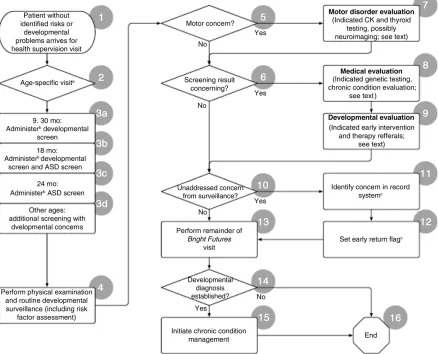
this revision of the 2006 policy statement describes only thefirst category. Future reports will provide detailed recommendations regarding screening for ASD and social-emotional and behavioral disorders. The algorithm is intended to serve as a model for the refinement of a universal system of screening of all children in the primary care setting, as illustrated in Fig 1.
This universal system would include the wide range of
neurodevelopmental and behavioral conditions that affect the early and long-term development and achievement of children. These conditions include ASD; language disorders; and deafness or hard-of-hearing, also referred to as deafness, hearing loss (International
Classification of Diseases, 10th Revisioncodes H91.90 through H91.93), or hearing impairment (the Individuals With Disabilities
Education Act [IDEA])23; vision disorders; neuromotor conditions (such as cerebral palsy);
neuromuscular disorders (such as Duchenne muscular dystrophy); intellectual and learning disabilities; and behavioral conditions (such as ADHD). At the same time, certain conditions have high rates of co-occurring developmental or behavioral disorders (eg, children born preterm or with other perinatal complications and children with complex congenital heart disease, sickle cell disease, intrauterine alcohol exposure, lead toxicity, congenital infections, and other chronic health conditions). Especially vulnerable to developmental and/or behavioral problems are those negatively affected by the social determinants of health and other adverse childhood or family experiences such as children in poverty24; children exposed to racism25; and children experiencing toxic stress, including exposure to abuse, neglect, parental mental illness, parental drug or alcohol use,
caregiver depression, and foster care. Screening principles being used in developmental surveillance and screening of children without known developmental risks can be applied universally, including use in the identification of developmental and behavioral conditions in children with chronic health conditions.
Additionally, given the importance of coordinated patient- and family-centered care in pediatrics, families should be engaged as collaborative partners in developmental screening and surveillance practices. The act of screening itself provides engagement conversations and builds
relationships with families. The algorithm and discussion that follow can be used to guide pediatric health care professionals through the surveillance and screening process for the early identification of developmental disorders, including autism; it is important to note that this algorithm is focused on children who do not have already identified risks or developmental problems.
Although this clinical report is focused on children ages 0 to 5 years, these recommendations may be considered a minimum and are not
intended to be prescriptive. National and international groups focused on young children concur that early childhood spans ages 0 to 8 years and endorse screening beyond age 3 years. The US Administration for Families, Office of Planning, Research and Evaluation26states that to be effective, screening should begin early and be repeated through early childhood. Therefore, it is argued that developmental screening may need to be more frequent to optimize the opportunities for detection of risk and connection to intervention.
NOTE ON TERMINOLOGY
As in the previous policy statement, clear distinctions are drawn within the context of this document among (1) surveillance, the process of recognizing children who may be at risk for developmental delays; (2) screening, the use of standardized tools to identify and refine that recognized risk; and (3) evaluation, a complex process to identify specific developmental disorders that affect a child.“Developmental disorder”and
“developmental disability”refer to a childhood mental or physical impairment or combination of mental
and physical impairments that result in substantial functional limitations in major life activities.27
THE ALGORITHM
The algorithm (Fig 2) presents steps for screening a patient without identified risks for developmental problems at a health supervision visit.
Step 1: Patient Without Identified Risks or Developmental Problems Arrives for Health Supervision Visit
A parent’s or professional’s developmental concerns should be addressed by the pediatric health care professional as part of developmental surveillance at each pediatric health supervision visit throughout thefirst 5 years of life, as outlined in the AAPBright Futures, Fourth Editionand related national health promotion and prevention initiative.16,17In multiple studies, researchers have shown that
developmental disorders are detected at low rates when physicians rely on judgment alone.28Including
developmental screening tests at targeted ages enhances the precision of the developmental surveillance process.29
The recommended ages for developmental screening at the health supervision visit are a starting point for children who are without known identified risks and are not suspected of having a developmental concern. Because development is dynamic in nature and surveillance has limits, periodic screening with a validated instrument should occur so that a developmental concern not detected by surveillance or an earlier screening can be detected by subsequent screening. Using
a validated developmental screening test at the 9-, 18-, and 30-month visits is outlined inBright Futures, Fourth Edition.16,17Developmental
surveillance should continue through childhood, including surveillance at the 4- or 5-year visit as a child prepares to enter elementary school.
FIGURE 1
Any time that parents, professionals, or others involved in the care of the child raise concerns during
surveillance, it is appropriate to perform additional developmental screens using validated tests. These screenings should be recognized separately, with appropriate coding, billing, and payment and with the additional cost acknowledged in capitated expectation (see Supplemental Information).
Given that developmental and behavioral risks increase with age, a child identified with risks or concerns may merit at least annual
formal screening if concerns continue to be identified through surveillance.
Step 2: Is This a 9-, 18-, 24-, or 30-Month Visit?
All children should receive periodic developmental screening using a standardized test. In the absence of established risk factors or parental or provider concerns, a general
developmental screen continues to be recommended at the 9-, 18-, and 30-month visits. Screening for behavioral and emotional problems is
recommended at the same time points, at a minimum.5In addition,
screening for ASD is recommended at the 18- and 24-month visits.30
In addition, to identify problems not previously recognized in earlier screenings and to identify issues with regard to developmental skills necessary for school readiness,31 surveillance, with close attention to these developmental skills necessary for school readiness, should be performed at the 4- or 5-year visit, with screening performed when concerns are noted. Additional information about the pediatrician’s role in promoting school readiness, as well as developmental surveillance
FIGURE 2
for school readiness, can be found in the AAP policy statement,“The Pediatrician’s Role in Optimizing School Readiness.”31Given the lack of strong evidence validating screening at the 4- to 5-year visit, universal screening is not presently recommended as part of the periodicity schedule.
Step 3: Administer Screening Test
The administration of a brief, standardized screening test helps identify children at risk for a developmental disorder. Well-validated screening tests can be completed by parents and scored by office staff. The pediatric health care professional interprets the screening results.
Developmental screening does not result in a diagnosis but rather identifies areas in which a child’s development differs from same-aged norms. Repeated and regular
screening is more likely than a single screen to identify problems,
especially in skills that develop later, such as language. Waiting until a young child misses a major milestone may result in late rather than early recognition, increasing parental dissatisfaction and anxiety, and can deprive the child and family of the benefits of early identification and intervention.
A table of developmental screening tests is included in this document (Supplemental Table 1), and a discussion of how to choose an appropriate screening test is included in the section below entitled
“Implementing the Algorithm.”
9- and 30-Month Visits: Administer Developmental Screen
•A screening at the 9-month visit provides an opportunity to attend to the child’s motor, visual, and hearing abilities. Early
communication skills also are emerging, and symptoms of ASD, such as lack of eye contact, orienting to name being called, or
pointing, may be recognizable in thefirst year of life.32,33Infants 9 months of age who have a medical condition that increases risk for developmental disorders, such as a genetic condition or significant perinatal complications, should be referred to early intervention programs, if not previously referred. The 9-month visit also provides an educational opportunity to inform parents about developmental screening and to encourage parents to attend to communication and early language skills. Social and nonverbal communication, including vocalizations and gestures, are important aspects of emerging communication that can be assessed at this visit. Although ASD is not diagnosed at this age, social and emotional delays may qualify a child for early intervention programs (eg, Part C, IDEA [0–36 months])23,33and provide valuable support to a family.
• The 30-month visit provides an additional opportunity to identify motor, language, and cognitive problems, including more subtle delays, and represents another opportunity to identify the child with delays qualifying for early intervention services. An early intervention program also assists the child and family in transition to a school-based program as needed. • As noted previously, this updated
clinical report recommends developmental surveillance through childhood, with particular attention to surveillance and administration of a formal screening test at the 4- or 5-year visit when developmental risks, concerns, or problems occur. As age increases, corresponding increases in delays are seen.34,35Without routine screening, at least 50% of children with developmental or behavioral disorders are not detected before kindergarten.36 Therefore, administration of
a standardized developmental screen at 4 years of age for children with developmental concerns or risks may improve detection and referral of a child with previously unrecognized learning and attention disorders to the school system or other resources before his or her entry into kindergarten. Additional behavioral surveillance may also help identify ADHD symptoms at preschool age, when behavioral therapy and behavioral parent training may be especially helpful. In addition, symptoms of ASD may become more apparent after children become more verbal and are in the social milieu of preschool. Children 5 years of age who are not yet in kindergarten should receive continued close surveillance followed by screening, if concerns arise.
18-Month Visit: Administer
Developmental Screen and ASD Screen
•A developmental screen is recommended at the 18-month visit because delays infine motor, communication, and language development are often evident by 18 months of age, as are previously undetected gross motor delays. Medical interventions for motor disorders have been shown to be effective in children age 18 months, and effective early intervention for delayed language development also is available.37
•In addition to a general
months.40However, a recent systematic review of primary care screening for ASD by the US Preventive Services Task Force (USPSTF) concluded that insufficient evidence existed on potential benefits and harms of such screening and that, therefore, it was unable to make
a recommendation for or against such screening.41The USPSTF also called for further research on the screening tests, best ages for screening, and best treatment of those identified.41Screening by pediatric health care professionals continues to be recommended for the early identification of and intervention for ASD, while research continues.42Children with ASD demonstrate sleep, eating, and behavioral challenges in early childhood, and the pediatric health care professional can help the family manage these issues directly and through appropriate referrals and connect families to valuable peer support organizations. •Close surveillance and earlier
screening remains warranted if a child is at high risk for ASD, for example, if symptoms are present, the child has a sibling with ASD, the child has a genetic condition with known ASD risk, or the child has a history of prematurity or prenatal exposures (such as toxins or infection).43Research shows that behaviors concerning for ASD emerge earlier than 18 months of age.33Therefore, incorporation of surveillance for“redflags”into health supervision visits before formal screening at the 18- and 24-month visits is recommended.30 (Note: the USPSTF did not address high-risk individuals.)
24-Month Visit: Administer ASD Screen
•An ASD-specific screen should again be administered to all children at the 24-month visit to further ensure the early
identification of children with ASD.
Other Ages: Additional Screening With Developmental Concerns
If parents, pediatric health care professionals, or others involved in the care of the child raise concerns at other times about the child’s
development, it is appropriate to perform additional developmental screens using validated tests. This screening may require a separate visit and should be conducted as soon as possible.
Additionally, if a child has missed a 9-, 18-, or 30-month visit,
a developmental screen should be administered at the next opportunity.
Step 4: Perform Physical Examination and Routine Developmental Surveillance (Including Risk Factor Assessment)
When the results of the periodic screening test are normal, the pediatric health care professional can inform the parents that, at this time, the child is at low risk for
a developmental disorder and continue with other aspects of the health supervision visit.17Normal screening results provide an opportunity to focus on
developmental and behavioral health promotion.44
Developmental surveillance continues to be defined with this report as aflexible, longitudinal, continuous, and cumulative process in which knowledgeable health care
professionals identify children who may have developmental
problems.1,45Surveillance also can be useful for determining appropriate referrals, providing patient education and family-centered care to support healthy development, and monitoring the effects of developmental health promotion through early intervention and therapy. Because a great breadth and depth of information, including health and developmental risk factors and previous screening results, is accumulated across a child’s life through developmental surveillance, relevant developmental
information should beflagged and available for review before or at each visit.
Developmental surveillance has 6 components: (1) eliciting and attending to the parents’concerns about their child’s development; (2) obtaining, documenting, and
maintaining a developmental history; (3) making accurate and informed observations of the child; (4) identifying risks and strengths and protective factors; (5) maintaining an accurate record of the process and
findings; and (6) sharing and obtaining opinions andfindings with other professionals, such as child care providers, home visitors, preschool teachers, and developmental therapists, especially when concerns arise.45In this updated report, additional emphasis is added to surveillance on the obtaining and sharing of information with professionals from outside of the medical home.
Eliciting and Attending to the Parents’ Concerns
By asking about parents’concerns, the pediatric health care professional can elicit important information about the child’s development, learning, or behavior.46–48A parent also may bring the results of
screening or evaluation by an outside professional to the pediatrician’s attention, particularly if concerns are noted.49In such instances, the pediatric health care professional should seek information on the test performed and its results for review and discussion with the family. Direct discussion with the outside
professional about these concerns also may be beneficial. Discussions with the family or outside
Obtaining, Documenting, and Maintaining a Developmental History
A developmental history is a vital component of any history taken during a health supervision visit. By asking questions about changes parents have seen in their child’s development since the last visit or observing age-specific developmental skill attainment, such as whether the child is walking or pointing, the pediatric health care professional may identify delays or other abnormalities in a child’s
development that warrant further investigation.51Developmental milestones and“redflag”resources are available, including the Centers for Disease Control and Prevention’s (CDC)“Learn the Signs. Act Early” program Web site (http://www.cdc. gov/ncbddd/actearly/)13and the AAP Screening Technical Assistance and Resource Center Web site (www. aap.org/screening), to engage families and other professionals as collaborative partners in surveillance.
Making Accurate and Informed Observations of the Child
As trained and experienced
professionals, pediatricians and other pediatric health care professionals have the expertise and comparative knowledge to identify developmental concerns. A careful physical and developmental examination within the context of the health supervision visit is integral to developmental surveillance.52Limited evidence suggests observation of the parent-child interaction also may aid in identifying children with delayed development.53
Identifying Risks and Strengths and Protective Factors
A risk assessment is an important part of developmental surveillance. Environmental,54genetic,
biological,52,55social, and
demographic factors56can increase a child’s risk for delays in
development. Multiple risk factors
can amplify each other.57,58Children with established risk factors may be referred directly for developmental evaluation and early intervention services or may require
developmental surveillance at more-frequent intervals than children without risk factors.
Some medical conditions can increase a child’s risk for developmental delays. These conditions include perinatal complications (eg, preterm delivery, low birth weight,
intrauterine alcohol exposure, and hypoxic-ischemic encephalopathy), congenital and other neurologic conditions (eg, myelomeningocele, congenital brain anomalies, and epilepsy), complex congenital heart disease, genetic conditions, and other chronic conditions (eg, sickle cell disease).
Evidence is mounting about the negative effects of early adverse childhood events, which may cause or lead to“toxic stress,”on brain architecture and child development and behavior.59Poverty and associated risk factors, such as food insecurity and caregiver depression, adds risk for developmental delays. Children who have these adverse experiences would meet the federal Maternal and Child Health definition of being at risk for having special health care needs.60
Using the strength-based approach, as exemplified in the AAPBright Futures, Fourth Edition,17pediatric health care professionals should identify
strengths and protective factors as well as risk factors in children’s lives. Strong connections within a loving, supportive family, along with opportunities to interact with other children and grow in independence in an environment with appropriate structure, are important assets in a child’s life. These factors, associated with resiliency in children, are important components of healthy development.61,62Similarly, strong systems of community supports,
including local schools and public, private, and faith-based
organizations, can play an important role in supporting the development and well-being of all children, including those with known developmental risks.
Maintaining an Accurate Record of the Process and Findings
Medical records should document the outcome of all surveillance and screening activities during preventive care visits. Additionally, specific actions taken or planned, such as scheduling an early follow-up visit, scheduling a visit to discuss developmental concerns more fully, or referrals to medical specialists or early childhood programs and specialists, also should be noted as part of developmental surveillance and screening. A record might contain a table in which the date of
administration and the results of developmental surveillance and formal screens are recorded in relationship to the child’s age. If electronic health records are used, developmentalfindings and plans can be recorded, with automatic prompts created for further action.
Sharing and Obtaining Opinions and Findings With Other Professionals
developmental screening, as promoted by the“Birth to 5: Watch Me Thrive!”program.49Early intervention therapists also may be actively engaged with the child for both evaluation and treatment of developmental concerns. Consistent with the team-based approach, coordination of care with 2-way communication between the patient-and family-centered medical home and entities outside the medical home needs to be systematic and
consistent.63Any entity outside the medical home that provides screening should have a systematic approach to communication of screen results, both positive and negative, to the medical home. Communication between a member of the medical home staff and these professionals on the child’s development is, therefore, a critical part of surveillance to ensure optimal care and coordination of efforts and activities to optimize the child’s development.64–66When screening or evaluation is performed by another professional, these results must be shared and discussed with the parent and the pediatric health care professional, including the test performed and the results obtained. The“Birth to 5: Watch Me Thrive!” program offers a free screening passport to aid in sharing screening results. Direct communication between the pediatric health care professional and the other professional may be helpful.64It should be noted that such communication, particularly
electronic communication, is subject to Health Insurance Portability and Accountability Act of 1996 security requirements and must be protected.
This additional information may increase the complexity of the patient encounter. If the screen was recently completed, interpretation,
documentation, and related action are recommended, with possible changes in the complexity of the encounter resulting in a higher-level visit. An updated screen may need to be
completed if months have elapsed since the outside screening because of rapid changes in the child’s development. Pediatric health care professionals should not submit bills for screening processes performed outside the medical home, but the charge for their services could reflect any applicable increase in complexity of medical decision-making.
Step 5: Does the Screening Suggest a Motor Concern?
If the screening results suggest a motor concern, a motor disorder evaluation should be conducted (see Step 7: Perform Motor Disorder Evaluation).
Step 6: Is the Screening Result Concerning?
If screening results are negative or not concerning, the pediatric health care professional can proceed to Step 10: Unaddressed Concern From Surveillance? If there is an unaddressed concern, identify the concern in the record system and set an early returnflag before proceeding to Step 13. If there is no concern, proceed to Step 13: Perform Remainder of Health Supervision Visit. If screening results are concerning, a focused history and physical examination should be completed to identify any previously undetected medical conditions (see Step 8: Perform Complete Medical Evaluation below). The physical examination should target physical stigmata suggestive of an underlying genetic abnormality. The neurologic examination may suggest an
underlying neurologic condition. The general physical examination may identify undetected medical conditions (eg, cardiac, renal, hematologic disease).
For a child who is determined by the pediatric health care professional to be at increased risk for
a developmental disorder on the basis of medical, environmental, or social factors, referral to early intervention
(under IDEA Part C23,67) or preschool special education (under IDEA Part B)23,68is recommended.
Reassurance has a role in the clinical encounter but varies depending on the progress and outcome of developmental surveillance and screening. Reassurance should be rooted in and reference thefindings of developmental surveillance and screening. If, for example,
developmental surveillance or screening does not identify a concern, specific, simple, age-specific
developmental goals can be identified, and parents can be encouraged to schedule follow-up appointments if the child is not attaining those goals. Discussion of normal screening results should also include promotion of developmental and behavioral skills. In reassuring the parents, the pediatric health care professional should emphasize the importance of continual surveillance and screening. Enrollment in Early Head Start or Head Start, child care, or early childhood education should be considered, if appropriate.
Step 7: Perform Motor Disorder Evaluation
The child with motor concerns identified on surveillance and/or screening should undergo a comprehensive neurologic
examination. When tone is increased, brain imaging should be considered. The child with normal or decreased tone should have laboratory testing of creatine kinase and
thyroid-stimulating hormone.3More detailed guidance can be found in the AAP clinical report“Motor Delays: Early Identification and Evaluation.”3
Step 8: Perform Complete Medical Evaluation
and established risk factors for delayed development.69–72Audiologic evaluation should be performed for the child with a developmental concern. Vision screening,15review of newborn metabolic screening and hearing screening, growth review, and an update of environmental, medical, family, and social history for
additional risk factors are also integral.
Further medical evaluation will vary with the risk factors, andfindings may suggest further genetic, neurologic, metabolic, or other medical testing. The child with suspected global developmental delay or intellectual disability should have laboratory testing done, including chromosomal microarray and fragile X testing.30Metabolic testing should be considered if indicated by history and physical examination.73Further testing may be indicated when a diagnosis is not established with initial laboratory evaluation, including whole exome sequencing and gene panels. Brain imaging should be considered in the presence of abnormal neurologic examination, microcephaly, macrocephaly, or other clinical indicators. The initial genetic workup of the child with suspected ASD is evolving; current
recommendations also include chromosomal microarray and fragile X testing.30Consultation with a medical geneticist to help guide the genetic workup should be considered. The pediatric health care professional should make additional specialty referrals as needed or when additional testing is warranted.
Identification of an etiology may give parents a greater depth of
understanding of their child’s disability. It also can affect various aspects of treatment planning, including specific prognostic information, genetic counseling around recurrence risk and heritability, specific medical treatments for improved health and function of the child, and therapeutic
intervention programming.74This evaluation can be initiated by a general pediatrician or through a pediatric medical subspecialist, such as a neurodevelopmental pediatrician, pediatric neurologist, developmental-behavioral
pediatrician, pediatric geneticist, or pediatric physiatrist. The pediatric health care professional within the medical home should develop an explicit comanagement plan with subspecialist(s) and care
coordination with the family.
Step 9: Perform or Refer for Developmental Evaluation and Refer to Early Intervention or Early Childhood Education
If screening results performed either in the primary care medical home or in the child’s child care or preschool are concerning, the child should have a comprehensive developmental evaluation performed. This evaluation may occur at a different visit or in a series of visits in the primary care medical home or in a different setting by developmental or other medical professionals. The visits should be scheduled as quickly as possible, and professionals should coordinate activities and share
findings. Tracking of referrals should be incorporated to ensure follow-up.
Developmental Evaluation
When developmental surveillance or screening identifies a child as being at high risk for a developmental disorder, diagnostic developmental evaluation should be pursued. This evaluation will help to identify the specific developmental disorder or disorders affecting the child, thus providing further prognostic information and allowing prompt initiation of specific and appropriate early childhood therapeutic
interventions.
Children with neurodevelopmental disorders often have co-occurring areas of developmental or behavioral problems.75–77For example, a child
with ASD may have an intellectual or learning disorder, ADHD, anxiety disorder, or a motor coordination disorder. Similarly, the child with cerebral palsy often has problems in these same areas as well as in speech and language development.
Identifying these disorders can lead to further evaluation and additional treatments. Pediatric medical subspecialists, such as
neurodevelopmental pediatricians, developmental-behavioral
pediatricians, pediatric neurologists, and pediatric physiatrists, as well as advanced practice nurses, can perform the developmental diagnostic evaluation, as can other early childhood professionals, in conjunction with the child’s pediatric health care professional. These early childhood professionals include early childhood educators, child
psychologists, speech-language pathologists, audiologists, social workers, physical therapists, or occupational therapists, ideally working with families as part of an interdisciplinary team and in coordination and communication with the medical home.
Early Developmental Intervention and Early Childhood Education Services
Early intervention programs can be particularly valuable when a child is
first identified to be at high risk for delayed development because these programs can provide evaluation services and offer other services to the child and family even before an evaluation is complete.68,78
Suggestions for effective
collaboration and communication between the patient- and family-centered medical home and early childhood education programs are outlined in the AAP policy statement
“Patient- and Family-Centered Care Coordination: A Framework for Integrating Care for Children and Youth Across Multiple Systems”(see Supplemental Table 1, Care
Early intervention and early childhood education programs include federally funded programs, such as IDEA Part B and C services, Early Head Start, and Head Start, but also encompass quality preschools and parent education programs. These programs provide services that can include developmental therapies, service coordination, social work services, assistance with
transportation and related costs, family training, counseling, and home visits.23The diagnosis of a specific developmental disorder is not necessary for an early intervention referral to be made. Pediatric health care professionals should realize that a community-based early
intervention evaluation may not address children with specific medical risks, and further developmental and medical
evaluation will often be necessary for children with established delays. The CDC provides a list of early
intervention contact information for US states and territories.67Tracking of referrals and good communication with the families should be
incorporated to ensure follow-up. This has been found to be problematic in some systems in which a minority of families ultimately connect with early intervention programs, are evaluated, and receive services.79
Step 10: Unaddressed Concern From Surveillance?
If concerns were raised during developmental surveillance (see Step 4: Perform Physical Examination and Routine Developmental Surveillance), but a disorder or condition was not identified, the pediatric health care professional should document the concern in the practice’s record system (see Step 11: Identify Concern in Record System) and continue to monitor the child’s developmental progress. An early return visit is recommended to provide additional developmental surveillance (see Step 12: Set Early Return Flag). Likewise, if
concerns were raised during developmental surveillance (Step 4) but developmental screening was unable to be completed, the concern should be noted in the record system (Step 11) andflagged for an early return visit (Step 12), and the return visit should be held as soon as possible. If concerns are significant, then direct referral to early intervention is appropriate.
Step 13: Perform Remainder of Health Supervision Visit
When the results of the periodic screening test are normal (Steps 4 and 6), the pediatric health care professional can inform the parents that at this time, the child is at low risk for a developmental disorder, and continue with other aspects of the preventive visit.17Discussion of normal screening results provides an opportunity to focus on
developmental and behavioral promotion using a strengths-based approach.
If developmental surveillance did not identify a concern and the child was not at high risk for or identified with a developmental or behavioral disorder or a chronic health condition, the pediatric health care professional should schedule the next health supervision visit after
completing the examination and visit.
Steps 14 and 15: Developmental Diagnosis Established? and Initiate Chronic Condition Management
When a developmental disorder has been diagnosed in a child, that child meets the criteria for a child with special health care needs.60The child should be identified by the medical home for appropriate chronic condition management and regular monitoring and entered into the practice’s registry of children and youth with special health care needs.60
The child may be assigned a care coordinator from the practice or from the community who will work with
the family to ensure that all needed services can be accessed. Proactive care planning is needed, and routine follow-up with the medical home between health supervision visits may be warranted to assess progress and minimize unmet family needs.
The child health professional should actively participate in all care coordination activities for children who have complex health conditions in addition to developmental problems. Decisions regarding appropriate therapies and their scope and intensity should be determined in consultation with the child’s family, therapists, and educators (including early intervention or school-based programs) and should be based on knowledge of the scientific evidence for their use.
Children with established developmental disorders often benefit from referral to community-based family support services, such as respite care, parent-to-parent programs, Parent Training Information Centers (http://www. parentcenterhub.org/fi nd-your-center), and advocacy organizations. Some children may qualify for additional benefits, such as
Supplemental Security Income, public insurance, waiver programs, and state programs for children and youth with special health care needs (Title V Maternal and Child Health Block Grant Programs).80Parent organizations, such as Family Voices,81Family-to-Family Health Information Centers,82and condition-specific associations, can provide parents with information and support and can provide an opportunity for advocacy.
IMPLEMENTING THE ALGORITHM
Choosing Developmental Screening Tests
No single screening test is
developmental screening tests to those screening for specific
conditions, such as ASD, and others that focus on specific areas of development, such as communication skills. Broad screening tests are designed to address all
developmental domains, including
fine and gross motor development, language and communication, cognitive development, adaptive development, and social-emotional development. Their psychometric properties vary in characteristics, such as their standardization, the comparison group used for determining sensitivity and
specificity, and population risk status. Screening tests also need to be culturally and linguistically sensitive.
Many screening tests are available, and the choice of which test to use depends on the population being screened, the types of problems being screened for in that population, administration and scoring time, any administration training time, the cost of the test, ease offit into practice workflow, and the possibilities for adequate payment.
Screening tests should be both reliable and valid, with good sensitivity and specificity. Positive predictive value (PPV) and negative predictive value (NPV) must also be considered. A test that incorrectly identifies a child as delayed will result in overreferrals. A test that incorrectly identifies a child as typically developing will result in underreferrals. For developmental screening tests, scoring systems must be developed that minimize under-and overreferrals. Trade-offs between sensitivity and specificity occur when devising these scoring systems.83All indices (sensitivity, specificity, PPV, and NPV) are dependent on the gold standard used in the clinical
evaluation and would vary as a function of the clinical measure(s) used and the cutoff selected (eg,–1 to 1.5 SD). Overidentification of children by using standardized screening tests
may indicate that this group of children includes some with below-average development and/or
significant psychosocial risk factors.84 These children may benefit from other community programs to support the family and child as well as closer monitoring of their development by their families, pediatric health care professionals, and teachers or caregivers. Combining developmental
surveillance and periodic screening increases the opportunity for identification of undetected delays in early development (Text Box 1).
A list of developmental screening tests and their psychometric testing properties is included in this document (Supplemental Table 1). These screening tests, which are focused on parent-completed tools, have acceptable psychometric properties. The list is not exhaustive, and other standardized, published tests are available. Additional tests are under development. Pediatric health care professionals are
encouraged to familiarize themselves with a variety of screening tests and choose those that bestfit their populations, practice needs, and skill
level. Given the continual evolution of such screening tests, establishing a system for annual review of current and newly available screening tests and the dissemination of the results would be useful to provide guidance to pediatric health care and other professionals on the validity of currently available screening tests for use in the primary care
medical home.
Incorporating Surveillance and Screening in the Medical Home
Incorporating developmental surveillance and screening into the pediatric office setting has been successfully achieved through the use of a“whole-office,”team-based approach. Implementation
projects9,11,85–92have demonstrated success with the pediatric health care professional or clinical team leading the office team in integrating the practice into the clinicflow. The process may begin in the child’s home or at office visit registration and continue through the child’s visit with the pediatric health care professional in the medical office or clinic room. With the assistance of office staff, parents can complete parent-report paper or electronic developmental
TEXT BOX 1 DEVELOPMENTAL SCREENING TEST PROPERTIES
Developmental Screening Test Properties
Reliability: ability of a test to produce consistent results
Validity: ability of a developmental screening test to discriminate between a child at a determined level of risk for delay (ie, high, moderate) from the rest of the population (ie, low risk)
Sensitivity: accuracy of the test in identifying delayed development. Those incorrectly identified as typically developing by the test are false-negatives
Specificity: accuracy of the test in identifying children who are not delayed. Those incorrectly identified as delayed by the test are false-positives
PPV: the proportion of children with a positive test result who are truly delayed; the lower the prevalence or base rate of the disorder, the lower the PPV
NPV: the proportion of children with negative test results who do not have developmental delays; this is also influenced by the prevalence of the disorder
Prevalence rate: No. children in population with a disorder, measured at a given time Base rate: rate of a given disorder
General screening test: a test that evaluates multiple areas of development
Domain-specific screening test: a test that evaluates one area or domain of development (eg, motor or language)
surveillance and screening forms either before the office visit or within the medical office itself. A quality improvement approach may be the most effective means to build surveillance and screening elements into the process of care.93In addition to the use of office staff for
distribution of surveillance or screening tests to families, team members can help with surveillance through observation of behaviors, interactions, and language. When a concern has been identified, offi ce-based procedures can be used to schedule preventive care or follow-up visits,flag children with established risk factors, and help families with referrals to early intervention, developmental specialists, and pediatric medical subspecialists as needed. With the introduction of developmental screening to child care and early childhood programs, office staff also can serve as links between the family, the programs, and the child’s medical home. Nonphysician staff also may score developmental screening tests, with interpretation and discussion with the family by the pediatric health care professional.
Since the publication of the 2006 policy statement, many local, state, and national initiatives have been used to increase developmental surveillance and screening practices in pediatric clinical programs. The results include major increases in screening rates, often with a majority of children screened.9,21,85–92
However, in one study, rates of screening in family medicine
practices for ASD have been reported to be lower.94Feasibility and
effectiveness of parent-report screening tools also have been verified.9,21,86,88However, despite the success of screening, a few studies have shown that rates of referral to early intervention were good but not universal, and referrals to specialists were low.9,77,86,89,95–97Establishing an effective and efficient partnership with early childhood professionals is
an important ingredient of successful care coordination for children within the medical home.63The federal government is supporting these partnerships through its“Birth to 5: Watch Me Thrive!”program,49which is particularly centered on universal developmental and behavioral screening for children across settings. The partnership includes early care and education providers, early intervention service and early childhood special education
providers, child welfare professionals, home visitors, behavioral health providers, housing and homeless shelter providers, as well as the community and the family. It is built on shared interest in the
developmental outcomes of children and recognition of the different skill sets of child health professionals and educators.
Whenever possible, communities should attempt to coordinate resources; this is especially true in preventing delays in care or unnecessary duplication of service. National initiatives that are being implemented to address the low rate of early detection of developmental disorders, much within the context of system-building, also address the problem of successive fall-off between early detection, referral, and initiation of services. The
Collaborative Improvement and Innovation Network initiatives98 include quality improvement projects, home visiting programs, and
screening at child care facilities, both public (eg, Head Start, Early Head Start) and private. These
Collaborative Improvement and Innovation Network initiatives have evolved from an initial focus on screening to a comprehensive process of engaging families as partners, interpreting screening results in the context of the family, ensuring referral for comprehensive assessment and intervention, and ensuring linkage to services. Use of a computer-based decision support
system built into an electronic health record system shows promise as a strategy for increasing screening as well as referral and tracking.99 Electronic referral systems have also been suggested.79
SUMMARY
The early identification of young children with developmental disabilities can be achieved through the combined processes of
developmental surveillance and developmental screening in the patient- and family-centered medical home. Developmental surveillance should be a component of every health supervision visit through discussion with a child’s parent, with incorporation of information from other child care professionals when appropriate. Screening should be implemented through the use of standardized developmental
screening tests with all children at the 9-, 18-, and 30-month visits and when such surveillance identifies concerns about a child’s development. Implementation of screening can be performed under the direction of the pediatric health care professional through other clinic or office staff. Children with known high-risk conditions should have close developmental monitoring and intervention, as needed. A child with motor delay also should undergo careful physical examination and have specific laboratory testing performed for treatable neurologic disorders. ASD screening should be performed similarly to general developmental screening using an ASD-specific screening test at the 18- and 24-month visits until the time that accurate measures are validated for other ages.
warranted. In addition, children who have concerning screening results for developmental problems should be referred to early intervention and early childhood services and scheduled for earlier return visits to increase developmental surveillance.
Children in whom a developmental disorder is diagnosed may be considered as children with special health care needs, and chronic condition management for these children should be initiated, as warranted.
CLINICAL GUIDANCE FOR
DEVELOPMENTAL SURVEILLANCE AND SCREENING
For the Medical Home
1. Perform developmental
surveillance for the child at every health supervision visit from early childhood through adolescence, and ensure that such surveillance evaluates the child comprehensively.
2. Establish working relationships and dialogue with local child care professionals, early childhood therapists and educators, home visitors, and other early childhood professionals for ongoing developmental surveillance and discussion of a child’s screening results in the medical home or elsewhere. 3. Consider direct referral of the
child to early intervention or preschool special education for performance of comprehensive developmental and medical evaluations when the child is determined to be at increased risk for a developmental disorder on the basis of medical,
environmental, or social factors or when surveillance raises significant concerns for delay. 4. Administer a standardized
developmental screening test for all children at the 9-, 18-, and 30-month visits and for those whose
surveillance yields concerns about delayed or disordered development. Screening those with concerns observed on surveillance should especially be noted in children seen at the 4-or 5-year visits, at which surveillance may identify concerns not previously noted and that may be of importance on initiation of kindergarten or elementary school.
5. Administer a standardized ASD screening test for children at the 18- and 24-month visits and at any time for those whose surveillance yields concerns about delayed or disordered social development.
6. Undertake a medical diagnostic evaluation of a child when development is concerning to identify an underlying etiology and to provide related counseling and treatment.
7. Schedule early return visits for continued close surveillance of children whose surveillance raises concerns that are not confirmed by a developmental screening test. Such
developmental concerns may include those of the parent, the pediatric health care professional, and other medical, educational, or early intervention professionals as well as known high-risk medical or social risk factors. 8. Refer the child for whom
screening results are concerning to early intervention and early childhood programs and initiate medical workup, if indicated. 9. Refer the child for whom
screening results are concerning for further developmental evaluation to identify a specific developmental disorder. 10. Initiate a program of chronic
condition management for any child identified with
a developmental disorder.
11. Establish linkages and
collaborations with state and local community and government programs, services, and resources for assisting the child in need of special services or assistance.63
12. Document all surveillance, screening, evaluation, and referral activities in the child’s health record.
13. Family support services (eg, local and national Family Voices organizations [www.familyvoices. org], Parent to Parent USA, state-based Family-to-Family Health Information Centers, and other specific programs) should be offered to families of children identified with special health care needs, and assistance should be provided to access these services.
14. Quality improvement models may be helpful to providers in integrating surveillance and screening into office procedures and for monitoring their effectiveness and outcomes.
For Policy and Advocacy
1. Identify and address barriers to screening in the medical home (such as payment, professional and staff education, and office workflow) to achieve universal screening of all children during early childhood.
2. Provide appropriate payment for developmental screening, testing, evaluation, and treatment. Payment for these separately identifiable and reportable services should not be bundled into the preventive care visit or any other office visit. Payment for follow-up visits to monitor progress and outcomes should also be provided. 3. Provide payment for chronic
identify associated and address newly associated conditions and needs.
4. Continue current unified national efforts to increase early screening and detection rates across health care, education, and social service sectors with refinement and coordination among entities (including the professional associations such as the AAP, American Academy of Family Physicians, American Academy of Physician Assistants, National Association of Pediatric Nurse Practitioners, and the Association of University Centers on Disabilities and federal agencies such as Administration for Children and Families Office of Head Start and Office of Child Care, CDC, and the Maternal and Child Health Bureau and Health Resources and Services Administration). Support for these efforts should continue with a focus on integrated systems for early detection and care coordination to work in a timely, effective way.100
5. Guidance on specific ages for behavioral screening should be developed and integrated with developmental and ASD screening, given the close interrelationship of development and behavior and common coexistence of problems in both domains.
For Research and Development
1. Encourage ongoing investigation around screening and referral rates directed to the goal of universal screening of all children, with related referral into systems of medical and developmental care for those identified with specific developmental disorders. Obstacles and barriers to referral and ongoing management should be identified. 2. Support ongoing investigation
directed to the goal of earliest identification of all children with developmental disorders and referral into specialty systems of developmental evaluation and
care, medical evaluation and care, and education.
3. Expand the evidence base for the effectiveness of developmental surveillance activities, including the long-standing use and validity of developmental milestones for this purpose.
4. Expand the evidence base comparing the effectiveness of developmental surveillance, developmental screening, and their combination in the identification of children with developmental disorders. 5. Identify barriers that limit
pediatric health care professionals from conducting medical workup for etiology and known associated medical conditions in children with developmental concerns.
6. Develop information systems and data-gathering tests to automate and operationalize the surveillance and screening processes
recommended within this report and its algorithm. These could include integration and documentation into the child’s electronic health record of developmental surveillance and screening of all children as well as chronic condition management of those children identified with developmental disorders.
7. Support continued research on the practice of developmental and ASD surveillance and screening, including
examining the efficacy of surveillance for early identification of
developmental concerns in use at nonscreening visits;
examining the utility and validity of methods of surveillance and current tools;
establishing the validity of both general developmental and ASD-specific screening; expanding the evidence base for
the use and effectiveness of optimal ages for recommended
developmental screening, including school-readiness screening and associated behavioral screening; and investigating the short- and
long-term benefits of developmental surveillance and screening, given the current limitations of the evidence base.
Note that these recommendations are consistent with the recent recommendation from the USPSTF42in its review of ASD screening. Although such research continues,
developmental surveillance and screening by pediatric health care professionals in the patient- and family-centered medical home continues to be recommended for the early identification and intervention of children with developmental disorders, including ASD, reports of benefit from early and intensive intervention for ASD, and the national legislative mandate for provision of early intervention and special education services to children with developmental disorders. 8. Unification of all current related
screenings is recommended, including early hearing screening, motor screening, behavioral and mental health screening, and neurodevelopmental screening in other health conditions (eg, prematurity and congenital heart disease). This would be valuable, considering the multiple
screenings recommended for the wide range of health conditions during childhood. Such a vision and schedule would accommodate age and condition overlaps (such as newborn, anemia, hearing, developmental screening), the complexities for their
of such screening. This integration would simplify the process of screening and would benefit affected children, their families, and the pediatric health care professional.
LEAD AUTHORS
Paul H. Lipkin, MD, FAAP Michelle M. Macias, MD, FAAP
CONTRIBUTORS
Susan L. Hyman, MD, FAAP Susan E. Levy, MD, MPH, FAAP S. Andrew Spooner, MD, MS, FAAP
EDITOR
Anne B. Rodgers
COUNCIL ON CHILDREN WITH DISABILITIES EXECUTIVE COMMITTEE, 2019–2020
Dennis Z. Kuo, MD, MHS, FAAP, Chairperson Susan Apkon, MD, FAAP
Lynn F. Davidson, MD, FAAP Kathryn A. Ellerbeck, MD, MPH, FAAP Jessica E.A. Foster, MD, MPH, FAAP Susan L. Hyman, MD, FAAP Garey H. Noritz, MD, FAAP Mary O’Connor Leppert, MD, FAAP Barbara S. Saunders, DO, FAAP Christopher Stille, MD, MPH, FAAP Larry Yin, MD, MSPH, FAAP
PAST COUNCIL ON CHILDREN WITH DISABILITIES EXECUTIVE COMMITTEE MEMBERS
Timothy Brei, MD, FAAP Beth Ellen Davis, MD, MPH, FAAP
Susan E. Levy, MD, MPH, FAAP Paul H. Lipkin, MD, FAAP Scott M. Myers, MD, FAAP
Kenneth Norwood, Jr, MD, FAAP, Immediate Past Chairperson
LIAISONS
Cara Coleman, MPH, JD–Family Voices
Marie Mann, MD, MPH, FAAP–Maternal and Child Health Bureau
Edwin Simpser, MD, FAAP – Section on Home Care
Peter J. Smith, MD, MA, FAAP – Section on Developmental and Behavioral Pediatrics
Marshalyn Yeargin-Allsopp, MD, FAAP – Centers for Disease Control and Prevention
STAFF
Alexandra Kuznetsov, RD akuznetsov@ aap.org
SECTION ON DEVELOPMENTAL AND BEHAVIORAL PEDIATRICS EXECUTIVE COMMITTEE, 2018–2019
Carol C. Weitzman, MD, FAAP, Chairperson David Omer Childers, Jr, MD, FAAP Jack M. Levine, MD, FAAP
Myriam Peralta-Carcelen, MD, MPH, FAAP Jennifer K. Poon, MD, FAAP
Peter J. Smith, MD, MA, FAAP
Nathan Jon Blum, MD, FAAP, Immediate Past Chairperson
John Ichiro Takayama, MD, MPH, FAAP, Website Editor
Rebecca Baum, MD, FAAP, Section Member, COPACFH
Robert G. Voigt, MD, FAAP, Newsletter Editor Carolyn Bridgemohan, MD, FAAP, Program Chairperson
PAST SECTION ON DEVELOPMENTAL AND BEHAVIORAL PEDIATRICS EXECUTIVE COMMITTEE MEMBERS
Nerissa S. Bauer, MD, MPH, FAAP Edward Goldson, MD, FAAP Michelle M. Macias, MD, FAAP Laura Joan McGuinn, MD, FAAP
LIAISONS
Marilyn Augustyn, MD, FAAP–Society for Developmental and Behavioral Pediatrics
Beth Ellen Davis, MD, MPH, FAAP–Council on Children With Disabilities
Alice Meng, MD–Section on Pediatric Trainees
Pamela C. High, MD, MS, FAAP–Former liaison, Society for Developmental and Behavioral Pediatrics
STAFF
Carolyn McCarty, PhD [email protected] Linda Paul, MPH [email protected]
ABBREVIATIONS
AAP: American Academy of Pediatrics
ADHD: attention-defi cit/hyperac-tivity disorder
ASD: autism spectrum disorder CDC: Centers for Disease Control
and Prevention
IDEA: Individuals With Disabilities Education Act
NPV: negative predictive value PPV: positive predictive value USPSTF: US Preventive Services
Task Force
This document is copyrighted and is property of the American Academy of Pediatrics and its Board of Directors. All authors havefiled conflict of interest statements
with the American Academy of Pediatrics. Any conflicts have been resolved through a process approved by the Board of Directors. The American Academy of Pediatrics has neither solicited nor accepted any commercial involvement in the development of the content of this publication.
DOI:https://doi.org/10.1542/peds.2019-3449
Address correspondence to Paul H. Lipkin, MD. Email: [email protected] and Michelle M. Macias, MD. Email: [email protected]
PEDIATRICS (ISSN Numbers: Print, 0031-4005; Online, 1098-4275).
Copyright © 2020 by the American Academy of Pediatrics
FINANCIAL DISCLOSURE:The authors have indicated they have nofinancial relationships relevant to this article to disclose.
FUNDING:No external funding.
REFERENCES
1. Council on Children With Disabilities; Section on Developmental Behavioral Pediatrics; Bright Futures Steering Committee; Medical Home Initiatives for Children With Special Needs Project Advisory Committee.
Identifying infants and young children with developmental disorders in the medical home: an algorithm for developmental surveillance and screening.Pediatrics. 2006;118(1): 405–420
2. Johnson CP, Myers SM; American Academy of Pediatrics, Council on Children With Disabilities. Clinical report: identification and evaluation of children with autism spectrum disorders.Pediatrics. 2007;120(5): 1183–1215
3. Noritz GH, Murphy NA; Neuromotor Screening Expert Panel. Motor delays: early identification and evaluation [published correction appears in
Pediatrics. 2017;140(3):e20172081].
Pediatrics. 2013;131(6). Available at: www.pediatrics.org/cgi/content/full/ 131/6/e2016
4. American Academy of Pediatrics Task Force on Mental Health.. Appendix S4: the case for routine mental health screening.Pediatrics. 2010;125(suppl 3):S133–S139
5. Weitzman C, Wegner L; Section on Developmental and Behavioral Pediatrics; Committee on Psychosocial Aspects of Child and Family Health; Council on Early Childhood; Society for Developmental and Behavioral Pediatrics; American Academy of Pediatrics. Promoting optimal development: screening for behavioral and emotional problems [published correction appears inPediatrics. 2015; 135(5):946].Pediatrics. 2015;135(2): 384–395
6. American Academy of Pediatrics, Joint Committee on Infant Hearing. Year 2007 position statement: principles and guidelines for early hearing detection and intervention programs.
Pediatrics. 2007;120(4):898–921
7. Marino BS, Lipkin PH, Newburger JW, et al; American Heart Association Congenital Heart Defects Committee, Council on Cardiovascular Disease in the Young, Council on Cardiovascular
Nursing, and Stroke Council. Neurodevelopmental outcomes in children with congenital heart disease: evaluation and management: a scientific statement from the American Heart Association.
Circulation. 2012;126(9):1143–1172
8. Schaefer GB, Mendelsohn NJ; Professional Practice and Guidelines Committee. Clinical genetics
evaluation in identifying the etiology of autism spectrum disorders: 2013 guideline revisions.Genet Med. 2013; 15(5):399–407
9. King TM, Tandon SD, Macias MM, et al. Implementing developmental screening and referrals: lessons learned from a national project.
Pediatrics. 2010;125(2):350–360
10. Sices L, Stancin T, Kirchner L, Bauchner H. PEDS and ASQ developmental screening tests may not identify the same children.Pediatrics. 2009;124(4). Available at: www.pediatrics.org/cgi/ content/full/124/4/e640
11. Earls MF, Andrews JE, Hay SS. A longitudinal study of developmental and behavioral screening and referral in North Carolina’s Assuring Better Child Health and Development participating practices.Clin Pediatr (Phila). 2009;48(8):824–833
12. Six by’15. Early childhood. Available at: http://sixbyfi fteen.org/six-goals-by-2015/early-childhood/. Accessed July 2, 2018
13. Centers for Disease Control and Prevention. Learn the signs. Act early. Available at: www.cdc.gov/ncbddd/ actearly/. Accessed July 2, 2018
14. Help Me Grow National Center. Help Me Grow National Center. Available at: www.helpmegrownational.org/. Accessed July 2, 2018
15. Donahue SP, Baker CN; Committee on Practice and Ambulatory Medicine, American Academy of Pediatrics; Section on Ophthalmology, American Academy of Pediatrics; American Association of Certified Orthoptists; American Association for Pediatric Ophthalmology and Strabismus; American Academy of Ophthalmology. Procedures for the evaluation of the
visual system by pediatricians.
Pediatrics. 2016;137(1):e20153597
16. Committee on Practice and Ambulatory Medicine; Bright Futures Periodicity Schedule Workgroup. 2019 recommendations for preventive pediatric health care.Pediatrics. 2019; 143(3):e20183971
17. Hagan JF, Shaw JS, Duncan PM.Bright Futures: Guidelines for Health Supervision of Infants, Children, and Adolescents, 4th ed. Elk Grove Village, IL: American Academy of Pediatrics; 2017
18. Wegner LM, Macias MM. Services for children and adolescents with autism spectrum disorders: payment issues.
Pediatr Ann. 2009;38(1):57–61
19. Wolraich M, Hagan JF, Allan C, et al; Subcommittee on Children and Adolescents With Attention-Deficit/ Hyperactivity Disorder. Clinical practice guideline for the diagnosis, evaluation, and treatment of attention-deficit/ hyperactivity disorder in children and adolescents.Pediatrics. 2019;144(4): e20192528
20. Radecki L, Sand-Loud N, O’Connor KG, Sharp S, Olson LM. Trends in the use of standardized tools for developmental screening in early childhood: 2002-2009.
Pediatrics. 2011;128(1):14–19
21. Lipkin PH, Macias MM, Baer B, et al Trends in pediatricians’developmental screening: 2002–2016.Pediatrics. 2020, In press
22. Belamarich PF, Gandica R, Stein RE, Racine AD. Drowning in a sea of advice: pediatricians and American Academy of Pediatrics policy statements.Pediatrics. 2006;118(4). Available at: www. pediatrics.org/cgi/content/full/118/4/ e964
23. US Department of Education. Individuals with Disabilities Education Act: statute and regulations. Available at: https://sites.ed.gov/idea/
statuteregulations/. Accessed October 12, 2018
24. Council on Community Pediatrics. Poverty and child health in the United States.Pediatrics. 2016;137(4): e20160339