R E S E A R C H
Open Access
Randomized clinical trial of the effects of
screening and brief intervention for illicit drug
use: the life shift/shift gears study
Susan I Woodruff
1*, John D Clapp
2, Kimberly Eisenberg
3, Cameron McCabe
3, Melinda Hohman
1, Audrey M Shillington
4,
C Beth Sise
5, Edward M Castillo
6, Theodore C Chan
6, Michael J Sise
5and Joey Gareri
7Abstract
Background:Although screening, brief intervention, and referral to treatment (SBIRT) has shown promise for alcohol use, relatively little is known about its effectiveness for adult illicit drug use. This randomized controlled trial assessed the effectiveness of the SBIRT approach for outcomes related to drug use among patients visiting trauma and emergency departments (EDs) at two large, urban hospitals.
Methods:A total of 700 ED patients who admitted using illegal drugs in the past 30 days were recruited, consented, provided baseline measures of substance use and related problems measured with the Addiction Severity Index-Lite (ASI-Lite), and then randomized to theLife ShiftSBIRT intervention or to an attention-placebo control group focusing on driving and traffic safety (Shift Gears).Both groups received a level of motivational intervention matched to their condition and risk level by trained paraprofessional health educators. Separate measurement technicians conducted face-to-face follow-ups at 6 months post-intervention and collected hair samples to confirm reports of abstinence from drug use. The primary outcome measure of the study was past 30-day drug abstinence at 6 months post-intervention, as self-reported on the ASI-Lite.
Results:Of 700 participants, 292 (42%) completed follow-up. There were no significant differences in self-reported abstinence (12.5% vs. 12.0% , p = 0.88) forLife ShiftandShift Gearsgroups, respectively. When results of hair analyses were applied, the abstinence rate was 7 percent forLife Shiftand 2 percent forShift Gears(p = .074). In an analysis in which results were imputed (n = 694), there was no significant difference in the ASI-Lite drug use composite scores (Life Shift+0.005 vs.Shift Gears+0.017, p = 0.12).
Conclusions:In this randomized controlled trial, there was no evidence of effectiveness of SBIRT on the primary drug use outcome.
Trial registration:ClinicalTrials.gov NCT01683227.
Keywords:Screening and brief intervention, Drug use, Emergency department patients
Background
The San Diego-Mexico border is one of the most active drug smuggling corridors in the world. San Diego has been designated as a High-Intensity Drug Trafficking Area due to the large quantities of cocaine, heroin, and methamphetamine that are transported to the County from Mexico. Nearly two-thirds of women and more
than half of men arrested and booked into jail for crimes in San Diego County in 2010 tested positive for illicit drugs, such as marijuana, methamphetamine, cocaine, and heroin [1]. It is estimated that the total economic cost of alcohol and drug abuse in the region is more than $240 billion annually, with about $97 billion due to drug abuse [2]. Patients who visit hospital emergency departments (EDs) may be at particularly high risk for a variety of be-havioral risk factors such as illicit substance use [3].
Screening, Brief Intervention, and Referral to Treat-ment (SBIRT) is a comprehensive, integrated public health * Correspondence:[email protected]
1
San Diego State University, School of Social Work, Center for Alcohol and Drug Studies, 5500 Campanile Drive, San Diego, CA HH-203E, USA Full list of author information is available at the end of the article
approach for providing a spectrum of early detection and intervention services for substance use in general medical care settings, including the ED [4,5]. These settings offer a potential“teachable moment” because patients may have perceptions of vulnerability about their health, regardless of the reason for the visit, and therefore may be particu-larly receptive to screening and counseling [6]. Unlike pri-mary prevention that targets non-risk or low-risk users, or treatment services for people already dependent, SBIRT provides early intervention services targeted at individuals who misuse alcohol or illicit drugs, but who may not be dependent. Although individual program frameworks vary, all SBIRT programs share two key components: screening and intervention. Individuals who screen positive for alco-hol or drug problems are provided with an appropriate educational or therapeutic service. Most of those screen-ing positive are categorized as relatively low risk and re-ceive a brief intervention, consisting of a time-limited motivational interview done on site that focuses on in-creasing patient awareness of the risks of substance abuse, feedback on normative use and safe limits, and eliciting motivation to change [4]. Individuals at moderate- to se-vere risk are provided brief intervention plus brief treat-ment (e.g., six face-to-face counseling sessions) or referral to specialty treatment for more intensive support [4].
Although the SBIRT approach has shown promise for alcohol use [7-9], relatively little is known about its effect-iveness for illicit drug use specifically [10]. An inter-national study reported that brief intervention in primary health-care settings was associated with reductions in self-reported illicit substance use in several countries, with the exception of the United States [11]. Madras and colleagues [12] found a 68 percent reduction in self-reported illicit drug use among those exposed to screening and brief intervention services, although their study did not include a control group. A randomized study of opioid and co-caine users screened by peer interventionists during an ur-gent care visit reported a salutary effect of screening and brief intervention on drug use [13]. With the exception of the Bernstein et al. study [13], methodological issues, such as lack of biological confirmation of drug use, short follow-up periods, lack of control groups, and the inability to rule out reactivity to measurement, limit conclusions about intervention effectiveness.
SBIRT is quickly becoming a recommended best prac-tice in a variety of settings, especially in EDs and trauma centers, and billing for SBIRT services is becoming easier as more states activate billing codes. However, rigorous research is needed before SBIRT for drug use is ready for broad universal dissemination [14]. The present study is one of the first rigorous studies to evaluate the effectiveness of SBIRT for illegal drug use. This random-ized controlled trial assessed the effectiveness of the SBIRT approach for outcomes related to drug use among
patients visiting EDs at two large, urban, acute-care hos-pitals in Southern California.
Methods
Design overview
This study evaluated the effectiveness of SBIRT for drug use and related factors for 700 multi-ethnic trauma and ED patients using a two-group, randomized, repeated-measures design. Self-reported drug use, biologically validated drug use abstinence, health-care utilization, medical and psychiatric problems, and alcohol use in the drug-based intervention group were compared to that of an attention-placebo control group that received equal intervention in the areas of driving and traffic safety. Three bilingual/bicultural health educators (HEs) re-cruited participants who reported past 30-day illicit drug use that was more severe than their alcohol use from trauma units and the ED waiting areas of two large hos-pitals (details regarding HE selection and training are described in Eisenberg and Woodruff, 2013 [15]). Fol-lowing consent procedures and standardized baseline as-sessments, HEs randomly assigned participants to one of the two conditions. The intervention group received
“Life Shift”, an SBIRT drug use intervention matched to the participant’s drug risk level. The control group re-ceived the same exposure to intervention in an unrelated area—driving and traffic safety (“Shift Gears”) that was matched to their driving/traffic risk level. Measurement
technicians (MTs)—separate from the interventionist
staff and blind to the participants’assigned conditions— conducted face-to-face, 6-month, follow-up visits and col-lected the same outcome measures, as well as hair samples for validating self-reported drug abstinence. Approvals from the San Diego State University IRB and hospital IRBs were obtained prior to contact with participants. Trial registration with ClinicalTrials.gov was not completed until all participants were enrolled and follow-up was completed.
Participant enrollment
in the past 30 days have you used any alcohol?” and
“How many times in the past 30 days have you used any
non-prescribed drugs?” Hair samples to confirm
self-reported drug use were not collected at baseline, as par-ticipants were not expected to falsely report using drugs [16]. Distracter items assessing nutrition, exercise, and driving/traffic safety were asked so that potential partici-pants did not guess the primary purpose of the study. Those answering“0 times” to both the current use of al-cohol and drug questions were verbally reinforced and thanked for their interest. Those reporting alcohol use only were given an alcohol use brochure that described lower-risk drinking limits; were encouraged to seek fur-ther assistance via the internet and community resources for alcohol problems; and were thanked for their inter-est. Those reporting illicit drug use were further consid-ered for inclusion.
A sizable number of drug users were also users of al-cohol, and depending on the severity of alcohol use, it may pose more harm to the individual than drug use [17]. Researchers were interested in enrolling patients whose illicit drug use severity was equal to or exceeded their alcohol use severity, yet ethical considerations demanded that researchers appropriately address the more severe problem. Both drug and alcohol risk levels were determined for this set of patients using two vali-dated and widely used brief screeners available in both
English and Spanish interview formats: a) the AUDIT—
Alcohol Use Disorders Identification Test [18], and b)
the DAST-10 — Drug Abuse Screening Test [19,20].
HEs computed AUDIT and DAST scores, and applied standard cut-points to determine risk categories (i.e., low risk, at risk, high risk, and severe risk). The AUDIT alco-hol risk categories were based on Babor et al. [18] and in-cluded no/low risk (score of 0–7), at risk (score of 8–15), high risk (score of 16–19), and severe risk (score of
20–40). The DAST-10 categories were based on those
of the test’s developer [20] and included no/low risk (score of 0), at risk (score of 1–2), high risk (score of 3–8), and severe risk (score of 9–10). Patients whose alcohol use risk category exceeded their drug use risk category were given a brochure that described safe drinking limits and were provided internet and community resources for alcohol problems. Those patients whose drug use risk category was equal to or higher than their alcohol risk category were considered eligible, and were then asked if they would like more information about the study. Potential participants were offered $5 on the day of en-rollment and baseline assessment, and $20 after com-pletion of a 6-month follow-up interview.
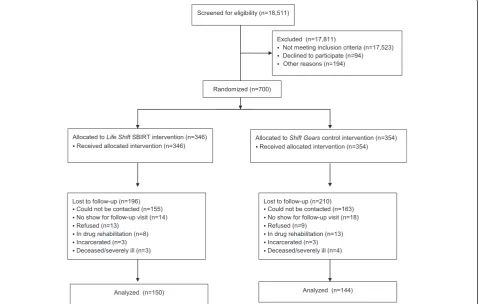
Figure 1 presents a CONSORT diagram of the flow of patients through the trial [15,21]. Eligibility and interest in participating was assessed for over 18,000 patients. About 95 percent of those approached were not eligible
primarily because their drug use risk did not exceed their alcohol use risk. Of the 988 eligible, 9.5 percent de-clined to participate, and 19.4 percent did not finish the consent process or did not provide the necessary contact information because of interruptions for care from hos-pital staff. The result was 700 patients enrolled in the study.
Baseline procedures
An informed consent process was administered to inter-ested, eligible participants. Using an interview format, HEs then collected demographic information; five com-ponents of the Addiction Severity Index Lite [22]; a driv-ing and traffic safety measure that was immediately scored into risk categories; and a drug avoidance self-efficacy measure. Participants were then randomly assigned based on last digit of their telephone number toLife Shift(even number) or to Shift Gears (odd number), and a level of motivational intervention matched to each participant’s condition and risk level was delivered. Because the HE delivered the type and level of intervention, he/she was aware of the participant’s assigned condition.
Interventions
TheLife Shiftdrug intervention and theShift Gearsdriving/ traffic safety intervention were manual-driven, designed to be of the same duration, and were available in English and Spanish. Both had core SBIRT elements, which all participants received, as well as adaptive elements that allowed the HE to tailor the program based on the par-ticipant’s needs and risk level [23]. Both interventions began with the HE assessing the participant’s risk level. Interventions were delivered in a non-judgmental manner using a brochure to help communicate the short- and long-term health, social, and legal effects. (For the Life Shift intervention, drug-specific brochures were used when marijuana, cocaine, and methamphetamine were the drugs of choice; otherwise, a general drug use brochure was used.) The participant’s motivation or readiness to change, a construct based on the Transtheoretical Model [24], was then assessed using a 4-point scale. TheLife Shift
participants were asked, “How ready are you at the
interviewing (MI), a non-confrontational style of behavior change counseling [25,26]. More information about both interventions is described below.
Life Shift drug use intervention
Based on DAST-10 categories resulting from standard scoring procedures [20] and the MI process, participants in the Life Shift group received one of three tracks tai-lored to their specific risk category:
1. Brief intervention for at-risk individuals scoring 1 to 2—Brief intervention with at-risk participants was delivered on-site in the ED/trauma unit. This interaction between the participant and HE included feedback, exploring the participant’s ambivalence about drug use and change, and a negotiation/ commitment to abstain or reduce use.
2. Brief treatment for high-risk individuals scoring 3 to 8—In addition to the on-site brief intervention, high-risk participants were offered 6 individual sessions with aLife Shiftsubstance use counselor (a licensed therapist) over the phone. The sessions incorporated principles of MI and cognitive-behavioral therapy. The HE offered to make the first phone appointment for the participant.
3. Referral to treatment for severe-risk individuals scoring 9 to 10—In addition to the on-site brief intervention and the offer of brief treatment phone counseling, severe-risk participants were given a list of local agencies that could provide further assessment and support.
Shift Gears driving and traffic safety intervention
Participants assigned to the Shift Gears program
re-ceived an appropriate intervention for their specific risk level, based on a modified version of the Driver Behavior Questionnaire (DBQ) [27-29] adapted for our use, and on their readiness to change. The DBQ is an assessment tool designed to identify and classify driving behaviors into specific categories. Levels of Shift Gears were two-tiered instead of three-two-tiered, based on our formative work that showed less variability in driving/traffic risk than drug use risk. However, the intervention was of the same duration (about 15–20 minutes for a brief inter-vention) and included the same motivational elements asLife Shift. The two tracks of intervention included:
demands on the driving task that are affected by dividing attention between two or more sources of visual information, and b) external (e.g., cell phone use, texting) and internal (e.g., road rage) conditions that affect the driving task. To avoid overlap in content of theLife ShiftandShift Gearsinterventions, drunk and drugged driving was not a focus of the control intervention. This interaction between participant and the HE included feedback, problem-solving, exploring the participant’s ambivalence about risky driving and change, and a negotiation/commitment to abstain or reduce risky driving, traffic, or pedestrian behaviors.
2. Referral to treatment for high- to severe-risk individuals scoring 16 to 26+—In addition to the on-site brief intervention, high- to severe-risk participants received a referral list of free on-line or in-person driving and traffic safety classes.
Cohort maintenance and follow-up assessment procedures
Pairs of trained bilingual/bicultural MTs, different from the HEs and blind to the participant’s condition, con-ducted cohort maintenance activities (i.e., phone calls and mailed postcards) and 6-month follow-up assess-ments. Assessments were typically conducted at a con-venient public place selected by the participant, usually at a coffee house. The follow-up visit repeated most of the baseline measures, and a hair sample was collected for those participants reporting abstinence. A $20 incen-tive at the end of the follow-up visit was provided. Three participants had moved out of the vicinity; therefore, MTs conducted these assessments over the telephone.
Measures
HEs used standardized instruments, such as the con-densed version of the Addiction Severity Index (ASI-Lite), to collect presumed intermediate variables targeted by the intervention; driving and traffic safety attitudes and behav-iors; and socio-demographic characteristics during the baseline interview [22]. MTs collected these measures at follow-up. Response cards and machine-scannable surveys were used to facilitate data collection and processing.
Outcome measures
Past 30-day drug abstinence at follow-up
The primary outcome measure was self-reported, past 30-day abstinence measured at 6-month follow-up, a dichot-omous variable computed using ASI-Lite. The psychometric properties of the ASI-Lite are similar to those of the longer ASI [30], which is the most widely used assessment tool in the addictions field. The ASI-Lite gathers quantitative infor-mation (i.e., number of days in the past 30 days) about the participant’s recent use of several broad types of illicit drugs
(heroin, methadone, other opiates/analgesics, barbiturates, other sedatives/hypnotics/tranquilizers, cocaine, amphet-amines, cannabis, hallucinogens, and“other drugs”), includ-ing alcohol [31,32].
A secondary outcome measure was biologically validated drug use abstinence. Inaccuracies in self-reported drug use post-treatment are likely to be high because of demand characteristics and other factors [33,34]. Therefore, MTs asked for a head hair sample during the follow-up inter-view to assess past-month use from participants who reported that they had abstained from all illicit drug use in the past 30 days. Samples were collected and hair was seg-mented to represent the last 30 days of drug use [35]. Hair samples were tested for cocaine, benzoylecgonine, opiates, oxycodone, methamphetamine, amphetamine, and canna-binoids using ELISA (Immunalysis, Pomona, CA) with a detection cut-off of 0.20 nanograms per milligram of hair. Extracts that screened positive were forwarded for
confirmational analysis by gas chromatography–mass
spectrometry (GC-MS). GC-MS analysis identified and quantified 17 drugs and metabolites: amphetamine, meth-amphetamine, MDA, MDMA, cocaine, benzoylecgonine, norcocaine, cocaethylene, methadone, codeine, morphine, 6-monoacetylmorphine (heroin metabolite), oxycodone, oxymorphone, hydrocodone, hydromorphone, and me-peridine. Instrumentation and methodology were previ-ously published [36]. Cannabinoid results obtained by ELISA were reported qualitatively. The drug analyses conducted, while not comprehensive, tested for the most common drugs of abuse in the County. When hair analysis results were positive for drug use, the individ-ual was considered non-abstinent.
Addiction severity index composite scores
Several secondary outcome variables were based on composite scores measured by the ASI-Lite [22]. As mentioned above, the ASI-Lite gathers quantitative in-formation (i.e., number of days in the past 30 days) about the participant’s recent use of several broad types of illicit drugs. In addition, it assesses other areas of the participant’s life commonly affected by substance use: a) medical problems, b) psychiatric problems, and c) alco-hol use. Composite scores to measure problem severity were mathematically derived for the four ASI measures by combining responses from each ASI-Lite problem area using recommended scoring procedures [31]. Com-posite scores range from 0 to 1, with higher scores indi-cating greater severity of the problem.
Health-care utilization
6 months following the participant’s intervention date, included: a) the number of visits to the ED/trauma unit in the past 6 months, excluding the current visit, b) the number of hospitalizations in the past 6 months, and c) the number of hospital days in the past 6 months. Only one of the two sites was able to provide the last two utilization measures.
Driving and traffic safety risk scores
To evaluate the specific effect of the SBIRT Life Shift drug intervention in generating positive changes in drug use beyond what attention alone might produce, all par-ticipants completed driving and traffic safety attitude and behavior measures at baseline and follow-up. Partic-ipants in the driving safety attention-placebo control group were expected to have greater changes in these measures relative to the SBIRT drug use intervention group. An 11-item measure, based partly on the DBQ [27-29], was used to assess changes in driving risks (e.g., texting while driving) as well as general traffic and ped-estrian risks (e.g., crossing the street against the light). Participants were asked to indicate how often they per-formed specific violations/errors based on a 5-point scale ranging from 0“never”to 5“nearly all the time”. A mean of the items was computed as an overall score.
The internal consistency (Cronbach’s alpha) for the
measure was .70.
Additional variables collected at baseline
Several variables were collected at baseline only to characterize the sample, to ascertain risk levels for inter-vention intensity, and to serve as covariates in analyses. Sociodemographic variables collected by the HEs at baseline included participants’gender; age in years; race/ ethnicity using the categories Hispanic/Latino, White non-Latino, African-American, and other; and annual household income measured by six categories ranging from less than $9,999 to $50,000 or more. A 4-item self-efficacy scale was used to assess confidence in avoiding drug use in four situations (e.g., when you’re feeling de-pressed). This brief instrument has shown good validity and reliability with drug users [37]. Items were answered on a Likert scale ranging from 1 to 5, with higher mean scores indicating greater confidence. The internal consistency of the scale was .86. Finally, driving and traf-fic safety risk scores were used to categorize participants into two groups: low- to at risk, and high- to severe risk.
Analyses
Chi-square analyses and independent sample t-tests were used to assess the comparability of Life Shift and Shift Gears participants at baseline, and the degree to which those lost to follow-up were different from those who remained in the study. Abstinence outcomes were analyzed
using logistic regression and included site as a covariate. Mixed-model analyses of variance procedures within a general linear model framework were conducted on ASI composite measures and health-care utilization to assess intervention effects. Because ASI composite measures often are not normally distributed, analyses with log-transformed ASI composite scores and utilization data were also conducted. The results did not differ from the non-transformed analyses; consequently, results presented are those of the original analyses. The group-by-time inter-action was of particular interest because it is indicative of differential group change. Site was included in all models as a between-subjects factor. Initial tests indicated that follow-up data for the quantitative self-reported outcomes were not missing completely at random. Therefore, two sets of analyses for the self-reported data were conducted: a) complete-case analyses of 292 participants with longitu-dinal data, and b) intention-to-treat analyses using multiple imputation to deal with loss to follow-up (n = 694) [38]. Imputed outcome values were predicted from baseline drug and alcohol risk levels, gender, age, income, and drug avoidance self-efficacy; imputed values were possible for only 694 participants because six individuals had too many missing data values. Dichotomous abstinence measures at follow-up were analyzed using generalized linear models that controlled for site. Imputation was not possible for categorical outcomes; therefore, analyses of the abstinence outcome are presented for complete cases only. All ana-lyses were conducted using SPSS version 20.
Sample
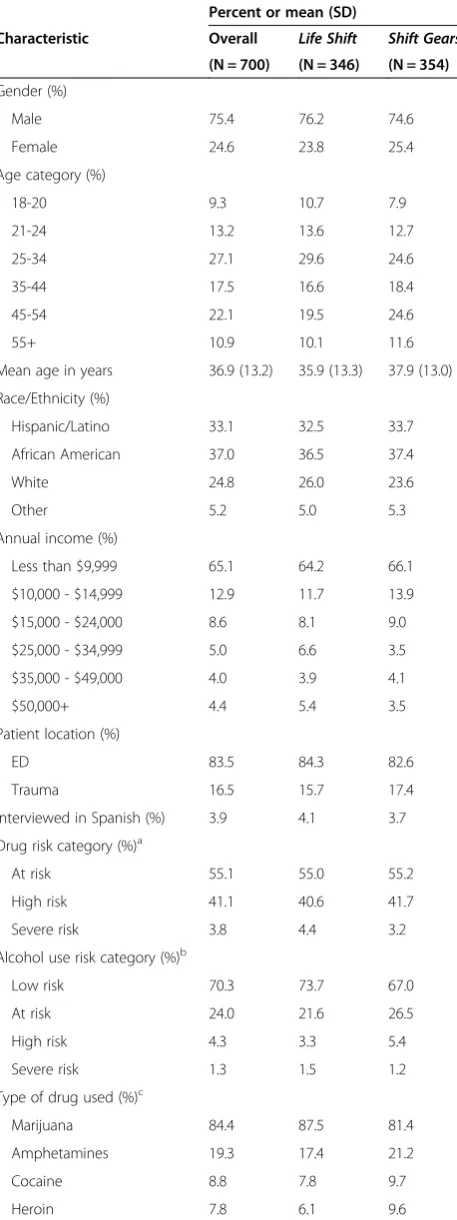
Participant characteristics
Loss to follow-up
The overall follow-up rate was 42 percent (292 of the 700 were followed successfully). Figure 1 presents the reasons for loss to follow-up by condition. Analyses indi-cated that dropout status was not related to condition, site, gender, race/ethnicity, income, driving/traffic risk scores, baseline alcohol use risk level, or the baseline medical, psychiatric, or alcohol use composite scores. However, younger people, those with more severe base-line drug use, and those with lower basebase-line drug use avoidance self-efficacy were more likely to be lost to follow-up.
Results
Participation in hair sampling at follow-up
Thirty-one participants at follow-up reported being ab-stinent from all drugs during the past 30 days. MTs col-lected hair samples for verification from 14 of the 31 participants (8Life Shift and 6 Shift Gearsparticipants). Of the 14 that provided hair samples, 10 were found to be abstinent and four were non-abstinent. Hair samples were not collected for the remaining 17 participants for the following reasons: a) nine declined to provide a hair sample at the time of follow-up, b) three were not avail-able because they had moved out of the state and con-ducted the interview with the MT by telephone, c) three had insufficient body hair, and d) two failed to have hair samples taken for unknown reasons. Missing collection of hair among those reporting abstinence did not differ by condition. Conservatively, all 17 were assumed to be non-abstinent in the analysis of past 30-day abstinence.
Effects of intervention
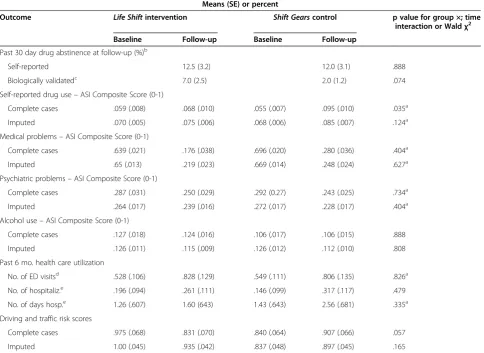
As shown in Table 2, self-reported past 30-day abstin-ence from all drug use assessed during the follow-up
Table 1 Characteristics ofLife Shift/Shift Gears participants overall and by condition
Percent or mean (SD)
Characteristic Overall Life Shift Shift Gears
(N = 700) (N = 346) (N = 354)
Gender (%)
Male 75.4 76.2 74.6
Female 24.6 23.8 25.4
Age category (%)
18-20 9.3 10.7 7.9
21-24 13.2 13.6 12.7
25-34 27.1 29.6 24.6
35-44 17.5 16.6 18.4
45-54 22.1 19.5 24.6
55+ 10.9 10.1 11.6
Mean age in years 36.9 (13.2) 35.9 (13.3) 37.9 (13.0)
Race/Ethnicity (%)
Hispanic/Latino 33.1 32.5 33.7
African American 37.0 36.5 37.4
White 24.8 26.0 23.6
Other 5.2 5.0 5.3
Annual income (%)
Less than $9,999 65.1 64.2 66.1
$10,000 - $14,999 12.9 11.7 13.9
$15,000 - $24,000 8.6 8.1 9.0
$25,000 - $34,999 5.0 6.6 3.5
$35,000 - $49,000 4.0 3.9 4.1
$50,000+ 4.4 5.4 3.5
Patient location (%)
ED 83.5 84.3 82.6
Trauma 16.5 15.7 17.4
Interviewed in Spanish (%) 3.9 4.1 3.7
Drug risk category (%)a
At risk 55.1 55.0 55.2
High risk 41.1 40.6 41.7
Severe risk 3.8 4.4 3.2
Alcohol use risk category (%)b
Low risk 70.3 73.7 67.0
At risk 24.0 21.6 26.5
High risk 4.3 3.3 5.4
Severe risk 1.3 1.5 1.2
Type of drug used (%)c
Marijuana 84.4 87.5 81.4
Amphetamines 19.3 17.4 21.2
Cocaine 8.8 7.8 9.7
Heroin 7.8 6.1 9.6
Table 1 Characteristics ofLife Shift/Shift Gears
participants overall and by condition(Continued)
Other opiates 7.4 7.6 7.3
User of Marijuana only (%) 49.6 51.6 47.7
Use of more than 1 substance incl. alcohol (%)
49.9 47.9 51.9
Mean drug avoidance self-efficacy score
3.2 (1.19) 3.2 (1.2) 3.3 (1.2)
Driving and traffic safety risk category (%)
Low- and at risk 91.3 93.4 89.2
High- and severe risk 8.7 6.7 10.6
a
Based on the Drug Abuse Screening Test—DAST-10 [19,20]. Risk categories included at risk (score of 1–2), high risk (score of 3–8), and severe risk (score of 9–10).
b
Based on the Alcohol Use Disorders Identification Test—AUDIT [18]. Risk categories included no/low risk (score of 0–7), at risk (score of 8–15), high risk (score of 16–19), and severe risk (score of 20–40).
c
visit was 12.5 percent for Life Shift and 12 percent for Shift Gears, a non-significant difference (p = .888). When results of hair analyses were applied, abstinence rates
were 7 percent for Life Shift and 2 percent for Shift
Gears;the difference between groups was not significant (p = .074).
Table 2 presents mean ASI drug use composite scores by condition and results of statistical tests of changes. Of interest are the relatively low baseline drug use com-posite scores in both groups (approximately .06 on a 0 to 1 scale). Among complete cases, the Life Shift inter-vention group showed relatively small increases in ASI composite scores for self-reported use of any drugs com-pared to theShift Gearsattention-placebo control group. The differential change resulted in a significant group-by-time interaction (p = .035) in favor of Life Shift inter-vention effectiveness, in addition to a time main effect. An additional analysis indicated that the differential
group change in drug use scores did not differ for marijuana-only users versus users of other drugs (data not shown). When imputed data were analyzed, however, the interaction was no longer statistically significant.
Psychiatric problems, and particularly medical
prob-lems, declined over time in both groups at about the
same rate, resulting in a statistically significant time main effect that was found with complete cases and im-puted data. Alcohol use showed no time main effect or interaction. Considering health-care utilization out-comes, there were no group-by-time interactions; how-ever, both groups increased over time (time main effect) in the number of ED visits and the number of hospital days. Number of hospitalizations also increased in both groups, but did not approach statistical significance.
Results of driving and traffic risk scores showed a mar-ginally significant interaction effect (p = .057), with the Life Shift intervention participants showing greater
Table 2 Outcomes ofLife Shift/Shift Gearsusing complete cases (n=292) and imputed cases (n = 694)
Means (SE) or percent
Outcome Life Shiftintervention Shift Gearscontrol p value for group ×; time interaction or Waldχ2
Baseline Follow-up Baseline Follow-up
Past 30 day drug abstinence at follow-up (%)b
Self-reported 12.5 (3.2) 12.0 (3.1) .888
Biologically validatedc 7.0 (2.5) 2.0 (1.2) .074
Self-reported drug use–ASI Composite Score (0-1)
Complete cases .059 (.008) .068 (.010) .055 (.007) .095 (.010) .035a
Imputed .070 (.005) .075 (.006) .068 (.006) .085 (.007) .124a
Medical problems–ASI Composite Score (0-1)
Complete cases .639 (.021) .176 (.038) .696 (.020) .280 (.036) .404a
Imputed .65 (.013) .219 (.023) .669 (.014) .248 (.024) .627a
Psychiatric problems–ASI Composite Score (0-1)
Complete cases .287 (.031) .250 (.029) .292 (0.27) .243 (.025) .734a
Imputed .264 (.017) .239 (.016) .272 (.017) .228 (.017) .404a
Alcohol use–ASI Composite Score (0-1)
Complete cases .127 (.018) .124 (.016) .106 (.017) .106 (.015) .888
Imputed .126 (.011) .115 (.009) .126 (.012) .112 (.010) .808
Past 6 mo. health care utilization
No. of ED visitsd .528 (.106) .828 (.129) .549 (.111) .806 (.135) .826a
No. of hospitaliz.e .196 (.094) .261 (.111) .146 (.099) .317 (.117) .479
No. of days hosp.e 1.26 (.607) 1.60 (643) 1.43 (.643) 2.56 (.681) .335a
Driving and traffic risk scores
Complete cases .975 (.068) .831 (.070) .840 (.064) .907 (.066) .057
Imputed 1.00 (.045) .935 (.042) .837 (.048) .897 (.045) .165
a
Significant time main effect, p < .05.
b
Imputation not available for dichotomous outcomes, therefore, analyses based on 292 complete cases.
c
Those followed and reporting 0 drug use but who did not provide a hair sample for any reason; assumed to be nonabstinent.
d
Data available for 602 patients.
e
improvement thanShift Gears participants. This finding was unexpected insofar as those in the Shift Gears con-dition received the intervention in reducing driving and traffic risks, whereas theLife Shiftgroup did not receive that intervention.
Discussion and conclusions
This study found no support for the effectiveness of the SBIRT approach for illicit drug use. The primary out-come variable, past 30-day drug abstinence, was not sig-nificant. Analyses of ASI drug use composite scores using imputed data were also not significant.
Comparing our results to those of others is difficult given the lack of comparable study designs, differences in the types of drug users targeted, and other important methodological differences. Bernstein and colleagues’ randomized trial of brief motivational intervention in clinics for opioid and cocaine users is the most similar to the present study in terms of design [13]. Those au-thors reported a 4.6 percentage-point difference in bio-logically validated past 30-day abstinence rates between intervention and control groups at 6-month follow-up [13], similar to the 5 percentage-point difference in ab-stinence rates reported here. They also reported benefi-cial effects of the brief intervention on ASI drug and medical composite scores. Their results are in stark con-trast to ours, insofar as we did not see reductions in ASI drug scores in the SBIRT intervention group. Differences in enrollment criteria, the racial/ethnic composition of participants, the content/intensity of what the control group received, and the type of drug users enrolled make formal comparison between the two study results diffi-cult. It is also noteworthy that the Bernstein study enrol-lees had much higher ASI drug use scores at baseline (.25 versus .06), and lower ASI medical scores (.56 versus .67) than did our participants. Perhaps the benefits of the SBIRT approach are more greatly realized among those at higher addiction levels.
Our study sample differed from those reported else-where in terms of their ASI scores. For example, the drug use composite score in our sample of .056 is lower than the score of .09 reported for a nationally represen-tative sample of those in outpatient treatment programs [32], and far lower than the score of .25 reported for opi-oid/cocaine users [13]. These differences are not surpris-ing given that the present study sample was not in treatment; so one would expect them to have lower composite scores. The current study had a large propor-tion of marijuana-only users; to the degree that they were less likely to perceive their drug use as a problem due to changing societal norms, their drug use compos-ite scores would be relatively low. Psychiatric problem scores in the current sample, however, were almost twice as high as those among patients undergoing outpatient
drug treatment [32], and medical problem scores were 24 percent higher than among opiate and cocaine users [13]. These differences underscore the heterogeneity of drug users in terms of their co-morbid mental health and medical status, and underscore the importance of addressing mental health and/or medical needs within a population needing substance use treatment.
There was no evidence that the SBIRT drug interven-tion had an effect on medical/ psychiatric problems, al-cohol use, or health-care utilization. Although results from other studies are mixed, our findings are in line with a meta-analysis that found no statistically signifi-cant effect of SBIRT interventions on health-care utilization [39]. Furthermore, the U.S. Preventive Ser-vices Task Force [40] reported that evidence is insuffi-cient to demonstrate that psychosocial intervention reliably improves non-drug use outcomes for largely asymptomatic patients whose illicit drug use is detected through screening. Time main effects for several of these outcomes were observed in the present study, indicating similar changes in both intervention and control groups. For example, there were decreases in self-reported med-ical and psychiatric problems often associated with drug use, and increases in health-care utilization for both groups. Although this pattern might seem paradoxical, differences in the measures may partly explain the find-ing. ASI medical and psychiatric problem scores targeted problems in the past 30 days, whereas health-care utilization measures covered a longer period of time (past 6 months). Furthermore, participants’medical and psychiatric problems at baseline were likely relatively high, insofar as they were currently patients in an ED visiting for a medical problem. At follow-up, however, there were no patients awaiting care. Researchers sug-gest that patients may no longer have been troubled by their previous medical problems, and therefore, their problem scores were lower.
intervention, he/she was aware of the participant’s assigned condition, so some bias may have been intro-duced. However, measurement staff members were blind to the participants’ conditions. Finally, a small sample size (n = 97) for some analyses was also a problem.
The methodology of the study has many strengths, in-cluding its minimal exclusion criteria. The decision to include participants who were using an assortment of substances and multiple substances was made for both scientific and clinical reasons. Recruitment of varied and polydrug users in research trials has been advocated by experts in the field of substance use disorder research as a “real world” test of an approach, and as a means to bridge the gap between research and practice [42]. The use of an attention-placebo control group is also a strength, as it allowed us to test the rival hypothesis that improvement in drug use occurred because of the partic-ipant’s expectations or the attention received, rather than from the SBIRT itself [43]. Unexpectedly, the SBIRT group tended to improve more than the placebo group on the measure related to driving and traffic safety. The SBIRT drug use intervention may have been more salient or interesting than the attention-placebo control intervention, bringing about changes in a variety of health and safety areas among those participants who received it. Attempted biochemical validation of reports of abstinence, a multiethnic sample, and rigorous model-ing of missmodel-ing data are additional strengths.
The null results of the present study are disappointing, yet it is premature to conclude that SBIRT cannot work for drug use. Alternative explanations, such as those re-lated to intervention implementation and measurement may have obfuscated SBIRT’s effects. Future studies are needed to rule out alternative explanations and add to the knowledge about SBIRT effectiveness for drug use.
Competing interests
The authors declare that they have no competing interests.
Authors’contributions
SW and JC contributed to the conceptualization of the manuscript. SW, KE, and CM participated in data analyses. KE, MH, AS, CBS, EC, TC, and MS participated in the implementation and intervention aspects of the study. JG conducted the hair analyses. All authors read and approved the final manuscript.
Acknowledgements
We gratefully acknowledge the contribution of Elizabeth Clapp, Jessica Lawrenz, Militza Bonet, Wanda Claproth, Fabian Martinez, Patricia Galindo, David Nguyen, and Dr. Gideon Koren. Grant Support: This study was funded by NIH/NIDA under the American Recovery and Reinvestment Act (ARRA) of 2009, grant #1RC1DA028031-01.
Author details
1San Diego State University, School of Social Work, Center for Alcohol and
Drug Studies, 5500 Campanile Drive, San Diego, CA HH-203E, USA.2The Ohio State University, College of Social Work, Columbus, OH 43210-1162, USA.
3
San Diego State University Research Foundation, 6386 Alvarado Ct Ste 224, San Diego, CA 92120, USA.4Colorado State University, School of Social Work,
127 Education, 1586 Campus Delivery, Ft. Collins, CO 80523-1586, USA.
5Scripps Mercy Hospital, Trauma Research & Injury Prevention, Trauma
Service [MER-62], 4077 Fifth Ave, San Diego, CA 92103, USA.6Department of
Emergency Medicine, University of California San Diego, 200 West Arbor Drive, San Diego, CA 92103, USA.7University of Toronto, Motherisk
Laboratory, The Hospital for Sick Children, 555 University Ave, Toronto M5G 1X8, Ontario, Canada.
Received: 19 July 2013 Accepted: 23 April 2014 Published: 22 May 2014
References
1. San Diego Association of Governments (SANDAG):Reports reveal trends in drug abuse & gang involvement.http://www.sandag.org/index.asp?newsid= 730&fuseaction=news.detail.
2. County of San Diego, Health and Human Services Administration, Behavioral Health:Facts and statistics about drug and alcohol abuse.http:// sandiego.networkofcare.org/mh/library/article.aspx?id=393.
3. Cherpitel CJ, Ye Y:Alcohol-attributable fraction for injury in the U.S. general population: data from the 2005 National alcohol survey.J Stud Alcohol Drugs2005,69:535–538.
4. Substance Abuse and Mental Health Services Administration (SAMHSA)/ Center for Substance Abuse Treatment (CSAT):A guide to substance abuse services for primary care clinicians, Treatment Improvement Protocol (TIP) Series 24. Rockville: U.S: Department of Health and Human Services, Substance Abuse and Mental Health Services Administration; 1997. DHHS Publication No. (SMA) 97–3139.
5. Babor TF, McRee BG, Kassebaum PA, Grimaldi PL, Ahme K, Bray J:Screening, brief intervention, and referral to treatment (SBIRT): toward a public health approach to the management of substance abuse.Subst Abus
2007,28(3):7–30.
6. Longabaugh R, Woolard RF, Nirenberg TD, Minugh AP, Becker B, Clifford PR, Carty K, Licsw, Sparadeo F, Gogineni A:Evaluating the effects of a brief motivational intervention for injured drinkers in the emergency department.J Stud Alcohol2001,62:806–816.
7. Wilk AI, Jensen NM, Havighurst TC:Meta-analysis of randomized control trials addressing brief interventions in heavy alcohol drinkers.J Gen Intern Med1997,12(5):274–283.
8. D’Onofrio G, Degutis LC:Preventive care in the emergency department: screening and brief intervention for alcohol problems in the emergency department: a systematic review.Acad Emerg Med2002,9:627–638. 9. Saitz R:Screening and brief intervention enter their 5th decade.Subst
Abus2007,28(3):3–6.
10. Saitz R, Alford DP, Bernstein J, Cheng DM, Samet J, Palfai T:Screening and brief intervention for unhealthy drug use in primary care settings: randomized clinical trials are needed.J Addict Med2010,4(3):123–130. 11. Humeniuk R, Ali R, Babor T, Souze-Formigoni ML, de Lacerda RB, Ling W, McRee B, Newcombe D, Pal H, Poznyak V, Simon S, Vendetti J:A randomized controlled trial of a brief intervention for illicit drugs linked to the alcohol, smoking and substance involvement screening test (ASSIST) in clients recruited from primary health-care settings in four countries.Addiction
2012,107:957–966.
12. Madras BK, Compton WM, Avula D, Stegbauer T, Stein JB, Clark HW:
Screening, brief interventions, referral to treatment (SBIRT) for illicit drug and alcohol use at multiple healthcare sites: comparison at intake and 6 months later.Drug Alcohol Depend2009,99:280–295.
13. Bernstein J, Bernstein E, Tassiopoulos K, Heeren T, Levenson S, Hingson R:
Brief motivational intervention at a clinic visit reduces cocaine and heroin use.Drug Alcohol Depend2005,77:49–59.
14. Bernstein E, Bernstein JA, Stein JB, Saitz R:SBIRT in emergency care settings: are we ready to take it to scale?Acad Emerg Med2009,
16:1072–1077.
15. Eisenberg K, Woodruff SI:Randomized controlled trial to evaluate screening and brief intervention for drug-using multiethnic emergency and trauma department patients.Addict Sci Clin Pract2013,8:8. doi:10.1186/1940-0640-8-8.
16. Magura S:Validating self-reports of illegal drug use to evaluate national drug control policy: a reanalysis and critique.Eval Program Plann2010,
33:234–237.
17. Nutt DJ, King LA, Phillips LD:Independent Scientific Committee on Drugs: drug harms in the UK: a multicriteria decision analysis.Lancet2010,
18. Babor TF, Higgins-Biddle JC, Saunders JB, Monteiro MG:AUDIT–The Alcohol Use Disorders Identification Test: Guidelines for Use in Primary Care 2ndEdition.
Geneva, Switzerland: World Health Organization, Department of Mental Health and Substance Dependence; 2001.
19. Yudko E, Lozhkina O, Fouts A:A comprehensive review of the psychometric properties of the drug abuse screening test.J Subst Abuse Treat2007,32:189–198.
20. Skinner HA:The drug abuse screening test.Addict Behav1982,7(4):363–371. 21. Moher D, Schulz KF, Altman DG:CONSORT group: the CONSORT
statement: revised recommendations for improving the quality of reports of parallel-group randomized trials.BMC Med Res Methodol2001,1:2. 22. McLellan AT, Luborsky L, Woody GE, O’Brien CP:An improved diagnostic
evaluation instrument for substance abuse patients: the addiction severity index.J Nerv Ment Dis1980,168(1):26–33.
23. Murphy SA, Collins LM, Rush AJ:Editorial: customizing treatment to the patient: adaptive treatment strategies.Drug Alcohol Depend2007,
88(2):S1–S3.
24. Prochaska JO, DiClemente CC, Norcross JC:In search of how people change: applications to addictive behaviors.Am Psychol1992,
47(9):1102–1114.
25. Miller WR:Motivational interviewing with problem drinkers.Behav Psychother
1983,11:147–172. doi: http://dx.doi.org/10.1017/S0141347300006583. 26. Miller WR, Rollnick S:Motivational interviewing: preparing people for change
(2nd ed).New York: Guilford Press; 2002.
27. Lawton R, Parker D, Manstead ASR, Stradling SG:The role of affect in predicting social behaviors: the case of road traffic violations.J Appl Soc Psychol1997,27(14):1258–1276. doi: 10.1111/j.1559-1816.1997.tb01805.x. 28. Parker D, Reason JT, Manstead ASR, Stradling SG:Driving errors, driving violations and accident involvement.Ergonomics1995,38(5):1036–1048. doi: 10.1080/00140139508925170.
29. Reason JT, Manstead ASR, Stradling SG, Baxter JS, Campbell K:Errors and violations on the road: a real distinction?Ergonomics1990,33:1315–1332. doi: 10.1080/00140139008925335.
30. Cacciola JS, Alterman AI, McLellan AT, Lin YT, Lynch KG:Initial evidence for the reliability and validity of a“lite”version of the addiction severity index.Drug Alcohol Depend2007,16:297–302.
31. McGahan PL, Griffith JA, Parente R:McLellan AT: Composite scores for the addiction severity index.Philadelphia, PA: Department of Veterans Affairs Medical Center; 1986. Retrieved from http://www.tresearch.org/wp-content/ uploads/2012/09/.
32. McLellan AT, Cacciola JC, Alterman AI, Rikoon SH, Carise C:The addiction severity index at 25: origins, contributions and transitions.Am J Addict
2006,15(2):113–124.
33. Victorin K, Haag-Gronlund M, Skerfving S:Methods for health risk assess-ment of chemicals: are they relevant for alcohol?Alcohol Clin Exp Res
1998,22(7):270S–276S.
34. Wish ED, Hoffman JA, Nemes S:The validity of self-reports of drug use at treatment admission and at follow-up: comparisons with urinalysis and hair assays. InValidity of Self-Reported Drug Use: Improving the Accuracy of Survey Estimates, Research Monograph 167L.Edited by Harrison, Hughes A. Rockville: National Institute on Drug Abuse; 1997:200–226. NIH Publication No. 97–4147.
35. Pragst F, Balikova MA:State of the art in hair analysis for detection of drug and alcohol abuse.Clin Chim Acta2006,370:17–49.
36. Aleksa K, Walasek P, Fulga N, Kapur B, Gareri J, Koren G:Simultaneous detection of seventeen drugs of abuse and metabolites in hair using solid phase micro extraction (SPME) with GC/MS.Forensic Sci Int2012,
218(1–3):31–36.
37. Coon GM, Pena D, Illich PA:Self-efficacy and substance abuse: assessment using a brief phone interview.J Subst Abuse Treat1998,
15(5):385–391.
38. Rubin RB:Multiple Imputation for Nonresponse in Surveys.New York: John Wiley and Sons, Inc.; 1987.
39. Bray JW, Cowell AJ, Hinde JM:A systematic review and meta-analysis of health care utilization outcomes in alcohol screening and brief intervention trials.Med Care2011,49(3):287–294. doi: 10.1097/MLR.0b013e318203624f. 40. Polen MR, Whitlock EP, Wisdom JP, Nygren P, Bougatsos C:Screening in
primary care settings for illicit drug use: staged systematic review for the United States preventive services task force. Evidence Synthesis No. 58, Part 1.Agency for Healthcare Research and Quality: Rockville; 2008.
41. Hinden R, McCusker J, Vickers-Lahti M, Bigelow C, Garfield F, Lewis B:
Radioimmunoassay of hair for determination of cocaine, heroin, and marijuana exposure: comparison with self-report.Int J Addict1994,
29(6):771–789.
42. Rounsaville BJ, Petry NM, Carroll KM:Single versus multiple drug focus in substance abuse clinical trials research.Drug Alcohol Depend2003,
70(2):117–125.
43. Bootzin RR:The role of expectancy in behavior change. InPlacebo: Theory, Research and Mechanisms.Edited by White L, Tursky B, Schwartz GE. New York: Guilford Press; 1985:196–210.
doi:10.1186/1940-0640-9-8
Cite this article as:Woodruffet al.:Randomized clinical trial of the effects of screening and brief intervention for illicit drug use: the life shift/shift gears study.Addiction Science & Clinical Practice20149:8.
Submit your next manuscript to BioMed Central and take full advantage of:
• Convenient online submission
• Thorough peer review
• No space constraints or color figure charges
• Immediate publication on acceptance
• Inclusion in PubMed, CAS, Scopus and Google Scholar
• Research which is freely available for redistribution