ARTIGO ORIGINAL
RESUMO
Introdução: A dor crónica pós-cirúrgica é a complicação tardia mais frequente da cirurgia de reparação de hérnia inguinal. Este trabalho visa determinar a incidência de dor crónica pós-hernioplastia inguinal em ambulatório no Centro Hospitalar do Porto, estudar a sua relação com determinadas variáveis descritas na literatura, avaliar as suas características e interferência funcional.
Material e Métodos: Realizámos um estudo de coorte retrospetivo, entre fevereiro e maio de 2016, por entrevista telefónica estruturada composta por perguntas dos autores e secções de três questionários publicados, dois dos quais validados para a língua e cultura portuguesas. Incluímos os homens submetidos a hernioplastia inguinal, por laparotomia ou laparoscopia, em ambulatório, no Centro Hospitalar do Porto, entre janeiro de 2011 e outubro de 2015.
Resultados: Na amostra final de 829 hernioplastias, a incidência de dor crónica pós-hernioplastia foi de 24,0% [intervalo de confiança: 21,2 - 27,1]. O desenvolvimento de dor crónica foi superior nos doentes com dor pré-cirúrgica, nos doentes mais jovens e relacionou-se com o momento de início da dor pós-cirúrgica. Não encontrámos relação com a via de abordagem, clássica ou laparoscópica. Dos indivíduos com dor crónica, 65,0% apresentaram dor ‘em média’ moderada ou forte e 37,7% apresentavam descritores sugestivos de dor de origem neuropática. A dor crónica pós-hernioplastia do ponto de vista funcional apenas ‘não interferiu completamente’ com o sono.
Discussão: A prevalência encontrada de dor crónica pós-hernioplastia, com interferência funcional importante, é congruente com os dados disponíveis na literatura. O potencial preditor da presença de dor pré-cirúrgica e idade jovem do doente para o desenvolvimento de dor crónica pós-hernioplastia é também corroborado pela literatura. Tratando-se de um estudo de coorte retrospetivo, o estudo apresenta as limitações inerentes.
Conclusão: A elevada prevalência de dor crónica pós-hernioplastia encontrada apontam para a urgência na sensibilização dos profissionais de saúde para esta problemática e otimização do follow-up, diagnóstico e tratamento da dor.
Palavras-chave: Dor Crónica; Dor Pós-Operatória; Hérnia Inguinal/cirurgia; Hernioplastia; Procedimentos Cirúrgicos Ambulatórios
Chronic Pain After Outpatient Inguinal Hernioplasty:
Retrospective Cohort Study
Dor Crónica Pós-Hernioplastia Inguinal em Regime de
Ambulatório: Estudo de Coorte Retrospetivo
1. Instituto de Ciências Biomédicas Abel Salazar. Universidade do Porto. Porto. Portugal.
2. Unidade da Dor. Serviço de Anestesiologia. Hospital de Santo António. Centro Hospitalar do Porto. Porto. Portugal.
Autor correspondente: Catarina Ferreira. [email protected]
Recebido: 30 de junho de 2017 - Aceite: 17 de setembro de 2018 | Copyright © Ordem dos Médicos 2018
Patrícia OLIVEIRA1, Ana DUARTE1, André GUIMARÃES1, Armindo FERNANDES1, Catarina FERREIRA1,
Diana AMORIM1, Filipa GOUVEIA1, Joana ALMEIDA1, Madalena BRAGA1, Mariana OLIVEIRA1, Mónica DURÃES1,
Rita PICHEL1, José ROMÃO2
Acta Med Port 2018 Nov;31(11):624-632 ▪ https://doi.org/10.20344/amp.9381 ABSTRACT
Introduction: Chronic postoperative pain is the most frequent late complication of inguinal hernia repair surgery. The aim of this study is to evaluate the incidence of chronic post-hernioplasty pain in outpatient care at Centro Hospitalar do Porto, describe it, analyse its relation with other variables defined in the literature and study its functional interference.
Material and Methods: We performed a retrospective cohort study between February and May 2016, using a structured telephone interview composed of questions from the authors and sections of published questionnaires, two of which are validated for the Portuguese language and culture. We included men who underwent ambulatory inguinal hernioplasty, by laparotomy or laparoscopy, at Centro Hospitalar do Porto, between January 2011 and October 2015.
Results: In a final sample of 829 surgeries, the incidence of chronic post-hernioplasty pain was 24.0% [confidence interval: 21.2 - 27.1]. The development of chronic post-hernioplasty pain was higher in patients with pre-surgical pain and younger age and was related with the presence of pain during the first month after surgery. No relationship was found between surgical technique and the development of chronic post-hernioplasty pain. Of the individuals with chronic pain, 65.0% mentioned moderate-severe ‘pain on the average’ and 37.7% presented descriptors suggestive of neuropathic pain. The only parameter evaluated with which chronic post-hernioplasty pain ‘did not interfere completely’ was sleep.
Discussion: The prevalence found for chronic posthernioplasty pain with significant functional interference is in line with data retrieved from literature. The predictive potential of pre-surgical pain and young age for the development of chronic posthernioplasty pain is also in agreement with previous studies. Limitations were found to this study given its retrospective nature.
Conclusion: The high prevalence of chronic post-hernioplasty pain raises the urgent need for raising awareness regarding this issue among health care professionals. The main areas for improvement are diagnosis, follow-up and treatment of pain.
Keywords: Ambulatory Surgical Procedures; Chronic Pain; Hernia, Inguinal/surgery; Herniorrhaphy; Pain, Postoperative
INTRODUCTION
Pain is defined by the International Association for the Study of Pain (IASP) as an unpleasant sensory and emo-tional experience associated with actual or potential tissue
damage or described in terms of such damage.1
Chronic pain (CP) has been defined by Benzon et al. as pain that persists past normal healing time and it may present as persistent or recurrent at intervals of months or
ARTIGO ORIGINAL
Unlike acute pain, it is defined as pain with no biological
value and therefore with no benefit to patients.3
The assessment and measurement of pain and particu-larly chronic pain are challenging tasks, as defining char-acteristics can vary widely both individually and between patients. In addition, the definition of CP, mainly regarding duration as well as the assessment method and timing can
vary widely among different authors.4 Therefore, its
inci-dence and prevalence widely variable, making any outcome
comparison extremely difficult.5 The use of standardized
questionnaires validated for the language and culture of the population in analysis is therefore recommended for the
ex-ternal validation of prevalence studies.6
It is estimated that one from each five adult European patients presents with CP, which is more prevalent than
asthma or diabetes.7 However, less than 2% of these
pa-tients seek medical attention at a chronic pain unit,8 while
the remaining patients usually seek primary care units.9
In Portugal, studies on CP are still scarce, mainly in the area of chronic post-surgical pain (CPSP). A 36.7% preva-lence of CP and a 6% prevapreva-lence of CPSP have been esti-mated in the Portuguese population between Jan 2007 and
March 2008 by the study Epidemiology of Chronic Pain.10
The first study aimed at the identification of trauma and surgery as major risk factors of CP was published in 1998. In this study by Crombie et al., 40% of the 5,130 patients with CP in 10 clinics in the United Kingdom presented with pain upon surgery or a trauma episode. Surgery as second cause of CP (22.5%) was only overcome by the presence of degenerative disorders (34.2%). These were the conclu-sions, among others, that have led to an increasing interest
in CPSP.11
One of the highest rates of CPSP is associated with her-nia repair, together with mastectomy, thoracotomy, major
abdominal surgery, lumbar surgery and limb amputation.12
A total of 2,800/1,000,000 patients are annually
submit-ted to hernia repair in Europe and in the Unisubmit-ted States13 and
a 27% estimated risk in male and 3% in female of the need for hernia repair have been found in the general population
of industrialised countries.14
Hernia repair surgery is mostly successful, followed by
some weeks of recovery,15 involving few postoperative
com-plications and long-term comcom-plications are rare. Neverthe-less, considering the high number of patients who undergo a hernia repair (HR), any long-term complication, although rare, may have a significant economic, social, physical and
emotional impact.12 Rates of chronic pain following HR
ranging from 0 to 54% have been described in prevalence
studies.6
According with Loos et al., some degree of functional
disability has been described by around 21% of the patients
with chronic pain following HR.16 Courtney et al. have
de-scribed its negative impact on activities such as walking and standing for short periods, its relevant association with sleep disorders and the interference on the ability of
main-taining social relations.17
The emergence of tension-free techniques, the
discov-ery of synthetic materials and the introduction of minimally invasive techniques have produced a radical change in the paradigm of hernia repair surgery throughout the past dec-ade,3,18,19 with an improvement in the index of quality of the procedure and a significant reduction in the recurrence rate
(1% - 5%).20 Chronic pain following HR has been
recog-nized as the leading postoperative complication12 and
in-volving the most difficult approach.3
Regardless of the approach, dissection, the use of for-eign material and inflammation are involved in hernia repair surgery, in addition to tissue injury and eventually to nerve damage. The presence of nociceptive and neuropathic pain, with hyperalgesia, spontaneous pain, paraesthesia and mechanical allodynia or induced by thermal changes
can subsequently occur.21 Recently, with the use of more
than 160 types of prosthetic materials available on the
mar-ket,22 an extended postoperative inflammatory response
has been found.8,23 Therefore, even though CP has been
defined by the IASP as the presence of pain for no less than
three months,1 chronic pain following HR is considered as
the presence of pain for no less than six months.23,24 This
definition seems in line with the studies showing a decline in the incidence of pain during the first six postoperative months. Nevertheless, other causes of pain must be ruled out, particularly pain associated with any preoperative
con-dition.25
The assessment of the incidence of chronic pain (CP) following outpatient hernia repair (HR) with the application of prosthesis, by laparotomy and laparoscopy, in male pa-tients was the study’s primary endpoint.
The determination of whether the development of CP following HR correlates with the following variables - pres-ence of preoperative pain, previous abdominopelvic sur-gery, type of surgical approach, uni or bilateral repair and onset of postoperative pain- was the secondary endpoint, in addition to the characterisation of chronic pain following HR and its functional interference, seeking of medical attention and the use of a tailored treatment approach.
MATERIAL AND METHODS
This was a retrospective cross-sectional study that took place between Feb and May 2016 at the Centro Hospitalar do Porto (CHP) and was validated by the Departamento de Ensino, Formação e Investigação as well as by the Ethics Committee of the CHP.
A total of 1,392 male patients have been considered and eligible and were included in the study (corresponding to 1,428 surgery procedures) and the following inclusion crite-ria were considered: patients over the age of 18 admitted to the Outpatient Surgery Clinic of the CHP and submitted to hernia repair with the application of a prosthesis, uni or bi-laterally, by laparoscopy or laparotomy (outpatient surgery), between Jan 2011 and Oct 2015.
Patients with a history of previous ipsilateral HR were not eligible for inclusion in the study.
ARTIGO ORIGINAL patients and participants were subsequently contacted by phone within a structured interview. Interviews took place in April and May 2016 and those who did not answer the phone or rang up were contacted four times, at least twice through an identified phone num-ber at different times and days. According to the established criteria, failure to contact with a participant led to the exclu-sion from the study.
Data regarding variables to be analysed were obtained from responses to the telephone questionnaire. No data was obtained from patient’s electronic medical record. Data regarding the presence and duration of preopera-tive pain, onset of post-surgical pain (immediate, over the first month, over the two following months or subsequently) as well as data regarding CPSP duration and location were obtained from responses to items 1 to 2.1 designed by the authors (not based on any validated questionnaire) (Ap-pendix 1: https://www.actamedicaportuguesa.com/revista/ index.php/amp/article/view/9381/Apendice_01.pdf). Data regarding variables on the characteristics of pain frequency, seeking of medical attention and tailored treat-ment were obtained from items 3 to 5 of the questionnaire, based and adapted to the Portuguese language from the
structured in-depth-interview questionnaire8 (non-validated
questionnaire).
Data regarding pain intensity assessment (as mean, maximum pain and score at the time of the interview), type of treatment, pain relief rate and parelated functional in-terference were obtained from items 6-8 and 11-14 of the
questionnaire, based on the Inventário Resumido da Dor
(Brief Pain Inventory – BPI), validated version for the
Portu-guese language and culture.26
Data on the presence and quantification of descriptors of neuropathic pain were obtained from items 9 and 10 of
the questionnaire, taken from the ‘questionário específico
para rastreio de dor neuropática ─ DN4’ ─ section ‘ques-tionário do doente’-, validated version for the Portuguese
language and culture.26,27
The presence of pain more than once a week8 over a
period of no less than six months1 was considered as CP
following HR for data analysis and outcome discussion. The point prevalence of CP following HR has been cal-culated from the frequency described on the week before the interview.
The presence of at least three descriptors associated with neuropathic pain suggested the presence of pain with
a probable neuropathic origin.27
Pain intensity was assessed by using a 11-point numeri-cal snumeri-cale, in which 0 was associated with ‘absence of pain’, 1-3 with ‘mild pain’, 4-6 with ‘moderate pain’ and 7-10 with
‘severe pain’.28 Current pain intensity regarded the
pres-ence of pain at the moment of the interview. Functional interference of CP following HR was assessed on a 0-10 range and scored as ‘no interference’ (0), ‘mild interference’ (1 - 3), ‘moderate interference’ (4 - 6), ‘high interference’ (7
- 9) and ‘absolute interference’ (10).26
Bilateral surgery (performed at the same operative ses-sion) was considered as a single surgery, corresponding to a single questionnaire. Patients who were operated to each side at different operative sessions, with no previous ipsilat-eral surgery, were surveyed regarding each surgery in isola-tion and each patient has responded to two quesisola-tionnaires, one per each surgery.
Continuous variables were expressed as mean ± stand-ard deviation and compared by using Student’s t-test. Cate-gorical variables were presented as distributions of frequen-cy and compared by using chi-square test. The association of CP following HR with patient’s age was analysed as a general linear model.
IBM SPSS Statistics software version 22.0.0 has been used. The accuracy of the prevalence rates was delivered
by 95% confidence intervals (95% CI).29,30
RESULTS
Valid responses to the questionnaire were obtained from 818 patients (from the 1,392 eligible and digitally selected patients), corresponding to 829 hernia repair surgeries. A total of 599 hernia repairs were excluded from the study, as shown in Fig. 1.
Mean age of the participants was 55.5 ± 13.1 years
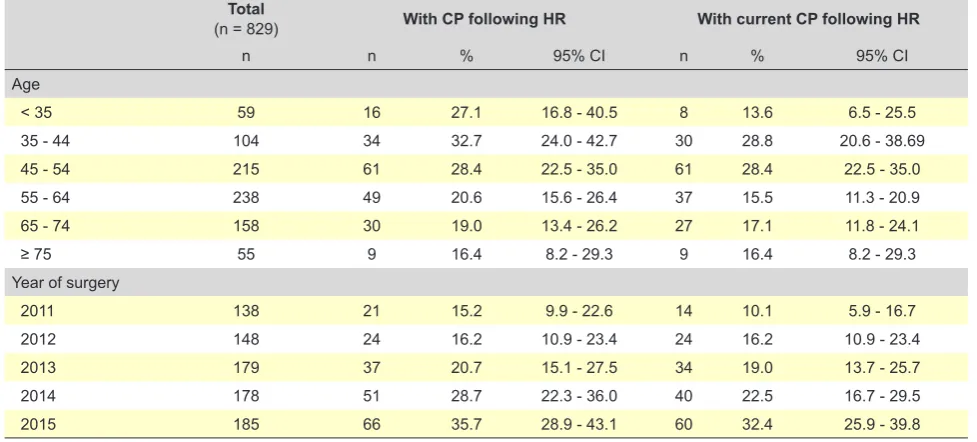
(range 23-86). The distribution of our group of patients by age ranks and by the year when surgery was performed is shown in Table 1.
A 24.0% rate of surgeries leading to the presence of CP following HR has been found [21.2 – 27.1], increasing to 35.2% when only ‘duration of more than six months’ crite-rion was considered and ‘more than once a week’ was ex-cluded. A 16.8% point prevalence of CP following HR has been found [14.3 – 19.5].
Mean age of patients with CP following HR was lower than those with no CP following HR (p = 0.003).
A percentage of 29.5% of the patients with preoperative pain have developed CP following HR, compared to 12% of those with no preoperative pain having developed CP fol-lowing HR (p < 0.001).
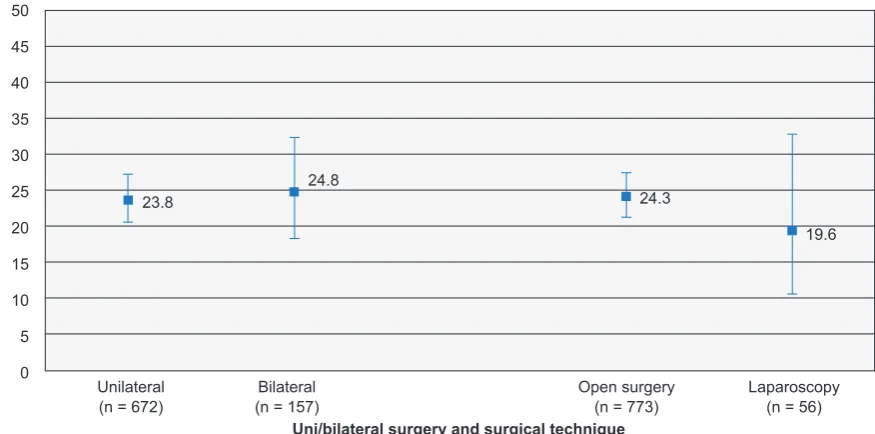
No association has been found between CP following HR and (i) uni or bilateral surgery, (ii) type of surgery (Table 2, Fig. 2) and (iii) history of previous abdominopelvic sur-gery (Table 2).
An association between the development of CP follow-ing HR and the onset of pain has been found (p < 0.001): CP following HR was presented by 43.2% of the patients im-mediately after surgery, by 71.9% of the patients during the first postoperative month (excluding the presence of pain immediately after surgery), by 45.6% of the patients on the three months following surgery (excluding the first month) and by 35.8% of the patients more than three months after surgery.
ARTIGO ORIGINAL
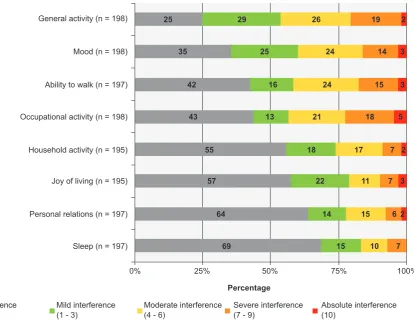
As regards functional interference (Fig. 4), absolute in-terference of CP following HR was only found with patient’s sleep.
Descriptors suggesting the presence of a probable neu-ropathic origin were found in 37.7% of the patients with CP following HR, mostly stinging sensation (65.8%), followed by numbness (43.2%), tingling (36.7%), ‘electric shock’ (28.1%), itching (18.1%), burning (17.1%) and painful cold
(6.5%).
A total of 72 (36.5%) from the 197 patients who respond-ed to ‘Have you ever sought the advice of a physician due to that pain?’ item have responded positively, while 33 (17.6%) from the 188 patients who responded to ‘Have you followed any treatment of medication due to that pain?’ item have responded positively, 18 from which have specified the type of treatment: non-steroidal anti-inflammatory drugs (n = 10),
Figure 1 – Flowchart of the selection procedure
n¶ - number of surgical procedures (the same patient may have undergone two non-ipsilateral hernia repair surgeries).
* - four failed attempts of telephone contact, two of which using an identified phone number, out of the working hours and in different days. † - ‘Do not know / do not remember’ response to items 2.1, 3.1 or 4.1 (Appendix 1)
1,392 eligible patients n¶ = 1,428
Exclusions n¶ = 428
- Missed call* n¶ = 324
- Wrong number n¶ = 75
- No phone number on the patient’s medical record n¶ = 15
- Deceased patient n¶ = 10
- Absent n¶ = 2
- Admitted to hospital n¶ = 2
Exclusions n¶ = 171
- Wrongly included, due to previous ipsilateral or subsequent hernia repair surgery n¶ = 95
- Response refusal n¶ = 23
- Unable to define the presence, duration or frequency of postoperative pain† n¶ = 17
- Fill-in error n¶ = 13
- Unable to respond to the questionnaire due to:
• Hearing impairment n¶ = 9
• Non comprehension n¶ = 7
• Dementia n¶ = 5
• Tracheostomy n¶ = 2
974 interviewed patients n¶ = 1,000
818 valid responses n¶ = 829
Table 1 – Distribution of the patients with chronic pain following hernia repair (CP following HR) and with current CP following HR
(described during the week before) by age group and year of surgery
Total
(n = 829) With CP following HR With current CP following HR
n n % 95% CI n % 95% CI
Age
< 35 59 16 27.1 16.8 - 40.5 8 13.6 6.5 - 25.5
35 - 44 104 34 32.7 24.0 - 42.7 30 28.8 20.6 - 38.69
45 - 54 215 61 28.4 22.5 - 35.0 61 28.4 22.5 - 35.0
55 - 64 238 49 20.6 15.6 - 26.4 37 15.5 11.3 - 20.9
65 - 74 158 30 19.0 13.4 - 26.2 27 17.1 11.8 - 24.1
≥ 75 55 9 16.4 8.2 - 29.3 9 16.4 8.2 - 29.3
Year of surgery
2011 138 21 15.2 9.9 - 22.6 14 10.1 5.9 - 16.7
2012 148 24 16.2 10.9 - 23.4 24 16.2 10.9 - 23.4
2013 179 37 20.7 15.1 - 27.5 34 19.0 13.7 - 25.7
2014 178 51 28.7 22.3 - 36.0 40 22.5 16.7 - 29.5
2015 185 66 35.7 28.9 - 43.1 60 32.4 25.9 - 39.8
ARTIGO ORIGINAL acetaminophen (n = 5), tramadol (n = 2), gabapentin (n = 1) and corticosteroids (n = 1); two patients were treated with more than one drug. Physiotherapy (n = 1) and the use of an abdominal elastic band (n = 1) have also been described. No relief was described by five (16.7%) from the 30 pa-tients having followed a treatment and who were able to assign a pain-relief rate, partial relief by 20 (66.7%) (30 to 90% relief) and total by 5 (16.7%).
DISCUSSION
A 24.0% rate of patients having developed CP following HR has been found, increasing to 35.2% when ‘more than once a week’ variable was removed (for comparison), cor-responding to around one from each three men, in line with
literature.6 The presence of pain after elective inguinal
her-nia repair was found in 39.4% of the 227 patients (only three female) by Manangi et al. in a prospective study (patients were available for follow-up at six months), which is slightly
above the present study’s rate.31
Immediate postoperative pain, together with severe pre-operative pain, were usually considered in literature as
po-tential predictors for the development of CP following HR.34
The development of CP following HR in 29.5% of the pa-tients with preoperative pain (vs. 12.0% of the papa-tients with no preoperative pain having developed CP following HR)
gives support to the hypothesis considered by Althaus et
al., Demetrashvili et al. and Manangi et al. on the predictive
potential of this variable to the development of CPSP.31-33
According to our results, the development of pain during the first postoperative month also seems to predispose to
Figure 2 – Rate of chronic pain following hernia repair per uni or bilateral surgery and per type of surgical approach (chi-square test, p =
0.785 and p = 0.429, respectively) Unilateral (n = 672) 0
40 50
30
20
23.8 24.8 24.3
19.6
10
5 45
35
25
15
Bilateral (n = 157)
Uni/bilateral surgery and surgical technique
% with CP
following HR
Open surgery
(n = 773) Laparoscopy (n = 56)
Table 2 – Characteristics of the total sample and the groups of patients with or without CP following HR
Total With CP following HR Without CP following HR p-value1
(n = 829) (n = 199) (n = 630)
Age, mean ± standard deviation 55.5 ± 13.1 53.1 ± 12.7 56.3 ± 13.2 0.003 Uni or bilateral surgery
Unilateral,n (%) 672 (81.1) 160 (80.4) 512 (81.3) 0.785
Bilateral,n (%) 157 (18.9) 39 (19.6) 118 (18.7)
Surgical approach
Open surgery, n (%) 773 (93.2) 188 (94.5) 585 (92.9) 0.429
Laparoscopy, n (%) 56 (6.8) 11 (5.5) 45 (6.8)
Preoperative pain
Present,n (%) 570 (68.8) 168 (84.4) 402 (63.8) <0.001
Absent, n (%) 259 (31.2) 31 (15.6) 228 (36.2)
Previous abdominopelvic surgery (n = 768) (n = 182) (n = 586)
Yes,n (%) 262 (34.1) 58 (31.9) 204 (34.8) 0.464
No, n (%) 506 (65.9) 124 (68.1) 382 (65.2)
CP following HR: chronic pain following hernia repair
ARTIGO ORIGINAL
Figure 3 – Distribution per classes of intensity of CP following HR (as mean, maximum pain and at the interview) (n = 197)
No pain (0) Mild (1 - 3) Moderate (4 - 6) Severe (7 - 10)
0% 25% 50% 75% 100%
Mean
Maximum
At the interview
35
14
32 25 32 10
51
44
14
42
Percentage
Intensity of CP
following HR
the development of CP following HR (71.9%), suggesting the need for a more frequent follow-up protocol on the first postoperative months, with timing established according to
the results of each department.33
A multifactorial aetiology for CP following HR is usually considered, with relevant overlapping nociceptive and
neu-ropathic components of pain,12 which is confirmed by the
re-sults of the last multi-centric observational study on CPSP in
Europe.35 In our study, 37.7% of the patients with CP
follow-ing HR have presented with descriptors suggestfollow-ing neuro-pathic pain. Patient’s medical history, physical examination with neurologic examination and the use of ancillary tests would be needed for the diagnostic confirmation, which are
not feasible within a retrospective study.36 Patients
present-Figure 4 – Distribution per classes of the functional interference of CP following HR
No interference
(0) Mild interference (1 - 3) Moderate interference (4 - 6) Severe interference (7 - 9) Absolute interference (10)
0% 25% 50% 75% 100%
General activity (n = 198)
Mood (n = 198)
Ability to walk (n = 197)
Occupational activity (n = 198)
Household activity (n = 195)
Joy of living (n = 195)
Personal relations (n = 197)
Sleep (n = 197)
25
35
42
43
55
57
64
69 29
25
16
13
18
22
14
15 26
24
24
21
17
11
15
10 19
14
15
18
7
7
6
7 2
3
3
5
2
3
2
Percentage
ARTIGO ORIGINAL ing with pain with an intensity ≥30 (analogic visual scale) at the moment of an interview were selected by Loos et al. from a group of patients submitted to elective HR between Jan 2000 and Aug 2005 and almost half (46.5%) of the 148 patients who have met the protocol of physical examination and therapeutic test seemed to present with neuropathic
pain.37
An evidence regarding a correlation between patient’s functional disability and neuropathic pain as well as the
intensity of CPSP has been suggested by literature.35 A
65.0% percentage of patients usually presenting with mod-erate or severe CP following HR has been found in our study, increasing to 85.1% when the maximum pain ever experienced has been considered. A 50% prevalence of moderate-severe pain with a duration of no less than three months has been found in a descriptive study with a group
of 77 patients by Rehman et al.18 In contrast to these
con-clusions, a higher prevalence of mild pain when compared to the sum of moderate and severe pain has been found in
the study by Manangi et al.31 The use of different scales and
the lack of consensus between the different authors regard-ing the definition of chronic pain is worth mentionregard-ing and could have biased the outcome comparison.
A lower mean age of patients in the group of those with CP following HR has been found, when compared to the group of patients with no CP following HR, with a reduction in the prevalence of CP following HR with the patient’s age. Langeveld et al., based on a prospective study and with a follow-up time extended to 12 months, have also reached the conclusion that the younger the patient, the higher the risk of developing CP following HR. An increase in comor-bidities and higher tolerance to pain, as well as the
reduc-tion in peripheral nociceptive sensitivity38 and in the level of
physical activity in the older population23 have been referred
as potential explanations for the differences found between both age groups. In contrast, Donati et al. have reached the conclusion that patient’s age had no influence on the devel-opment of pain with a duration of no less than six months. However, a larger percentage of symptoms ranked as mi-nor among which a ‘‘feeling of discomfort’ (not included as a strict definition of pain) have been found in the group of
patients aged under 65.39
We have reached the conclusion that patients face a higher level of disability regarding their general activity, the disposition and ability to walk, when compared to other vari-ables, in line with Courtney et al. Nevertheless, severe and absolute interference was mostly found with patient’s labour
activity.17
No association has been found between CP following HR and the surgical approach (open versus laparoscopic surgery). In contrast, the conclusion that the development of chronic pain or discomfort seems more frequent in pa-tients who were submitted to open surgery was found in a literature review by Aasvang et al. and a retrospective study
by Kumar et al.23,40 Loos et al. have also found that 1% of
patients with chronic pain submitted to open surgery in their study group were referred to the chronic pain outpatient
department, in comparison with 0.4% of the patients who
underwent laparoscopic surgery.37 However, despite all the
different studies comparing these techniques, considering all the specificities, no clear benefit has been found with any
of the techniques.20
In our study, the percentage of patients seeking for medical advice (36.5% of 197 patients) seems inappropri-ate considering the high prevalence of moderinappropri-ate-severe pain. Since only 18 patients were able to specify their treat-ment, any discussion on the adequacy of therapy seems misplaced. However, considering the possible presence of a neuropathic component in 37.7% of the patients, the de-scription of other drug classes, such as secondary amines (tricyclic antidepressants), serotonin-norepinephrine reup-take inhibitors (SNRI), other GABA (gamma-aminobutyric acid) analogues and other opioid analgesics, would be
ex-pectable.41
The assessment of the effect of the following variables
- anaesthetic technique,42 preventive analgesia, adequate
postoperative analgesia,31 surgical technique and
experi-ence of the surgical team, type of prosthesis12 and signs of
a nerve injury,23 in the incidence and characteristics of CP
following HR, described as potential confounding factors and potentially related to limitations of the study, was not the aim of the study.
There may exist an information bias regarding the re-cords, as this was a retrospective, cross-sectional study, based on a telephone interview and therefore exclusively based on the participant’s memory. In addition, the patient’s education, economic level and occupational situation (non-assessed parameters) may have interfered with the pain perception by patients and have biased the results.
The development of CP following HR was assessed in a group of patients who underwent HR surgery between 2011 and 2015 and the presence of different periods of risk is worth mentioning – the patients who were operated in 2011 were approximately exposed for five years to the risk for CP following HR while those operated in 2015 were only exposed for one year, therefore with a higher probability for the development of CP following HR upon the interview, when compared to the former. Therefore, the point preva-lence in our group of patients was only referred to the pres-ence of pain at the time of the interview (developed over the previous week).
Finally, a single validated questionnaire was not used for the telephone interview, rather a compilation of two vali-dated questionnaires for the Portuguese language and cul-ture and one non-validated questionnaire, in order to com-ply with the study aims.
Mostly Caucasian and only male patients were included in the study, which may prevent from any extrapolation of the results to similar groups of patients or to other ethnicity and gender.
CONCLUSION
ARTIGO ORIGINAL
functional interference. Young age, the presence of preop-erative pain and pain over the first postoppreop-erative month were associated with the development of CP following HR. More than one third of the patients met criteria suggesting the presence of neuropathic pain. In conclusion, the per-centage of patients seeking medical advice or having been submitted to treatment seems inadequate. The surgical ap-proach did not show any correlation with the presence of CP following HR.
An action against under-diagnosis, under-treatment and an inadequate treatment of these patients is therefore crucial and an optimization of the follow-up of the patients submitted to hernia repair must be considered, aimed at the diagnosis and treatment of post-surgical pain and referral of patients, when needed, to a chronic pain clinic. An improved awareness of healthcare professionals, including surgeons, anaesthesiologists and general practitioners is therefore extremely important.
ACKNOWLEDGMENTS
The authors wish to acknowledge Bruno Rocha at the Department of Information and Management of the Centro Hospitalar do Porto, Carlos Magalhães for his careful
rec-ommendations and references, Maria de Sameiro Pereira for the study’s revision as well as Rui Magalhães and Caro-lina Lemos for their endless support to the statistical analy-sis.
HUMAN AND ANIMAL PROTECTION
The authors declare that the study was validated by the Department of Education, Training and Research and the Ethics Committee of the Centro Hospitalar do Porto and ac-cording to the Helsinki Declaration of the World Medical As-sociation.
DATA CONFIDENTIALITY
The authors declare that they have followed the proto-cols of their work centre on the publication of patient data.
CONFLICTS OF INTEREST
The authors declare that there were no conflicts of inter-est in writing this manuscript.
FINANCIAL SUPPORT
The authors declare that there was no financial support in writing this manuscript.
REFERENCES
1. Merskey H, Bogduk N. Classification of chronic pain. Decriptions of chronic pain syndromes and definitions of pain terms. 2nd ed. Seattle:
IASP Press; 1994.
2. Benzon H, Raja S, Fichman S, Liu S, Cohen S. Essentials of pain medicine. 3rd ed. Collingwood: Saunders; 2011.
3. Pinheiro P. Dor crónica pós-operatória em herniorrafia/ hernioplastia inguinal. Porto: Repositório da Universidade do Porto; 2014.
4. van Hanswijck de Jonge P, Lloyd A, Horsfall L, Tan R, O’Dwyer PJ. The measurement of chronic paind and health-related quality of life following inguinal hernia repair: a review of the literature. Hernia. 2008;12:561-9. 5. Nikkolo C, Lepner U. Chronic pain after open inguinal hernia repair.
Postgrad Med. 2015;128:69-75.
6. Sandblom G. Is chronic post-herniorrhaphy pain always chronic? J Pain Res. 2015;8:241-5.
7. van Hecke O, Torrance N, Smith BH. Chronic pain epidemiology - where do lifestyle factors fit in it? Br J Pain. 2013;7:209-17.
8. Breivik H, Collett B, Ventafridda V, Cohen R, Gallacher D. Survey of chronic pain in Europe: prevalence, impact on daily life, and treatment. Eur J Pain. 2006;10:287-333.
9. Smith BH, Torrance N. Management of chronic pain in primary care. Curr Opin Support Palliat Care. 2011;5:137-42.
10. Azevedo LF, Costa-Pereira A, Mendonça L, Dias CC, Castro-Lopes JM. Epidemiology of chronic pain: a population-based nationwide study on its prevalence, characteristics and associated disability in Portugal. J Pain. 2012;13:773-83.
11. Crombie IK, Davies HT, Macrae WA. Cut and thrust: antecedent surgery and trauma among patients attending a chronic pain clinic. Pain. 1998;76:167-71.
12. Bjurstrom MF, Nicol AL, Amid PK, Chen DC. Pain control following inguinal herniorrhaphy: current perspectives. J Pain Res. 2014;7:277-90.
13. Hernández Granados P. Chronic pain after inguinal hernia surgery. Cir Esp. 2010;87:199-201.
14. Primatesta P, Goldacre MJ. Inguinal hernia repair: incidence of elective and emergency surgery, readmission and mortality. Int J Epidemiol. 1996;25:835-9.
15. Bay-Nielsen M, Thomsen H, Andersen FH, Bendix JH, Sorensen OK, Skovgaard N, et al. Convalescence after inguinal herniorrhaphy. Br J
Surg. 2004;91:362-7.
16. Loos MJ, Roumen RM, Scheltinga MR. Chronic sequelae of common elective groin hernia repair. Hernia. 2007;11:169-73.
17. Courtney CA, Duffy K, Serpell MG. Outcome of patients with severe chronic pain following repair of groin hernia. Br J Surg. 2002;89:1310-4. 18. Rehman SU, Khan AA, Shamim B, Saleem R, Shahzadi M. Chronic
groin pain after inguinal hernioplasty. JRMC. 2014;18:237-9.
19. Mirza AA, Augustine AJ, Shibumon MM. Surgical outcomes open versus laparoscopic repair for inguinal hernia. IOSR-JDMS. 2014;13:46-9. 20. Bittner R, Schwarz L. Inguinal hernia repair: current surgical techniques.
Langenbecks Arch Surg. 2012;397:271-82.
21. Nienhuijs SW, Rosman C, Strobbe LJ, Wolff A, Bleichrodt RP. An overview of the features influencing pain after inguinal hernia repair. Int J Surg. 2008;6:351-6.
22. Coda A, Lamberti R, Martorana S. Classification of prosthetics used in hernia repair based on weight and biomaterial. Hernia. 2012;16:9-20. 23. Aasvang E, Kehlet H. Chronic postoperative pain: the case of inguinal
herniorrhaphy. Br J Anaesth. 2005;95:69-76.
24. Alfieri S, Amid PK, Campanelli G, Izard G, Kehlet H, Wijsmuller AR, et al. International guidelines for prevention and management of post-operative chronic pain following inguinal hernia surgery. Hernia. 2011;15:239-49.
25. Schug S, Pogatzki-Zahn E. Chronic pain after surgery or injury. Prepared by the International Association for the Study of pain, task force on Taxonomy. Seattle: IASP Press;2011.
26. Azevedo LF, Pereira AC, Dias C, Agualusa L, Lemos L, Romão J, et al. Tradução, adaptação cultural e estudo multicêntrico de validação de instrumentos para rastreio e avaliação do impacto da dor crónica. Dor. 2007;15:6-56.
27. Bouhassira D, Attal N, Alchaar H, Boureau F, Brochet B, Bruxelle J, et al. Comparison of pain syndromes associated with nervous or somatic lesions and development of a new neuropathic pain diagnostic questionnaire (DN4). Pain. 2005;114:29-36.
28. Jones KR, Fink R, Vojir C, Pepper G, Hutt E, Clark L, et al. Translation research in long-term care: improving pain management in nursing homes. Worldviews Evid Based Nurs. 2004;1:S13-20.
ARTIGO ORIGINAL
30. Wilson EB. Probable inference, the law of succession, and statistical inference. J Am Stat Assoc. 1927;22:209-12.
31. Manangi M, Shivashankar S, Vijayakumar A. Chronic pain after inguinal hernia repair. Int Sch Res Notices. 2014;2014:839681.
32. Athaus A, Hinrichs-Rocker A, Chapman R, Arránz Becker, Lefering R, Simanski C, et al. Development of a risk index for the prediction of chronic post-surgical pain. Eur J Pain. 2012;16:901-10.
33. Demetrashvili Z, Metreveli T, Vibliani K, Khutsishvili K, Ekaladze E, Akhalkatsi L. Chronic pain following Lichtenstein inguinal hernia repair: a single surgeon’s experience. Open Access J Surg. 2016;1:555557. 34. Langeveld HR, Klitsie P, Smedinga H, Eker H, Van’t Riet M, Weidema
W, et al. Prognostic value of age for chronic postoperative inguinal pain. Hernia. 2015;19:549-55.
35. Fletcher D, Stamer UM, Pogatzki-Zahn E, Zaslansky R, Tanase NV, Perruchoud C, et al. Chronic postsurgical pain in Europe: an observational study. Eur J Anaesthesiol. 2015;32:725-34.
36. Dworkin RH, Backonja M, Rowbotham MC, Allen RR, Argoff CR, Bennett GJ, et al. Advances in neuropathic pain: diagnosis, mechanisms, and treatment recommendations. Arch Neurol. 2003;60:1524-34.
37. Loos MJ, Roumen RM, Scheltinga MR. Classifying post-herniorrhaphy pain syndromes following elective inguinal hernia repair. World J Surg. 2007;31:1760-5.
38. Chakour MC, Gibson SJ, Bradbeer M, Helme RD. The effect of age on A delta- and C-fibre thermal pain perception. Pain. 1996;64:143–52. 39. Donati M, Brancato G, Giglio A, Biondi A, Basile F, Donati A. Incidence
of pain after inguinal hernia repair in the elderly. A retrospective historical cohort evaluation of 18-years’ experience with mesh & plug inguinal hernia repair method on about 3000 patients. BMC Surg. 2013;13:S19. 40. Kumar S, Wilson RG, Nixon SJ, Macintyre IM. Chronic pain after laparoscopic and open mesh repair of groin hernia. Br J Surg. 2002;89:1476-9.
41. Dworkin RH, O’Connor AB, Audette J, Baron R, Gourlay GK, Haanpää ML, et al. Recommendations for the pharmacological management of neuropathic pain: an overview and literature update. Mayo Clin Proc. 2010;85:S3-14.