ISSN-L: 2501 - 1235 Available on-line at: www.oapub.org/edu
Copyright © The Author(s). All Rights Reserved.
doi: 10.5281/zenodo.2579410 Volume 5 │ Issue 6 │ 2019
EXERCISE PRESCRIPTION: A STRUCTURAL EQUATION
ANALYSIS OF THE THEORY OF PLANNED BEHAVIOR AMONG
KENYAN HEALTHCARE PROFESSIONALS
Oloo Micky Olutende1, Maximilla N. Wanzala2, Issah Wabuyabo Kweyu1 1Department of Health Promotion and Sports Science,
Masinde Muliro University of Science and Technology, Kakamega, Kenya
2Dr., Department of Public Health,
Epidemiology and Biostatistics, Masinde Muliro University of Science and Technology,
Kakamega, Kenya
Abstract:
Objective: To describe the physical activity prescribing behaviour of Kenyan healthcare professionals and determine if the theory of planned behaviour explains this behavior.
Design: The study design was a cross-sectional analytical, that utilized quantitative methods. Setting: The study was conducted in Public health facilities in Kakamega County, located in Western Kenya. These facilities were four (4) Sub-County hospitals, two (2) County hospitals and one (1) County referral hospital. Sample: Stratified random sampling was embraced to divide the population into homogeneous subgroups as per the professional cadres then simple random in proportion to their number in the population was done. Formulae that was used for calculating the sample size was Cochran) with an attrition rate of 10%, since the sample size was less than 10,000 people, the sample size was adjusted with the finite population correction for proportions based on the populations of nurses, doctors and clinical officers (n = 221)
Analysis: Data was analyzed through Structural Equation Modelling (SEM). Alpha level for all the computations was considered significant at an α <0.05. Main outcome measures: Self-reported PA prescription behaviour, PA involvement, attitude, subjective norm, perceived behavioural control (PBC) and intention related to PA prescription behaviour were assessed. Results: The estimation of this hypothesized structural model yielded an acceptable fit to the data, χ2 =1634.6, df = 770; χ2/df ratio
prescription (β = .07, p = .318). Intention was a direct predictor of exercise prescription (β = .251, p < .001). Conclusion: The theory of planned behaviour provided useful insight into physician prescription behaviour. A replication study on healthcare professionals with different characteristics should be conducted to increase the understanding of psychosocial predictors of this behaviour.
Keywords: Structural equation model, SEM, physical activity, evidence-based health promotion, non-communicable diseases, primary care, Kenya, Kakamega
1. Background
The healthcare setting has been recognized as an appropriate and promising venue for counseling and prescribing physical activity to increase the activity index of the population (Matheson et al., 2011; Lobelo & de Quevedo, 2016; Lamming et al., 2017; Teferi, Kumar & Singh, 2017; Leemrijse, de Bakker, Ooms, & Veenhof, 2015). When done adequately, healthcare professionals initiated physical activity (PA) counseling is moderately effective, resulting in short-term (12 months) improvements in patients’ physical activity (PA) levels (Orrow, Kinmonth, Sanderson & Sutton, 2012,). Exercise prescription from a healthcare professional will remind the patient that physical activity is part of their treatment plan and should be adhered to with the same diligence with which their medication is taken (Grandez et al., 2009). Almost two-thirds of patients (65%) would be more interested in exercise and physical activity (PA) to stay healthy if advised by their healthcare professional (Leemrijse et al., 2015), while 24% of patients will turn to fitness and health web sites for advice on exercise and PA but after consulting their doctor first (Derman, Patel, Nossel & Schellnus, 2008). Researchers have confirmed that majority of people cite their general practitioners as their primary source of information regarding healthy lifestyle decisions especially as far as diet and exercise are concerned (Lanhers et al., 2015) It has been suggested that in developing countries, where physicians hold a respected position, healthcare settings may exert a strong influence on patients’ behaviors (Leemrijse et al., 2015).
Counseling by physicians and other healthcare professionals (HCPs) has proven to be useful in helping patients improve their lifestyles (Orrow et al., 2012,). However, research shows a gap in practice of exercise prescription (Teferi, Kumar, & Singh, 2017). Studies show that despite physical activity (PA) counseling and referral schemes being part of health care systems in the United Kingdom (Murphy et al., 2012), Sweden (Leijon, Bendtsen, Nilsen, Ekberg & Stahle, 2008) Switzerland (Warner, Martin-Diener, Bauer, Stamm & Martin, 2011) and Brazil (Malta & Barbosa, 2012), rates of PA counseling by physician and other HCPs still remain unacceptably low in countries with available data, (Lobelo & de Quevedo, 2016).
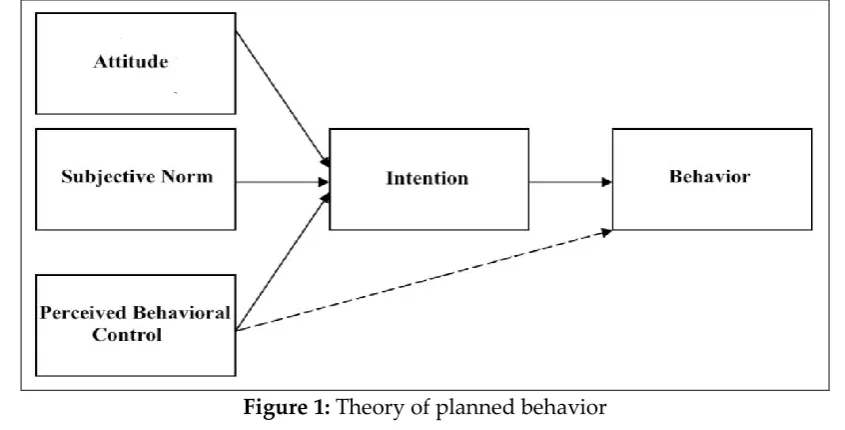
explain approximately 31% of the variance in healthcare professionals’ behaviour (Godin, Belanger-Gravel, Eccles, Grimshaw, 2008). The TPB recognizes that an individual’s behaviour is influenced by his/her intention to engage in that behaviour (Ajzen, 1985). Intention is in turn influenced by three psychosocial constructs: attitude, subjective norm and perceived behavioural control (Ajzen, 1991). The TPB has been shown to explain an array of physician behaviours including vaccination practices (Askelson, Campo, Lowe, Dennis, Smith & Andsager, 2010), screening/testing practices (Ramsay, Thomas, Croal, Grimshaw & Eccles, 2010) and guideline adherence (Rashidian & Russell, 2010) Studies employing the TPB to explain healthcare professionals’ behaviour have been found to have superior predictive power than those using other theories (Godin, Belanger-Gravel, Eccles & Grimshaw, 2008). Thus, the TPB has been identified as the preferred model for explaining physician behaviour (Perkins et al., 2007).
Therefore, the purpose of this study was to determine if the tenets of the theory of planned behaviour explain this behaviour. Consistent with the theory of planned behaviour, we hypothesized that attitude, subjective norm and perceived behavioural control would explain intention, while perceived behavioural control and intention would explain physical activity prescription behaviour.
2. Theory of Planned Behaviour
The theory of planned behavior was proposed by (Ajzen, 1991) which was an expectancy-value theory that provided a framework for the study of behaviors. The theory of planned behavior is a popular framework for understanding the motivational and informational influences of exercise and physical activity behavior. It can explain the patterns of health behavior change which when addressed would facilitate better and adequate healthcare delivery at individual, institutional and community-based settings.
2.1 Behavioral belief and attitude toward behavior
Behavioral belief-An individual’s belief about consequences of particular behavior. The concept is based on the subjective probability that the behavior will produce a given outcome. Attitude towards behavior-An individual’s positive or negative evaluation of self-performance of the particular behavior. The concept is the degree to which performance of the behavior e.g. exercise prescription or exercise behavior change is positively or negatively valued. It is determined by the total set of accessible behavior to various outcomes and other attributes.
2.2 Normative belief and subjective norms
Normative-An individual’s belief about a particular behavior which is influenced by the judgment of significant others e.g. parents, spouse, friends and teachers. Subjective norm-An individual’s perception of social normative pressures or relevant beliefs that he or she should not perform such behavior.
2.3 Control beliefs and perceived behavior control
Perceived behavior control-An individual’s perceived ease or difficulty of performing the particular behavior. It is assumed that perceived behavioral control is determined by total set of accessible control beliefs. Control beliefs-An individual’s beliefs about the presence of factors that may facilitate or impede performance of behavior. The concept of perceived behavior control is conceptually related to self-efficacy.
2.4 Behavioral intention and behavior
Behavioral intention: an indication of an individual's readiness to perform a given behavior. It is assumed to be an immediate antecedent of behavior. It is based on attitude toward the behavior, subjective norm, and perceived behavioral control, with each predictor weighted for its importance in relation to the behavior and population of interest. Behavior: an individual's observable response in a given situation with respect to a given target. (Ajzen, 1991) said a behavior is a function of compatible intentions and perceptions of behavioral control in that perceived behavioral control is expected to moderate the effect of intention on behavior, such that a favorable intention produces the behavior only when perceived behavioral control is strong.
3. Methods
3.1 Study setting
working in seven (7) health facilities were studied. These facilities were four (4) Sub-County hospitals, two (2) Sub-County hospitals and one (1) Sub-County referral hospital. The County referral hospital, two County hospitals and four Sub-County hospitals were purposively selected because these facilities have higher service availability and readiness assessment index (Government of Kenya [GoK], 2014).
3.2 Participants and recruitment
The study population (230) were nurses, doctors and clinical officers working in public hospitals in Kakamega County. Stratified random sampling was embraced to divide the population into homogeneous subgroups as per the professional cadres then simple random in proportion to their number in the population was done. Formulae that was used for calculating the sample size was Cochran (Singh & Masuku, 2014) with an attrition rate of 10%, since the sample size was less than 10,000 people, the sample size was adjusted with the Finite population correction for proportions based on the populations of nurses. There was limited data on the prevalence of exercise counselling and prescription in Kenya. Therefore, for estimation of prevalence the researcher conducted a pre-test study in Navakholo sub county hospital and found an estimated assumed prevalence of 50% on the outcome variable practice of exercise prescription. In addition, an a priori power analysis, using the software application G*Power 3.1 for Windows (Erdfelder, Faul, Buchner, & Lang, 2009), demonstrated that a sample size of 230 was sufficient in order to discover significant effect sizes.
3.3 Procedures
Two hundred and twenty-one healthcare professionals completed the questionnaires and tests; 29 questionnaires were excluded for not being complete. The study was conducted in Kakamega County and ethics approval was obtained from Masinde Muliro University of Science and Technology ethics board, National commission for science and technology, the Kakamega County commissioner and from Kakamega County referral hospital (KCRH). No further approval was needed since the project did not require access to patients or personal data. All participants were informed of the complete confidentiality of the data and were notified of the subsequent handling of the data following analysis.
3.4 Data collection instruments
verbal and written prescription. Answers were anchored on a five-point scale ranging from Never = 1 to Always = 5.
The theory of planned behaviour questionnaire was adapted and modified to measure the psychosocial constructs hypothesized to influence physician PA prescription behaviour. The questionnaire had four scales, each measuring one construct of the theory of planned behaviour, with answers anchored on a five-point scale. Healthcare professionals’ attitude towards PA prescription was measured with eight items for example “I think that prescribing PA is generally: 1 = useful to 5 = not useful”. Subjective norm was measured with six items e.g. “Most physicians would prescribe PA: 1 = strongly agree to 5 = strongly disagree”. Perceived behavioural control was measured with nine items e.g. “Prescribing PA to my patients is: 1 = very easy to 5 = very difficult”. Intention to prescribe PA was measured with eight items e.g. “I intend to prescribe PA to my patients within the next six months: 1 = strongly agree to 5 = strongly disagree”. An average internal consistency of α = 0.81 for the four scales. In this study, the internal consistency for the attitude scale was α = 0.712 for subjective norm α = 0.85, for perceived behavioural control α = 0.728, and for intention α = 0.749. Deleting select items would not increase the alpha. To increase the validity and reliability of the instruments, after adapting the questionnaires were evaluated by experts.
3.5 Data analysis
A structural relations model of the relationships between the different constructs was developed using AMOS 24 software. Structural equation modelling (SEM) was employed to test the fit of the TPB model using a covariance matrix and the maximum likelihood (MLR) method without any statistical correction due to the presence of missing data because all the records were complete. Cases with missing data were excluded listwise from the SEM analysis (n = 29). No significant differences were observed between cases with missing data and cases with complete data. The variables that were not normally distributed (skewness > 2 kurtosis > 3) and were transformed using the reciprocal transformation method. The analysis was performed in two steps. In the first step, the study tested a measurement model to establish if chosen relevant measures had been chosen to indicate each of the latent variables. Testing the measurement model involved relating the observed variables to the underlying concepts by means of confirmatory factor analysis. In the second step, our conceptual model/structural model was tested to evaluate the hypothesized links between the latent variables attitude, subjective norms, perceived control, intention and exercise prescription behaviour. In both steps, maximum-likelihood estimation was used. In principle, a non-significant chi-square test would signify that the data provided a good fit to the model. This test can explain the sum of differences between observed and expected outcome frequencies. The chi-square interpretations were also followed by an interpretation of the index of the ratio of the χ2 estimated value and its degrees of
freedom. To interpret these indices the following criteria were used: χ2/df ratio < 2
test is problematic with large samples (Hayduk, 1996), the adequacy of the models was described with some additional statistics. The overall model fit was evaluated using the root mean square error of approximation (RMSEA), the standardized root mean square residual (SRMR) and the comparative fit index (CFI). The RMSEA and SRMR indices measure the discrepancy between the predicted model and the observed model; values lower than 0.08 are interpreted as acceptable fit, with lower values indicating better fit (Hu & Bentler, 1999). The CFI measures the extent to which the model of interest is better than an alternative model where measured variables are uncorrelated; values closer to 1 are considered acceptable fit (Hu & Bentler, 1999). For this study, RMSEA values lower than 0.06, SRMR values lower than 0.08, CFI values greater than 0.95, normalized fit index (NFI) values above .90; values of incremental fit index (IFI) above .90 were considered as indicative of good model fit. Statistical significance was set at α = 0.05. The analyses were conducted with the Statistical Package for Social Sciences version 25 (IBM, Armonk, NY) and AMOS version 24. To standardize the scale of the parameter estimates, the factor loading of one measured variable for each scale was fixed at 1. The structure model was specified based on the tenets of the theory of planned behaviour and its influence on healthcare professionals’ physical activity prescription behaviour.
4. Results
A structural model was designed to estimate the relationships between the measured constructs. The theoretical model specifications, as shown in figure 1above, allow us to propose relational structures between variables, whereby some variables may influence other variables. In our model, the exogenous variables are the predictor variables, namely: Attitude, subjective norms, and perceived control. The endogenous variables are Intention and exercise prescription behaviour. The model contains observable variables, and latent variables which describe error terms. The error terms associated to the endogenous variables represent the prediction error.
4.1 Participants characteristics
The study asked the respondents to indicate their background characteristics based on the position they held at the hospital, gender, highest education level, age bracket and working experience. The summary of their responses is given in Table 1.
Table 1: Background characteristics of respondents
Demographics Frequency Percent
Professional cadre Doctor 11 5.0%
Nurse 187 84.6%
Clinical officers 23 10.4%
Total 221 100.0
Gender Male 77 34.8%
Female 144 65.2%
Highest education level Diploma 179 81%
Degree 39 17.6%
Postgraduate 3 1.4%
Total 221 100.0
Age bracket Below 25 years 111 50.2%
26-30 years 51 23.1%
Over 31 years 59 26.7%
Total 221 100.0
Experience Less than 5 years 122 55.2%
6-10 years 71 32.1%
11-20 years 11 5.0%
Over 21 years 17 7.7%
Total 221 100.0
Findings in Table 1 reveals that 11 doctors, 187 nurses and 23 clinical officers participated in the research study. With regard to their gender profiles, many were females (n=144, 65.2 %). This implied that majority of health workers in public institutions in Kakamega County are female as opposed to male. Results on their highest level of education revealed that majority (n=179, 81.0%) were diploma holders while only a few (n=3, 1.4%) had a postgraduate degree. Distribution of age bracket showed that many (n=111, 50.2%) were aged below 26 years. The mean age for all the respondents was 28 years (28±9). The working experience statistics showed that many of the respondents (n=122, 55.2%) had worked for less than 5 years and the mean working years was 7years for all respondents (7±7)
4.2 Measurement model
The measurement model included five latent constructs measured by 41 indicator variables. All of the completely standardized parameter estimates obtained were significantly different from zero (t > 1.96) and loaded satisfactorily onto their corresponding latent variable. Correlations among indicators across constructs (N = 221) ranged from .13 to .92. The overall fit of the measurement model was acceptable based on fit indices (χ2 (778) = 1736.59, χ2/df ratio =2.232(good), RMSEA = .052, RMSEA
90% CI = [.043,.075], IFI = .939 CFI = .944, SRMR = .051).
4.3 Structural model
A structural model was designed to estimate the relationships between the measured constructs. The cross-sectional inter-correlations between attitude, subjective norms, perceived control, intention and exercise prescription were tested. The estimation of this hypothesized structural model yielded an acceptable fit to the data, χ2 =1634.6, df = 770;
χ2/df ratio =2.123(good), CFI = .962; RMSEA = .061, with 90% C.I. = .044 - .073, SRMR =
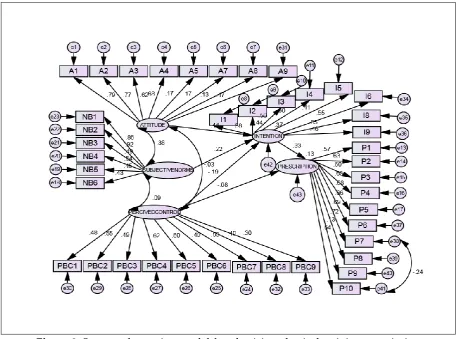
(β = .07, p = .318). Intention was a direct predictor of exercise prescription (β = .251, p < .001). All variables explained 37% of the variance on intention and 31% on exercise prescription. The final model with significant pathways and standardized coefficients is shown in Figure 2.
Figure 2:Structural equation model for physician physical activity prescription behavior with completely standardized parameters (n=221)
Table 2: Relationship between variables (Unstandardized regression weights)
Estimate S.E. C.R. P
INTENTION <--- SUBJECTIVENORMS .137 .051 2.701 .007
INTENTION <--- ATTITUDE .393 .086 4.597 ***
INTENTION <--- PERCIVEDCONTROL .207 .091 -2.268 .023 PRESCRIPTION <--- PERCIVEDCONTROL .070 .070 -.999 .318
PRESCRIPTION <--- INTENTION .251 .073 3.448 ***
4.4 Discussion
a previous study done by Sassen, Kok, & Vanhees (2011) where intention predicted physician encouragement to physical activity. However this was not consistent with a study done by Galaviz, Fabrigar, & Taylor, (2015) found that physicians’ perceived behavioural control, but intention did not explain prescription. Physicians in this and previous studies (Ramsay, Thomas, Croal, Grimshaw & Eccles, 2015; Rashidian & Russell, 2010), have reported very high intentions to perform the behaviour. Our finding that behavior is largely predicted by intention corresponds with previous studies including studies that focus specifically on the behavior of healthcare professionals (Eccles et al., 2006, Godin, Bélanger-Gravel, Eccles & Grimshaw, 2008). Correlational studies show that intentions are reliably associated with behavior. For instance, in a meta-analysis of 185 studies that have used the TPB, Armitage and Connor (2001) found that the sample-weighted average correlation between measures of intention and behavior was .47 (Ajzen, 1991; Godin & Kok, 1996). However, studies have also shown that high intention to perform a behaviour does not always translate into action (Sheeran, 2002).
The current study found that attitude (β = .393, p < .001) and perceived control (β = .207, p = .023) were significant direct predictors of intention. This was consistent with a previous study done by Galaviz, Fabrigar, & Taylor, (2015) where results found that completely standardized parameter estimates indicated that subjective norm was the strongest predictor of intention to prescribe PA (b = 0.73, p < 0.05) followed by attitude (b = 0.16, p < 0.05). This differs from a previous study where physician intention for encouraging PA was explained mainly by attitude, followed by subjective norm and perceived behavioural control (Sassen, Kok, & Vanhees, 2011). In the current study all variables explained 37% of the variance on intention. Intention itself explained 31% of the variance on exercise prescription. Previous studies have shown regression values of 36% for behavior and 42% to 66% for intention (Godin & Kok, 1996). In a systematic review on the predictors of healthcare professionals’ behavior, social-cognitive determinants predicted 35% of the variance in behavior and 59% of the variance in intention (Godin, Bélanger-Gravel, Eccles & Grimshaw, 2008). In a study by Sassen, Kok, & Vanhees, (2011) social cognitive determinants accounted for 41% (p < .001) of the variance in healthcare professionals’ intention to encourage physical activity among cardiovascular patients. With respect to the self-reported behavior of encouraging patients, the same study found that social-cognitive determinants accounted for 29% (p < .001) of the variance.
5. Conclusion & Recommendation
relationship of healthcare professionals to prescribe physical activity can reduce risks of cardiovascular disease among patients. (Sassen, Kok, & Vanhees, 2011). Our findings highlight the need for introducing strategies to improve the PA prescription behaviour of Kenyan physicians. The habit of encouraging patients can also contribute to behavior of encouraging patients and should therefore be consolidated via environmental interventions that strengthen such habits (Verplanken & Wood, 2006). Other theories should be investigated (e.g. Social Cognitive Theory, Health Action Process Approach) to determine which theory better explains behaviour in the context and population of interest. The limitation of this study was its cross-sectional nature which prevents us from making causal associations between the psychosocial constructs and physician behaviour.
Declarations Ethics Approval
Ethical clearance was obtained from Masinde Muliro University of Science and Technology Ethics Committee. Consent and approval were also obtained from Kakamega county director of heath. CHMT Chair of the identified health facilities and the local administration in each of the sub counties.
Competing interest
The authors declare that they have no competing interests.
Authors' contributions
Micky Olutende Oloo and Issah Wabuyabo Kweyu conceived, designed, coordinated and performed the study. Dr Maximilla Wanzala analyzed the data. All authors read and approved the final manuscript.
Disclaimer
The findings and conclusions presented in this manuscript are those of the authors and do not necessarily reflect the official position of Masinde Muliro University.
Acknowledgements
We are grateful to the health facilities and healthcare professionals who granted permission to participate in this study, the county government of Kakamega and the facility managers. Patrick Kukubo for his role in data collection, data entry and cleaning
References
Ajzen, I. (1991). The theory of planned behavior. Organ Behav Hum Decis Process, 50, 179–211.
Armitage, C.J., & Conner, M. (2001). Efficacy of the theory of planned behaviour: A meta-analytic review. British Journal of Social Psychology, 40, 471–500.
Askelson, N.M., Campo, S., Lowe, J.B., Dennis, L.K., Smith, S. & Andsager, J. (2010). Factors related to physicians’ willingness to vaccinate girls against HPV: the importance of subjective norms and perceived behavioral control. Women Health, 50(2): 144–58.
Eccles, M.P., Hrisos, S., Francis, J., Kaner, E.F., Dickinson, H.O., Beyer, F. & Johnston, M. (2006). Do self-reported intentions predict clinicians’ behaviour: a systematic review. Implement Sci, 21:1-28
Erdfelder, E., Faul, F., Buchner, A., & Lang, A.G. (2009). Statistical power analyses using G*Power 3.1: Tests for correlation and regression analyses. Behavior
Research Methods, 41(4), 1149–1160. https://doi.org/10.3758/BRM.41.4.1149.
Frank, E., Segura, C., Shen, H., Oberg, E. (2010). Predictors of Canadian physicians’ prevention counseling practices. Can J Public Health,101(5): 390–5.
Galaviz, K.I., Jauregui, E., Fabrigar, L., Latimer-Cheung, A., Lopez, y., Taylor, J., & Lévesque, L. (2015). Physical activity prescription among Mexican physicians: a structural equation analysis of the theory of planned behavior. International Journal of Clinical Practice,69(3)375-383.
Godin, G. & Kok, G. (1996). The theory of planned behavior: a review of its applications to health-related behaviors. Am J Health Promot, 11, 87-98
Godin, G., Bélanger-Gravel, A., Eccles, M., Grimshaw, J. (2008). Healthcare professionals’ intentions and behaviours: A systematic review of studies based on social cognitive theories. Implement Sci, 16,3-36.
Government of Kenya, 2014: Kenya Service Availability and Readiness Assessment Mapping
(SARAM). Ministry of Health, Nairobi Kenya.
Grandes, G., Sanchez, A., Sanchez-Pinilla, R.O., Torcal, J., Montoya, I., Lizarraga, K., & Serra, J. (2009). Effectiveness of physical activity advice and prescription by physicians in routine primary care. Archives of Internal Medicine,169(7),694–701. Hayduk, L.A. (1996). LISREL Issues, Debates, and Strategies. The Johns Hopkins
University Press, Baltimore and London.
Hu, L.T. & Bentler, P.M. (1999). Cutoff criteria for fit indexes in covariance structure analysis: conventional criteria versus new alternatives. Struct Equation Model, 6(1): 1–55
Kenya National Bureau of Statistics, & ICF Macro. (2014). Kenya Demographic and Health Survey.
Lamming, L., Pears, S., Mason, D., Morton, K., Bijker, M., Sutton, S., & Hardeman, W. (2017). What do we know about brief interventions for physical activity that could be delivered in primary care consultations? A systematic review of reviews. Preventive Medicine, 99, 152–163.
Lanhers, C., Duclos, M., Guttmann, A., Coudeyre, E., Pereira, B., & Ouchchane, L. (2015). General practitioners’ barriers to prescribe physical activity: The dark side of the cluster effects on the physical activity of their type 2 diabetes patients.
PLoS ONE, 10(10), 1–12. https://doi.org/10.1371/journal.pone.0140429.
Leemrijse, C. J., de Bakker, D. H., Ooms, L., & Veenhof, C. (2015). Collaboration of general practitioners and exercise providers in promotion of physical activity a written survey among general practitioners. BMC Family Practice, 16(1), 96.
https://doi.org/10.1186/s12875-015-0316-8.
Leijon, M.E., Bendtsen, P., Nilsen, P., Ekberg, K., & Ståhle, A. (2008). Physical activity referrals in Swedish primary health care—prescriber and patient characteristics, reasons for prescriptions, and prescribed activities. BMC Health Serv Res, 8, 201. [PubMed: 18828898].
Lobelo, F., & de Quevedo, I. G. (2016). The Evidence in Support of Physicians and Health Care Providers as Physical Activity Role Models. American Journal of Lifestyle Medicine, 10(1), 36–52. https://doi.org/10.1177/1559827613520120.
Malta, D.C., & Barbosa da Silva, J. (2012). Policies to promote physical activity in Brazil.
Lancet, 380, 195–196. [PubMed: 22818935].
Matheson, G.O., Klugl, M., Dvorak, J., Engebretsen, L., Meeuwisse, W. H., Schwellnus, M., < & Weiler, R. (2011). Responsibility of sport and exercise medicine in preventing and managing chronic disease: applying our knowledge and skill is overdue. Br J Sports Med, 45(16), 1272–1282.
https://doi.org/10.1136/bjsports-2011-090328.
Orrow, G., Kinmonth, A.L., Sanderson, S., & Sutton, S. (2012). Effectiveness of physical activity promotion based in primary care: systematic review and meta-analysis of randomized controlled trials. BMJ, 344, e1389. [PubMed: 22451477].
Perkins, M.B., Jensen, P.S., Jaccard, J. et al. (2007). Applying theory-driven approaches to understanding and modifying clinicians’ behavior: what do we know.
Psychiatr Serv, 58(3), 342–8.
Petrella, R.J., Lattanzio, C.N., Overend, T.J. (2007). Physical activity counseling and prescription among Canadian primary care physicians. Arch Intern Med, 167(16): 1774–81
Ramsay, C., Thomas, R., Croal, B., Grimshaw, J. & Eccles, M. (2010). Using the theory of planned behavior as a process evaluation tool in randomized trials of knowledge translation strategies: a case study from UK primary care. Implementation Science,
5(1), 71
Rashidian, A. & Russell, I. (2010). Intentions and statins prescribing: can the Theory of Planned Behavior explain physician behavior in following guideline recommendations. J Eval Clin Pract, 17(4), 749–57.
Sheeran, P. (2002). Intention–behavior relations: a conceptual and empirical review. Eur Rev Social Psychol, 12, 1–36.
Singh, A., & Masuku, M. (2014). Sampling Techniques & Determination of Sample Size in Applied Statistics Research: an Overview. Ijecm.Co.Uk, II(11), 1–22. Retrieved from http://ijecm.co.uk/wp-content/uploads/2014/11/21131.pdf.
Teferi, G., Kumar, H., & Singh, P. (2017). Physical Activity Prescription for Non-Communicable Diseases: Practices of Healthcare Professionals in Hospital Setting, Ethiopia. IOSR Journal of Sports and Physical Education, 4(1), 54–60.
https://doi.org/10.9790/6737-04015460
Verplanken, B. & Wood, W. (2006). Interventions to break and create consumer habits. J Public Policy Mark, 25, 90-103.
Creative Commons licensing terms