International Journal of Research in Engineering & Applied Sciences 19
SUSTAINABLE STRUCTURAL DESIGN
Nasim Ahmed* Athar Hussain** Sameer Ahmed***
ABSTRACT
Efficient energy use during construction and operation of buildings and sustainable building
design are important issues in both modern society and the engineering community.
Innovative methods are needed to address the environmental impact, energy use and other
sustainability issues faced during planning and design of buildings. This study investigates
sustainable design methodologies, the relationships between structural system and the
Leadership in Energy and Environmental Design rating system, the impact that project size
and type can have on project sustainability, sustainable properties associated with
construction materials (such as steel, cast-in-place concrete and prestressed /precast
concrete) and computer programs aimed at determining the properties of sustainable
structural design alternatives. This study investigates some sustainable structural design
methodologies including minimizing material use, minimizing material production energy,
minimizing embodied energy, life-cycle analysis/inventory/assessment and maximizing
building reuse and presents their positive and negative sustainable qualities. This study
discusses and reviews the categories of theLEED rating system in which points could be
awarded to a project for sustainability of its structural frame. This study presents the role
that project size and structural system type play on aspects of sustainable design including
the design and analysis phase, landuse, investments in sustainable technologies, use of timber
as a primary load bearing material and other sustainable issues. This study reviews the
structurally applicable sustainable properties associated with structural steel, cast-in-place
and prestessed/precast concrete. Finally, this study provides a review of life-cycle analysis
computer programs focusing on three (Building for Environmental and Economic
Sustainability (BEES) v4.0,SimaPROv7.1 and Athena Impact Estimator v4.0) aimed at
assessing the sustainability of design alternatives. This study determined that no single
current sustainable design methodology can address all project sustainability issues at this
International Journal of Research in Engineering & Applied Sciences 20
structural systems in the same manner it does other aspects of design. It was determined that
construction type and project size can have significant impact on sustainable opportunities
for a project and that no single construction material is the most sustainable compared to
others for all design types at this time. Finally, existing sustainability analysis software does
not meet the current needs of its users in assessing design alternative sustainable properties
and provides users with basic structural system comparisons, as exemplified by parametric
studies using the Athena Impact Estimator
\
*Faculty of Technology, CMJ Univ., Shillong, Meghalaya
International Journal of Research in Engineering & Applied Sciences 21
INTRODUCTION
In the modern engineering and architectural culture, sustainable design and energy efficiency have become paramount in design and application for architects, engineers and users as civic requirements and financial limitations mount. In all areas of civil engineering, engineers are encouraged to ensure that projects have the maximum lifespan for their intended use and employ the least amount of natural recourses (e.g., raw materials and energy required for their production) while still meeting client, economic, societal demands and code requirements.
Two fields of civil engineering that are constantly assessing their ability to achieve sustainable goals are the engineering design and construction industries. The goal of these industries is to achieve lasting, environmentally sound solutions to the problems faced in the modern culture and look to achieve this in their design of new and rehabilitative projects. Achieving this goal requires the construction and design engineering communities to assess all the aspects and processes involved in a project. These aspects are can be varying and influenced by local conditions and the economy. They include but are not limited to; the required material production energies, design alternative maintenance requirements, material durability, recycled materials contents, project adherence to and applicability within sustainable rating systems such as LEED, structural system design methodologies, relation of sustainability to construction type, sustainability and construction materials and life cycle analysis modeling computer programs. Research into each of these areas contributes to determining methods for achieving high overall project sustainability.
Various aspects of sustainable design and construction research have been and are currently being investigated. Research into the qualification and development of the sustainable properties of construction materials has been carried out in an attempt to 2 provide structural designers, planners and constructors with methods for optimizing the environmental impact of structural design. Research into the effect that structural form, system and magnitude have on building design relative to a structure’s overall sustainable qualities has also been conducted to address the means and methods pertinent to all design phases (planning, design and implementation).
International Journal of Research in Engineering & Applied Sciences 22
(with little mention of structural system design) that meet its requirements, the engineering community looks to go further and better define the sustainable properties of all aspects of a project. This is illustrated by the construction materials production industry’s effort to determine their economic and environmental impact more fully and achieve more sustainable designs.
The aspects of a project’s form, structural system and magnitude directly relate the issues facing both structural engineers and architects in attempts to achieve more sustainable structural designs. This study aims to present research on these aspects of sustainable structural design and illustrates the effect these issues have on structural systems. While structural design and sustainable structures hold many other key elements (such as material choice, life-cycle analysis, construction types and methodologies, etc.), this study focuses on the sustainability achievable in structural design and the nature of how it can directly relate to sustainability in the built environment.
OBJECTIVES
The main objectives of this study are to:
• Present the roles of structure and structural design can play in project sustainability. • Present the concept of sustainable structural design.
• Present and discuss five sustainable structural design methodologies.
• Present and review the 2009 Leadership in Energy and Environmental Design Green
Building document’s applicability for structural system design.
• Present and review the role project size and material type play in structural and
sustainable design.
• Present and discuss the role sustainability plays in three major construction materials
(steel, cast-in-place reinforced concrete and prestressed/precast concrete).
• Describe and review the concept of life cycle analysis and its implication on structural design.
• Present and investigate the effectiveness of life cycle analysis computer programs
aimed at assessing design alternative’s sustainable qualities.
• Perform parametric studies use a LCA package program (the Athena Impact
International Journal of Research in Engineering & Applied Sciences 23
• Present conclusions drawn from this study, limitations involved in this research and recommendations for future research.
REVIEW OF LITERATURE
Sustainable design has been at the forefront of research in both the engineeringand architecture communities for several years. Spurred by civic, monetary and political motivations, analysis of the effect that structures and construction has on the world around it has been conducted. Various researchers from numerous fields have worked to present the multifaceted world of sustainable construction and design and the methodologies, mindsets and practices associated with it.
In the current building system design processes, structural engineers play a limited role in the overall sustainability of a design (Kestner 2007). While the contribution of sustainability to the built environment typically influences the architectural form of a structure, the performance and cost of a project drive the engineer’s work and bottom line. While the building and construction community look to improve sustainable development through attention to integrated design and form, cost and structural performance must remain at the forefront of development (Jackson 2008 and Beheiry et. al 2006).
Notwithstanding the merit of research into the sustainable properties of materials and the energy saving methodologies to overall sustainable design, previous research has illustrated that sustainable structural design relies on the proper implementation of structural form and systems. Also as suggested by previous research, the future of the built environment needs to account for more varied aspects of structure and construction (Smith 2007 and Horvath et al. 1998).
RESULTS AND CONCLUSION
Sustainability, as defined by the World Commission on Environment and Development in 1987, is achieved by “meeting the needs of the present without compromising the ability of the future generations to meet their own needs”. In response to this, the engineering community has been working to develop accurate methods for determining and comparing the sustainability of design alternatives.
This study investigated the issues involved in achieving sustainable designs for projects’ structural systems and assessed some of the measurement methods currently in use.
Life-International Journal of Research in Engineering & Applied Sciences 24
Cycle Analysis/Inventory/Assessment and Maximizing Structural Reuse. Each design methodology reviewed and defines sustainability in structural design in a unique way and looks to employ that unique definition in assessing and achieving the most sustainable design. Review of these five potential solutions for the problem of achieving a sustainable structural design, and their positive and negative sustainable qualities, displays that no one methodology can guarantee the most sustainable design. It is suggested that the use of two or more design methodologies is more advantageous to sustainable design as the positive qualities of one methodology can offset the negative qualities of another.
The role project size and structural system-type play on aspects of sustainable design are presented. Design and analysis phase, land use, investments in sustainable technologies, use of wood as a primary load bearing material are some of the critical issues discussed. Reviews of the effect that project size and structural system-type can have on these aspects of design displays that they are closely tied to overall project sustainability. During initial project design, attention to the impact that increased project size has on structural system material requirements as well as overall project sustainable is important. Designers and owners should consider the implications that selection of one design alternative over another can have relative to its ability to achieve a successful sustainable design.
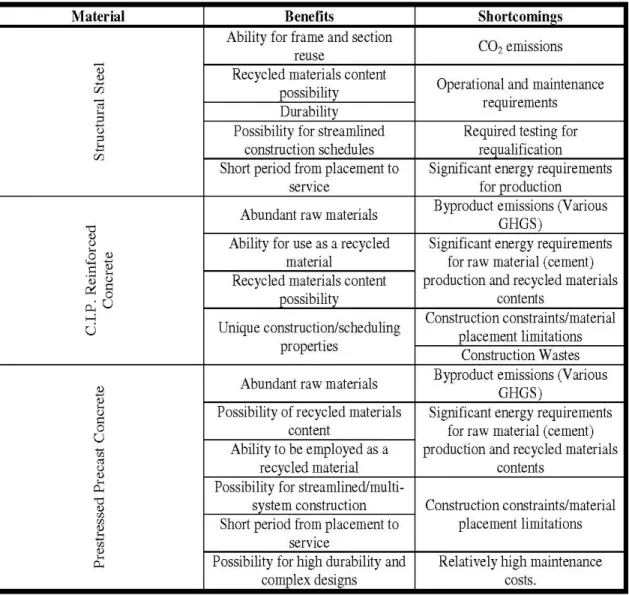
Structurally applicable sustainable properties associated with structural steel, cast- in-place and prestessed/precast concrete are reviewed. Each material presents unique sustainable qualities that can be advantageous to sustainable design. However, each material also presents unique construction requirements, by-product emissions and impact of project operation and maintenance. It was concluded that no single construction material discussed and guarantees that the most sustainable design will be achieved. Use of different materials for a structural system can contribute to overall project sustainability but the combination can prove to be less sustainable. It is suggested that designers consider multiple design alternatives paying close attention to project location and material availability.
International Journal of Research in Engineering & Applied Sciences 25
is required to assess design alternative’s sustainability. Current sustainable rating systems should also include the role that a project’s structural system plays in sustainability as well as how raw material requirements and material production energies contribute to the overall sustainable properties of a project.
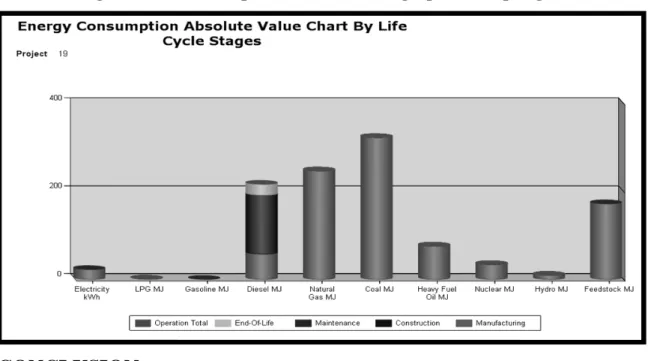
Parametric studies using the Athena Impact Estimator v4.0 can be employed to investigate relationships between energy consumption and structural systems. Energy consumption of structural members varies depending on their material type and length. The energy consumption associated with columns, beams, slabs, concrete strength and fly-ash percentage are unique in their response to changes in live load and system geometry. The program’s internal analysis tools limit any conclusions drawn from use of the Athena Impact Estimator.
EXPERIMENTAL OBSERVATION
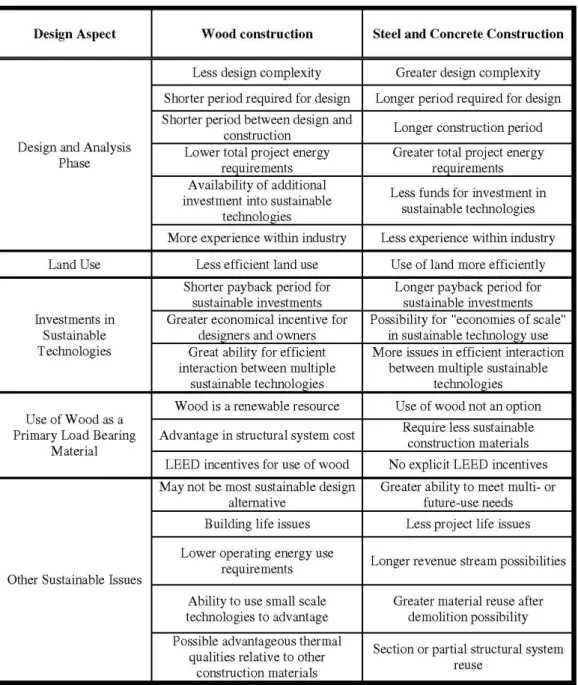
This study displays that both construction type and structural design play a role in various aspects of a project. Table 1 provides an outline of the advantages offered by steel and concrete and wood construction types as defined in this study.
International Journal of Research in Engineering & Applied Sciences 26
International Journal of Research in Engineering & Applied Sciences 27
Table 2 :Structurally application sustainable properties of steel, cast-in-place concrete
International Journal of Research in Engineering & Applied Sciences 28
Figure 2 : Athena Impact Estimator v 4.0 graphical output-generic
CONCLUSION
This study has concluded the following:
• No single current sustainable design methodology can address all project
sustainability issues at this time.
• The LEED 2009 rating system does not reward projects for sustainable design of their structural systems in the same manner it does other aspects of design.
• Construction type and project size can have significant impact on sustainable
opportunities for a project.
• No single construction material is the most sustainable compared to others for all design types at this time.
• Existing sustainability analysis software does not meet the current needs of its users in
assessing design alternative sustainable properties.
• Use of the Athena Impact Estimator can provide insights into the relationship between
energy consumption and structural system member types but is limited by the internal program analysis methods and definitions.
LIMITATIONS
This study has been limited by the following:
• Lack of previous research involving the application of each of the aforementioned
International Journal of Research in Engineering & Applied Sciences 29
• Lack and difficultly of the development of equations and methods for completing each of the proposed methodologies within a structural design.
• Lack of research providing quantitative values on the effect that project size.
• Inaccurate or limiting data on total production inputs and energy requirements for
construction materials.
• The limited number and accuracy of tools and computer programs to assess sustainable design alternative.
RECOMMENDATIONS
The following suggestions were outside the scope of this study and suggested as recommendations for future research:
• The analysis of various structures of different size and material choice to determine
the overall production energies inputs and values associated with each.
• Investigation of use of each of the design methodologies suggested for comparative
structures separately as well as in combination.
• Careful review of the rating system’s importance and impact on sustainable designs
from a structural perspective be conducted including investigation into what ratings can be achieved following the any (or any combination of the mentioned design methodologies.
• The development of a more accurate sustainable design alternative assessment computer program or other tools that can be used by engineers
REFERENCES
1. ASTM International. ASTM E 917-05: Standard Practice for Measuring Life Cycle ofBuilding and Building Systems. Book of ASTM Standards, 2005.
2. ASTM International. ASTM E 1057-06: Internal Rate of Return and Adjusted InternalRate of Return for Investments. Book of ASTM Standards, 2006.
3. ASTM International. ASTM E 1074-06: Net Benefits and Net Savings for Investments.Book of ASTM Standards, 2006.
International Journal of Research in Engineering & Applied Sciences 30
5. Beheiry, S. M. A., Chong, W. K., and Haas, C. T. Examining the Business Impact ofOwner Commitment to Sustainability. Journal of Construction Engineering andManagement, Vol. 132, No. 4, 2006, pp. 384-392.
6. Fruehan, R.J., Fortinti, O., Paxton, H.W. and Brindle, R. Theoretical Minimum Energiesto Produce Steel for Selected Conditions.U.S. Department of Energy. 2002. 7. Horvath, A. and Hendrickson, C. Steel versus Steel-Reinforced Concrete
Bridges:Environmental Assessment. Journal of Infrastructure Systems, Vol. 4, No. 3,1998, pp. 111-117.
8. Moon, K. Material-Saving Design Strategies for Tall Building Structures. Proceedings:Tall & Green: Typology for a Sustainable Urban Future: CTBUH 8th WorldCongress, Dubai, March 3-5 2008.
9. Shi, J. and Han, T. Conceiving Methods and Innovative Approaches for Tall BuildingStructure Systems. The Structural Design of Tall and Special Buildings, 2009,Early View.
10.Szekely, J. Steelmaking and Industrial Ecology-Is Steel a Green Material. ISIJInternational, V. 36, No. 1, 1996, pp. 121-132.
11.Trabucco, D.An Analysis of the Relationship between Service Cores and theEmbodied/Running Energy of Tall Buildings. The Structural Design of Tall andSpecial Buildings, Vol. 17, No. 5, 2008, pp. 941-952.
12.VanGeem, M. Designer’s Notebook: Sustainable Design. Ascent Magazine, 2006, pp. 1-19.
13.Wood, A. Sustainability: A New High-Rise Vernacular? The Structural Design of Talland Special Buildings, Vol. 16, No. 4, 2007, pp. 401-410.