MEET THE NEW PLAYERS: A STUDY OF DIGITAL NATIVE JOURNALISTS AND JOURNALISTIC PROFESSIONALISM
Lu Wu
A dissertation submitted to the faculty of the University of North Carolina at Chapel Hill in partial fulfillment of the requirements for the degree of Doctor of Philosophy in the School of
Media and Journalism.
Chapel Hill 2017
Approved by: Daniel Riffe Rhonda Gibson
Francesca Dillman Carpentier Jane Singer
© 2017 Lu Wu
ABSTRACT
Lu Wu: Meet the New Players: A Study of Digital Native Journalists and Journalistic Professionalism
(Under the direction of Daniel Riffe)
Digital native journalists have brought new blood as well as challenges to contemporary journalistic professionalism. This dissertation employs a national survey of both digital native journalists and legacy journalists and focuses on the cognitive, normative, and evaluative dimensions of their journalistic professionalism. Findings suggest that both the
ACKNOWLEDGEMENT
The last three years have been the most wonderful time in my life. Besides the annual trips to the North Carolina beaches and wonderful seafood feast that a reasonable amount of money can buy, my time at UNC has connected me with some of the most amazing people in academia and introduced me to the magical world of social science.
The journey to getting my PhD has been excruciating, including moments of compulsive hair-pulling, stress-eating, and growing out of most of my old clothing; however, it also has been completely worthwhile, and it couldn’t have been possible without the help of many others in my life.
I want to thank my advisor, Daniel Riffe, for being the best mentor that a graduate student could ask for. Although nothing could top the love and passion he has for his vegetable garden, I always felt that had faith in me every step of the way. The dinners at his house, his sense of humor and smiling handlebar mustache will remain in my memory forever.
The Park Foundation at UNC has been invaluable in supporting me financially through my doctoral studies. I want to acknowledge their generosity that gave me the wherewithal to live free from financial worry and focus entirely on my study. I am extremely thankful.
I am very lucky to have my husband, Brendon, as a partner in life and crime (ours is limited to eating too many cream puffs). He graciously takes on the extra effort of helping to edit my papers while working a full-time job, and he cleans our home against the natural forces of 3 beloved cats and 2 foster kittens, allowing me to enjoy the furriest parts. I also must
acknowledge him for probably saving lives every time I drive as he continually reminds me to “please slow down and let the other cars pass before taking that left turn.”
My parents, though 8,000 miles away on the other side of the globe, have always been the closest friends I have in this world. I want to say thank you to my Mom and Dad—thank you for believing in me and for taking pride in me and for giving me the opportunity to follow my biggest dreams.
I can’t imagine how I would power through life without comfort from my four-legged kids: Callie, Cooper, Clover, and our fostered kittens, Bunny and Clyde. Thank you for tolerating my stress-relieving affections and excessive touching. Mommy loves you all very, very much!
TABLE OF CONTENTS
LIST OF TABLES ... viii
CHAPTER 1. INTRODUCTION ... 1
CHAPTER 2. BACKGROUND ... 5
Digital Native Media... 5
Legitimization of Digital Native Media ... 8
Purpose of Study ... 9
CHAPTER 3. LITERATURE REVIEW ... 12
Professionalism ... 12
Is Journalism a Profession? ... 14
Journalism Professionalism Studies ... 18
Three Dimensions of Journalism Professionalism ... 22
Cognitive Dimension of Professionalism ... 23
Normative Dimension of Professionalism ... 25
Evaluative Dimension of Professionalism ... 29
CHAPTER 4. RESEARCH QUESTIONS ... 36
CHAPTER 5. METHOD ... 38
Web Survey ... 38
Sampling Strategy ... 39
CHAPTER 6. FINDINGS... 48
Descriptive Statistics ... 48
Research Questions ... 49
CHAPTER 7. DISCUSSION ... 61
The Characteristics of Digital Native Media Journalists ... 61
Similarities and Differences of the Professional Dimensions... 64
Limitations ... 71
Contribution to the Literature and Journalism Practice ... 72
Future Research ... 76
APPENDIX 1: TABLES ... 78
APPENDIX 2: SURVEY QUESTIONNAIRE ... 95
LIST OF TABLES
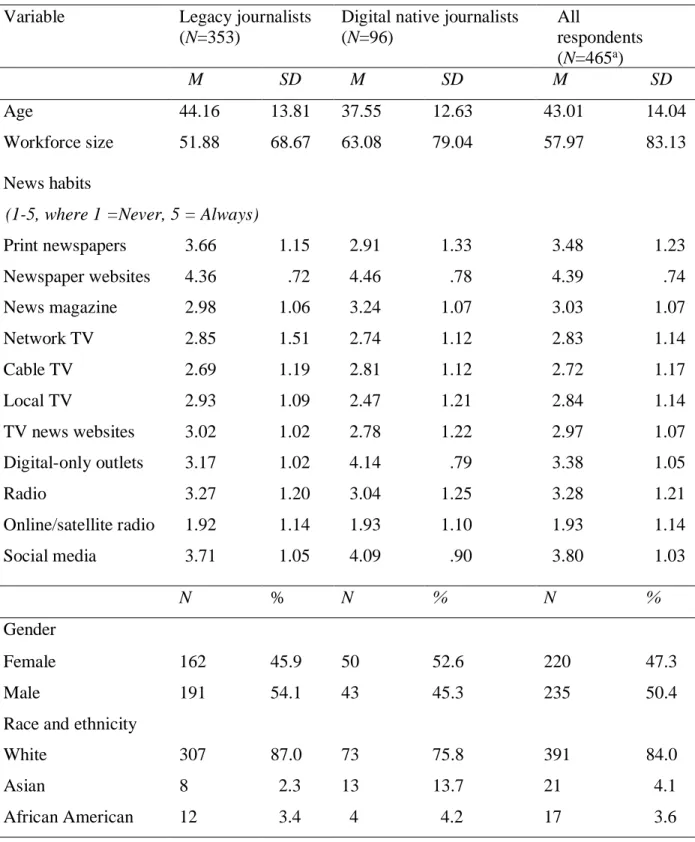
Table 1. Descriptive Statistics for Key Variables ... 78
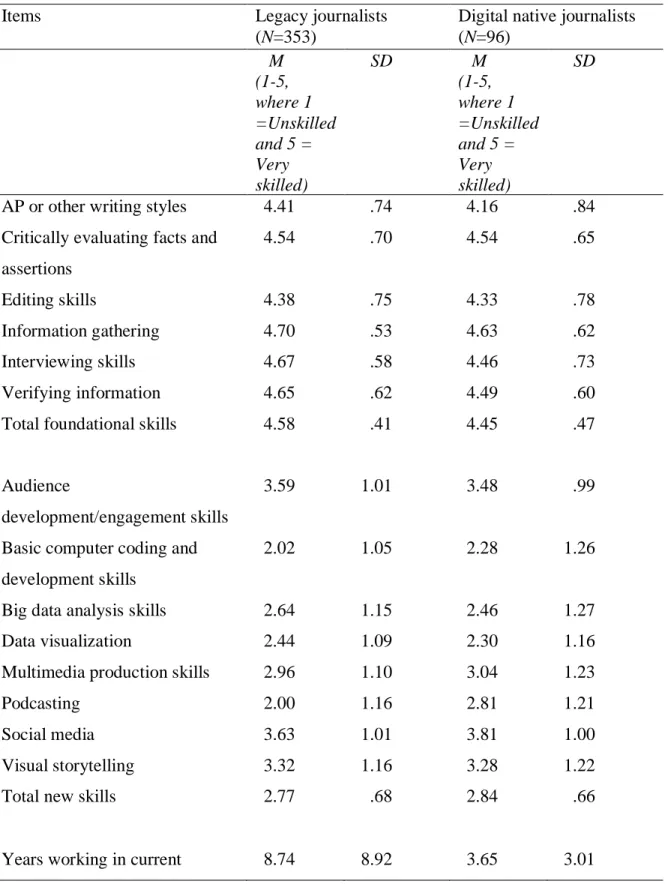
Table 2. Descriptive Data for Cognitive Dimension ... 80
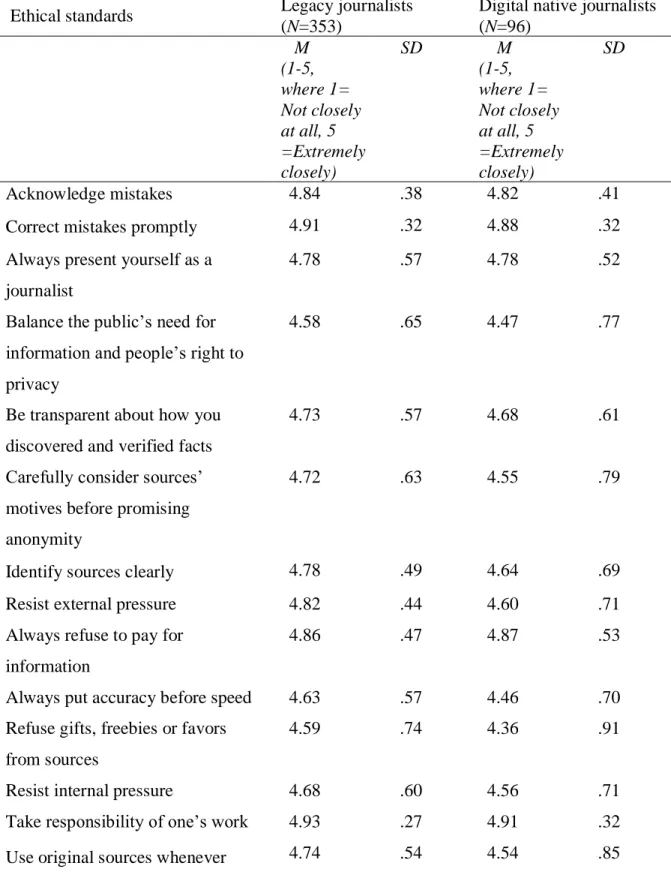
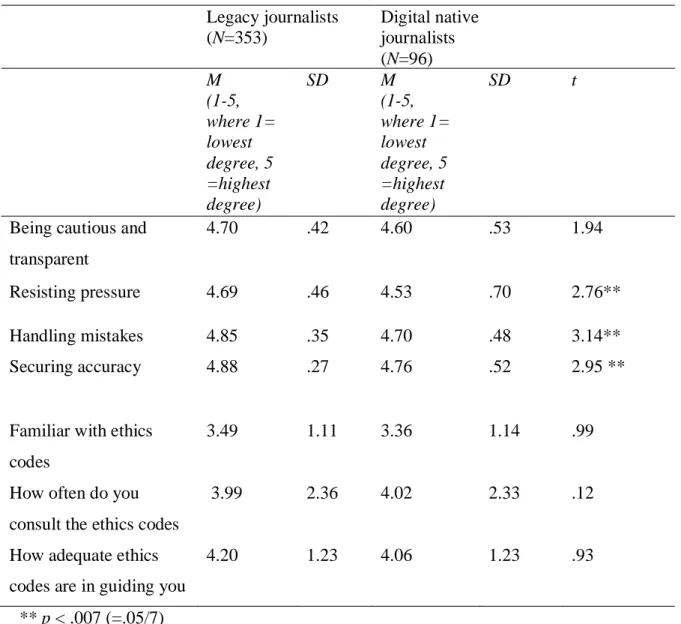
Table 3. Mean and SD for Normative Dimension ... 82
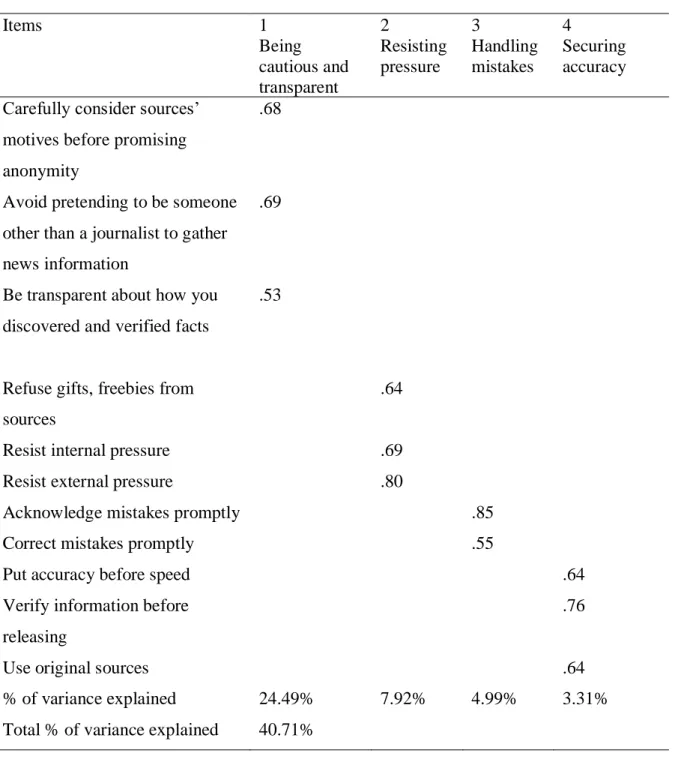
Table 4. Principal Axis Factoring Loading of Adherence to Ethical Standards ... 84
Table 5. Independent Samples T-tests for Evaluative Dimension Variables... 85
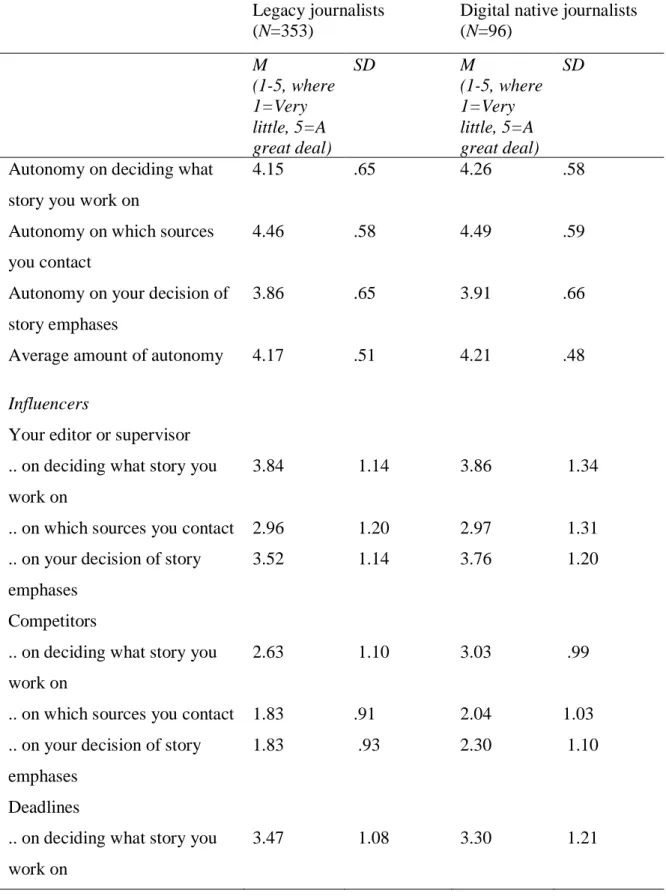
Table 6. Mean and SD for Evaluative Dimension ... 86
Table 7. Principle Axis Factoring Loading of Autonomy Influencers ... 89
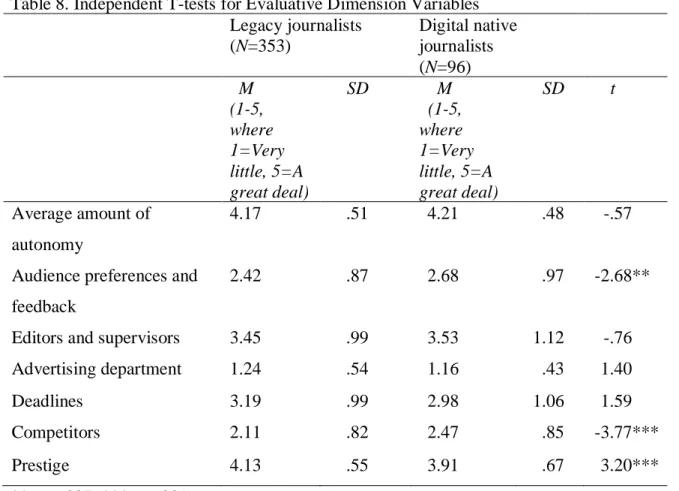
Table 8. Independent T-tests for Evaluative Dimension Variables ... 90
Table 9. Pearson Correlation Matrix for Major Variables……….91
CHAPTER 1. INTRODUCTION
Andrew Kaczynski was a 26-year-old BuzzFeed political reporter. He led an investigative team called the “K-File” unit that specialized in mining the internet for videos and nuggets to be used in political reporting. Just a month before the 2016 general election, he and his three team members were recruited by CNN to join the news organization’s political reporting team (Pappu, 2016). Ironically, during an interview with Variety magazine just months before this, CNN chief executive Jeff Zucker had implied that BuzzFeed was not a “legitimate news organization” (Setoodeh, 2016).
It seems that leadership at CNN was ambivalent about digital native media outlets such as BuzzFeed. Legacy media appear to have a love-hate relationship with digital native media, at times admiring digital native media outlets for successful uptake among Millennials, while alternately rejecting or criticizing some of the journalistic practices at digital outlets.
Kaczynsky’s hire may have represented a shift in approach toward digital news at the legacy outlet.1
Although journalism trade publications have followed closely as digital native media practices evolve, offering prompt updates on quickly changing trends in the journalism field, the academic literature has paid less attention to systematically studying digital native media and the practices of journalists at those outlets. This dissertation takes the initiative to inquire about the
1 For instance, among the widely criticized is the “listicle” (i.e., “Five things you should know about the election”). These formats have been repudiated as a lower form of journalism;
professional aspects of digital native journalism and to identify the commonalities and
discrepancies that exist in professionalism compared to those of traditional journalists working for legacy media. The analysis of professionalism has been used as a discourse of occupational change and control: the concept of “professionalism” has an appeal to practitioners, employees and managers in the development and maintenance of work identities, career decisions and an occupation’s sense of self (Evetts, 2014). The term “professionalism” provides a key analytical framework to explain and interpret professional knowledge-based work, occupations and
practitioners (Evetts, 2014). Thus, there are advantages in adopting professionalism as a concept for understanding digital-native journalists and evaluating levels of professional practices in journalism. Also, the examination of professionalism is proper for this study in that
professionalism also encompasses how a profession expands and changes through new entrants who both learn and propagate skills, expertise, and norms within the profession. (Usher, 2016)
This study contributes to journalistic professionalism literature by providing an
assessment of the “state of journalism,” using a comparative perspective, and the findings will offer an assertion about journalistic forms of the future.
professionalism helps sustain journalism and guide journalists in performing such functions as a socially responsible enterprise (Lewis, 2012).
This study also provides insights that may inform future research of digital audience. Digital native media are becoming mainstream news organizations and have gained recognition and popularity among young audiences (Wu, 2016). Thus, it is of value to the public interest to know if digital native journalists are adhering to the standards commonly expected from legacy media journalists. A sense of professionalism helps insulate a journalist from political influences and market interests, and the shared concept of professionalism encompasses a set of desirable virtues and principles that help define the standards of journalism required for a functioning democracy (Waisbord, 2013). The evaluation of traits of professionalism of digital native
journalists can reveal to a certain degree that if they too can produce high-quality news, gathered in an ethical fashion and independent from corrupting influences (Lewis, 2012).
This study’s conceptual basis is in the cognitive, normative, and evaluative dimensions of the sociological construct of “professionalism” in general (Larson, 1977; Singer, 2003). The cognitive dimension is defined as the body of knowledge, techniques, and necessary training that professionals must use in their work. The normative dimension refers to the service orientation of professionals, and the sense of self-regulation that occurs when individuals apply common ethical beliefs in their daily work. The evaluative dimension can be measured in terms of
This study employs a national survey of both digital native journalists and legacy journalists. The study will measure the cognitive, normative, and evaluative dimensions of professionalism of each group. Chapter 2 provides background on how digital native media have evolved as news organizations and further develops the rationale for this study. Chapter 3
CHAPTER 2. BACKGROUND Digital Native Media
The 2008 financial crisis escalated the downturn of the newspaper industry (Meyer, 2009), but for more than two decades prior, many legacy news organizations have struggled with profitability, continuous revenue drops, and newsroom downsizing. The worsening financial performance of traditional news has media scholars uneasy and worried about the future viability and integrity of journalism (Curran, 2010; Lowrey & Woo, 2010).
Nonetheless, some scholars are calling for a more optimistic view of the future of
journalism (Zelizer, 2015; Franklin, 2012). For almost a decade, the newspaper industry has been making substantial changes and adapting editorially and financially to accommodate innovations in media technologies and changing market requirements (Franklin, 2012). Newsrooms are taking inevitable steps toward conjoining print and online operations. Despite the fact that numbers of print subscribers continue to decline, newspaper websites are gradually gaining momentum (Lu & Holcomb, 2016).
In the midst of the newspaper downturn, a “new journalism” emerged in the digital space, one that employs the most advanced digital technologies and reinvents how news is written and presented to the audience (Franklin, 2012, p. 667). Examples include the so-called digital native media outlets such as BuzzFeed that came to prominence in the past few years (Wu, 2016).
versions of traditional media companies. Digital native media and legacy media organizations differ vastly in content structure and content output (Lowrey, 2012). Digital native media produce and publish content in wide-ranging forms: some are aggregators, some exclusively develop content for mobile devices, and some condense existing news stories without contacting primary sources (Carlson & Usher, 2016). Some of the well-knowns include general-interest sites like the Huffington Post and BuzzFeed, as well as sites focused on niche subjects like politics (fivethirtyeight.com), business (qz.com), and investigative journalism (propublica.org).
Also, many digital native media today are hybrids, companies existing as both technology startup and emerging media outlet (Carlson & Usher, 2016). As Vox Vice President Trei
Brundrett clearly put, “we were not just a media company, we were also a technology company” (Vox, 2014).
On top of that, some digital native media are also backed generously by venture capital groups and managed by some of the best business minds. Over the past few years, digital native media companies have begun to show both financial strength and technological sophistication, distinguishing themselves from legacy media by their expanding growth and profits (Wu, 2016).
Nevertheless, digital native media have often been viewed as edgy, eccentric, or
wrestling professional and TV personality Hulk Hogan’s privacy by publishing a sex tape featuring Hogan on Gawker’s website. The jury awarded more than $140 million in total damages to be paid by Gawker to Hogan (White, 2016). Gawker has subsequently cleared bankruptcy and was auctioned to Universal.
Based on incidents like the Hogan case, some would say that digital native media have a long way to go before they can gain recognition and trust from the public. Meyer (2009) foresaw a similar challenge for new media forms seeking to replace legacy media: good information quality is the key to success. He argued that media should prioritize producing quality content; profits and financial sustainability will be possible only after the trust of the audience is gained.
In fact, in recent years there has been a significant shift in the editorial ecosystem of some digital native media companies. Many cases of high-profile migration of journalists from legacy media to digital native news media have occurred since the fall of 2013 (Jurkowitz, 2014). For example, Ryan Mac, a Forbes reporter who broke the story about Peter Thiel
financing Hulk Hogan’s lawsuit against Gawker, was hired in May 2017 to join BuzzFeed’s tech team covering Silicon Valley (Mullin, 2017).
Nevertheless, leading digital native publishers have reported a record number of visitors to their sites in the past year, and with their top priority of maximizing loyalty and increasing audience engagement in mind, they are actively testing new content formats designed to work in a mobile and social context (Newman, 2016). However, even as they seek a higher stake in the news business, digital native media undoubtedly have yet to gain the same levels of respect that legacy media generate in their audiences. Most recently, digital media report by the Reuters Institute (Levy, Newman, Fletcher, & Nielsen, 2016) found that audiences turn to digital native media mostly as a secondary source and for softer news topics. Audiences still favor legacy media with a long news heritage and strong reputations built up over time for factual accuracy (Levy et al., 2016).
Legitimization of Digital Native Media
Media scholars have devoted attention to decoding the strategies and approaches of digital native media. Carlson and Usher (2016) analyzed company “manifestos” of digital native media companies, looking for statements that offer insight into news products and how the companies position themselves as players in the journalism market. They found that digital native media place emphasis on innovation and forward-looking strategies to differentiate themselves from legacy media or existing players; statements in the manifestos focused particularly on the use of computer science and improved data technology.
media, perhaps in an effort to emulate, are beginning to conform to many of the traditional news reporting forms and rules as those used by old-guard journalism (Wu, 2016).
When analyzing how digital native media were perceived by legacy media, Tandoc and Jenkins (2015) argued that digital native media are gradually being accepted by legacy media as sources of “actual journalism” and should “play by the rules” (Tandoc & Jenkins, 2015, p. 8). It is unclear exactly what these “rules” are, but the authors brainstormed a few ideas, ranging from formats, to writing styles, to professional and ethical conduct.
Purpose of Study
The emergence of digital native media offers a constitutive moment to examine the idea of journalistic professionalism. This study extends the focus on digital native media and
professionalism, but shifts that focus from organizational level analysis to individual level analysis of journalistic practice and workflow in the digital newsroom. As a relatively new job category, the position of digital native journalist has, in general, received little scholarly analysis compared to legacy journalists. This study seeks to provide a focused and comprehensive
examination of digital native journalists as news professionals. Drawing from the theoretical perspective of professionalism, this study will inquire into the professional traits and attributes of digital native journalists to identify similarities and differences with legacy journalists.
Although numerous studies have committed to understanding the values and discourses of “professionalism” (e.g. Beam, 1990; Johnstone, et al., 1972; McLeod & Hawley, 1964; Revers, 2013a), this study addresses a remaining gap for the following reasons:
1. Online media are a vastly capricious environment in which journalists' practices are constantly shaped and reshaped by economic and technological
journalists, such as those from the national survey conducted in 2002, then published by Weaver et al. (2007), may already be obsolete in certain aspects, requiring that they be updated.
2. Digital native media differ from online media in important ways. For instance, digital native media companies may have emerged and matured without the same bureaucratic structures and newsroom operations that so heavily shape journalists’ behavior or online initiatives at legacy media.
3. Digital native journalists play a key role in their organizations, and the future of digital journalism may grow out of their work (Levy et al., 2016). Digital native media may have reached large audiences, but at the same time, many of them are still in the process of building a strong news brand (Levy et al., 2016). Dissecting the elements of professionalism among digital media journalists will provide insight into organizational values at digital native media.
4. Professionalism has been used abstractly to describe good journalism in terms of quality of storytelling and ethical practices, and it describes a more desirable virtue that journalists are expected to have. However, there is no consensus definition of what “journalistic professionalism” is. Comparing digital native journalistic professionalism to legacy media provides a strong starting point because the meaning of professional journalism is always elusive. Using legacy journalists as a reference does not necessarily admit that legacy journalists are the exemplar of professional journalism, but rather offers a comparison point to more easily identify the overlapping/overwriting between traditional journalistic
CHAPTER 3. LITERATURE REVIEW Professionalism
Developing a “definitive” definition of what constitutes a profession has been extremely difficult to past researchers. William J. Goode, one of America’s foremost sociologists, describes professionals as a homogeneous community whose members share values, identity, and
definition of role and interests. The community also shares knowledge that is only partially understood by outsiders. The community has power over its members and imposes social restrictions on members other than physical and geographical ones (Goode, 1957).
Durkheim (1957/2013) argued that a profession forms moral community that is fused by solidarity and collective identity. This system of normative classification is the basis of collective representations; that is, members of the group share a symbolic vocabulary. Social order is conditioned by reinvigorating these representations through rituals; these influences are directed inward on members as well as outward, particularly in struggles with adjacent professions over jurisdiction of professional expertise (Durkheim, 2013).
Larson (1977) interpreted the emergence of modern professions as a consequence of the rising of capitalism: by achieving the status of a profession, practitioners will create an
organizational monopoly on a socially useful body of knowledge, thus retaining market control of where and how that knowledge can be utilized. In return, professionals will be awarded economic power and social status (Larson, 1977). In her view, professionals are a distinct
occupational group with a monopoly in the market for their service, status, and upward mobility. Three main theoretical approaches are often used to study professionalism: the structural-functional approach, the phenomenological approach, and the power-relations approach (Allison, 1986). Each approach differs in some way regarding what constitutes professionalism.
The structural-functional approach uses a collection of characteristics that can define and describe the attributes of a profession. Such a taxonomic approach summarizes the set of
attributes and conditions that a profession should possess, and argues that these conditions do not exist at all or exist less consistently in non-professions (Beam, 1990). For instance, sociologist Harold Wilensky (1964) identified five basic attributes for a profession: (1) the practitioner must pursue an area of work as a full-time occupation; (2) the profession must have an established training school; (3) there must exist professional association(s) unique to that profession; (4) representatives of the occupation must agitate politically to win legal support for the right to control their work; and (5) the profession must have a formal code of ethics (Wilensky, 1964).
The structural-functional approach is considered the dominant paradigm in
The phenomenological approach considers how professionalism is conceived or
embodied in the everyday lives of members of an occupational group (Beam, 1990). It rejects a strict, formal definition of a profession and doesn’t concern itself with the strict categorization of traits or conditions. What constitutes “professionalism” is essentially a phenomenological
concept, which can vary from profession to profession.
A third approach to defining professionalism is the power-relations approach. This approach envisions professionalism not as a characteristic of an individual or an occupational group but as an organizational-level construct (Beam, 1990). It was viewed as inspired by Max Weber’s work on status and authority, which shifted the focus from traits of a profession to “circumstances” in which people in an occupation turn into a profession (Hughes, 1963, p.655; Schudson & Anderson, 2009). This approach addresses issues such as the relationship of professionals to other important actors in their environment, and the relationship of the profession to the labor markets (Allison, 1986).
Is Journalism a Profession?
This study limits its discussion of journalism professionalism to American journalists because of the extensive literature on this subject and the fact that the perception of journalism professionalism varies in different countries and is sensitive to social and political systems (Siebert, Peterson, & Schramm, 1956; Aldridge & Evetts, 2003).
Proponents of journalism as a craft or trade cite several justifications. First, journalism lacks a formal system of knowledge (Johnstone et al., 1972; Allison, 1986; Merrill, 1991). According to Larson (1977), groups seeking professional status must hold a monopoly on the knowledge required for that job. Journalism knowledge might differ from the codified structures and esoteric vocabulary that define prototypical professions such as medicine or law. In
journalism, the knowledge required is skill-centered and method-oriented, such as news
gathering, reporting, writing, or editing. These kinds of skills are gained largely from on-the-job training or task-based experience, or as put by Waisbord (2013), the skills of a journalist “are basically technical skills and competencies” (p. 83).
Second, there is to some extent a disconnection between journalistic education and job placement, unlike other professions that require specific training and certification. Traditionally, news workers did not require a four-year college degree in journalism in order to begin to work or carry on a career as a journalist. Journalism or news jobs place a greater hiring emphasis on general higher education than on the possession of communication or journalism degree (Weaver et al., 2007). That being said, more than 90% of surveyed journalists do hold a 4-year degree of some sort (Weaver et al., 2007, p. 37). A recent survey of U.S. newspaper journalists reported a similar result, that more than 90% had a bachelor’s or graduate degree (McIntyre et al., 2016).
identity crisis as large numbers of bloggers, contributors and other third parties enter the same practice and challenge journalists’ territory (Deuze, 2005; Lewis & Westlund, 2015).
On the other hand, some scholars argue that journalism in the US has moved from a craft to a profession (Weaver, 1998). This argument proposes that journalism has developed beyond tasks of skill or experiential learning that are the main characteristics of a craft, and that the field now exhibits characteristics such as ethics codes, codified training requirements, and
membership in professional organizations (Waisbord, 2013). Schudson (2005) stated that professionalization of journalism is evident simply by the differentiation of journalists as a distinct group with distinctive norms and traditions.
Journalism in the US emerged as a distinct occupation in the mid-nineteenth century (Waisbord, 2013). Just as in many other societies in the West in the early days, the American press outlets were linked to partisan politics, with editors and ownership influenced greatly by state power and political parties. The transition into a commercial enterprise in the late
nineteenth century set the basis for the gradual separation of the press from organized politics by providing the financial independence to operate without outside influence. Although
commercialization (largely through advertising sales) was viewed as a viable path to developing a more professional journalism, Waisbord (2013) argues that it did not directly lead to the professionalization of the occupation.
programs played a decisive role in the recognition of certain norms and skills that were to become widely “enforced” in journalism practice (Waisbord, 2013).
According to Evetts (2003), an important part of an occupation’s path to
professionalization is derived from public service, in which specific ethical principles are developed that eventually distinguish it from other occupations. Over the years, journalists developed a unique set of professional ethical rules, often in reaction to the influence of partisan politics in journalism. After a time, American journalism could be said to have detached itself from organized politics, becoming a public-minded civic institution with a general orientation toward a greater good and a mission to provide unbiased information to the electorate to better serve democracy (Waisbord, 2013, p. 20).
This study assumes the term “professional” to be a fitting label for American journalists. Regardless of its “true” status as a profession, depending on the definition employed, the concept of a professional journalist is central to American journalism (Waisbord, 2013). American journalists themselves overwhelmingly accept the label, and there are many examples of journalists exerting professional control and fighting off outsiders from their turf (e.g. Lewis, 2012; Revers, 2014a). The struggle has been amplified in the digital era. For instance, Twitter emerged as a medium that intensifies the tension between journalists and non-professional content producers by blurring the line between content producers and content consumers (Holton, Coddington, Lewis & De Zúniga, 2015).
a daily basis. Discussion of professionalism is unnecessarily complicated if it is expanded to include participatory and citizen journalists. Thus, the examination of professionalism is limited to bona fide journalists who are employees of news organizations and who conduct journalistic work on a daily basis. These premises limit the study scope and ensure that the subjects of this study are not confused with other communicators such as citizen journalists and bloggers. Journalism Professionalism Studies
Understanding the development of the values and discourse about “professionalism,” as well as the professionalism of reporters and editors, has been a central concern to American journalism studies (Waisbord, 2013). A body of scholarship on the professionalization of
journalism began to emerge in the 1960s, drawing on studies of professionalism from the field of sociology. Although scholars from the same period refused to call journalism a profession, over time more scholars have softened their tone in commenting on this issue. Some studies identified central aspects of journalism and journalists that are required of a profession: journalists have strong commitment to public service, and workers have relative freedom to exercise their own judgment. In addition, journalists subscribe to occupational norms such as objectivity in reporting, while ethical practices such as protecting sources are central to the identity of
journalists who consider themselves professionals (Singer, 2003). Johnstone et al. (1976) wrote that journalism should be considered a profession because of the value it places on worker autonomy, commitment to public service, and strong codes of ethics. Among them, “autonomy” has been seen as central to the idea of professional journalism (Waisbord, 2013), and will be further discussed below.
One major strand of journalism professionalism scholarship adopts the
to which journalism has achieved that professional status. McLeod was among the earliest to utilize a method for indexing the professional orientation. He and Hawley (1964) developed and tested two sets of twelve occupational criteria, one of which corresponds with a “professional orientation” while the other corresponds to a “non-professional orientation.” Using the index, the researchers identified pros (the editorial groups) from semi-pros (non-editorial employees) who differed greatly on the tendency to desire implementation of professional values. The index was later used in various studies examining the level of professionalism of different occupations, but it has also been criticized for being methodologically imprecise and inconsistent (Allison, 1986) and theoretically unsatisfactory because it downplays the economic aspects of the
professionalization process (Beam, 1990).
Since McLeod and Hawley, many other studies have adopted a structural-functional approach to examining journalism professionalism. These studies, which are often in the form of survey research, place emphasis on traits in professions, usually collecting survey data on
journalists’ employment, education levels, adherence to ethical codes, etc. Among these, perhaps the most influential and widely cited work is the longitudinal surveys of American journalists by Weaver and colleagues (Weaver & Wilhoit ,1991, 1996; Weaver, 1998; Weaver et al., 2009; Willnat & Weaver, 2013). Built on the work of Johnstone et al. (1976), these surveys
documented the changing characteristics of American journalists over three decades. The 2013 study found that American journalists were more likely to be college graduates with better compensation but many expressed decreasing job satisfaction.
regarding traits and attributes (Beam et al., 2009). Scholars could not agree on the exact set of attributes that should describe a profession of journalism (Witschge & Nygren, 2009). Beam et al. (2009) conducted a panel study of 400 journalists across the US to assess changes in
professionalism between 2002 and 2007. The study was developed specifically using indicators such as journalists’ involvement with professional organizations, workplace autonomy,
professional roles, and ethical conduct. They found that journalists’ professional roles had shifted only slightly, but journalists had become more ethically cautious during the five-year span of the study.
Many studies of journalism professionalism derive from the phenomenological approach and focus on specific journalistic values such as objectivity, accountability, and autonomy with a goal of identifying challenges and obstacles in the media environment. Schiller (1979) argued that objectivity was a key concept in the professionalization of American journalists. Revers (2014b) found that journalists understand the distinction between professionalism and non-professionalism mainly with respect to source relations, because it is in these day-to-day interactions that professionalism materializes most clearly. In his ethnographic analysis of the Albany press corps, Revers (2014b) wrote that journalists draw on representations of impartiality in order to be perceived as professional when interacting with sources; journalists signified that they very much value the role of government watchdogs.
authenticity and autonomy to distinguish professional journalists from other communicators in the digital media environment.
Although journalism professionalism is a sociological concept and serves an overarching role in the journalistic community, studies have found that the construction and interpretation of professionalism vary among individual journalists. Ferrucci and Vos (2016) found that although journalists working in mainstream organizations identified themselves as professionals and claimed that they value journalism as a profession, they did not hold identical understandings of the elements of professionalism nor identify it using similar criteria (Ferrucci & Vos, 2016). Berkowitz and Limor (2003) found that journalists’ ethical decisions depend to some extent on organizational imperatives, and also on the context of the ethical situation. Wulfemeyer (1990) found statistically significant differences between the perceptions of radio and television news directors regarding ethical behavior: radio news directors were more tolerant of freebies and moonlighting but less tolerant of using hidden cameras or microphones to gather news than were TV news directors. Meltzer (2009) studied the levels of legitimacy and professionalism of print and broadcast journalists as perceived by the journalistic community as well as by the public and found that newspaper journalists were given more respect and esteem than TV journalists.
The power-relationship approach in journalistic professionalism can be found in studies that examined the sociology of news organizations (Fishman, 1980; Gans, 2004; Schudson, 1978; Tuchman, 1978). This line of work emphasizes journalism’s “cultural authority” and focuses on the character of journalistic knowledge or claims to knowledge (Schudson &
approach took issue with the strong linkage between normative values and professionalism and its failure at discerning the differences in different media systems and specific content of their professional norms (Hallin & Mancini, 2004; Schudson & Anderson, 2005).
The structural-functional approach serves as the foundation for the operationalization of professionalism in this study. The use of this approach provides great advantages in identifying the professional orientation of an individual (Allison, 1986). However, as discussed earlier, such a taxonomic approach is limited because it lacks consistency among the traits and attributes chosen to characterize journalism professionalism in various studies. In addition, some journalists who work at digital native media outlets come from a non-journalism background, such as computer science, data science, or film production (Lewis & Usher, 2013; Fink & Anderson, 2105), which further challenges the face validity of existing measures if they are applied to study journalists today.
Nevertheless, this study takes those shortcomings into consideration and seeks to construct a set of measures that is more modern and more suitable for the current media workforce. In this way, it can accurately capture both the taxonomic descriptions of a
professional journalist and the unique aspects of workers in the digital journalism environment. Three Dimensions of Journalism Professionalism
Cognitive Dimension of Professionalism
The cognitive dimension of professionalism is related to the body of formal and complex knowledge and techniques that professionals apply in their work. Professionals possess esoteric knowledge that fits the needs and values of a larger social system (Evetts, 2006). When a profession can link its knowledge claims to its daily work practices, it can, in effect, ask society “to recognize its cognitive structure through exclusive rights” (Schudson & Anderson, 2009).
The cognitive dimension by extension also concerns the necessary education and training that is needed in order to achieve the required expert knowledge. Some professions require years of higher/further education and specified years of training and experience (Evetts, 2006). For instance, to become a doctor in the US, one has to earn a four-year college degree, gain entrance to a specialized medical school, and complete several years of residency training. Therefore, this study analyzes the cognitive dimension of journalism professionalism employing conceptual markers like journalistic skill, journalistic education, and experience perspectives.
As mentioned above, journalism lacks a common core of knowledge or identifiable structures of knowledge (Lewis, 2012), but at the same time, the job requires specialized skills and tactics to perform journalistic tasks (Singer, 2003). To identify the skills that digital native journalists and legacy journalists have and utilize in their daily work, this study consulted sources in journalism education, professional practices, and academic research.
Journalism programs in the US that are recognized by the Accrediting Council on Education in Journalism and Mass Communication commonly offer courses in news writing, reporting, and editing (ACEJMC, 2016). The skills students acquire from those courses include skills such as news writing, information gathering, editing, interviewing, and information
valued and often list them as the minimum qualifications required in journalist hiring ads (Wenger & Owens, 2012; Mullin, 2016).
Many journalists also face the challenge of acquiring new skills to meet new job requirements, especially with the rise of the converged newsroom along with technological changes of the digital age. In a recent national survey, a majority of journalists expressed the desire to seek additional training (Willnat & Weaver, 2014). Video shooting and editing were the skills that most journalists wished to seek, followed by skills relating to social media engagement and data journalism (Willnat & Weaver, 2014). Other new skills appearing to be of interest for journalists included social media, audience development/engagement skills, basic computer coding and development skills, big data analysis skills, visual storytelling skills, and podcasting (Fahmy, 2008; Finberg, 2014; Fink & Anderson, 2015).
As for educational background, a four-year bachelor’s degree has become the minimum educational requirement for journalists working in the US, but it is not clear how many working journalists possess a degree in journalism (Willnat & Weaver, 2014). It is not uncommon for students who majored in other areas such as English or political science to take an entry-level job as a journalist.
More important than a degree in journalism is on-the-job experience in the journalism field. Through a content analysis of journalism job postings, researchers found that previous professional experience was the top requirement for print and broadcast positions, more
Normative Dimension of Professionalism
The normative dimension of professionalism reflects the service orientation of an occupation, which can be seen in that group’s distinctive shared ethics (Larson, 1977). Because laypersons must place their trust in a professional because of the exclusive knowledge that profession requires and draws upon, a profession’s ethical framework exists to prove its
practitioners worthy of that trust. This credo is often codified in terms of putting the interests of the client first and refraining from using specialized knowledge for fraudulent purposes (Evetts, 2006). Therefore, the growth of a profession’s public/social power should be balanced by a stronger sense of ethical responsibility (Jennings, Callahan, & Wolf, 1987). It can also be argued that the professional code of ethics also exists for ritualistic reasons; helping to provide internal solidarity and cohesion to a particular group, or allowing one group to distinguish itself from another (Schudson & Anderson, 2009).
Singer (2003) argued that this normative dimension might be journalists’ strongest claim to professionalism. As discussed above, an important part of a group’s foundation for
professionalization is in its commitment to public service, which journalism has codified in specific ethical principles understood, agreed to, and practiced by its members (Evetts, 2006). Journalistic standards are often not a news organization’s highest priority (Borden, 2000). Thus, journalistic ethics codes are in place to protect journalists from the dangers that business goals may pose to their professional integrity.
American journalism ethics grew out of theories of democratic liberalism and social responsibility of the press (Siebert, Peterson, & Schramm, 1956). Initially, the primary
free from government control and political or economic influence (Waisbord, 2013). Gradually, specific ethical tropes have evolved that dictate the ideal of professionalism of journalists inside the newsroom and out—such as the set of editorial considerations a journalist must balance between a person’s right to privacy with the public’s right to know; or the tough-minded independence of a reporter who resists bribes, threats, or intrusions from external actors.
While various existing journalistic professional codes of ethics exhibit some differences, most share two common elements that are both “proactive” and “restraining” in nature (Ward, 2009). Proactive principles state that journalists do not simply have freedom to publish, but they also have a duty to publish the truth accurately and comprehensively. They should also report independently and objectively. Restraining principles call on journalists to use this freedom to publish in a responsible manner. Restraining principles include the duty to minimize harm to vulnerable subjects of stories, such as children and victims of sex crimes. They also emphasize the journalistic duty to be accountable to the public for editorial decisions (Ward, 2009).
In general, journalists see themselves as abiding by a shared set of ethical guidelines (Singer, 2003). However, a code of ethics is a set of voluntary rules that journalists choose to follow, and failure to abide by them does not necessarily mean a loss of professional status (Singer, 2003). From time to time, professional journalists must draw their own lines at the boundaries of their behavior, deciding what is ethical and what is not. Ethical decisions vary greatly based on situational contexts (Berkowitz & Limor, 2003; Ward, 2015).
stories to rigorous journalistic practice and who focus on making a meaningful impact on democracy and social justice, while other news sites have appeared that were created to spread political agendas, profit from celebrity voyeurism, or just plain misinform the public about critical issues and major elections.
Among those digital outlets practicing “serious” journalism, many find that journalistic ethics and professional practices are affected by working realities. As often happens, sometimes the normative values of a larger group may conflict with organizational imperatives (Berkowitz & Limor, 2003). Online journalists, in particular, have a difficult time implementing traditional ethical guidelines in their jobs (Singer, 2003; Ward, 2009, 2016). Traditional professional journalism values accuracy, verification, balance, objectivity, impartiality, fairness and public accountability; digital online journalism emphasizes immediacy, transparency, and post-publication correction (Ward, 2009). As Deuze (2005) pointed out, news production on the internet is characterized by constant updates and continuous streaming of news. There exists an obsession with immediacy—it is most important to be the first to break a news story; however, this easily leads to mistakes or shoddy editorial practices. In their study, Deuze and Yeshua (2001) pointed out that speed and immediacy had taken a toll on the perceived need for accuracy. Journalists online seemed more willing to take the pragmatic view that one can simply push a story out first and then correct any mistakes when necessary.
Most notable is the shift from objectivity toward transparency in online journalism (Hellmueller, Vos, & Poepsel, 2012; Ferrucci & Vos, 2016; Tandoc & Thomas, 2017).
“Transparency” generally focuses on two aspects, openness to practices of gathering, organizing, and disseminating information; and the notions of social accountability and responsibility
agreement with disclosure, factualness, and neutrality (Hellmueller, Vos, & Poepsel, 2012). A “dispassionate” approach to reporting news apparently was particularly not within the realm of a digital native journalist (Ferrucci & Vos, 2016. p.13). For instance, “objectivity,” a set of proper journalistic practices and principles, is entirely missing from the current BuzzFeed news
standards and ethics guide (Hilton, 2016).
Could the pursuit of professional ethical norms in the interest of journalistic transparency further weaken the media’s gatekeeping role? When BuzzFeed decided to publish a research dossier with some unverifiable claims about Donald Trump in January 2017, the editor-in-chief Ben Smith made it clear that BuzzFeed’s vision for journalism in 2017 was simply to be
transparent to its audience; describing a set of new journalistic rules that “adhere to the core values of honesty and respect for our audience” (Smith, 2017). It is true that in the age of
WikiLeaks and “hacking culture” that has evolved along with a decentralized internet, traditional media outlets no longer retain the absolute power of deciding what the public should know concerning political secrets and sensitive information. However, if the media allow themselves merely to become middlemen rather than gatekeepers, publishing any and all news based on unverified information and anonymous sources, they might fail to fulfill their imperative role of speaking truth to power and relating important facts to their audience. It has become difficult for the audience to discern truth from falsehood when “fake news” or other kinds of false
information are openly and widely circulated online.
ethics code in the United States (Tompkins, 2014). Its major principles are: seek truth and report it; minimize harm; act independently; and be accountable and transparent.
Evaluative Dimension of Professionalism
Third, the evaluative dimension focuses on a profession’s singular characteristics
of autonomy and prestige (Larson, 1977). Autonomy is a crucial characteristic of any profession (Gorman & Sandefur, 2011; Singer, 2003; 2007). At the individual level, it entails self-direction in the application of occupational skills and techniques (McDevitt, 2003). Members of a
profession also have the autonomy as a group to define, shape, and control their own work processes and to fight off external and internal forces that want to exert influence on
professionals’ work (Singer, 2007). Professional autonomy also means that laymen outside a given profession cannot legitimately dictate what professionals do or how they do it (Gorman & Sandefur, 2011).
Autonomy is a central premise for American journalists. Journalism requires autonomy in order to serve democracy independently, away from influences of political parties, business, and publishers (Schudson, 2005). By claiming autonomy, journalists vow to speak truth to power and serve the public by providing the information that people need to participate in social and
political processes, and they seek to guarantee the quality of the information by strongly
adhering to ethical norms (Skovsgaard, 2014). Studies have found that autonomy has become an indispensable condition for journalism to produce quality reporting (Bennett & Livingston, 2003; Plasser, 2005). Plasser (2005) surveyed journalists from different media systems and found that increased autonomy and more professional distance to the political elites had a positive
The question of journalistic autonomy is closely linked with issues concerning factors that restrict journalistic autonomy. That is, journalistic autonomy is negotiated within an institutional context and can be heavily shaped by institutional and organizational factors in addition to personal influences such as news judgment, experience, and personal belief (Sjøvaag, 2013). This study, in particular, focused on analyzing certain factors and their impact on
perceived journalistic autonomy. Altschull (1997) outlined major conditions that work together to detract from journalistic professional autonomy: political structures, commercial interests, informal influences, and interest group pressures.
Unlike in many other societies, journalists in America have staunchly stood by the principle that they should be free from influences of government or political parties in order to fulfill journalism’s public service obligation of informing citizens (Kovach & Rosenstiel, 2014). The greatest threat to journalistic autonomy, however, may not necessarily come from
government interference (Singer, 2007), but rather from market pressure and other external factors (McManus, 1994; Reich & Hanitzsch, 2013). Studies have found continuing erosion of professional autonomy that journalists perceive they have in the newsroom (Weaver et al., 2007; Willnat & Weaver, 2014). This study focuses on the following major factors’ role in
undermining autonomy:
Bureaucratic work structure. The newsroom exists as part of a structured institution (Shoemaker & Reese, 2013). Because as journalism is practiced with interactions among different departments, journalistic autonomy is negotiated within that institutional context. Journalists follow work routines and job functions within a newsroom and other larger
is typically emphasized at every level—the making of profits (Shoemaker & Reese, 2013). Practically speaking, the strongest influence over media content is exercised by editors (Nygren 2012). Journalists have little autonomy in the story selection process, other than in the actual production of news (Sjøvaag, 2013). Mr. Gates’ gatekeeping role has been weakened regarding how much control he has over the information reaching the public; he still exerts much influence within the newsroom over rank-and-file employees (Beam, 2006).
Journalists adjust their news judgments to align with the tastes of editors, and this process can reduce a journalist’s sense of personal autonomy significantly (Singer, 2007). However, because they have a high degree of operational control in terms of whom they interview and how they write the stories, journalists retain a perception of autonomy by incorporating organizational demands into news judgment (Sjøvaag, 2013).
Timeliness. Kovach and Rosentiel (2014) argued that the 24-hour news cycle forces journalists to keep material fresh and constantly working in a fast-paced environment. This tight schedule affects journalists’ latitude in exercising professional judgment and freedom in
allocating time slots to assignments.
Business operations. The organizational goal at most media outlets is typically focused on profits (Shoemaker & Reese, 2013). Media scholars fear that the power wielded by
commercial interests can easily breach the ethical boundaries between business and editorial divisions (Coddington, 2015). Others assert that this boundary between business and content is imaginary. For instance, Altschull (1997) asserted that the direct relationship between
advertising and the commercial viability of newspapers in the US means that the power of the press inevitably coincides with the interests of media publishers and owners. At best, journalists are employees of a large organization, and their professional autonomy is affected by their working realities (Berkowitz & Limor, 2003). Thus, individual journalists have the potential to exercise autonomy in practice, but their work is influenced and often restrained by larger power structures.
Audiences. News organizations today are seeking audience attention in a highly competitive and relentlessly changing media environment that not only demands journalists to create content that audience like but also pushes organizations to improve design, content presentation and interaction especially on mobile platforms (Chaplin, 2016). The industry is seeing a tectonic shift in mindset from advertiser-first to audience-first (Rossback, 2017).
about the user’s interests but also to figure out what kinds of content may make them want to come back (Powell, 2016).
News outlets are also under pressure to request better ways to measure audience behavior because audience attention has been fragmented across many different social media platforms — Twitter, Facebook, Snapchat, and Instagram. Vice President for International at Vox Media Jonathan Hunt (2017) recently outlined that complexity in a piece he wrote for the Nieman Lab:
For example, … you might say. That is until you consider our actual U.S. unique visitors, per Google Analytics, was 70 percent larger; international traffic was another 53 million unique across desktop and mobile; factor in unique monthly reach across Facebook video, Google AMP, Twitter, YouTube, and newsletters and now you’re at a number that is meteorically larger, sure, but more importantly one that better represents the range of our audience and the gravity of our influence.
Audience attention is central to news organizations. However, current editorial analytics still have limited capacity for telling important information about their audience that news organizations want to know. Depending on their resources and financial flexibility, some organizations are building custom dashboards while others rely on market tools such as Google Analytics or Facebook Insights (Fischer, 2014). Even in organizations with custom-made “editorial analytics” system, crucial information including editorial impact, conversion of users to subscribers, or public service goals such as making citizens more informed is still difficult to apprehend (Cherubini & Nielsen, 2016).
Audience research is viewed as part of the economic complex that has effects on journalistic autonomy (Sjøvaag, 2013). Research in the last couple of years has made some progress in exploring exactly what audience metrics can teach journalists about their audience while offering ethical guidance for best practices for producing journalism in response to
feedback in their decisions with protecting their editorial autonomy. A long string of research has been conducted to see in detail how the audiences’ tastes and preferences are influencing
newsroom editorial decision-making (e.g. Anderson, 2011; Domingo et al., 2008; MacGregor, 2007; Tandoc, Hellmueller & Vos, 2013; Tandoc & Ferrucci, 2017). The key findings suggest that newsrooms are more or less actively incorporating data learned from monitored audience behavior into the news product.
More recently, some scholars have called for a further understanding of the limitations of web metrics, especially clicks, that reflect some of the audience’s interests and preferences (Kormelink & Meijer, 2017). However, it is worth noting that the journalism industry has gradually moved away from clicks-based audience data, and has developed more accurate and sophisticated measures of audience behavior. This behavior, nevertheless, could be viewed as a disconnection between scholarly research and the journalism industry (e.g. Powell, 2016). It seems that the biggest fear, as researchers have warned, is the potential trivialization of news and the subsequent cost of audience’s interest.
Another important evaluative dimension of professionalism is occupational prestige (Larson, 1977). “Prestige” is a way to describe the relative social status professionals have, and it is tied to a fundamental belief in the worthiness of a job role and refers in part to the admiration and respect that a professional holds in society and among peers (Stevens & Featherman, 1981). Prestige is often paired with autonomy in the discussion of professionalism. Waisbord (2013) wrote, “Professionalism is the outcome of the aspirations of occupational groups to seek
Journalists in US history have pushed to secure a respectable place in politics and society (Waisbord, 2013). Often seen as a watchdog of government and public officials, journalists were cheered by the public for their public interest-oriented service and values in objectivity and neutrality (Abbott, 1983). The social prestige journalists gained may not be recognized in the form of financial compensation, but the privilege such as access to legislative debates and judicial proceedings that other professions or the general public lack.
However, as journalists are facing increasing challenges to their ethical standards and professional autonomy, they are also losing their prestigious status in society. Being called “liars” and “biased” by members of the society, media, especially legacy media and their journalists, are seeing vast drops in trust and respect from the public (Reilly, 2013). A Gallup poll revealed that American audiences' trust in the media plunged to the lowest level in Gallup polling history two months before the 2016 US presidential election, with respondents citing perceived unfair coverage of presidential candidates (Swift, 2016).
This study examines the perceived prestige among digital native journalists and legacy journalists, which includes their opinion on the worthiness of their jobs and the amount of respect they receive from the public and peers.
CHAPTER 4. RESEARCH QUESTIONS
The goal of this research was to examine the traits and characteristics of journalistic professionalism in digital native journalists. This chapter synthesizes the concepts from professionalism literature and the theoretical framework of three dimensions to guide the construction of the following research questions.
The first research question serves the descriptive purpose of this study, which is to characterize digital native media journalists as an emerging group of professional journalists:
RQ1: What are the major characteristics of digital native journalists?
The conceptualization of journalistic professionalism using the three dimensions described above offers a useful framework for comparing digital native media journalists with legacy journalists and identifying any distinctions in professionalism. Based on this conceptual framework, the following sets of research questions are proposed:
RQ2. To what extent and in what ways are digital native journalists different from legacy journalists on the cognitive dimension of professionalism?
RQ3: To what extent and in what ways are digital native journalists different from legacy journalists on the normative dimension of professionalism?
After examining the individual dimension, this study then asks which variables in which dimension has the best predictive power in distinguishing digital native journalists from legacy journalists.
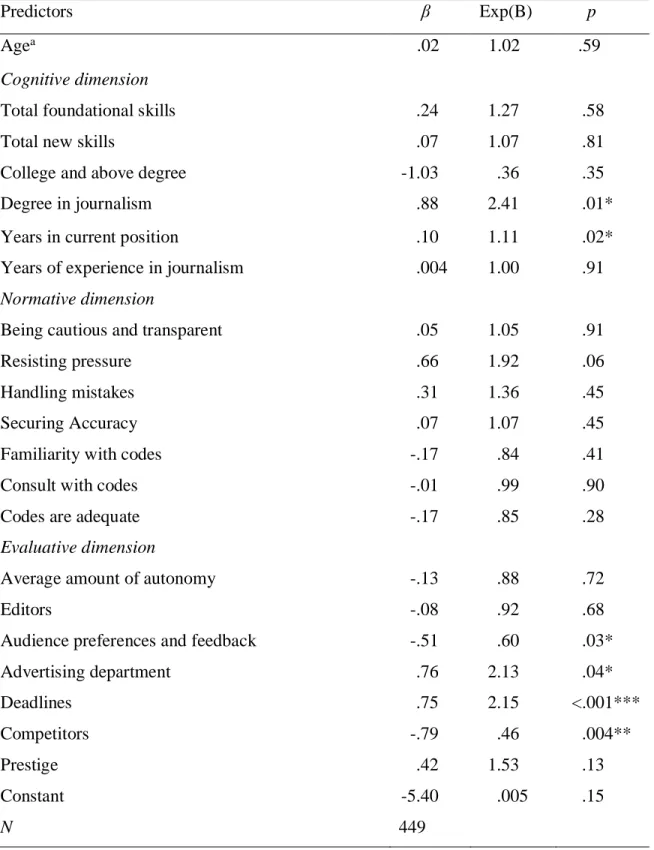
RQ5: Which variable in what dimension has the greatest overall predictive power in distinguishing digital native journalists from legacy journalists?
CHAPTER 5. METHOD Web Survey
The survey method has become increasingly popular among mass communication
researchers (Moy & Murphy, 2016). This study used a multi-contact survey to identify the major characteristics of digital native journalists and to investigate how they are different from
journalists working in legacy media.
Surveys allow researchers to collect data and information from a large population. Web surveys have the advantages over mail and fax surveys of relatively low cost and quick
turnaround times (Burkill, Copas, Couper…& Erens, 2016). In addition, Web-based surveys are less likely to induce social desirability bias than face-to-face or telephone surveys (Chang & Krosnick, 2009; Moy & Murphy, 2016).
However, it is sometimes troublesome to use web survey methods to research the general population (Chang & Krosnick, 2009; Israel, 2009). One of the major concerns is a lack of sampling frames for internet surveys. Online surveys often rely on subjects to self-select to opt-in, making it difficult to know whether an online sample represents the population or simply a population of internet users who feel like taking surveys.
technologically sophisticated—these are characteristics that distinguish them from the general population (Israel, 2009).
In addition, web surveys have become increasingly vulnerable to low response rates. Web surveys often exhibit response rates of around 10%–25%. Low response rates, in turn, can reduce sample size and statistical power. Moreover, low response rates may also lead to non-response bias and affect the validity of survey results.
On a positive note, the internet survey method is well suited if the researcher’s target survey population requires respondents who have internet access. In such cases, because all members of the survey sampling frame are internet users, the people who do not participate in the survey are less systematically different from those who do (McCabe, Couper, Cranford, & Boyd, 2006). With that in mind, it is reasonable to assume that the targeted population of online journalists in this study has adequate internet skills and convenient internet access.
Sampling Strategy
The first important step of any survey method is to define a research population: in this case, who is a journalist qualified to be surveyed? The erosion of boundaries between non-professional communicators and professional journalists has made it very difficult to clearly define the
professional groups this study wishes to examine (Singer, 2007; Lewis, 2012). In the digital age, everybody with internet access could be considered to be a journalist: citizen journalists,
full-time reporters, writers, correspondents, editors, news announcers, columnists,
photojournalists and other news people” (p. 256). However, this study further narrowed the scope to rank-and-file journalists in the news force, which include reporters, staff writers, and others who do not supervise other news or editorial employees. Because this study centers on individual-level analysis and examines perceived organizational level influences on rank-and-file employees, the sample is set to eliminate supervisors and managers (Beam, 2006). In addition, columnists, opinion writers, and commentators who are not directly associated with editorial content creation and decision-making were excluded from the survey. Thus, the study population is limited to journalists working for American news organizations, based on the study’s premises and theoretical goals.
The next step is to define the sampling frame. To minimize sampling error in a web survey setting, Chen and Goodson (2010) suggested that researchers should consider gathering data from the entire population rather than a sampling frame. The use of digital tools for data gathering and management make this approach more feasible.
A comprehensive list of news organizations and rank-and-file journalists would be ideal. This study drew its sampling frame from CisionPoint, a software company that provides a comprehensive list of working journalists primarily in the US. This database was used by several scholars in their survey research (Tandoc, 2013; Lewis & Zhong, 2013). The list is based on voluntary participation of media organizations, but scholars who have used the database reported that it provides a comprehensive list of media contacts (Tandoc, 2013; Lewis & Zhong, 2013).
to include daily newspapers, television stations, radio stations, online versions, and digital news websites. Print media such as college newspapers and magazines were not included in the search to ensure that a consistent daily production cycle would be constant for all respondents and organizations. The outlet topics were set to include news, local news, national news, news and current affairs, international news, and community news. The contact topics, which are topics covered by journalists, were set to be news, local news, community news, investigative news, breaking news, county news, national news, and international news. Additional filters were applied to the search to eliminate editors, producers, managers, directors, publishers, and people who hold a management position at the media organization. The search also eliminated people who are contributing writer, freelancers, columnists, or opinion writers to ensure that the sample includes only people who hold jobs as journalists and are officially employed by a news
organization. The search yielded a total of 4,409 journalist contacts on November 28, 2016. Of these 3,150 contacts are for daily newspapers, television stations, radio stations and their online versions; 1,259 contacts are for digital news websites. Most of the results included the name, job title, organization, email, and phone number of each person.
Survey links were sent to participants through Qualtrics following IRB approval on January 25, 2017. Two reminders were sent on February 1, 2017, and February 5, 2017. After duplicate email addresses had been removed, the survey was sent to 3,623 recipients.
Immediately, 154 emails were bounced undeliverable with 3,469 emails successfully delivered. This research study used incentives.2 A donation of $5 was pledged to the Committee to Protect Journalists for each complete survey returned, capped at $3,000. In addition, participants were invited to opt-in for a random draw of one of twenty $50 Amazon Gift Cards sent by email.
The survey was closed on February 12, 2017. A total of 465 complete responses were returned, with the total number of surveys started of 664. The overall response rate is 13.4% (3,469 divided by 465). A priori statistical analysis using G-Power software showed the study required a minimum of 270 respondents to have a sufficient statistical power of .80 to detect small effect sizes of .15 using independent t-tests (G-power). Sample size estimation and statistical power analyses are essential in ensuring that sufficient data have been obtained to justify the study and its findings (Batterham & Atkinson, 2005).
Survey Measures
Basic characteristics. This study adapted the indicators in Weaver et al. (2007) that profiled US journalists to characterize digital native media journalists.
• Workforce size: Respondents were asked to estimate the number of full-time news and editorial people employed at their organization.
• Geographic distribution: Respondents were asked to give the city and state of their employment.
• Age and gender.
• Ethnic and racial origins.
• Highest education received.
• News habits: Respondents were asked how often they get news from various media sources using a 5-point Likert-scale with 1 being “never” and 5 being “very often.” The list of media sources was adapted from a recent news usage survey conducted by the Pew Research Center (Gottfried & Shearer, 2016).
Cognitive dimension. This dimension is centered on the body of knowledge and techniques which the professionals apply in their work, and on training needed to master such knowledge and skills.
Previous studies have stated that journalism lacks esoteric knowledge, but there are certain skills required and commonly used by journalists (Singer, 2003; Lewis, 2012; Waisbord, 2013). The training a journalist receives usually takes place in education programs and
internships and/or work experience in the journalism field. Thus, the cognitive dimension of journalism professionalism was examined through three groups of indicators: journalistic skills, journalistic education, and experience.
multimedia production skills, social media skills, audience development/engagement skills, basic computer coding and development skills, big data analysis skills, visual storytelling skills, and podcasting (Fahmy, 2008; Finberg, 2014; Willnat & Weaver, 2014).
Journalistic education. Journalistic education was measured by the following items: whether the respondent has a bachelor or higher degree; whether the respondent has a bachelor or a graduate degree in journalism or a related field.
Journalism experience. Journalism experience was constructed of two items—years of experience working in journalism, and years of experience in current job.
Normative dimension. This dimension covers professionals’ ability to self-regulate through their profession’s distinctive ethics. The normative dimension of journalism
professionalism was examined through the following indicators: adherence to ethical standards and relationship with journalistic codes of conduct.
Because journalism ethic codes are voluntary in nature, it is helpful to know the actual use of the ethical codes among journalists. Thus, professionals’ relationship with journalistic codes of conduct was measured through three responses: How familiar are they with the journalistic codes of conduct? How often have they consulted a journalistic code of conduct? How adequate are ethics codes in guiding them?
The adherence to ethical standards is measured using a set of ethical guidelines adapted from the SPJ Code of Conduct. Respondents were asked to self-evaluate how closely they follow each guideline using a 5-point Likert-scale with 1 being “not closely at all” and 5 being
“extremely closely.” The guidelines are: