BECOMING ACTIVISTS: HOW ORGANIZATIONS ENGAGE AND POLITICIZE YOUTH
Sarah Gaby
A dissertation submitted to the faculty of the University of North Carolina at Chapel Hill in partial fulfillment of the requirements for the degree of Doctor of Philosophy in the Department
of Sociology
Chapel Hill 2018
Approved by: Kenneth Andrews
ABSTRACT
Sarah Gaby: Becoming Activists: How Organizations Engage and Politicize Youth (Under the direction of Kenneth Andrews and Neal Caren)
Youth-serving organizations are at the heart of civic life in the United States. Either because of their own interests or as a result of service requirements, thousands of youth turn to civic organizations to facilitate community participation. Some organizations facilitate
engagement and expand youth skills, knowledge, and identities. Others have modest impacts and may even alienate youth from further engagement by limiting their desires for social change through constraining their participation and avoiding politicized topics. Youth experiences in these organizations motivate the core questions of this dissertation: how do organizations engage and politicize youth, and why are some more effective than others? This dissertation combines survey data on youth-serving organizations in the Raleigh-Durham-Cary metropolitan statistical area with comparative fieldwork, interviews, and focus groups in a matched pair of service organizations and a matched pair of social movement organizations.
committed to anti-racist causes. However, groups with more constrained opportunities for youth avoid engagement with these issues. Finally, I show that organizational participation can provide youth with specific tactics, frames, and deliberative approaches that can be used beyond the particular organizational setting. These opportunities are enhanced when youth are able to practice their participation by engaging in decision-making processes. Youth inclusion,
ACKNOWLEDGEMENTS
This project is what it is because of the careful guidance and support of friends, family, mentors, research assistants, and passerby’s. David Cunningham introduced me to sociology as a life-changing way to see the world and is to be thanked for my trajectory to this Ph.D. Karolyn Tyson set me on the path to completion with her encouragement of my work and writing and dedication to improving my scholarship. It was she who brought me into the academic mindset and socialized me into research, for which I will forever be indebted. Andy Andrews and Neal Caren pushed that early development, helping me learn to publish my work and supporting this study. Without their suggestions and challenges this project and my trajectory as a scholar would be less ambitious, well-done, and interesting. Additional thanks are due to Andy Perrin, Sarah Soule, Howard Aldrich, Charlie Kurzman, Matthew Baggetta, Janice Geller, and Kyle Crowder for all of their assistance with my research and support along the way. Finally, a special thanks to the undergraduate research assistants and online transcriptionists who made this project a reality.
Perhaps more important for finishing this project than the academic support was the emotional and psychological support of peers and colleagues. The time each of you spent commiserating about graduate school and the process of dissertation completion was critical for the success of this project. Megan Goodrich was my first true graduate support partner, and I am so grateful for her friendship. Special thanks to those who also took the time to read and
Jowers, Kari Kozlowski, Kristen Schorpp, Charles Seguin, Didem Turkoglu, and Haj Yazdiha as well as the participants of the Culture and Politics Workshop and the Social Movements Group.
PREFACE
It’s cliché to write that youth are the social change agents society needs for today and the future in a dissertation that both challenges and extols the role of organizations in engaging and politicizing young people. So, I have not written that in this study. Instead, I’ve written it here, in the preface. This study was born not from a desire to prove that youth, in fact, are valuable agents of change, but from a need to see if they are. Scholars and practitioners emphasize the ways youth can innovatively and strategically solve social issues and often cite civic
organizations as places to develop the necessary skills to do so, but with limited evidence. Through this research, I was able to directly observe the capacity of young people to enact social change and the contexts where this capacity was fostered or hampered. What I learned from this research is that youth are powerful, excited, and enthusiastic about engaging in civic life, but not all of the institutions they interact with will help them translate those interests into social change work or push them to develop the skills they need for success. Some
organizations are dominated by preexisting expectations about youth as recipients of their
services who need adult mentors and guides. Others are open to innovating and responding to the particular youth in their groups and the changing nature of youth-adult relationships. In short, not all organizations are created equal, but there are many empirically grounded arguments for working more to include young people in decision-making and providing the experiences necessary for their successful current and future civic participation.
to provide leverage in making sense of how experiences differed primarily for white and non-white youth. In the end, I found that heterogeneity in organizations was important, but it is hard to separate from organizational cultures. There remains much to be considered in this area. In particular, although I could not systematically analyze these experiences during my fieldwork, I saw a few youth disengage from organizations. In most cases, the youth who left the
organizations I observed were racial and ethnic minorities, often young women of color. One hope for this study is that it motivates other researchers to think much more critically about how youth organizations respond to issues of inequality and, similarly, when and how they isolate and produce disengagement for minority youth. This line of inquiry provides a challenge to the long-standing expectation that what drives racial and socioeconomic homogeneity in organizations is selection. It is most often stated in the literature that the higher prevalence of white, middle class youth in organizations is due to parental selection (Gordon 2008; Lareau 2002), but these
preliminary findings indicate that practices internal to organizations may undercut the engagement and retention of minority youth.
Through this research, I also touch on another often-stated assumption: that civic
even allows space to emphasize that some organizational experiences discourage youth from future civic participation.
In sum, my experience in the organizations depicted here was full of opportunities to watch young people, enthusiastic about social change turn to their organizations hopeful they would facilitate their civic engagement. While some succeeded in this mission and likely shaped the life course of youth who will go on to be powerful actors in civic and political life, there is much more empirical work to be done on youth organizational participation. Importantly, there also remains a lack of exchange between scholars and organizations, which I found many groups desirous of during my research. I hope that by sharing findings from this study with
organizational actors and supporting community-engaged scholarship I, and fellow scholars, will build strong bridges between the research on organizations and the organizations themselves.
TABLE OF CONTENTS
LIST OF FIGURES ... xiv
LIST OF TABLES ... xvi
CHAPTER I. INTRODUCTION ... 1
CHAPTER II. CIVIC ORGANIZATIONS AND YOUTH PARTICIPATION ... 9
Why Youth? ... 10
Why Organizations? ... 11
Organizational Influence ... 11
Participatory Practices in Organizations ... 15
Autonomy and youth ... 19
Conceptualizing Managed Autonomy ... 21
Organizational culture, adult leaders, and heterogeneity ... 24
Responding to Dilemmas ... 25
Moving Beyond the Organization ... 27
Conclusion ... 28
CHAPTER III. YOUTH CIVIC ORGANIZATIONS ... 29
Organizational Structure ... 31
Organizational Demographics ... 33
Comparative Ethnography ... 34
Youth Teen Court ... 42
Restorative Justice Teen Court... 43
Engaging Youth in Community ... 44
Youth Reducing Sexual Violence ... 45
Comparing the Organizations ... 46
CHAPTER IV. ENGAGING YOUTH IN DECISION MAKING ... 47
Participatory Practices in Youth Organizations ... 50
The Continuum of Autonomy ... 51
Participatory Practices... 53
Management over autonomy ... 53
Managed autonomy – constrained... 58
Managed Autonomy—Extended ... 64
Managed Autonomy—Contentious ... 75
Implications of Youth Inclusion ... 84
Youth Civic Knowledge and Skills ... 85
Approaches to Youth Inclusion ... 89
Organizational Culture... 89
The Role of Adults ... 90
Discussion ... 93
CHAPTER V. ACTIVISM AND INEQUALITY ... 95
A Budding Dilemma ... 98
The Growth of a Dilemma ... 101
New Youth Opportunities ... 104
The Endurance of Organizational Change... 111
Focusing Inward ... 112
Making Racial Inequality “Fit” [here] ... 115
It Doesn’t Quite “Fit” ... 116
Outcomes for Organizations ... 119
Discussion ... 121
CHAPTER VI. AVOIDING INEQUALITY DISCOURSE ... 125
Active Silence ... 127
Openly Recognizing Group Boundaries ... 136
Discussion ... 146
CHAPTER VII. BEYOND ORGANIZATIONAL PARTICIPATION ... 149
Studying Organizational Influence ... 149
Observing organizational socialization ... 152
Organizational Influence – Practice... 154
EYC Organizational Influence ... 154
Practice ... 154
Interaction ... 158
YTC Organizational Influence ... 161
Practice ... 161
Interaction ... 166
RJTC Organizational Influence ... 168
Practice ... 168
Discussion ... 179
CHAPTER VIII. CONCLUSION ... 181
Broader implications ... 183
What’s in it for organizations? ... 185
Moving Forward ... 186
APPENDIX A: METHODOLOGICAL APPENDIX ... 189
Determining an Organizational Population ... 189
Fieldwork, Interviewing, and Focus Groups ... 189
APPENDIX B: SURVEY ... 191
APPENDIX C: INTERVIEW, FOCUS GROUP, AND FIELDWORK GUIDES ... 199
Observation Guide ... 199
Pre-Interview/Pre-Problem-Solving Group Survey ... 201
Interview Guide for Youth Participants ... 203
D. Interview Guide for Youth Leaders ... 204
E. Interview Guide for Adult Leaders (paid or volunteer staff) ... 205
Problem-Solving Group Prompts ... 206
Problem-Solving Group Interview Guide ... 207
LIST OF FIGURES
Figure 1. Relationship Between Management and Autonomy………..35
Figure 2. Proportion of Organizations Including Youth………46
Figure 3. Average Household Income of Youth Served………46
LIST OF TABLES
Table 1. Youth Organizational Goals………45
Table 2. Racial Distribution of Youth Served………...47
Table 3. Racial Distribution of Adult Staff and Volunteers………..47
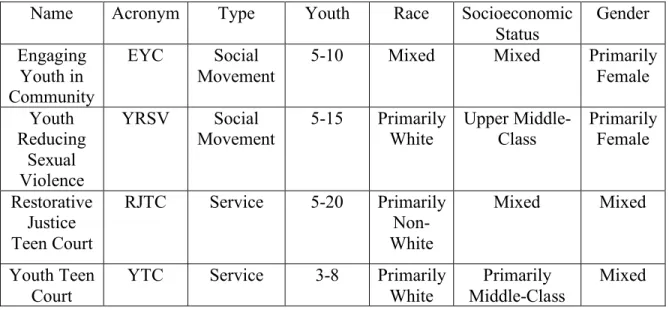
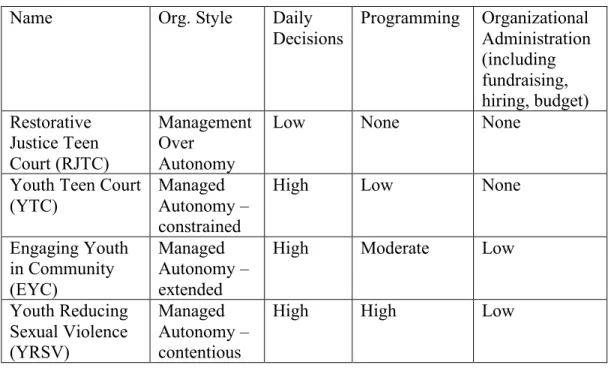
Table 4. Overview of Youth Organizations………...59
Table 5. Youth Inclusion………60
CHAPTER I. INTRODUCTION
On a Monday in late March, I sat around a conference table at the office of a healthcare advocacy organization called Youth Empowered Solutions (EYC) with four high school students and Luke, an adult male staff member. Luke informed the group that another set of youth at EYC was working on passing legislation to put healthy food in corner stores. He told the teens “…it’s important for us to decide whether this is something I can get behind versus not get behind…if this is something we believe in and support, and if so can we develop a message and give a phone call at least to our representatives in congress…so they know that they have your voice.” The group had a teleconference with an expert on the legislation who discussed the pros and cons, showed statistics on obesity in North Carolina, and discussed the existing efforts and support thus far for the bills. The adults on the call both emphasized that the teens did not have to support the bill if they did not think it was a good use of state funding. At the end of the
teleconference, the teens decided to support the cause. However, most had never made calls to their elected officials before and they asked each other and Luke questions to help with the process and eventually collaborated on a script for the calls. Luke mimicked the call he would make and then worked with the teens on mock phone calls before they went home to reach out to their representatives and ask for support of the healthy corner store initiative.
advocacy” on the healthy corner store initiative and acquired tools for the future they can use to “challenge [elected officials] to think more critically,” two goals of the organization. And, it’s not just EYC that seeks to engage youth in civic and political life and train activists. Previous research indicates that civic organizations are one of the primary pathways through which youth become involved in politics and their communities (Campbell 2006; Jennings and Stoker 2004), and emphasizes that future participation results from organizational participation in early life (Youniss, McLellan, and Yates 1997).
The reach of civic organizations like EYC is vast—by some estimates, over one third of U.S. youth participate in voluntary organizations (The Federal Agency for Service and
Volunteering 2012). Scholars and practitioners boast that youth in these groups will be more politically efficacious than peers, will learn civic skills, and gain knowledge of politics and the community. In short, these organizations claim they will produce engaged citizens, young people “…willing to act on [their] principles, be politically independent and address social needs” (Dalton 2008:81). Despite their potential influence, some organizations deeply engage youth in their communities and provide them with the skills needed to participate, while others dictate and constrain the roles of youth, leaving them discouraged about civic participation (Eliasoph 2013; Gordon 2010). One primarily goal of this dissertation is determining what drives these various outcomes in order to understand how and when youth learn to become civically engaged.
experience of participation. Empirically, survey data and the case study approach have
dominated the field. Case studies limit the applicability and generalizability of findings beyond the selected sites and survey research is unable to capture the processes and exchanges that take place inside organizations. For example, survey data indicates that youth who participate in civic organizations are more likely to vote later in life (McFarland and Thomas 2006), but cannot explain why this is the case or what features of organizational participation lead to later life engagement. This study overcomes both limitations by developing a mixed methods approach to analyze youth participation in organizations and generate a theoretical framework for
understanding the relationship between youth and organizations.
To return to EYC, youth in the example above not only decided whether they and their organizational subgroup would support the healthy corner store initiative, but also how they would do so. Similarly, when they learned Wake County school board member Jim Martin posted on Facebook that, “There is not a school-to-prison pipeline...There is a POVERTY-TO-PRISON pipeline” they used this previous experience as they encouraged the organization to join the discussion on the topic and they wrote to Jim Martin criticizing his stance. The youth
continued to raise concerns related to racial and ethnic inequalities and pressured the
organization to become meaningfully engaged in understanding and responding to these issues. They utilized what they learned on that late March afternoon to contact their local officials. In these interactions, the youth also learned a less direct lesson—that they had a role as decision-makers in the organization. Luke and the other adults in the organization provided youth the opportunity to make important decisions about the focus and commitments of the organization, even when they initiated directions Luke opposed.
Relatedly, when the youth became committed to working against racial and ethnic inequality, they used the decision-making power to push the organization to engage more fully with these issues. By offering youth decision-making power, the EYC created an open
This study responds to the question of when and how organizations engage and politicize youth. I begin by considering the short-term and direct implications of youth participation in organizations. In examining the relationship between organizations and youth, I develop the concept of managed autonomy, or the patterned interaction between adults and youth in which adults provide guidance and support to youth who are given critical roles in decision-making processes. These interactions are the direct result of the culture of each organization. I argue that by balancing youth autonomy in decision-making with adult management, youth become
engaged in their organizations and communities. But, the extent of youth autonomy in
organizations also influences their politicization, or how much they view themselves as part of a collective group acting for change. By comparing how some groups politicized in response to Black Lives Matter and the growing discourse on racial inequality while others did not, I reveal the way managed autonomy influences the response to organizational dilemmas.
I then turn to the question of how organizational experiences impact the youth beyond their direct involvement in the organizational setting. I consider possible longer-term impacts of participation in these organizations, in particular how deliberative approaches, frames, and tactics used in organizations are leveraged by youth in other civic engagement settings. I argue that the extent of youth inclusion in decision-making processes strongly influences how youth retain these elements and deploy them when presented with civic opportunities.
To understand when and how organizations engage and politicize youth, I look at the relationship between organizations and their participants. In chapter 2, I present the theoretical foundations for this study, considering theories and findings from past work on organizations and civic and political participation. In the existing literature, organizations are touted as
(Almond and Verba 1965[1963]; Clemens 1993; Ganz 2009). Organizations have the power to create engaged citizens who have the skills and knowledge needed for civic participation (Youniss et al. 2002; Blee 2012; Eliasoph 2013; Perrin 2006), but how they are able to accomplish these goals has not been fully explored. I argue that the critical factor for how organizations influence youth is the extent of autonomy and youth inclusion in decision-making that takes place in these organizations.
Further, I present three organizational constraints that produce the shape and extent of youth autonomy: 1) organizational culture, 2) the skills and capacity of adult leaders, and 3) the heterogeneity of the participants. Organizational cultures are persistent and often lead to
conditioned responses and internalized assumptions. Adult mentors, however, have the capacity to establish interactional styles and roles for the youth that are inclusive and extend autonomy to youth, but this requires the adults themselves to bequeath some power and have a deep
understanding of how inequality operates. In addition, organizations can buffer against some of their own capacity limitations by including a diverse group of youth in their organizations. By doing so, they create more opportunities for youth to contribute to the organization’s
understanding and response to issues of youth inclusion and inequality.
To analyze how organizations engage and politicize youth, I draw on various
methodologies described in chapter 3. I begin with survey data I collected on the population of youth-serving organizations in the Raleigh, North Carolina area and combine that data with ethnographic fieldwork, interviewing, and problem-solving groups, an adaptation of a focus group used successfully to evaluate how groups engage in political discourse in past work (see Gamson 1992; Perrin 2006). The ethnographic data were collected in four youth civic
organizations. These organizations are typically non-profit groups staffed by adults that serve local populations of youth. I also provide an overview of each organization studied.
In chapter 4, I analyze the interactions between youth and adults. I turn to my fieldwork to show the various approaches to including youth in decision-making processes across the four organizations. I analyze the interactions between youth and adults to determine how youth are included on a daily basis. I find that the extent to which young people are included in the decision-making processes in organizations vary greatly, with some utilizing approaches that include a highly autonomous role for youth and others employing a heavily managed and
hierarchical approach. Some types of interactions demonstrate that youth are in subordinate roles where they defer to adults. In other instances, youth are given the autonomy to make decisions about programming, administration, and daily decisions in their organizations.
The role of youth in decision-making also influences how organizations respond to dilemmas that arise. Concurrent with my observation of these organizations was the growth of the Black Lives Matter movement and the corresponding rise in public discourse on issues of racial/ethnic inequality. Subsequently, increased public attention to this issue put pressure on the organizations in the study to respond. A dilemma arose in these groups—would they respond to this public discourse? Would they become involved in community efforts to take action? And, if they did, how extensively would their groups become involved? If the involvement led to changes in their organizations, would these be fleeting or enduring? I analyze the various
to anti-racist organizations were lasting in each group. In chapter 6, I contrast these organizations with two that did not respond to the issue and where youth either similarly avoided responding or became frustrated with the organization.
In chapter 7, I consider why the approach to youth inclusion and the experience engaging in organizational dilemmas matter for the young people in these organizations. I present findings from the focus groups in which I proposed hypothetical social and political issues and asked the youth to offer solutions. This approach illuminates how youth take what they learned in these organizations and apply it to issues outside of the organizations. I consider the deliberative approaches, frames, and tactics used to assess the kinds of impacts civic organizations may have on youth. I find that autonomous youth in organizations that include youth in responding to dilemmas utilize organizational approaches and knowledge in these focus groups.
CHAPTER II. CIVIC ORGANIZATIONS AND YOUTH PARTICIPATION
Organizations are often seen as the mobilizing mechanism for civic participation, serving as the intermediary between individuals and politics (Almond and Verba 1965), but do so to varying degrees. Organizations have the ability to directly mobilize participants for political action (Clemens 1993; Ganz 2009), provide participants with civic opportunities and resources for engaging in politics (Almond and Verba 1965; Baggetta 2009; Youniss et al. 2002), help them build civic skills (Blee 2012; Eliasoph 2013; Perrin 2006; R. D. Putnam 2001), and gain a collective sense that they can affect change (Almond and Verba 1965; Corrigall-Brown 2012; Perrin 2006; Youniss et al. 1997). As a result, the decline in participation in civic associations that has been reported in recent years (e.g., Putnam 2001) is perceived as alarming because it indicates a loss of skills and opportunities necessary for civic participation outside of
organizations.
Putnam (2001) claimed that the trend from collective activities to more individualized
ones (e.g., bowling in leagues to donating to local organizations) was indicative of the decay of a connected society engaged in civic conversations. In the existing literature, organizations are privileged as institutions that influence participants to engage in political and social issues. The assumption underlying this logic is that civic organizations create engaged citizens who
Why Youth?
In particular, youth-serving organizations are at the heart of civic life in the United States. Roughly 25% of adult and youth volunteers participate in the thousands of youth-service related organizations in the U.S. (Bureau of Labor Statstics 2016). Teens comprise a quarter of people who volunteer, participating at nearly twice the rate of adults (Bureau of Labor Statstics 2005). Yet, simultaneously, today’s youth are portrayed as disengaging from civic life, apathetic about politics, and disinterested in collective action. Still, either because of their own desires and interests or as a result of compulsory service requirements, thousands of youth participate in organizations. These conditions result in an open question: How are youth included in civic organizational life?
Previous claims about the role of civic associations have primarily come from studies of adult organizations. However, the experience of youth in civic organizations and the influence of these organizations on their civic knowledge and participation requires further study. Arguably, the stakes are higher for youth organizations, which may shape political participation throughout the life course if they can successfully engage youth in their early years (Campbell 2006). The benefits of civic participation for developing long-term commitments peak during high school, and students who are engaged in those critical years are more likely to vote and become involved in community organizations later in life (Youniss et al. 1997). While these high school activities may not immediately translate into future activism, past experience may be reactivated later in life when civic opportunities present themselves (Campbell 2006). The influence is not
(Corrigall-Brown 2012). Although youth organizations serve a slightly different purpose than adult organizations, many of the benefits and approaches to participation apply to youth groups.
Why Organizations?
Significant attention has been paid in the literature to the way organizations influence participants. These studies tend to suggest myriad ways that organizational participation can influence and shape participants and their capacity to engage in civic and political life. While the literature in this area is vast, it does not fully address how that influence is conveyed, as I seek to do in this study. However, the insights from this existing work suggest both the importance of organizations for impacting participants and offer some expectation for the types of influence that may occur.
Organizational Influence
learn to participate in civil society. Civic knowledge is the awareness of political and social issues and public affairs, and is enhanced by the sense that individuals can participate in debate or action around those issues. Beyond knowledge, individuals may also actively participate in these issues through critical thinking and direct action.
Alexis de Tocqueville (2012) identified the importance of civic associations when he conceptualized them as the training ground for democracy. Scholars of associations expanded de Tocqueville by empirically considering the benefits of associational affiliation. Focusing on the individual level, scholars considered positive outcomes for participants in organizations above their non-participant peers like greater leadership skills, more capacity to participate in civic life, and a greater number and more diverse set of social ties (Putnam 2001; Verba et al. 1995; Verba and Nie 1987). Scholars also conceptualized mechanisms through which association
participation influenced democracy more broadly, such as through the creation of a “civic culture” (Almond and Verba 1965) and by considering the political influence of civic
engagement (Skocpol and Fiorina 1999). At the organizational level, some scholars focused on differentiating the influence of types of associations (e.g., non-profits), finding that those organizations exhibit behavioral differences from their counterparts (DiMaggio and Anheier 1990). Other scholars found that the form and nature of civic associations has changed over time (Skocpol and Fiorina 1999; Zukin et al. 2006), resulting from professionalization and funding structures (Skocpol 2003, 2004).
While scholars agree that organizations influence participants, the way that participation shapes member behaviors and the outcome of that influence remain contested. Verba and colleagues (Verba et al. 1995; Verba and Nie 1987) argued that participants in civic
skills and knowledge that exceeds that of their peers. Organizations may also shape member ideology (Snow and Benford 1988). Although these influences are often considered positive, a long-standing unresolved issue remains: while organizations have the potential to shape political participation and positively influence participants, they also have the capacity to divert attention from public issues and reduce radical response (Meyer and Tarrow 1998). Although
organizations can provide civic opportunities to members, they may also push participants away from political participation (Theiss-Morse and Hibbing 2005). For instance, Eliasoph (2011) found that youth who might otherwise push back against the status quo were channeled into résumé-building activities in organizations. Organizational experiences, then, can produce divergent outcomes for participants: developing their civic skills and understandings or channeling them away from particular interests and social change efforts.
One explanation for this channeling is that civic participation is conditioned by the socioeconomic status of the organization’s target population (Brady, Verba, and Schlozman 1995; Gordon 2010; Musick, Wilson, and Bynum 2000; Verba et al. 1995, 1993). In her comparative study of empowerment projects, Eliasoph (2011) found that participation was strongly divided along socioeconomic lines. For disadvantaged members, perceptions about their involvement were often focused around preventing them from becoming problems in society. Non-disadvantaged youth, however, viewed their group membership as an opportunity to help others. Non-disadvantaged youth experienced comfort speaking in the group and were able to discuss problems in universally understood terms, so their voices and ideas were more
commonly incorporated into the group’s projects (Eliasoph 2011). In this case, the civic
phenomenon points to a larger trend whereby advantaged youth are channeled into résumé-building activities in organizations, while disadvantaged youth join organizations that are likely to keep them out of trouble (Eliasoph 2011). Privileged groups of youth activists required much less support from adult allies to aid their activism (Gordon 2010). In contrast, lower class
minority members of groups struggled to establish autonomy and be seen as valuable participants in the political process to a greater extent than their privileged white peers (Gordon 2010).
Organizational participation is influenced by socioeconomic status, such that higher educated members are more likely to be actively involved in their organizations (Almond and Verba 1965). Therefore, it is necessary to consider how various sociodemographic groups are served by organizations and whether the types of experiences vary along these dimensions.
Another factor that influences the differential experiences in groups is organizational structure. The structure of organizations shapes the civic knowledge of members (Skocpol 2003). For instance, organizations that utilize a democratic structure were found to strengthen the civic skills of members over more hierarchical organizations (Verba et al. 1995). Controlling for other factors like political context and available resources, Andrews et al. (2010) found that
organizational leadership practices remained the primary factor for producing organizational effectiveness.
In addition, the type of organization is likely influential. Perrin (2006) argued that
consider a variety of organizational types, as the type of organization strongly influences members’ experiences (Perrin 2006). Although service organizations are the most common, political groups like social movement organizations are considered to be the most influential type for disseminating civic opportunities and skills. Scholars differentiate these types of
organizations from service and non-political organizations because they explicitly seek to engage members in politics (Almond and Verba 1965; Blee 2012; Corrigall-Brown 2012; Eliasoph 2013). Scholars often define members of these groups as activists (e.g., Gordon 2010), privileging the civic capacity of these individuals to affect social change.
In practice, it is likely that the various factors previously outlined all play a role in shaping the experience in organizations. As such, I consider factors like structure, population served, and organizational type in explaining the variation across organizational experiences.
Participatory Practices in Organizations
As mentioned above, one major factor in shaping organizations is the structure, in particular the extent to which the organization uses democratic or hierarchical practices. Although there is variation with organizations ranging from more hierarchical to more
democratic, there is a strong expectation in the literature that organizations increasingly move from democratic practices to hierarchical ones. The expectation for an increasing
disempowerment for participants in these organizations. While participation in civic associations is highly valued, the success of organizations in empowering and engaging youth is contingent on forms of management and participation.
Yet, the practice of organizational inclusion and constituent participation has grown drastically in recent years, such that the current period has been referred to as the era of Public Engagement, represented by a shift in participation from shareholder to stakeholder (Phillips 2009). The extent of participatory approaches is so vast, that even President Obama joined in, launching the Open Government Initiative as an effort to create a more participatory government (Lee 2015; The White House 2015). Although trends in increasing engagement in organizations have been a major focal point of recent studies in work and occupations (Stohl and Cheney 2001), scholars of civic associations have simultaneously remained focused on the limitations of participation. Even when empowerment practices are utilized, they may have negative effects such as demobilization, marginalization, and the reification of authority (Lee, McQuarrie, and Walker 2015). Further, contradictory arguments about the importance of participatory practices have emerged between organizational scholars and scholars of work and occupations.
Organizational scholars are concerned about defining and evaluating participation, as it is an ever increasingly “nebulous construct” (Glew et al. 1995:396). To date, theorizing about participatory practices in organizations has primarily resulted from studies of employee participation in workplaces. Early work in this realm adopted the Weberian approach to
understanding the relationship between workers and workplaces, focusing on the development of authority and resultant disempowerment of workers (Lee 2015). In this framework, the outcome for participants and potential participants is disempowerment and disengagement. Parallel
movement scholars showed that when engagement does take place, such as when workers seek change in their organizations, participation and mobilization are portrayed as David fighting Goliath (Ganz 2009) or an “Insurgency of the Powerless” (Jenkins and Perrow 1977).
Turning to the work and occupations literature offers further insight into participatory practices. Although scholars of civic associations have not linked the experience of volunteering as a form of work to the labor literature, there are many parallels. Connecting these forms of organizational participation, I argue, introduces concepts that have not been discussed in the organizational literature. For instance, while youth development scholars focus on the successful conditions for youth-adult partnerships, they do not address the workplace conditions that create satisfactory experiences for adult organizational staff or for youth who often serve similar but unpaid roles. In particular, the concept of autonomy is largely absent from the literature on civic organizations, but it is a critical factor in producing satisfying organizational work experiences.
While the comparisons are useful, participation in civic associations is different from formal work experiences. For instance, it is typically—although not always—uncompensated, and almost never comes with fringe benefits. However, as a result of the sorts of tasks and roles participants take on in civic associations, characteristics that make for a positive work experience often mirror the conditions surrounding volunteer experiences. Kalleberg (2011) lays out three primary noneconomic job qualities that determine satisfaction with one’s work: 1) “autonomy over work activities, or task discretion”, 2) “participation in wider group decision-making”, and 3) “intrinsic reward” (132). The relationship between work conditions and satisfaction is
The ideal form of democratic participation in organizations includes a collective approach to authority and a limited division of tasks (Rothschild and Whitt 1989) along with highly autonomous control over decision-making (Kalleberg 2011). These organizational approaches may be supported by certain conditions such as self-criticism, homogeneity, sharing of knowledge and information, a social movement orientation, and supportive professionals (Rothschild and Whitt 1986). Autonomy and control are especially critical—“people do obtain meaning and challenge from being able to decide how to do their own work…” (Kalleberg 2011:144).
The literature on work may also point to a possible solution to the prominent concerns in the social movement and volunteering literature about long-term engagement in organizations and social movements (Klandermans 1997). Kalleberg’s characterization of good jobs as those that involve high levels of autonomy and control suggests that both short-term and long-term remedies are possible. In the short-term, if participation in civic association follows the
characteristics of good jobs described above, people may opt to stay in those associations longer, as they are receiving intrinsic rewards. Under these conditions, participants may find more value in participation, form stronger ties to organizations, and perceive a greater ability to create social change. Autonomous control over work task, participation in group-decision making, and
intrinsic reward, may also have longer-term effects, such as increasing political engagement and developing capacities for future participation (Pateman 1970).
participatory organizations are centrally concerned with legitimacy and authority” (Lee 2015:275). Autonomous approaches to inclusion are still connected to authority and
management. As a result, autonomous participation is rarely separate from management, but instead a balance must be reached between management and autonomy.
There are several critical constraints that limit how much autonomy organizational routines and interactions provide to participants. Perhaps the most important factor is the culture of the organization (Romero and Perez 2003), or “...the collective values, beliefs and practices of organizational members...” (Needle 2005:238). Culture influences democratic participation in organizations by shifting individual perceptions about participation and increasing beliefs that decision-making processes are equitable and decision-makers are competent (Romero and Perez 2003). Although cultures are often pervasive, leaders in organizations can develop particular roles and norms of interacting with constituents that may influence choices to implement democratic practices, even when they go against existing expectations in the organizational culture (Eikenberry 2009). Organizations may also experience participants generating democratic approaches, especially when the participants are diverse and offer varied values, ideas, and interests (Stohl and Cheney 2001). By engaging a diverse set of participants, there is also more input for the democratic process of participation, which produces more diverse organizational outcomes (Kerr 2004).
Autonomy and youth
(Camino and Zeldin 2002; Gordon 2009; Gordon and Taft 2011). As a result of these forces, youth are rarely given the responsibility to make meaningful decisions and are rarely included in organizational governance (Sherrod 2007). Often when youth are included, the participatory approach does not “ensure that young people’s voices will be taken seriously by adults in power” (Taft and Gordon 2013:89). Youth are given opportunities in these settings to have their voices heard, but not to make or impact decisions (Taft and Gordon 2013).
Often, civic opportunities that promise youth empowerment and inclusion go unfulfilled (Eliasoph 2013; Lee 2015). In civic organizations, adults often steer youth away from political participation, leaving youth voiceless “citizen[s]-in-the-making” who struggle to find their place in primarily adult community organizations (Gordon 2010:205). To a great extent youth
participation in empowerment projects leads to feelings of ambivalence and doubt (Eliasoph 2013). Youth report feeling as though they were not given the opportunity to truly make an impact in these settings (Taft and Gordon 2013).
An alternative approach, which happens less frequently, is to engage youth as equal participants (Gordon 2010), which results in more extensive engagement and participation in organizational activities. Youth in these settings are given autonomy to “make choices and participate in decision-making” (Cargo et al. 2007). Following past work, I focus on youth autonomy as instances in which youth are included in and influence decision-making processes and the approach to youth inclusion is one of collaboration between youth and adults (Zeldin, Petrokubi, and MacNeil 2008). This approach is in contrast to situations in which organizational representatives make decisions “on behalf of youth” (Cargo et al. 2007). Autonomy is considered valuable for outcomes like affecting change in their communities (Taft and Gordon 2013),
Yet, when promises of autonomy and inclusion are unmet or do not align with youth expectations, youth may leave formal organizational settings and either disengage or seek
alternative civic opportunities (Taft and Gordon 2013). Therefore, the role of adults in promoting and facilitating collective decision-making and offering support to youth is critical for the
success of these efforts (Camino and Zeldin 2002).
The relationship between adults and youth in setting that promote youth autonomy have been referred to as “youth-adult partnerships” and “autonomy supportive contexts.” In formal civic organizational settings, there is often a preexisting structure whereby adults are paid staff volunteer managers for youth volunteers. In this case, often few adults are working with a group of youth (Camino 2000). When youth autonomy is successfully fostered, these adult
organizational managers provide “guidance, support, and expertise” for youth, which represents the expectation of support from the youth themselves (Camino and Zeldin 2002:218). This role includes “coaching, dialoging, and connections to institutional resources and community leaders” as well as “knowledge and perspective, and cause-based passion” from their experience working on these issues (Camino and Zeldin 2002:218).
Conceptualizing Managed Autonomy
young people in decision-making, the extent of their inclusion and their capacity to actually exert influence in these settings varies greatly. In these organizations, there is a correlated continuum of both youth autonomy and adult management.
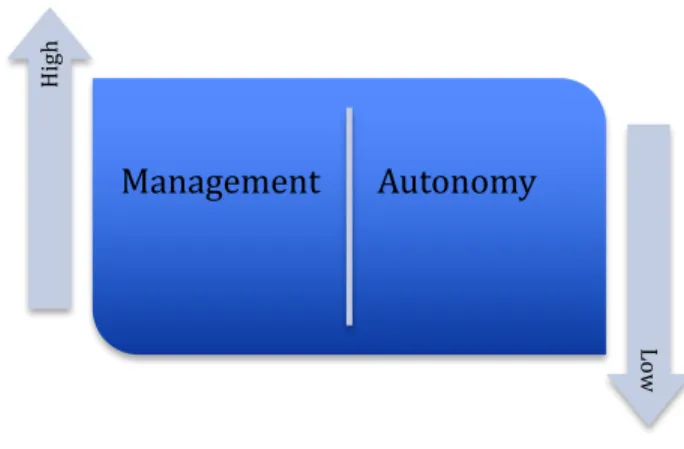
Figure 1. Relationship Between Management and Autonomy
As shown in figure 1, as management increases, autonomy often decreases. Organizations that are highly managed are those described above in which adults make decisions for youth. A prominent example of a heavily managed organization with low autonomy for youth is the Boy Scouts. Scouting has standardized uniforms, activities, handbooks, and management guidelines (Quinn 1999). At the other extreme, are organizations that are youth-run and where adults play no role. These are uncommon for several reasons including legal limitations on youth under the age of 18 including serving on boards of directors and making financial decisions (Camino and Zeldin 2002). Most examples of these organizations are less well-known and frequently take the form of grassroots mobilization like the National School Walkout campaign organized by youth around gun violence initially using a Change.org petition (Weigel and Lowery 2018). Other examples include the Baltimore-based Youth as Resources, which is youth-led and run by a majority youth board of directors and the Seattle-based Youth Force, which has a majority youth staff and board of directors.
Management Autonomy
Hi
gh
Most often, though, organizations fall in between these extremes with adults and youth retaining various levels of autonomy. In some cases, youth are included in advisory councils, but their involvement is constrained (Gordon and Taft 2011). In others, youth inclusion and
participation in decision-making are “infused” throughout the organization (Camino and Zeldin 2002). 4-H organizations, for instance, have worked on including young people in decision-making within their groups while simultaneously placing some youth on the board of directors (Sherrod 2007). Although there may be ideal types of youth organizations, I am particularly interested in examining how management and autonomy interact in the messy middle category in which boundaries are negotiated through daily interactions.
I argue that the organizations that are successful at establishing managed autonomy provide youth with opportunities to build and practice civic skills and guide organizations as they face emergent dilemmas. When youth have autonomy to participate in organizations, they also have the opportunity to practice the kinds of civic participation they will enact in adult life. Their participation can go beyond involvement in everyday practices and group meetings to include governance opportunities, which in past research have been critical opportunities for youth to develop civic skills and make important organizational contributions (Sherrod 2007). This approach moves youth beyond token participation in which they are “equipped only with the techniques of involvement, not with the knowledge and experience of leadership and
administration,” which can be developed through experiential learning in partnerships between youth novices and adults with more experience (Camino and Zeldin 2002:218).
creates an expectation of inclusion in emergent issues. For the organizations that include these young people, their inclusion may also represent an openness to youth guiding the organization. The patterns and conditions of youth inclusion, therefore, are critical for shaping how
organizations respond to emergent issues.
Organizational culture, adult leaders, and heterogeneity
Drawing on past work, I primarily focus on three organizational constraints that shape the extent of youth autonomy in organizations. In considering the first, organizational culture, I focus on culture as a process within an organization, but one that is already fully in existence by the time I enter these settings as observer. The culture of each organizations is shaped by
external environments, but I primarily focus on the internal development of culture. That is the establishment of values, beliefs, and norms that are shared in an organizational setting, often as tacit assumptions codified in organizational practices (Ravasi and Schultz 2006). Culture, therefore, dictates the decisions around participatory practices and sets the bounds around youth inclusion while also signaling whether and how extensively organizations are open to influence from participants.
Organizational culture can also be impacted by human actors who may simultaneously be constrained by the existing culture and shape it. I focus on these individuals as a second
effectiveness (Andrews et al. 2010) and their various capacities to engage young people and build support for their inclusion shape youth experiences in organizations.
Finally, I consider the extent of heterogeneity in the population of youth served. Many of the benefits of including heterogeneous youth stem from the finding that diversity increases organizational effectiveness (Milem 2003). Organizations with more diverse participants generally experience more innovation, better problem solving, and more flexibility (Milem 2003), all of which are likely to influence how willing they are to engage in adapting innovative youth-adult partnerships as part of their methods of operation (Zeldin et al. 2005). Having more diverse youth present also encourages increased attention to issues of inequality (Rogers, Mediratta, and Shah 2012), which may occur across multiple sociodemographic domains that shape successful establishment of youth and adult relationships. When diverse groups are present, organizational staff can buffer against some of their own capacity limitations in discussing critical topics that may arise, especially around issues of inequality.
Responding to Dilemmas
corporation; “Individuals are able to register concerns, suggestions, and ideas that transcend the narrow scope of a job description” (Stohl and Cheney 2001:357).
One of the ways participants can influence less hierarchical organizations is through shaping the strategic direction of the organization, or the kinds of decisions that organizations might make about changing their commitments or interests. Dilemmas often arise as
organizations determine how to respond to changing external environments. Broader changes in the political environment may cause organizations to reconfigure their approach and goals (Robnett 2002). When these dilemmas are present in democratically-run organizations, there is often space for lay participants to influence organizational response. For example, in Robnett’s study of changes in the Student Nonviolent Coordinating Committee (SNCC), she argued that the shift from a civil rights organization to a black nationalist organization took place as a response to changes in policy like the passage of the Civil Rights Act and the failure of other groups to successfully challenge illegal practices in mainstream politics. These changes outside of the organization impacted the organization itself; “..as the political climate shifted…so did the meaning of SNCC[]” (267). The democratic participatory nature of the organization led
participants to respond to external pressure and push the organization to radicalize in hopes of achieving goals that were out of reach under the previous approach.
to codify their beliefs (Barr and Drury 2009; Polletta and Jasper 2001). As a result, social movement organizations are more likely to respond to the external environment by radicalizing, factionalizing, collapsing, or withstanding mission shift.
Responses to dilemmas may also produce organizational conflict. Participatory practices themselves are “objects of political contention within a group” (Lee 2015:278). The process of including participants in community work may be “messier and contested” than other approaches (Pollock and Sharp 2012:3075). When external pressures for change interact with participatory practices, then, it is likely that there will be some resultant organizational conflict.
Moving Beyond the Organization
While in many ways organizations influence participants, the extent to which participants can utilize the knowledge and skills they learn in these settings outside of their organizations remains unclear. There are many claims about the benefits of civic participation, most of which are the result of studies that find correlational relationships between organizational participation and civic outcomes like voting in later life (Frisco, Muller, and Dodson 2004).
In part, the limited empirical research on organizational impacts on participants is due to the methodological challenges of measuring those impacts. In the literature on work and
settings. While sociologists have not primarily used these techniques, some have adapted them to study political talk and discursive practices (Gamson 1992; Perrin 2006).
Studies on the impact of civic organizations using similar techniques are rare. In one instance, Baggetta, Han, and Andrews (2013)analyzed teams in Sierra Club chapters to examine the factors that lead to committed organizational leaders. Although they have not been used as such, these techniques are a useful and empirically tested approach for making sense of whether and how elements of organizational experiences are transferred to participants. For instance, can participants apply tactics utilized in organizational settings in other civic environments? These sorts of questions have yet to be analyzed.
Conclusion
CHAPTER III. YOUTH CIVIC ORGANIZATIONS
This study draws on a mixed methods approach. The initial phase of the project included a survey of the population of youth-serving organizations in the Raleigh, North Carolina area. The survey data was used to inform organizational selection for the second portion of the project; a comparative case study of four youth civic organizations. The four organizations include a matched paid of service organizations and a matched pair of social movement organizations. I observed in each organization for at least 6 months. At the end of the observation period, I also interviewed youth and adults in each organization. I then ran focus-group style sessions called problem-solving groups in which youth were given realistic hypothetical civic problems to solve and their responses were recorded.
As we begin to consider how organizations influence youth, it is necessary to first understand the types of organizations youth participate in, what activities they do in those organizations, who participates, and how organizational representatives perceive participation. As such, I begin by describing the organizational population in the Raleigh-Durham-Cary Metropolitan Statistical Area more broadly. The RDCMSA ranks 39th among the 51 largest
metropolitan statistical areas in terms of the extent of volunteering nationally, and is located in a state that ranks below average on volunteering (North Carolina is ranked 33rd) (The Federal
(e.g., unaffiliated with another institution like a school). All identifiable organizations were included in the survey.
I collected data on the population of organizations in the RDCMSA in May 2014 using an online survey in Qualtrics. Although not all the organizations were 501(c)3 registered, they were all non-profit organizations. To identify the population of organizations, I first began with tax-exempt organization data from the Internal Revenue Service (IRS) exempt organization (EO) database (n=169), as well as Guidestar and the Nonprofit Explorer (Tiggs and Wei 2014) (n=46). I supplemented this initial database with local databases, such as the North Carolina Center for Nonprofits, VolunteerMatch, and Chapel Hill-Carrboro Youth Forward, as well as coalition and event listings (n=49). Organizations on the updated list with a Twitter handle (n=84) were passed through a customized search engine I created using the Twitter application program interface (API) to look for connections between the initial organizations and other local youth
organizations (n=18). I used this approach to locate organizations in the population that were not listed in formal directories as a means to capture the broadest set of organizations. Once
duplicates were dropped and organizations that no longer existed or did not actually work with youth were removed, the total identifiable population included 246 unique youth organizations.
members, often executive directors, although a few were volunteers. Survey questions were broken down into four major categories: organizational structure, online/offline strategies and tactics, general and event-based perceptions of effectiveness, and demographic characteristics of participants.
Organizational Structure
The majority of organizations responding to the survey were 501(c)3 organizations with formalized organizational structures. Of the respondents, 91% had a board of directors, most of whom served only a minor role in the organization. The majority of organizations, nearly 70%, also had paid staff that played a large role in the organization. Beyond the board and paid staff, most youth organizational respondents also emphasized the importance of volunteers in the organizations. 86% of organizations utilized volunteers in some capacity. Like staff, volunteers were relatively involved in the organizations.
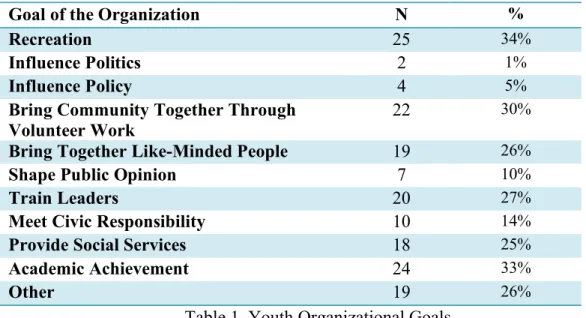
Goal of the Organization N %
Recreation 25 34%
Influence Politics 2 1%
Influence Policy 4 5%
Bring Community Together Through Volunteer Work
22 30%
Bring Together Like-Minded People 19 26%
Shape Public Opinion 7 10%
Train Leaders 20 27%
Meet Civic Responsibility 10 14%
Provide Social Services 18 25%
Academic Achievement 24 33%
Other 19 26%
Table 1. Youth Organizational Goals
Beyond the basic structural elements like goals and non-profit status, organizations also vary based on their access to resources. In particular, when scholars consider influential
resources they often think of items like the age of the organization, its budget, size, participants, and whether or not it has a staff and board of directors (a measure of institutionalization) (e.g., Glisson and Durick 1988). One important structural factor I consider in this study is the participatory practice of the organization. For the purposes of the survey data, I consider
participatory practices by analyzing the inclusion of youth in decision-making processes. Figure 2 shows the proportion of organizations that include youth in various areas.
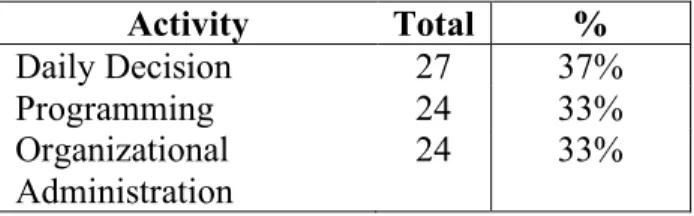
organizations that had a representative respond to the survey and programming in 33% of the organizations. Youth were also included in fundraising decisions in 21% of the organizations. Youth are included in hiring (4%) and budgetary decisions (8%) with much less frequency. Often, adults and youth work together in organizations. Adults most commonly advise youth and plan activities for youth, but they also work in collaboration with youth.
Figure 2. Proportion of Organizations Including Youth Organizational Demographics
The youth served by organizations in this study vary. As shown in figure 3, the most common population of youth served are from families near or below the federal poverty line. More organizations serve youth from mixed racial and ethnic backgrounds as shown in figure 3 and table 2, and are not homogenous organizations of singular groups. The adult staff in
organizations, shown in table 3, however, are primarily white. As a result, organizations serve economically disadvantaged mixed race youth, but are primarily staffed by white adults.
0 .2 .4 .6 .8 Pro po rt io n o f O rg an iza tio n s Yo ut h H a ve Sa y In Are a
Youth Have a Say In...
Budget Hiring
Figure 3. Average Household Income of Youth Served
Racial Distribution of Youth Served N %
Majority Asian 1 1%
Majority Black 11 15%
Majority White 11 15%
Mixed/No Majority 23 32%
Table 2. Racial Distribution of Youth Served
Racial Distribution of Adult Staff and
Volunteers N
%
Majority Black 5 7%
Majority Other 1 1%
Majority White 32 44%
Mixed/No Majority 7 10%
Table 3. Racial Distribution of Adult Staff and Volunteers Comparative Ethnography
The survey data provided insight about how organizational representatives understood their groups, but did not allow for an examination of interactions and operations in these
organizations. To supplement the survey data, I embarked on a year of fieldwork in 4 youth civic organizations. I observed the daily routines of these organizations at meetings and events,
interviewed youth and adults, and ran problem-solving groups with participants to evaluate whether what they learned in the organizations could be applied to solving social and political problems outside of the organization.
Less than $12,000 $12,000 - $30,000
$30,000 - $75,000 $75,000 - $150,000
To select organizations for this study, I began by drawing from the survey data. I then utilized the survey results to determine categories for selecting organizations that varied by type. The initial organizations selected for study were one service and one social movement
organization. I then matched these initial organizations with pairs that differed on the race and socioeconomic status composition of the population served. These preliminary categorizations were drawn from the literature on civic associations and intended to capture variation as the population served strongly influences members’ experiences (Gordon 2010). The approach of selecting organizations that operate in the same arena (e.g., two teen courts) but differ on key characteristics has been utilized in the study of civic organizations (e.g., Pearce 1983). This approach helps to limit the number of factors that vary in organizations and allow for direct comparisons (Symon and Cassell 2012).
The majority of civic participation takes place in service organizations (Verba et al. 1995), that often actively differentiate themselves from other groups by avoiding using “politics” to define their work, and instead focusing on social issues (Eliasoph 2013). Membership in these organizations, even when the organizations are explicitly apolitical, can impact political
participation, increasing the political competency of members over non-participant peers
(Almond and Verba 1965). Oftentimes, apolitical service organizations explicitly seek to engage members in their communities through activities such as volunteering. Scholarship on
community organizations and volunteering has produced mixed results surrounding the extent of civic opportunities and participation available to members of service organizations. For instance, while volunteering can increase political knowledge, in some cases youth who volunteer
Humanity claiming that volunteers gain political consciousness while simultaneously receiving messages of self-reliance.
Political organizations are often seen as important organizations for building civic
opportunities and skills. Scholars differentiate these types of organizations from service and non-political organizations because they explicitly seek to engage members in politics (e.g., Almond and Verba 1965; Blee 2012; Corrigall-Brown 2011; Eliasoph 2013). Eliasoph (2013)
distinguishes between volunteer organizations and groups of political activists, demonstrating that political activists frame their problems as injustices and often “expand the domain of political, conscious, democratic decision-making” (45). In Blee’s (2012) evaluation of how activist groups exercise democratic principles, she finds that political groups innovate in the realm of political talk and action and create social change. It is these groups where members have a say in decision-making and policy influence. In general, greater active participation in these organizations leads to greater political competency, although members who only
In addition to selecting organizations based on type, I also selected on the socioeconomic status of the population served. As described above, the population served dictates both the kinds of experiences that youth have in the organizations and the extensiveness of adult intervention (Eliasoph 2011; Gordon 2010). While theoretically important for variation in organizations, selecting on the sociodemographic population served proved challenging. I utilized
organizational representatives survey and interview responses as well as their published
materials to identify the socioeconomic status of the youth. I then selected across organizations that served a higher socioeconomic status majority population and those that served a minority and lower socioeconomic status population. Although this sampling technique was informed by both theoretical constructs and representatives reports, in practice the variation across race and socioeconomic status was not straightforward, and more often organizations over reported their variation on these characteristics on their materials and in survey responses. This experience fits into a larger trend of ‘cosmetic colorblindness” whereby organizations publish statistics and discuss diversity as a way to make their organizations appear more inclusive than they are (Ernst 2010). As a result, instead of across organization variation on these two axes, variation often occurred within organizations, the implications of which I discuss further below.
In the end, I observed four civic organizations, matched pairs of service and political organizations that varied on the populations served, although not as extensively as I sought. I used comparative ethnographic methods to study these organizations. This choice in part came as a response to the dominance of case studies of participatory practices in the literature on
have produced influential work (Blee 2012; Lichterman 2005; Staggenborg 2018) and have garnered greater attention in recent years (Jørgensen 2015; Lichterman and Reed 2015). The power of this approach is that it allows for several analytical strategies that are not possible in single case studies or large quantitative analyses. Building on Jørgensen (2015), three primary strengths of a comparative ethnographic approach include the ability to 1) delve deeper into emergent patterns, 2) compare topics brought to light by research participations, and 3) challenge norms, concepts, and expectations that emerge through observations and participants’
expressions.
In my observations, I focus on everyday interactions among organizational participants. Through these interactions, I observe how youth are engaged in organizations, the roles of youth, and their interactions with peers and adults. This project is a multi-sited comparative
ethnography, which focuses on variation across organizations by type, participatory practices, and across sociodemographic elements. Using a comparative ethnographic approach allows for consideration of these intersecting factors. The observations give me a chance to look at the mundane and everyday experiences of youth in these organizations, but also the times when organizational actors sought to mobilize youth around a given issue. This comparative
ethnography also allows for activism to be defined more broadly, not just by a count of protest attendance or letters written to the editor, but as a process of learning and skill development. This study extends beyond case studies that produce assumptions based on a single organization, as has been done in the majority of work of this type.
analyzed the data collected through analytic memos that captured recurrent themes in the organizations and across organizations. All data collected was in compliance with the Internal Review Board. The field notes, analytic memos, interview transcripts, and focus group
transcripts were then compiled into Atlas Ti. I then used a selective open coding scheme to develop codes as they emerged from the data (Corbin and Strauss 1990). Throughout the process, I reevaluated the codes and concepts and their relationships to each other (Charmaz 2006). The data remained nested in organizations and the analysis focused on the processes of organizational influence as well as comparisons across cases. The observations were extensive, at least 6
months of observation occurred in each field site, totaling 72 field notes and 33 interviews. At the end of the fieldwork and interviewing, I ran problem-solving groups to evaluate whether youth could utilize their organizational frames and tactics outside of organizations. By selecting participants for each problem-solving group from their associated organization I was able to consider the impact of group affiliation and preexisting patterns of interaction on the responses. I recruited broadly for the groups and offered selective incentives for participation (e.g., pizza). Following similar approaches in past work, I shared minimal information about the group session prior to their start (see Perrin 2006).
Logistically, these groups were akin to focus groups, in that I brought together a group of people and asked them to discuss a topic. However, instead of asking interview-style questions, I proposed realistic hypothetical political and social problems. Group observations allow