www.jyoungpharm.org | www.phcog.net
Determination of Radiotherapy-Related Acute Side Effects; A
Starting Point for the Possible Implementation of a Clinical
Pharmacy Services in the Radiological Unit in Turkey
Anmar Al-Taie1,*, Aygül Köseoğlu2
1Department of Pharmacy, Asoul Aldean University College, Baghdad, IRAQ.
2Oncology Center, Dr. Lütfi Kırdar Kartal Teaching and Research Hospital, Istanbul, TURKEY.
ABSTRACT
Background: Although it is considered as important part in cancer therapy, radiotherapy is associated with many acute side effects. The clinical phar-macist in clinical oncology practice provides a well-defined role in the as-sessment and monitoring of side effects during treatment. The aim of this study was to explore Radiotherapy-Related Acute Side Effects (RRASEs) in a real-life setting at the radiology unit and whether there is a possibility for providing radiology unit-based clinical pharmacy supportive services in col-laboration with other healthcare professionals for cancer patients admitted for radiotherapy application. Methods: A retrospective descriptive study was carried out on cancer patients admitted for radiotherapy application at the radiology unit. During the study, detection of RRASEs incidence and their outlined treatments were assessed. Results: RRASEs observed was 494 with a mean number of 6.175±2.88 per patient. A high incidence of RRASEs was encountered among male patients 61.3%. Nausea and vomit-ing were the most common acute side effects encountered 82.5% followed by loss of appetite 73.8%. There was a significant correlation between the incidence of RRASEs and a number of factors that were related to age
greater than 60 years (P=0.0003), cigarette smoking (P=0.0084), comor-bidities (P=0.0328), carcinoma type and stage (P=0.0098) and (P=0.0001) respectively. Conclusion: Radiotherapy application is associated with the incidence of different acute side effects that require proper treatment and follow-up. This could be further achieved through the introduction of the clinical pharmacist services in collaboration with other healthcare profes-sionals for better patient-related health outcomes.
Key words: Acute Side Effects, Cancer, Clinical Pharmacy Services, Radiology Unit, Turkey.
Correspondence
Dr. Anmar Al-Taie
Department of Pharmacy, Asoul Aldean University College, Baghdad, IRAQ. Phone: +964 7727 369 380
Email: [email protected] DOI: 10.5530/jyp.2019.11.89
This is an open access article distributed under the terms of the Creative Commons Attribution-NonCommercial-ShareAlike 4.0 License, which allows others to remix, tweak, and build upon the work non-commercially, as long as the author is credited and the new creations are licensed under the identical terms.
INTRODUCTION
Radiotherapy is an integral part of cancer therapy and nowadays it is considered as an important choice of treatment for the majority of can-cer patients.1 Two types of radiotherapy–related side effects are
docu-mented and they are classified as early acute and late chronic. The early acute side effects are usually seen during radiotherapy application or just after its com pletion, which end up within four to six weeks. The late side effects are considered as chronic or permanent and foreseen within months to years after radiotherapy completion.2 Several oncology
litera-tures reported that radiotherapy application is associated with numerous acute side effects including acute skin reactions (90%); gastrointestinal toxicity (40 to 80%) affecting oral mucosa, larynx and salivary function; and genitourinary toxicity (40 to 74.5%) affecting prostate and cervical tissues.3-6
Healthcare professionals should have a profound attention to minimize the incidence of both complications during cancer therapy.7 The proper
overcome and management of these side effects could be accomplished through provision of Clinical Pharmacy Services (CPSs). One of the main objectives of the clinical pharmacist in oncology practice is the assessment and monitoring of side effects revealed by patients during treatment.8 Earlier studies indicate that patient education can reduce
treatment complications, improve physical and psychosocial outcomes, influence patients’ desire to complete the course of therapy, minimize unnecessary hospital admissions and improve patients’ quality of life.9-11
Despite these facts, therapy-related complications still not considered as
a relevant problem by a large proportion of healthcare professionals and the clinical pharmacist is still an under-utilised resource.12,13
The purpose of this study was to explore in a real-life setting the inci-dence of RRASEs at a radiology unit and whether there is a possibility for providing radiology unit-based clinical pharmacy supportive services to ease the reduction and management of these complications in collabora-tion with other healthcare professionals for cancer patients admitted at the radiology unit in one of the main hospitals at the Anatolian part of Istanbul-Turkey.
MATERIALS AND METHODS
The study was designed as a retrospective descriptive; single-centre anal-ysis. Patients were screened from January through July 2015. Approval of this study was granted from the Ethical Committee of Dr. Lütfi Kırdar Kartal Teaching and Research Hospital. The research was conducted at the radiology unit of Dr. Lütfi Kırdar Kartal Teaching and Research Hos-pital as one of the principle hosHos-pitals in the Anatolian part of Istanbul, Turkey.
order to remove the effect of earlier treatment, patients treated with ei-ther a previous chemoei-therapy or radioei-therapy were undertaken a wash-out period of 12 months. Exclusion criteria included patients with neo-adjuvant chemotherapy, those receiving chemotherapy concomitantly, patients received either chemotherapy or radiotherapy at a period of less than 12 months and patients with incomplete data. The details of the patients were screened taking into account patients’ socio-demographic data (Age, gender, cigarette smoking, presence of comorbid conditions), disease characteristics (Previous chemotherapy, previous radiotherapy, radiation-applied area, type and stage of diagnosed cancer). The data were collected from the medical records of the patients and used to structure a detailed health report for the patients.
Outcomes and analysis
In the radiotherapy unit, radiation oncologists and nursing staff are the main healthcare team providing therapy services. CPSs are usually lack-ing as there is no clinical pharmacist presented to provide clinical phar-macy care services. In the outpatient radiology unit of our hospital, the observed RRASEs are usually recorded in the medical charts of the pa-tients who received radiotherapy. These reported acute side effects were reviewed and evaluated by the researcher clinical pharmacist in order to assess the incidence of RRASEs and considered as the primary objec-tive of this study. The RRASEs were assessed and recorded based upon those described by the American Cancer Society.14 Proper management
of cancer patients suffering from these complications was also reported and considered as the secondary objective of this study.
The SPSS version 16 was used for statistical analysis. Descriptive analy-sis was used to describe the study population and the results were ex-pressed in numbers, percentages, mean values and standard deviations. Comparison of mean between any two groups was carried out using in-dependent sample t-test. Association between categorical variables was assessed using either chi-square or corrected chi-square test. Chi-square test was used to compare between percentages in this study. The level of significance used for the statistical analysis was considered as P<0.05.
RESULTS
Table 1 presents the socio-demographic characteristics of the recruited study participants who met the study’s inclusion criteria. As 16 patients met the exclusion criteria, 80 patients were enrolled in this study. The mean age of the patients was 58.4±14.8 years ranging from 60 to 92 years; most of them were males (55, 68.8%). The majority of the patients were diagnosed with stage IV cancer (67, 83.8%) with no previous history of radiotherapy (77, 96.2%). Lung cancer was the most common type (28, 35%) and thorax represented the most common radiation-applied area (36, 45%).
The total number of RRASEs observed was 494 with mean number of 6.175±2.88 per patient. ‘Males and females’ incidence of RRASEs was 303 (61.3%) and 191(38.7%), (P=0.0001) respectively. Figure 1 shows the incidence of RRASEs among study population. The findings demon-strated that Radiotherapy-Induced Nausea and Vomiting (RINV) was the most common acute side effects encountered (66, 82.5%) followed by loss of appetite (59, 73.8%); skin reactions (51, 63.8%). Radiothera-py-related oral complications were also of high incidence among patients of this study. These include stomatitis (55, 68.8%); swallowing difficulties (45, 56.2%); mouth ulcers and dry moth (43, 53.8%) and metallic taste (40, 50%). Other RRASEs are shown in Figure 1.
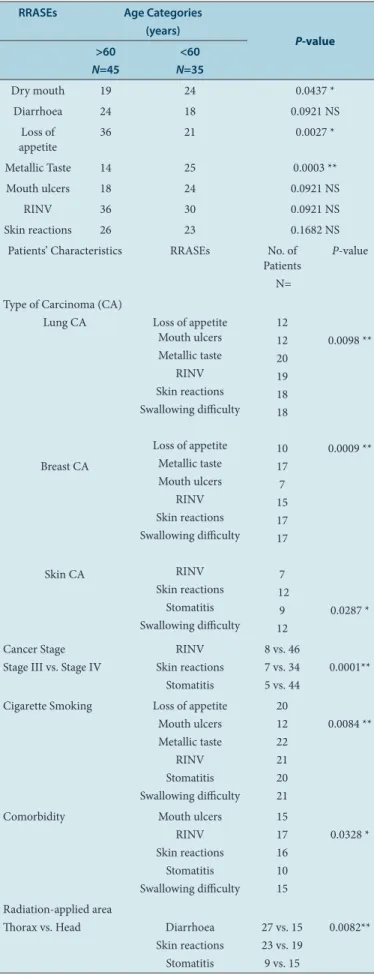
Table 2 shows whether there is a possible correlation between charac-teristics of the study population and the incidence of RRASEs. Patients greater than 60 years old demonstrated a significant higher incidence of dry mouth (P=0.0437), metallic taste (P=0.0003). Patients diagnosed with stage IV cancer were significantly suffering from RINV (n=46,
P=0.0001); skin reactions (n=37, P=0.0001) and stomatitis (n=44,
P=0.0001). It was found that cigarette smoker patients were also signifi-cantly at higher risk for developing different oral-related complications (P=0.0084), including both mouth ulcers and dry mouth (n=12), me-tallic taste (n=22); stomatitis (n=20), swallowing difficulties (n=21). In addition, patients suffering from comorbid conditions also experienced significant incidence of RRASEs (P=0.0328), Table 2.
Regarding the type of cancer involved, there was a significant correlation between the cancer type and the incidence of RRASEs particularly RINV, skin reactions and different oral complications, including lung cancer (P=0.0098), breast cancer (P=0.0009) and skin cancer (P=0.0287). For the radiation-applied area (Thorax vs. head), it was found that patients
Table 1: Demographic and Clinical Characteristics of Study Population.
Variable No. of Patients (n=80)
Percentage (%) Age (years), Mean ±SD
(Range) 58.4±14.8, 60 to 92 ---Gender
Males Females
55 25
68.8 31.2 Cigarette Smoking
Yes No
25 55
31.2 68.8 Comorbid Conditions
Yes No
20 60
25 75 Cancer Stage
Stage III Stage IV
13 67
16.2 83.8 Previous Chemotherapy
Yes No
42 38
52.2 47.5 Previous Radiotherapy
Yes No
3 77
3.8 96.2 Radiation-Applied Area
Thorax Head Pelvis Vertebra
36 25 15 4
45 31.2 18.8 5 Type of Carcinoma (CA)
Lung CA Breast CA Brain CA Skin CA Colorectal CA
Prostate CA Pelvis CA
28 17 12 12 4 4 3
35 21.2
15 15 5 5 3.8 Total number of RRASEs,
Mean ±SD Males incidence (n, %) Females incidence (n, %)
494, 6.175±2.88
303 (61.3) 191 (38.7)
---receiving radiotherapy applied to the thorax area was associated with significant incidence of diarrhoea and skin reactions (P=0.0082). Treatment of some of the detected RRASEs is presented in Table 3. It was found that 23.8% (P=0.0003) and 34.8% (P=0.0001) of the patients had a treatment for diarrhoea and for nausea and vomiting respectively. 20.3% (P=0.0001) of the patients were treated for loss of appetite. For radiotherapy-related oral complications including metallic taste, only 5% (P=0.0001) were subjected to receive treatment, while for stomatitis 58.1% (P=0.0423) of the patients were received appropriate treatment. For skin reactions 80.4% (P=0.0806) of the patients were recommend-ed treatment. Figure 2 also representrecommend-ed that not all patients complainrecommend-ed RRASEs were prone to treatment.
DISCUSSION
In cancer therapy, radiotherapy provides good clinical and therapeutic outcomes, however these beneficial results are associated with the in-cidence of many side effects and severe complications.6,15 The findings
of this study revealed the high incidence of RRASEs (Table 1). It is well known that the incidence of side effects including RRASEs could be re-lated to a number of factors, such as advance age of the patients, gen-der, presence of comorbid conditions, advanced cancer stage (III or IV), cancer type, dose of radiation applied, social habits, fatigue and psycho-logical aspects.16,17 Earlier studies were consistent with the findings of
our study which reported high and frequent acute complications from radiotherapy application that manifest during or after the completion of therapy.3 Vaz et al.4 found that the incidence of acute radiotherapy
toxicity was as high as 93.5% among gynaecological cancer patients un-dergoing pelvic radiotherapy. Andreyev J18 also reported that almost all
patients experience gastrointestinal toxic symptoms following pelvic or abdominal radiotherapy.
RINV was the first most common and troublesome acute side effect encountered (82.5%). It is postulated that radiotherapy particles causes activation of the central emetogenic centres in the brain, which leads to nausea and emesis.19 Results of this study are in agreement with Feyer
P et al.study.19 which found that 50% to 80% of cancer patients
under-going radiotherapy may show nausea and vomiting during and/or after treatment. The high incidence of RINV is multifactorial20 which might
be related to radiation treatment itself (Administered dose, applied area), patient-related factors, including gender (Males incidence 61.3%,
P=0.0001), age and health status, such as cigarette smoking (P=0.0084) and comorbidities (P=0.0328), psychological state, tumour stage (stage IV, P=0.0001) and cancer type (such as lung cancer, P=0.0098) as pre-sented in Table 2. Furthermore, these complications may cause interrup-tion of therapy, negatively affect patients’ healing and recovery process, Table 2: Stratification of RRASEs Incidence by the Patients
Demo-graphic and Clinical Characteristics.
RRASEs Age Categories (years)
P-value >60
N=45
<60 N=35
Dry mouth 19 24 0.0437 *
Diarrhoea 24 18 0.0921 NS
Loss of
appetite 36 21 0.0027 *
Metallic Taste 14 25 0.0003 **
Mouth ulcers 18 24 0.0921 NS
RINV 36 30 0.0921 NS
Skin reactions 26 23 0.1682 NS
Patients’ Characteristics RRASEs No. of Patients N=
P-value
Type of Carcinoma (CA) Lung CA
Breast CA
Skin CA
Loss of appetite Mouth ulcers Metallic taste
RINV Skin reactions Swallowing difficulty
Loss of appetite Metallic taste Mouth ulcers
RINV Skin reactions Swallowing difficulty
RINV Skin reactions
Stomatitis Swallowing difficulty
12 12 20 19 18 18
10 17 7 15 17 17
7 12
9 12
0.0098 **
0.0009 **
0.0287 *
Cancer Stage Stage III vs. Stage IV
RINV Skin reactions
Stomatitis
8 vs. 46 7 vs. 34 5 vs. 44
0.0001**
Cigarette Smoking Loss of appetite Mouth ulcers Metallic taste
RINV Stomatitis Swallowing difficulty
20 12 22 21 20 21
0.0084 **
Comorbidity Mouth ulcers
RINV Skin reactions
Stomatitis Swallowing difficulty
15 17 16 10 15
0.0328 *
Radiation-applied area
Thorax vs. Head Diarrhoea Skin reactions
Stomatitis
27 vs. 15 23 vs. 19 9 vs. 15
0.0082**
*(P<0.05), **(P<0.01), NS: Non-Significant.
Table 3: RRASEs Treatment Recommended for Part of the Study Popu-lation.
RRASEs Suffering Patients (Total=80)
N (%)
Treated Patients N, (%)
P-value
Diarrhoea 42 (52.5) 10 (23.8) 0.0003 ** Loss of appetite 59 (73.8) 12 (20.3) 0.0001 ** Metallic taste 40 (50) 2 (5) 0.0001 **
RINV 66 (82.5) 23 (34.8) 0.0001 **
response to treatment, sense of well-being, quality of life and increase the risk of infections. Therefore, early nutritional intervention is important to reduce dehydration, malnutrition, electrolyte imbalance, risk of infec-tions, treatment toxicities and enhanced overall survival.20,21
The second most common observed RRASEs was loss of appetite (73.8%). Radiotherapy frequently causes or exacerbates poor nutritional status among cancer patients that is related to the multiple experienced acute side effects encountered during this study, such as RINV, fatigue, diarrhoea and oral complications (Stomatitis, swallowing difficulties, mouth ulcers and metallic taste) alongside other related factors such as cancer type (Lung cancer, P= 0.0098; breast cancer, P=0.0009) (Table 2). Meanwhile, malnutrition has been found to negatively affect patients’ response to therapy and survival. It also associated with prolonged hos-pital stays, slower healing and recovery rates, increased complications and higher healthcare costs and mortality rates.22-24 A study by Guo Li et
al.25 reported that RRASEs had significant impact on weight loss during
radiotherapy. Another study by Odelli C. et al.26 found that early and
reg-ular nutrition assessment and intervention results in improved treatment tolerance for oesophageal cancer patients receiving chemoradiation. Radiotherapy-related oral complications were also among the most mon and significant acute side effects observed in this study. These com-plications were manifested as metallic taste, mouth ulcers, stomatitis and swallowing difficulties. These findings were consistent with previous lit-erature data which reported that radiotherapy-related oral complications are some of the most significant and unavoidable toxicities associated with cancer treatment27 and extensively reported that 90% to 100% of
cancer patients receiving radiation therapy are suffering from different oral complications.28 These debilitating complications could severely
af-fect mucosal surfaces for extended duration (3-12 weeks) than chemo-therapy-related oral complications (3-12 days) and furthermore, could occur more aggressively in relation to certain risk factors, including ad-vanced patient’s age (Greater than 60 years old), gender (Males incidence 61.3%, P=0.0001), genetic predisposition, oral hygiene, cigarette smok-ing (P=0.0084), alcohol drinking, presence of comorbidities (P=0.0328), radiotherapy applied area (thorax, P=0.0082) and rate and dose of radi-otherapy.29,30 as shown in Table 2. Eifel PJ et al.31 reported that the
influ-ence of serious radiotherapy complications was strongly correlated with certain patient-risk factors. Therefore, the reasons behind showing such correlation were to assess which patients’ groups were subjected more to RRASEs incidence and to determine the type of acute complications commonly observed among specific study population. This could pay more attention at those populations to aid implementation of proper CPSs and to adjust and intensify these services for those highly risk pa-tients.
Radiotherapy-related skin disorders are another common issue observed in this study with an incidence reaching 63.8%. Even with advances in technology and changes to therapeutic regimens to lessen the burden of radiotherapy-related skin reactions, they remain as significant
complica-tions with an incidence up to 90%.6,32 This can lead to premature inter-ruption of therapy and potentially negatively influence cancer patients’ control and cancer prognosis. Radiotherapy-related acute skin reactions observed in this study usually started within 1–4 weeks following thera-py and manifested as mild red rash, itchy and peel ing skin.
In this study, we observed that only a limited number of patients suffer-ing from these acute complications were subjected to receive treatment as shown in Table 3 and Figure 2. RINV were the most common RRASEs observed, however we found that only 23 (34.8%) out of 66 patients were treated. Only 10 patients (23.8%) out of 42 had a treatment for diarrhoea. 12 (20.3%) patients out of 59 were treated for loss of appetite. Regarding radiotherapy- related oral complications, only 2 (5%) out of 40 patients and 32 (58.1%) out of 55 patients were gotten a suitable treatment for metallic taste and stomatitis respectively. Furthermore, we observed a large number of RRASEs (494) among a small sample size number of study participants (n=80). In this regard, those patients require more ap-propriate and extensive follow-up and further instructions in order to reduce and manage these complications during radiotherapy schedules. In oncology setting, clinical pharmacists are crucial team members and are adequately qualified to provide drug-related and consultative inter-ventions. These interventions include patient education and counselling, boosting medication knowledge and side effects management. The inter-ventions helped the patients to learn the expected therapy-related com-plications that could occurred during subsequent treatment cycles.33,34
Additionally, patients have to get a full knowledge about any supportive care medications, the reasons they are being used and self-monitoring of therapy-related side effects (When to expect the occurrence of these complications and how to manage them effectively). The lack of this knowledge could lead to increased hospital admissions, increased mor-bidity and reduced patients’ quality of life.35-37 Hence, radiology
unit-based clinical pharmacist role is essential in reviewing treatment plan, evaluating, minimising and getting more follow- up of side effects and in detecting other Drug-Related Problems (DRPs) to improve patient-relat-ed health outcomes. Therefore, for better implementation of CPSs, it is important to enhance the awareness and recognition of other healthcare professionals about the clinical pharmacist concerns.
Strengths and limitations
and biases due to the retrospective nature of the study. Another limita-tion included a small sample size of participants as the recruitment in this study included only patients meeting the eligible inclusion criteria. Finally, limitations included also patients’ recruitment at the radiology unit of a single hospital and the researcher clinical pharmacist could not identify adherence for medications being recommended for patients which might limit the ability to detect improvements in some outcomes.
CONCLUSION
The results of this study pay more attention to help increase awareness about RRASEs and the pivotal role of the clinical pharmacist within the multidisciplinary team. During radiotherapy application, as patients experience many different acute side effects, the introduction of CPSs and radiology unit-based clinical pharmacist in collaboration with other healthcare professionals is considered elemental to meet the needs for better optimizing of treatment outcomes and improving patient satis-faction.
ACKNOWLEDGEMENT
The authors would like to express our gratitude to Dr. Atin AKSU and Dr. Athmar Dhahir for support and valuable suggestions during this study.
CONFLICT OF INTEREST
The authors declare no conflict of interest.
ABBREVIATIONS
CPSs: Clinical Pharmacy Services; RINV: Radiotherapy-Induced
Nau-sea and Vomiting; RRASEs: Radiotherapy-Related Acute Side Effects.
REFERENCES
1. Delaney G, Jacob S, Featherstone C, Barton M. The role of radiotherapy in can-cer treatment: Estimating optimal utilization from a review of evidence-based clinical guidelines. Cancer. 2005;104(6):1129-37.
2. Morris KA, Haboubi NY. Pelvic radiation therapy: Between delight and disaster. World J Gastrointest Surg. 2015;7(11):279-88.
3. Rosales AC, Esteves SC, Jorge J, Almeida OP, Lopes MA. Dental needs in Brazilian patients subjected to head and neck radiotherapy. Braz Dent J. 2009;20(1):74-7.
4. Vaz AF, Pinto-Neto AM, Conde DM, Costa-Paiva L, Morais SS, Esteves SB. Qual-ity of life and acute toxicQual-ity of radiotherapy in women with gynecologic cancer: a prospective longitudinal study. Arch Gynecol Obstet. 2008;278(3):215-23.
5. Tan LT, Russell S, Burgess L. Acute toxicity of chemoradiotherapy for cervical cancer: The Addenbrooke’s experience. Clin Oncol. 2004;16(4):255-60.
6. Maddock–Jennings W, Wilkinson JM, Shillington D. Novel approaches to radi-ation-induced skin reactions: A literature review. Complement Ther Clin Pract. 2005;11(4):224-31.
7. Grootheest KV, DeJong-Van BLD. Patients’ role in reporting adverse drug reac-tions. Expert Opin Drug Saf. 2004;3(4):363-8.
8. Liekweg A, Westfeld M, Jaehde U. From oncology pharmacy to pharmaceuti-cal care: New contribution to multidisciplinary cancer care. Support Care Can-cer. 2004;12(2):73-9.
9. Aranda S, Jefford M, Yates P, Gough K, Seymour J, Francis P, et al. Impact of a novel nurseled prechemotherapy education intervention (ChemoEd) on pa-tient distress, symptom burden and treatment-related information and support needs: results from arandomised, controlled trial. Ann Oncol. 2012;23(1):222-31.
10. Carelle N, Piotto E, Bellanger A, Germanaud J, Thuillier A, Khayat D. Chang-ing patient perceptions of the side effects of cancer chemotherapy. Cancer. 2002;95(1):155-63.
11. Kayl AE, Meyers CA. Side-effects of chemotherapy and quality of life in ovarian and breast cancer patients. Curr Opin Obstet Gynecol. 2006;18(1):24-8.
12. Cosentino M, Leoni O, Oria C, Michielotto D, Massimo E, Lecchini S, et al. Hos-pital-based survey of doctors’ attitudes to adverse drug reactions and percep-tion of drug-related risk for adverse reacpercep-tion occurrence. Pharmacoepidemiol Drug Saf. 1999;8(Suppl 1):S27-35.
13. Makowsky MJ, Koshman SL, Midodzi WK, Tsuyuki RT. Capturing outcomes
of clinical activities performed by a rounding pharmacist practicing in a team environment: The COLLABORATE study [NCT00351676]. Med Care. 2009;47(6):642-50.
14. Radiation Therapy Basics-American Cancer Society. How Radiation Therapy Can Affect Different Parts of the Body. [Updated 2014 December 10; cited 2016 No-vember 20]. Available from https://www.cancer.org/treatment/treatments-and-side-effects/treatment-types/radiation/effects-on-different-parts-of-body.html.
15. Berkey FJ. Managing the Adverse Effects of Radiation Therapy. Am Fam Physi-cian. 2010;82(4):381-8.
16. Feyer PCH, Maranzano E, Molassiotis A, Clark-Snow RA, Roila F , Warr D, et al.
Radiotherapy-induced nausea and vomiting (RINV): antiemetic guidelines. Sup-port Care Cancer. 2005;13(2):122-8.
17. Nicolini A, Ferrari P, Masoni MC, Fini M, Pagani S, Giampietro O, et al. Malnutri-tion, anorexia and cachexia in cancer patients: A mini-review on pathogenesis and treatment. Biomed Pharmacother. 2013;67(8):807-17.
18. Andreyev J. Gastrointestinal symptoms after pelvic radiotherapy: A new un-derstanding to improve management of symptomatic patients. Lancet On-col. 2007;8(11):1007-17.
19. Feyer P, Jahn F, Jordan K. Radiation induced nausea and vomiting. Eur J Phar-macol. 2014;722:165-71.
20. Horiot JC, Aapro M. Treatment implications for radiation-induced nausea and vomiting in specific patient groups. Eur J Cancer. 2004;40(7):979-87.
21. Hill A, Kiss N, Hodgson B, Crowe TC, Walsh AD. Associations between nutri-tional status, weight loss, radiotherapy treatment toxicity and treatment out-comes in gastrointestinal cancer patients. Clin Nutr. 2011;30(1):92-8.
22. Dewys WD, Begg C, Lavin P, Band PR, Bennett JM, Bertino JR, et al. Prognos-tic effect of weight loss prior to chemotherapy in cancer patients. Am J Med. 1980;69(4):491-7.
23. Robinson G, Goldstein M, Levine G. Impact of nutritional Status on DRG length of stay. J Parenter Enteral Nutr. 1987;11(1):49-51.
24. Ottery FD. Supportive nutrition to prevent cachexia and improve quality of life. Semin Oncol. 1995;22:98-111.
25. Li G, Jiang X, Qiu B, Shen LJ, Chen C, Xia YF. Vicious circle of acute radiation tox-icities and weight loss predicts poor prognosis for nasopharyngeal carcinoma patients receiving intensity modulated radiotherapy. J Cancer. 2017;8(5):832-8.
26. Odelli C, Burgess D, Bateman L, Hughes A, Ackland S, Gillies J, et al. Nutrition Support Improves Patient Outcomes, Treatment Tolerance and Admission Char-acteristics in Oesophageal Cancer. Clin Oncol. 2005;17(8):639-45.
27. Epstein JB, Thariat J, Bensadoun RJ, Barasch A, Murphy BA, Kolnick L, et al.
Oral complications of cancer and cancer therapy: from cancer treatment to sur-vivorship. CA Cancer J Clin. 2012;62(6):400-22.
28. Herrstedt J. Prevention and management of mucositis in patients with can-cer. Int J Antimicrob Agents. 2000;16(2):161-3.
29. Sonis ST, Elting LS, Keefe D, Peterson DE, Schubert M, Hauer-Jensen M, et al.
Perspectives on cancer therapy induced mucosal injury: Pathogenesis, meas-urement, epidemiology and consequences for patients. Cancer. 2004;100(9 suppl):1995-2025.
30. Rosenthal DI, Trotti A. Strategies for Managing Radiation-Induced Mucositis in Head and Neck Cancer. Semin Radiat Oncol. 2009;19(1):29-34.
31. Eifel PJ, Jhingran A, Bodurka DC, Levenback C, Thames H. Correlation of smok-ing history and other patient characteristics with major complications of pelvic radiation therapy for cervical cancer. J Clin Oncol. 2002;20(17):3651-7.
32. Salvo N, Barnes E, Draanen JV, Stacey E, Mitera G, Breen D, et al. Prophylaxis and management of acute radiation-induced skin reactions: A systematic re-view of the literature. Curr Oncol. 2010;17(4):94-112.
33. Traeger L, Greer JA, Fernandez-Robles C, Temel JS, Pirl WF. Evidence-based treatment of anxiety in patients with cancer. J Clin Oncol. 2012;30(11):1197-205.
34. Al-taie A, Köseoğlu A. Incidence of Early Related–Complications of Port-A Cath-eter and Impact of Clinical Pharmacist Participation and Counselling Outcomes. J Young Pharm. 2018;10(2):218-21.
35. Thao KH, James AT. Assessment of Patients’ Knowledge and Manage-ment of Chemotherapy Related Adverse Effects. J Hematol Oncol Pharm. 2014;4(4):122-7.
36. Izzettin FV, Al-taie A, Sancar M, Aliustaoğlu M. Influence of Pharmacist Recom-mendations for Chemotherapy-Related Problems in Diabetic Cancer Patients. Marmara Pharmaceutical Journal. 2017;21(3):603-11.
37. Krzyzanowska MK, Treacy J, Maloney B, Lavino A, Jacobson JO. Development of a patient registry to evaluate hospital admissions related to chemotherapy toxicity in a community cancer center. J Oncol Pract. 2005;1(1):15-9.
Article History: Submission Date : 05-12-2018; Revised Date : 19-01-2019; Acceptance Date : 26-02-2019.