A Policy Analysis of
Cervical Cancer Prevention in Honduras
By Jessica E. Morse
A Maser's Paper submitted to tbe faculty of the University ofNorth Carolina at Chapel Hill in partial fulfilhnent ofthe requirements
for the degree of Master of Public Health in the Public Health Leadership Program.
Chapel Hill
Abstract: In most developed cOLmtries, prevention programs using Pap screening have resulted in impressive decreases in cervical cancer morbidity aud mortality over the past 50 years. However, in the developing world, it is quite a different story. In these
countries, where over 80% of cases occur, cervical cancer is the leading cause of cancer death among women (Pisani, Parkin and Ferlay 1999). Globally, cervical caucer has been estimated to account for 2.1% of deaths among women aged 25-64, but in Latin America it accounts for 3.8% of these deaths (Parkin, Bray aud Ferlay 2001). Because women in these age groups are fundamental to the fabric oflife, not just within families but within economies aud societies at large, the toll of this disease is significant. The reasons for this disproportionate burden throughout Latin America are not yet completely understood but are thought to be due in part to the high prevalence of human papilloma virus (HPV) and au inadequate health infrastructure to deal with incident cases (Eluf-Neto and Nascimento 2001). I suggest that this burden is also due to the inadequacies of current prevention programs.
This is au ideal time to reconsider cervical cancer prevention in the developing world. We now have a clear understanding of cervical cancer as a rare but possibly fatal complication of a sexually transmitted disease. After several decades of research, we know that HPV is a necessary but not sufficient cause of cervical cancer (W alboomers, Jacobs and Mauos 1999). New methods for detecting infection with HPV, as well as new techniques for detecting cervical dysplasia, provide a unique opportunity to re-examine our efforts to decrease suffering from this preventable illness, especially in the
developing world. Aside from medical advances, international collaboratives such as the Alliance for Cervical Cancer Prevention ( ACCP) are directing fimding, research, and model programs toward preventing cervical cancer, particularly in the developing world. We need to evaluate the potential effects of this confluence of new technology,
knowledge, and interest among international donors on this important women's health ISSUe.
In this paper, I analyze the most effective way to approach cervical caucer prevention in Honduras. Honduras has a twenty year history of a national, Pap-based prevention program yet still suffers from mortality rates approximately five times higher than those in the United States. In an effort to re-consider these efforts, I examine three different cervical cancer prevention policies: the government's current Pap-based approach; a see-and-treat approach (visual inspection with acetic acid followed by cryotherapy as
necessary); aud HPV vaccines. Using the medical and health systems literature, field notes, aud key informant interviews, I evaluate each of these strategies along the
Introduction
As with antibiotics and childhood immunizations, the Papanicolau (Pap) smear is considered to be one of the major public health successes of the last century. Used as a tool to screen for cervical cancer, the Pap smear has been an integral part of effective cervical cancer prevention programs. In most developed countries, prevention programs using Pap screening have resulted in impressive decreases in cervical cancer morbidity and mortality over the past 50 years. However, in the developing world, it is quite a different story.
Cervical cancer causes a disproportionately high degree of morbidity and
mortality in the developing world. World-wide, cervical cancer is the second most frequent cancer and the fifth most frequent cause of death from cancer among women (Yang, Bray and Parkin 2004). In the developing world, where over 80% of cases occur, cervical cancer is the leading cause of cancer death among women (Pisani, Parkin and Ferlay 1999). Globally, cervical cancer has been estimated to account for 2.1% of deaths among women aged 25-64, but in Latin America it accounts for 3.8% ofthese deaths (Parkin, Bray and Ferlay 2001). Because women in these age groups are fundamental to the fabric of life, not just within families but within economies and societies at large, the toll ofthis disease is significant. The reasons for this disproportionate burden throughout Latin
America are not yet completely understood but are thought to be due in part to the
high prevalence ofhmnan papilloma virus (HPV) and an inadequate health
infrastructure to deal with incident cases (Eluf-Neto and Nascimento 2001). I
suggest that this burden is also due to the inadequacies of current prevention
programs.
For the past three years I have worked with a team of medical students and faculty
to develop a reproductive health education and prevention program for rural
Honduran women. The impetus for this annual month-long service project is
Honduran women's expressed fears of cervical cancer as well as the widely held
misunderstanding that contraception is causing cervical cancer. These women's
fears, although not fully informed, are legitimate. In Honduras, cervical cancer
mortality rates are almost quadruple what they are here in the United States. Thus,
despite over a decade of Pap-based prevention programs, the impact of cervical
cancer in Honduras is still large, and it disproportionately affects poorer and less
educated women (Ferrera, Velema and Figueroa 2000).
The toll exacted by cervical cancer makes this is an ideal time to reconsider
cervical cancer prevention in the developing world. We now have a clear
understanding of cervical cancer as a rare but possibly fatal complication of a
sexually transmitted disease. After several decades of research, we know that
HPV is a necessary but not sufficient cause of cervical cancer (Walboomers,
as new techniques for detecting cervical dysplasia, provide a unique opportLmity to re-examine our efforts to decrease suffering from this preventable illness, especially in the developing world. Aside from medical advances, international collaboratives such as the Alliance for Cervical Cancer Prevention (ACCP) are directing funding, research, and model programs toward preventing cervical cancer, particularly in the developing world. We need to evaluate the potential effects of this confluence of new technology, knowledge, and interest among international donors on this important women's health issue.
In Honduras, which is the locale of our intervention as well as the focus of this paper, specific changes in the health care sector also make this an ideal time for reconsidering cervical cancer prevention efforts. Despite severe economic constraints, the current administration has voiced a commitment to health sector reform (The Economist Intelligence Unit 2004) and international donor agencies are responding. In February ofthis year, the World Bank approved a $25 million credit to assist development of the financial sector and to promote long-term economic growth and poverty reduction (World Bank 2005). This level of commitment implies faith in the current and future economic and political stability of the country. As Honduras moves through the demographic transition already experienced in many Latin American countries, development efforts including family planning programs will continue to spread to rural areas and women will continue to have questions and concerns about their reproductive health.
Currently, the Honduran Ministry of Health recommends screening Pap smears for sexually active women aged 30 to 59. Adherence rates to this policy are relatively high, with approximately 60% of women reporting having had a Pap smear in the past year (Secretaria de Salud 2002). However, after this screening test, many women, especially in rural areas, never get their results. Even when they do, their lack of knowledge often limits a clear understanding of the meaning of test results. Moreover, the financial and time investments required for follow-up care put it beyond the means of many women (Morse and Saleeby 2003). Thus, current cervical cancer screening and prevention programs in Honduras are not associated with significant decreases in morbidity and mortality rates.
The World Health Organization advocates two major components of successful early cancer detection: education and screening (WHO 2004). The educational components of a prevention program can be instrumental not only by encouraging screening, but also by contributing to behavior change processes that lead to decreased risk. In much of Latin America, this educational process is often spearheaded by lay health advisors (LHAs), community members with additional training who serve as health resources in traditionally underserved areas.
Although much research is being done on this fundamental part of a
comprehensive prevention program, analysis of the effectiveness ofthese LHA health education programs is outside of the scope of this work1 This paper will
1
instead focus more specifically on which screening modalities are most effective for cervical cancer prevention programs in Honduras. Some of these modalities, specifically visual inspection with acetic acid (VIA) and vaccines, can make use ofLHA's basic health training and status in the community to facilitate
widespread implementation of prevention programs.
Within this context, the aim of this paper is to make recommendations about effective cervical cancer screening policies in Honduras. I will analyze one primary prevention approach and two secondary prevention approaches: (1) the government's current policy regarding the use of Pap smears; (2) the use of VIA, also known as a "see and treat" method; and (3) primary prevention via an HPV
vaccme. I will use the following criteria- efficacy, effectiveness, cost- L effectiveness, equity, acceptability and feasibility- to evaluate each of these
policies. Based on this analysis, I make recommendations for implementation of cervical cancer prevention policies appropriate to Honduras. The following pages offer evidence and support for the need to re-consider the current Pap-based prevention program in Honduras and recommend a shift to VIA with immediate treatment by cryotherapy as a more effective and equitable strategy to reduce the impact of cervical cancer.
Background
Natural History of Cervical Cancer
Cervical cancer is a progressive neoplastic syndrome of the cells of the cervix.
Although most invasive cancer arises from squamous cells, about 20% of cervical
cancer, known as adenocarinoma, is associated with dysplastic glandular cells
(Waggoner 2003). Over a period of years, cervical cells, either squamous or
glandular, can develop changes resulting in precancerous or cancerous forms. The
progression can range from cervical intraepithelial neoplasia (CIN) to squamous
intraepitheliallesions (SIL) to carcinoma in situ and eventually to invasive cancer.
Dysplastic changes may begin early in life, but the pre-invasive period is quite
long, lasting decades. Hence, most women who are affected do not develop
cancer until their late forties or fifties. During this pre-invasive period, the risk of
metastasis is low, and appropriate treatment can be curative, making cervical
cancer well suited for screening.
Treatment is based on the depth and extent of spread of lesions. For pre-invasive
lesions, treatment can be performed on an outpatient basis using ablative or
excisional procedures. Cryotherapy, the most common ablative procedure,
involves spraying compressed carbon dioxide (C02) or nitrous oxide (N02) on to
the diseased part of the cervix to kill the pre-cancerous cells. The procedure poses
very few risks and requires only minimal medical follow-up. In general, it is
minimally invasive, low-tech and very effective, even relative to more invasive
for histologic confirmation of the diagnosis. Loop electrosurgical excision
procedure (LEEP), the most common excisional treatment, involves the physical
removal of abnormal cells with an electrosurgical wire loop. It is also very
low-risk but requires a more skilled provider and is usually done with colposcopic
guidance. Both of these treatments have proven to be very effective in the
treatment of CIN (Martin-Hirsch, Paraskevaidis and Kitchener 2004; Zasislak,
Price, and McClelland 2003). For invasive cancers, major procedures such as
radical hysterectomy, sometimes accompanied by chemotherapy or radiation
therapy, are necessary. Without treatment, the cancer can metastasize to distant
sites and result in death.
Morbidity from cervical cancer can include minor symptoms such as postcoital
bleeding and pelvic pain. However, for non-metastatic cases, most of the
morbidity stems directly from the treatment. Although most women with invasive
cancer are past their childbearing years, infertility from surgery, radiation
treatment, or chemotherapy is one of the major morbidities. Additionally,
chemotherapy can result in significant nausea and vomiting, as well as hair loss
and immunosuppression. Radiation treatment, although localized, can lead to
burning and scarring of nearby tissues. Many women also experience significant
psychological morbidity, whether from the cancer itself, or from fear of pain,
infertility, or death.
Over the last decade, the pathophysiology of cervical cancer, and the link to HPV,
has become better understood. Human papilloma virus, thought to be the most
widespread as well as the oldest sexually transmitted infection in humans (Tjalma,
Arbyn and Paavonen 2004; Lehitnen and Paavonen 2003), is now known to be
central to the development of cervical neoplasia (Walboomers, Jacobs and Manos
1999). HPV infection alone is not enough for development of cervical cancer; it is
thought to be a necessary but not sufficient cause. Many HPV infections,
especially in young women, are transitory and regress spontaneously without ever
resulting in any cervical cell changes. When infections are persistent, they can
lead to dysplastic changes. Over 99% of cervical cancers and their precursor
lesions (CIN) contain HPV DNA (Schreckenverger and Kaufmann 2004).
Although over I 00 strains ofHPV are thought to exist, only some appear to be
oncogenic. Eighty percent of cervical cancers are associated with four high risk
HPV types, types 16, 18,31 and 35. Type 16 alone is thought to be present in
approximately 50% of cancers (Schreckenverger and Kaufmann 2004).
In Honduras, the association between HPV infection and the subsequent
development of cervical cancer is not tmiversally recognized by providers
throughout the country (Morse and Saleeby 2003). This is despite the well
documented high prevalence ofHPV and cervical cancer there. In a recent
case-control study published by Ferrera, Velema and Figueroa (1999), HPV was found
to be highly prevalent (39%) even in their control sample. Data from Honduras
most commonly associated with invasive cancer cases, although the rate (42%) is somewhat lower than in other Latin American countries. Although Honduran rates of cancer associated with HPV 18 (1 0%) are comparable to that of other Latin American countries, rates ofHPV 58 (6.5%) associated with invasive cervical cancer are almost double that typically found in other parts of Central and South America. These minor differences could be significant ifHPV vaccines become a central component of cervical cancer prevention policies (see pp 34 ff).
Differences in HPV infection rates vary somewhat across the globe, although not as much as do differences in morbidity and mortality. World-wide, cervical cancer is the second most frequent cancer as well as the second highest cause of cancer-related morbidity and mortality among women (Yangh, Bray and Parkin 2004; Parkin, Pisani and Ferlay 1999). This burden disproportionately affects the developing world, where more than 80% of cases occur. ln the year 2000, the World Health Organization (WHO) estimated that there were 471,000 new cases of cervical cancer diagnosed and 233,000 deaths worldwide (Parkin, Bray and Ferlay 2001). Approximately 92,136 of those cases and 37,640 of those deaths were in Latin America and the Caribbean (Lewis 2000). As I noted at the outset, cervical cancer is responsible for a higher proportion of deaths in 25-64 year old women in this region than anywhere else in the world.
Honduras appears to share a large part of this burden. Based on national cancer registry data, cervical cancer is the most common malignancy and accounts for
40% of the cancer cases that need follow-up care and 50% of the cancers in women (Ministerio de Salud 2004). In the year 2000, the Pan-American Health Organization (P AHO) reported an age adjusted incidence and mortality rate in Honduras of39.6 cases per 100,000 women and 16.8 deaths per 100,000 women respectively (P AHO 2000). In an update on their cervical cancer prevention program in 2003, the Honduran Ministry of Health reported an incidence rate of 40 cases per 100,000 women and a mortality rate of 40 deaths per 100,000 women (Ministerio de Salud 2003). Although this discrepancy in mortality figures likely reflects data collection differences, both are strikingly large compared to data from the United States, which in 2000 experienced an age-adjusted incidence rate of only 9.3 cases per 100,000 women and a mortality rate of2.9 deaths per 100,000 women (J emal, Murray and Ward 2005). Unlike in the US, cervical
i
l cancer is the most common neoplasia among women in Honduras (Ferrera,Velema and Figueroa 1999) and in 1989-90 accounted for 4.9% of all deaths among women of childbearing age (PAHO 2001).
is the leading component ofYLL (Eluf-Neto and Nascimento 2001). The WHO quantifies the burden of suffering in Latin America, reporting that cervical cancer now accounts for a loss of 471,000 daily adjusted life years (Lewis 2000). Exactly how much of this burden falls on Honduras has not been explicitly reported.
Risk Factors
Risk factors for cervical cancer are numerous and well-documented. Although women are usually over 35 when they are diagnosed, the disease is thought to begin much earlier, so risk factors early in life can influence development of cancer (Ferrera, Velema and Figueroa 1999). Universally agreed upon risk factors include HPV infection, having multiple sexual partners (or a partner who has multiple partners), early age at first intercourse, a history of sexually transmitted diseases, immunosuppression, low socioeconomic status, low educational status, and smoking. Recent research in Honduras suggests that exposure to smoke from wood burning stoves in the kitchen is also a risk factor for invasive cervical cancer, independent of other factors such as education, parity and number of sexual partners (Velema, Ferrera and Figueroa 2002). In the 2001 National Epidemiology and Family Health Survey, 55.9% of homes (25.4% of urban homes and 84.7% of rural homes) reported burning wood for cooking (Secretaria de Salud 2002).
In a recent study examining risk factors for cervical cancer mortality in Mexico, Palacio-Mejia, Rangel-Gomez and Hem:'mdez-Avila (2003) found that
The Honduran Context
A basic understanding ofthe socio-demographic, economic, political and health care system dynamics that shape life in Honduras is essential to making sound policy recommendations. To that end, I will briefly describe the demographic factors relevant to cervical cancer prevention. I will also describe the Honduran health care system, as well as recent reform efforts that may open the door for policy change regarding cervical cancer prevention.
The predominant social force of day-to-day life in Honduras is poverty. Despite a fairly stable political history relative to many of its Latin American neighbors, Honduras remains a poor country. In 200 I, per capita income in Honduras was $870.35, significantly lower than the average of$6,728 in the rest of Latin America (PAHO 2001). In relative tenns, this means that 66% of households fall below the poverty line, and 49% of these fall below the indigent line. Perhaps even more striking, especially in light of recent national efforts to combat poverty, is the increasingly tmeven distribution of resources. In 2001, the poorest 20% of the population received 4.3% of the income while the richest 20% received 59.3% (P AHO 2001 ). In 2004, Honduras ranked 115'h out of 177 countries on the
Human Development Index2, with an overall score of0.672 and a gender-related
)
- The UN Human Development Index was developed in 1990 and is reported annually by the UN since 1993. The Index measures, among other things, povetiy, literacy, life expectancy and GDP per capita. It is considered to be a good indicator of both social and economic development. The gender -related development index uses the same variables but adjusts for gender inequalities in several key aspects of human development: life expectancy, literacy, gross school enrollment, and mcorne.
development index of only 0.662 (United Nations 2004). This low score reflects, in part, the adult literacy rate of 16.8% overall: 8.9% in urban areas and 23.3% in rural areas. Average schooling for adults is 4.3 years, with women generally being less educated than men (Bur lone 2003). Living conditions reflect these poverty levels, with 38% of rural women living in homes with open air latrines and 85% of them using wood fires in the horne for cooking (Secretaria de Salud 2002).
These and other factors associated with poverty make the delivery of
comprehensive preventive health services difficult. The rurality of Honduras is a particularly important variable. Fifty-six percent of the population lives in rural areas. Poverty tends to be concentrated in these areas, although marginalized zones in the two major urban areas are also growing. Despite a decrease in total fertility and crude birth rate over the past decade, the population is still growing and 53% of the population is under the age of 19, posing a major demand on the health care system in the years to come as they age and require more services.
partners (Linthicwn 2004). My experience in Southern Honduras reveals that most migrating men leave families in rural areas but return home to them. Thus, human movement and changes in sexual behaviors may increasingly affect the spread of HIV, HPV, and the incidence of cervical cancer.
These challenges confront a health sector that is predominantly driven by the Ministry of Health (MoH). The MoH assumes all regulatory responsibility and is also the main, public provider of care. Operating hospital and ambulatory care networks that are linked together by a very weak referral system, the MoH provides care to just over half of the population (P AHO 2001; Omaha, Melendez and Uehara 1998). The Instituto Hondurefio de Seguridad Social (Honduran Social Security Institute, or IHSS) serves much the same role as does Medicare and covers about 10% of the population. Although the private health sector is growing, it covers only about 10-15% of the population, mainly through for-profit clinics and hospitals and a small insurance market. Some non-governmental organizations (NGO) or church-sponsored non-profit providers exist, but they represent only a small fraction of health care services. Unlike the public sector, the private sector devotes few resources to public health activities.
This analysis will focus primarily on the MoH, not only because it is the main public provider of care, but also because it is engaged in the function of health promotion, health protection, and health recovery. Moreover, along with the Ministry ofthe Presidency, the MoH, through its Management, Planning and
Evaluation Unit, is tasked with planning and developing national health policy. Although the main source of financing for this system is taxes, as recently as 1999, foreign fimds contributed 37% of the monies spent in the public health sector (The Economist Intelligence Unit 2004). Data on health care expenditures per capita vary widely depending on the source. Figures range from $49 per capita in 2001 to $165 per capita in 2004, putting it below all of its neighbors except Nicaragua (The Economist Intelligence Unit 2004). Regardless of the exact figure, resources are limited to fund the changes that need to be made to create a more effective, accessible system.
Changes to the health care system, as well as general social and economic development, remain on the political agenda, at least in rhetoric. Health sector reform was espoused in 1990, but no official policies were developed or
implemented during state modernization efforts at that time. In 1999, as part of post-Hurricane Mitch reconstruction efforts, the government established "1999-2001 Policy Guidelines" to meet population concerns about equity, quality, solidarity and citizen participation in the use and delivery of health care. Since that time, the MoH has created the Technical Council on Management and Institutional Development. Although it is responsible for developing an
general health statistics), human and technical resources, and quality and licensing standards.
Each of these problem areas is significant to a consideration of implementing a cervical cancer prevention program. Access to care, especially screening services, is of great concern, especially for poor, rural women or women living in
marginalized urban areas. In the communities where I have worked, most of the women must travel by foot, or first by foot and then by bus, to reach a health outpost, which is typically staffed by a nurse or a community health worker. To get a Pap smear, most women in these communities go to the closest outpost or wait until a Cuban doctor, who does outreach to rural communities, is in town. Once at the health post, if more advanced care is needed, they take a bus for over an hour to reach a city with fully-staffed clinics and a hospital. The links between these different levels in the health care system are weak, at best, resulting in less than ideal referral processes. These experiences seem fairly typical for the majority of the population that lives in rural areas.
The lack of good data collection efforts exacerbates the challenges posed by physical distances, and makes the referral process much more cumbersome. Electronic data collection is not feasible because of cost constraints and the undependable electricity supply in many ofthe rural outposts. Thus, recordkeeping, at least in the non-urban centros (health care centers/rural outposts) is completely paper-based. A recent report by P AHO suggests
significant underreporting of deaths (47%), as well as problems in indicating the exact cause of death (P AHO 2001 ). Despite the initiation of a national cancer registry at the main hospital in the capital city of Tegucigalpa, we probably do not know the full impact of cervical cancer morbidity and mortality.
The two other main weaknesses affecting cervical cancer prevention programs are a general lack of health care infrastructure, both human and physical, and a lack oflicensing guidelines and quality standards throughout the health care system. Despite recent increases in the physician and nursing workforce, the human capital in the public sector is still quite limited. In 1999, Honduras had 8.7 physicians per 10,000 people, 3.2 nurses, and 0.6 mid-level laboratory technicians. Consideration of these workforce limitations is fundamental to establishing a more effective cervical cancer prevention policy. Associated with these workforce limitations are physical limitations, such as 2.03 clinical
laboratories per 100,000 inhabitants. For a screening program based on cytology or HPV DNA testing, this lack of adequate lab resources is a significant barrier to prompt processing of tests. Delays in return of results raise serious concerns about loss to follow-up. Although I have not been able to locate data specific to
Honduras about loss to follow-up, Gage, Ferreccio and Gonzales (2003) suggest that in developing countries, the percentage can be as high as 80%. My
labs and other facilities poses major challenges to effective screening and prevention.
Despite what may seem to be a fragile system, there are numerous successes as well as initiatives for reform that make this an ideal time to be re-assessing cervical cancer prevention efforts. One of the most recent successes has been a significant decrease in maternal mortality. From 1990-1997, Honduras' maternal mortality rate fell 40%, from 182 per 100,000 live births to 108 per 100,000 live births (Shiffman, Stanton and Salazar 2004). This precipitous reduction, the largest ever documented in such a short period of time in the developing world, is
.
thought to be due, in part, to the cooperative relationships that developed between
r
international donors and national health officials. This bodes well for openness to improving other parts of women's health, including cervical cancer prevention, especially considering the significant interest of several international agencies (Pan American Health Organization (P AHO), the Alliance for Cervical Cancer Prevention (ACCP)) as well as donors (Bill & Melinda Gates Foundation, the World Bank) in addressing this global problem through new technologies adapted to the developing world.
A second recent victory is the decrease in measles, with no reported cases for the years 1997-1999. This accomplishment illustrates the ability of the MoH to implement and sustain a comprehensive and effective national immunization program. This success also suggests that, ifHPV vaccines are a reasonable option
for cervical cancer prevention in Honduras, there are replicable model programs. The third promising trend is a recent examination by the MoH ofPAHO's 11 essential public health functions, which coincided with an increase in spending on health promotion and preventive care. Thus, the success of effective models as well as internal and external policy agendas make this an ideal time to re-examine and improve Honduras' cervical cancer prevention strategies.
The Key Players
Although the MoH and other Honduran institutions are clearly the key institutions in determining any changes to Honduras' national prevention efforts, two
international agencies merit mention because oftheir significant influence in international cervical cancer prevention efforts, especially in the developing world.
The Alliance for Cervical Cancer Prevention
Started in 1999 with funding from the Bill & Melinda Gates Foundation, ACCP is a consortium of five international agencies that are working together to invigorate a global campaign to prevent cervical cancer. The Alliance coordinates research and program implementation efforts to help develop effective strategies for
The Pan-American Health Organization
P AHO serves as the regional office of the World Health Organization (WHO) for all of the Americas and falls under the rubric of the United Nations. As a public health agency with over 100 years of efforts to improve the public health and living standards throughout the Americas, P AHO serves a vital role in granting monetary and technical assistance, setting health policy standards and guidelines, and collecting data and conducting research to meet the specific public health needs of the countries in the Americas. These services often provide crucial resources for countries with limited means. At least in the United States, P AHO's affiliation with the UN and its status as an international, non-partisan agency, lends credibility and legitimacy to their data and program and policy guidelines,
which are thought of as non-biased or neutral.
i-The Current Policy
The current cervical cancer prevention program in Honduras was developed in 1991 as part of the National Program for Cancer Control. The program is specifically targeted at women aged 30 to 59, but the MoH recommends that all women get Pap smears every three years after the onset of sexual activity. The program is focused around decentralized sample collection with centralized processing at one of three regional labs. In May, 2002, the MoH carried out a major re-examination of the state of cervical cancer in Honduras, as well as an evaluation of the program's major successes and failures as part of a two-year "Strengthening Project". The report generated from this investigation, which received 65% of its funding from international donors, found three major
problems contributing to the high incidence of cervical cancer: (1) a low demand for cytology services; (2) a poorly linked network of health services; and (3) a lack of compliance with the "Manual of Norms and Procedures for the Prevention and Control of Cervical Cancer"3 This combination of shortcomings was reported to be responsible for the high morbidity and mortality from cervical cancer, as well as the major economic and social investments required to care for patients who present in the advanced stages of cancer.
The MoH used these findings to set out three specific objectives for the
"Strengthening Program" to improve cervical cancer prevention: (1) increase Pap screening rates and coverage areas; (2) improve the linkages between health services; and (3) apply the recommendations laid out in the "Manual." Ancillary activities to help meet these objectives include a bilateral educational campaign targeted at women and health care providers. The general education for women is focused on risk factors and the importance of Pap smears. For health care
providers, the focus is the guidelines detailed by the Manual, with an emphasis on the quality of samples, interpretation of results, and the provision of appropriate referrals. Provider training spans across care levels, from nurses to gynecologists, and across the health sector, including providers from both public and private facilities.
3
At a PAHO meeting in February, 2003, representatives from the MoH reported that the "Strengthening Project" has made several improvements toward meeting these goals. In the area of increasing Pap screening rates and coverage, several day training sessions were held for providers to increase their prevention
knowledge and skills. In the area of improving linkages between the network of health care services available, significant improvements were reported but not detailed. Of note, the average time for return of Pap results dropped from three months to 30 days after the "Strengthening Project's" introduction. Although there are still exceptions, this change is significant.
Screening Methods
Pap Smears
Results from a Pap smear, which can take anywhere from days to weeks, depending on the laboratory, serve only as a screening tool. They are not diagnostic but instead offer guidance about further examination. Results are reported by the level of cellular change noted. In 2001, a new reporting system, based on the degree of cellular change, or atypia, was adopted to allow for standardization between labs and clinicians. The new categorizations, designated the Bethesda System, characterize results as ASCUS (atypical squamous cells of undetermined significance), LSIL (low-grade squamous intraepitheliallesion) or HSIL (high-grade squamous intraepitheliallesion). Depending on the results, follow-up testing may include nothing other than continuing to get Paps at the recommended interval, repeating the Pap, colposcopy, or colposcopy with a biopsy. A colposcope allows a clinician to get a magnified view of cervical tissue and facilitates collecting a sample for biopsy.
launch of a national screening program. They suggest that 80% of projected cervical cancer deaths have been prevented in the United Kingdom due to the screening program. Although there are significant limitations to their
methodology, an effect even half as large as was found is fairly impressive. In spite ofthis evidence, which has been supported in numerous developed countries with comprehensive screening programs, it is still prudent to question the efficacy of cytology as a screening tool, especially in the developing world.
The accuracy of a Pap's detection of precancerous lesions is not established, and reported results vary. Published papers report divergent numbers for both
sensitivity and specificity. The most recent review, published by Nanda, McCrory and Myers in 2000, compared 94 studies that used Pap testing with a reference standard (histology, colposcopy or cytology). In the 12 least biased studies reviewed, sensitivity ranged from 30-87% and specificity ranged from 86-100%. These figures are fairly consistent with the munbers reported by Fahey, Irwig and Macaskill in a review conducted in 1995. As, Nanda, McCrory and Myers point out, two major weakness in many Pap accuracy studies include selection bias and verification bias. Often, accuracy is assessed in a high prevalence group, such as women presenting to clinic for colposcopy after an abnormal Pap. Moreover, many studies verify only positive results with the gold standard. Both of these biases can make Paps appear more accurate than they are. The authors caution policy makers to use the low end of reported accuracy ranges, especially when conducting cost-effectiveness analyses.
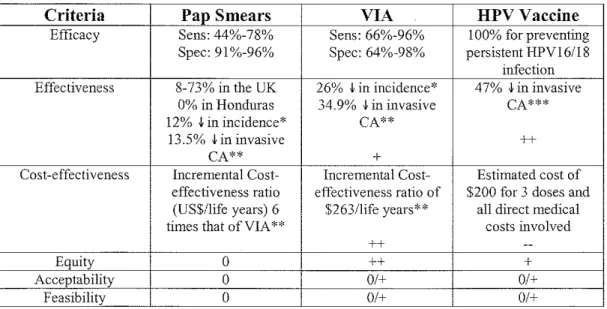
The need for caution in applying these results to health policy decisions is especially true in the developing world. Although the two reviews described above are currently our best information, they rely on studies done in developed countries where greater access to resources often results in better accuracy due to better training of providers, better maintenance of laboratory equipment, and improved data collection. A recent assessment of cytology accuracy in developing countries based on six cross-sectional studies fouud that sensitivity ranged from 44% to 78% and specificity ranged from 91% to 96% (Sankaranaryanan, Gaffikin and Jacob 2005).
negative results are thought to come from sampling errors, whereas the remainder
is from detection error (Nanda, McCrory and Myers 2000.)
Accuracy is greatly affected by the adequacy of the sample, how it is fixed and
stained, and the abilities of the cytotechnologist (Shingleton, Patrick and Johnston
1995). An inadequate or contaminated (bloody) sample is often unreadable.
Inadequate smears, often a product of poorly trained providers, can have a
significant impact on a program's success. In a recent study in Peru looking at
ways to improve Pap accuracy, 13.8% of smears were found to be inadequate for
reading. In post-menopausal women whose endocervix is involuted, accuracy is
often lower even with the use of endocervical brushes to collect the sample.
Efforts to improve Pap's accuracy include liquid-based cytology and
computer-assisted cytology, both of which are still being assessed in the developed world
and lie outside the financial reach of most developing countries. Despite
variations in accuracy, there appears to be general agreement that high-quality
Pap smears are very specific but their sensitivity is variable, at best.
In many respects, Pap-based prevention programs are resource-intensive. They
require three types of health care personnel: a doctor or nurse to collect, prepare
and fix the smear; a cytotechnician to process, stain and read the smear; and a
cytopathologist who can supervise and accept ultimate responsibility for final
reporting of results. Training for cytotechnicians is fairly extensive, often lasting
for 12 to 24 months. Aside from human resources, cytology necessitates a
laboratory infrastructure, quality-control mechanisms, and information processing to get results back to women. Pap-based programs also require at least two, but usually three visits by the patient: a screening visit, a follow-up visit for additional testing, and a treatment visit. To date, combining all of these efforts effectively has proven difficult in much of the developing world.
Visual Inspection with Acetic Acid
Visual inspection with acetic acid (VIA), also known as the acetic acid test (AAT) or direct visual inspection (DVI), is a low-technology method for cervical cancer screening. The process involves inserting a vaginal speculum to gain adequate visualization of the cervix and then swabbing the cervix with a 3-5% acetic acid solution (table vinegar) for one to three minutes prior to inspecting it (Carr and Sellors 2004). Normal, healthy squamous epithelial cells are pink. When
Since the widespread adoption of Pap smears, VIA has not been broadly used as part of comprehensive cervical cancer screening programs. However, with the recent increase in interest in the divergent success of Paps in the developed and developing world, new work is being done to validate the true accuracy of VIA, especially in low-resource settings. The most complete examination of the accuracy of VIA is a qualitative summary of the literature published by Gaffikin, Lauterbach and Blumental in Obstetrical & Gynecological Survey in 2003. Authors searched for papers published from 1982 through 2002, resulting 16 studies that met their criteria (primary data analysis, only VIA, and no magnification). Because most VIA pilot programs are being done in the
developing world, most of the included studies were from low-resource settings. Much like the Nanda team's review of the accuracy of Paps, Gaffikin, Lauterbach and Blumenthal found significant variation, reporting sensitivity as 66-96% and specificity as 64-98%. They conclude, as do most of the studies and authors, that VIA's performance compares favorably to that of Pap smears, offering perhaps increased sensitivity (and certainly a narrower range) but decreased specificity. However, as Gaffikin notes, their review prompts further research. This review is not a rigorous, quantitative assessment or meta-analysis. The included studies suffered from significant biases, most importantly verification bias. Although the studies varied, most only verified the results of VIA with colposcopy when the woman had a positive test. Thus, the actual specificity is likely lower than reported, as some of the negative results are likely false negatives. The authors offer a generally positive assessment of VIA for early detection of cervical cancer
but call for quautitative studies aud meta-analyses of trials that do not suffer from verification bias or selection bias.
Since this review, published data are now available from a massive (almost 57,000 women) trial of VIA in India and Africa. In this trial, which was designed to determine the accuracy of VIA and VILI (visual inspection with Lugol's
iodine, a technique similar to VIA), all women sequentially received each method, followed by colposcopy, aud biopsy when clinically appropriate. Each test was done independently and blindly. Across the 11 study sites, detection ofHSIL had a pooled sensitivity of76.8% (95% CI:74.2-79.4%), specificity of 85.5% (95% CI:85.2-85.8%), positive predictive value of9.4% (95% CI: 8.8-10.8%) aud negative predictive value of 99.5% (95% CI: 99.4-99.6%). These values are consistent with the ranges reported by Gaffikin' s team and demonstrate the relatively high specificity and negative predictive value of VIA but also the poor positive predictive value due to the low sensitivity. Because of the ability to offer immediate results and treatment, this high false positive rate is a concern to some, because healthy women will get unnecessarily treated. Claeys, DeVuyst and Gonzales (2003) compared relative false positive rates between Paps and VIA in Nicaragua aud expressed concerns about the effects of false positive rates on program planning and development of effective referral mechanisms.
of VIA screening in the last 20 years. The trial included over 78,000 rural Indian women between the ages of30 and 59 who were randomized to either VIA screening or control (no screening). After screening, test positive women were counseled and offered colposcopy and punch biopsy, as necessary. They measured outcomes associated with program effectiveness - feasibility, participation rates, detection rates of CIN and invasive cancer, and program sensitivity to detect invasive cancer (calculated as the proportion of screen-detected biopsy confirmed cancer cases among the total invasive cancer cases recorded during the follow-up in the intervention arm). Women with invasive cervical cancer were referred to local treatment facilities for staging and treatment. Researchers used a population-based cancer registry to collect information about cancer incidence and mortality. Mortality rates were also extracted from death registries. The program demonstrated a 71.1% sensitivity to detect invasive cancer.
This trial is significant because it is the first randomized trial assessing a massive VIA screening program in low-resource settings. The study design does not allow for a better assessment of VIA accuracy. However, this trial does move in the right direction of assessing effectiveness. Although questions about acceptability and feasibility of VIA-based screening programs have already been positively answered in large, pilot programs in Thailand and Ghana, long-term effectiveness in terms of cervical cancer incidence and mortality are still not known. As the duration of some of these programs progresses, researchers will soon be able to
demonstrate whether VIA has any significant impact on cervical cancer incidence, morbidity and mortality.
Aside from a current lack of effectiveness data, there are other concerns about VIA-based prevention efforts. By its very nature, VIA relies on visual inspection of the ecto- and endocervix. Because the endocervix abuts the transformation zone, an area that is at high risk for developing cervical cancer, visualization of this area is fundamental. In post-menopausal women, the transformation zone often begins to involute as the endocervix atrophies. Thus, although there is not quantitative evidence demonstrating the effect of this anatomic change on VIA's ability to detect cancer, specialists are rightfully concerned about its decreased applicability in postmenopausal women. Because glandular cancers (as opposed to the more common squamous cell cancers) are also more common in the endocervical canal, VIA is less adept at detecting them. (Sankaranaryanan, Gaffikin and Jacob 2005).
low-resource settings have developed manuals and protocols for training mid-level to lay health advisors in VIA. These programs, ranging form several days to two weeks, can be targeted to different levels of clinicians and include basic cervical anatomy, reference manuals, photographs and clinical practice. Use of these training protocols in several studies demonstrates their effectiveness in equipping health providers to perform this procedure. In Sankaranarayanan, Basu and Wesley's clinical trial reported above, eight nurses completed a three-week training course using IARC training manuals. A photograph-based assessment of their competency prior to beginning any clinical screening activities demonstrated that all providers could correctly assess over two-thirds of the photographs. In an effort to maintain clinical skills and improve effectiveness, trainees took refresher courses every 6 months. In Sankaranarayanan, Basu and Wesley's (2004) larger trial conducted in India and Africa, 51 female health workers took part in a five-day intensive course based on IARC manuals and also got one to two five-day refresher courses throughout the study. Their colposcopy-confirmed detection rates suggest adequate competence levels as well.
VIA also offers the benefit of immediate results and the possibility for immediate treatment, ifthe patient so desires. Often referred to as a "see and treat" approach, this method offers significant advantages in areas where women are traveling far to seek care aud may not return for follow-up. Moreover, it allows for provider education and counseling ofthe patient to ensure that she understands the results of her screening test. The treatments offered post-VIA, cryotherapy and LEEP,
are minimally invasive and pose minimal risk. However, they do require
additional provider training, as well as access to a medical facility that is able to deal with rare but possible complications such as bleeding and infection. At a population level, the ability to offer immediate treatment is fundamental to alleviating the significant loss to follow-up that occurs for Pap-positive women, especially in rural parts of Honduras where access to care is quite limited However, at the individual level, the high false positive rate may lead to unnecessary treatment of healthy women.
HPVVaccine
doses at months zero, one, and six of an intramuscular injection and have been well tolerated with no report of serious adverse events.
Vaccine trials are a work in progress, with new results in the pipeline and a significant part ofthe development process already underway. Phase I and II trials have already clearly established proof of principle, immunogenicity and safety (Lehtinen and Paavonen 2003; Tjalma, Arbyn and Paavonen 2004). Phase III
trials, which demonstrate vaccine efficacy, are currently ongoing around the world. The first phase III trial, completed in 2002, was a placebo controlled trial of an HPV16 VLP vaccine. With an average of two years of follow-up, the vaccine was 91% effective at protecting against infection with HPV16 and 100% effective against persistent HPV16 infection. This trial paved the way for Phase
III trials of a combined vaccine. This May, Harper, Franco and Wheeler (2005) published pilot results from an efficacy trial of a combined HPV16!18 L1 VLP vaccine. In this double-blind, multi-center, randomized trial in North America and Brazil, over 1,000 HPV-negative women aged 15 to 25 received either three does of the vaccine or placebo. Protection from persistent HPV 16118 infection was 100%. The bivalent vaccine was also 92.9% effective at preventing cytologic abnormalities. This data represents the best information we have to date on vaccine effectiveness.
Clearly, these results need to be replicated in large, Phase III and Phase IV trials with much longer follow-up. The two main contenders to produce such results are
Merck's quadrivalent HPV6/11116/18 VLP vaccine and Glaxo-SmithKiine's bivalent HPV16/18 vaccine. Both companies are initiating large, multi-center trials in Europe, North America, Latin America and Asia over a forty-eight month period. Despite the longer follow-up times compared to previous trials, endpoints will still be intermediate and will include protection against persistent HPV 16 and HPV18, not incidence and mortality. Unfortunately, the long pre-invasive period for cervical cancer means that even well-designed trials will not be able to produce mortality endpoints for at least ten more years.
Although vaccine development has been very promising so far, there are still significant areas of uncertainty. The specificity of viral capsid proteins requires that VLP vaccines need to be targeted to the specific virus type. Initial
development has been targeted at the most common types, specifically HPV16 and HPV18. Geographic variation in type prevalence will determine the relative effectiveness of a combined HPV16/18 vaccine in different parts of the world. In Honduras, HPV16 or HPV18 is found in 51.9% of cases of invasive cervical cancer (Ferrera, Velema and Figueroa 1999), so even a bivalent vaccine could prevent only about half of all cancer cases.
prospective data suggesting cross-reactive inununity to non-vaccine types (Bell
and Alvarez 2005; Lehtinen and Paavonen 2003). Clearly, this issue is not yet
fully understood, and perhaps will not be until vaccines have been widely used for
at least ten years. Viral variation to develop vaccine resistance is also possible.
Forttmately, HPV is a biologically stable virus that is thought to have remained
the same for over 200,000 years (Lehtinen and Paavonen 2003), perhaps
decreasing the chance that it will alter itself in response to new host immunity.
We must also remain concerned about breakthrough infection, or infections by
strains that were previously not oncogenic but become so to occupy a niche in
response to vaccine-induced reductions of currently oncogenic types. Long-term
monitoring ofHPV type present in CIN and invasive cancers will be the only way
to answer that question.
We still have numerous other unanswered questions about HPV vaccines. For
example, although antibody titers post-vaccination have been substantially higher
than those measured after infection, we do not know how long this immunity will
last. Initial inununity is established in three doses, but it is possible that a booster
dose will be required to maintain long-term protection. Some researchers are also
considering whether different delivery methods (oral or via the nasal mucosa)
could invoke levels of both systemic and cervical mucosal response similar to that
of an intramuscular injection with just one dose (Tjalma, Arbyn and Paavonen
2004). Although this could possibly simplify vaccine program implementation,
we still do not know if this will be possible. As with any vaccine, even with
incomplete coverage, unvaccinated persons might benefit somewhat from herd immunity. Even so, the heterogeneity ofHPV types means that even with a completely effective vaccine and 100% coverage, there will still be sporadic cases of cervical cancer. Tjalma, Arbyn and Paavonen (2004) estimate that even
complete coverage with a highly effective multivalent vaccine that combines the eight most common oncogenic HPV types could only prevent 95% of cervical cancers. Thus, even with an ideal vaccine, some type of screening will still be necessary.
Study Design and Methods
acceptability and feasibility~ to make final recommendations about the most
appropriate screening method and prevention program in this setting.
Data Sources
I performed a systematic review of the published literature on cervical cancer
incidence, screening, and prevention using standard databases such as MedLine,
as well as within the publications of relevant organizations such as ACCP, FIGO
(International Federation of Gynecologists and Obstetricians), PAHO and the
WHO. My MedLine search included the terms cervical cancer, screening,
prevention, accuracy, Papanicolau, VIA, DVI, see and treat, HPV vaccine,
developing, low-resource, and Honduras. The search, which generated over one
hundred articles, was generally restricted to those published in English, after
2000. To narrow the search, I focused on those articles most pertinent to the
developing world, and to Honduras specifically. When they were available, I used
randomized controlled trials, systematic reviews and meta-analyses as opposed to
cohort and case control trials. Most of my analysis focused on approximately
thirty ofthe most recent and methodologically sound articles generated from this
search.
For information regarding Honduras' health care system, as well as broader
questions of acceptability and feasibility, I consulted social science databases
such as JStor, Web of Science and Central American search engines, as well as
publications from relevant organizations such as the World Bauk, PAHO and
WHO. This search included the same terms used for the MedLine search, with
the exception of accuracy, and also included the terms acceptability, feasibility, implementation, health care policy. This search was limited to English and Spanish-language articles. In addition, I sought source recommendations from a Central American politics expert at UNC-Chapel Hill and reviewed my own personal files.
Aside from using published information, whether in peer-reviewedjoumals or government or NGO documents, I made a significant attempt to place information within the appropriate context through the use of field notes and key informant interviews. My field notes come from two separate trips to Honduras, one during the planning stages of the community-based health education program I have referred to earlier, and one during implementation of the inaugural year of the program. In planning and carrying out this program, I have had significant contact with key public and private sector health care providers and program planners who are collaborating with us on this project. Moreover, through time spent doing educational workshops with women, providing clinical services, and living with families, I have also developed a keen understanding of the health knowledge base, concerns and desires of women living in southern Honduras.
initial goal was to contact a known informant from each of four key sectors in
cervical cancer prevention policy (national government sector; provider/clinician;
research/academic; non-governmental organization/community-based
organization), logistical difficulties with telephone and email communications to
Honduras made this almost impossible. I have, nonetheless been able to obtain
information, in person, by phone, and over email, from the following key
informants who represent the same or similar key sectors of cervical cancer
prevention policy:
Sector Level Position
Government Regional Zona 4 Director; Ministry of Health*
Clinical Care Provision National Chief of Division of Research,
Evaluation & Statistics; AHONPLAF A
Non-Governmental Local Director; Communidades Unidas
Organization/Community-Based Organization
International Health International Project Manager for
Non-Organization Communicable Diseases; PAHO
*Th1s mformant d1scussed the survey w1th the gynecolog1sts who work at the mam pub he hospltalm h1s reg10n. Thus, although his responses are taken to be the official MoH position on these issues, they arc also reflective oft he vie\VS of public sector gynecologists.
Each of these leaders offers a unique perspective on the Honduran health care
system and on cervical cancer prevention policy in particular.
Even with the constraints imposed by language difficulties and technical
obstacles, I have gained an indispensable third data source by conducting these
survey interviews. The survey, designed to elicit in-depth responses from
informants, consists of open-ended questions focusing in large part on
acceptability and feasibility (political and economic) of each of the three policy
alternatives. I wrote the surveys, as well as the initial email contact messages with
which they were introduced, in English and translated them into Spanish. They were then reviewed and corrected by a native Spanish speaker. After translating my notes from telephone interviews or written survey responses received via email, I used both content and textual analytical techniques to analyze the open-ended responses, following established methodological principles. I compared similarities and differences in response patterns, and searched the responses for the emergence of particular themes or perspectives to guide my analysis.
Evaluation Criteria
I have used conventional techniques of policy analysis, and more specifically those for assessment of prevention programs, to evaluate each screening method based on the following six criteria: efficacy; effectiveness; cost-effectiveness; equity; acceptability; and feasibility. I will briefly describe the working definition of each ofthese terms as I used them in the analysis, noting when primary and secondary prevention methods required different definitions:
Efficacy
Efficacy is generally taken to mean the performance of a test or intervention under ideal circumstances, i.e. can it work? Efficacy trials test whether the intervention can have the intended effect. In many cases, efficacy represents the immediate impact of a test or procedure, often an intermediate step that is
and specificity in detecting abnormal cells (CIN or cancer). For HPV vaccines, efficacy will be defined as vaccine's ability to prevent persistent HPV infection.
Due to the long delay period in generating data regarding prevention of cervical cancer, vaccine trials are currently only reporting a vaccine's ability to prevent primary and persistent HPV infection. However, this is not sufficient for demonstrating the true accuracy of vaccines. A recent WHO consensus
conference determined prevention ofHPV infection was not an adequate efficacy endpoint for use in program planning because although infection with high-risk type HPV is a powerful predictor for high-grade dysplasia or cancer, there is sill no formal evidence demonstrating that preventing persistent HPV infections has an impact on cervical cancer development (Pagliusi and Teresa Aguado 2004).
Effectiveness
Effectiveness is generally taken to mean the performance of a test or intervention in real life settings, e.g. does it work? (Fletcher, Fletcher and Wagner 1996).
Effectiveness trials weigh both the harms and benefits of interventions. More broadly, effectiveness demonstrates an intervention's ability to meet broader clinical or public health goals, such as decreasing the incidence or mortality from cervical cancer. Thus, in this situation, for all of the policy alternatives,
effectiveness will be defined as success in decreasing cervical cancer incidence and mortality in a real-world, Honduran setting.
Cost-effectiveness
Although cost-effectiveness analyses are driven by assumptions about the monetary value of situations that are hard to quantify accurately (death, health, years oflife lost (YLL), etc.), they are still useful tools in policy analysis for comparing alternatives and determining the economic cost or benefit of a specific prevention program. Cost-effectiveness data specific to Honduras for each of the three policy alternatives are not currently available. Thus, I will review the cost-effectiveness studies that have been published and make recommendations based on their applicability to this discussion using a combination of outcomes.
Equity
An equity-focused criterion allows me to assess how fairly each prevention strategy can be implemented and to determine who will benefit most and least from it. Sociodemographic forces in Honduras, and access to services, both financial and geographic, are the main determinants of who benefits. Thus, I will compare these policy alternatives as they apply to low-resource versus high-resource women, and urban versus mral women.
Acceptability
Feasibility
Feasibility is a broad term intended to indicate whether or not a program could be
implemented effectively. In this case, I will operationalize feasibility as key
informants' assessments of the political, economic and social constraints that may
hinder prevention policy implementation.
Evaluation
Based on the definitions for evaluation criteria described above, I have analyzed
each of the three prevention methods. When quantitative analysis is possible, such
as comparing efficacy, effectiveness, and cost-effectiveness, I have used numbers
to make a final evaluation. With the more qualitative criteria of equity,
acceptability and feasibility, I have used the current MoH Pap-based program as
the baseline and have determined whether the other two methods, if implemented,
would be stronger or weaker along the same criterion. Based on the aggregate of
these evaluations, I have made final recommendations about the most appropriate
prevention strategy to be pursued in Honduras at this time.
Efficacy
Pap Smears
Best estimates of Pap accuracy based on recent reviews report a sensitivity of
30% to 87% and specificity of 86% to 100% (Nanda, McCrory and Myers 2000).
However, using studies conducted in developing countries, Pap accuracy is
somewhat lower, with sensitivity ranging from 44% to 78% and specificity
ranging from 91% to 96% (Sankaranaryanan, Gaffikin and Jacob 2005). My
P AHO informant, as well as data from low-resource settings, both suggest that this discrepancy is due to sampling inadequacies (on the part of the examining provider) and reading errors (because of poor laboratory equipment or inadequate training of cytotechnians).
This same informant also reports the phenomena of many slides returning with the result of"injlamaci6n" (inflammation). This is an indeterminate result, likely associated with some sort of change in the normal vaginal flora that obscures the true efficacy of the Pap in detecting pre-cancerous cells. We experienced this problem frequently while working in Honduras. Many women were upset and confused by this result, focusing on it and any possible ramifications for sexually transmitted infections, instead of the main focus of Pap smears, cancer detection.
It is unclear whether the high preponderance of this result is due to reading errors or actually reflects a true state of increased levels of gynecologic inflammation in these women. We can say with certainty that it obscures the clarity of Pap results and calls into question the test efficacy.
VIA
Central American countries report program specific sensitivity and specificity rates higher thau that of Paps, aud these informants therefore recommend VIA as an efficacious alternative.
HPV Vaccine
So far, data from vaccine trials suggest that vaccines are very efficacious at preventing persistent HPV infection. In the most recent report of a bivalent (HPV16/HPV18) vaccine, Tjalma, Arbyn and Paavonen (2005) reported 100% efficacy for protecting vaccinated women against persistent HPV16 and/or HPV18.
Effectiveness
Pap Smears
Despite their widespread use, we do not know the true effectiveness of Pap smears in preventing cervical cancer. Laara, Day and Hakama ( 1987) reported 8-73% decreases in mortality in five Nordic countries after implementation of national Pap-based screening programs. Models in the United Kingdom suggest that 80% of cervical cancer deaths have been prevented due to their national, Pap-based screening program (Peto, Gilham and Fletcher 2004).
Although these decreases are impressive, similar results have never been
achieved, either empirically or anecdotally, in any developing country. According to the Alliance for Cervical Caucer Prevention, cervical cancer screening
programs in developing countries have had "little or no impact on cervical cancer mortality rates" (ACCP 2004). Although mortality from cervical cancer in
Honduras appeared to drop from 40.4 per 100,000 women in 1990 to 36.9 per
100,000 in 1999, in 2002, the rate was estimated to be back up to 40 per 100,000
(MoH 2004). Thus, despite over twenty years of a national prevention program,
there has been no significant change in mortality rates and they are still very high,
even in relation to other parts of the developing world.
VIA
Despite accnracy and efficacy fairly comparable to those of Pap smears, VIA has
not been used in widespread prevention efforts for long enough to generate
effectiveness data. Ongoing trials are moving in this direction, but data will not be
available for as much as a decade. Direct evidence does not currently exist, but
models have been developed to help policy makers and program planners develop
more effective prevention programs for low-resource settings. In the most
comprehensive of these models, Goldie, Kuhn and Denny (2001) used a
mathematical model based on the natural history ofHPV infection and cervical
cancer to generate clinical and cost-effectiveness outcomes. Based on their model,
once in a lifetime screening at the age of35 with VIA followed by cryotherapy (a
one-visit approach) could result in a 26% reduction in cervical cancer incidence.
This was compared to Pap screening (as a two-visit strategy) once in a lifetime at
the age of 35, which resulted in a 17% reduction in cervical cancer incidence.
Although this model suggests that VIA offers a distinct benefit over Paps, this
model is built around nnmerous assumptions that do not apply to Hondnras. The
whose HIV infection rate is assumed to be approximately 8%. In Honduras, over 60% of sexually active women between the ages of 15 and 49 report having ever been screened for cervical cancer (Secretaria de Salud 2002) . Moreover, at the end of 1999, the HIV/AIDS rate in Honduras was 1.9% (USAID 2000),
approximately one fourth of the rate used in the South Africa model. The lack of prior screening and higher HIV rate suggest that any screening in this population would appear to perform much better than in the Honduran population. Although this is unlikely to vary the relative performance of each method, the absolute benefit is probably lower in Honduras. However, this analysis still suggests that the relative effectiveness of VIA is superior to that of Paps.
A second model to assess the clinical and cost effectiveness of different
prevention strategies found similar results (Mandelblatt, Lawrence and Gaffikin 2002). This model compared the costs and benefits of various screening strategies based on a population-based simulation model developed in Thailand. In this model, a Pap smear every five years in women aged 35 to 55 resulted in a 13.5% predicted reduction in invasive cervical cancer. VIA, performed every five years on 35 to 55 year old women resulted in a 34.9% predicted reduction in invasive cervical cancer. Thailand's rural population and HIV/AIDS rate of 1.5%
(UN AIDS 2004) much more closely approximate that of Honduras. As with Goldie, Kuhn and Denny's model, it is unreasonable to assume that this exact same level of effectiveness would be gained in Honduras. It is unlikely, however,