i
ESSAYS IN MICROFINANCE- AND SOCIAL NETWORK-DRIVEN MARKETING AT THE BASE OF THE PYRAMID
L. Lin Ong
A dissertation submitted to the faculty at the University of North Carolina at Chapel Hill in partial fulfillment of the requirements for the degree of
Doctor of Philosophy in Business Administration in the Kenan-Flagler Business School.
Chapel Hill 2016
Approved By:
Sridhar Balasubramanian
Lisa Jones Christensen
Isaac Dinner
Katrijn Gielens
ii
© 2016 L. Lin Ong
iii ABSTRACT
L. Lin Ong: Essays in Microfinance- and Social Network-Driven Marketing at the Base of the Pyramid
Under the direction of Sridhar Balasubramanian
In the past thirty years, microfinance has innovated the provision of financial services to
microenterprises (businesses with five or fewer employees), growing aggressively to a USD $50
billion industry. A marketing lens gives us the empirical and theoretical foundations to understand
this field, providing the tools to synthesize the ideas of social capital, microfinance, and networks
into managerially important insights. I explore these concepts using a novel dataset assembled
from surveys, personal networks, interviews, administrative banking data, and a randomized
control trial (RCT) of microentrepreneurs in Kenya, where microenterprises are estimated to
represent over 20% of the country’s total employment.
Essay one builds on the relationship marketing literature’s identification of commitment as
critical to maintaining successful business-to-consumer relationships. I find a positive relationship
between household consumption and client commitment – however, this includes not only
commitment to the firm, but also to their loan peers. This has implications for MFI client strategy,
motivation to cultivate both positive client commitment towards the firm as well as social capital
within the client’s intra-firm network.
The second essay tackles an endogenous question: which came first, social capital or
iv
as a key driver of financial success, the methodological difficulty of studying its causal impact leave
a gap in the literature. I use a RCT to administer a financial training, providing a channel to
improve financial success. While we find that the training does significantly impact financial
literacy and MFI financial measures, we do not find any moderating impact of baseline social
capital on financial outcomes. This study provides a counterargument to the conventional wisdom
that social capital increases efficiency of entrepreneurial information acquisition and application.
These dissertation results provide an alternative view about the importance of social capital
at the BoP: although social capital is a part of financial success, it doesn’t appear to have the causal
impact previously theorized. Through an innovative dataset and rigorous experimental methods,
this dissertation provides one of the first quantitative, network-based studies of social capital at the
v
To my parents, Siew Huang Tan and Say Kee Ong,
vi
ACKNOWLEDGEMENTS
Over the past six years at the University of North Carolina I have received support and
encouragement from many key individuals. First, I would like to thank my dissertation chair,
Sridhar Balasubramanian, for his invaluable investment in my education and academic
development. I also gratefully acknowledge the support of Lisa Jones Christensen, my committee
co-chair, and her commitment to researching vulnerable populations with rigorous methods.
Others at Kenan-Flagler to whom I am appreciative are my committee members, who provided
excellent advice and suggestions: Isaac Dinner, Katrijn Gielens, and Tarun Kushwaha. I would also
like to recognize the many PhDs who provided peer support on this journey: Geunhye, Caroline,
Kyung-Jin, Todd, David, Karen, Chanil, Farnoosh, Tak, Koushyar, Guneet, Julien, Soumya, Tojin,
Fan, Fang, Avni, Troy, Laura, Margot, Esther, Tali, Tian, Peter, and Zach. In particular, I note
years of excellent and unwavering support from my writing partner, Ashley Rose Young, and the
countless hours spent working together in Durham’s beautiful Guglhupf cafe.
A very special thank you goes to Diana Rajoro, my exceptional lead researcher, and our
fearless team of enumerators (Ezra, Daniel, Janeliza, Sami, Linet, and Susan), who made the
difficult task of gathering field data in Kenya slightly less daunting. Ashton Verdery was
instrumental to the development of my network survey. I am grateful to my professors and
mentors at the University of California, San Diego’s School of Global Policy, for their inspiration
and encouragement to start this academic path: Roger Bohn, Edmund Malesky, and Craig
vii
well as their many clients who agreed to be surveyed for my research. I hope my work may be able
viii
TABLE OF CONTENTS
LISTOFTABLES ... x
LISTOFFIGURES ... xi
LISTOFABBREVIATIONS ... xii
OVERVIEWANDDISCUSSION ... 1
Microfinance ... 5
Networks ... 9
Marketing ... 12
ESSAYI:RELATIONSHIPMARKETINGFORBASEOFTHEPYRAMIDMARKETS: THE IMPACTOFNETWORKSONECONOMICPERFORMANCE ... 15
Introduction ... 15
Hypotheses ... 20
Relationship Marketing ... 21
Relationship with the Firm ... 23
Social Relationships ... 24
Entrepreneurial Orientation ... 26
Controls ... 28
Methods ... 30
Empirical Context ... 30
Data ... 31
Dependent Variables ... 33
Independent Variables: Organizational Commitment ... 34
Independent Variables: Social Capital ... 35
Results ... 36
Hypothesized Effects ... 37
Additional Analysis and Robustness Checks ... 38
Discussion ... 39
Managerial and Research Implications ... 43
Paper 1: Tables and Figures ... 47
ESSAY2:THEMYTHOFSOCIALCAPITALINMICROENTREPRENEURNETWORKS: FINANCIALSUCCESSINSIGHTSFROMARANDOMIZEDFIELDEXPERIMENT ... 52
ix
Literature review and hypotheses ... 55
Social capital ... 56
Microenterprise ... 58
Entrepreneurial training and financial literacy ... 59
Measures ... 65
Record keeping ... 65
Financial success ... 66
Social capital ... 67
Control variables ... 70
Field experiment methodology ... 71
Research context & experimental setting ... 74
Experimental design ... 75
Randomization and blocking methodology ... 76
Intervention ... 78
Participant summary statistics ... 80
Data and estimation methods ... 82
Individual and network surveys: Clients ... 82
Network data ... 84
Qualitative interviews: Clients and loan officers ... 84
Administrative banking data ... 85
Results ... 86
Initial graphical evidence ... 86
Qualitative interview results ... 87
Regression analysis ... 90
The effect of a financial education treatment on recordkeeping ... 92
Treatment impact on financial success measures ... 92
Does social capital have a moderating effect? ... 93
Robustness checks ... 95
Discussion ... 97
Economic significance of results ... 99
Limitations and conclusion ... 102
Essay Two: Tables and Figures ... 105
APPENDICES ... 120
x
LIST OF TABLES
Table 1: Survey summary statistics ... 49
Table 2: Correlations and summary statistics of key variables ... 50
Table 3: Psychological scale reliability ... 50
Table 4: Effects of organizational and social network commitment on MFI success metric ... 51
Table 5: Summary of financial training RCTs at the BoP ... 105
Table 6: Correlation table for all variables used ... 106
Table 7: Comparison of treated vs. untreated subjects, pre-treatment time period ... 110
Table 8: Comparison of pre-treatment and post-treatment descriptive statistics ... 111
Table 9: Qualitative interview subjects: Types of businesses ... 113
Table 10: Recordkeeping regression results ... 114
Table 11: Financial outcome regression results ... 116
Table 12: Social capital interaction regression results – network analysis, bonding and bridging ... 117
Table 13: Social capital interaction regression results – leadership position ... 118
xi
LIST OF FIGURES
Figure 1: Model of hypothesized effects ... 47
Figure 2: Initial visualization of microfinance network from survey ... 48
Figure 3: Visualization of Study Design ... 107
Figure 4: Map of Mombasa, Kenya ... 108
Figure 5: MFI Structure ... 109
Figure 6: Visualization of study design ... 117
Figure 7: Map of Mombasa, Kenya ... 118
Figure 8: MFI structure ... 119
Figure 9: Model-free Evidence – Before-After Changes in Recordkeeping Variables ... 112
Figure 10: Model-free Evidence – Before-After Changes in Recordkeeping Comprehension ... 112
Figure 11: Qualitative interview subjects: Number of businesses ... 113
xii
LIST OF ABBREVIATIONS
BoP Base of the Pyramid
LDC Less-developed country (UN designation)
MFI Microfinance institution
MSMEs Micro, small, and medium enterprises
MSEs Micro and small enterprises
NBFI Non-bank financial institution
NGO Non-governmental organization
PAR Portfolio at risk
RM Relationship marketing
1
OVERVIEW AND DISCUSSION
Microfinance institutions (MFIs) provide a significant amount of support for
microenterprises (businesses with five or fewer employees) in developing economies worldwide (de
Mel, McKenzie, and Woodruff 2008). By providing access to financial products as well as
supporting networked connections, MFIs serve as developers of marketing channels within Base of
the Pyramid (BoP) marketplaces. When these low-income entrepreneurs are economically
successful, they are able to smooth and increase consumption, make long-term business
investments, and optimally break the cycle of poverty at the bottom of the pyramid (Armendáriz
and Morduch 2005). Therefore, MFI clients’ economic success in the marketplace is a critical
metric for firm success, and is the key outcome that we focus on in our research. Using a
peri-urban Kenyan MFI as the study context, we look at how microfinance and social networks can be
used to understand marketing to a BoP client base, and how marketing actions can lay the
groundwork for longer term managerial success. The MFI we partnered with focuses not just on
short run operational and financial objectives but also on enhancing the overall economic success
of clients, allowing for expansion of their marketing strategy in order to increase the
competitiveness of the firm.
In this first section, I provide a brief overview of the social capital, microfinance, and
2
study, I build on the relationship marketing (RM) literature that identifies commitment as critical
to maintaining successful relationships. I argue that different forms of commitment play a role in
MFI success. Specifically, I propose that microentrepreneurs that are successful are so through
both commitment to the firm which funds them as well as their connections to their intra-firm
social network which provides emotional, informational, and resource support, and find a positive
relationship between strong relationships and household consumption.
In the second paper, I attempt to unravel the endogenous question of whether social
capital impacts financial success at the Base of the Pyramid. Although an established part of
economic development theory (Narayan and Cassidy 2001; Vajja and White 2008), it is difficult to
distinguish whether one is more wealthy because they are well-liked, or if one became well-liked
because they were more wealthy than their peers. I look at this difficult issue through the novel
provision of a mechanism of financial success, a financial education module, which is designed to
help microfinance clients keep better business records and therefore, increase their financial
resources. Delivery of this module is randomized in order to eliminate issues of self-selection into
the training, as well as to obtain a balanced sample of social capital between treated and untreated
clients. Through conducting a difference in difference estimation on the pre- and post-treatment
survey data, we identify that this short module does have a significant impact on increasing
conceptual understanding of recordkeeping, as well as on some measures of loan-related financial
success. However, when we use an individual’s starting level of social capital to moderate the
impact of this intervention, we find no significant effect on one’s ability to apply new ideas
towards financial success. This result is counter to the conventional wisdom surrounding social
3
social capital in a quantitative methodological context. To my knowledge, I am the first to apply a
RCT to look at the causal mechanism between social capital and financial success.
Social Capital
Social capital, a concept with its roots in sociology, is generally defined as the resources and
ideas one can obtain from direct connections and their further connections (the extended social
network), and the norms of reciprocity and trustworthiness that arise from these contacts (Fine
2003). Although the concept has experienced a resurgence in recent years, partially attributable to
the rise of researcher computing power and interest in online social networks (James Moody and
Paxton 2009), the concept has a long history, first introduced in early 20th century to explain the
intangible assets present in a social unit (Hanifan 1916). Today in the social sciences, researchers
across a broad variety of disciplines have embraced the concept, including business, economic
development, sociology, education, and political science (Doyle 2007; Kwon and Adler 2014).
Within management and marketing, social capital has been found to positively impact a
variety of outcomes such as firm performance (Moran 2005; Swaminathan and Moorman 2009),
new product development (Atuahene-Gima and Murray 2007; Mallapragada, Grewal, and Lilien
2012b), business incubation (Totterman and Sten 2005), diffusion of innovations (Arndt 1967;
Iyengar, Van den Bulte, and Valente 2011), and knowledge sharing (Cummings 2004; Hansen
1999b; Nahapiet and Ghoshal 1998). By accessing the intangible resources present in social
connections, social capital is a valuable resource which allows resources to be utilized with greater
4
One of the benefits of social capital is that it bridges market imperfections by reducing
transaction costs within an exchange, whether it be regular operations or new transactions. This is
particularly important in transitional economies, where there may be a lack of trust in higher
institutions, little formal legal infrastructure to protect businesses, and strong information
asymmetries within the marketplace (Batt 2008). To counteract these issues, emerging markets
have a high use of social capital, with business transactions centering around ties generated
through family linkages, geographic locations, shared ethnic backgrounds, and community-based
interactions. By providing the necessary trust, shared social expectations, access to additional
sources of information, and informal rules of conduct, social capital reduces transaction costs by
allowing market exchanges to occur where there may not be formal mechanisms of control.
Finally, as many developing economies grow and become increasingly active in international
markets, these shared norms of social capital increasingly enter the international business
environment. One such example is the Chinese concept of guanxi, the networks of personal influence used in business, which has been identified to serve as a strategic mechanism to counter
competitive and resource disadvantages (Xin and Pearce 1996). Underdeveloped legal frameworks
in China have fostered the development of social capital networks to complete business-related
transactions with other companies and governments, as well as develop social norms around
reciprocation, connection, and favor exchange (Atuahene-Gima and Murray 2007; Park and Luo
2001).
Another key benefit of social capital is, once a transaction has been made, social capital
provides for enforcement of contractual obligations through sources like peer-monitoring as well as
5
2011). For those individuals who may be resource-poor, social capital can have an even larger
impact on their ability to conduct business as well as personal well-being, providing an important
role in enhancing social identity, create a safety net of resources to fall back upon, and help cope
with the constraints of poverty and social exclusion (Viswanathan, Sridharan, and Ritchie 2010).
The transactive benefits of social capital will be explored further in the next section, where we see
how the microfinance industry was able to leverage the idea of social collateral into a replicable,
innovative product solution.
Microfinance
Microfinance, or the provision of financial products to low-income individuals, is an
estimated USD 40-60 billion dollar industry with an estimated global growth rate of 10-15% in
2016 (Symbiotics 2016). Although already significant in size, microfinance has overall market
potential for continued growth, as more than 80% of the world lives on USD 10 or less a day, of
which an estimated 2 billion people do not use formal financial services, and more than 50% of
adults in low income households are unbanked (World Bank Group 2014). Microfinance markets
are concentrated in the less developed countries (LDCs) which have underdeveloped financial
sectors and a large percentage of the population in poverty. By providing financial inclusion,
microfinance gives low-income individuals access to personalized financial services through formal
accounts, allowing for smoothing of consumption, management of risk, as well as opportunities for
investment in business, education, and health (Mullainathan and Krishnan 2008).
Although local systems to obtain financial capital have always been present, such as loan
“merry-go-rounds,” ROSCAs (rotating savings and credit associations), loans from family and
6
increased consumer access is one of the key innovations of the microfinance industry. The
difficulty of reaching low-income markets as well as incorrect beliefs of low-income consumer
needs and wants stopped banks from exploring this market. Developing economies suffer from a
variety of market failures: information asymmetry on clients, high transaction costs, difficulty
enforcing contracts, and social norms that prevented the poor from interacting with formal
financial institutions. However, pioneers such as the Grameen Bank and ACCION International
operated under two large shifts in thinking that established the microfinance industry (Yunus
1999). First was the belief that the poor could benefit from financial access. Previous conventional
wisdom held that the lack of financial capital owned by the poor and the small scale of their
expenditures meant that they had no need for instruments with which to save, spend, insure their
crops, etc. Clearly, the current size of the microfinance industry combined with continued growth
identifies a strong market demand for the provision of financial services, especially at a small scale.
Second, the microfinance industry challenged the assumption that banks could not sustainably
serve the poor and make a profit. The high transaction costs incurred by applying established
banking norms to the small scale required by low incomes did not allow for sufficient margins for
sustainable operation. In addition, without collateral, the poor were thought to be a particularly
risky consumer base, with a high risk of default. Yet microfinance, through a series of product and
service advances, was able to find ways to profitably address concerns of traditional banking
systems while providing tailored products for the poor.
One of the key innovations attributed to microfinance is that of joint liability. This
innovation in contractual obligation moves some of the burden of enforcement from the bank to
7
group lending, where a loan is not made expressly to an individual, but rather is contingent on the
repayments of the entire group. If one group member defaults, the entire network of clients is
punished. This incentivizes an individual to identify and connect with other individuals with
whom they trust to be creditworthy in order to reduce personal risk. From the MFI’s side, this acts
as a means to address information asymmetry (Brau and Woller 2004). Without formal credit
bureaus that rank individuals through mechanisms such as a credit score, the creditworthiness of
individuals is unknown to the bank. By using individuals’ own knowledge of the quality of other
members as a signal of creditworthiness, banks’ risk in taking on new clients is reduced. Beyond
identifying low-default clients, group lending also allows for maintenance of quality through peer
monitoring, allowing additional information flows to self-correct risky behavior.
Joint liability also allows for the inclusion of individuals who are too poor for formal
collateral. Instead of using physical capital to secure a loan, clients utilize their precious social
capital to gain the trust of their loan group. Loans are repaid during group meetings, which bring
all members together in a public area and provide full transparency as to loan disbursement and
repayments. These group meetings serve multiple purposes. First, they act a mechanism for third
party monitoring, where members can observe the repayments habits of other members and gather
information about the quality of their repayment abilities (Burt and Knez 1995). Next, these group
meetings reduce the transaction and overhead costs of the MFI by centralizing meetings and
reducing the need to build physical infrastructure for group meetings. Instead of having twenty five
separate meetings to manage with each client, a loan officer arranges for all twenty five people to
meet in a central location and completes all transactions within an hour. Similar to small retail
8
provides critical “last mile” access to the financial services they offer, which allows for access to
difficult to reach populations ” (Lenartowicz and Balasubramanian 2009). Finally, they act as a
community gathering, where clients socialize and congregate, with many staying before or after the
meeting to continue their chatting. This comfort creates an environment that can safely serve
clients who may have been stigmatized out of banking in formal locations (such as a bank office),
and allows extension of credit to marginalized members of society, such as women.
The growth of microfinance from its early social impact roots to a multi-billion dollar
industry has created a diverse array of competitors in this banking marketplace. At one end of the
spectrum, we have non-governmental organization (NGO) based banks, which often work with
unleveraged capital obtained through donations and grants. These NGOs are primarily in place for
a social mission of extending access to finance in low-income populations. Often the more
inclusive their social mission, the more difficult the provision of financial products and therefore
the higher the expenses. Next are non-bank financial institutions (NBFIs), which take on basic
debt in order to operate within the microfinance industry. Although they operate similarly to
banks, NBFIs are not formally regulated in many countries and provide a limited set of products –
sometimes only offering microloans. Finally, formal banks have entered the space. They are able to
offer more products (loans, savings, insurance, etc.), and are able to guarantee loans with their own
savings in addition to taking on debt in the marketplace. Overall financial sustainability is of
primary importance, although some banks still hold social goals in regards to their microfinance
portfolio (Krauss and Walter 2009; Littlefield, Helms, and Porteous 2015).
The microfinance industry shows the potential for innovative products, services, and
9
assumptions of what poor consumers want and need, MFIs are able to create intense social change
along with increasing financial access to the poor. The incredible growth seen by the industry over
the past two decades is both a call to action as well as a caution towards unregulated growth, as the
microfinance industry continues to expand the financial sector by building inclusive access to
capital (Symbiotics 2016). The many innovations of MFIs created an industry which, at its best,
address market failures, create sustainable business practices in difficult circumstances, and
provides a multitude of social impacts to the world’s most vulnerable populations.
Networks
The social network literature is a mix of methodological and theoretical work that explores
the importance of network structure among a system of interacting units. An overarching focus of
the literature is the idea that associations are interdependent with one another, and therefore
contexts shape relations (Wasserman and Faust 1994). From this core foundation, the network
concept is then applied to a variety of research areas, with those in the social sciences including
power and exchange, political and social movements, development of innovations, economic
transactions, social support (including family and health), as well as issues of migration and
community (Moody and Paxton 2009). Although some researchers in the network literature have
focused analysis solely on patterns of connection, without discussing the content that is passed
through said connections (Barabási 2003), academics now recognize the importance of the social
meaning inherent in these relations as well as the flows of information and resources between
individuals.
A network is a social structure that is characterized through nodes (which can be
10
Social network analysis, or SNA, is a broad methodology for mapping and measuring relationships
between nodes, investigating patterns in social structures, and identifying how structural properties
of a network impact behavior. In contrast, econometric analysis focuses on individuals as
independent actors, with distinct attributes, ignoring the social context of the actor. Network
analysis shifts the focus of analysis by statistically defining both the ties between individuals
(sometimes focusing on one specific individual or ego) as well as using this information to describe the characteristics of the entire network. This allows us to numerically understand the
interdependence of a network, as well as how the overall environmental macro structure can
constrain or encourage certain outcomes for the individuals within the network.
This inherent difference in analysis is reflected through the distinctive data structure and
alternative statistical measures used in SNA, which are rooted in graph theory (Kolaczyk 2009).
First, network data is stored in an adjacency matrix, which has a row and column for each actor in
the network. The value of any cell identifies the relationship between the persons represented by
the row and column. At its simplest, the matrix is symmetric and relationships are coded in binary,
representing a network where the relationships are show as either present or absent, and each
relationship is reciprocated (e.g. if A is connected to B, B is also connected to A). Additional
information can be included into these relationships, for instance, instead of being symmetric, the
network can show directional connections (e.g. A connects to B but B does not connect to A,
which in a friendship network would show that A considers B a friend, but that feeling is not
reciprocated). The connection can also be coded to show valence (positive vs. negative), strength
(depth of relationship), or type (work vs. personal). This adjacency network of relations is then
11
structural equivalence, transitivity, clustering, and connectivity (Marin and Wellman 2010;
Wasserman and Faust 1994).
One key arguments in the network literature is the strength-of-ties, which is primarily
concerned with the nature of the connection between two individuals, and defining the
differences in types of information, trust, or resources that then can flow through this connection
(Rindfleisch and Moorman 2001a). Ties are classified as either strong or weak, with strong ties
allowing for greater reciprocity, information sharing, and indebtedness (Granovetter 1973).
Generally speaking, strong ties indicate increased levels of interpersonal trust, and therefore
sharing of sensitive information, while weak ties give a source of diverse and potentially new
information (Frenzen and Nakamoto 1993; Hansen 1999a). This literature has been used to
describe and understand managerial outcomes in a variety of situations, such as the promotion of
cooperation in dynamic networks (Melamed and Simpson 2016), interfirm cooperation
(Rindfleisch and Moorman 2003), and market orientation (Seevers 2010).
Earlier I discussed the social capital literature which, while not necessarily requiring
calculation through network analysis, clearly has significant affinity with the methodology.
Although social capital can and has been conceptualized in non-SNA terms such as positions of
leadership, psychological conceptualization of belonging, dyadic connections, etc., it is inherently a
network-focused subject (Lin and Erickson 2010a). Moody and Paxton note that only about 2% of
abstracts on social capital explicitly mention networks, and only 4.5% of abstracts on networks
explicitly mention social capital (2009). The disconnect between SNA and the social capital
literature likely stems from the methodological difficulty of obtaining and analyzing network data,
12
networks through their mathematical graph-theoretic properties, social capital theories can be
more precisely specified, described in full complexity, and then rigorously tested. For example, one
recent work looks at the impact of participation in voluntary civic organizations on subject social
capital, and finds evidence of some group self-segregation by social class, but also that groups
which are diverse across a variety of status dimensions mediate the impact of an individual actor’s
social class, as well as allowing for access to higher-status individuals in the network (Benton 2016).
Results like this provide quantified understanding of dynamic processes within networks, and
allow for development of managerial and policy-related interventions to encourage more effective
outcomes.
The network literature has achieved significant growth in the past few decades due to an
increased interest in network effects and issues of complexity as well as the complementary
increase in necessary computing power. While significant gains can be made by using a network
analysis lens to look at social, economic, and policy issues, practitioner commitment to the
methodological differences is necessary to integrate the use of SNA in cross-disciplinary literature
(Jackson 2010). In the next section, I discuss how marketing provides a practical viewpoint to
combine the areas of social capital, microfinance, and network analysis to provide theoretical
contributions, methodological advances, and actionable managerial outcomes.
Marketing
A marketing lens is able to bring together all these concepts through its focus on
marketplace exchange (Bagozzi 1975; Houston and Gassenheimer 1981). Using a broad array of
13
has strong empirical and theoretical foundations for understanding value delivery systems inherent
in marketplace transactions (Stewart 2015). The tools marketing provides allows us to further
synthesize the three areas (microfinance, social capital, and social networks) that have strong
theoretical overlap and allow us to generate managerially relevant conclusions.
The paradigm of exchange is central to the study of marketing, which analyzes the
complexity inherent within the creation and resolution of an exchange relationship. Transfers can
include both direct and indirect exchanges, and can include physical goods, as well as intangible
things (such as ideas or information), or symbolic aspects (goodwill, rituals, etc.). Although
research in marketing initially focused on dyadic exchanges, recognition of multiple-party
transactions, hierarchical transfers, and diverse stakeholders provide a robust set of analytics with
which to view networks (Houston et al. 2004; Iacobucci and Hopkins 1992).
Using the marketing literature, I am able to view microfinance through an understanding
of the system of exchanges within the client network, measurable with network analysis (Achrol
and Kotler 1999; Webster and Morrison 2004). The social capital between microfinance clients
forms a network of exchanges that transfer respect, information, and power in a low-income
environment that inherently has fewer monetary exchanges, and monetizes this capital through the
provision of loans from the MFI. To this context, we can further explore the network interactions
through the marketing theory of relationship marketing (RM), which posits that repeated business
transactions between marketing actors allow for the development of relationships, from which a
continuous information flow enhances overall financial performance (Sheth and Parvatiyar 1995).
14
foundation from which we can analyze the repeated interactions in the MFI network:
client-to-client, and client-to-MFI.
In this dissertation, I look at the impact of exchange in two separate essays. In the first
essay, I expand on our understanding of relationship marketing by looking at repeated exchanges
within a MFI client base. Here I explore the commitment of microfinance clients to the firm
alongside their peer-level loan member commitments, and the connection these commitments
have to their personal financial outcomes. In the second essay, I evaluate a randomized control
trial of a financial literacy training employed by the MFI as a marketing tool to differentiate their
loan product. Base of the Pyramid theory posits that an individual’s social capital allows them to
better navigate the marketplace as well as compensate for low levels of human and physical capital,
although endogeneity makes it difficult to untangle whether social capital or financial success
comes first. I explore this question with the difference in difference methodology that allows me to
isolate causality, using it to answer whether social capital has a moderating effect on the impact of
15
ESSAY I: RELATIONSHIP MARKETING FOR BASE OF THE PYRAMID MARKETS: THE IMPACT OF NETWORKS ON ECONOMIC PERFORMANCE
Introduction
Relationships with individuals and institutions are critical towards sustaining and
providing opportunities to managers and entrepreneurs (Palmatier 2008). At the Base of the
Pyramid (BoP) – low-income environments found in emerging markets worldwide – these
relationships are believed to carry even more weight due to the increased importance of
non-physical resources in conditions of scarcity (Cattell 2001; Woolcock and Narayan 2000). As
competition increases between multinational firms to connect with consumers at the BoP,
comprising 4 billion people and representing a $12.5 trillion market rapidly expected grow in size
and purchasing power, establishing relationships with these consumers represents a long-term
investment in a globalized customer base (Prahalad 2006). Yet, although these connections are
considered important, rigorous studies on social influences in conditions of poverty are scarce due
to the complexity of obtaining and analyzing the relevant data. This research represents an early
attempt to study the importance of implementing an expanded view of relationship marketing
strategies at the BoP, focusing not only on a client’s commitment to an organization but also their
social relationships within their peer network, and how these are associated with the financial
success of the firms they interact with.
Relationship marketing (RM) is formally defined as the process of identifying, managing,
16
1994). The concept expands the single exchange view of a simple marketing transaction and
instead champions a market strategy that adopts and builds on a long-term, multiple-transaction
customer and market perspective. RM actions have been shown to support stronger consumer
relationships and positive seller performance outcomes (Gronroos 1994; Wulf,
Odekerken-Schröder, and Iacobucci 2001), and is particularly critical for the financial and other service-based
businesses due to the direct provider-to-client interaction and the trust required when dealing with
intangible goods (Lusch, Vargo, and O’Brien 2007). In this study, I use a relationship marketing
framework to understand the impact of an entrepreneur’s relationships, whether with a firm or
with peer entrepreneurs, on their own financial success and thereby the success of the firms they
interact with.
Connections between individuals can serve as important channels that carry information,
support, and resources, and key positions in a network can create opportunities for powerful
brokerage of these assets (Burt 2005; Watts and Dodds 2007). Social capital, broadly defined, is
the value of one’s social connections that enable access to resources within a social network (Lin
and Erickson 2010a; Lin 1999). Although it has been extensively theorized and shown through
qualitative analysis that social capital helps alleviate lack of physical capital in low-income
environments, the evidence drawing a direct, quantitative connection between social capital and
financial wealth is lacking (Della Giusta 2010; Harriss 2002). If relationships can provide key
resources to focal individuals, and development of committed relationships is key to firm financial
success, can I quantify the impact of social capital on firm financial outcomes? And if so, how does
the impact of a client’s connections differ if they exist between and among peers (fellow
17
Small-scale business operations (“microbusinesses”) are run by micoentrepreneurs who
typically operate alone or employ five or fewer employees (de Mel, McKenzie, and Woodruff 2008).
These micoentrepreneurs play a crucial role in emerging markets. Inside their local marketplaces,
these micoentrepreneurs can serve as customers, suppliers, and sellers of goods (Prahalad 2006;
Viswanathan, Rosa, and Ruth 2010). Multinational companies often rely on these small businesses
to act as the channels of distribution in emerging economies where the channel and supply chain
structures are underdeveloped. These micoentrepreneurs not only provide the “last mile”
consumer access to a product through a rural kiosk or shop in urban or rural areas, but can also
provide raw materials such as coconuts or cacao beans at the beginning of their global supply
chain. Further, the growth of such micoentrepreneurs, especially in rural and underdeveloped
areas, is seen as a platform for addressing poverty in BoP markets. Correspondingly, from the
perspectives of both managing profitable businesses in BoP markets and from a social policy
perspective, understanding and optimizing the performance of these micoentrepreneurs and their
web of connections is increasingly important. Additionally, these interlinked microentrepreneurs
represent a relatively new channel structure that moves beyond both marketing’s traditional dyadic
view of channel structure (Achrol, Reve, and Stern 1983) as well as more complex vertical channels
with multiple stakeholders (Rindfleisch and Moorman 2001b, 2003).
Our work focuses on the microfinance industry, which provides small-scale financial
services such as loans to low-income microentrepreneurs. In the decades since its inception, the
microfinance industry has established itself as a robust and growing sector with strong
customer/entrepreneur demand. The microfinance sector annually manages funds of more than
18
Microfinance provides low-income individuals access to financial services with products that are
tailored to their smaller incomes as well as distribution methods that address societal restrictions,
allowing access to trustworthy financial products.
The first microfinance banks were created as non-profit organizations and operated
without significant competition. With the rapid growth and demonstrated profitability of the
microfinancing sector, not surprisingly, the microfinance business model has transformed over
time and competition has sharpened within the industry. New entrants into the sector now span
the range between not-for-profit organizations and global, for-profit financial institutions. While
profitability is now more of a central objective, microfinance institutions (MFIs) often also pursue,
in parallel, social missions related to delivering consistent financial access to microentrepreneurs in
order to increase their quality of life, increase access to education, or allow them to take advantage
of entrepreneurial opportunities. For MFIs, microentrepreneurial success and MFI success are
deeply intertwined. If a MFI client is not financially successful, she will not be able to adequately
repay her loans and the MFI suffers threat of default or a constraint on firm cash flow. Similarly, if
a MFI client is able to invest her money into products that improve her quality of life or provide
potential for further revenue generation, this fulfills a MFI’s social mission to reduce the burden of
poverty on their clients through microfinance provision. MFIs are now increasingly focused on
long-term financial sustainability along with aggressive growth in order to stay competitive. This
requires MFIs to be even more aware of their local environment, to provide loan products that are
tailored to their client’s needs and superior to their rival’s offerings, and structure and manage the
19
With an understanding of how variables related to social capital, commitment to a firm or
organization, and entrepreneurial orientation drive entrepreneurial (and therefore firm) success,
MFIs can optimally structure and manage their microfinance networks. Further, with these
insights, the MFIs can identify opportunities for helpful interventions related to adjusting the
network structure, selectively incorporating new microentrepreneurs, and providing learning and
development opportunities for microentrepreneurs that can be scaled within their network.
Our empirical findings indicate that strong connections, whether with the network as an
entity or with the people within the network, yield better MFI financial outcomes. In particular, I
reveal the importance of a microentrepreneur’s social network on outcomes of importance to both
the MFI and the microentrepreneur. This research identifies key levers of commitment that impact
the financial performance of microfinanced, socially-embedded microentrepreneurs and the
microfinance institutions that serve them in a BoP marketplace. Empirically, this is the first
quantitative study that I am aware of to use social network analysis to specifically understand the
firm-level financial impacts of the microentrepreneurs’ commitment to their MFI organization and
their commitments to their social network in a BoP marketplace. These insights matter to
managers and policy makers as they provide some of the first formal evidence that not only does
social capital matter at the Base of the Pyramid, but it also can be linked to better financial
outcomes. I further explore the interactions of a client’s entrepreneurial orientation on these
commitments and these interactions also impact MFI performance. I expect that this analysis will
(a) help MFIs better understand and develop patterns of commitment with their clients in order to
generate financial gains in the spirit of relationship marketing; (b) structure and manage their
20
develop educational and marketplace interventions that make a microentrepreneur network
operate more effectively.
Hypotheses
Microfinanced and networked microentrepreneurs in a BoP market comprise an optimal
study setting for exploring the implications of organizational and social relationships on individual
and market outcomes. This setting provides access to a closely monitored client
(microentrepreneur) base that interacts regularly with an organization (the MFI) as well as peers
and consumer microentrepreneurs. By developing a strong relationship with clients, MFIs can
strengthen loan repayment rates and support long term working relationships with the
microentrepreneurs. From the perspective of a focal microentrepreneur, the social network can
serve as a support group that can provide motivation, business and financial advice, and emotional
support during difficult times, and that can, in turn, receive the same contributions from the
microentrepreneur. The extent to which this exchange of benefits takes place will depend on the
location and stature of the microentrepreneur within the social network (Granovetter 1973;
Hansen 1999b).
Relationships are at the core of networked organizations and quasi-organizational
structures such as social networks. The importance of relationships in building mutual trust,
knowledge and resource sharing, enforcing positive behavioral norms, and other positive behaviors
and outcomes in a business context has been emphasized across functional contexts, including
marketing (e.g., Morgan and Hunt 1994), management (e.g., Madhavan, Koka, and Prescott 1998),
and operations (e.g., Siemsen, Roth, and Balasubramanian 2008). I develop our theoretical
21
microfinance institutions in emerging economies and BoP markets must support the cultivation of
long-term relationships that anchor not just the typical firm-to-client interactions, but also
client-to-client interactions. I further hypothesize that social connections (as measured by an individual’s
social capital) are just as, if not more important, to client success as is commitment to the firm,
and that these effects of relationship quality are positively moderated by an individual’s
entrepreneurial orientation. In developing the theory, I define my measures of commitment,
differentiating between different types of organizational and social commitment, and describe our
measure of entrepreneurial orientation for a low-income context. Finally, I conclude with
hypotheses about the impact of commitment on two different measures of performance.
As briefly noted earlier, the microfinancing context provides an ideal setting for the joint
study of the implications of client-to-firm commitment and inter-client commitment. However, I
expect that the theoretical and empirical findings related to firm and inter-client commitments will
be generalizable, with due adjustments, to other, non-MFI organizations with networked client or
consumer bases in subsistence marketplaces. For instance, microfranchising, or a scalable, small
business at the BoP, leverages the pros of the traditional franchise model (consistency of product,
centralized high-level management, business training and support, access to established supply
network) but at a scale that allows the poor to own their own business (Jones Christensen, Parsons,
and Fairbourne 2010). These individuals work and live in networked communities, and this
research adds additional understanding of the context and impacts of an interconnected consumer
base.
22
By developing and nurturing relationships in distribution channels, marketing scholars
have long recognized the importance of integrating relationship marketing (RM) in management
strategy to develop a competitive advantage (Gronroos 1994; Morgan and Hunt 1994). These
relational exchanges, or extended, multiple-transaction relationships, are impacted by shared
behavioral norms as well as an outlook that constrains short-term profit seeking for the potential
of long-term firm performance benefits. By expanding the view of marketing from pure exchange
to value creation, marketers acknowledge the impact of multiple stakeholders, potential for
business value creation, as well as societal impact (Sheth and Uslay 2007).
From the MFI’s perspective, a microentrepreneur is not a passive recipient of a charitable
donation. Instead, he or she is both a client for the financial services they provide and someone to
develop an ongoing relationship with, in order to effectively serve both the microentrepreneur’s
and the MFI’s goals. It is particularly important for the MFI to establish, develop and maintain
these successful relational exchanges through reciprocal transfers of commitment (Gundlach,
Achrol, and Mentzer 1995; Morgan and Hunt 1994). In order to better understand the client,
create products that meet client’s needs, and increase retention of clients, ultimately leading to
growth in shareholder value. In the long run, a MFI must seek to develop a profitable, long-term
relationship with microentrepreneur clients in the tradition of relationship marketing (Gronroos
1994). The growth in the microfinance industry provides MFIs a promising opportunity to fine
tune their marketing strategy: focusing on understanding and serving their client base well over
time, which provides long-term benefits for both MFI and client.
The impact of RM on performance is typically conceptualized through four stages:
23
this paper I focus on measuring relational assets and the resulting financial outcome metrics. In
addition, I expand the model of RM beyond a relationship between a client and a firm to an
interpersonal context within the focal firm, allowing for capture of further depth of the impact of
customer relationships to firm financial outcomes.
Relationship with the Firm
The existing literature offers several intangible relational assets that influence a customer’s
behavior and have a positive impact on seller’s financial performance, such as commitment, trust,
reciprocity norms, and gratitude (Moorman, Zaltman, and Deshpande 1992; Rindfleisch and
Moorman 2003). To measure an individual’s relationship with the MFI organization, I focus on
commitment, or the intention to maintain a valued relationship (Anderson and Weitz 1989;
Gundlach, Achrol, and Mentzer 1995). The critical role of commitment in moderating marketing
relationships has been examined in a variety of exchange situations (Moorman, Zaltman, and
Deshpande 1992; Viswanathan, Rosa, and Ruth 2010), and is identified as a key requirement
between exchange partners to achieve positive seller financial outcomes (Iacobucci and Hopkins
1992; Wulf, Odekerken-Schröder, and Iacobucci 2001).
Microentrepreneurs in BoP markets are in a particularly challenging situation when it
comes to managing their businesses. First, the financial implications of failure can be devastating
for low-income entrepreneurs in BoP markets (Jones Christensen, Siemsen, and Balasubramanian
2014). In the absence of fallback options and financial safety nets, a disciplined focus on the
business is required to avoid the ever-threatening poverty spiral (Prahalad 2006). If commitment to
24
undertake actions that positively impact their financial health, ultimately yielding better financial
outcomes for the MFI. Based on these arguments:
H1: The organizational commitment of microentrepreneurs positively relates to firm financial success.
Social Relationships
Relationships can be proximate or distal in nature. They can hold with respect to the
organizational entity a client is working with and/or with respect to the people within the
organization that a client interacts with, representing his or her social group. In developed
markets, due to established and efficient supply chains that allow producers to maximize
economies of scale, consumers are typically geographically and psychologically distanced from
organizations they purchase from. In contrast, consumer and producer perspectives are often
interlinked in informal subsistence market settings where microentrepreneurs typically operate
(Sridharan and Viswanathan 2008; Viswanathan et al. 2014). The resulting interdependencies call
for a multi-faceted view of how exchange relationships are balanced between the requirements of
organizational and social relationships (Viswanathan, Rosa, and Ruth 2010). To measure a client’s
social relationships I use the concept of social capital, drawn from the strength-of-ties literature in
sociology.
Social capital comprises the goal-directed resources, ideas, and social support accessed
through an individual’s social connections and social relations (Lin and Erickson 2010a; Mouw
2006). The concept of social capital is underused in research due to the difficulty of obtaining
network-level data (James Moody and Paxton 2009); however, social network analysis has been
25
ability to quantify and calculate measures of the impact of one’s connections. Client reliance on
social capital can be particularly strong in the BoP context due to the scarcity of monetary
resources and technical expertise (Cattell 2001; Iyer, Kitson, and Toh 2005; Matthews 2005). I
measure a client’s connections within the microfinance organization’s client population through
two commonly used social capital measures: bonding and brokerage.
A client’s bonding in a social network grows as his or her number of connections increase
(Houston et al. 2004; Swaminathan and Moorman 2009). A client with a high level of bonding
has efficient access to individuals within their immediate network, signaling a redundancy in
relationships that generates higher levels of closeness, indebtedness, group monitoring, and deeper
understanding through information sharing (Frenzen and Nakamoto 1993; Granovetter 2007). In
our research context, clients rely on their trusted relationships to provide assistance when
managing their microbusinesses, smoothing cash flows, providing emotional support, explaining
systems and procedures, and obtaining information that helps them compensate for a lack of
physical resources. Individuals with higher levels of bonding have access to important resources
and should be able to leverage such access into increased entrepreneurial success in the form of
financial success. Based on these arguments:
H2: The strength of a focal clients’ bonding relationships with other individuals (clients) in the firm’s social network positively relates to the firm’s financial success.
In contrast, clients that have brokerage relationships link sparsely connected sections of the
social network, thus giving the client access to new ideas as well as powerful opportunities to
26
obtained through bonding allows sharing of sensitive information, it is generally accepted that
brokerage gives access to unique, non-redundant sources of information as well as the potential for
powerful information and resource brokerage opportunities between different social groups
(Hansen 1999b). As Burt (2005, p.17) notes: “people whose networks bridge the structural holes
between groups have an advantage in detecting and developing rewarding opportunities.
Information arbitrage is their advantage. They are able to see early, see more broadly, and translate
information across groups.”
With novel information, a client should be able to effectively seek out opportunities and
effectively deploy knowledge and resources to achieve greater financial success. Further, sharing
new knowledge with members of the social group can help increase that client’s standing within
the social group. Based on these arguments:
H3: The strength of the clients’ brokerage relationships with individuals (clients) in the firm’s social network is positively related to firm financial success.
Entrepreneurial Orientation
A range of situational and individual characteristics that include the psychological,
experiential, and human capital domains drive the successful identification and exploitation of
entrepreneurial opportunities (Shane and Venkataraman 2000). Specifically, an entrepreneur’s
attitude towards, and ability to identify and act on opportunities for their business, as captured by
their “entrepreneurial orientation,” has been shown to be positively correlated with enterprise
27
Much of the previous research on entrepreneurial success has focused on developed
markets, where individuals’ decisions to start their own business are often driven by the desire to
take charge of future work styles – i.e., to “be their own boss” – and to control their financial
destinies. In strong contrast, individuals in BoP settings often become entrepreneurs not because
of personal ambitions and goals, but because a small-scale business provides their only opportunity
to generate income. In fact, emerging and BoP markets often show more intensive entrepreneurial
activity compared to developed markets, containing up to four times as many early-stage “necessity
entrepreneurs” per capita than developed economies (Amorós and Bosma 2014; Brewer and
Gibson 2014). Understandably, these necessity entrepreneurs differ along many dimensions from
“opportunity entrepreneurs” in developed countries.
I argue that a microentrepreneur’s relational commitments in a BoP context are likely to be
more influential in driving financial success than his or her entrepreneurial orientation. First,
while a strong entrepreneurial orientation will likely drive the self-selection of an entrepreneurial
career pathway in developed market contexts, it is less likely to do so with necessity entrepreneurs
in BoP markets. Second, while a microentrepreneur may have significant core potential, the effects
of an entrepreneurial orientation can be hindered by a lack of bureaucratic support, barriers to
small-scale formal market entrepreneurship, difficulty in obtaining resources from conventional
financial organizations, blocked access to potential growth paths, and other social challenges
including gender-based discrimination and illiteracy (Amorós and Bosma 2014). Therefore, the
success drivers previously linked to entrepreneurs in well-structured, developed markets may not
fully apply in emerging market situations (Viswanathan, Sridharan, and Ritchie 2010). Even when
28
exert an influence less in a direct manner and more by enabling the microentrepreneur to better
leverage his or her commitment to the MFI and the resources and social connections that are
available. Based on these arguments:
H4: The interaction of clients’ entrepreneurial orientation with clients’ organizational commitment and clients’ social capital is positively related to firm financial success.
I focus on two sub-constructs that I combine into the concept of entrepreneurial
orientation (EO): the owner’s personal initiative and their orientation towards a growth goal for
their business. I generate this combination measure using two scales: personal initiative (Frese et al.
1997; Unger et al. 2009) and growth goal orientation (Fay and Frese 2001; Frese et al. 1997). Both
these measures were developed in the context of a study of business owners in sub-Saharan Africa
(Frese 2000), and scale measures are listed in Appendix A. As an aside, while our theoretical focus
in on the moderating effects of entrepreneurial orientation, following econometric convention, I
also allow the construct to directly affect financial performance in the model specification to
capture any main effects.
Controls
General environmental and cultural conditions can impact entrepreneurial success (Dean
and Sharfman 1996; Karlan and Valdivia 2011). I focus on microentrepreneurs who have been
broadly operating within a single culture and business environment. The study design therefore
naturally controls for exogenous factors such as macroeconomic conditions, national-level
economic shocks, and cross-country variances in culture. The caveat is that these factors must be
29
Human capital theory posits that experience is translated into knowledge and skills, which
can increase an entrepreneur’s ability to discover and take advantage of business opportunities
(Unger et al. 2011), yet experience is not necessarily a strong predictor of business acumen because
time spent learning or working does not always convert itself into superior expertise (Sonnentag
1998; Unger et al. 2009). At the same time, large-scale studies in both developed and developing
economy contexts have found that experience has a significant, if small impact on performance
(Rauch and Frese 2000). To capture experience, I include age as a control variable. I also include
the time the client has worked with the MFI, measured in terms of days since the client’s first
transaction, as a control in the model. This variable can capture aspects of experience and also
account for the time the client has to build personal wealth (a measure of financial success). In
addition, Kenya’s patriarchal society restricted many older women from accessing educational
opportunities. The nationwide advent of free primary schooling introduced in 2003 has increased
but not yet equalized investment in female human capital. Therefore, I include the gender of the
client as a control variable.
The final model is represented in Figure 1. The model is algebraically detailed in equation
(1) below, with subscript i representing a client. As part of the management of the MFI client base, the clients are divided into social groups managed and mentored by a primary loan officer, who
serves as their main point of interaction with the firm. All errors were clustered at the loan officer
level, j. This additionally controls for both the potential impact of loan officers in driving
performance, as well as other unmeasured variables related to the geographical focus of the social
30
!"#$%&'$()* = ,-+ ,/!0123((4'*+ ,563748928:* + ,<=#'!04$#'* +
,>=#'!04$#'* ∗ !0123((4'*+ ,@=#'!04$#'*∗ 63748928:* + 23#'039)*+ AB
Methods
Empirical Context
For this research, I collaborated with a microfinance institution that operates in the coastal
region of Kenya, in East Africa. The MFI manages its clients using a modification of the traditional
Grameen-style microfinance group lending principles (see Morduch 1999 for details regarding
Grameen operations). Clients meet bi-monthly in stable lending groups to discuss business and
submit loan repayments, interacting with a primary loan officer who manages business with the
client group. Loans are repaid with a flat interest rate (11%), which is used to fund MFI
administrative activities and to support a client-managed emergency fund that covers a client’s
outstanding debts in case of death, dismemberment, and other disasters. As of May 2014, the MFI
managed approximately 40,000 clients through eight offices in the coastal Kenyan region, and
ranked among the ten largest Kenyan MFIs.
Each client, on joining the MFI, is integrated into a lending group. This group meets twice
a month for about one hour in a location that is central to its members. The clients are met at the
site by the loan officer, who reviews client record books, takes loan repayments, and discusses any
outstanding issues. The meetings offer opportunities for some relaxed socialization and
information exchange within the client group while business takes place. Loan officers manage the
lending groups and form the primary point of interaction between the firm and its clients (Canales
and Greenberg 2015).
31 Data
I compiled our data from three different sources. First, I used surveys to measure the
relevant psychological and demographic variables of interest. I carefully considered measures used
in previous research on microenterprises and low-income entrepreneurs and used established
scales when possible. Some of the employed scales were already developed in the context of
subsistence marketplaces (e.g. Krauss and Frese 2001, Frese et al. 1997), while others were
modified to fit our research context (e.g. Meyer, Allen and Smith 1993). Appendix A provides the
scale questions used in our survey. The resulting questionnaire was translated into Kiswahili – the
local language – and independently back-translated into English, through two separate Kenyan
translators familiar with regional linguistic nuances. The survey was finally reviewed by a panel of
six coastal Kenyan locals as well as the microfinance institution to confirm clarity of questions,
validity of terminology, and cultural suitability. In addition, due to the high reported illiteracy
levels of the subjects, the survey used measurement techniques altered for this context to best
capture data and reduce bias in data recording, and enumerators were heavily trained in
appropriate surveying techniques for the low-literacy client base (Gau, Jae, and Viswanathan 2012).
We collected the baseline data through a field survey conducted in rural and peri-urban
coastal Kenya, obtaining financial, psychological, and relational information from approximately
400 microfinance clients. A team of five local Kenyan enumerators, fluent in English, Kiswahili,
and local dialects such as Kigiriama, were personally trained in a series of classroom and field
trainings. Teams of enumerators attended loan group meetings and interviewed as many
individuals as possible within the meeting, often returning back to the same loan group to
32
instrument, Magpi, which is utilized by major international organizations such as the World Bank,
UNICEF, and the CDC (Magpi 2015). This initiative lowered surveying costs (specifically, data
entry and printing costs), reduced errors related recording and transcription, allowed real-time
monitoring and management of enumerator progress (including the identification of location and
speed of enumeration), facilitating immediate feedback to and from the principal investigator who
monitored the survey uploads in real time.
In parallel with the survey data, I collected social network data through ego network
sampling. Each “ego,” or client, was asked for their contacts, or “alters” given a series of social and
business interaction prompts. Names generated through this exercise were matched with a
database of MFI clients to generate a network adjacency matrix, mapping out each client’s network
of social and business connections within the MFI’s client base (see Appendix B for a list of
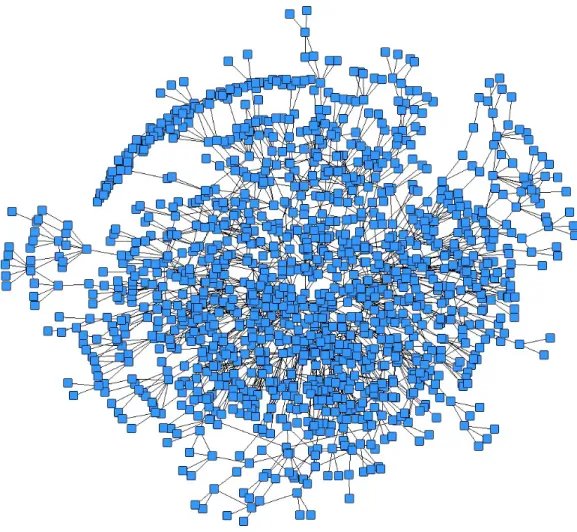
prompts and Figure 2 for a visualization of the MFI’s network). I constructed an adjacency matrix
to capture the relational data, where the clients in the network were listed in a symmetric matrix as
both the first row and first column, with a connection between any two clients identified with a 1
and non-connection with a 0 within the matrix. This network represents the web of a
microentrepreneur’s social connections against the backdrop of which economic activity is
conducted in the BoP market. I used social network analysis methods to calculate our measures of
social capital from this adjacency matrix, and appended those measures to the survey data at the
individual client level. Analysis was completed on the final dataset using the STATA 13, UCINET