© 2017, IRJET | Impact Factor value: 5.181 | ISO 9001:2008 Certified Journal
| Page 1615
Smart Cities using big data Analytics
K.Susmitha
1, S. Jayaprada
21
Student (M.Tech), Velagapudi Ramakrishna Siddhartha Engineering College,
Kanuru,
Vijayawada.
2Assistant Professor, Velagapudi Ramakrishna Siddhartha Engineering College, Kanuru, Vijayawada.
---***---Abstract -
Many Governments are adopting the smart citiesand implementing big data applications to reach the required level of sustainability and improve the living standards .Smart cities utilize multiple technologies to improve the higher levels of comfort to their citizens. Smart cities involve reducing resource consumption and costs in addition to more actively and effectively engaging with their citizens. One the new technologies enhance big data as smart cities. It has become a part of everyday life, data collection accumulation of huge amounts of data that can be used in beneficial domains. Utilization and effective analysis of big data is a key factor for success in many service and business domains. This paper reviews the smart cities based on application of big data. It compares and discusses different definition, challenges, benefit, Application of big data and smart cities. This paper reviews that several opportunities are available for utilizing big data in smart cities.
Key Words:
Application of Smart cities, Application of Big data, Analytics, Smart Education.1. INTRODUCTION
Undoubtedly, the main strength of the big data is gathering the huge amount of data; it will have numerous aspects of the smart cities. Big data growing rapidly, currently at a projected rate of 40 % growth in the amount of global data generated per year versus only 5 % growth in global IT spending. Around 90 % of the world’s digitized data was captured over just the past Five years. As per results many governments have started to utilize the big data to development and sustainability of smart cities. That allowed cities to maintain standards, requirement, applications, and principals of smart cities. The characteristics of smart cities include resilience, governance, sustainability, enhanced quality of life and intelligent of natural resources. There are well-defined components of smart cities, such as environment, mobility, health care, governance and people as well as its applications and services such as smart education, energy, transportation and health care [2].To facilitate such applications and storage facilities and large computational services required. One way to provide such plat from is Cloud Computing and utilize the many advantages of using cloud services to support big data in smart cities management. The main contribution of this paper is application of big data in smart cities opportunities and challenges for utilizing big data in smart cities. In this
paper design and implementation of big data based on application of smart cities and services.
In this Section1 introducing concepts of big data, smart cities. Section 2 we will discuss the benefits and Opportunities of smart cities in big data. Section 3 will discuss challenges of using big data in smart cities. Section 4 Requirements to implement smart cities applications based on big data. Section 5 we will illustrate and discuss some open that may help to other research in the fields and Section 6 we will conclude the paper.
2. BACKGROUND
The smart cities concept has different from the technological perspective versus people perspective. It defines a developed urban area that creates high quality of life and economic development in multiple key areas, people, living, environment, government and mobility. The enhancement of the quality of life for particular city citizens to utilize information form particular hardware, software, networks and data on different city service and areas. It also involves various city components like transportation, health care, natural resources, power, education and public safety. We can integrate a smart city as living solution that links many lives such as transportation, and buildings in a smart to improve the quality of smart cities. In addition definition also focuses on the future of resource and applications for future generations. We observed this aspect on each location, size and resources. In general governments around the world are mostly about the cost of acquiring a smart city due to financial abilities, natural or human and resource management. Capabilities and Availability of size of resources and challenges of maintaining and building a smart city. The
technical challenges requiring the affects the chances of
© 2017, IRJET | Impact Factor value: 5.181 | ISO 9001:2008 Certified Journal
| Page 1616
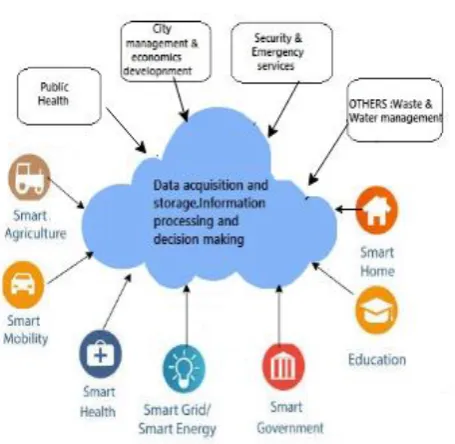
Fig 1: Cloud to store data generated from differentcomponents of a smart city.
SAS: “Big data is a used to describe the availability,
information, both structured and unstructured growth” [7] IBM: ”Data coming from everywhere like sensors, climate information, pictures and videos, transaction records, social media, GPS signals”[7]
Big data stored large amount of data whether it is structured or unstructured and disorganized [20]Big data is a from data is processing is the form of traditional database [20] Big data systems will store huge amount of data, store information in efficient manner to produce information to enhance smart city services. By this information big data will help administrator to plan for any expansion in smart cities, areas and resources.
Fig 2: Smart Cities related to Big data
Some characteristics of big data [8].
Volume: The size of data that has been created from data sets. Velocity: The speed at which data is stored, processed, analyzed, generated. It will support in real-time Big data management systems.
Variety: The different types of data being generated that most data is unstructured and cannot be easily tabulated or categorized.
However, bounded by the tools available and technology available. For Big data to achieve its services and goals in smart cities, it needs the right tools and methods to classified and analyzed efficiently and effectively. By understanding available limitations and capabilities, we can capture many for better application and services for smart cities using big data.
3. BENEFITS AND OPPORTUNITIES
Currently, many cities to be smart cities because of benefits like environmentally, economically and analysis. Therefore we will discuss so of the benefits and opportunities that may help to covert our city as smart city. By this benefits and opportunities we can re-design our city as smart city. By using benefits and opportunities to we can achieve enhanced levels of sustainability, governance and resilience. We can improve the quality of life and natural resource and introducing intelligent management of infrastructure
[image:2.595.370.492.485.606.2]Some of the benefits of having a smart city include the following:
Fig 3: Benefits of Smart City.
[image:2.595.49.274.538.721.2]© 2017, IRJET | Impact Factor value: 5.181 | ISO 9001:2008 Certified Journal
| Page 1617
Better Quality of life:With better efficient work, servicesand living models, smart cities will have better Quality of life. The result of location and living/work spaces, more transportation for better and faster services and enough availability of information to make decision.
Higher levels of transparency and openness: Needs for better control and management of the smart city applications and aspects, openness and inter-operability to higher levels. These will communication and collaboration between creating and entities more services and applications to enhance the smart city. The government and citizens entities to exchange and use the data effectively.
These benefits to be achieved involvement in terms of the application and required high levels of sophistication, people and resource involved there is also need to set a high quality, privacy, control and high security of the data as well as using data documentation standards to provide guidance on the use of contents and data sets [10].
The technology is every useful to protection and management of environmental resources and infrastructure, and Sustainability to increases a goal of natural resources [11].Smart cities application provide the potential application in big data [8].It provides better services and experience which help business with better performance in big data analytic. Improving health care by preventive care services, diagnosis, treatment tools, and health-care management. Transportation to optimize schedules and route, environmentally friendly and accommodate for varying demands.
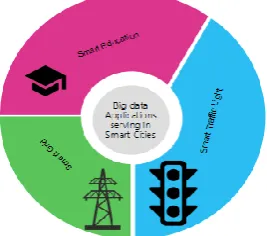
[image:3.595.99.233.620.738.2]Big data and cloud will help many issues like storage, analysis tools. It will reach the encourage collaboration and innovation stages and communicate with different entities of smart cities. This will be done by big data communities to work as creative solutions and collaborative applications for areas like environments, safety energy, law, manufacturing and education. Big data will be help in real-time solutions to challenges in crowd management, transportation and agriculture. There are many real -time examples in smart cities using Big data application such as:
Fig 4: Real-Time Example of Smart cities using Big Data.
Smart Education: Information and communication technology and Big data will also help a create a knowledge based knowledge based society which will help the competitiveness and capability. Big data in education is mainly by collecting data from people like students, teachers, parents, administrators, infrastructure like schools, libraries, educational locations, teachers, museums, universities and information like courses, exams, books, economics, reports and more. Data will create a useful resource to analysis and extracting information to better enhanced education. As an example data supports educational personal learning [14],”create practice and standardize of knowledge” [15].Big data in education can also be utilized in educational curriculum.
Smart traffic lights: When population increases, pollution, economics problems, traffic problems happens. Smart traffics lights and signals is one of the most important techniques that smart cities deals with high volumes of congestion and traffics. Smart signals and lights interconnected with traffic grids about traffic patterns. Sensor detects a different parameters of traffic flow like traffic jams, speeds of cars, waiting time at the lights, speed of cars. The system parameters give these parameters and gives signals and lights.
Smart grid: In smart city important component is smart grid. To collect information form electrical grid systems. It improves reliability, economics, and efficiency of electric power. A smart is two-way communication technology uses in computer based remote controls. This involves placing smart sensors and meters on distribution, production and transmission in real time data about the current power consumption and faults. It can provide consumers with near real-time information of energy and allows them in both needs and affordable prices. Consumer’s devices like water heaters and washing machines can be more cost to controlling them automatically at low pricing period.
4. CHALLENGES
Many challenges face the development, design and deployment of smart cities using big data Analysis. Smart cities considering environments and dynamic, these challenges involved in development and design for smart cities. These are related to available big data tools, cost, and accessibility, representation, analytic and real-time analytic. Some of key Challenges for smart cities using big data:
© 2017, IRJET | Impact Factor value: 5.181 | ISO 9001:2008 Certified Journal
| Page 1618
existence of multiple sources with different access polities and usage and with different types and formats. The data of unstructured nature organize and categorize the data and easily accessible to use.
Data and information sharing:Sharing information and data among different city is challenge. Each city and government agency or department typically has their own warehouse and public information. Here we will collect our data based on ensuring citizens right of privacy in big data analysis. Here we have many sectors and industries involved in smart cities. Smart city application need to prevent to achieve seamless information. It is easy to identify data in big data her, we can extract, transform, loading information through new knowledge based on specific data and real-time data.
Data Quality: Big data provide a data quality, data captured by different people under any standard formats and stored in distinctive database. Multiple data will be suffers from lack of heterogeneity, consistency and disparity issues will occur. Accordingly,” there is no universal way to transform and retrieve the data source fro useful analysis”. For example, sensor data collected through a third party without centralized control of sensors data.
Security and privacy: Another important issues is security and privacy, is major challenges in smart cities using big data. In these database include confidential information related people and government, we should want high security and privacy issues. We should have to protected data from malicious attacks. These application should require high security until data move to another type database or network. Today most of big data analytic includes Cassandra
andHadoop and Map reduce functions to perform lack of
security. The components of smart city application provide clearly of privacy rights of individual and organization data will be represent. All of information like, Medical records, bank records, financial records all records will be view by people. This is the major challenge using in the big data in smart cities.
Cost: Cost is a sensitive subject that affects public when they use ICT (Information and communication technology) solutions. For example, using energy reduction [11], components or features to record information.
Here, it is very expensive to implement [16], results very high costs, and the city may [7] be affected. Testing of smart cities and smart signal systems has very high cost. Testing is not only high costs in resources also a traffic problems and it is physically deployed in testing systems [16]. It is also expensive in hardware and software for future monitoring and development of smart cities applications and infrastructure [11].
Smart city population: People effect on the smart city application because big data size effect for effect fro a city's population size. Size of the population grows because size of data rapidly grows. If population increases rapidly growth will be generated on traffic, social, economics, technical, problems, pollution and environment of a cities [12]. Big data avoid problems based on smart city applications quickly and effectively handle the growing in the volume and variety. The goal is develop and deploy smart city applications to handle the growth in big data to better results.
5. REQUIREMENTS
The key components required to implements and design the big data in smart cities application. Big data collects data from sensors, electronic data reading, users to handle the volume of rapidly growth. Processing, storing and organizing data. It is required to select the development and design in a planned manner.
The application of Big data to smart cities is classified into two types, real-time big data and offline big data application. Real-time Big data big data are fast to access data from database and we can make a decision with shot period of time line. In many cases, in time line period only we should have to take an decision if we doesn't take an decision it is useless. It is important to make an data from timely fashion and that is analysis to done in a fast and reliable way. Big data applications for smart cities are planning in areas like health care, traffic, education, controls on real-time application [19].
Big data application based on smart cities, it is address several requirement smart city nature needs and big data characteristic. These requirements are identified based on challenges of smart cities applications and based on big data applications. These requirements are related to governments and awareness roles. The requirement are apply to big data applications and useful the smart city environments.
Advanced Algorithms: Big data can’t handle the regular application due to unique requirement and applications and need for high volume and speed. Big data cannot handle the all the data mining algorithms .Big data algorithm are based on limited and well defined data sets. Smart cities using Big data application need to implement sophisticated and advance algorithm will be excused in Big data analysis. Some applications are designing for a real-time application and another for offline applications. This algorithm based high data volume and large data sets and decision making processes to be optimized data. These algorithm are based on heterogeneous environments and capability of handle the highly dynamic environments.
© 2017, IRJET | Impact Factor value: 5.181 | ISO 9001:2008 Certified Journal
| Page 1619
application for smart cities. To find the smart cities application standard rules applications for infrastructure and environment of big data application. The government entities, infrastructure and stakeholders to assess futures of smart cities [10].We can design and development for smart cities through big data applications.
Security and Privacy: The data collected and processed in smart cities will contain in a from private information to ensure the applications and technological and maintain a high level of security and privacy mechanisms. Smart cities provide many positive advantages; it poses several threats to their relying data. It will secure our data from illegal attacks or malicious attacks. Big data application provide security and privacy policies design during develop and implementation of codes.
Citizen Awareness:Citizen aware to use ICT solutions for smart cities safely and correctly. The different issues may encounter with smart cities applications quality of data collection, performance of data applications. Based on results decision making made from collected data to enhance smart cities components in big data applications. Citizen awareness is important role in their knowledge of good safety, privacy and security. Big data will be protecting and awareness of their own data.
Government Roles: Smart cities in Governing entities much guiding principles of collaboration, participation to exchanging flow of big data in control [10].It requires a big data systems to collected data from government entities. It required essential role in a smart cities. The government must review the information on privacy, data accuracy, data access and preservation [10]. Documentation and code books are use of the data sets [10]. Effectively Big data application help in smart cities beneficial uses of data individual privacy concepts of privacy laws.
6. DISCUSSION AND OPEN ISSUES
The essential to reliable, clear plans for smart cities beyond in stand-alone projects or reliable strategic smart cities using big data analysis. Big data is viewed as stronger enabler for smart cities; these will be compare with different data. Big data will be difficult to collect, store, manage and analyze data. Great opportunity to create smart cities applications effectively to data and tools to make decision. Smart cities will use big data without their knowledge understanding the smart cities and the needs for advances big data and putting all these technology to start their buildings in smart cities. Three categories to view big data: ”construction of application systems, public platforms for smart city, public infrastructure” [20].The smart cities requirements are physical, social and technological. Creating road map for success of covering several stages: 1.Set up mission, vision, strategic and operational in smart cities.
2.Big data will use resources, policies, principals and controlling ICT.
3.Public infrastructure and ICT platform requires smart city applications.
4.Most important components and applications used in smart cities and it give priorities.
5.For Citizen Application infrastructure and services in big data application develop better features.
6.Identify infrastructure and environmental improvements and service to smart applications and operational and services using data collected.
7.New requirements and issues are arising by further development by monitoring current developments.
Information technology and ICT including Big data in smart cities applications various entities are living in and using it. It is enough to include finance and resource to support and develop through the various stages of smart cities in big data. Work and costs of projects include some of the following activities:
1.Predictive and view forecast changes and possible changes in the given problem. At least reduces risks involved through testing and implementation.
2.Smart cities application in big data follows problematic approaches and successful models.
3.Resource and exporting to marketing systems like smart systems/service, data systems. In these more systems are connected to smart city.
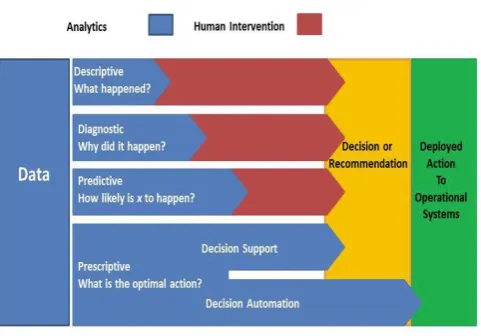
Correlation the investigating big data in smart applications. Include right application to right data to reach better optimize and decisions in the function of smart cities. Simple diagram for values of studies:
[image:5.595.314.555.536.704.2]© 2017, IRJET | Impact Factor value: 5.181 | ISO 9001:2008 Certified Journal
| Page 1620
7. CONCLUSION
Big data and smart cities are two important concepts therefore many started integrated with develop smart cities application with better resilience, effective governance, enhanced quality of life, management of smart cities in resources. Identify the general benefits of using smart cities to design and support in big data. We discussed the various opportunities available in smart cities and utilizing the capabilities of data through outcomes are operations. We also discussed the various challenges in domains and identified several issues in big data application in smart cities. Implementation and design efficient and effective applications. Different ways to address the challenges to resolve the generates and issues in better results. Finally open issues to address and investigated to view smart cities and develop them.
Deploying and building big data application in smart cities successfully to address the challenges and open issues to implement and design the human resources, Further enhancing it smart cities application to better making concepts, making a smart city with possible further it for a service and models will be an sustainable goal and attainable goals.
REFERENCES
[1] Pantelis K, Aija L. Understanding the value of (big) data.
In Big Data, 2013 IEEE International Conference on IEEE; 2013. pp. 38–42.
[2] Khan Z, Anjum A, Kiani SL. Cloud Based Big Data
Analytics for Smart Future Cities. In Proceedings of the 2013 IEEE/ACM 6th International Conference on Utility and Cloud Computing. IEEE Computer Society; 2013. pp. 381–386.
[3] Kitchin R. The real-time city? Bigdata and smart
urbanism. GeoJournal. 2014;79(1):1–14.
[4] Townsend AM 2013. Smart cities: big data, civic hackers
and the quest for a new utopia. WW Norton & Company. Batty M. Big data, smart cities and city planning. Dialogues Hum Geog.2013;3(3):274–9.
[5] Vilajosana I, Llosa J, Martinez B, Domingo-Prieto M,
Angles A, Vilajosana X.Bootstrapping smart cities through a self-sustainable model based on big data flows.Commun Mag, IEEE. 2013;51(6):128–34.
[6] Michalik P, Stofa J, Zolotova I. Concept definition for Big
Data architecture in the education system. In Applied Machine Intelligence and Informatics (SAMI), 2014 IEEE 12th International Symposium on 2014. pp. 331–334.
[7] Fan W, Bifet A. Mining big data: current status, and
forecast to the future.ACM SIGKDD Explor Newsl. 2013;14(2):1–5.
[8] Al-Hader M, Rodzi A. The smart city infrastructure
development & monitoring. Theor Empir Res Urban Manage. 2009;4(2):87–94.
[9] Bertot JC, Choi H. Big data and e-government: issues,
policies, and recommendations. In Proceedings of the 14th Annual International Conference on Digital Government Research. ACM; 2013. pp. 1–10.
[10] Kramers A, Höjer M, Lövehagen N, Wangel J. Smart
sustainable cities–Exploring ICT solutions for reduced energy use in cities. Environ Model Software. 2014;56:52–62.
[11] Neirotti P, De Marco A, Cagliano AC, Mangano G,
Scorrano F. Current trends in Smart City initiatives: Some stylised facts. Cities. 2014;38:25–36.
[12] Tantatsanawong P, Kawtrakul A, Lertwipatrakul W.
Enabling future education with smart services. In SRII Global Conference (SRII), 2011 Annual IEEE; 2011. pp. 550–556.
[13] West DM. Big Data for Education: Data Mining, Data
Analytics, and Web Dashboards. Governance Studies at
Brookings. 2012. Available at http://
www.brookings.edu/~/media/Research/Files/Papers/ 2012/9/04%20education%20technology%20west/04 %20education%20technology%20west.pdf
[14] Marsh O, Maurov-Horvat L, Stevenson O. Big Data and
Education: What’s the Big Idea?. UCL Policy Briefing. 2014. Available at https://www.ucl.ac.uk/ public-policy/public-policy-riefings/big_data_briefing_final.pdf
[15] Aguilera G, Galan JL, Campos JC, Rodríguez P. An
Accelerated-Time Simulation for Traffic Flow in a Smart City. FEMTEC. 2013;2013:26.
[16] U.S. Department of Energy, “Smart Grid / Department of