Strategic Framework for Managing Forces of Continuity
and Change in Pharmaceutical Industry
Iqbal,H* and Asim,M** *
Research scholar, FMSR, AMU.
**
Research Scholar, FMSR, AMU.
Abstract- Pharmaceutical industry has undergone unprecedented
changes ever since the onset of globalization and liberalization era. This prompted us to review the literature as to how the industry is balancing the change with the existing continuities. The paper, thus, presents a review of the forces of change and continuity affecting the pharmaceutical industry, in general, and India in particular.
Drawing from the Flowing Stream Strategy framework, which seems to be a dominant approach for managing continuity and change in the existing literature, an expert survey was undertaken to verify the change and continuity forces affecting the pharmaceutical industry in India. Further these forces were mapped on the continuity and change matrix to ascertain the extent of force of change or inertia faced by this industry. In the end, a flexible strategic framework for managing the change and continuity forces in the pharmaceutical industry is suggested.
Index Terms- Managing Change and Continuity, Flexibility,
Forces of Change, Forces of Continuity, Flexible Strategic Framework and Pharmaceutical Industry.
I. INTRODUCTION
ince beginning change is always associated with various areas like technology, structure, culture, government legislation etc. According to Kanter (1999), today’s need of organization is to serve the social sector and gain competitive advantage. For the success of an organization, communal acceptance of innovations especially technological changes is a must. According to the resource-based perspective, thriving organizations have exclusive competence or resources that tender them an advantage over their competitors. Gersick (1994) has found that these resources are valuable when they are rare, inimitable and non-substitutable. Consistent with resource-based view it has been reported that organizations has to be competitive with the ever changing environment and must have strategic view to cope up with change coming in the way of functioning. Historically, the dominant perspective in the study of organizations has been an adaptation perspective. According to this standpoint, organizations and dominant coalitions, scan the significant organizational environment, devise strategic responses to environmental changes, and effort to adapt to changing environmental situation in order to ascertain the performance and inexorable survival of organizations March and Simon,(1958); Cyert and March, (1963); Thompson, (1967); Lawrence and Lorsch, (1967); Pfeffer and Salancik, (1978). According to R. Coombs and J. Metcalfe (2002) since1980s the
pharmaceutical industry underwent a period of transition that witnessed its evolution from a fragmented industry to a global oligopoly .Moving ahead from an chronological base of largely organic growth, the industry has seen a high level of merger activity, including several ‘megamergers’ such as the creation of GlaxoSmithKline P. Allen, R. Ramlogan and S. Randles (2002) and the desertion of smaller biotechnology firms as they have either been acquired or failed to survive. Even though there appears to be agreement that the pharmaceutical industry has to undergone a process of consolidation it is not at all universally accepted that the pharmaceutical industry has a high level of concentration at the global level R. Coombs and J. Metcalfe (2002).
Organizations ever hardly formulate major adaptive changes and that changes among organizations are troublesome Hannan (1977); Freeman, (1984). As a consequence, environmental selection is a more appropriate approach than adaptation to explaining change among organizations. Organizations that fit in the environment survives, whereas others are selected out of the organizational population, and change occurs more because of selection and replacement than organizational transformation Hannan, (1977);Freeman, (1984) .
The epoch of competitiveness, an organization have to identify forthcoming opportunities and threats very early and incorporate them into strategic planning on time for example the changes in the pharmaceutical industry structure influence strategy evolution in incumbent firms Bain (1956);Mason (1959) and that those strategies in turn shape industry structure. For example, merger and acquisition activity can be linked to industry consolidation and strategies such as cross-border co-operative arrangements in turn shape industry globalization. Scherer (1980), moreover the concept of scenario management was suggested, which is based on systems thinking, future open thinking and strategic thinking which results in organization success Fink and Schlake, (2001).
for future discoveries needs to adapt to the increased complexity of what is next to be discovered Schwartzman(1976).
Changes in individual countries as well as the particular market and investment opportunities pay for by liberalizing economies to foreign multinationals Gillespie and Alden, (1989), there is a growing interest in understanding the competitive strategies of firms from these economies as they respond to institutional transitions and begin to compete in global markets OECD, (2006); Business Week, (2006); BCG, (2006). As in the Indian pharmaceutical industry policy environment toward both technology and FDI underwent considerable changes during 1960-1990. Largely, policies were quiet liberal in the 1960s, but made very rigid in the 1970s, attempts at liberalization were made in the 1980s, and then real liberalization took place in the early 1990s.Afterwards, the policy environment was typified by discretionary control and a short of transparency. These environmental changes have had reflective effects on the investment and research activities of both MNCs and domestic pharmaceutical firms in India Kumar, (1994).
Continuity and changes is characteristic feature of strategic thinking. Earlier, when the environment was quiet steady, various strategies were come into existence largely surrounding the issue of ‘continuity’. Several significant strategies in this regard are ‘continuity’ and ‘logic Incrementalism Sushil (2005), Quinn (1978, 1980).
The concept of continuity and change had been recognized earlier Nasim and Sushil (2011), According to field theory Lewin (1947) the change and continuity are correlated concepts; group life is never without change, and merely differences in the amount and type of change exist. According to Mintzberg et al. (1998) , after discovering the wilderness of literature of strategic management admitted that inspite of all existing issues about change still not all organizations need to change every time. Mintzberg (1988) proposed that creation of strategy is both ‘deliberate and emergent’ and therefore requires being designed inspite just to plan further he stated that the problem of strategy creation is that to bring together the forces of continuity and change. On the other hand to spotlight efforts to gain operating efficiencies, yet to adjust and continue with a changing external environment Mintzberg, (1988)
II. LITERATURE SURVEY
Managing Continuity and Change in Pharmaceutical Industry:
Since 1980s and 1990s large pharmaceutical corporations faced fundamental challenges of longer development times, a tremendous increase in R&D expenditures, a multiplication of technological approaches and the entry of new actors into the industry (Zeller.C,2002). Increase in global competition and the emergence of a North Atlantic oligopolistic rivalry set the large pharmaceutical companies under additional pressure to win ‘innovation races’.
Extreme competition and rivalrous environment among and even within the firms exist in many industries. There is always a severe competition among biotechnology and pharmaceutical firms for access to technologies and for patent rights Pisano, (1991); Valle and Gambardella, (1993) which forced the same companies to enter into collaborations in other fields. A most
important challenge for firms is to deal with ambiguity on the part of its survival Zeller.C, (2002). Firms attempt to address these problems. Because uncertainty varies over the stages of the product life cycle, the choice of an appropriate structure will depend on which stages producers and users are at Robertson and Langlois, (1995).The molecular biological revolution and the emergence of the biotech industry increase uncertainty for the pharmaceutical companies. They are forced to produce new technologies internally and/or can be outsourced by acquiring well tested technology from other organizations Sushil, (2005).Consequently they tend to combine their classical vertical integration with new forms of internalization of knowledge and technologies externally produced by the biotech newcomers Nightingale, (2000).
Beneath the pressure of slowed innovation expressed in new active substances, longer development times and increasing R&D costs, as well as limited market growth, companies increased their research efforts and their marketing expenditures even more so Schweitzer, (1997); Drews,(1998); Phrma,( 2001) due to the heavy capital investment it demands economy of scale. Therefore, products have to be launched in many markets simultaneously. Basically, the globally active corporations try to introduce innovations as quickly as possible and as broadly as possible. The arrangement, contractual and informal conditions geographically in order to amortize their increasing R&D costs Bartlett and Ghoshal, (1990); Pearce and Singh, (1992); Gassmann, (1997); Gerybadze and Reger, (1999).
These propensities favors mergers and acquisitions and boost the internationalization process Andreff, (1996), Chesnals, (1997); Drews, (1998); Zeller, (2001). During the course of this process, global oligopolies came out which could be identified ‘as spaces of rivalry’ between the rivals in the global triad Chesnals, (1995, 1997). The extent of concentration could be enormously high, particularly in individual therapeutic areas Taggart, (1993). With a global switching and global focusing of their international productive network, they now attempt to use the internal advantages of a tight integration of research, development and manufacturing while profiting from elements of the external environment Howells and Wood, (1993). Immense rationalization efforts have contributed to reducing development times and costs in recent times Dimasi, (1995); Drews, (1998); PhRma, (2001)
The escalation of worldwide competition and the appearance of North Atlantic oligopolies in most therapeutic areas have forced pharmaceutical companies to increase innovative capabilities, to speed up processes and accelerate the circulation rate of capital, and therefore to increase profitability and to expand more than the major rivals Zeller.C,(2002).
associated with high entry barriers in the form of stringent patent laws. In contrast, patent laws for pharmaceutical products in many developing countries have historically been weak, often enabling local firms in these countries to market drugs that were still under patent protection Dutta (2009).
The pharmaceutical industry is facing the challenge of surviving in the environment that has become more intricate and uncertain, and that is distinguished by hasty developments in science and technology, and organizational change. To account for technological change, various neo-technological models of international trade have been postulated Grossman and Helpman,(1991); Krugman, (1979); Noland (1997); Posner, (1961); Vernon,(1966) .According to Vernon’s (1966) product cycle theory identifies four stages in the life cycle of a product including innovation and saturation in the domestic market followed by foreign investments.
The world pharmaceutical market has undergone fast, unprecedented, tremendous and complex changes in the last several years. The pharmaceutical industry is today still one of the most inventive, innovative and the most lucrative of the world so-called ‘high-tech’ industries World Review (2007). Pharmaceutical companies invest on average around 16% of their sales into research and development and even more, around 25%or even more, into marketing and sales activities Kesic (2006).
The role of change has all the time been a theme around which the existing strategic management literature revolves Ginsberg, (1988). How an organization change and adopts clearly guides the firm’s survival, long-term success and the alignment of strategy with the environment Smith and Grimm, (1987); Cameron et al., (1988); and Haveman, (1992).
Angell (2004) suggests that while the pharmaceutical industry was a good business from 1960 to 1980, from 1980 to 2000 it was ‘a stupendous one’ as prescription drug sales tripled and ‘profits skyrocketed’. With hindsight 2000 may however, mark another turning point in the industry’s history, the year that things began to go wrong as the industry began to face a convergence of interrelated challenges, the most significant being the cost of R&D and the decline in R&D productivity, competition from generics, health care costs and product liability .R&D is the lifeblood of the pharmaceutical industry as evidenced by data from CMR International which shows that the industry spent US$60 billion in 2006, up from US$35–40 billion in the 1990s Anon (2007). For bringing a new molecule entity (NME) to market rather than a incremental modification of an existing drug, it has been suggested that ‘the era of the billion dollar new drug has arrived Anon (2007).
Although the decline in R&D productivity is a contentious one, recent reports by both the US Congressional Budget Office and the Government Accountability Office arrive at the same conclusion, namely that the productivity of research and development investments has declined since the mid-1990s (Congressional Budget Office 2006; US Government Accountability Office 2006). The estimated cost of developing a generic drug is around US$1 million, a fraction of that of a branded drug; consequently they are sold at 20–80% below the price of equivalent branded drugs and regulatory agencies are increasingly encouraging their prescription Trombetta (2005); Jackson (2003); Balaban et al. (2003).
Meantime manufacturers of generics are becoming more aggressive as evidenced by recent challenges of the patents on Prozac (Eli Lilly) and Lipitor (Pfizer) by Barrs and Ranbaxy respectively. Thus among the firm level empirical studies capturing strategic behavior, transformation and change in the context of emerging economies undergoing economic liberalization, institutional reforms and upheavals Appiah.Adu, (1999); Child and Lu, (1996); Lukas et al.,( 2001); Luo and Peng, (1999); Luo et al., (1998); Suhomlinova, (1999), there has been an overwhelming dominance of the observation that firms either adopt defensive strategic orientation, exit or fail. It is often argued that emerging economy firms suffer from many handicaps and therefore tend to choose the first two options. Decades of protection weakens their abilities to compete in a highly competitive market economy and face international competition both in the domestic as well as global markets
III. OBJECTIVES
The main objective of the study is to understand the strategic management of continuity and change forces in pharmaceutical industry in general, and India in particular. Understanding how the different companies are actually managing these existing forces of continuity and change to provide the competitive quality of drugs to the customers.
Identify and study the factors affecting forces of continuity and change influencing the pharmaceutical industry in general, and India in particular.
Strategic Framework for Continuity and Change Forces in Pharmaceutical Industry:
Organization’s capability of adaptation relies on its tendency to change, and adaptive capability is a dynamic capability Miles and Snow, (1978); Chakravarthy, (1982); Hooley et al., (1992); Sanchez, (1995); Camuffo and Volpato, (1996); Forrant and Flynn, (1999); Rindova and Kotha, (2001); Staber and Sydow, (2002); Alvarez and Merino, (2003); and Wang and Ahmed,( 2007). If the firm show evidence of higher capabilities of adaptation then it also has higher dynamic capabilities Teece et al., (1997).During 2001 India’s pharmaceutical industry became the focus of public debate when Cipla, the country's second-largest pharmaceuticals company, offered an AIDS drug to African countries for the price of USD 300, while the same sample preparation cost USD 12,000 in the United States. This was achievable because the Indian company manufactured a generic pill which contains all three substances mandatory in the treatment of AIDS. This sort of production is a great deal for other countries as the patents are held by three different companies. Ultimately, the price slump was a result of India's lax patent legislation. In 2005, patent legislation was tightened, so India’s pharmaceutical sector had to amend. Uwe Perlitz, Deutsche Bank Research (2008), Daneels, (2002, March (1991).
Continuity and Change Forces
continuity force is a set of forces keep on dragging the organization to be sticked to the current business and also in the manner they are running their business while change force are the pushing forces that guides the organization to make each and every effort for change.
Continuity Forces Customer Base
The crucial objective of an organization is to increase its market share in its operating arena. Higher the market share higher would be its customer base Sushil (2005).The main objective of an organization is to attain maximum heights in terms of growth. But higher the organization go up on the growth curve, higher would be its inertia for it to cling with the current products and services and its delivery mechanisms. The increasing size of customer base flywheel creates higher inertia to maintain continuity According to Handy (1994), it is a paradox that a starts sliding down due to changed business situation. As in the pharmaceutical sector it was mainly the big firms such as Hoechst, Zeneca and Glaxo that were in headlines, a total number of 334 mergers and acquisitions were completed in 2001 and this was only seven less than the number completed in 2000, IMS Health (2001) This consolidation trend was fuelled by a number of factors such as achieving economics of scale, getting access to and operating in important geographic and therapeutic markets, reducing surplus capacity and concentrating market share Javalgi & Wright (2003) In 2000 the top 20 companies, in terms of revenues, were responsible for 64.6 per cent of global sales.
Technology
Technology is a most important strategic driver influencing the victory of any organization Sushil (2005).Similarly in pharmaceuticals; technology is one of the most important factors determining international trade flows. The worth of goods and services that countries trade resides in their intellectual content, technology, R&D, and human creativity that is sought to be protected by intellectual property rights (IPRs). Beneath the new international order advocated by the World Trade Organization (WTO), IPRs are fast budding ‘‘global currency for power” (Zimmerman & Dunlop, 1994). For the very first time in international law, TRIPs (the Agreement on Trade Related Aspects of Intellectual Property Rights) sets out the procedures that governments must give under their domestic law so that IPRs can be efficiently and successfully imposed.
Today’s demand is technological learning to compete with in the competitive arena defined through the strategies of technological acquisition: to develop and/or acquire technology externally (Caves & Uekusa, 1976). Given the reduced level of R&D and the weak innovation productivity of their companies, developing countries cannot use their own technological efforts alone to reduce the technological gap (Basant & Fikkert, 1996).2 The options for these companies are to acquire technology transfer (TT) non incorporated, including tacit knowledge transfer, such as technological licenses of patented products and/or industrial processes; purchase consulting services and training for the use of technologies, thus allowing the development of technical and technological skills; and subcontract R&D and services both for the improvement of
products and industrial processes and for the adaptation of technologies (clinical trials).
Core Competencies
According to Richard Langlois and Nicolai Foss ‘begun self-consciously referring to their work as lying within the confines of a ‘capabilities,’ ‘dynamic capabilities,’ or ‘competence’ approach (Langlois, 1992; Langlois and Robertson, 1995; Kogut and Zander, 1992; Foss, 1993; Dosi and Marengo, 1994; Teece and Pisano, 1994)’ (1997: 13). A major connotation of the capabilities perspective as it relates to economic organization is that, in the terminology of G. B. Richardson (1972), the arrangement of complementarities and similarity among the various capabilities in the economy influence the prototype of organization (including the firm-market boundary) in ways not fully understandable in terms of the costs of transacting. Indeed, the ability to transact (and therefore the cost of transacting) is itself a capability (Winter 1988), which suggests a blurring of the boundary between production and exchange.
Giovanni Dosi and Teece recently explain the competence perspective as follows (1998: 284; emphasis in original):
“A firm’s distinctive competence needs to be understood as a reflection of distinctive organizational capabilities to coordinate and to learn. By ‘organizational capabilities’ we mean the capabilities of an enterprise to organize, manage, coordinate, or govern sets of activities. The set of activities that a firm can organize and coordinate better than other firms is its distinctive competencies. Posed differently, a distinctive competence is a differentiated set of skills, complementary assets, and organization routines which together allow a firm to coordinate a particular set of activities in a way that provides the basis for competitive advantage in a particular market or markets.”
The influential article by C. K. Prahalad and Gary Hamel on ‘The Core Competence of the Corporation’ (1990) helped to move the idea of core competence onto the agenda by ascribing greater core competence to Japanese than American corporations during the decade of the 1980s—especially contrasting the American firm GTE and its Japanese counterpart NEC. Whereas GTE plodded along, NEC moved ahead vigorously.
David Teece, Gary Pisano, and Amy Shuen ‘define those competences that define a firm’s fundamental business as core. Core competences must accordingly be derived by looking across the range of a firm’s (and its competitors) products and services’ (1997: 516). Prahalad, Hamel and Teece et al. concepts of core competence are expansive and elastic. The ideas that firms possess both strengths (competences) and weaknesses (disabilities) and that they are engaged in intertemporal competence
According to Teece et al.(1997) ‘Eastman Kodak’s core competence might be considered imaging, IBM’s might be considered integrated data processing and service, and Motorola’s untethered communication’: 516, n. 4).
Supply Chain Network
Coordination is defined as managing dependencies or joint efforts of members towards common goals (Malone and Crowston, 1994). Supply chain management is the management of flow of inventory, information, and money between the different members of supply chain (Mentzer et al., 2001).
In recent years, however, global pharmaceutical supply chains are facing growing and challenging risks Enyinda.C.I, Mbah.C.H.N and Ogbuehi. A, (2010). The pharmaceutical supply chain represents the conduit through which essential pharmaceuticals are delivered to the ultimate end-users at the right quality at the right place at the right time Enyinda & Tolliver, (2009). Supply chain coordination is an effective approach to streamline operations/processes between the dependent supply chain members Chopra and Meindl, (2003). Pharmaceutical companies are undergoing major changes to cope with the new challenges of the modern economy. The globalization of the business, the diversity and complexity of new drugs, the increasing tightness of capital, and the diminishing protection provided by patents are some of the factors driving these changes. All stages of the business value chain are affected: from the development of new drugs to the management of the manufacturing and marketing networks L.G Papageorgiou, G.E Rotstein and N.Shah (2001)
The rise in the pharmaceutical supply-chain risks and the accompanying pressure from regulatory bodies, changing legislation, customers, and cutthroat competition are forcing many forward-looking pharmaceutical organizations to implement supply-chain risk management. Some of the merits associated with supply-chain risk management are gaining sustainable competitive advantage Enyinda, Ogbuehi, & Briggs, (2008), fewer surprises, better decision making, achieving an improved balance between opportunity and threat, enhanced competitive position, and managing suppliers more effectively O’Brien & Joyce, (2007).Therefore, to ensure pharmaceutical supply-chain resiliency and continuity, it is imperative to effectively assess risks and develop a comprehensive mitigation approach Srividhya & Jayaranman, (2007).
The development has shown the use of innovative efforts to reduce cost, manage shorter product life cycles, resource globalisation, cope with increased demand for customisation, and intensive quality initiatives Taylor,( 2004).
Indeed, in recent years, the relevance of uncertainty and risk in the supply chain has received an avalanche of attention from academics, practitioners Barry, Cavinato, Christopher & Lee,( 2004); Harland, Brenchley, & Walker, (2003); Hendricks & Singhal, Kleindorfer & Saad, (2005); Spekman & Davis, (2004); Towill, (2005); Zsidisin, Ellram, Carter, & Cavinato, (2004) Supply chain management incorporates logistics as a key supply chain focused function and effective supply chain management and purchasing practices are associated with competitive capabilities of the firm and it has more significant effect on firm performance Carter and Narasimhan, (1996).
Performance
Each organization intends to boost up its business performance in terms of profitability, growth, customer satisfaction and other business objectives Sushil (2005). With a view of organizing, performance of an organization can be
treated as tools to achieve certain goals, as suggested by Perrow (1986). As tools, it should be kept and maintained because it is for certain motive and should be replaced and dropped as and when required Weick, (1996).
The international pharmaceutical industry is ruled over by firms in the United States, UK and Switzerland – rather than those from Japan. Japan’s largest and most profitable pharmaceutical firm, Takeda, ranked only sixteenth in global pharmaceutical sales in 2005. The sales of Japan’s top three pharmaceutical firms are a fifth of the size of leading global firms Barral (1996), PJB Publications (2006), and JPMA (2007). Mostly developed economies used to spend a considerable amount on health care and on medicines. In 2005, for example, OECD countries spent an average 8.9 per cent of GDP on health care, of which 13.8 per cent was spent on prescription drugs. In Japan, health-care spending accounted for 8.2 per cent of GDP, of which 17 per cent was spent on prescription drugs OECD (2008b) between 2000 and 2005, the global pharmaceutical market grew more than 1.6 fold IMS( 2010).
Lutz and Talavera (2004) support the argument and proved that the firm exports are regarded as the sign of comparative advantage. Rob and Vettas (2003) found that given the demand uncertainty and irreversibility, firms both exports their products and undertake FDI. Interestingly, Aulakh et al. (2000) observed that multinational corporations build plants in those countries where they can produce goods and services for exports at lower costs. This intern helps in improving the exports through preferential access to markets in the multinational enterprise home country. In case of multinational enterprises from developing economies, Mathews (2006) found that unlike first wave of multinational enterprises, the second wave of multinational enterprises are to be required in pull factors that draw firms into global connections, rather than push factors which drove them as stand-alone
players in the first wave.
It was viewed that multinational enterprises are likely to be more outward oriented. They are provided with more competitive technology, efficient management techniques and marketing skills in a globalised world Aggarwal, (2002). Firm-level studies in Malaysia and Thailand found that foreign ownership participation had transformed the local environment in facilitating the manufacturing exports in technological industries Rasiah, (2003). On the contrary, Abdel-Malek (1974) found that there was no significant difference in export performance between foreign and Canadian owned firms. In the case of Vietnam, Mai (2001) found that FDI facilitated in making use of the countries comparative advantage in terms of cheap labour and rich natural resources in producing export products.
Change Forces: Globalization
years the export surplus has widened from EUR 370 m to EUR 2 bn. At 32% in 2006, the export ratio was about twice as high as in 1996 and will likely rise further in the coming years (Germany: 55% at present) Deutsche Bank Report (April 2008) It is evident that there is a disproportionate amount of pharmaceutical sales in some parts of the world when compared with other parts, like the population of India and China combined is almost 39% of the world population Pimentel and Wilson, (2004) but the pharmaceutical sales in these countries are a portion of the 8% sales coming from Asia (excluding Japan), Africa, and Australia Anonymous, (2004).
Bhalla and Ramu (2000) firm’s political leverage depends upon the ability of the firm to offer host government a continuous viewpoint of future, employment, exports, new investment and new technology or other valued contributions favorable of a type not duplicated by domestic firms.Haley and Chin-Tiong (1999) stated that the strategic planning in South and Southeast Asia has developed into a process, which is temporary and highly reactive, highly customized and distinctive to the leader, and which uses relatively limited environmental scanning. With the passage of time the competitiveness has been added on as an important driver of globalization within the industries Yip, (1989). In the latest years, troubles of hit of low cost generics and reduction in health care budgets have created challenges for pharmaceutical companies that they are putting their efforts to get some control on by strengthening their position so that they remain stay competitive.
Mergers and acquisitions, Strategic alliances recreating their strategies and trying to adopting innovative measures to maintain their bottom lines have been some of the strategies that have been adopted by some pharmaceutical companies in the global market arena. In the battle for emerging markets as argued by Dawar and Frost (1999) big multinationals alone do not hold all the advantages and state that two parameters that strength of globalization pressures in an industry and the company’s transferable assets guide strategies of domestic companies. With the increase in the drug discovery cost, the industry has exploring opportunities to get optimal value from R&D budget. China and India both have large talent pool and are offering width of preclinical and clinical services at considerable savings of 30–80% against the cost in the USA. Many large pharmaceutical companies and global contract research organizations (CROs) have set up or are trying to create research centers in China, India and Singapore, Ish Khanna (2012).
New Opportunities
An innovative organization can be looked and perceived in terms of its products life cycle which are its life blood Laínez, Schaefer, Reklaitis (2012). Exterior stresses and basics of uncertainty range from those in product demand, input pricing, actions of competitors, actions of governmental bodies, bargaining power of suppliers and buyers, threat of new entrants in the field and global economic dynamics (Porter, 1980). The pharmaceutical industry is an exceptional illustration of the competitive forces that Porter laid out and its unique characteristics. Internal uncertainties can include the risk of failure of R&D activities, among them unanticipated technical challenges. The increased availability of enterprise information and rapid escalation in computing power have made it possible to
deploy decision support tools, including simulations and optimization frameworks which can facilitate informed decisions that take into account the interdependencies among the functional units and the necessary integration of decision levels. Varma, Reklaitis, Blau, & Pekny, (2007) Grossmann, (2005).
Investments in drug discovery or new product development are the focus of attention in the pharmaceutical industry and the investor area; there are considerable opportunities for generating economic value that are found in improvements on the operational supply chain side. Enhancements in SCM could provide a gain of $65 billion to the pharmaceutical industry if the productivity of the lowest performers could be brought to the level of supply chain productivity of the top drug-makers, Hunt, Manson, and Morgan (2011). According to Sundaramoorthy and Karimi (2008) who proposed a multi period, continuous-time, MILP model that addresses the introduction of new products into existing manufacturing facilities. This addressed pharmaceutical plants which employ multiple parallel production lines, operated in campaign mode and producing products with multiple intermediates and could avail the opportunities of demanding environment.
The rate of success is low with less than 1 in 1000 discovered compounds undergo successful clinical stage and only one of five that experience clinical trials achieving commercialization Tollman, Morieux, Murphy, & Schulze, (2011). The high failure rate imposes considerable challenges in planning under uncertainty so that resources are effectively assigned and then redeployed as failures occur. So it reveals that with every failure an opportunity is associated.
Pharmaceutical business is intrinsically worldwide with some 80% of sales in North America, Europe and Japan but rapid growth on the rest of the world IMS Institute, (2011). A number of companies in China and India are also investing in R&D, despite the fact that they are still on the high risk line. With signing of patent treaty, these markets are rising with new partnering and business deals in R&D, manufacturing, clinical trials and marketing Ish Khanna (2012)
Competition
Selznick (1957) and Penrose (1959) have suggested that unique firm heterogeneity or the ownership of unique 'competencies' or 'capabilities', may be an important source of enduring strategic advantage Lippman and Rumelt, (1982); Wernerfelt, (1984); Barney, (1986); Rumelt, (1991), Amit and Schoemaker, (1993); Dosi and Teece, (1993);Peteraf, (1993);. This point of view guarantees to be a significant complement to the strategic management field's more recent focus on industry structure as a determinant of competitive advantage Porter (1980).
According to Barney, (1986); Wernerfelt, (1984); Peteraf, (1993) it is impossible to buy or sell in the available factor markets at less than its true marginal value; and it must be complicated or costly to reproduce. Whereas a wide variety of feasible basis of heterogeneity fit these criteria, numerous authors have recommended that exclusive capabilities in research and development are particularly reasonable sources of competitively important competence Dierickx and Cool, (1989); Nelson, (1991). It is confirmed that there are considerable and constant differences among firms in their ability to perform research and to discover or develop new products Henderson (1993); Clark and Fujimoto (1991); Leonard-Barton (1992); Tabrizi and Eisenhardt, (1994).According to Leonard-Barton (1992) the implicit knowledge developed by skilled engineers with a certain production process over a period of time may become a source of advantage for the firm. Within the context of pharmaceutical research, there are two dimensions along which firms might develop strategically important local competencies. In the first position, firms may obtain unique disciplinary expertise for example one of the roots of Merck's recent success may be a legacy of excellent medicinal chemistry that dates back to Max Tishler's leadership at the firm Allen, Lee and Tushman (1980). And the second aspect along which firms may be able to develop strategically important component competence is in particular disease areas For example Eli Lilly has been a leader in the field of diabetic therapy over a hundred years, and Hoffman-La Roche developed expertise in anti anxiety drugs following its discovery of the tranquilizer Valium Cockburn and Henderson, (1994)
IV. RESEARCH AND DEVELOPMENT
Every organization aims to enhance its business this could be possible only through discovering new products according to the requirement of market. Similarly in the most pharmaceutical companies in India expend around one-tenth of their revenues on R&D Perlitz, (2008), and there research costs are 60% the costs in Western countries Price Waterhouse Coopers, (2007).A number of the companies like Ranbaxy have been granted special marketing rights for the generic versions of successful drugs as like Pfizer’s Lipitor and Merck’s Zocor, which has annual sales of worth $12.7 billion and $4.6 billion in 2007(http://iqmercury.com/pharma-trend). Since the price of generic drugs falls with the entry of new entrants, only cost-effective firms can break into the export markets. According to the Pharmaceutical Export Promotion Council, pharmaceutical exports grew by 16% to reach $6.68 billion in 2007–2008. Indian generic drugs have been able to pierce the highly synchronized markets of North America, Western Europe, Japan, and Australia (http://www.healthdatamanagement.com). Technological innovation has become progressively more significant for firms as they made great effort to achieve and sustain competitive advantage. Movements such as globalization, fast product-cycle times, greater competition, product commoditization, and technology union have only added to this importance.
Introduction of fewer drugs and enhanced R&D expenditures, increased popularity of generic substitutes, increased foreign competition, an increased number of significant drugs coming off patent protection, and increased health care
reform have concurrently squeeze profit margins and limited the selection of drugs made available to consumers through health plans, Ravenscraft and Long (1999), Taggart (1993). All these elements have put a premium on managing R&D processes in an effective and efficient manner.
Recent research has suggested that because of different levels of uncertainty and complexity, a contingency approach should be taken to organizing for innovation Duncan (1976) Keller (1994), Dewar and Dutton (1986), McDonough and Leifer (1983).The management of formal R&D efforts or the R&D function have received less attention. Second, this study is one of only a handful that have examined the effects of structural control on both incre-mental and radical innovations Dewar and Dutton (1986), Ettlie et al. (1984), Kaluzny et al. (1974), Nord and Tucker (1987).
Incremental innovations represent changes to existing technology concerning small advances based on a recognized base of knowledge Roussel et al. (1991). The pharmaceutical sector’s core product centers on a molecule Henderson (1994).Therefore the radicalness of drug innovation is t a function of the innovative technological and scientific knowledge embedded in the drug Abernathy and Clark (1985).Thus Radical innovations represent major changes in technology involving the discovery of new knowledge, substantial technical risk, time, and cost Roussel et al.( 1991).
The new drugs come into existence would be considered as radical innovations. Drug development involve combinations of existing drugs, new indications, new dosage forms and formula changes, which would be considered as incremental innovations Freeman (1982), Abernathy and Clark (1985), Roussel et al. (1991), Banbury and Mitchell (1995),
Customer Needs
One more chief change force is customers themselves. The customers are becoming extra aware, wide awake about and demanding Sushil (2005). In a more competitive surrounding, customer orientation is becoming the success’s mantra. The requirements and preferences of customers are changing which are stimulated by the variety of competitive alternatives available in the market arena. These are also administered by new product characteristics and options available with technological innovation in the industry. The pharmaceutical industry has particular unique characteristics that dictate the development of new products. It is highly regulated by governments, spends much more than the average of all industries on research and development and new product development is largely determined by the discovery of new clinical entities. The focus of product assessment has also undergone a significant shift towards consumer acceptance. On the one hand, this is the result of better-informed consumers who accept responsibility for decisions concerning their health and medical care. On the other hand, pharmaceutical companies now understand the genetic composition of patients and this enables these companies to segment patients on the basis of pharmacogenomic descriptions. Terblanche(2008).
New Technology and Innovations
Hardy, (1996); Penrose, (1995).According to Schumpeter (1934) this twin significance of invention and innovation, a firm may have great technological and inventive potential but sometimes relatively futile in the commercialization of its products’ (Fleming, 2002: 1064).
Constant with respect to recent strategy research, it was found that firms could be consider as a collection of strategic assets that combine to produce and deliver an nascent set of products (Barney, (1991); Levinthal, (1995); Montgomery, (1995). These include the technological knowledge that derives from a firm’s research and development activities Teece, (1982), and the ability to combine knowledge elements into precious new combinations Kogut and Zander, (1992). The complementarity between the technological and product-market knowledge may also smoothen the progress of the more valuable technological combinations. In other words, a firm’s combinative capability is increased if it has technological and product-market experiences both. It is apparent that pharmaceutical firms depend on the success of their new product introductions as they seek to manage competition and improve financial performance Schwartzman, (1976). Indeed, pharmaceutical firms regularly introduce new products in their efforts to sustain superior financial performance over time Roberts, (1999). Given this importance, a number of researchers examine drug companies from the product-market side, looking at the factors that influence new product performance. Gatignon, Weitz, and Bansal (1990), examine the initial market performance of a small amount of new pharmaceutical products introduced between 1978 and 1982 and come across that the performance of new pharmaceutical products improves with ‘the familiarity of the firm with similar markets and technologies.’
The knowledge and assets that develop in tandem with a firm’s technological and product-market experience are significant determinants of its competitive successes and failures Winter, (1987). A firm’s accumulated experience and different other sort of experience lead to the development of different types of technologically innovated assets Barnett et al., (1994); Baum and Ingram, (1998); Ingram and Baum, (1997).
Mergers and Acquisitions
As the markets are growing, the industries are getting consolidated and hence mergers and acquisitions are becomes a main drive of change. Secondly introduction of the deregulatory policy measures and competition policies in particular since 1991 have a considerable rise in the number of mergers and acquisitions in Indian corporate sector Roy, (1999); Venkiteswaran, (1997); Chandrasekhar, (1999); Khanna, (1997); Basant, (2000); Das, (2000); Kumar, (2000); Agarwal, (2002); Dasgupta, (2004); Beena, (2000, 2004 & 2008), Mantravadi and Reddy, (2008) Mishra, (2005); Agarwal and Bhattacharya, (2006);. While most of these agreements are horizontal in nature Khanna, (1997); Beena (2000 & 2008); Mishra, (2005), the number vary across the industries Das, (2000); Basant, (2000); Dasgupta,( 2004); Mishra, (2005) Agarwal, (2002);. The broad industry groups that experienced a large number of MA include financial and other services, chemicals including drugs and pharmaceuticals, electrical machinery, electronics and beverages including spirits and vinegars, Das,(2000); Basant, (2000); Agarwal,(2002), Mishra,( 2005).
The most significant merger and acquisitions to illustrate the current situation for a better understanding of mergers Kesic (2003):
In the group of inventive companies the several acquistions of the Pfizer (Warner Lambert, Pharmacia), the merger of GlaxoWellcome and SmithKlineBeecham to create GlaxoSmithKline, the merger of Astra and Zeneca to create AstraZeneca, the merger of Ciba Geigy and Sandoz to form Novartis.
In the group of generic companies the leading Israeli company Teva has performed over 15 big acquisitions in the last decade, having acquired the U.S.A generic company Ivax as the last one; as well Swiss Sandoz, which is a generic group, owned by Novartis, has acquired likewise several generic companies worldwide, including Lek in Slovenia, Hexal from Germany and Eon Labs. from the U.S.A ; in the year 2006 the Barr Pharmaceuticals acquired the Croatian pharma company Pliva and recently the U.S.A major generic player Mylan acquired the German generic entity Merck Generics.
There are two big theories explaining why firms acquire other firms or merge with other firm. The theory of monopoly postulates that the firms use the merger and acquisition to increase their market power Steiner, (1975), Chatterjee, (1986), while, according to the efficiency theory, mergers and acquisitions are the planning which is executed to reduce costs by achieving scale of economies Porter, (1985); Shelton, (1988). Several studies Healy et al. (1992); Waldfogel and Smart, (1994);Grabowski et al., (1995); Switzer, (1996); Vander, (1996) support the suggestion that mergers and acquisitions may direct the better financial performance of the organizations. On the contrary to this, there are also several studies Mueller, (1985) Dickerson et al., (1997); Ravenscraft (1987) Scherer, (1987);; Ghosh, 2001) that accounts that the result of mergers and acquisitions are not always lead to raise its financial performance.
Government Policies
The economic liberalization (1991) and the intellectual property reforms (1995) can be considered as the exogenous shock that bring institutional reforms which changed the rules of game Peng, (2003) in the Indian pharmaceutical companies. The pharmaceutical industry in India has been a story of success for the development of an indigenous and self-reliant industry. Since independence, India inherited the Patents and Designs Act 1911, which provided product patents for all inventions including foreign inventions. Although, to decrease its reliance on imports for bulk drugs and formulations and promote the indigenous pharmaceutical industry, the government of India has introduced the Patents Act 1970, which abolished product patents for pharmaceuticals.
‘‘reverse-engineering” Arellano, Bover (1995). The liberalization era that began in 1991 brought with it policy changes for the pharmaceutical industry with lower price and production controls. Moreover, India being a signatory to TRIPs was required to amend its Patent Act 1970 to meet the minimum standards regarding patents for pharmaceuticals. The effective IPR protection is seen by the pharmaceutical industry as critical to recoup large R&D expenditures Kale, Wield (2008). Patents have the ability to provide strong appropriation and profit maximization by conferring limited monopoly rights on inventors. So the strength of the patent regime plays an important role in pharmaceutical firms’ strategic decision making. Of the five most significant UK drug companies undertaking R&D in the late 1930s, May & Baker (then a subsidiary of the French company, Rhne-Poulenc, a fact it did not advertise) took out the largest number of patents over the six-year period 1936–41. These numbered 40, more than half of the total number of patents (78) for all five companies in the period; Glaxo ranked second with 13 patents, Boots third with 12, followed by British Drug Houses (BDH) with seven and last came Burroughs Wellcome with six Slinn (2008). The Patents (Amendment) Bill 1999, which was enacted in 2002, lengthened the patent term to 20 years. It also allowed pre-market testing of generics during the patent term so that they could be marketed immediately upon expiration of the patent. This pro-patent shift culminated in India’s accession to the Paris Convention and the Patent Cooperation Treaty.
Finally, product patents were introduced for pharmaceuticals and agricultural chemicals with the enactment of the Patents (Amendment) Act, 2005. Thus, the option of imitating patented drugs is no longer available to Indian pharmaceutical firms, and they have to invest in basic research in order to compete in international markets Chadha, (2009). Unlike the global pharmaceutical industry, the Indian industry has been largely fragmented, but is now witnessing some restructuring with a trend toward consolidation. There has been a significant rise in inflows of foreign direct investment (FDI) with the pharmaceutical industry being recognized as a sunrise industry by the government of India.Thus, Indian firms were free to use a different process of production to make the same products developed by foreign MNCs, which were then sold at much lower prices.
There is a requirement to study the impact of above factors of continuity forces and change forces in Pharmaceutical Industry and come out with a flexible strategic framework for their survival and growth in this highly competitive fast developing patron obsessed era.
Information Technology and E-Business
Progress on the frontage of information technology has directed towards the emergence of a new business paradigm, that is, e-business for example in pharmaceutical sector healthcare portals were introduced. Portals can be defined as web-based, personalized and integrated systems which offer access to applications, content and services Osterle.H.(2000). If these portals support entire customer processes they are referred to as process portals Osterle, H.(1999).
Healthcare portals transfer the traditional customer's healthcare process on the Internet. Electronic marketplaces, such
as SAP marketplace and MarketSite.net, primarily focus on the integration of reciprocally exchanged services and ignore the customer process orientation. Process portals on the other hand are characterized by the integration of services for one specific customer process. This view is provided by the concept of the Customer Resource Life Cycle (CRLC) which aims at supporting all customer needs at all stages Puschmann, T, Alt,R. Ives,, B., Learmonth, G.P.,(1984). This means that a customer is supported during the whole life cycle of possessing a product starting from information through buying and up to the disposal of that product.
The customer's process of obtaining information about, buying and possessing medical devices and the accompanying services which are provided by Neforma.com [www.neoforma.com], a US healthcare portal. Neoforma.com offers the four core services Resources, Plan, Shop and Auction for doctors, hospitals and other organizations in the healthcare sector.
Secondly Information portals offer information about diseases, symptoms, medicines, etc. for professional users and patients. A typical example of this category is the company Intelihealth [www.intelihealth.com]. The company was founded in 1996 and is a joint venture of Aetna U.S. Healthcare and the John Hopkins University and Health System.
Sales portal is another portal which transfer s traditional sales processes to the Internet are referred to as sales portals. In the case of healthcare portals these sites are also called online pharmacies. Companies such as Drugstore.com or PlanetRx.com are examples for this category of portal.
Integration portal in the pharmaceutical supply chain involves a variety of participants who are in permanent interaction with one another. At the moment, most of these interactions are still paper-based. DeNelsky et al. estimate that in the USA more than 30 percent of the costs in healthcare are wasted due to system inefficiencies such as redundancies, unnecessary treatments and the like. Other countries have a similar proportion. The reasons for this are paper-based administrative processes, handwritten medical reports and diagnoses, etc. These costs can only be lowered if all processes between all participants are replaced by an integrated, electronic process. This is the service which companies aim to provide by offering integration portals
V. METHODOLOGY ADOPTED FOR THE STUDY
Research Design
The research design adopted for the study is Exploratory Research Design.
• Collection of the Primary Data using a detail questionnaire to be filled by the people working in the field/area of the research, i.e. pharmaceutical industry.
• Collection of Secondary Data, by taking the reference from the previous researches in the field of management of continuity and change in the pharmaceutical sector.
.
Scope of the Study
Indian and MNC Companies in Pharmaceutical Industry Studied
The five major companies in this study are:
1- Abbott 2- Glenmark
3- Glaxo Smith Kline 4- Ranbaxy
5- Cipla
VI. METHOD OF DATA COLLECTION
•From Published Secondary Data, Internet Databases and companies websites.
•Focused discussion and interviews of regional managers, area business managers, sales managers and territory business manager of selected companies in Pharmaceutical Industry in India, using a structured questionnaire.
Research Findings from this Study
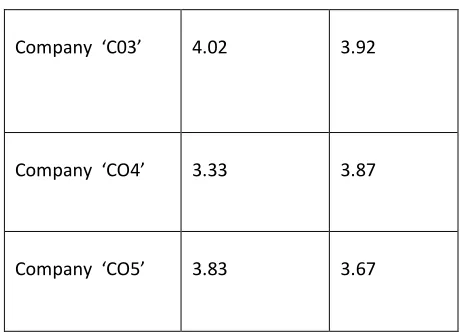
[image:10.612.329.559.53.219.2]A detailed survey of the above five companies was carried out through study of their continuity and change forces, focused discussions and personal interviews with key personnel. A structured questionnaire was used at each of the above companies to capture their views on various factors which affect the forces of continuity and change as outlined in this paper. Six pharmaceutical personnel from each of the select company were interviewed and questionnaires were filled up as per convenience sampling. Findings of this study have been summarized below:
Table 1: Summary of Research Finding (Values are on a scale of 1-5)
Pharmaceutical Companies
Average Scores
for Average Scores for
Forces of
Continuity Forces of Changes
Company ‘CO1’ 4.00 4.00
Company ‘CO2’ 3.81 3.84
Company ‘C03’ 4.02 3.92
Company ‘CO4’ 3.33 3.87
Company ‘CO5’ 3.83 3.67
Average score has been computed for forces of continuity and forces of change by taking an average of all the responses (on a scale of 1 to 5) to 25 research questions for factors affecting forces of continuity and 33 questions for factors affecting forces of change administered to six experts for each of the above pharmaceutical company.
Analysis and Suggested Strategies
A survey based on focused discussions and interviews of pharmaceutical companies personnel using a structured questionnaire on continuity and change factors. Based on our study of the above organizations it has come out clearly those organizations which focus too much on continuity forces and ignore the forces of change in pharmaceutical sector tend to lose on the flexibility and sometime lead to obsolescence and losing to the competition. On the other hand organizations focusing only on forces of change with little regard for the forces of continuity find themselves in difficult position to sustain the business.
In pharmaceutical sector each of the above factors has to be kept in view to survive in the competitive era. It is evident that the forces of continuity would affect the business and strategy adopted by the organization.
On the other hand the forces of Change have a direct impact on the existence of an organization For example, in the pharmaceutical sector the new IPR regime involved a fairly dramatic overhaul of existing institutions, many countries were granted transitional periods to implement the new policy. Each organization studied needs to consider the above forces of change and continuity and to construct the value of pharmaceutical firms in the pharmaceutical sector so that not at any point they are archaic and continue their operations in accordance with change in environment whether it is customer requirement or government legislations.
Flexible strategic framework for managing forces of Continuity – Change combinations in pharmaceutical firms operating in Indian Pharmaceutical sector
For company ‘CO3’ and ‘CO5’ C-C matrix suggests that the forces of continuity are high whereas forces of change are low. Here pharmaceutical companies (CO3 &CO5) needs to focus on changing external environment requirements (customer needs, competition etc) so that the company can be in flow stream strategy. Companies ‘CO1’ and ‘CO2’ are high on continuity forces and also high on forces of change; even though it can strengthen its position by focusing uniformly on factors affecting forces of continuity and forces of change. Company ‘CO2’ needs to get better as compared to company ‘CO1’ while company ‘CO4’ is high on forces of change but low on forces of continuity in order to stay alive and grow it needs to focus more on its factors affecting forces of continuity.
VII. CONCLUSIONS
The above research has undoubtedly verified that the flexible strategic framework for managing forces of continuity and change in pharmaceutical industry has given explicit strategic direction to each company studied depending upon its average score for each factor on Continuity and Change Matrix developed.
Aim of any organization existing in the market is to ensure long term growth of the organization through continuity and change. The above paper brings out clearly the path suggested for the above five different organizations to make a significant contribution to the survival and growth. The continuity and change matrix provides a flexible framework for an organization by managing factors affecting forcers of continuity and change, as an integral part of the organizations overall strategy.
Limitations and Scope of Further Research
The above research was limited to study of five pharmaceutical companies due to the paucity of time. A bigger sample could have enriched the logic depicted in the model .The above study can be extended to study of various other companies operating in the pharmaceutical sector which could also give a more comprehensive application of the above flexible strategic framework proposed in this paper.
REFERENCES
[2] Baum JAC, Ingram P. (1998).Survival enhancing learning in the Manhattan hotel industry, 1989–1980. Management Science 44: 996–1016.
[3] Banbury, C. M., W. Mitchell,(1995), The effect of introducing important incremental innovations on markets share and business survival. Strategic Management J. 16 16 1-182.
[4] Basil Achilladelis, Nicholas Antonakis, (2001). The dynamics of technological innovation: the case of the pharmaceutical industry, Research Policy 30. 535–588.
[5] Comanor. W.S, (1965). Research and Technical Change in the Pharmaceutical Industry.
[6] Chataway.J, Tait.J and Wield.D (2010), Frameworks for Pharmaceutical Innovation in Developing Countries— The Case of Indian Pharma, Taylor & Francis DOI: 10.1080/09537320701521465.
[7] Dutta.A (2011), from Free Entry to Patent Protection: Welfare Implications For the Indian Pharmaceutical Industry, The Review of Economics and Statistics, 93(1): 160–178.
[8] Feinber.S.E, Majumda.S.K (2001), Technology Spillovers from Foreign Direct Investment in the Indian Pharmaceutical Industry, Journal of International Business Studies, 32, 3:421-437.
[9] Garg.R.K, Singh.T.P,(2006).Management of Change – A Comprehensive Review, Global Journal of Flexible Systems Management , Vol. 7, Nos. 1&2, pp 45- 60.
[10] GuptaV.K,(2009). Flexible Strategic Framework for Managing Forces of Continuity and Change in Value Engineering Processes: Study in Indian Context, Global Journal of Flexible Systems Management, Vol. 10, No. 4, pp 55-6.
[11] GuptaV.K,(2010). Flexible Strategic Framework for Managing Forces of Continuity and Change: Study of Supply Chain Management of Lighting Industry in India, Global Journal of Flexible Systems Management 2010, Vol. 11, No. 3, pp 39-50.
[12] IMS Health (2001) . World Review: The Pharmaceutical Market, IMS Health Inc, Norwalk, Connecticut, p. 32 .
[13] Ingram P, Baum JAC. 1997. Opportunity and constraint: organizations’ learning from the operating and competitive experience of industries. Strategic Management Journal, Summer Special Issue 18: 75–98.
[14] India’s Pharmaceutical Industry on the Course for Globalization, (April 9, 2008).Deutsche Bank Report.
[15] Ives,, B., Learmonth, G.P,(1984).,The Information System as a Competitive Weapon, in: Communications of the ACM 27 -12, S. 1193-1201.
[16] Javalgi, R. G & Wrigh, R. F (2003) . An international market entry model for pharmaceutical companies: A conceptual; framework for strategic decisions. Int. J. Med. Mkt. 3, 274 – 286 .
[17] Kesic.D, (2009). Strategic Analysis of the World Pharmaceutical Industry, Management, Vol. 14, pp. 59-76
[18] Khanna.I,(2012).Drug Discovery in Pharmaceutical Industry:Productivity Challenges and Trends, Drug Discovery Today _ Volume 17, Numbers 19/20.
[19] Khan.M.A.A, Muppani.V.R , Kuntluru.S.(2012). Foreign Direct Investment and Export Performance of Pharmaceutical Firms in India: An Empirical Approach, International Journal of Economics and Finance Vol. 4, No. 5. [20] Kale.D, Wield. (2008).Exploitative and Explorative Learning as a Response
to the TRIPS Agreement in Indian Pharmaceutical Firms, Industry and Innovation, 15:1, 93-114.
[21] Laínez J.M., Schaefer.E, Reklaitis G.V,(2012).Challenges and opportunities in enterprise-wide optimization in the pharmaceutical industry, Computers and Chemical Engineering 47-19– 28.
[22] Laura B. Cardinal, (2001).Technological Innovation in the Pharmaceutical Industry: The Use of Organizational Control in Managing Research and Development, Organization Science, Vol. 12, No. 1 , pp. 19-36
[23] Nesta.L and Saviotti.P.P (200)5, Coherence of the Knowledge Base and the Firm's Innovative Performance: Evidence from the U.S. Pharmaceutical Industry, The Journal of Industrial Economics, Vol. 53, No. 1, pp. 123-142. [24] Nasim S and Sushil(2011) Revisiting Organizational Change: Exploring the
Paradox of Managing Continuity and Change, Journal of Change Management, 11:2, 185-206.
[25] Nerkar.A and Roberts P.W. (2004), Technological and Product-Market Experience and the Success of New Product Introductions in the Pharmaceutical Industry, Strategic Management Journal Strat. Mgmt. J., 25: 779–799.
[26] Puschmann.T, Alt.R, Customer Relationship Management in the Pharmaceutical Industry, Institute of Information Management University of St. Gallen St. Gallen, Switzerland.
[27] Pharma Industry Performance Metrics: 2007–2012E. BioBusiness Briefs, Market Watch.
[28] Roberts P.W,(1999). Product Innovation, Product-Market Competition and Persistent Profitability in the U.S Pharmaceutical Industry, Strategic Management Journal Strat. Mgmt. J., 20: 655–670.
[29] Srivastava.R, Chandra .A, Kumar.G,(2004).Strategic Imperatives for Globalization of Industries in Developing Countries: An Indian Pharmaceutical Industry Example, Health Marketing Quarterly, Vol. 22(1) . [30] Singh.R,Sandhu.H.S,Metri.B.A, Kau.R,(2010).Relating Organized Retail
Supply Chain Management Practices, Competitive Advantage and Organizational Performance, The Journal of Business Perspective 14: 173. [31] Sushil,(2005).A Flexible Strategy Framework for Managing Continuity and
Change, International Journal of Global Business and Competitiveness, Vol. 1, No. 1, pp 22-32.
[32] Schwartzman, D,(1976) Innovation in the Pharmaceutical Industry, The Johns Hopkins University Press.
[33] Sharma J.K and Singh A.K,( 2012).Change and Competitive Advantage: An Investigative Study of Indian Pharmaceutical Industry, The IUP Journal of Business Strategy, Vol. IX, No. 3.
[34] Slinn.J (2008): Patents and the UK pharmaceutical industry between 1945 and the 1970s, History and Technology: An International Journal, 24:2, 191-205.
[35] Zuniga.mM.P, Guzmán.A, Grossman F.B(2007):Technology Acquisition Strategies in the Pharmaceutical Industry in Mexico,Comparative Technology Transfer and Society, Volume 5, Number 2007, pp. 274-296
AUTHORS