Educational Policy Studies Dissertations Department of Educational Policy Studies
5-16-2008
Preparation of the Assistant Principal for the Role
of Principle: An Examination of Real Tasks as
Compared to the Perceived Ideal Tasks
April Chastang MaddenFollow this and additional works at:https://scholarworks.gsu.edu/eps_diss Part of theEducation Commons, and theEducation Policy Commons
This Dissertation is brought to you for free and open access by the Department of Educational Policy Studies at ScholarWorks @ Georgia State University. It has been accepted for inclusion in Educational Policy Studies Dissertations by an authorized administrator of ScholarWorks @ Georgia State University. For more information, please [email protected].
Recommended Citation
Madden, April Chastang, "Preparation of the Assistant Principal for the Role of Principle: An Examination of Real Tasks as Compared to the Perceived Ideal Tasks." Dissertation, Georgia State University, 2008.
This dissertation, PREPARATION OF THE ASSISTANT PRINCIPAL FOR THE ROLE OF THE PRINCIPAL: AN EXAMINATION OF REAL TASKS AS COMPARED TO THE PERCEIVED IDEAL TASKS, by APRIL C.
MADDEN, was prepared under the direction of the candidates Dissertation Advisory Committee. It is accepted by the committee members in partial fulfillment of the
requirements for the degree of Doctor of Philosophy in the College of Education, Georgia State University.
The Dissertation Advisory Committee and the student’s Department Chair, as representatives of the faculty, certify that this dissertation has met all standards of excellence and scholarship as determined by the faculty. The Dean of the College of Education concurs.
_________________________ ________________________ Hayward Richardson, Ed.D. Laura McNeal, J.D., Ph.D. Committee Chair Committee Member
_________________________ ________________________ Carlos McCray, Ed.D. Carolyn Furlow, Ph.D. Committee Member Committee Member
_________________________ Date
_________________________ Sheryl Gowen, Ph.D.
Chair, Department of Educational Policy Studies
_________________________ R. W. Kamphaus, Ph.D.
By presenting this dissertation as a partial fulfillment of the requirements for the advanced degree from Georgia State University, I agree that the library of Georgia State
University shall make it available for inspection and circulation in accordance with its governing materials of this type. I agree that permission to quote, to copy from, or to publish this dissertation may be granted by the
professor under whose direction it was written, by the College of Education’s director of graduate studies and research, or by me. Such quoting, copying, or publishing must be solely for scholarly purposes and will not involve potential financial gain. It is understood that any copying from or publication of this dissertation which involves potential financial gain will not be allowed without my written permission.
All dissertations deposited in the Georgia State library must be used in accordance with the stipulations prescribed by the author in the preceding statement. The author of this dissertation is:
April Chastang Madden 2427 Fair Oaks Drive
Jonesboro, GA 30236
The director of this dissertation is
Dr. Hayward Richardson
Department of Educational Policy Studies College of Education
April C. Madden ADDRESS: 2427 Fair Oaks Drive
Jonesboro, GA 30235 EDUCATION:
Ph.D. 2008 Georgia State University Educational Leadership Ed.S. 1998 Georgia State University
Educational Administration and Supervision
M.S. 1996 Georgia State University
Educational Administration and Supervision
B.A. 1993 University of Georgia Special Education PROFESSIONAL EXPERIENCE:
2003-Present Principal
Clayton County Public Schools, Jonesboro, GA 2002-2003 Assistant Principal
Clayton County Public Schools, Jonesboro, GA 2001-2002 Coordinator of Recruiting
Clayton County Public Schools, Jonesboro, GA 2000-2001 Assistant Principal
Clayton County Public Schools, Jonesboro, GA 1999-2000 Instructional Technology Specialist,
Jonesboro GA
1993-1999 Teacher, Clayton County Public Schools, Jonesboro, GA
PROFESSIONAL SOCIETIES AND ORGANIZATIONS
2006-Present Association for Supervision & Curriculum Development
PREPARATION OF THE ASSISTANT PRINCIPAL FOR THE ROLE OF THE PRINCIPAL: AN EXAMINATION OF REAL TASKS AS COMPARED
TO THE PERCEIVED IDEAL TASKS by
April Chastang Madden
Principals most commonly ascend from the pool of those who are assistant principals, but it is unclear whether assistant principals are prepared to assume such a pivotal leadership role. This study seeks to compare the extent of on the job training provided to the assistant principals by examining ideal as compared to actual task performance in six competency areas associated with the job of principal. The research questions were as follows:
1. What are the perceived ideal professional tasks assistant principals should perform prior to becoming a principal?
2. Which tasks are performed by assistant principals?
3. Do these performed tasks prepare assistant principals for principalships?
t-tests were used for data analysis. As for research
question 1, this study revealed that the tasks that ranked the highest among the study participants regarding
perceived ideal tasks that assistant principals should perform prior to becoming principal were the competencies falling under the categories of Instructional Leader, Leadership in Staff Personnel, and Management of Schools. For question 2, the competency tasks associated with the job of the principal ranked with mean values falling as: first, management of school, second leadership of staff personnel, third oversee pupil personnel, fourth serve as instructional leader, fifth foster community relations and sixth develop and organize student activities. Regarding research question 3, The Pearson Correlation along with t-tests of subscales showed that there are significant
TO THE PERCEIVED IDEAL TASKS by
April C. Madden
A Dissertation
Presented in Partial Fulfillment of Requirements for the Degree of
Doctor of Philosophy in
Educational Policy Studies in
the Department of Educational Policy Studies in
the College of Education Georgia State University
Dr. Hayward Richardson, Major Advisor
Copyright by April C. Madden
ii
ACKNOWLEDGMENTS
Earning a doctorate has been a vital goal to me for a long time. Therefore, I would like to take this opportunity to express my sincere appreciation to those who helped me in completing this dissertation. My goal would never have become a reality without their support, guidance, and encouragement.
First of all, I would like to express my sincerest gratitude to Dr. Haywood Richardson, my dissertation chair, who has been a lifesaver in this process. He jumped in and never skipped a beat. A special thanks to Dr. Carolyn
Furlow, who assisted me during the data collection and
analysis of my dissertation. I would also like to thank Dr. Carlos McCrary for his support and help. Additionally, I would like to thank Dr. McNeal for serving on my committee and offering her assistance.
I am particularly grateful to my parents, Percy and Carolyn Chastang for their love, financial support, and for just believing in me. Finally, my son, Garrison John
iii
TABLE OF CONTENTS
Page
List of Tables...v
Chapter 1. INTRODUCTION... 1
Background of the Problem... 1
Statement of the Problem... 3
Purpose of Study... 6
Research Questions/Hypothesis... 6
Significance of the Study... 7
Conceptual Framework... 9
2. REVIEW OF RELATED LITERATURE... 12
Role of the Assistant Principal... 13
Role of the Principal... 21
Management versus Leadership... 26
Leadership Theories... 30
Preparation for the Principalship... 34
Summary... 44
3 METHODOLOGY... 47
Research Design... 47
Population... 49
Instrumentation... 50
Operational Definitions... 52
Procedures... 54
Data Analysis... 55
4 RESULTS... 58
Description of the Sample... 58
iv
5 SUMMARY, DISCUSSION, CONCLUSION... 73
Summary... 73
Summary of Findings Related to Hypothesis... 76
Discussion... 77
Limitations... 79
Conclusions... 80
Implications... 81
Recommendations for Future Research... 82
Summary and Conclusions... 84
References... 86
v
LIST OF TABLES
Table Page 1 Participant Information: Number of Years
Teaching...59
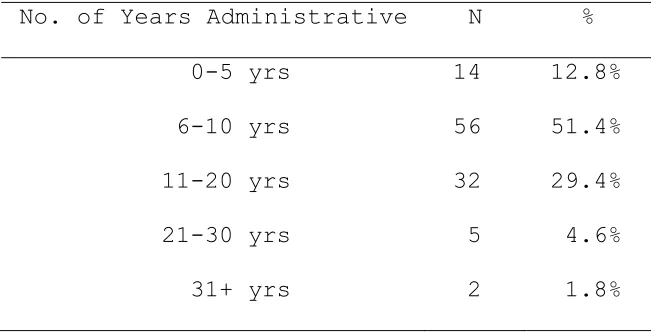
2 Participant Information: Number of Years Administrative...59
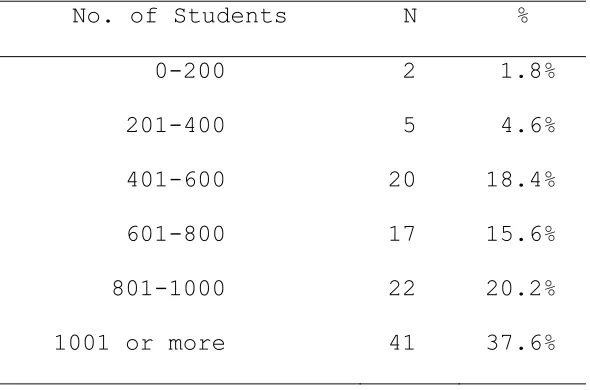
3 Participant Information: Number of Students...60
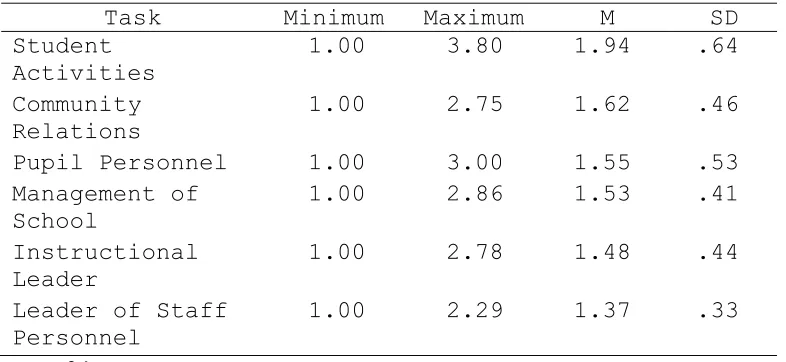
4 Ranking of Ideal Tasks...61
5 Ranking of Actual Tasks Performed...62
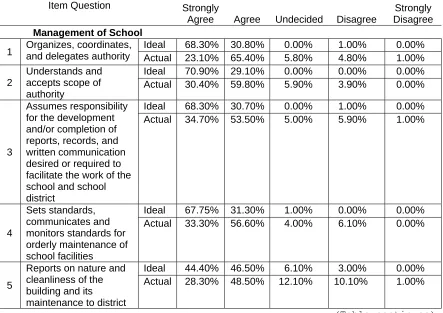
6 Frequency of Responses (Research Question 3)...62
7 Correlations Between Ideal and Actual Tasks...70
1 CHAPTER 1 INTRODUCTION
Background of the Problem
The shortage of qualified candidates to fill public school principalship positions has recently received national attention. Currently, the aging cadre of
principals is a great concern because it is predicted that almost 60% of serving principals are eligible for
retirement (Goodson, 2000). Bloom and Krovetz (2001) identified the shortage of principals as one factor that leads to assistant principals’ being moved into the role of principal before they are fully prepared. Because of this rapid transition to principal, assistant principals are serving for relatively short periods of time and are typically assigned to a very narrow range of
principal position in the previous year. These
super-intendents were asked if there was a surplus, shortage, or the right number of qualified candidates for the principal positions they needed to fill. Fifty percent reported a shortage of qualified candidates. The Institute for Educational Leadership suggested that this rush to fill vacancies by promoting assistant principals is one reason these administrators receive little or no experience or preparation to help them become school leaders.
The position of assistant principal has been perceived as a means to accomplish two important organizational
purposes: to facilitate the effective administration of the school and to provide training opportunities for future school principals (Goodson, 2000). The preparation of future principals is a vital aspect for maintaining the momentum of providing viable school leadership. The
Recent research indicates that the assistant principal position does not provide the appropriate training or preparation for assistant principals to become principals (Fields, 2002; Goodson, 2000; Mertz, 2000). Consequently, a number of competencies must be developed that are paramount to the training of assistant principals. They must be
competent in all aspects of school management, including school finance; school law; educational and psychological management; staff supervision and education; and effective communication with students, parents, and the community (Goodson). It is important that assistant principals understand the requirements of the principalship and
complete preparation programs that qualify them for success in the role. The supposition of the present study is that to improve the preparation of assistant principals for the principalship, research must be conducted to provide data to be used for advocating changes in academic preparation, field-based learning, and personal and professional
formation.
Statement of the Problem
principal retirements compound the shortage. In recent years, few qualified candidates have interviewed for administrative positions. Consequently, promising
individuals who have very limited experience have been
chosen for the positions (Bloom & Krovetz, 2001). Bloom and Krovetz address the problem of assistant principals’ lack of preparation by asserting that “in these days of
principal shortages, we have found that many assistant principals and resource teachers are moving into
principalships after serving for relatively short periods of time in these preparatory roles” (p. 12).
To assist with the preparation of new administrators, most academic leadership programs are designed to meet the Interstate School Leaders Licensure Consortium standards (Council of Chief State School Officers, 1996) for
accreditation that promote the development of key
performance skills. Hence, the educational development of new administrators is guided as they prepare for the
assistant principalship; however, the experiential
component of preparation for the principalship is not well defined. The problem of the experiential component’s not being adequately defined is the result of a lack of
Research by Fields (2002) concerning professional development and new administrators found that
the role of assistant principal is one of the least researched and discussed topics in profes-sional journals and books on educational leader-ship. The ambiguity of the role allows for the ineffective use of this position and makes it a particularly difficult role to fulfill. (pp. 2-3) Principals most commonly ascend from the pool of those who are assistant principals, but it is unclear whether
assistant principals are prepared to assume such a pivotal leadership role. Koru (1993) asserted that “during the time a future principal spends as an assistant principal, he or she is engaged in activities that offer little preparation for the kind of leadership expected of principals” (p. 71). The question of the preparatory role of the assistant
principal is further purported by Hartzell, Williams, and Nelson (1995), who held that
the nature of the assistant principalship and the skills required to be successful as an [assistant principal] are oriented much more toward manage-ment than toward leadership, a condition that does not promote the development of visionary leadership in its occupants. (p. 158)
performed by the assistant principal in readiness for principalship.
Purpose of Study
The purpose of this study was to determine whether or not the role of assistant principal in the public secondary schools in the state of Georgia prepares one to serve as a principal.
Research Questions/Hypothesis
Research Questions
Those committed to the improvement of educational
administration as a profession seek new ways to enhance the success of aspiring school leaders and to improve the means through which they are prepared for their professional
work. Previous research indicates that the assistant principalship may not be the most productive ground for future principals (Bloom & Krovetz, 2001; Goodson, 2000). This inquiry is designed to add to this body of literature and to provide further knowledge that may offer suggestions for improving the preparation of assistant principals. The questions are purposefully designed to examine the
of school, leadership in staff personnel, community
relations, instructional leadership, student activities, and pupil personnel. The research questions were as
follows:
1. What are the perceived ideal professional tasks assistant principals should perform prior to becoming a principal?
2. What tasks are performed by assistant principals? 3. Do the tasks performed prepare assistant
principals for principalship?
Hypothesis
The hypothesis was used to test the theory that
assistant principals are not being adequately prepared for principalships and will answer the third research question. It is predicted that assistant principals are not being prepared for principalships. The hypothesis is as follows:
There will be a significant difference between perceived ideal tasks that should be performed by assistant principals and the tasks actually
performed by assistant principals. Significance of Study
assistant principals and on-the-job training because the administrative career path for principals usually begins in the assistant principal position.
ability to balance management and leadership roles
(management of school), set high expectations and standards (leadership in staff personnel), actively engage the
community (community relations), demand content and
instruction that ensure student achievement (instructional leadership), create a culture of adult learning (student activities), and use multiple sources of data as diagnostic tools (pupil personnel).
Finally, this study is important because it contains information that can be used by organizations that focus on principal training as they reformulate the characteristics of school leaders, which are that they must be able to appreciate diverse perspectives, understand the big picture, gather and use data for planning, motivate themselves and others, facilitate group efforts, solve problems, and accomplish goals (Bradshaw, 2000).
Conceptual Framework
The guiding framework for the present study was
management is more about orders, mandates, and
instructions. The leader focuses on change and innovation, while the manager engages in very little change but manages what is present and leaves things much as they found them when they depart. Golanda (1991) reported that most
assistant principals are assigned duties categorized as management rather than as leadership, and the role of assistant principal is very limited in scope regarding responsibilities normally associated with leadership.
There are several theories of leadership that can be applied to the educational setting. For example,
De Neuville (1998) conveyed two types of leadership theories:
the great man/great woman theory that involves believing that people in power influence major events; and the trait theory, which states that characteristics of leaders include all manner of physical, personality and cognitive factors, including height, intelligence and communication skills. (p. 3)
12 CHAPTER 2
REVIEW OF LITERATURE
Although the position of assistant principal is often viewed as an important step to the principalship, the
majority of the educational literature about the assistant principalship leans toward the premise that the position does not provide a smooth transition into the role of
principal (Denmark & Davis, 2000; Hartzell, 1993). Instead, the traditional socialization process promotes the assist-ant principal as the school’s operation manager. He or she works in the shadow of the principal and is associated with maintaining order and stability (Goodson, 2000).
are tedious and custodial in nature (Hausman, Nebeker, McCreary, & Donaldson, 2002). In view of this contra-diction, it is unclear whether the assistant principal
position actually provides an individual with opportunities for leadership development that are crucial to the role of principal.
This literature review is organized into the following subcategories: role of the assistant principal, role of the principal, leadership versus management, leadership
theories, preparation for principalship, and summary. The Role of Assistant Principal
In the first nationwide study of assistant principal-ships, the National Association of Elementary School
Principals in 1923 surveyed 1,270 assistant principals and described characteristics of this group. Duties included disciplinary and attendance matters. Recent studies note the importance of the assistant principal in the school system with regard to curriculum, staff development, and instructional leadership (Glanz, 1994). A 1992 study of 164 New York City assistant principals showed that actual
arrangements, instructional media services, counseling pupils, school clubs, assisting PTA, formulating goals, staff development, faculty meetings, teacher training, instructional leadership, public relations, curriculum development, innovations and research, school budgeting, and teacher selection (Glanz).
Student discipline, student activities, and student attendance are still viewed as the three major duties of assistant principals (Simpson, 2000). Simpson also reported that many assistant principals feel frustrated by serving only as disciplinarians. In addition to listing typical duties of assistant principals, Ryan (1998) suggested the need for greater clarity regarding the specific duties associated with such roles; thereby, increasing the assistant principal’s significance and involvement in instructional and curricular issues.
Celikten (2001) reports further on the instructional leadership role of school assistant principals. Research regarding the roles and responsibilities of an assistant principal demonstrates the difficulty in creating a
standard list of duties because of the vast differences in school contexts. When directly asked about their duties, assistant principals tend to respond with a list that
activities. It is also noted that assigned tasks include those the principal does not want to do, which may or may not be delegated depending on the willingness of the
principal to do so. Celikten (2001) listed five major
responsibilities typically reported: disciplining students, distributing textbooks, supervising the cafeteria,
assigning lockers, and attending student activities. Celikten (2001) noted that while instructional
leadership may be defined in different ways, most include behaviors or actions with the intention of developing a productive working environment for teachers and a desirable condition for children. These tasks are part of the respon-sibility of the assistant principal. A common definition of instructional leadership includes observation and evalua-tion of teachers as well as curriculum development, which are also duties of the assistant principal. The instruc-tional leader or assistant principal must be visible, solve problems, initiate community awareness, provide staff
support, communicate a vision, optimize school resources, provide teacher in-service, develop the school schedule, and promote a positive school climate.
position of assistant principal and who aspires to the principalship is dependent upon the motivation and
abilities of the principal with whom he or she works. Thus, Golanda suggested that it is best when the leadership of the school is a well-defined team effort between the principal and assistant principal.
Hausman et al. (2002) reported that the literature shows a trend in the importance of the role of the assis-tant principal. In a review of data from 125 assisassis-tant
principals in Maine, results showed gender differences with regard to time spent on certain tasks. Women spent more time on instructional leadership, professional development, personnel management, and public relations compared to men. Thus, female assistant principals were more visible and involved in tasks associated with programs than male assis-tant principals.
McAdams and Lambie (2003) reported findings of their national survey of school assistant principals and
principals, conducted to examine trends related to
aggression and the educational processes. Findings showed that school staff at all grade levels can expect to be involved in reactive and proactive student aggression
personnel including the assistant principal must become aware of tools which are essential to the role of princi-pal, such as relationship building, stimulus control instruction, cognitive restructuring, self-control and social skills instruction, positive reinforcement, logical consequences, problem solving, moral education, and family involvement (McAdams & Lambie).
Foley (2001) further noted that principals reported the need for additional training in these areas as well, indicating that they did not receive it as assistant
principals. Findings from 13 school principals showed that they reported needing professional development in areas of conflict resolution and development of school community partnerships.
Early studies on the assistant principal were
conducted in 1923 by the Department of Elementary School Principal’s Committee on Educational Progress (National Association of Elementary Principals, 2001). Although none of the duties and responsibilities were clearly defined, the study indicated that classroom teaching, administra-tion, and supervision were major responsibilities and duties of the assistant principal.
consisted of information gathered from 1,127 assistant principals and 1,207 principals from 50 states. Austin and Brown classified roles and responsibilities of an assistant principal into six broad categories: (a) school management, (b) staff personnel, (c) community relations, (d) student activities, (e) curriculum and instruction, and (f) pupil personnel items. When asked to report the most important administrative tasks they performed, the assistant
principals listed the following: 83% of the assistant
principals indicated that discipline was the most important duty that they performed, 76% selected student attendance, 72% selected creating the master schedule, 69% selected school policies, 67% selected curriculum development, 64% selected teacher evaluation, 62% selected new teacher orientation and school guidance, and 55% selected the special procedures for the opening and closing out of school.
parents and teachers. Because of its lack of involvement in various leadership activities, Koru concluded that the
position of assistant principal is not an adequate training ground for the principalship.
Mertz (2000) expanded on the duties and responsibili-ties of the assistant principal by stating that the duresponsibili-ties of the position are largely assigned by the principal and these duties have increased in the last 50 years. The author also pointed out that what should be taken into account when assigning duties and responsibilities are the assistant principal’s intentions, values, motives,
expertise, needs, and capabilities as well as the managerial needs of the organization.
Glanz (1994) reported on a study conducted among New York City School assistant principals who were surveyed about their attitudes toward their duties and responsibili-ties. Questions asked of the participants were as follows:
1. What are your current responsibilities as an AP?
2. In your view, what duties should APs be performing?
According to the results of the study, over 90% of assis-tant principals surveyed feel they should be more involved in “professional and fulfilling” responsibilities. Ninety-one percent of the respondents stressed the importance of the assistant principal position but complained that they rarely engaged in professional activities, such as instruc-tional supervision, program development, and evaluation procedures.
Glanz (1994) also reported that studies demonstrate that the duties and responsibilities of assistant princi-pals are different from those of principrinci-pals and that the assistant principalship does not provide appropriate
training for becoming a principal. Mertz (2000) listed the various daily, applied responsibilities of assistant
principals as follows:
discipline, parking, athletics, lockers, dances, plays and other school events, open houses, new teacher support, intern supervision, graduation, liaison to other organizations or agencies, cafe-teria duty, hall monitoring, state reporting records, special projects (e.g., accreditation, school improvement plans), going to meetings outside the building. (p. 6)
students’ being sent to them by teachers or others, meeting with parents, holding disciplinary hearings, and monitoring disciplinary decisions.
Role of the Principal
In the early twentieth century, as single-room school-houses expanded to multiple grade classrooms, the need for someone to manage the daily operations grew. The role was initially filled by the classroom teacher who, in addition to her classroom teaching responsibilities, took on the responsibility of managing the school. The schools contin-ued to grow, which led to principal teachers who eventually stopped teaching to assume the role of principal. Manage-ment of the school was the primary role of the principal. The principal, as manager, was responsible for financial operations, maintenance of the school building, student scheduling, personnel, public relations, school policy regarding discipline, coordination of the instructional program, and other overall school matters. The role did include some aspects of curriculum and instruction, but during this time, their main responsibility was school
as instructional leader also moved to the forefront of responsibilities (Jenlink, 2000).
Principals are still expected to perform the tradi-tional responsibilities, but also to serve as a leader who improves both the delivery of instruction and student
achievement. Principals are given the specific charge to lead, to exert formal authority over the school (Fields, 2002; Goodson, 2000; Gurr, 2000; Institute for Educational Leadership, 2000; Mertz, 2000). However, voluntary action by teachers and others directed toward the important goals new leaders hope to pursue depends on new leaders' abili-ties to secure the validation, support, and affirmation of the group as a whole. This affirmation emerges from group processes that are complex, interactive, and diffuse. At the same time, principals must adhere to district norms and policies, pursuing goals and objectives set out by their superiors. Murphy (1998) emphasized that the principal’s leadership skills should include a strong knowledge base in the areas of instruction and curriculum. Du Four’s (1999) view of the principalship included the following responsi-bilities:
1. Using shared values and vision to lead, as oppose to rules and procedures
2. Utilizing shared decision-making and
3. Ensuring good decision-making by the staff through information, training, and
parameters
4. Focusing on results
5. Formulating the right questions instead of imposing solutions (Help Wanted section). Principals have a pivotal role in shaping the vision of others in the school. According to Bennis (2000), the very best leaders seem to embody and marry the visionary capa-city with the management capacapa-city to execute. They are expected to draw the starting line for others, urging them to take the first step, supporting and encouraging as they renew and challenge themselves. These leaders empower their teachers by providing them with the means to get things done. The principal role includes growing leaders. Accord-ing to Bennis and Townsend (1995), “Leader growers are able to earn the trust and respect of their followers by helping others to develop in their careers. Leader growers manage themselves, inspire others, and forge the future” (p.153).
hence, the principalship may also be described as an
instrument for social justice. Thompson and Crampton (2004) and Dantley (2002) reported that principals face a
challenge when attempting to fight for social justice with caring and unconventional leadership strategies. Dantley stated that principals are expected to deal with what exists in the school instead of leading the school toward what could exist.
Interactions with the parents and the community are a daily requirement of principals. They work with parents in regards to discipline issues of students, academic
failures, and general parental concerns. Principals are members of school councils and must interact with parents and community members who also serve on the council. They also interact with parent/teacher organizations and booster clubs (Seyfarth, 1999).
Tirozzi (2001) reported that leadership of school principals is considered within the context of current problems. Leadership for today’s and tomorrow’s schools requires collective skills. Principals must be instruc-tional leaders. As instrucinstruc-tional leaders, the principals become the leaders of the leaders and their responsibili-ties involve encouraging and developing instructional
leadership in teachers. Bamburg and Andrews (1990) grouped instructional leader behaviors as:
1. A resource provider that: (a) marshals personnel and resources to achieve a school’s mission and goals, and (b) is knowledgeable about curriculum and instruction.
2. An instructional resource that: (a) sets expectations for continual improvement of instructional program and actively engages in staff development, and (b) encourages the use of different instructional strategies. 3. An effective communicator that: (a) models
commitment to the school goals, (b)
articulates a vision of instructional goals and the means for integrating instructional planning and goal attainment, and (c) sets and adheres to clear performance standards for instruction and teacher behavior.
4. A visible presence that visits classrooms, attends departmental or grade-level
meetings, is accessible to discuss matters dealing with instruction, and is an active participant in staff development. (pp. 17-19)
as instructional leadership. While principals do not need law degrees, they are expected to be knowledgeable of school law that is directly related to their professional responsibilities. Greater clarity of the role for princi-pals is needed along with a greater understanding of how tasks are to be delegated or shared. Group decision-making is included in the role of the principal (Glasman, 1995; Pashiardis, 1993; Stewart, 1998; Thody, 1998).
Other duties for today’s principal include high-stakes testing, staff requirements, resources allocation, and
understanding changing adolescents. Aside from demographics changing, adolescents are changing as well. Experience
changes the brain, and today’s student has different needs than he or she did 30 years ago (Tirozzi, 2001), which leads to another responsibility that the principal has, that of school safety. Facilities and equipment must be in good working order, supervision of students is required, and school discipline problems must be addressed. Princi-pals continue to be responsible for the management of their schools despite the shift in the role over the past two decades.
Management versus Leadership
principal, the role of assistant principal is often rele-gated more to duties of management than duties of leader-ship. Denmark and Davis (2000) described management as “to bring about [or] to accomplish” and leadership as “influ-ence, guide, and action” (p. 7). Often the assistant
principal is relegated to the role of manager or bringing tasks about to accomplishment, and the principal is
bestowed the role of leader for influencing, guiding, or initiating action. Denmark and Davis concluded that if the principal places more emphasis on managing, the likelihood of the assistant principal’s learning to be a leader is diminished.
An example of such assignments is described by Erlandson (1994), who points out that many high school assistant principals are involved with tasks such as
computer scheduling (management), but never involved with budget, teacher evaluation, or matters of curriculum and instruction (leadership). Erlandson listed the following domains as being leadership-related and not typically included under assistant principals’ duties and responsi-bilities: leadership, information collection, problem analysis, judgment, organizational oversight, implementa-tion, delegaimplementa-tion, instruction and the learning environment, curriculum design, student guidance and development, staff development, measurement and evaluation, and resource
allocation.
Holmes (2001) described leadership as being about persuasion, motivation, and finely judged delegation, whereas management is more about orders, mandates, and instructions. Holmes believed that leaders need excellent communication skills. Therefore, the conclusion can be drawn that these communication skills must be developed at the assistant principal level in preparation for
The key point in differentiating between leaders and managers is the idea that employees willingly follow
leaders because they want to, not because they have to. Leaders may not possess the formal power to reward or sanction performance. However, employees give the leader power by complying with what he or she requests. On the other hand, managers may have to rely on formal authority to get employees to accomplish goals (Holmes, 2001). In essence, the leader focuses on change and innovation, while the manager engages in very little change but manages what is present and leaves things much as he or she found them when he or she departs.
According to Holmes (2001), the central theme of the comparison is that those who find themselves supervising people in an organization should be both good managers and good leaders. Research shows that administrators must be able to develop and implement sound policies, procedures, and practices. They must also be able to lead and shape the school’s culture with the creation and communication of a vision and the ability to inspire others to follow this vision.
that is more leadership in nature would, in most instances, become of secondary importance. Golanda believed that the role of assistant principal is very limited in scope
regarding responsibilities normally associated with leadership. Hogue (1999) also wrote that the assistant principal is not involved in leadership behaviors because the principal, not the assistant principal, is the key individual to initiate and be involved in school reform.
Leadership Theories
raised, as they see this as a big step in becoming a principal.
In addition to leadership theories involving traits, De Neuville (1998) discussed behaviorist theories of
leadership. From research quoted by the author, team management style was deemed as preferable. This would support educational research reported by Golanda that a team approach to the principal-assistant principal duties are the most beneficial.
Lashway (2002) discussed three major leadership models, which are as follows:
1. hierarchical (using rules, policies, and directives to govern from the top down)
2. transformational (using moral authority to create commitment to shared ideals)
3. facilitative (using teamwork to create
participation in collective decision-making). Lashway stressed that each of these models offers a useful perspective of leadership, and each has advantages and
disadvantages. Therefore, a multidimensional approach might be the most effective for school leaders.
form of instruction which leads him or her to monitor students’ and teachers’ work closely.
On the other hand, transformation leadership is an alternative type of school leadership. This type of leadership is relevant to the current climate of school education that is characterized by change (Gurr, 2000). Gurr described five dimensions of transformational leader-ship related to schools:
1. Technical leadership that involves sound management techniques
2. Human leadership that involves harnessing social and interpersonal potential
3. Educational leadership, whereas the principal demonstrates expert knowledge about education and schooling
4. Symbolic leadership that involves an
emphasis on and modeling of important goals and behaviors
5. Cultural leadership in which the principal helps define, strengthen, and articulate enduring values, beliefs, and cultural strands that give the school its identity over time. (p. 5)
fosters teacher development, and helps teachers solve problems more effectively.
Barnett, McCormick, and Conners (2001) addressed the needs of today’s principal and assessed findings related to transformational leadership in schools. Findings showed that transformational leadership behaviors of individual concern were associated with outcomes of satisfaction, extra effort and perception of leader effectiveness. Transformational leadership behaviors of vision and
inspiration had negative associations with student learning culture. Thus, Barnett et al. concluded that this leader-ship style is more complex than anticipated.
Gurr (2000) examined another leadership model, moral leadership. This approach utilizes problem solving as the core method of increasing knowledge, and the educational leader is seen as the person who promotes this approach. Wallace, Sweat, and Acker-Hocevar (1999) described a learning organization approach in which a team of people work together to increase their capacity to create a
desired future in the educational environment. The authors described learning as a creative process through which we recreate ourselves, extend our capacity to create, and
leaders is to build schools in which continuous organiza-tional learning occurs and systems-thinking creates a path to mental models that enable individuals and organizations to develop new ways of perceiving and recreating themselves and their surroundings.
Malone, Sharp, and Thompson (2000) pointed out that regardless of what leadership model is used in schools, there are some fundamental concepts that all models have in common. The effectiveness of the leader must result in a shared vision of an uplifting and enabling future, thereby enlisting others in the vision and appealing to their
values, interests, hopes, and dreams.
Preparation for the Principalship
According to a study commissioned by the National Association of Elementary School Principals (1998), there is a growing shortage of qualified applicants to fill vacancies in the principalship. Also, approximately three-fourths of the school districts surveyed did not have any training programs in place to prepare prospective
candidates from among the districts’ teaching ranks.
Assistant Principals’ Perception of Principalship
Mertz (2000) reported on a study consisting of in-depth interviews with assistant principals in various educational settings. While some of the assistant princi-pals said they would likely end their career in this
position, all of them said that they presently aspired or had previously aspired to the position of principal. One respondent expressed his feelings that anyone would want to be a principal because there is so much that must be accom-plished. This feeling directly reflected other findings reported by Mertz in which the assistant principals viewed themselves as part of a leadership team but knew their limits and knew that the principal was the one really in charge.
Mertz (2001) reported study findings that the princi-pal was viewed as the head authority. The majority of
as the ultimate authority in the traditional hierarchical, bureaucratic organizational sense. Another phrase used to describe the role of principal was “the supreme authority in the context and accorded all the rights and privileges devolving on such authority, even if perceived less than worthy of such accord” (p. 4). The respondents noted how the principal assigns duties, frames and determines what will be attended to, and has priority in all aspects of leadership. In relation to themselves, the study partici-pants saw the principal as setting parameters for the roles they play in the school as well as controlling what they are exposed to and what they gain experience in doing. Mertz noted further that participants viewed the principal as directing and reinforcing whatever norms assistant prin-cipals brought to the position. They influenced what the assistant principals learned as well as what was possible to be learned.
School-based Management and Decision Making
not limited to scheduling, staffing needs, and instruc-tional strategies. A shift in decision-making such as this would result in the role of the principal shifting from authority and leader to one of more guidance of the assis-tant principal.
Brottman (1981) expressed the idea that the role of the assistant principal should be one more involved in
decision-making, which would result in a more authoritative position. Furthermore, according to Brottman, the assistant principal too often has specific duties, but the principal makes the final decisions in regard to major, complex
issues.
In relating decision making to problem solving, Mertz (2000) noted that assistant principals are socialized to operate autonomously, to complete the task, but not
necessarily to solve any underlying problems. They are trained to act independently, not collectively. This operative is directly opposite to the school-based
management model as it requires only the basic levels of decision-making.
Maintenance versus Design
than to create change and vision through design. Burgess (1973) expressed this idea by noting that the tasks and roles that defined the assistant principal’s position
focused on the structure and organization of the school, on coverage and control over day-to-day events, and on estab-lishing and/or maintaining an efficient operation. The motivation of the position was to maintain the organi-zation.
This idea is in direct opposition to the position of the principal, who is given the freedom of design and is expected to initiate programs, solve problems, evaluate staff members, and coordinate and implement responsibili-ties (Malone et al., 2000). In addition, the principals not only have duties that are more of design in nature, but they assign the maintenance duties to the assistant princi-pals. A study conducted among school leadership teams found that the formal duties assigned to the assistant principal were clearly focused on organizational maintenance (Malone et al., 2000).
(b) community relations, and (c) instructional leader. The participants responded that they felt prepared in only 4 out of the 14 competencies.
Mertz (2000) reported on the reactions of assistant principals participating in a study in which they were
surveyed as to their perceptions of their roles compared to the roles of the principal. While the majority of these participants also were assigned tasks more closely
associated with maintenance of the organization rather than design for the organization’s structure, several also
reported their attempts to delve into the area of design. The results concluded that over time, in the face of a lack of support or encouragement for realizing their objectives, the assistants abandoned these attempts to realize their higher-level leadership goals. Not only were they given maintenance tasks, but they were not supported in their attempts to exercise more leadership.
Another study revealed how assistant principals were kept more in the realm of maintenance rather than design of the organization (Lovely, 1999). This study followed
assistant principals of four different schools. In three of the four schools, assistant principals were taught to
revealed that they felt they might be hard pressed to think of, much less create, frames of true leadership and design in which they had not experienced.
Career Development
In trying to focus more on how assistant principals can better be prepared for the role of principal, one realizes that most assistant principals are expected to learn on-the-job. Very few researchers disagreed with this notion. In fact, many supported it. The National
Association of Secondary School Principals (2000) addressed this concept in its statement on Leadership Development for School Administrators:
Be it therefore, resolved by the National
Association of Secondary School Principals that . . . [school] districts provide funding and opportunities to engage principals and assistant principals in ongoing, sustained, job embedded leadership development that focuses on knowledge, skills, and dispositions that will improve a
principal’s or assistant principal’s ability to lead and manage middle level and high school in an optimal fashion. (p. 2)
Learning-by-doing is also stressed by Brottman (1981) in that there is little or no distinction in graduate
A significant part of the development of an assistant principal’s career often lies within the auspices of the principal, as he or she is the person who defines the assistant principal’s duties and is in direct supervision of the assistant principal. Burgess (1973) reinforced this concept by stating that the building principal has a
professional obligation to help the assistant principal in training and to give him or her opportunities to broaden educational experiences in all aspects of leadership.
Wheeler and Agruso (1996) concurred by proposing that assistant principals’ training should be hands-on and simu-late as closely as possible actual problems that will be faced on the job. This can only be done by having the prin-cipal develop a close supervisory relationship with the assistant principal.
Lovely (1996) reported on a study on approaches to train assistant principals in the United States. The study focused on a program titled “Outreach,” in which assistant principals were actively sought out in order to train to be effective principals. The assistant principals were
provided with all the experiences and responsibilities
understood the diverse elements of the job and who agreed to supervise and monitor the progress of the candidates closely.
Hopkins-Thompson (2000) suggested a strong mentoring program for assistant principals as the best way to prepare them for principalship. Many universities are adding
mentoring components to their programs as a way to provide the much-needed experience as better preparation for the job of principal. Future school administrators should have the opportunity to step into an assistant principalship in which they can work closely for a year with a school
administration team in order to gain insight and knowledge about their chosen field. This would include both
managerial and leadership components of the job.
The mentorship program of the Santa Cruz schools is described by Bloom and Krovetz (2001). This program
includes the following:
1. Developing future principals through structuring the assistant principalship as an apprenticeship 2. Developing future school leaders who have the
3. Designing the role of the assistant principal in a manner that supports the work of the principal as a site leader
4. Designing the principalship and assistant
principalship in a manner so that the individuals who serve in these positions not only survive, but thrive.
Bloom and Krovetz (2001) reported that, with components such as these, the program was successful. One assistant principal reported after moving into a principalship that she was prepared to take on the responsibility of principal because of the coaching and mentoring interactions between her and her principal-mentor. She reported that they worked as a team sharing all aspects of leadership, including
evaluating, planning, and strategizing.
Self-assessment has also become an area in which assistant principals are gaining insight into preparation for the principalship. The Institute for Educational
Leadership (2000) reported a program in Texas schools in which the principals have taken the responsibility for guaranteeing effective school-level leadership. This
program is based on self-assessment, as all principals and assistant principals in the state must periodically
maintain a professional growth plan with activities based on an assessment of skill strengths and developmental changes. Principals and assistant principals base their decisions about appropriate professional development on assessment results including reflective self-assessment.
Golanda (1991) proposed that instead of the princi-pal’s being totally responsible, the assistant principal should share equally in the career development. The
principal can only assign tasks, but it is up to the assistant principal to respond and make the most of the experiences. In addition, Golanda suggested that the assistant principal not only perform the tasks well, but also be constantly seeking tasks of greater involvement.
Summary
Research on the roles of assistant principals is initiating a call for better preparation of assistant principals before they assume the role of principal. In their current position, assistant principals are typically given narrow, managerial duties that require them merely to keep things going smoothly within the environment of the school. They are very seldom given responsibilities that require higher level decision-making, creativity, or
This has led in great part to many assistant princi-pals’ feeling frustrated and dissatisfied not only with their current job, but also with their job after they gain a principalship, as they realize that they are not
prepared. Lovely (1999) suggested that assigning a
challenging job such as principal to someone who lacks the skills and training necessary for the job will in many cases lead to failure.
According to most researchers, the key to successful principalships for assistant principals lies with their current principal because he or she assigns the assistant principal’s duties and oversees their performance. A tight working relationship, also called a team effort, has been shown to be an effective method of making sure the assis-tant principal is prepared to move into a principalship. Thedford and Walter (2001) suggested that principals be willing to empower the assistant principal and give the assistant principal some instructional duties, allow him or her to participate in evaluation, public relations and
setting, keeping all of the higher-level leadership duties within the auspices of the principal is only going to keep the assistant principal at a more task-oriented, managerial level of preparedness.
47 CHAPTER 3 METHODOLOGY
The purpose of this study was to determine the extent to which existing school processes prepare assistant prin-cipals to serve as public school prinprin-cipals in the state of Georgia. Presented in this chapter are the research design, population, instrumentation, operational definitions,
procedures for collection, and analysis of the data for the study.
Research Design
The design of the present descriptive study was survey based. Descriptive research involves observation and
description of variables as they are distributed throughout a population (Crawl, 1993). I chose a descriptive design because descriptive research allows researchers to under-stand variables or conditions in a situation based on the current status of the phenomena. It provides a viable
framework of discovery and description in the investigation of competencies of principals.
numeric, descriptive data that allowed analysis of variable (descriptive or demographic and perceptions) distributions among the newly appointed principals. The validity of
survey research methodology is of critical importance. Therefore, the present research was designed to adhere to the four major tasks in the conduct of survey research: (a) matching the survey design to the researcher's
questions, (b) defining the sample, (c) selecting and developing data collection methods, and (d) analyzing the data (Crawl, 1993).
Newly appointed principals were surveyed regarding the real and ideal competencies of assistant principals in six task areas: management of school, leadership in staff
personnel, community relations, instructional leadership, student activities, and pupil personnel. Data from this survey were used to answer the research questions:
1. What are the perceived ideal professional tasks assistant principals should perform prior to becoming a principal?
2. Which tasks are performed by assistant principals?
Population
The target population for the study included all Georgia public secondary school principals (grades 6-12) who previously served as assistant principals and who were appointed as principals within the previous 1-3 years.
Information regarding principals employed for the 2006-2007 school year was obtained from the 2007 Georgia Public
Education Directory located on the Georgia Department of Education’s website (http://www.doe.k12.ga.us). This directory is published annually by the Georgia State
Department of Education and is made available to all public school systems in the state. From the list of the schools in the state of Georgia’s Public Education Directory, all the schools with middle and high in their names were chosen to build a distribution list of principals that met that aspect of the desired target population. The years of experience of the principals on the state of Georgia
department’s website were not provided; hence, there was no way to determine the true number of principals in the
sampling frame. As a result, all principals on the
distribution list were contacted for participation. For purposes of this study, the self-selected sample
principals within the previous 1-3 years. Because there was no singular reference source that indicated the number of persons who met all the criteria for inclusion, the only way to determine if they were part of the target group was based on their response to the survey. Hence, it was not possible to calculate the return rate.
Instrumentation
A 59-item survey developed by Kriekard (1985) was used to obtain responses from secondary school principals
appointed to their principalship within the previous 1-3 years. Kriekard’s study, which was to determine the
competencies needed to serve as an assistant principal, included 289 randomly selected secondary school assistant principals in a six-state area in the southwestern United States. The competencies on Kriekard’s instrument were developed from (a) The National Association of Secondary School Principal’s Task Inventory; (b) The Performance Evaluation of Educational Leaders, a nationally validated instrument developed by Demcke at Arizona State University; and (c) a competency listing for assistant principals
developed by Kriekard and Norton in 1980. A popularity index was used to validate the competencies listed in his study by identifying the extent to which assistant
real part of their job. Point values were assigned to the competencies and mean scores of the competencies were calculated. Valid descriptors for the real and ideal competencies of assistant principals were determined by competencies with an index score closer to 1.0 than 0.0. Kreikard (1985) reported reliability coefficients ranging from an alpha of .85 to an alpha of .93.
For this study, a pilot of the instrument was per-formed with 23 principals in the target population who attended the Georgia Leadership Institute Conference with the researcher. Each of the secondary school principals agreed to complete the survey to help the researcher to determine the approximate length of time it would take to respond to the survey, to determine which method of
administering the survey would be most beneficial, and to suggest modifications (if any) in language, format, or length. The group of 23 unanimously agreed that the Web-based survey method would be the best method for eliciting responses. Some of the reasons provided by the pilot group were that it would be quicker for the participants to
complete the survey right away, and finally, it would probably be more cost effective for the researcher. The pilot group reported their completion time for the survey to be approximately 20 minutes.
Data were collected on demographic characteristics (personal and professional variables including gender, ethnicity, number of years of teaching experience, and educational undergraduate degree) and job tasks. The
questionnaire for this study included demographic questions and an area at the end of the survey to allow respondents to share additional comments relating to the assistant principalship.
Operational Definitions
School management consisted of the day-to-day tasks of
organizing and running the school. These duties included delegating authority, development and completion of
reports, records and written communication, setting of standards, maintenance of order and cleanliness of school facility, pursuit of resources for maintenance, repair of the school plant, and coordination of facilities used by community groups.
Leadership in staff personnel involved duties that
related to securing and maintaining the human resources necessary to carry out the schools’ program. These duties included: staff selection, recruitment, orientation, and evaluation; dealing with conflict among personnel, parents, and students; decision-making regarding faculty; use of effective evaluation procedures; participating in profes-sional growth activities; and encouraging growth in others.
Community relations involved duties associated with
participation in community activities to include giving and receiving information about the school, its program,
students, and staff. These duties included administrative representation at community functions, use of multiple
methods to make contact, being a professional leader in the community, and helping parents and school personnel to
Instructional leadership involved duties that helped
improve instruction, such as keeping staff informed about new technology, facilitating staff involvement in new
programs, working to equalize educational opportunities for students, clarification of goals, serving on committees, preparation of the master schedule, and resolving conflicts related to instruction.
Student activities involved responsibilities for the
non-classroom activities of students. These duties applied to student organizations, activities such as athletics or debates, meeting with student leaders and administrators, encouraging parental involvement, creating the master schedule, and assisting with student fundraising.
Pupil personnel involved duties associated with
student management procedures to include establishment of procedures regarding positive student behavior, discipline, attendance, and counseling and guidance; monitoring of
student problems such as racial or sexual composition of groups; and insurance of appropriate use of community agencies.
Procedures
permission was granted, I submitted the instrument and a proposed cover letter to the University’s Institutional Review Board (IRB) for its approval.
Following IRB approval, the online software, Survey Monkey, was used to distribute to potential participants an e-mail which included a cover letter, the letter of consent to participate, and a link to the survey. The cover letter explained the purpose of the study and guaranteed complete confidentiality to all respondents. At the end of the 3-week period, Survey Monkey was designed to redistribute a reminder e-mail with a link to the survey to
non-respondents to encourage their completion and return of the survey. To avoid duplication of responses, all question-naires were monitored through the Web-based instrument and were not delivered to those who had already responded.
Data Analysis
The Statistical Package for Social Sciences (SPSS, version 15) was used to analyze the data. Descriptive
statistics (frequencies and cross tabulations) were used to describe the sample’s demographics and responses to ideal and actual tasks of the assistant principal. Each response to perceptions of ideal and actual tasks were rated on a Likert scale from 1 (strongly agree) to 5 (strongly
perceived ideal tasks assistant principals should perform prior to becoming principal? What are the perceived tasks assistant principals actually perform prior to becoming a principal?) were analyzed by using frequency distributions of composite scores of each of the six major task groupings (or subscales). Within each major task, responses were
totaled and averaged to obtain a mean composite response for each respondent. Composite responses were arranged in decreasing percentages to indicate most ideal to least ideal tasks related to research question 1. Similarly, composite responses were also arranged in decreasing per-centages to indicate the tasks most actually performed to the task least actually performed related to research question 2. Composite responses were calculated in
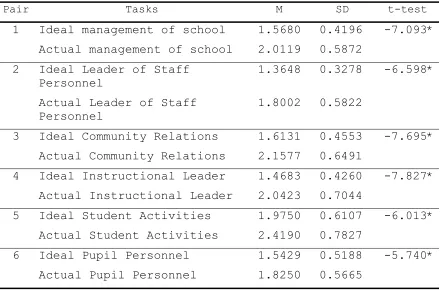
instances where a respondent completed all of the items related to the major task (or subscale). The third research question (Do the performed tasks prepare assistant princi-pals for the principrinci-palship?) was answered in a multistep process:
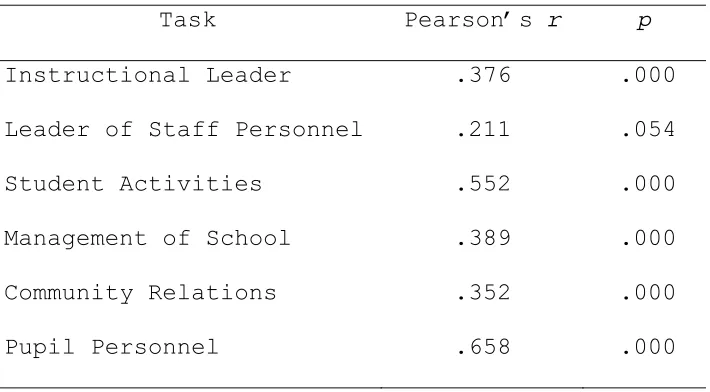
2. Pearson’s correlations between perceptions of ideal and actual tasks were performed to determine the level of dissonance in
respondent perceptions of the totality of each major task. The higher the correlation, the less the dissonance. A level of
significance equal to or less than 0.05 signaled acceptance of the correlation as statistically significant.
3. Paired sample t-tests were also used to determine the difference between the respondent perceptions of the ideal
58 CHAPTER 4
RESULTS
In this chapter, I describe the research findings of the study as follows: the general description of the sample followed by the results of the data relating to the
research questions and hypothesis. The general description includes respondents’ demographic characteristics (gender, years of teaching experience, years of administrative
experience, and number of students in the school). Number of years of teaching and number of years of administrative experience were broken down according to the following: 0-5 years, 6-10 years, 11-20 years, 21-30 years, and 31+ years. Of the 113 questionnaires returned, 91 participants
answered all questions related to the six major tasks while 70 answered the final question related to their perceptions of the importance of the ideal and actual tasks.
Description of the Sample
Sixty-eight (68%) of the respondents were male and 40 (37%) were female. As shown in Table 1, most of the sample had either 6-10 or 11-20 years of teaching experience.
distribution of the sample according to the size (in terms of student population) of the schools where they served.
Table 1
Participant Information: Number of Years Teaching
No. of Years Teaching N %
0-5 yrs 10 9.2%
6-10 yrs 33 30.3%
11-20 yrs 38 34.9%
21-30 yrs 21 19.3%
31+ yrs 7 6.4%
Table 2
Participant Information: Number of Years Administrative
No. of Years Administrative N %
0-5 yrs 14 12.8%
6-10 yrs 56 51.4%
11-20 yrs 32 29.4%
21-30 yrs 5 4.6%
[image:72.612.102.428.474.641.2]Table 3
Participant Information: Number of Students
No. of Students N %
0-200 2 1.8%
201-400 5 4.6%
401-600 20 18.4%
601-800 17 15.6%
801-1000 22 20.2%
1001 or more 41 37.6%
Findings Related to Research Questions
Research Question 1
What are the perceived ideal tasks assistant princi-pals should perform prior to becoming a principal? Each response to perceptions of ideal tasks were rated on a Likert scale from 1 (strongly agree) to 5 (strongly disagree). Results are shown in Table 4.
Research Question 2
Which tasks are performed by assistant principals? Each response to perceptions of actual tasks were rated on a Likert scale from 1 (strongly agree) to 5 (strongly
disagree). Composite responses were arranged in decreasing
Table 4
Ranking of Ideal Tasks
Task Minimum Maximum M SD Student
Activities 1.00 3.80 1.94 .64 Community
Relations 1.00 2.75 1.62 .46 Pupil Personnel 1.00 3.00 1.55 .53 Management of
School 1.00 2.86 1.53 .41
Instructional
Leader 1.00 2.78 1.48 .44
Leader of Staff Personnel
1.00 2.29 1.37 .33
N = 84.
task least actually performed related to the research
question. Composite responses were calculated in instances where a respondent completed all of the items related to the major tasks (or subscales). Findings are shown in Table 5.
Research Question 3