International Journal of Emerging Technology and Advanced Engineering
Website: www.ijetae.com (ISSN 2250-2459, UGC Approved List of Recommended Journal, Vol. 7, Issue 8, August 2017)
A Genetic Algorithm Based DG placement Approach to
Optimize Power System Distribution
Deepesh Sharma1, Naresh Kumar Yadav2Electrical Engineering Department, DCR University of Science & Technology, Murthal (Sonepat), India
Abstract— Distributed Generators are very effective to monitor the power system and to take the decisions regarding the load distribution over the system. In such power system, the main challenge is about to identify the optimal position of DG placement so that minimum power loss occur over the system. The main motto of this paper is to find out optimal location of Distributed Generators in the system so that overall cost and power losses and stability can be reduced. For this purpose a GA based optimization technique has been used where main objective function are defined considering minimum losses and cost. According to this process we have defined a fitness function to reduce the power losses over the system. Once the population set defined, next step is to determine minimum iterations to converse solution. In GA based optimization we have considered DPX where two points are selected random & two points are exchanged between their lengths, Due to which convergence time is reduced drastically in comparison to SPX. The proposed technique has been implemented on IEEE 30 bus system under the MATLAB environment. The obtained results show that the presented work has improved the system with optimized cost and the loss reduction.
Keywords: Distributed Generation, Power System, Genetic Algorithm, DG Placement.
I. INTRODUCTION
Distributed generator is a kind of circuit or the switch that work as the monitor as well as a controller over the power system to analyze the power loss. It is also responsible to identify different faults or the errors that can occur over the system. These distributed generators are promisingly used over the system at different connection points as the connection verifier and the controller. The distributed generators are generally embedded in the power system as its part. DG is also used to provide the effective usage of power system so that the critical industries can get the more and uninterrupted power supply where as control the distribution to the less critical areas. It can also be able to control the distribution based on the usage of the power. In other words, the implementation of distributed generators in a power system increases the reliability of the power system. But the main question arise how many DGs are required to control and monitor a power system. The another question is about the localization of these distributed generators over the power system.
This paper presents the localization of these DGs over the system in an optimized sequence to minimize the power loss over the system.
Power System
A power system is about the generation of the power and its distribution among different areas and industries by using feeders, distributors, transmission lines, etc. The generation can be done by different means such as wind based, hydro electric system, nuclear systems, etc. But in each the distribution mechanism and the related issues are same. The distribution is done using the transmission line that suffers with the problem of heavy load and under load situations. The major requirement of such kind of system is the reliable service by using the synchronous generators that run and generate the power supply all the times. It should generate the energy so that all requirements up to the load demand can be fulfilled. Another requirement is the interconnection of this generator to the utilization resources so that extensive use of power supply could be obtained.
Distributed Generator Units
A Distributed Generation system is here defined as the distributed power system that distributes the generated electricity or the power in a grid based system. Such kind of distributed system requires some DG units so that power optimization and utilization can be done. The work of these DG units is to maintain the balancing in terms of power consumption and its transmission. The load sharing and load tracking are the major characteristics of distributed generators. In such cases, the distributed generators work to play a stabilizing role for the power system. The role of these distributed generators is more generalized with the definition of load patterns. More the complicated load patterns, more will be instability in the system. More the instability in the system, higher will be the requirement of Distributed Generator units. Some of the such DG units includes the PV cells or CHPs.
International Journal of Emerging Technology and Advanced Engineering
Website: www.ijetae.com (ISSN 2250-2459, UGC Approved List of Recommended Journal, Vol. 7, Issue 8, August 2017) The localization is here defined in terms of optimal
placement of DG units, number of DG units required and the size of DG units. This paper attempts to introduce the optimization in terms of DG placement over the grid as well as the sequence of placement of these DG units over the system.
II. TYPES OF DISTRIBUTED GENERATORS
Distributed Generator is the one of latest technology approach that provides reliable and robust transmission and distribution of power over the Grid. These DG units basically reduce the system power loss without enhancing the transmission cost or the expansion of the distributed system. There are three different kind of DG categorized by different authors explained below as;
Type 1
These types of DG systems produce the real power such as photovoltaic. Real Power is used to identify the optimal size of a particular DG and in order to reduce Power loss, proper sizing DG is required. The condition for minimum loss is given as
Where
Here, Pi and Qi represents net Real and Reactive power
injection correlated with bus i. Rij is the line resistance
between bus i and j. Vi and δi are the voltage and angle for
bus i.
Type 2
These kind of DG units are synchronous condenser based DG units to improve the voltage profile. The optimization of DG placement can be obtained with the difference of loss on each side of Qi. The size of DG in
such system is given by
Type 3
This kind of DG is used to supply real power as well as to absorb the reactive power. These kind of DG units are used in wind turbine to generate the real power while reactive power will be consumed in the system itself. The reactive power required by these function includes the active power output. The power consumption by DG is shown under as;
Lot of work has already been done in the field of power system, power system stability. But the distributor generator provides an intelligent view to the system which provides effective system monitoring so that early decisions about the system can be taken. In this section the work done by different authors in same area is discussed.
A multi objective optimization approach is defined to choose the optimal location and optimal size of distributed generation in the distribution systems under variety of load models, While a power load model is defined so that the optimization of the resource consumption can be carried out [1]. H. musa et. al [2] defined a hybrid optimization system of distributed generation using particles swarm optimization approach. Author defined an evolutionary algorithm that provided the localization of the system for multiple locations and to decide the DG size. Authors also provide the optimization of the performance in terms of reduced power losses and the improved voltage profile for the network. Hossein Afrakhte [3] also works on PSO based location optimization for single and multiple distributed generations for the power system. Capacitor performance is defined and resizing DG after taking the optimal decision. The main objective of work is to handle all power and voltage losses so that maximum reliability over the system can be achieved. Caihong Chen[4] defined a work on the deployment of DGs in the power system so that efficient operations can be taken place. The author defined a review analysis under the objective and the configurations analysis so that the DG placement can be optimized over the system. K. Varesi [5] also provided the PSO based optimization and deployments of DG in the power system. Author defined the optimality of system under different parameters such as numbers of DG requirement, type of DG as well type and location of DG is considered.
International Journal of Emerging Technology and Advanced Engineering
Website: www.ijetae.com (ISSN 2250-2459, UGC Approved List of Recommended Journal, Vol. 7, Issue 8, August 2017) Author also enables the concept of DG controlled by
different entities and the real time operations over the system. The another work has also been done on the nature and the impact of DG. The optimization of the power system has been done with respective to size estimation using multi objective particles swarm optimization. Author classified the linear and non linear models so that the effective analysis of the system can be done [7]. Ali Aref proposed an optimization technique with a required function which contains all of the cost parameters. This technique can be used for changing the weights of each cost parameter in the required function of the PSO Algorithm and DIGSILENT environment’s matrix of coefficients. The cost parameters are a changeable quantity, that are dependent on the position and status of each bus in the network, putting forth an optimal DG placement. IEEE 13-bus network has been used for this proposed method. The results prove that any change in the weight of each parameter in the required function of the PSO Algorithm and in the matrix of coefficients leads to a meaningful change in the location and capacity of the prospective DG in the distribution network[8].
III. PROPOSED WORK
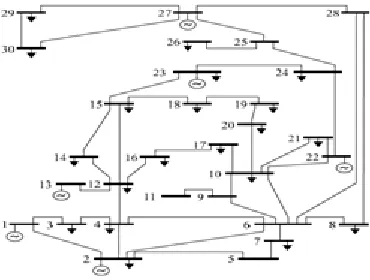
[image:3.612.74.259.510.650.2]Planning problem in distribution network is to identify the least cost network investment of expansion projects that fulfill load growth requirements without disturbing any operational and system constraints. It was suggested that proper sitting of DG may defer T&D expansion. Many countries agreed that the reduction in gaseous emissions (mainly CO2) offered by DGs is major legal issue for DG implementation.
Fig. 1: One line diagram of 30 bus system
Distributed generator’s location and size are main issues in the application of Distributed Generation for its maximum benefits.
Installation of optimal size DG units at best place(s) in large distribution systems is a complex combinatorial optimization problem.
In order to minimize the efforts to select appropriate nodes for placement of distributed generation devices a priori, sensitiveness of nodes towards the change in active power loss with respect to change in active power injection at various nodes are identified. An appropriate nodes are selected by evaluating loss sensitivity factor at different buses through load flow program that is suitable for radial network. To determine optimal size of DG for minimization of real power loss in radial distribution network, some techniques have been proposed for its benefits. Genetic approach is applied for the placement of DG in power system for reduced cost and less power consumption. In order to optimize the sequence generation approach for distributed power system, genetic approach is applied. In this work crossover is implied to perform the optimization on DPX. To minimize the cost of the system the fitness function is defined with the cost specification. The results driven from the genetic algorithm are optimized in proposed system as in the case of DPX crossover.
Genetics Algorithm
Genetic algorithm is the optimization algorithm that uses the genetic evolution approach as the model or framework to solve the problem. Genetic algorithm is not defined respective to a particular problem domain. Instead of it, it basically accepts the problem population as input along with relative rule or the pattern. Along with problem definition, the fitness function is defined to evaluate the relative solution on selective population set. This is the evolutionary algorithm that begin with a random set of small population elements and repeat it for the subsequent generations. In each generation, the most suitable population element is selection for the further process. The main aim of the genetic is to achieve the optimization in terms of least cost or the minimized loss.
International Journal of Emerging Technology and Advanced Engineering
Website: www.ijetae.com (ISSN 2250-2459, UGC Approved List of Recommended Journal, Vol. 7, Issue 8, August 2017) In this approach best combination of parents are
intermixed to produce the next child and that will be the superb one. At the final stage the mutation is applied to improve the characteristics of new born child, while process will be repeated till the final solution is not derived. In this work same genetic approach has been used to optimize the solution.
Algorithm
The proposed GA is described as below:
1. N Number of DGs with relative parameters are generated and relative parameters and this distributed power system is used as the population set.
2. Generate the matrix of cost.
3. Define the fitness rule to minimize the aggregate cost over the distributed power system.
4. For i=1 to MaxItera [Repeat steps 4 to 8 ]
5. Select two random sequence called parents from the population set that follow the fitness rule, called parent1 and parent 2.
6. Perform the DPX crossover on these two parents to generate the child DG
Child DG = Crossover (parent1, parent2) 7. Perform algorithm of random mutation.
8. Recombine the obtained value in the population set. 9. Return Optimized Sequence
10. Generate the graph of path sequence.
IV. RESULTS
[image:4.612.324.560.225.382.2]The work is implemented in Matlab2013a environment and the results obtained from the simulation are described here under as;
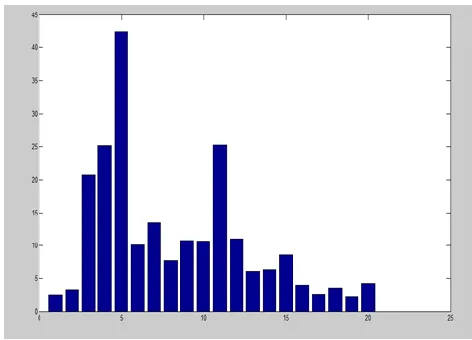
Fig. 2: Cost on Different DG (Iteration 1)
Fig.2. shows the cost driven from the system after generation of the DG in a sequence. This Fig. shows the outcome of the first iteration of the genetic. Here X-axis represents the DGs and Y-axis represents the cost of DG in the system at that particular position.
[image:4.612.50.286.519.689.2]The cost driven from the system after generation of the DG in a sequence is shown by Fig.3. which is showing the outcome of Ist Iteration of genetic.
Fig. 3: Cost on Different DG (Iteration 10)
In this Fig. X-axis represent the DGs and Y-axis represent the cost of DG in the system at a particular position.
By the analysis of results from the system, it seems that the present work is cost effective and it is concluded that the presented system consumes less amount of power and is effective enough to distribute the energy with minimum cost and minimum loss.
V. CONCLUSION
This paper introduced an improved version of the distributed generations for the system. The proposed work has recommended the placement of DG over the system so that effective monitoring of the system can be done. The experimental results have demonstrated genetic based optimization for the localization of DGs and to reduce the cost of power system. The efficacy of solving a genetic algorithm based DG placement to optimize power system distribution is experimented using IEEE 30 bus system. In order to find out minimum cost and losses, GA based approach has been developed and implemented.
References
1. Deependra Singh, Devender Singh and K.S.Verma, “GA based
International Journal of Emerging Technology and Advanced Engineering
Website: www.ijetae.com (ISSN 2250-2459, UGC Approved List of Recommended Journal, Vol. 7, Issue 8, August 2017)
2. D Singh “Multi objective Optimization for DG Planning with Load
Models”, Power Systems, IEEE Transactions Vol. 24 , Feb. 2009, pp 427 – 436.
3. H. Musa and S.S. Adamu, “Distributed Generation Placement and
Sizing using newly Improved PSO for Radial distribution system”, 2ND International Conference on Energy Systems and Technologies, 18 – 21 Feb. 2013, pp 237-245.
4. Hossein Afrakhte, “A Genetic algorithm based optimization of
DG/capacitors units considering power system indices”, NCNIEE, 2010.
5. Caihong Chen, “On Optimization Principles of Power Systems with
Distributed Generation”, 2010 3rd International Conference on Computer and Electrical Engineering (ICCEE 2010).
6. K. Varesi, “Optimal Allocation of DG Units for Power Loss
Reduction and Voltage Profile Improvement of Distribution Networks using PSO Algorithm”, Engineering and Technology “,World Academy of Science, Engineering and Technology International Journal of Electrical, Computer, Energetic, Electronic and Communication Engineering Vol:5, No:12, 2011, pp 1842-1846. 7. M. Kayal, “Transient stability analysis and optimization of power systems with high level of distributed generation integration using electronic emulation”, UAE-Swiss Research day : Lausanne, 22-23 June 2011.
8. Feng PAN, “Harmonic Impact of DG configuration in Distribution System”, 21st International Conference on Electricity Distribution, June 2011.
9. Ali Aref, “Particle Swarm Optimization Based Method for Optimal
Placement and Estimation of DG Capacity in Distribution Networks”, International Journal of Science and Technology, Volume 2 No.7, July 2012.
Article History:
Received 15th June, 2017 Received in revised form 20th July, 2017